Words Liam Friary, Ariki Tibble, Darren Kinnaird & Tuhua Mutu
Images Fraser Britton, Kike Abelleria and Clint Trahan
The southern hemisphere’s summer is now upon us! And that means Crankworx is returning to New Zealand in 2026 with back-to-back festivals. The Crankworx season kicks off at Christchurch Adventure Park from February 19-22, before heading north to legendary Rotorua from March 11-15.
Christchurch is stepping up big time, hosting full World Tour competitions including the Ōtautahi Slopestyle, Redemption Downhill, and Christchurch Pump Track Challenge. Rotorua returns with the Kārearea Downhill, Dual Slalom, Pump Track Challenge, and the Slopestyle in Memory of McGazza, plus a new event called the Skyline Double Down.
Two festivals, in two incredible riding destinations. Whether you’re there for the big air, the rowdy crowds, or just soaking up the gravity vibes, this is shaping up to be something special. Let’s take a look back and see how Crankworx became such a massive part of New Zealand’s mountain biking story. We sat down with the people who helped build it from the ground up to find out.
Taking the leap to the southern hemisphere: What made Rotorua the right choice for Crankworx’s first southern hemisphere stop back in 2014, and what were the biggest challenges in launching that inaugural 2015 festival?
Darren Kinnaird – Managing Director, Crankworx World Tour
When I visited Rotorua in 2014 for a site visit, I immediately fell in love with the place. The people, the culture, the riding; I knew there was something special here and we needed to bring the mountain biking world here. The biggest challenge was probably the time. There was less than nine months to get ready for the first ever Crankworx in the southern hemisphere in a place most of us had never been.
Equal pay from day one: Crankworx Rotorua was groundbreaking in offering equal prize money for men and women from the very first event. What drove that decision, and how did it influence the broader Crankworx World Tour?
Ariki Tibble – ex-Crankworx New Zealand Chief Executive
When we originally made the call to offer equal prize money from the very first Crankworx Rotorua, it never felt to me like a bold or radical decision. It felt obvious. New Zealand has a long history of championing women’s rights, and we grew up in a country where Kate Sheppard and the suffrage movement are part of the national DNA. Tak Mutu, as Event Director at the time, was our champion for the cause for the NZ operations and for him it was a hill he was prepared to die on if that’s what it was going to take!
Mountain biking was and is still relatively young as a professional sport, which meant we didn’t have the heavy machinery or deeply entrenched hierarchies that I imagine other more established codes might have to grapple with. In some ways, that gave us a gift. We had the chance to get it right from the start, before the cement had hardened.
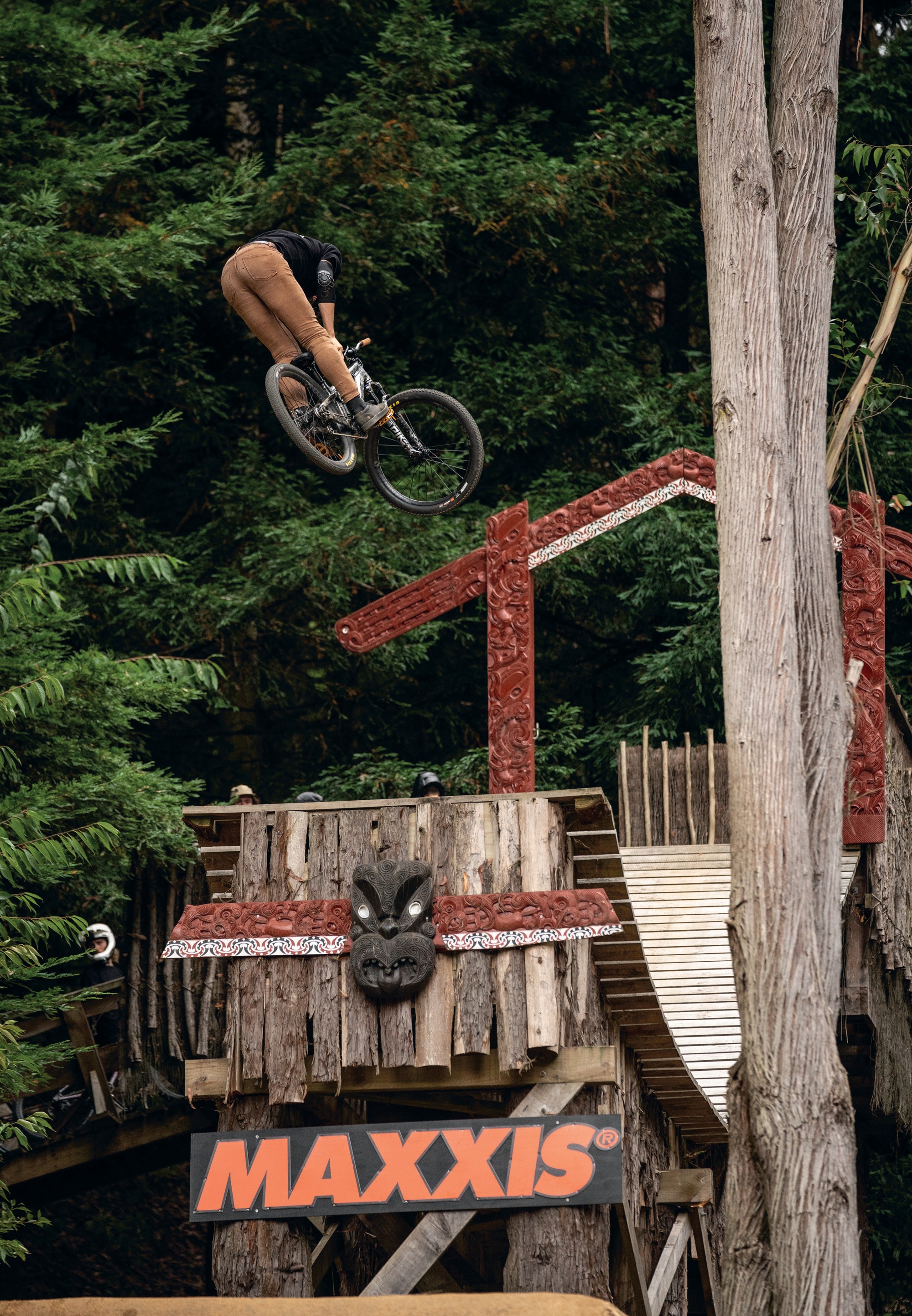
McGazza’s Legacy: Kelly McGarry was instrumental in shaping Rotorua’s slopestyle course before his tragic passing in 2016. How has his spirit continued to influence the event, and what does it mean to keep his memory alive through the competition?
Ariki Tibble
When I first heard Kelly McGarry’s name, I had only just stepped into the mountain biking world. I didn’t yet understand its legends or its language, so discovering Kelly felt a bit like learning we had a sleeping giant hiding in plain sight. He was physically impossible to miss – six foot five, golden hair flowing, a presence that filled the room even when he wasn’t trying to. But what struck me more was how humble he was, the kind of person who didn’t need to announce who he was because everyone around him already knew.
I first met him properly while he and his best mate, Tom Hey, were shaping the early slopestyle course. I remember standing there, stunned by the scale of the jumps they were carving into the Rotorua dirt. I couldn’t fathom that a human being on a bike could do what they were building for.
But it wasn’t until I travelled to Whistler and walked the village streets with him that I understood who he was to others. We couldn’t move more than a few steps without being stopped. Parents wanted photos. Kids wanted autographs. Fans lit up like they’d seen a movie star. It was then that it landed for me what a big deal he was in the scene, even if back home he was treated like any other bloke.
His passing just a couple of years in shook the community deeply. But what’s stayed with me is how present he still feels. It’s like he’s just on the other side of a door – not gone, just in another room. His voice, his energy, his pioneering spirit linger in the atmosphere of the event. Big personalities have a way of staying with you like that.
Most of the athletes competing now never rode alongside him, yet they carry that same spirit he embodied. Kelly was often the first to drop in on a new feature, the first to test something. Today’s riders honour him every time they push past what seems possible. His legacy isn’t a memory. It’s a living current that still runs through Crankworx Rotorua and the World Tour.
Historic firsts: From Nicholi Rogatkin’s first- ever competition 1080 in 2016 to hosting one of the last major international events before the pandemic in March 2020 – which moments stand out as truly defining for Crankworx NZ?
Ariki Tibble
People often assume the defining moments in Crankworx come from the biggest tricks, the landmark podiums or the viral runs. And those things are incredible. But for me, the moments that stay with me the longest are the ones behind the curtain or under the hood. They’re the orchestral moments when a hundred different people, in a hundred different roles, each carrying their own small piece of the puzzle, somehow manage to come together and create something none of us could have achieved alone. That is the magic I fell in love with during my time working in the Crankworx realm.
One standout example is Loïc Bruni’s run on the Taniwha Downhill in 2023. The day of the race felt like the final boss in a 1980s video game.
Light was fading faster than we expected. Technical teams were stretching the limits of what had ever been done in a forest environment. We were relying on innovations like Starlink and a huge amount of force of will to broadcast something many people had told us wasn’t possible.
By the time Loïc was getting ready to drop in, it felt like the event had carried us to the edge of a cliff. Every challenge we had overcome, the logistics, the technical barriers, the timing, the pressure, had funnelled us into that single, delicate window. And, in the dimming light, Loïc delivered an extraordinary run. It was clutch and clinical and brave. But the reason it meant so much to me is because it also represented the collective clutch of the entire team. His moment only existed because of all of the unseen moments that came before it.
Had he not won that day, I think people would have rightly questioned our decision to push through the fading light. We learned from that experience, and we carried those lessons forward. But on that day, everything aligned. It felt like the mountain, the team, and the sport were all breathing in the same rhythm. Those moments are the tip of an enormous iceberg of collective efforts. And the great privilege for me was having a view and a deep appreciation of that iceberg in its entirety.
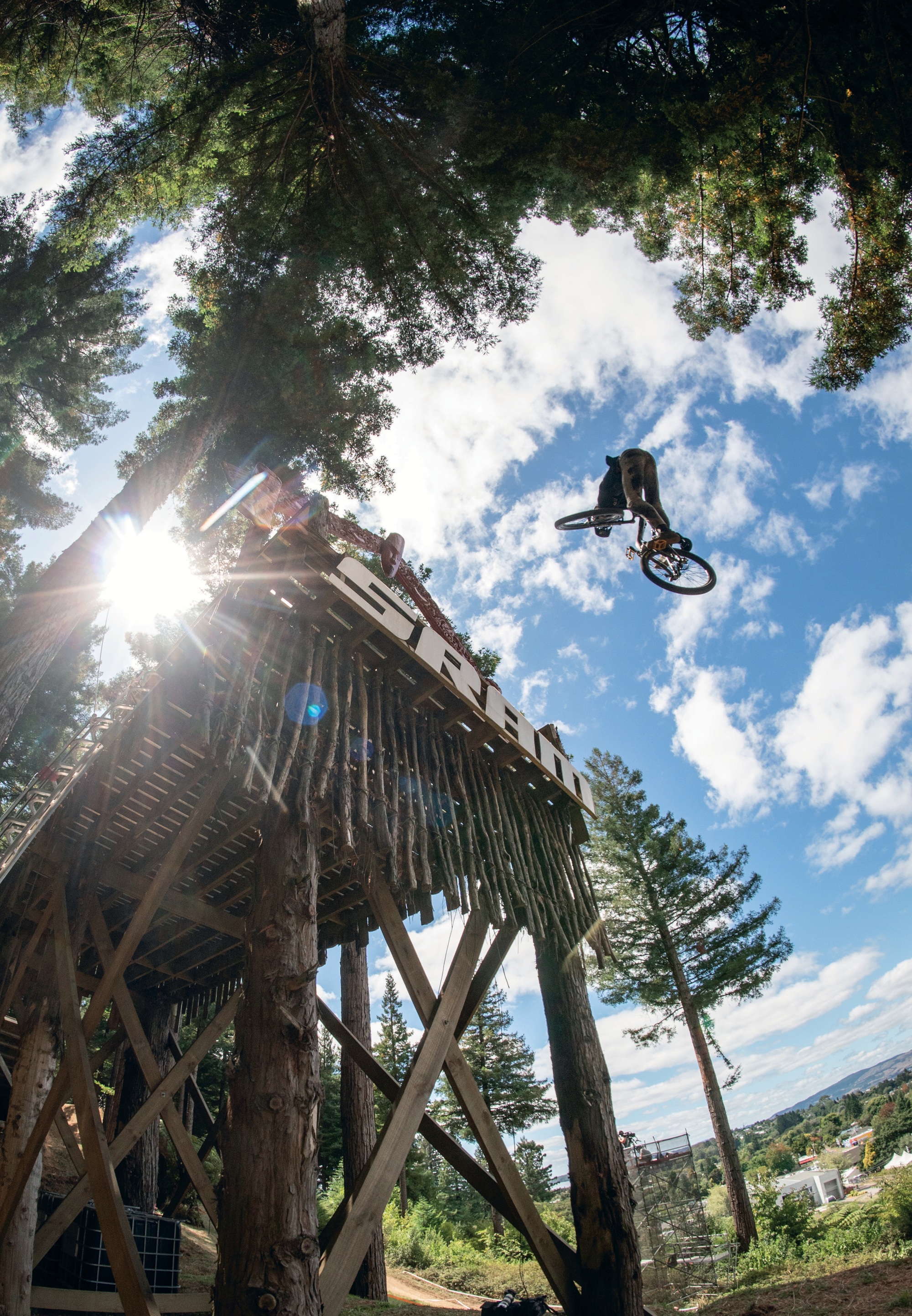
The Soul of Crankworx: You’ve described Rotorua as the “soul” of the World Tour (with Whistler as the “heart”). What is it about the Māori culture, the community embrace, and the Rotorua vibe that creates that special identity?
Ariki Tibble
Whenever I try to explain what makes Rotorua the soul of the World Tour, I always end up coming back to things that aren’t easily measured. It’s not infrastructure, or weather, or even the terrain, although all of those things matter. It’s the way people connect here. And for me, that understanding comes from my Māori side, from growing up surrounded by a way of being that teaches you how to welcome, how to include, how to weave people together so they feel like they belong. On my mother’s side I have Irish and Welsh heritage, which came with its own set of gifts. But the lessons about bringing people together, about creating cohesion and allowing people to show up as their full selves, came from watching my cousins on the marae at hui and tangihanga. Māori hospitality is not transactional. It is relational. It is about walking into a space and feeling seen. Feeling safe. Feeling like someone has anticipated your needs without you having to say a word.
Rotorua amplifies that. It is a cultural hub, a place where that way of being is not confined to ceremonial settings but shows up everywhere. Tourism operators, local businesses, volunteers, event staff, aunties on the street; everyone carries a little piece of that same ethos. Visitors often struggle to articulate it. They say things like “It felt like coming home,” even though they’ve never been here before. They feel the warmth before they can name the source.
That is what makes Rotorua the soul of Crankworx. It’s not just another stop on a tour. It’s a place where the event reaches beyond its own boundaries and becomes part of a larger cultural rhythm. The feeling people get here goes straight past the mind and into the chest. It hits the soul, which is exactly why that word feels right.
No spectators, all heart: November 2021 saw Crankworx Rotorua run in a COVID bubble with no public attendance. What was it like pivoting to that broadcast-only format, and how did the team keep the magic alive?
Ariki Tibble
The 2021 COVID bubble event was one of the most intense experiences our team has ever been through. Crankworx is a massive undertaking in the best of times, but the pandemic forced us into a pressure cooker that was shifting by the hour. By the time we reached the event window, that final 30-day countdown where every day increases your financial exposure, the team was already worn down from constant rule changes, public health updates, legal challenges, and uncertainty from partners. It felt like we were trying to build a plane in the dark while flying it through turbulence in uncharted territory.
The business model of any major event is unusual by comparison to other businesses. For Crankworx you spend 355 days preparing for ten days of operation. Your costs climb steadily and then exponentially as you get closer to opening. The day before the gates open is the moment of maximum financial risk and exposure because you’ve committed to the full spend but you haven’t truly earned a dollar. And here we were, in that two-week exponential window, with the expanding Auckland bubble and escalating COVID alert levels – having to refund ticket holders, cancel the expo, renegotiate positions with core partners, and defend our legal right to continue. Meanwhile, athletes had already travelled and were sitting in quarantine, vendors were already setting up and so many of our hard costs had already been incurred. Every element felt high stakes.
Yet despite the pressure, something remarkable happened: the team held together. People stepped into roles they had never done before. Decisions were made in real time collaboratively under immense strain. We took one step at a time, and at every twist another little magic door seemingly opened which we could walk through. And when the event finally took place, even without spectators, there was still something undeniably special about it. It revealed that Crankworx is more than the parts we think are essential. When some of those parts were stripped away, the heart of the event remained.
The consequences of that year rippled far beyond the festival itself. Not everyone felt like it should have gone ahead. We carried the fatigue, the financial impact and the psychological load for years. In some ways, we’re still carrying them now. But the fact that we delivered it at all is something I’ll never forget. It was a hard moment, but it was also a defining one.
Birth of the Summer Series: The Summer Series launched in late 2021, road-tripping through Alexandra, Queenstown, Cardrona, and Wānaka. What was the vision behind taking Crankworx regional, and how has that evolved into the Christchurch festival we saw in 2025?
Darren Kinnaird
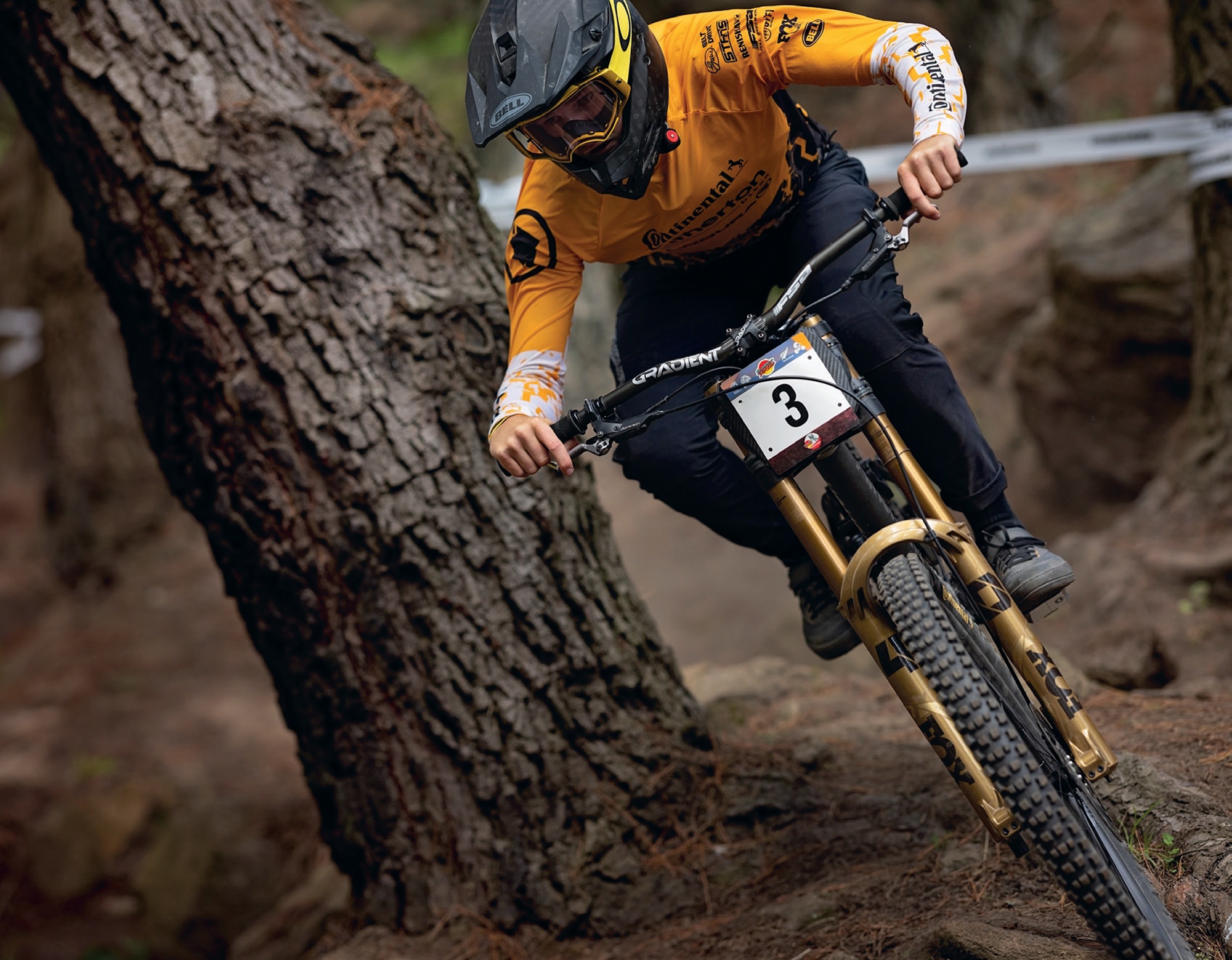
The Crankworx Summer Series was born out of a “COVID pivot” of what can we do without mass gatherings. After we did it in BC, the team in NZ was like, “hey we could do that here too”. With so many great riding destinations in New Zealand and New Zealand being a home for so many great mountain bikers, whether they’re from New Zealand or not, it just felt like a no brainer. Christchurch is just the evolution of that original series and the original reason we came to New Zealand in the first place. World-class riding, people and Kiwi spirit!
Homegrown Champion:
Tuhoto-Ariki Pene NZ’s King of Crankworx in 2023 – a rider who started as a young grom at Rotorua in 2016. What does his journey tell us about the talent pipeline Crankworx has helped create in New Zealand?
Tuhua Mutu – Event Director, Crankworx New Zealand
When we launched Crankworx in NZ 12 years ago, we weren’t just bringing an event – we were bringing the world to our doorstep. The best riders, the best tracks, the broadcast machines, the pressure, the scale, the intensity – all of it arrived in our backyard. From the outset, the goal was clear: to show the world’s best riders why New Zealand should be their summer base, and to showcase our destinations, culture, and quality of life.
But the most powerful outcome was what Crankworx did for our own talent. Suddenly, young Kiwi riders no longer had to imagine what “world-class” looked like. Year after year, they could stand next to it. Feel it. Chase it. Hone their craft against the very best. Crankworx also created the platform for these young riders to be seen, giving raw Kiwi talent regular exposure to global brands and industry attention, and helping turn aspiring groms into emerging professional athletes.
Tuhoto was one of those kids. He didn’t just watch Crankworx – he grew up inside it, discovering what it takes to compete on the world stage as he went. Today, just two years on from Tuhoto’s King of Crankworx 2023 achievement, New Zealand’s gravity mountain biking talent pool has exploded to see the deepest and highest performing ever. Riders like Robin Goomes, Lachie Stevens-McNab, Jess Blewitt, Jenna and Kate Hastings, Erice Van Leuven, Ellie Hulsebosch, Sacha Earnest, Tyler Waite, Oli Clark, Charlie Murray, Joe Millington, and Toby and Rory Meek – not to mention rising stars like Winni Goldsbury – are pushing the pace internationally. And then we still have our seasoned veterans like Sam Blenkinsop, Brook Macdonald, Wyn and Ed Masters who continue to cast long shadows, remaining fiercely competitive across multiple disciplines on the world stage.
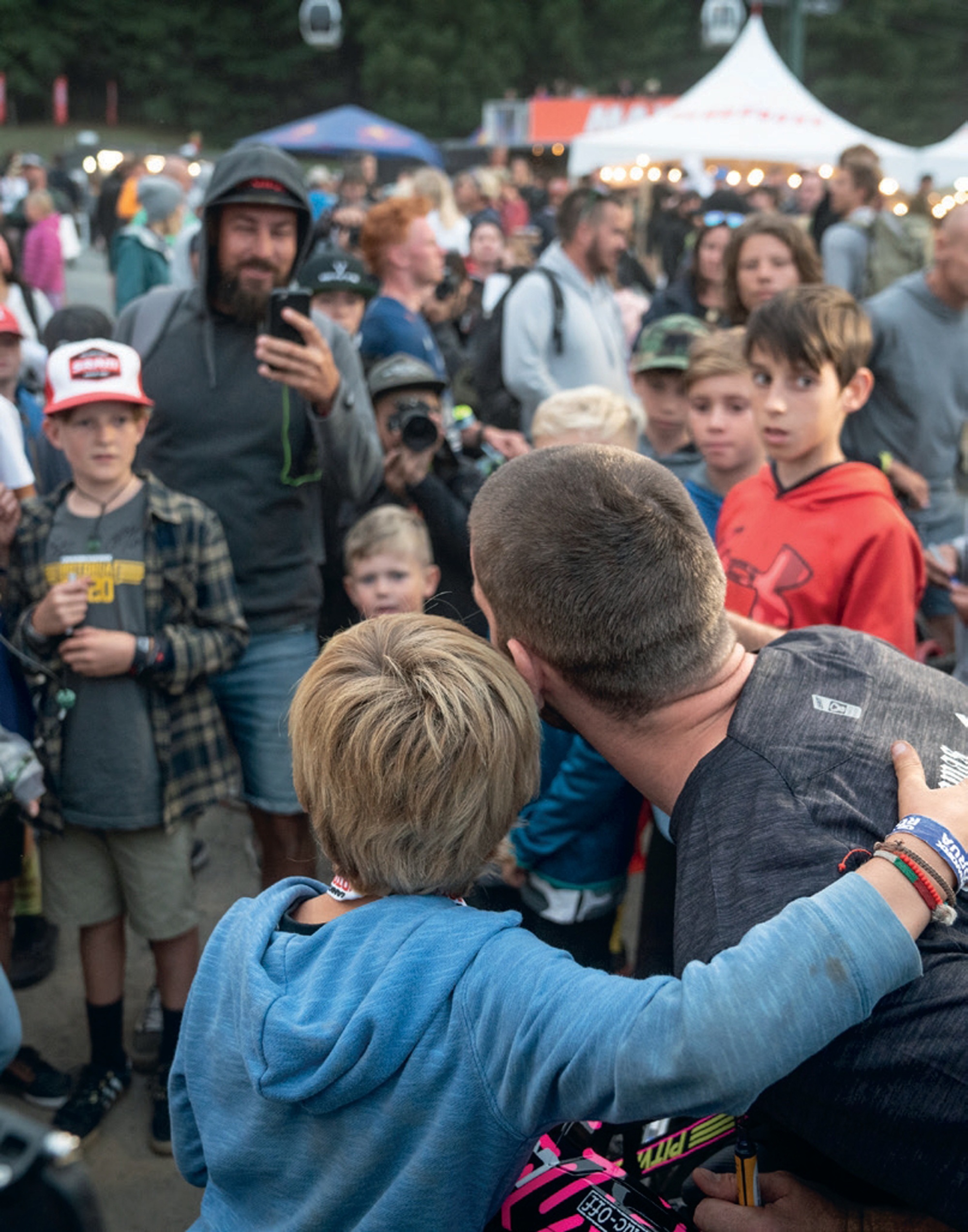
We’re proud to have helped nurture Kiwi talent from the earliest days, supporting many of today’s world-class gravity riders since they were kids. And the momentum hasn’t peaked – it’s compounding. With Crankworx now embedded in both Rotorua and Christchurch, the next generation is growing up with world- class racing in their own backyard every single year. That means more pathways, more visibility, more opportunity, and ultimately more Kiwi riders stepping onto the world stage. If this is what the first 12 years delivered, just imagine what the next decade could hold.
Christchurch’s debut: February 2025 brought Crankworx to the South Island’s largest city with NZ’s first FMBA Gold Slopestyle. What does having both Rotorua and Christchurch on the calendar mean for the future of mountain biking in New Zealand?
Tuhua Mutu
Back when the very first Crankworx event in New Zealand was conceived, part of the vision was to use the platform to tell a wider story of Aotearoa – recognising that every region has its own unique community, whenua, and culture to celebrate. Rotorua set that foundation, bringing together mana whenua, world-class riding, and a deep culture of hospitality that defined what Crankworx in NZ would stand for.
With Christchurch now on the calendar, that original vision expands in the best possible way. A unified national identity emerges – two regions, two communities, each adding their own flavour to remind the world of the quality of life our backyard offers. Rotorua’s geothermal forests, Māori cultural heart, and long MTB history sit alongside Christchurch’s Port Hills and Southern Alps backdrop, its rejuvenated bike-friendly city environment, and its fast-growing South Island scene.
Together, they form gateways to the wider North and South Island riding landscapes – the ideal playground for every outdoor enthusiast whether you ride bikes well or not! Two world- class Crankworx stops signal a new era: a truly national platform for mountain biking, more development opportunities for Kiwi talent, and a future where New Zealand stands even more firmly among the world’s great riding nations.
Where to next?: Looking at 2026 and beyond, what’s your vision for the evolution of Crankworx in New Zealand and its role in the World Tour? Are there new locations, disciplines, or innovations on the horizon?
Darren Kinnaird
New Zealand continues to be one of the best riding destinations in the world which is a key part of the Crankworx ethos. Who knows what the future holds but as long as there is incredible riding to share with the world in New Zealand, we are keen to help tell that story!