Words Lester Perry
Images Supplied
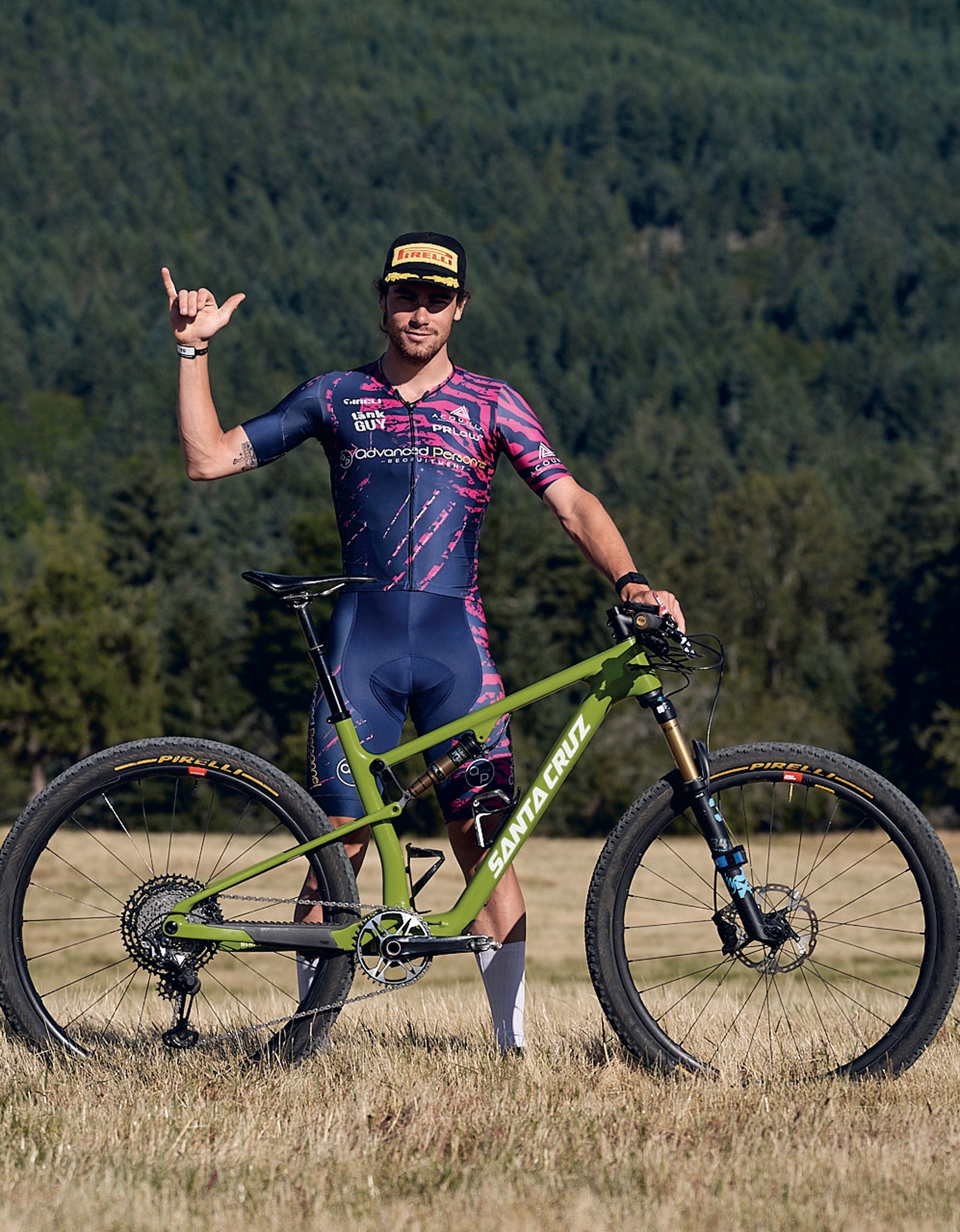
What began as a year of hopes and dreams ended in frustration, but along the way, thanks to some early-season prize money, Matthew Wilson made his mark on the North American off-road racing scene.
In early December 2025, I caught up with Auckland-born Matthew Wilson while he was in Wānaka for his first training camp on the build-up to his 2026 season.
Matt hadn’t long returned from a breakout season chasing the North American dream, blending his love for racing mountain bikes with a newfound passion for racing on the gravel. There was even a general classification win at a road tour thrown in to complete the cycling trifecta while in the US.
As with many young mountain bikers, Matt began his journey on bikes as part of a school mountain bike squad, encouraged by friends to come along to the school group rides on Tuesday evenings after quickly deciding the road wasn’t for him. It was summery Tuesday evenings at Whitford Forest, and damp wintery rides by torchlight around Totara Park, which got him hooked.
To begin with, alongside the bike, Matt had been through the Sea Scouts programme, sailing offshore from Bucklands Beach, where he grew up. “I did a bit of competitive sailing through the various regattas we have throughout the year, it was pretty cool. I live near Bucklands Beach, so every Wednesday night we’d be out sailing in the harbour and mostly sailing little Sunburst yachts.”
In 2019, Matt got his first taste of international racing, competing in the World Championships at Mont-Sainte-Anne, Canada.
“That was definitely jumping in the deep end there in terms of international XCO courses. But yeah, I wouldn’t have had it any other way. It’s a pretty iconic course, so it was cool to have that as my first experience. It was definitely a rough go at it. I think I wound up 60-odd out of maybe 70 starters. I actually broke a wheel in one of the rock gardens there. So I had to ride the rim for half a lap, which put me back a bit. But either way, it was definitely a big step up, a big learning curve, and even without the wheel issue, it was going to be a tough day.”
Walking out of the gates of high school for the last time at the end of 2019, Matt set his sights on racing mountain bikes as much as possible. In 2020, Cycling New Zealand selected him to join their ‘MTB Hub’ programme, a development pathway for up-and-comers running alongside the road and track hubs at the time.
“For 2020, the plan was to do a stint in America, do some of the national series XCOs to get some UCI points, and then spend a couple of months in Europe during some HC (Hors Classe: gruelling multi-day UCI level) races and World Cups.
“That was my first year in U23. However, the US stint was in March 2020. Yeah, that date! That was right as COVID kicked off, we had about a week there. We got to do the short track on Friday and then woke up the morning of our first XCO to find it had been cancelled. Then we were on the first flight home from the States the very next day.
“When we landed, it was still a self-isolation programme. Four days into my self-isolation, the whole country went into full lockdown, and the hotel quarantine system came into play. So, we just sneaked in there, we just beat it!”
For the first three years competing in U23, Matt was fourth at the NZ XCO National Championships, unable to crack the elusive top three spot against his main rivals of the time, Josh Burnett, Connor Johnston, Caleb Bottcher, and Cameron Jones. While many of his competitors have moved on to other things, Caleb and Cameron are still in the game and remain rivals to this day.
“In 2022, I was pretty lucky. I got the opportunity to go to the World Cups with the Talley’s team that popped up for two years. It was kind of a first experience coming into the U23 World Cup circuit. I had a rough idea of what I was signing up for after Mont Sainte Anne in 2019, but still, you know, even a couple of years down the line, I didn’t really know what to expect.”
“During 2022, I’m still pretty proud of how I was able to move up the field. The first couple of World Cups, I think I had plate 101 at Albstadt (Germany) and 93 or 94 at Nové Město (Czech Republic). I was moving up into the 40th place. When you’re starting that far back, it’s always a tough go.”
“In Lenzerheide, I remember that was the one where it all suddenly clicked, and I was like, actually, if I have a good summer training back home, I might be able to kind of make a mark here. I think I finished around 27th. I had a slightly cleaner start that day. I kind of felt like I was actually in the race all day, and then if I took out the riders that were last year U23, it put me up to around 12th or 10th or thereabouts. “I remember doing the math there (at Nové Město) and figuring out who the people were who were going to be phasing out, moving out of U23. I remember that race particularly. I kind of realised I could potentially make it there. It was a big motivator when coming home. I worked a little bit less that summer, trained a whole lot more, which then led into the 2023 season.”
From early in 2023, Matt proved to himself that he was heading in the right direction and that his focused training after the previous season was paying off. He secured himself the NZ XCO Champion’s jersey, becoming the first U23 rider to win the title against the elite field for some time. Then it was back to chasing World Cups with the Talley’s team in his final year as a U23 rider.
Firing off his form built over the NZ summer, Matt kicked off his World Cup season with a fifth place at the opening round in Nové Město, his best result yet, and still a highlight to this day.
“I had a great start to the season, it’s a common thing for Kiwi cyclists to do coming off the back of the NZ summer. It’s pretty easy to be in good form early on in the season, and then kind of fizzle out later on. I was still learning how to maintain form while travelling and having a heavy race schedule. It was a big learning curve! I was pretty burnt out and run down by the end of the year, so the performances dropped off.”
Coming into 2024, having returned from Europe after a demanding season, Matt was keen for a fresh start.
“I was going to my first year elite in 2024. Talley’s was no longer going to run, and I wasn’t too sure what I was going to do with myself. I was keen for a change and had a lot of mates already in Cambridge. It’s a great spot for cycling, close to Rotorua for mountain biking, and I was able to pick up work there with Evo Cycles. I’d been working for them on and off over the summers in Auckland until then.”
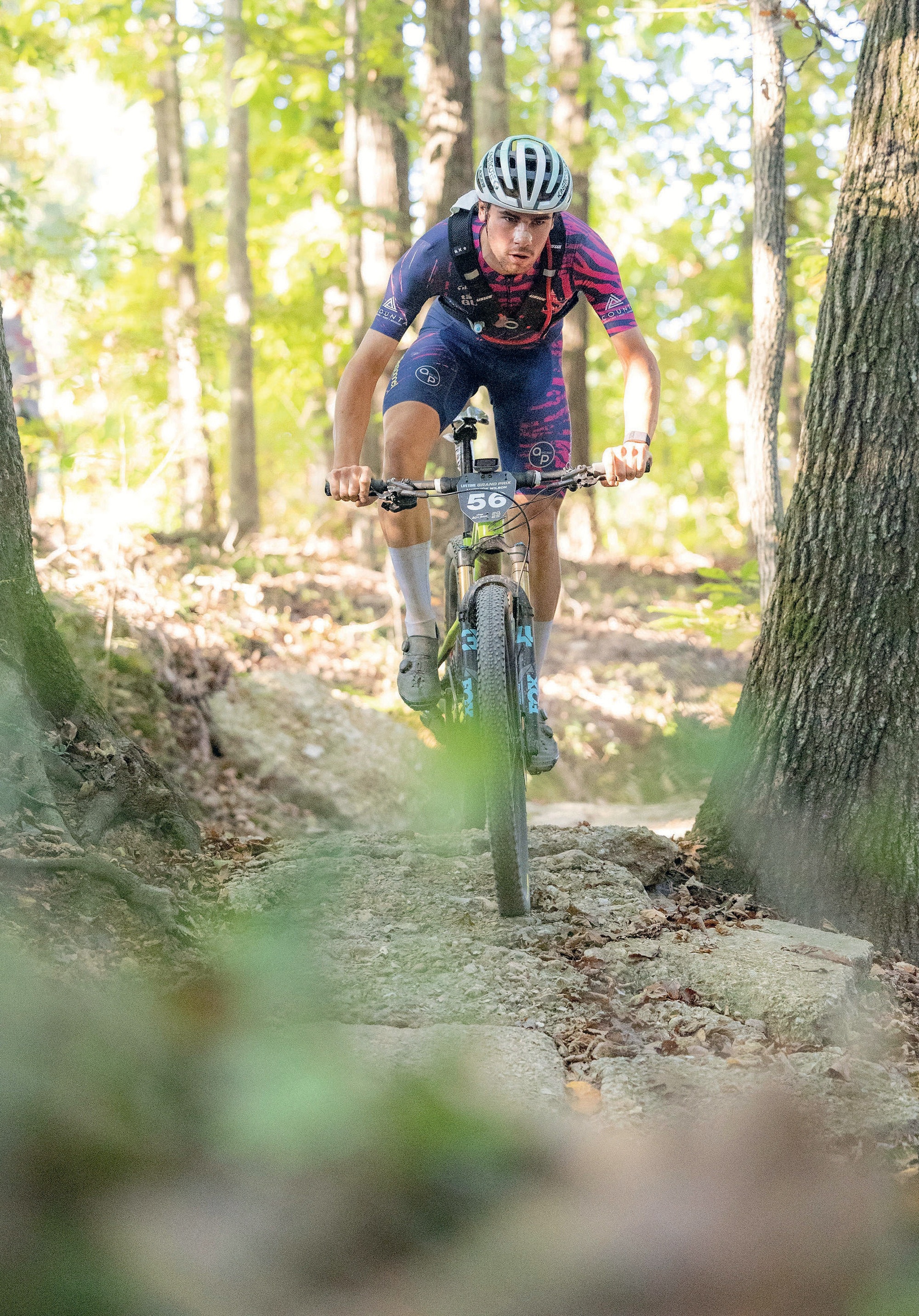
Without the backing to take on a whole World Cup campaign, Matt locked in at home in Cambridge, training hard, and working to save funds for whatever would come next. He, along with some other Kiwis, secured invites to the ‘HERO Abu Dhabi’ event.
“They invited a bunch of riders out to this big, manufactured island that they built an XCO course on, which is pretty much a 5 km long BMX track. That was pretty cool, the ferry trip out there, and it was a pretty wild race, with a lot of prize money on the line. I think Ben Oliver (fellow Kiwi) actually won that one.”
While 2024 was shaping up to be somewhat of a reset for Matt, his good mate, Cameron Jones, had headed stateside to take on some of the MTB and gravel racing that was booming in the USA.
“I was definitely getting a lot of FOMO, watching what Cam was doing, and he was keeping me in the loop about how the whole US scene works. Particularly by the end of the year, I was pretty set on going over there and giving it a nudge after seeing how well he did. “Europe’s a pretty savage pathway into the sport, regardless of how talented you are. You’re always going to get your head kicked in a wee bit. Particularly with the whole 80 per cent rule at World Cups, people start getting pulled off course pretty quickly, so it’s just a grind to get UCI points. If you’re not starting in the top three or four rows, then you’re not going to really make it anywhere. Whereas, in America, it’s largely these more marathon-style races, much longer events. So, in terms of start positioning, it’s less relevant. The longer the race gets, the easier it is, in a way. If you’ve got the legs, you’re going to do well.”
With his bank account just filled enough to get him a return ticket to the USA, Matt took the leap in 2025, heading stateside to see what he could do.
“I didn’t actually have that much of a plan. I had the beginnings of a plan, a flight there, and a flight home in August, and somewhere to stay for the first couple of months. That was about it.
“I started in Portland. There’s a local road team there, POA, that Cam (Jones) had ridden for the year prior. The NZ connection to that is through a guy called Mike from Nelson who’s now moved over there. He used to be heavily involved with the Nelson Cycling Club, and so that’s where that connection came from. There’s also a Kiwi guy who has lived in America for some time now, a guy called Lee, who grew up in Hamilton, and he’s been a big-time road cyclist there. He very kindly offered up his house as accommodation to us Kiwi riders going over there. So that made it far more doable.”
Initially, Matt wasn’t scheduled to ride the Sea Otter Classic, the opening round of the highest- profile off-road series in the US, the Life Time Grand Prix series. He was expected to race the Tour of Redlands for the POA road team, but thanks to Cycling USA’s unwillingness to recognise his previous MTB or Road racing results necessary for an upgrade to a P1/2 elite license, the lower-level license he was stuck on meant he couldn’t ride the Redlands race.
“I was getting real close to the date of Redlands, and I said to the team manager, Hey, it looks like I’m potentially not going to be able to go. I don’t want to be sitting around in Portland doing nothing that week while Sea Otter is on. I’m just gonna have to pull the pin on Redlands, and I’m gonna try and make Sea Otter happen. So, it’s purely because I couldn’t get the right license that I actually ended up at the Sea Otter Classic.
“I only filled out my entry maybe two weeks before it, and then randomly ran into a local Portland rider who was going down and he shared an Airbnb in Monterey, which was ludicrously expensive. I just felt like I had to make Sea Otter happen. As soon as I realised I could do it, and the wild card (entry to Life Time Grand Prix overall series) was on the line, I felt I had to. Yeah, it was worth the investment!”
Matt immediately turned heads at the Sea Otter Gravel Race, attacking the field multiple times, leaving the seasoned riders wondering who this young Kiwi upstart was who thought he could turn up and dictate the race. Matt eventually finished seventh in the race, placing second in the overall wild card points. The hunt for the wild card spot had begun. With just one race remaining, Unbound Gravel, to earn enough points to secure himself a wild card spot and his place in the overall Grand Prix series, it was game on for Matt.
With a decent gap until Unbound, Matt and Cam Jones headed off on a road trip up Levi’s GranFondo, a road race that draws a stacked field thanks to its huge cash prize pool. It’s a 220 km race with over 4000 m of climbing. With the support of the POA team, Matt finished seventh on the day and banked $7,000 USD for his efforts. That prize money was key to Matt riding out the remainder of the season.
“That was the first point I was like, oh actually I might be able to afford to stay here a bit longer.”
From there, the duo road tripped up through Las Vegas to the Whiskey 50 MTB race. Matt won the opening event, the Fat Tire Criterium, and went on to finish fifth in the main event, making his mark against a strong field once again. From Whiskey, he flew back to Portland for the Tour de Bloom in Washington, a road tour he would ride with the POA team. For his efforts, Matt not only won the overall classification but also cleaned up each of the individual classification jerseys. As much as this road trip had been successful from a results point of view, it had boosted his confidence, and the hours spent racing had laid a solid foundation as he headed to Unbound.
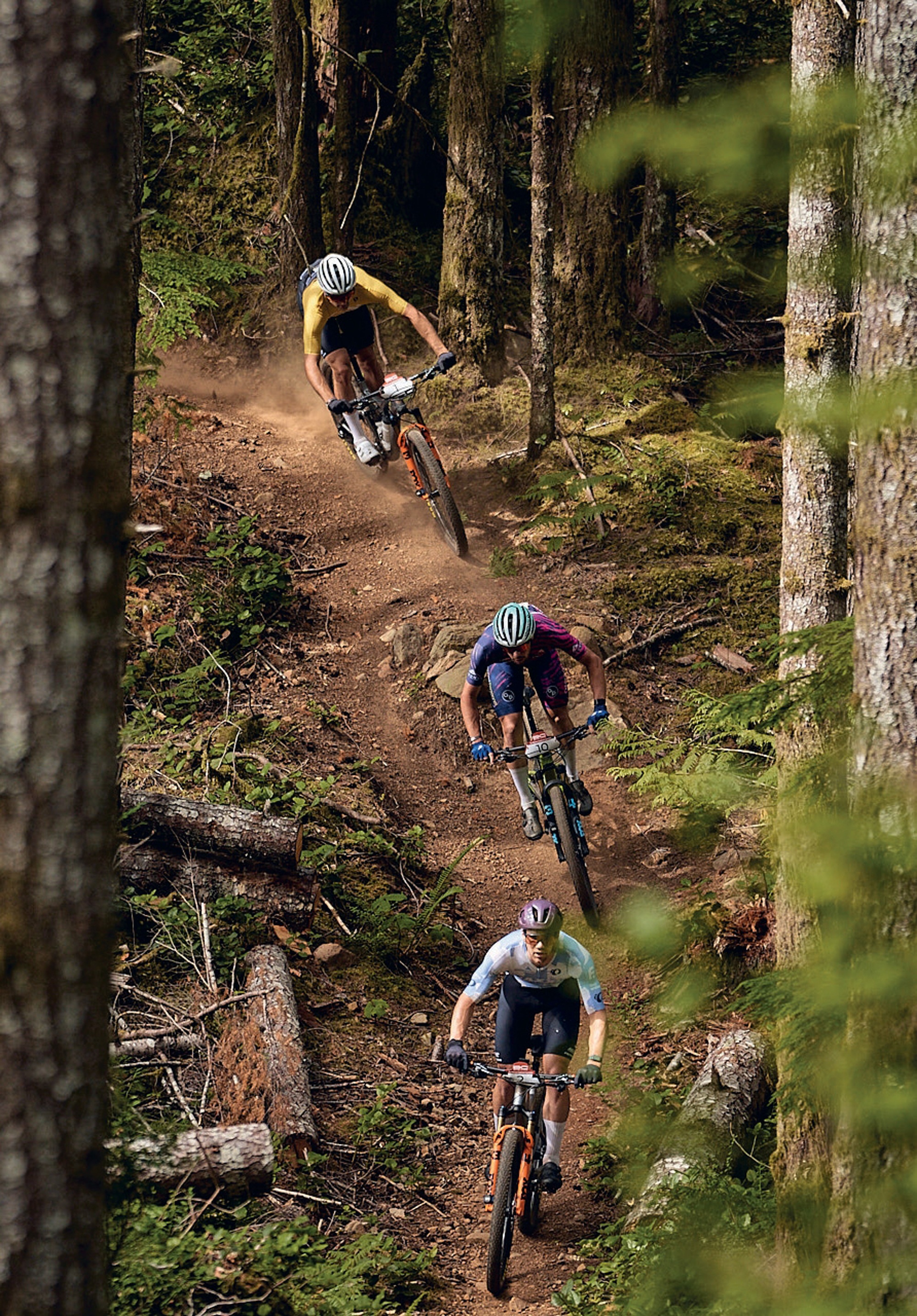
As with any debutant at Unbound, Matt had a tough baptism into the 200-mile (325 km) gravel race in the Flint Hills of Kansas. “I’d say I got a proper unbound experience of it, just being a very long day. It was a big learning curve. I kind of ended up blowing up pretty badly, with I think about 90k to go, and it was just kind of survival mode, a ‘get myself home’ situation. Particularly with wild card points on the line and not knowing where everyone else was out on the road. I wasn’t moving quickly, but I knew I just had to battle on all the way to the line, and it would be what it’d be when I got home.”
Although he got through the event without mechanical issues, it was his fuelling strategy that proved his undoing. Too much carbohydrate in his fluids caused gastric upset, and a lack of plain water on hand added to his woes, since all his liquids had some form of carbs.
We discussed any pivotal moments in the race, and Matt quickly knew where he’d made a mistake.
“Little Egypt (key climb) got me. I was starting to battle a bit there, so I just didn’t quite bother moving up the field as far as I probably should have. The whole bunch just surges for all these key sections. Everyone knows where they are, so the pace really picks up, and I just kind of got swamped at the bottom of that. I remember going up the climb, and it eventually turns to almost double track, so there’s no room to move up. And I was thinking, oh, the pace isn’t actually too bad up here. I thought the climb would be a lot nastier after hearing so much about it. The one time I got a decent look around, people were letting the wheel go, and there were big gaps opening up.
“So, one other guy and I ended up chasing over the top for a good 20 minutes. Chasing real hard. Just chopping off to get back to that main bunch, just kind of panicking. It was just a real big effort to get back in the group, which I really didn’t need to do. So that’s another big thing I learned. “I could have just sat in with the main group behind, but it was more just being in a better position. I learned pretty quickly how important and how much easier it can make your life. It might seem like you’re working too hard at the time, but getting into those key pinch points first always pays off.”
Banking good points from Unbound, regardless of his challenges, Matt headed to the Levensworth Bike Festival up in Washington.
“It’s quite a funky little town. It’s like a small Bavarian town up in the mountains. The whole town is done up in a theme like some old sort of Austrian village.”
The two-day event proved successful for Matt, winning both days and taking the overall. Additionally, it was announced that he and Cam had both secured wild card spots for the remaining Life Time Grand Prix series, so his $6000 prize winnings would now ensure he had the funds to complete the Grand Prix season.
The next Grand Prix event was the Leadville 100, a 100-mile MTB race at high elevation. Knowing that this race wouldn’t suit him particularly well, that he also needed to exit the US for a time to reset his visa, and that he had one ‘drop’ race within the Grand Prix, Matt took the punt to miss Leadville and instead head north to Vancouver Island for the BC Bike Race.
The week-long stage race is known to take in some of the area’s finest singletrack, and with flawless organisation, it makes for a fun week.
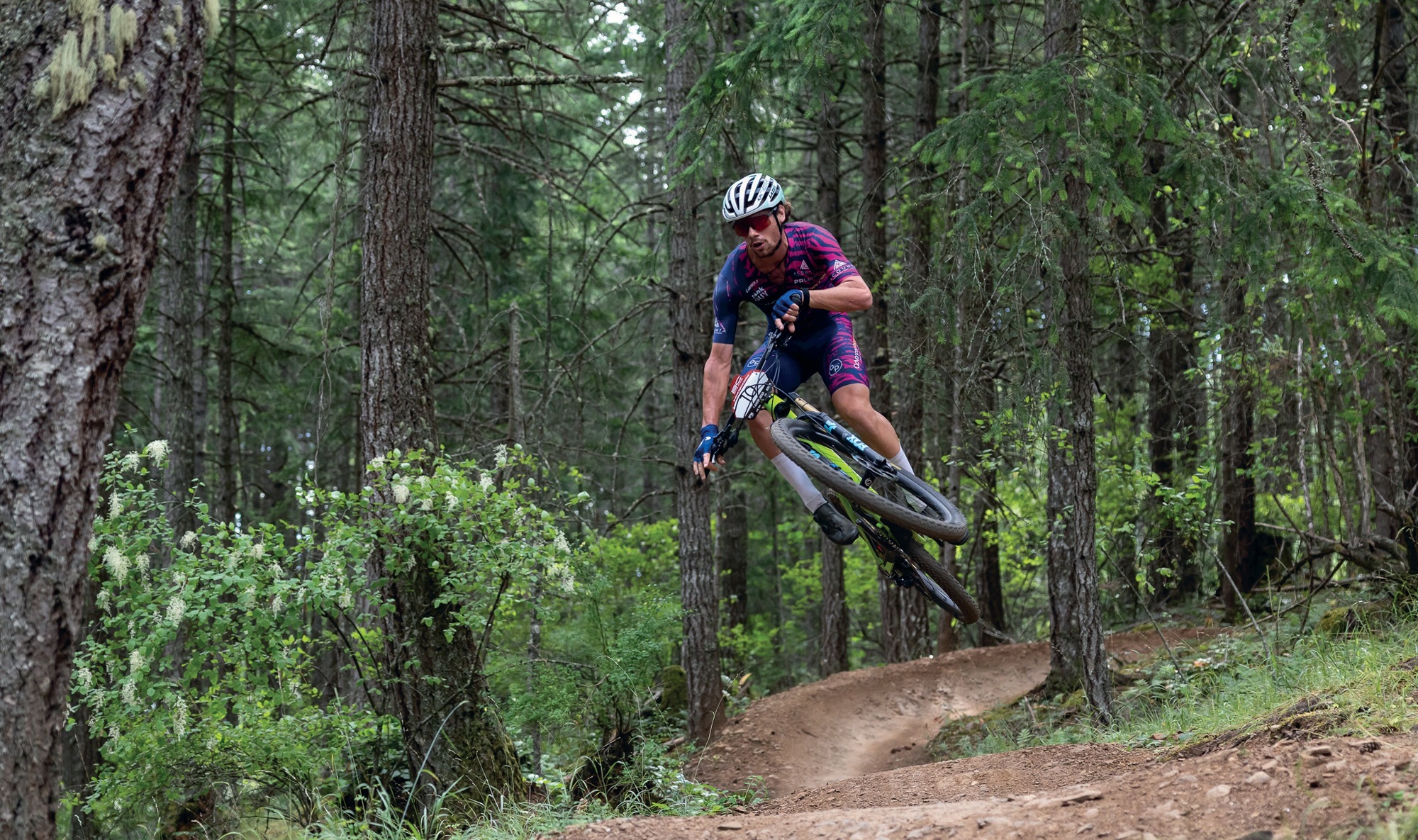
“I made it through in one piece, which was surprising with the kind of terrain we were racing on. I was pretty happy to just make it through in one piece. And again, no flat tyres. Two localish Canadian lads I was chasing all week definitely had me pretty tapped out on the technical side of things there!”
After winning the first stage (aside from the prologue), he then finished second or third across the remaining stages. Matt wound up second overall, sandwiched between 2024 winner Sean Fincham and Andrew L’Esperance in third in some incredibly tight racing.
“All week, it was well less than a minute of gap, hovering around 30 or 40 seconds. Pretty much all week up until the last stage, when I kind of thought, ‘this is my last chance to try and win this thing,’ which is still very doable. And it’s only 30, 40 seconds. It was just me and Sean, absolutely going at each other.
“The course was basically a long climb, a short climb, a quick descent, then a big, long climb that finishes on a bit of techy singletrack, and then just a massive, long downhill from the top of the Cumberland trail network all the way out to the finish. So yeah, I was pretty cross- eyed by the top of that climb to say the least!
“He got into the descent before me. I was just trying to make it down without crashing. There were a couple of pretty janky trails, and he put a pretty good bit of time into me on that long downhill.”
In classic Kiwi dirtbag style, Matt spent the BC Bike Race week living out of a U-Haul van, but after the race was done, he knew there would be some niggly logistics involved in returning the vehicle to central Vancouver. Keen for a big day on the gravel bike, Matt drove the van back to Vancouver, then headed back to Nanaimo via the ferry. His day ended with over eight hours and 200 km on the clock, having ridden home through the mountain bike trail network and some sketchy singletrack, especially on his fully rigid, skinny-tyred gravel bike.
“After that, I cracked into a big training camp. It was nice actually to have a couple months of no racing and to be able to go pretty deep on the training and not worry about being fresh for any racing coming up.
“The first week it was 24 hours, and then it was three 30-hour weeks, with some gym twice a week in there. Particularly by the end of the time up I was a little bit cracked on it (the training). It was basically just wake up, have a big breakfast, then spend the day on the bike, get home, and do a bit of stretching.
Oh, the tour was on around then, so that was pretty handy. Get home, watch that day’s tour and then go to bed, and that was that.”
Next up was the Life Time Chequamegon race in Wisconsin.
“It’s a bit of a novel event, really. It’s definitely an outlier in the Life Time race being so short. It’s not really a mountain bike race. It’s just all on grassy ski trails, so it’s just rolling grass hills. But they’re really steep, too, so it’s basically just two hours of 30, 30 (second) intervals. You’re just punching up these short, really steep grass climbs, then straight back down. It’s just that the whole way through, really. Some people hate it. I actually quite liked it. It kind of felt like a long, short-track type race. It was like an XCO race in the way it played out. Very dynamic racing, like tight bunch racing. Quite tactical. There are a couple of pinch points in it for sure.
“There are two bits where the track kind of goes to singletrack. And then there’s what’s known as the Fire Tower Hill, which is the main climb of the day. Quite fitting. On our pre-ride, me and Cam went out, and our goal was to try to take the KOM up Fire Tower, which we did. Even though Cam actually came around me over the top of the climb, according to Strava, I got the KOM. Then on race day, we reversed roles. Cam led into Fire Tower, and I was on his wheel, then I was able to just come around him over the top, which didn’t really help the race at all. But again, it’s good fun racing your mate, eating each other up!”
Matt headed from the wilds of Wisconsin to Blackburn, Pennsylvania, where Cam Jones is now based.
“It was pretty cool to get around his (Cam’s) hometown and where he’s been doing all his training this year. I got to check out Virginia Tech University, where he studied for a while and just meet a bunch of the crew over there.”
Next up, he was off to Bentonville for the 100 km Little Sugar MTB race, the penultimate round of the Life Time series. Early in their visit, both Matt and Cam had sliced tyres while out training in the area, learning that if your tyre is locked up while sliding or skidding through a turn, it’s likely the sharp rocks that line the Bentonville trails will slice that bad boy like a knife through butter. The key they discovered was smart braking and never locking up your wheel.
“The start of the race is a neutral rollout along a road, and then you peel off into a short bit of concrete and then like an open grassy climb, which again, for us XC riders, we were a lot less worried about positioning for the start once I saw that it was at the beginning because it was so similar to an XCO. It was basically just two minutes as hard as you can to the singletrack. Matt Beers (Specialized Factory racer) led that one out. Then with Cam, then it was Bradyn Lange, and then me into the singletrack.
“Pretty quickly over the first five, ten minutes into the singletrack, we got quite a gap on the field, so things were looking promising. Then, on a pretty nondescript section of trail, I still don’t actually know what I hit, but I hit something buried in the grass pretty damn hard. Hit both my rims on it, punctured both tyres, and cracked the rear rim right through.”
Being only 15km into the race, and with the aid station at the 50km mark, Matt soldiered on, having plugged his punctures. He was able to limp to the aid and borrow a wheel from Cam’s Scott Bikes support team, who’d been helping Matt out at times over the season. Matt finished the race, comfortable in the knowledge that he’d salvaged some overall Life Time points, while some of his competitors had either pulled out of the race or not turned up at all.
The following weekend, the Grand Prix remained in Bentonville for the grand finale, Big Sugar, a 100-mile gravel race. With storms forecast for race day, organisers announced that there may be a change to the race, but it wasn’t until early race morning, as riders were heading to the start, that they announced the race distance would be halved, so riders would be off the course before the worst of the storm arrived. Such a drastic change threw many of the field into disarray. Not Matt though – he knew the shorter race would play to his strengths.
Being placed outside the top ten overall, and with the leading riders marking each other, Matt knew this was an opportunity to go all in and try to get a race win.
“Being out of the top 10, I kind of had the feeling of just nothing to lose, everything to prove. So, I was pretty damn determined to make sure I was going to be in a break, up the road that day. It took about 12 minutes to do so. I remember looking back and seeing Matt Beers coming across to me and thinking, Sweet, that’s a man you want to be in the break with.
“Riley Amos (Trek Factory XC racer) followed, and then we also had Alex Wild, who kind of just got on, but as we’re kind of launching and trying to establish the break, unfortunately, he kind of got spat out the back, and it was just the three of us. Being shorter at just 50 miles only made the racing faster and more furious. So, things are looking good.
“About an hour and a half in, we lost Riley. He had dropped off, and then Matt Beers and I ended up having a pretty good gap over what was a chase group of about four or five riders that Riley had joined.
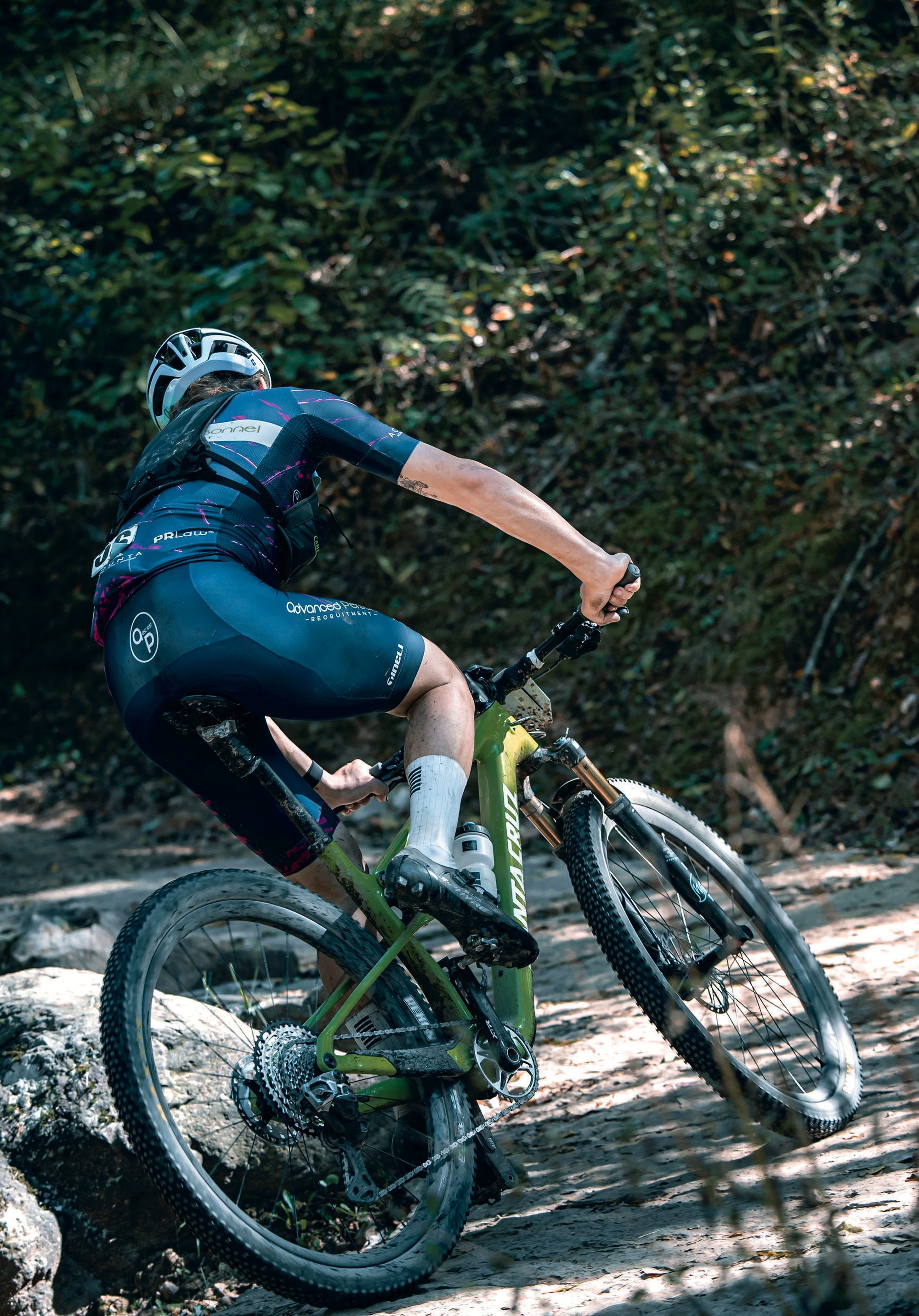
“One tough thing about the Life Time Grand Prix is that you often don’t get told accurate time gaps during a race. We hadn’t had a time gap all day. We could just tell by what we could see. So, I didn’t know how much of a lead we really had at that point. And then, yeah, with about 15km to go, into one of the last somewhat technical sections, a little bit of singletrack, there was a drainage ditch of some sort, and at the bottom, it was just all really chunky gravel had collected. I came in a bit hot and pinched my front tyre, cutting the sidewall on some of that notoriously sharp Bentonville rock. It was a pretty big slash, so it was kind of hard to plug. I didn’t really know what to do, so I just kept on riding on the rim, hoping I could ride hard enough to make it home before the remaining groups.
“Potentially, with the amount of the gap we had, there could have been almost enough time just to take my wheel out, throw a tube in and try that. We had a lot of time. I was riding hard on the rim, but I wasn’t going quickly.”
With just 6km to go, the small chase bunch swallowed up Matt, but it wasn’t until the last couple of kilometres that the main bunch with the overall series contenders caught him. Over the finish, Matt’s series ranking didn’t really change, but his final opportunity for a win in the series was gone. After the event, multiple high-level riders mentioned that Matt was up for the win, strong enough to do it, but bad luck had spoiled his chance.
Returning to NZ, Matt had a bit of a sour taste in his mouth after the tail end of his season had been wrecked by his mechanical issues. Unfortunately for him, his woes weren’t over yet.
Lining up for the Cross Country Marathon Nationals at the Whaka 100 over Labour Weekend, Matt was keen to put his strong end-of-season form to use. There’s no denying that he was a strong contender for the title, but once again, luck wasn’t on his side. His seat post packed in just 45 minutes into the race, with its keyways failing, leaving the saddle free to rotate 180 degrees.
Matt pulled the pin, frustrated that this was how his year would finish out, and although he was gutted, he was comfortable in the knowledge that he had the talent and now the experience to take on some of the best off-road racers in the world.
2026 will look similar to this year for Matt. After missing out on the Life Time Grand Prix series selection for next season, he plans to again battle for a wild card. His set-up next year will be a lot less dirtbag, though, as he’ll have the support of Scott Bikes but will still be travelling and staying with Cam Jones through the bulk of the season. I’m sure the duo will again turn heads and show the field what these cheeky Kiwis can do.