

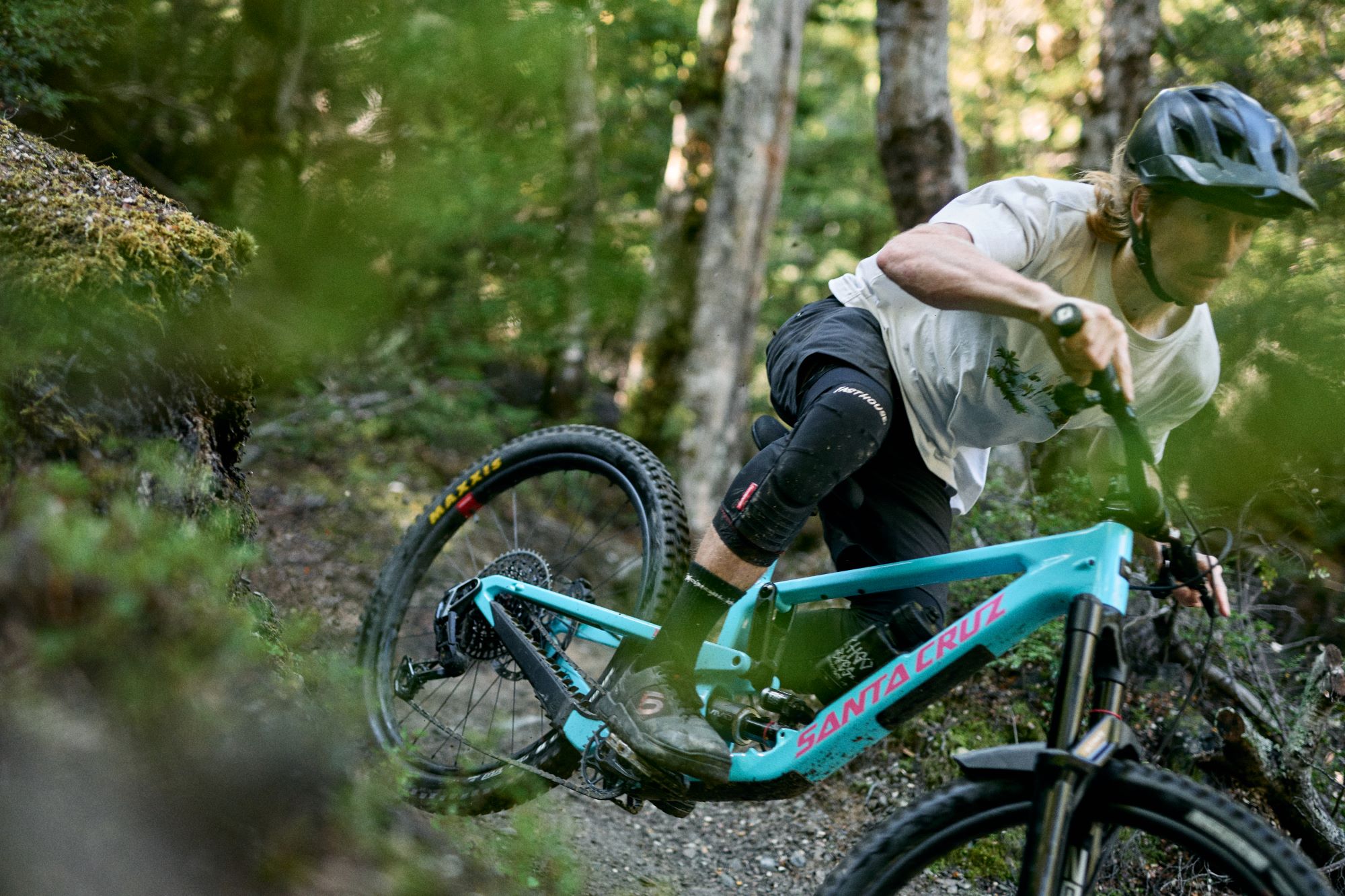
Santa Cruz just refreshed one of their most popular and heavy-hitting models, the Nomad. For the uninitiated, the Nomad is a 170mm travel mixed wheel weapon. It’s not a classic Enduro race bike, although it sits under the ‘Enduro’ category on their website; it’s much more fun than a pure race bike, although I’m not sure I’d peg it as a freeride bike either. In my mind, it’s a mash-up of a few categories that, when melded together, create an exceptionally fun and fast result. Fast is fun, faster is funner (is that a thing?).
From the alloy framed early edition launched in 2005, to the unmissable green and pink colourway of the 2021 Nomad, now in its 7th generation, the intent remains the same; provide riders a downhill oriented platform worthy of hours winching themselves up long alpine climbs purely to shred the descent, no holds barred, don’t let the bike hold them back on a descent.
I’ve been stoked to get aboard the new Nomad 7 for a few rides before launch day. Here’s an overview of my experiences, just a few rides in. We’ll have a more in-depth review dropping in a few weeks.
What’s new?
This fresh Nomad is very familiar at a glance, although many small tweaks and iterative changes put this new Nomad a peg up on the outgoing generation. We’re still getting a 170mm, mullet-specific (29/27.5 wheeled) chassis, but this time it’s only available in the high-end, high-modulus Carbon ‘CC’ version.
The use of CC carbon lowers the weight a smidge, 86g over the ‘old’ CC frame, retaining the robustness while achieving improved ride quality. Better carbon also opened the door for a refined, smaller downtube, assisting in weight saving and helping give a more compliant ride. Interestingly, the downtube is barely larger than the Stigmata gravel bike, a drastic decrease in size from the Nomad 6.
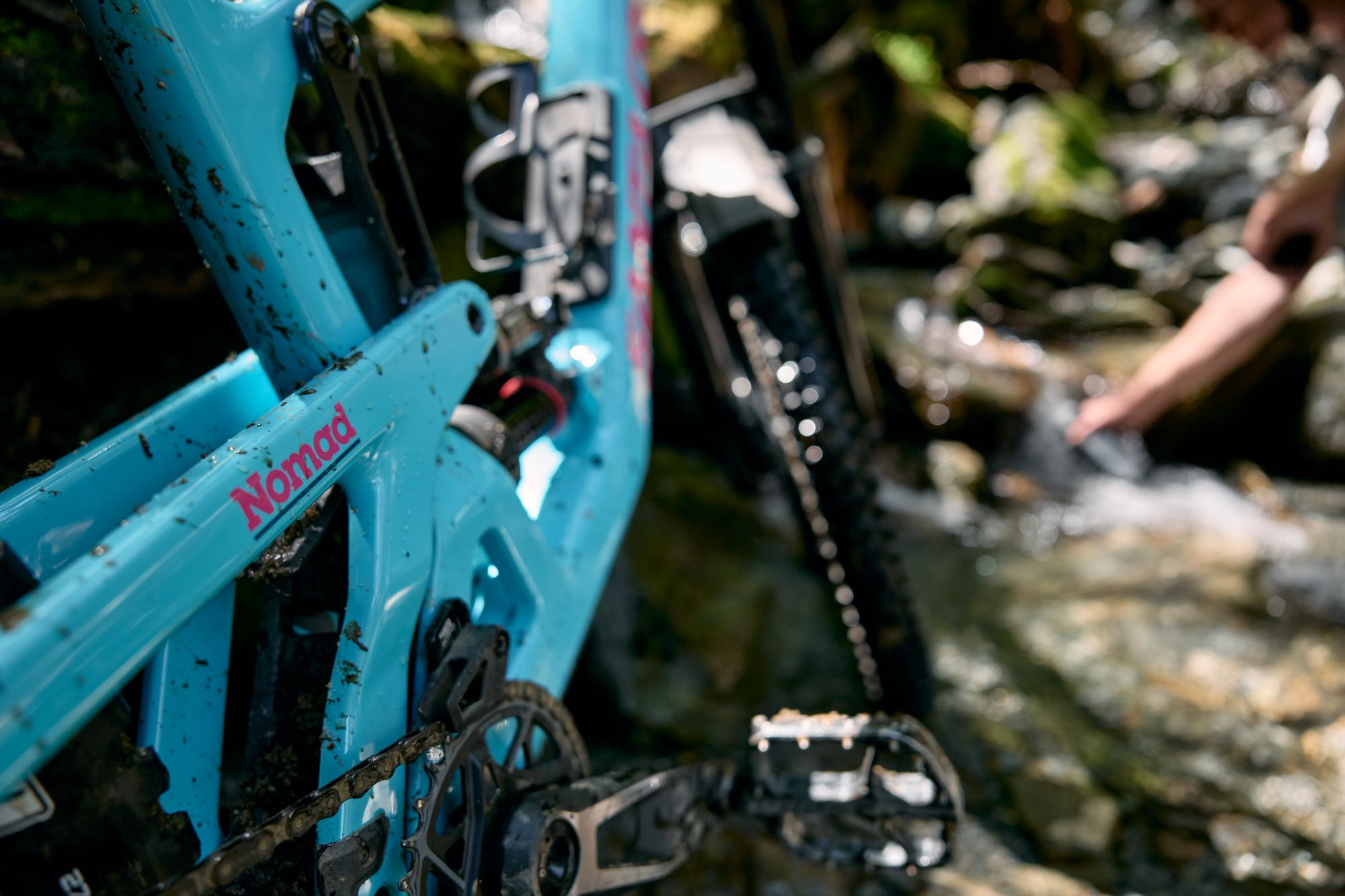
Visually, the bike is very similar; the most obvious change is just above the bottom bracket junction. The bike now gets the more open, “shock tunnel” cutaway shape the Hightower and Bronson received during their most recent refreshes. The rear shock and lower suspension link are now far more accessible, something which was a headache on previous models.
A subtly redesigned Glove Box, the v2, fits tighter than before with no rattle or movement. The latch feels positive and sturdy. Thankfully, the smaller downtube still fits the same amount of gear as the previous, larger version.
The shock has a flip chip, offering riders a small amount of adjustability. Plus or minus 3mm of bottom bracket height and plus or minus 0.3 degrees head angle, not a lot, but there’s adjustment there. Under the toptube, an accessory mount adds options for riders who need quicker access to anything that they can’t cram in their downtube.
After the uproar in the Pinkbike comments when the 2025 Bronson CC frame launched without them, the purists amongst us will be glad to see internal routing for mechanical drivetrains included on this frame.
As has been customary with Santa Cruz’s bikes (outside of the Blur), there are grease ports on key pivot points. Good grease in, bad grease out, simple. When fresh grease doesn’t do the trick, like all Santa Cruz bikes, free bearings for the lifetime of the frame are available.
Santa Cruz raised some eyebrows (and more Pinkbike comments!) when their Vala e-bike launched with its 4-bar suspension layout. Although they considered using it, without the drive-unit in the way of the lower link, there was no need and their tried-and-true VPP linkage was still the best option to retain and build on the performance of the Nomad. Inspired by the changes to the suspension kinematics of Bronson and Vala, the Nomad suspension is tweaked to reduce pedal kickback and lower anti-squat, resulting in better climbing and increased performance through rough terrain and square-edge hits.
With a slightly slacker head angle (63.6/63.3) and a smidge steeper seat tube angle (77.4 in High setting), the geometry is nearly identical to the previous generation. The size large I’m riding is a 475mm reach, seemingly a pretty ‘normal’ reach for size Large bikes now across many brands.
Ride Impressions
Cracking open the Nomad’s cardboard box, the first thing that struck me was the paint scheme, a definite nod to the 2015 Nomad and its Miami Vice, ‘Gloss Aqua Magenta’ colours. That paint was polarising then, and I’m sure it will be polarising now. Fortunately, if you dislike the 80’s throwback, a more subdued ‘Matte Metallic Earth’ is also available.
Before throwing a leg over the bike, I didn’t read any pre-launch info in an attempt to make my own impartial assumptions on how the rig rides and where it’s aimed. After having now spent some time in the launch docs, I’m glad to see many of my assumptions line up with Santa Cruz’s claims.
For clarity, the bike I’ve been riding is non-stock, built with a freshly launched Rock Shox ZEB Ultimate fork and Vivid Ultimate air shock, neither of which features on any of the stock Nomad builds. The stock FOX suspension will be more than up to par, though, the largest difference being the rear shock having a coil spring as opposed to the air on the model I rode – so perhaps even more buttery than the Vivid?
I haven’t been a huge fan of long travel bikes in recent years, heck, even smaller travel (150-160mm) bikes in some cases have been cumbersome, overweight behemoths that go great in a straight line, or down a decent gradient, but point them at a mellow trail, or a steep climb, and no bueno. Excess weight and overly slack geometry mean they perform in a narrow band of trails.
What was obvious from the first ride is that this new Nomad is a big travel that plays like a smaller bike, in all the best ways. Big bike advantages without being cumbersome and a burden on flatter trails or climbs.
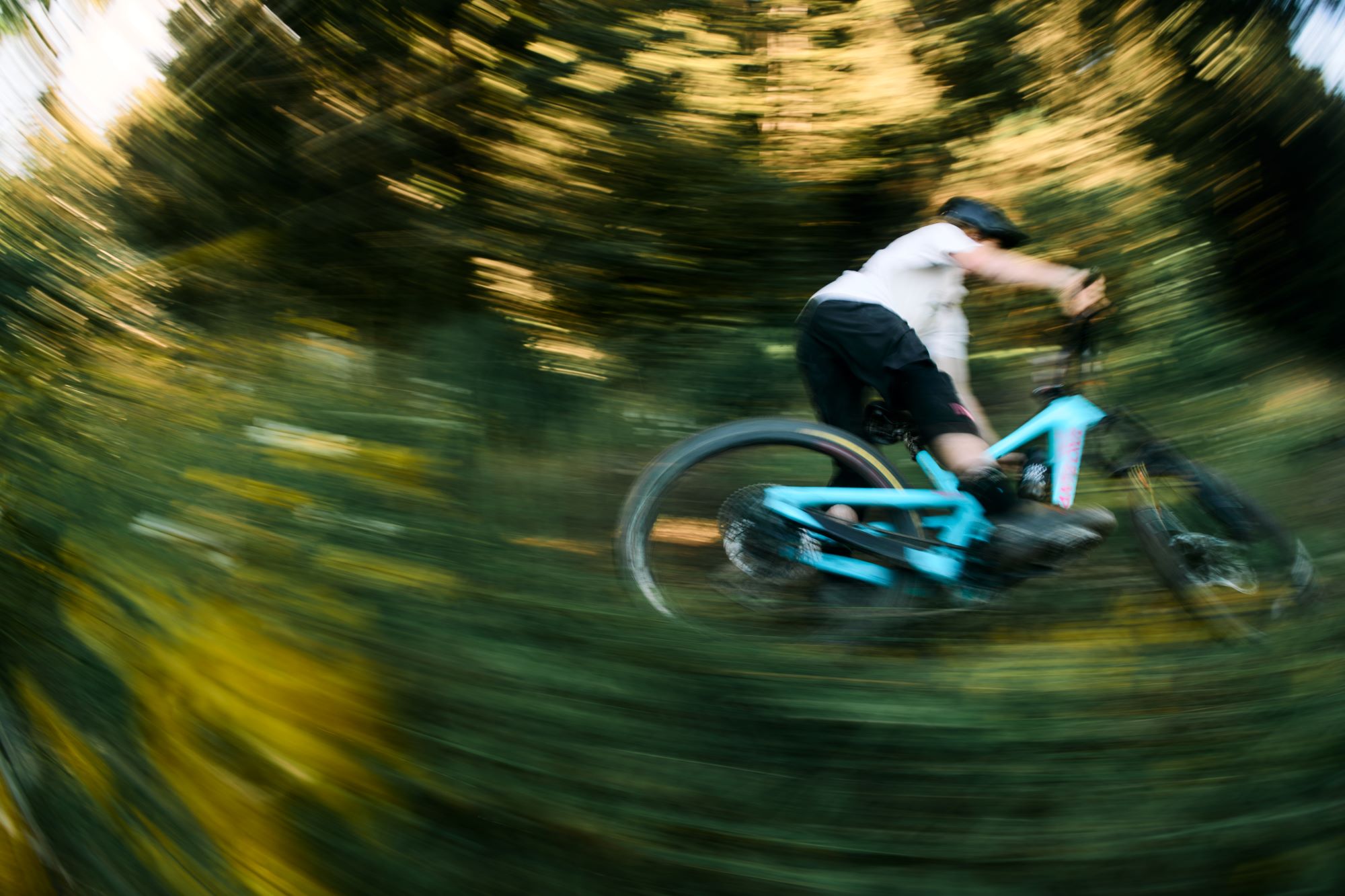
Seated climbing is surprisingly spritely for a 170mm travel bike. The reduction in anti-squat means it climbs more efficiently than the previous model. I found myself resorting to the shock’s lockout lever less than many shorter-travel bikes. Even when the shock is fully open, sprinting up short pinches or across flat sections proves how well it pedals. I wouldn’t go as far as to call it “snappy”, but given its travel, it pedals exceptionally well. I’ve been perfectly happy repeatedly spinning my way up long climbs just to bomb down, some of this will be down to the overall light weight of the bike, and some due to that anti-squat.
Downhills are really what this rig is targeted at, and after seeing how good it climbs, I wondered if, when it was thrown down steep, rough trails, it might have some quirks. It doesn’t. It’s surefooted, balanced and predictable through the rough stuff. The VPP’s slightly rearward axle path and reduced anti-squat helps remove the ‘hung up’ feeling many 27.5 rear wheeled bikes get when the going gets rough – I haven’t had this feeling at all on the bike, and it has me questioning my “I’ll only ride full 29er” stance, having been put off some mixed wheel bikes with this feeling in the past.
This is a big bike, no doubt, and 170mm is a lot of travel to be dealing with, but the speed and lines it unlocks are bonkers and have taken some time to get used to. The suspension curve gives a buttery feel off the top, a reasonably linear feel through the middle, and a progressive ramp at the end to avoid harsh bottom outs. Even though it’s a long legged beauty, the Nomad doesn’t feel like it ever wallows in its travel, there’s always some support to push against and it doesn’t get bogged down over successive hits or deep g-outs that catch you off guard – it’s really predictable.
After ‘writing off’ big bikes and thinking they never suit my local trails, in my head, reserving them for proper mountains and chair lifts, the Nomad has been a breath of fresh air. I still need some time to really solidify my opinions, but so far, so good. What a weapon this bike is!
Watch this space for a full feature on the 2027 Nomad.