Words by Liam Friary
Images by Caleb Smith
I live with a deep, near-constant desire to get off grid. I find life’s regular day-in, day-out rhythm becomes mundane at times. I relish the simplicity that comes with spending time buried in the backcountry.
It’s the simplicity of hard riding, adventuring and discovering remote huts. To get there, a unique type of effort is often required – like many things in life, to receive the reward, you first have to put in the mahi. To be honest, that’s probably the most appealing part of it all, for me anyway.
I like that it takes effort, that it’s often hard and requires the right sort of mental approach. Reaching these places usually involves a large amount of travel logistics, but that’s why they’re not ridden a lot, as most humans want to take the path of least resistance. I am one of them too, but I need to constantly fight that narrative.
Our country boasts hundreds of backcountry huts and multiple tracks for both riding and walking. That alone is enticing – so many different places to discover, so many different adventures waiting to unfold. A lot of these areas are infused with rich history, with well-worn pack tracks built by early prospectors, some seeking fortune from the earth’s minerals. Some of those early prospectors knew the value of route marking and a good hut for shelter.
Often, the appeal of these areas is that these tracks are not purpose-built for mountain biking, but we can still use them for recreation. It’s about getting off the beaten track and accessing areas you wouldn’t normally venture into.
An area that’s appealed to me for a long time is the Whakaari Conservation Area near Glenorchy. This region offers backcountry huts and tracks for both riding and walking, all steeped in mining history. The area was the site of scheelite mining from the 1880s onwards. Scheelite, a calcium tungsten mineral, was discovered in a quartz reef in 1884 by William Raines, C. C. Boyes and Simon Wilson. The mineral became highly valuable during both World Wars due to its use in hardening steel for armaments and in lightbulb filaments. George Wilson formed the Wakatipu Scheelite Company in the 1880s, and mining continued through various operators until well after the Korean War, when prices dropped and most miners moved away. The region’s scheelite was particularly valuable as it was molybdenum-rich, making it crucial for the arms industry during wartime periods.
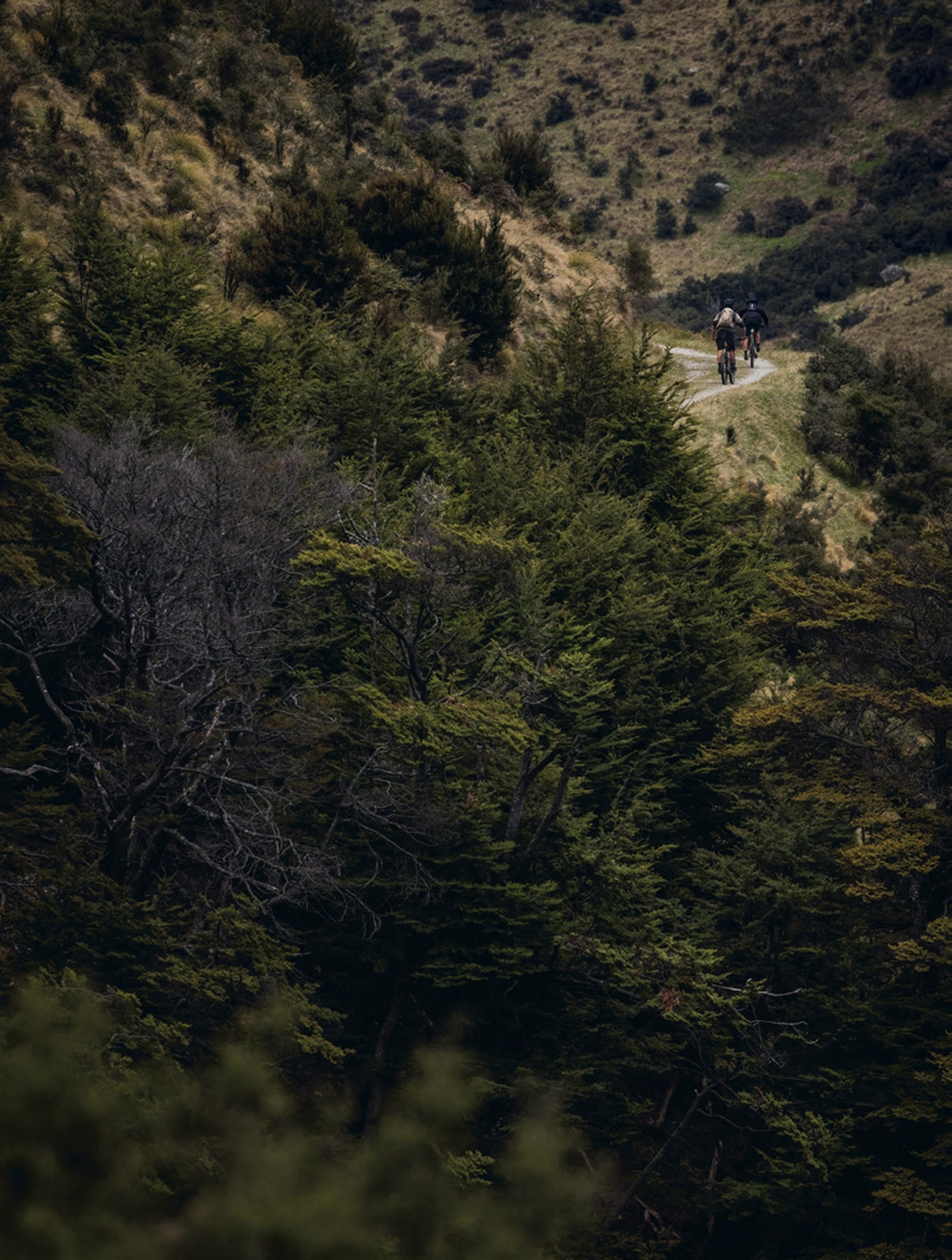
For our latest backcountry escape, we’d ride the Mt Judah Track to Heather Jock Hut, then return the same way. The destination was just as important as the journey. Knowing there would be four walls, a roof and a place to make a brew and eat some grub whilst admiring the view made the challenge ahead feel purposeful. The track follows the old Mt Judah Road, built to service the mines high in the mountains. Along the way, it passes the Glenorchy Scheelite Battery and the State Mine – remnants of an industry that once employed hundreds of miners who worked in lonely conditions at altitudes as high as 2000 metres, above the clouds.
The track winds up steep zigzags around the northern side of Mt Judah. The state took over operations in 1942, during World War II, renaming it the State Mine, though they gave it up after the war. The mine then operated on a tribute basis into the 1970s. By 1942, the mine had produced 862 tons of scheelite concentrate. Those early miners knew the value of a good hut at the end of a long day’s trek in these unforgiving mountains.
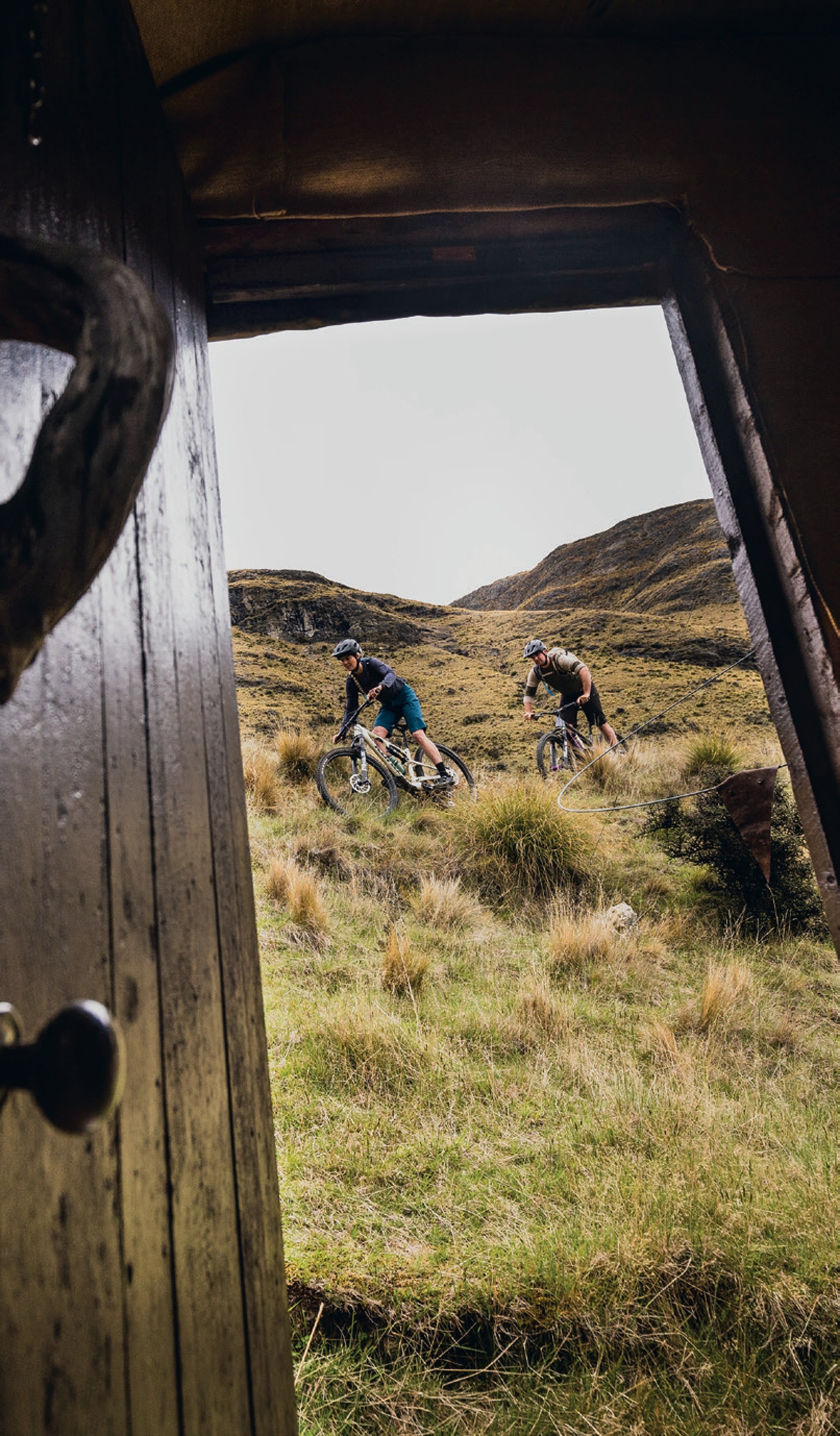
The Heather Jock Track follows the old mining road and features several historic huts from the scheelite mining era. Three restored character huts lie along the route – Bonnie Jean Hut, Jean Hut, and Heather Jock Hut. Jean and Bonnie Jean Huts were known by the scheelite miners as the ‘red huts’ due to their cladding, with Jean Hut’s exterior made using flattened drums. The roof is held down by huge rocks suspended on wires. The building methods and materials used in the restoration are as faithful to the original huts as possible. There’s something special about seeing a place with that much history and imagining all the miners who sought the same shelter over the decades.
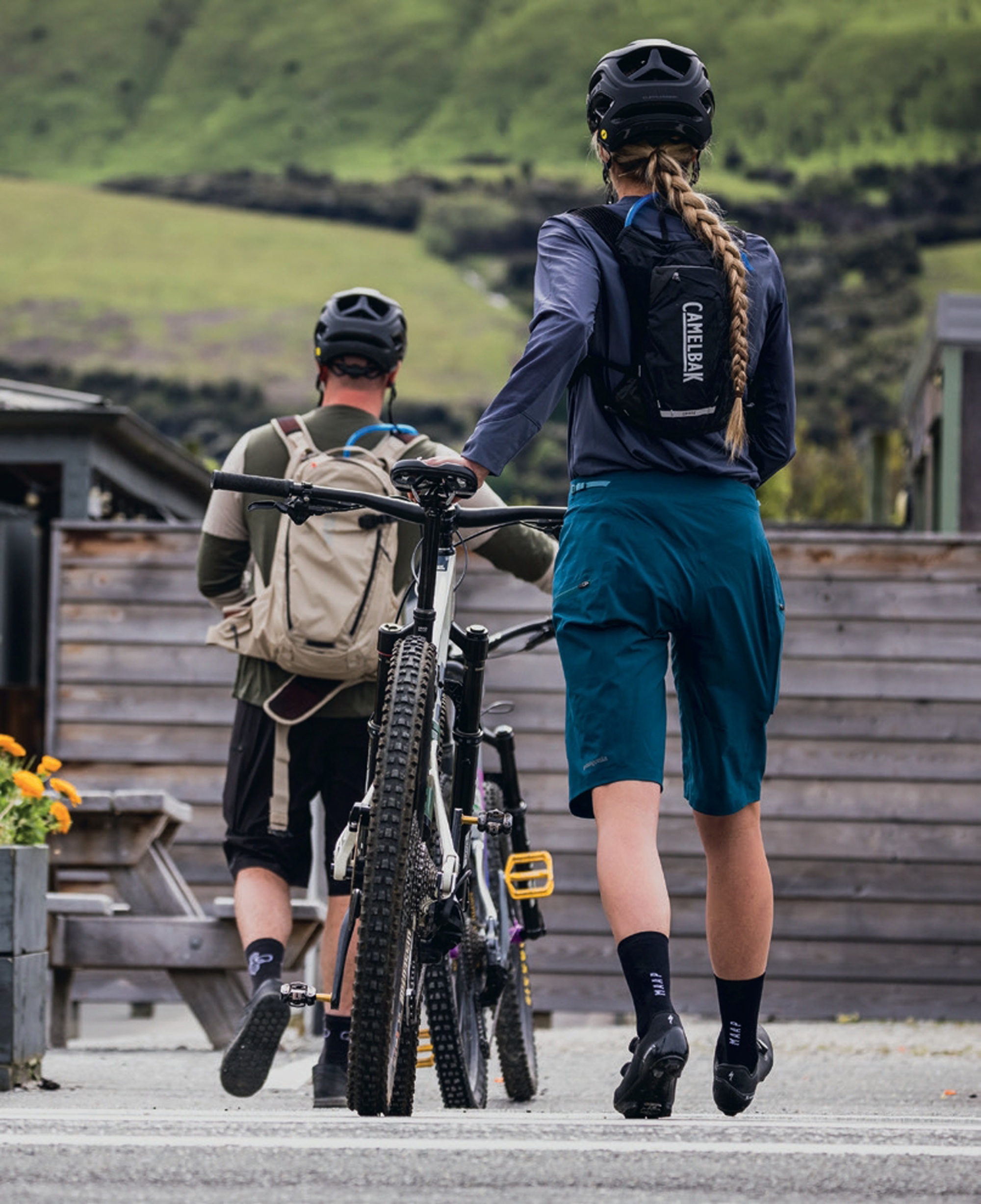
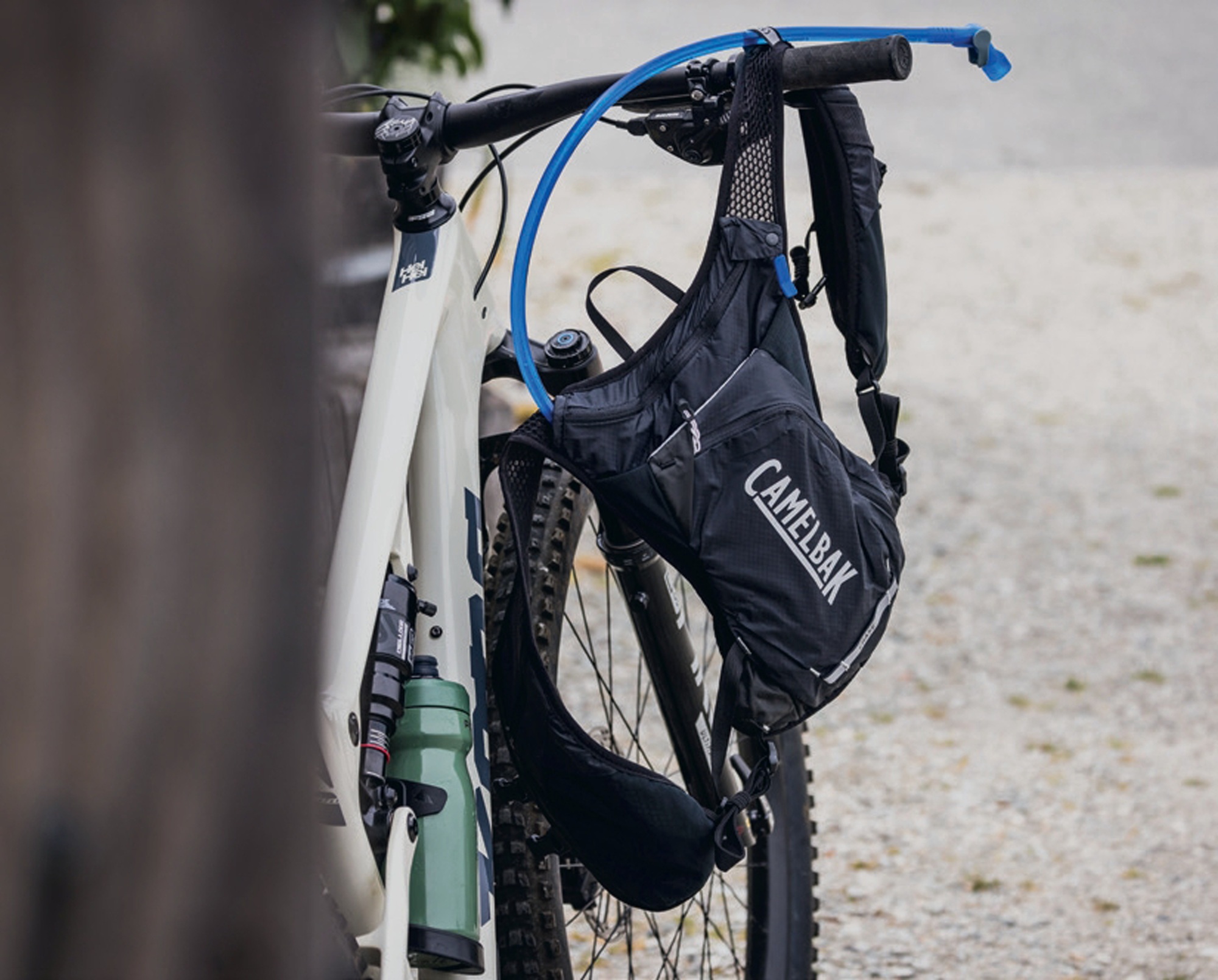
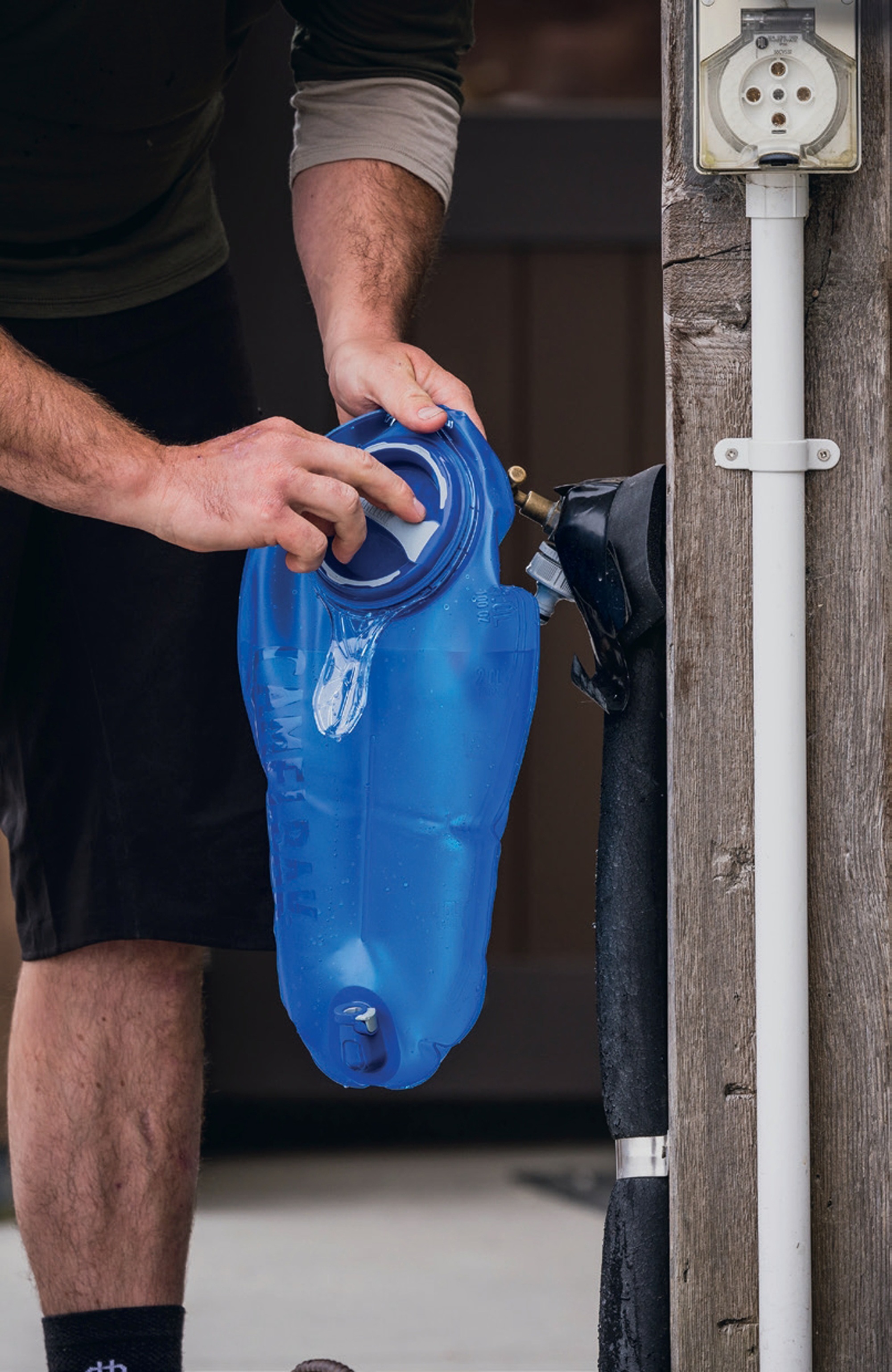
Our main job first thing was packing for the trip ahead. Littered across the ground was gear, jackets, safety devices, food, coffee, AeroPress, cooking gear, reservoirs, headlamps and lights – just in case. We packed everything into our CamelBak backpacks, considering weight and what we’d need once we arrived at the hut.
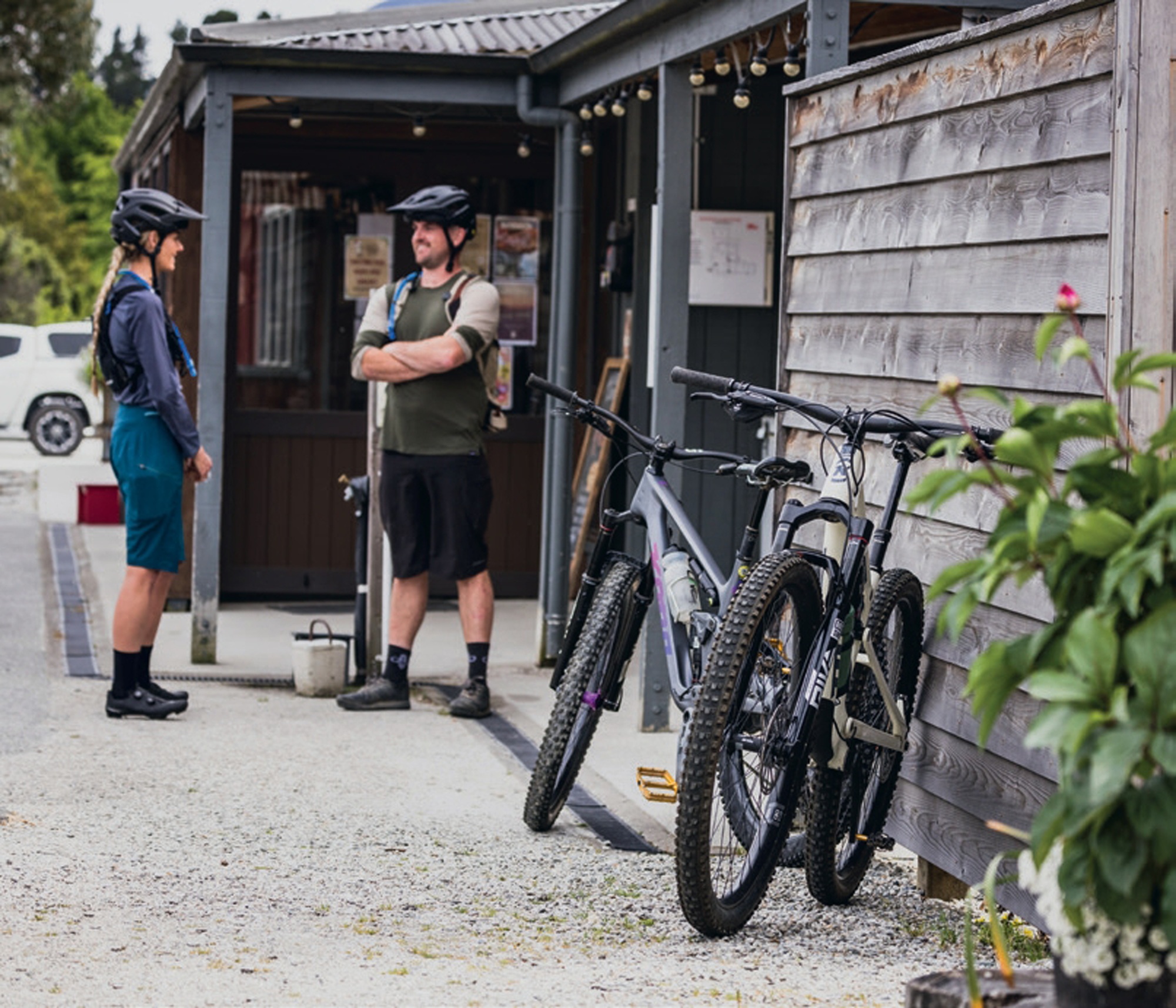
The mountains lingered in the distance as we drove closer. In every direction, it was rugged and steep with snow-capped mountains. We pulled up to Mrs Woolly’s General Store in Glenorchy and I ordered a brew and scoffed a pie, needing all the fuel I could muster. This would be a solid day out in the mountains.
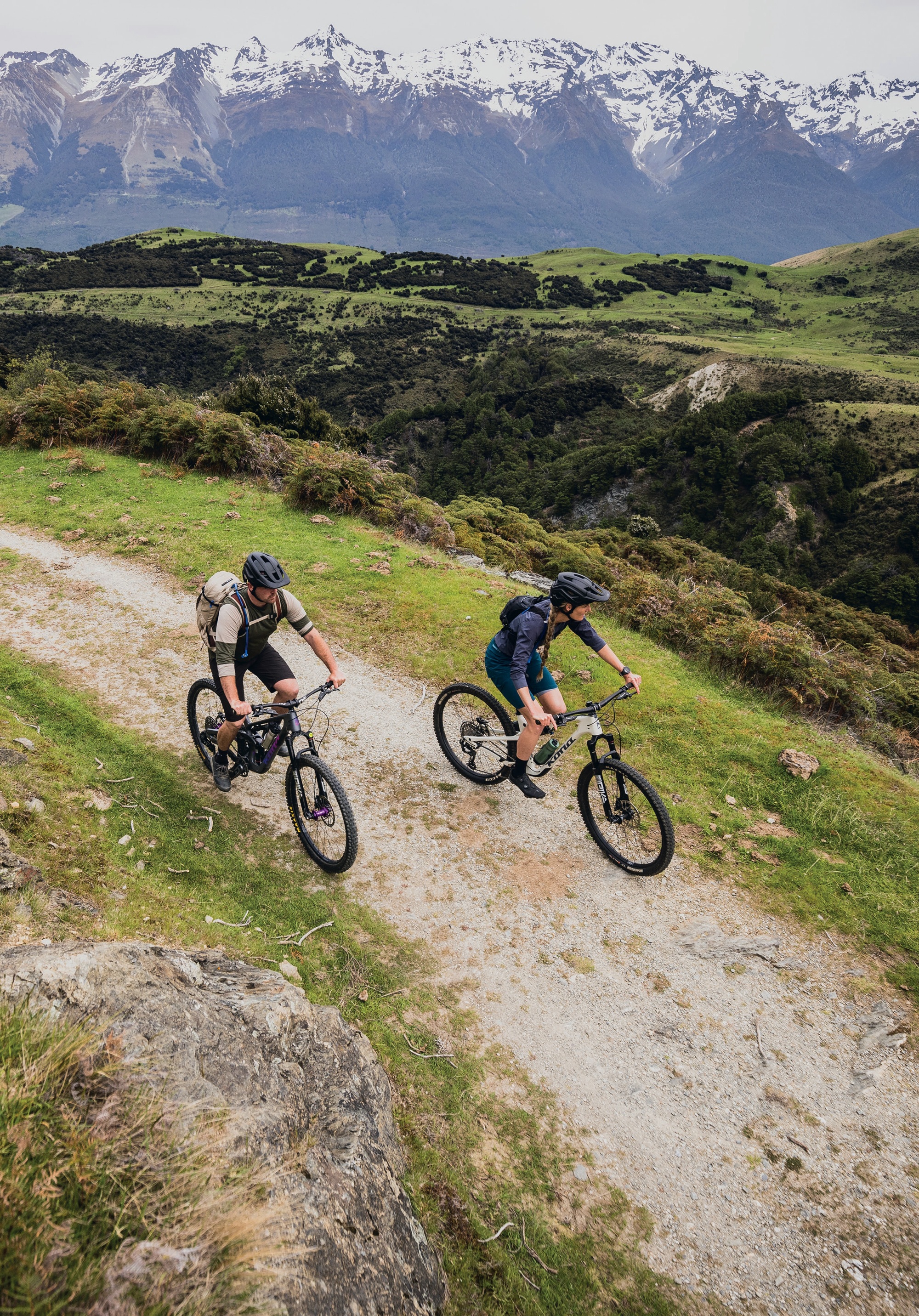
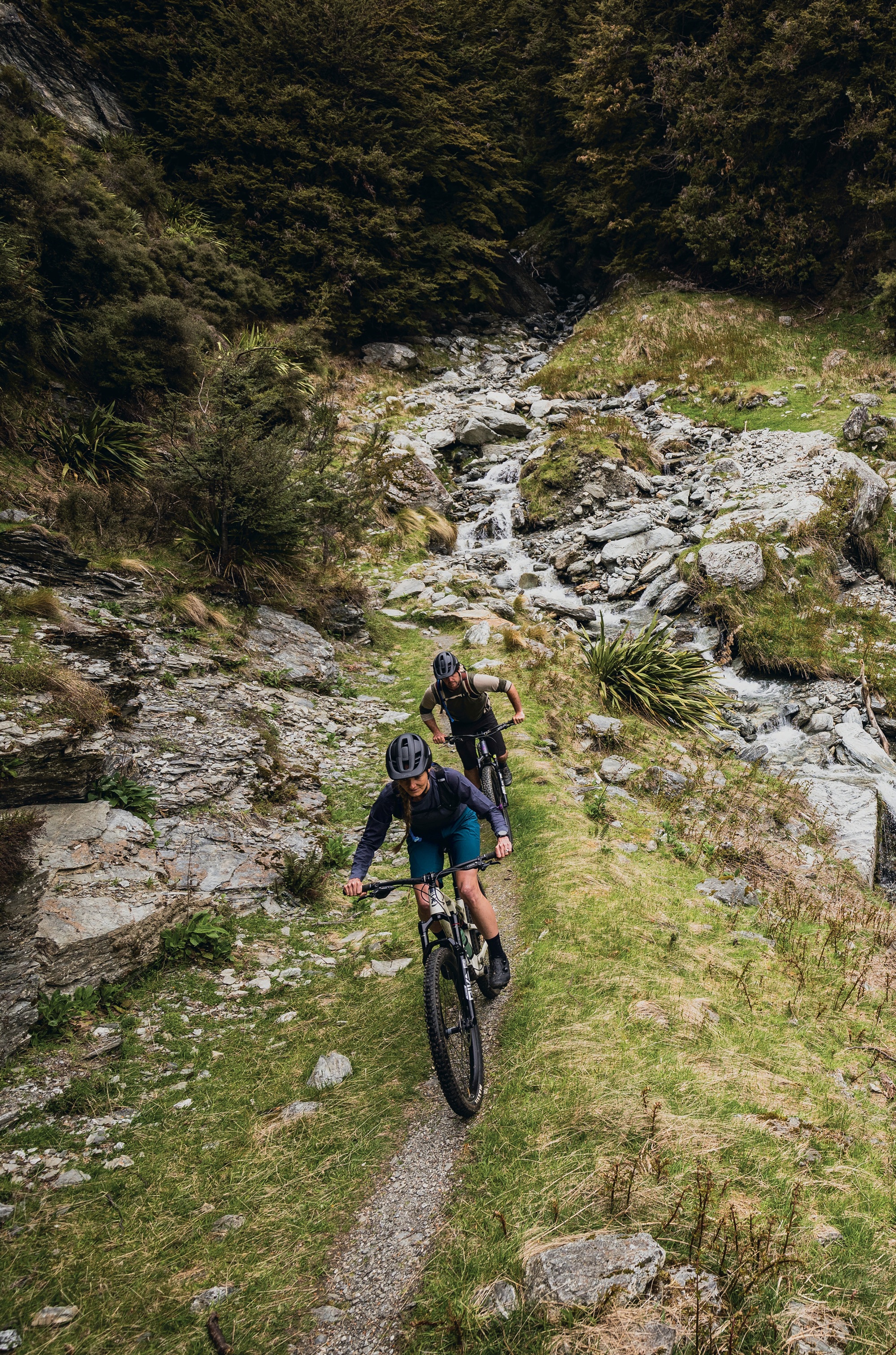
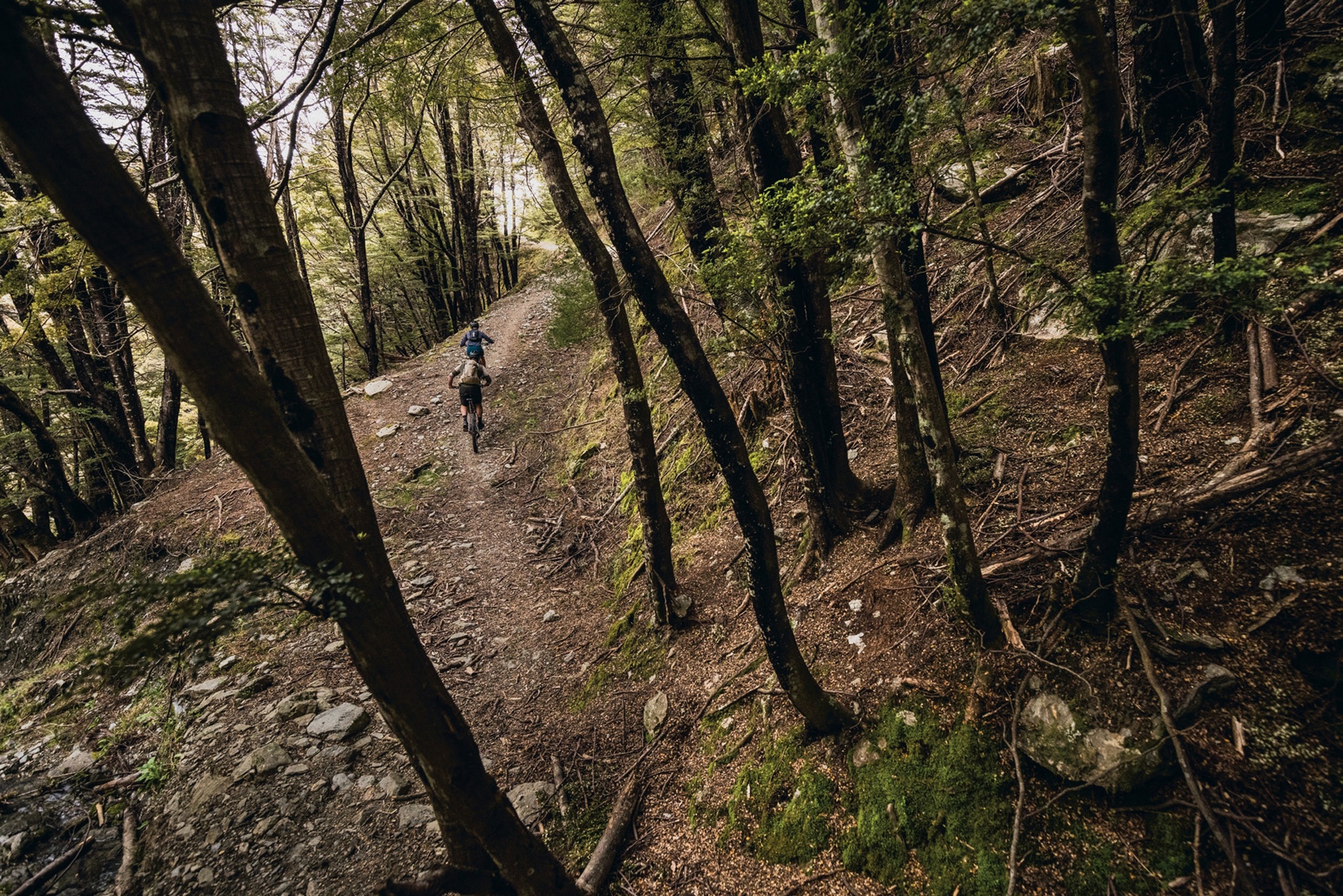
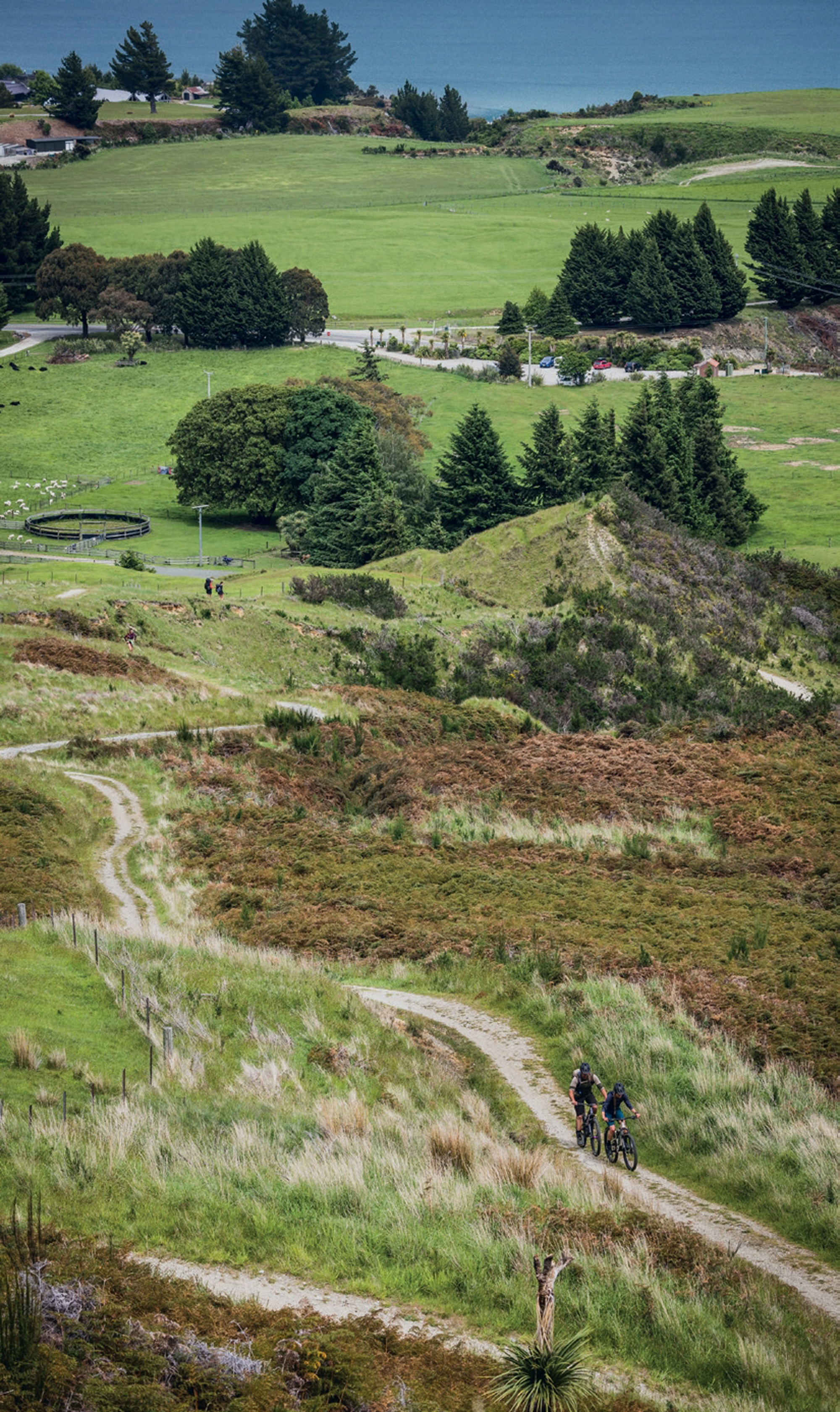
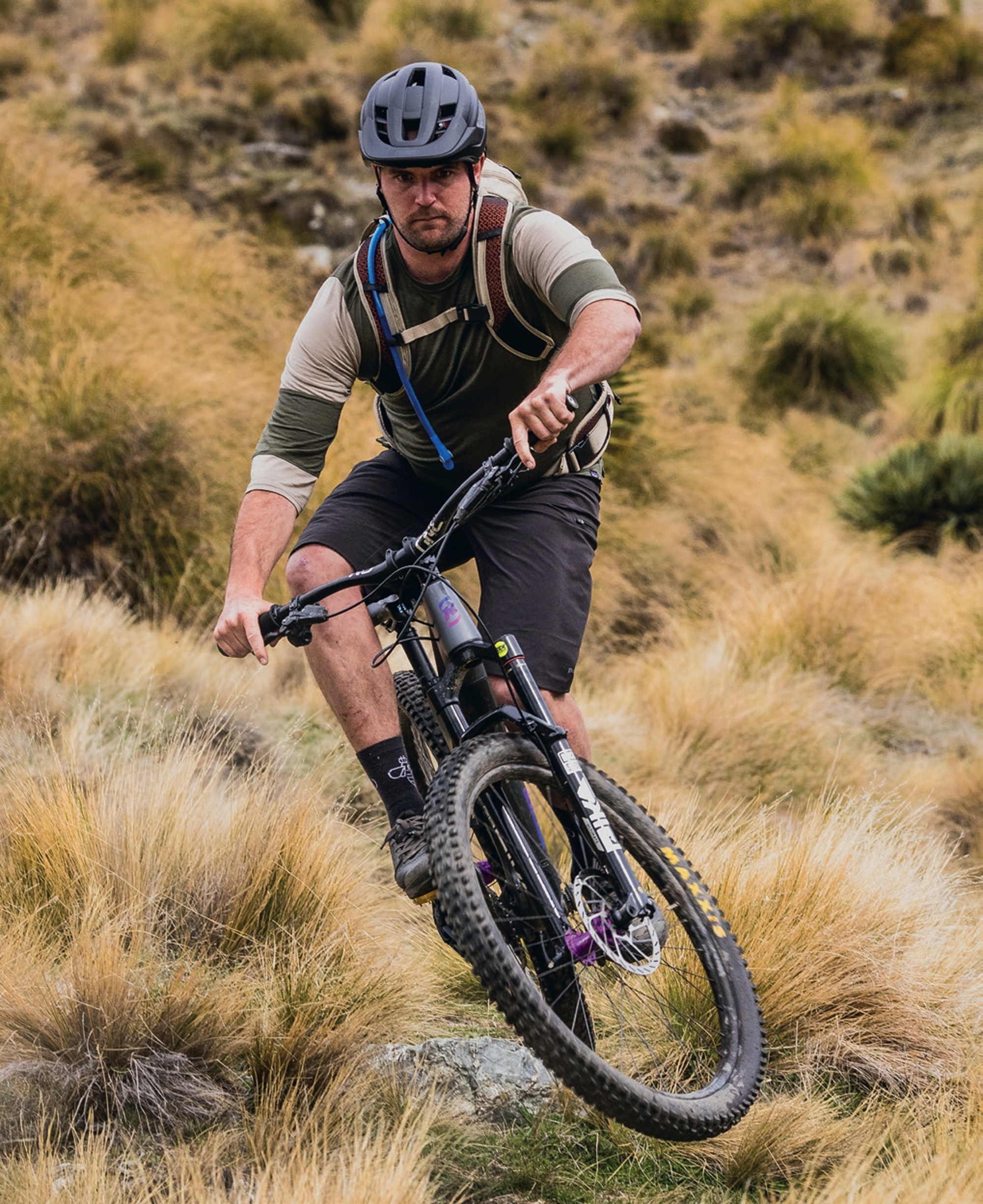
It wasn’t long before we were on our bikes and climbing the track. Well, when I say ‘climbing’ I mean riding in the smallest gear up a very steep ascent. It was like that pretty much out of the gate. But nothing in these mountains comes easily. And, as I said earlier, a little effort is required for anything worth doing. Especially when there’s a hut with a view as the reward.
After a while scrambling on and off our bikes up the ascent, we reached Jean Hut, the first hut on the ascent. We plonked ourselves on the side of the hut and tucked into some grub. This sustenance was well deserved and needed for the haul ahead. And the view was absolutely gorgeous looking across the Whakatipu to Bold Peak and Mt Bonpland on the other side.
Post snack, we clambered back onto our bikes with the blood now diverted away from our legs to our stomachs. The sustenance was needed for the ongoing climbing effort up to Heather Jock Hut, but it took a while for my body to adapt post-feed. As we ascended, the open tussock landscapes and rocky outcrops turned to tightly benched switchback trail that had me off and walking in parts. I didn’t want to walk in sections, but it was more the fact I would fall off the bloody bike as it was so steep and I was going so slow. There’s no room for ego out here! It wasn’t that long in distance or on the topo map, but it seemed to take ages. However, I needed to park that feeling as it wasn’t doing much for me, other than sapping my energy. I reminded myself to just be in the moment and immerse myself in nature.
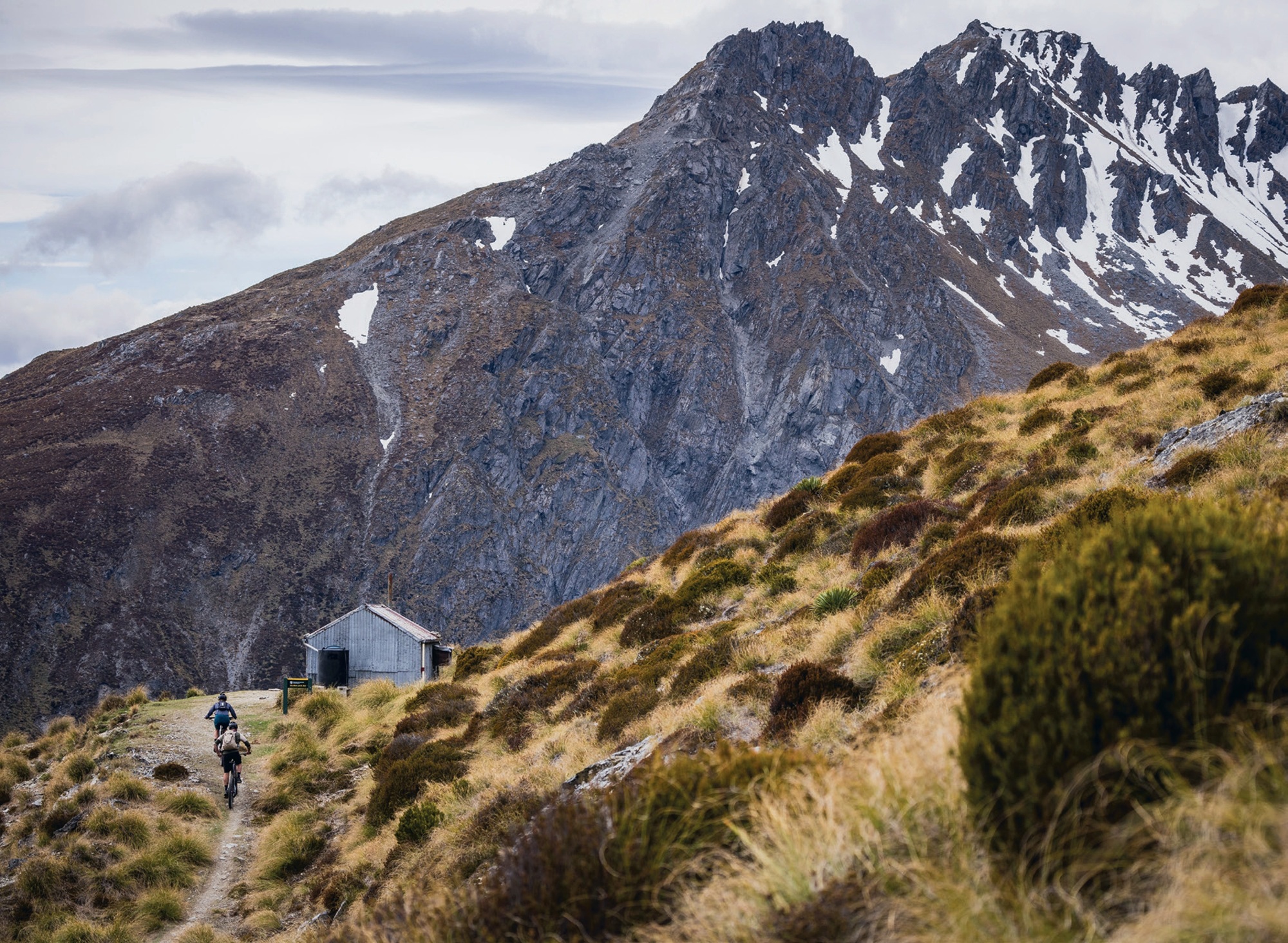
The final few switchbacks were getting tighter and I could sense that we must be close to the hut, but I wasn’t too sure how much further we still had to go. The anticipation was building – soon we’d be dropping our packs, having lunch and brewing a strong coffee. After some mental tough talk about hanging in there, the hut was finally spotted, edged into a small plateau with Mt McIntosh overshadowing the small hut.
And what a splendid hut it was, sitting pretty in the clearing, with mountain peaks towering above. This basic three-bunk hut, free to use on a first-come, first-served basis, was exactly what we’d come for – this moment of arrival, of finding shelter in the wild. The day’s efforts gradually slipped away as we munched our snacks and took in the amazing view.
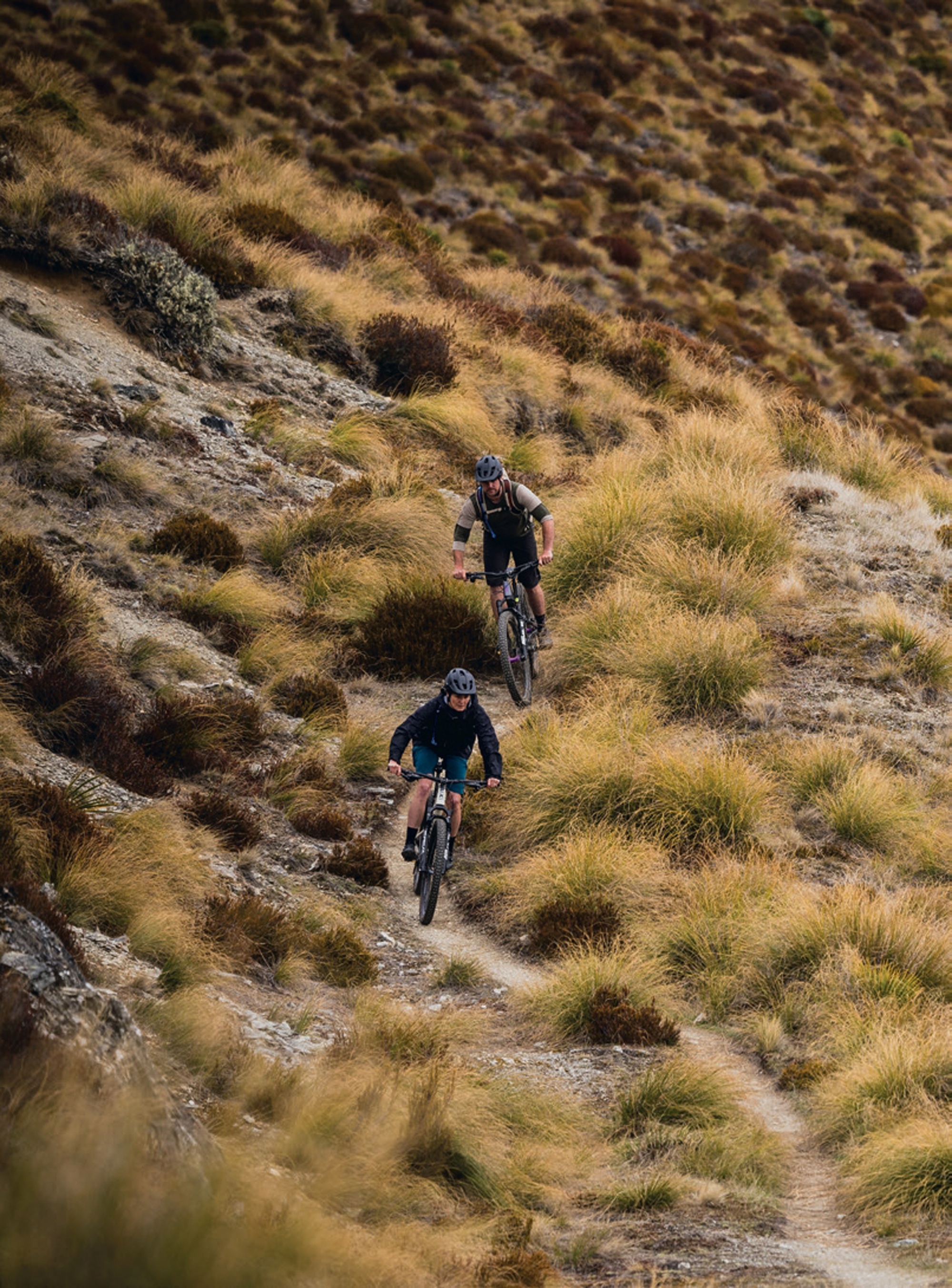
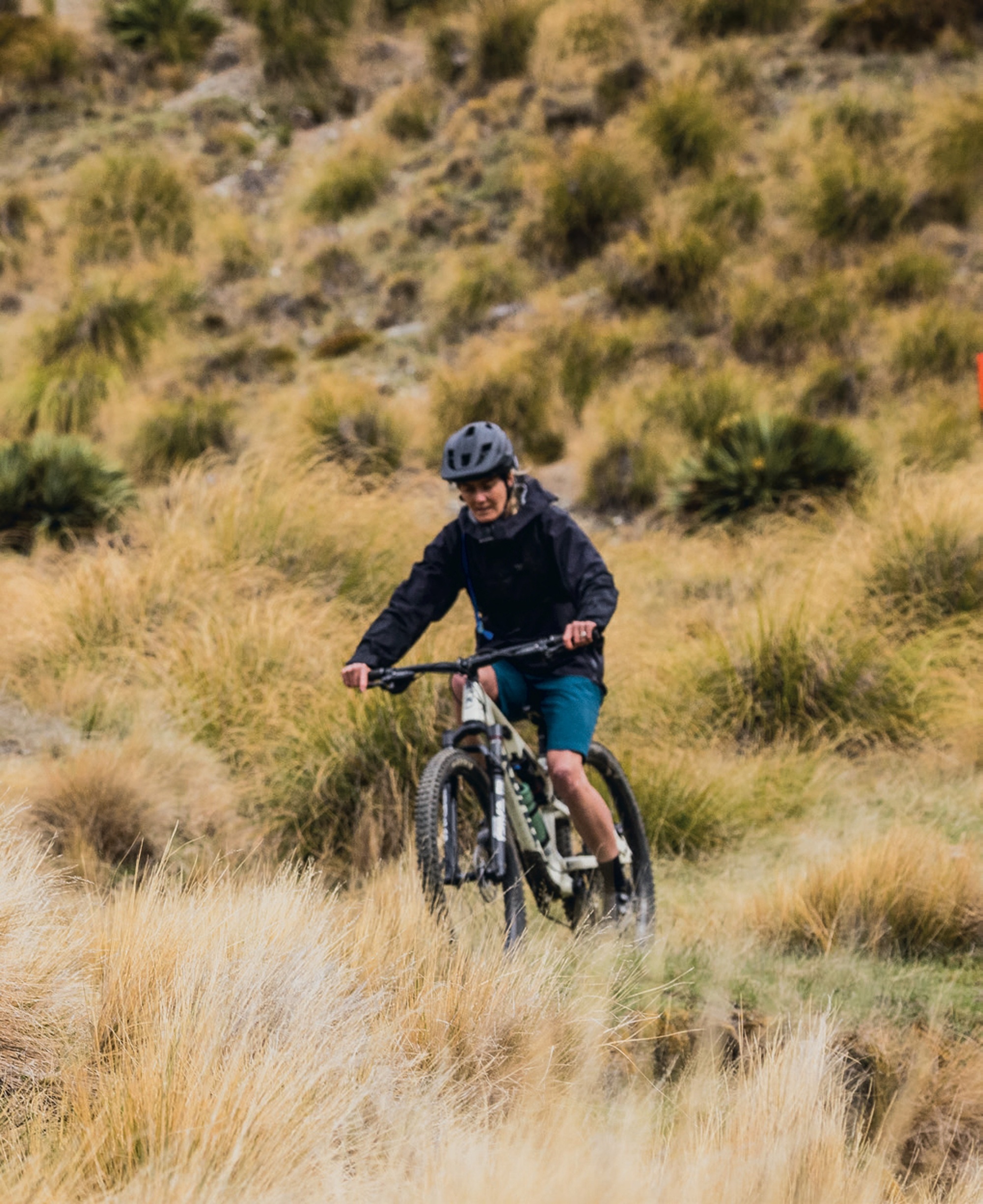
The trail provided us different gradients, a few technical features and landscapes as we rode it in reverse. Going back the other way means some of the spots you missed or flew past stand out. I would have liked a bit more singletrack, but this isn’t always guaranteed when venturing into remote parts that aren’t ridden much. Often, you need to go there to see, as online maps only provide a snippet of the land. I find that it can help shape another mission to the area as you gain knowledge and can craft better routes for another occasion. The moment wasn’t lost on me, however, as just riding out here felt freeing.
We passed Jean Hut again, marvelling at its rustic construction near the stream, weighted with rocks to stop it from blowing away.
It wasn’t too long before we ducked into the bush, crossed Bonnie Jean Creek, and emerged back into the open tussock country. The vastness and remoteness staggered and intrigued me; endless valleys and mountain peaks flowed as far as the eye could see.
I took a moment to reflect on the journey before we cracked a tin of beer and celebrated our backcountry adventure. Our off-grid sojourn had taught me a lot and showed me that sometimes only a small window of time immersed in nature is all you need. Sometimes all you need is a sense of purpose – exploring a new route and visiting backcountry huts sufficed. It can provide everything you need to get things back into perspective.
There’s something about these routes, put here before our time, that we now trace for recreation. Of course, it’s not a manicured mountain bike park and that’s the point. Bikes are built for numerous ventures and it’s good to use them as a portal to take in different environments. The mining history added another layer to the experience. Riding the same tracks those scheelite miners cut through over a century ago, seeking the same shelter in the mountains. It’s not just about suffering through the wilderness; it’s about finding home in it, even if just for a moment. I can’t wait to pack my bag for the next adventure – wherever that might take me. And whichever hut is waiting at the end.
Produced in partnership with CamelBak