

Words: Liam Friary
Images: Sven Martin & Callum Wood
Distributor: Worralls
RRP: $2495
Components, suspension and bikes are always going through a process of constant refinement. Often it can seem a bit like a ploy to get us all to consume more, and that’s a valid perspective. But the thing is, often the refinement stems from the sport’s progression and riders getting faster and hitting harder. This drive is mainly through the competitive elements of the sport, such as downhill and enduro, but there’s still a strong case for the everyday trail rider. There’s also continued progression with trails, bike parks, and terrain, and this often means riders demand more of their bikes, suspension and products.
The newly updated, burly RockShox Zeb falls into the progression category and draws direct inspiration from the RockShox Boxxer. This development stems from the latest advancements in world cup downhill racing, which have driven the suspension updates across the RockShox Zeb Lyrik Vivid and Super Deluxe models. Across this issue, I’ve shared some insights from a press camp I attended in February. Queenstown hosted editors from global mountain bike media outlets who spent a week riding RockShox’s new downhill and trail suspension. I rode a Santa Cruz Hightower equipped with a RockShox Lyrik fork and a FOX Float X Factory shock. We tested our current setups for a few days before switching between them using an a-b-a testing method. This involved cycling back and forth between our old suspension, specifically the previous generation RockShox Lyrik, and the new RockShox Zeb. The launch event included six days of riding followed by another month of ride testing on more familiar local trails.
The centrepiece of the new Zeb update is the new Linear XL air spring, and it’s worth understanding what it does rather than letting it blur into the spec sheet. It’s not a marketing name. It describes a specific engineering approach that changes how the fork feels through its travel, and it’s the main reason the new Zeb rides differently to the old one.
Most air springs are progressive by nature. That’s not a flaw, it’s physics. As you compress an air chamber the pressure rises, which means the further you push into the travel the harder the spring pushes back. The result is a spring curve that ramps up toward the end of the stroke. This gives you bottom-out resistance without needing a separate mechanical bumper, but it also means the fork feels different at twenty percent of travel than it does at eighty percent. Predictable it is not. You get a supple initial response that stiffens noticeably mid-stroke and firms up hard near the end. Riders learn to work with this but they’re always adjusting for it, consciously or not. A linear spring does roughly the same thing throughout its travel. The fork feels the same at twenty percent as it does at sixty. What you set up is what you get.
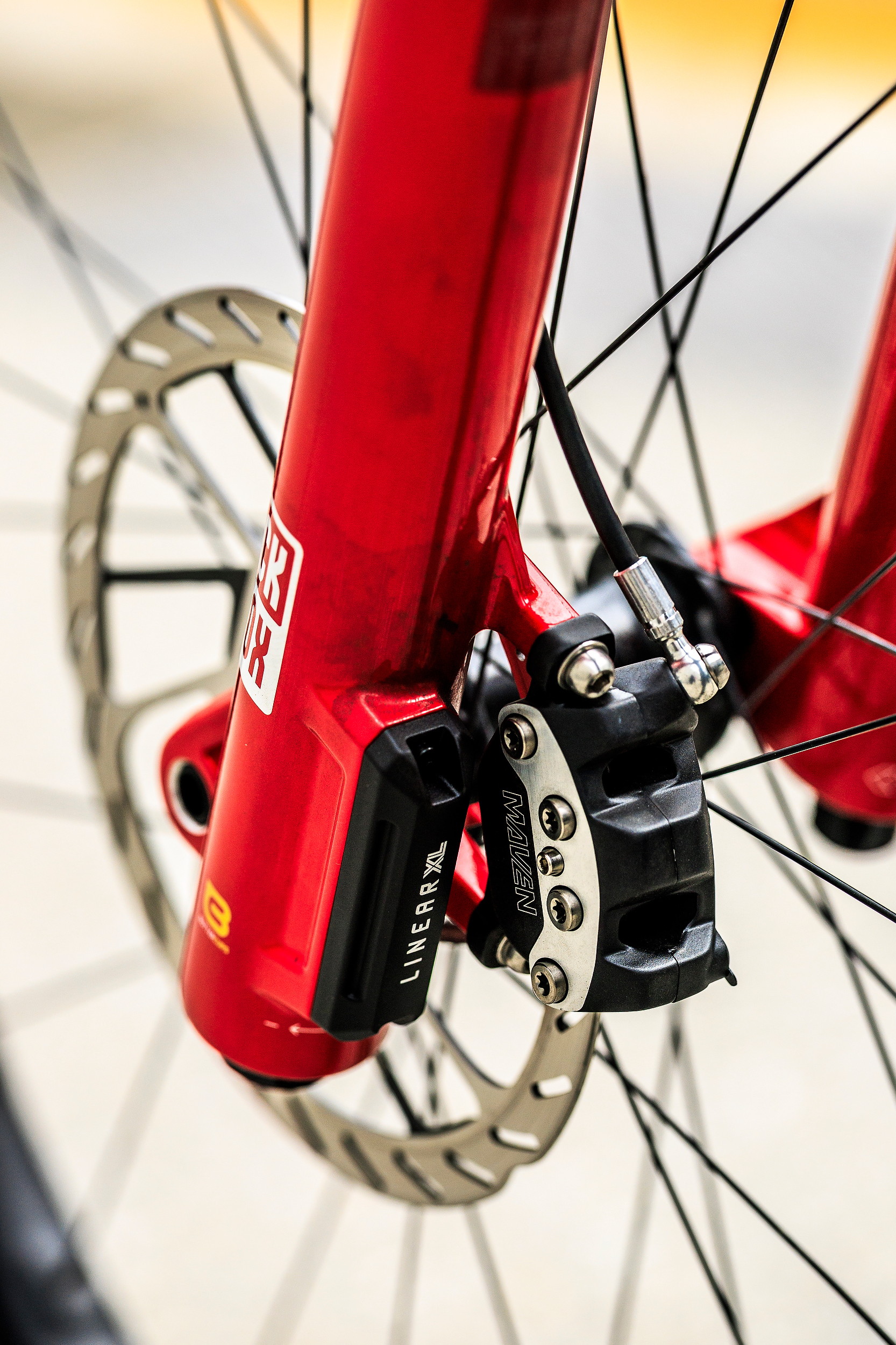
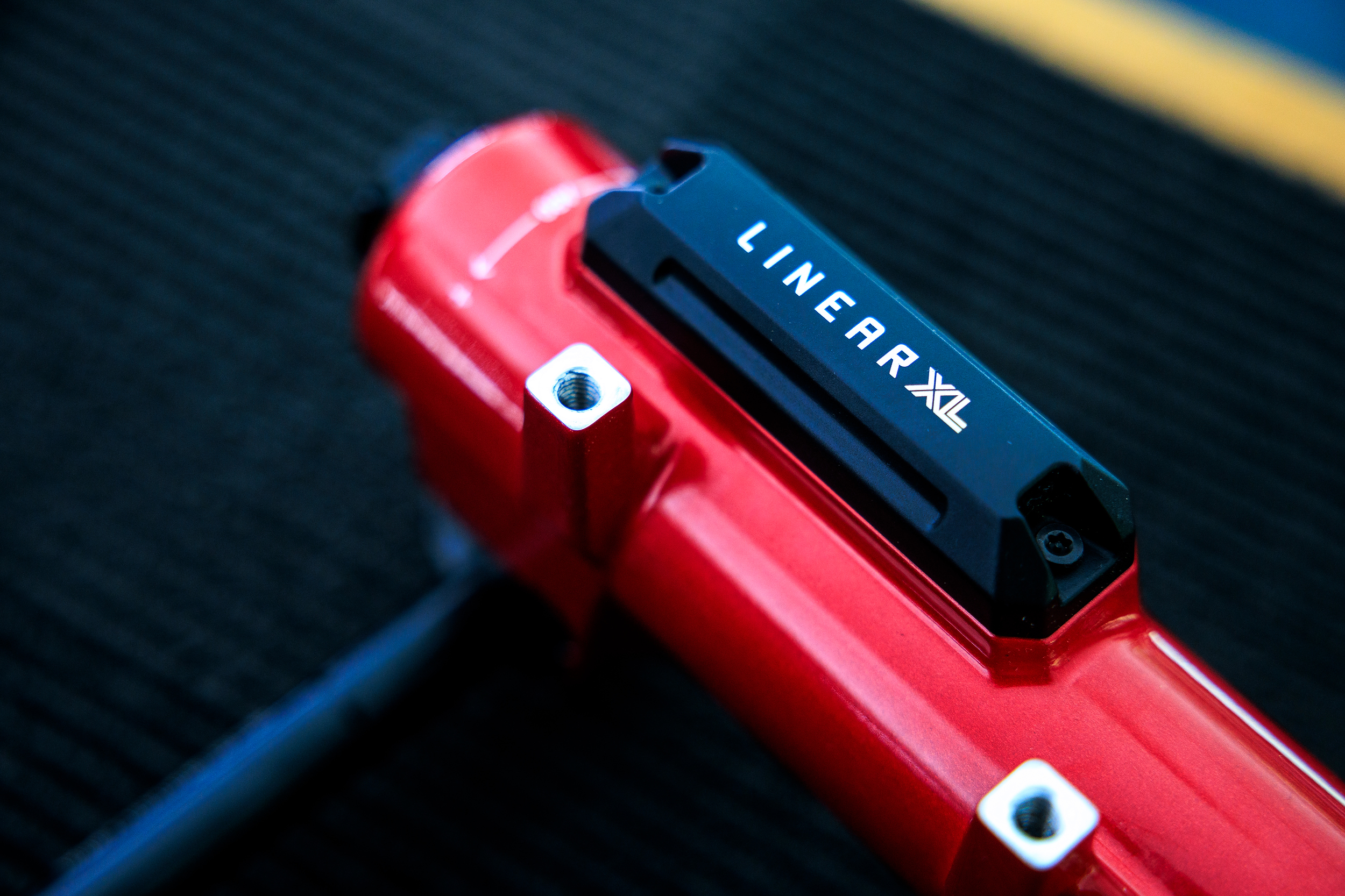
RockShox’s Linear XL system is an attempt to flatten that curve. The approach involves increasing the volume of both the positive and negative air chambers while simultaneously reducing the piston diameter and increasing the inner diameter of the shaft. Taken together these changes mean the fork runs at higher pressure but the rate the pressure increases as you compress through the travel is slower and more consistent. The Air Annex, an additional air chamber mounted on the side of the fork leg, adds further volume to the lower leg, reinforcing the flatter spring curve. The result is a spring that behaves more like a coil: predictable throughout the stroke rather than stiffening in stages.
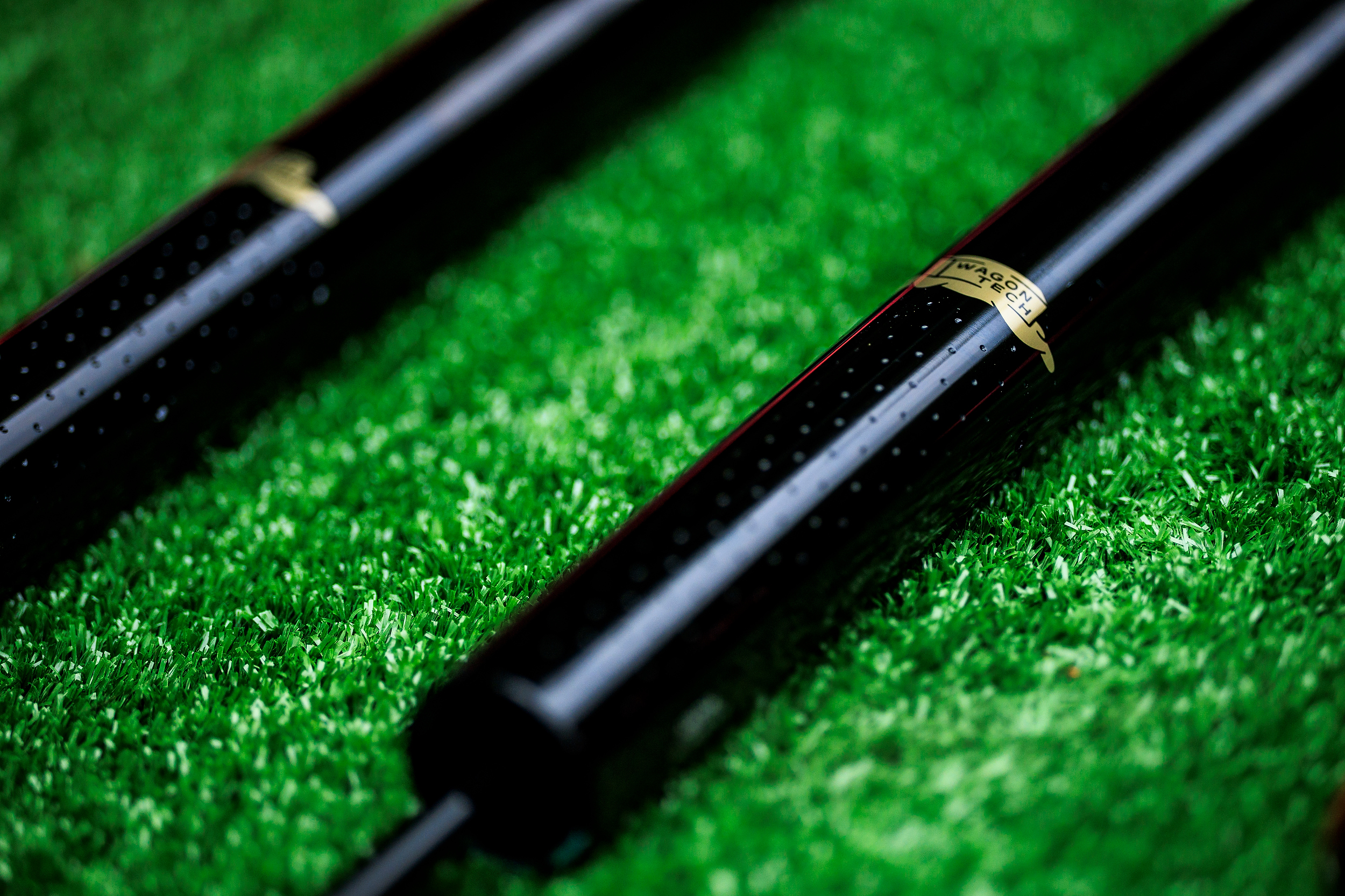
RockShox also refined the fork’s lubrication and small-bump behaviour through two supporting technologies. ButterWagonTech introduces small indentations machined across the lower section of the stanchions, below the dust wipers, which draw oil upward during rebound. On every stroke out, oil is actively redistributed across the bushing contact area rather than relying on gravity alone. Less friction throughout the stroke, more consistent movement, less arm pump on long rough runs. Complementing this are the ButterCups – elastomers mounted on both the spring and damping sides that filter small impacts and high-frequency vibrations, taking the edge off chatter before it reaches your hands. Then there are the breather holes, two small drill holes in each stanchion just below the oil seal. In a big hit the air trapped in the casting has somewhere to go, distributing quickly and evenly rather than creating a pressure spike. Oil circulation improves too, keeping damping consistent under repeated hard impacts. Together these three details are about keeping the fork moving cleanly and, honestly, not letting friction and trapped air compromise the spring curve the Linear XL system is working to deliver.
The Linear XL spring doesn’t work in isolation. Because the spring is more linear, less progressive, the Charger 3.2 damper that pairs with it in the new Zeb is tuned more progressively to compensate. The damper picks up where the spring backs off. This is important to understand because putting a Charger 3.2 into an older fork would feel unusually firm — the damper is calibrated specifically for the flatter spring curve, not for the progressive curve of the previous generation. The system is designed to work as a matched pair. RockShox describe the goal as coil-spring feel without giving up air’s key advantage — tune it with a pump rather than swap a spring.
On trail the difference is in the consistency. With a progressive spring curve, you develop a sense of where the fork is in its travel and you ride accordingly, backing off slightly before the middle of the stroke stiffens, or driving harder knowing the end of travel will support you. With a more linear spring that calibration becomes simpler. The fork is doing roughly the same thing throughout. Put simply, you can stop thinking about where you are in the travel and start thinking about the trail in front of you, which is exactly where your attention should be. During the camp in Queenstown this was most noticeable on repeated laps of the same trails, the fork felt consistent in a way that let you push harder without having to relearn its behaviour each time. Compared to the previous generation Lyrik, the Zeb felt firmer and stiffer but still nimble. It could hit harder when asked to, which is partly a function of the increased travel (150mm Lyrik to 170mm Zeb), but across the stroke it felt plusher , which is the Linear XL story in a single ride impression. The weight increase is noticeable if you’re looking for it, but the performance gain makes it an easy trade. What stood out most was the grip in technical terrain at lower speeds, the kind of riding where a fork that sits high and active in its travel makes the difference between traction and washing out. The steep, chunky terrain of Queenstown tested the support end of that equation. Rotorua tested the suppleness end, root-littered trails where the fork needed to stay planted and small-bump sensitive at the same time. It held up well in both.
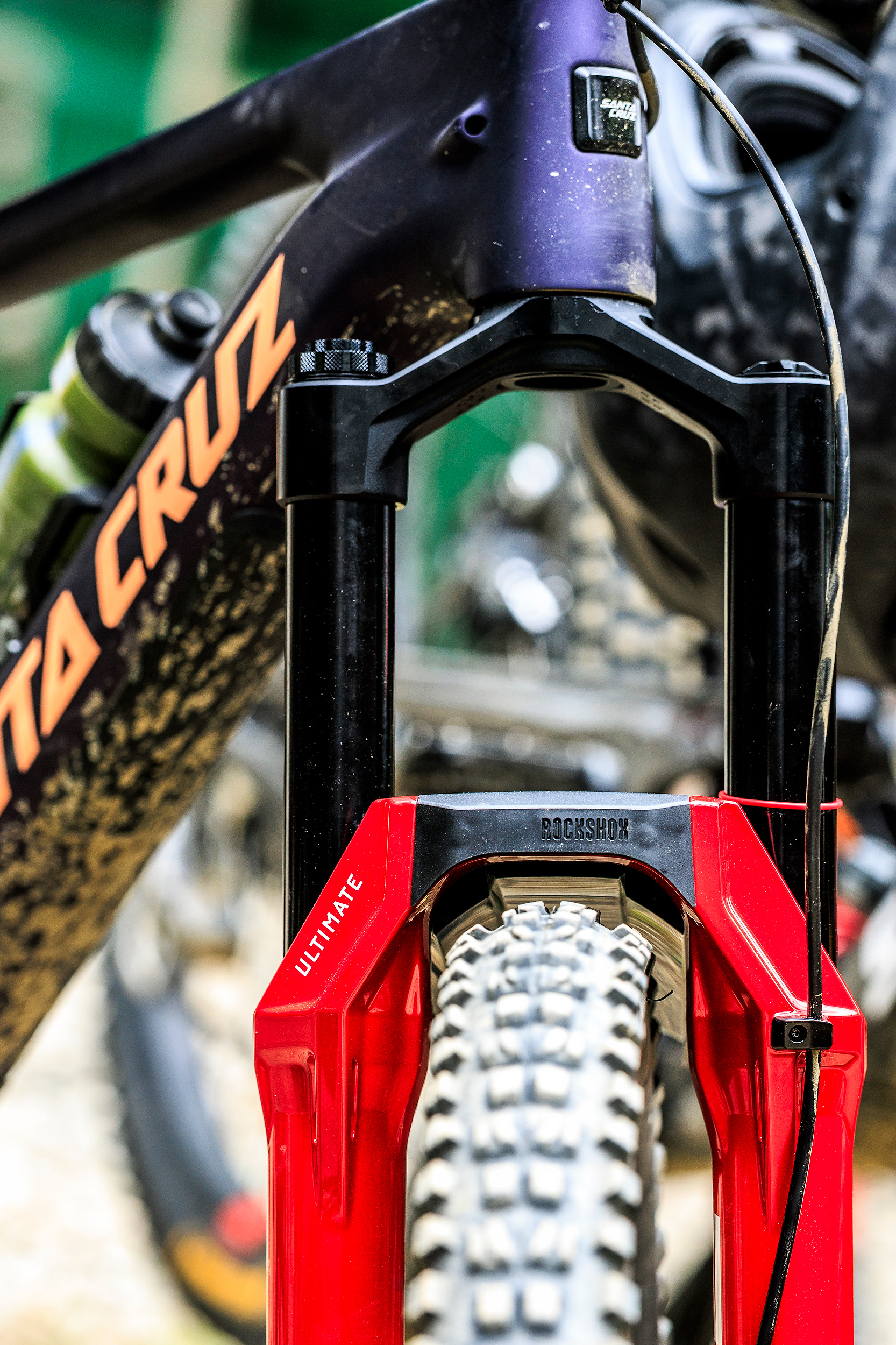
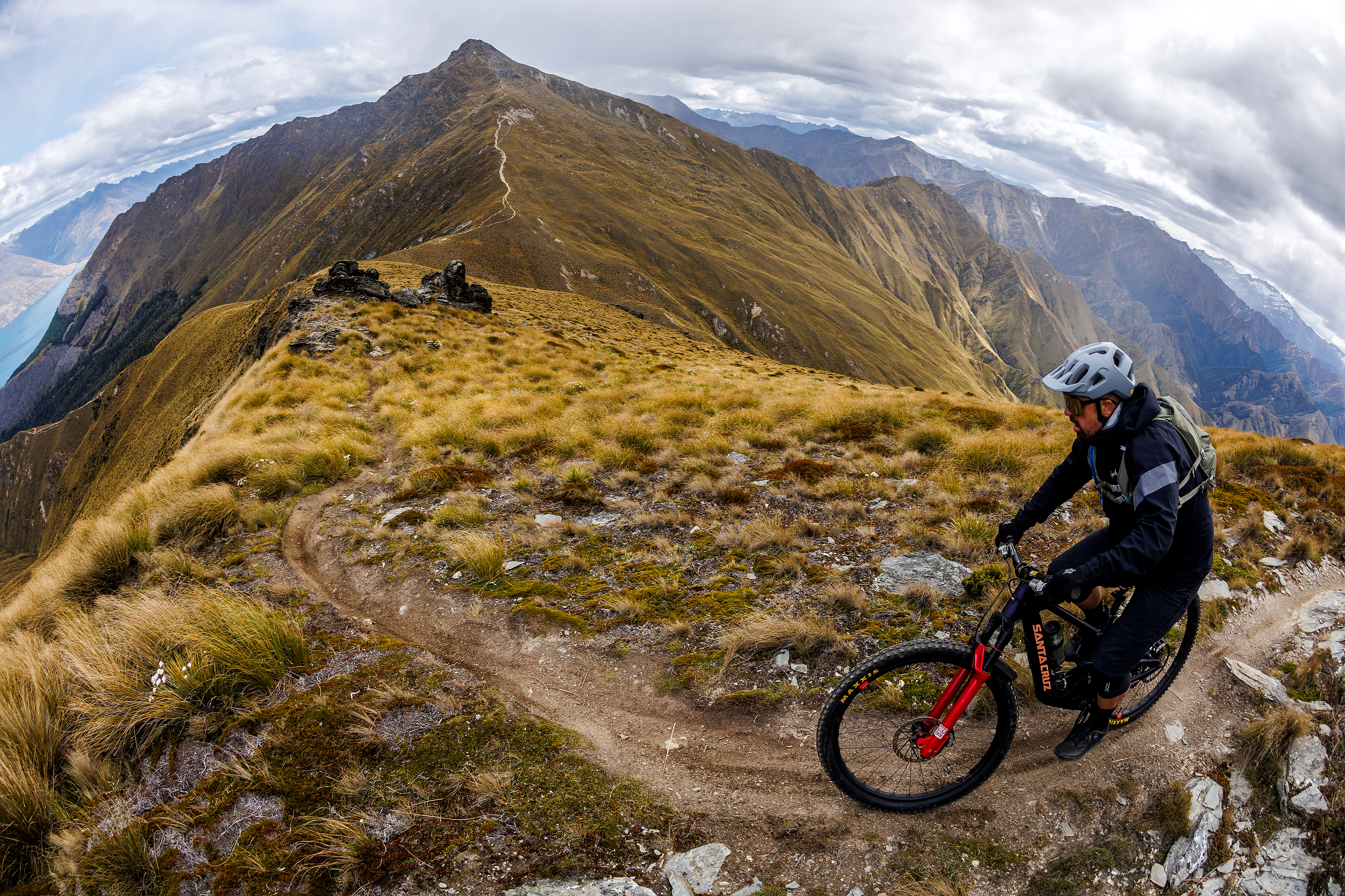
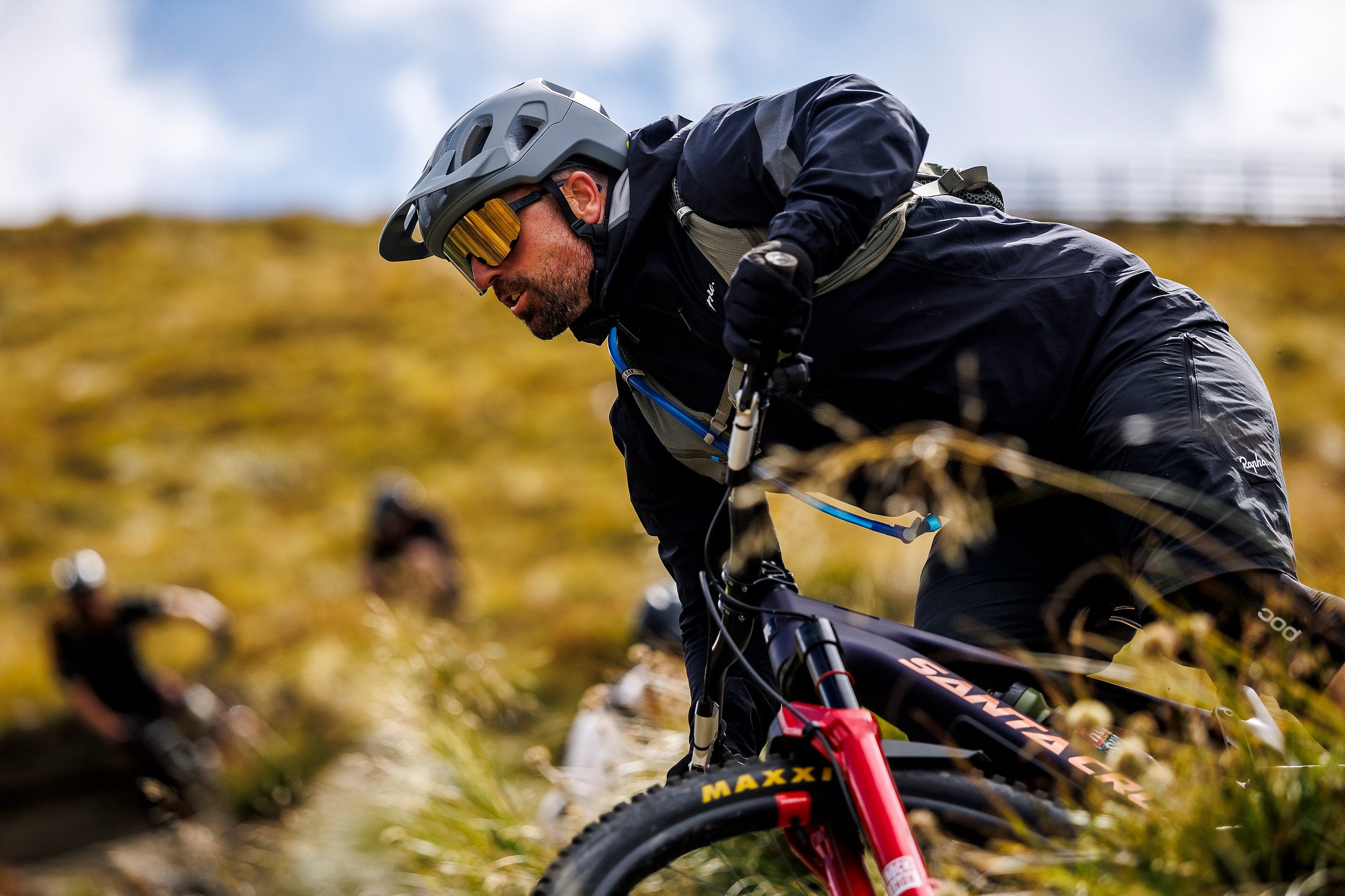
From the outset, the even and therefore more predictable spring curve immediately draws attention. The fork responds sensitively to small bumps and irregularities offering plenty of feedback. This is complemented by a progressive damping tune providing adequate support during hard compressions and fast berms. Even under heavy braking the front remains responsive without diving too deep, and the fork consistently rides pleasantly high in its travel.
The a-b-a testing format at the camp – old fork, new fork, old fork again on the same trails – is exactly the kind of structured comparison that makes this difference legible rather than just ‘felt’. The Zeb with the updated spring felt less variable through its travel. Less time spent managing the fork, more time spent riding the trail. And it performed well during the multiple runs in Queenstown. The solid chassis helped with confidence on steep tech terrain and behaved well in those relentless braking ruts. As for more pedalling on trails, the fork felt predictable and planted when transitioning to flatter or technical climbs. It was slacker than what I was used to but after a few rides it wasn’t a thing, and I liked having more travel on the descents so the payoff was well worth it. That said, I’d like to try the new RockShox Lyrik with similar internals of the Zeb for more all-mountain or pedalling days that I’m more used to.
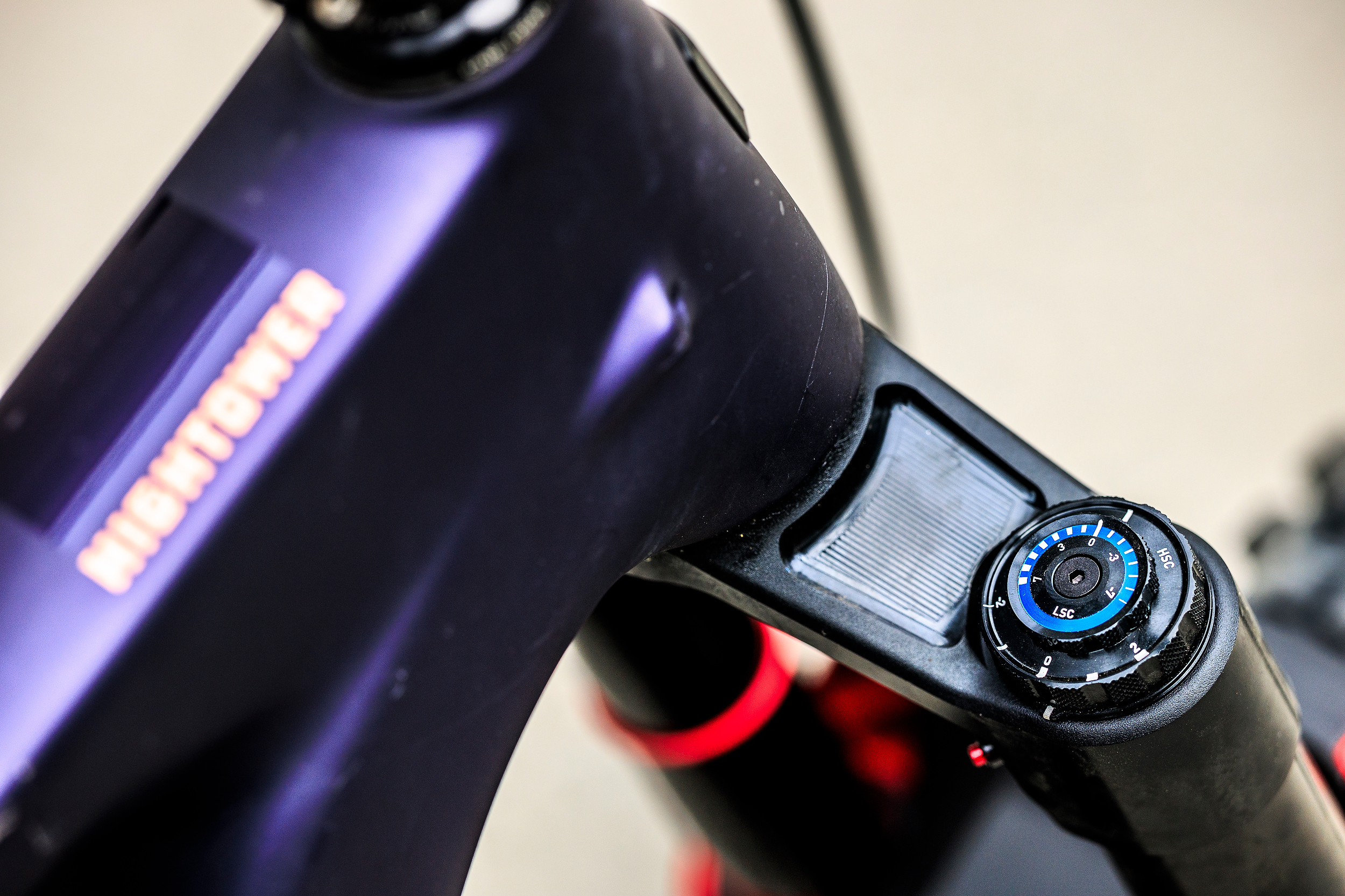
RockShox has refined the setup with clearer, numbered adjuster dials and additional height indicators on the stanchions. One thing worth knowing: Linear XL runs higher setup pressures than the previous generation, so if the numbers on the pump look wrong, that’s why. The smaller piston needs more air to reach the same SAG — get it right and the spring rewards you. As usual, there are SAG markings and a sticker on the fork for quick base setup. It’s remarkable how much the adjuster dials affect the fork’s behaviour. The high-speed compression circuit, in particular, significantly influences the fork’s travel height. With just a few clicks, the setup can be easily adapted to various trails – from rough high-speed tracks to steep downhill sections, flowy bike park runs to loamy fern littered trails of Rotorua.
The new Zeb is a brawler’s dream, perfect for park laps, technical trails, steep shuts, swift descents and anything else thrown its way. It’s a solid companion for an enduro brawler or long-travel eMTB and I think it’d be a great fit. I’m eager to get an eMTB to fit the Zeb onto to see how it responds. It’s a classic evolution with a clear focus on a more linear and predictable spring curve. After my initial testing period, it responds sensitively, behaves predictably and maintains a pleasant travel height. The overhauled Zeb fork levels it up for today’s riders.
For more in-depth reviews on RockShox’s Vivid Air shock, sign up to our email newsletter, visit our website or follow us on Instagram.