Words Georgia Petrie
Images Cameron Mackenzie
RRP $13,900
Distributor Specialized NZ
The past few years have been an interesting time in the eBike market. There’s been somewhat of an assumption that those who want full power and big batteries want as much as travel as they can get their hands on.
But what if you don’t fancy the idea of riding bum-clenching terrain every time you get on your bike, however, still want the power and battery capacity to rip ten different intermediate trails after work, or a backcountry weekend mission? A beast like Specialized’s Levo 4 offers all that, but it’s more travel than most people likely need.
Until now, short travel eMTBs have largely fallen into two camps: the SL (Superlight) category; boasting light builds, but often limited by their battery capacity – or the value category; which offers up more range by way of bigger batteries, but often comes with heavier, less refined components.
This gap in the market makes a strong case for a shorter travel eMTB that keeps the benefits of a powerful motor and large battery, while being lighter, nimbler, and more responsive. Why opt for a sporty seven-seater when a hot hatch would meet your needs just as well?
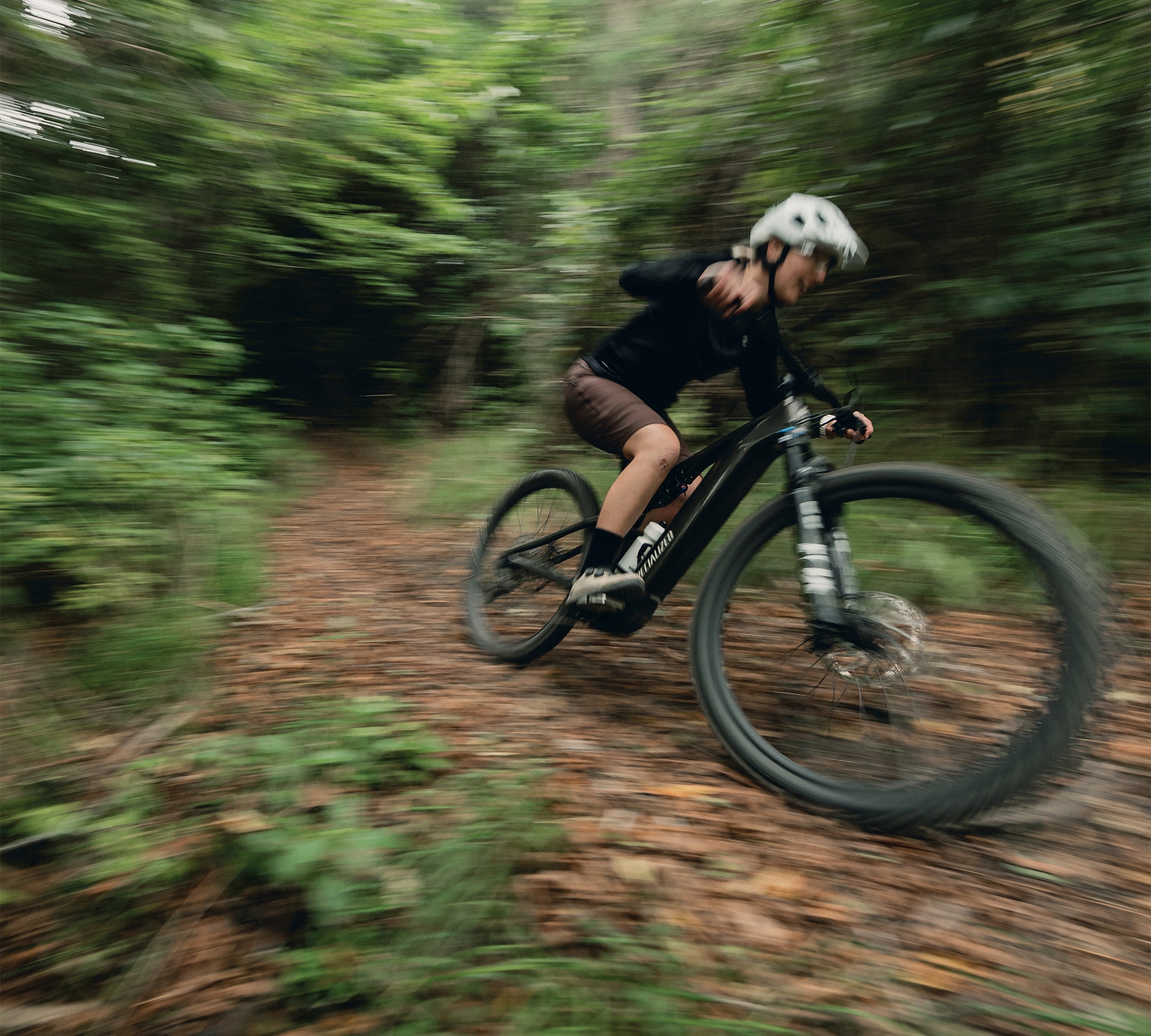
Cue the Specialized Levo R, pairing 130mm of rear travel and a 140mm fork with the same full-power motor and battery system as it’s big brother, the Levo 4. The R stands for ‘Rally’, alluding to the bike’s nimble, playful and agile nature, and its release caught me surprise. This is the type of bike people tend to overlook in favour of more travel because, “why not?”. When in reality, this is exactly the type of bike most people need, and I think it’ll be a huge hit with the majority of riders.
It’s “just right”, hitting the sweet spot of having “just enough” travel to point you down even the most demanding singletrack, and “more than enough” battery and power to tackle anything, from after-work hot laps to backcountry overnighters.
eBike & Frame Features
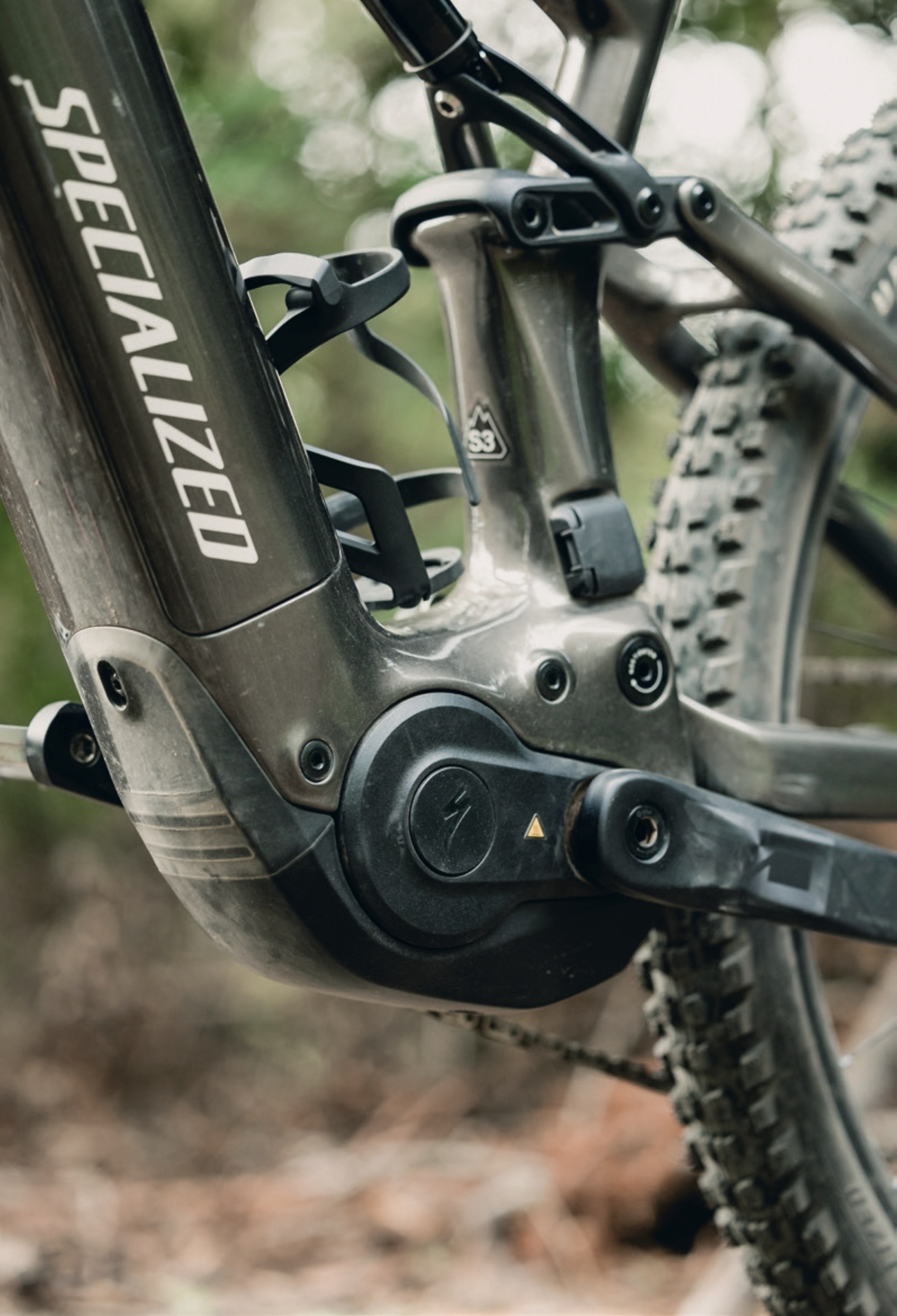
The Levo R Comp is powered by Specialized’s fresh-to-market 3.1 motor. The release of this motor was highly anticipated, and for good reason: this thing is no joke, thanks to a recent over-the-air firmware update, offering a hefty 105Nm of torque and 850W of peak power. Paired with a whopping 840Wh removable battery, this is a seriously grunty package. There’s a range of different battery configurations on offer too – a smaller, lighter 600Wh battery and a 280Wh range extender, which can be used either alongside a battery or on its own for those days where you still want to get your riding fix, without the weight penalty.
When paired with the 840Wh battery, that’s a massive 1,120Wh total battery capacity. This is a huge amount of grunt that rivals the likes of Bosch’s Perfomance Line CX, sporting 100Nm torque + 750W peak power, and runs very close to Avinox’s M1 system, which sports 120Nm of torque and a peak power output of 1000W. When it comes to weight, the 3.1 motor comes in at 2.9kg, which is a touch heavier than the Performance Line CX at side at 2.9kg and the Avinox at 2.5kg.
After spending some time on a range of different drive units, my initial reaction to the 3.1 drive unit was, well, nothing…! The motor is so quiet, I had to do a double take to make sure it was even working when I set off on an after-work lap. Power delivery is exceptionally smooth, and the ‘jerk’ you often feel when you put the power down on high-torque drive units has been replaced with a much more gradual propulsion which feels far more natural, and commensurate with the feeling of pedalling an acoustic bike, which was a pleasant surprise. It’s quite a different feel to Bosch’s Performance Line CX, which I’ve found to require a little more modulation on behalf of the rider to achieve the same level of gradual power delivery.
Once on the gas, the bike has absolutely no shortage of power, and it’s important to note that in New Zealand this bike has a top speed of 45kph, unlike other full power eMTBs which top out at 32kph. I felt this was a massive benefit to the Levo R, particularly as between its travel and weight combination, it’d make an excellent touring or adventure bike.
Commuting back home, or along the tops of the Port Hills to access more trail was a dream due to the combination of motor power, seemingly endless battery range and fast-rolling chassis. Range anxiety was out of the question with the 840Wh battery, particularly if you’re able to use Eco mode for the majority of the ride.
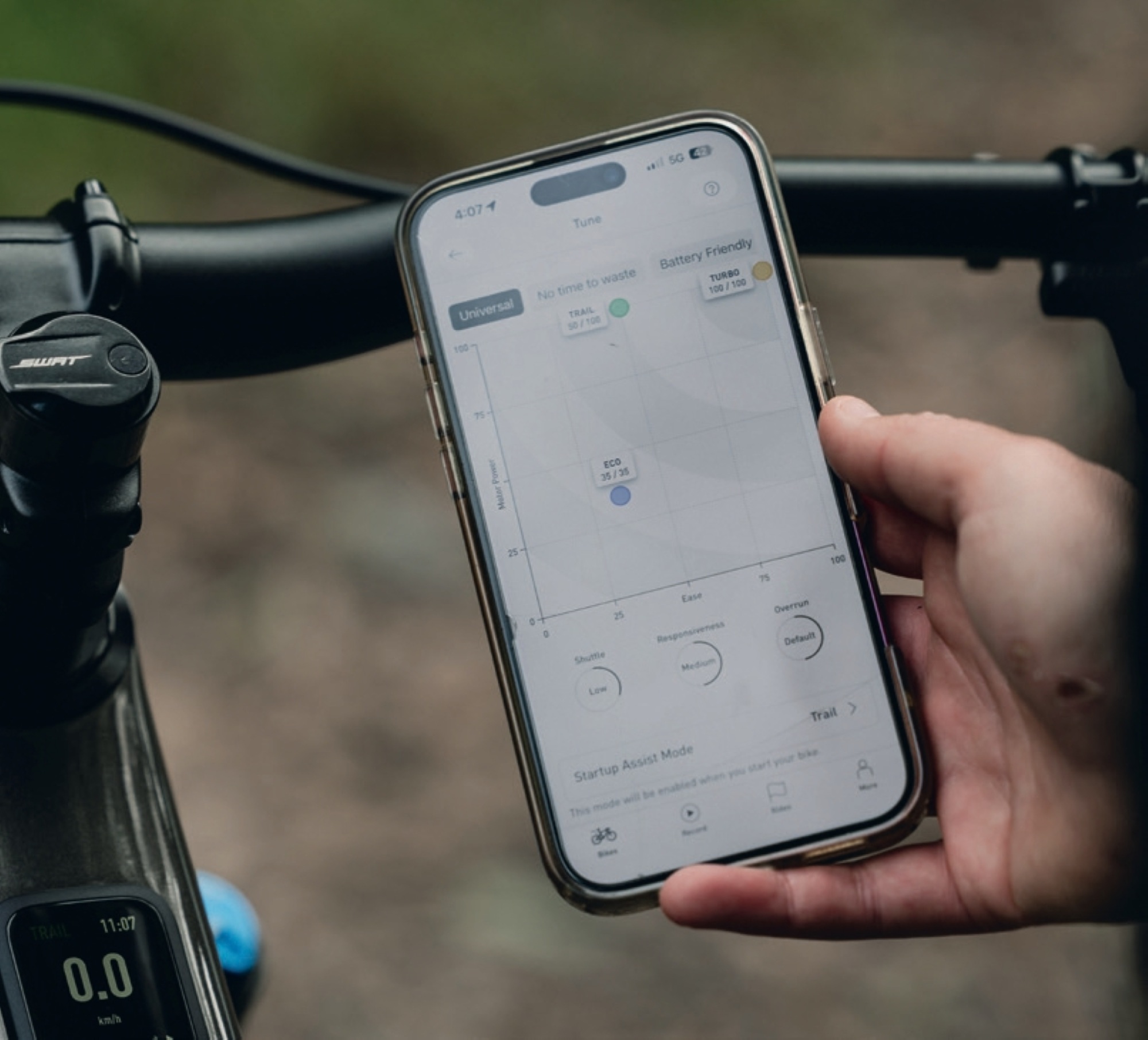
Similar to its predecessor, the motor has three power modes – Eco, Trail and Turbo. Each mode offers its own limitless scope of customisation, meaning the rider can tune each mode to their preferred ratio of support to peak power. Your preferred mode will depend on the terrain you ride, and the nature of your climbs. For us here in Christchurch, much of our climbing is on either sealed or dirt fire roads, with less emphasis on technical singletrack, so I found that 70% of my ride was spent climbing in Eco, and tended to toggle between Trail and Turbo depending upon how steep of an incline I’d encounter.
Specialized lead the charge when it came to top-tube displays with their previous generation Mastermind TCU, and the new iteration seen on the Levo R builds on that foundation. As expected, the updated MasterMind TCU provides an excellent user experience and is a welcome progression from the previous generation, with the extensive 2.2” high resolution screen offering an extensive range of data display options for riders. These can be fully customised via the Specialized App and toggled between via the handlebar remote, depending upon the key data points you’re wanting to highlight.
If you’re an Apple Watch user like me, the integration is superb – the App is available across both devices and connects with Apple FindMy, Strava and Apple Health seamlessly, which is a cleverly thought-out design feature. The remote itself took a moment to get used to, especially toggling between modes by flicking a switchlike mechanism as opposed to buttons. It took a couple of times accidentally dropping into Eco mode instead of Turbo on a few pinchy climbs to learn which way was up. My only gripe is that the remote is wired, which is a little out-of-theordinary in 2026 relative to competitors, bringing clutter to an otherwise clean wireless cockpit.
Like it’s big brother, the Levo R comes equipped with SWAT downtube storage, which is a feature that only Specialized have managed to incorporate into eMTB frames so far. Having had frame storage on my acoustic bike for the past few years, this is a welcome feature, especially given the bike’s potential to take your rides further afield.
Another special mention goes to the SWAT tool that’s integrated into the frame’s steerer tube. I’m a huge fan of steerer tube mounted tools for quick fix access on the trails and would always install one on my new bikes, so this is a welcome addition and a nice value-add feature. The bike also comes with Specialized’s stock 4amp charging unit which takes around three hours to charge the 840Wh battery to 80%, with the option to purchase a smart charger, charging the battery from zero to 80% in less than 60 minutes.
Climbing
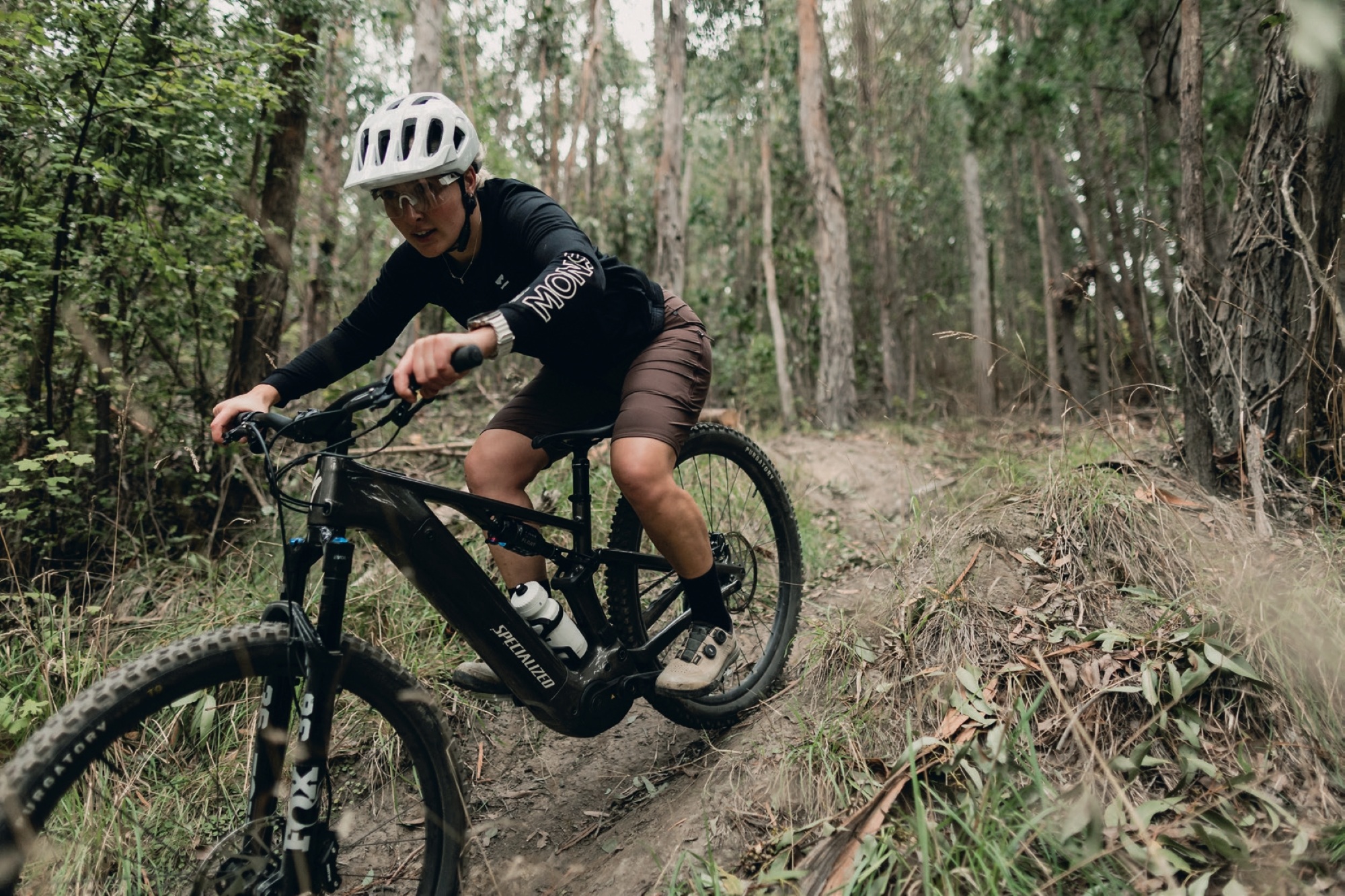
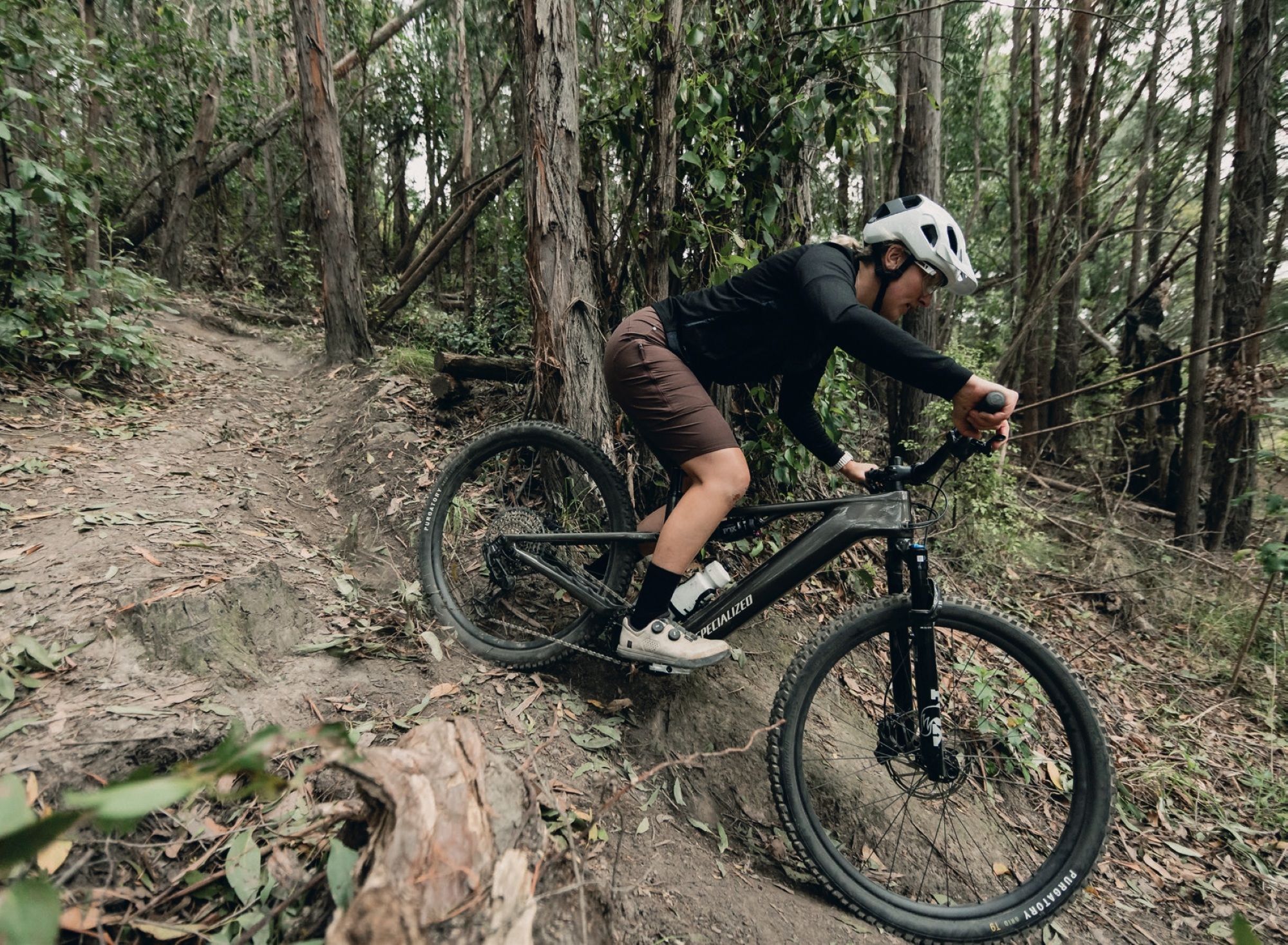
Straight away, you can tell that the Levo R’s geometry favors pedalling efficiency; it’s a comfortable climber that took very little in the way of setup to align with my ideal bike fit. The steep seat angle and 29” wheels paired with fast-rolling Purgatory tyres made for excellent forward propulsion, meaning the bike maintained rolling speed well on flatter terrain and kept its speed superbly over punchy, technical ascents. Despite sharing the same drive unit, this is what really sets the Levo R apart from the Levo 4 and positions it quite uniquely in the eMTB market. It’s noticeably snappier on the climbs and feels quicker across the board.
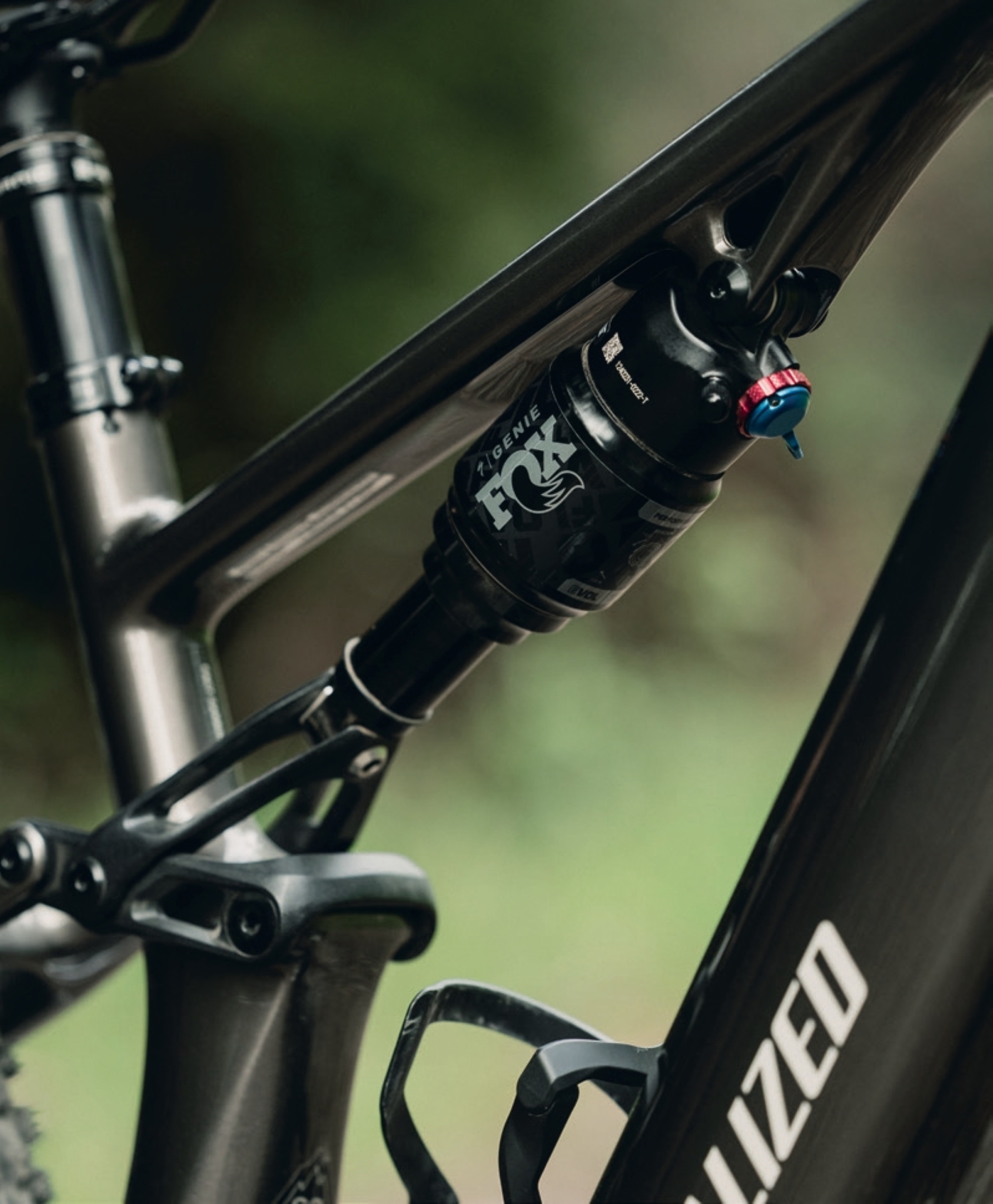
That lively, responsive feel is further enhanced by the Fox Float Genie shock. The Genie’s performance was immediately noticeable, particularly on technical singletrack climbs. The shock remains active over small trail chatter, reacting to bumps like loose rocks, roots and holes, while still firming up enough to preserve efficiency and momentum. The Levo R delivers a level of nimbleness on climbs that longer travel, full-power eMTBs often struggle to match. I couldn’t help but smile as I rolled past riding mates on 170mm, gravity-focused bikes.
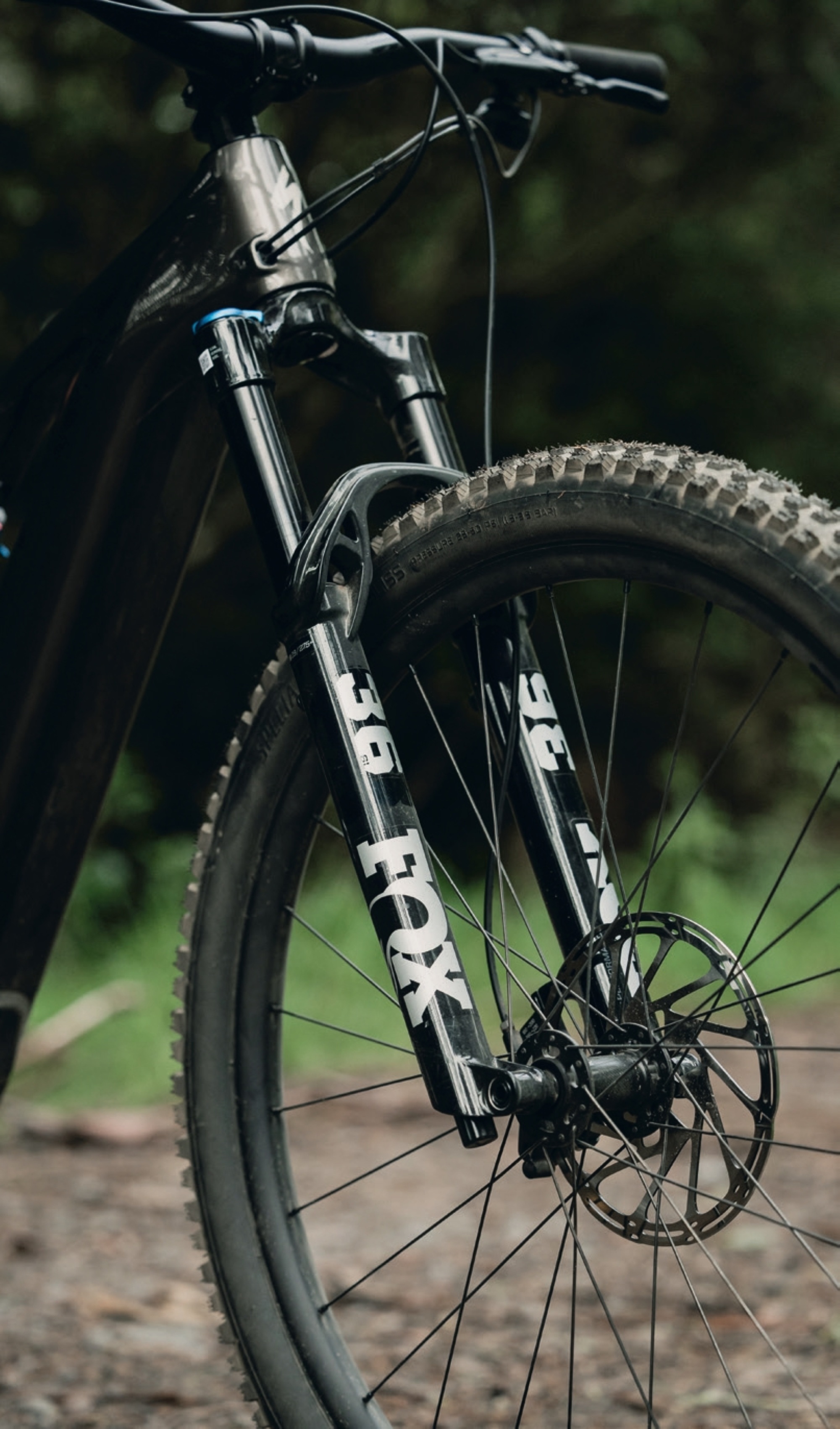
I didn’t find myself fighting to keep the front wheel grounded, even navigating the steepest of Christchurch’s pinchiest fire road climbs. The Levo R was my first experience using Fox’s new 36 SL Performance fork, and it remained stout on steep pitches without needing to reach for the lockout functionality. I did hit the limits of the Purgatory tyres on a couple of switchbacks due to the reduced sidewall grip relative to Specialized’s burlier tyre offerings, such as the Butcher or Eliminator. However, given the type of terrain the Levo R will favour, I do feel that I’d ultimately value the superior rolling capability of the Purgatory over increased grip, so this wasn’t a major.
The medley of SRAM’s price-focused GX/ S1000 components performed reliably under load albeit a little “clunky” at times, though that’s to be expected when trying to keep up with such a powerful drive unit. The derailleur is wired into the bike’s battery, alleviating the hassle of remembering to ensure your batteries are charged, although it does mean that should your battery run out of juice, so too will your derailleur, and you’ll inadvertently have yourself a singlespeed for the commute home.
Contact points are of course subjective, but I think I won’t be alone in saying I’d have appreciated a more compliant or in simple terms, soft, saddle. Particularly given the emphasis this may have on climbing, this was up there with one of the harshest out-of-the-box saddles I’ve ever used. I also felt that 800mm width bars was overkill and makes more sense on bikes with a more gravity-oriented focus, like the Levo 4.
On Christchurch Adventure Park’s technical uphill trail, I opted for Trail/Turbo the majority of the climb, with Turbo providing more than ample horsepower for tight, technical switchbacks, delivered in a way that was gradual enough to still retain control and weight over the front wheel.
Range testing is always an interesting one, because this largely depends on a range of factors, namely; rider weight, terrain and preferred ratio of support relative to effort. For me, even after climbing almost 1000m, including a 30-minute climb almost exclusively using Turbo, I still had 70% battery left at the top of the hill.
I often find that the more efficient and intuitive a motor is at delivering power, the less likely you are to require mode toggling and therefore preserve battery draw. Walk mode, which was fiddly to activate on the remote’s prior iteration, has been made significantly easier to access and provides a subtle push when needed, which is a pleasant change to the walk modes you see on other drive units which have a tendency to overdo the power delivery and pull your arms out of their sockets. The motor is also whisper quiet, giving off only the slightest hum even under load.
All-in-all, the Levo R is a superb climber, striking a near perfect balance between comfort and efficiency.
Descending
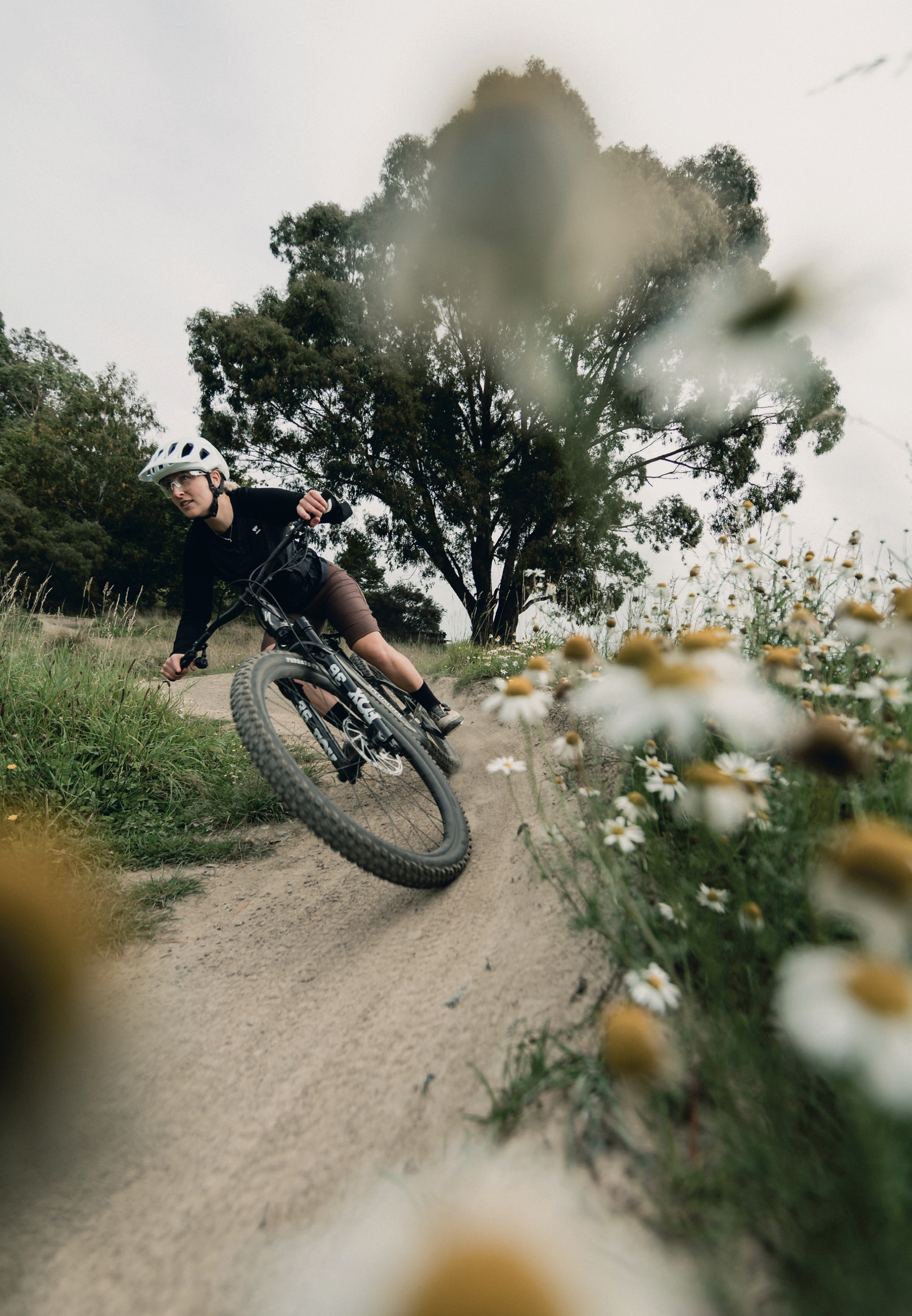
Before you say “but 140mm of travel isn’t enough for me”, I can assure you the Levo R punches well above its weight. Make no mistake, this is a capable descender that blurs the line between short-travel efficiency and big-bike confidence. Thanks to the fast-rolling tyres, 29” configuration and active suspension platform, the Levo R is quick to pick up speed and maintains it well, particularly on blue flow trails. The bike didn’t get hung up on small bumps or undulations, tracking reliably through chattery terrain and holding its line impressively well, in a way that requires less rider effort relative to longer travel eMTB’s. Make no mistake, this isn’t a burly 170mm travel beast that’s eager to tackle steep, double black trails, but it holds its own on technical blue trails, and I was pleasantly suprised at just how composed, stable and planted it was when my curiosity got the better of me and I gave it a crack descending steeper terrain, above its paygrade.
Thanks to the low bottom bracket coupled with a relatively long wheelbase, your weight is nicely centred at all times, offering a level of stability that far exceeds what you’d expect from a 130mm bike. The head angle is what I’d call “just right” – slack enough to remain pointed at high speed and when the gradient steepens on descents, but without compromised climbing capability – which, in my opinion, is the beauty of the 130mm travel range.
So far, my experience with 140mm travel bikes is limited to those specc’d with a Rockshox Pike or a Fox 34. The 36 SL was a highlight of the Levo R, greatly elevating the descending experience for bikes in this class; and, in particular, for eMTB’s, due to its stiff chassis. The fork made the bike a delight to descend on, remaining composed on rough terrain, under heavy breaking, and stout through braking bumps and those classic Christchurch rocks that really show their teeth in the depths of summer. It does a great job handling the weight of an eMTB and the damper is lively, working hard to offer great sensitivity on small bumps that you wouldn’t usually have on bikes of this travel and weight.
The rear end was equally impressive too. My experience with Genie shocks so far has been on longer travel Specialized bikes, and whilst I’ve been left feeling so-so about its performance in that segment, I think the Genie really shines on the Levo R due to its active nature and high-volume mid stroke. Thanks to its unique two-stage air chamber design, the rear end sits high in the travel and continues to provide support even once you near the end of the stroke, providing ample stability and reactivity.
Whilst I was suitably impressed with the bike’s suspension performance, I did feel these gains were negated at times by certain contact points, especially coupled with the bike’s weight. In theory, I can understand the rationale behind specc’ing SRAM’s Motive Bronze brakes. The Levo R identifies as light weight and nimble, and the Motive is positioned as well suited for a bike of this nature and travel.
In practice, there were multiple occasions where I felt like I was maxing out the brakes and, as a result, I’d start to lose the supple suspension feel as myself and the bike began stiffening up in an attempt to slow the bike down. This is compounded by the fact that the more the gradient points you downhill, the more the bike’s weight makes itself known, tending to propel you forward at a rate of knots, requiring you to drag the brakes in an effort to keep things under some level of control. I can’t help but feel that a bigger brake, such as SRAM’s Maven may have been a more suitable choice for a 22+ kg bike. Again though, given the target market, the Motive will likely be adequate.
Although the Levo R excels on wide-open, flowing trails, when the trail narrows and corners tighten up, the high front end combined with the full 29” wheeled setup can leave you feeling a little detached from the bike. My personal preference would be for an optional mullet configuration to cater for riders who are keen to retain a sense of nimbleness and reactivity when cornering; however, the decision for full 29” is understandable when considering the bike’s emphasis on efficiency, particularly when climbing.
Whilst efficient on the ascents, the long wheelbase can make for cumbersome cornering, and I found myself working hard to steer the bike round tighter switchbacks, particularly when coupled with the effort required to slow the bike down.
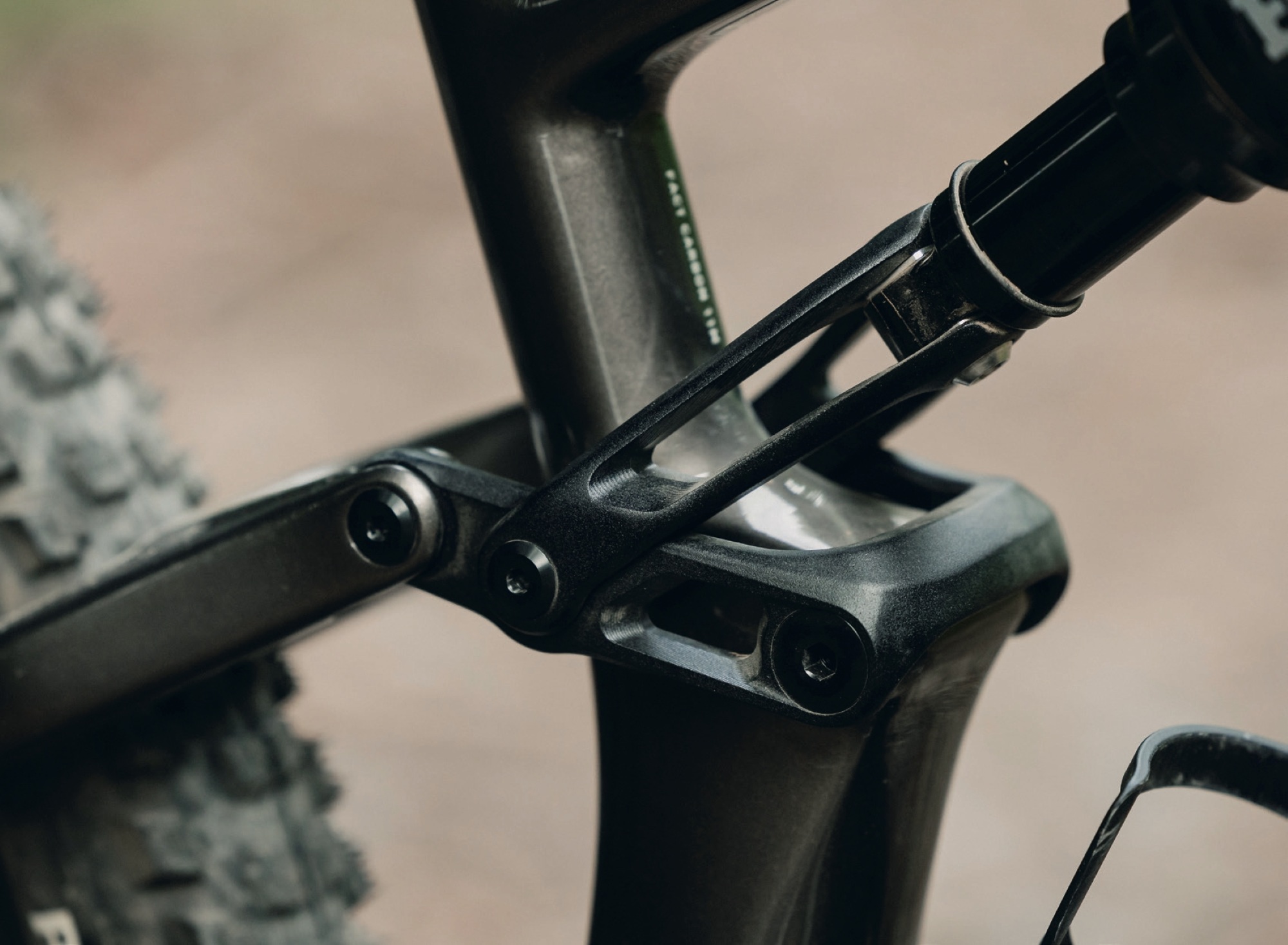
The chainstays can be altered using a twoposition flip chip, allowing you to switch the length between 441 mm (short) and 447 mm (long) which helps retain some sense of agility on tighter trails, though these are still almost 10mm longer than the likes of the Stumpjumper 15, which seems a little contradictory considering the Levo R’s “rally” concept.
While touchpoints are certainly subjective, I couldn’t fault Specialized’s bread-and-butter offerings, with 40mm rise bars and 50mm stem providing ample comfort and confidence on the descents. The X-Fusion Manic dropper post performed without issue, and I was pleasantly surprised at how trusting the Purgatory tyres were, particularly in Christchurch’s marbley dust. Lastly, the carbon chassis on our test bike was among the stiffest I’d ridden, which is on-par with many Specialized frames I’ve ridden in the past; however, as expected, it was balanced with comfort, affording compliance on the descents without adding harshness.
Final Thoughts
The Levo R creates a very strong case that there’s a gap in the market for shorter travel, full power eBikes – those that retain all the benefits of a big battery and powerful drive unit without the weight, and offer a more lively, nimble ride experience. I think this bike will appeal to a vast range of riders, and indeed it is the bike that many should realistically be on. Just because you can get more travel with the likes of the Levo 4, doesn’t necessarily mean you should.
After all, it’s easy to forget that whilst you and your mates might want an eBike that can do anything from sending jump lines to threading needles on the steeps of double black trails, this doesn’t exactly echo the wish list of your everyday rider, and that’s where the Levo R fills the current void of short travel and full power options. It’s hard to think of another brand catering for this market, and Specialized have certainly created a one-of-a-kind bike that creates a compelling case for full power eMTBs in this travel range.
With its confidence-inspiring downhill capability coupled with buttery-smooth power delivery on the climbs, the Levo R is a particularly strong option for those newer to mountain biking, and even more so, those seeking to branch into the world of eMTBs. Having said that, I do feel that perhaps Specialized have come up with a concept that’s for everybody and nobody all at once – it’s too little bike for the quintessential enduro rider, but lacks the weight savings and therefore nimbleness to meet the needs of an “all-rounder” trail rider.
The geometry and weight creates a smaller gap than one would expect between the Levo R and its Levo 4 big brother, so for me personally it’d be hard to justify the Levo R when I could have more travel and a mullet configuration for very little weight penalty, whilst retaining the same amount of power. That said, I think for many riders the Levo R will be the logical choice with its user-friendly power system and the advantages that quicker handling and nimble geometry offers.