

Words Liam Friary
Images Callum Wood & Sven Martin
It wasn’t that long ago that the original Maven launched. Two years on, extensive feedback from World Cup racers, everyday riders, and bike brand partners has shaped the next generation. The result is a brake that feels more intuitive, more controllable, and more confidence-inspiring whilst not replacing the ethos of the original Maven.
The biggest change in the updated Maven is a redesigned SwingLink, the internal cam that controls how power builds as you pull the lever. To appreciate why it matters, it helps to understand what the original Maven was doing in the first place.
The first-generation Maven (A1) used a low starting leverage ratio, designed to minimise deadband. You know that brief dead zone at the top of the stroke before anything happens. The result was a very short, snappy feel – pull the lever and the power is right there. It was all brake, all at once, which some found getting used to. For me, initially it was full on, then I got used to it. But it was either on or off and not much in between. That low starting rate is what created the A1’s distinctive ‘cam-over’ feeling – a magnetic, almost binary engagement. In the field, some riders liked it and others didn’t.
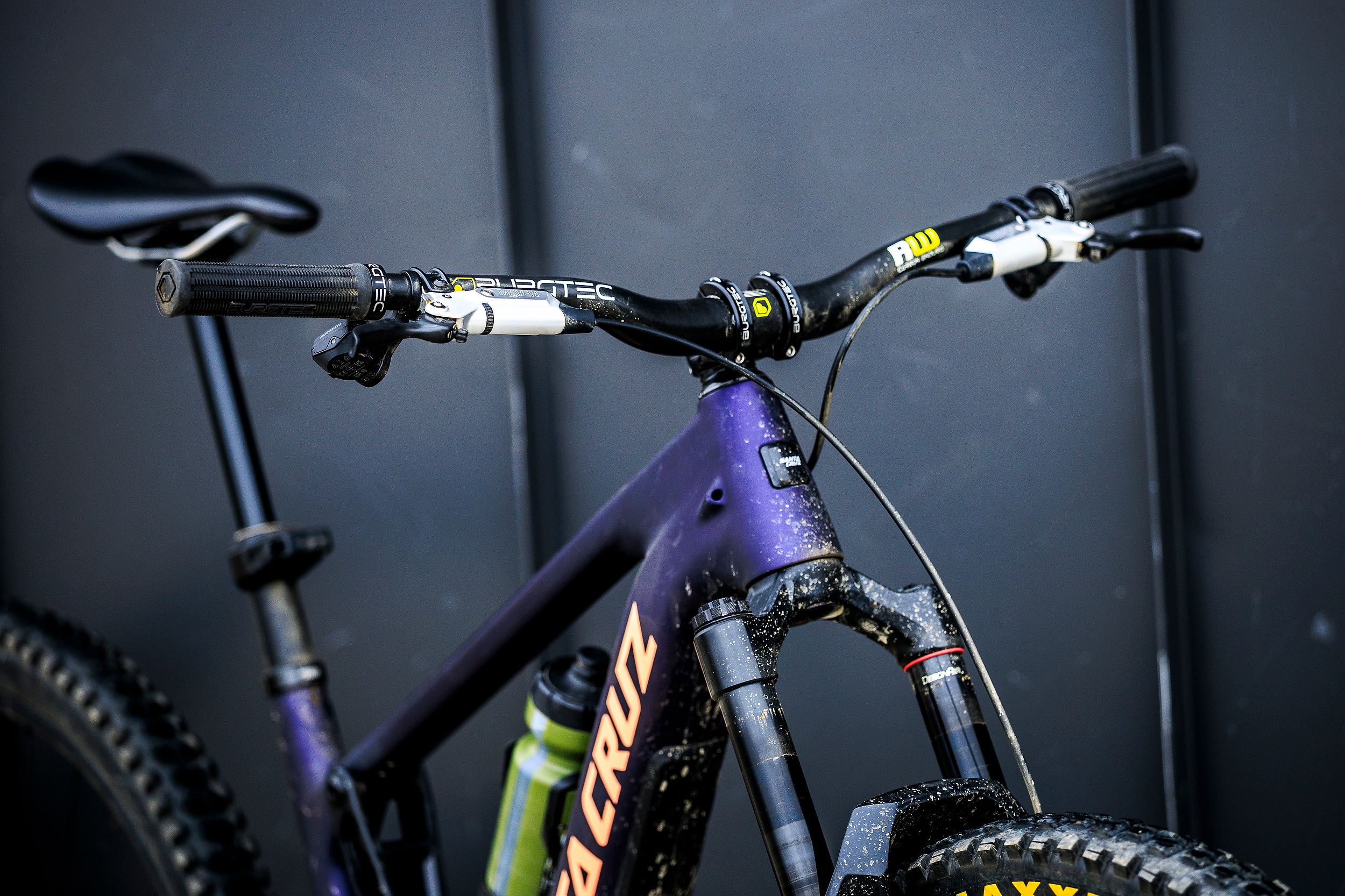
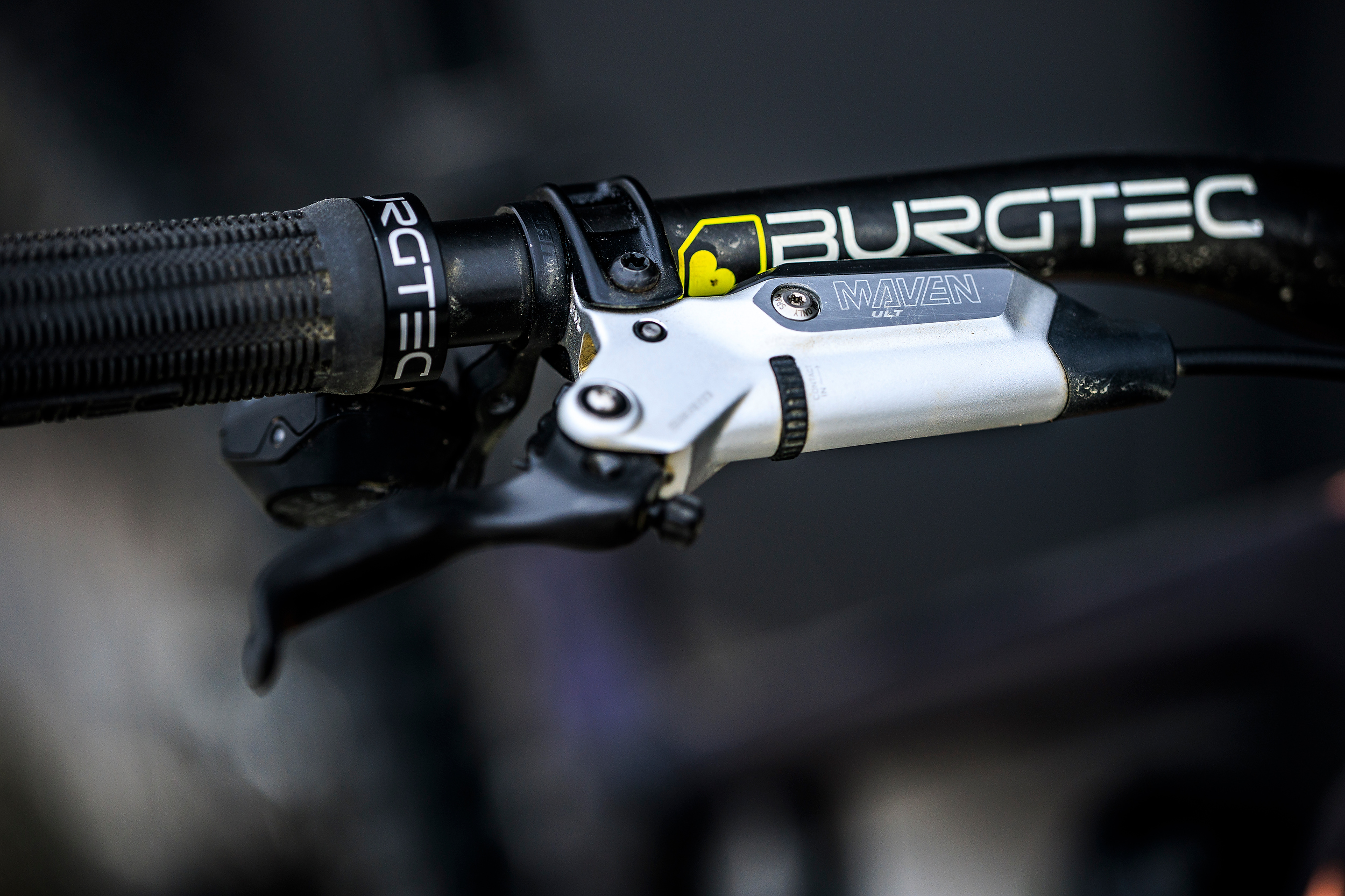
However, Maven Base sits at the opposite end of the spectrum. Rather than a SwingLink cam, it uses a simpler DirectLink lever architecture for a very light, linear feel from the top of the stroke all the way through. There’s a touch more deadband than the A1, but the unhurried, progressive character was widely appreciated when it launched quietly alongside the Maven lineup. Its positive reception was a big part of what motivated SRAM to rethink the SwingLink-equipped models.
The new B1 SwingLink finished in gold to distinguish it from the original red cam, splitting the difference between those two approaches. The initial breakaway force drops from 8 Newtons on the A1 to 4.25 Newtons on the B1, nearly halving the effort needed to get the brake moving. That lighter engagement flows into a smoother, more linear leverage curve through the mid-stroke, where most braking actually happens. Then, at the end of the stroke, the leverage ramps up again to ensure full peak power is still there when you need it. The three goals SRAM set for the project were more control, more predictability, and the same power. The B1 SwingLink delivers all three.
Reworking the SwingLink had a knock-on effect that needed managing. A higher initial leverage ratio means more mechanical advantage at the point of pad contact. Put simply, left unchecked, the B1 would have bitten harder at initial contact than the original Maven, which clearly isn’t the goal. To balance this, SRAM made a deliberate change to the caliper.
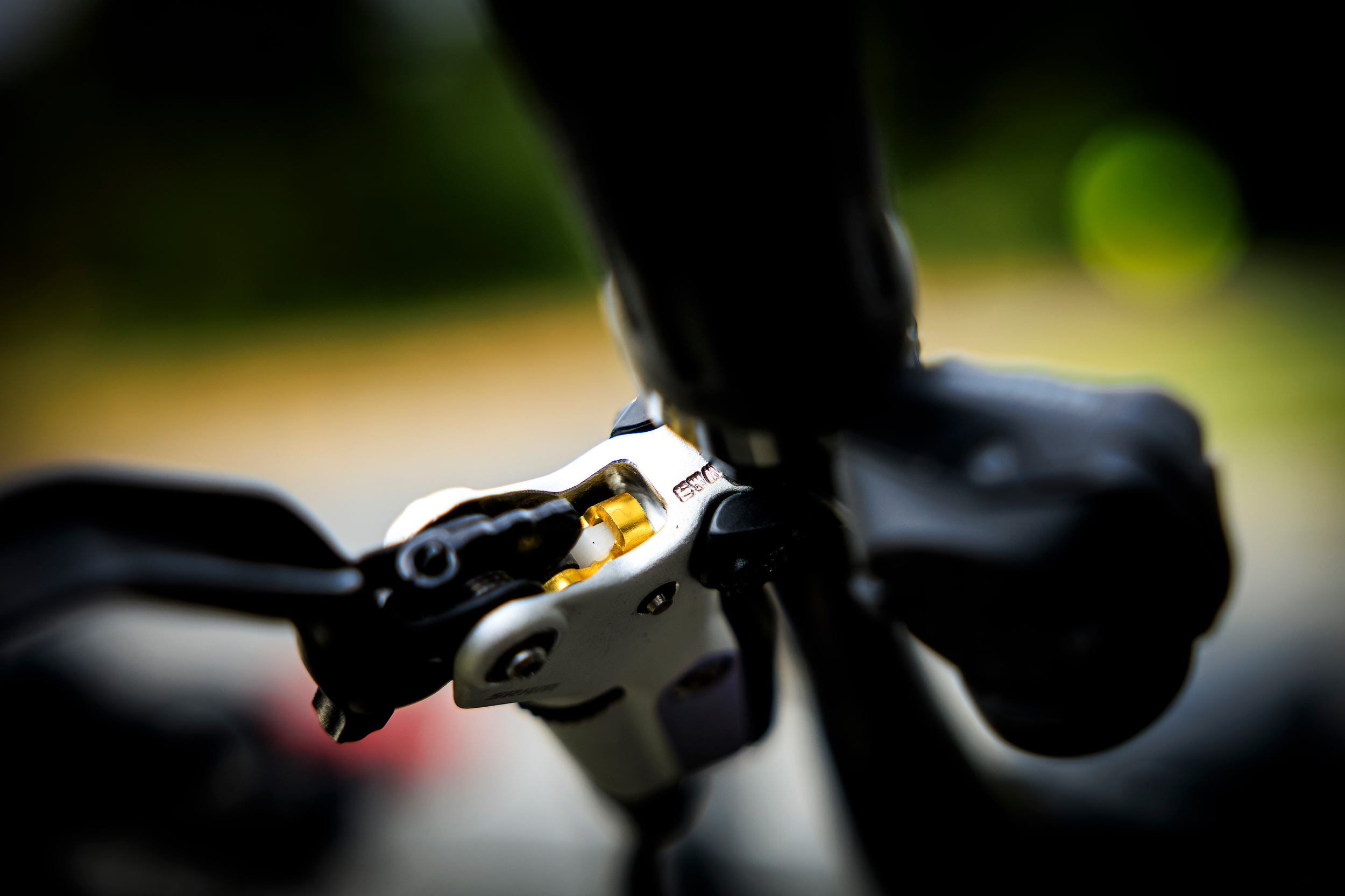


The original Maven A1 caliper used two 18mm pistons and two 19.5mm pistons. The B1 moves to four 18mm pistons, the same layout as Maven Base. The slightly reduced hydraulic ratio at contact offsets the higher mechanical advantage from the new cam, so the overall feel at pad engagement is more controlled and predictable while peak power remains the same. As the SRAM engineers put it, they’re still baking the same cake; they’ve just adjusted the recipe.
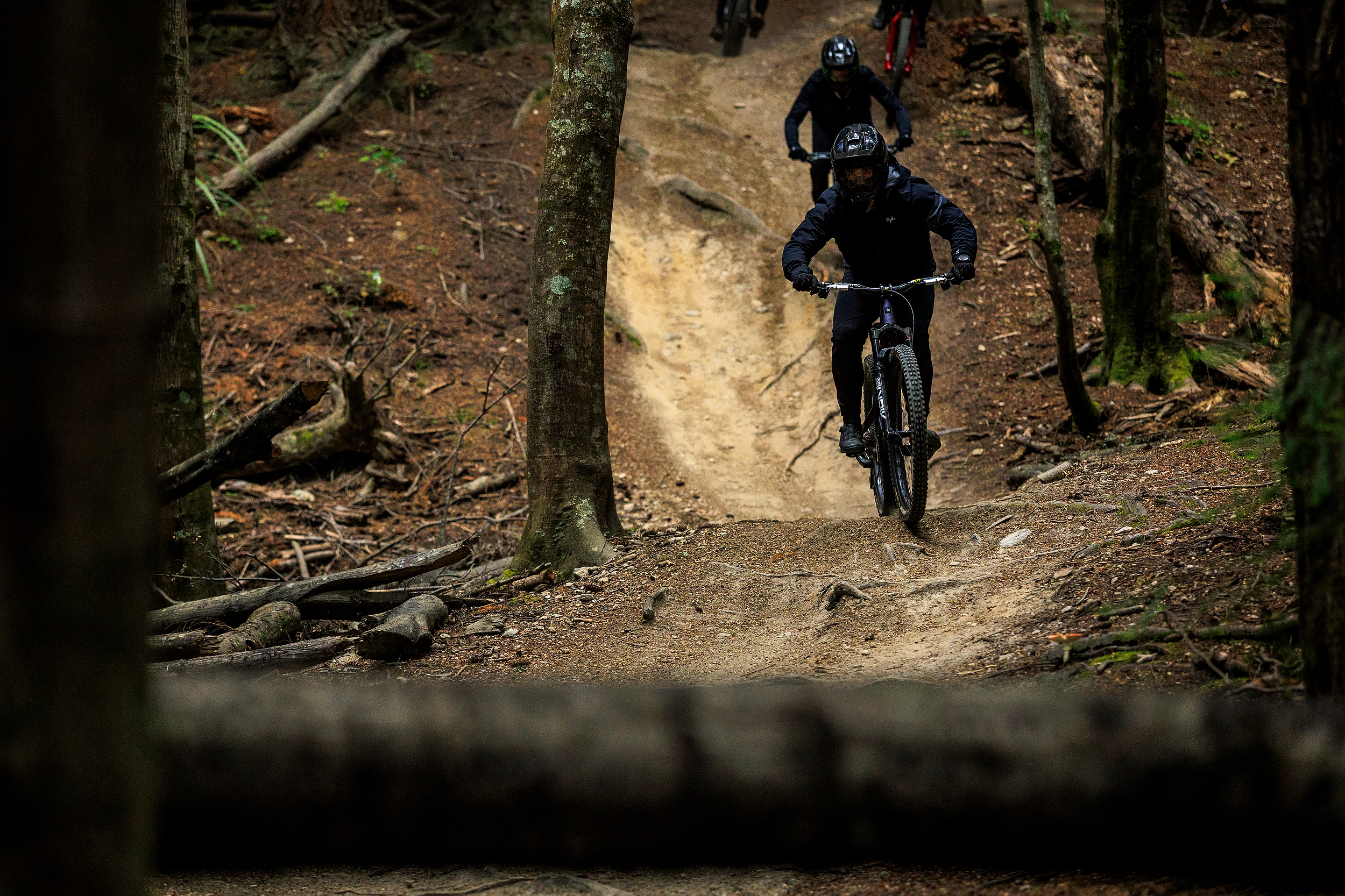
I’ve been running the Maven Ultimate B1 on my Santa Cruz Hightower for just over a week. The lever feel is solid and confident, with a noticeably more graduated build through the stroke compared to the A1. You can feel exactly when the pads make contact with the rotor, and that modulation is consistent every time you pull. Where the original Maven could feel confronting – all-on or all-off, particularly in the first few rides – the B1 builds into its power more smoothly. It’s still a seriously powerful brake but just gives you more time to work with it.
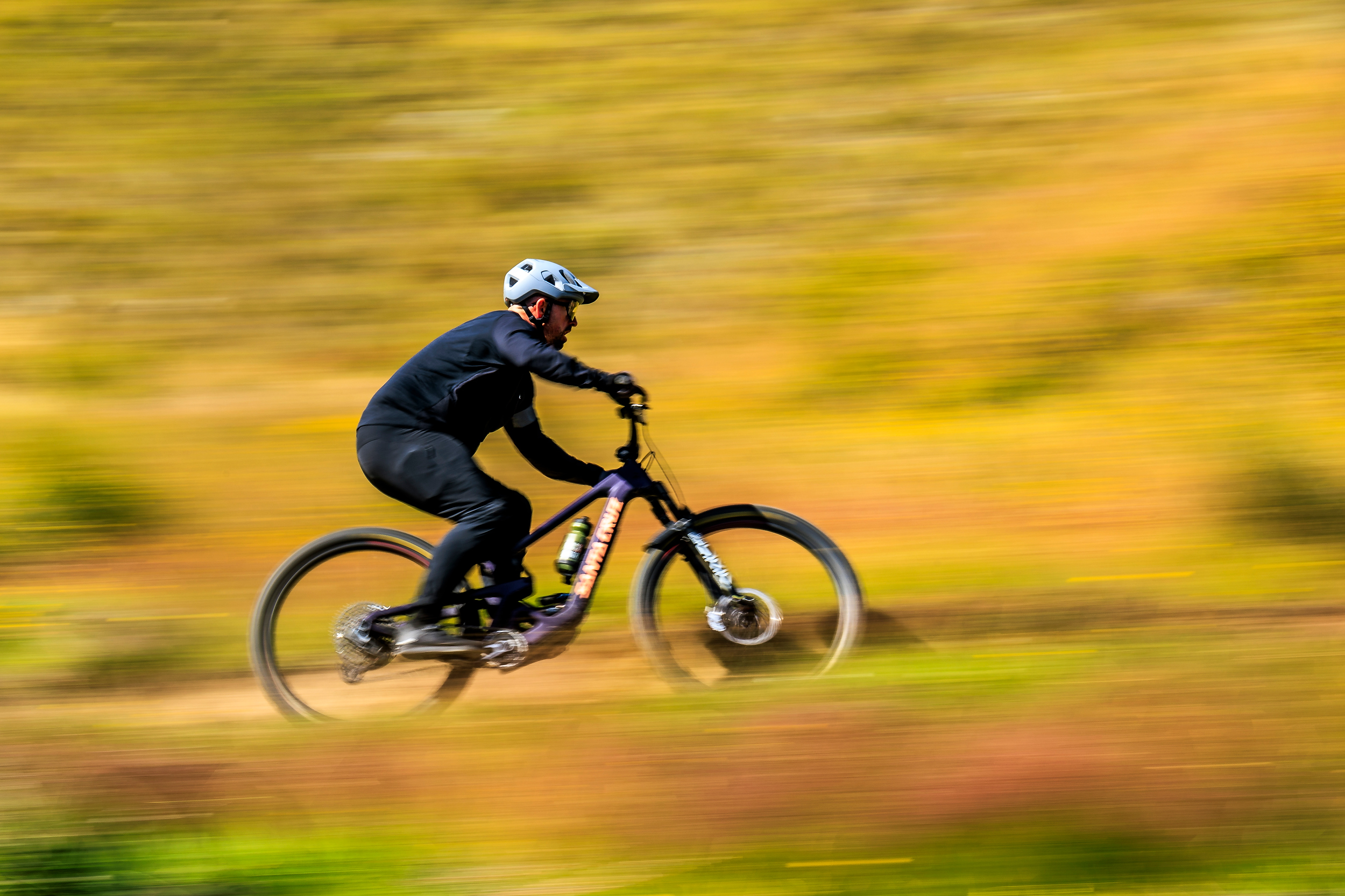
Most of my testing happened during a week of riding in Queenstown, and on longer descents where other brakes have started to fade or lose feel, the Maven kept doing its job with the same character from top to bottom. Heat builds in the oversized caliper, but by design it dissipates slowly and evenly, keeping brake feel consistent throughout. On more technical, slower sections of trail, the improved control and modulation allowed for better precision; I could pick my way through with more accuracy and less guesswork than I’d had on the A1. During testing, I had a slight fall that resulted in a cut palm and a sprained wrist. I still had a few days to go and was thankful for the better control and modulation, especially with my sore hand. Put simply, I had better, precise, and accurate brake control.



Brakes are quite subjective. If you prefer short, snappy engagement of the A1, the B1 is a different animal. But the wider usability window is hard to argue with, and I’d expect riders who struggled with the A1’s abruptness to find the B1 a much more natural fit from the first ride. This was certainly the case for me.
The Ultimate sits at the top of the Maven range and earns its place there. Carbon lever blades replace the forged aluminium of the previous version, giving a familiar tactile feel while performing better in cold conditions. Maven Silver receives a new forged and CNC-machined aluminium blade with a precision weight-saving cutout, while Maven Bronze gets a forged blade as well, a meaningful step up from the previous cast construction. The Ultimate’s caliper features machined edges and titanium hardware. Reach and contact point adjustment are both tool-free, so dialling your setup takes seconds rather than digging out an Allen key.
One of the most considered aspects of the B1 update is that it’s fully backwards compatible with any existing Maven Ultimate, Silver, or Bronze. These are called tuning kits, not upgrade kits. Clearly, making a line in the sand between the two Maven brakes. The A1 (original) is not obsolete and that’s a good thing in this throwaway world!
The new SwingLink and lever blade are available as a tuning kit – no bleed required. All the changes happen on the dry side of the brake. Two T10 Torx bolts remove the lever, a pin punch (the T10 tool included in the kit works for this) pushes out the SwingLink, and the whole assembly swaps cleanly.


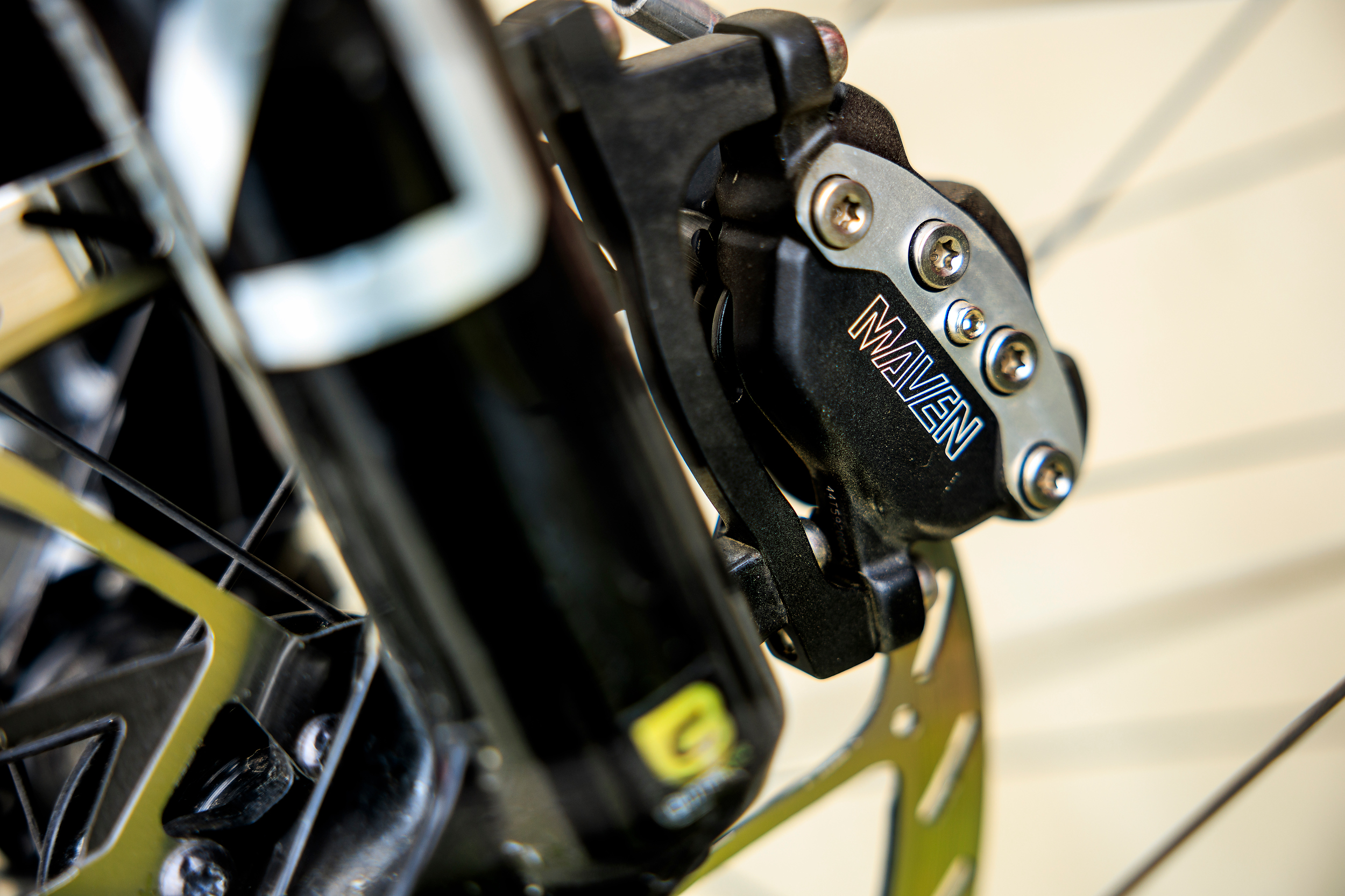
One compatibility note worth keeping in mind: the gold B1 SwingLink (identifiable by two notches on the cam body) should only be paired with B1 calipers, and the original red A1 SwingLink (single notch) with A1 calipers. Mixing them won’t cause a safety issue, but the feel will suffer. Fitting the new gold cam to old parts will result in a brake that’s far too powerful and aggressive, while fitting the old red cam to new parts will leave you with something wooden and flat with little power on offer – because the parts simply weren’t developed to work together.
In addition to those who install the tuning kit on an existing A1 brake, because the A1 caliper retains its larger pistons, fitting the gold B1 SwingLink to an A1 system results in the most powerful Maven configuration possible, lighter lever feel, with a slight boost in peak power at full stroke. Not a bad outcome if you’re after maximum grunt.
In my time on the B1 Mavens, they delivered consistent, well-modulated stopping power without fade on long descents. The original Mavens performed well too, but only once you’d adapted to them. The B1 removes most of that adjustment period. Riding with this much braking power available still means rethinking habits. Braking later into turns, going deeper into steep sections before loading the lever. Every pull feels the same. That consistency builds confidence and means you can really rely on them. After a few weeks, I prefer the more modulated feel of the new Maven. They still have all the power of the original Maven, but it gets delivered in a more refined manner.