Mind the gap
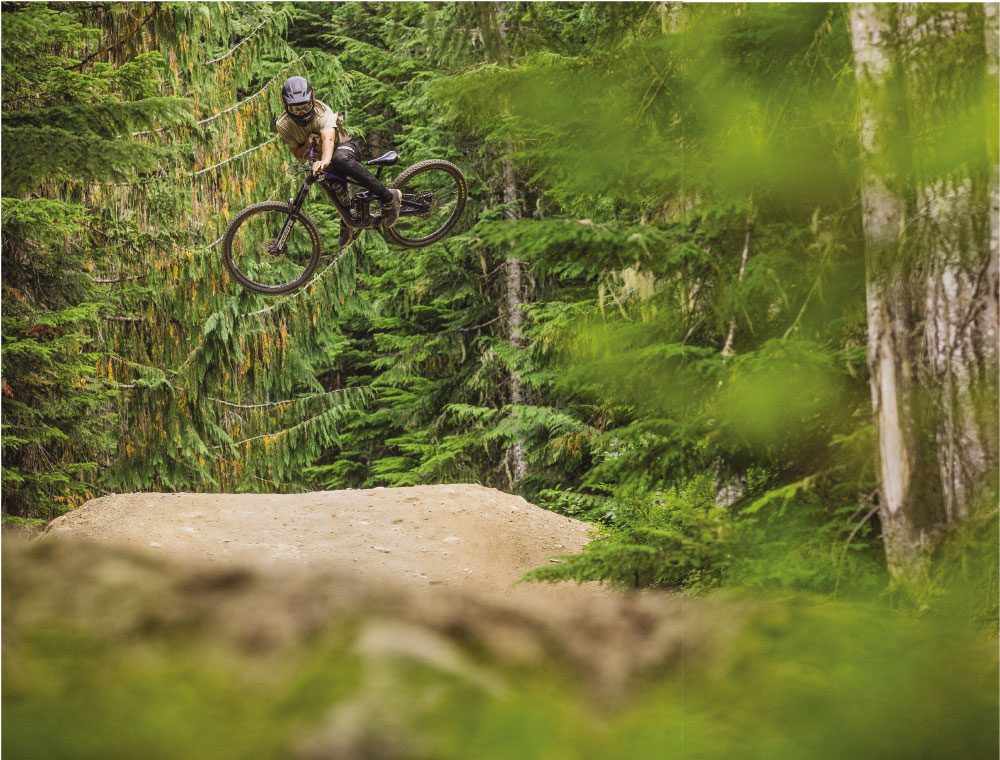
When I was younger, I always heard these "horror" stories about mountain bikers returning to Wellington after living in Canada. When they arrived home, they’d attack the local trail network, hitting all the steepest lines and constantly looking for gaps. Whilst we have great trails, Wellington simply doesn’t have the larger trail features found in BC. After a few weeks, the hype would fade. There’s great trails to ride but not the addictive challenges faced on a daily basis. It’s easy to lose motivation. I was determined for that not to be the case for me.
As a 16-year-old, I arrived back from three years in Canada as a hero, hit some sick shit, took some mad photos, got a couple covers, got lots of features… and then it all came crashing down (kinda). In a nightmare cocktail of Covid lockdowns, transitioning out of school into a full-time job, some general laziness, a sprinkle of depression and an extreme lack of motivation, I felt myself fall. Whether I actually did “fall” or not is up for debate. In my head, I feel like I’ve just plateaued since arriving back, with little to no progression for the last four-ish years and, being my worst critic, I probably exaggerated everything in my own head. I tend to do alright on the New Zealand race scene (when I get a relatively clean day). Still, I have always wondered how I would compare to all these guys back in my old hometown of Squamish — an actual test to find out find out whether or not I did fall from grace or if it was just a figment of my imagination.
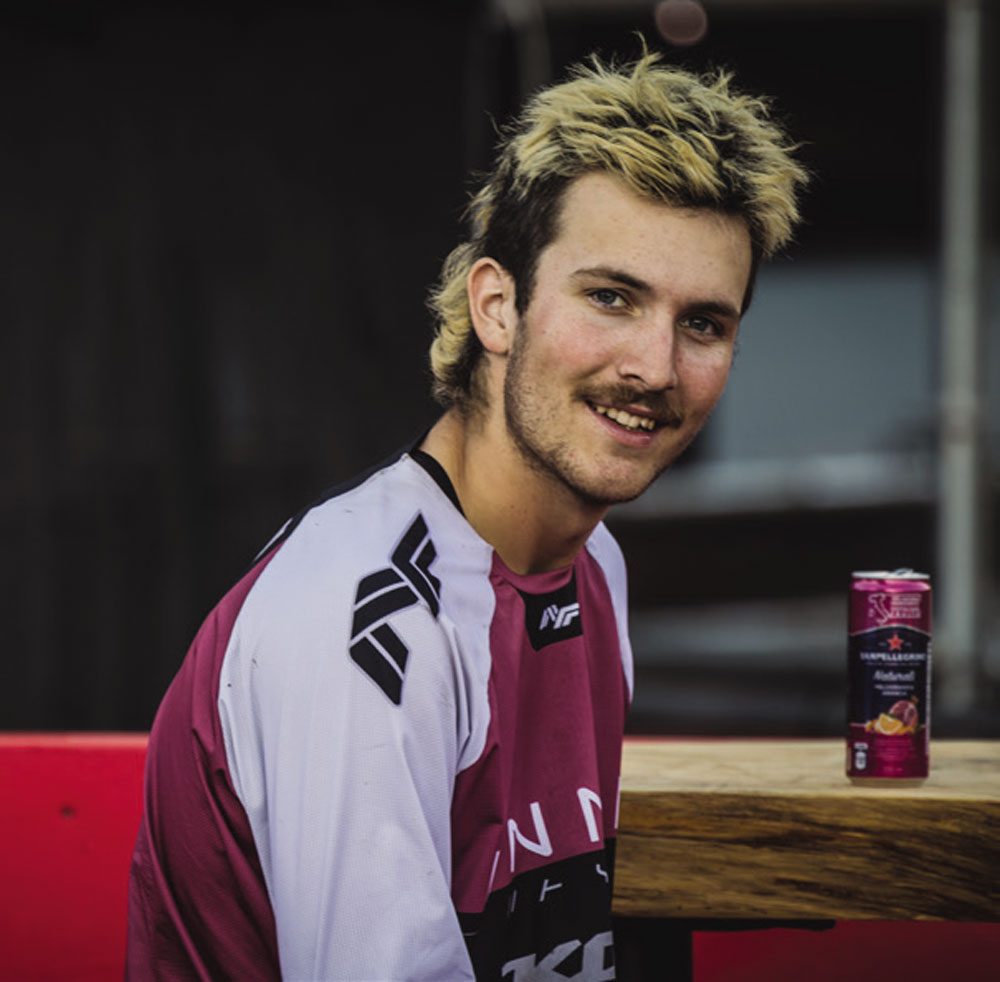
Since boarding the plane back to New Zealand at the end of 2017, I had been planning my return to Canada; getting a job, making money, and booking flights. But a few apparent roadblocks arose. Number one — and possibly the worst one — was Covid. Who could have known something like that was going to shut down the world for as long as it did? Number two, my lack of ability to save/love of spending money on unnecessary shit, like $6 blocks of chocolate. Finally, number three, doubts that it would actually happen. I don’t think I was ever that confident or sure until I held the plane tickets in my hand, four years later. Even then, I was still doubtful, thinking the flight would just get cancelled, or ol’ mate Covid would come around again and I’d be stuck with flight credit for years. But, even after all that, I still found myself sitting at Wellington airport, knowing my flight up to Auckland would arrive two hours after my connecting flight to Vancouver was supposed to leave. After landing, we sprinted along a marked course from domestic to international to board the flight to Vancouver that had miraculously been held for us! Amazingly, against all odds, all my bags still made it!
Then, just like that, I was back in Canada. Damn, did it feel weird. First, it was way too hot – it was 5 o’clock in the evening, and I was sweating just sitting in the shade. Secondly, I was in Canada. And thirdly, I’D MADE IT TO CANADA!
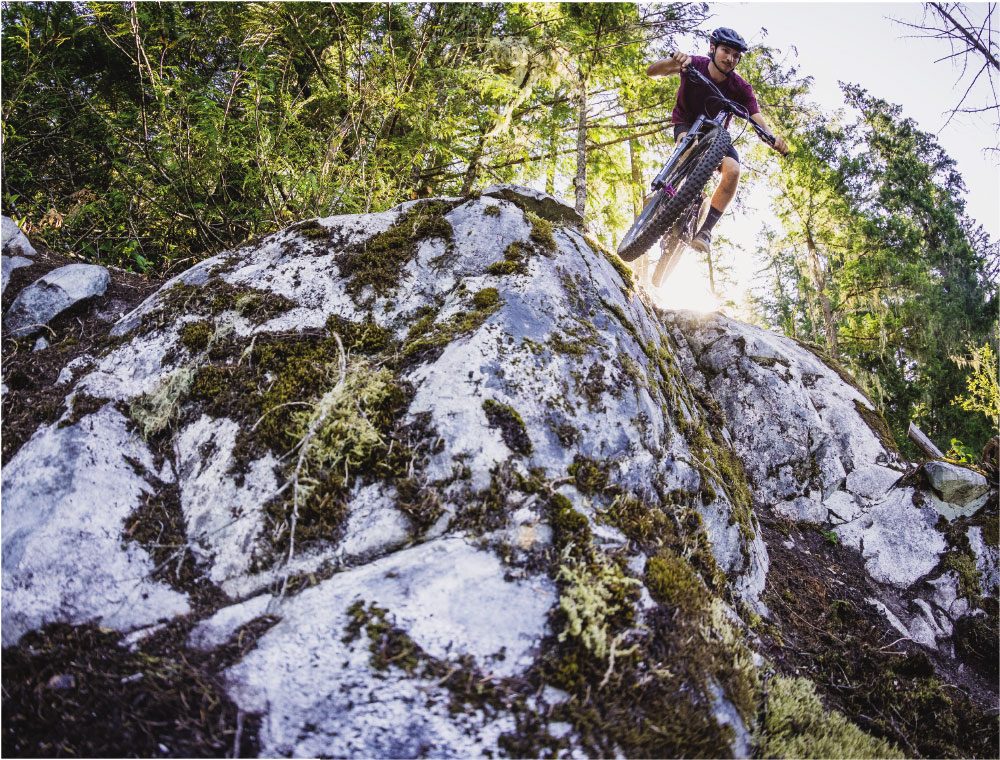
I’m struggling to put into words how it felt to be back. A mix of all emotions: intense nerves about my survival, fear that my relationships with my friends might not be the same, and excitement to ride my bike. I was also worried that I would be subpar compared to all my friends and riding buddies who were able to grow up and keep progressing in the Sea-to-Sky corridor. This rang true a percentage of the time but, ultimately, I’d attribute that to my Covid- induced laziness rather than Wellington itself.
This trip was great for a multitude of reasons. After four years, I reconnected with some of my best friends, and all my fears were lifted. Even though everything had changed — some of us had moved away, we had become adults, and we had jobs — it still felt the same as when we first hung out six/seven odd years ago. It was awesome.
I finally got to explore parts of BC that I’d never been to before, with a little crew of great humans. We followed the BC Cup downhills throughout the Interior, through places like Vernon, Revelstoke, Fernie, Invermere and Golden. I was fortunate to experience fantastic riding in all these locations, making some great friends along the way. The vibe at all these races was quite unique. This massive group of racers, parents, mechanics, friends and fans created a really cool energy at every race, just a big group of friends on a road trip together. I’d never experienced anything quite like it.
At the races, I could also answer another one of my fears about myself. The question of whether or not Wellington had halted my abilities. Thankfully, I surprised myself. In my first proper go at DH racing, atop my trusty Kona Process X, with a lot of messy runs, a lot of sketchy moments and a few big crashes, I managed to convince myself that I am not entirely shit at bikes. So, mission accomplished (almost). My results may have convinced me that I could still ride bikes, and helped me to achieve peak sandbagger status, but they weren’t enough to convince me that I should try to make it as a racer. No, that would take a specific race result.
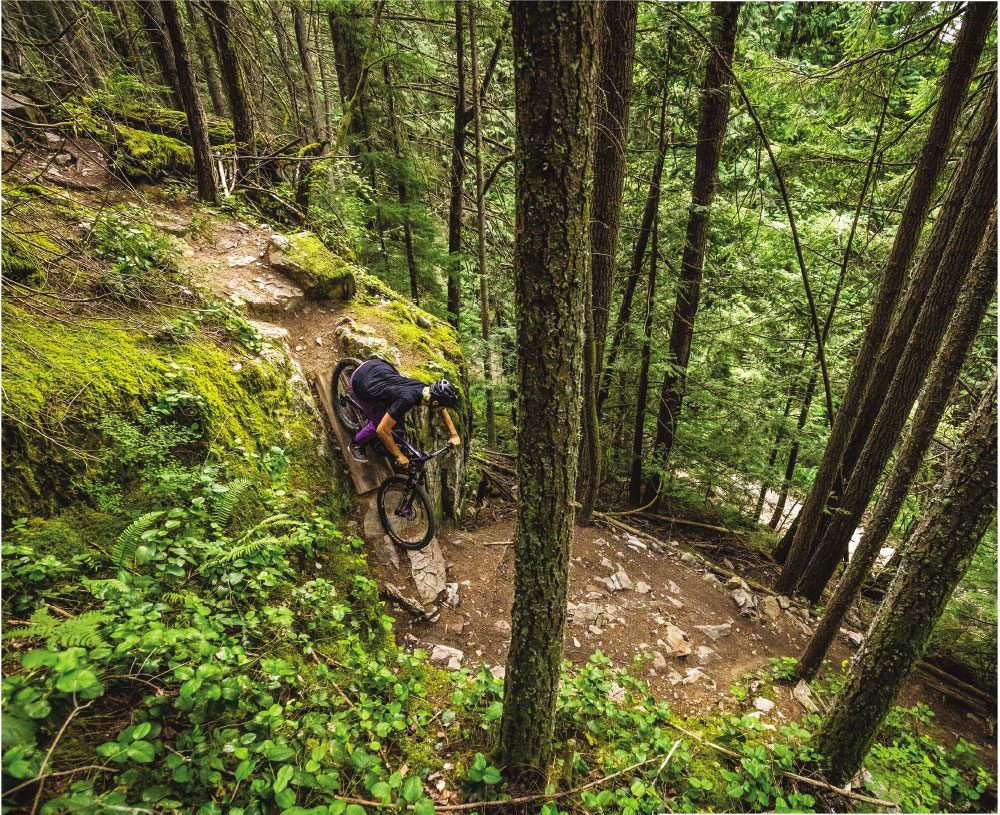
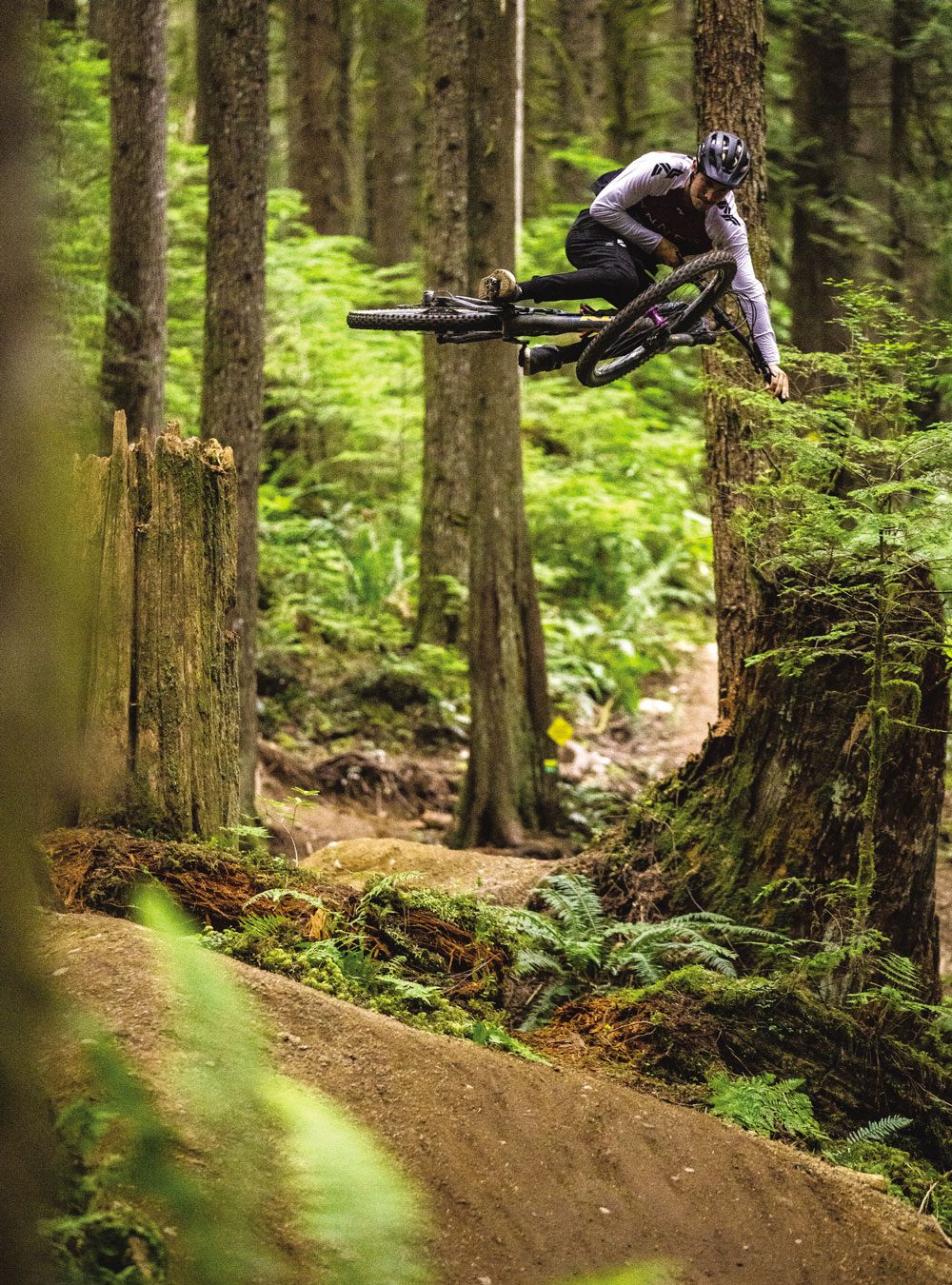
After a well-deserved (short) stint of relaxation, I was back into it, smashing Whistler Park laps with all the locals and draining beers with all the kiwis. We were rolling into an EWS weekend, followed by Crankworx week, so everyone was in town. This made for a wild experience. My two northern and southern hemisphere lives finally clashed together, and unsurprisingly, it all gelled quite nicely. I mean, we only ride mountain bikes. Not that hard for everyone to get along.
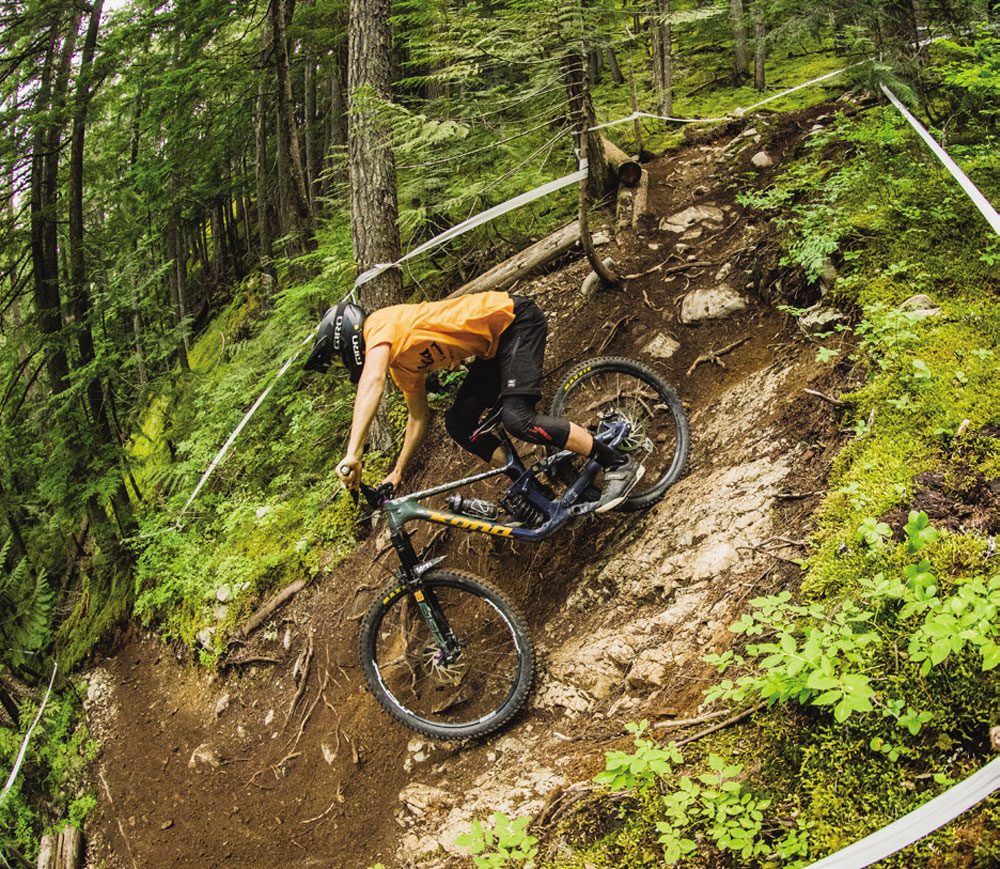
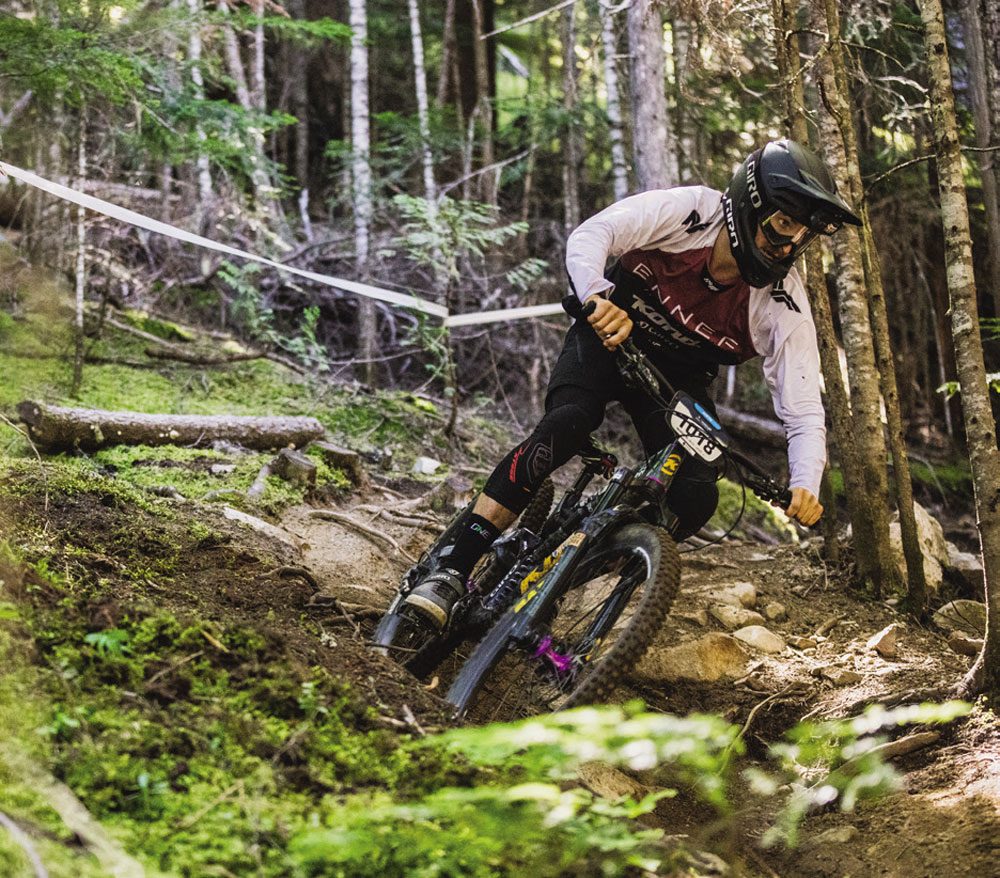
Finally, we reached the big race. I may have only raced the EWS100 (same course as the EWS, just no Pro stage) but it would make for quite an influential factor regarding the next steps of my career. The EWS experience was crazy fun, just an incredible amount of people out all day, riding and racing bikes. So, I ended up sharing the day with some old and new friends and thoroughly enjoyed (almost) every minute of it. All except for the minutes I spent in the dirt and with a broken bike. After a rollercoaster of a race, three stage wins, and two significant stage losses, I found myself five seconds off the race winner (who is also now a great friend of mine) in second place. That was it. That was the result I needed. Just some numbers that could tell me I wasn’t galaxies away from competing with the big dogs — but actually only a few planets away. That one result was enough to convince me that I may actually be able to race full-time. Just gotta get my ass off this couch first!
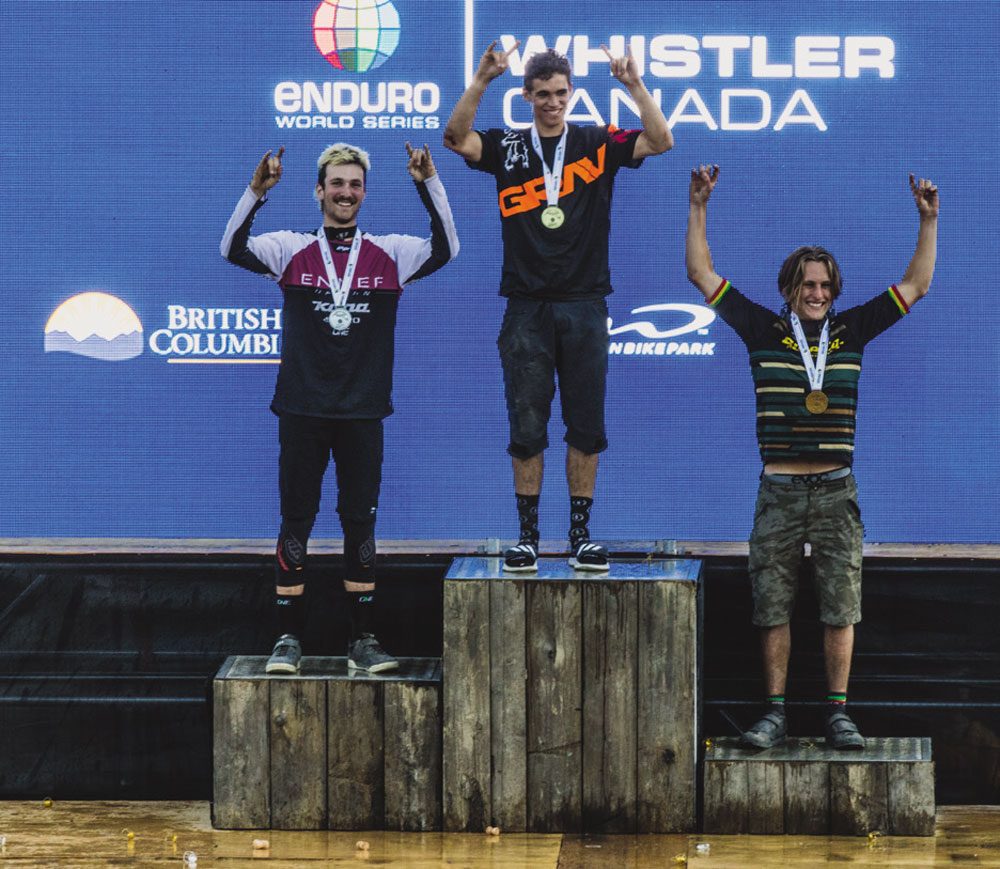
Words: Elliot Smith
Photography: Caleb Smith
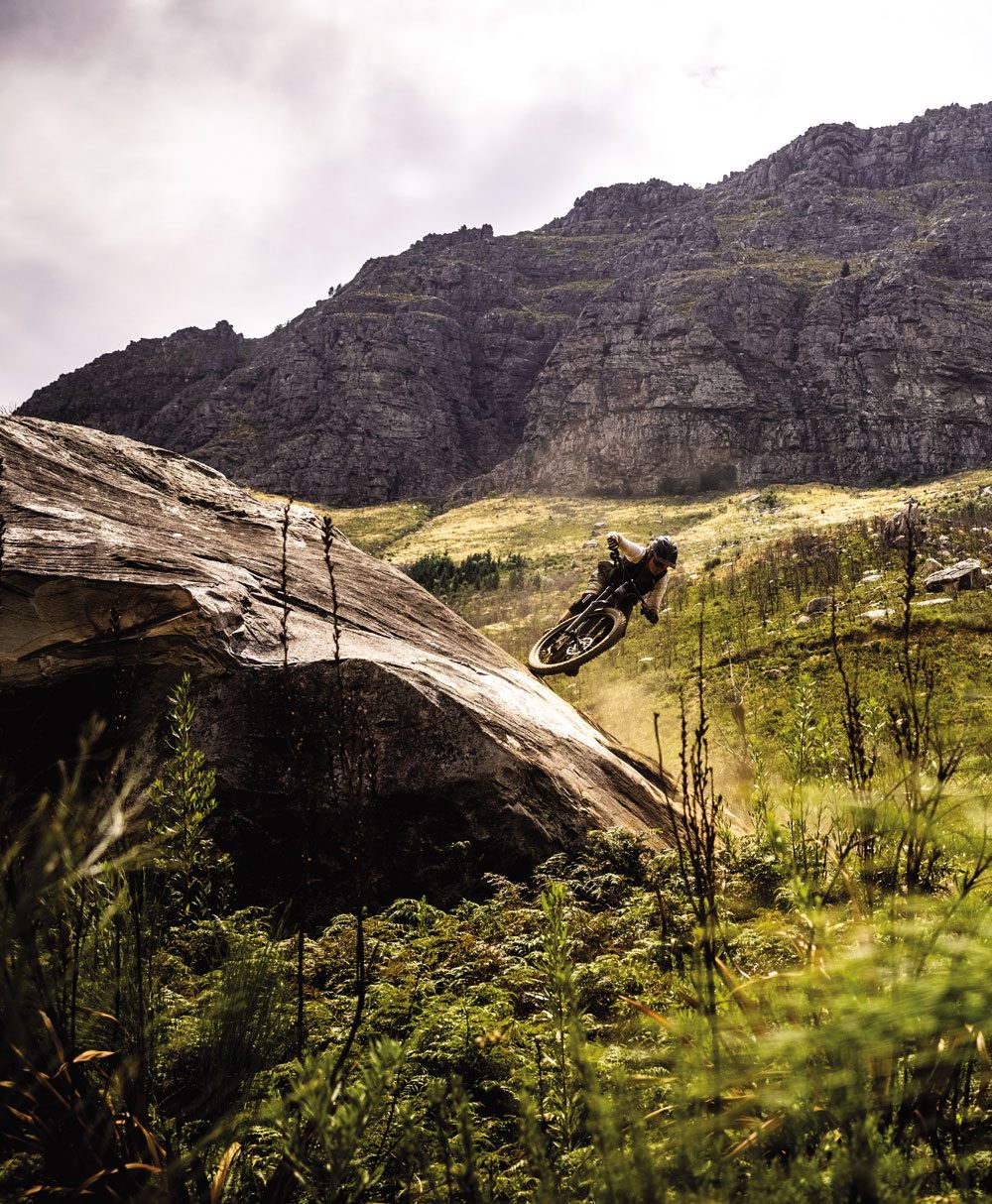
The two sides of progression
It’s a topic that’s headlining wherever you look in the mountain bike industry at the moment: women mountain bikers are absolutely killing it and pushing the boundaries like they’ve never been pushed before, across all disciplines. New events are popping up all over the world specifically for women, and women free riders can actually make a living doing the sport they love, with the support of the industry and their male counterparts behind them. Finally, the world is beginning to recognise what the women of mountain biking can do — and boy, is it impressive! Women are finally getting the respect they deserve, after all these years of resistance from the industry.
But what exactly is progression? The dictionary defines it as: the process of developing or moving gradually towards a more advanced state.
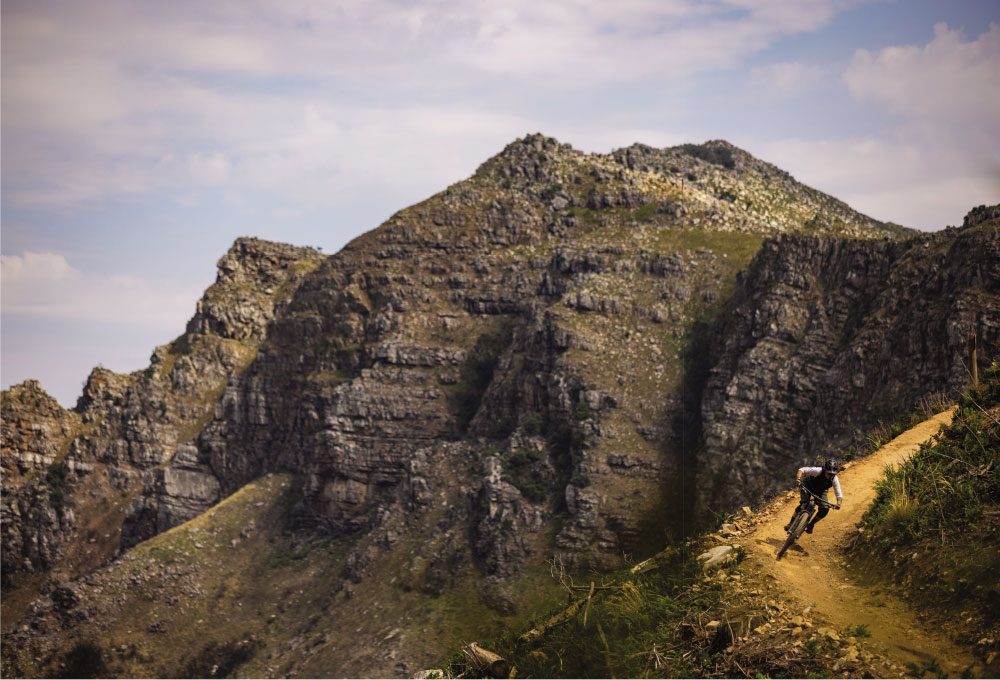
This can be a good or a bad thing, right? Good in terms of career advancement and development; bad when it comes to the medical definition, where something is spreading through the body and becoming progressively worse. Progression has a different meaning to everyone — thank goodness. It should be whatever you want it to be, not what you think it should be.
With all the progression happening around us, and the growing awareness around what women mountain bikers are capable of — via our social media feeds and channels — you feel inspired and motivated. But there is also a side to this progression that can end up making people feel worthless about their biking skills and abilities, and their own personal level of progression. Sadly, social media can have the effect of making you feel kind of shitty about the stuff that you aren’t doing — or cannot do — especially when it seems like everyone else and their mothers can, and are. You end up scrolling and scrolling and feeling worse about yourself and your own abilities, to the point of it effecting your mental state, which can lead to depression and self-doubt.
Of course, it’s not all negative, it is very inspiring too. But, sometimes, it can almost be too inspiring. This can lead to situations where someone doesn’t quite have the skills or capabilities just yet, but they don’t care — instead, they just close their eyes and send it for their latest IG reel! Just YOLO-ing like this can often lead to a disastrous outcome and some nasty injuries. This sort of progression can end up discouraging other women from even entering the sport. They don’t want to give mountain biking a try, because they deem it too extreme, too gnarly, too masculine. We have to be careful to not just portray only this side of our sport – as it’s really a very small percentage of women pushing the limits to the max like that. We should be portraying other sides of our sport, too, and encouraging more women to just get out on a bike and give it a go.
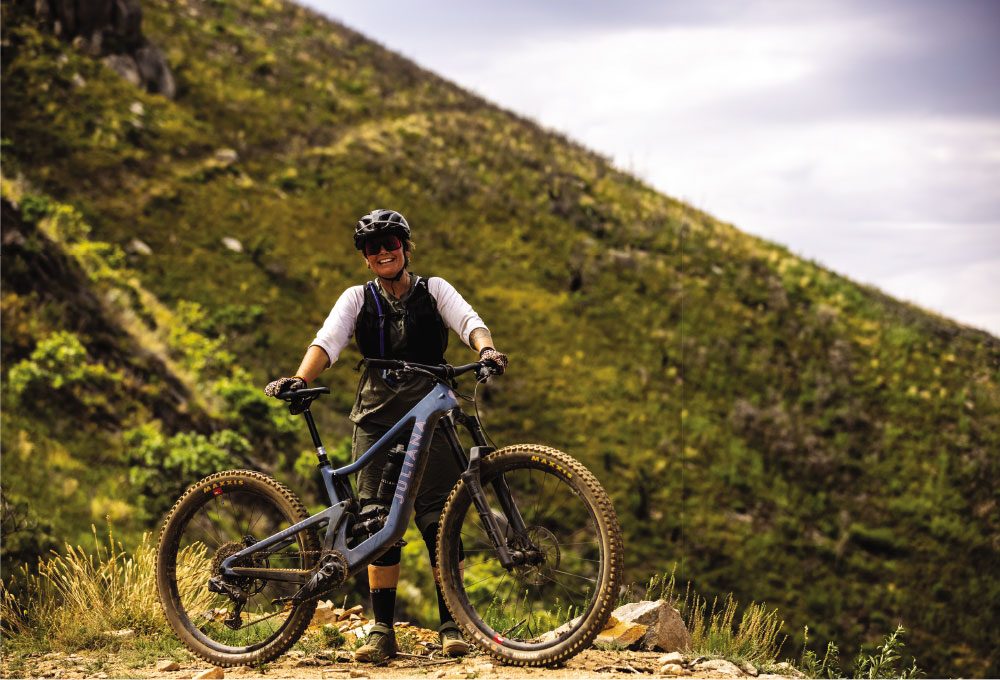
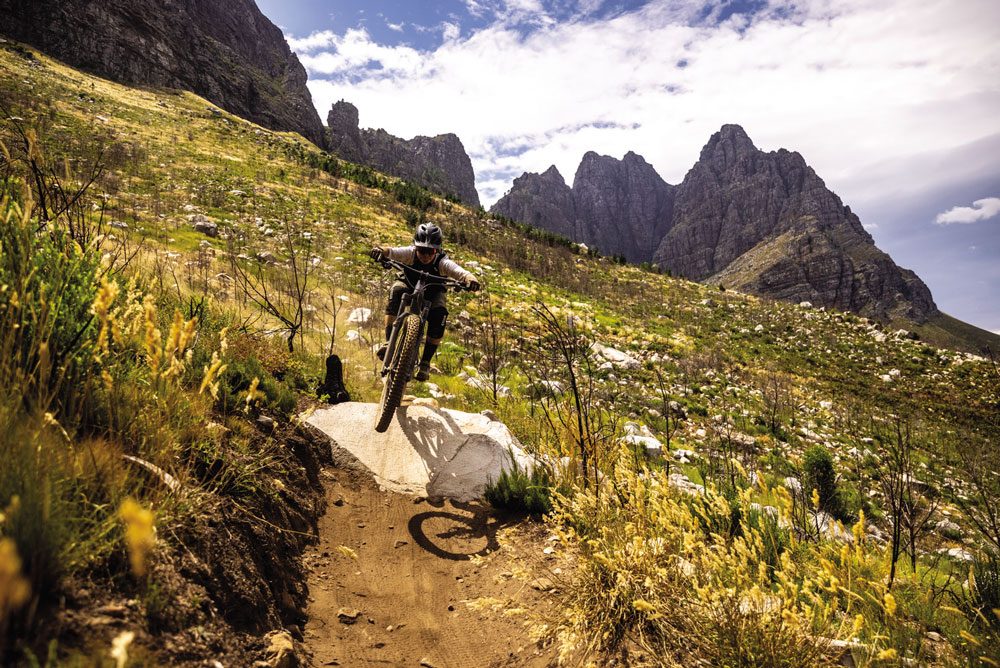
If I can wheelie, I’ll get so many followers who think I’m cool. If I land this backflip, people will love and respect me more, my followers will skyrocket and sponsors will value me! My life will change and I’ll be popular! This sort of thinking ultimately leads to additional pressure, self-doubt, fear of failure, and fear of what people might think of you — to the point where you can no longer just enjoy the simple act of riding your bicycle. My point is, that in today’s society where you’re constantly progressing and everything has to be bigger, better, faster, further, it’s ok if you choose not to do that. It’s ok if you just like to head out the door and go for a pedal in nature to get some fresh air, to notice the changes in seasons, to stop and watch how the light catches the water, to listen to the birds, to stop at the top of the climb, lie on your back and feel the wind sweeping over your sweaty body while watching the long grasses dance in the breeze. This is also a form of progression. This is the kind of progression we need in our busy lives, where the focus is always on achievement of some sort. We need this to find balance, to slow down and recharge our sympathetic nervous system, to calm our minds and find some peace amongst all the everyday chaos. Once we can achieve this, progression will follow — if that is your end goal. They go hand in hand and work together. Homeostasis. Yin and Yang. You cannot have one without the other.
A lot of athletes across all disciplines are facing burnout this season. They’re mentally struggling with their careers or having performance anxiety; not performing as they would like to or how people think they should be. There is this fear of not being able to progress and, because of social media, they feel like they are letting people down. The truth is that, for the most part, people don’t really care, it is only you that thinks everyone cares, or notices or will judge you for not winning races anymore. We tend to create these scenarios in our heads, but at the end of the day it is only you that matters and how you feel about your riding or your progression or your social media fans. It has become such an issue, that athletes lose their love for biking, the fire and passion no longer there because they’ve been pushing and pushing and pushing – possibly without seeing the end results they were hoping for.
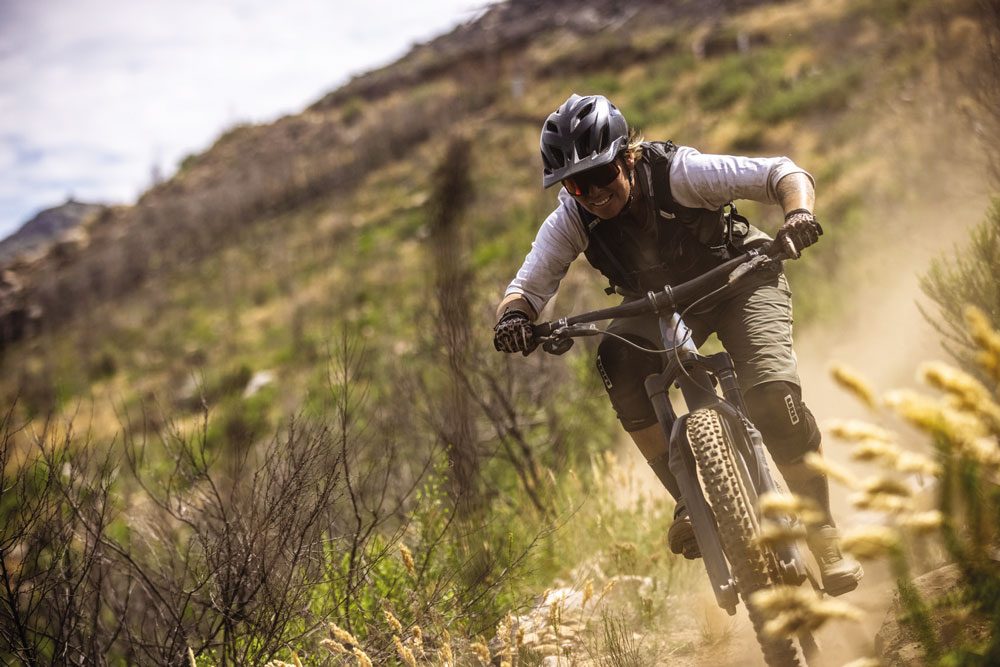
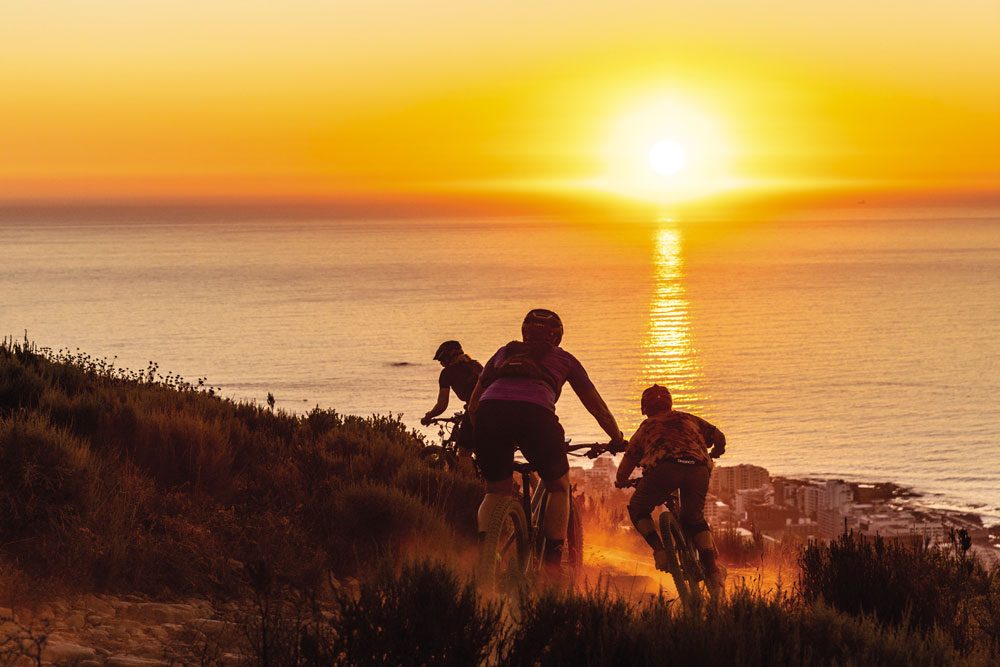
Once that happens, disappointment hits and spirals out of control into burnout and depression and, not knowing what to do with all of these emotions, they withdraw to figure out the next steps. Usually, this is when you have to go back to the very basics of riding a bike, like a kid. You have to just get back out there and start making circles with your legs. It’s that simple. Leave the devices at home, switch off the Garmin, leave the music, just get outside into nature and feel the wind in your face, listen to the sounds of the forest, feel the sense of freedom only a bike can instill, look around and be thankful that this is what it is all about. It doesn’t have to get more complicated than that. We make things complicated for ourselves. We push, we want constant progression and achievement, but it can also just be this simple act of exploring your backyard on a bicycle, without any pressure to perform or achieve.
I’ve reached a stage in my life where I can appreciate the unbelievable progression of women’s mountain biking. I admire those pushing the limits of the sport; the new generation of fearless girls and women are so amazing to see and I am their biggest cheerleader. But, I don’t want to do backflips, I can’t wheelie and I have no desire to hit massive jumps. Maybe, a few years ago, this would have bothered me but, for now, I’m happy to get outside and ride my bikes — all my bikes: mountain, road, gravel — because that is what makes me feel alive and happy. My riding is better than it has ever been so, to me, this is progression. I don’t have a crazy number of followers, because I’m not pushing the boundaries, I’m not making cool reels or doing sponsored posts or breaking any records. Instead, I’m outside riding my bike, appreciating the beauty of nature, exploring big mountains, finding solitude amongst the craziness of this world, and appreciating the amazing life and experiences bicycles have given me over the years. Does this mean I have no more value to my sponsors? I would hope not. I would hope that it would inspire other women to get out on their bikes and go on some adventures — explore their backyards, meet some interesting folks along the way, stop for coffee and cake, and find the pure happiness that riding a bike brings. Life is too short to focus only on progression, we have to enjoy the process and progression will follow in a natural way. So, get out there! Stop comparing yourself to what others are doing on social media and find your own progression. You’ll be amazed at what you’ll experience along the way.
Peace out,
Anka
x
Words: Anka Martin
Photography: Sven Martin
CJ suspension
One of the anomalies of our sport is that it’s becoming increasingly common for riders to outlay close to $10,000 on a new bike that boasts the latest, fractional evolution in suspension design. But, when you ask people what the maintenance regime of their actual suspension components has been in the past, it’s not uncommon to get a slightly embarrassed response such as; “I’ve never had my forks or shock serviced” or “hmm, now I think about it, I guess it has been a couple of years”. There are a few reasons for this. Tuning derailleurs to work is beyond plenty of riders’ mechanical confidence levels. And suspension? Surely that is the darkest of the dark arts when it comes to bicycle maintenance.
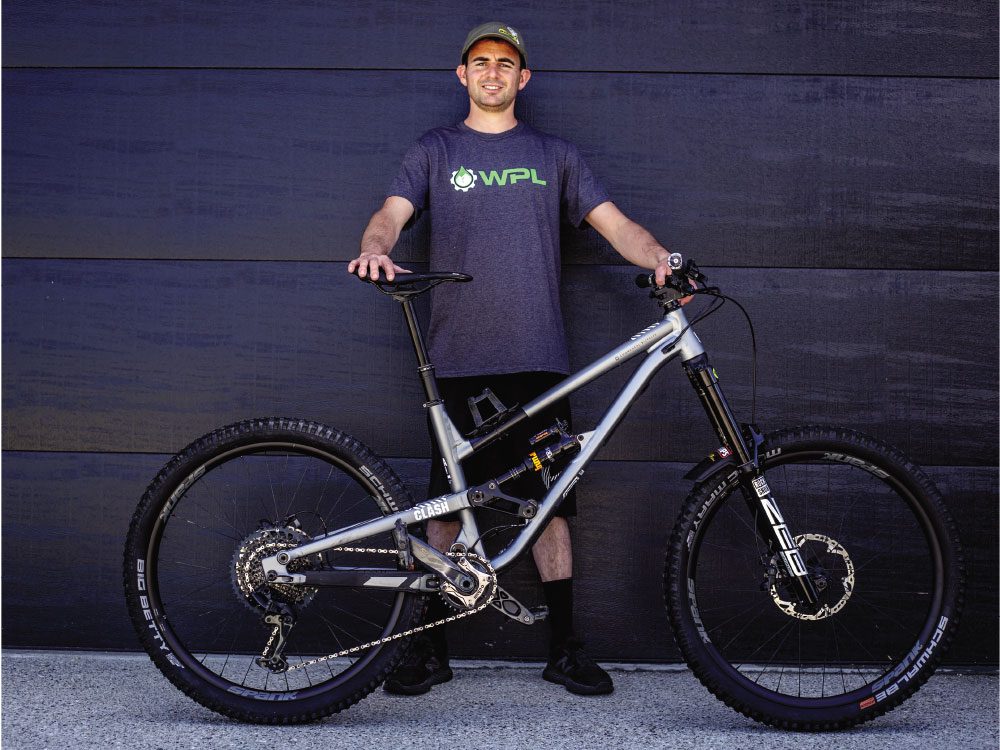
Well, if it’s a dark art, then that must make Cam Johnson, of CJ Suspension, some kind of wizard, because working magic on forks and shocks is what he is all about.
Working from a humble home workshop in Queenstown, Cam is at the epicenter of mountain biking and has built a solid reputation amongst hard riding locals, and others around the country, as one of the go-to suspension service technicians with the goal of helping riders make massive gains in how their suspension performs.
For Cam it started over 15 years ago when an after-school job with Al Heine, at Blue Shark — the NZ distributor for Fox Suspension — led to him getting the opportunity to be trained in pulling forks and shocks to pieces and putting them back together properly. At this stage he, like many keen young riders, was trying to make it on the race circuit. “I’d work with Al at Blue Shark over our summers, then pack my bags and head over and race the European summers,” says Cam. But, as much as this is a dream for many young aspiring riders, what it really takes to ‘make it’ — to break through the privateer ranks and get a professional contract — was a reality check. “I got to the end of pushing the envelope on the DH circuit; the racing, the crashes — they really took their toll on me and I just decided it was a good time to exit that season. I was pretty burnt out to be honest. I felt I’d given the racing a good go but ultimately, for me, it was in the too hard basket. You push, you push, and you push, and eventually I just felt like ‘this isn’t actually working for me.’” Cam explains. Ultimately, it was another injury sustained on the race circuit that was the final straw. “In 2014, I came out of a shoulder surgery, and I just felt [a sense of ] ‘I’m over this.’ The number of injuries and time it took to recover — I was just at the point in my life where I needed a change.”
This prompted a necessary reflection on what Cam wanted to do next, and with his background in servicing already well proven — and realising this was in fact a part of the industry that he both enjoyed and believed he could maybe even make a living on — the decision was made. “My old man told me I wasn’t able to sit around at home, so I told him I would start my own business, and he looked at me and said, “yeah, all right, do it”. I never really thought it would take off, but it did.”
The early days were all about trying to keep overheads low whilst building a business. This meant CJ Suspension started in a humble sleepout Cam built, perched on the backyard of a friend he was flatting with. This was fine for a while but, as Cam confirms, it still wasn’t really turning over what he needed to sustain himself. “After a while, I’d built a great collection of tools, but hadn’t really made any money — it just seemed like the market wasn’t big enough. I just wasn’t doing enough volume.” Necessity is the mother of invention they say, and CJ needed to increase revenue, so Cam started to explore the growing market for moving beyond mere servicing — changing oil and grease — to performance enhancing additions that could be made to the most popular suspension systems. “I wanted people to really notice the difference each product made to their ride.” After countless hours of personal research and riding he ended up picking up the agency for brands like Vorsprung, O-Chain, and Rev Grips.
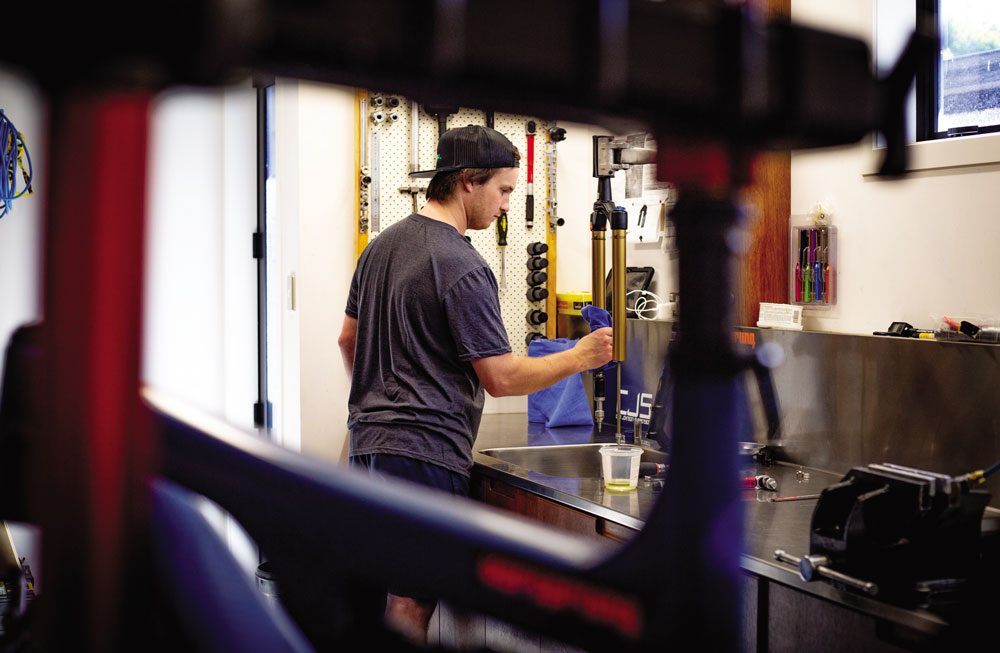
The proof has been in the plushness though, and Cam has now built a steady stream of loyal customers, who after having their forks serviced by him have come to realise the difference that regular servicing can make in terms of the feel of a bike. “We’re seeing a lot of return customers who are really keen to keep their equipment running well, and that’s really satisfying.”
And with the price of bikes marching ever higher, the concept of spending $250 in servicing might not be as unpalatable as it used to be. This is a change Cam has noticed, even over his short time in business. “It used to be that when I asked around, I realised, people didn’t service their gear much. But now I think people are a lot more clued up, and willing to get servicing done, and it’s great to see some bike shops starting to offer that service as well.”
But it’s not just tired, worn-out forks that can use a refresh — even out-of-the-box new forks can be improved. For customers who really know what they are looking for, the Vorsprung options Cam offers can dramatically change the feel of a fork, but as he explains, even new forks may benefit from a once over. “Suspension products aren’t made overnight! The forks on any new bike on a shop floor were potentially produced years ago. They will sit around in a factory before they actually get built onto a new bike, which sits in its own factory, before going on a ship and sitting in a distributor’s warehouse. So, even on a brand-new bike, they have probably been sitting around unused for a year or more before you open the box.” That’s without mentioning the varying levels of quality control on OEM specced equipment. All this is to say, opening your new fork up and making sure oil levels are as the manufacturer intended, and the grease is fresh, won’t hurt at all and may even spare the fork from damage if they get used for a year or more before the unsuspecting owner thinks they are due for a service.
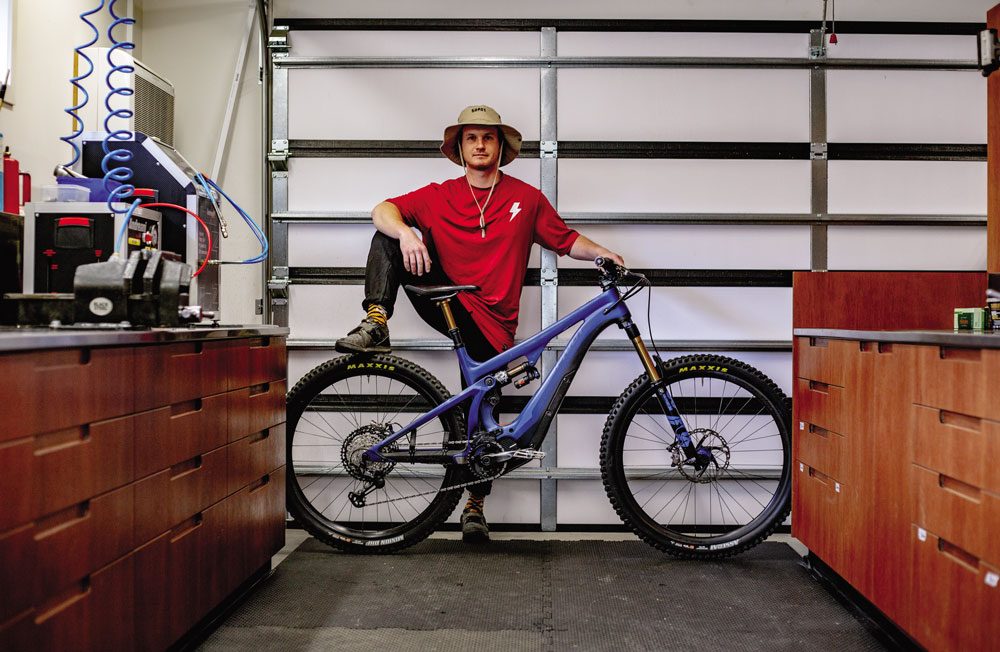
Going forward, CJ Suspension is slowly growing its capacity by training more staff. Cam currently has Kurt McDonald, Eddie Master’s mechanic, working with him full-time but, similar to Cam’s old racing pattern, Kurt will be off with Eddie for the season. As a result, Cam is looking for another staff member to train, and hopes to have enough work to keep everybody on board for our 22/23 summer. Having the capacity to turn jobs around quickly is something CJ has always prided itself on: “Typically, we can get to a job within two days of it arriving to us, which means we can get it back to you by the weekend. This is something we offer that most bike shops would struggle to do.”
From talking with Cam, it’s clear suspension is something he is passionate about and this passion means that every set of forks and every shock that comes across his desk, can be made to work better than they did before. Furthermore, in an age where we are increasingly aware of the raw materials and natural resources that go into making our bikes, it also makes sense to take care of them in a way that makes them perform well for the longest time possible. So, what are you waiting for? If you’ve never had your suspension professionally serviced, you might not know what you’re missing out on.
Words: Lance Pilbrow
Photography: Ryan Lucas
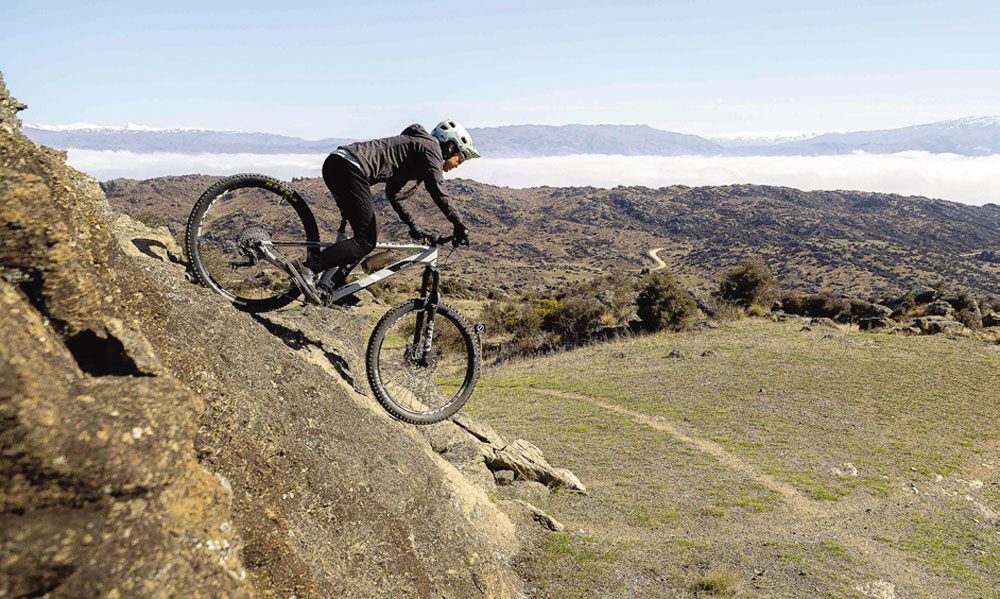
All Thyme Alexandra
I’m just joking. But not about the riding. Alexandra is sprawling with some of the finest singletrack you can find in New Zealand — heck, maybe even the world. For me, it’s up there as one of my favourite spots to ride. I’d put it in my top 10 and, for some reason, even though the riding is so amazing, no one seems to know about it. Well, apart from those who know. In a world where we have information at our fingertips at any time, Alexandra has escaped blowing up on social media and has managed to stay the hidden gem of Central Otago.
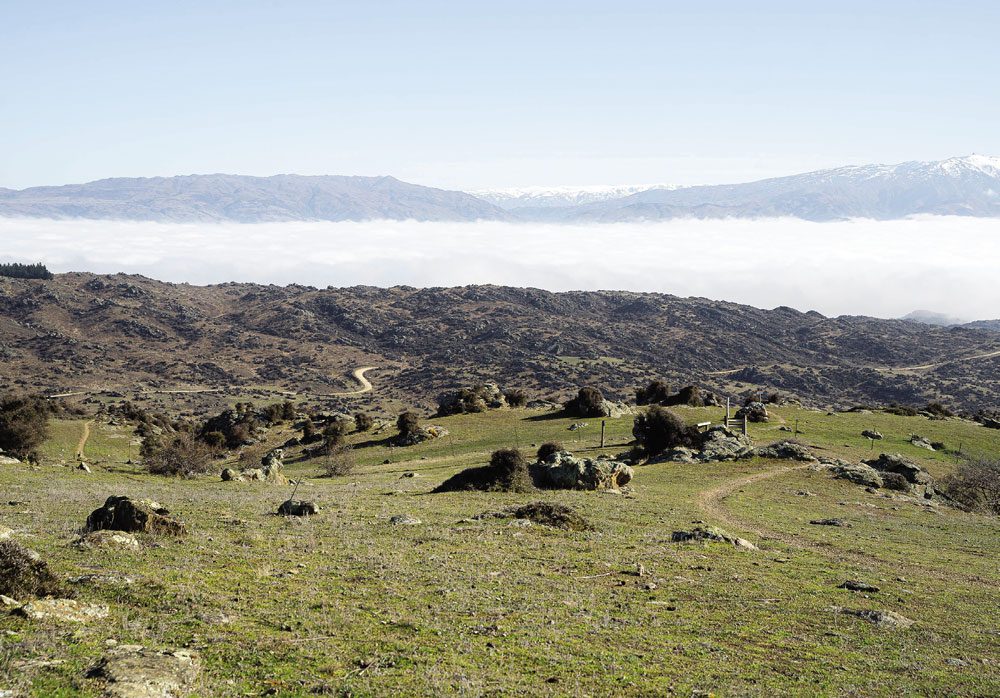
About a one hour drive from Wanaka, 75 minutes from Queenstown, and 2.5 hours from Dunedin, Alexandra is located in the heart of Central Otago. You can track the origins of this quiet sleepy town back to the Central Otago gold rush of the 1860s. Established in 1862, (formally called Lower Dunstan) its humble beginnings and rich history came from gold mining. Miners from all around the globe flocked to Central Otago in search of the precious, shiny, rare metal, hoping to strike it rich. The miners might have gone, but there’s still plenty of gold to be found. Not so much the gold you would find in a wedding ring but the type any mountain biker craves: technical flowing singletrack in an amazing landscape. The magic we all search for.
“Alex”, as it’s affectionately known by locals, has somehow avoided the hustle and bustle craziness of Queenstown and Wanaka. The all go, non-stop, 24/7 mentality of those towns hasn’t travelled across. Instead, you find this beautifully quiet town, where the locals all know each other. They are proud of their town, and so they should be. It’s a stunning little place. There’s a real sense of community that stays true to its humble beginnings. The pace of life seems a lot more relaxed, and you won’t find most of the high street shops open on a Sunday. Instead, people close up shop and make the most of their weekend before starting back into the week. It’s a refreshing feeling in this modern world we live in, but don’t get lured into thinking Alex is a calm place; it’s a town of extremes. Take the climate for example; during the summer it’s the hottest, driest place in New Zealand. Temperatures often reach over 25 degrees Celsius and sometimes even push up into the mid-30s. The flip side of that, is it’s the coldest in winter; on average it’s below 0.

It’s not just the climate that’s extreme, there is the landscape (or moonscape, as some would describe it). In the surrounding hills, it’s rugged wild country. Sharp, rocky outcrops are a common occurrence; they appear to have viciously pierced through the earth’s surface many moons ago, leaving a reminder that it’s tough out here. It makes for a real ‘Mad Max’ feeling. Wildflowers, briar and thyme make up the main vegetation covering the rolling hills. The story goes that miners planted thyme so they could put it in bread for a better taste, but the thyme took off due to the rich, fertile soil. Now, Merino sheep can be found roaming the land, thriving in the extreme conditions of the high country. It’s a landscape that demands respect. Treat it wrong and it will bite back but look after it and it will reward you. If you get it right and catch one of those perfect days, you will see just how beautiful it is. The days when you hit the golden hour, blasting along the narrow hand-built singletrack on the ridges. Purple thyme bush all around, dust trailing behind, in that perfect flow state. It’s at this point Alexandra really takes your breath away.
The mountain bike trails in Alex started like many: illegally. Back in ‘95, Richie Bailey and Gordy Rayner pioneered the way when they started to scratch lines and loops around the area. From what I’ve heard, there were more XC trails in comparison to a lot of the tech you will find in Alex now. As bikes developed, so did the trails. Things started to get harder and more technical. Old motorbike tracks and water races were adapted and made into bike tracks. Although it was very much a stealth operation. Dave Fearnley and Phil Oliver are responsible for a lot of the legendary trails. Initially, they did not realise that they were both building the trails. Each of them went on their own stealth operation but, eventually, they bumped into each other and the rest of history. Phil and Dave are responsible for some of the finest trails found out here. They have this amazing ability to find flow where there shouldn’t be. Scratching in creative lines through the rocky outcrops and chewing through the thyme with the “Thyme Eater” — a petrol push lawnmower that cuts its way through to leave a line in the thyme. They are actually onto the Thyme Eater 2 now.
There are two main riding areas in Alex: behind the clock, and Flat Top Hill. A couple of years ago, Flat Top Hill was the only place to go if you didn’t have a local to show you about. This was due to the trails behind the clock being on private land, so there were no trail maps for them. It was hard to work out where you were whilst up there, as a lot of it looks the same. “Yeah, it’s the trail that starts next to the tree and the rock. The rocky looking rock. After you finish that, head back up the road and take a right next to the cattle gate.” Cue spending hours riding round in circles. After a few times up there, you kind of get an idea of the lay of the land but you could still easily head down the wrong trail.
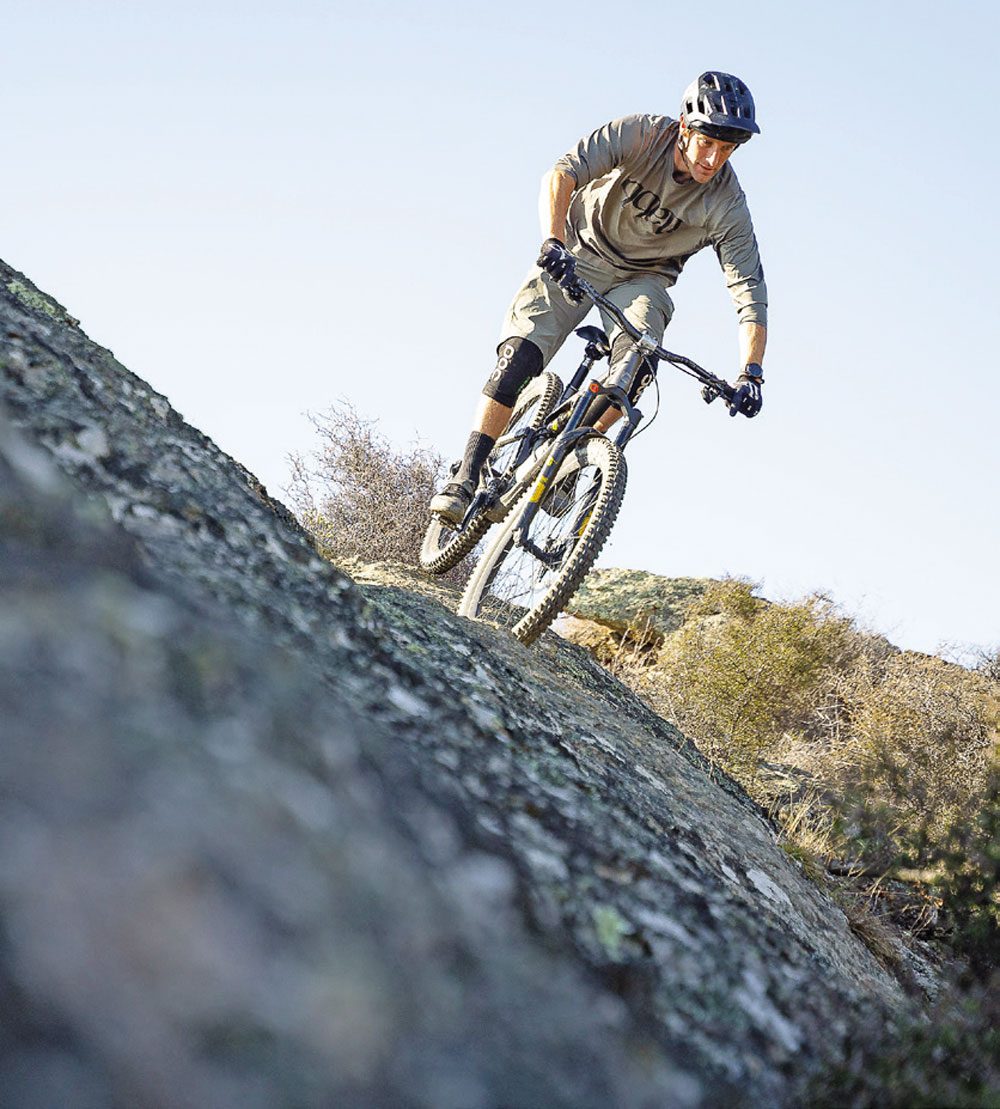
Flat Top, on the other hand, is on DOC land. All the trails on the hill you will be able to find on Trail Forks as they are all legal and sanctioned. Although they never started that way. The Roxburgh Gorge Trail opening up is what really started the Flat Top movement. This trail gave a way to ride out and back to town. Not long after opening, Phil, Dave and the crew started poking about. They scratched out an exceptional bit of trail down the face of the hill to the river trail. These tracks were Ledge of Death to Rock of Doom. It wasn’t long before DOC picked up on this trail. DOC had a meeting with the MOA, ‘Mountain Bikers of Alexandra’, which subsequently led to a land management agreement between MOA and DOC. DOC gave MOA the go ahead to build legal, sustainable trails on Flat Top Hill. Now you can find seven legitimate trails on Flat Top. It’s all signposted with markers to help guide you around the loop. But don’t think that you aren’t getting the creme de la creme just because they are legal, marked trails on DOC land. Far from it. There are some flipping incredible trails up there. I love parking up at the car park right next to Butchers Dam and heading up the wiggly switchback climb to the start of ‘Black and Blue’. A quick buzz down upper Black and Blue then on to Ledge of Death to Rock of Doom. (Yup, there’s some zest in these trails). This takes you down to the Roxburgh Gorge Trail. Head along this the opposite way from Alex and you’ll find a climb to take you back up to the start of Black and Blue. This time around, hit the whole Black and Blue, back down to the carpark, and be sure to also hit the bonus lines. Just make sure you look before you leap. It’s a tremendous loop that has a bit of everything for all abilities.
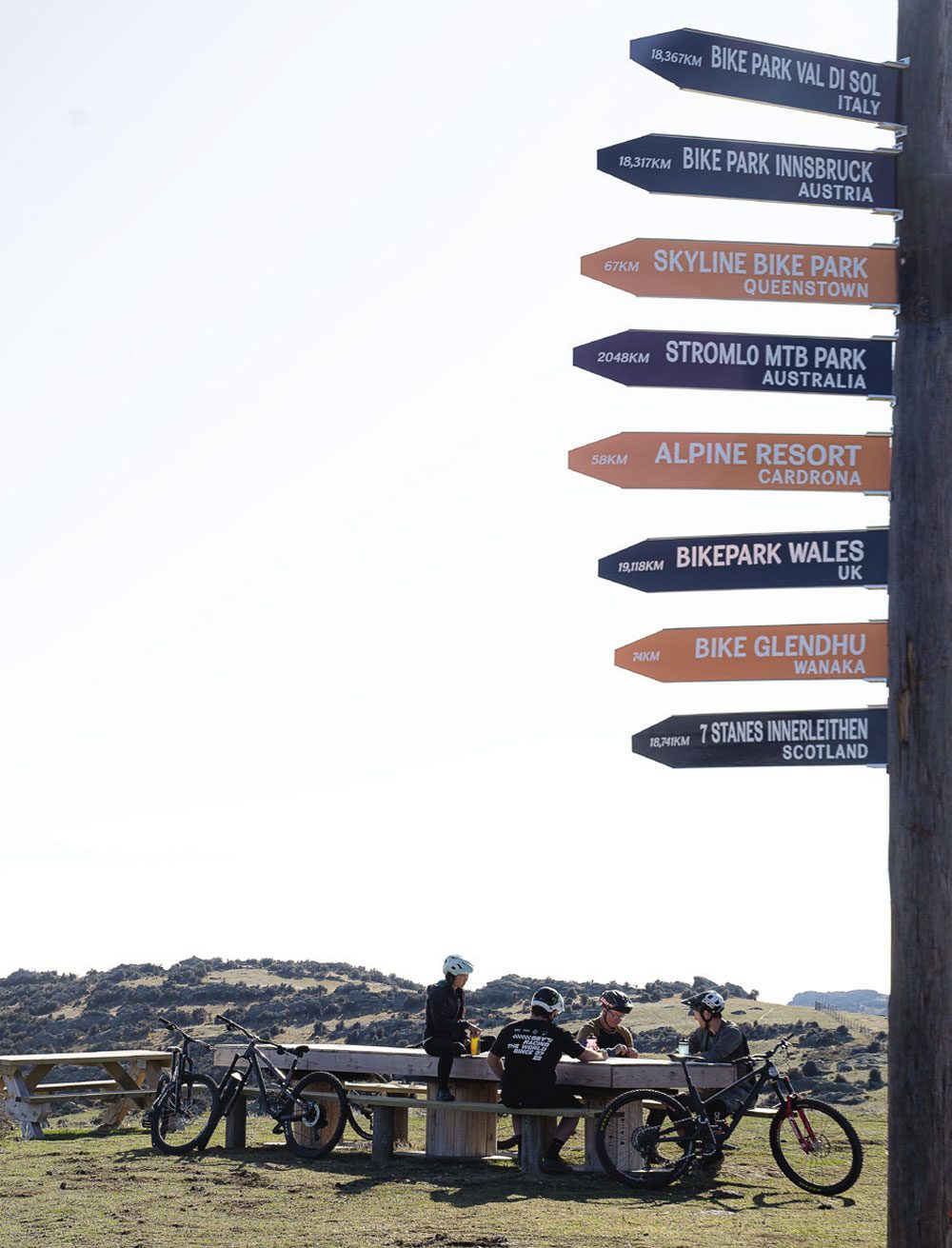
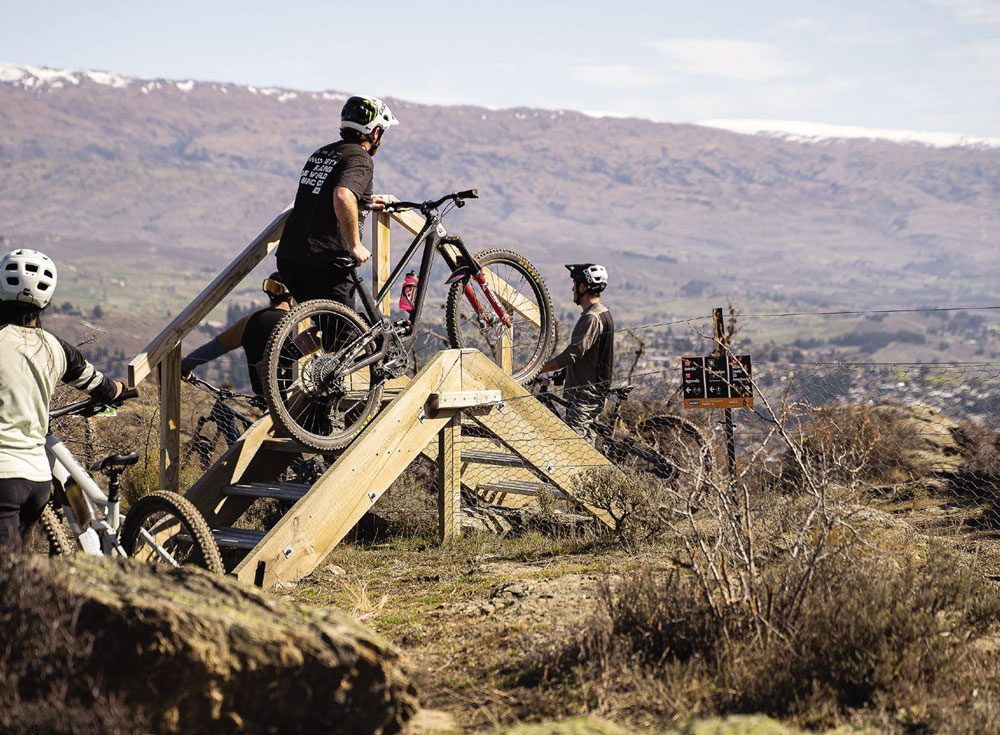
For me, though, the real Alexandra riding experience is behind the clock. Here lies Matangi Station MTB. In 2021, the trails became established and legitimised when the farm owners saw the value in mountain biking and what it brought to the town. Before 2021, the tracks were there, but they were all illegal. The farmers that owned Matangi would kind of turn a blind eye to it. Nothing was marked; you had to be a local to know where you were going. No maps, no signposts, no trail heads. Locals only. If you didn’t know there was riding out there then, you would never know. The Linger and Die (now in its 26th year) was the one race a year where you would be able to get out and have a route to follow, following the pink dots to make it down. Since Matangi Station MTB made the trails official, there has been a big investment in infrastructure of the trail network. There is an extensive trail map, and the trails are all signposted with arrows pointing you in the right direction. Stiles have been put in to help get across the fences. There is a massive table at the top of the hill with a post showing lots of iconic riding spots across the world, including my old stomping ground, Innerleithen. Some of the trails have also had a lot of work making them more sustainable for the future. Passes to ride Matangi can be purchased at Henderson Cycles and Willbike Cycling Central Otago, as well as at the Foursquare and Unichem Pharmacy.
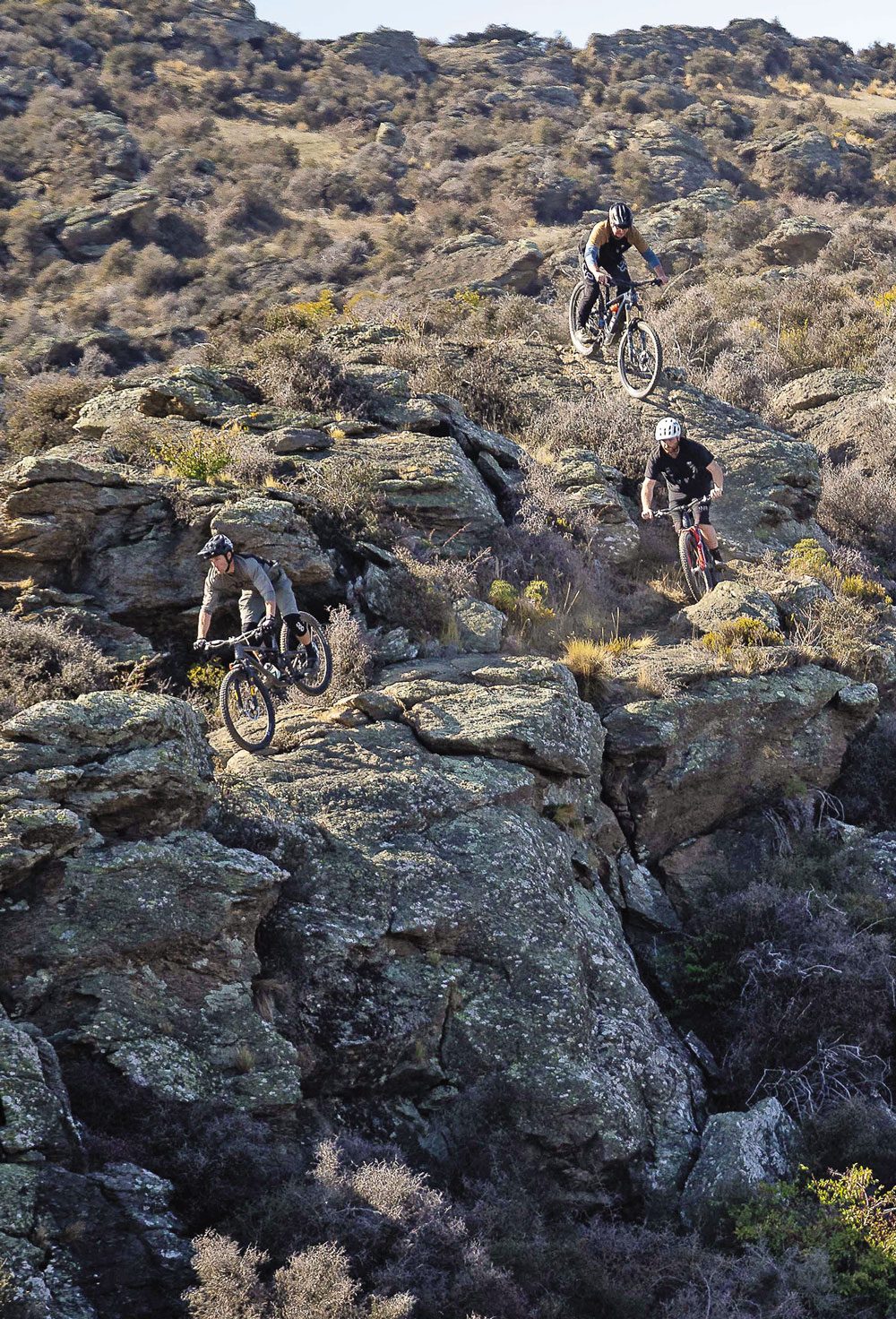
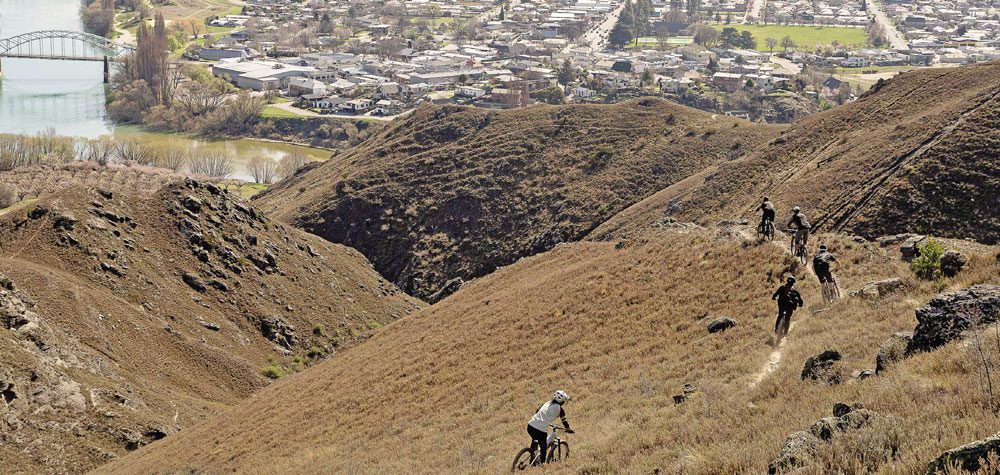
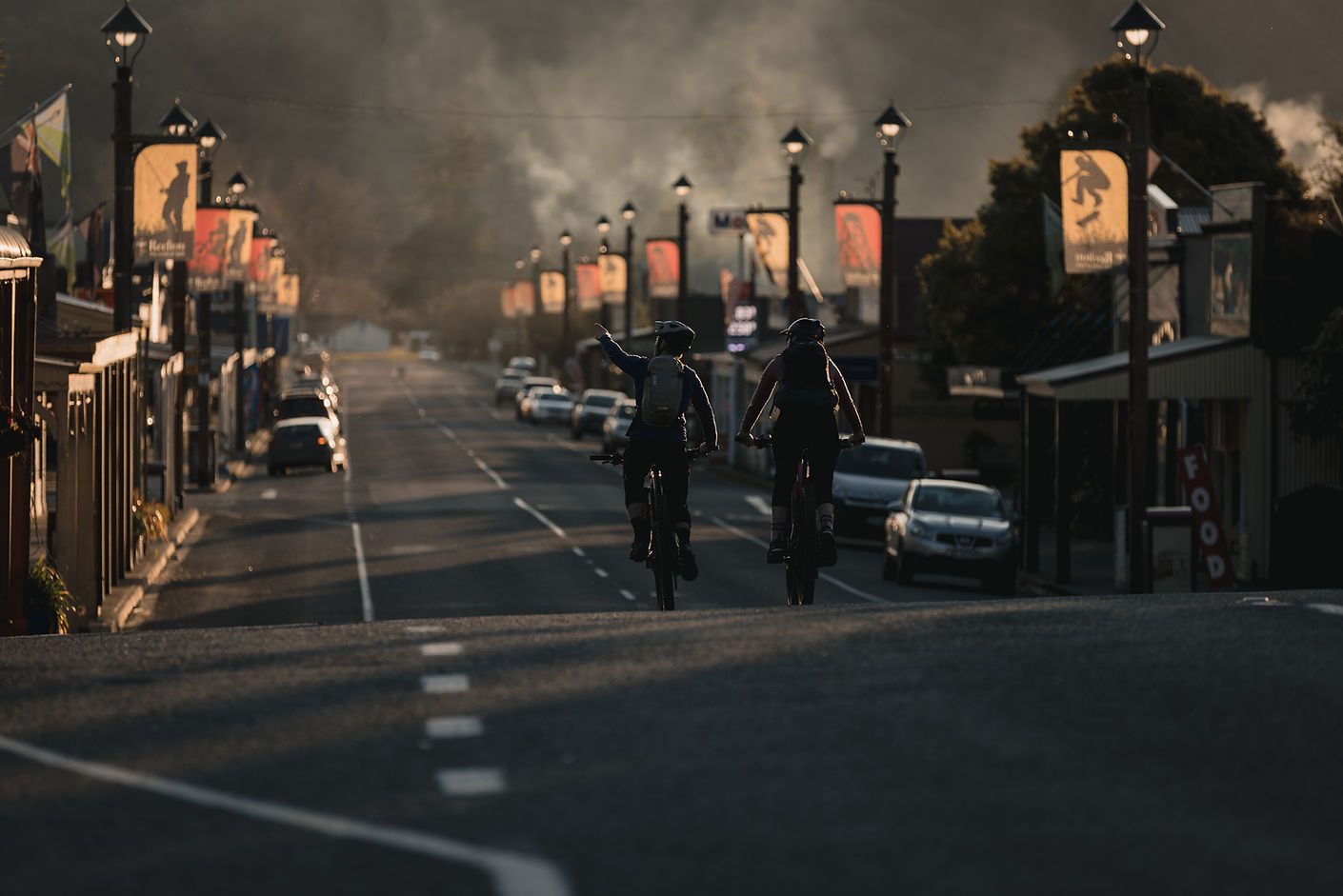
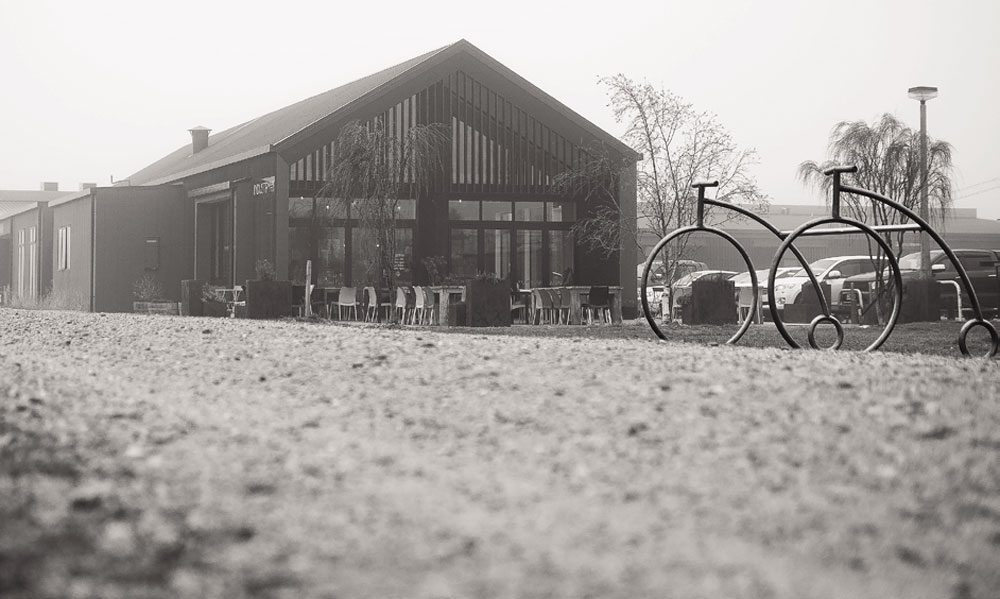
So, what’s the riding like in Matangi Station MTB? Well, I needed a reminder. It had been about three years since I’d last been across to Alex. Having spent the last two years living in the Capital (Wellington), I rounded up some mates and we hit the road to Alexandra. We left on a Saturday afternoon and stayed at the Antique Lodge, in Clyde. A great little spot for the evening, it gave us the full day to make the most of Alex. If we weren’t local-ish it would have been the perfect location to base ourselves for the weekend, as we could spend the day shuttling Clyde DH on one of the days and ride Alex on the other. Breakfast was provided, bright and early, and to let us make the most of the Sunday. Fizz, the host, showed us her gin tasting bar — just to give us the full experience of the place. Definitely a top spot on the list of places to base the weekend out of. We set off on the short drive to Alex to meet up with Phil. It has been years since I had ridden with Phil, so I was looking forward to catching up and trying to hold his tail while he effortlessly guided his bike through the rocks, turns and rolls. Our crew for the day was Phil Oliver, Jimmy Ramsay, Craig Munro, Luci Vo and, later, Ashton Oliver (Phil’s son) would join us. We parked up at Phil’s and rode through town to the Industrial Eater Cafe to pick up some lunches to take with us. An inversion layer had happened during the night, so the town was covered in cloud and fog. There was a grey, moody monotone feel about the place. The streets were quiet, almost lifeless. It seemed like we might have been the only people up and about. After picking up lunch, we set off on our way to the top of Matangi Station MTB.
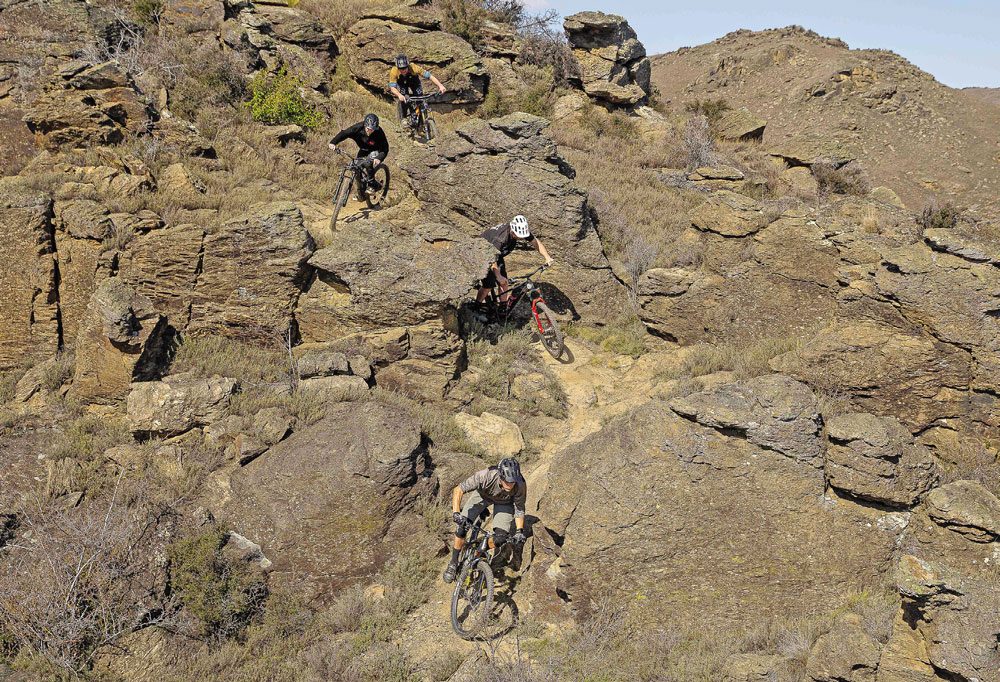
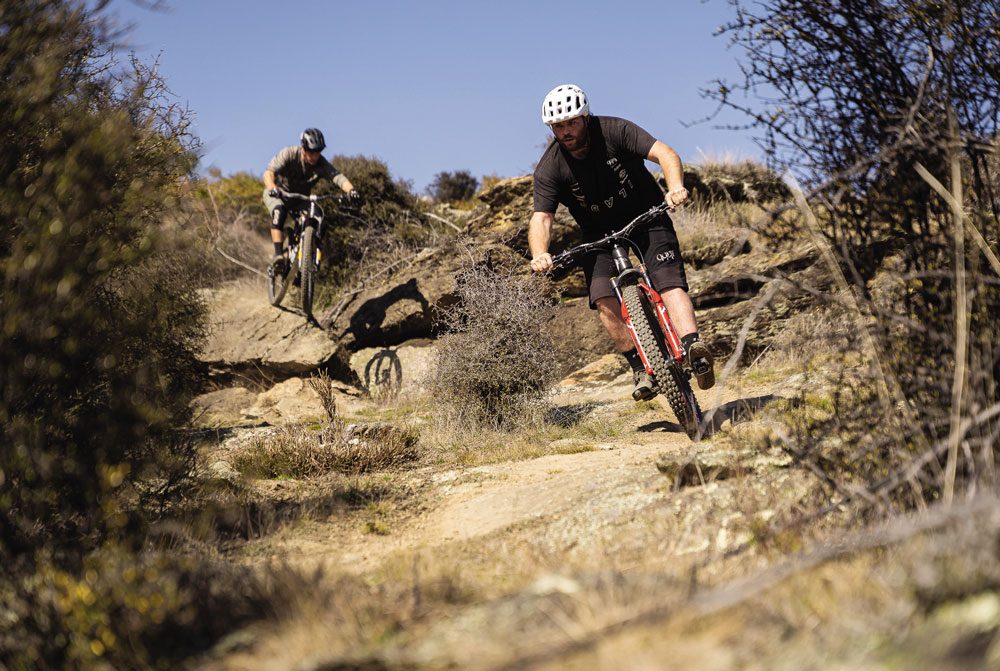
We crossed over the shaky bridge and headed to the start of AC trail. AC I think was formerly known as Shit Track. It’s a slightly techy climb that weaves and meanders its way up through the valleys. The steep hills overlook the trail, covered in lines that zigzag their way down to meet the valley floor, with rocky outcrops towering overhead. The further we headed up the climb, the more the fog started to lift. Eventually, we made it to the start of the second climb, called Carter’s Grind. Like the name suggests, it’s a bit of a grind but it gets you up to the top of the hill in a fast, efficient manner. We made it out of the inversion and were blessed with perfect blue skies. We parked up at the bench at the top of the hill for lunch, with the vast moonscape stretched out ahead of us. Alexandra was still covered in a layer of cloud in the distance. The table really made for a great place to take a rest before dropping into some seriously fantastic singletrack. The first descent of the day was Supercharger. A classic. Right from the get-go you are thrown in at the deep end. The trail sends you charging at high speed over a rock lip, followed by a sweeping left to right. From there you duck, dive and weave your way through the rock fields. Quick right lefts, rocks, rolls, and turns. Up and over obstacles. Holding off cambers. You have to be on the ball. The trail could change direction at any moment. It’s not an easy trail to read. The line is sort of faint. You can’t just ride off instinct. It keeps you on your toes. The flow comes from riding smooth; linking your turns and nailing your braking point. If you get it right it’s oh so rewarding. The rock, if dry, has heaps of grip; you can trust it. You can trust the line as well. It’s built well. There may not be the berms, lumps and jumps that you’re used to but what you will find is raw and rugged. You’ll find Alex berms — ruts that have formed from people riding the lines. There’s just enough support.
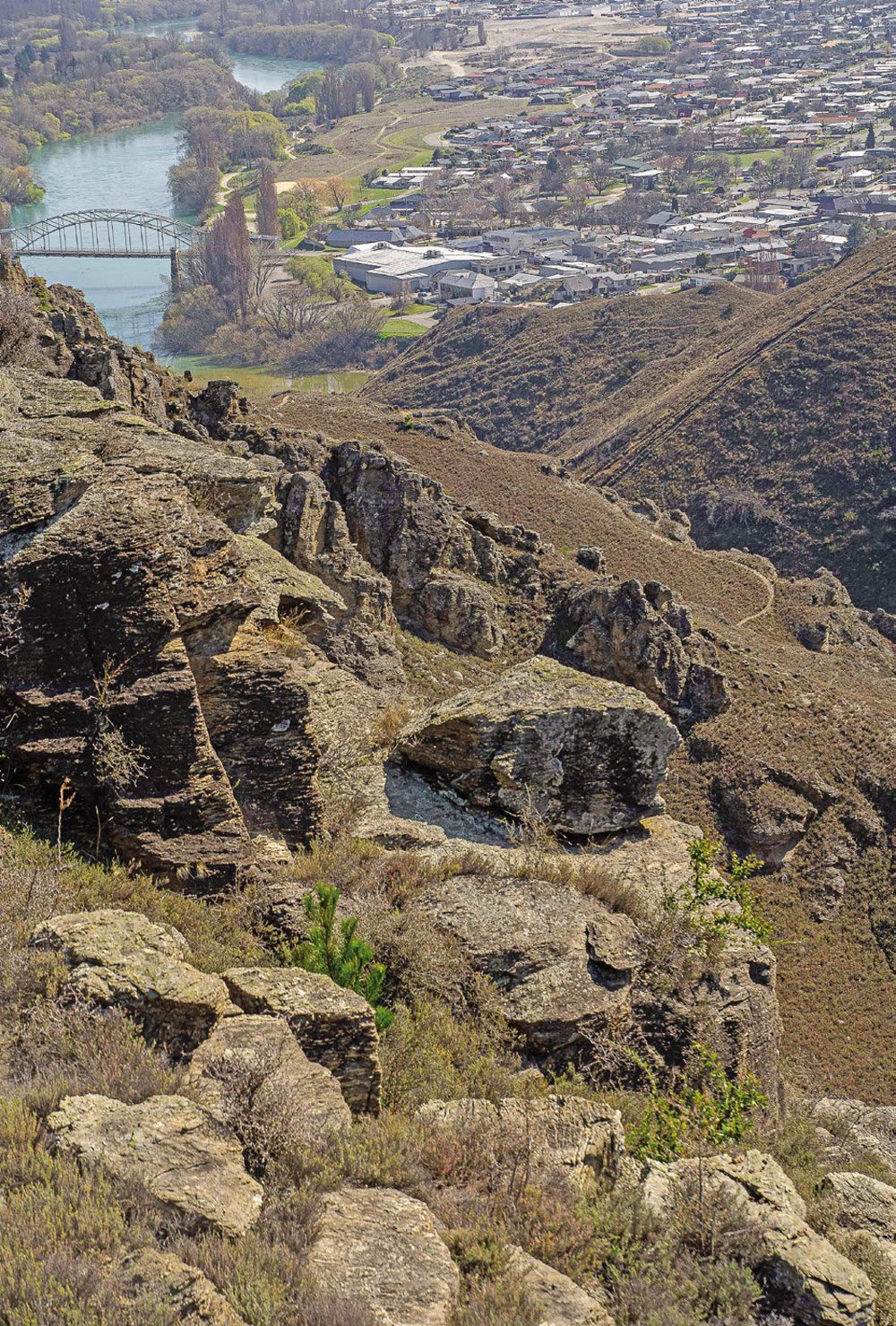
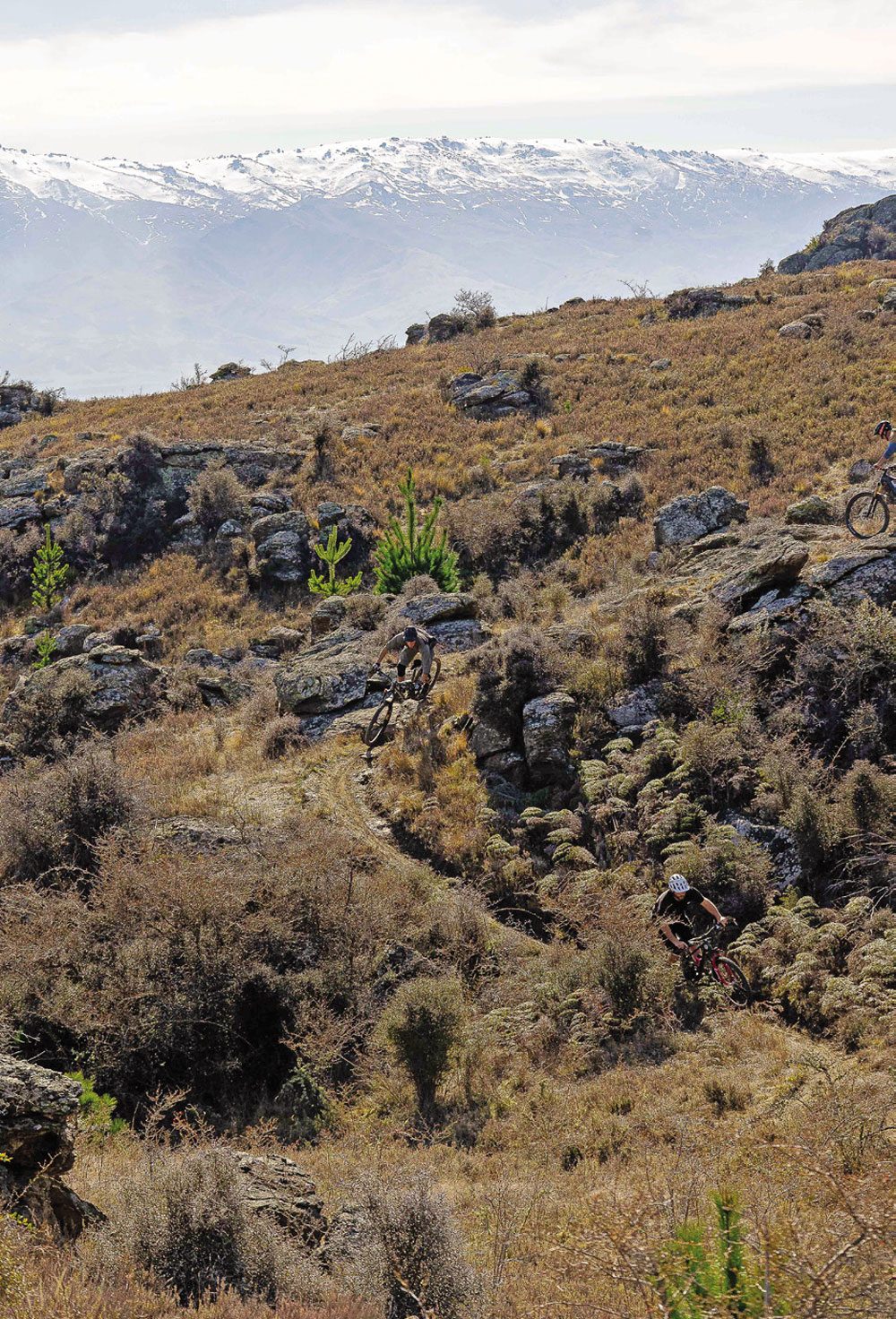
We blasted down Supercharger with big grins on our faces. It was so good that we looped back up to the top for a second blast. This time around it was a bit tidier. We had gotten into the Alex style of riding. It involves thinking about what you’re doing. From the bottom of Supercharger we pedalled back up to the main dirt road, crossed the stile and rode up Connector to take us to the top of one of my all-time favourites, Dr Strangelove. This trail really sums up Alex riding to me. It’s got it all: fast flowing sections where you’re blasting along a ridge on a narrow trail that Thyme Eater has carved out many moons ago, into some tight awkward tech jank before you head into the steeps with Alexandra blossoming below. You can smell the thyme as you fly along the ridges and down the corkscrew. The trail spits you out into the bottom of 5th Amendment, just for a little extra spice when you think you’re close to done. It’s just got a little bit of everything, this trail. Some moments you’re speeding along at mac 10, following your mate’s thyme smelling dust. Next minute you’re at crawling pace, working your way through rock channels trying to make the janky turns flow. The steeps will keep you on your feet; control your braking, drive the line. It’s such a tremendous piece of trail. Just Alexandra riding summed up in one trail.
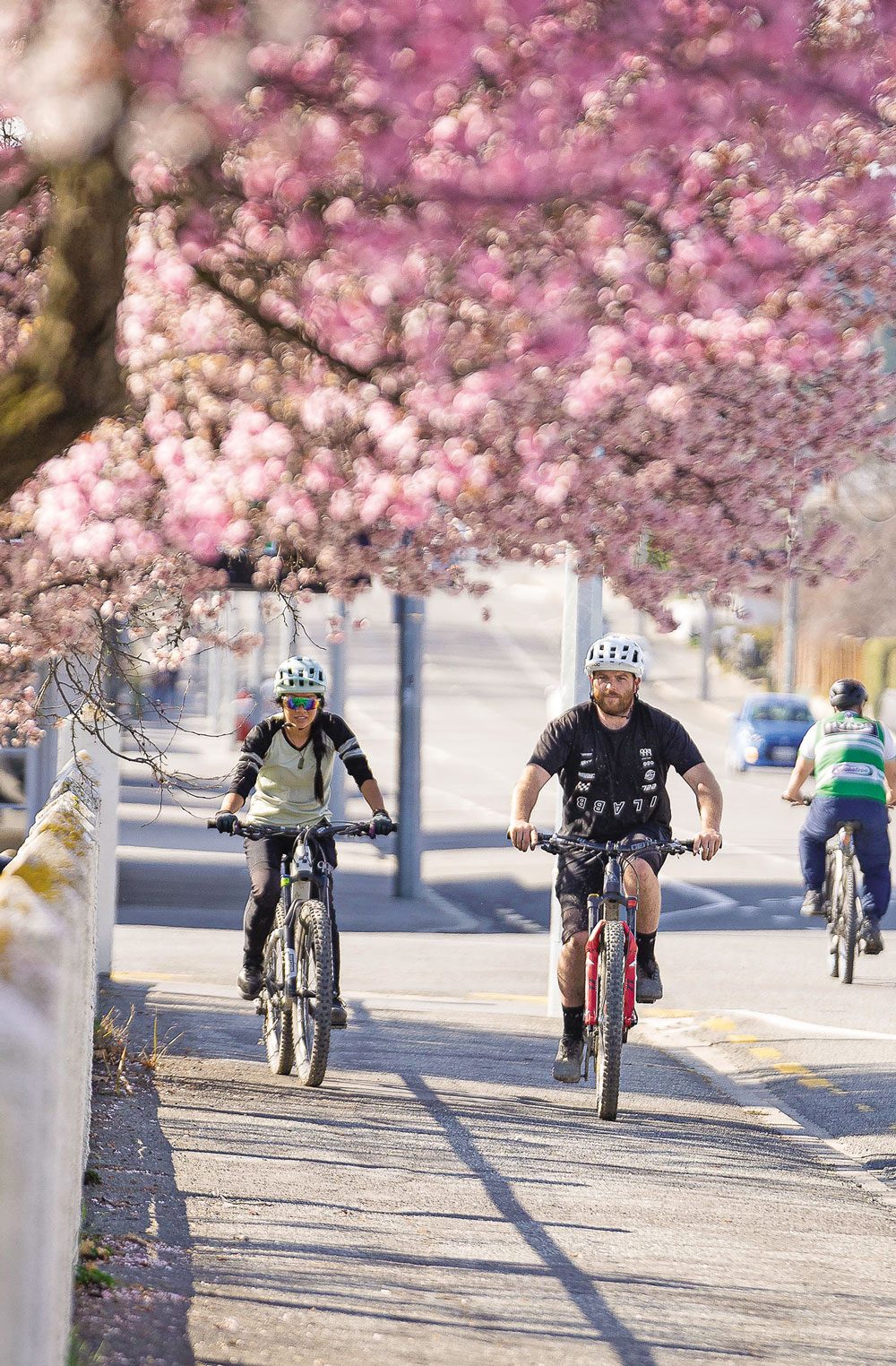
After we got to the bottom of Dr Strangelove, Luci, Craig and I decided to call it a day and head to the pub for a beer. All good rides should finish with a beer, right? Jimi, Ash and Phil set off for another lap and would meet us at the pub after. We crossed back over the spring bridge and headed to the main pub in town, Monteiths, on the main street. The cloud had burned off and we were graced with Alexandra in all its glory on an early spring day. The cherry blossoms were starting to flower, and the temperature was just right. Just a perfect chilled Sunday afternoon in Alex.
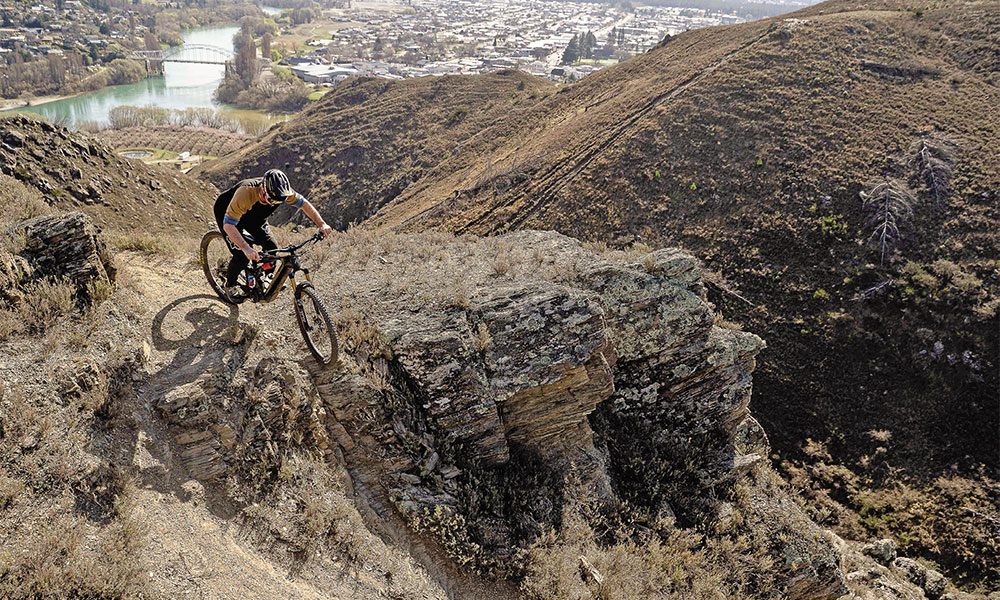
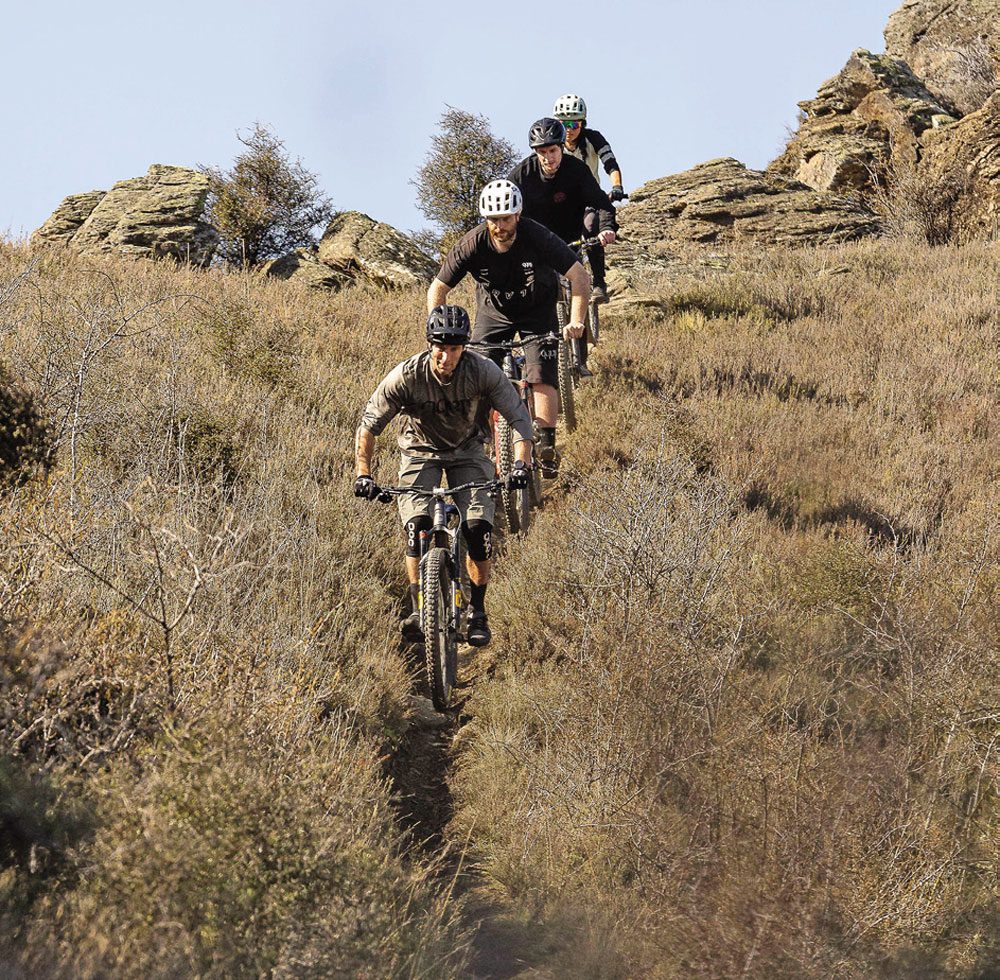
Beers started to flow. The outside beer garden was still getting the sun, and the mood just seemed right. We weren’t the only riders that had the same idea — there were a good few that had been out on the hill that day, all parked up at the pub afterwards for a pint and yarns about the day. Jimi, Ash and Phil joined us after their second ride; they’d smashed out another big loop. More pints were poured and cheers were made to a great day out in Alex. “I’ve said it before, but you never have a bad thyme in Alex.”
As we were sitting, shooting the shit in the sun, Phil was off talking to some locals about their rides. You can really get a sense of how proud the locals are of the riding community and what they have — their exquisite trail network, the local club, and the town itself. It’s fantastic. On Wednesdays they have the local shop ride out, on which you’ll normally find 60 people on average. How cool is that?! During Christmas time this sometimes reaches up to 200. It’s a strong bike community that’s only going to grow stronger with the legacy that has already been left.
I may have painted Alex as a place for extreme riders, but it’s far from just that. There are plenty of great XC loops and trails you can put together. In 2018 and 2019, the Pioneer ran two of its six days in Alex and, since 2021, Phil and James Williamson have been running the Prospector XC stage race — a three-day race named the ultimate XC challenge. For the last two years, riders from all over NZ have come down to give it a go, and have been blown away with just how good the trails are and how great Alex is. For 2023, Phil and James are looking forward to getting some overseas competitors over, to really show them some great racing. There really is riding for everyone here.
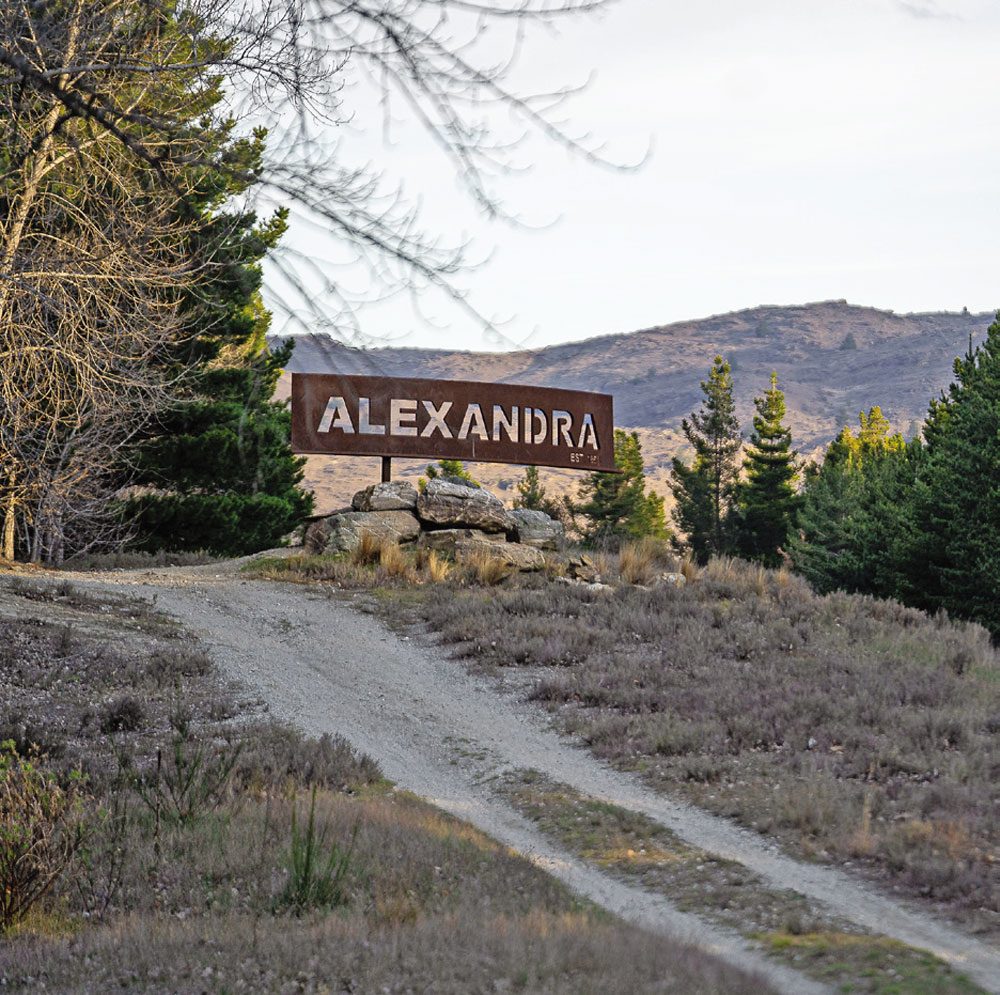
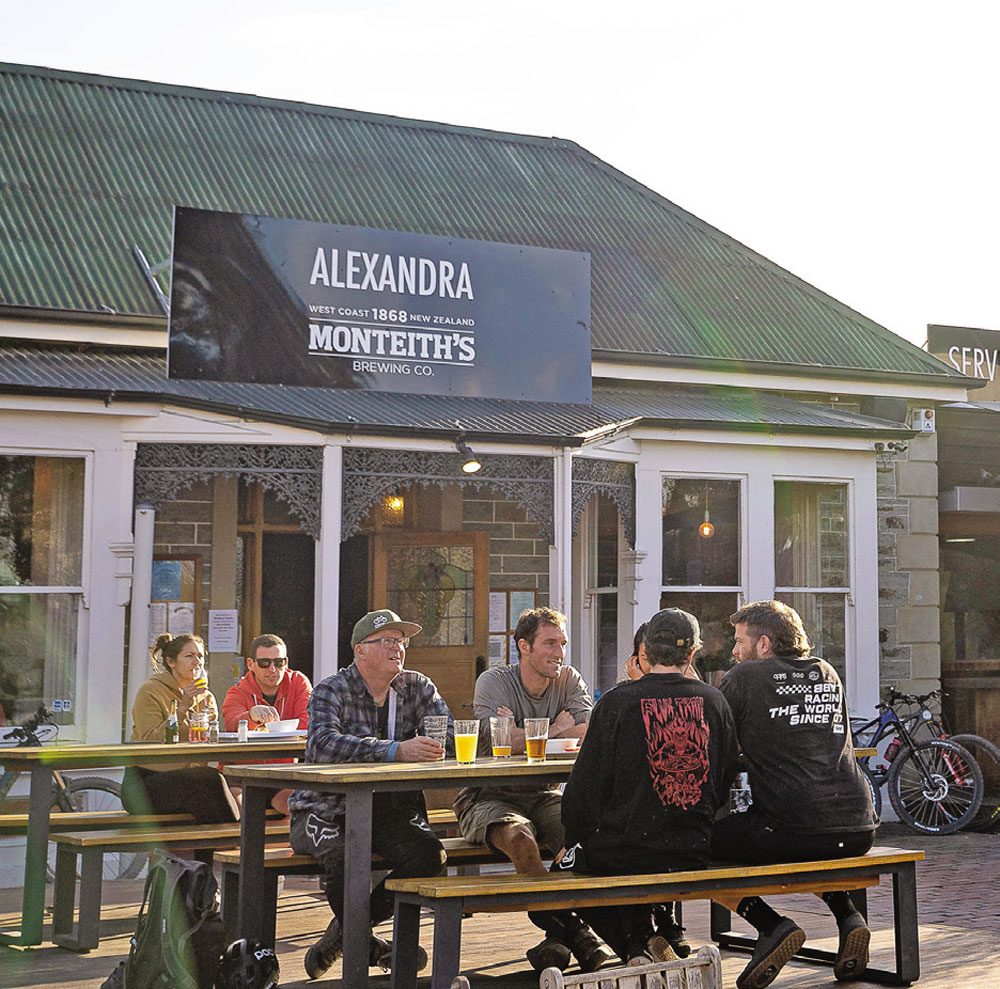
So, I’ve broken the first rule of Fight Club. But who cares?! Rules are meant to be broken and people need to know about the gold that still sparkles in the hills around Alex. Should you be putting Alexandra at the top of your ‘must ride’ list? 100%. I really can’t say enough good things about it. The trails are world class, and now the Matangi Station MTB is established, there is no better time to head to Alexandra for a riding trip. It’s in my top five places to ride in NZ — and I’m sure it will be in yours after you go. The riding really is all thyme in Alex.
Words and Photography: Jake Hood
Crankworx Rotorua
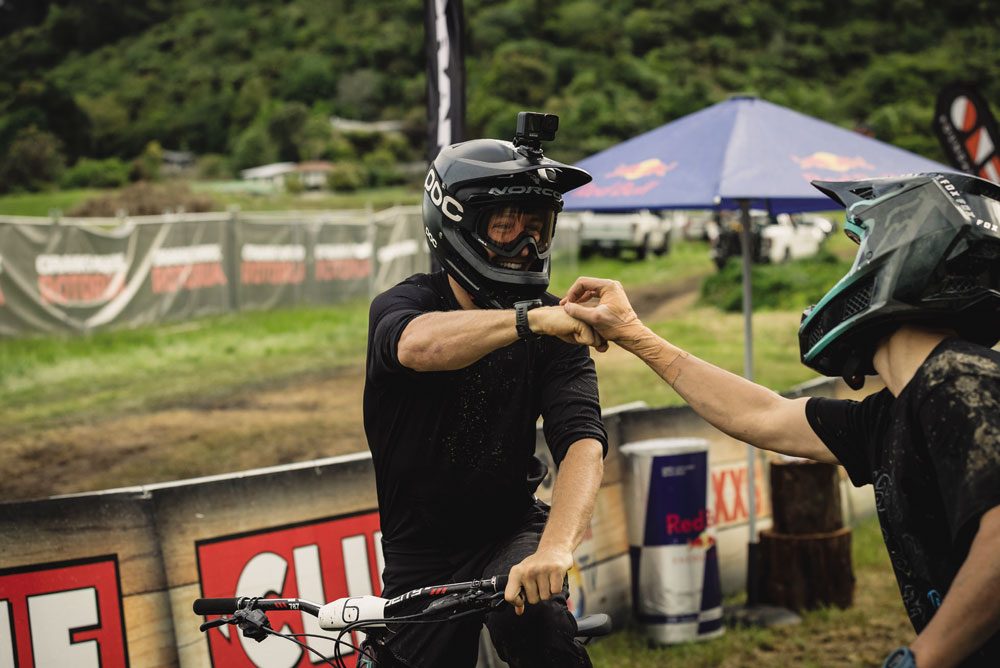
Nothing kicks off a kiwi summer of biking quite like a trip to Rotorua for the annual pilgrimage to Crankworx, and this November may be the best one yet. After a challenging 2021 Crankworx, with Covid-19 making it a participant-only event, organisers are getting primed to make 2022 something extra special. Kicking off on November 5th, and running all the way through till November 13th, Crankworx Rotorua holds a special place on the Crankworx calendar, with this year being the final stop on the world tour. The Crankworx World Tour is a multi-stop series of mountain bike festivals, bringing together the best mountain bike athletes to compete in elite-level competitions in a variety of disciplines. Being the final stop for 2022 means all the titles are up for grabs and athletes will be giving it their all to secure their crowns for King and Queen of Crankworx.
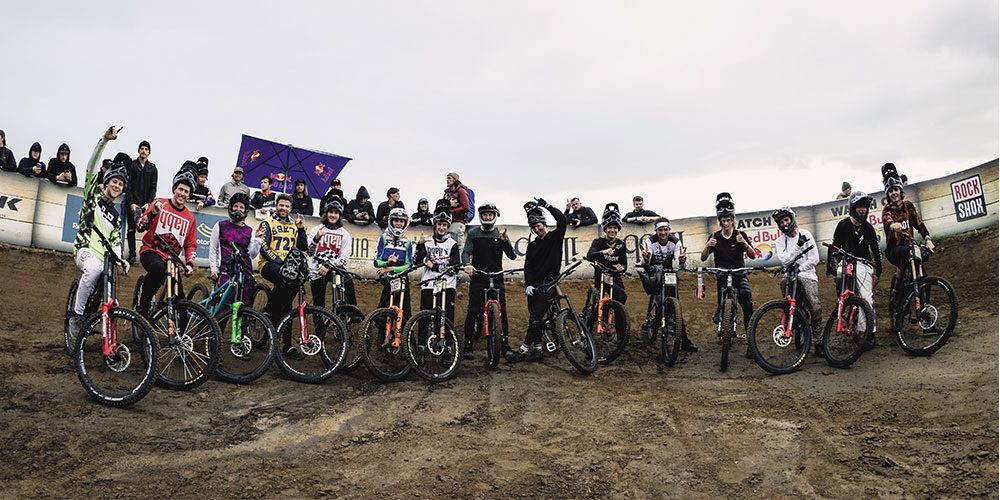
In terms of riding, it’s one of the few events that is a big enough drawcard to bring the top tier of international riders to New Zealand, and with Covid-19 hopefully well behind us, we should see a full roster of internationals for one of the last big international events of the year. Plus, there is plenty of cash being splashed around to make it worth their while. The two top ranked riders (male and female) will each receive $20,000 CAD. Our own local talent is on fire right now too. Jenna Hastings will be feeling confident on the back of her incredible Junior World Champs DH victory. At the recent Mt St Anne UCI World Cup downhill in Canada, Sam Blenkinsop had a very credible 8th and came second in the AirDH in Whistler. He is also sitting 8th on the King of Crankworx leader board. Rotorua local, Tuhoto Ariki Pene, finished 11th at Mt St Anne and will be a force to be reckoned with on his home soil. Robin Goomes has had a breakout year participating in the Red Bull Formation freeride event and won both the Speed & Style event and the Official European Whip-Off Championships at Crankworx Innsbruck. She also bagged a very credible third place in the Speed & Style at Whistler. It’s safe to say, our own riders will be right up there, and this is probably the best event in New Zealand to see their skills up close. And to get them to sign your t-shirt, of course.
Returning once again to the Skyline event venue in Ngongataha, event organisers are also keen to signal that spectators will be in for a few surprises this year too, with track changes, an all-new pump track, and an even bigger whip-off on the cards. While they are keeping major changes close to their chest, organisers are excited about the way things are shaping up
Crankworx Rotorua took flight in March of 2015, becoming the first festival outside of North America and Europe. Aside from the events that are common to the various World Tour locations across the world, organisers and international riders alike have begun to see the unique event that is Crankworx Rotorua, even referring to the event as ‘the soul of Crankworx’, due to the unique way it endeavours to combine two seemingly unrelated concepts: world-class mountain biking, and the stories and culture of tangata whenua. It’s a unique challenge to be sure, and one they are always looking for new and creative ways to explore and deliver with a sense of genuineness and sensitivity. Starting from the powhiri riders and organisers receive, to the variety of cultural learning experiences they can have in the region, Māori culture is woven throughout the whole experience of coming to Rotorua, and organisers continue to try and weave Māori art and culture into the event. Some examples of this have been the way previous events have seen Māori wood carvings (whakairo rākau) on the tracks, and the king and queen of Crankworx presented with some beautiful carved ‘Tewhatewha’, two-handed weapons that are traditionally given to a Rangatira (chief ) as a symbol of mana or respect.
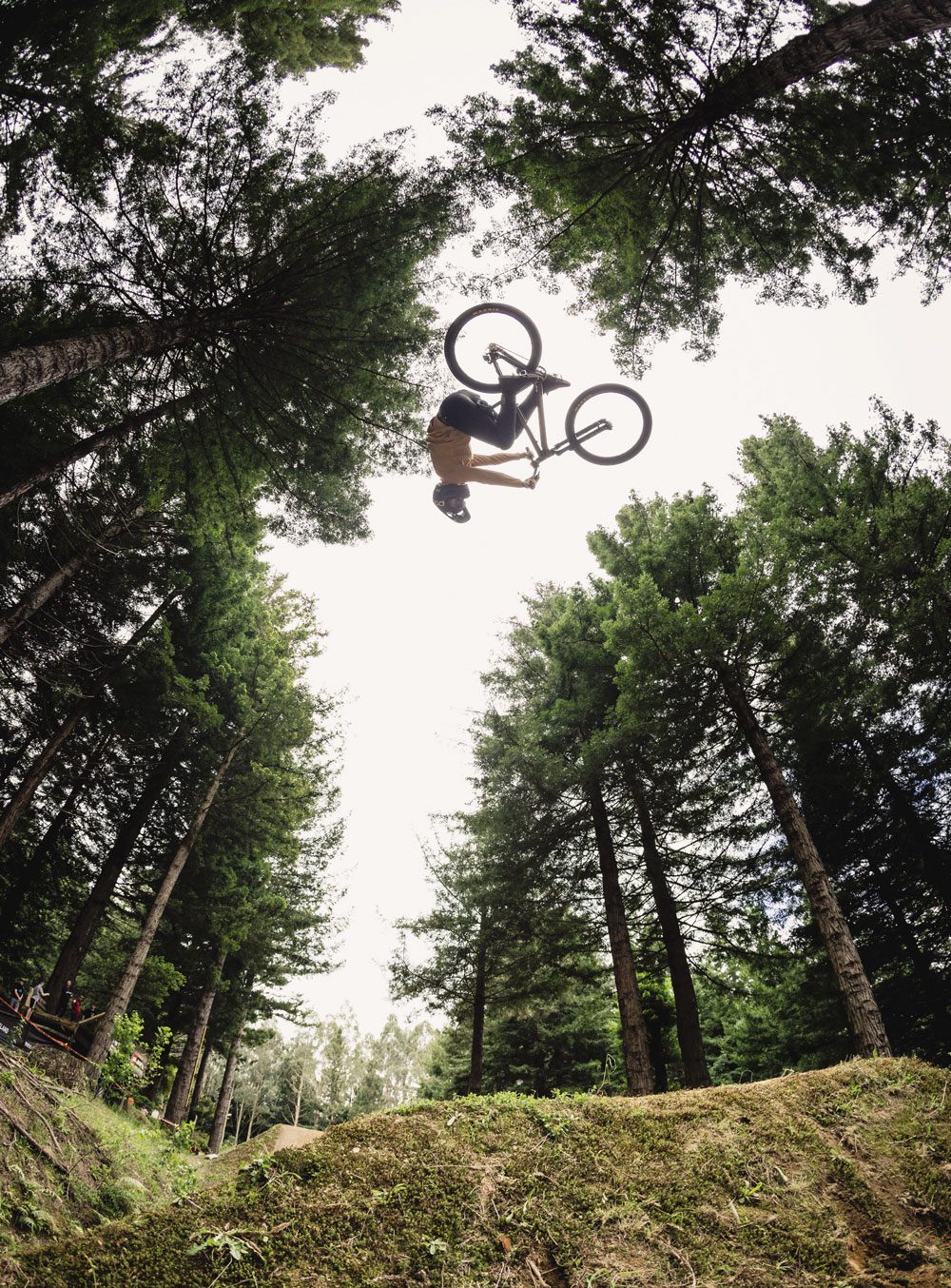
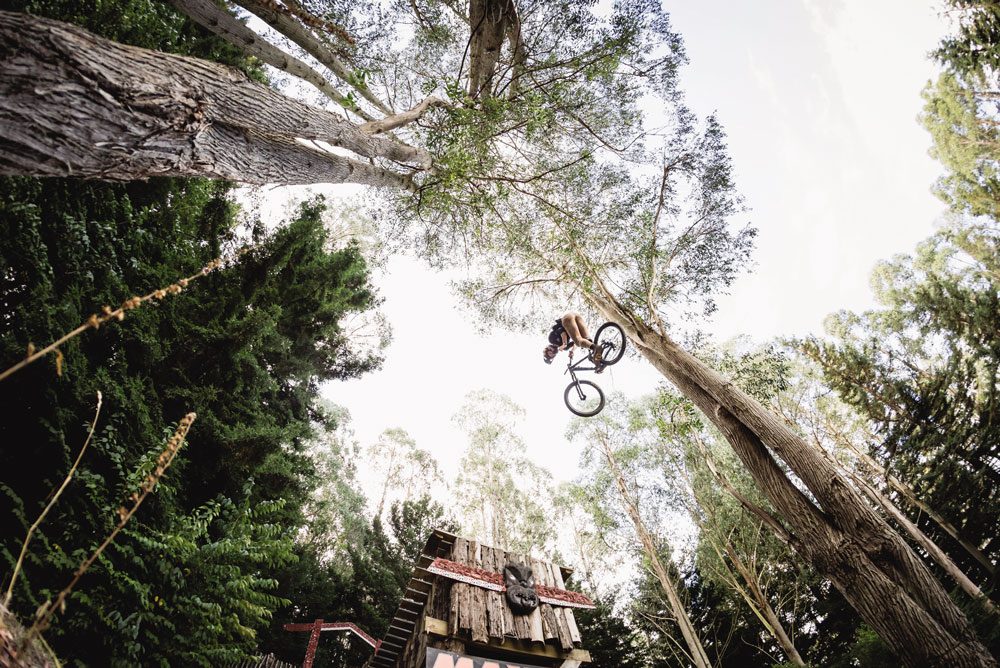
It’s also a massive week where the Rotorua community comes together to put the event on with many locals volunteering their time to make the event run smoothly. All these things mean that Crankworx Rotorua really seeks to create a mountain biking event that is genuinely unique to the place it is held. The event has even been given its own unique name — ‘Tere Panuku’. Māori is a metaphorical language so it’s hard to pin down a direct translation, but ‘Pa’ is a fortification. It also means to strike. ‘Nuku’ is a reference to shifting or moving. ‘Tere’ is a reference to speed. So in essence it means to rapidly push boundaries in a way that is underpinned by strategy.” A perfect description of what happens at Crankworx.
For most people, a trip to Crankworx is about more than just being a spectator, it’s a chance to get in some riding time as well. With a lot of the events taking place in the afternoon and evening, you can ride during the morning and spectate in the afternoon. With more than 200 kilometres of world-renowned mountain bike trails weaving through Whakarewarewa Forest, you can ride all week and never run out of new tracks to try. If you’re bringing your family with you and want a great family friendly ride be sure to check out the new Whakarewarewa Forest Loop, which has recently earned New Zealand Cycle Trail Great Ride status. The Loop is a 33km circular mountain biking trail located in Whakarewarewa Forest. Being mostly a Grade 2 track, with a couple of Grade 3 sections mixed in, the Loop is designed to be accessible for people of almost all ages, abilities and fitness levels. The trail takes most confident riders roughly 2.5 to 5 hours, depending on their pace. You’ll also want to factor in some time to stop and take in the sights at purpose-built points along the way that reveal stunning views. Back at the Crankworx village there is a great skills area for kids to learn to pump and roll on their own mini pump-track.
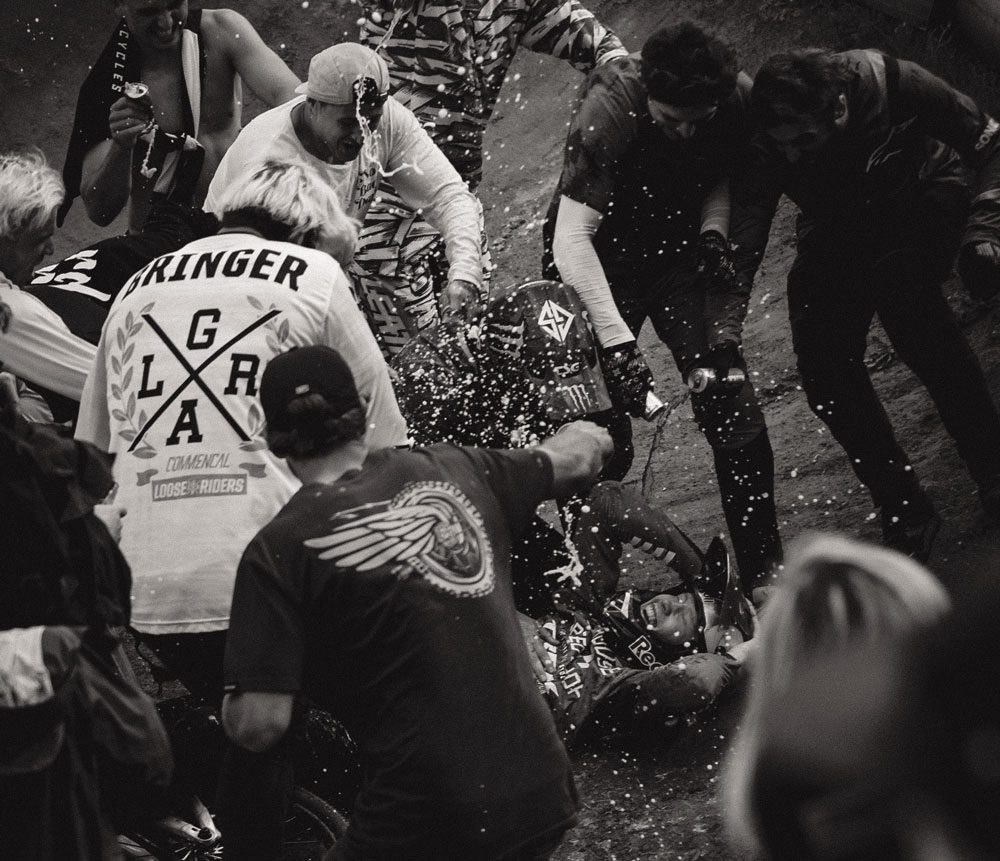
In the event village you’ll find lots of exhibitors with the latest and greatest in mountain bike tech on display, and lots of festival deals going too. A lot of exhibitors bring a fleet of demo bikes, and with Skyline trails right there it is a great chance to do some laps on a range of bikes back-to-back to really get a feel for how they all perform differently.
With crowds missing out last year, it means this year will be even bigger, so it’s worth getting your accommodation booked now. All in all it’s shaping up to be a massive event, and sure to get you and your family fully amped to get out and on to bikes over summer.
Words: Lance Pilbrow
Photography: Cameron Mackenzie
Ten minutes with Jenna Hastings
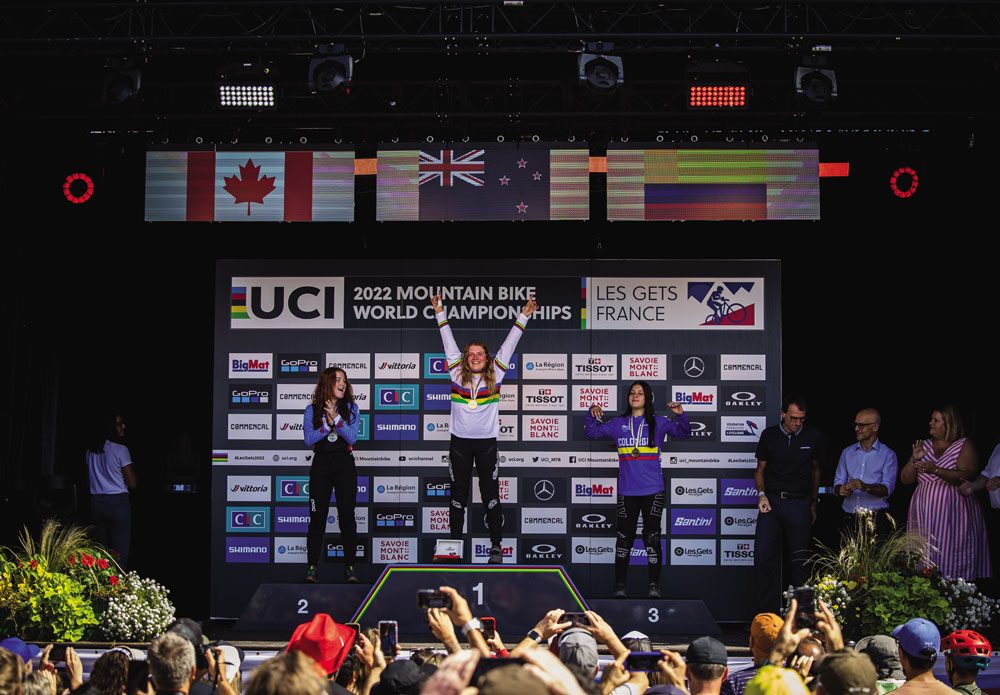
Jenna Hastings is the name on everyone’s lips. The Rotorua teenager has just been crowned the Junior Women’s Downhill World Champion at Les Gets, France. With the Rainbow Jersey firmly in hand, Jenna is now back on home soil – just in time for Crankworx, in November. We grabbed ten minutes with Jenna, in her busy schedule, but believe us when we say this won’t be the last time we hear from her.
1 How old were you when you started mountain biking, and how did you get your start in the sport?
I’ve mountain biked my entire life. Living five minutes from the Whakarewarewa Forest it was only natural that myself and my siblings rode bikes. I started BMX when I was six, which I continued until I was 14, however, when I reached 11 I started to focus on mountain biking — downhill and enduro — and just kept doing BMX as something on the side.
2 What has the journey been like to get to where you are today?
The journey to get to where I am today has been pretty good. I did pretty well in my first few years competing, so that put my name out there which has helped me to get a kickstart in sponsors and helped in getting people to see the potential in me. Obviously racing overseas has always been a dream of mine, but it wasn’t until Crankworx Rotorua 2021 that I could actually see that becoming a reality. My parents had been talking about it before then but, when I won the downhill, I think they — and myself — realised it would actually happen. Then, after the Crankworx summer series, Bernard Kerr and Pivot approached me and said they wanted to help me out in 2022. That was pretty cool. And it’s kind of history from then — going overseas and racing World Cups, making my dream a reality.
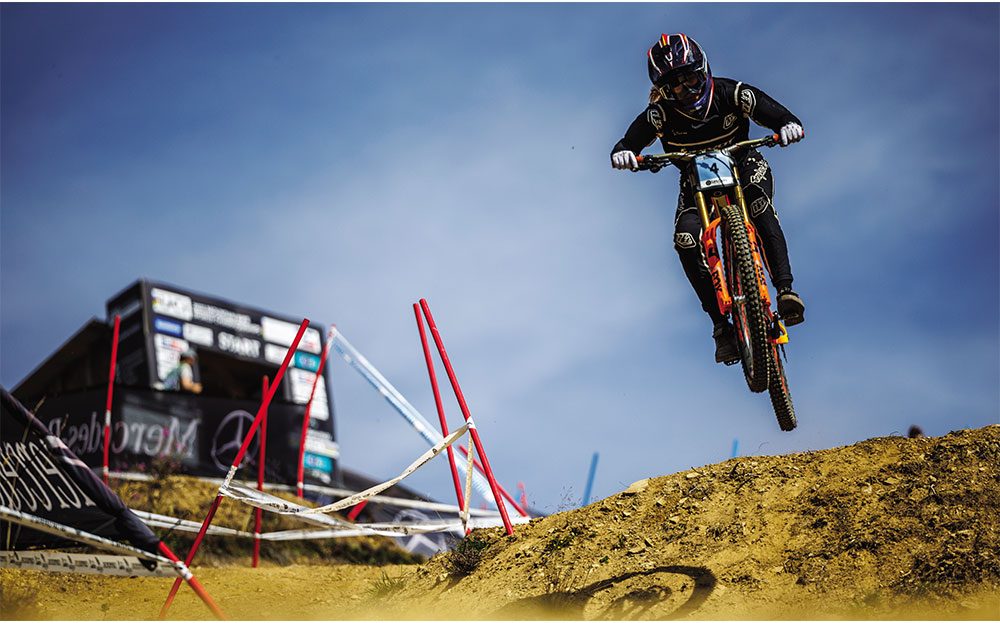
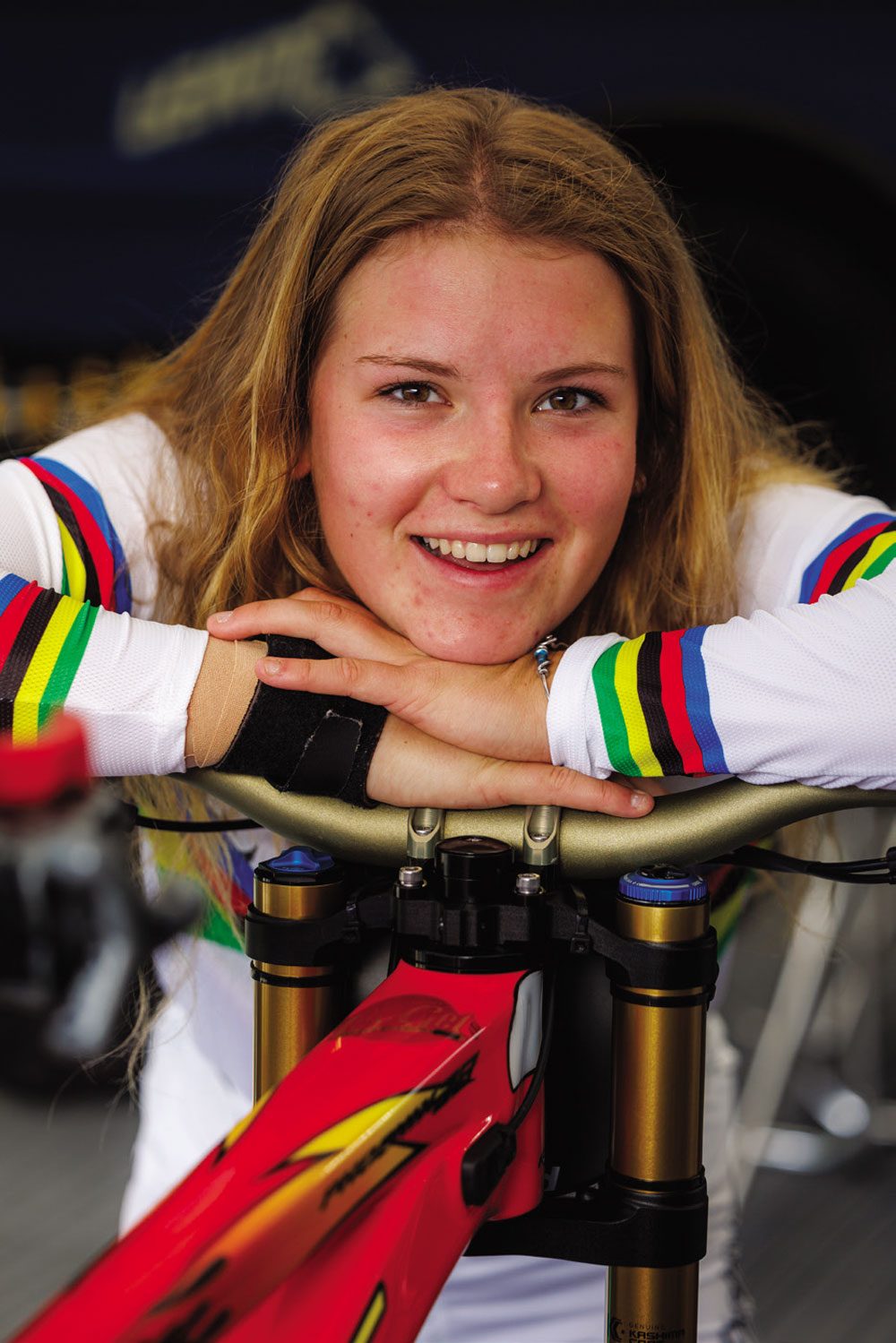
3 What was it like winning the Junior Women’s DH World Championship at Les Gets?
Insane. I still don’t think it has sunk in yet to be completely honest. I still look at the Rainbow Jersey and think, ‘you’re kidding?!’
4 How did you celebrate?
Well, I’m sure you saw my burnout that went viral on social media… then it was on TV… so that shows how I celebrated really, haha. But you can imagine how a world champ celebrates their win, along with the rest of the World Cup field and half of France: party.
5 What sort of training or thought process went into getting you onto the winning spot on the podium?
It’s quite hard to do proper training during the World Cup circuit, especially when you’re not at home and don’t go home between some of the races. It’s hard to get a gym membership, for example, when you’re constantly moving around. So training wise, we would just go for a few trail rides, and I would go to the gym with Bernard Kerr when we were at his house and also when I was in Morzine for a few weeks. Other than that, you kind of just go from race to race. My thought process was pretty much the same [as it was] for all the other races: just get through the weekend and do your best. I say pretty much the same because it was slightly different in the sense that I did believe I could win. I felt good all weekend and it’s not that I didn’t think I could win at other World Cups, but this one felt more doable.
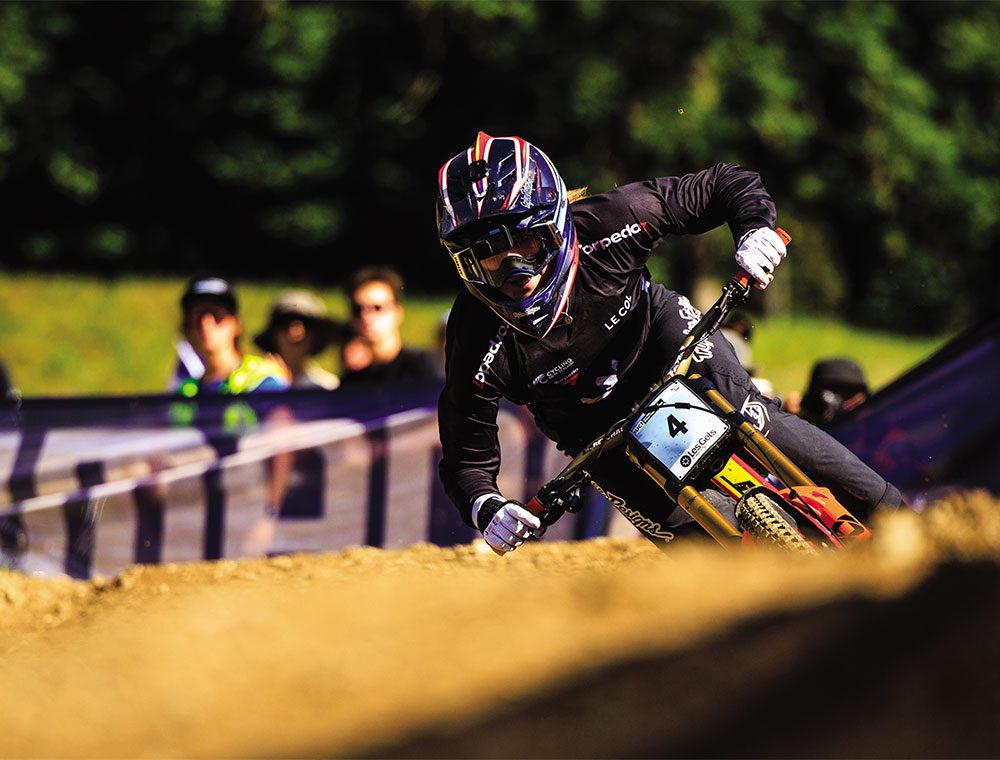
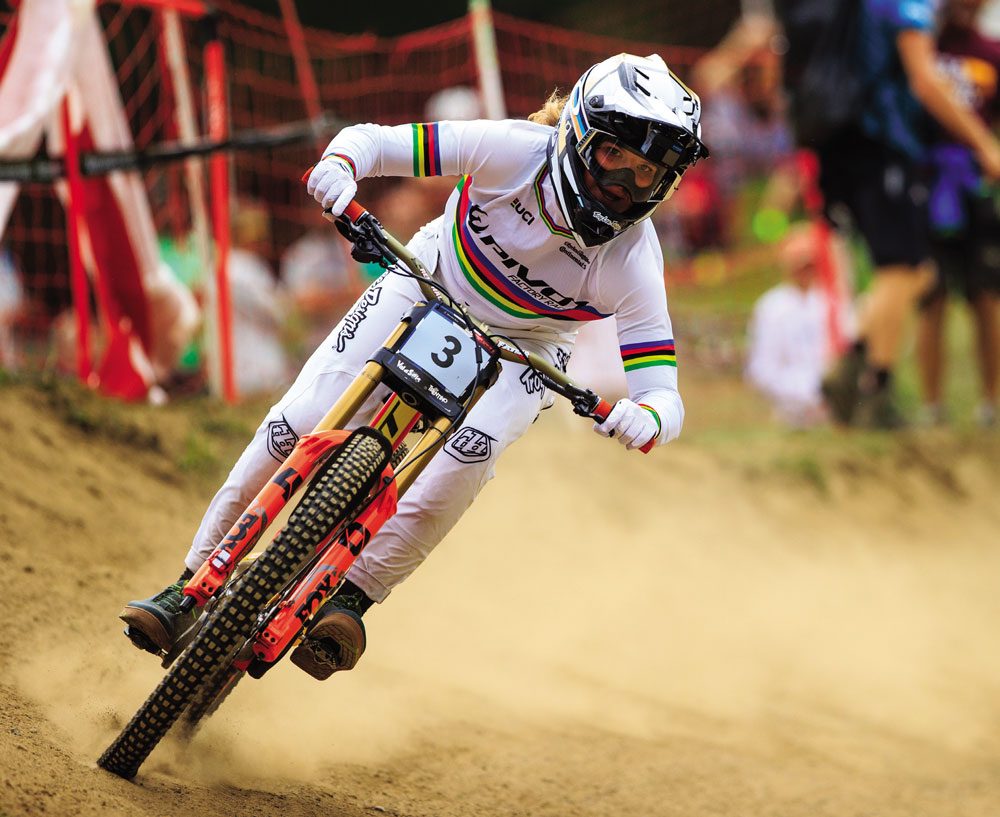
6 You’re now racing for Pivot Factory Racing, what does this mean to you?
Pivot is a team I’ve always looked up to. The team dynamic itself is one I’ve always seen myself wanting to be a part of, and I’ve always looked up to the other riders on the team. I’ve known Matt Walker for most of my life as he used to do BMX when I was a kid, so I naturally looked up to him, and Ed Masters — he has always been my idol. The way he holds himself and is always having fun; I always wanted to be like that. Maybe now I’ve seen the way he functions I might need to rethink that… Being a part of the team now is a dream come true and means so much to me.
7 What is next for you and your career?
Keep racing World Cups. That is the ultimate goal and plan for the next few years. Crankworx and maybe a few EWS races are also on the cards, but the main focus is on World Cups.
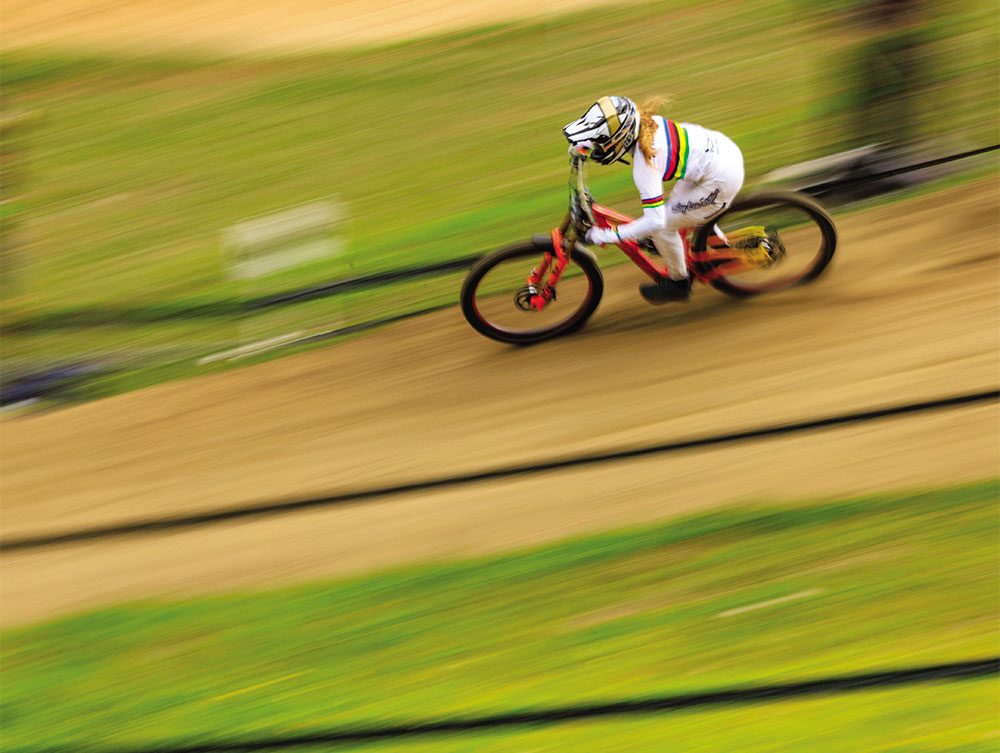
8 Who have you looked to for inspiration over the years?
Ed Masters, Matt Walker, and Bernard Kerr as I said before. Rachel Atherton was also my idol when I first started racing when I was 12 or 13, as she was just about every other little girl’s idol. I looked up to everyone in a way, I liked watching everyone race and liked to follow what they did with their lives, but those four are the ones that stand out to me as people who I wanted to be like.
9 Do you have any big chunky goals that you’re working towards in the future?
Not at the moment. World Champ and overall World Cup winner are goals of mine, but I don’t think they will be achieved in the next few years. So, for the foreseeable future, my goal is to do the best I can.
10 What words of encouragement do you have for other women mountain bikers?
Just go for it.
Where can we keep tabs on you and your career?
Instagram: @jennnahastings
YouTube: janaynay
Words: Kerrie Morgan and Jenna Hastings
Photography: Sven Martin
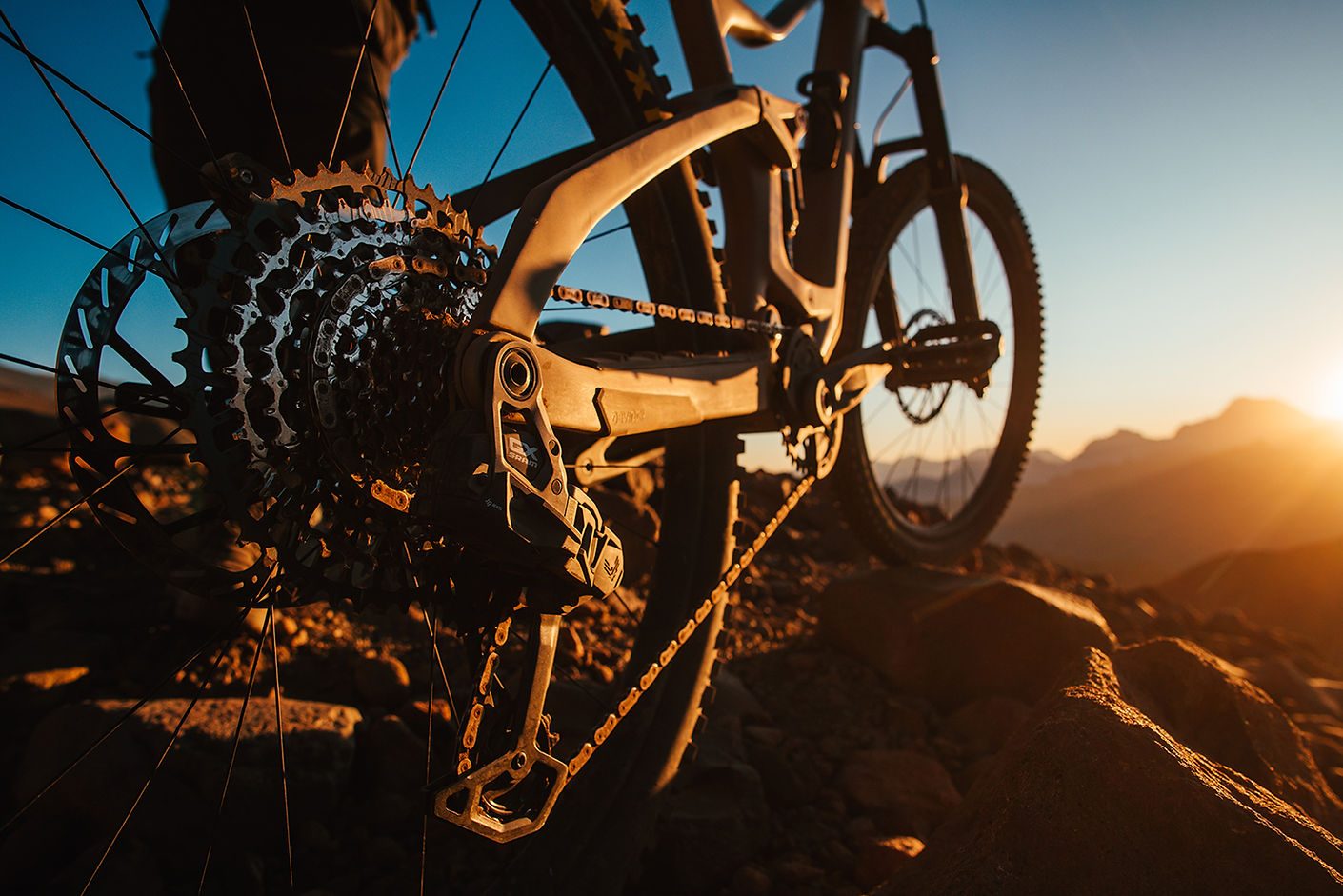
SRAM GX Transmission: First Taste
Throwback to 2018: ‘Old Orange’ was the name of my bike, complete with the original SRAM GX Eagle 12 speed. I won’t fudge it – after having races wasted due to chains breaking and multiple derailleurs self-destructing, I jumped ship and went back to an 11-speed set-up. Thankfully, SRAM did what they do; reworked, refined and, not long after, launched the GX Lunar series with an updated and much more reliable derailleur and new cassette. This new series addressed the issues I had encountered but didn’t sway me back to that groupset on my Enduro bike. My cross-country rig does have a full X01 mechanical setup fitted; I really like its lightweight shift feel – the chains last much longer than other brands, and the overall performance is spot-on.
I’ve never spent any length of time on SRAM’s electronic shifting, outside of a three-day stint aboard their gravel-focussed Rival XPLR groupo (I rated it) for NZ Cycling Journal. My SRAM experience has been purely mechanical on the MTB side of things.
GX AXS launched in late March 2021 and was heralded as electronic shifting for the people. To this day, it remains attainable, reliable and precise, but not necessarily an uber-lightweight option (for the price) for those chasing the electronic dream on a budget. The GX Transmission picks up where the standard GX AXS leave off, and incorporates all the features of the higher-end transmission groupsets, but at a more attainable price point.
Looking to break new ground, SRAM tore up the blueprints for anything we know about the rear derailleur and not only reworked them, but created an entirely new ecosystem by removing the derailleur hangar and creating a place to stand while your bike is lying on the ground. All jokes aside, the new groupset looked to be a pretty game changing piece of kit – even the price was game changing!
In March this year, SRAM launched the Transmission ecosystem, with their XX SL, XX, and XO levels. Unless you were on an internet-free trip to Mars, in a submarine looking for the Titanic (too soon?) or hidden under a very large rock which had squashed your phone and computer, you’ll have seen its huge launch. For days you couldn’t go anywhere online without seeing pictures of people standing on derailleurs. We won’t delve into the nitty-gritty of the Transmission development or tech in this piece, as that story has largely been told, but we will give some first impressions and point out some differences from what’s already in the market.
Today marks the launch of part deux of the Transmission story, as SRAM launch the GX series – continuing their ‘All Day’ theme with a groupset designed for all-mountain, all-day missions, at a far more affordable price. What you find on the GX system is largely the same as the higher-end Transmissions released earlier. There are some subtle differences which are visually noticeable from those higher-end units. In particular, the battery is hidden away in what I’ll refer to as the “Derailleur Garage” – keeping it out of harms way – essentially inside the derailleur. Replaceable, protective skid plates have been added, and a two-piece outer link. It also features a tool-free cage assembly – so it’s both removable and upgradeable, should you want to do so. A steel inner cage replaces the carbon of its higher-end brethren. Like the GX AXS of old, it’s been built for riders of the real world.
A couple of weeks before the launch date, a nice cardboard cube arrived on the courier. Hastily, I opened the SRAM Eagle logo-adorned box to find a neatly stacked groupset: three tiers, a layer cake of sorts. The piece de resistance – the derailleur – on the top, with the crank set and cassette making up the second and third tier respectively. The packaging is fully recyclable and recycled cardboard, there’s not a piece of plastic packaging in sight – in fact, the only piece of throwaway plastic I could find was a tiny piece of Sellotape and a cap over the end of the crank spindle. A leap forward from SRAM’s old packaging.
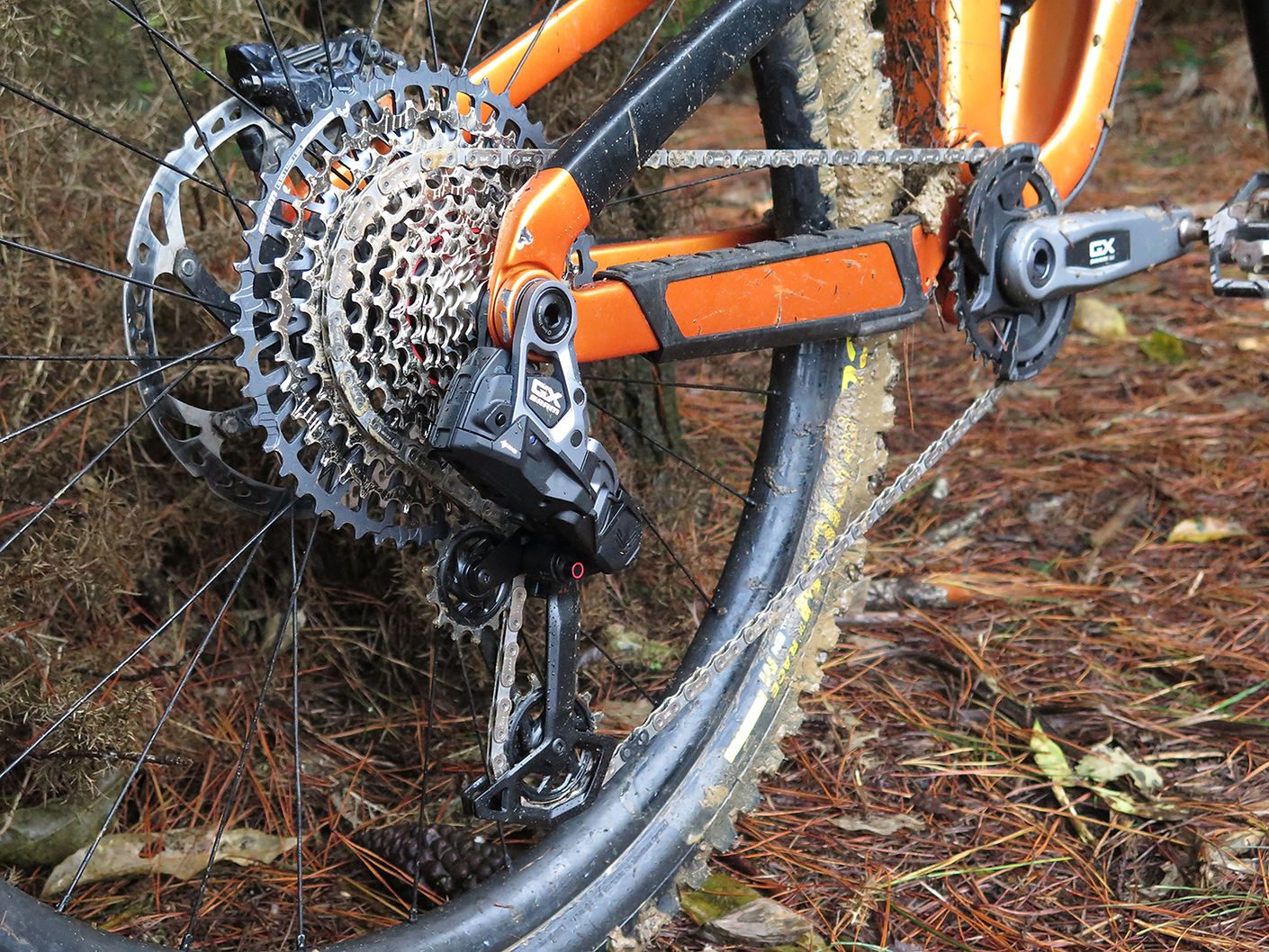
A quick watch of the install video and it was game on. It’s been a long time since I’ve installed anything on my bike that required a proper read of the instructions or, in this case, a video. SRAM does a killer job of stepping through the installation process: whoa-to-go in around 30 minutes. I’d imagine after another couple of goes, a whole Transmission could be installed in about 15 – 20 minutes, maybe even quicker. It really is pretty simple provided you’ve watched the video. My only install hiccup was my inability to pair the system to my phone (no doubt user error, but I’ll figure that out soon) as well as the compatibility of the shifter clamp with my brakes, which aren’t SRAM. It took a bit of jimmying, but I managed to get the two to work together – it did mean that I couldn’t take full advantage of the adjustment that should have been available. Fortunately, the one spot I could get the shifter to sit was just right for me. I see in their documentation a different shifter pod mount is available and this would have completely solved my issue.
After realising there wasn’t an AXS charger in the box (I believe it will ship with one) the derailleur light signalled a critically low battery, so I waited out a few very wet and cold days, borrowed a charger from a mate, finally charged a battery, then hit the trails.
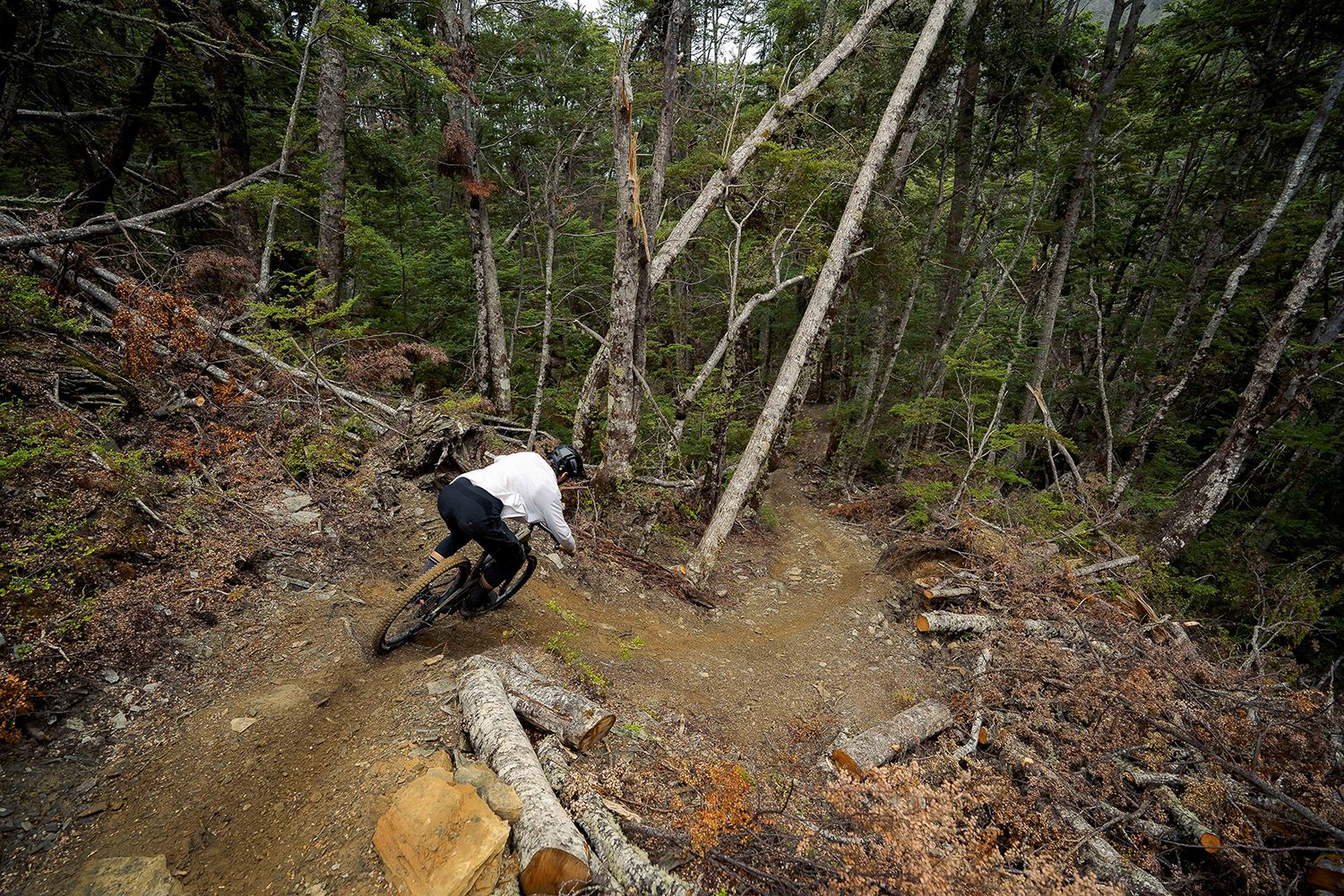
Te Miro MTB Park, just out the back of Cambridge, was my first testing ground. For the uninitiated, the trails are reasonably varied but the general theme is clay and native roots, dispersed amongst meandering climbs with the odd pinch or crux move requiring low cadence torque and fast, precise shifting to get the most out of your bike if speed is your aim. Coming off the back of a few days of intermittent rain, I wasn’t expecting much aside from mud and muck – perfect for bedding in a fresh groupset.
Leaving the car park, I snapped through the gears and made sure everything was still as it should be. I shifted through the cassette and took a couple of looks back just to be sure it had shifted, as it was so smooth and quiet, just a small ‘zit’ noise and a rolling increase of resistance at the pedals. I spun my way up the Easy As climb, taking the harder, steeper lines where possible, purposely shifting at the wrong time and under full power. Thoroughly impressed at how positive the shifting feel and accuracy was I pressed on, thinking to myself, ‘sure, it’s good now, but I bet once there’s some mud in the system it will be just like everything else’.
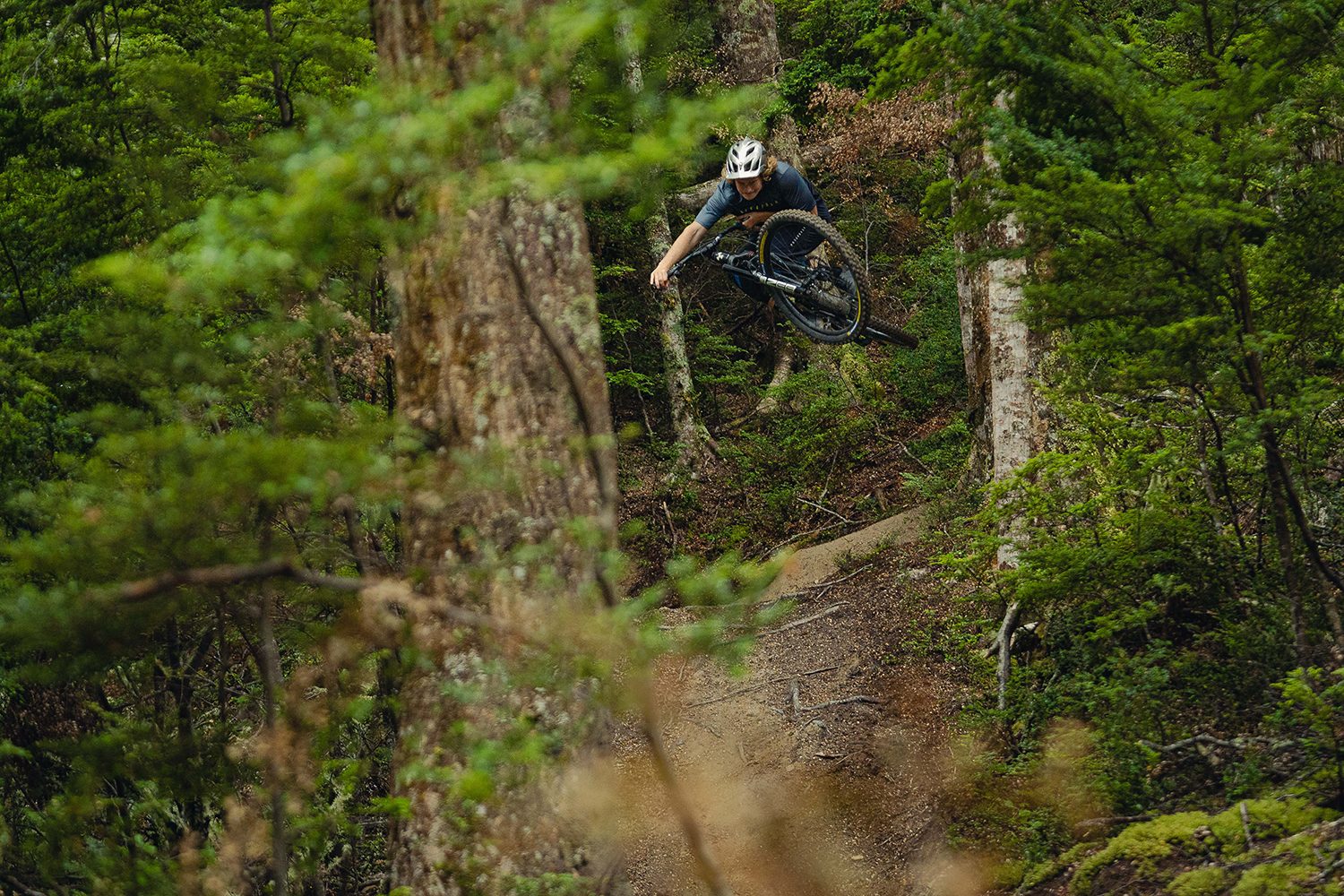
‘Easy As’ caps out and links into the Miro climb; its mellow gradients are broken up with some proper NZ native roots. Regular traffic polishes off the bark and pulls slimy dirt up onto them. You have to have your wits about you to keep the power down and maintain forward momentum, a situation where a mis-shift or slipped gear will likely see you stalled out or on the floor. Again, I was impressed by how accurate the shift was, with no slipping or mis-shifts, regardless of how many shifts under full power, and regardless of cadence.
Words: Lester Perry
Photography: Jake Hood / Lester Perry / Supplied
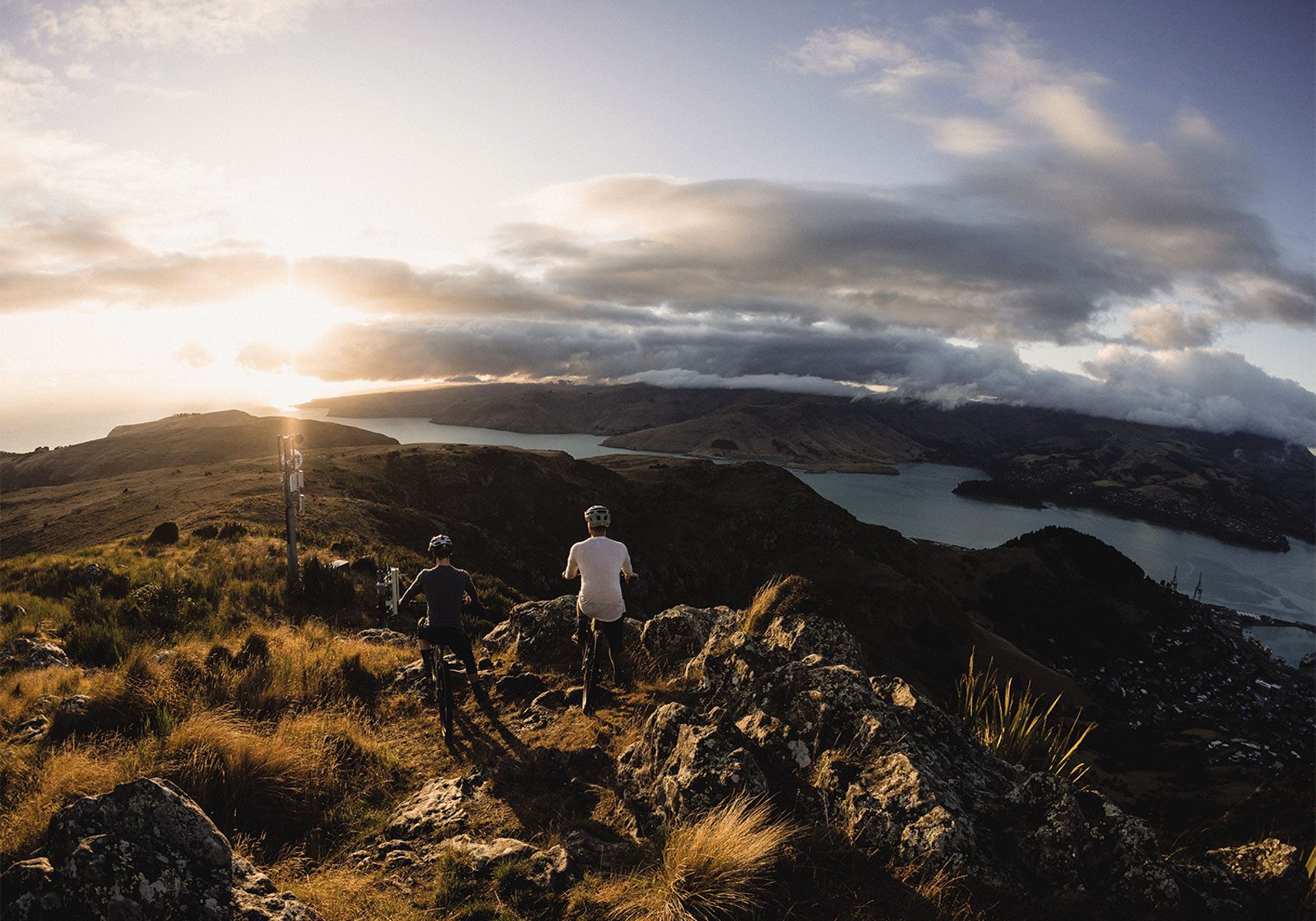
Location: Ōtautahi Christchurch
Words: Jordan Phipps
Photography: Cameron Mackenzie
Produced in partnership with Christchurch NZ

Ōtautahi Christchurch: a diverse and exciting city in the heart of New Zealand’s South Island, this is the gateway for adventurers and explorers alike.
The largest city in Te Waipounamu has grown from the incredible challenges Mother Nature threw the community in 2010. These days, a real buzz can be found on the city streets, although it remains an old city at heart, with many remnants of its gothic architecture still tucked away amongst the new. There’s not many cities that can claim the new, vibrant feeling Christchurch has; the city is now flush with a number of new shops, cafes, restaurants and watering holes. Areas like the Riverside Markets and The Terrace are lined with spots to check out and the rebuild has offered a ‘re-set and re-think’ into mobility and how people get around. Go down any street in the city and you’ll see pedestrian areas and cycle lanes along with a heap of cyclists using them. The city has always had a strong cycling culture but nowadays it seems more popular than ever.
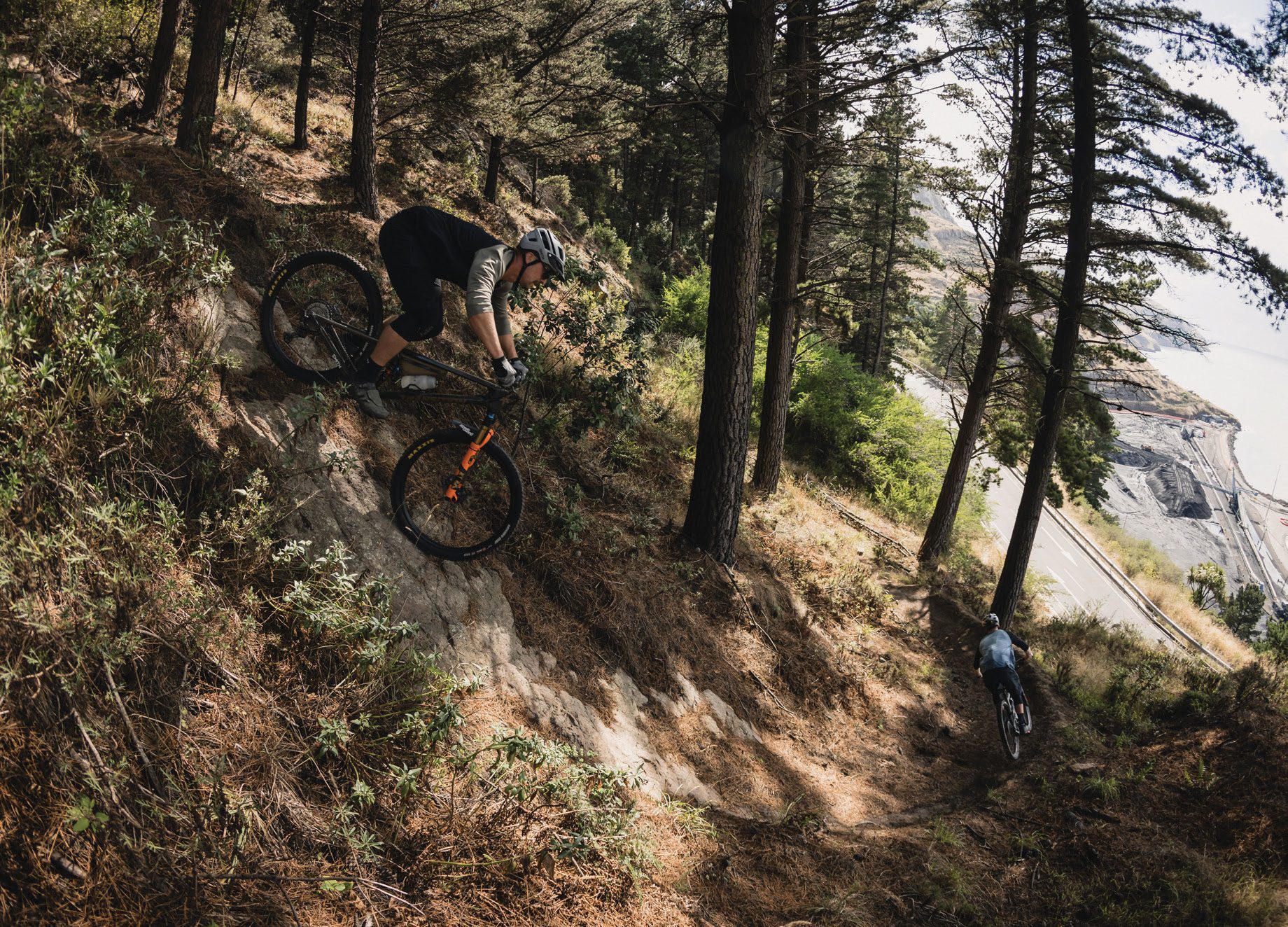
Ōtautahi exudes ‘great outdoors’ vibe and it’s clear to see why, with the white peaks of the Southern Alps standing tall, the rolling South Pacific Ocean to the east of the city and various other mountain ranges as far as the eye can see to the north. The city also has easy access to some of the best conservation and national parks, such as Craigieburn and Arthur’s Pass. Beyond that, there’s multiple options from the north, west and south. Closer to the centre, the Port Hills border the city and offer a plethora of outdoor activities. This is one of the main locations for mountain biking, with trails weaving across the city face. This, along with the addition of Christchurch Adventure Park, which opened back in 2016, make it very rider friendly, with trails from beginner to expert. The best part about the city is its proximity to the riding – you can get from the heart of town to the rolling tussocks of the Port Hills with just fifteen minutes of pedalling.
Ōtautahi blends city vibes with outdoor culture seamlessly. It’s got charm, character and so many choices of trails on its doorstep. Recently, we spent a long weekend exploring some of the best riding locations the city had to offer.
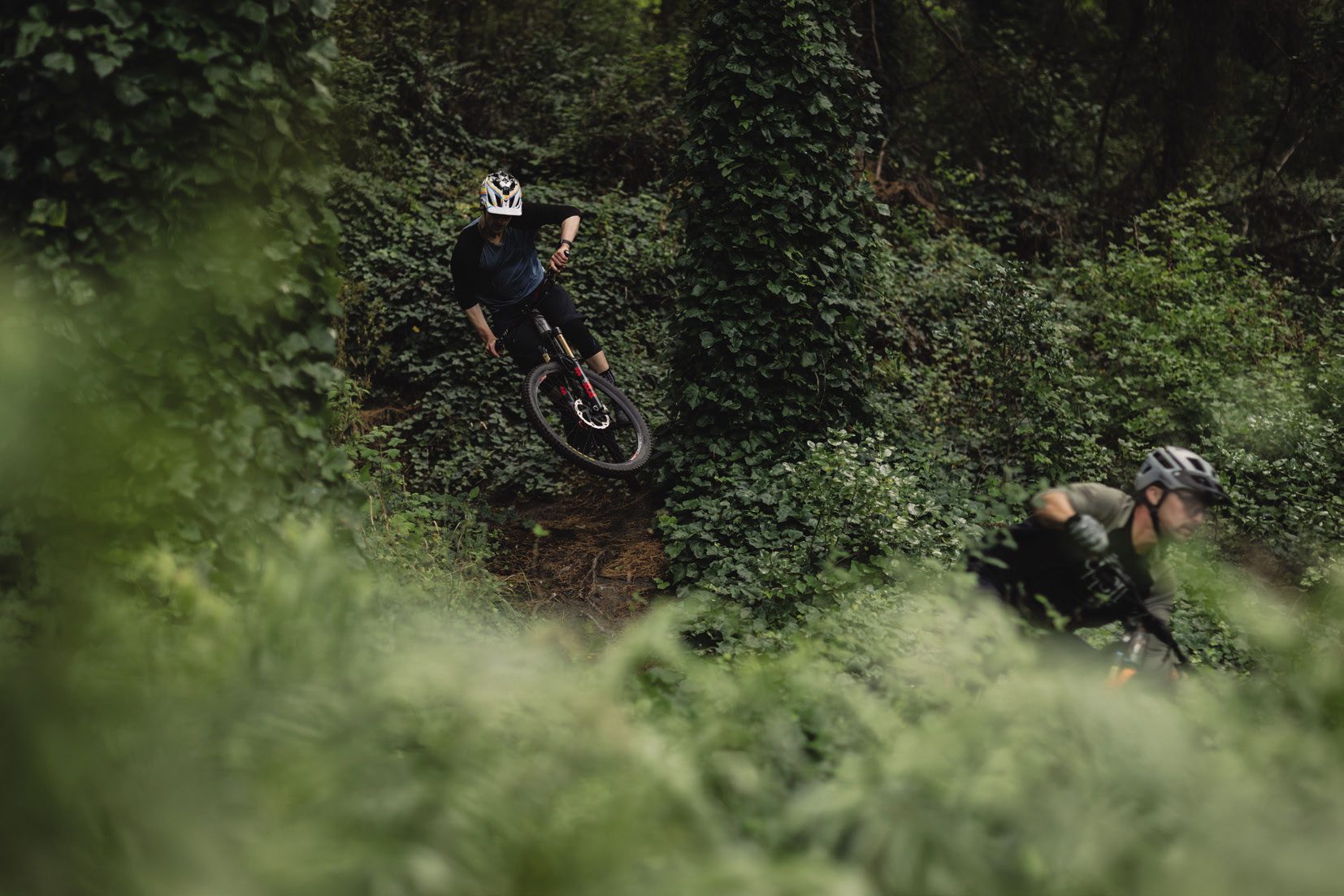
Location: Lyttelton
How’s the serenity!
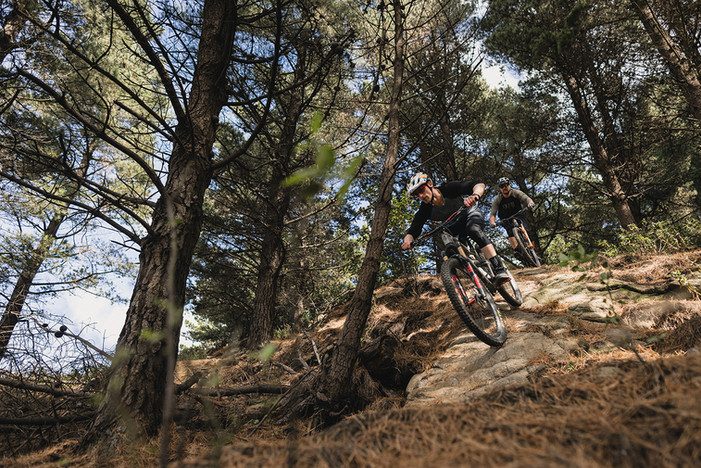
Lyttelton is a treat, its own special vibe. Whether you pop out of the tunnel or drop down off the hill it’s clear you’ve stumbled upon a gem. Lyttelton is a quirky portside town filled with welcoming locals, excited tourists and, of course, the froth-searching mountain biker.
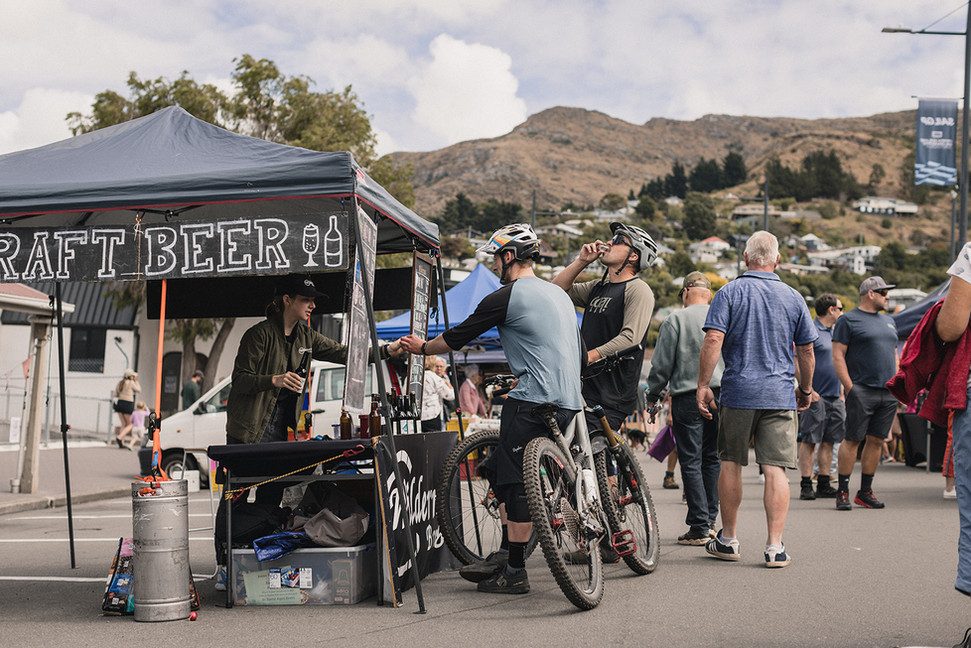
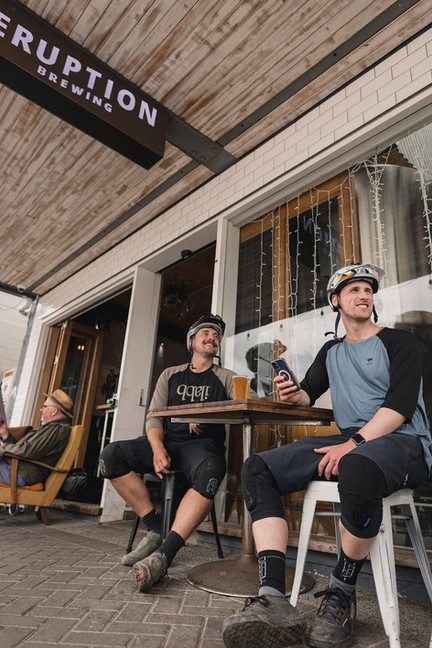
Loading up the truck and heading through the tunnel on a Saturday morning is my favourite way to get immersed in this quirky town. There’s nothing better than smashing out a few laps of the forest, then taking the time to explore the street market with its fresh food, produce and local goods. Or maybe even an impromptu half an hour yarn struck up with a traveling American tourist named Pete. Complement all of this with a hazy and a snack at Eruption, or maybe a flat white and scone at the coffee co-op, and it’s an epic way to spend the day.
You’ll often find Lyttelton bursting at the seams but, somehow, it always manages to retain a chilled and relaxed feel. Even the trails here seem to embody the same feeling, a nice way to escape the hustle and bustle of the city side tracks. It’s not entirely uncommon to lap out the forest and only share the stoke with yourself.
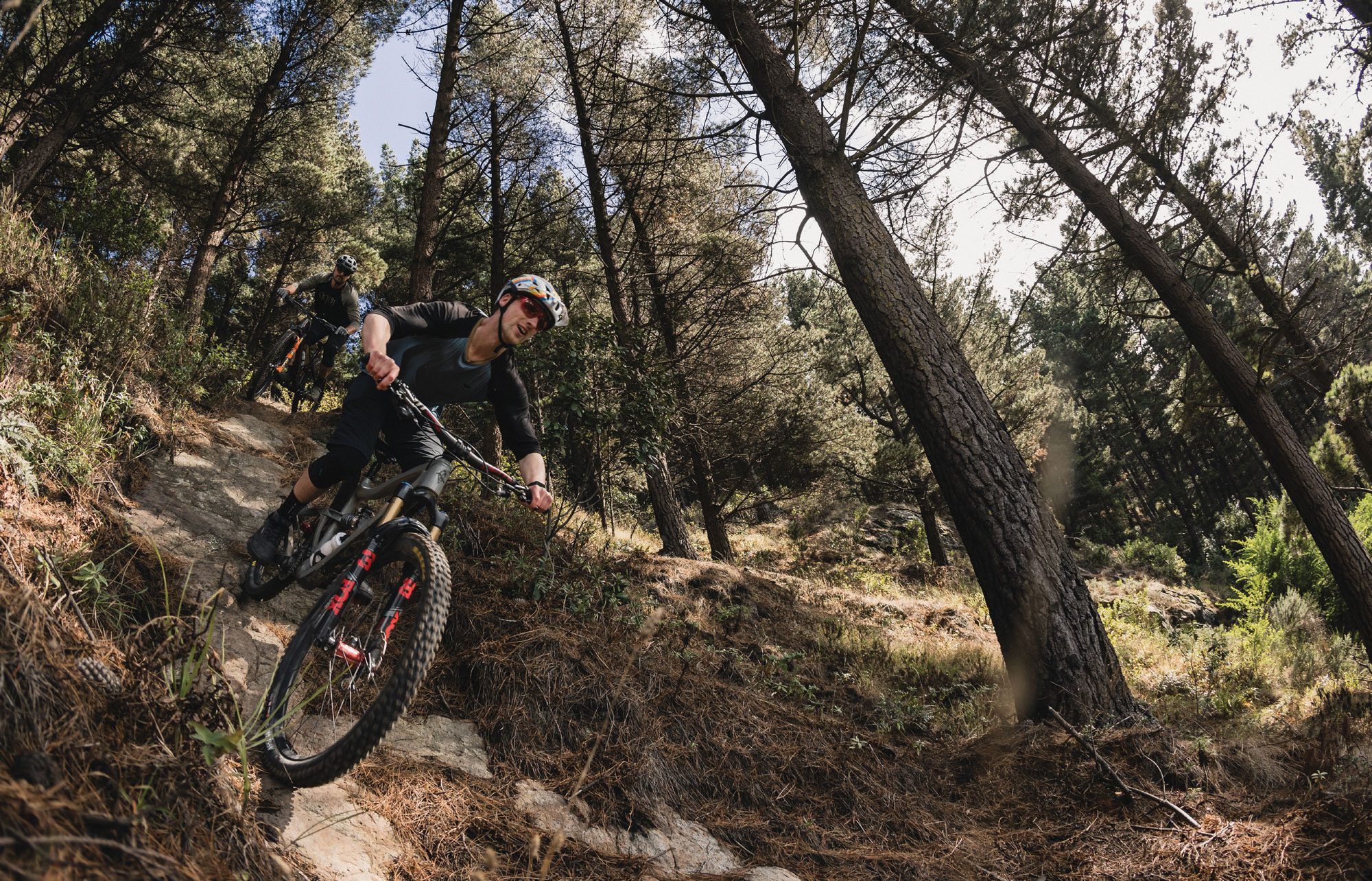
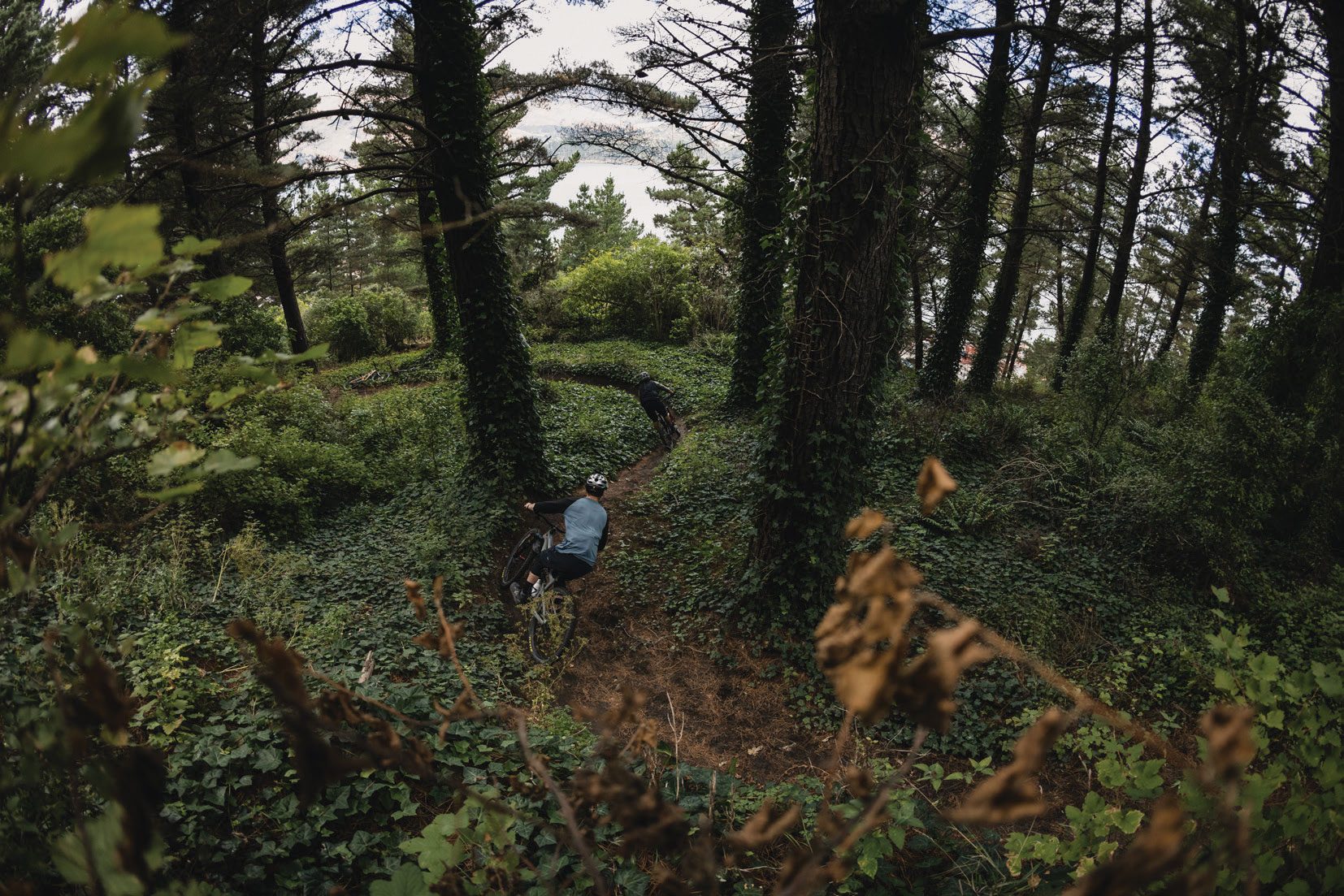
The Lyttelton trails are located in the Urumau Reserve, which is accessible from the top of Foster Terrace. Parking can be a little scarce and with the classic narrow Lyttelton streets, I just find it easier parking in the township and pedalling my way up. A large bonus of parking at the bottom is being able to exit the trails down onto Evan’s Pass when the times comes for your last lap. A rad road bomb back into town for a beer certainly beats an uphill ride back to the car.
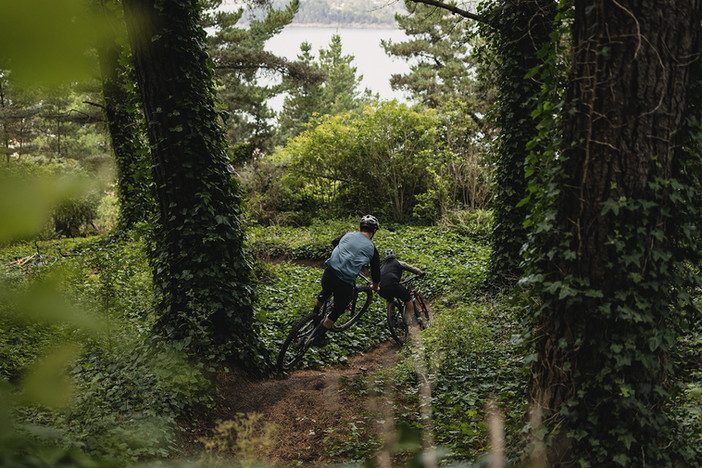
Lyttelton, it has loam! It can often be a little haven of dampness sheltered from the hot winds that the northern side of the Port Hills face. Trails like Grommies make it feel like you’ve been transferred into the rainforest, with its green, dank vibes and native flora lining the forest floor.
The Urumau trails are constructed and maintained by the Lyttelton Mountain Bike Club, and their effort and hard work shines through in the quality of rider experience. Janky descents and flowy corners duck and weave through the canopy of trees; the trails cater for everyone.
As a Christchurch local, I can say Lyttelton is a ‘must ride’ spot in Canterbury. Whether it’s a day spent lapping out trails, or perhaps visited in conjunction with an epic ride out to Godley Heads. No matter the plan, make sure Lyttleton is on your list.
Trail Recommendation
Urumau Track – Stormer – Grommies
After-Ride Recommendation
Location: Eruption Brewing
Snack: Fish Taco
Drink: Hydration – Pyroclastic Haze
Accommodation
Rydges Latimer
As a Christchurch local, I can say Lyttelton is a ‘must ride’ spot in Canterbury. Whether it’s a day spent lapping out trails, or perhaps visited in conjunction with an epic ride out to Godley Heads. No matter the plan, make sure Lyttleton is on your list.
Trail Recommendation
Urumau Track – Stormer – Grommies
After-Ride Recommendation
Location: Eruption Brewing
Snack: Fish Taco
Drink: Hydration – Pyroclastic Haze
Accommodation
Rydges Latimer
Location: Victoria Park & Port Hills (Te Poho-o-Tamatea).
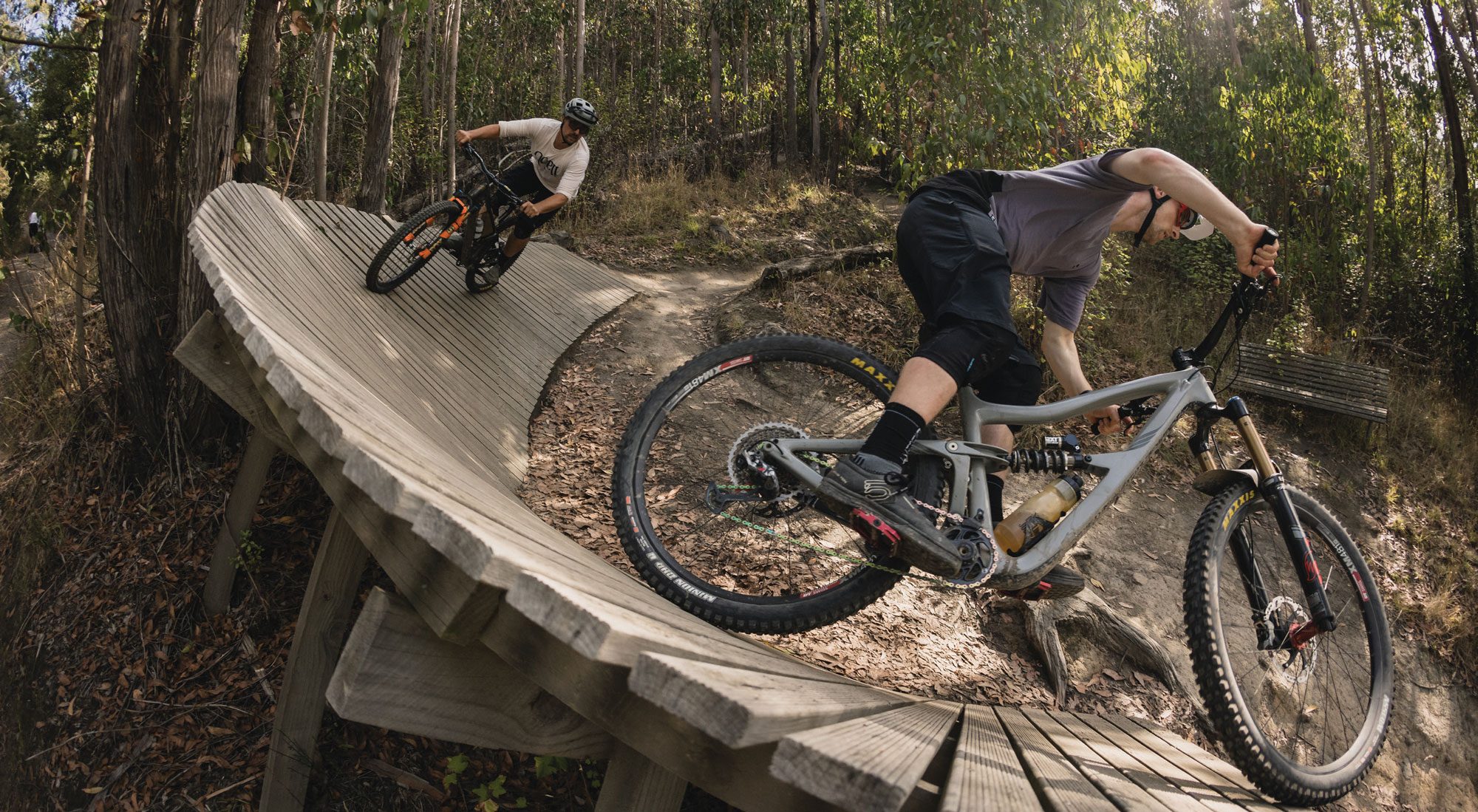
This area was formed over 12 million years ago through intense volcanic activity. What remains is the left overs of the Lyttelton crater lake. The terrain is perfect for mountain biking – long, gradual ridges and deep valleys are dotted with trails, spreading from the east with Godley Heads and Lyttelton, across to the western side, where you’ll also find Halswell Quarry Park. Conveniently parked right in the middle is Victoria Park and the Christchurch adventure Park. It’s hard to ignore the calling of these infamous hills, even when you are immersed deep in the city centre; the tussock covered slopes are always beckoning.
For me, Victoria Park (and Bowenvale Valley even more so) is the spiritual home of mountain biking in Canterbury. Core memories of dusty shuttle days, and time spent watching wild National Races in the early 2000’s, quickly flood back to mind. The rock and roll days of early DH racing will always be a part of Victoria Park, but it seems the times have changed – you’re more likely to find trail riders out cutting laps now, or even the odd rogue gravel rider punishing themselves battling on the drops.
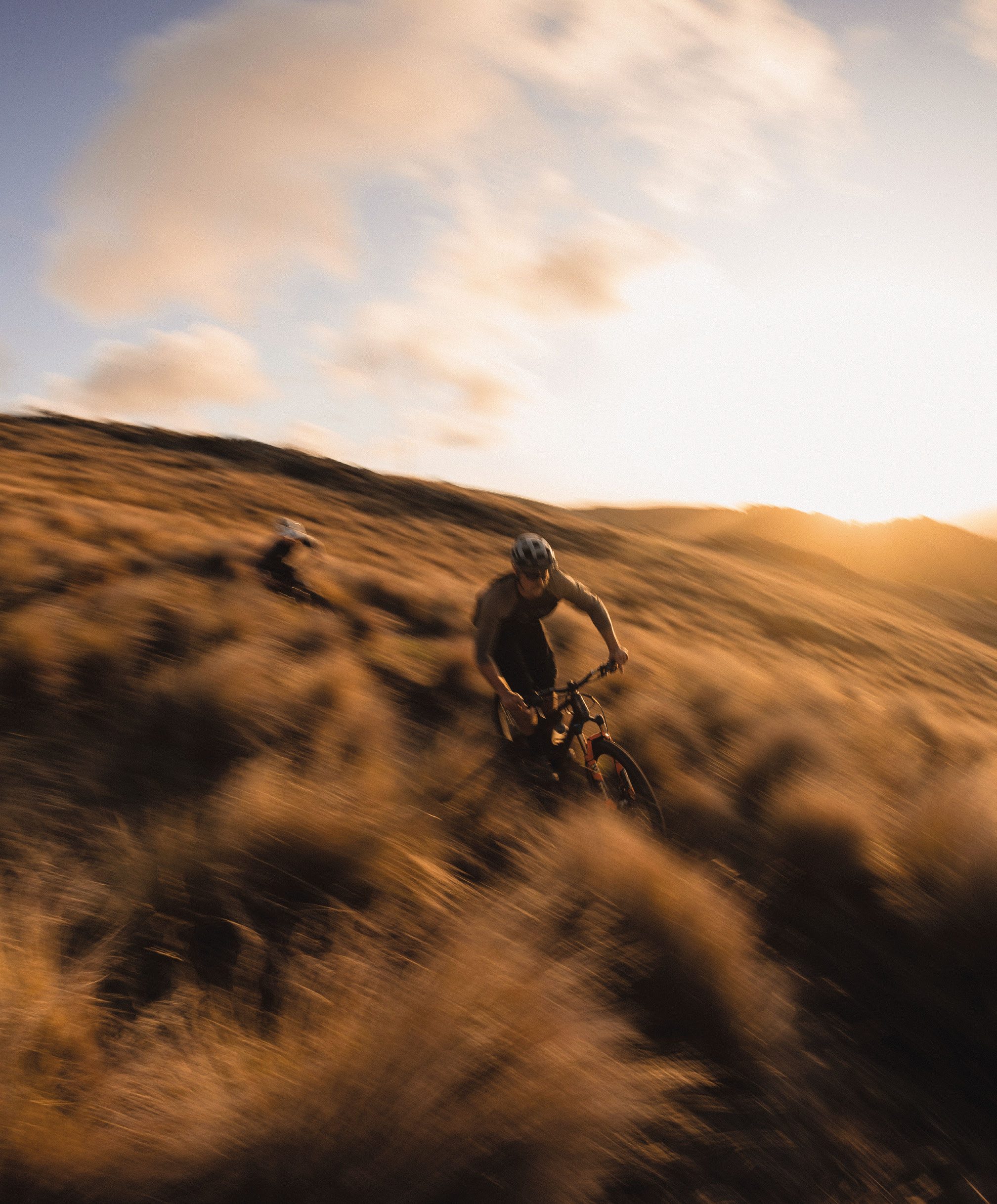
The vintage days of Iron Horse Sundays and Foes Mono’s slapping corners may be a distant memory but the trails that founded my froth are still here. The likes of Lava Flow and Huntsbury DH are still local favourites and with rapid descents and epic vistas these are ‘must rides’! It’s best on a sunset so ensure you pedal up in the evening light to see and capture it.
Accessing the park is a breeze – the evolution of drivetrains and wide range cassettes make climbing the fire roads a far more enjoyable affair. The park also has many access points. If you like a challenge, park up at the head of Bowenvale Valley and sweat your way up the 4WD road – see if you can clear the pinches without dabbing! Personally, I find the park best experienced when accessed with a classic Rapaki track climb. Pair that with a pedal west across the iconic traverse trail and you have an iconic loop!
The traverse trail itself is a must ride and is as Christchurch as it gets. The narrow tussock lined corridor leads riders from one side of the city to the other. A multi-direction trail, it offers both descending and climbing options and exceptional views from the Pacific Ocean right around to the Southern Alps.
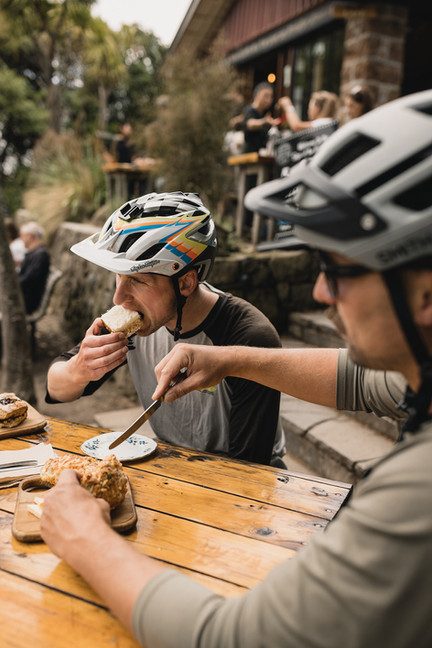
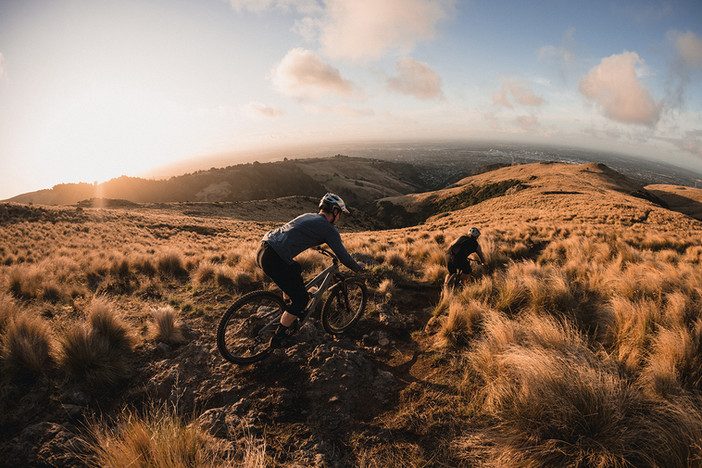
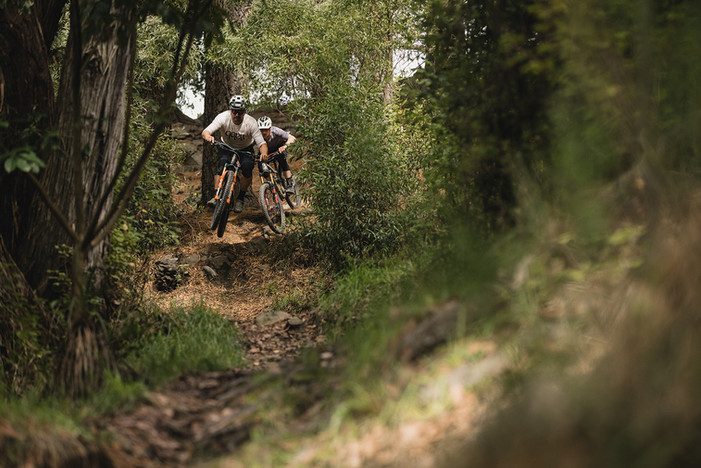
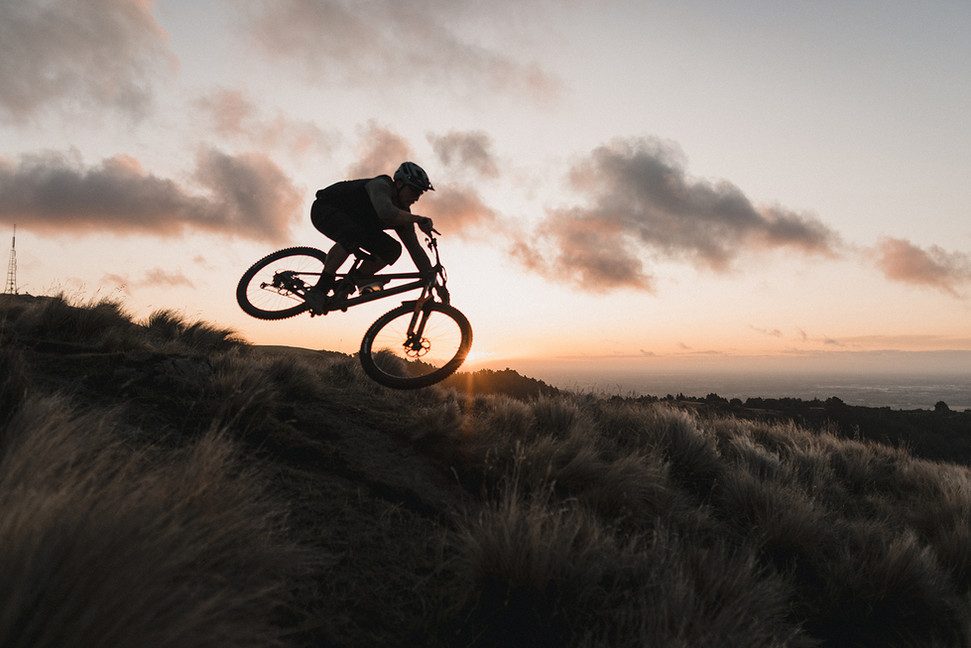
Trail Recommendation – Scenic Option
Rapaki – Traverse Trail – Brakefree – Sesame ST – Bike Park Connector
2000’s Flash Back Option
Tilted Sally – East Side Bush Track – Bridges
After-Ride Recommendation
Location: Moon Under Water
Snack: Fried Chicken Burger
Hydration: Alpha Juice
Accommodation
Rydges Latimer
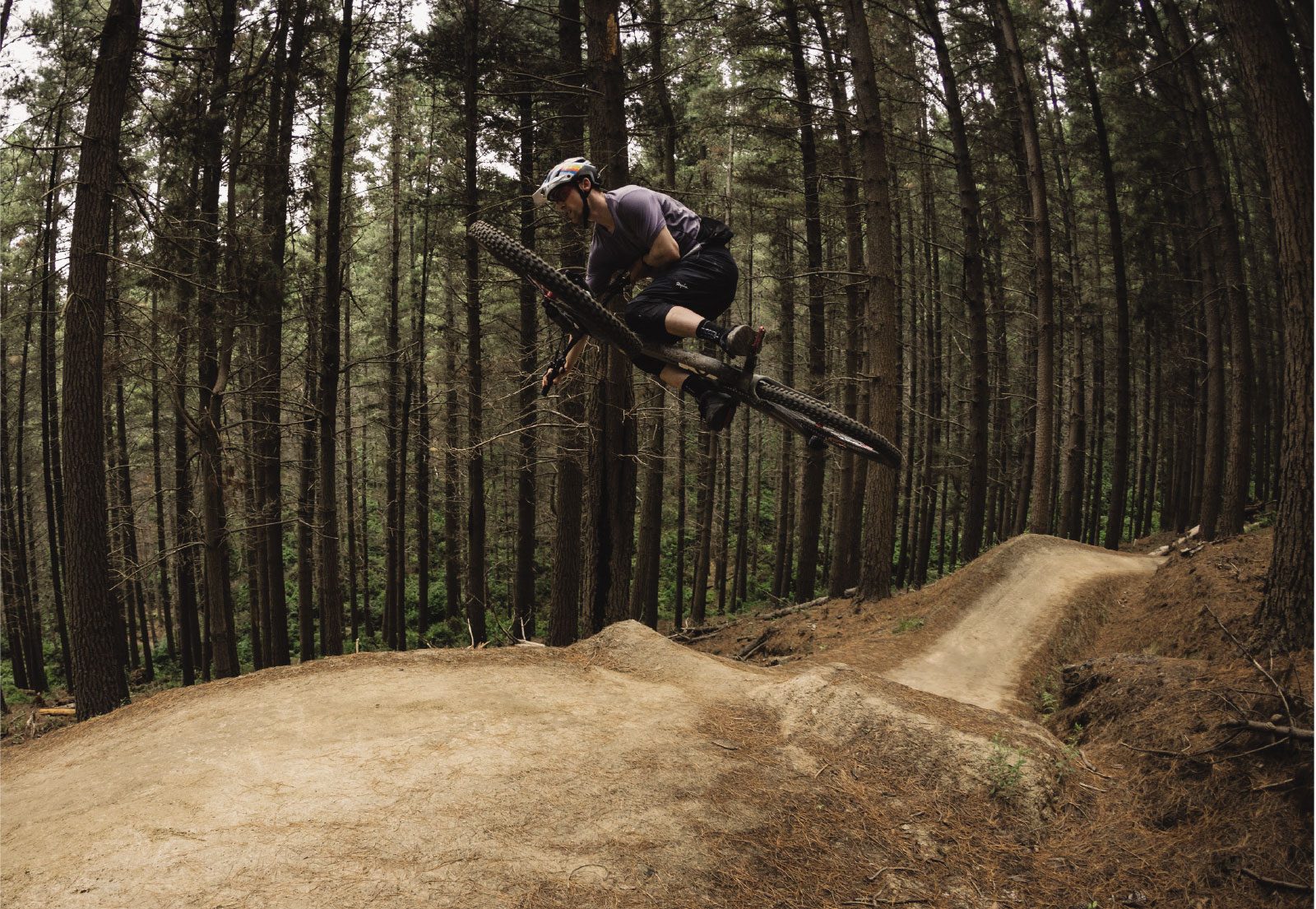
Location: Christchurch Adventure Park
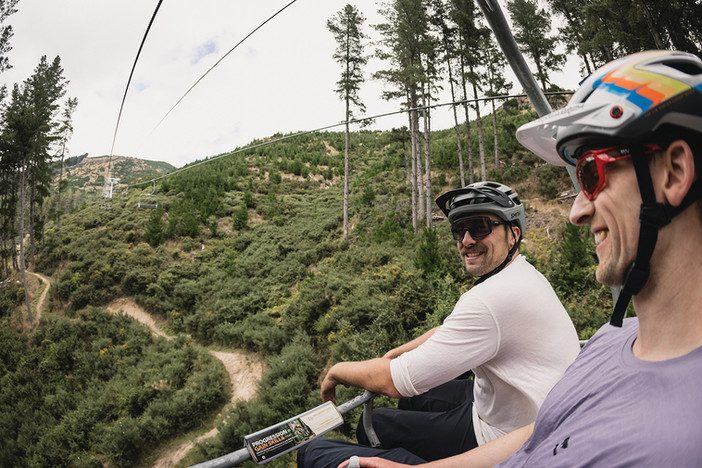
Nestled in the shadow of Marley’s Hill lies the Christchurch Adventure Park. The park is a dream come true for local riders and offers a fully lift accessed mountain bike park as well as a zip line and numerous hiking trails.
The Christchurch Adventure Park (CAP) has risen like a phoenix from the ashes (hence the name of its annual Phoenix Enduro Race) after being badly damaged by the Port Hills fires, back in 2017. A strong effort from local volunteers and the trail crew at CAP meant no time was wasted in getting the park back into action.
I’ve found the park has been a great way to introduce new riders to mountain biking – the ease of lift access and variety of trails available ensures there are options for everyone. Getting your significant other involved in the sport has never been easier. Failing that, there’s always the bar at the bottom as a last resort, to reconcile any differences. Turns out, there’s only so many times someone wants to be told how to go around a corner before my instructions grow thin….
The park sits just to the west of Victoria Park, meaning an easy traverse back and forth between the two can open up an even wider network of trails, all easily accessed from the ease of a chairlift ride. I personally like to use the lift to save my legs, and every now and sneak my way over to Victoria Park for the ultimate combo of park and tech fun!
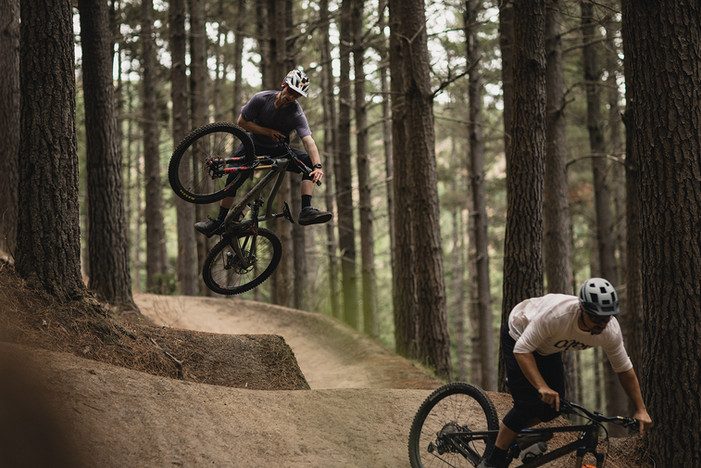
In true Park Rat style, my favourite haunts are Askins and Gung Ho, two blue trails that loved to be lapped. Gung Ho being a technical blue trail, rapid and fun at high speed, and Askins is a blue jump trail. Both I find are pretty forgiving – the kind of trail that, when you’re on one, you can fully unleash and feel like a pro – but, in contrast, also the kind of trail you could head down when you’ve got that one mate who’s convinced they were almost pro once but can’t seem to stay upright on a bike now. You’ll both still have fun.
Really, my true favourite haunt at the Christchurch Adventure Park is the café and bar – the home of hot food and cold beer! The deck here is a great spot to watch riders with more skill then myself fly over the ‘Mulch’ jump and pull shapes most gymnasts would be happy with.
After the realisation that the skills you thought were once there are definitely now gone, make sure you swing into the skills area on your ride out. An area loaded with progressive jumps, corners and drops, a few sessions there and you’ll be on the ‘Mulchie’ in no time.
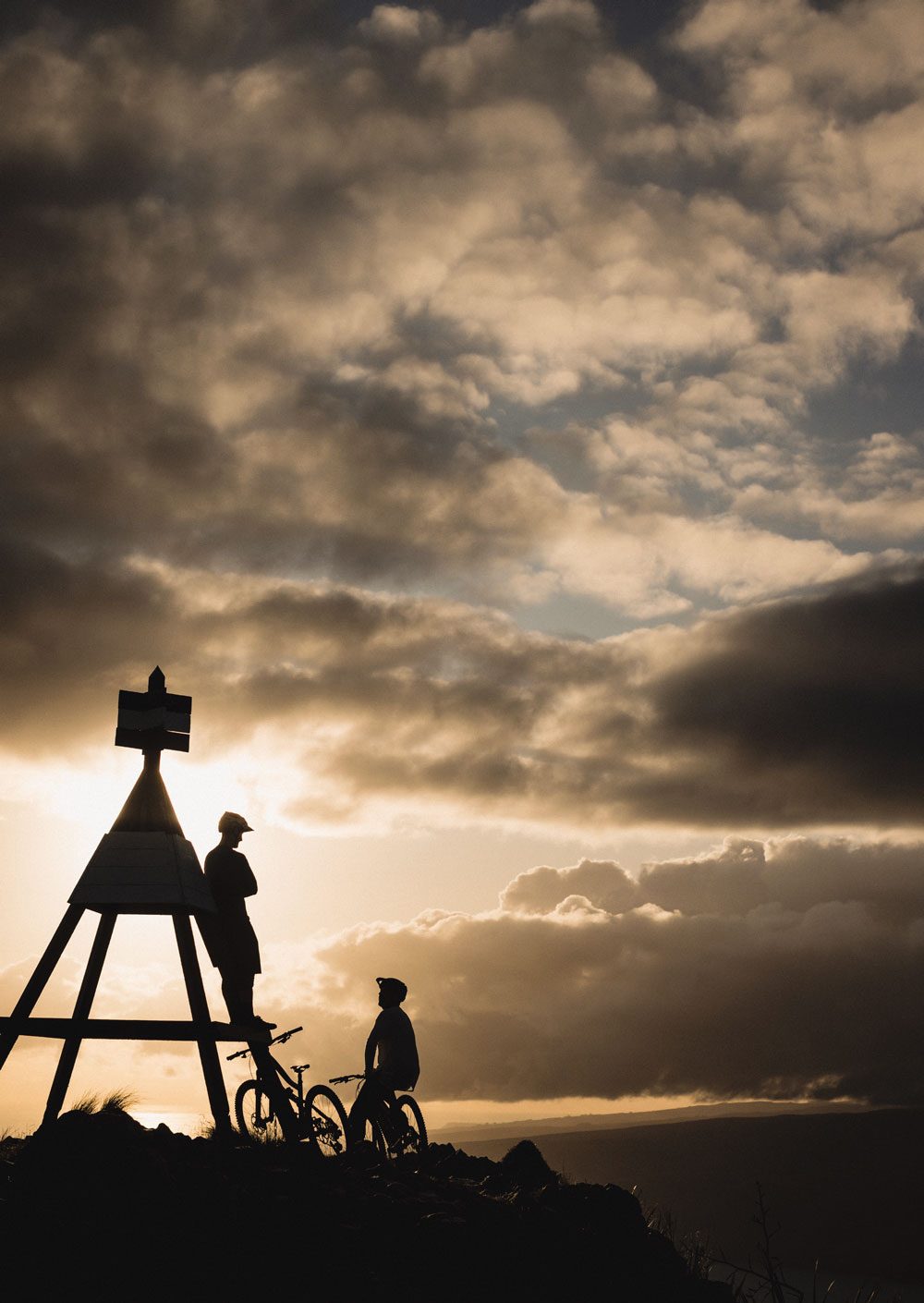
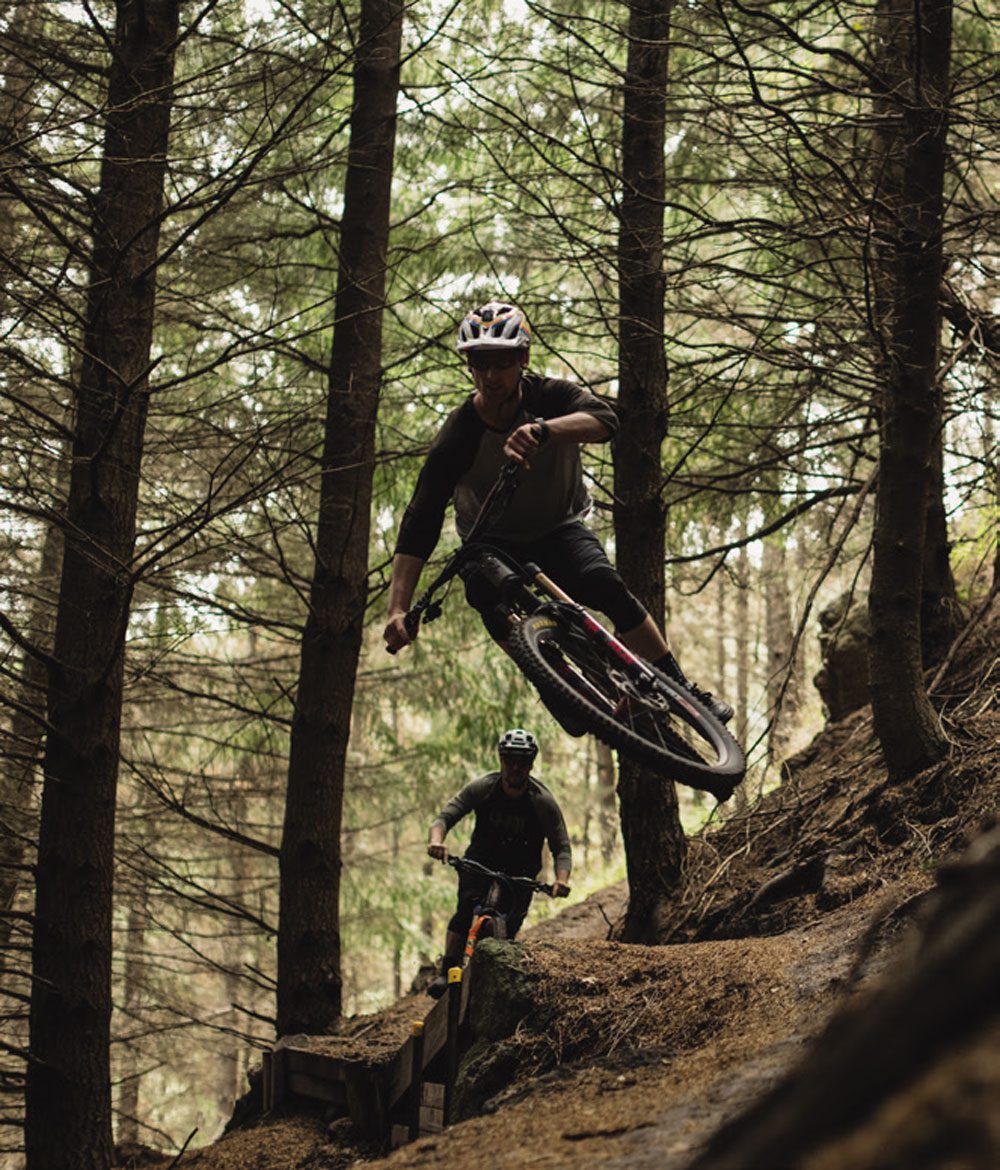
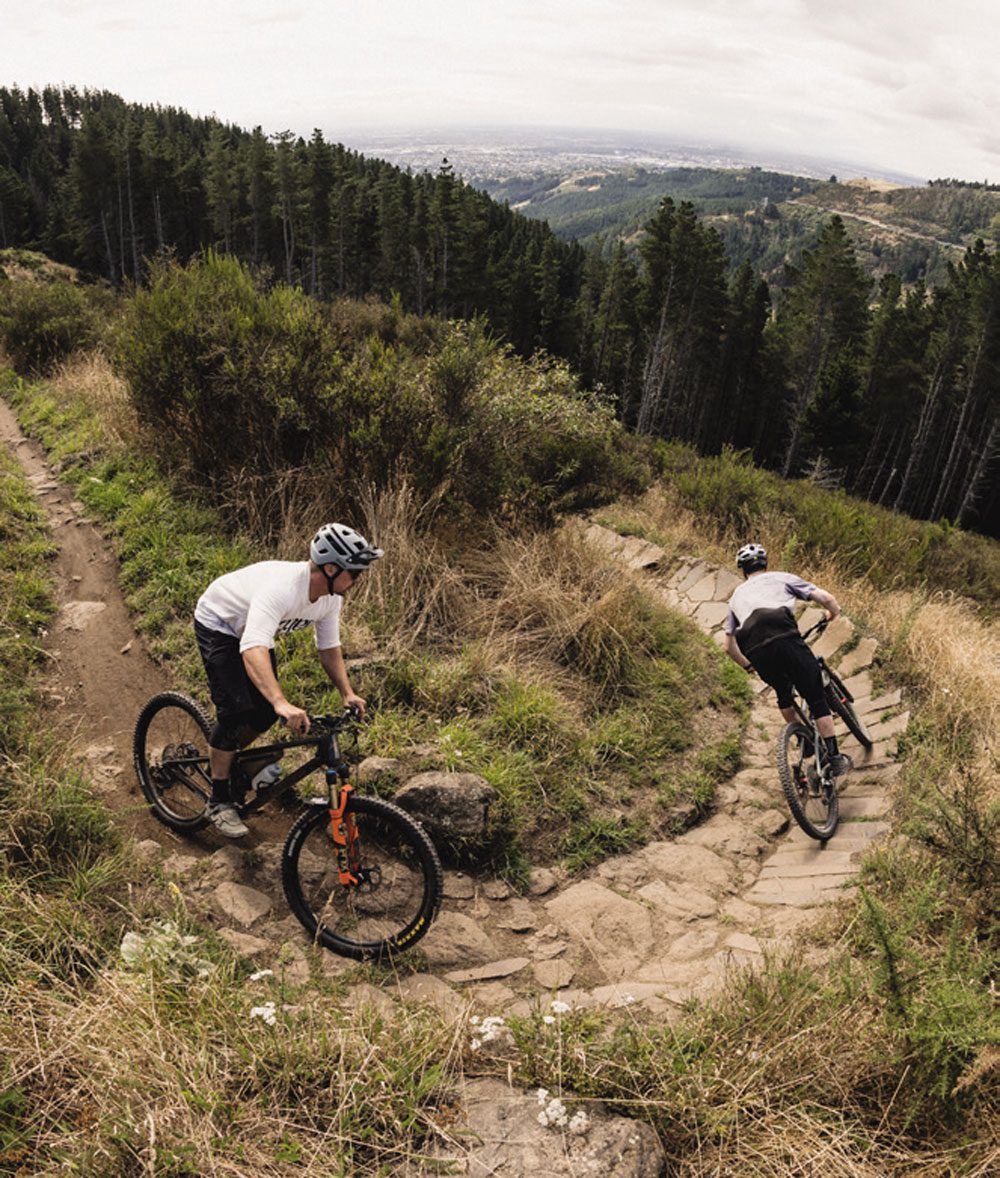
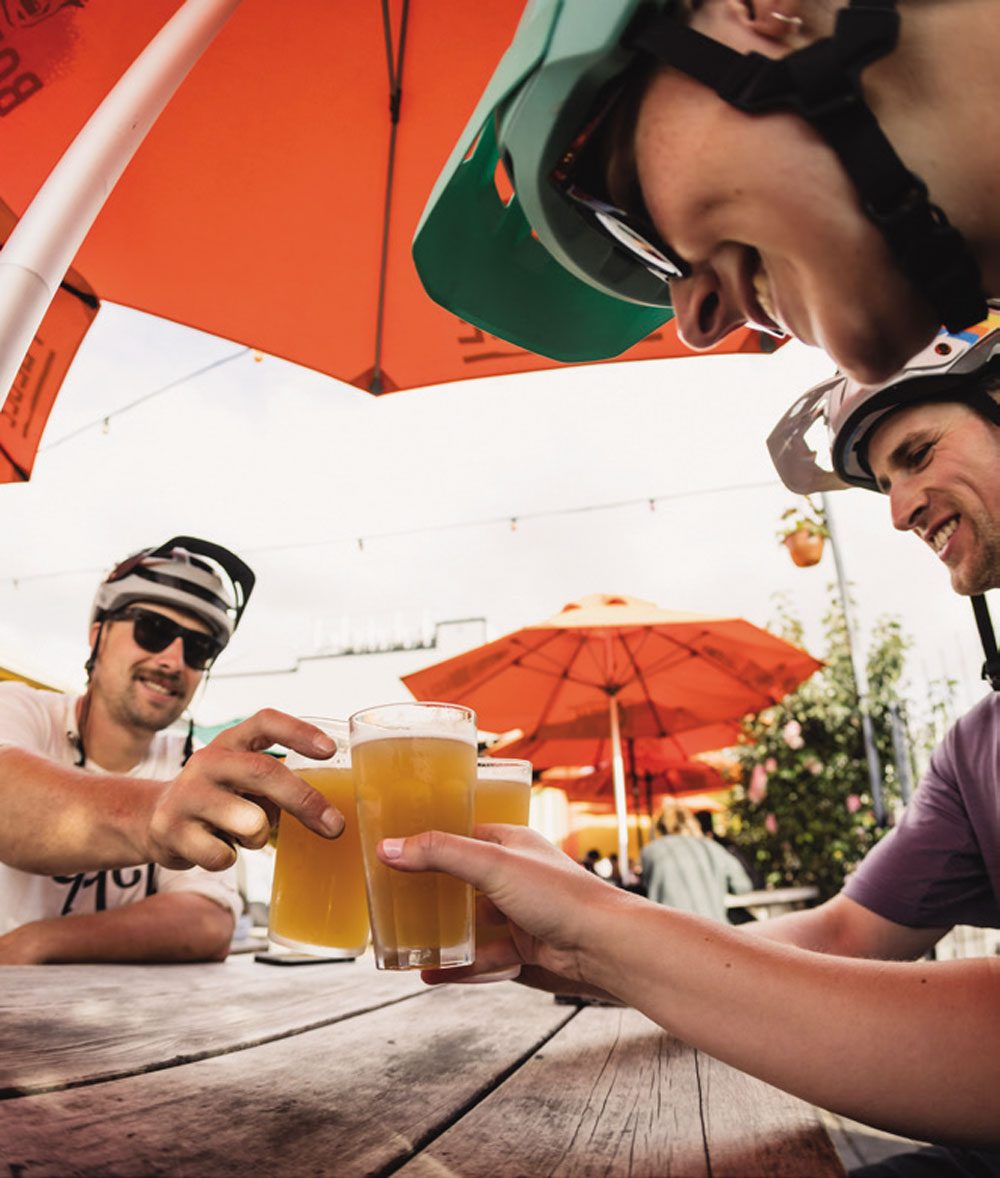
Trail Recommendation
Summit Connector – Flying Nun – Choir Boy – Gung Ho
After-Ride Recommendation
Location: Adventure Park Café & Bar
Snack: Karaage Chicken Sushi Bowl
Hydration: Cassles Nectron IPA
Accommodation
Cathedral Square Novotel
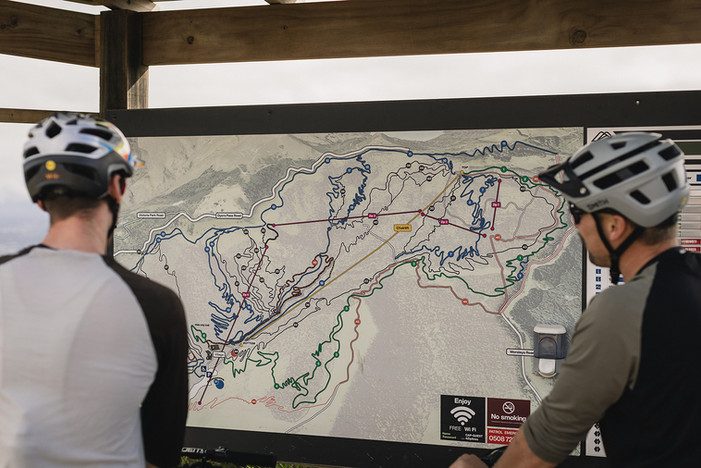
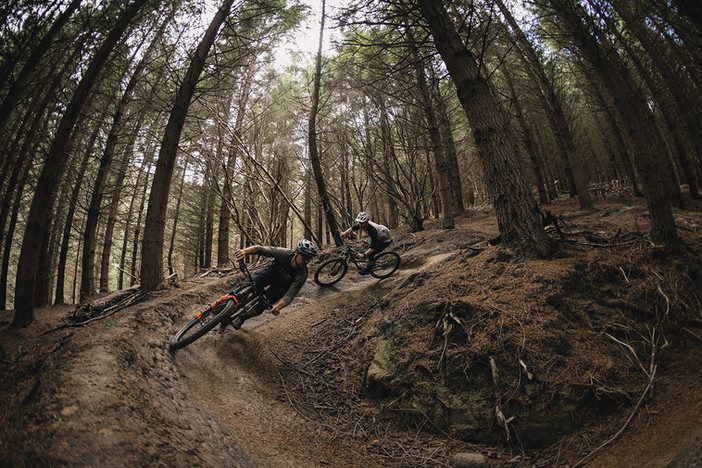

The riding gems are many within Ōtautahi’s city borders. Being predominantly flat and surrounded by hills means that whenever you descend a trail, you can easily get to your crib or digs. It’s also very easy to navigate and, in this modern age, a device will help direct you anyway. The intersection of unique city flair mixed with vibrant outdoor culture makes it shine. You can easily ride flow or technical trails and then be immersed in a café, city bar or restaurant for provisions and replenishment before heading back to the hills or calling it a day. The cycling culture is everywhere you look – people are on bikes! From commuters and roadies to gravel riders and, most often, mountain bikes – especially when you get close to the Port Hills. The riders range from young groms right through to old dogs and pretty much everyone in between.
Ōtautahi has a vibe, it’s going places and there’s a heap going on. The riding here just gets better and better, and you can see why world-class riders reside here. With riding in such close proximity to the city, with epic spots all around, this location is not to be missed.
Feature: Weekend up the Waiau
Words: Jordan Phipps
Images: Odin Woods
The idea of strapping crap to your bike and heading into the wilderness definitely isn’t a new one, but I’ve been feeling the urge to break out. Time to make the effort to get back outside, chuck down the tools and avoid the Christmas rush. Find fun in the misadventure and – for the first time, for me – take the bikepacking offroad.
The perfect opportunity to dip a toe into this niche practically landed in my lap. A long-planned weekend at the Wairoa Gorge was rapidly approaching, which would see me and my buddy, Odin, traversing the South Island. The journey from Christchurch to Nelson dances along the fringes of some unreal backcountry areas, giving us a plethora of rivers and valleys to explore. What better way to start a weekend of gravity-assisted riding than with a bikepacking adventure.
Driving to Nelson isn’t overly long or strenuous, but when schedules are tight and optimising time away from home is key, an after-work departure is best. Some folks may just opt for a hotel or even whack up the rooftop tent to break up the drive when tired, but when activities take priority, a backcountry hut makes perfect sense…
Stuffing a dry bag full of snacks, camping gear and the occasional hazy (of course), you’ve now got the perfect recipe to start any adventure. I’ve learned over the years, there are three things you usually like to line up to help aid a positive experience while out in the backcountry. None of them are exactly critical but a lack of all three definitely makes life slightly harder, colder and, ahh, less positive:
Good weather.
Ample daylight.
Cold beer.
A plan formed and before long we began the battle out of civilisation. Bumper-to-bumper rush hour traffic filled the roads, with the silly season undoubtedly upon us. Shop fronts were adorned with Christmas livery, and footpaths struggled to contain the masses. My mind begins to wander: have I got my partner the right thing for Christmas? Shit, did I remember to book the campsite for New Year’s Eve? Am I going to be able to pull off a flawless pav on Christmas Day? In my present reality, the only pressing questions were when the traffic was finally going to move and which flavour dehydrated meal I should have for dinner that night.
The slow crawl across the city only intensified the urge to get the hell outta there and be completely immersed in the wilderness. Eventually, the houses thinned out and the tar seal quickly turned to gravel. The inconvenience of the city and that pesky traffic became nothing but a smoke-fuelled memory.
The Landcruiser was loaded to the gunnels: two different disciplines and a weekend’s worth of supplies had stretched our Tetris packing skills. This was demonstrated almost as soon as we hit the first 4WD track – everything that could possibly fall off the shelves and create chaos through the interior, did. As bags collected our heads, we were forced to stop and rearrange, taking the time to observe the dank playground that sat in the valley below.
Alas, the peaceful serenity was momentarily broken by the sound of the windscreen wipers reaching Mach 10 on the Landcruiser. Cool, it was raining…
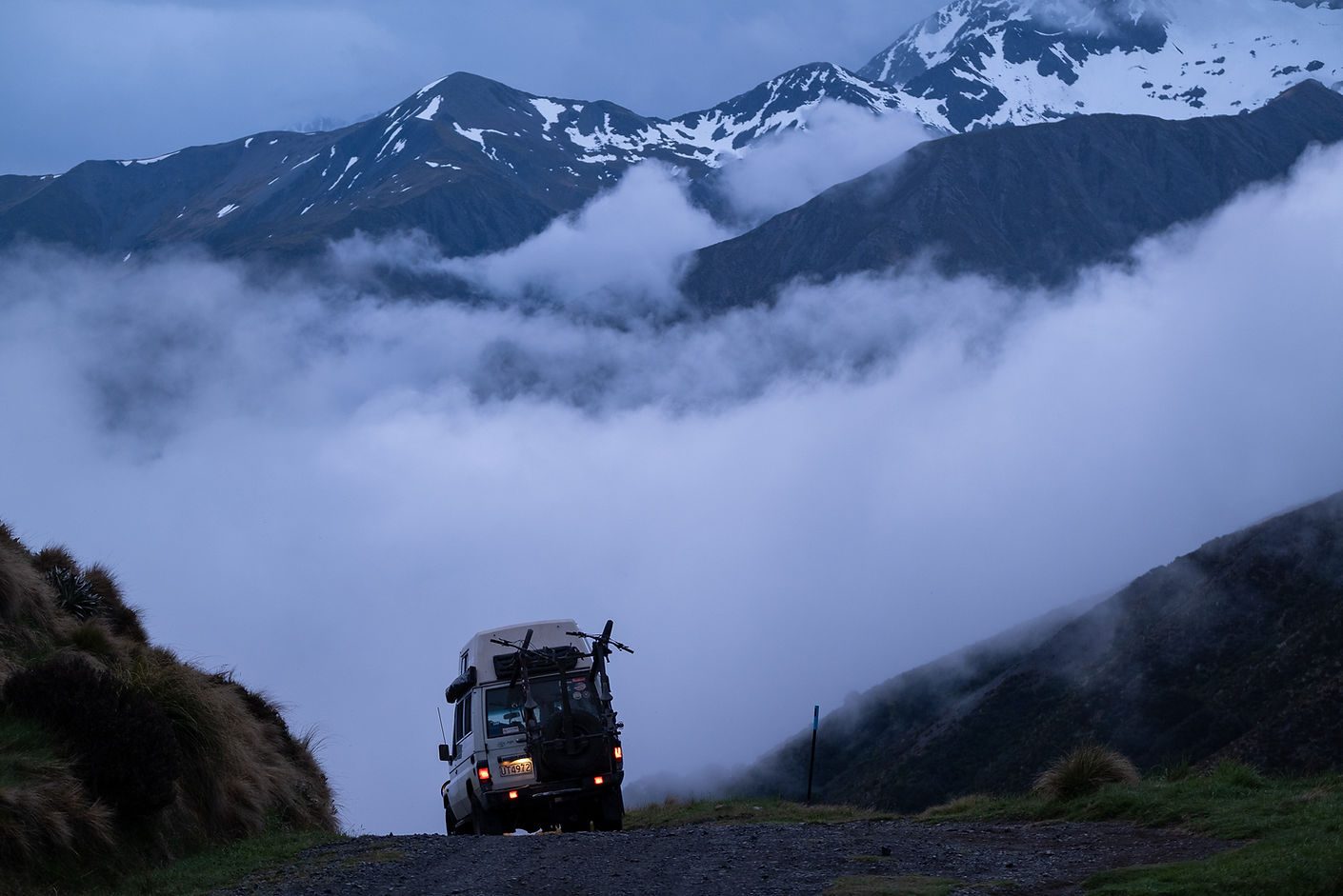
I downshifted the truck and let the old girl roll down the hill, headlights on as we watched the sun dip below the snow-capped peaks. The weather was packing in and the daylight running away, but hey – at least we’d made it outta the city. Plus, we still had beer.
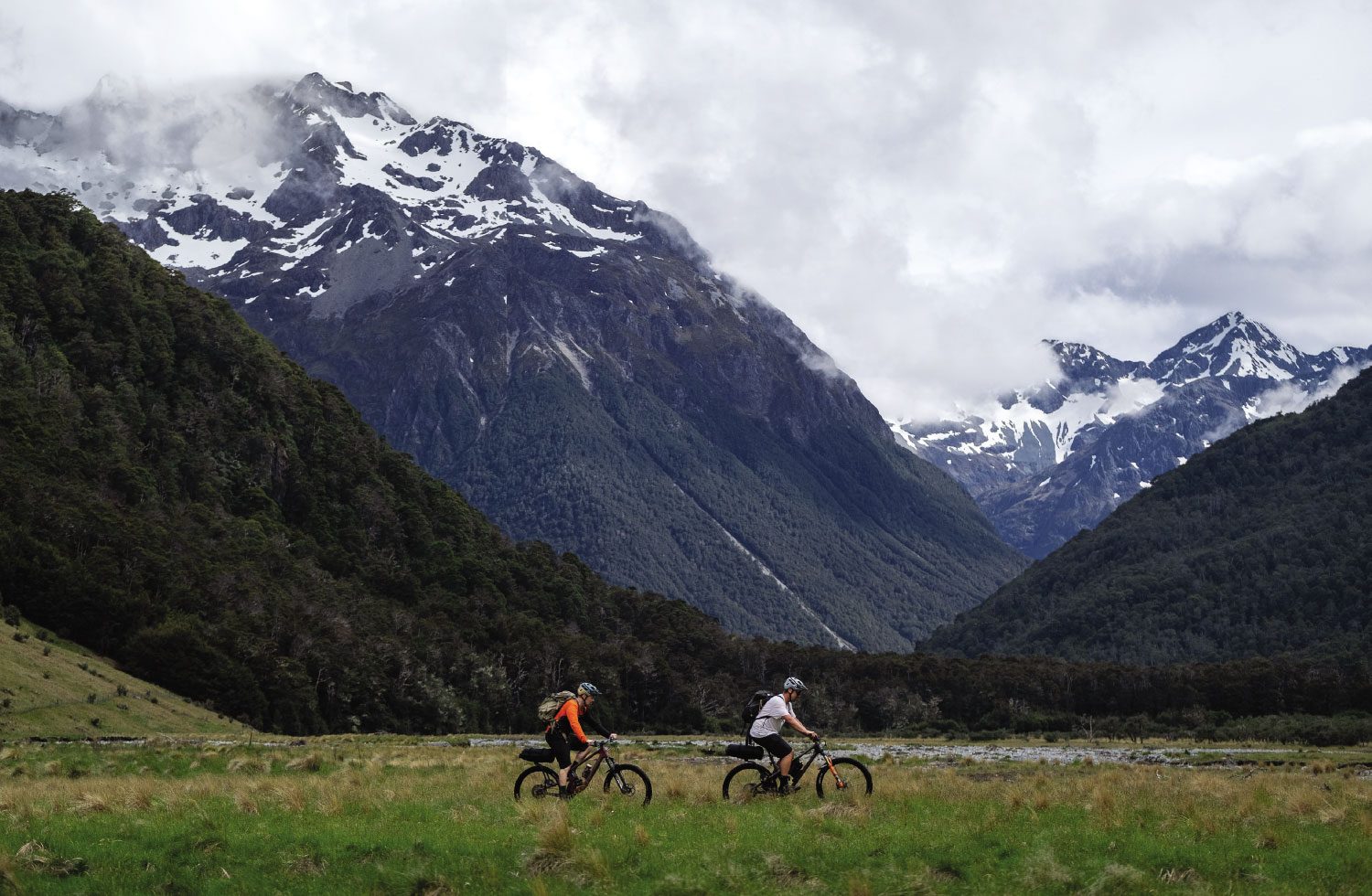
Under the last ounce of light, we parked the old girl up, had a quick shuffle of gear, then strapped our dry bags down to their racks. With our head torches illuminating the way, our road had become a singletrack adventure. New to me for this excursion, was the Aeroe spider rack system. The simplicity of having a drybag strapped to the back of my bike while still maintaining use of a dropper post was a win indeed. With no movement or the admin of having to stop mid-ride and tighten anything up, this product got a thumbs up from me.
I’d never actually ventured into this part of the country before, but Odin assured me I was in for a treat. A narrow goat trail through tussock flat lands carried us away from the carpark and upstream towards the mountains. Navigating seemed a breeze… for the time being.
It’s strange, but for some reason I tend to always be overly confident in my navigational skills. There’s not really any skill set or valid reason to justify why, I’ve just always been the one to charge ahead and find the way. But, as it transpired, navigating from one small orange DOC marker to the next in the dark is a skill I’ve yet to learn. Toppo maps came out and assurances were made that as long as we were heading upstream, eventually we’d reach the hut. Right? Oh yeah, and technically ‘upstream’ also means ‘downstream’, ‘back across stream’ and ‘across that other stream’, too.
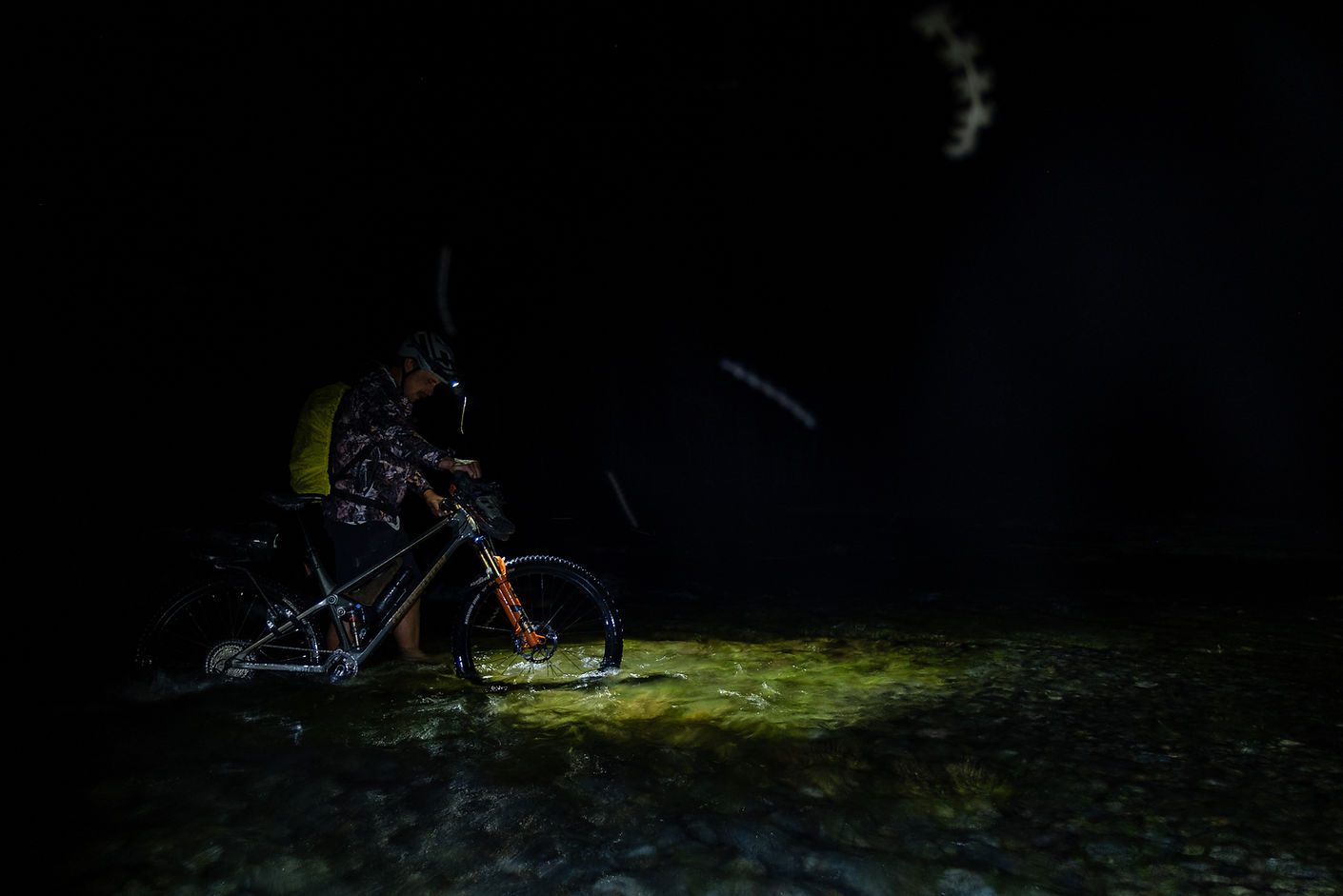
We were, by then, doused in darkness and navigating river crossings, however, the dedication to sustaining dry feet was strong. Our shoes stayed firmly strapped to our handlebars, and socks tucked in our pockets – a decision I questioned as my bare feet felt helplessly for the path ahead, fumbling over rocks and navigating the murky waters one dainty step at a time. It was about then that I reminded myself; ‘it’s not the destination, it’s the journey’. Or was it #notallwhowanderarelost? Either way, the realisation that only a few hours previously I was slinging tools at work and watching the hours slowly tick by, yet now here I was immersed in the wilderness, wading upstream, bike in tow, pushed me further into the unknown.
I don’t know about you, but to me, that’s pure bliss.
Our chosen abode for the night happened to be placed on the Te Araroa trail. We started to broach the subject that there was every chance the hut would be chocka block full of other intrepid travellers, and the question arose of whether we would be pitching our tent in the rain? What was proper hut protocol when arriving late at night? Ah well, I decided that was future Jordan’s problem, and kept the pedals turning.
This was night riding like I’d never experienced it before. To be fair, it was more a combination of multi-sport, orienteering and cycling all thrown into a mixing pot of Type 2 adventure. Mental notes were made on which sections to avoid on our return ride through, and which rock cairns were actually helping us. Somehow, it seemed that each time we’d battle our way through an off-piste excursion, we were only ever metres away from the trail.
Finding ourselves on opposite sides of the river, we reconvened to once again check our course. After a couple of hours of fumbling athletically through the dark, we had success – the hut was in reach and the legs could sense it, so we cranked up through the dank beach forest and summited the last climb. I soon found myself yahooing, taking in the cornflake descent, corners getting slapped, and any feeling of tiredness seemingly having left my brain.
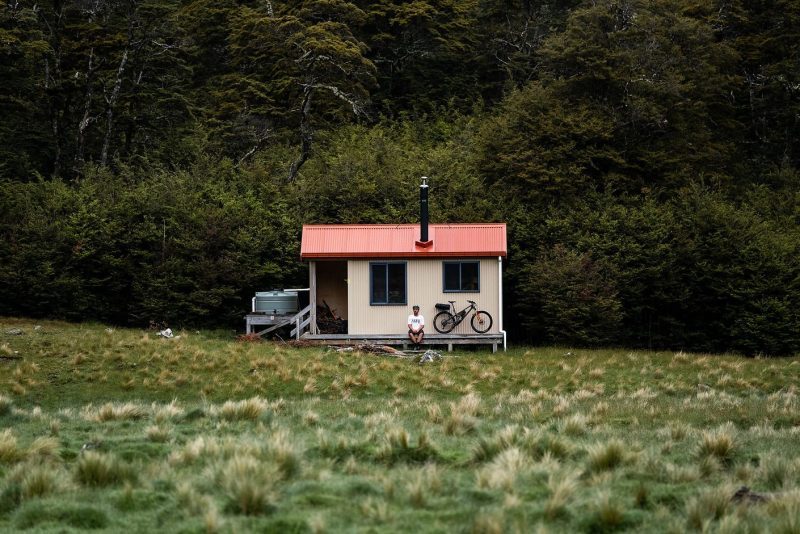
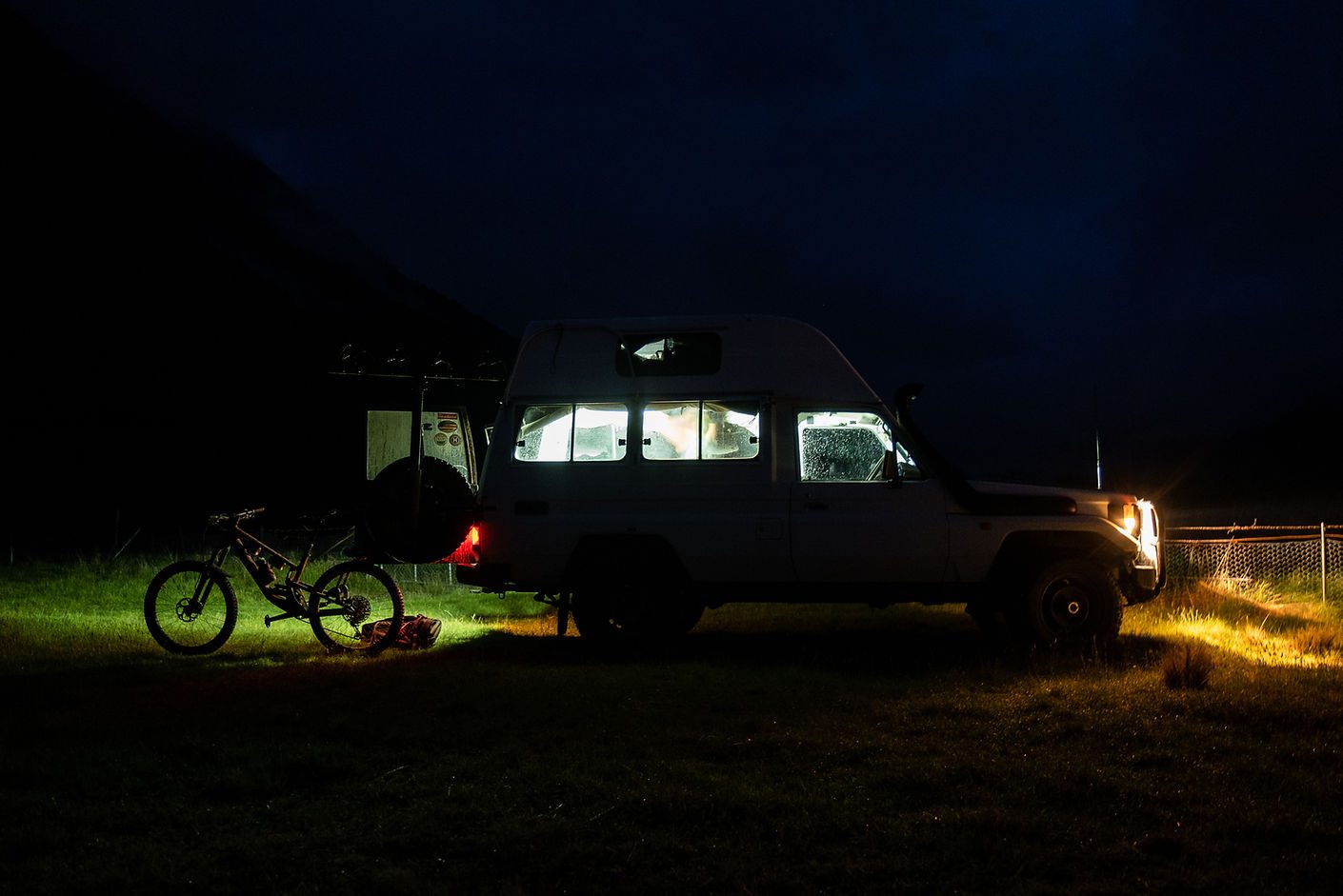
Sliding to a stop, we couldn’t believe our luck – checking, then double checking, then triple checking that we did indeed have an empty hut at our disposal. Yes, an empty hut! We couldn’t believe it; our intrepid trail of cornflakes had led us right to the front door and not a soul was in sight. Our bikes were safely tucked away and, with two simple clicks, my dry bag was released from its cradle. Ahh, that first crispy beer was cracked.
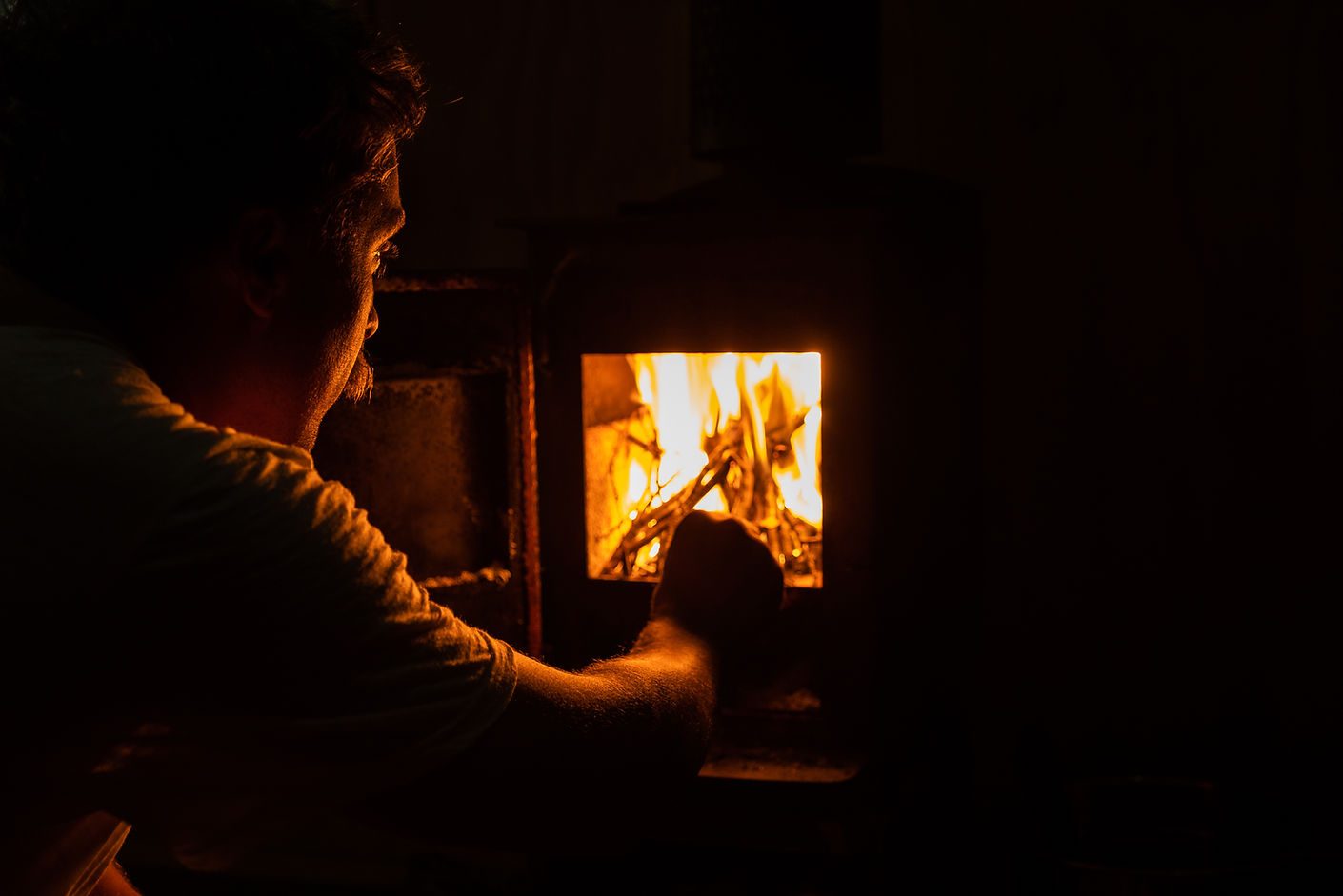
Hut life is an easy life – not to mention, a much-needed change of pace from the standard 9 – 5 back home. It’s the simple things for me: the rhythmic crackle of a fire and the anticipation of a dehydrated meal. We were more than content. This was a heck of a way to spend a Thursday night. With the fire cranking and beverages poured, the quality of our chat started to fade and it wasn’t long before the night slipped away.
The beauty of arriving at 11:30pm the previous night was that neither of us actually knew what to expect of our surroundings when we woke the following morning. Our subpar porridge was inhaled while glassing the numerous slips and clearings, adamant to scan some creatures. This trip, as all of them seem to be these days, was a squeeze in our schedule. It was the sort of trip that, at the time, could have felt rushed and a tad flustered, but that’s when it’s key to remember something like this is always worth doing.
After a morning scanning and exploring the terrain, our bags were back on as quickly as they were unpacked, ready for the downstream trip – which we expected to be an absolute treat. I was quickly humbled by how off track my self-proclaimed mastery navigation skills were the previous night, as the amount of river crossings were halved. The sheer vastness of the valley was hard to absorb.
On any adventure, every positive is balanced with a – sometimes – a small negative. The small negative on this trip was the kind that liked to fly around our faces and bite any exposed skin. Sandflies weren’t going to put a damper on this trip, but boy did they give it a nudge. Luckily for the sandfly population, the majestic sight of the Landcruiser was on the horizon. We’d managed to make it back to the truck in half the time and almost half the distance we’d covered the previous night, but both exploits were just as fun.
Sometimes life needs a bit of spice. Not necessarily the whole Cajun vibe, but maybe more of a paprika hit. It doesn’t take much to mix it up and get out of your environment and into another. Squeeze it in the schedule and get it done. You might be surprised how enjoyable a moonlight ride upstream in the rain actually is.
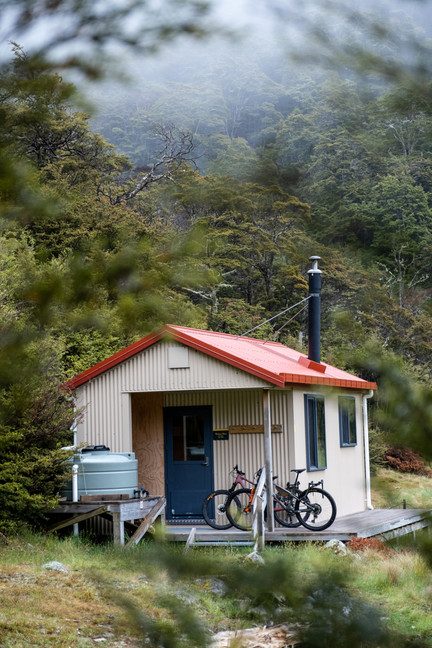
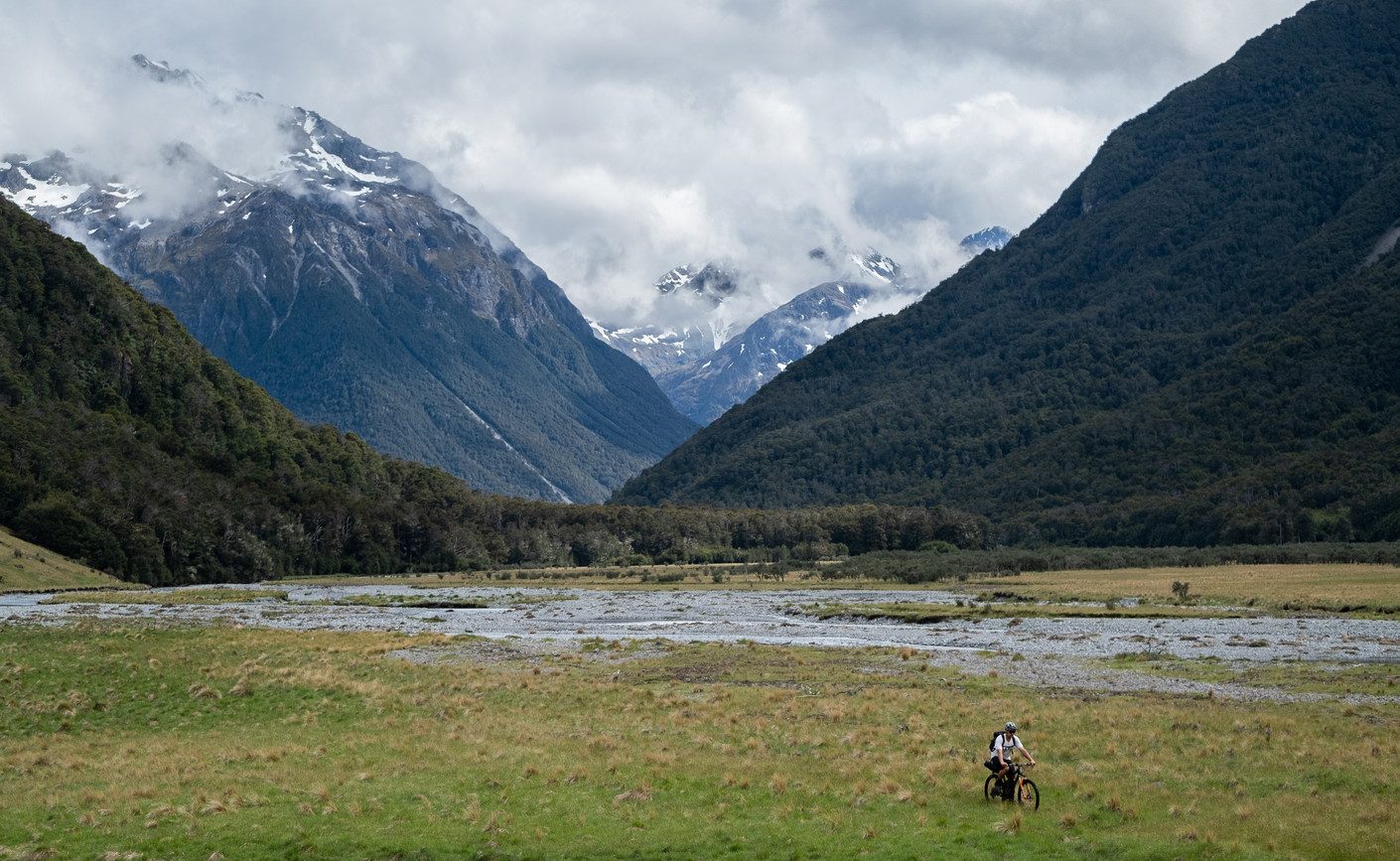
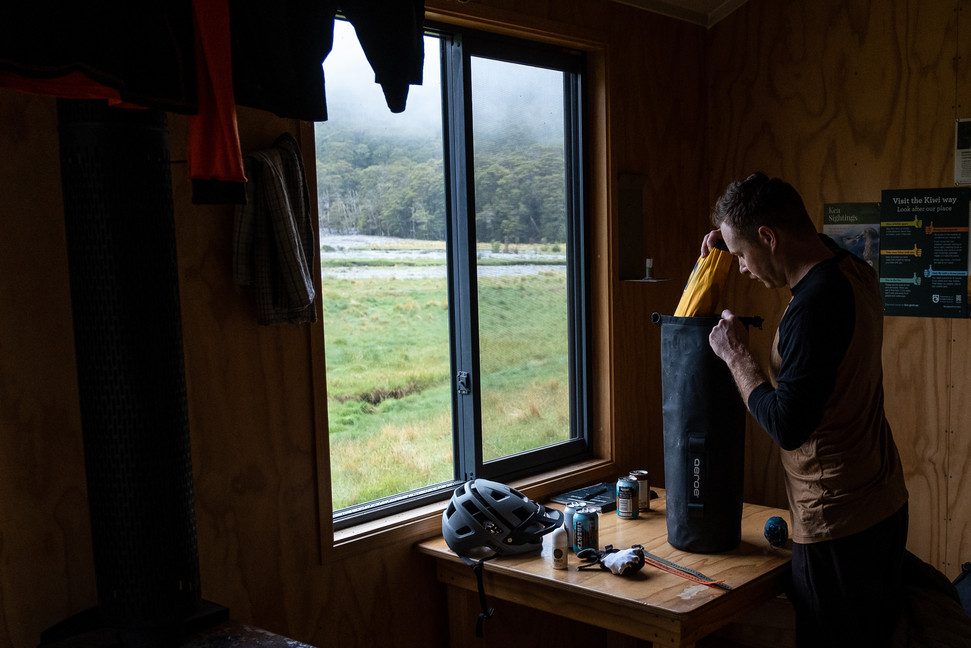
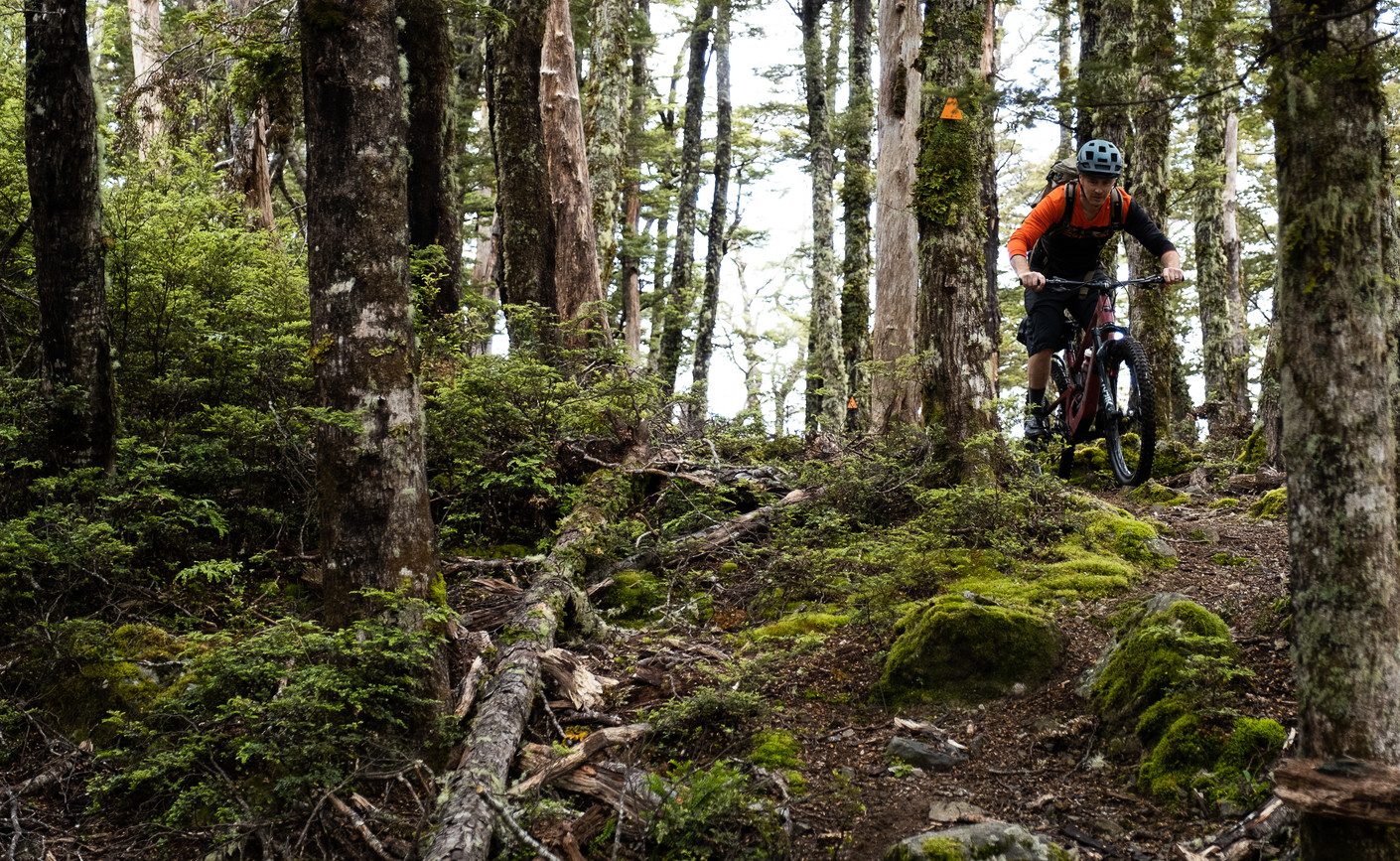
Feature: Reefton Electrified
It’s Wednesday night and the weekend weather forecast at home in Christchurch isn’t looking too flash. Frankly, it’s looking like a winter weekend indoors, which is not going to fly. Two friends are keen to ride, and both itching for a mission after a big work week. With a few days to plan, a quick Google and Trailforks search, what about across the divide? We had heard rumours about epic singletrack in lush beech forest, untouched by time. The rumours and online presence are vague enough that there’s still some mystery about the trails -enough to push the intrigue and excitement up towards committing to check it out. A weekend warrior mission to better weather on the other side of the Alps, to the wild West Coast, in search of new trails unridden and maximised riding time. With a twist to our usual bike adventures, this time we’d be electrified. It might have been a gamble, but as the region’s history goes, we could end up striking some gold.
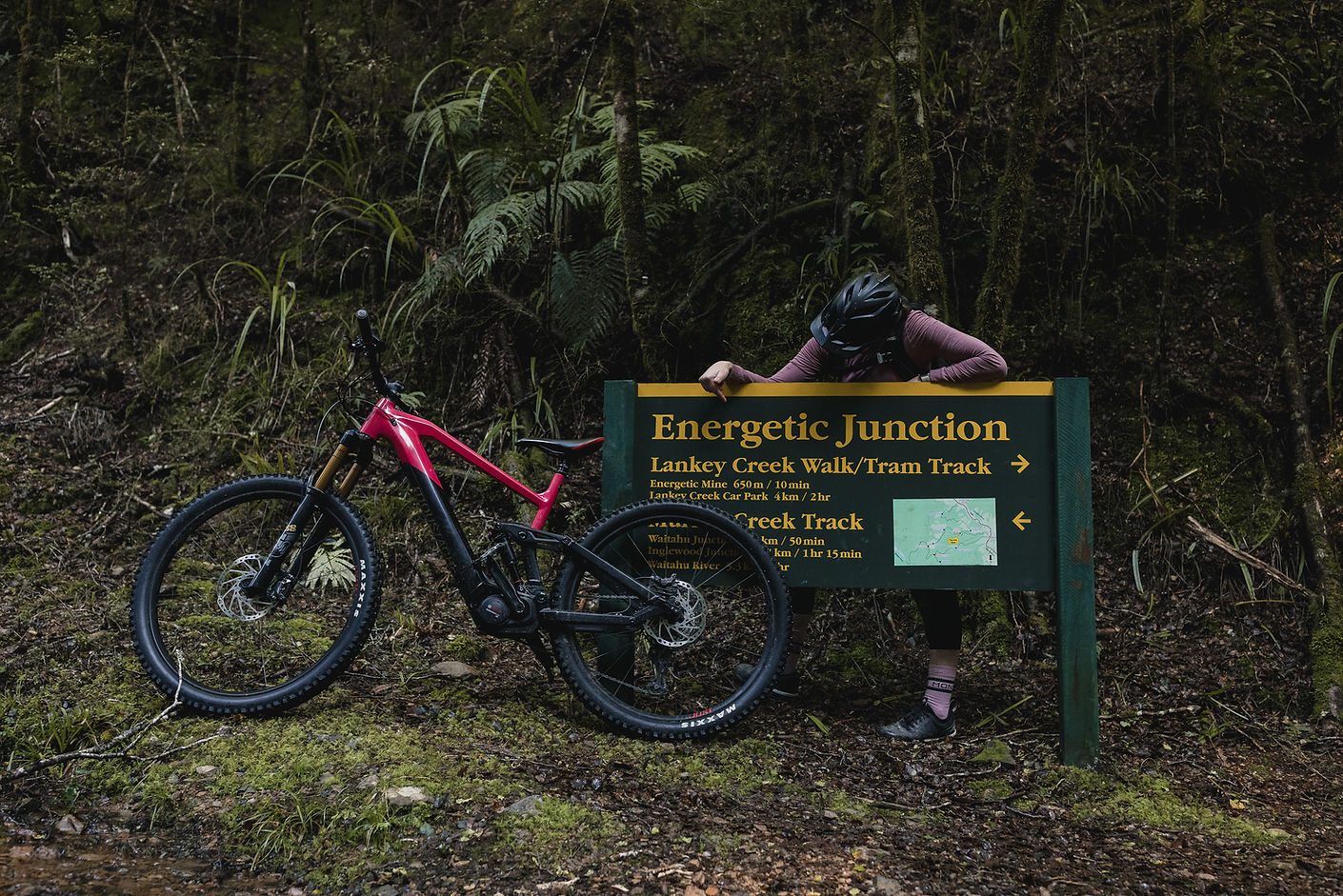
Reefton, located on the South Island’s West Coast, may be small in terms of population (927 people at the last count) but it’s always been ahead of its time; big on technology and innovation. A gold mining town established in 1870, Reefton was the first place in the Southern Hemisphere to have a public supply of electricity – beating even London and New York to the switch in 1888 – and the first to have an electric street lighting system. Pretty mind-blowing to think this sleepy West Coast town was a pioneer before the world’s major cities. Given all its history, it’s more than fitting that Reefton should now be experiencing an electrified renaissance and quietly becoming a must-visit eBiking destination.
Surrounded by the Victoria Conservation Park, with 180,000 hectares to be explored, the mountain bike trails range from Grade 2 for beginners to Grade 5 for the more experienced. It’s a stunning setting and you can’t help but enjoy the rugged beauty of the place as you make your way along old mining trails and up through ancient beech forests. Time could well have been standing still for the last hundred years or so, everything feels so untouched, and the old mining relics left lying around are a constant reminder of the history of this region and its tough, pioneering spirit.
Kirwans Track is one of the best-known trails and the main draw card bringing mountain bikers to the town but traditionally it is the domain of the hike-a-bike enthusiast with an overnight hut stay that requires the unique kind of endurance and commitment which can be hard for your average weekend warrior to muster. A long, steep Grade 5 track, gruelling on the uphill, technical on the downhill, Kirwans has a hardcore reputation which, in the past, had many riders choosing to skip the climb and take a helicopter to the top. And then came another ‘lightbulb’ moment: this place is perfect for eBikes.

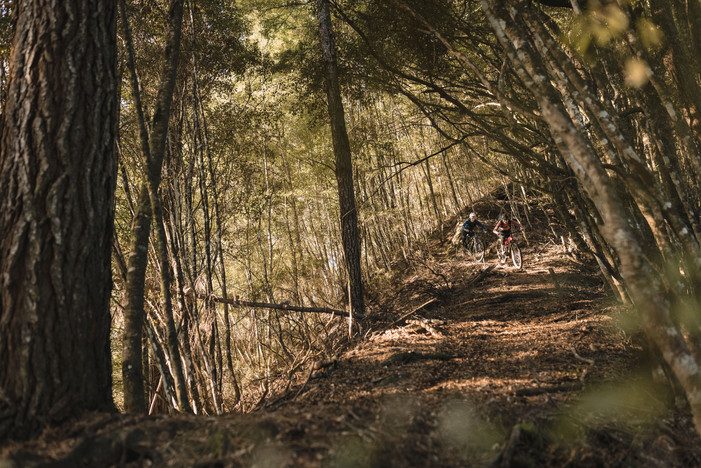
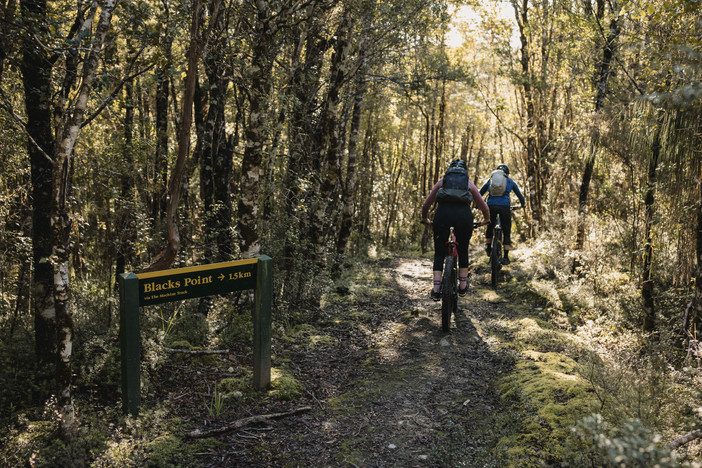
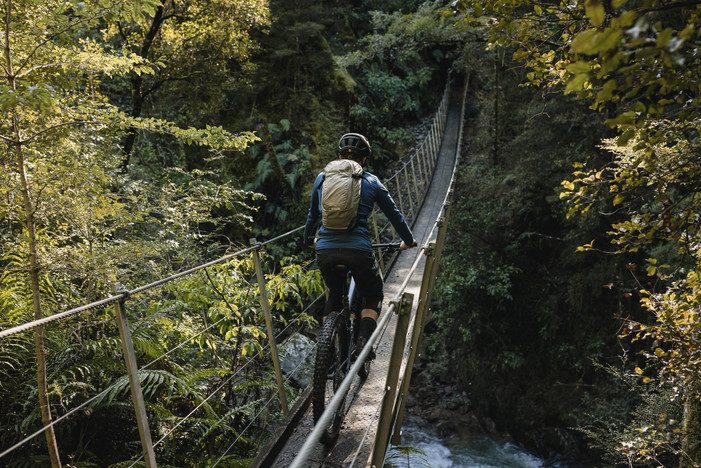


Don’t get me wrong, I don’t actually mind a steep climb - or even carrying my bike from time to time - that’s just the price you pay to get to the best tracks. But, for this particular mission we’d be riding the whole way, thanks to a couple of Bosch-powered Moustache Game 9 and Game 8 bikes we were lucky enough to have at our disposal for the weekend - they’re just the right tool for the job.
Like a lot of mountain bikers, I like an adventure and when the crew and I go on trips, we tend to look for destinations or trails that offer a few challenges, whether it be the technicality of the riding or the difficulty in accessing it. Reefton has tended to be the kind of place we just keep missing; with opportunities closer to home like Craigieburn, or up to the north and down to the south, we rarely stop to explore the pockets in between. But along the way we’d heard lots of murmurings both about how good Kirwins is, and about Reefton being a cool little hub for accessing other trails and some unique natural spots. Finally, the stars had aligned to make the mission to Reefton happen.
We loaded up on Friday afternoon, heading straight out of Christchurch for the hills and through the Lewis Pass. Coming through the pass and arriving at Reefton, you can see the rolling hills coming down from the Alps and why this terrain is built for riding.
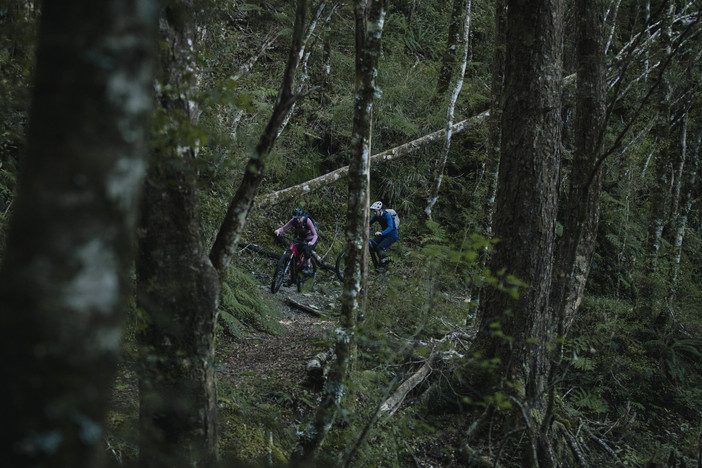
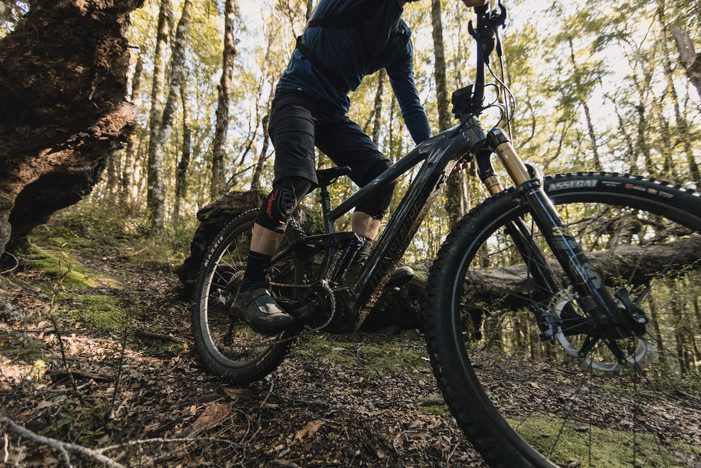
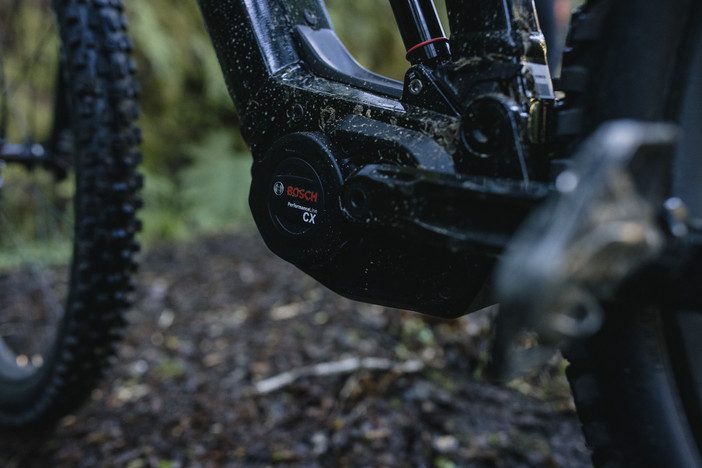
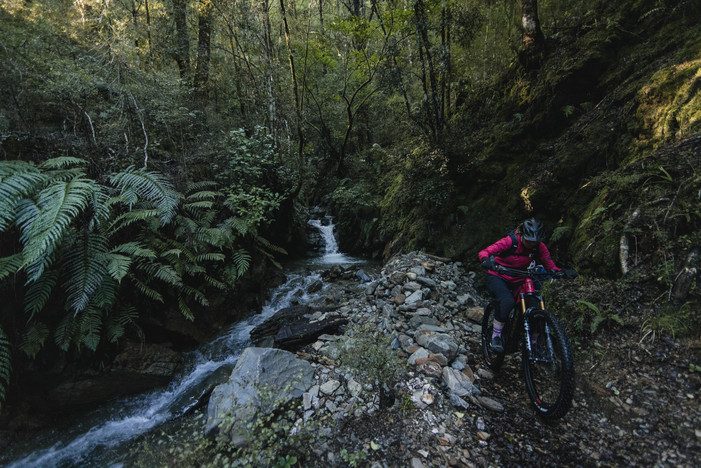
As it happens, there was a major flaw in our plan: Kirwins was closed, another victim of the extreme weather events of recent months, and impassable thanks to multiple slips and tree falls. While we were disappointed not to be able to take on this beast - we’d come well equipped for the job after all – there turned out to be a silver lining as we were forced to seek out another place to ride. These hills have turned up gold before and, in our case, it comes in the form of a different, but equally testing, spot called Blacks Point.
Only a kilometre or so out of town, Blacks Point offers up some classic old-school mountain biking in all its raw and rugged glory. We found ourselves getting lost and having to find our way again; it’s hard, it’s steep, and it’s super gnarly with 550m of elevation gain straight out of the car park. It’s also super fun on eBikes.
The main track goes upwards for about seven kilometres before splitting off at the top and running back down. It would be fair to say that on an analogue bike there’d be a fair bit of pushing, grovelling and sweating, and either wishing you’d packed a second sandwich or stayed behind to check out the Reefton Distillery instead. On this day, however, we had assistance from the Bosch eMTB mode, which helped with hitting the right cadence to get to the top and makes the climb enjoyable. The Performance Line CX motor worked quietly below, giving us the assist needed so the uphill was not so much of a grind. I still got the heart rate up, without destroying my legs.