

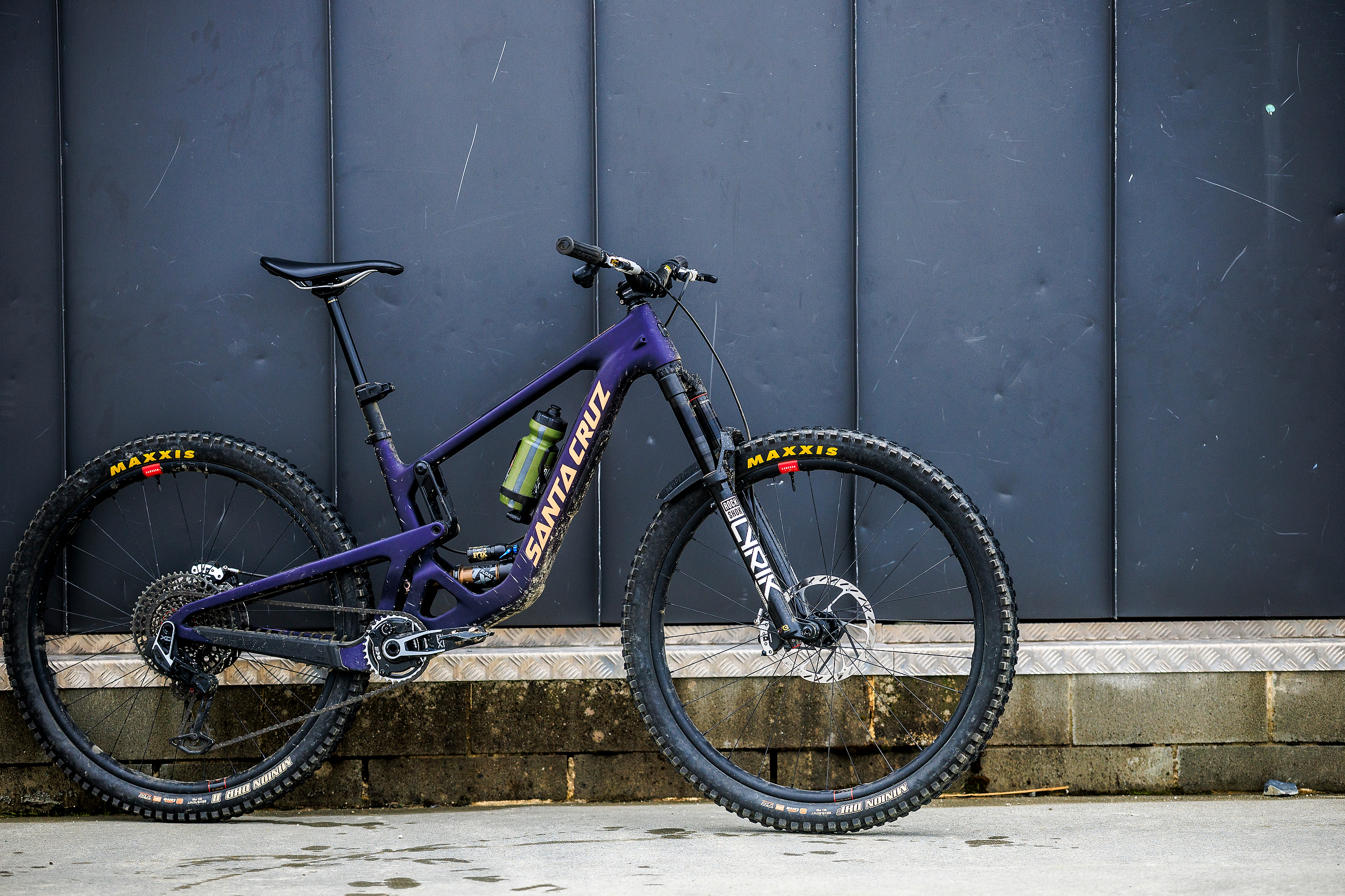
SRAM Maven B1 Brakes
Words Liam Friary
Images Callum Wood & Sven Martin
It wasn’t that long ago that the original Maven launched. Two years on, extensive feedback from World Cup racers, everyday riders, and bike brand partners has shaped the next generation. The result is a brake that feels more intuitive, more controllable, and more confidence-inspiring whilst not replacing the ethos of the original Maven.
The biggest change in the updated Maven is a redesigned SwingLink, the internal cam that controls how power builds as you pull the lever. To appreciate why it matters, it helps to understand what the original Maven was doing in the first place.
The first-generation Maven (A1) used a low starting leverage ratio, designed to minimise deadband. You know that brief dead zone at the top of the stroke before anything happens. The result was a very short, snappy feel – pull the lever and the power is right there. It was all brake, all at once, which some found getting used to. For me, initially it was full on, then I got used to it. But it was either on or off and not much in between. That low starting rate is what created the A1’s distinctive ‘cam-over’ feeling – a magnetic, almost binary engagement. In the field, some riders liked it and others didn’t.
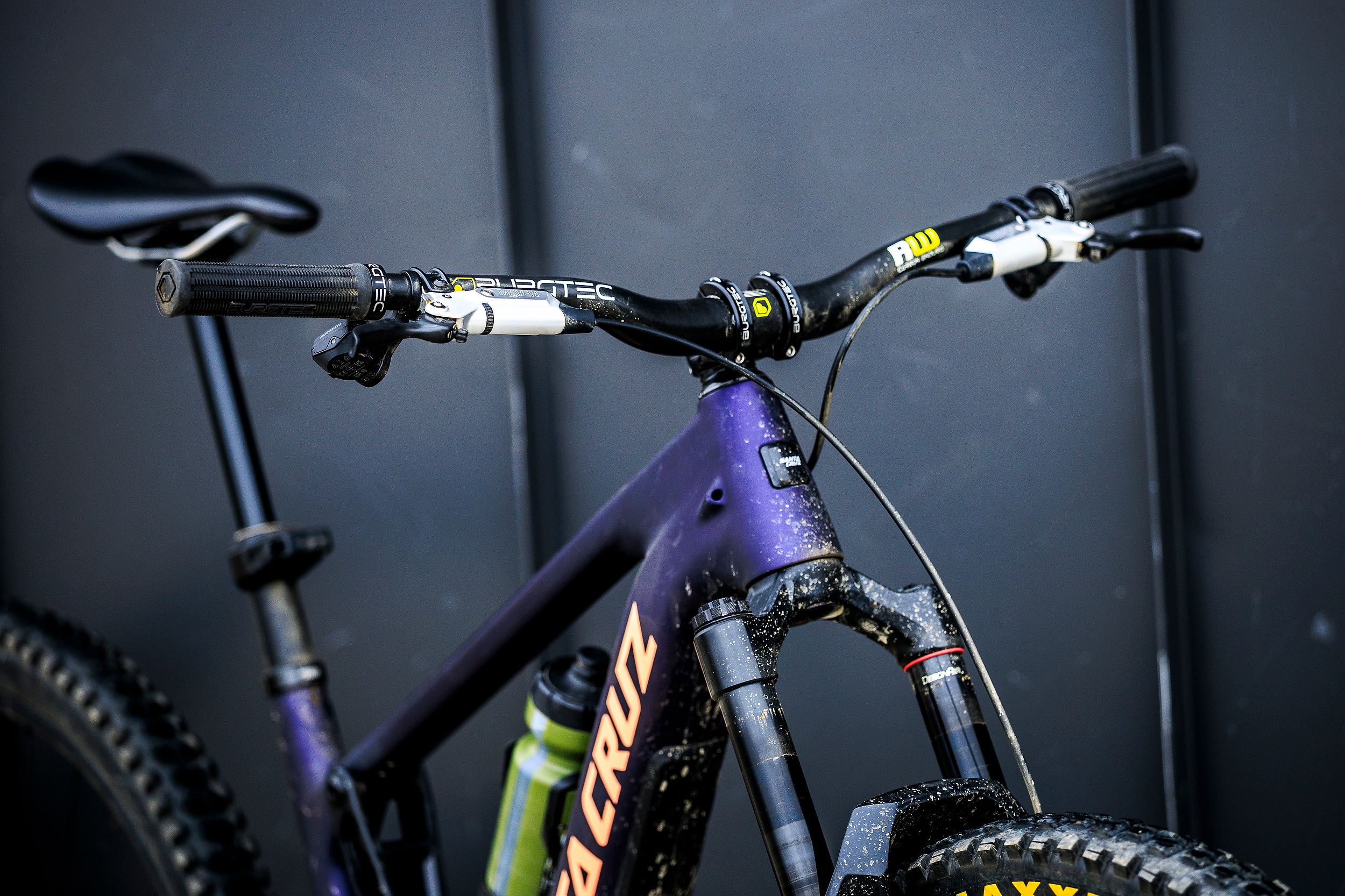
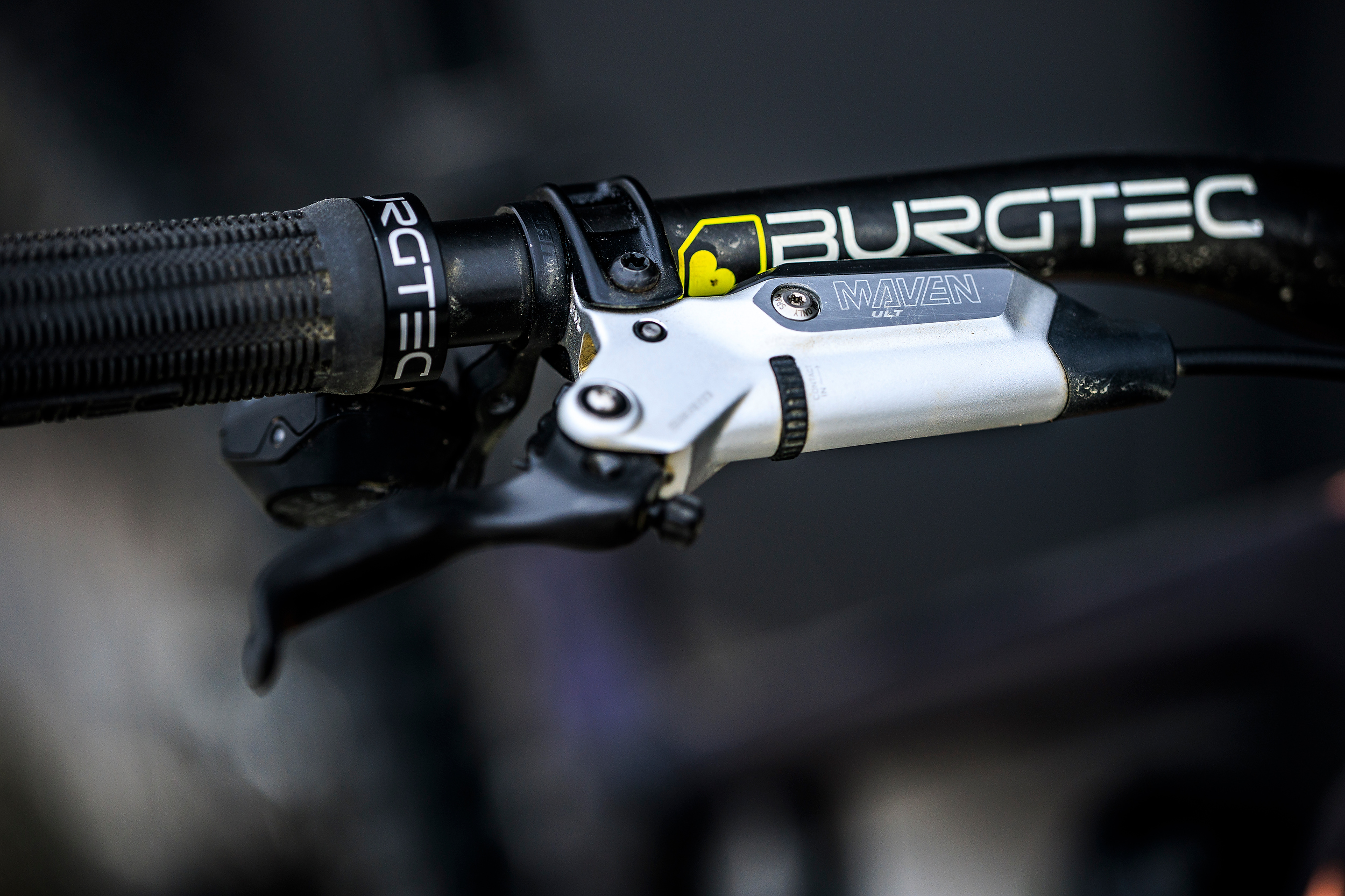
However, Maven Base sits at the opposite end of the spectrum. Rather than a SwingLink cam, it uses a simpler DirectLink lever architecture for a very light, linear feel from the top of the stroke all the way through. There’s a touch more deadband than the A1, but the unhurried, progressive character was widely appreciated when it launched quietly alongside the Maven lineup. Its positive reception was a big part of what motivated SRAM to rethink the SwingLink-equipped models.
The new B1 SwingLink finished in gold to distinguish it from the original red cam, splitting the difference between those two approaches. The initial breakaway force drops from 8 Newtons on the A1 to 4.25 Newtons on the B1, nearly halving the effort needed to get the brake moving. That lighter engagement flows into a smoother, more linear leverage curve through the mid-stroke, where most braking actually happens. Then, at the end of the stroke, the leverage ramps up again to ensure full peak power is still there when you need it. The three goals SRAM set for the project were more control, more predictability, and the same power. The B1 SwingLink delivers all three.
Reworking the SwingLink had a knock-on effect that needed managing. A higher initial leverage ratio means more mechanical advantage at the point of pad contact. Put simply, left unchecked, the B1 would have bitten harder at initial contact than the original Maven, which clearly isn’t the goal. To balance this, SRAM made a deliberate change to the caliper.
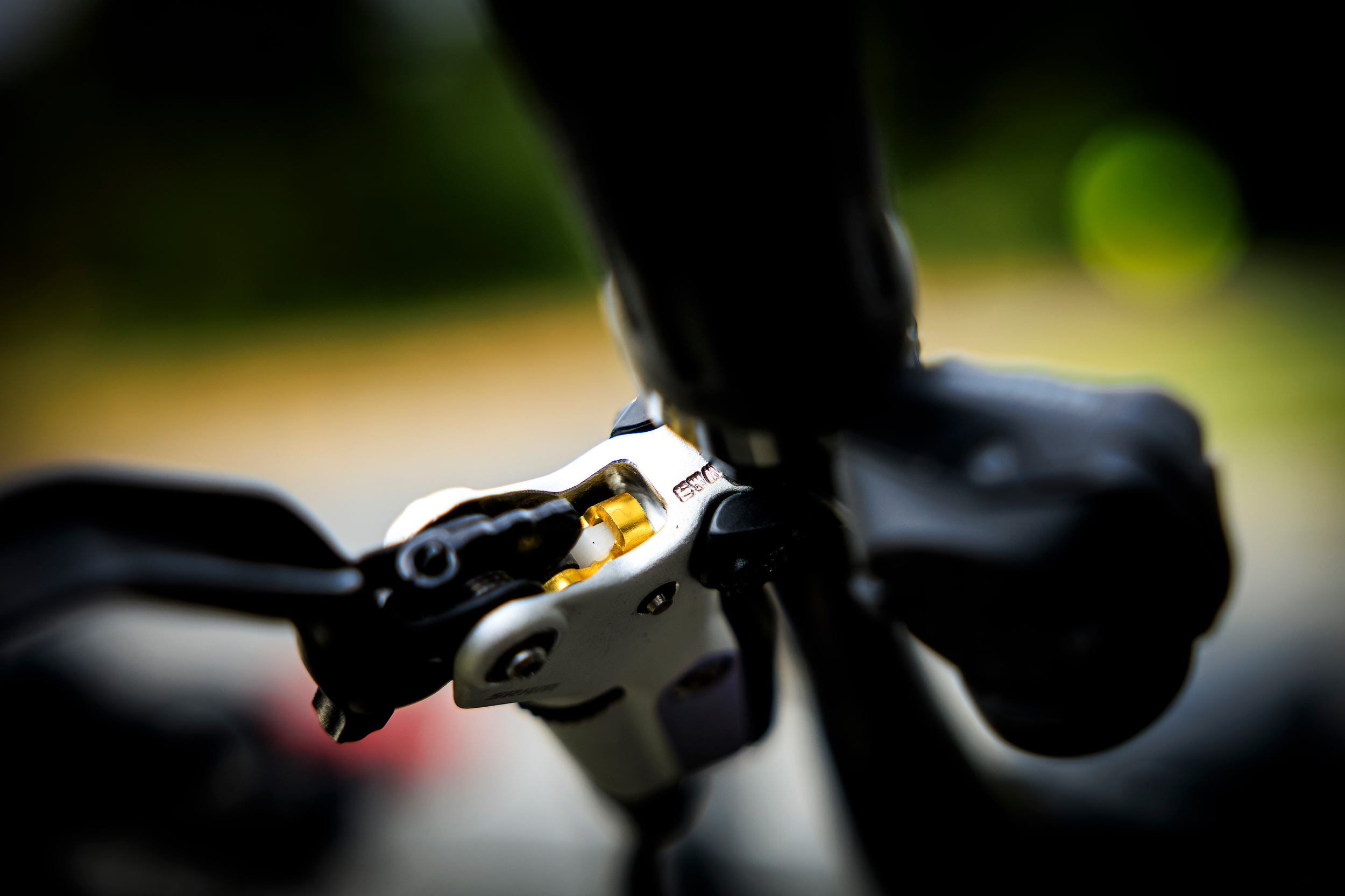
The original Maven A1 caliper used two 18mm pistons and two 19.5mm pistons. The B1 moves to four 18mm pistons, the same layout as Maven Base. The slightly reduced hydraulic ratio at contact offsets the higher mechanical advantage from the new cam, so the overall feel at pad engagement is more controlled and predictable while peak power remains the same. As the SRAM engineers put it, they’re still baking the same cake; they’ve just adjusted the recipe.
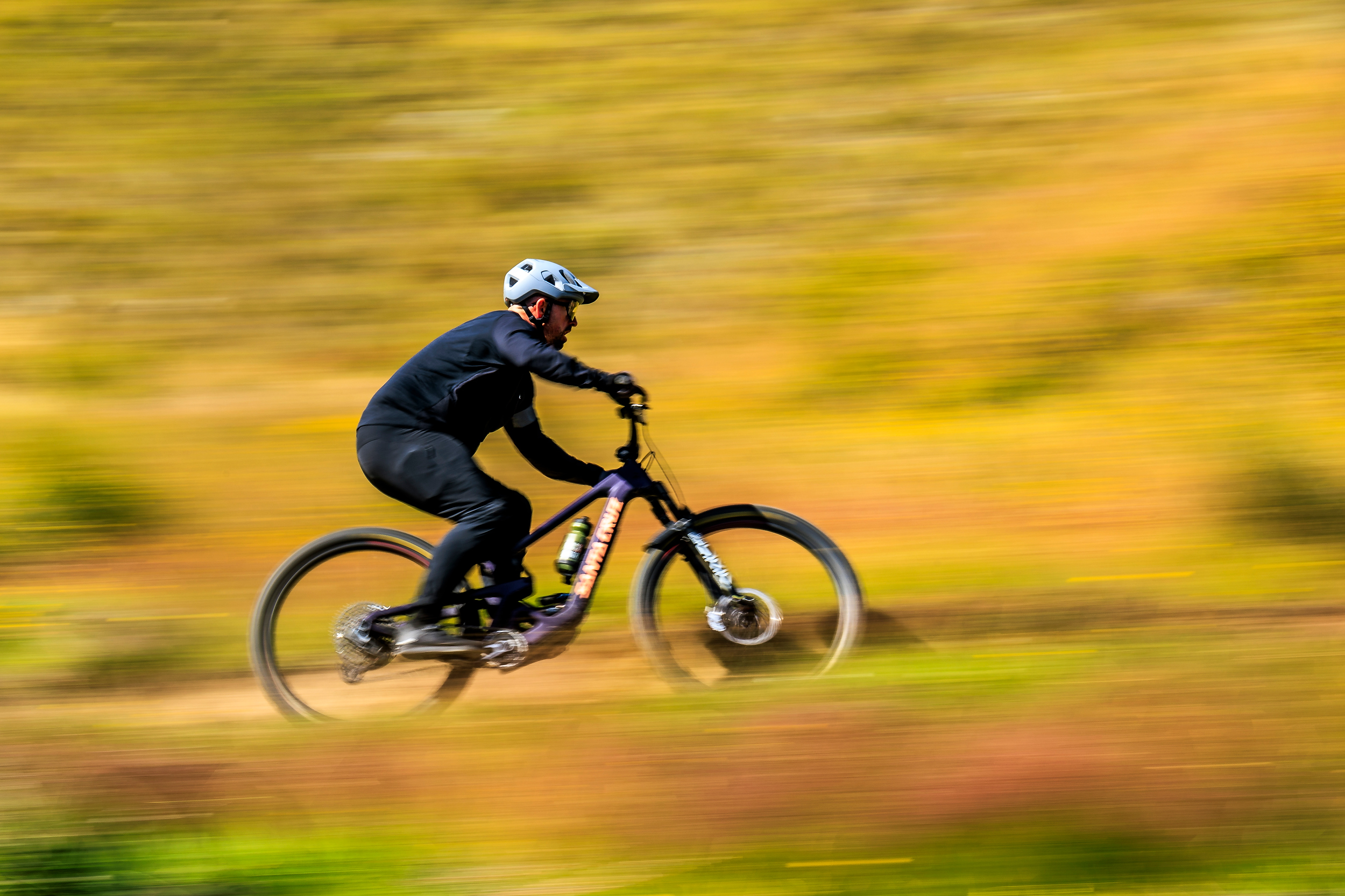
I’ve been running the Maven Ultimate B1 on my Santa Cruz Hightower for just over a week. The lever feel is solid and confident, with a noticeably more graduated build through the stroke compared to the A1. You can feel exactly when the pads make contact with the rotor, and that modulation is consistent every time you pull. Where the original Maven could feel confronting – all-on or all-off, particularly in the first few rides – the B1 builds into its power more smoothly. It’s still a seriously powerful brake but just gives you more time to work with it.
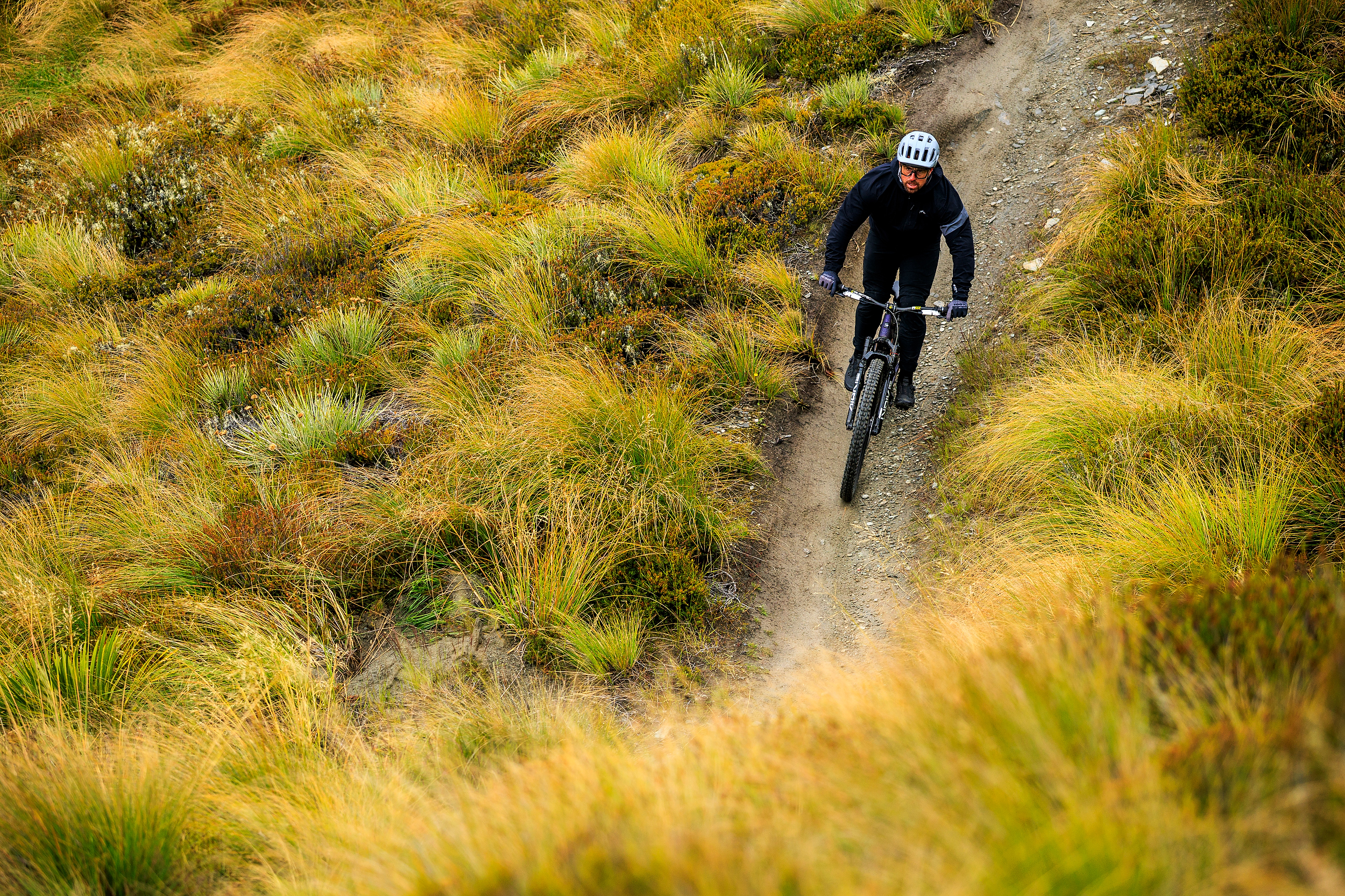
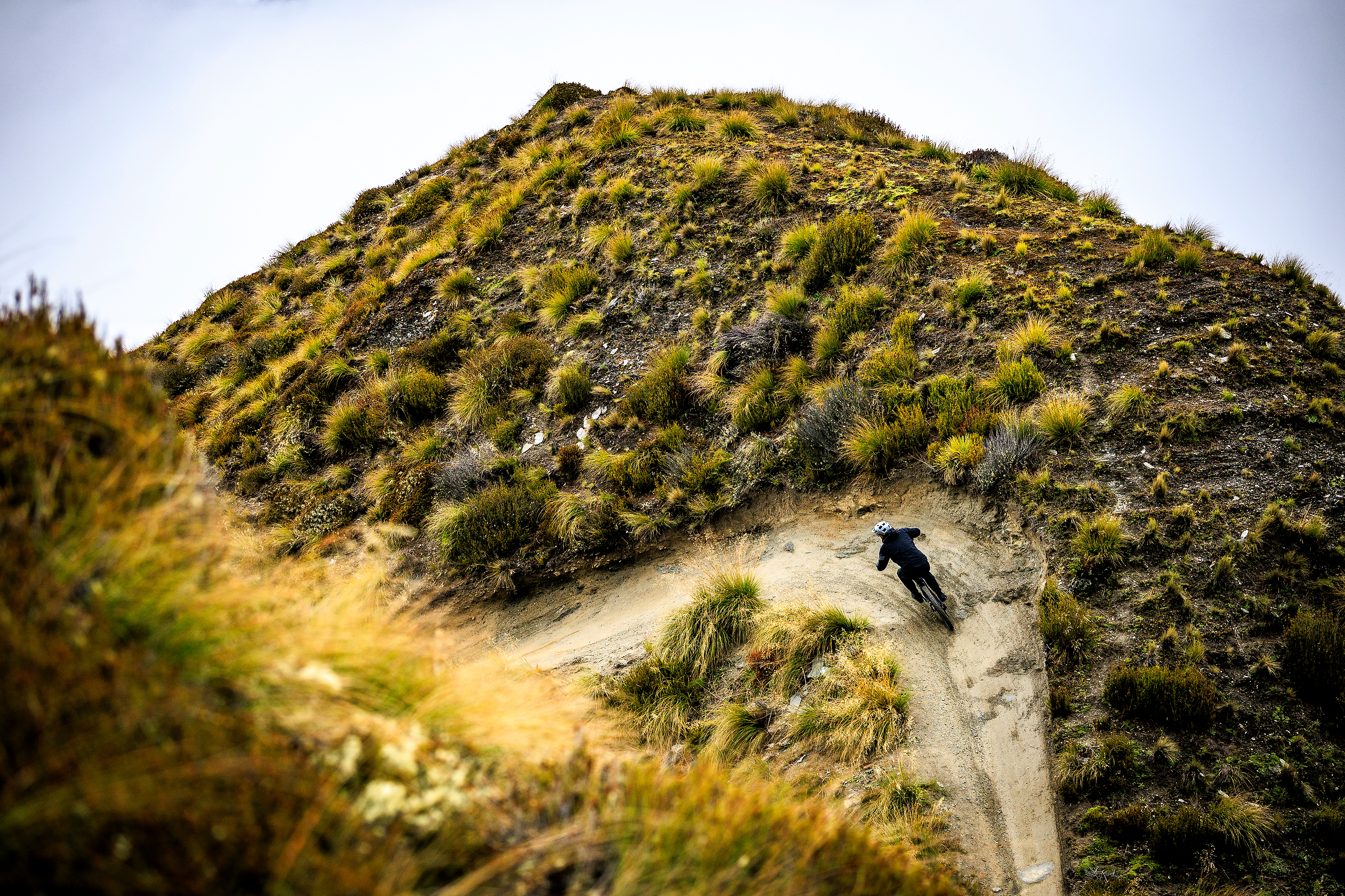
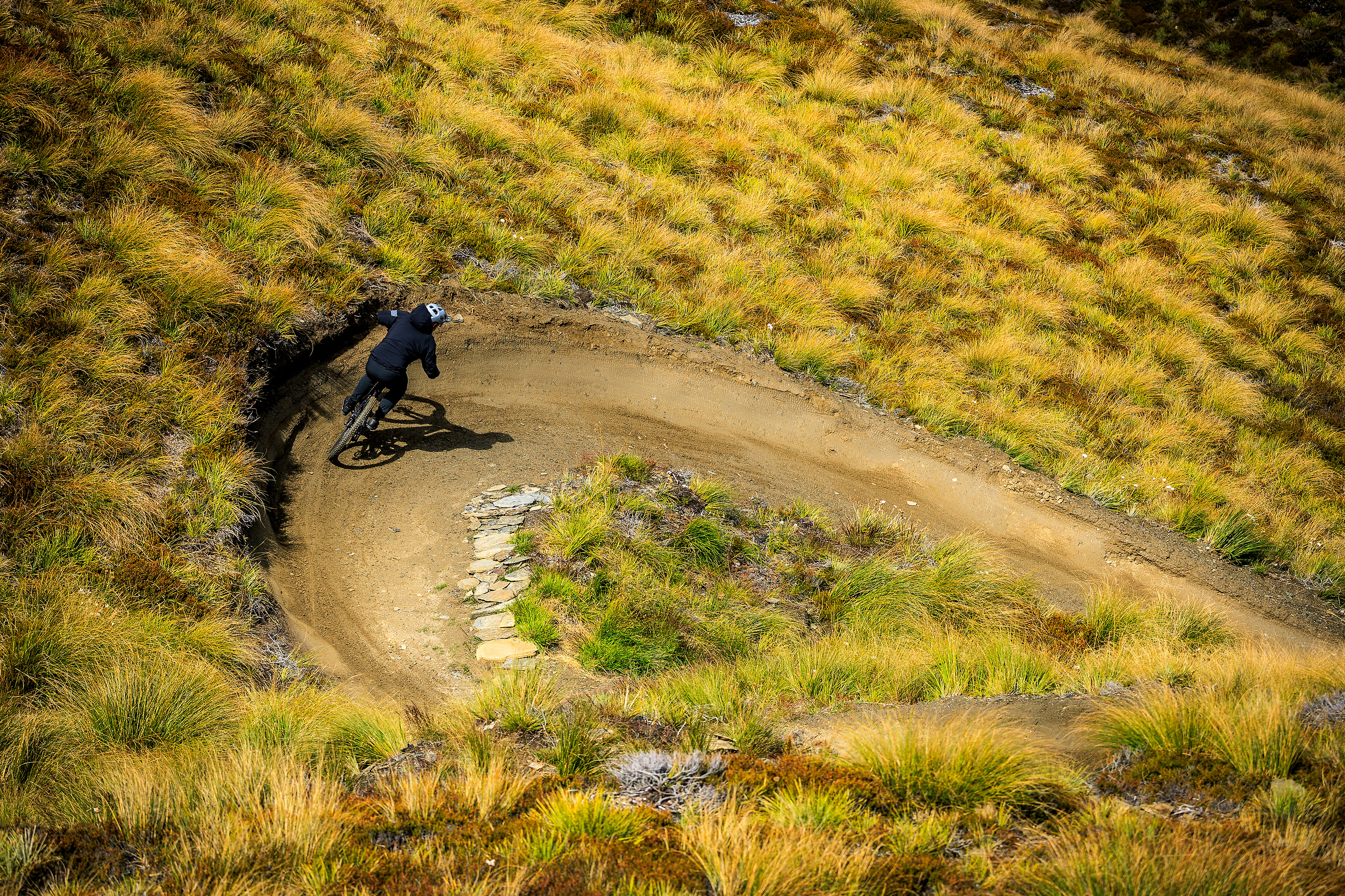
Most of my testing happened during a week of riding in Queenstown, and on longer descents where other brakes have started to fade or lose feel, the Maven kept doing its job with the same character from top to bottom. Heat builds in the oversized caliper, but by design it dissipates slowly and evenly, keeping brake feel consistent throughout. On more technical, slower sections of trail, the improved control and modulation allowed for better precision; I could pick my way through with more accuracy and less guesswork than I’d had on the A1. During testing, I had a slight fall that resulted in a cut palm and a sprained wrist. I still had a few days to go and was thankful for the better control and modulation, especially with my sore hand. Put simply, I had better, precise, and accurate brake control.
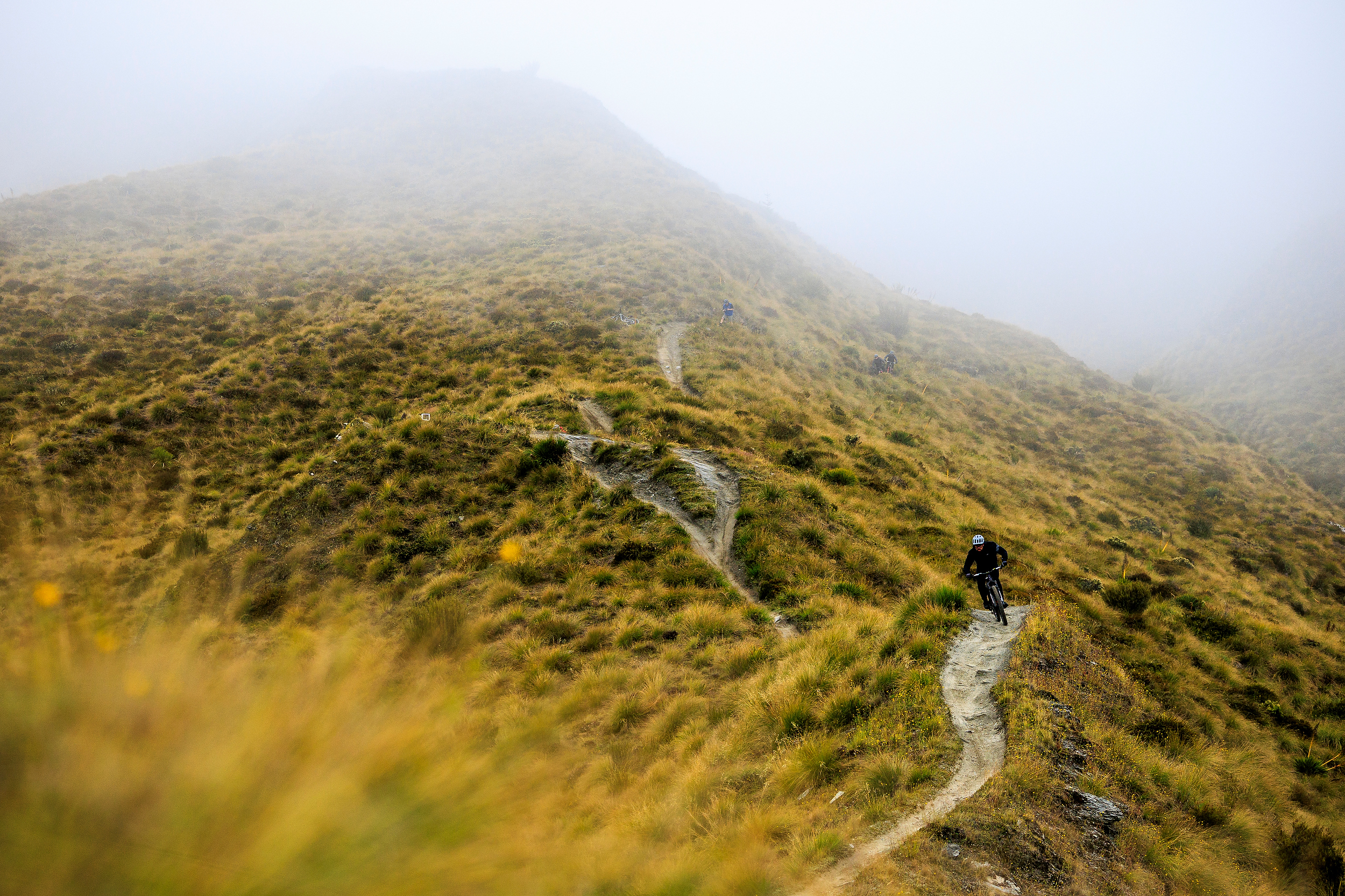
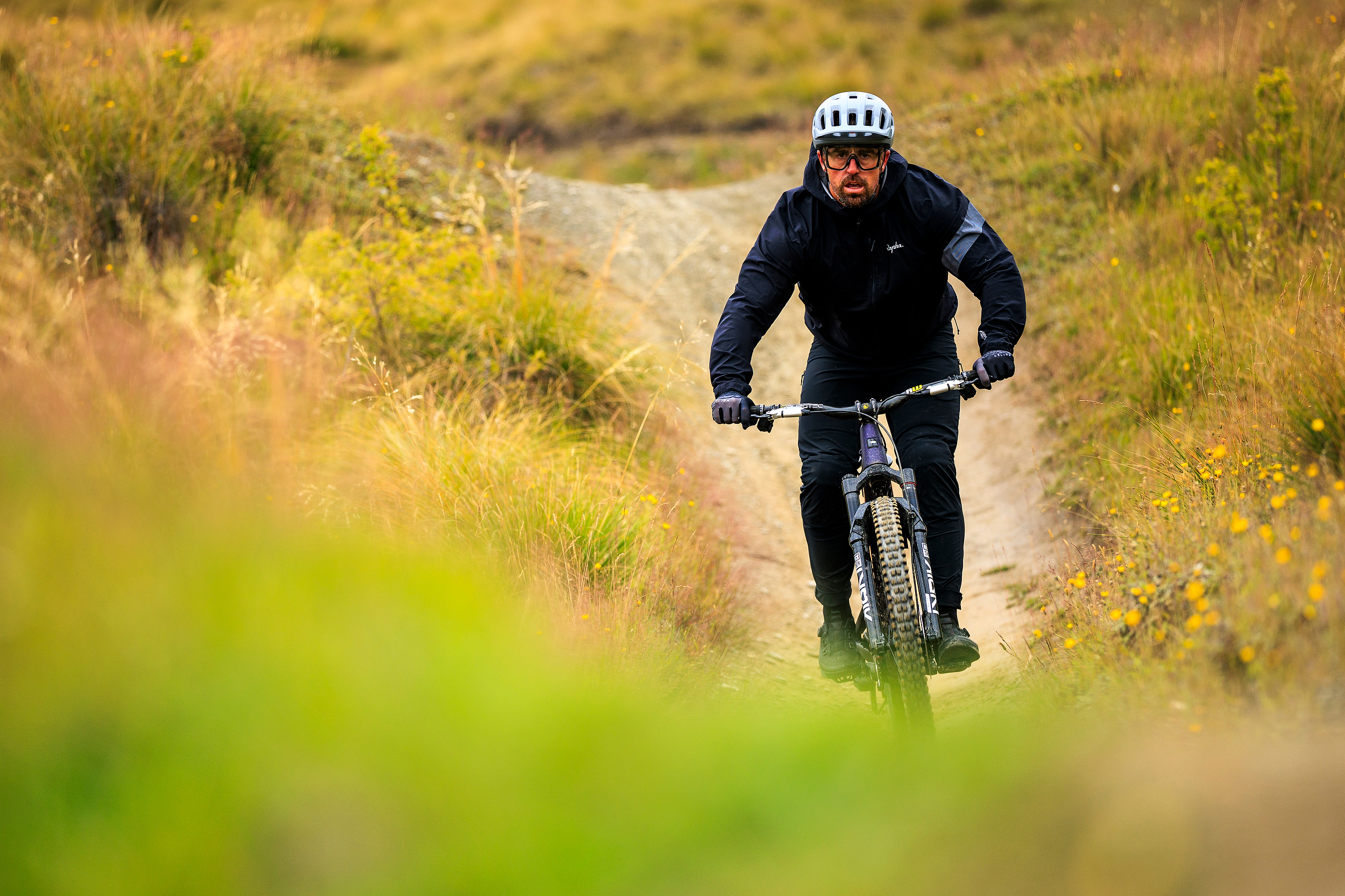
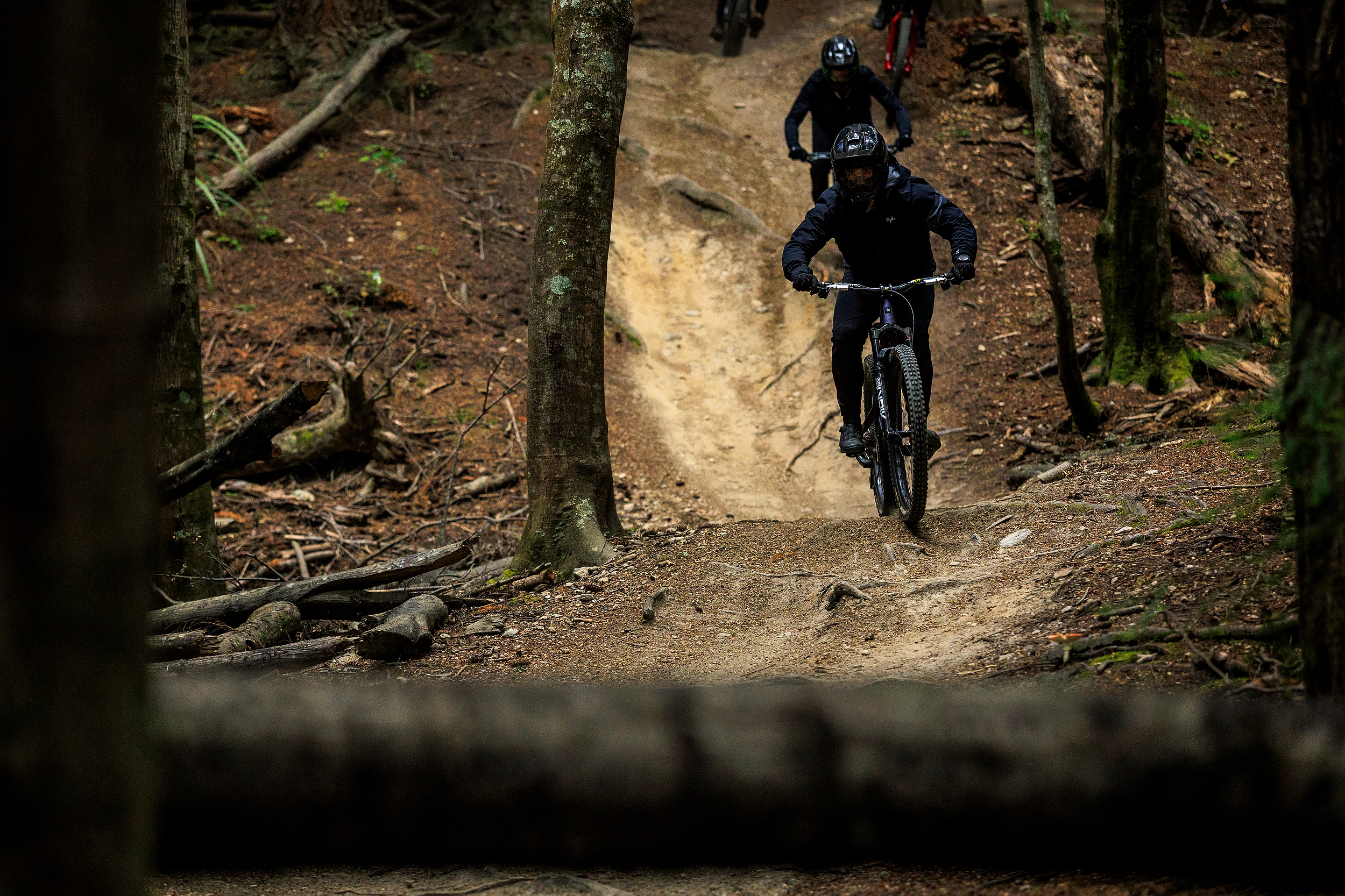
Brakes are quite subjective. If you prefer short, snappy engagement of the A1, the B1 is a different animal. But the wider usability window is hard to argue with, and I’d expect riders who struggled with the A1’s abruptness to find the B1 a much more natural fit from the first ride. This was certainly the case for me.
The Ultimate sits at the top of the Maven range and earns its place there. Carbon lever blades replace the forged aluminium of the previous version, giving a familiar tactile feel while performing better in cold conditions. Maven Silver receives a new forged and CNC-machined aluminium blade with a precision weight-saving cutout, while Maven Bronze gets a forged blade as well, a meaningful step up from the previous cast construction. The Ultimate’s caliper features machined edges and titanium hardware. Reach and contact point adjustment are both tool-free, so dialling your setup takes seconds rather than digging out an Allen key.
One of the most considered aspects of the B1 update is that it’s fully backwards compatible with any existing Maven Ultimate, Silver, or Bronze. These are called tuning kits, not upgrade kits. Clearly, making a line in the sand between the two Maven brakes. The A1 (original) is not obsolete and that’s a good thing in this throwaway world!
The new SwingLink and lever blade are available as a tuning kit – no bleed required. All the changes happen on the dry side of the brake. Two T10 Torx bolts remove the lever, a pin punch (the T10 tool included in the kit works for this) pushes out the SwingLink, and the whole assembly swaps cleanly.
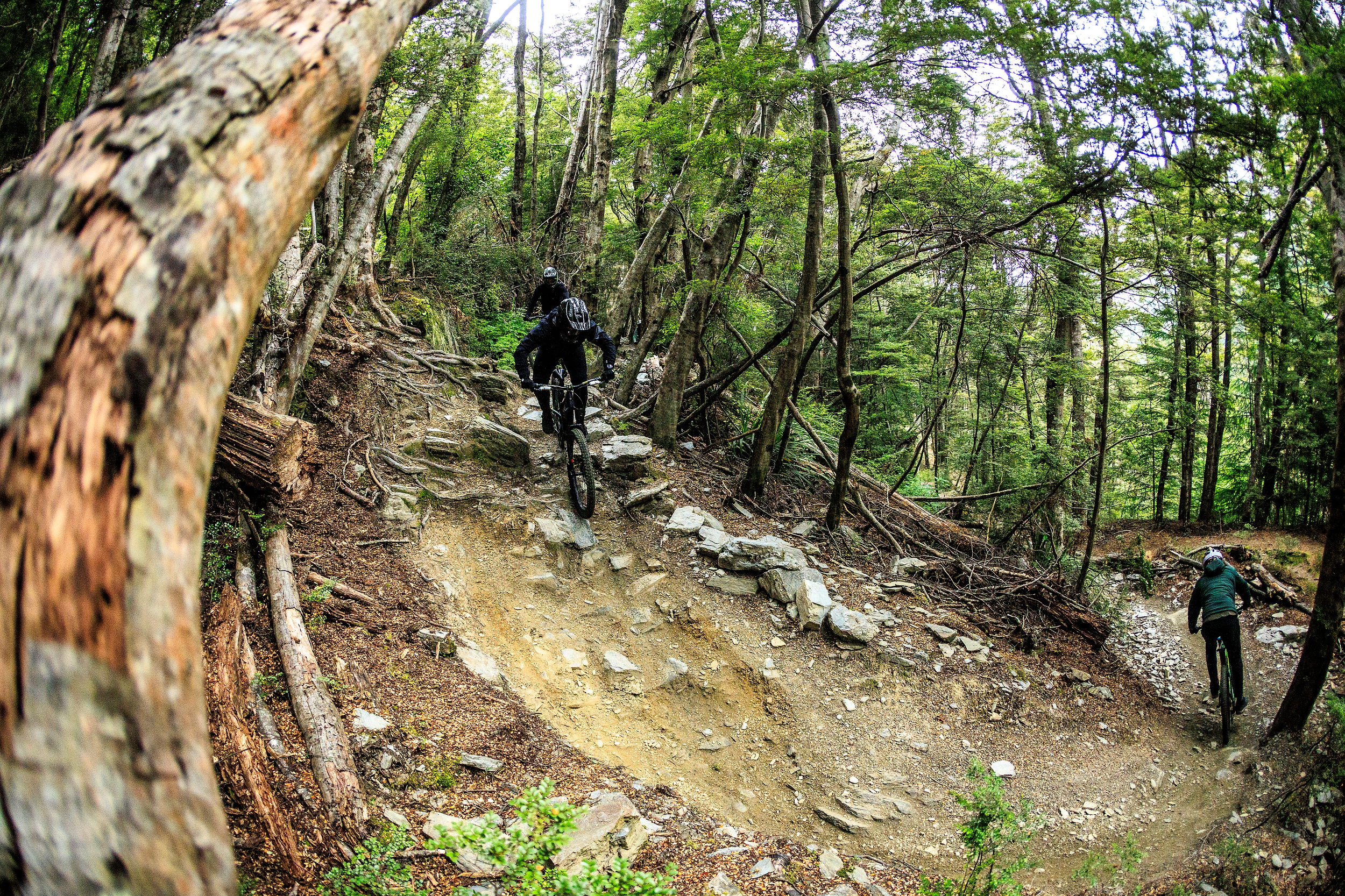
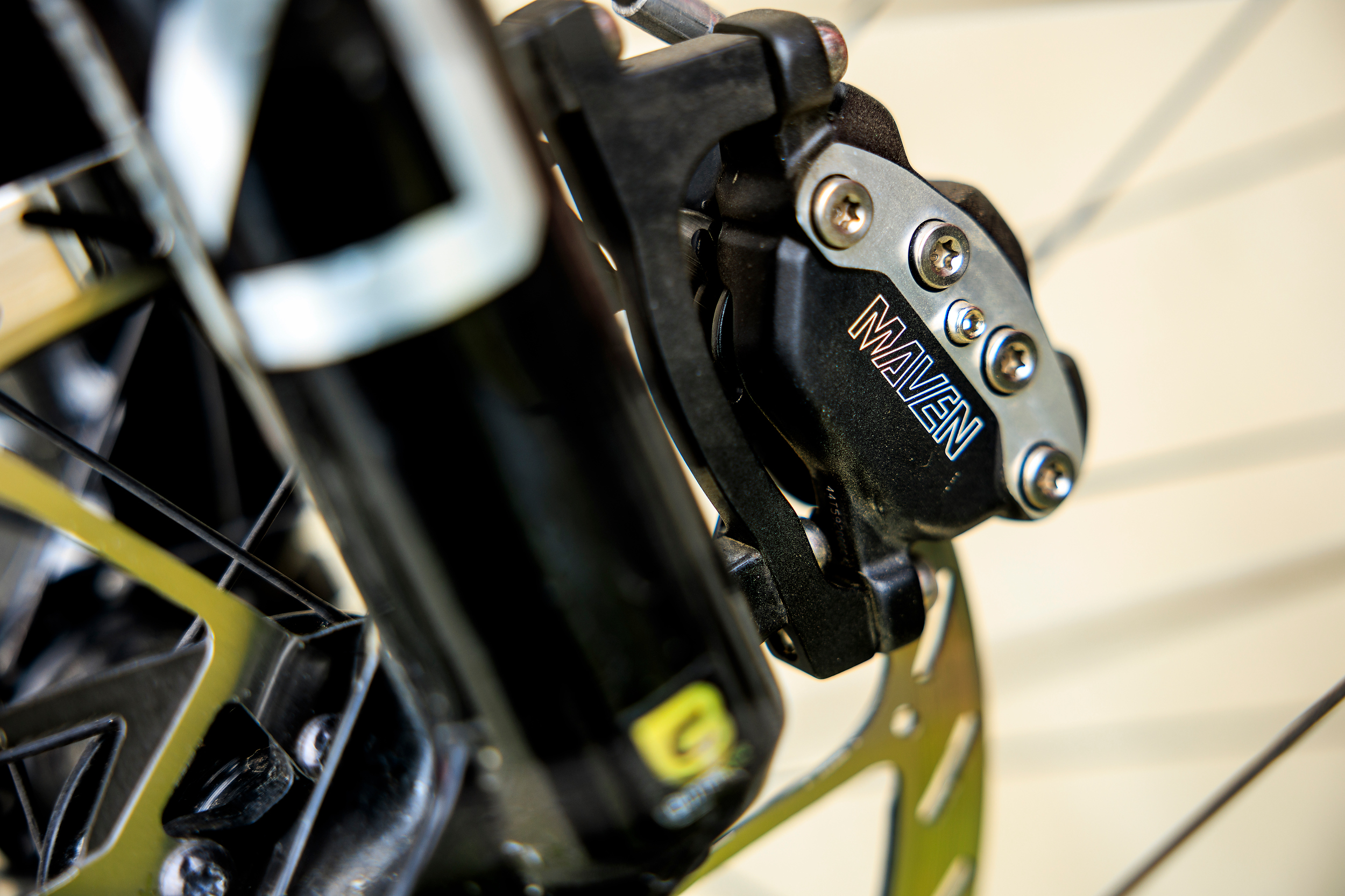
One compatibility note worth keeping in mind: the gold B1 SwingLink (identifiable by two notches on the cam body) should only be paired with B1 calipers, and the original red A1 SwingLink (single notch) with A1 calipers. Mixing them won’t cause a safety issue, but the feel will suffer. Fitting the new gold cam to old parts will result in a brake that’s far too powerful and aggressive, while fitting the old red cam to new parts will leave you with something wooden and flat with little power on offer – because the parts simply weren’t developed to work together.
In addition to those who install the tuning kit on an existing A1 brake, because the A1 caliper retains its larger pistons, fitting the gold B1 SwingLink to an A1 system results in the most powerful Maven configuration possible, lighter lever feel, with a slight boost in peak power at full stroke. Not a bad outcome if you’re after maximum grunt.
In my time on the B1 Mavens, they delivered consistent, well-modulated stopping power without fade on long descents. The original Mavens performed well too, but only once you’d adapted to them. The B1 removes most of that adjustment period. Riding with this much braking power available still means rethinking habits. Braking later into turns, going deeper into steep sections before loading the lever. Every pull feels the same. That consistency builds confidence and means you can really rely on them. After a few weeks, I prefer the more modulated feel of the new Maven. They still have all the power of the original Maven, but it gets delivered in a more refined manner.
Off-grid Escapism
Words by Liam Friary
Images by Caleb Smith
I live with a deep, near-constant desire to get off grid. I find life’s regular day-in, day-out rhythm becomes mundane at times. I relish the simplicity that comes with spending time buried in the backcountry.
It’s the simplicity of hard riding, adventuring and discovering remote huts. To get there, a unique type of effort is often required – like many things in life, to receive the reward, you first have to put in the mahi. To be honest, that’s probably the most appealing part of it all, for me anyway.
I like that it takes effort, that it’s often hard and requires the right sort of mental approach. Reaching these places usually involves a large amount of travel logistics, but that’s why they’re not ridden a lot, as most humans want to take the path of least resistance. I am one of them too, but I need to constantly fight that narrative.
Our country boasts hundreds of backcountry huts and multiple tracks for both riding and walking. That alone is enticing – so many different places to discover, so many different adventures waiting to unfold. A lot of these areas are infused with rich history, with well-worn pack tracks built by early prospectors, some seeking fortune from the earth’s minerals. Some of those early prospectors knew the value of route marking and a good hut for shelter.
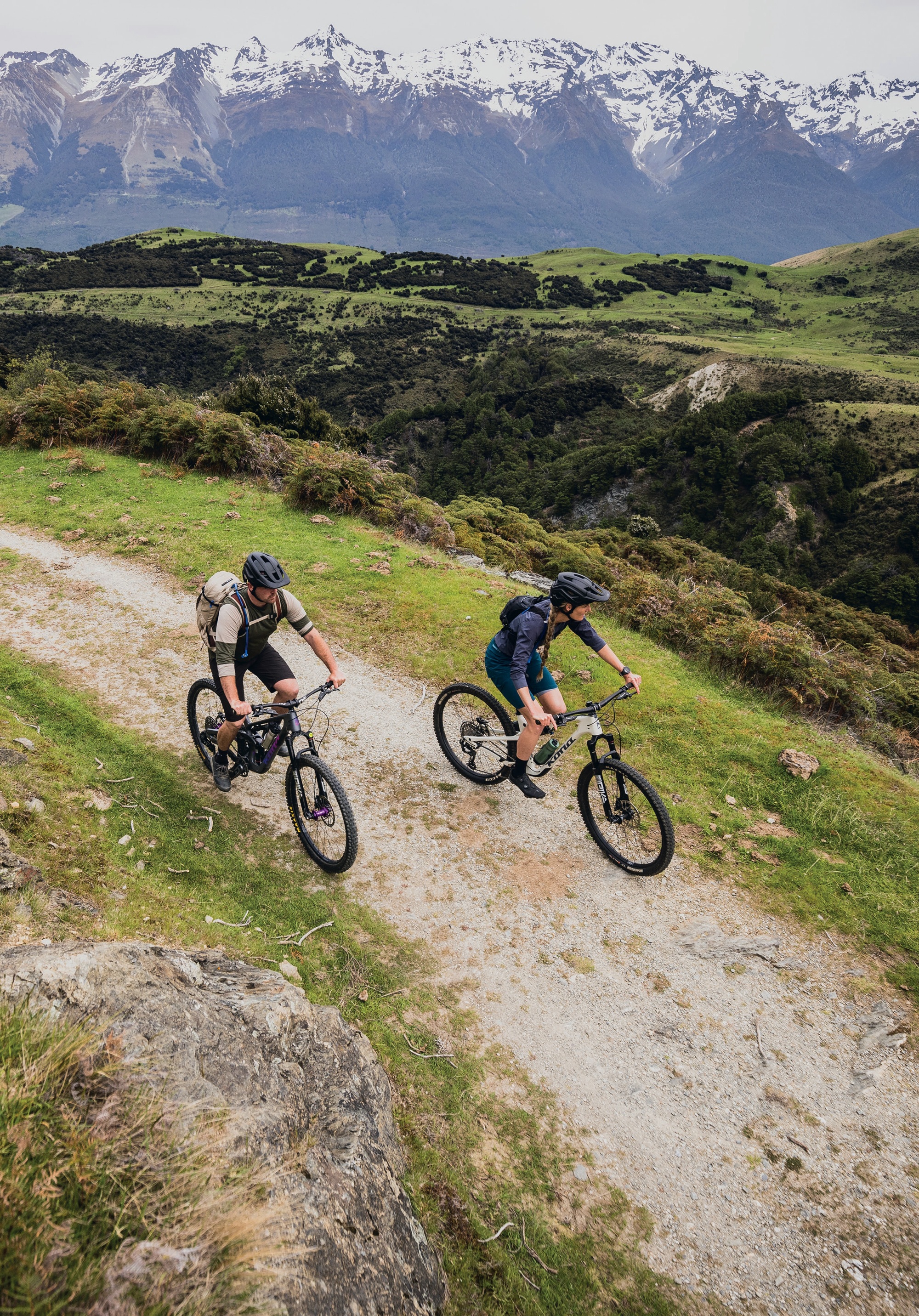
Often, the appeal of these areas is that these tracks are not purpose-built for mountain biking, but we can still use them for recreation. It’s about getting off the beaten track and accessing areas you wouldn’t normally venture into.
An area that’s appealed to me for a long time is the Whakaari Conservation Area near Glenorchy. This region offers backcountry huts and tracks for both riding and walking, all steeped in mining history. The area was the site of scheelite mining from the 1880s onwards. Scheelite, a calcium tungsten mineral, was discovered in a quartz reef in 1884 by William Raines, C. C. Boyes and Simon Wilson. The mineral became highly valuable during both World Wars due to its use in hardening steel for armaments and in lightbulb filaments. George Wilson formed the Wakatipu Scheelite Company in the 1880s, and mining continued through various operators until well after the Korean War, when prices dropped and most miners moved away. The region’s scheelite was particularly valuable as it was molybdenum-rich, making it crucial for the arms industry during wartime periods.
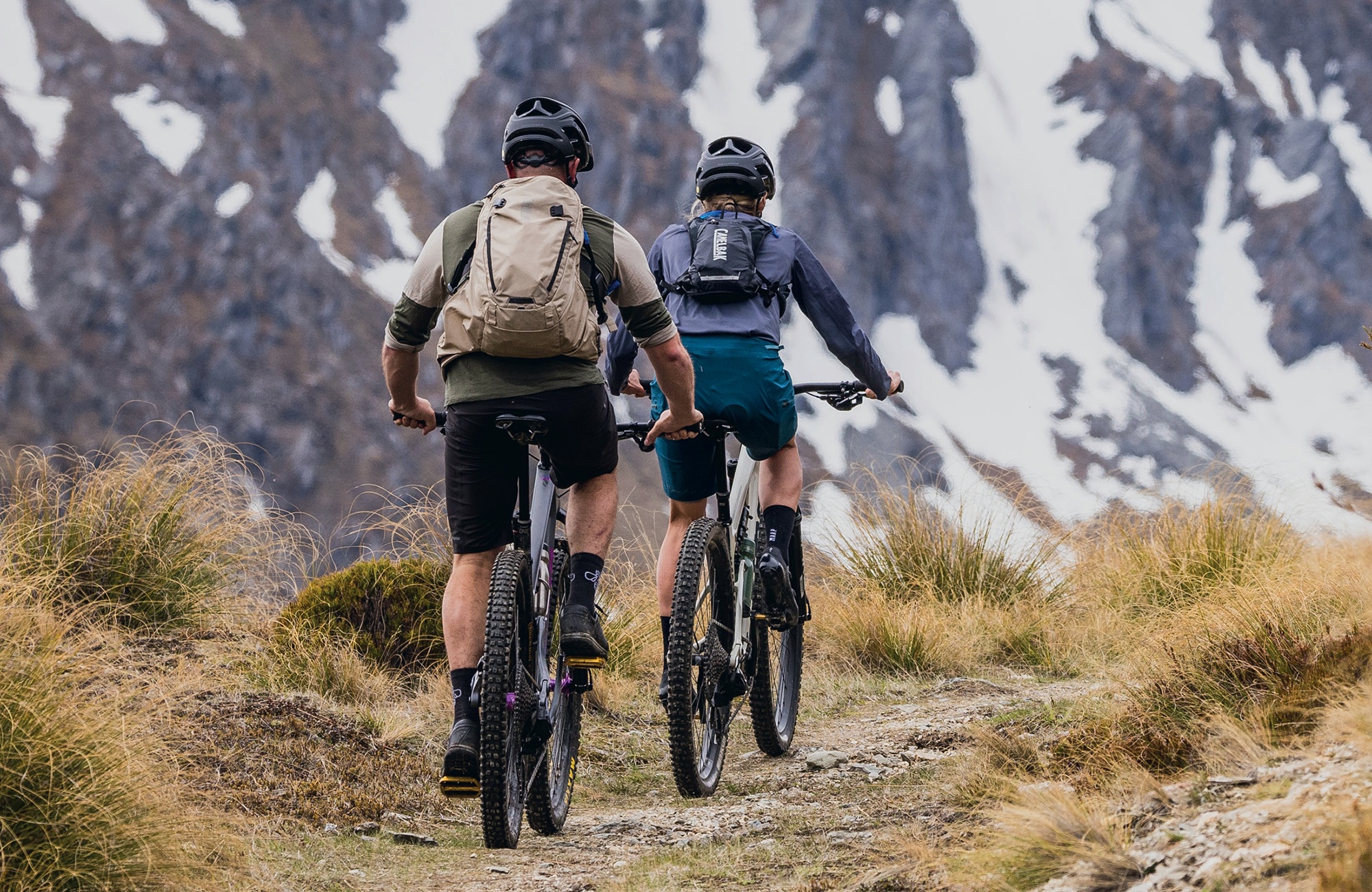
For our latest backcountry escape, we’d ride the Mt Judah Track to Heather Jock Hut, then return the same way. The destination was just as important as the journey. Knowing there would be four walls, a roof and a place to make a brew and eat some grub whilst admiring the view made the challenge ahead feel purposeful. The track follows the old Mt Judah Road, built to service the mines high in the mountains. Along the way, it passes the Glenorchy Scheelite Battery and the State Mine – remnants of an industry that once employed hundreds of miners who worked in lonely conditions at altitudes as high as 2000 metres, above the clouds.
The track winds up steep zigzags around the northern side of Mt Judah. The state took over operations in 1942, during World War II, renaming it the State Mine, though they gave it up after the war. The mine then operated on a tribute basis into the 1970s. By 1942, the mine had produced 862 tons of scheelite concentrate. Those early miners knew the value of a good hut at the end of a long day’s trek in these unforgiving mountains.
The Heather Jock Track follows the old mining road and features several historic huts from the scheelite mining era. Three restored character huts lie along the route – Bonnie Jean Hut, Jean Hut, and Heather Jock Hut. Jean and Bonnie Jean Huts were known by the scheelite miners as the ‘red huts’ due to their cladding, with Jean Hut’s exterior made using flattened drums. The roof is held down by huge rocks suspended on wires. The building methods and materials used in the restoration are as faithful to the original huts as possible. There’s something special about seeing a place with that much history and imagining all the miners who sought the same shelter over the decades.
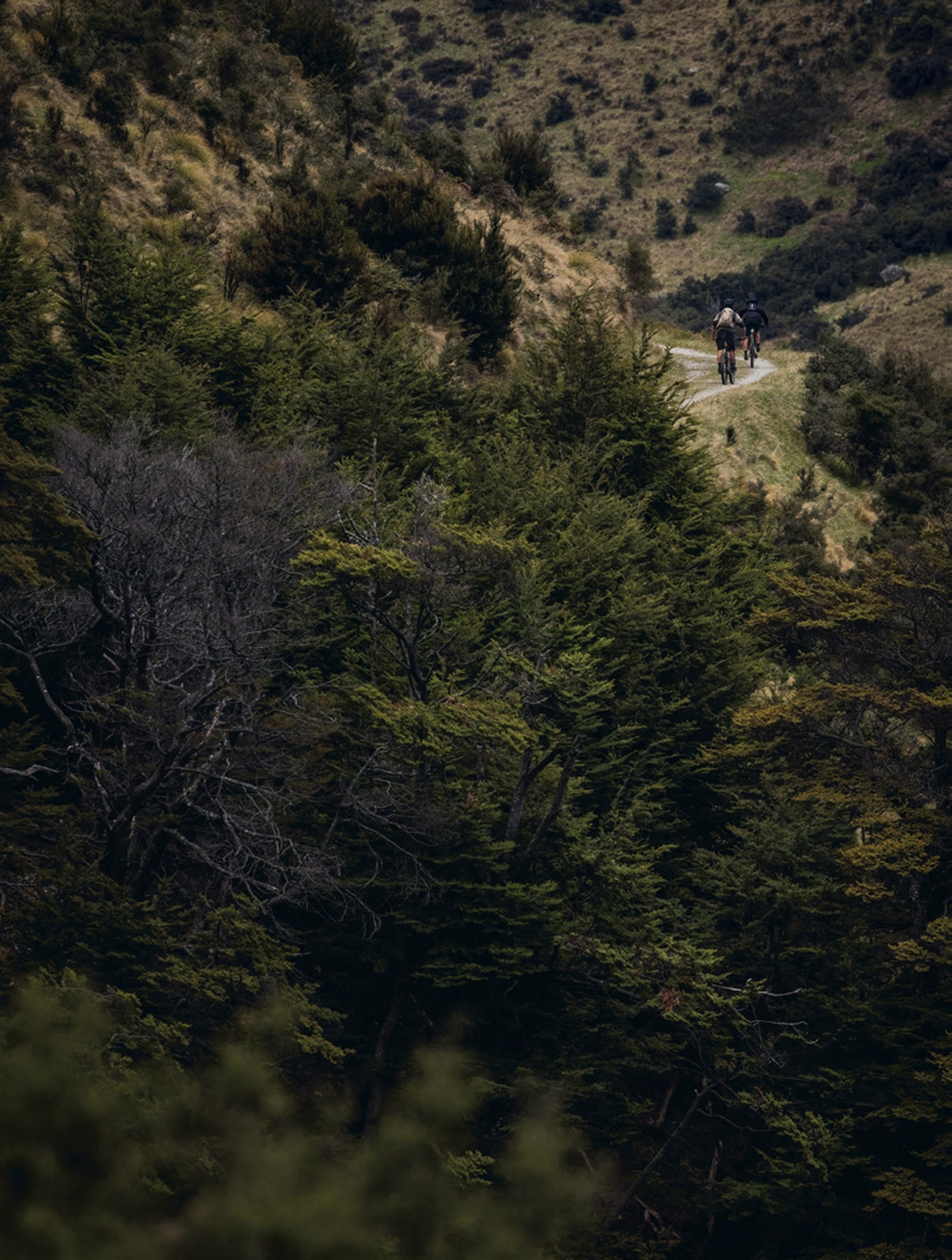
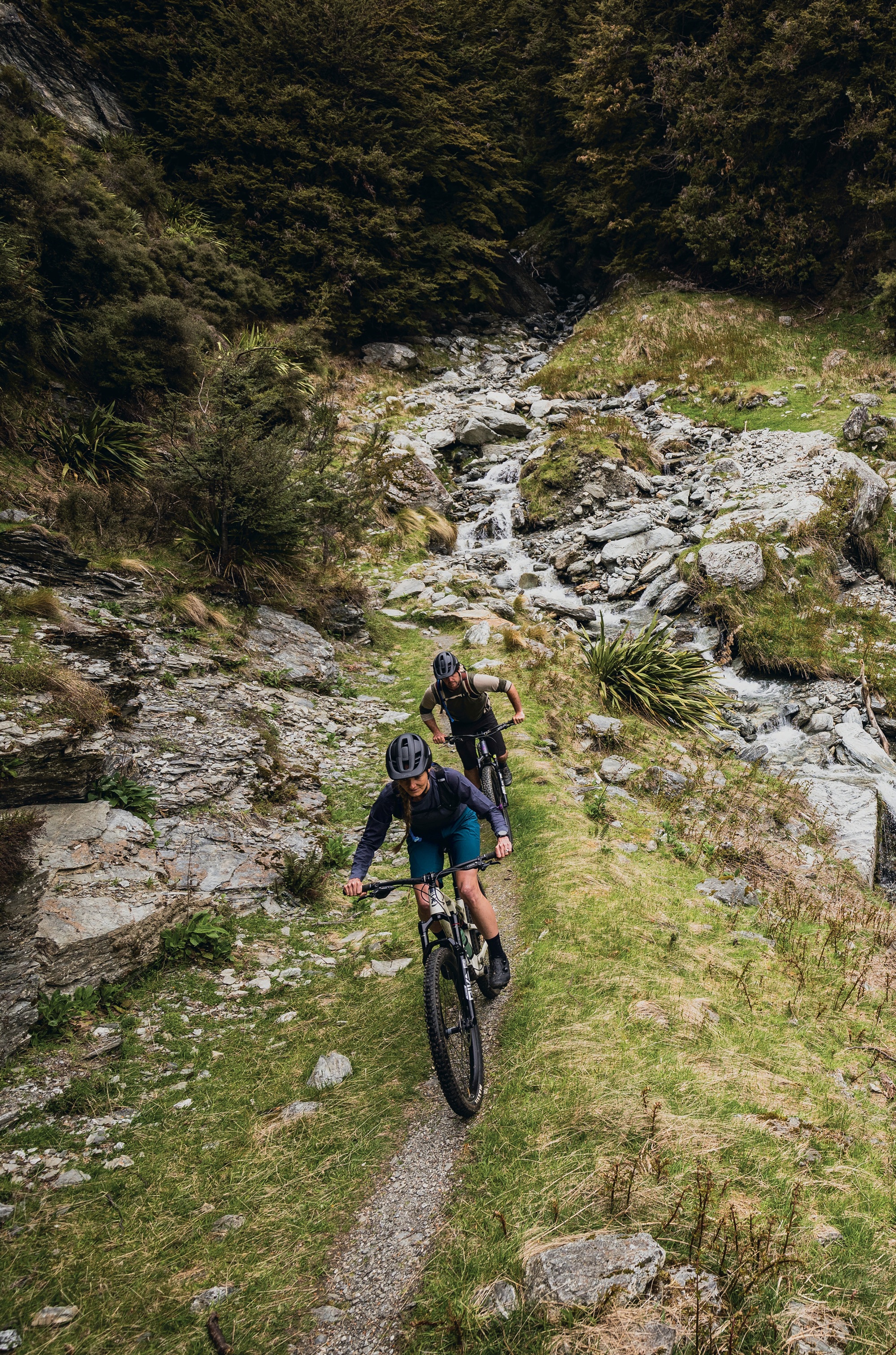
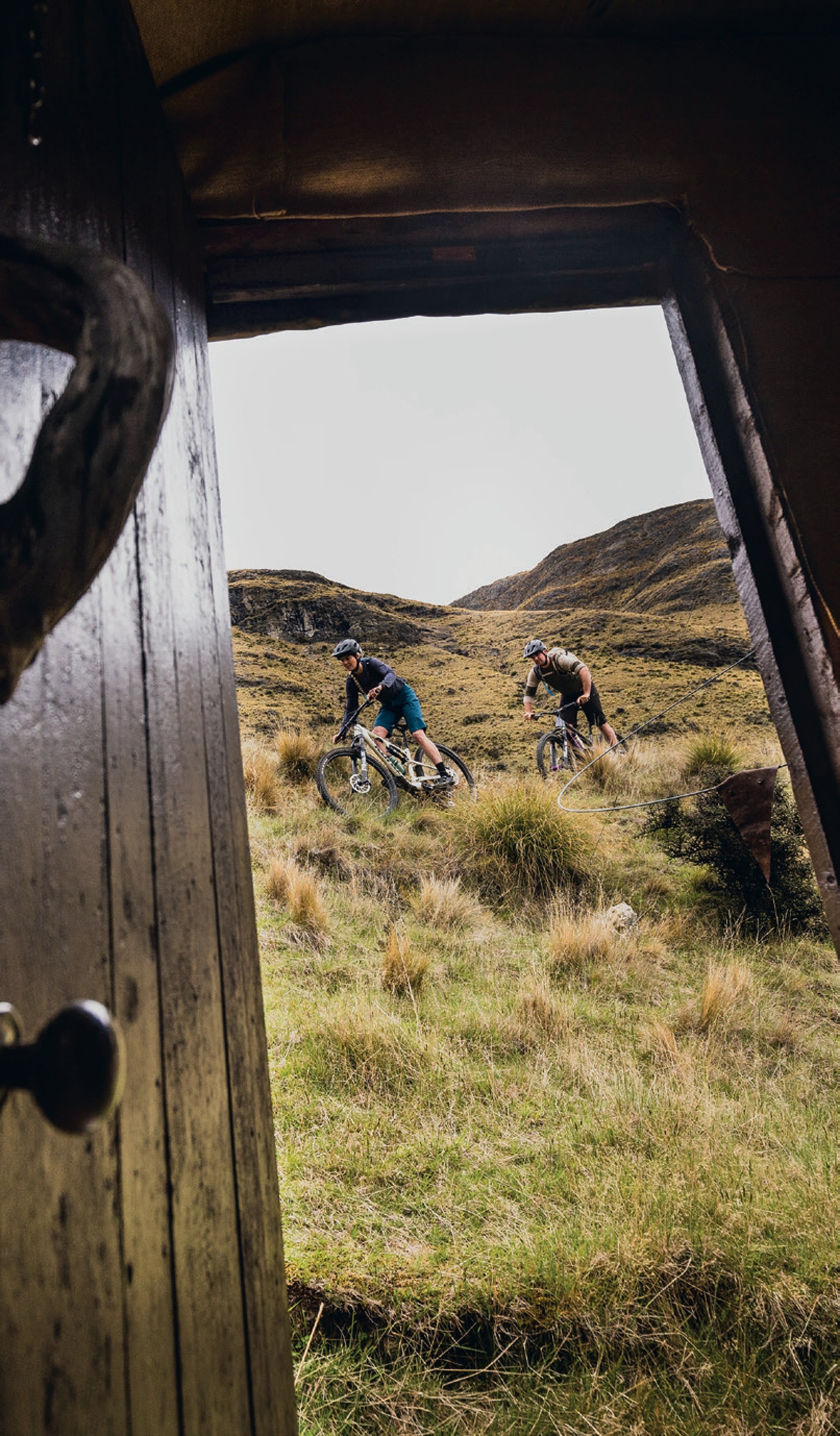
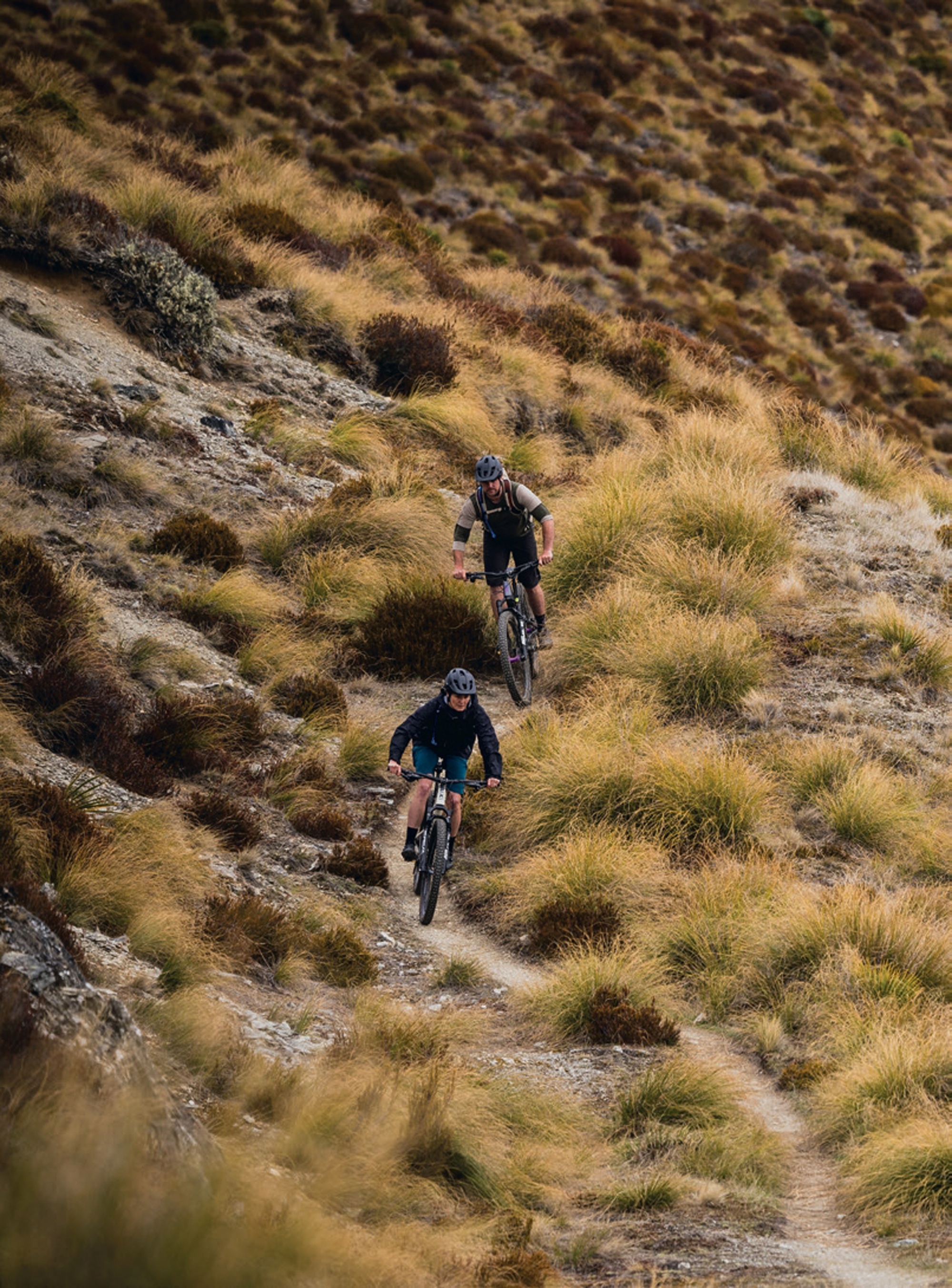
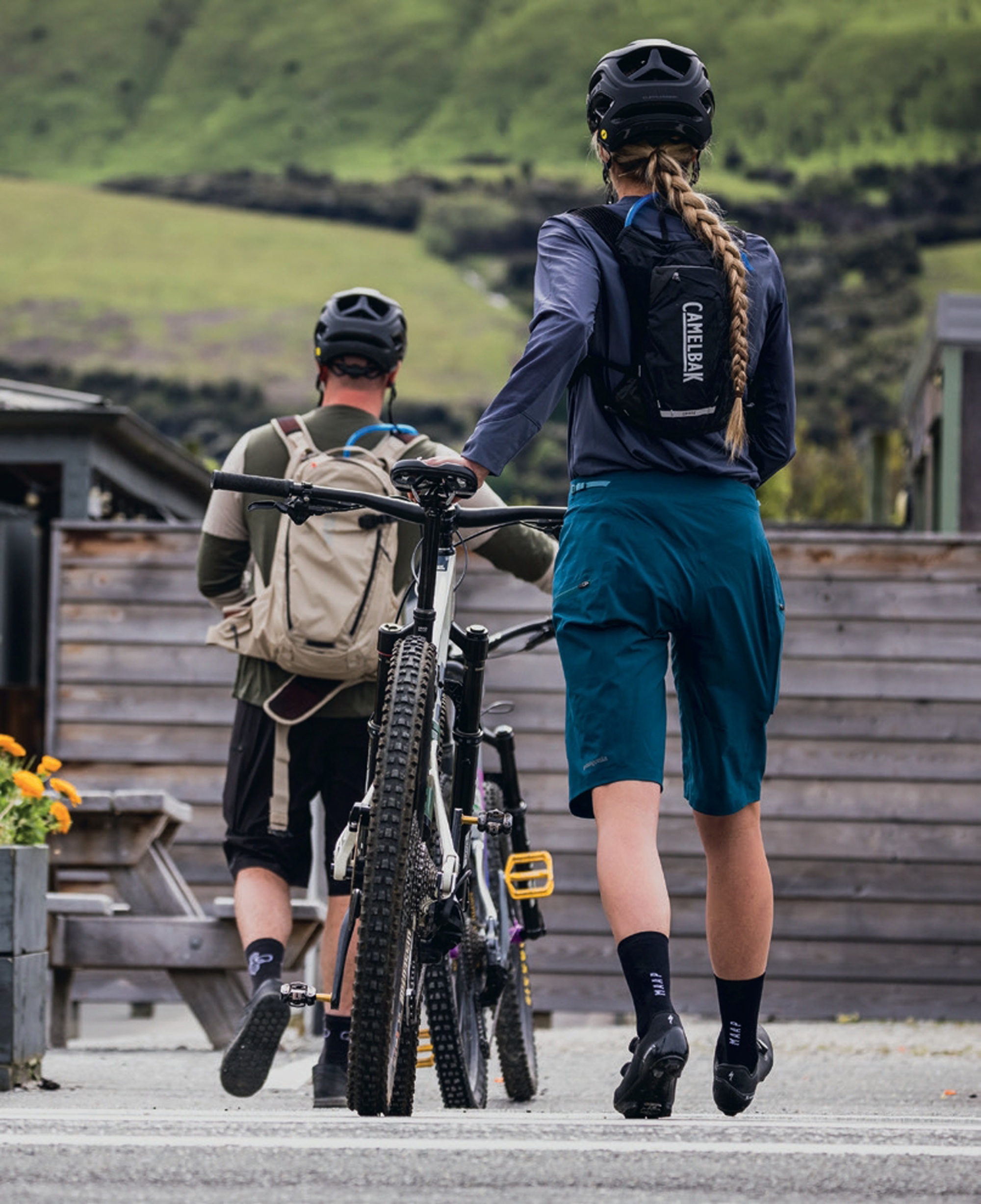
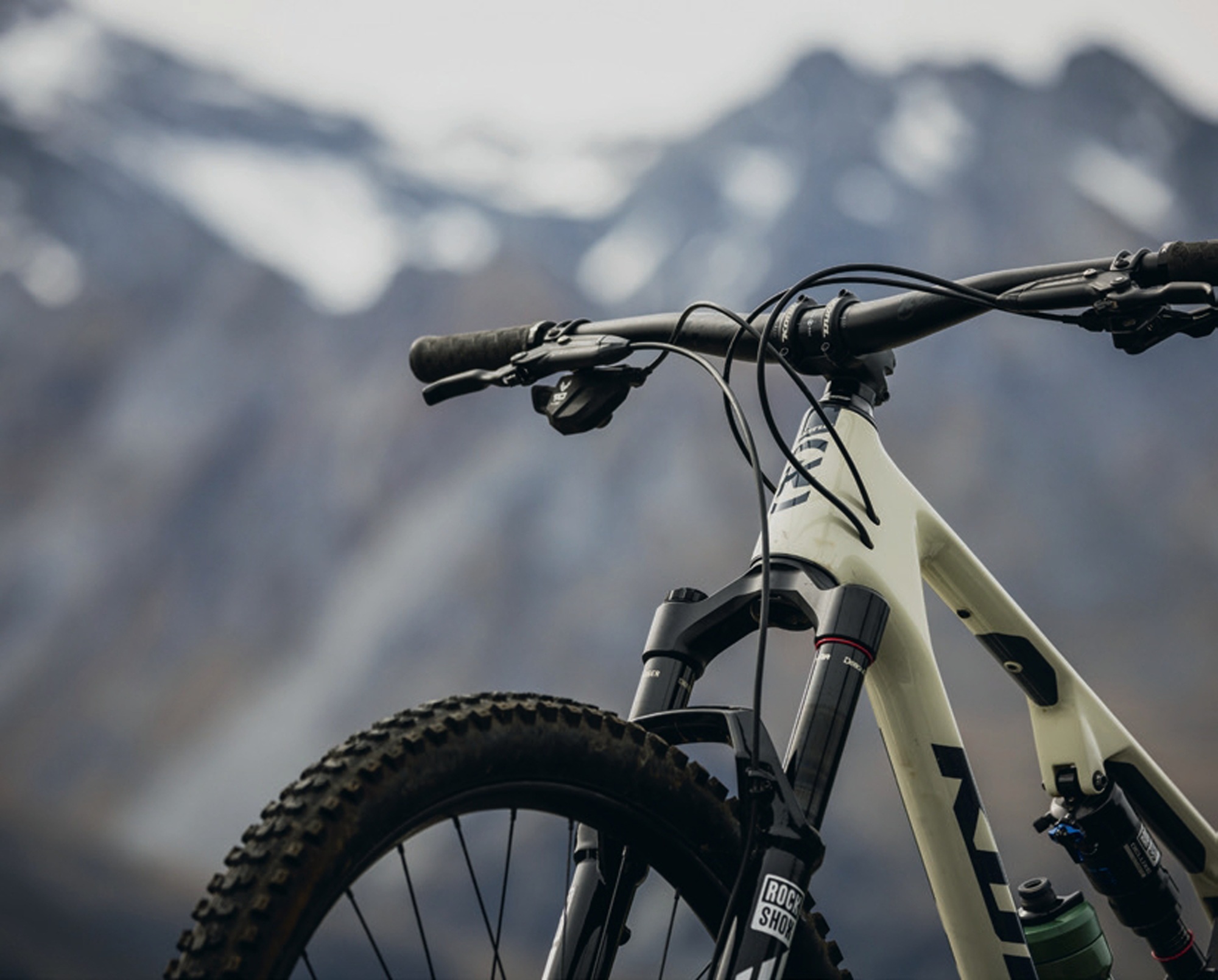
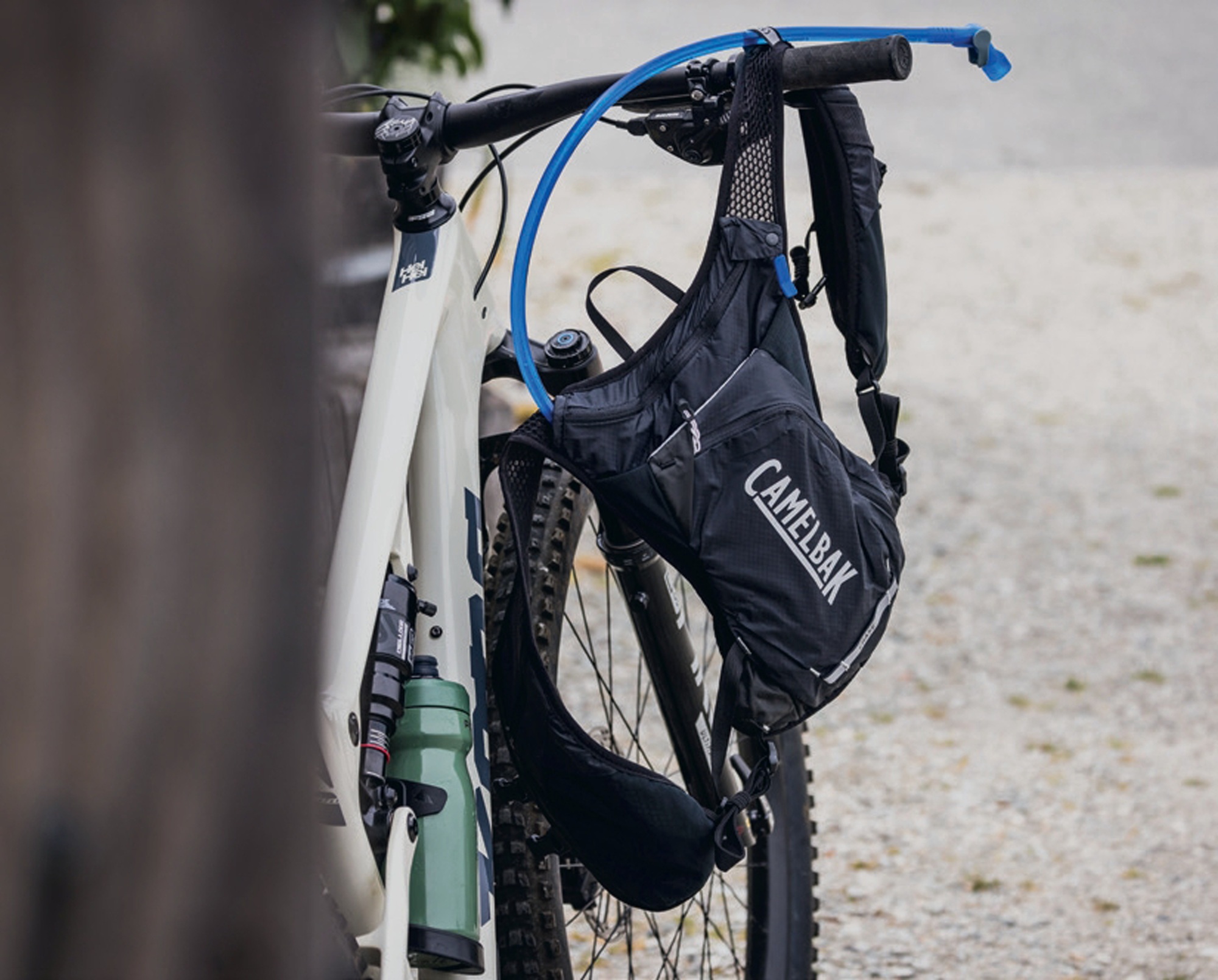
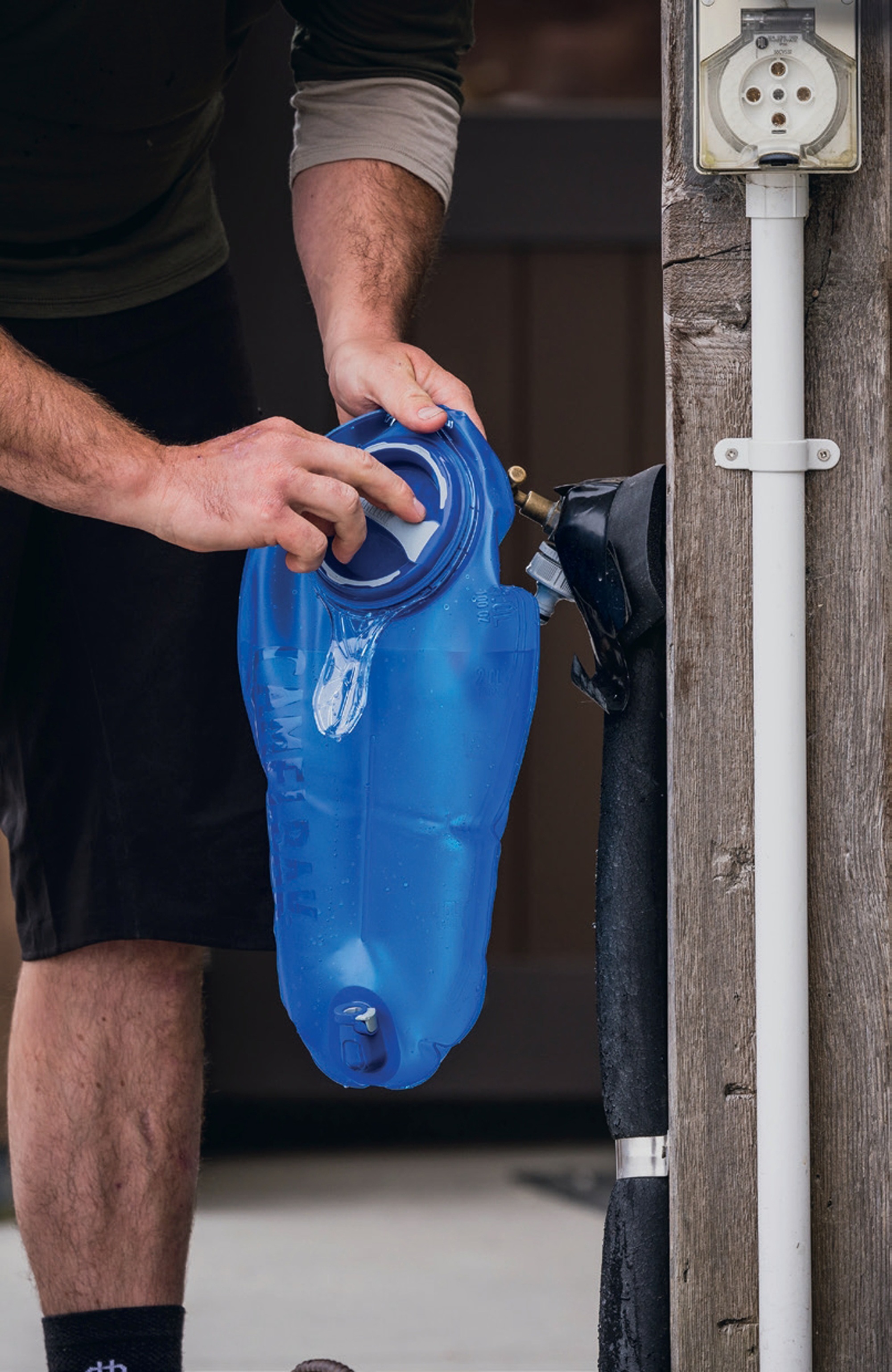
Our main job first thing was packing for the trip ahead. Littered across the ground was gear, jackets, safety devices, food, coffee, AeroPress, cooking gear, reservoirs, headlamps and lights – just in case. We packed everything into our CamelBak backpacks, considering weight and what we’d need once we arrived at the hut.
The mountains lingered in the distance as we drove closer. In every direction, it was rugged and steep with snow-capped mountains. We pulled up to Mrs Woolly’s General Store in Glenorchy and I ordered a brew and scoffed a pie, needing all the fuel I could muster. This would be a solid day out in the mountains.
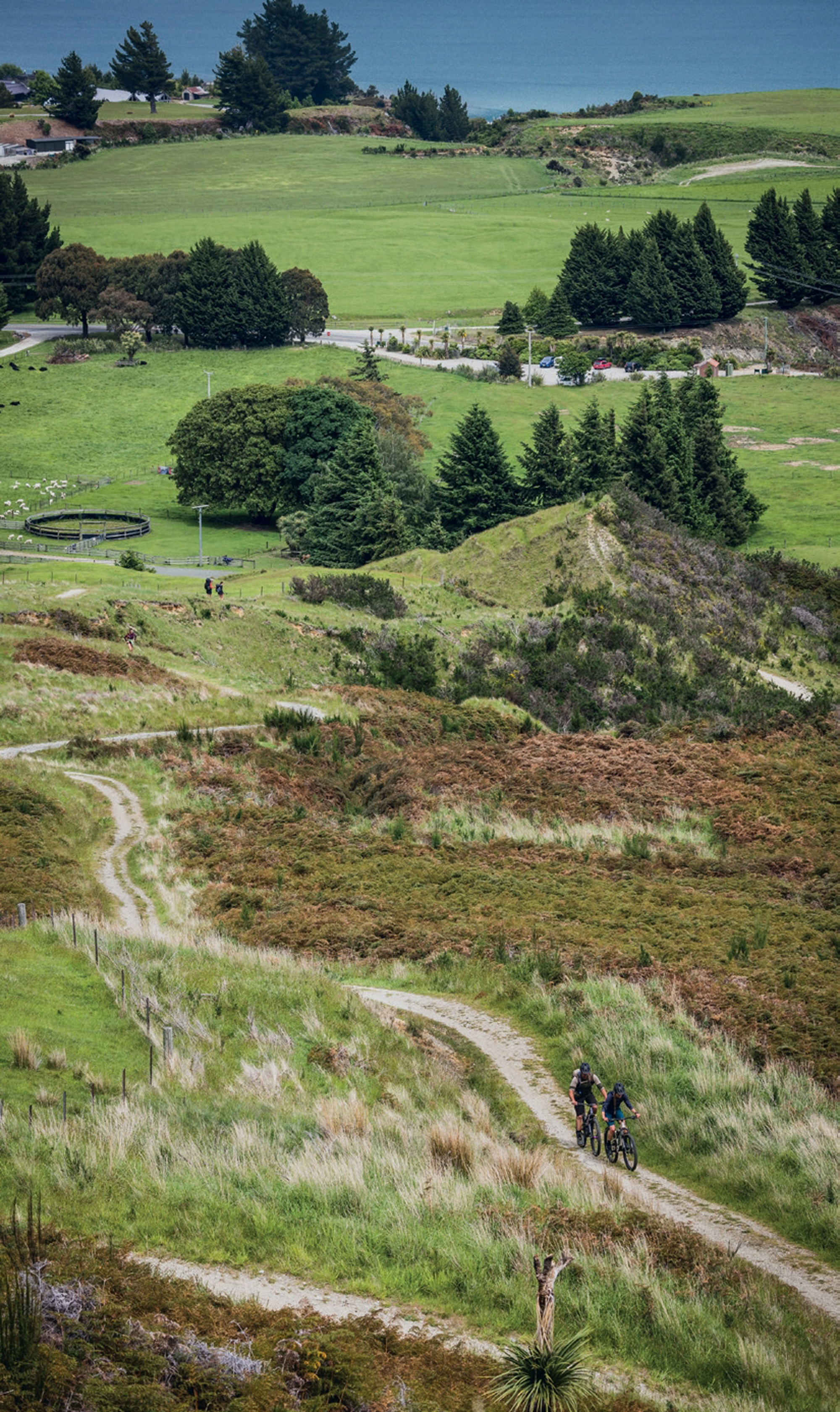
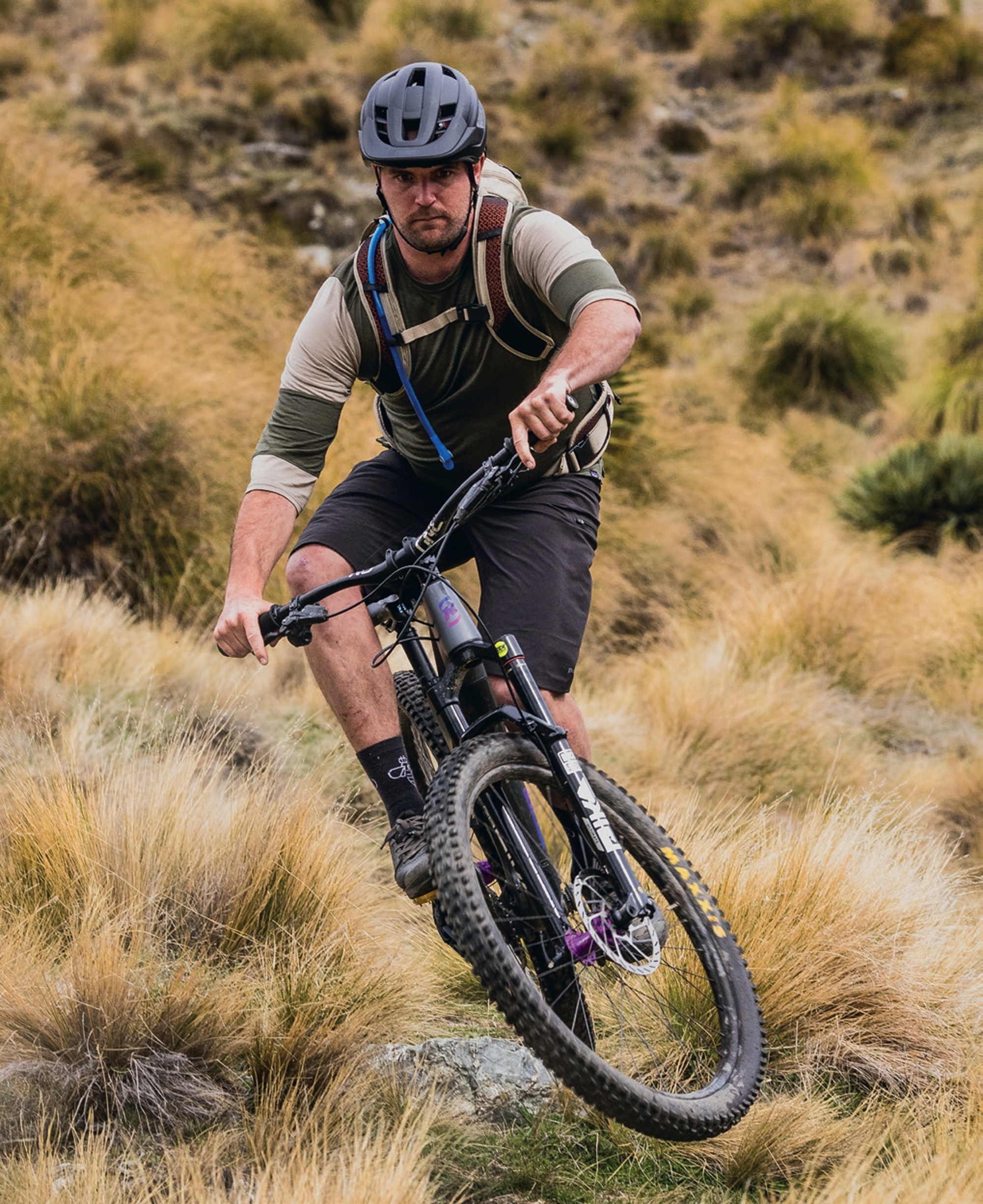
It wasn’t long before we were on our bikes and climbing the track. Well, when I say ‘climbing’ I mean riding in the smallest gear up a very steep ascent. It was like that pretty much out of the gate. But nothing in these mountains comes easily. And, as I said earlier, a little effort is required for anything worth doing. Especially when there’s a hut with a view as the reward.
After a while scrambling on and off our bikes up the ascent, we reached Jean Hut, the first hut on the ascent. We plonked ourselves on the side of the hut and tucked into some grub. This sustenance was well deserved and needed for the haul ahead. And the view was absolutely gorgeous looking across the Whakatipu to Bold Peak and Mt Bonpland on the other side.
Post snack, we clambered back onto our bikes with the blood now diverted away from our legs to our stomachs. The sustenance was needed for the ongoing climbing effort up to Heather Jock Hut, but it took a while for my body to adapt post-feed. As we ascended, the open tussock landscapes and rocky outcrops turned to tightly benched switchback trail that had me off and walking in parts. I didn’t want to walk in sections, but it was more the fact I would fall off the bloody bike as it was so steep and I was going so slow. There’s no room for ego out here! It wasn’t that long in distance or on the topo map, but it seemed to take ages. However, I needed to park that feeling as it wasn’t doing much for me, other than sapping my energy. I reminded myself to just be in the moment and immerse myself in nature.
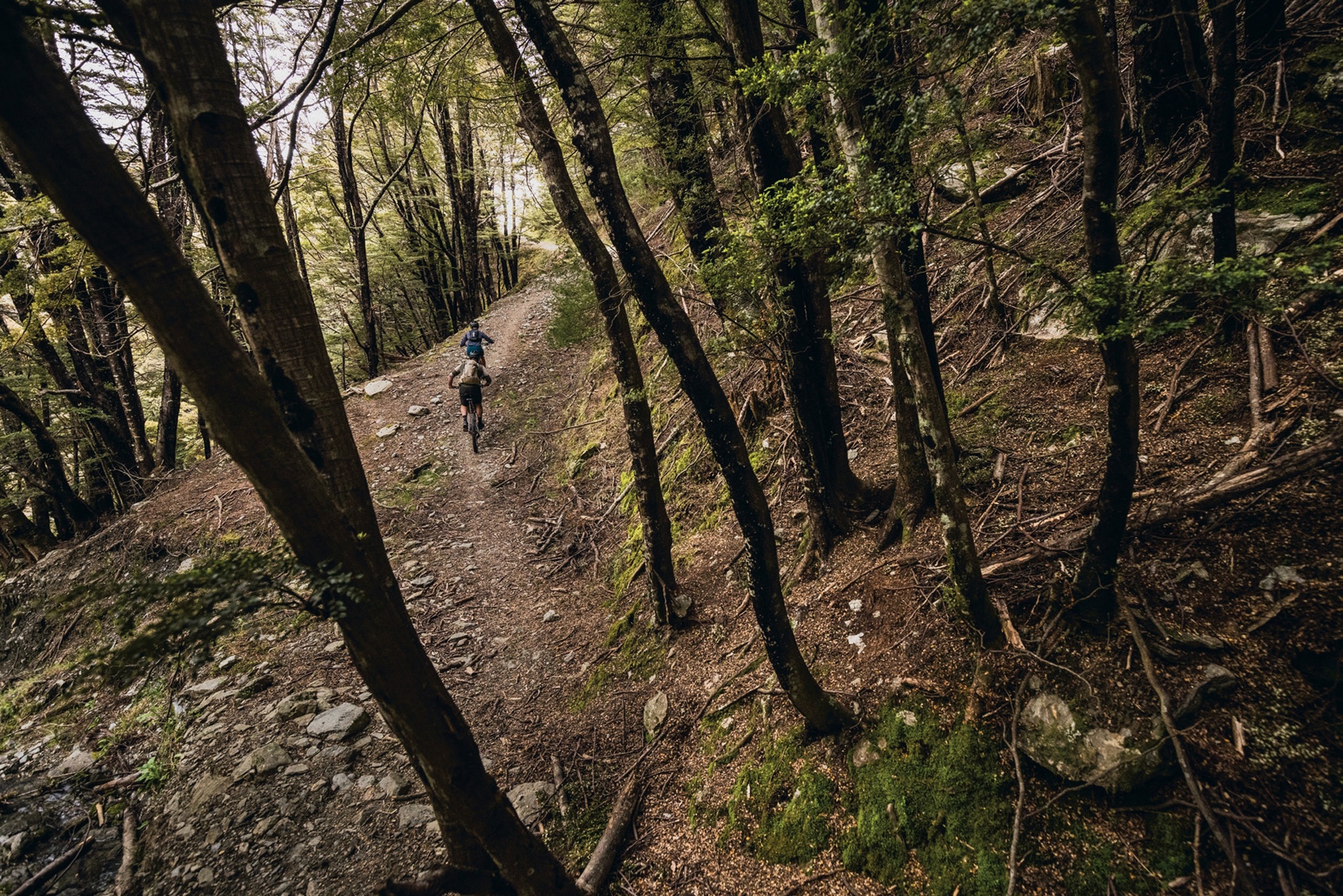
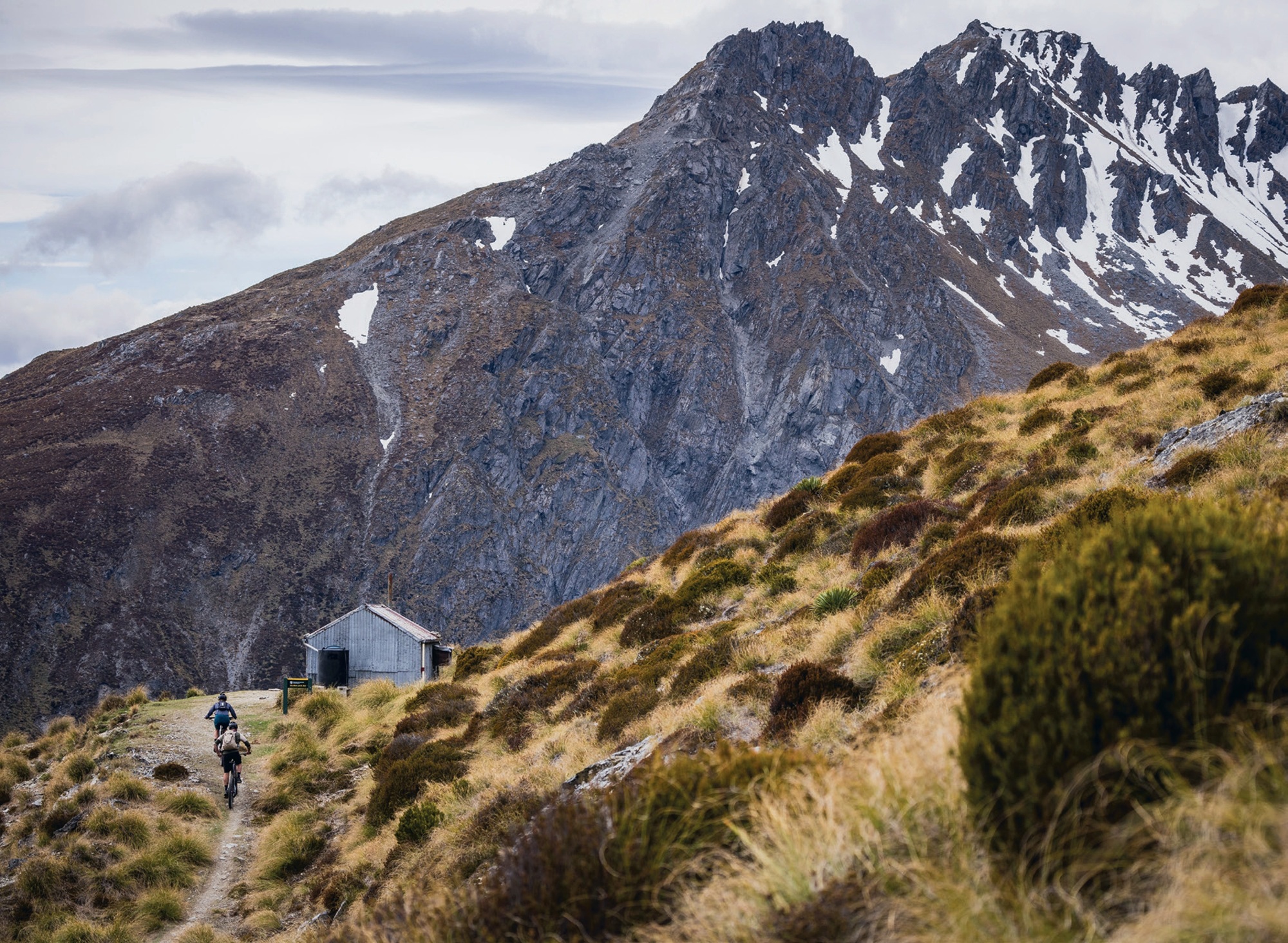
The final few switchbacks were getting tighter and I could sense that we must be close to the hut, but I wasn’t too sure how much further we still had to go. The anticipation was building – soon we’d be dropping our packs, having lunch and brewing a strong coffee. After some mental tough talk about hanging in there, the hut was finally spotted, edged into a small plateau with Mt McIntosh overshadowing the small hut.
And what a splendid hut it was, sitting pretty in the clearing, with mountain peaks towering above. This basic three-bunk hut, free to use on a first-come, first-served basis, was exactly what we’d come for – this moment of arrival, of finding shelter in the wild. The day’s efforts gradually slipped away as we munched our snacks and took in the amazing view.
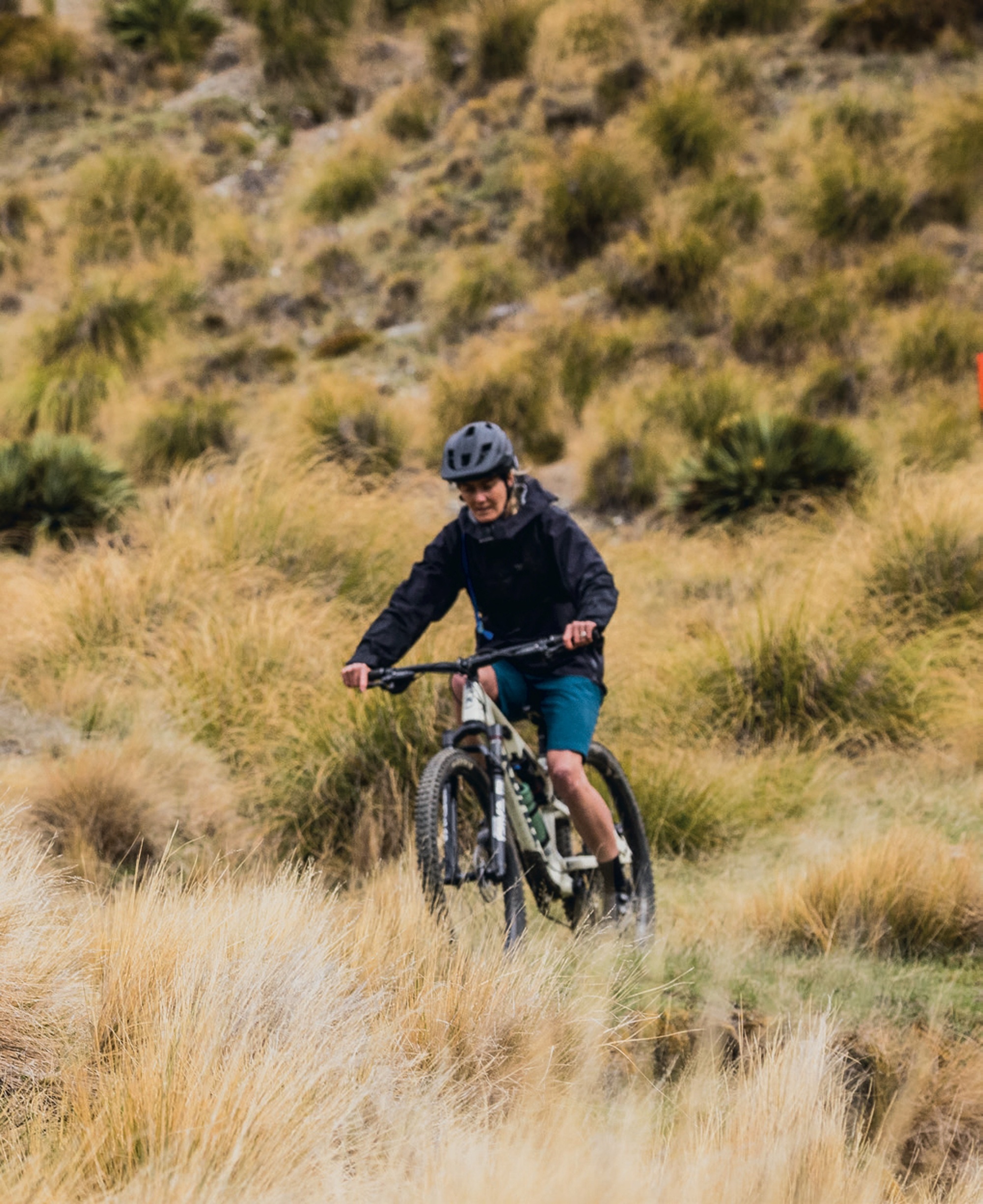
The trail provided us different gradients, a few technical features and landscapes as we rode it in reverse. Going back the other way means some of the spots you missed or flew past stand out. I would have liked a bit more singletrack, but this isn’t always guaranteed when venturing into remote parts that aren’t ridden much. Often, you need to go there to see, as online maps only provide a snippet of the land. I find that it can help shape another mission to the area as you gain knowledge and can craft better routes for another occasion. The moment wasn’t lost on me, however, as just riding out here felt freeing.
We passed Jean Hut again, marvelling at its rustic construction near the stream, weighted with rocks to stop it from blowing away.
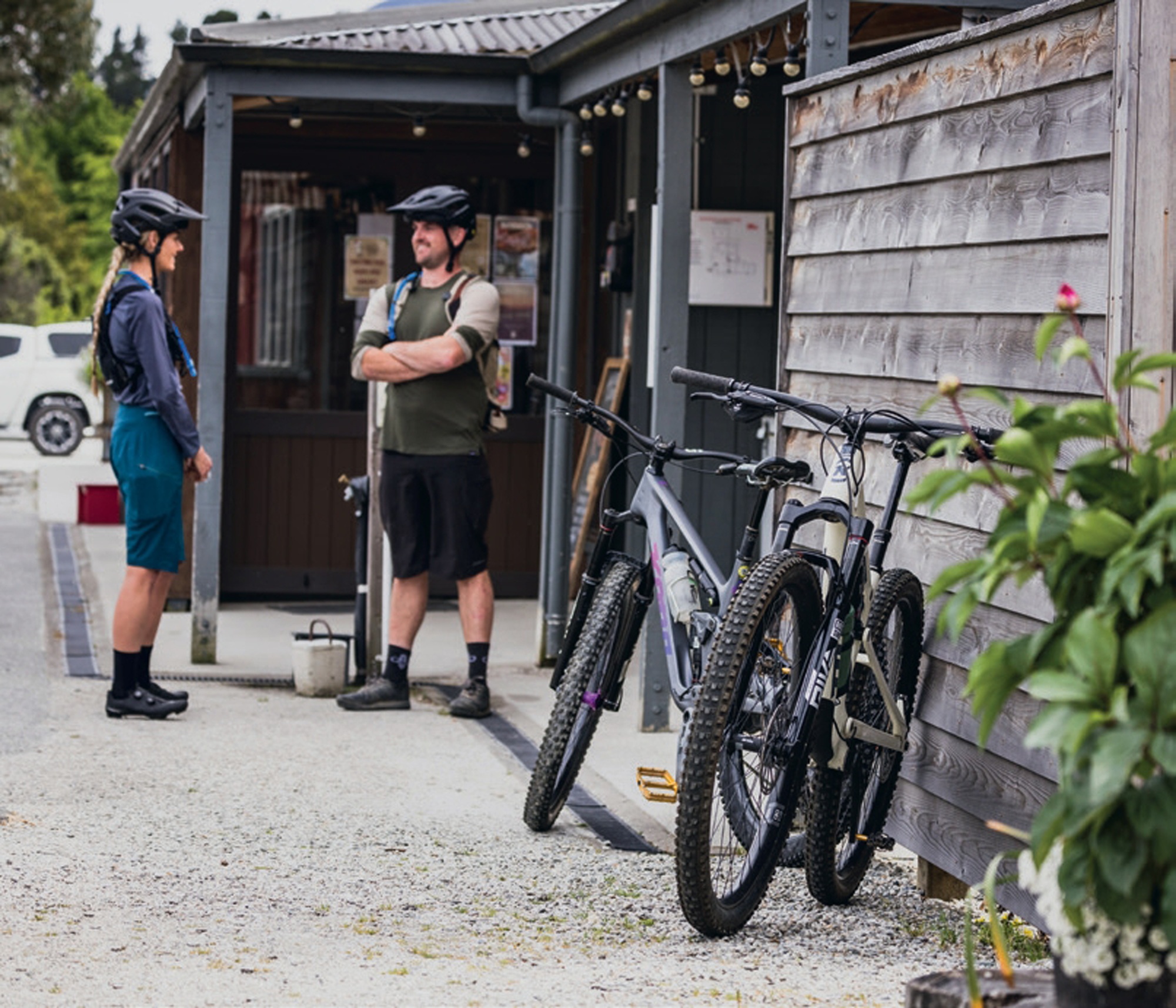
It wasn’t too long before we ducked into the bush, crossed Bonnie Jean Creek, and emerged back into the open tussock country. The vastness and remoteness staggered and intrigued me; endless valleys and mountain peaks flowed as far as the eye could see.
I took a moment to reflect on the journey before we cracked a tin of beer and celebrated our backcountry adventure. Our off-grid sojourn had taught me a lot and showed me that sometimes only a small window of time immersed in nature is all you need. Sometimes all you need is a sense of purpose – exploring a new route and visiting backcountry huts sufficed. It can provide everything you need to get things back into perspective.
There’s something about these routes, put here before our time, that we now trace for recreation. Of course, it’s not a manicured mountain bike park and that’s the point. Bikes are built for numerous ventures and it’s good to use them as a portal to take in different environments. The mining history added another layer to the experience. Riding the same tracks those scheelite miners cut through over a century ago, seeking the same shelter in the mountains. It’s not just about suffering through the wilderness; it’s about finding home in it, even if just for a moment. I can’t wait to pack my bag for the next adventure – wherever that might take me. And whichever hut is waiting at the end.
Produced in partnership with CamelBak
From World Travels to Wild Cards
Words Lester Perry
Images Supplied
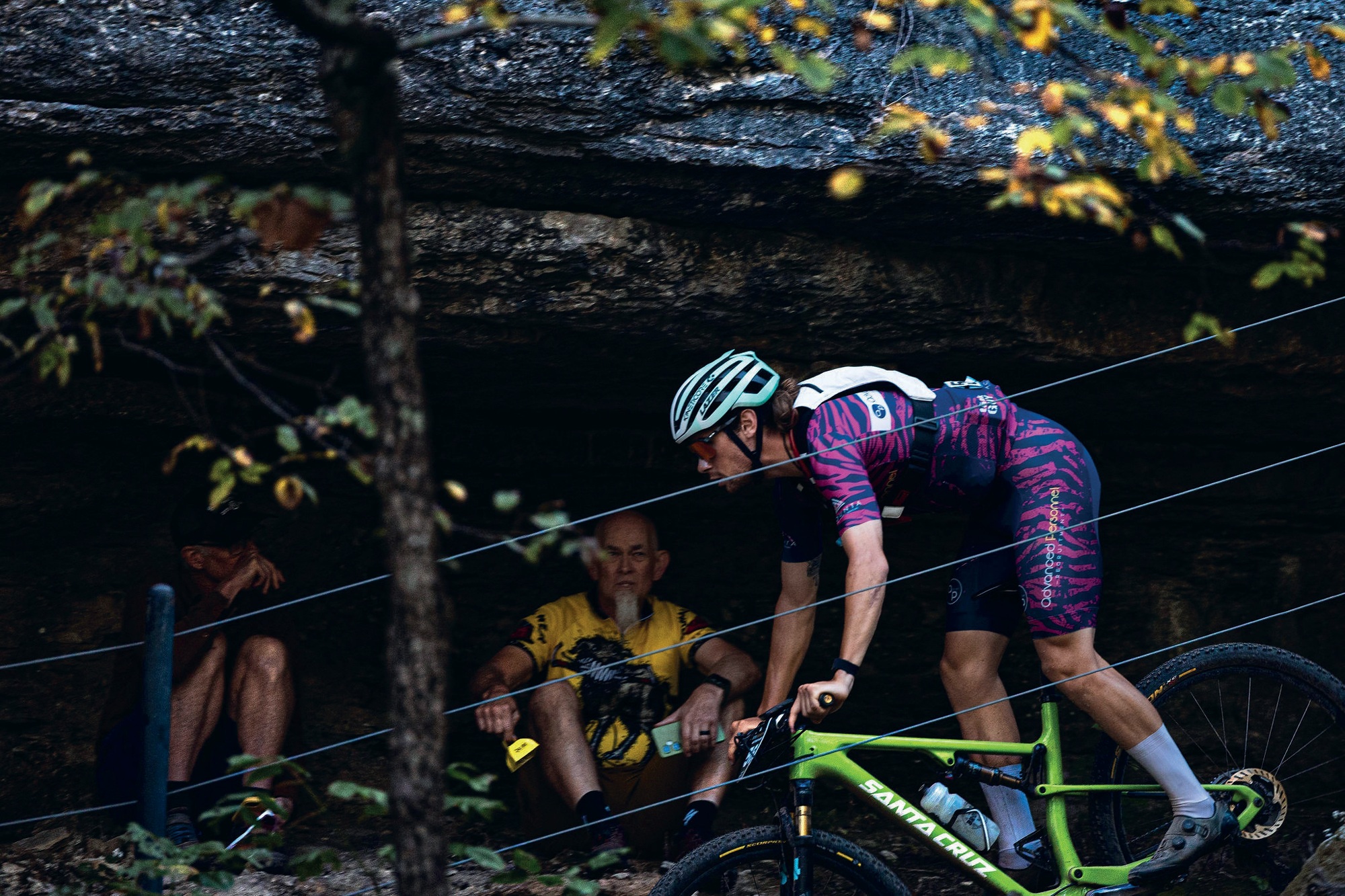
What began as a year of hopes and dreams ended in frustration, but along the way, thanks to some early-season prize money, Matthew Wilson made his mark on the North American off-road racing scene.
In early December 2025, I caught up with Auckland-born Matthew Wilson while he was in Wānaka for his first training camp on the build-up to his 2026 season.
Matt hadn’t long returned from a breakout season chasing the North American dream, blending his love for racing mountain bikes with a newfound passion for racing on the gravel. There was even a general classification win at a road tour thrown in to complete the cycling trifecta while in the US.
As with many young mountain bikers, Matt began his journey on bikes as part of a school mountain bike squad, encouraged by friends to come along to the school group rides on Tuesday evenings after quickly deciding the road wasn’t for him. It was summery Tuesday evenings at Whitford Forest, and damp wintery rides by torchlight around Totara Park, which got him hooked.
To begin with, alongside the bike, Matt had been through the Sea Scouts programme, sailing offshore from Bucklands Beach, where he grew up. “I did a bit of competitive sailing through the various regattas we have throughout the year, it was pretty cool. I live near Bucklands Beach, so every Wednesday night we’d be out sailing in the harbour and mostly sailing little Sunburst yachts.”
In 2019, Matt got his first taste of international racing, competing in the World Championships at Mont-Sainte-Anne, Canada.
“That was definitely jumping in the deep end there in terms of international XCO courses. But yeah, I wouldn’t have had it any other way. It’s a pretty iconic course, so it was cool to have that as my first experience. It was definitely a rough go at it. I think I wound up 60-odd out of maybe 70 starters. I actually broke a wheel in one of the rock gardens there. So I had to ride the rim for half a lap, which put me back a bit. But either way, it was definitely a big step up, a big learning curve, and even without the wheel issue, it was going to be a tough day.”
Walking out of the gates of high school for the last time at the end of 2019, Matt set his sights on racing mountain bikes as much as possible. In 2020, Cycling New Zealand selected him to join their ‘MTB Hub’ programme, a development pathway for up-and-comers running alongside the road and track hubs at the time.
“For 2020, the plan was to do a stint in America, do some of the national series XCOs to get some UCI points, and then spend a couple of months in Europe during some HC (Hors Classe: gruelling multi-day UCI level) races and World Cups.
“That was my first year in U23. However, the US stint was in March 2020. Yeah, that date! That was right as COVID kicked off, we had about a week there. We got to do the short track on Friday and then woke up the morning of our first XCO to find it had been cancelled. Then we were on the first flight home from the States the very next day.
“When we landed, it was still a self-isolation programme. Four days into my self-isolation, the whole country went into full lockdown, and the hotel quarantine system came into play. So, we just sneaked in there, we just beat it!”
For the first three years competing in U23, Matt was fourth at the NZ XCO National Championships, unable to crack the elusive top three spot against his main rivals of the time, Josh Burnett, Connor Johnston, Caleb Bottcher, and Cameron Jones. While many of his competitors have moved on to other things, Caleb and Cameron are still in the game and remain rivals to this day.
“In 2022, I was pretty lucky. I got the opportunity to go to the World Cups with the Talley’s team that popped up for two years. It was kind of a first experience coming into the U23 World Cup circuit. I had a rough idea of what I was signing up for after Mont Sainte Anne in 2019, but still, you know, even a couple of years down the line, I didn’t really know what to expect.”
“During 2022, I’m still pretty proud of how I was able to move up the field. The first couple of World Cups, I think I had plate 101 at Albstadt (Germany) and 93 or 94 at Nové Město (Czech Republic). I was moving up into the 40th place. When you’re starting that far back, it’s always a tough go.”
“In Lenzerheide, I remember that was the one where it all suddenly clicked, and I was like, actually, if I have a good summer training back home, I might be able to kind of make a mark here. I think I finished around 27th. I had a slightly cleaner start that day. I kind of felt like I was actually in the race all day, and then if I took out the riders that were last year U23, it put me up to around 12th or 10th or thereabouts. “I remember doing the math there (at Nové Město) and figuring out who the people were who were going to be phasing out, moving out of U23. I remember that race particularly. I kind of realised I could potentially make it there. It was a big motivator when coming home. I worked a little bit less that summer, trained a whole lot more, which then led into the 2023 season.”
From early in 2023, Matt proved to himself that he was heading in the right direction and that his focused training after the previous season was paying off. He secured himself the NZ XCO Champion’s jersey, becoming the first U23 rider to win the title against the elite field for some time. Then it was back to chasing World Cups with the Talley’s team in his final year as a U23 rider.
Firing off his form built over the NZ summer, Matt kicked off his World Cup season with a fifth place at the opening round in Nové Město, his best result yet, and still a highlight to this day.
“I had a great start to the season, it’s a common thing for Kiwi cyclists to do coming off the back of the NZ summer. It’s pretty easy to be in good form early on in the season, and then kind of fizzle out later on. I was still learning how to maintain form while travelling and having a heavy race schedule. It was a big learning curve! I was pretty burnt out and run down by the end of the year, so the performances dropped off.”
Coming into 2024, having returned from Europe after a demanding season, Matt was keen for a fresh start.
“I was going to my first year elite in 2024. Talley’s was no longer going to run, and I wasn’t too sure what I was going to do with myself. I was keen for a change and had a lot of mates already in Cambridge. It’s a great spot for cycling, close to Rotorua for mountain biking, and I was able to pick up work there with Evo Cycles. I’d been working for them on and off over the summers in Auckland until then.”
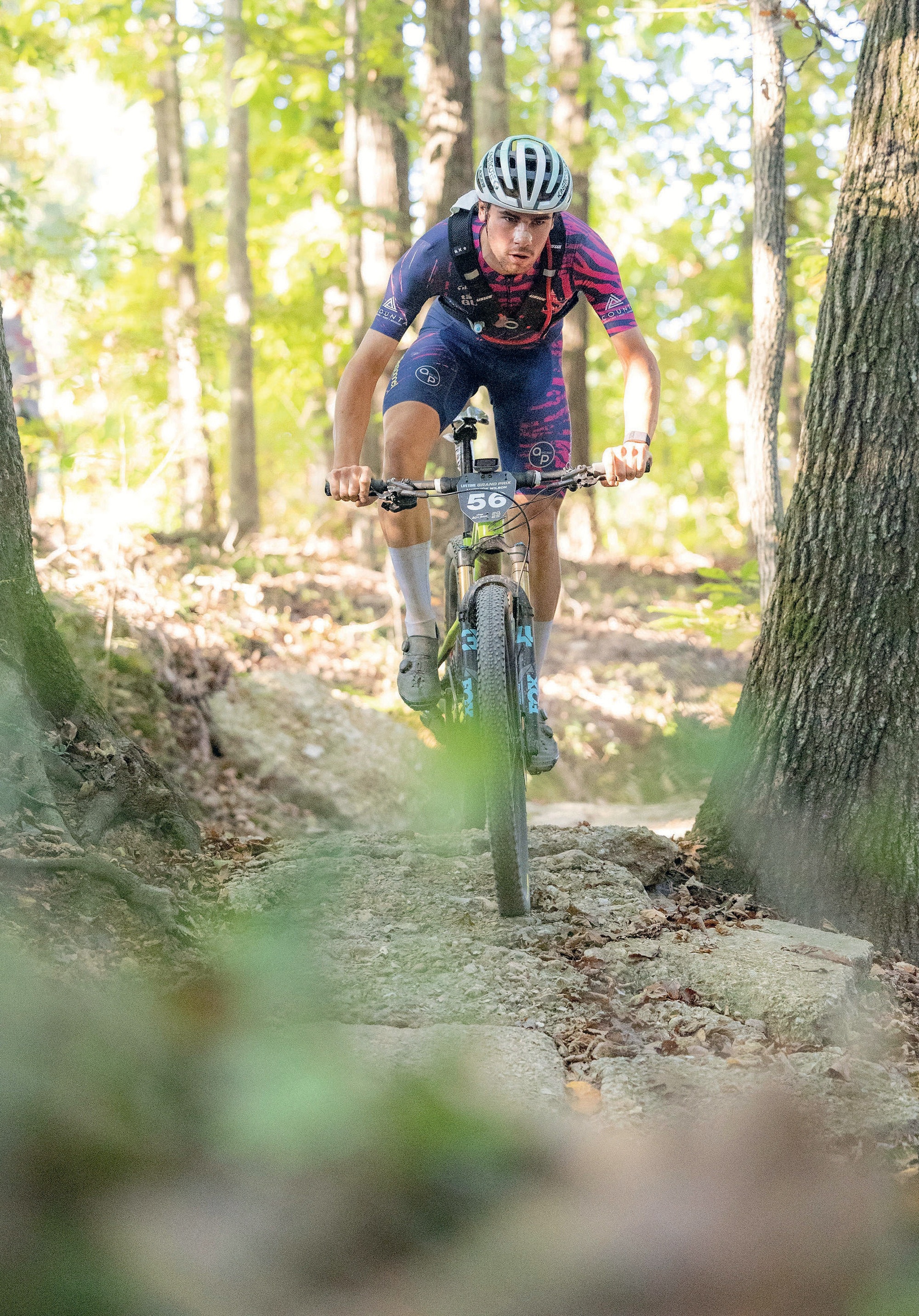
Without the backing to take on a whole World Cup campaign, Matt locked in at home in Cambridge, training hard, and working to save funds for whatever would come next. He, along with some other Kiwis, secured invites to the ‘HERO Abu Dhabi’ event.
“They invited a bunch of riders out to this big, manufactured island that they built an XCO course on, which is pretty much a 5 km long BMX track. That was pretty cool, the ferry trip out there, and it was a pretty wild race, with a lot of prize money on the line. I think Ben Oliver (fellow Kiwi) actually won that one.”
While 2024 was shaping up to be somewhat of a reset for Matt, his good mate, Cameron Jones, had headed stateside to take on some of the MTB and gravel racing that was booming in the USA.
“I was definitely getting a lot of FOMO, watching what Cam was doing, and he was keeping me in the loop about how the whole US scene works. Particularly by the end of the year, I was pretty set on going over there and giving it a nudge after seeing how well he did. “Europe’s a pretty savage pathway into the sport, regardless of how talented you are. You’re always going to get your head kicked in a wee bit. Particularly with the whole 80 per cent rule at World Cups, people start getting pulled off course pretty quickly, so it’s just a grind to get UCI points. If you’re not starting in the top three or four rows, then you’re not going to really make it anywhere. Whereas, in America, it’s largely these more marathon-style races, much longer events. So, in terms of start positioning, it’s less relevant. The longer the race gets, the easier it is, in a way. If you’ve got the legs, you’re going to do well.”
With his bank account just filled enough to get him a return ticket to the USA, Matt took the leap in 2025, heading stateside to see what he could do.
“I didn’t actually have that much of a plan. I had the beginnings of a plan, a flight there, and a flight home in August, and somewhere to stay for the first couple of months. That was about it.
“I started in Portland. There’s a local road team there, POA, that Cam (Jones) had ridden for the year prior. The NZ connection to that is through a guy called Mike from Nelson who’s now moved over there. He used to be heavily involved with the Nelson Cycling Club, and so that’s where that connection came from. There’s also a Kiwi guy who has lived in America for some time now, a guy called Lee, who grew up in Hamilton, and he’s been a big-time road cyclist there. He very kindly offered up his house as accommodation to us Kiwi riders going over there. So that made it far more doable.”
Initially, Matt wasn’t scheduled to ride the Sea Otter Classic, the opening round of the highest- profile off-road series in the US, the Life Time Grand Prix series. He was expected to race the Tour of Redlands for the POA road team, but thanks to Cycling USA’s unwillingness to recognise his previous MTB or Road racing results necessary for an upgrade to a P1/2 elite license, the lower-level license he was stuck on meant he couldn’t ride the Redlands race.
“I was getting real close to the date of Redlands, and I said to the team manager, Hey, it looks like I’m potentially not going to be able to go. I don’t want to be sitting around in Portland doing nothing that week while Sea Otter is on. I’m just gonna have to pull the pin on Redlands, and I’m gonna try and make Sea Otter happen. So, it’s purely because I couldn’t get the right license that I actually ended up at the Sea Otter Classic.
“I only filled out my entry maybe two weeks before it, and then randomly ran into a local Portland rider who was going down and he shared an Airbnb in Monterey, which was ludicrously expensive. I just felt like I had to make Sea Otter happen. As soon as I realised I could do it, and the wild card (entry to Life Time Grand Prix overall series) was on the line, I felt I had to. Yeah, it was worth the investment!”
Matt immediately turned heads at the Sea Otter Gravel Race, attacking the field multiple times, leaving the seasoned riders wondering who this young Kiwi upstart was who thought he could turn up and dictate the race. Matt eventually finished seventh in the race, placing second in the overall wild card points. The hunt for the wild card spot had begun. With just one race remaining, Unbound Gravel, to earn enough points to secure himself a wild card spot and his place in the overall Grand Prix series, it was game on for Matt.
With a decent gap until Unbound, Matt and Cam Jones headed off on a road trip up Levi’s GranFondo, a road race that draws a stacked field thanks to its huge cash prize pool. It’s a 220 km race with over 4000 m of climbing. With the support of the POA team, Matt finished seventh on the day and banked $7,000 USD for his efforts. That prize money was key to Matt riding out the remainder of the season.
“That was the first point I was like, oh actually I might be able to afford to stay here a bit longer.”
From there, the duo road tripped up through Las Vegas to the Whiskey 50 MTB race. Matt won the opening event, the Fat Tire Criterium, and went on to finish fifth in the main event, making his mark against a strong field once again. From Whiskey, he flew back to Portland for the Tour de Bloom in Washington, a road tour he would ride with the POA team. For his efforts, Matt not only won the overall classification but also cleaned up each of the individual classification jerseys. As much as this road trip had been successful from a results point of view, it had boosted his confidence, and the hours spent racing had laid a solid foundation as he headed to Unbound.
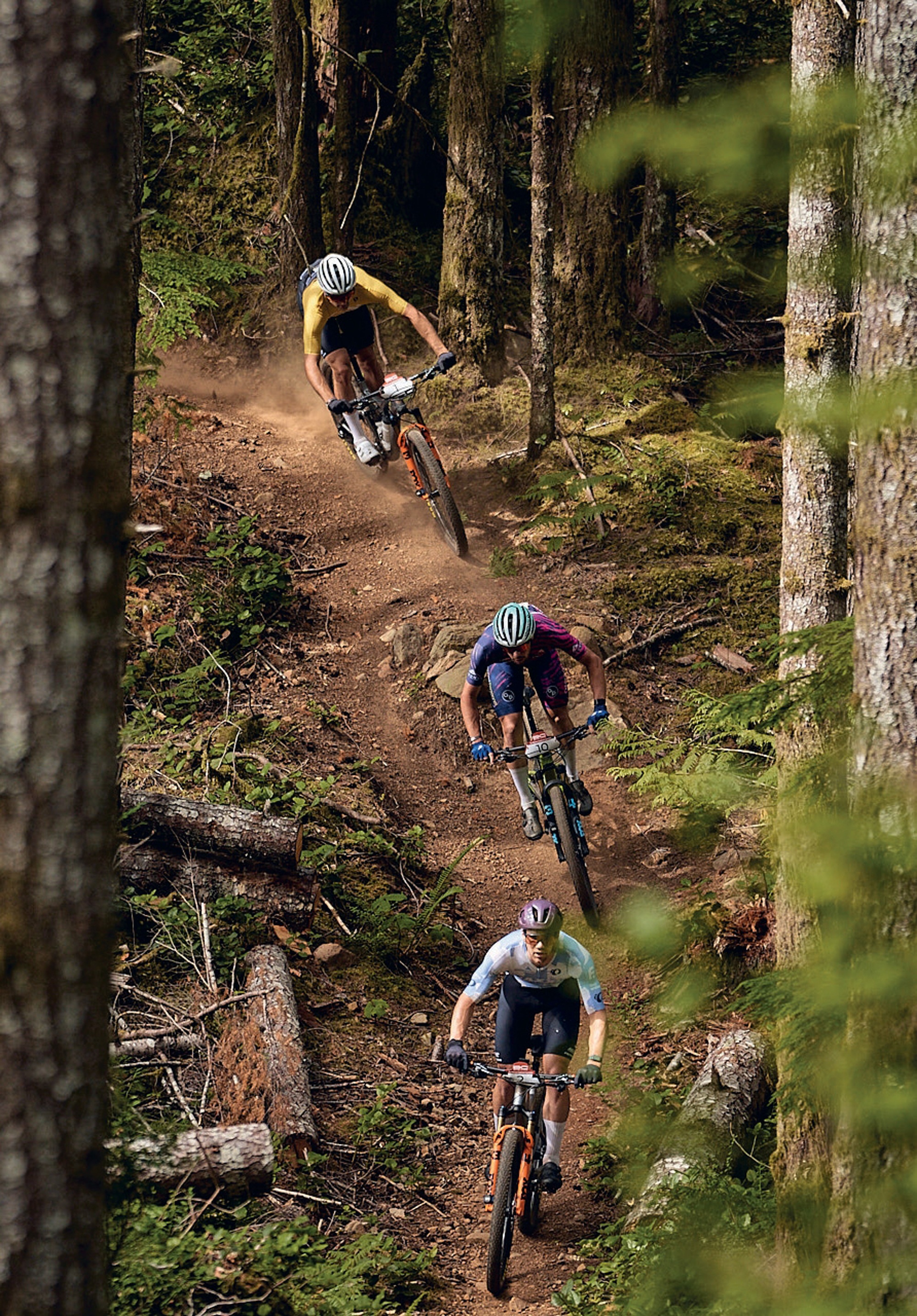
As with any debutant at Unbound, Matt had a tough baptism into the 200-mile (325 km) gravel race in the Flint Hills of Kansas. “I’d say I got a proper unbound experience of it, just being a very long day. It was a big learning curve. I kind of ended up blowing up pretty badly, with I think about 90k to go, and it was just kind of survival mode, a ‘get myself home’ situation. Particularly with wild card points on the line and not knowing where everyone else was out on the road. I wasn’t moving quickly, but I knew I just had to battle on all the way to the line, and it would be what it’d be when I got home.”
Although he got through the event without mechanical issues, it was his fuelling strategy that proved his undoing. Too much carbohydrate in his fluids caused gastric upset, and a lack of plain water on hand added to his woes, since all his liquids had some form of carbs.
We discussed any pivotal moments in the race, and Matt quickly knew where he’d made a mistake.
“Little Egypt (key climb) got me. I was starting to battle a bit there, so I just didn’t quite bother moving up the field as far as I probably should have. The whole bunch just surges for all these key sections. Everyone knows where they are, so the pace really picks up, and I just kind of got swamped at the bottom of that. I remember going up the climb, and it eventually turns to almost double track, so there’s no room to move up. And I was thinking, oh, the pace isn’t actually too bad up here. I thought the climb would be a lot nastier after hearing so much about it. The one time I got a decent look around, people were letting the wheel go, and there were big gaps opening up.
“So, one other guy and I ended up chasing over the top for a good 20 minutes. Chasing real hard. Just chopping off to get back to that main bunch, just kind of panicking. It was just a real big effort to get back in the group, which I really didn’t need to do. So that’s another big thing I learned. “I could have just sat in with the main group behind, but it was more just being in a better position. I learned pretty quickly how important and how much easier it can make your life. It might seem like you’re working too hard at the time, but getting into those key pinch points first always pays off.”
Banking good points from Unbound, regardless of his challenges, Matt headed to the Levensworth Bike Festival up in Washington.
“It’s quite a funky little town. It’s like a small Bavarian town up in the mountains. The whole town is done up in a theme like some old sort of Austrian village.”
The two-day event proved successful for Matt, winning both days and taking the overall. Additionally, it was announced that he and Cam had both secured wild card spots for the remaining Life Time Grand Prix series, so his $6000 prize winnings would now ensure he had the funds to complete the Grand Prix season.
The next Grand Prix event was the Leadville 100, a 100-mile MTB race at high elevation. Knowing that this race wouldn’t suit him particularly well, that he also needed to exit the US for a time to reset his visa, and that he had one ‘drop’ race within the Grand Prix, Matt took the punt to miss Leadville and instead head north to Vancouver Island for the BC Bike Race.
The week-long stage race is known to take in some of the area’s finest singletrack, and with flawless organisation, it makes for a fun week.
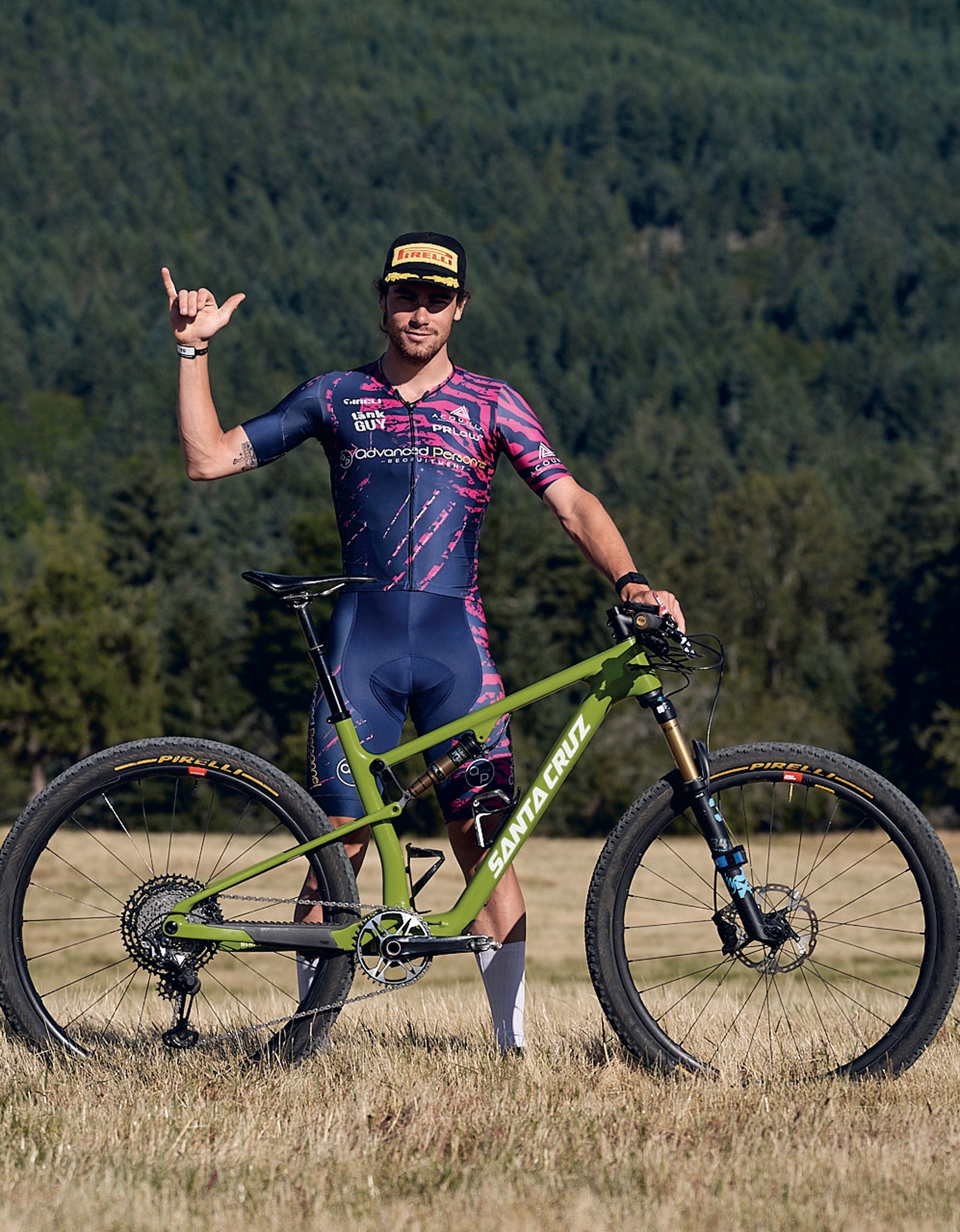
“I made it through in one piece, which was surprising with the kind of terrain we were racing on. I was pretty happy to just make it through in one piece. And again, no flat tyres. Two localish Canadian lads I was chasing all week definitely had me pretty tapped out on the technical side of things there!”
After winning the first stage (aside from the prologue), he then finished second or third across the remaining stages. Matt wound up second overall, sandwiched between 2024 winner Sean Fincham and Andrew L’Esperance in third in some incredibly tight racing.
“All week, it was well less than a minute of gap, hovering around 30 or 40 seconds. Pretty much all week up until the last stage, when I kind of thought, ‘this is my last chance to try and win this thing,’ which is still very doable. And it’s only 30, 40 seconds. It was just me and Sean, absolutely going at each other.
“The course was basically a long climb, a short climb, a quick descent, then a big, long climb that finishes on a bit of techy singletrack, and then just a massive, long downhill from the top of the Cumberland trail network all the way out to the finish. So yeah, I was pretty cross- eyed by the top of that climb to say the least!
“He got into the descent before me. I was just trying to make it down without crashing. There were a couple of pretty janky trails, and he put a pretty good bit of time into me on that long downhill.”
In classic Kiwi dirtbag style, Matt spent the BC Bike Race week living out of a U-Haul van, but after the race was done, he knew there would be some niggly logistics involved in returning the vehicle to central Vancouver. Keen for a big day on the gravel bike, Matt drove the van back to Vancouver, then headed back to Nanaimo via the ferry. His day ended with over eight hours and 200 km on the clock, having ridden home through the mountain bike trail network and some sketchy singletrack, especially on his fully rigid, skinny-tyred gravel bike.
“After that, I cracked into a big training camp. It was nice actually to have a couple months of no racing and to be able to go pretty deep on the training and not worry about being fresh for any racing coming up.
“The first week it was 24 hours, and then it was three 30-hour weeks, with some gym twice a week in there. Particularly by the end of the time up I was a little bit cracked on it (the training). It was basically just wake up, have a big breakfast, then spend the day on the bike, get home, and do a bit of stretching.
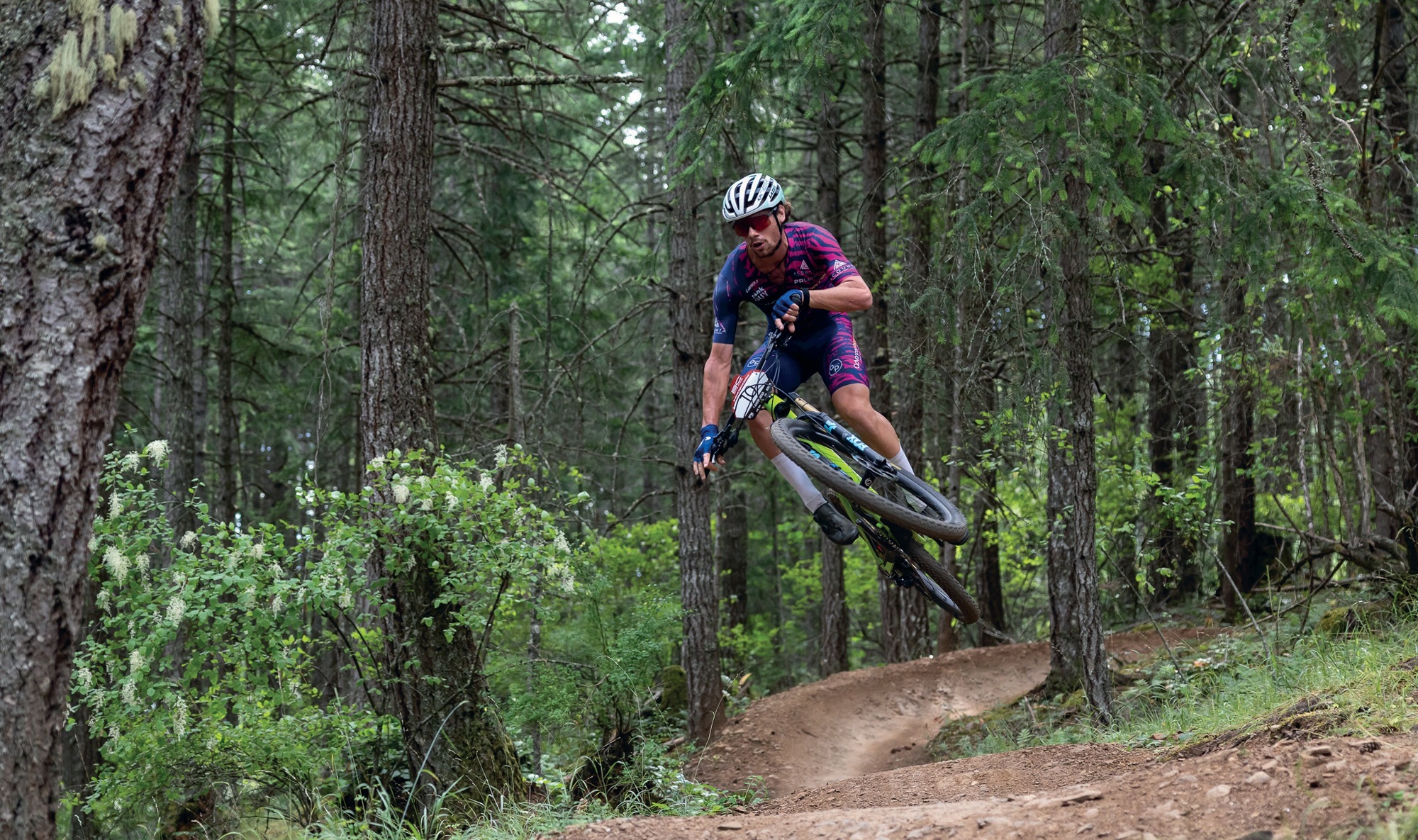
Oh, the tour was on around then, so that was pretty handy. Get home, watch that day’s tour and then go to bed, and that was that.”
Next up was the Life Time Chequamegon race in Wisconsin.
“It’s a bit of a novel event, really. It’s definitely an outlier in the Life Time race being so short. It’s not really a mountain bike race. It’s just all on grassy ski trails, so it’s just rolling grass hills. But they’re really steep, too, so it’s basically just two hours of 30, 30 (second) intervals. You’re just punching up these short, really steep grass climbs, then straight back down. It’s just that the whole way through, really. Some people hate it. I actually quite liked it. It kind of felt like a long, short-track type race. It was like an XCO race in the way it played out. Very dynamic racing, like tight bunch racing. Quite tactical. There are a couple of pinch points in it for sure.
“There are two bits where the track kind of goes to singletrack. And then there’s what’s known as the Fire Tower Hill, which is the main climb of the day. Quite fitting. On our pre-ride, me and Cam went out, and our goal was to try to take the KOM up Fire Tower, which we did. Even though Cam actually came around me over the top of the climb, according to Strava, I got the KOM. Then on race day, we reversed roles. Cam led into Fire Tower, and I was on his wheel, then I was able to just come around him over the top, which didn’t really help the race at all. But again, it’s good fun racing your mate, eating each other up!”
Matt headed from the wilds of Wisconsin to Blackburn, Pennsylvania, where Cam Jones is now based.
“It was pretty cool to get around his (Cam’s) hometown and where he’s been doing all his training this year. I got to check out Virginia Tech University, where he studied for a while and just meet a bunch of the crew over there.”
Next up, he was off to Bentonville for the 100 km Little Sugar MTB race, the penultimate round of the Life Time series. Early in their visit, both Matt and Cam had sliced tyres while out training in the area, learning that if your tyre is locked up while sliding or skidding through a turn, it’s likely the sharp rocks that line the Bentonville trails will slice that bad boy like a knife through butter. The key they discovered was smart braking and never locking up your wheel.
“The start of the race is a neutral rollout along a road, and then you peel off into a short bit of concrete and then like an open grassy climb, which again, for us XC riders, we were a lot less worried about positioning for the start once I saw that it was at the beginning because it was so similar to an XCO. It was basically just two minutes as hard as you can to the singletrack. Matt Beers (Specialized Factory racer) led that one out. Then with Cam, then it was Bradyn Lange, and then me into the singletrack.
“Pretty quickly over the first five, ten minutes into the singletrack, we got quite a gap on the field, so things were looking promising. Then, on a pretty nondescript section of trail, I still don’t actually know what I hit, but I hit something buried in the grass pretty damn hard. Hit both my rims on it, punctured both tyres, and cracked the rear rim right through.”
Being only 15km into the race, and with the aid station at the 50km mark, Matt soldiered on, having plugged his punctures. He was able to limp to the aid and borrow a wheel from Cam’s Scott Bikes support team, who’d been helping Matt out at times over the season. Matt finished the race, comfortable in the knowledge that he’d salvaged some overall Life Time points, while some of his competitors had either pulled out of the race or not turned up at all.
The following weekend, the Grand Prix remained in Bentonville for the grand finale, Big Sugar, a 100-mile gravel race. With storms forecast for race day, organisers announced that there may be a change to the race, but it wasn’t until early race morning, as riders were heading to the start, that they announced the race distance would be halved, so riders would be off the course before the worst of the storm arrived. Such a drastic change threw many of the field into disarray. Not Matt though – he knew the shorter race would play to his strengths.
Being placed outside the top ten overall, and with the leading riders marking each other, Matt knew this was an opportunity to go all in and try to get a race win.
“Being out of the top 10, I kind of had the feeling of just nothing to lose, everything to prove. So, I was pretty damn determined to make sure I was going to be in a break, up the road that day. It took about 12 minutes to do so. I remember looking back and seeing Matt Beers coming across to me and thinking, Sweet, that’s a man you want to be in the break with.
“Riley Amos (Trek Factory XC racer) followed, and then we also had Alex Wild, who kind of just got on, but as we’re kind of launching and trying to establish the break, unfortunately, he kind of got spat out the back, and it was just the three of us. Being shorter at just 50 miles only made the racing faster and more furious. So, things are looking good.
“About an hour and a half in, we lost Riley. He had dropped off, and then Matt Beers and I ended up having a pretty good gap over what was a chase group of about four or five riders that Riley had joined.
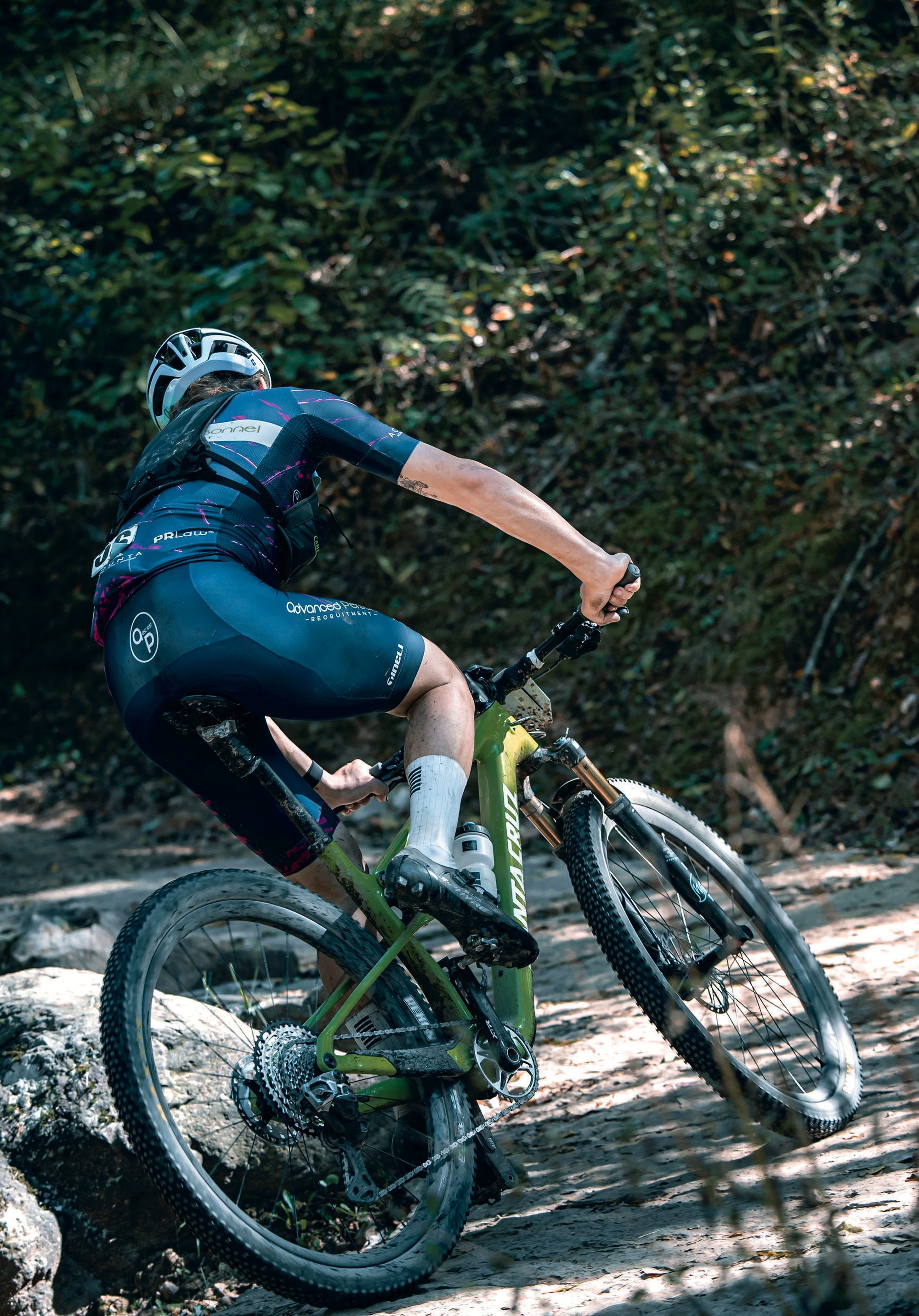
“One tough thing about the Life Time Grand Prix is that you often don’t get told accurate time gaps during a race. We hadn’t had a time gap all day. We could just tell by what we could see. So, I didn’t know how much of a lead we really had at that point. And then, yeah, with about 15km to go, into one of the last somewhat technical sections, a little bit of singletrack, there was a drainage ditch of some sort, and at the bottom, it was just all really chunky gravel had collected. I came in a bit hot and pinched my front tyre, cutting the sidewall on some of that notoriously sharp Bentonville rock. It was a pretty big slash, so it was kind of hard to plug. I didn’t really know what to do, so I just kept on riding on the rim, hoping I could ride hard enough to make it home before the remaining groups.
“Potentially, with the amount of the gap we had, there could have been almost enough time just to take my wheel out, throw a tube in and try that. We had a lot of time. I was riding hard on the rim, but I wasn’t going quickly.”
With just 6km to go, the small chase bunch swallowed up Matt, but it wasn’t until the last couple of kilometres that the main bunch with the overall series contenders caught him. Over the finish, Matt’s series ranking didn’t really change, but his final opportunity for a win in the series was gone. After the event, multiple high-level riders mentioned that Matt was up for the win, strong enough to do it, but bad luck had spoiled his chance.
Returning to NZ, Matt had a bit of a sour taste in his mouth after the tail end of his season had been wrecked by his mechanical issues. Unfortunately for him, his woes weren’t over yet.
Lining up for the Cross Country Marathon Nationals at the Whaka 100 over Labour Weekend, Matt was keen to put his strong end-of-season form to use. There’s no denying that he was a strong contender for the title, but once again, luck wasn’t on his side. His seat post packed in just 45 minutes into the race, with its keyways failing, leaving the saddle free to rotate 180 degrees.
Matt pulled the pin, frustrated that this was how his year would finish out, and although he was gutted, he was comfortable in the knowledge that he had the talent and now the experience to take on some of the best off-road racers in the world.
2026 will look similar to this year for Matt. After missing out on the Life Time Grand Prix series selection for next season, he plans to again battle for a wild card. His set-up next year will be a lot less dirtbag, though, as he’ll have the support of Scott Bikes but will still be travelling and staying with Cam Jones through the bulk of the season. I’m sure the duo will again turn heads and show the field what these cheeky Kiwis can do.
Paradise Found: New Caledonia
There are places that exist in your peripheral vision, destinations you’ve heard whispered about but never quite focused on. New Caledonia was one of those places for me. A French territory floating in the South Pacific, closer than you’d think yet somehow still undiscovered by the masses that flood more predictable island escapes.
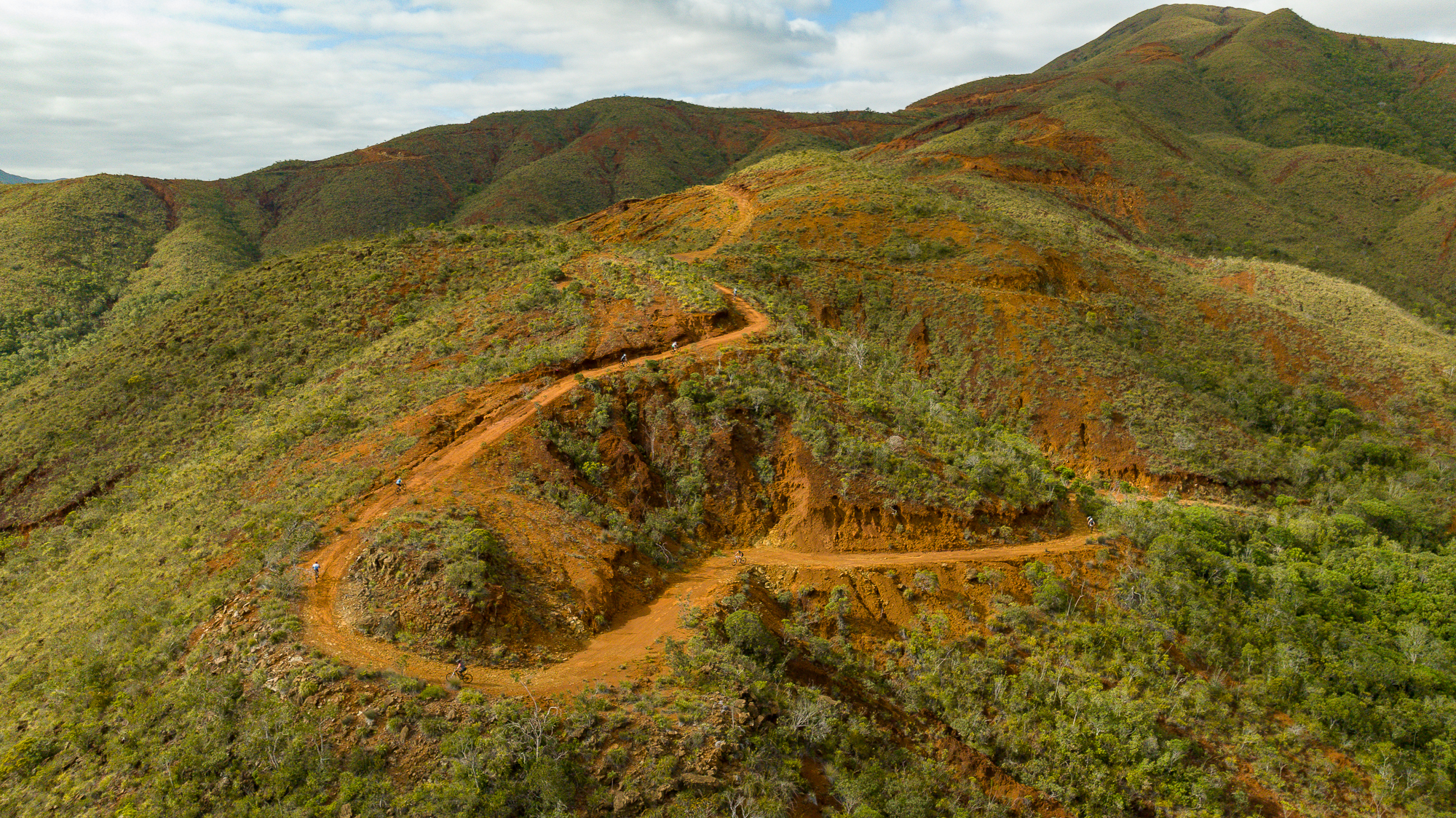
I’d be lying if I said the draw was purely romantic. Sure, the promise of lagoons so impossibly turquoise they look Photoshopped played a part. But what really caught my attention was something unexpected: mountain biking. Proper, technical, lung-burning mountain biking on a tropical island. The kind of riding that makes your quads scream and your mind go quiet.
And here’s the thing that sealed it: getting there from New Zealand is absurdly easy. Three hours from Auckland with Aircalin, and suddenly you’re stepping off a plane into French Polynesian warmth, where the croissants are legitimate and the trails are waiting.
A Territory Still Finding Its Feet
I need to address something before we go further. New Caledonia is recovering. In 2024, civil unrest shook this island, tensions boiling over around questions of independence and identity that have simmered for decades. It wasn’t the paradise-postcard story tourism boards want to tell, but it’s the truth, and ignoring it would be dishonest.
The violence has subsided. The streets of Nouméa, the capital, have found their rhythm again. But the scars are still visible if you know where to look, and the path forward remains uncertain. Some might see this as reason to stay away. I see it differently.
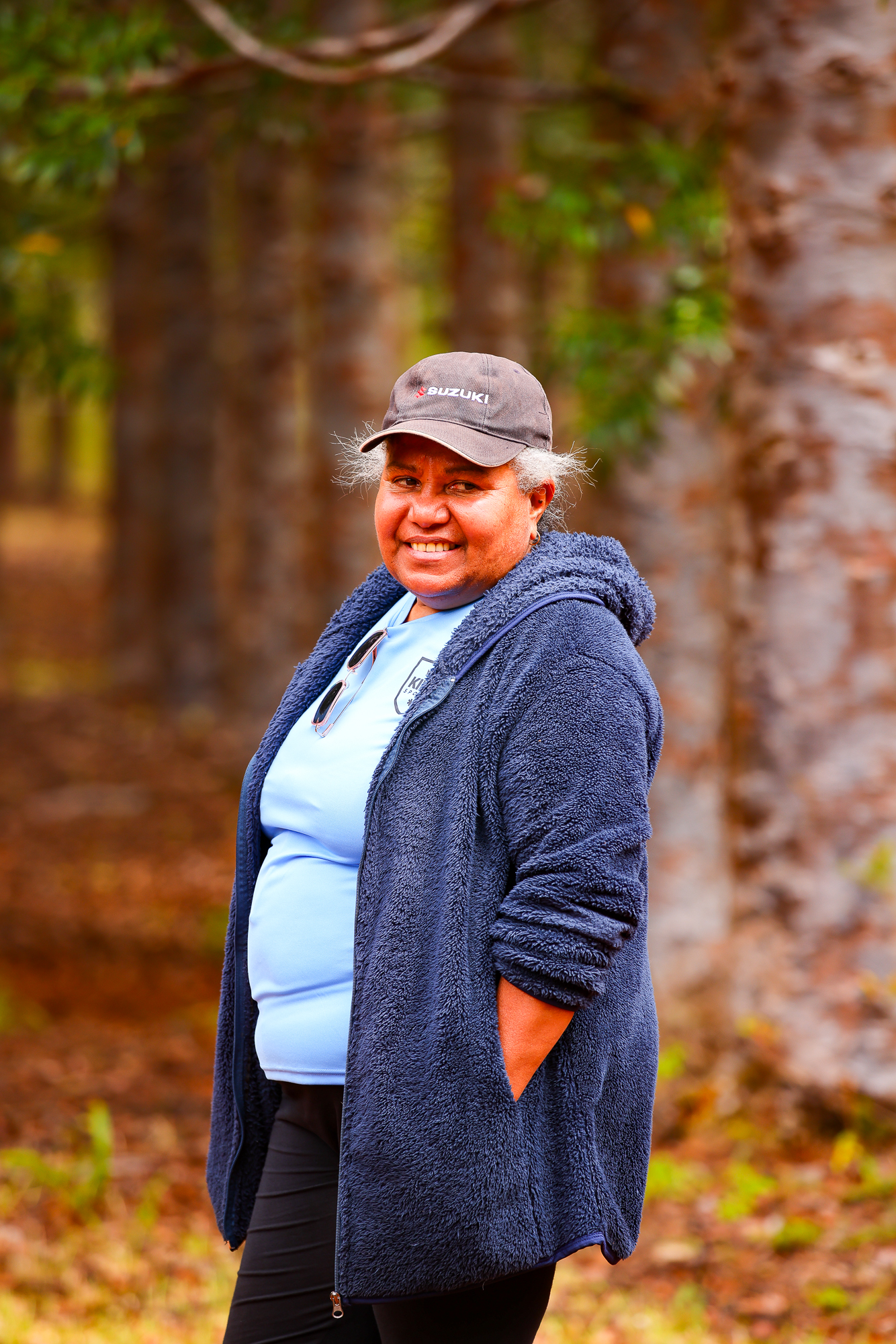
Tourism matters here. It employs people. It sustains communities. It gives young Kanak locals opportunities beyond subsistence. Visiting now, with eyes open and respect intact, isn’t exploitation – it’s engagement. It’s choosing to see a place in its complexity rather than demanding it perform simplified paradise for your comfort.
So yes, I went. And I’d go again.
The Proximity Problem (Which Isn’t Actually a Problem)
Here’s what surprises most people: New Caledonia is genuinely close. Not “close for the South Pacific” close. Actually close. Three hours from Auckland. Three hours from Sydney. Two hours from Brisbane. The flight on Aircalin is the kind where you board with a coffee, read a few articles, maybe watch half a film, and then you’re descending over that absurd lagoon.
I remember looking out the window during final approach, seeing the reef system from above – this massive natural barrier protecting the main island like a turquoise moat. It’s UNESCO-listed, apparently one of the longest barrier reefs on the planet. From 10,000 feet, it looks painted on.
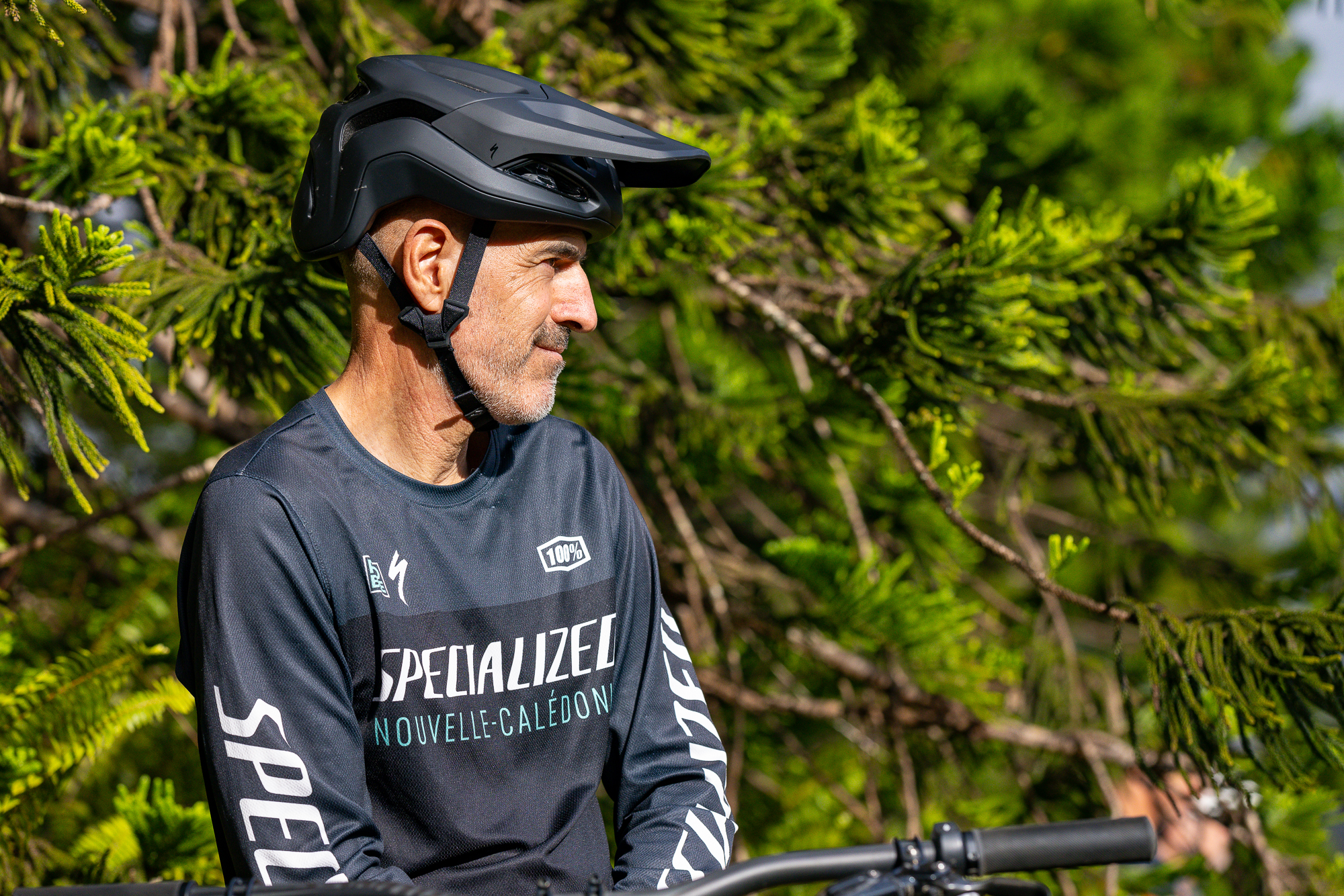
La Tontouta International Airport sits about 45 minutes outside Nouméa. I’d arranged a car through Europcar, and within an hour of landing, I had a bike rack strapped to the roof and the windows down, driving toward accommodation with that specific kind of excited exhaustion that comes from crossing into somewhere new.
Where the Riding Lives
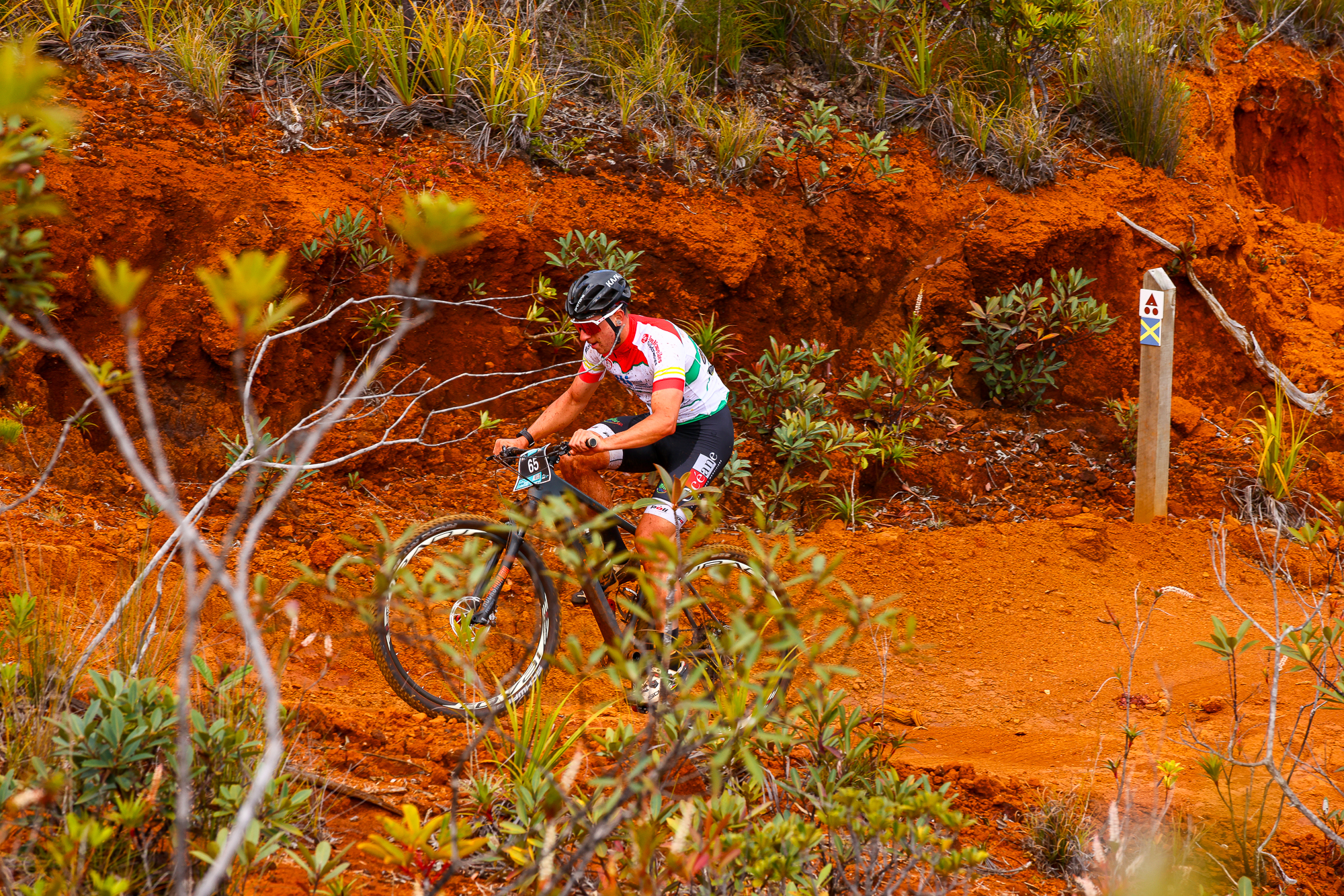
Let’s talk about why you’d bring a mountain bike to a tropical island. New Caledonia has a network of trails that would make most dedicated riding destinations envious. They’re technical without being punishing, scenic without sacrificing challenge, and crucially, they’re accessible.
Parc des Grandes Fougères
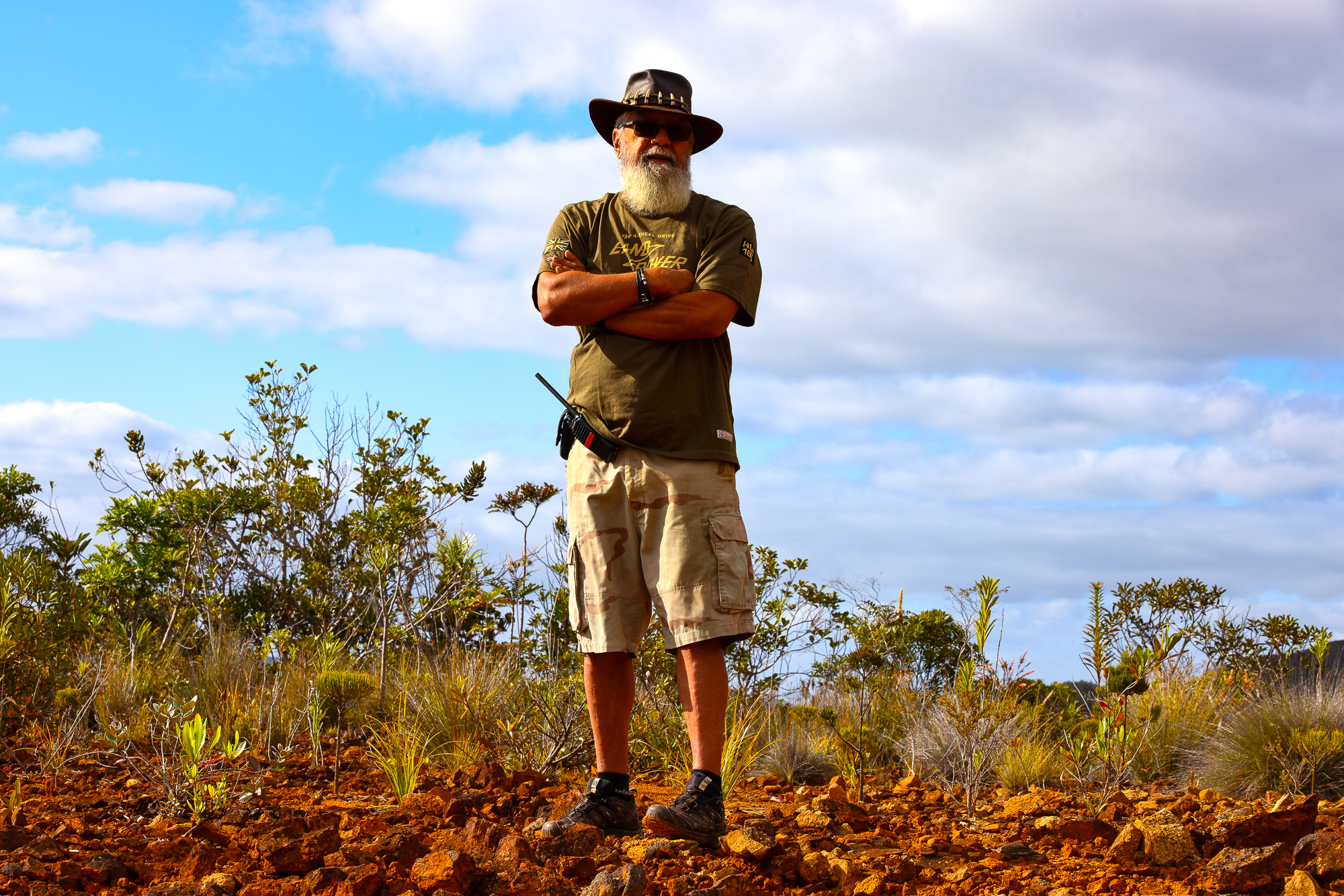
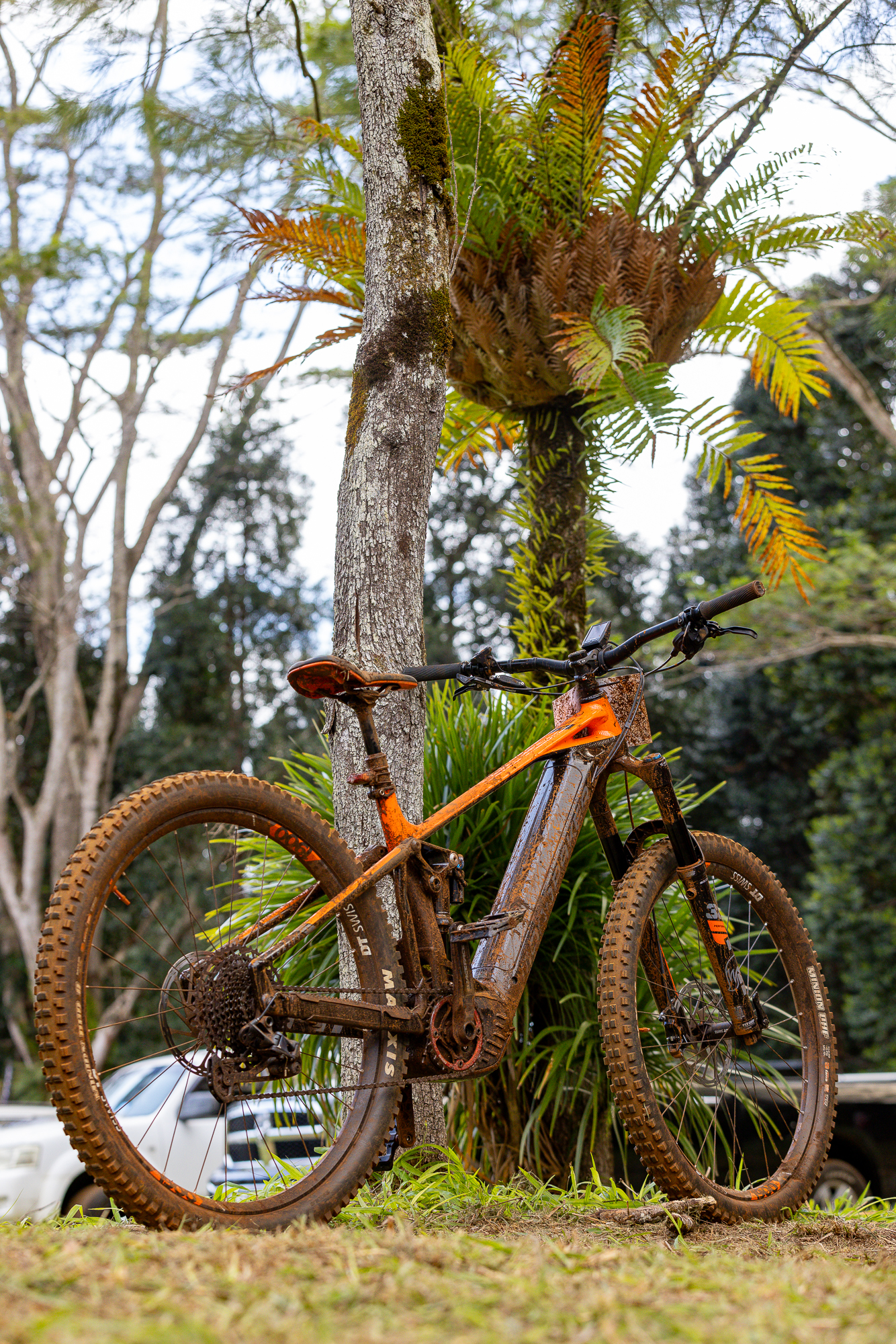
The name translates to “Park of the Great Ferns,” which undersells it considerably. This is rainforest riding – dark, humid, technical. The trails wind through ancient tree ferns and native kauri, cutting lines through terrain that feels genuinely primeval. It’s not a massive network, but what’s there is quality. Expect roots, expect rocks, expect your brakes to work overtime.
Domaine de Deva
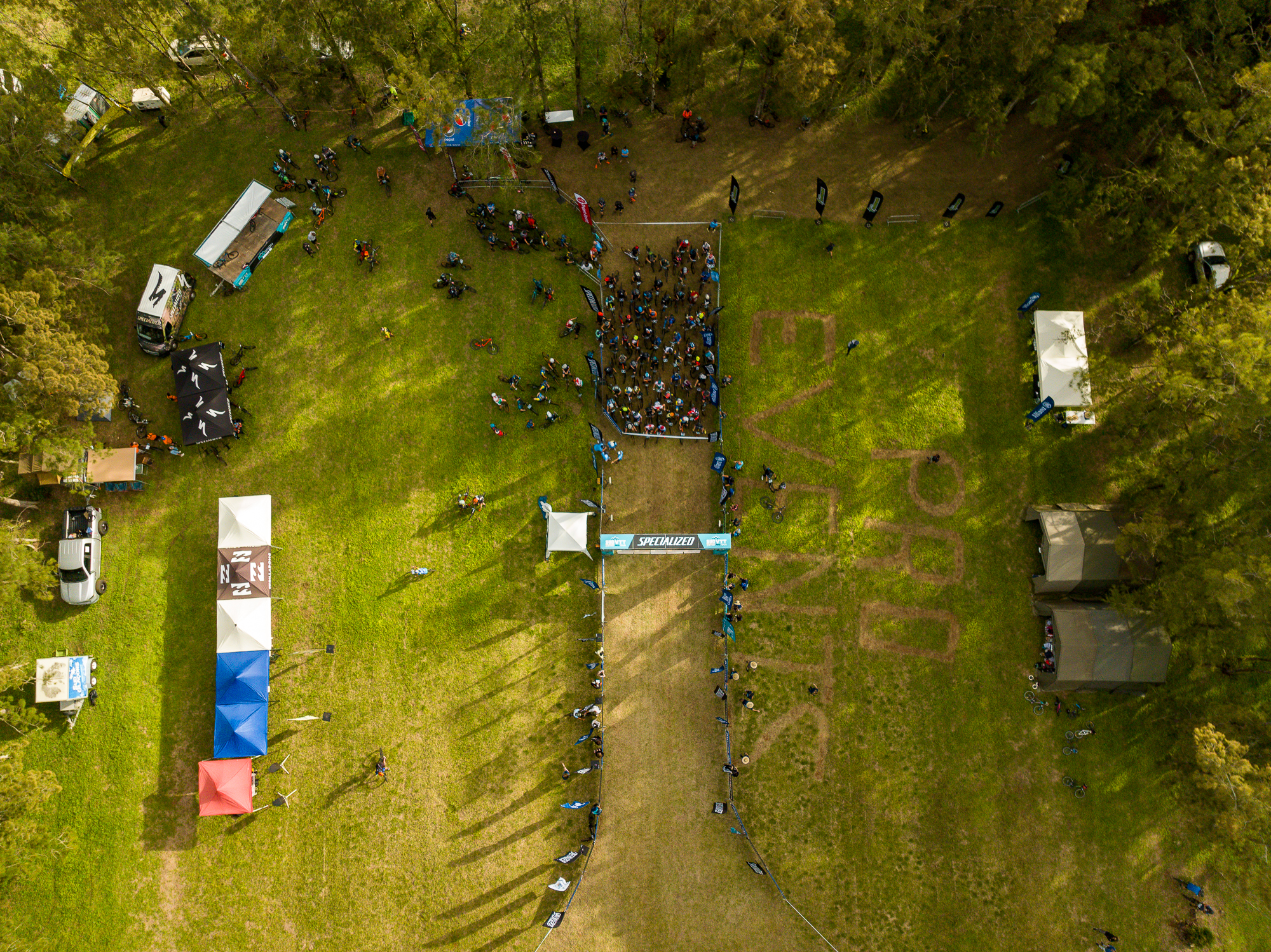
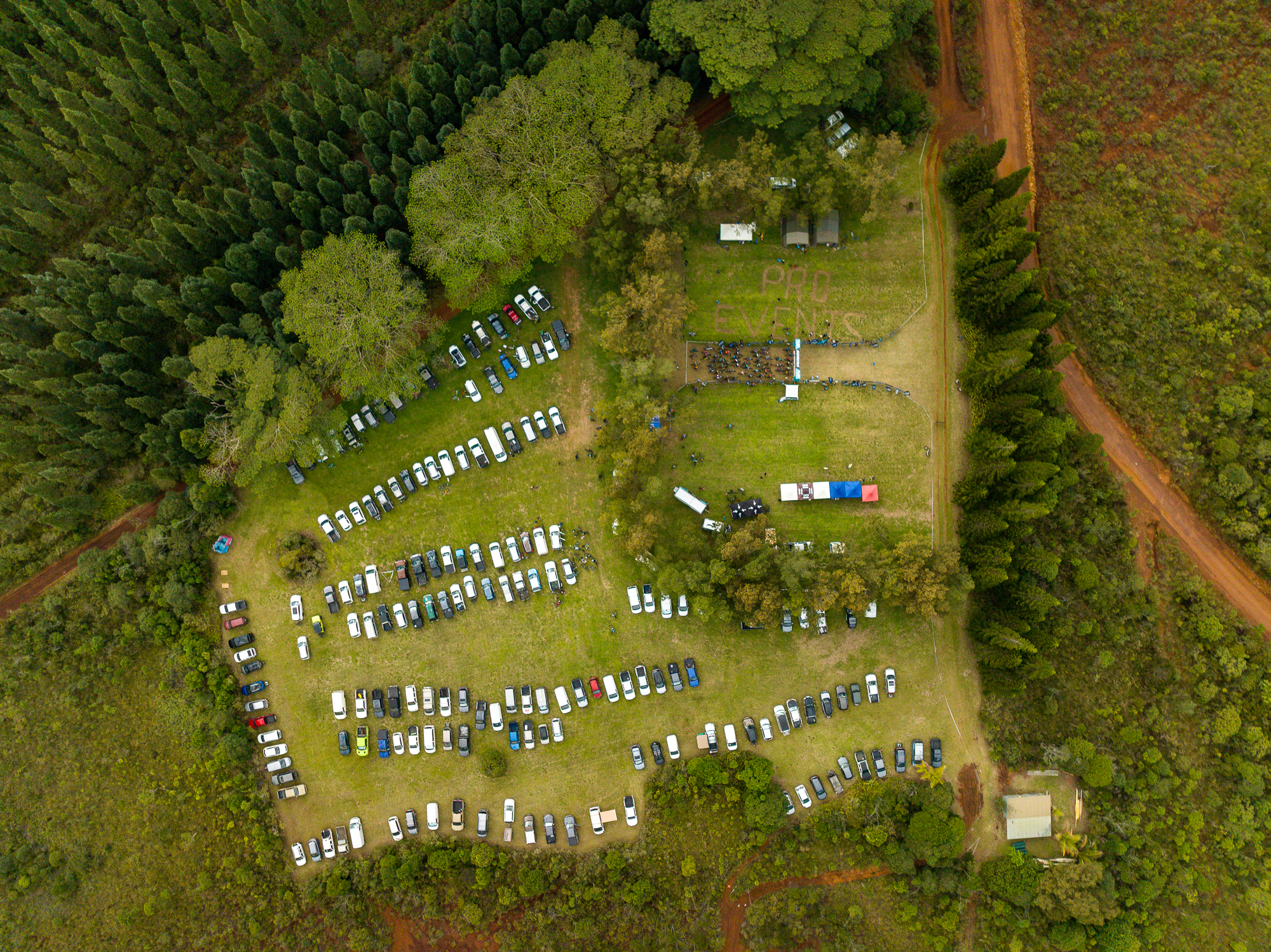
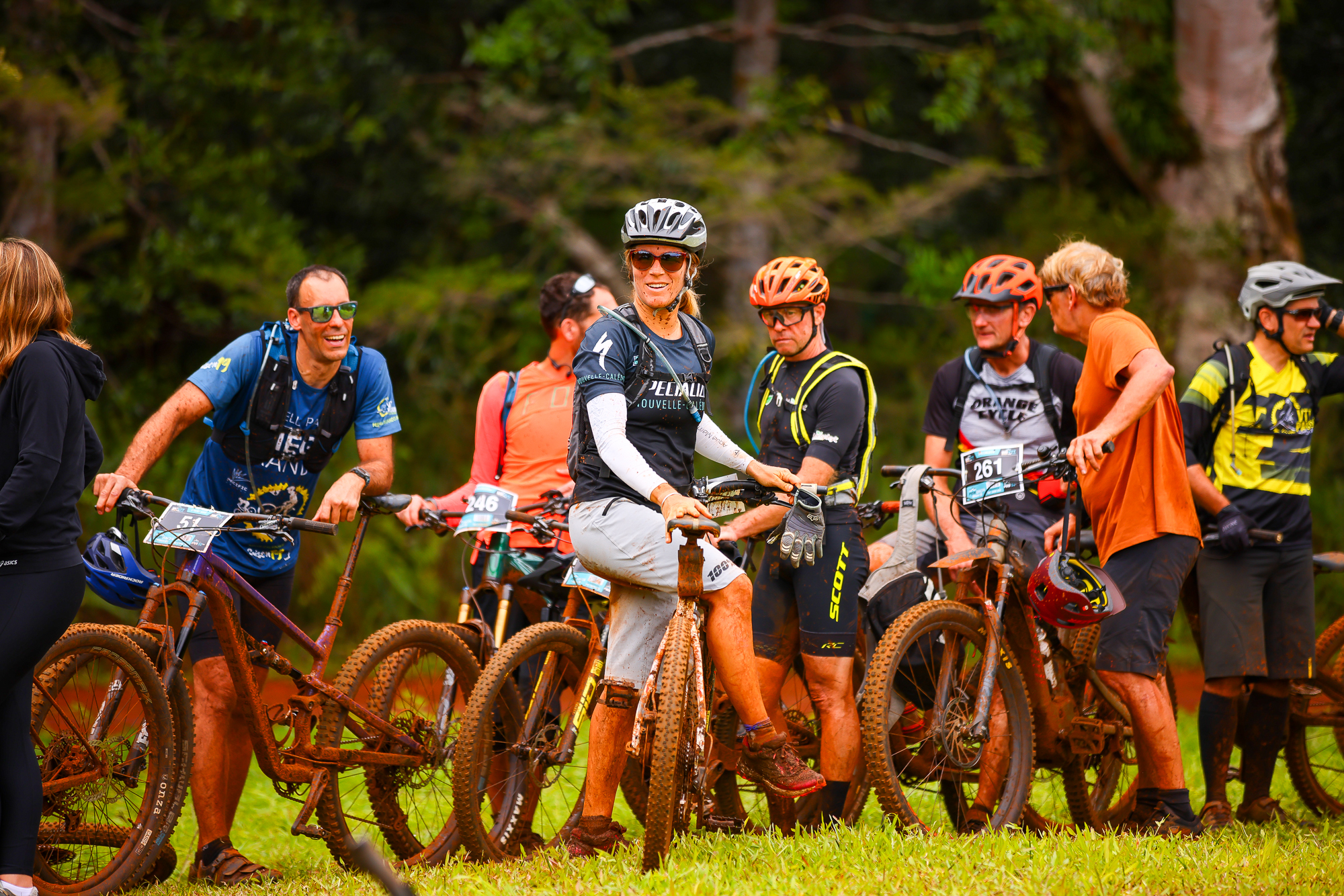
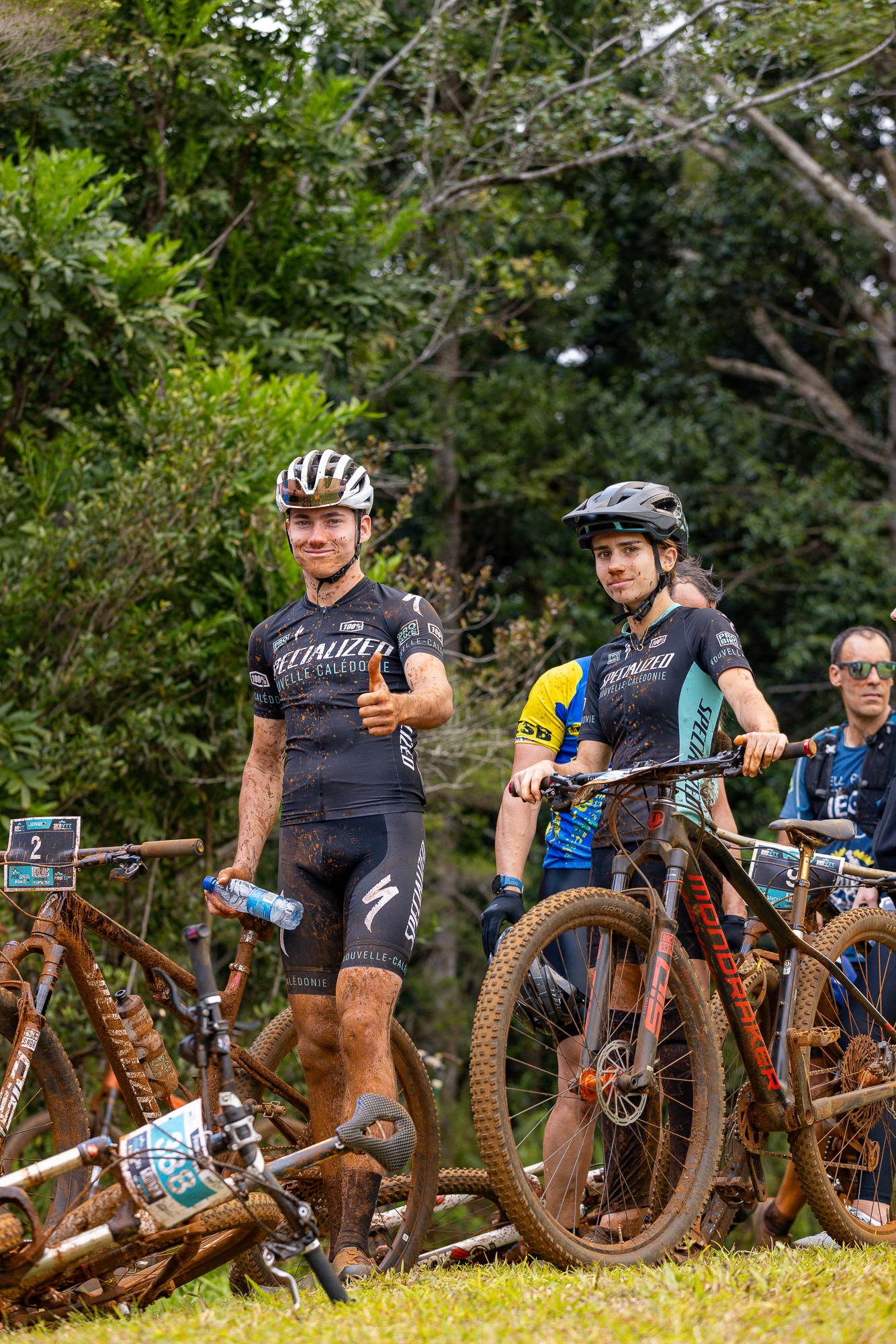
This is where things get serious. Domaine de Deva hosts the DEVA100 race every June, a two-day endurance event that attracts riders from across the Pacific. Even if you’re not racing, the trails here are worth multiple visits. They range from flowy XC loops to proper technical descents, all threaded through West Coast landscapes that alternate between dry scrub and sudden green.
The Deva100 race itself runs June 27-28 in 2026, and if you’re the kind of rider who likes suffering in beautiful places, I’d recommend registering. The event has that slightly chaotic, under-commercialized energy that makes regional races memorable.
Blue River Provincial Park
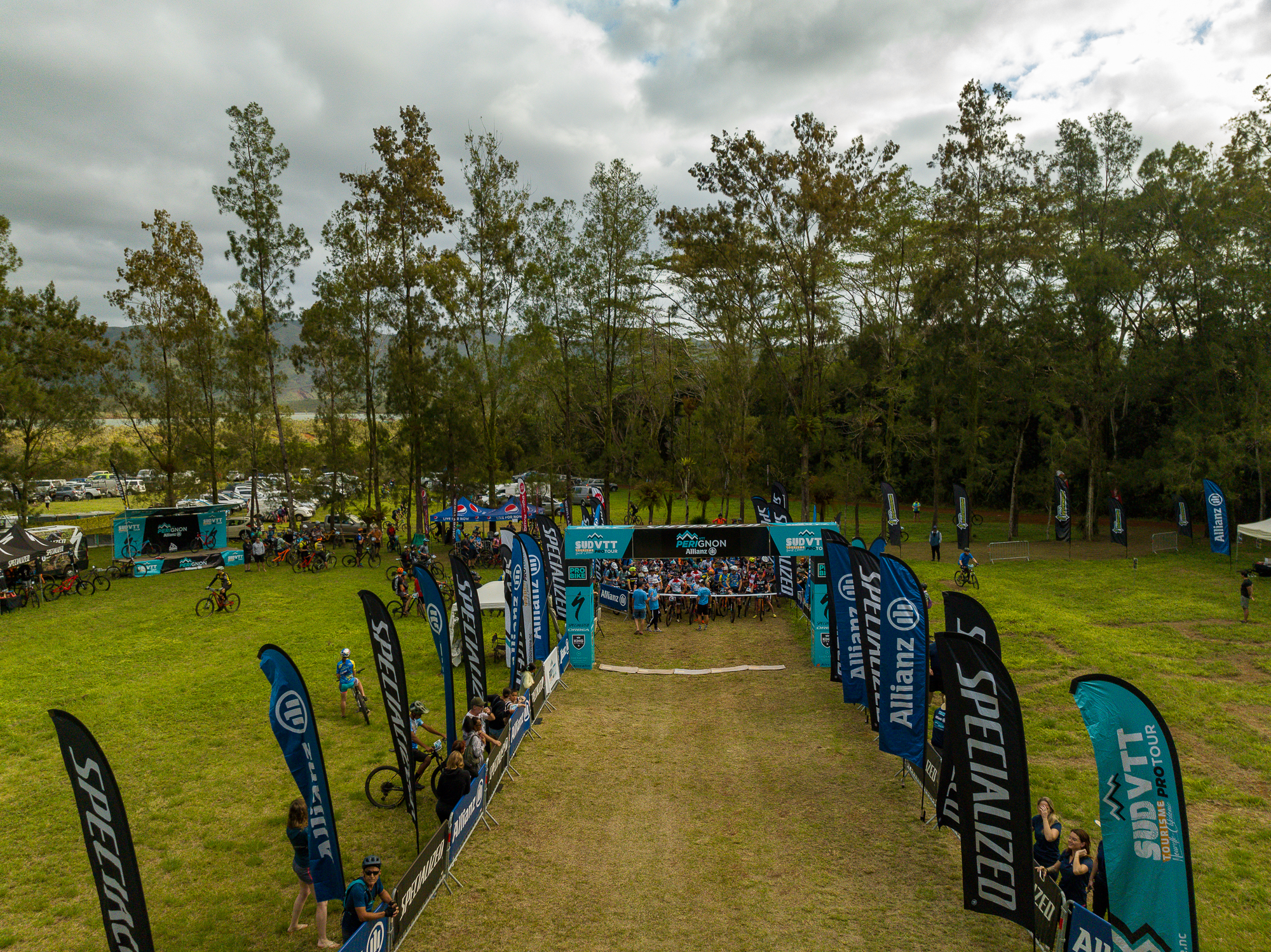
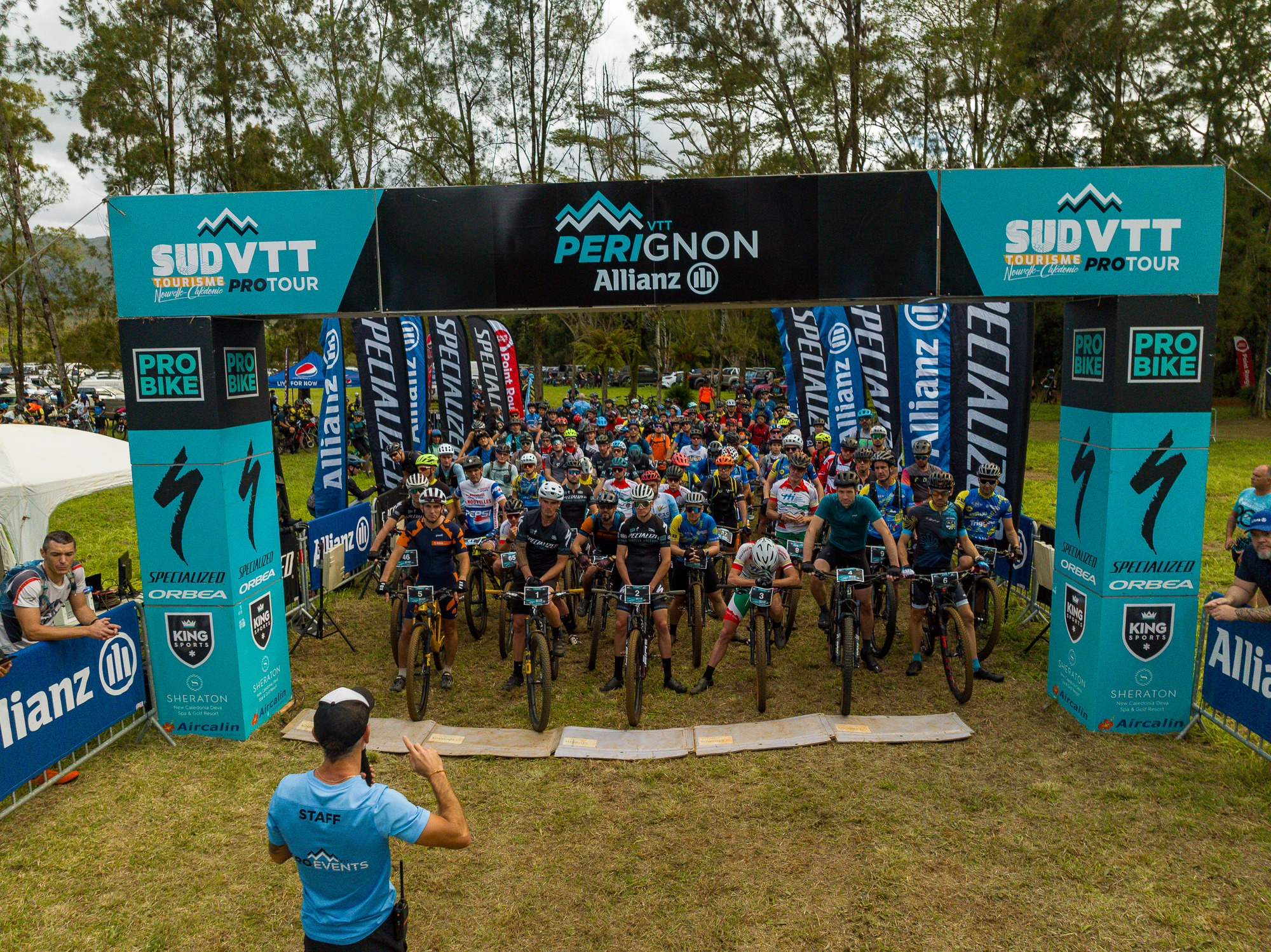
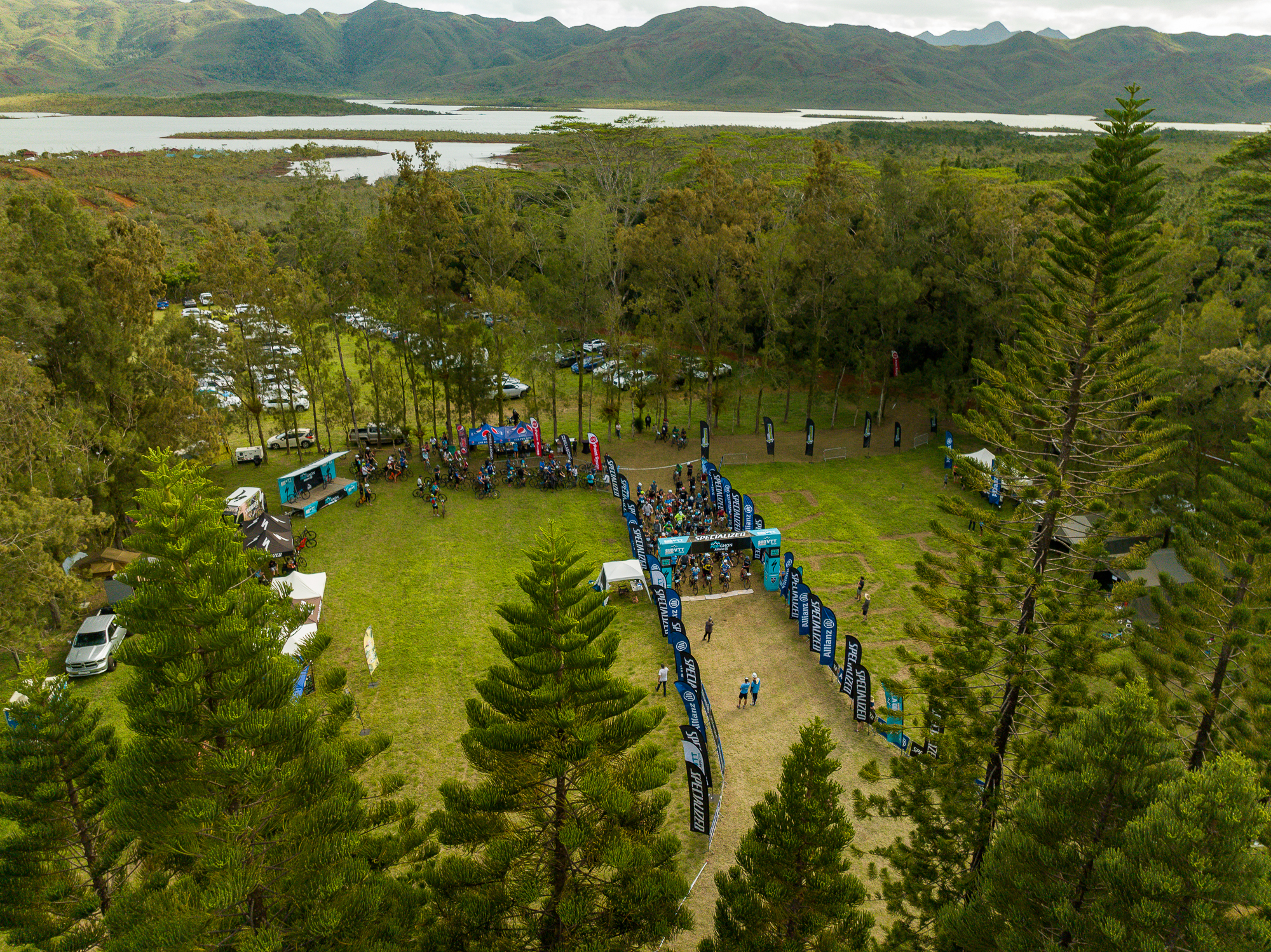
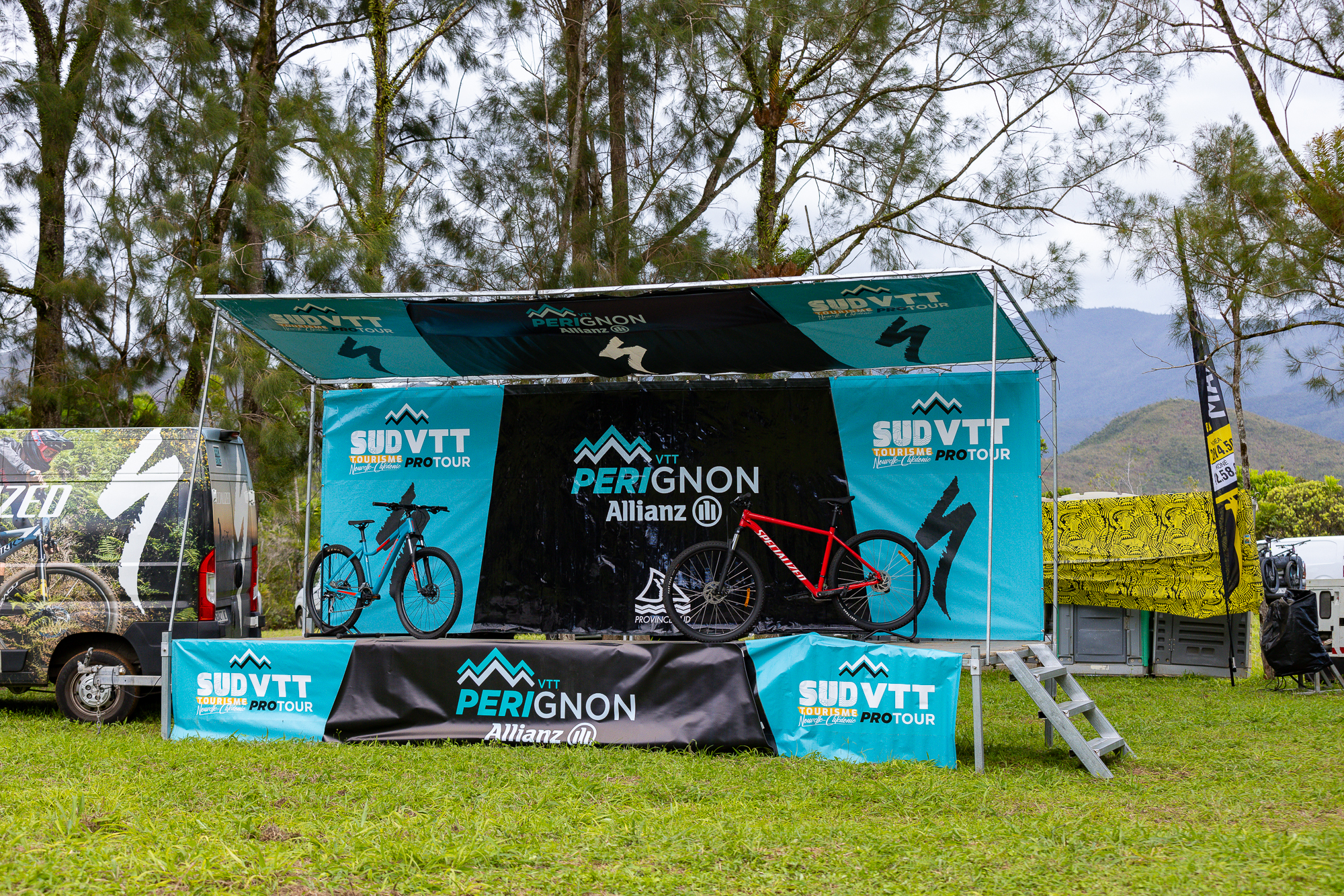
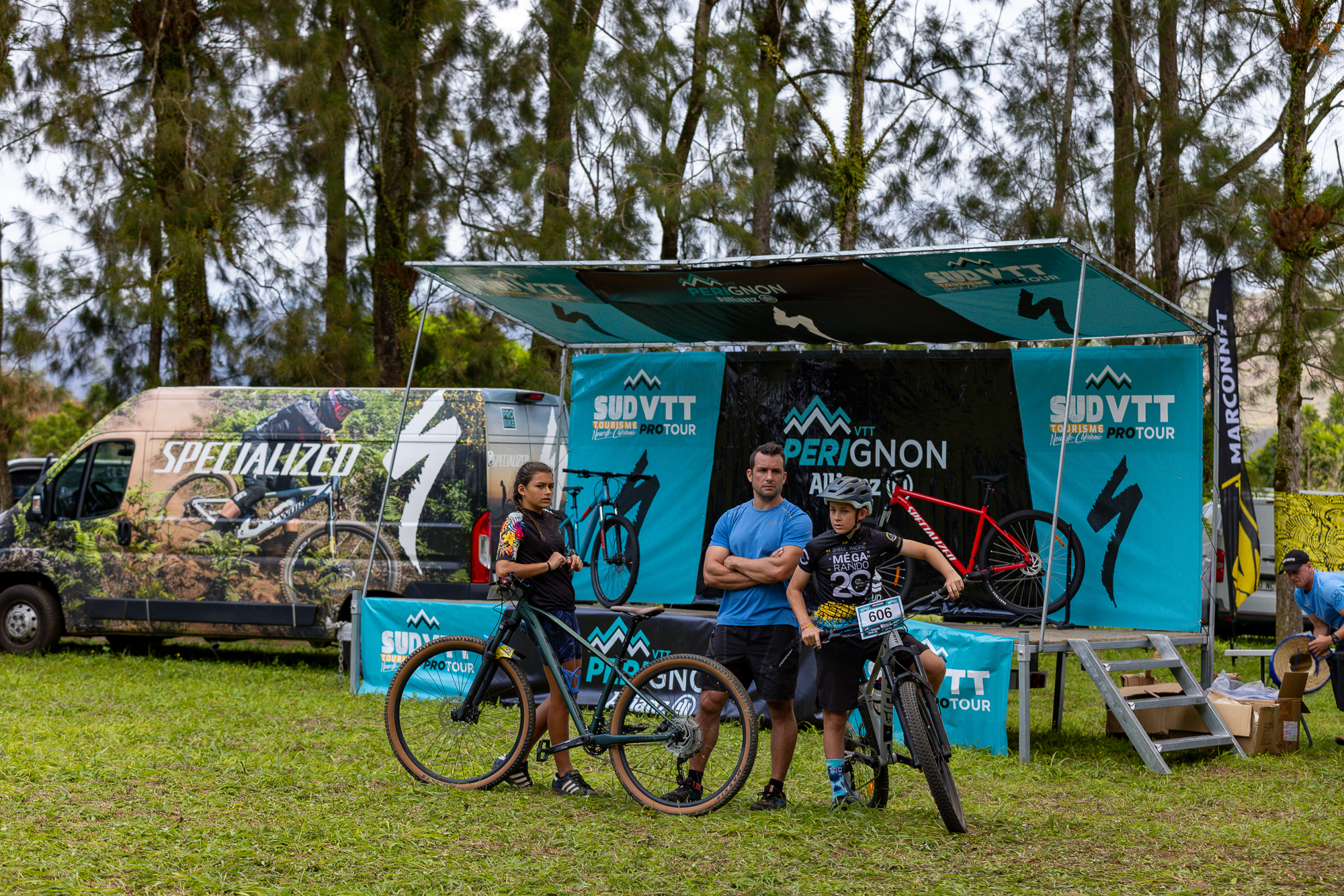
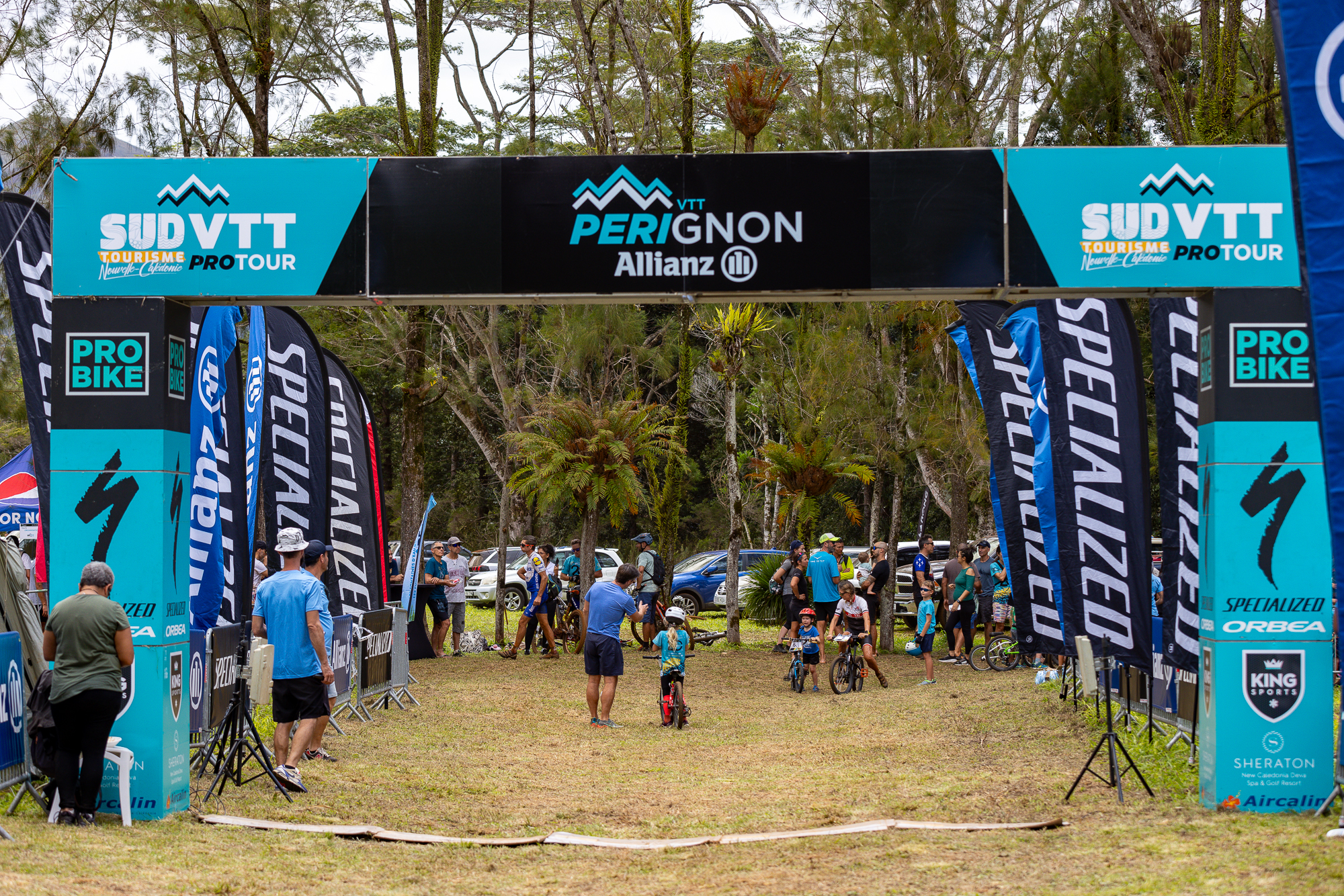
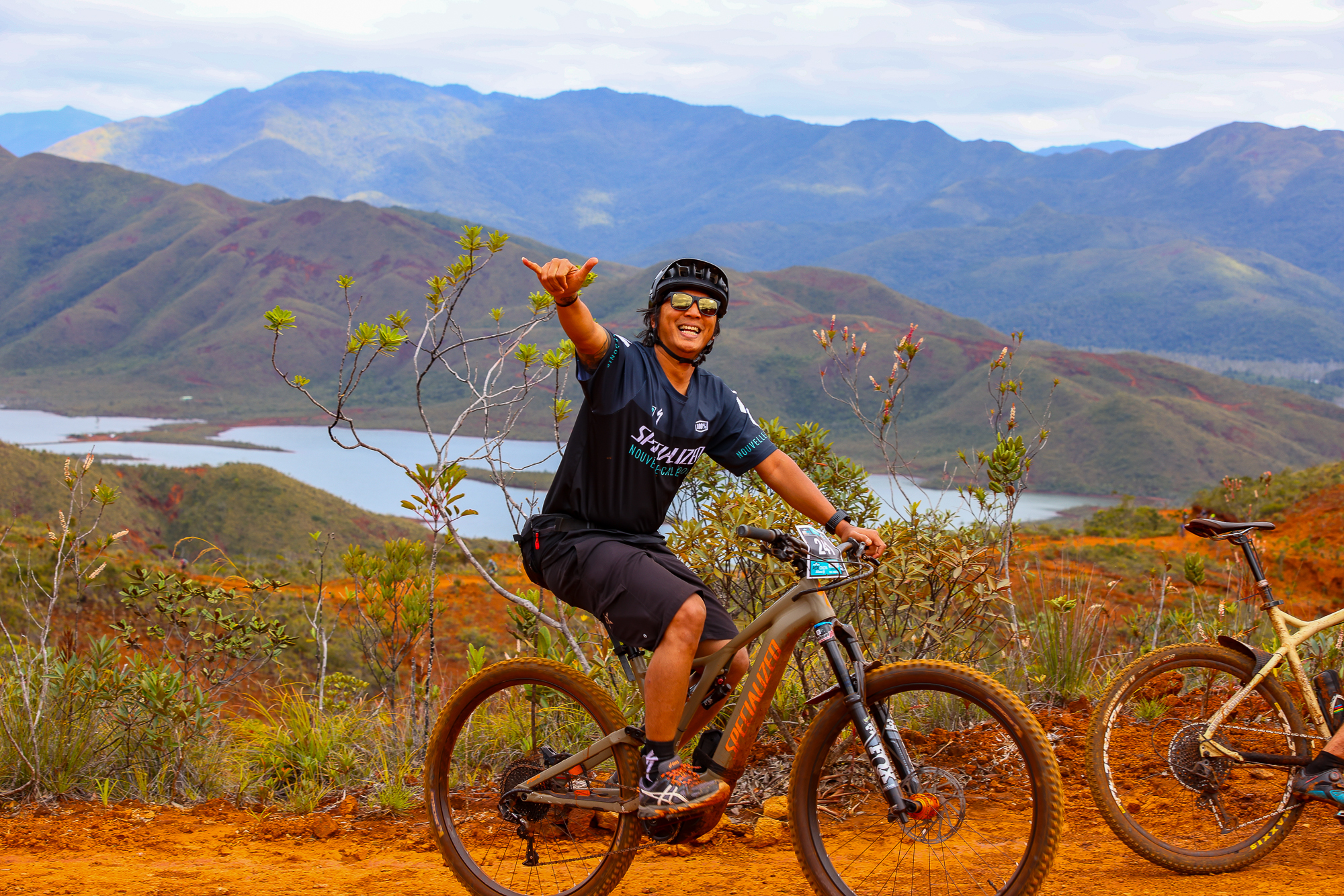
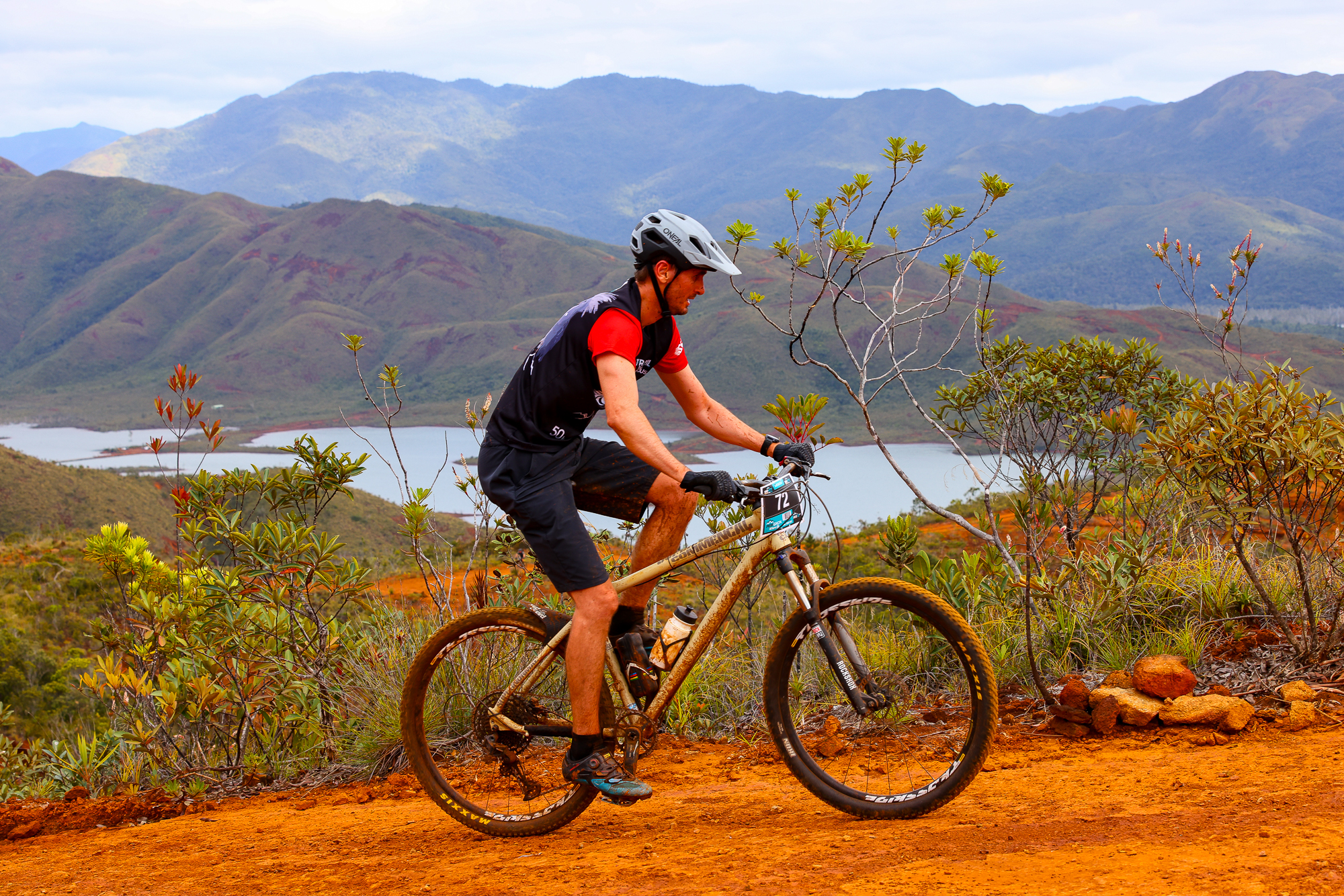
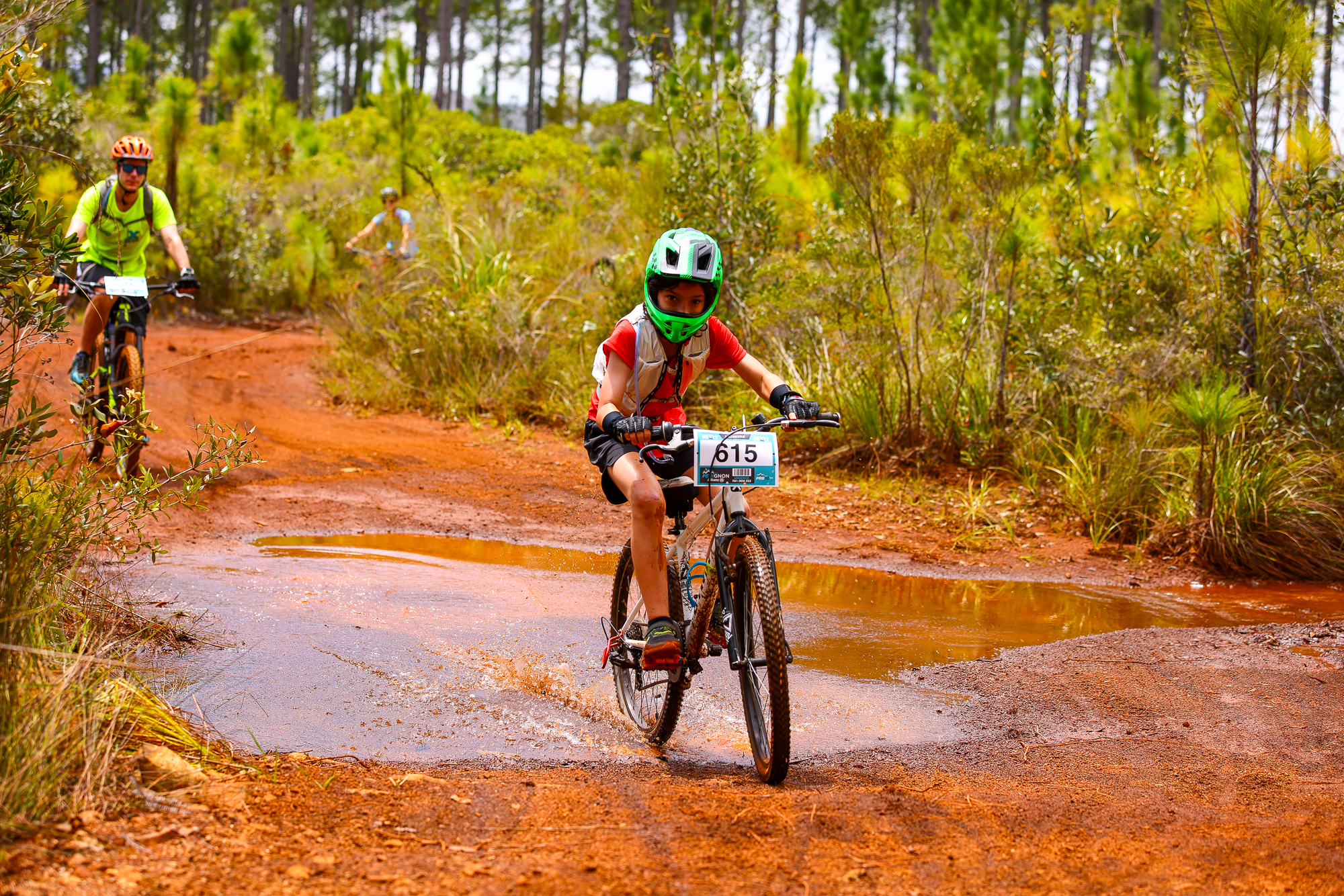
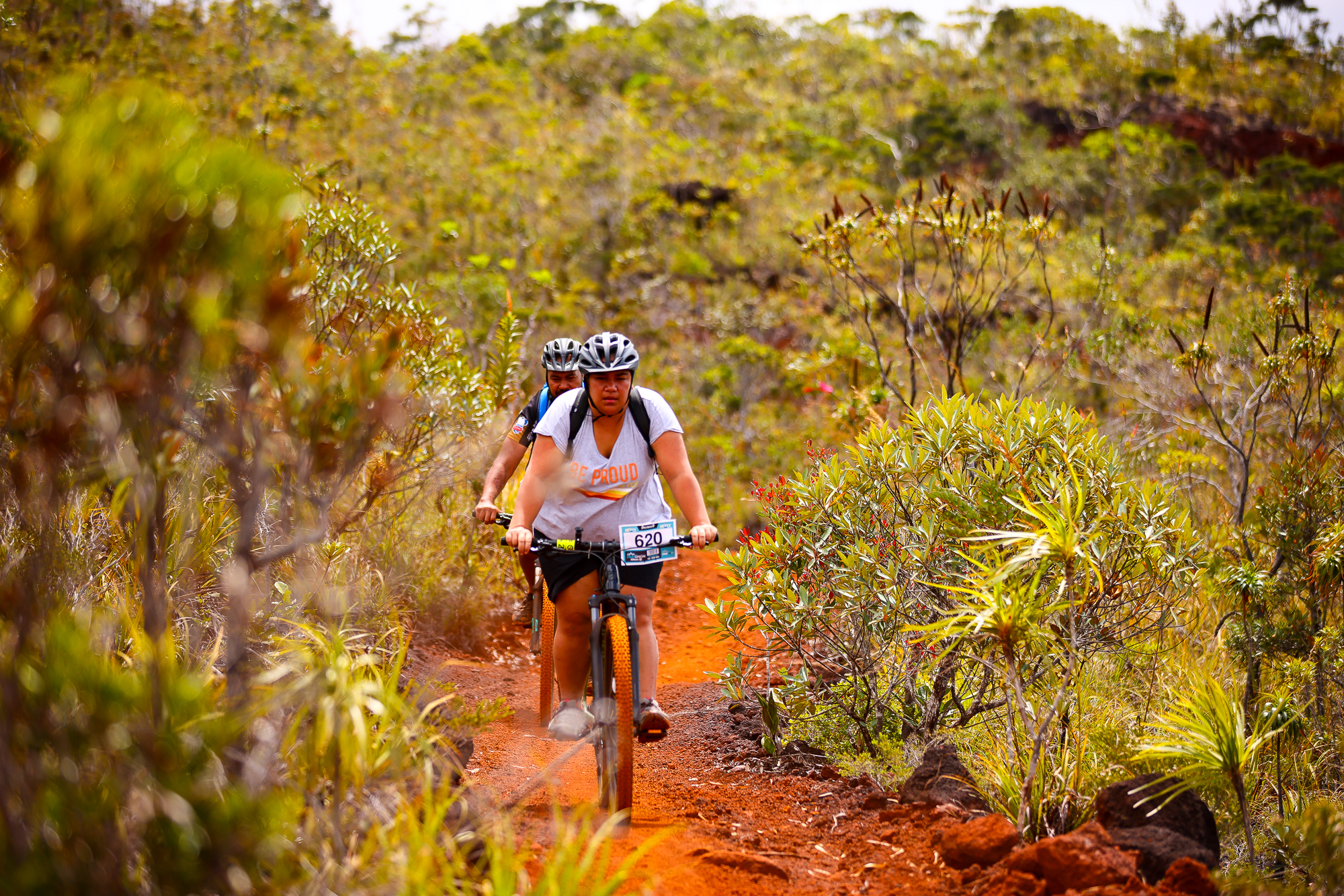
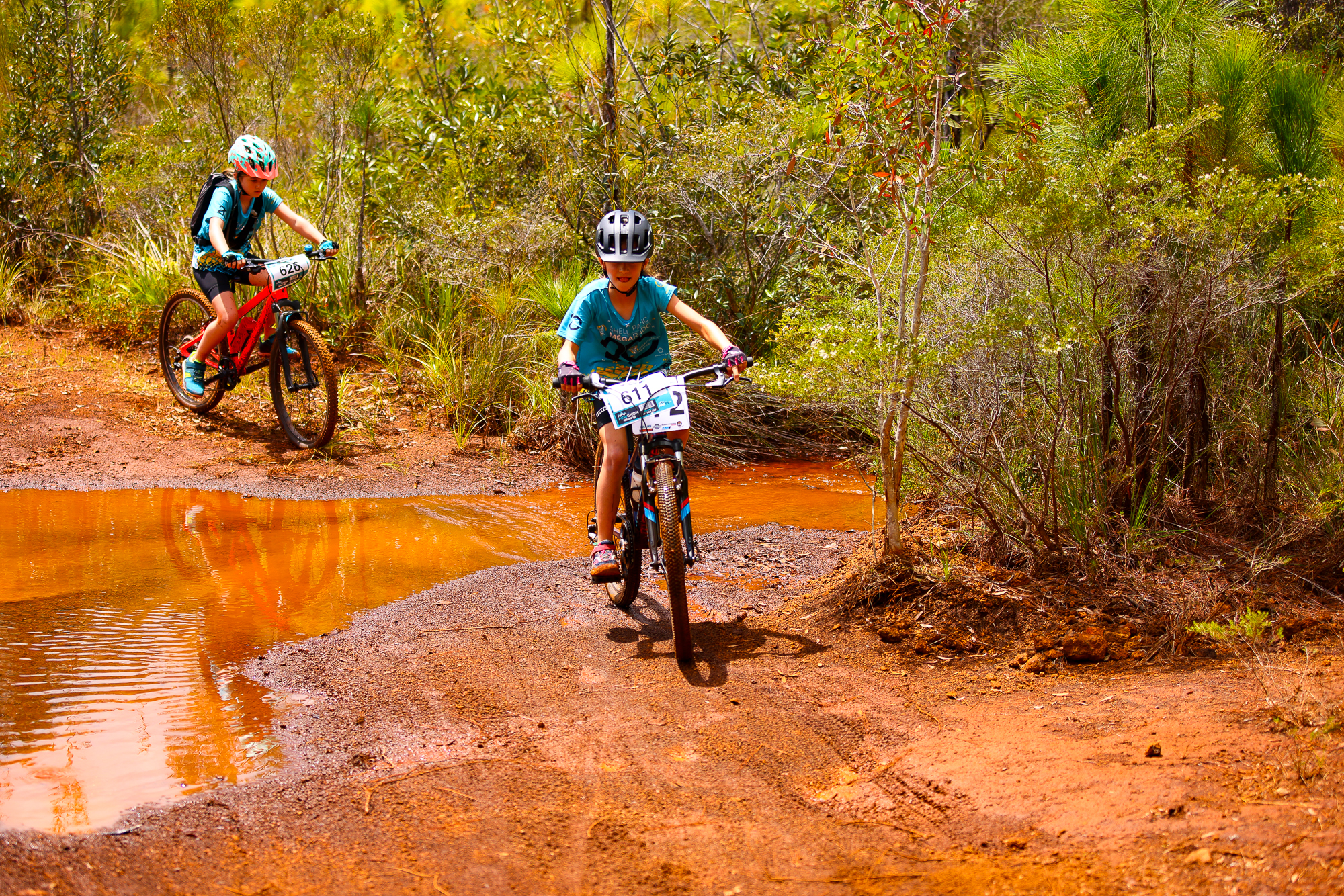
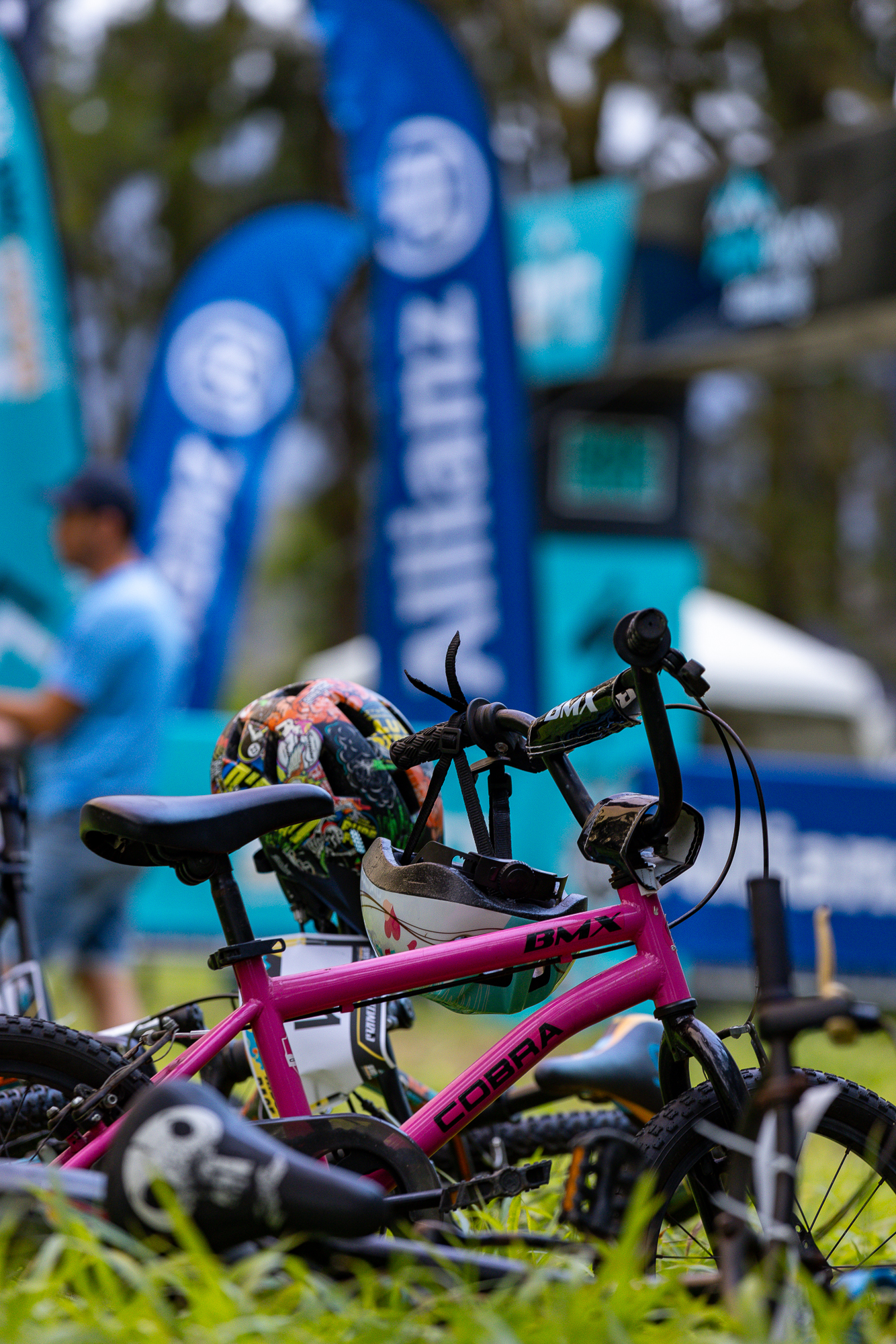
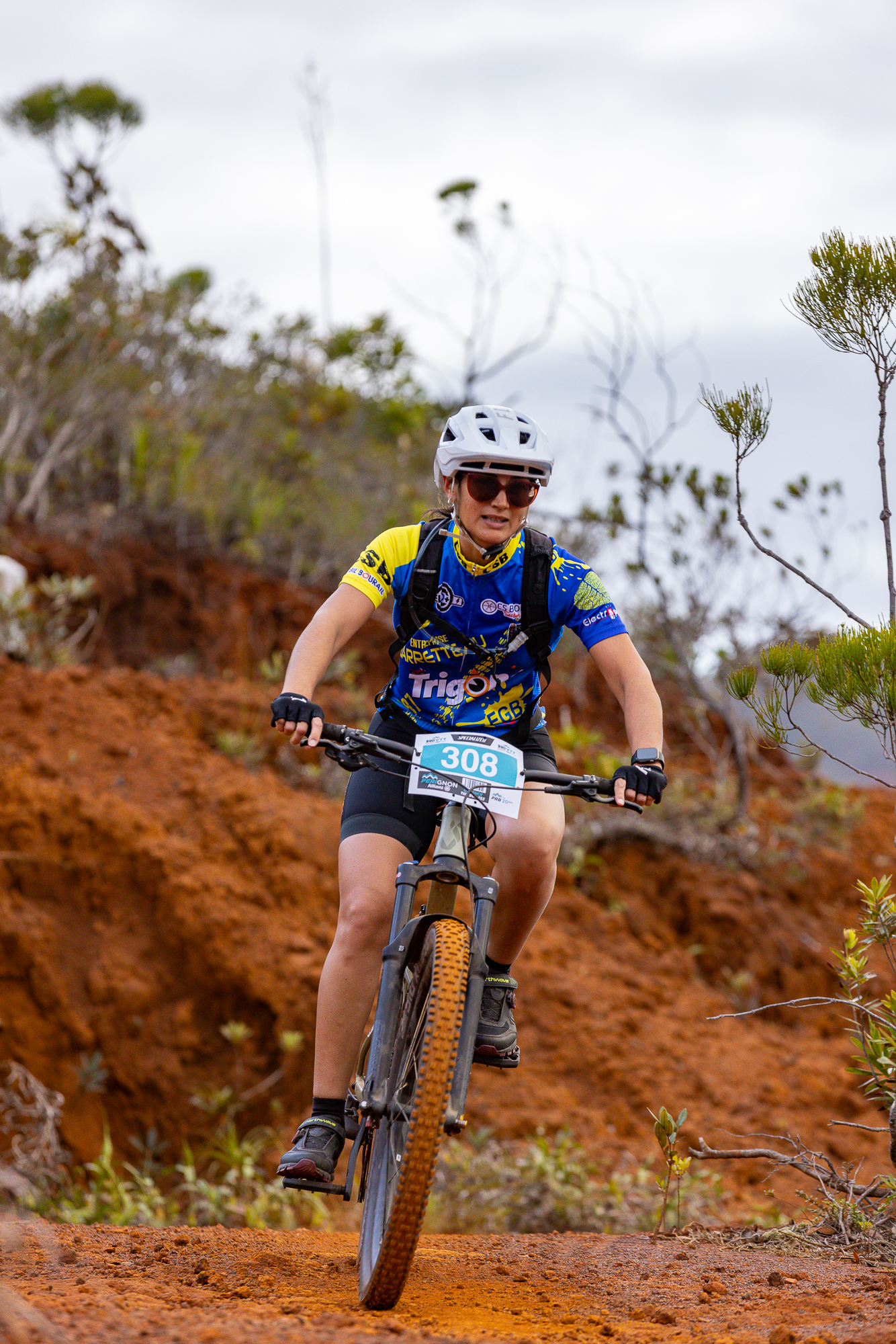
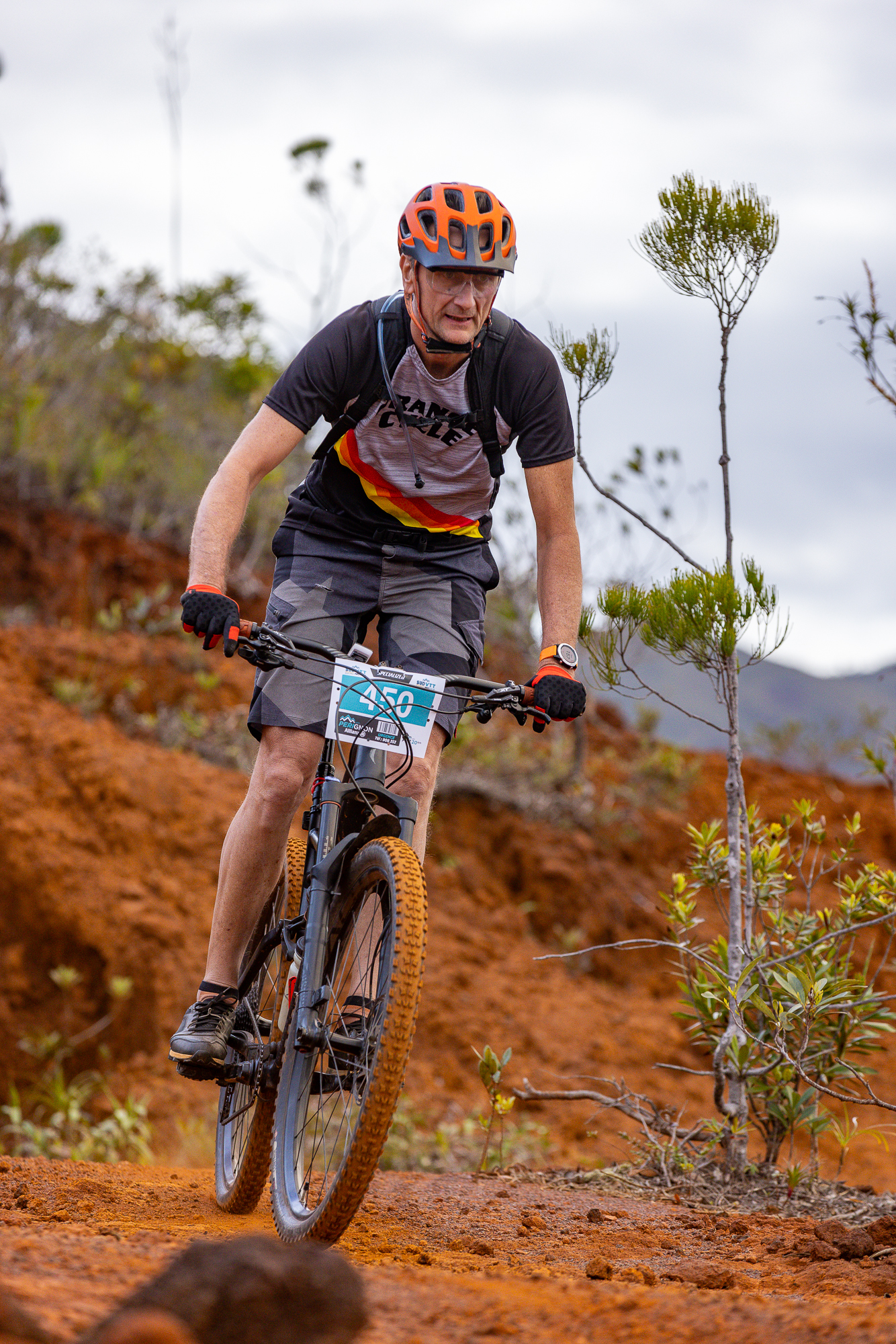
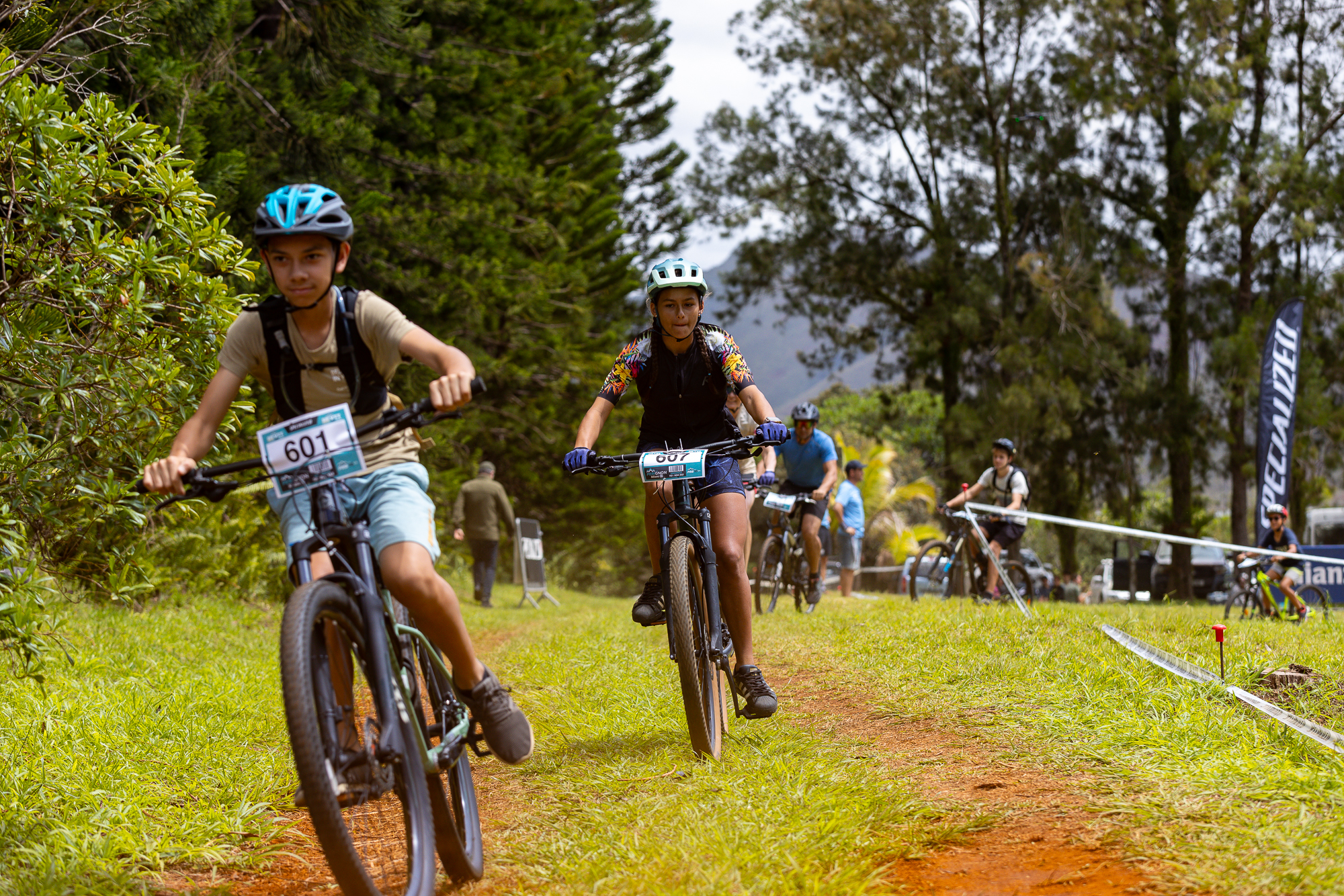
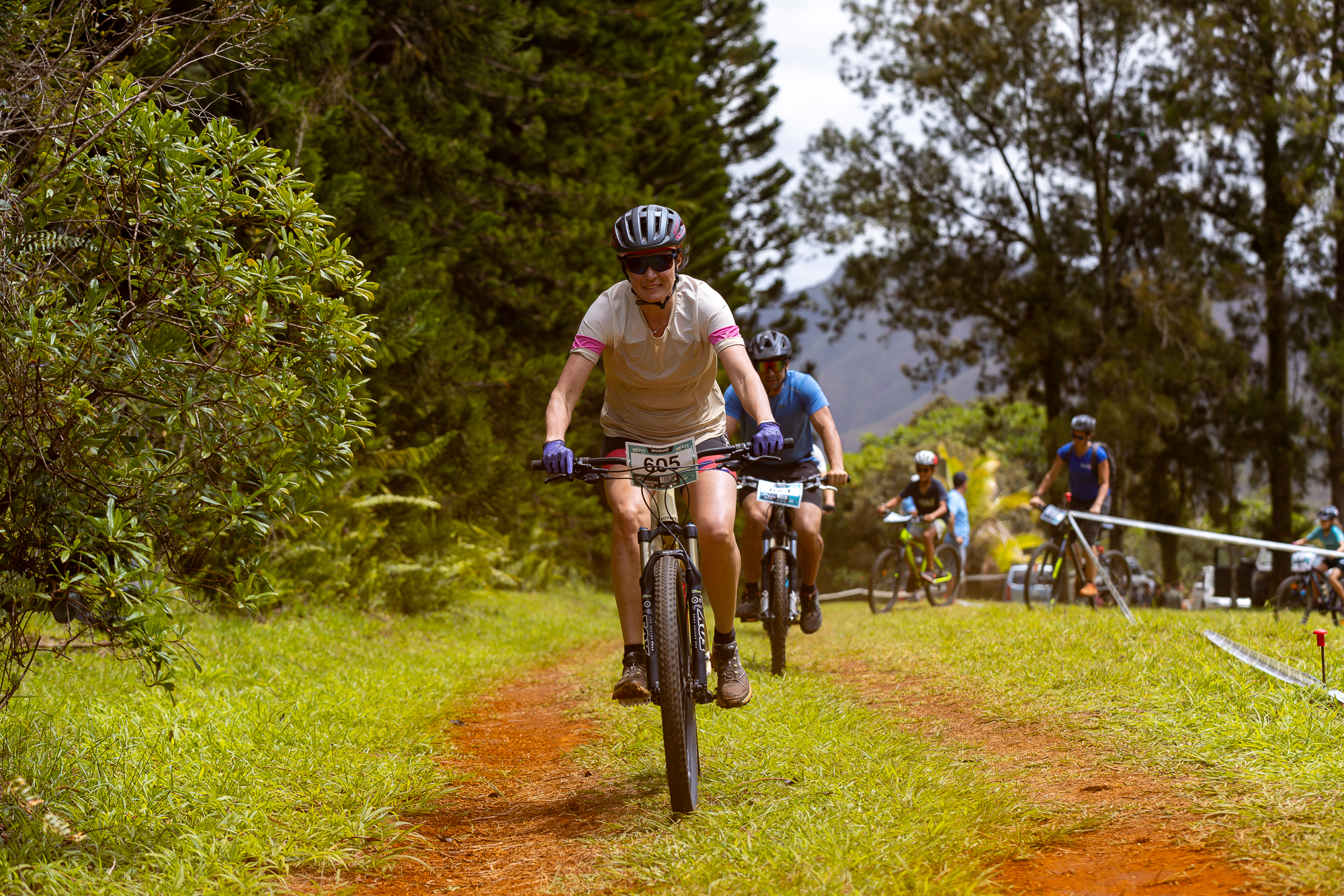
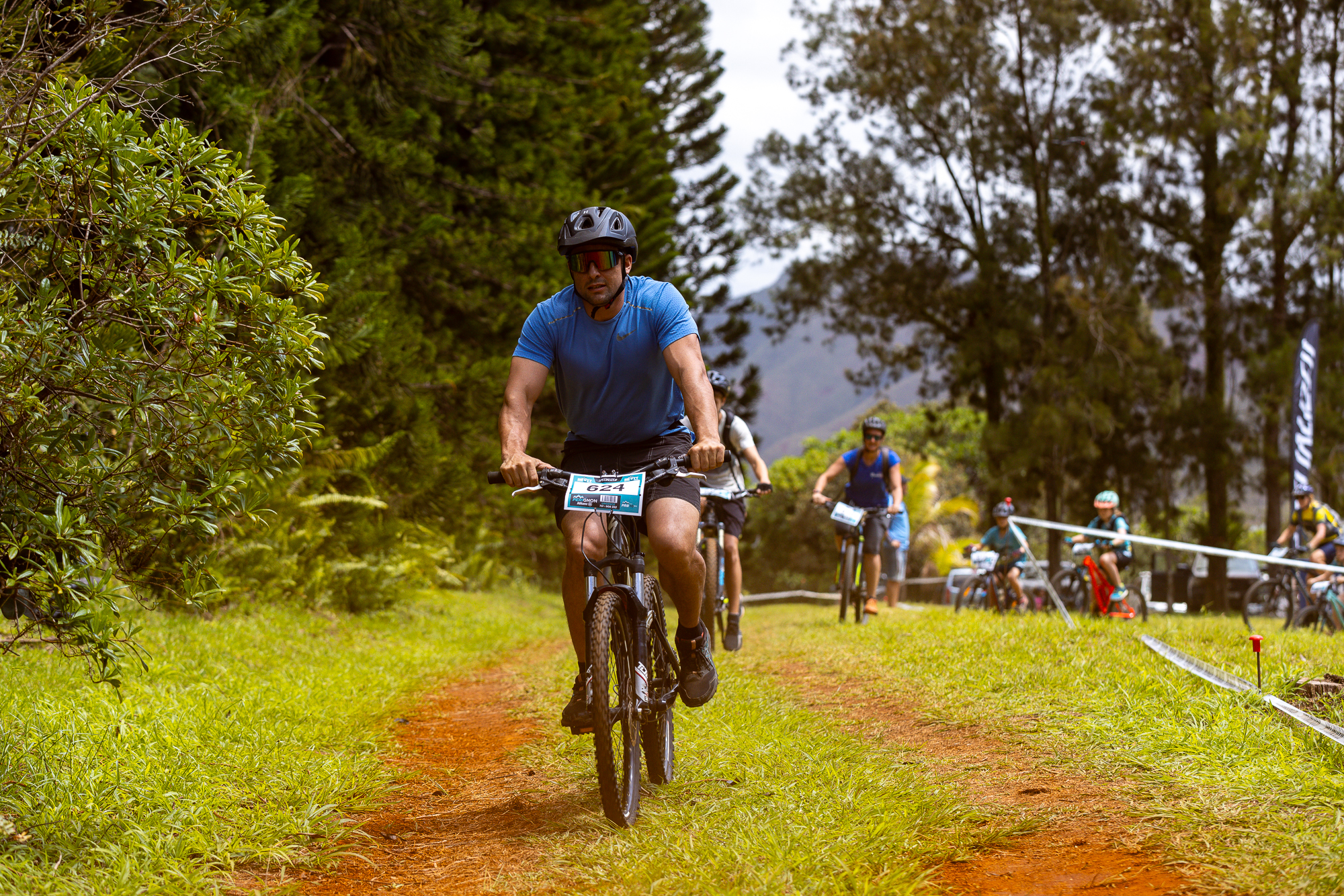
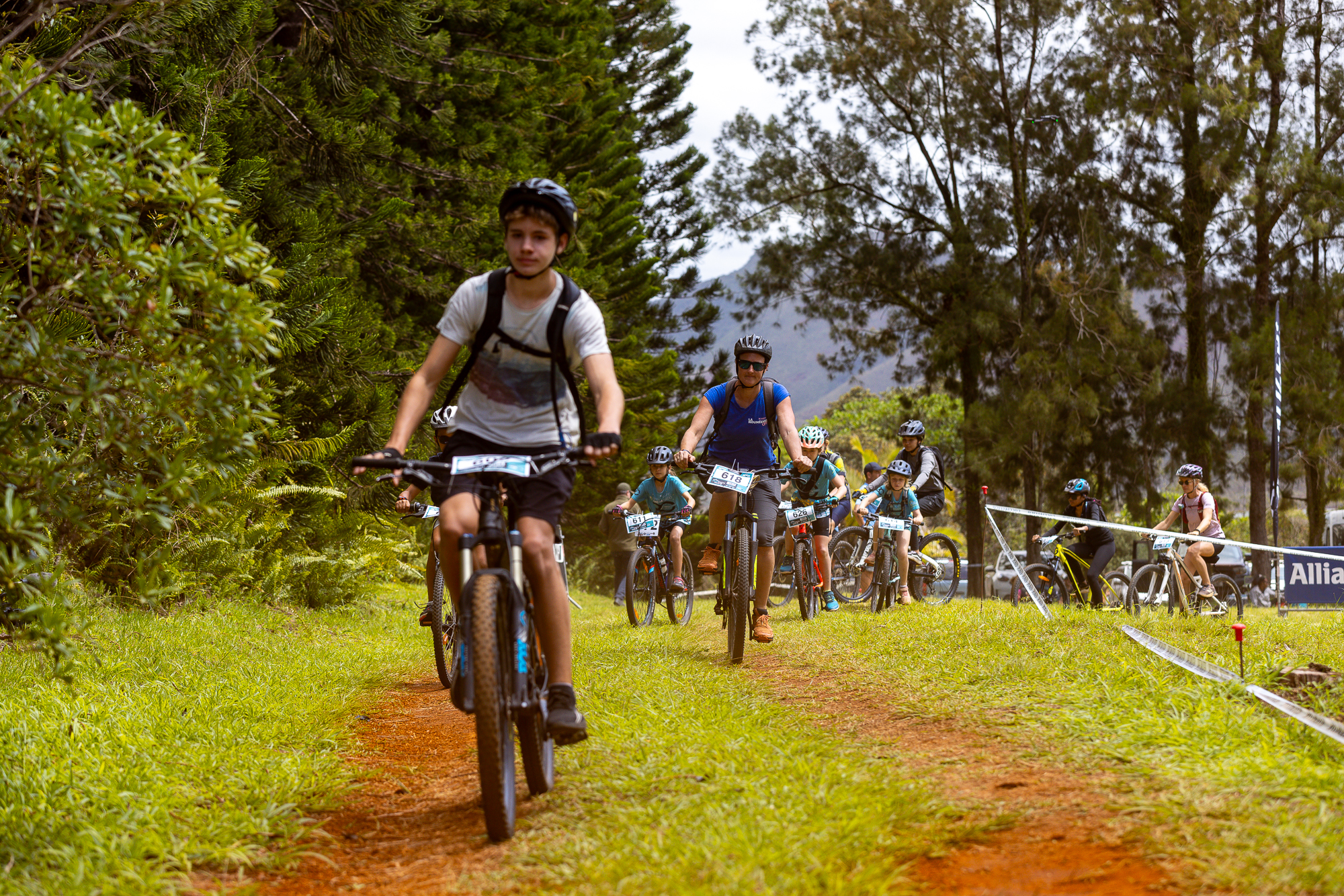
If Domaine de Deva is serious, Blue River is sublime. This park sits inland, away from the coast, in terrain that feels closer to New Zealand backcountry than tropical island. The trails here are varied – some technical, some fast, all rewarding. And in October, it hosts the Perignon MTB race, another two-day event scheduled for October 10-11, 2026.
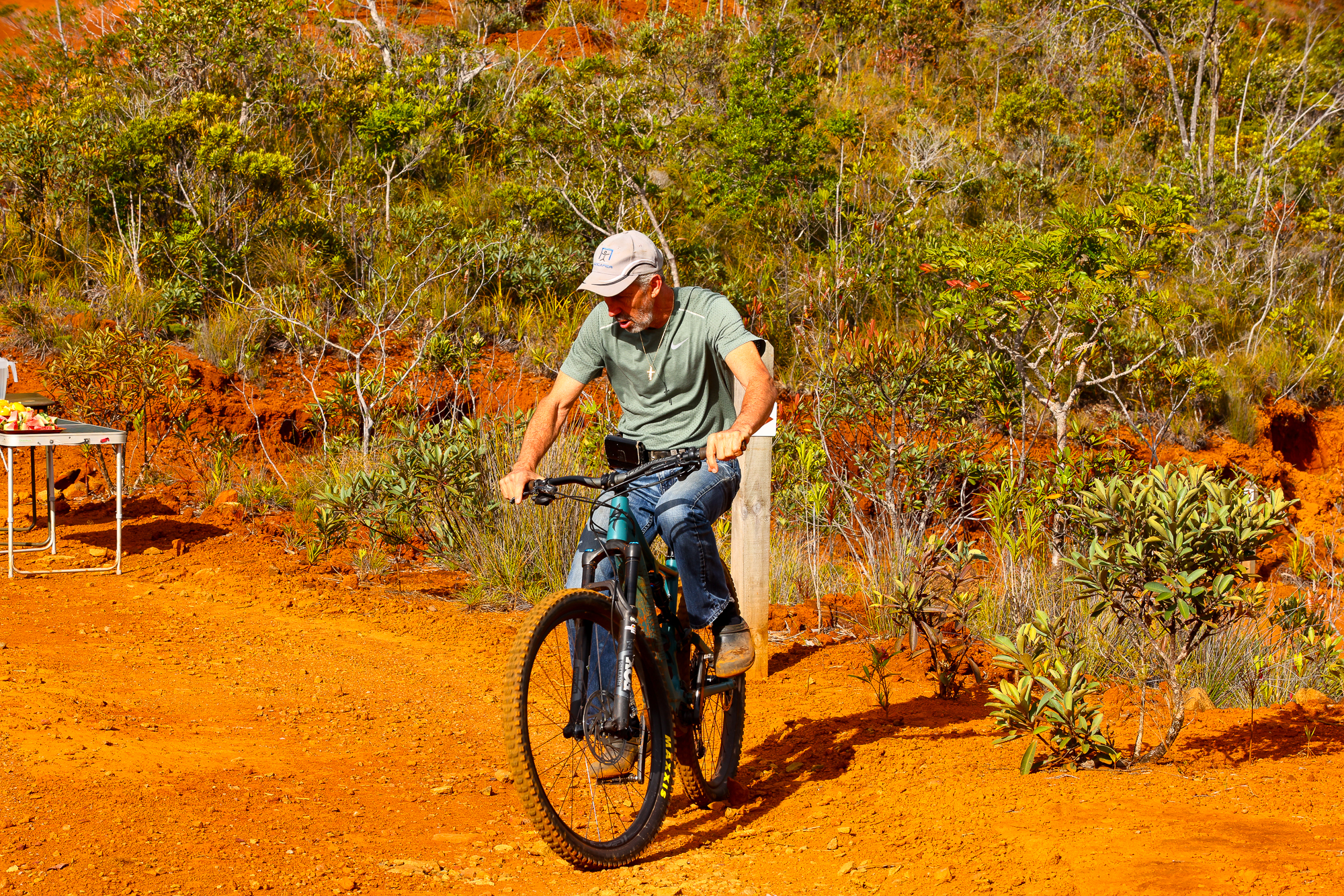
I rode Blue River on a rest day between training sessions, just exploring. There’s something about riding in a place with no pressure, no GPS track to follow, no Strava segment to chase. Just you, the bike, and trails that lead somewhere you haven’t been. I ended up at a viewpoint overlooking the valley, legs buzzing, lungs full, completely alone. It’s the kind of moment you can’t manufacture.
Tina’s Bike Park
Right in Nouméa, Tina’s offers accessible riding without needing to drive anywhere. It’s more park than wilderness,
but the trails are well-maintained and perfect for warming up or cooling down. If you’re staying in the city and want to spin the legs without committing to an expedition, this is your spot.
Netcha
Netcha is quieter, less developed, and frankly, a bit of a hidden gem. The trails here feel more raw, less curated. If you’re the type who prefers discovery over convenience, carve out a day for Netcha.
Base Camp: Ramada Nouméa
I stayed at the Ramada Hotel in Nouméa, which proved to be exactly what a riding trip needs: clean, central, functional. It’s not boutique. It’s not trying to be. What it is, is well-located, with staff who didn’t blink when I asked about bike storage and seemed genuinely interested in where I was planning to ride.
The hotel sits close enough to the city center that you can walk to cafes and restaurants, but far enough from the main strip that you’re not drowning in tourist noise. After long days on the trails, I’d return, shower off the dust and sweat, then wander down to Anse Vata beach to watch the sun drop into the Pacific while nursing a beer.
There’s something deeply satisfying about that rhythm: ride hard, eat well, sleep deep, repeat.
The French Factor
New Caledonia is French. Not French-influenced. Not French-themed. Properly, administratively French. The currency is the Pacific Franc (CFP), which stays pegged to the Euro. The language is predominantly French, though you’ll find English speakers in tourist areas and among younger locals. The food is – and I say this with full appreciation – absurdly good for a place this far from Paris.
Bakeries serve actual croissants, the kind with proper lamination and that slightly yeasty smell that makes you instantly hungry. Restaurants take food seriously without being pretentious about it. Wine lists feature French imports at prices that would make Australians weep.
This creates an interesting cultural overlay. You’ve got Melanesian culture, indigenous Kanak traditions, French administrative systems, and a growing population of immigrants from Wallis and Futuna, all coexisting in this small archipelago. It’s not always seamless – the recent unrest proved that – but it creates a texture you don’t find in more homogenous destinations.
Beyond the Bike
Look, I went for the riding. But pretending that’s all New Caledonia offers would be disingenuous.
The lagoon is legitimately stunning. Snorkeling and diving here rank among the best in the Pacific. The reef system
supports an ecosystem that includes dugongs, sea turtles, and enough tropical fish species to keep marine biologists
busy for careers. You can kayak through mangroves, kiteboard in protected bays, or just lie on beaches that see a
fraction of the traffic Hawaii or Fiji deal with.
Île des Pins, “Isle of Pines,” sits southeast of the main island and offers that postcard-perfect island escape if you need a counterpoint to all the technical riding. Traditional Kanak culture is more visible here, and the pace slows to something approaching stillness.
But honestly? I kept thinking about the trails.
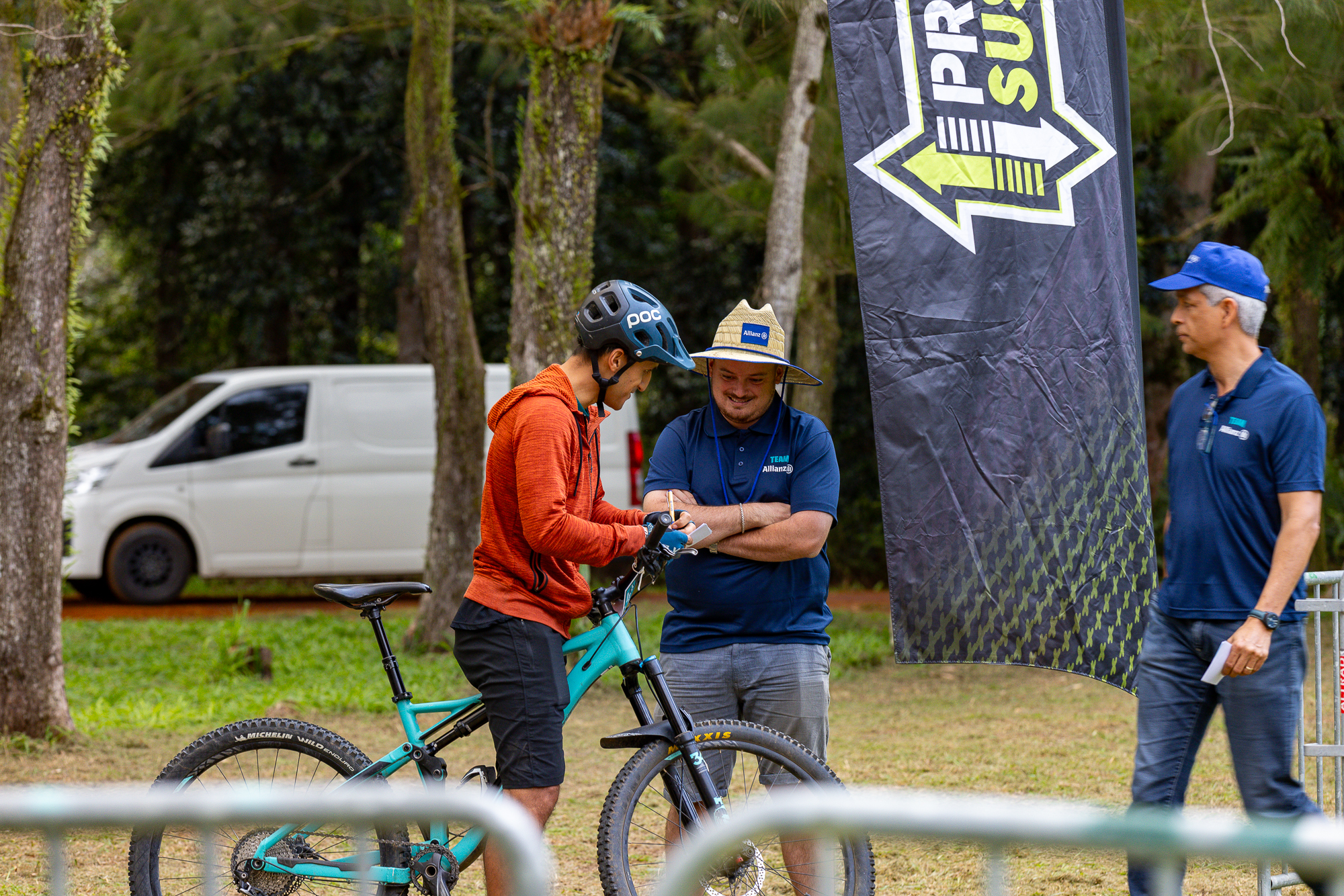
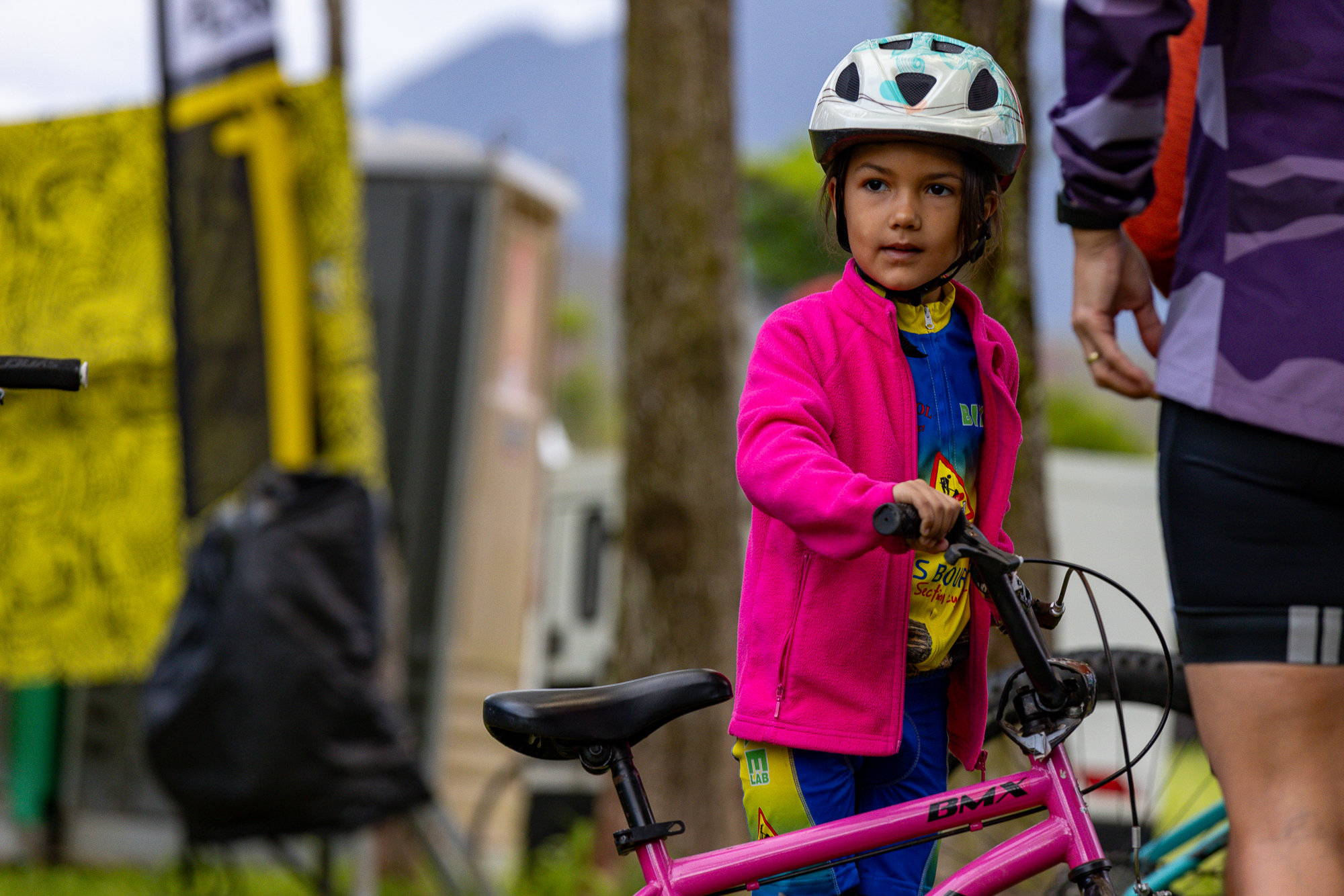
The Logistics
Getting there is straightforward. Aircalin flies direct from Auckland, Sydney, and Brisbane. Three hours, three
hours, two hours respectively. Pack your bike, check it as luggage (Aircalin handles bikes without drama), and
you’re done.
Car rental is essential. Europcar has a desk at the airport and locations in Nouméa. Get something with decent clearance if you’re planning to access remote trailheads. Roads are generally good, but “generally” does some heavy lifting in that sentence.
Accommodation ranges from budget hostels to resort-level luxury. I’d lean toward staying in Nouméa as a base – it’s
central, it has infrastructure, and the Ramada there offers solid value without trying to extract every last Franc from
your wallet.
As for timing: June for the Deva100, October for the Perignon MTB, or frankly any time between April and November. The summer months (December-March) get hot and humid, with a higher chance of cyclones. Not unrideable, but not optimal either.
The Honest Assessment
New Caledonia isn’t perfect. It’s dealing with serious internal questions about identity, independence, and equity. Tourism infrastructure isn’t as developed as neighboring destinations. English isn’t universal. Prices can sting, especially if you’re used to Southeast Asian budgets.
But here’s what it offers: accessibility without crowds, world-class riding without the hype, cultural complexity
instead of resort-sanitized “authenticity,” and a landscape that manages to be both familiar and completely foreign.
I flew in on Aircalin on a Wednesday morning. By Thursday afternoon, I was waist-deep in the lagoon, bike leaning
against a palm tree, legs still vibrating from that morning’s ride through Parc des Grandes Fougères. By Saturday, I was mentally planning my return.
Three hours from Auckland. That’s closer than Queenstown. Closer than most Australian destinations worth
reaching. And somehow still flying under the radar of the mountain biking masses.
I’d suggest keeping it that way, but that seems selfish. And besides, places this good don’t stay secret forever.
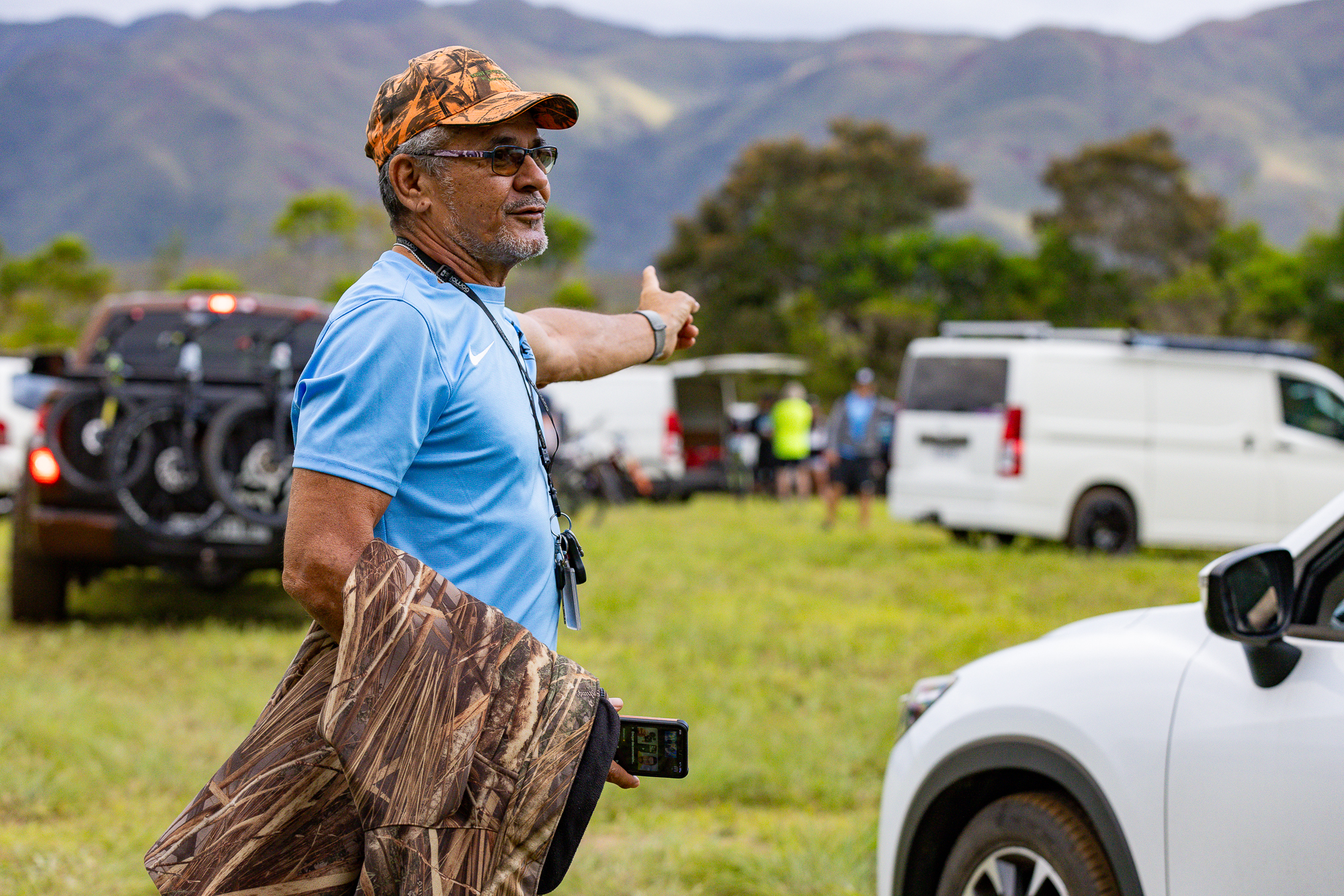
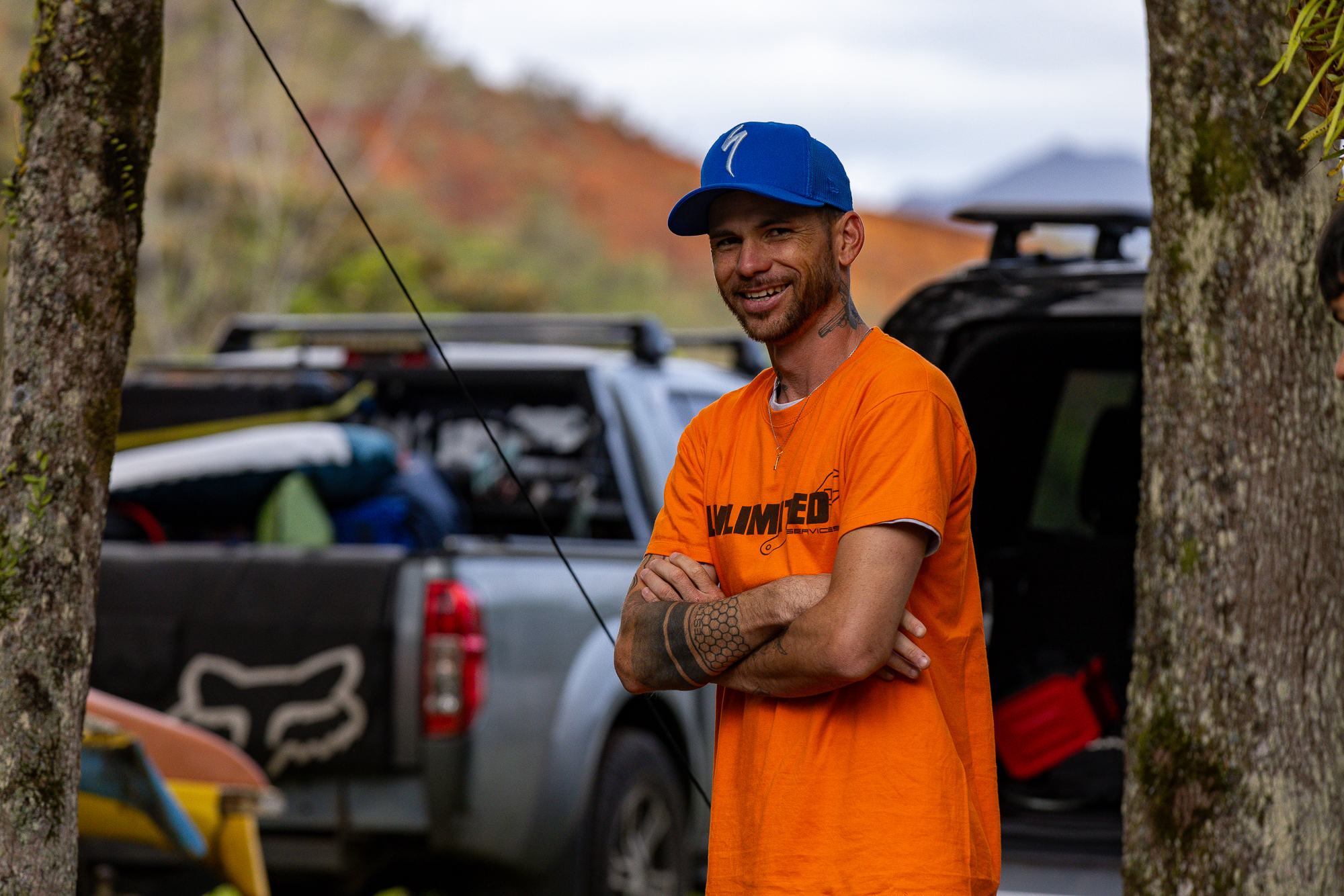
Practical Information
Getting There:
Aircalin operates direct flights from Auckland (3 hours), Sydney (3 hours), and Brisbane (2 hours).
Website: https://www.aircalin.com
Facebook: https://www.facebook.com/aircalinNC/
Instagram: https://www.instagram.com/aircalin/
Car Rental:
Europcar has locations at La Tontouta International Airport and in Nouméa. Essential for accessing trailheads.
Website: https://www.europcar.fr/fr-fr/places/location-voiture-new-caledonia/noumea/noumea-centre-ville
Facebook: https://www.facebook.com/EuropcarNouvelleCaledonie
Instagram: https://www.instagram.com/europcar_nc/
Accommodation:
Ramada Hotel Nouméa offers central location, bike-friendly facilities, and good value.
Website: https://ramadanoumea.com
Facebook: https://www.facebook.com/ramadahotelnoumea
Instagram: https://www.instagram.com/ramadanoumea/
Mountain Bike Parks & Events:
• DEVA100 – June 27-28, 2026, Domaine de Deva
https://www.proevents.nc/evenements/deva100
https://www.nouvellecaledonie.travel/destination/cote-ouest/domaine-de-deva/
https://sitesvtt.ffc.fr/sites/les-boucles-de-deva/
• Perignon MTB – October 10-11, 2026, Blue River Provincial Park
https://www.proevents.nc/evenements/perignon
https://www.province-sud.nc/decouvrir-et-visiter/pprb/
• Parc des Grandes Fougères – Technical rainforest riding
https://www.province-sud.nc/decouvrir-et-visiter/ppgf/
• Tina’s Bike Park – Urban trails in Nouméa
https://www.sudtourisme.nc/offres/les-boucles-de-tina-noumea-fr-3005526/
• Netcha – Raw, less-developed trails
https://sitesvtt.ffc.fr/sites/les-boucles-de-netcha-6/
Event information: www.proevents.nc
Tourism Resources:
New Caledonia Tourism:
https://www.nouvellecaledonie.travel
Facebook: https://www.facebook.com/nouvellecaledonieFR
Facebook (South Tourism): https://www.facebook.com/sudtourismenc
Ōtautahi Christchurch: City to Singletrack
Words Liam Friary
Images Cameron Mackenzie & Supplied
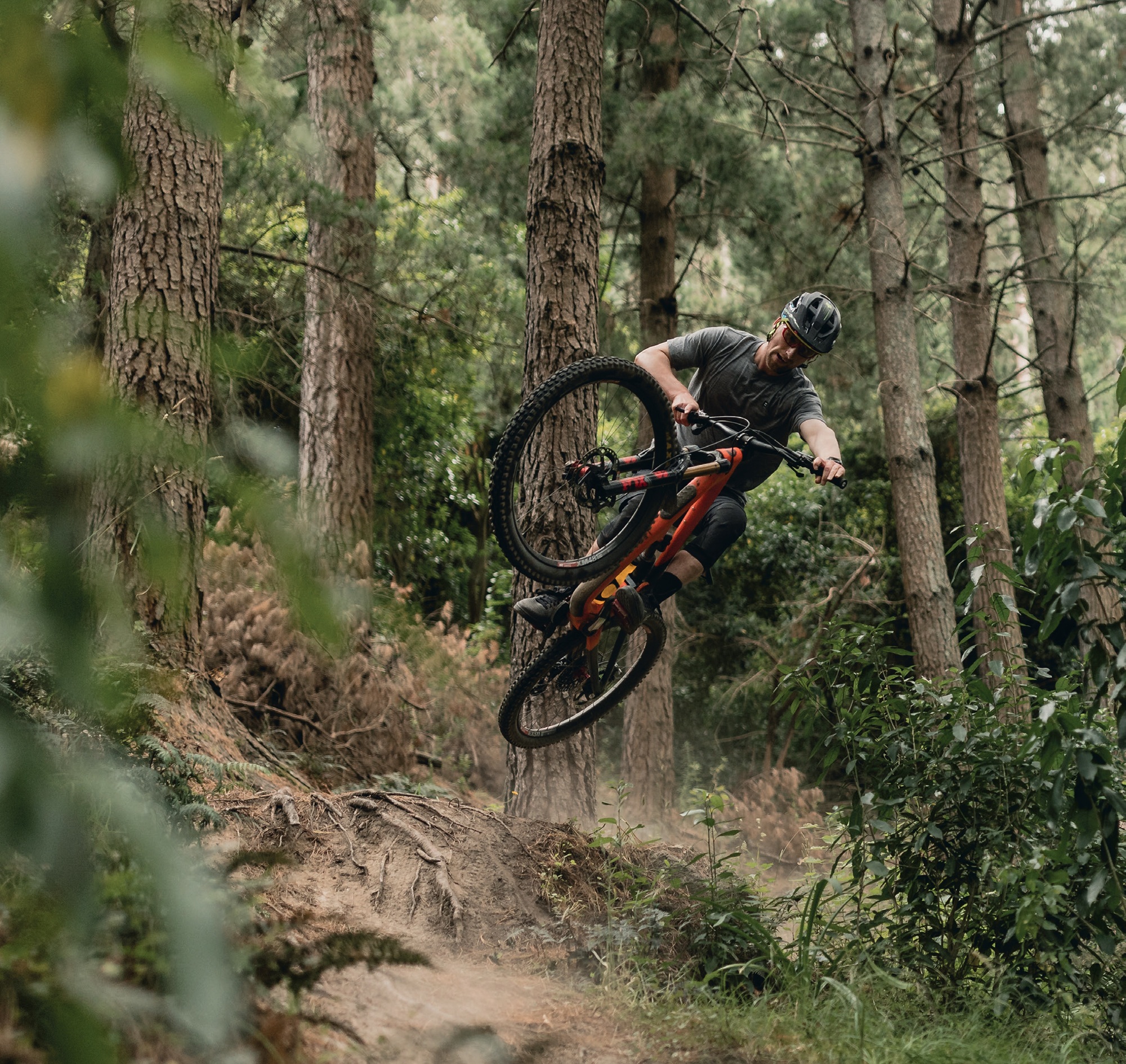
Christchurch is a city that’s moved so far forward in the last decade it’s hard to quantify the progression. Its rebuilding has transformed it into a vibrant and modern metropolis, and the city boasts a sophisticated vibe with an ingrained riding culture.
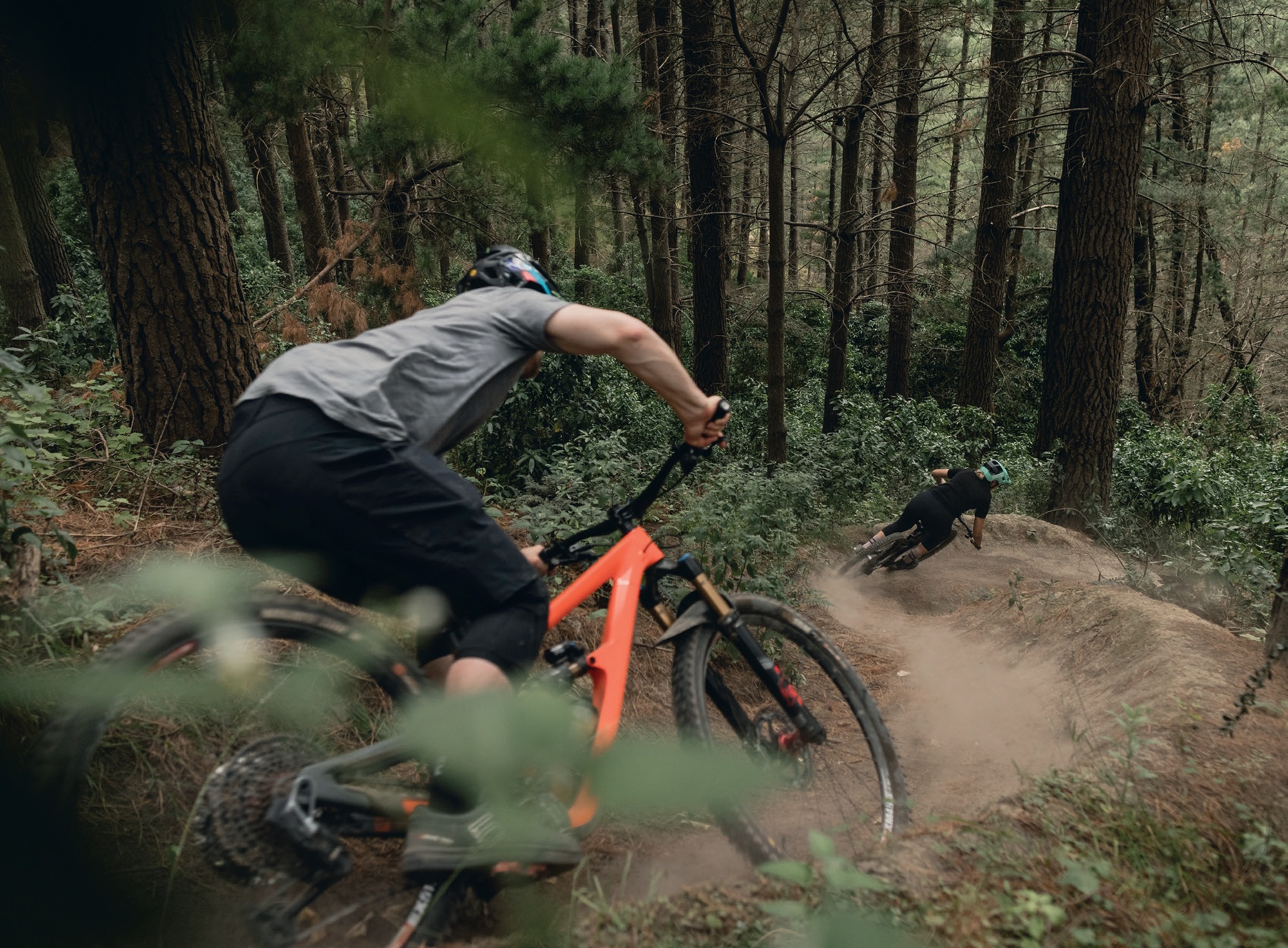
Great trail networks, bike paths, bike storage, and plenty of cyclists getting about. Head closer to the hills, and you’ll find mountain bikers pedalling or bikes racked onto cars bound for the nearest singletrack. The city offers a heap of riding options, primarily centred around Port Hills, Lyttelton, and Christchurch Adventure Park.
Our small antipodean country offers a plethora of riding zones and the southern locations are plentiful, boasting impressive descending metres; however, most of these riding spots don’t have a large city on their doorstep. This is where Christchurch sets itself apart. While I enjoy getting dirty, I also value quality food, well-brewed coffee, and comfortable accommodation. Perhaps it’s just my middle- agedness creeping in, but finding the perfect blend of outdoor play and city sophistication is quite satisfying. Coupled with major events that a city can attract, such as gigs, sports, or festivals, you’ll be searching for more days of leave.
As we crept close to summer, I spent a few days in the city. It was spring, meaning the weather delivered almost everything, but I still got the chance to get out and ride every day. The ease of getting out and about on the bike from the city centre is something I appreciate. The more I can ride and the less I must use a car to rack my bike, the better, even if there’s some bike path or tarmac to pedal before venturing into the singletrack.
Riding Zones
Port Hills delivers the goods right from the city’s edge. I found myself pedalling through suburban streets, and within twenty minutes, I was ascending the Port Hills. I quickly found that the network here is extensive. You could ride a different loop every day for a week and still have trails left to explore.
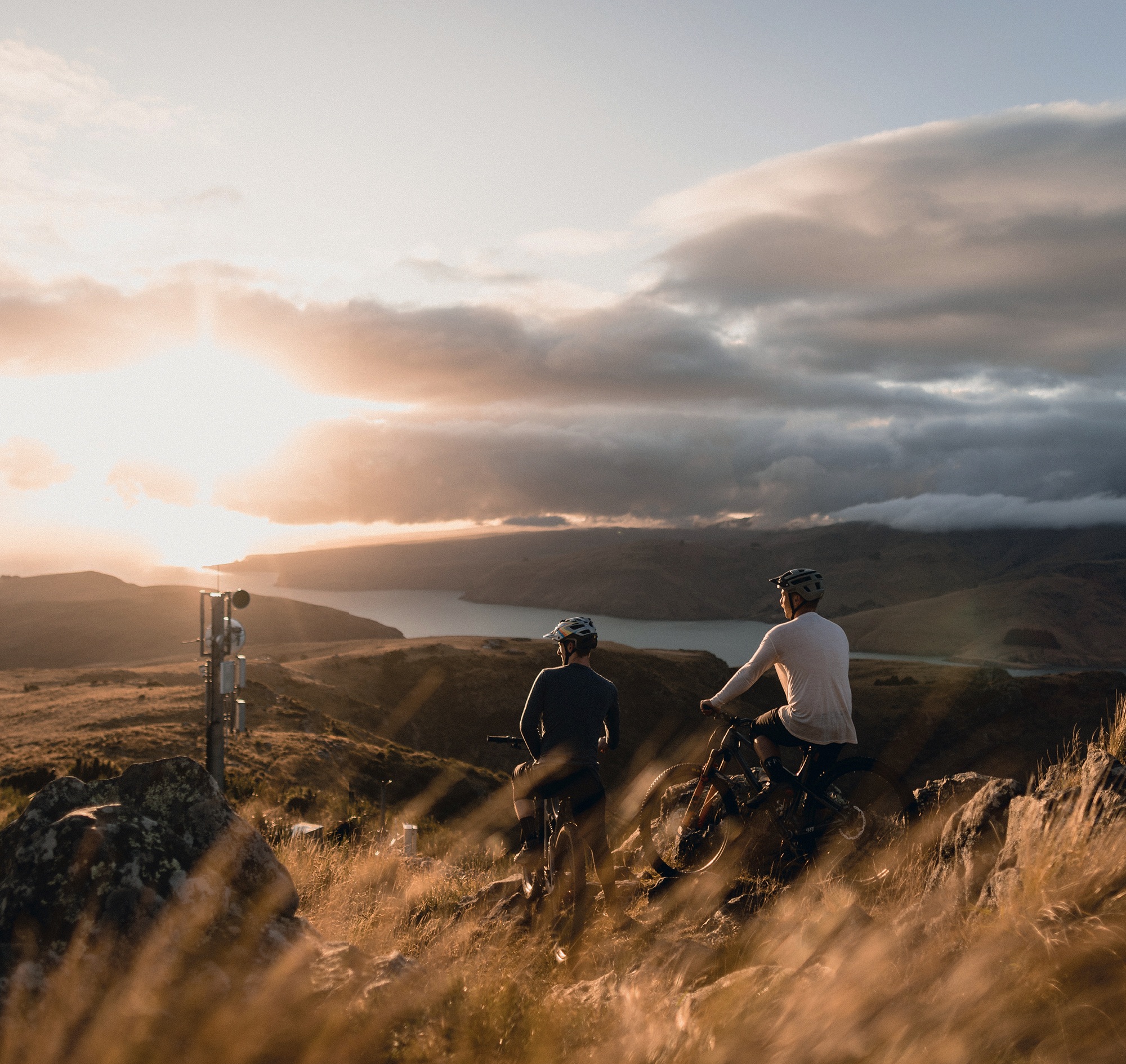
On the evening of my arrival, I managed to get a few hours’ riding in Lyttelton. The trails there are tight, bush-covered, and some are a little janky, but that’s balanced by the glimpse of the view. You can easily lap a few trails out before either heading over the Port Hills back to the city or descending into Lyttelton. The port-side town certainly offers a unique and cool charm with its old buildings and eclectic characters.
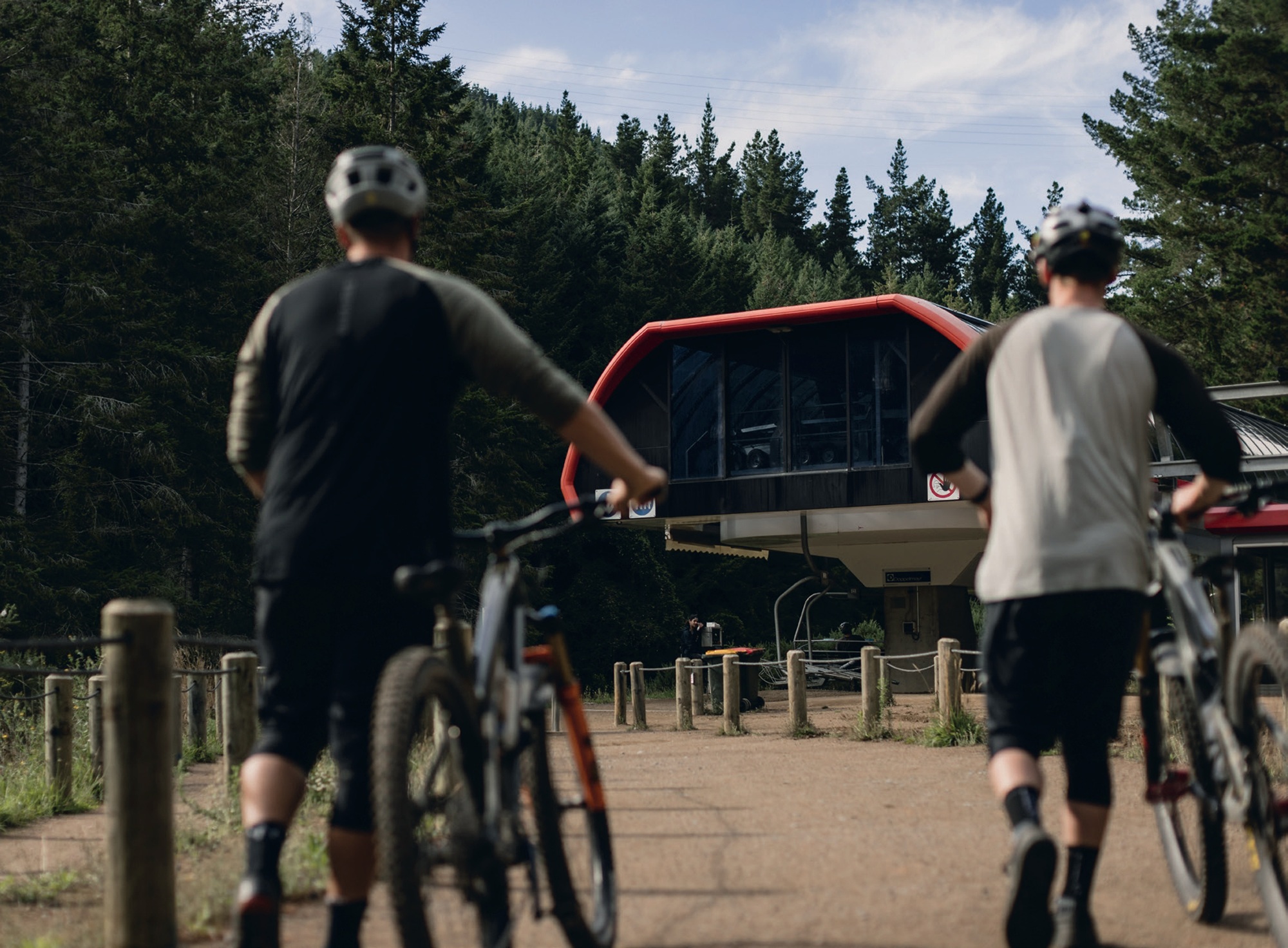
The Christchurch Adventure Park is the drawcard for many, and rightly so. The chairlift access means you can lap out without the uphill grind. The trails cater to every level, from mellow flow up to gnarly tech trails. On the second day of my visit, I lapped out a few flow tracks to get into the rhythm. The uplift meant I could keep my energy focused on the descents. I liked the fact that you can nab several runs in only a few hours. Once I’d had my fill of mellow flow with a bit of tech spice towards the end, I pedalled back to the city for some grub. Again, the proximity of the trails to the city means there’s no need for a vehicle. I thought about the variety within such a compact area. Only about twenty minutes beforehand, I was riding the bike park, and now I was eating some kai right in the heart of the city. For those keen to venture further, Craigieburn is only an hour and a bit up the road. It’s a different beast entirely: high alpine terrain with rocky, technical trails that demand your full attention. On another occasion, I squeezed in a day trip up there, and while it’s a world away from the Port Hills, it’s another option in the arsenal. The fact you can ride groomed bike park berms in the morning and be picking lines through alpine scree by lunchtime speaks volumes about what’s accessible from Christchurch’s doorstep.
Eating Out
Head anywhere in Christchurch, and you’ll find a heap of cafés and restaurants across a wide range of budgets and cuisines. I did think the city has certainly proved its point post-rebuild with the amount of very good eateries. The level has been upped in recent years.
In most spots, the hospitality was delivered in a relaxed manner, but it was dialled in. The well-curated menus and delicious food were something most joints had on lock. This made dining out on most occasions a great experience. And that’s not to mention the countless snazzy restaurants, hip cafes, and local bars pouring the best craft beers on tap.
Over the course of a couple of days, I sampled some of the fine fare on offer. Being posted up in the city meant I could venture out every morning for a good coffee, and often scrambled eggs, which are my go-to. On the backside of the ride days, I ventured to several good restaurants that each had their own unique culinary offerings, character, and vibe.
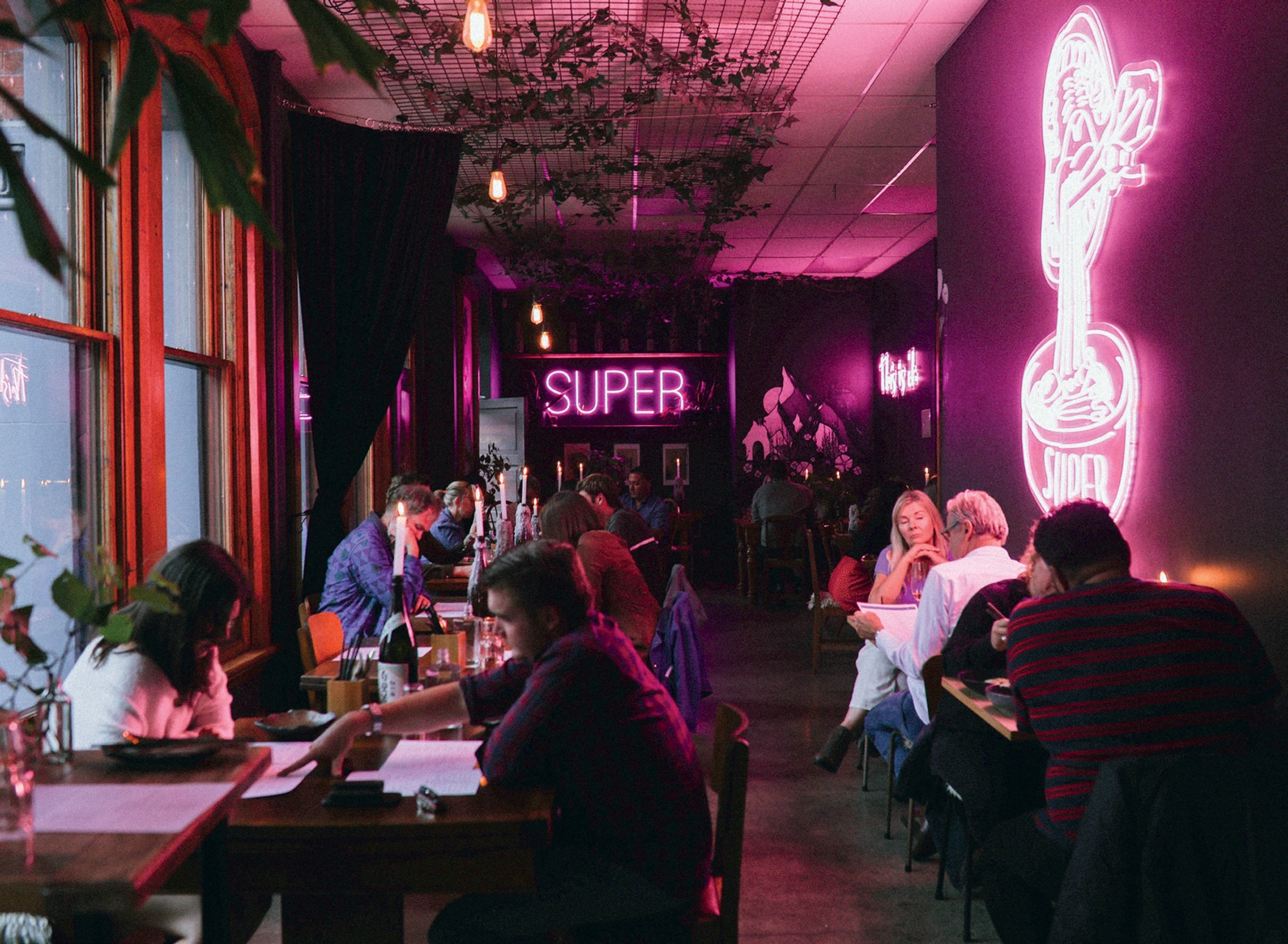
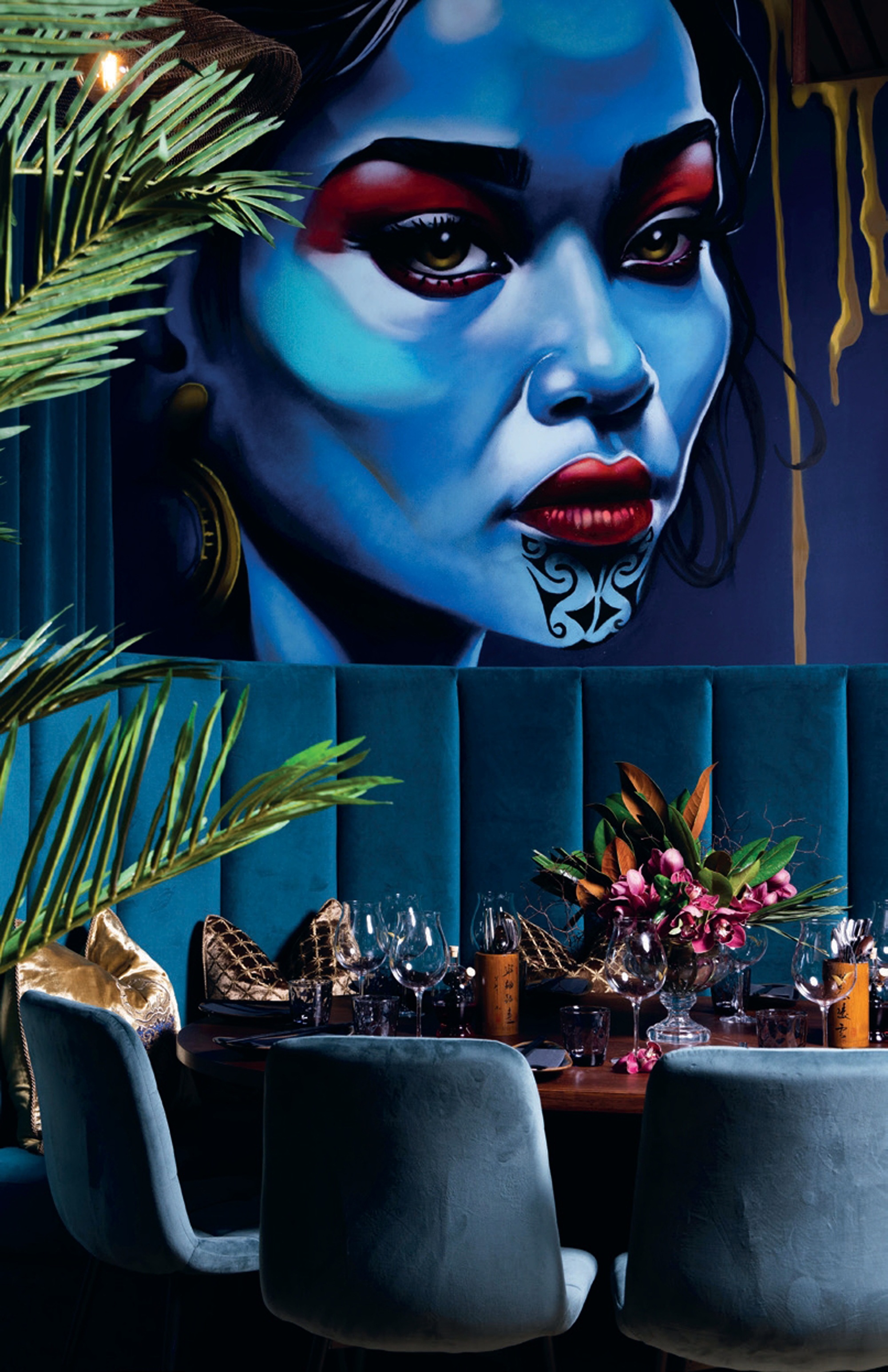
The first night after riding some of Lyttelton’s singletrack, I rolled into SUPER. This joint has a low-key vibe with artwork everywhere, mood lighting, and staff who are relaxed but helpful. Adding to the character, it’s also housed in the oldest standing building in Lyttelton. The blend of Māori and Japanese cuisine is seen throughout the menu, and one of the standout dishes was the paua and pork dumplings. There’s something about that casual, come- as-you-are atmosphere that works perfectly when you’ve just rolled in covered in dust.
On the second day, I was a little pressed for time, so I pulled up at the Riverside Market, grabbed a refreshing light lager from the small but mighty Christchurch Beer Collective and picked up some kai from Black Burger. After laps at the bike park, nothing hits quite like a good burger and lager from one of the local breweries. The craft beer scene deserves a mention, and Christchurch Beer Collective only pours beers from local breweries.
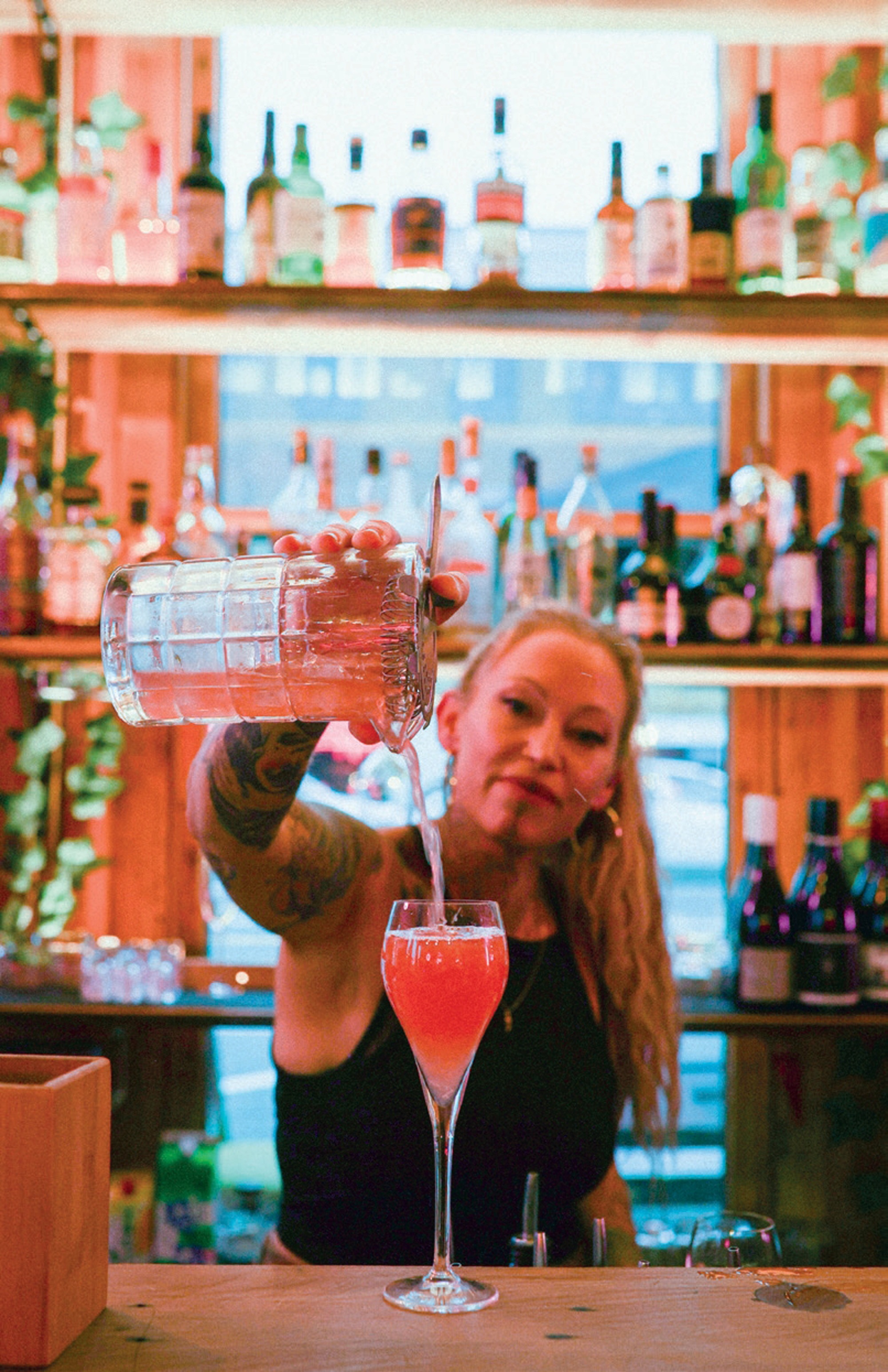
For my last dinner out, I ventured to Manu. The round loungers with a lazy Susan surrounded by plants make for a cool and cosy atmosphere. The cocktail menu is equally compelling and I ordered a Negroni to open the palate before browsing the Asian fusion fare. The dishes were incredible and shared plates are recommended. The Beef Cheek Rendang is simple but delicious and perfectly cooked.
Coupled with the riding zones mentioned above, this makes the transition from getting rowdy on the trails to tucking into good kai second to none. A solid day of riding is made even better by a good eating-out experience.
Other Activities
Whilst in Christchurch, I attended the trots. Yeah, I know this is a mountain bike publication, not a horse racing one. But hear me out for a moment. It was coupled with Infield, which had music artists Savage and Shapeshifter, so it wasn’t all bets, chinos, dresses, and horse racing. Christchurch is going hard to attract some major events and they’ve got them stacked.
The energy there was something else; thousands of people were out enjoying themselves, music pumping, the vibe relaxed but buzzing. It struck me that this is what a city with confidence looks like. They’re not just rebuilding infrastructure; they’re building culture and experiences. Even for someone visiting primarily to ride, having options like this makes the trip far more appealing. Your non-riding partner or mates can get excited about coming along.
One of these major events is Crankworx, which is returning to Christchurch for its second year. It was a success last year with a real vibe from riders, spectators, and industry. It infused the strong riding community that resides here, and that was evident when the final slopestyle event saw the crowd converging on every grass edge. I was there, and the atmosphere was electric; everyone was absolutely frothing.
The real cool thing is seeing so many young riders turn out in their droves either with their family or mates, and it’s always good to see them get stoked on the sport. I mean, if we can all do our bit to keep them in the scene, then the sports are in good hands for the future.
Crankworx has bigger plans for February, and it’s now part of the Crankworx World Tour. If last year is anything to go by, then it’ll be big! Heck, if you want to take the week off following Crankworx, then there’s Electric Avenue the following weekend. I’ll be aiming to do that and spending some of the week riding more locations on the city’s doorstep.
Beyond the big events, there’s plenty to fill rest days or evenings. The He Puna Taimoana hot pools in New Brighton are perfect for soaking tired legs after a big day at the bike park. They look over New Brighton beach, so you have nice views whilst you soak or sauna. The city also has a solid arts scene, with street art tours and an easy way to get around by tram. Coastal paths around New Brighton offer a different perspective if you fancy a cruisy pedal.
What I appreciated most was the options. You’re not locked into just riding. You can build a proper holiday around Christchurch – ride hard for a few days, catch a gig, soak in hot pools, eat exceptionally well, and actually return home feeling like you’ve had a break rather than just smashed yourself into the ground. That balance is rare, and it’s what keeps me coming back.
Eat | Black Burger, Christchurch Beer Collective, Kokomo, Manu, Rambler, Riverside Market, SUPER
Ride | Christchurch Adventure Park, Craigieburn, Lyttelton, Victoria Park, Port Hills
Stay | Drifter
Do | Crankworx Christchurch, Nostalgia Fest, Urban Polo, Around the Bays, Electric Avenue
Produced in partnership with Christchurch NZ
KS Rage Circuit Dropper Post
Words Liam Friary
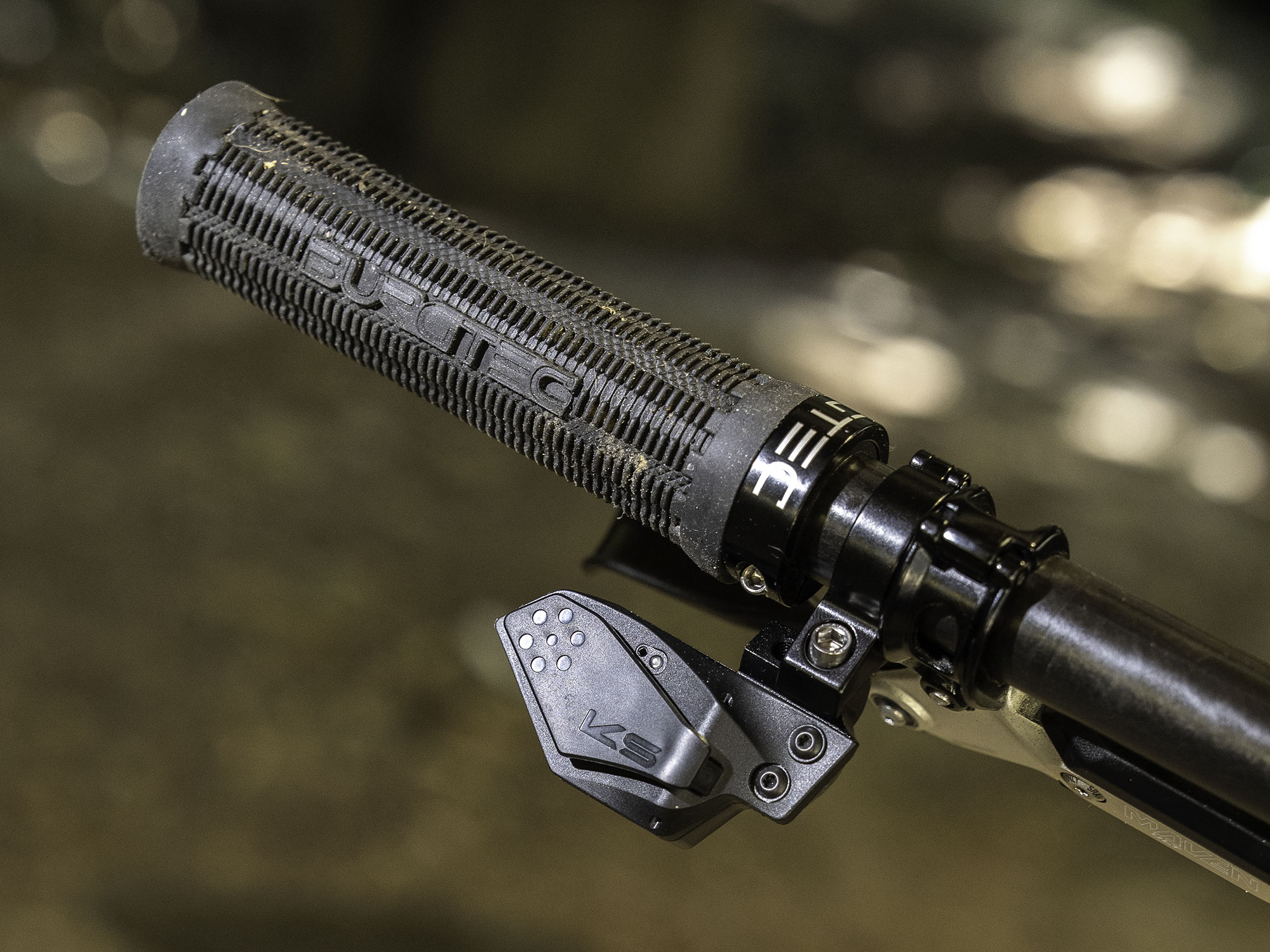
Wireless droppers are in vogue lately, and KS has thrown a great one for a good price point. Let’s start with what makes this thing tick. Much like the brand’s cable-actuated posts, the Rage Circuit has a simpler design and slots in below the LEV Circuit (top-tier) in terms of price. It’s much cheaper than the LEV Circuit, however, still shares what appears to be the same head design, battery, electronics, remote, and overall aesthetics as its more expensive sibling.
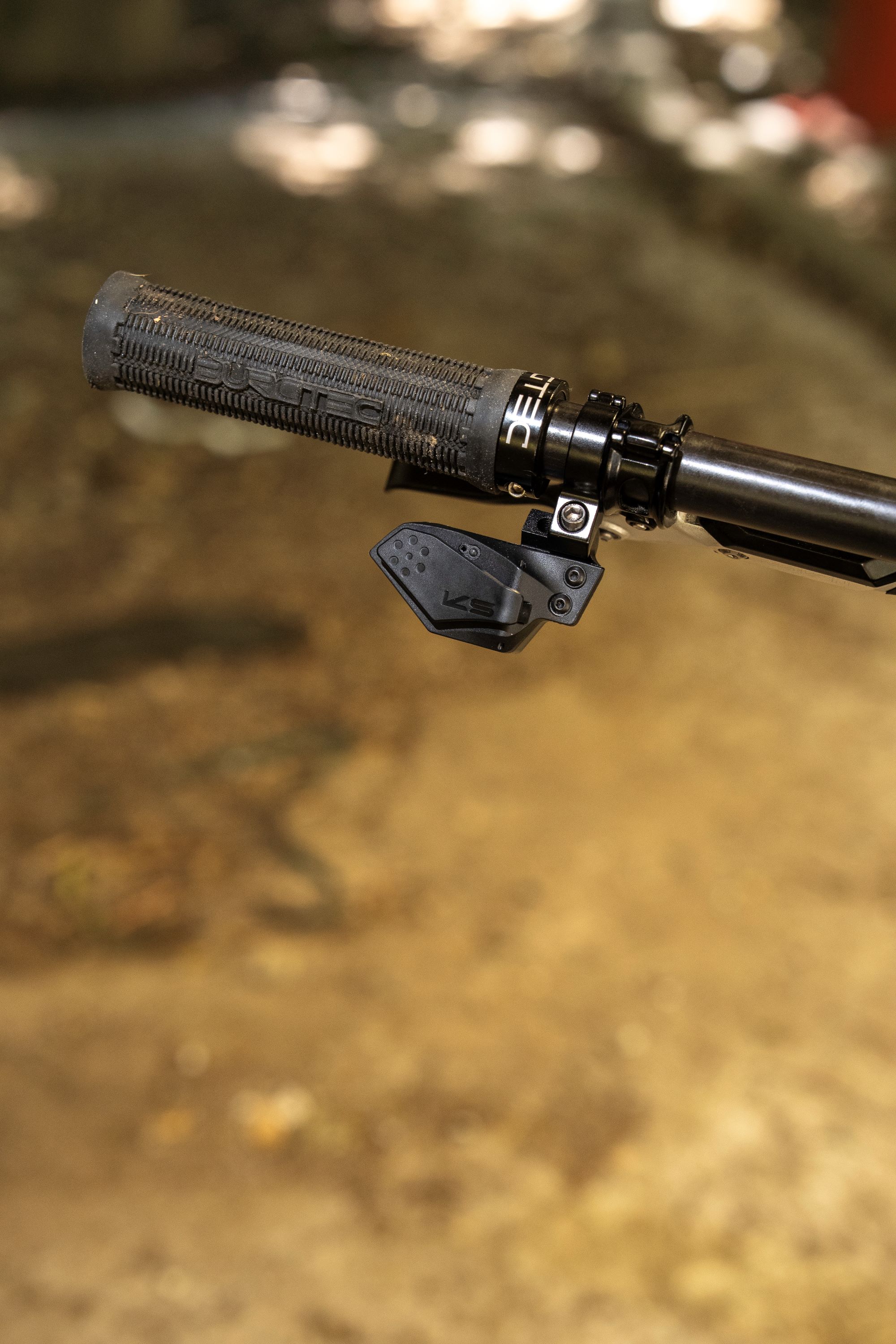
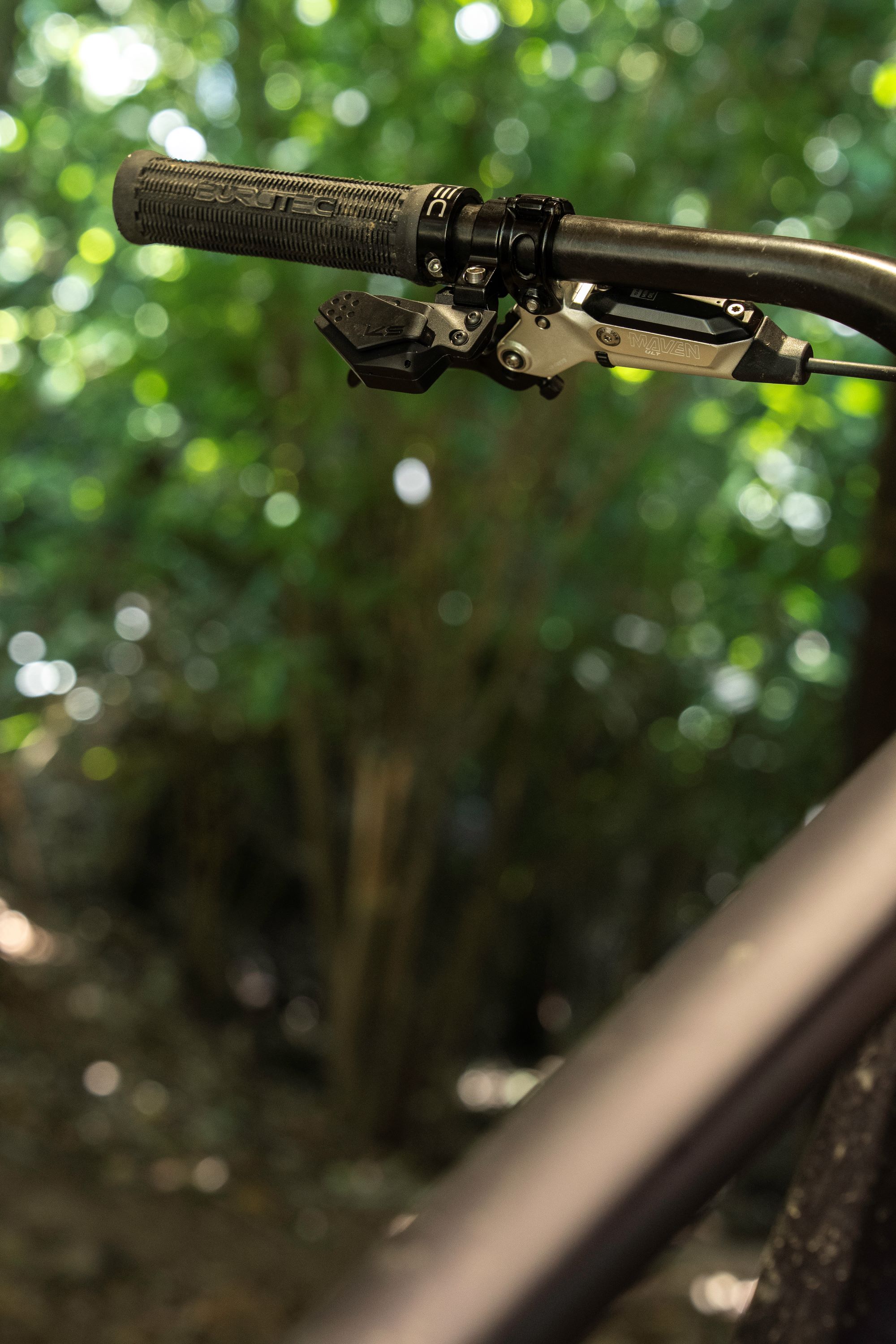
This setup is simple and hassle-free. There are no cables, housing, or internal routing, just the remote and the post. For me, the installation process was a real breeze. Drop the post in, clamp it down, attach the remote, and you’re all set. It took less than five minutes to complete. In contrast, wrestling internal cables through modern frames was a real pain. The entire setup took me about twenty minutes, and most of that time was spent adjusting the saddle height. The remote uses a standard CR2032 battery, which should last eight months or more, with an LED that flips when it’s time for a swap; the light changes from green to red. You can grab a spare battery from any dairy, petrol station, or supermarket if needed. I’ve had that happen a few times, so it’s worth having a spare and double-checking the battery life or having a spare stashed before you roll out. The post has a rechargeable battery that slots in conveniently. Everything you need is included in the box: remote, battery, charger.
The KS Rage Circuit post is available in 30.9mm and 31.6mm versions, with travel options ranging from 120mm to 180mm. KS has thoughtfully considered modern geometry, ensuring that total post lengths should fit most frames without any issues. The Rage Circuit also uses the same wireless remote as its more expensive sibling, which employs KS’s proprietary 2.4GHz wireless communication system. Conveniently, the rechargeable 450mAh battery is stored behind the seat clamp, keeping things tidy. KS estimates that the post will run for up to eight weeks on a single charge under normal use, and it takes approximately 4.5 hours to top up with the included charger.
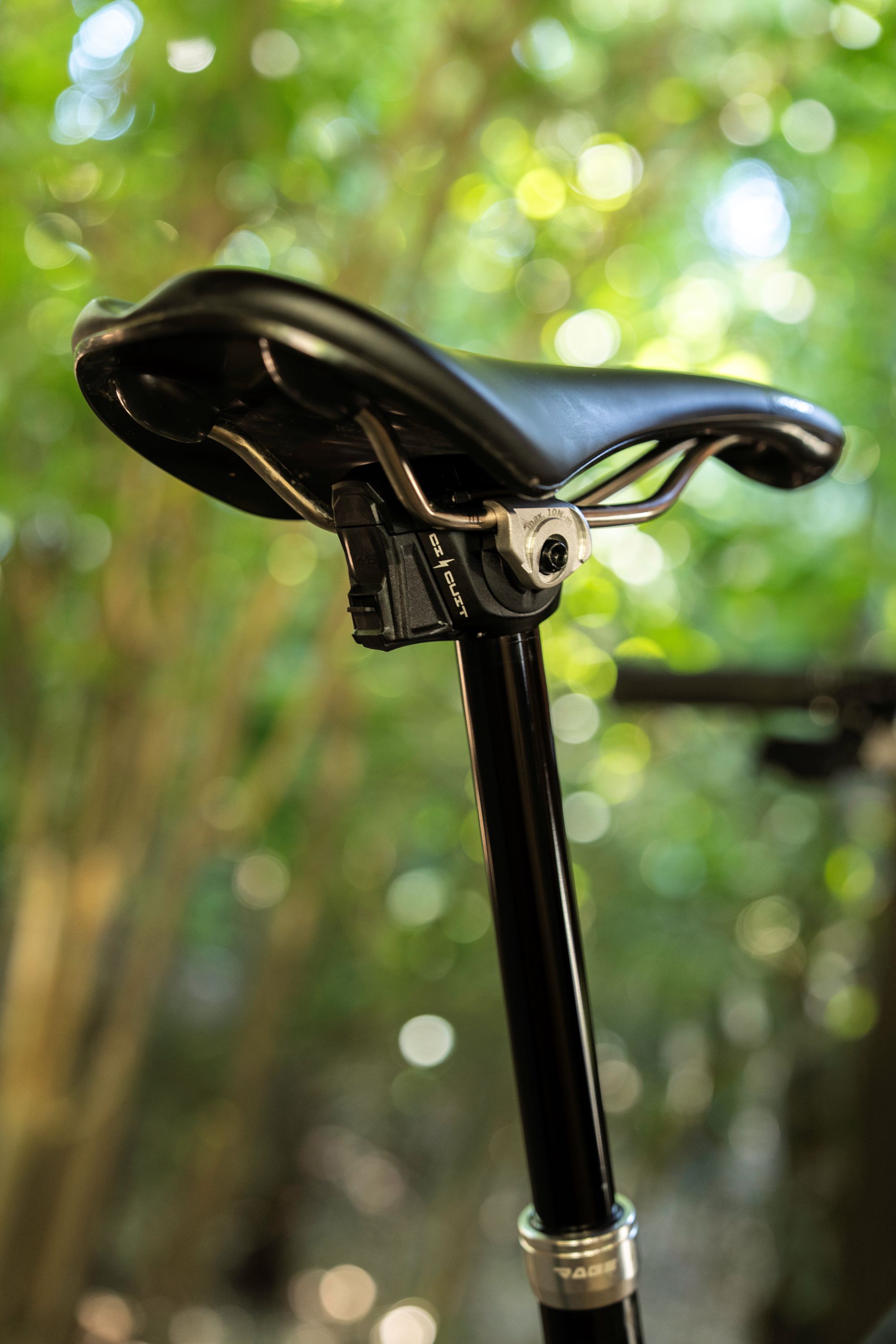
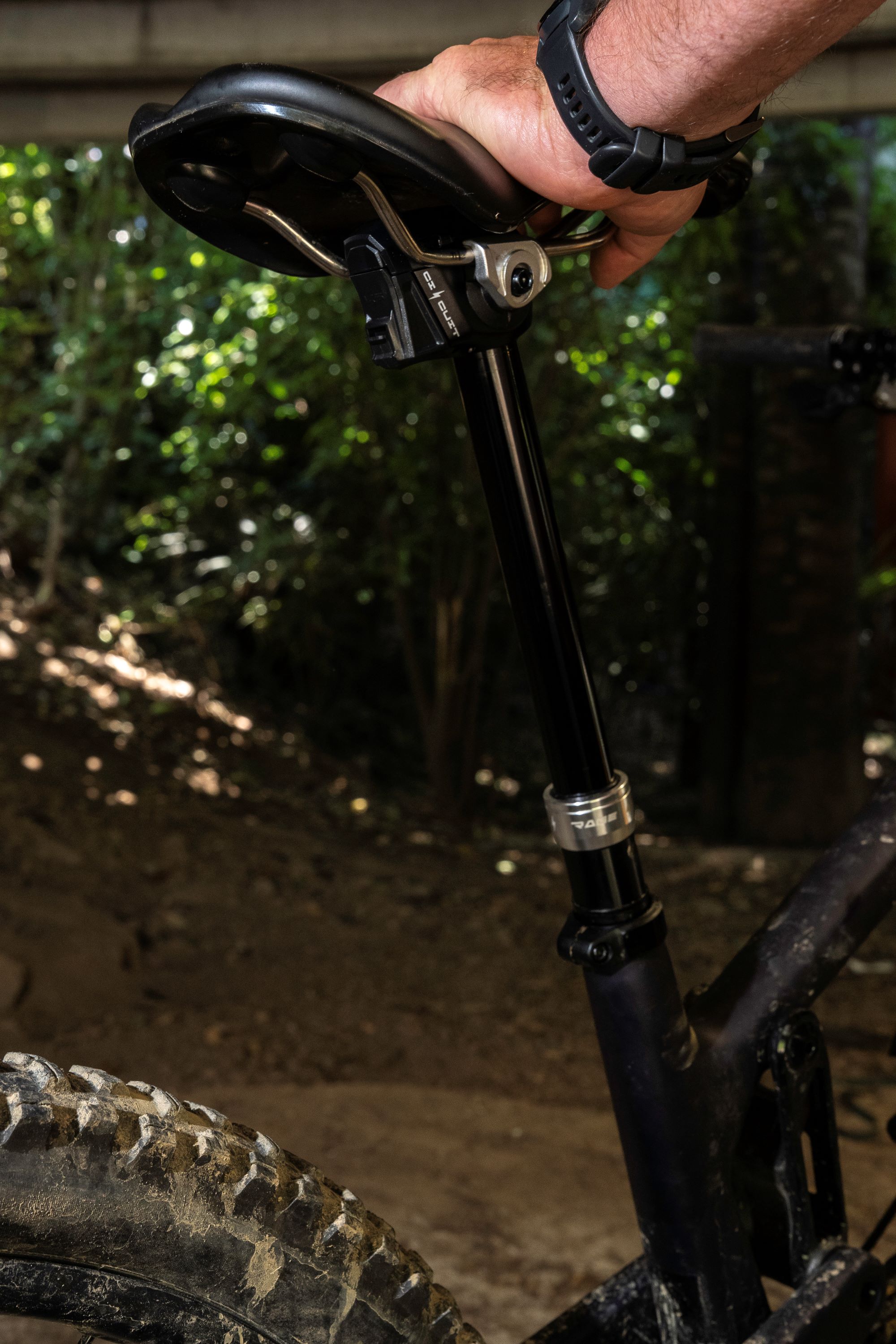
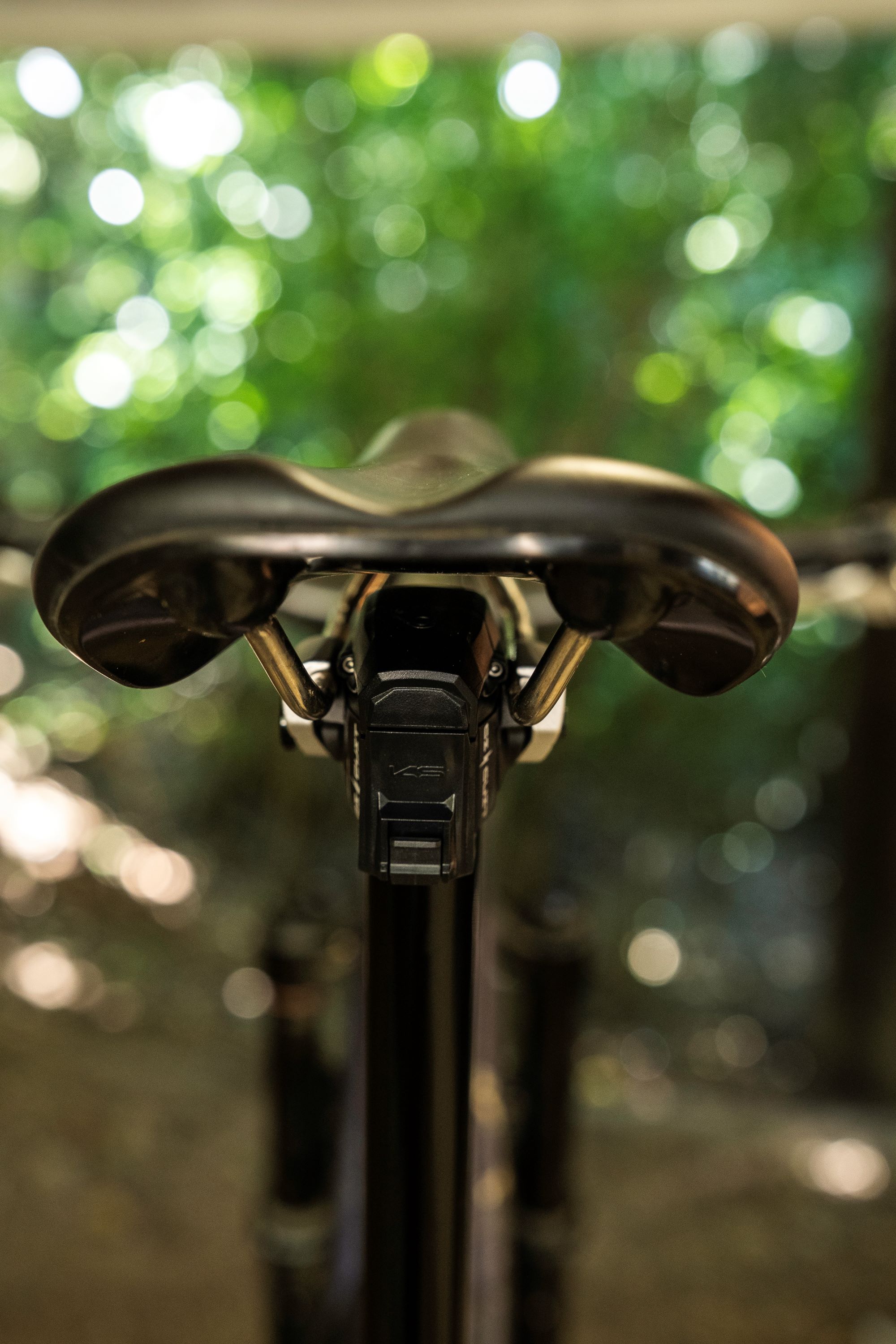
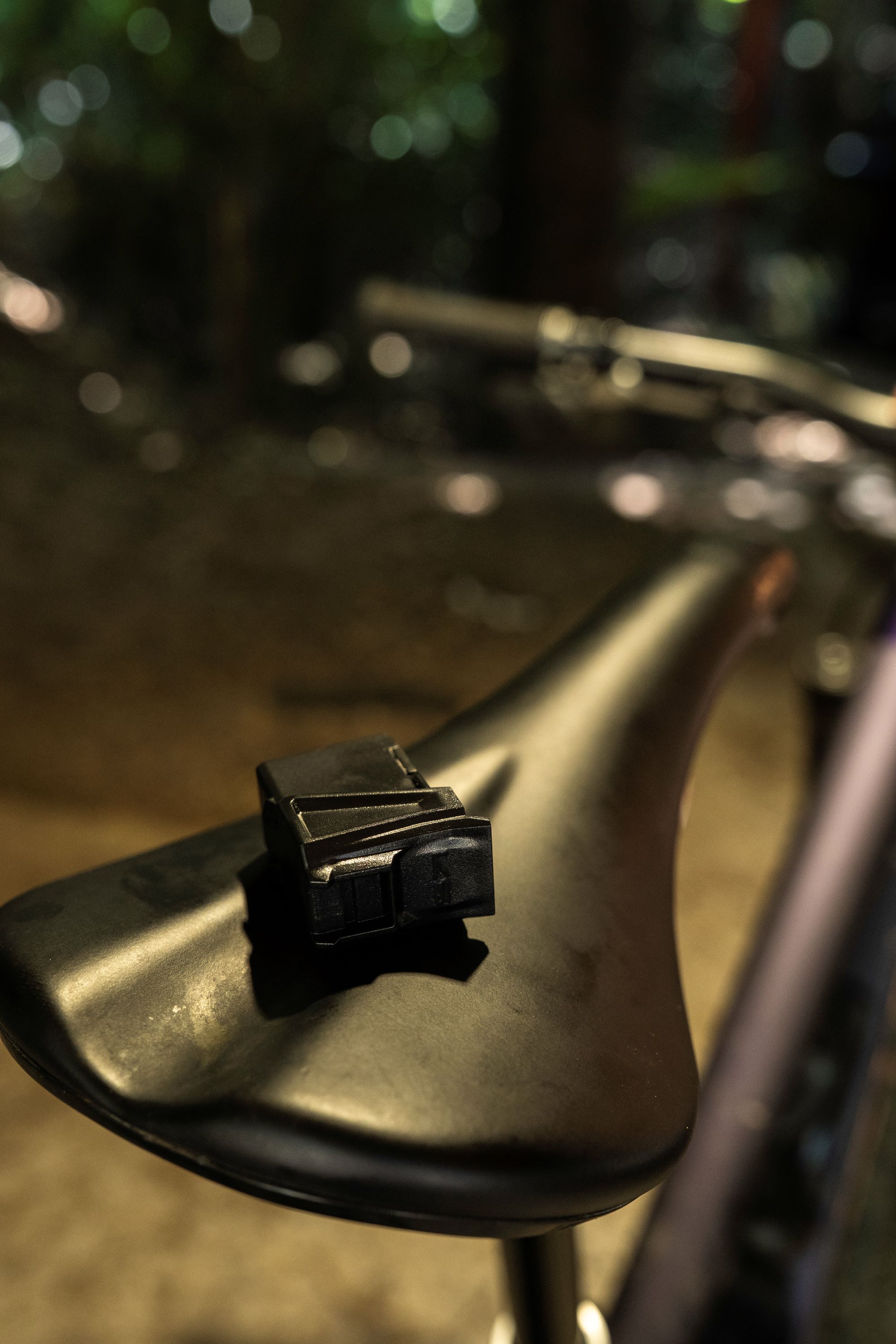
Now, let’s talk about how this post performs on the trail. The actuation is incredibly smooth and light. There’s an almost effortless sensation as the post drops when you press the remote button while weighted on the saddle. It doesn’t resist at all. I’ve been using wireless dropper posts for several years and highly recommend them.
During a recent test bike, I actually forgot about how much more I use the electronic version compared to the mechanical. Put simply, you press the button, and the post drops. It’s that straightforward, and after a few rides, you stop thinking about it entirely. The remote lever itself is large and easy to reach, with a very quick response time. The amount of force required is fairly light, and the post slides smoothly out of the way without much effort. The post is also built tough. An IP67 rating means it’s dust-tight and properly water-resistant.Precision keyways keep everything stable with virtually no play. This is something I’ve been checking for religiously, and so far, there’s been nothing to report. No slop, no wiggle, just solid performance.
The Rage Circuit has some downsides. The return speed is average, neither sluggish nor lightning-quick. When it’s time to raise the seat for a climb, hold down the remote to return it to full extension. The Circuit is a little less eager to fully extend. Of course, not everyone wants a super-speedy post, and I wouldn’t call the Rage Circuit slow at all–it’s just not the fastest out there. If you’re coming from a post that rockets back to full extension, you might notice the difference. But wouldn’t have any issues coming from a cable actuated post. It gets the job done, just not with any particular flair. The remote could be a little better. Don’t get me wrong, it’s functional and does what it’s meant to do, but the construction feels a touch flimsy. It’s not that it’s going to fall apart on you. The button action is fine, and the ergonomics are decent, but the overall build quality lacks a touch.
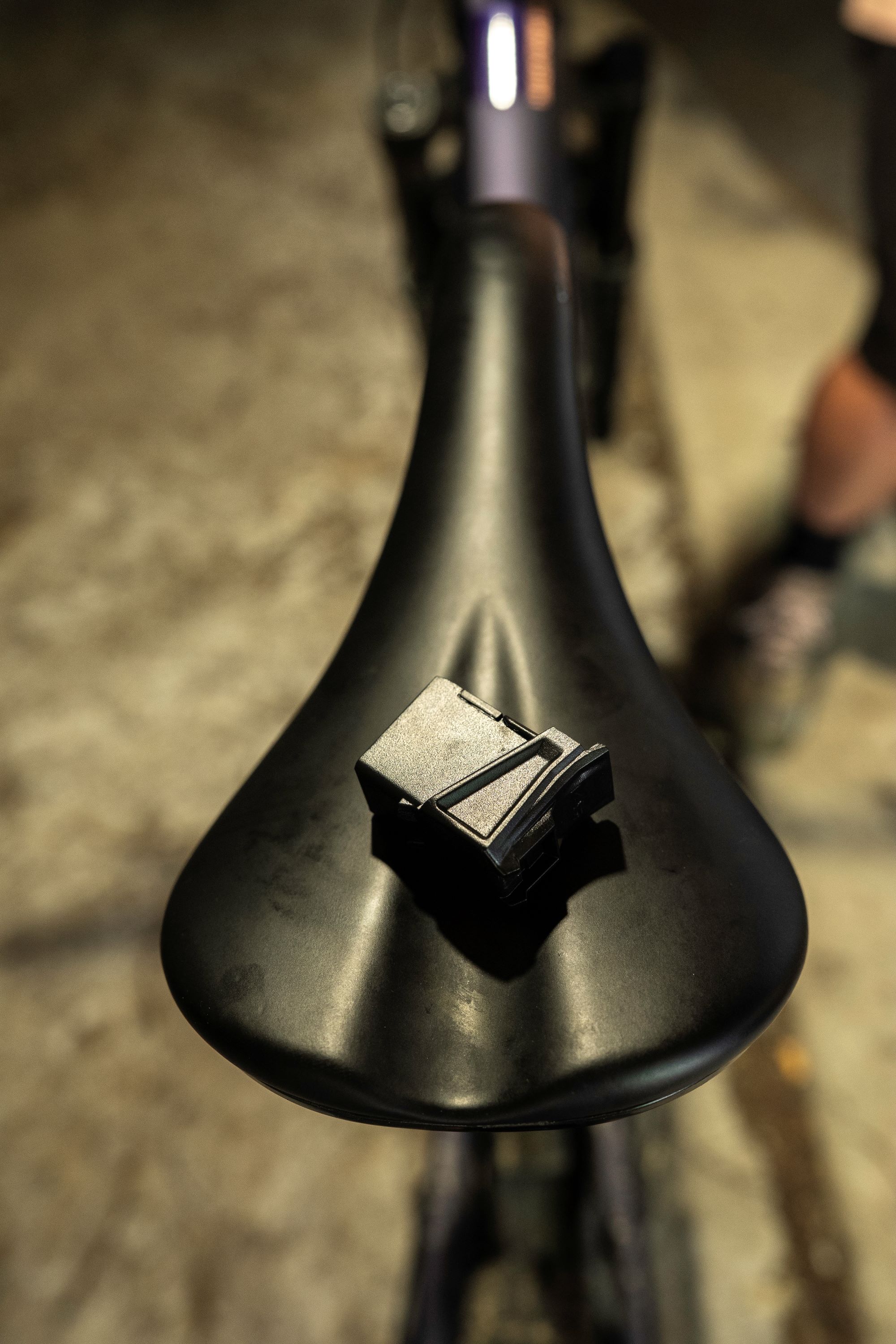
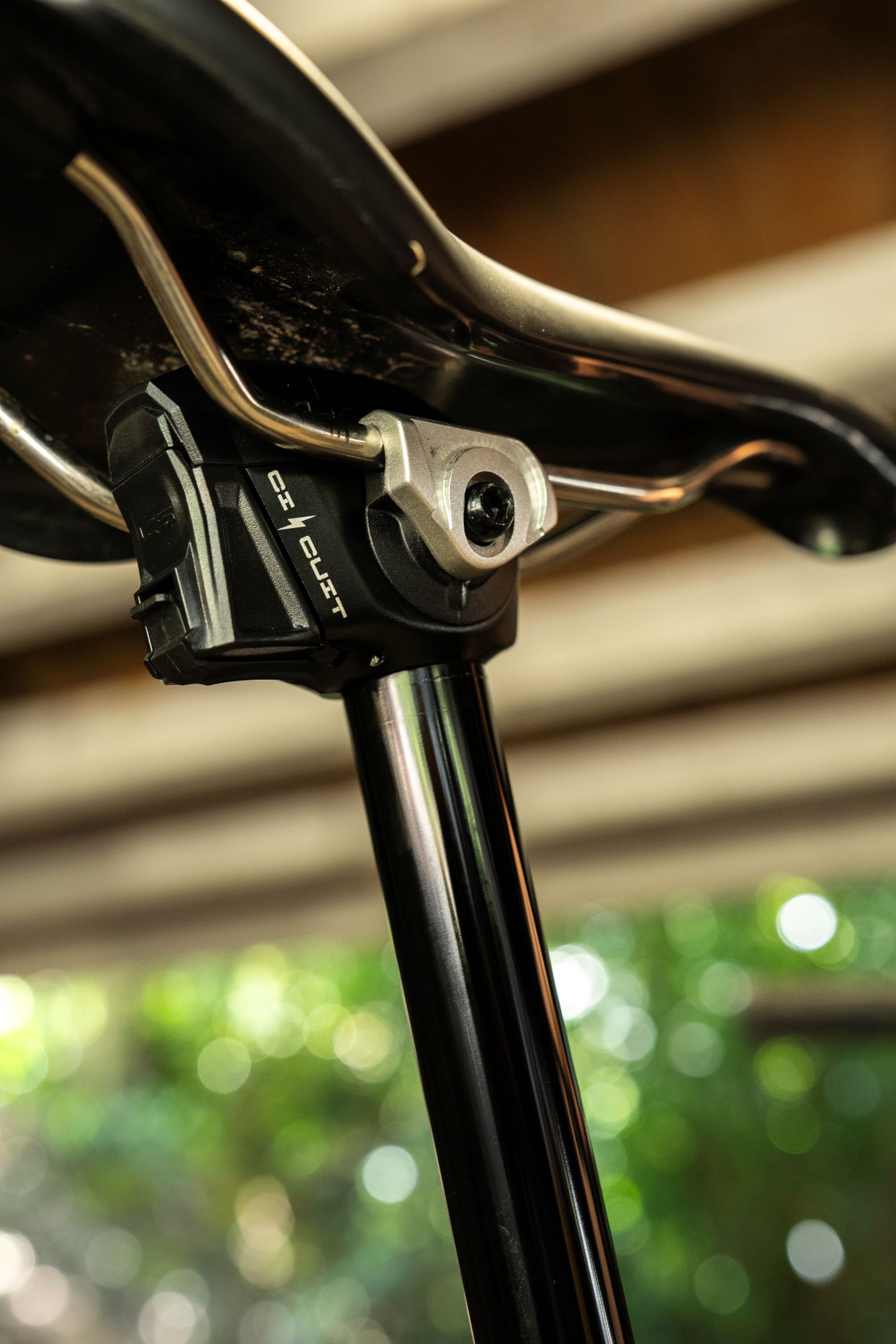
The price is bloody good value for a wireless dropper post and perhaps one of the cheapest out there. In saying that, wireless convenience does come at a cost, however. If you’re building up a new bike or already running wireless shifting, the Rage Circuit makes more sense. But if you’re thinking about replacing a perfectly good mechanical dropper, you’ll need to really value that cable-free experience. One thing worth mentioning is the serviceability. KS has a decent reputation for support. The post uses their proven hydraulic valve design, which sits at the top of the unit. The cartridge is easy to replace should the need arise. While time will tell how long-term this holds up, the company has a solid track record with products, so I would back them.
After several months of riding, the Rage Circuit has been rock solid. The connection between remote and dropper never drops signal or acts up. The actuation remains smooth and consistent, and the post hasn’t developed any play or quirks. It just works, which is exactly what you want from a dropper. KS has delivered an impressive wireless dropper here. The
smooth action alone is worth noting, and the battery life means you’re not constantly worrying about charging. Believe me, this can suck and ruin your riding experience. Installation is straightforward, and the performance has been reliable. For riders who value smooth, light actuation and don’t want to deal with cables, this post could be a good option. If you’re in the market for a wireless dropper and want something that feels effortless to use, the Rage Circuit deserves serious consideration. When you’re out on the trail, pressing that button and getting the saddle to drop away without any resistance, you’ll improve your riding experience.
The Breakthrough Season
Words Joe Millington
Images Mikhail Huggins
29th April 2025 – It’s a desperately early 5.00 am flight at Auckland International Airport. I’m checking in my two enduro bikes on a Qantas flight to Sydney, then onto Colombo via Sri Lankan Air to compete in the Sri Lankan Open Enduro. For the first three months of the six-month trip, I’m travelling with my father. I’m a 19-year-old privateer racing first-year elite on the EDR World Cup circuit in Europe.
My father has invited himself along, and Mum has stayed at home to keep things running.
I’ve had a good NZ summer, competing in most of the enduro races nationally, the Downhill Nationals and Crankworx Rotorua. My best results were second in the Enduro Nationals at Cable Bay, Nelson, and third in the DH Nationals (racing an enduro bike) in Rotorua. It’s the first time in a while that I’ve been injury-free, and I’m feeling pretty fit.
I’ve been invited to the Sri Lankan Open by Shakti from MTB Sri Lanka. I’m not sure what to expect, but the trip sounds like quite the adventure. We touch down in Colombo late at night. Unfortunately, the bikes have not arrived, but Sri Lankan Airlines are extremely helpful, and the bikes arrive on the next flight the following morning.
All the competitors are staying in a mountain lodge resort in Padukka, and the race is set amongst the rubber plantation on the AYR Estate, the only MTB park in Sri Lanka. It’s excellent to meet riders from many Asian countries, including Nepal, India, Malaysia, Japan, and Indonesia, along with a large and very enthusiastic team from Oman. The level of excitement is infectious; the local riders are thrilled to have a rider from NZ who races on the EDR circuit competing in their home event.
It would be an understatement to say that it’s hot. At the top of each run with your helmet on, it’s hot, but when you remove your goggles at the bottom of each run, the hot air hits you like a hair dryer. You actually get warmer when you stop. The air-conditioned shuttle utes are such a relief.
The trails are in good condition, with each stage having a couple of challenging features. The trail builders have worked very hard; with ground foliage growing up to 12 cm a day, it’s a constant battle to keep the jungle back. After two days of exhausting, hot racing, I come away with a win. RG Ripper from Nepal is second. He had raced in the EDR the year before. We had a good battle and a lot of fun at the after-race party.
At the end of the race, all the locals come back to the race village, and the children of all ages ride the competitors’ bikes around the park having a great time. I couldn’t imagine this happening in NZ or Europe at the end of a race, and it will be one of the lasting memories of the event for me. Now onto Finale Ligure, Italy, for the first EDR of 2025.
The EDR World Cup is a seven-race Enduro series raced all through Europe and is the pinnacle of the sport, attracting riders from all over the world. Fully funded factory teams through to privateer riders like me operating out of the back of a van. At 19 years old, I’m the youngest rider in the elite field. It’s definitely a journey into the unknown and I’m up against legends of the sport. Names like Richie Rude, Jack Moir, Jesse Melamed, to name a few, as well as top NZ riders like Charlie Murray, Matt Walker and Eddie Masters. I really have no idea how I’ll go. I’m saying top 30 out loud but secretly thinking that top 20 is possible. My race plate is 95, and I want to improve on that.
Finale Ligure is a great place to ride, but a tough place to race. I ride as well as I can and push all the way, finishing 29th and happy with how I’ve gone. I now realise what I’m up against.
I’m up at 4.30 am the morning after the race to catch a 6.30 am Wizz Air flight out of Nice to Krakow, Poland, for the next race in Bielsko Biała the following weekend. What a contrast: the weather is freezing with snow falling on the practice day and a max temperature of 3 °C.
On the race day, the weather improves slightly to about 7 °C, but the surface is sticky mud, and the racing feels really slow. The big, powerful guys are in their element, and after a long, exhausting day, I finish 32nd with the race plate of 45. I’m on the improve and have broken into the top 30 overall. The local favourite, Slawomir Lukasik, has won his first World Cup, which sends the local fans into raptures. One of the highlights of this event is the crowds. Unlike Downhill, Enduro has no crowd fencing; you just have to stay behind the race tape. In some places, the crowds are leaning across the track as you approach through the rock garden at 40 kph, just moving back as you arrive, making the track very hard to see at times. It’s pretty out of control.
We have two weeks before the next race in Loudenvielle, in the French Pyrenees and spend eight days in Bielsko before catching a flight to Barcelona to pick up a campervan for the seven-hour drive to Loudenvielle.
I’m looking forward to the Loudenvielle race. It’s the first high mountain race, which means it’s very steep, and the stages are long. The rider who brakes the least and stays upright generally goes well. Last year, I finished second here in the junior race.
The day dawns sunny and dry, perfect for me. My race seeding is 31st and after the first three stages, I’m placed 17th. On the fourth stage, I really let it rip and feel like I’ve gone well. I check the live timing and – wow – I’ve finished fourth with one stage to go. The last stage goes even better with a third place after holding first for a while. This moves me to 11th overall. I’m over the moon, 11th in the world, not bad.
The next morning, after some celebration, we pack the van and head to Leogang, Austria via two days of riding in Finale. Leogang is in the Austrian Alps, a beautiful place with massive mountains with snow on the peaks. Another race with long, steep stages, and I’m feeling pretty good.
After some horrendous wet weather on the day before the race, the race day is a slight improvement, but still incredibly wet, muddy and slippery. I’m seeded 17th for this race. The top 30 always start later, rolling out after the elite women, and now I’m riding with all the big dogs.
I’m with Matt Walker, a New Zealand legend who won a World Cup two years earlier in Val di Fassa. Matt is a friendly guy and a very experienced racer, it’s a pleasure to spend the day riding with him. Looking around at the start of each stage, I feel like I’m in impressive company at just 19 years. The race itself is similar to Loudenvielle. I ride fast and clean except on the last stage, where I have an off, which drops me down on that stage. After six long stages, I finish in 13th place which is beyond my expectations. It’s a good night.
We now have almost three weeks off before the next race in Val di Fassa in the heart of the Dolomites, Italy, which I think is the most spectacular place on the circuit.
Before this, though, my friends Lachie, Cooper, Marcus and I have some summer sun and beaches to attend to in Split, Croatia. After a week relaxing in Split, we spend five days riding in Morzine, France before making our way through to Val di Fassa, ready for round five of the EDR World Series.
I’m ranked 11th for this race, my highest ranking yet. This is a four-day event, with two days of practice and two days of racing. It’s going to be a big four days.
After completing the first two days of practice, race day dawns sunny and hot. We have three stages on Saturday and four on Sunday. After the first two stages, I’m 18th overall, but the stages so far have been short, so the time difference between the top 30 is just seconds.
The third stage lasts over eight minutes, starting flat, but the last half changes to steep and technical. I start okay and feel I’m carrying really good speed. Carrying speed with the least amount of effort is the key to long stages. As the trail gets steeper, it suits me more and after 7:55 minutes, I finish fourth. This stage has broken the field up, and I move into eighth place by the end of the first day.
Again, the second day dawns sunny and warm. My goal is to hold my place and try to stay in the top 10. Over the next three stages, I finish ninth, ninth and eighth. A couple of riders have had some bad luck on the sixth stage. Charlie Murray has had a flat tyre, and Tarmo Ryynanen snapped his bike in half. This has moved me up from ninth to seventh. The last stage is short and sharp. I have Charlie half a second behind me, and I know he wants to be the first New Zealander.
I go really hard and just give it my all, crossing the finish line on my absolute limit. I’ve finished sixth on this stage, moving me up to a final position of fifth overall. I’ve just pipped Charlie by under a second.
Eddie Masters interviews me, and Charlie comes over for a chat. He’s disappointed in his earlier flat tyre, but he congratulates me straight away. Enduro is good like that: it’s about the race but also the riders.
It starts to sink in: I’ve just finished fifth in an EDR World Cup at the elite level in my first season. I’m the youngest rider in the field and the first 19-year-old to achieve a top five. My friends Lachie, Marcus and Cooper and the other New Zealand families are happy for me. We have a small and slightly exhausted celebration that night.
There’s still much more action to come in the rest of the season, but as of this moment, I’m very happy.