

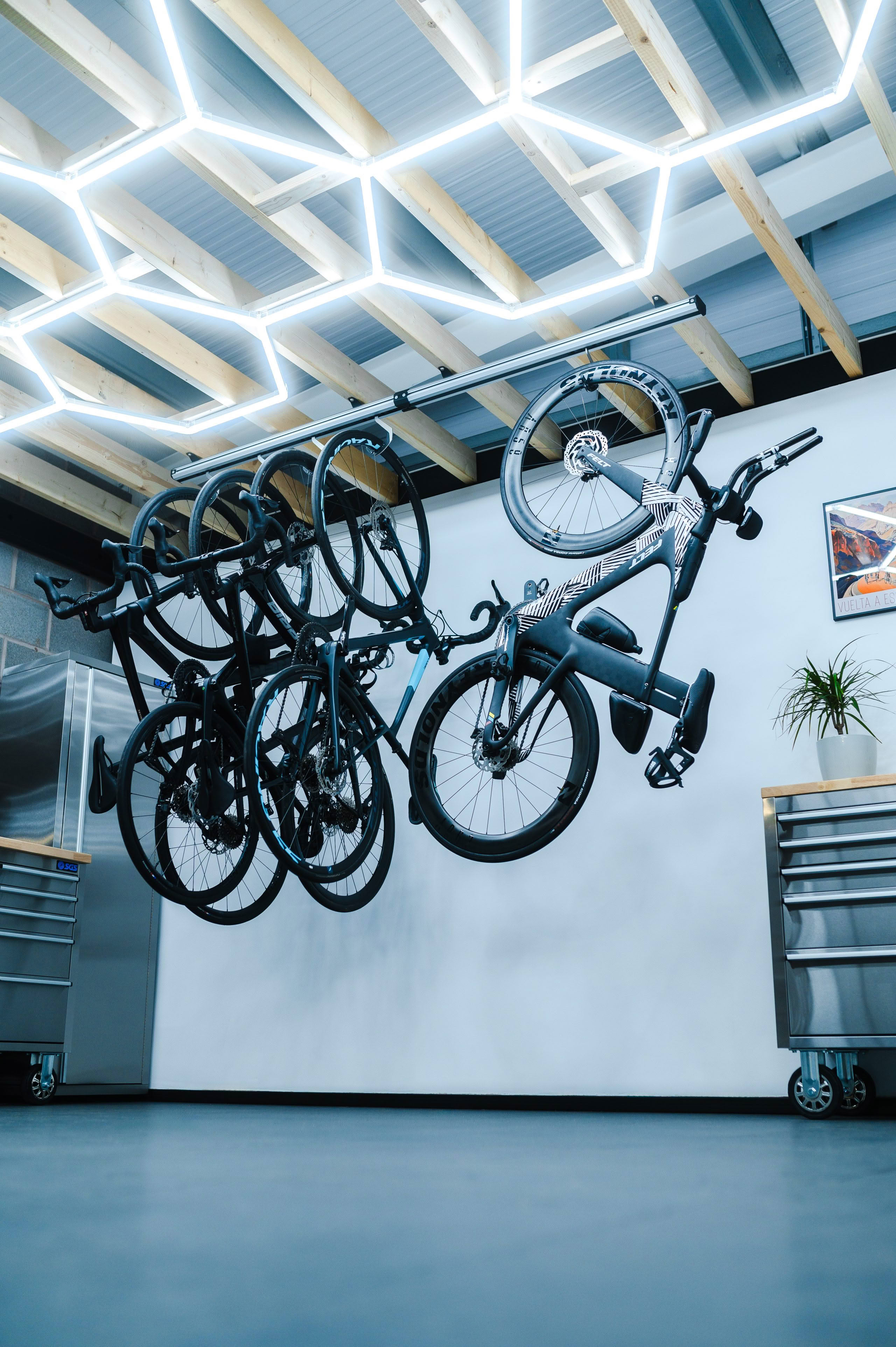
Stashed SpaceRail Bike Storage System
Words: Liam Friary
RRP: $716 (single rail with one hook)
Distributor: Stashed Products
I think it’s safe to assume we’re all passionately into bikes – and most probably own more than one. Often, it’s a fleet of bikes for different occasions that you need to keep in order. The garage isn’t for the car; it’s for all the bikes. But the thing is, said bikes need good storage, so everything else in the garage is still accessible. I’ve always wrestled with bike stands, walls, and hooks, forever trying to find the best storage solution. The Stashed SpaceRail system aims to provide simple bike storage and, hopefully, solve my problem.
The SpaceRail is built around a 1,196mm extruded 6063-T6 aluminium rail – the same aerospace-grade material used in aircraft construction. Each rail can support up to 120kg total weight, with individual hooks rated for 30kg. That’s substantial capacity for eBikes and fully loaded mountain bikes. The hooks are made of 304 stainless steel with a protective polymer coating, sitting on a wheeled trolley system that operates on a simple but clever principle: when weighted with a bike, the hook locks into position. Unweighted, it slides freely along the rail. The rotating capability is what sets it apart. The hooks rotate a full 360 degrees, allowing you to orient bikes in four distinct positions: front wheel up or down, handlebars facing forward or back. This rotating mechanism is what enables the dramatic space savings. Depending on your bike number and rail length, there are big savings when compared to traditional wall hooks that require much more space.
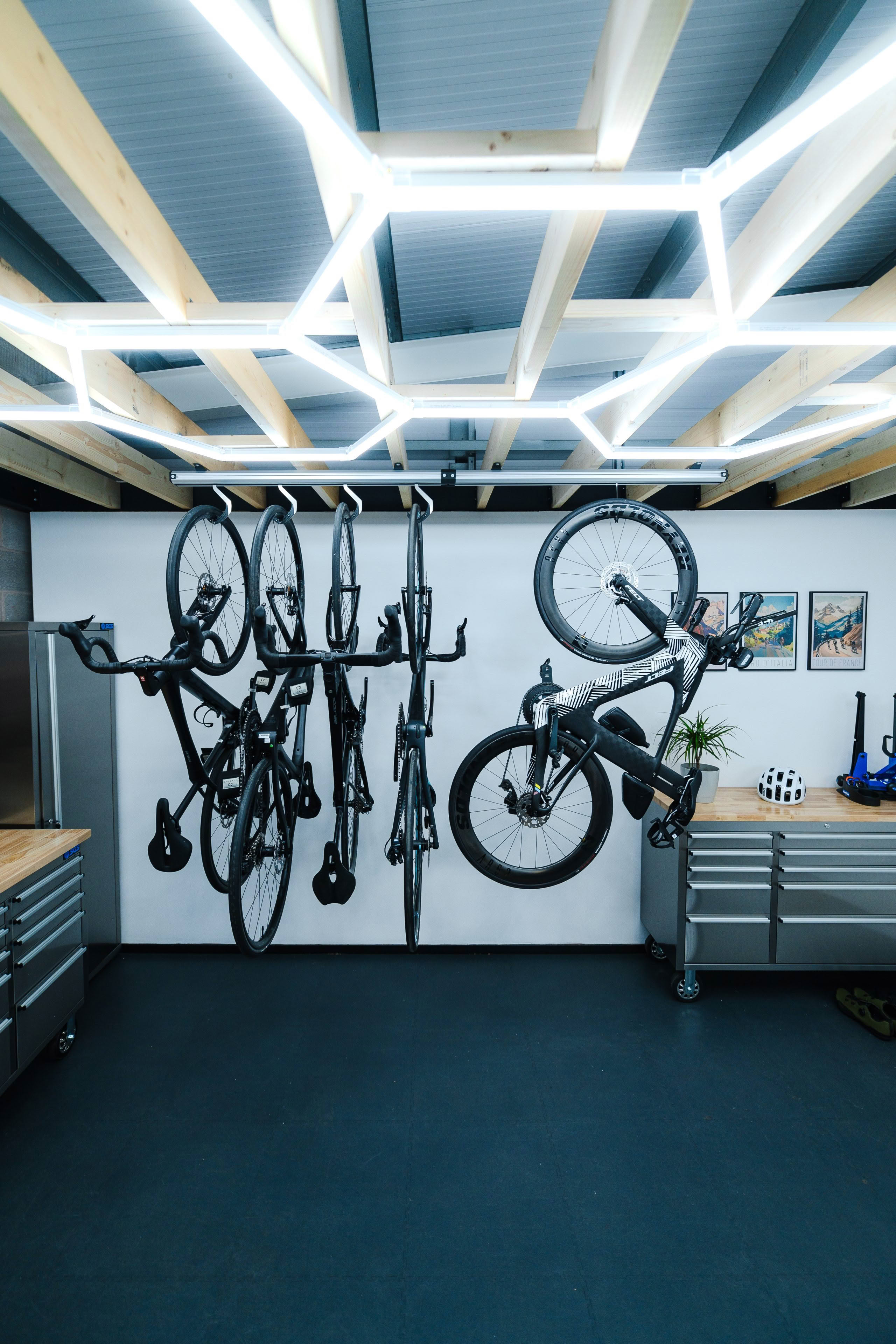
So, let’s go over the installation process; it’s not too hard, but it does require you to actually read the instructions. The mounting hardware is well-designed with captured nuts that eliminate fussy alignment. The rails themselves are light enough for solo installation on ceiling joists. It was more about where to mount the system on the ceiling, as you need quite a bit of room available for the bikes to swing freely when rotating. Stash recommends 600-700mm. Also, it might pay to have your spouse or mate available for the installation. Stash does a great job of YouTube installation videos, which I found super helpful. Once it was fitted, it freed up a lot of other storage space and made for just one clean location for my bikes. I particularly appreciated it when I needed to grab a bike from the middle of my collection; rather than performing the juggle of removing three bikes to reach the fourth, you simply slide the bikes apart, grab your chosen steed, and you’re off. The spring-loaded system makes it super simple because the hooks won’t move unless it’s weighted. However, as I am a bit of a neat freak, it did take some arrangement to get the bikes hanging nicely together compactly.
The SpaceRail Bike Storage System is certainly costly. However, consider this a premium storage system designed for performance. A realistic four-bike setup runs approximately $700+, depending on configuration. Scale up to a 12-bike system and you’re looking at $2,000+. So yeah, the storage system isn’t cheap. The alternative, of course, is that you can head along to your local hardware store and DIY something up, depending on your level of desire and skill set.
SpaceRail’s rotating hooks and automatic locking mechanisms are features that prove surprisingly valuable in daily use. Even after a few months of use, the anodised aluminium finish remains pristine.
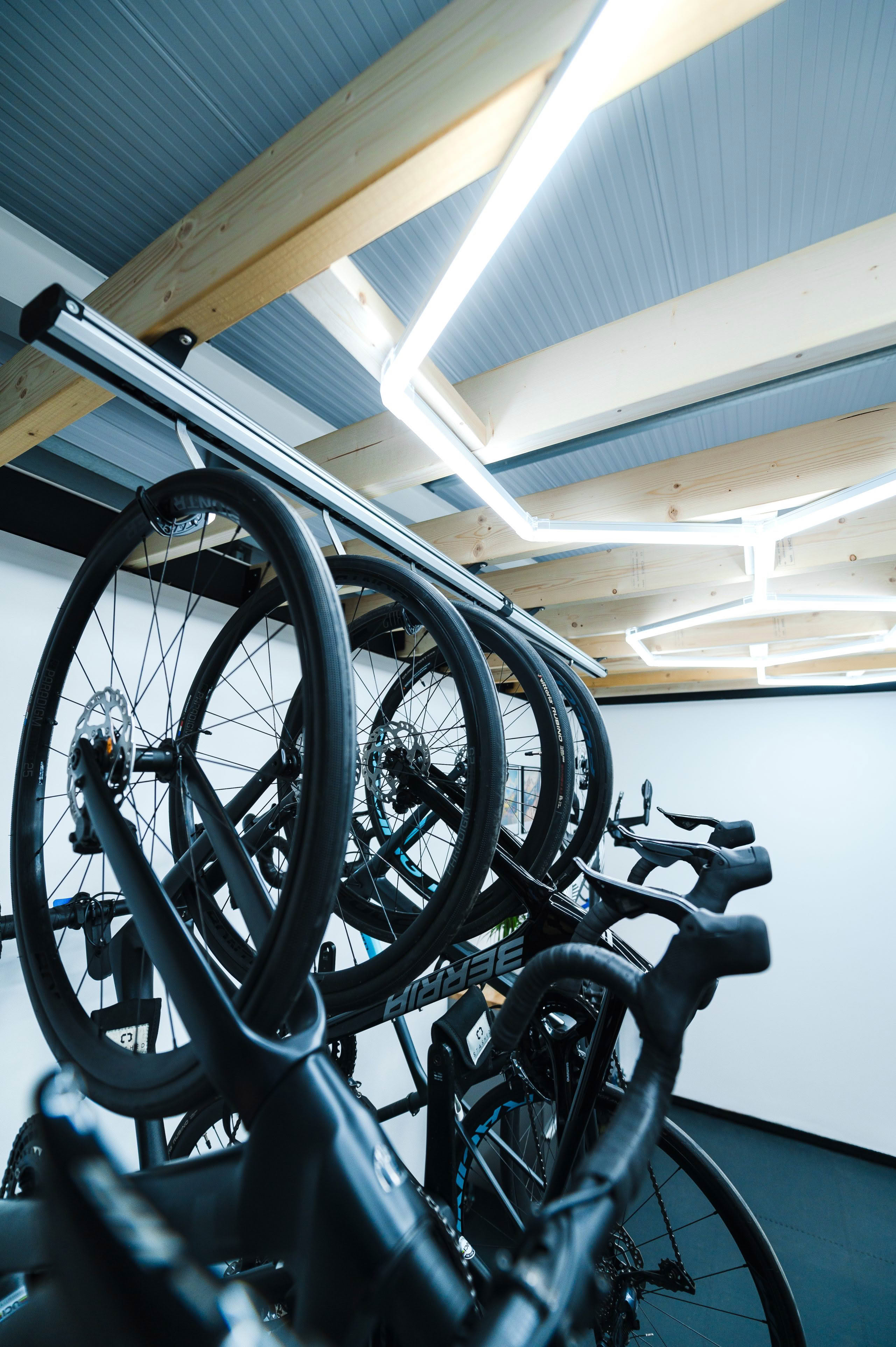
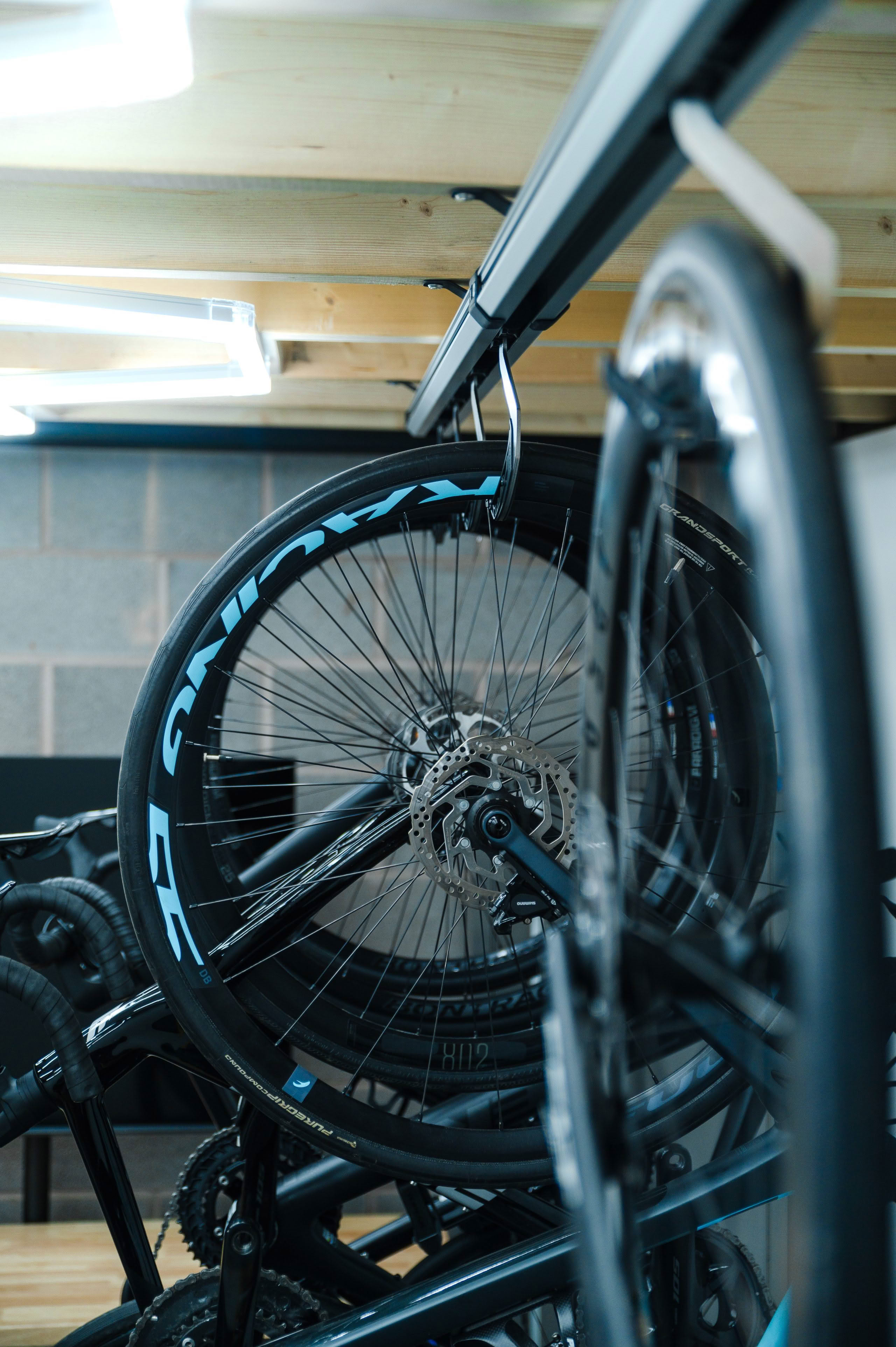
As mentioned, I maintain a large fleet, including test bikes and personal bikes, and my household regularly uses a variety of bikes. Given these circumstances, the SpaceRail makes a lot of sense. It’s particularly useful if you have four or more bikes competing for limited space and need to access different bikes regularly throughout the week. Although I’m not personally in this space, I believe the SpaceRail would be highly effective in urban garages, narrow storage areas, and situations where floor space is at a premium. For families with multiple bike riders who need easy access without the hassle of playing “musical bicycles
“It’s a transformative solution.
Despite being exposed to constant use over several months in a humid garage, the system has held up well. The roller mechanisms glide smoothly without wear. The full-length aluminium rail provides maximum structural integrity, making it feel more akin to high-end commercial installations than typical garage solutions. The high level of attention to quality and detail is obvious with this product.
The SpaceRail addresses real issues that riders with multiple bikes face daily. The rotating hook system and sliding mechanism aren’t gimmicks – they work very well. That said, as with most things, there’s a trade-off: the high price tag comes with the expectation of premium materials, UK manufacturing, and lasting quality. For me, the SpaceRail is a game-changer for my larger fleet and will be equally valuable for serious bike collections where space is limited and access is crucial. It’s not just storage; it’s infrastructure that enables your cycling lifestyle and, sometimes, that’s worth paying for.
Giro Chamber Trail Shoes
Words Liam Friary
Images Callum Wood
RRP $399
Distributor Worralls
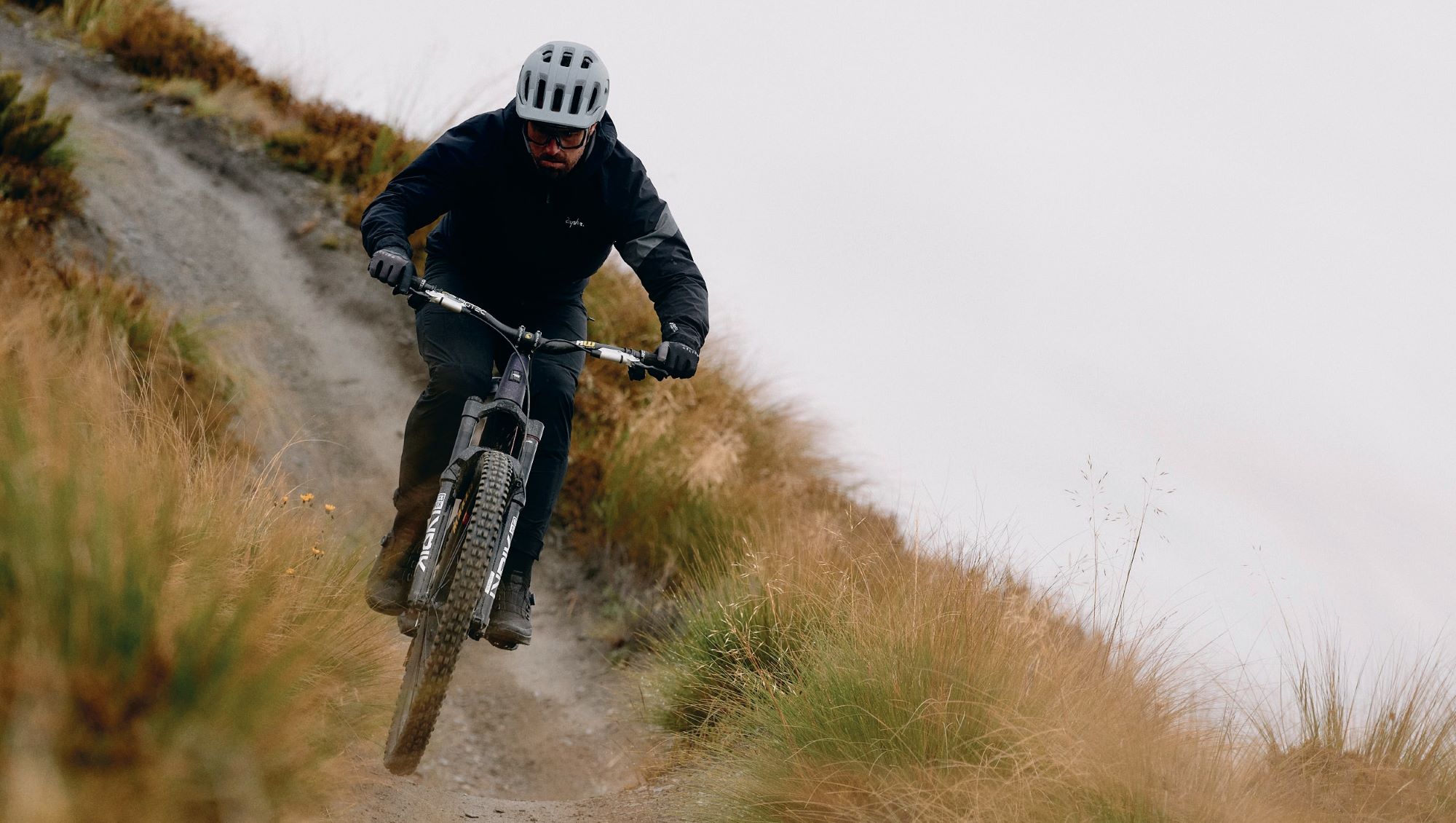
The Chamber has a pedigree on the World Cup circuit, with Giro’s full DH Chamber taking some wins at the top level. Giro’s intention is to take the DH Chamber lineage of maximum power transfer and durability and applying it to the Chamber Trail. The aim is not to have a lesser version of the DH Chamber but one that still makes it a suitable sibling.
The foundation is a tri-molded sole built to the same specification as the Chamber DH. Trimolded construction uses three distinct layers, in this case a rubber outsole, an IMEVA midsole and a TPU plate, each contributing a specific property to the overall package. The rubber outsole is Giro’s proprietary Sensor compound, developed to balance grip on wet roots, rocks and mud. They’re durable enough for a full day of walking sections you weren’t quite ready for. The TPU plate adds torsional stiffness through the midsole, which is where power transfer happens, or doesn’t. A shoe that flexes through the sole when you’re hammering out of a corner is giving away watts and precision you didn’t mean nor want to give. The +10mm cleat setback moves the cleat toward the heel relative to the ball of the foot, which reduces hot spots on long rides and improves walking characteristics off the bike.
Where the Chamber Trail departs from its DH sibling is in the upper. A microfibre construction with integrated mesh ventilation replaces the heavier material of the full Chamber, dropping weight and improving breathability without compromising the structural integrity of the fit. The closed-knit ankle cuff is a specific and useful detail, it keeps trail debris out of the shoe on the kind of terrain where small rocks and loose material have a way of finding every gap. The BOA Li2 dial is the premium end of BOA’s closure system. Machined aluminium construction, a wider turning range than standard dials, and lace guides injection-moulded directly into the shoe rather than bonded on top. This means a more precise and even distribution of closure pressure across the foot.
Pulling on the shoes for the first time felt kind of awkward. The closed-knit ankle cuff is a little strange for the first few times when you get them. Sometimes rolling back on itself but after more uses, the material getting looser putting them on becomes more natural. Once locked in with a few clicks of the BOA they felt secure. On the trails they took a bit to loosen up as it would me with most new shoes. After that they held me securely, avoided trail debris from getting in my shoe and on-the-fly adjustments were dead simple on the side of the trail or on the uplift. They felt firm and planted which delivered better power transfer. As for fitting whilst they did distribute firmness around the foot via the BOA dial I think another BOA dial would make them more secure and allow for greater adjustment throughout the entire foot. Whilst most conditions weren’t roasting hot they did breath well via the mesh ventilation which I was thankful for with several all-day rides back to back.
DH-platform trail shoes often have a stiffness that makes them exceptional for descending but a potential liability on the climbs. Where Giro has gone with the Chamber Trail is that the platform is trail-tuned rather than DH-tuned, which implies a degree of calibration in the midsole flex rather than a straight transplant. I did find even on longer pedalling sections they were stiff enough to deliver instant power to the cranks but still had a degree of flex about them. I do sometimes suffer from hot spots on my feet and did have them a few times with these shoes however it was after 20min plus descents. I also had the cleat a little forward similar to my older pair of shoes so after some adjustment it relived the hot spots. The cleat setback at +10mm kicks in here, moving the pedal contact point further toward the heel reduces stiff soles feel punishing on long rides and improve stability over rough terrain.
Giro’s Sensor rubber compound is a proprietary formulation designed to work across various trail shoe surfaces, rather than optimising for a single condition. Wet roots are the real test, as most trail shoe rubber either grips in wet conditions or wears well in dry ones. Finding a compound that does both without compromising either is challenging, which is why most shoes make a choice and accept the trade-off. The combination of the closed ankle cuff, the BOA fit system and the IMEVA midsole hold the fit and comfort of the shoe through a long day, rather than loosening up as the upper breaks in and the closure system settles. The mesh ventilation is another variable on all-day comfort, as trail riding generates enough heat through the foot that a shoe with poor airflow becomes uncomfortable by afternoon, particularly in warmer conditions. The integrated mesh approach keeps the upper clean and structural while allowing airflow at the specific points where heat tends to build.
A shoe that performs brilliantly for the first two hours and quietly destroys your feet by hour five isn’t a solid trail shoe. It’s a marketing shoe that looks good in pictures on the internet. The Chamber Trail sits at the serious end of the trail shoe market without quite reaching the top. For that money you’re getting a DH platform that Giro has proven at World Cup level, a BOA Li2 and a Sensor rubber compound developed specifically for the trail shoe context. The case against is that a DH-derived platform is making a specific promise about stiffness and power transfer that may not suit every rider’s pedalling preference. Those who prioritise comfort on long climbs over descending precision may find the trade-off skews the wrong way. But for riders who spend more time pointing the bike downhill than up, or who ride technical terrain where the DH credentials of the platform actually matter, the Chamber Trail makes a strong and rather compelling argument for itself. After the last two months in the shoe they’ve done the job bloody well across varied terrain in both islands. The solid platform drives more confidence descending. BOA’s are super simple at the trail head and on-the-fly. Of course time will tell about how they wear but after quite a hard life to date they’re stacking up well.

Shimano MT001 Cleats
Words & Images Lester Perry
1998, what a year that was! The swell of mountain biking in NZ and around the world was in full effect. Bike tech was leaping forward each season, pro racers were still on hefty contracts, and I’d taken delivery of a Specialized Rockhopper A1 FS Comp. This gloss black beauty with orange accents arrived just in time for our afternoon MTB outing with the school squad.
Shimano SPD pedals were all the rage at the time, and luckily for me the new rig had a pair bolted on. Fresh Specialized kicks on my feet and a significant amount of time stabbing at the pedals trying to get the little metal cleats to engage with my pedals and, finally, I was clipped in and riding. A dozen metres later and I was on the ground after trying to put a foot down the way I would have on flat pedals. Everyone remembers their first time, but not everyone’s first time was in front of half the school at lunch time. Scarred for life.
The Shimano SH-SM51 “Single-Release” cleats on those Specialized shoes have remained the same since those early days, and until recently that design was one of two SPD cleats available. I’m reasonably sure the second style of cleats, the SH-SM56 “Multi-Release”, has only been used by people who didn’t realise there was a difference between them and the SM51. Their ability to release while moving the foot in any direction, usually at the most inopportune time, left riders (myself included) scratching their heads, wondering what was going on! By and large, if a rider has been doing actual mountain biking and is using SPD-style pedals, they’re using SM51-style cleats. When Shimano announced the release of the MT001 cleat, some 30 years after the SM51, I was keen to see what experience-enhancing technology they would be adding, or what positive changes could actually be made to the humble SM51 design. After unboxing the new cleats, it was obvious the changes, while visible, were pretty minimal. But, the proof is in the pudding, so I bolted them onto my pair of Shimano GE700 trail shoes. The entirety of my time riding these MT001 cleats has been on Shimano’s XT M8120 trail pedals.
The obvious change to these cleats is that the front edge now has a bevelled section rather than the squarer, blunter shape on the SM51’s. The previous shape relied on the user hooking the front of the cleat into the clasp mechanism, then pushing down to force the bevelled back edge into the pedal. With the redesign, so long as it’s lined up correctly with the pedal, a user should be able to stomp on the pedal and have it engage – no need to manoeuvre the front edge into the clip mechanism. There’s a new line marked on the cleat, which appears to reference the centre of the cleat and serve no other function. The underside of the cleat, closest to the shoe, remains the same, with some knurling to help keep it in place once fitted and cut-away areas which allow for some degrees of float (free movement before release).
“This is great,” I thought as I headed off for my first ride with these. “I can be dropping feet all over the place and just slam my shoe back into the pedal!” Foot out, flat out and all that; ideal for sketchy moments, and especially great when riding slippery trails in the mud. Muscle memory is a real thing, though, and as hard as I’ve tried it’s really damn hard not to instinctively hook that front of the cleat into the pedal. Granted, I’ve had success by purposely stepping down, but I’m fighting every autopilot instinct not to engage my cleat, as I have for almost 30 years!
There’s no point in trying to rewire my synapses and reverse decades of repetition. Clearly, I don’t “need” these cleats, so the question arises: who is the target market for them? Imagine, if you will, that back in ‘98 I had these MT001 cleats – I could likely have engaged my cleat far quicker than I did back then on the old ‘standard’ cleats and, in doing so (hopefully) was then of clear enough mind to remember I needed to kick and twist my heels to release my shoes from the pedals, thus saving me from a bruised ego and a lifetime of therapy.
Long story short: if you’re a beginner or still not confident at clipping into SPD pedals, then these cleats are for you. Helping remove some of the initial headache of learning to clip in, and the cognitive load it can cause on the trail, means a user should be more confident and secure on the bike, comfortable that – hopefully – they won’t be entering a section of trail still trying to get clipped in.
For the more experienced riders, I think there’s a case for these cleats making it easier to clip in when things get sketchy, particularly in winter slop on technical trails. While I haven’t really tested this theory in the real world (surprising, considering the summer we’ve had), I’d guess these cleats will clip in more easily when pedals and shoes are clogged with mud. Ideal perhaps for cyclocross or just grimy mid-winter days.
A winner? Yes. Essential kit? Perhaps wait until your current cleats need replacing (they do wear out) and then get these, there’s no reason not to.
Giro Montaro III Mips
Words Lester Perry
Images Thomas Falconer
RRP $299
Distributor Worralls
I was excited to get my head into this new Giro Montaro III Mips helmet. Before receiving it, I’d seen some pics online and thought it looked pretty decent and ticked the necessary boxes for me to select a helmet.
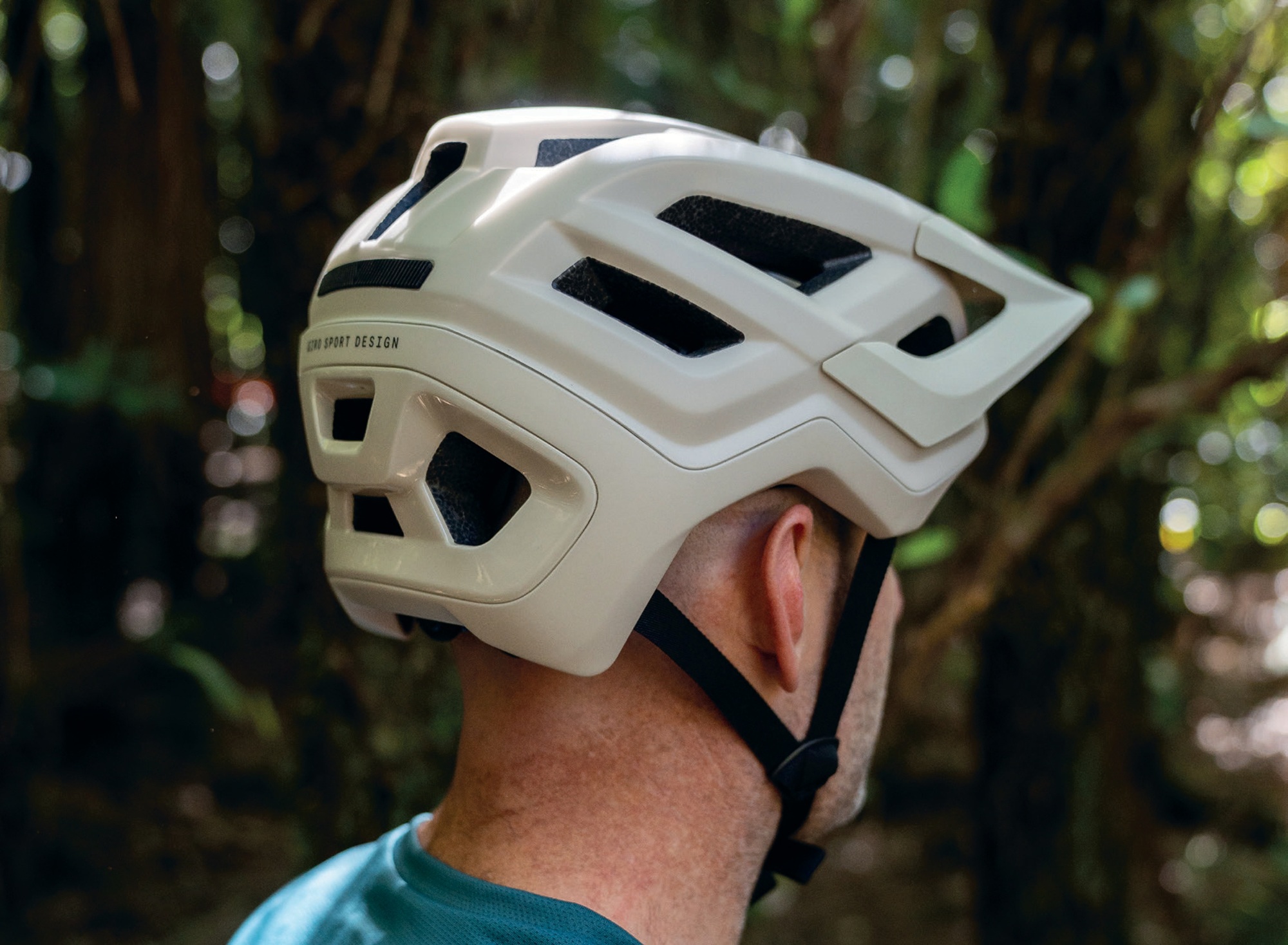
The trail-focused Montaro III is almost a complete revision of the hugely popular, but ageing, previous edition, uniquely named the Montaro II. This new version certainly draws inspiration from other helmets in the Giro range and, dare I say it, from other brands. Although I poke fun, the result is a unique overall silhouette. I’m sure it won’t be for everyone, but when it comes to helmets, one seldom suits all.
There’s plenty of coverage on offer, and the helmet feels like your head goes some ways into it, meaning it comes relatively low towards the ears and back of the head. Internally, there’s a Mips Evolve Core, which is a refreshed version of the Mips slip plane liner. During an angled impact, the sliding action between the Mips layer and the impact-absorbing outer shell helps dampen rotational forces and, therefore, reduce neck and brain injuries (at least according to Mips). In the case of the Montaro III, the Mips shell doesn’t significantly affect breathability or airflow through the vents, unlike the earlier Mips liner system.
Giro’s Roc Loc tensioning system gives users a micro-adjustable fit via its dial tensioner and vertically adjustable tensioning cradle. The visor is vertically adjustable through two fixed positions. When in the highest position, there’s plenty of room for a pair of glasses to be holstered in the front vents. Most glasses will slide comfortably into the rear vents, too, so whichever place you prefer to stow them, you’ll find a solution on the Montaro. The helmet plays nicely with goggles, too. A rubberised section on the rear helps keep a goggle strap in place, and there’s ample room below the front of the helmet so goggles don’t get squeezed downwards on most faces. However, I do wonder if this may happen on smaller faces with large goggles – something to consider if you’re an open-face helmet goggle wearer.
Keeping the lid in place is a FIDLOCK V-BUCKLE, something I miss on helmets without it now. This magnetic wonder is a single-hand quick release and even securing it can be done with one hand with the proper technique and some practice.
On the trail
I find the fit of the Montaro is pretty good on my head – not the best I’ve worn, but one of the better. It seems the low-profile, sparse padding means it doesn’t feel as snug on the head as some, though the upside is it has minimal contact points on my head, which helps with cooling.
All the features of this helmet mean it tips the scales towards being one of the weightier trail helmets I’ve used. No doubt it offers plenty of protection thanks to its features, but theoretically, other lighter-weight helmets offer equivalent protection. There’s roughly a 75-gram difference between the Montaro and another recent review helmet with very similar features, including a rotational impact damper and FIDLOCK closure, so it’s not insignificant.
Weight aside, everything else with the Montaro is excellent; there’s a ton of airflow thanks to ample venting and substantial internal channelling. Even at slow speeds, the helmet didn’t feel stifling.
The outer hard shell wraps right around the bottom edge of the helmet, keeping that all-important inner foam safe from harm. Even while the helmet rolls around in a car boot between rides, it should still look pretty fresh, though results may vary!
It took me some fiddling to get the Roc Loc tensioner adjusted to the optimal position, but I got there in the end. At times, I still find the curvature of the tensioner on either side of the dial doesn’t quite suit my head perfectly, and occasionally, it’s caused me some annoyance. However, this could be a ‘me’ problem exacerbated by having no hair to give a little more padding.
With a $299 RRP, the Montaro III sits at the lower end of the price spectrum for a helmet with these features and coverage. All in all, it’s a solid helmet that offers a lot of protection for the dollars. Sure, there’s a bit of a weight penalty, but I’d wager that this extra weight comes in the form of more protection over some lighter-weight options in the market, so that’s got to be a positive.
CamelBak Chase Adventure 8 Vest
Words Liam Friary
Images Caleb Smith
RRP $250
Distributor Southern Approach
There’s a particular style of riding where you need to carry more than your water bottle and whatever you have strapped to your bike or keep in frame storage (if you have one). But sometimes a full-blown backpack feels like overkill. On these days, you’re committed to being out for hours, tackling technical terrain, and need quick access to everything without fumbling around trying to get access to your gear.
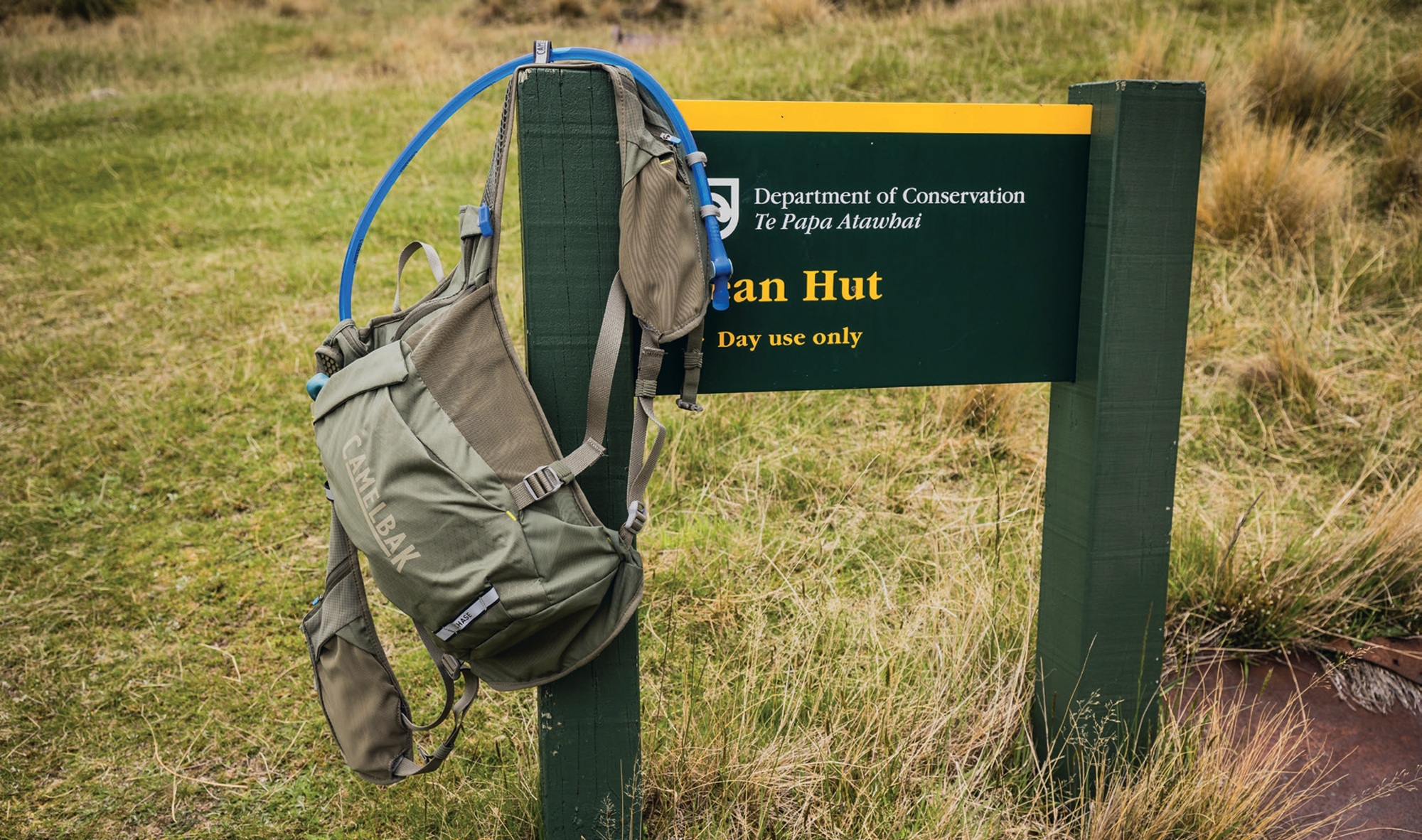
When I first strapped on the Chase Adventure 8 Vest, I’ll admit I was sceptical – in the past, I’ve found vests either too snug or restrictive to wear. The Chase Adventure 8 Vest is designed for those big mountain all-day rides where preparation is everything. Eight litres total capacity, supplied with a two-litre Crux bladder, and enough clever organisation to make my tidy, slightly OCD self happy. The vest format means it sits above your jersey and/or bib pockets. This helps a lot as you’re not fighting for space but rather adding, and you can easily access any snacks or gear that’s not stashed in the vest.
The standout feature here is what CamelBak calls the “Command Center Harness”. It’s essentially a chest-mounted organisation system that puts your essentials right where you can see and grab them without contorting like a gymnast or stopping to dig through pockets. There’s integrated tool organisation built into the harness itself, which means your multi-tool, tyre plugs, and other critical bits are right there on your chest, easily within reach if something goes awry.
The main storage sits in the back panel with six litres of dedicated gear space. I managed to pack bike tools, some trail snacks, and a small first aid kit, and still had room for extras. The stretch overflow pocket on the outside is perfect for items you need quick access to – I stuffed my jacket in there. You can just grab the jacket on the descents or when the weather gets inclement without having to faff with zips and the like.
CamelBak has fitted this vest with their 3D Grid Mesh Harness, which does an admirable job of keeping airflow happening between you and the pack. But don’t get it confused – you’ll still be wearing something on your torso, so things will heat up. However, the airflow is pretty good when compared with other packs. The lightweight 420D recycled nylon construction helps here – it’s tough enough to handle branches and rocks but doesn’t add unnecessary bulk or weight.
The fit is secured with dual adjustable sternum straps. Being able to fine-tune the upper and lower chest fit means you can get it properly snug without feeling like you’re in a straitjacket. It did take some adjusting throughout the ride to get the sweet spot. The vest stays put remarkably well, even when you’re getting rowdy on technical descents or grinding up steep climbs. There’s minimal bounce or side-to-side movement, which is crucial when you’re trying to move around the bike.
I did find the fit good overall, though it could have been a bit better around the shoulders for me. However, this could be due to the winter months spent in the gym. Getting the right fit is crucial with a vest-style pack, more so than a traditional backpack, so definitely try before you buy if possible.
The two-litre Crux bladder is the same quality you’ll find across CamelBak’s range. The bite valve remains easy to drink from, positive shut-off when you’re done, and the magnetic tube trap keeps the hose secure against the shoulder strap when you’re not using it. It stays put on rough descents and didn’t bother me at all. The vest also features reflective elements for visibility, which is handy if your all-day ride stretches into dusk. There’s even provision for adding impact protection if you want back protection on gnarlier rides.
The capacity sits in an interesting, sweet spot. It’s not trying to be an overnighter like the H.A.W.G – this is for big single-day missions or rides where you need more than minimal kit but don’t want to feel like a pack mule.
I found myself reaching for this pack on more occasions with the warmer months, longer rides and changeable weather. I have been riding hip packs but lately, I’ve swayed back to the vest option due to its fit-and-forget nature and it sitting higher on the back. And, at 400 grams, it’s quite light for the capacity and build quality. When you cinch everything down for a shorter ride with minimal gear, it compresses nicely and doesn’t feel like you’re hauling around a half-empty sack. Equally, when you load it up properly, the harness system distributes the weight well enough that it doesn’t feel like it’s all pulling backwards off your shoulders.
The vest format really shines in situations where you’re frequently on and off the bike – technical trails with hike-a-bike sections, or rides where you’re stopping regularly to snack, session features or take photos. There’s no wrestling with shoulder straps or waist belts. And when riding, the vest just stays put and moves with you naturally.
The Chase Adventure 8 Vest is a well-executed piece of kit and it does what it says on the tin. It’s probably not for all riders, but it’s handy for those longer, more committing days in the mountains where preparation matters and quick access to your gear is invaluable.
KS LEV Circuit Wireless Dropper Post
Words Liam Friary
Images Ralph Cabansag
RRP $799
Distributor Everoutdoor
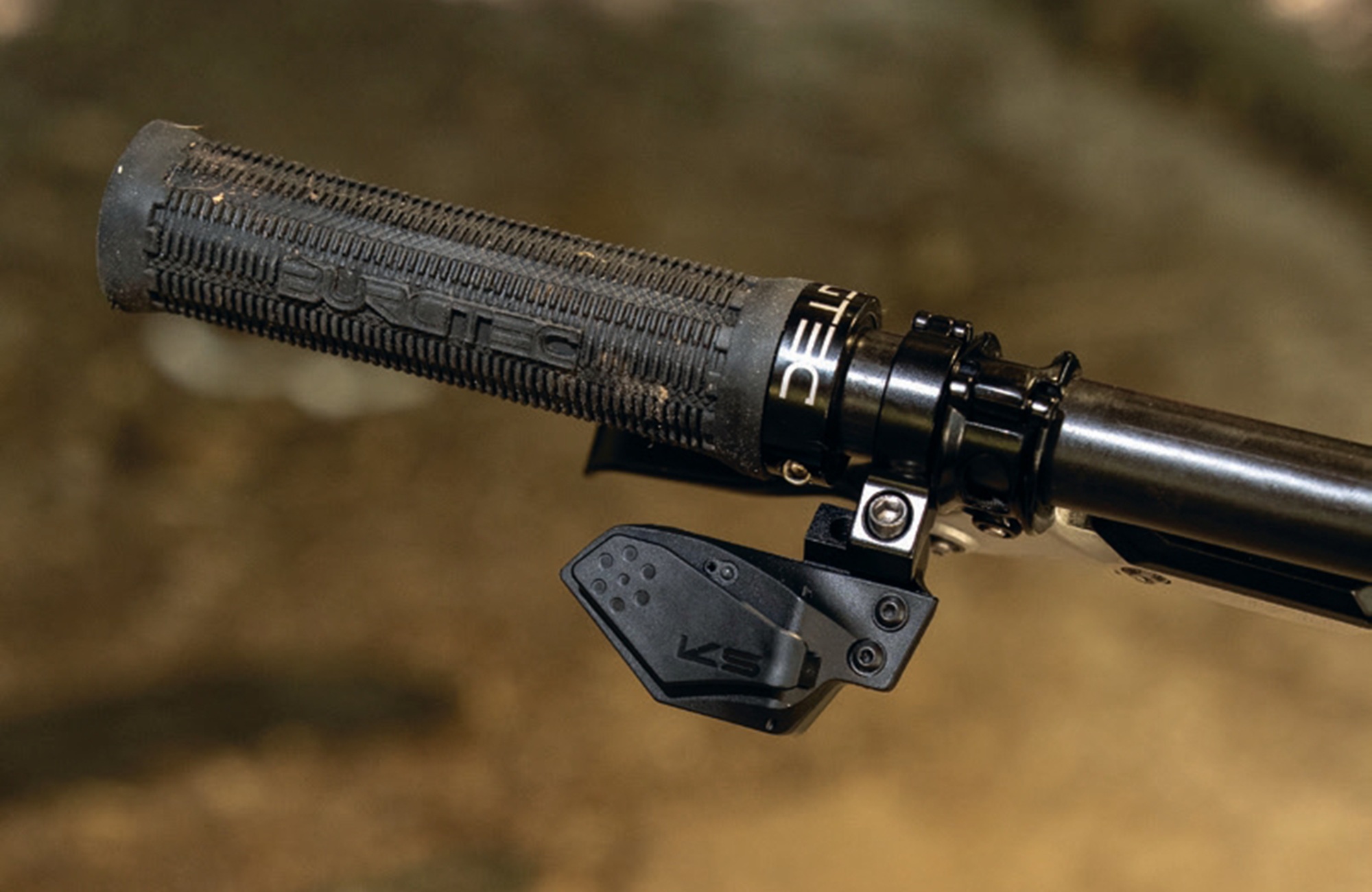
Wireless droppers are in vogue lately. KS has thrown its hat firmly into the ring with the LEV Circuit. Let’s start with what makes this thing tick. The LEV Circuit is KS’s answer to the wireless dropper question, building on the proven internals from their well- regarded LEV series, but cutting the cord entirely.
No cables, no housing, no internal routing headaches. Just a Bluetooth connection between the remote and the post. Simple as.
Installation is a breath of fresh air. Drop the post in, clamp it down, pair the remote via Bluetooth, and you’re sorted. It literally took less than five minutes. It was a real pleasure when compared to wrestling internal cables through modern frames. The whole setup took me maybe twenty minutes, and most of that was just getting the saddle height dialled in. The remote runs on a standard CR2032 battery, while the post itself has a rechargeable battery that slots in neatly. Everything you need comes in the box: remote, battery, charger. Job done.
The post itself is available in 31.6 and 30.9mm versions of the Circuit, with travel set at 125, 150, 175, maxing out at a very respectable 200mm. KS has clearly thought about modern geometry here, with total post lengths that should fit most frames without too much drama. The adjustable air pressure at the base of the post lets you dial in the return speed to your preference, which is a nice touch. Mechanically, it’s nearly identical to the standard LEV, just flipped around. The air valve for adjusting return speed sits at the bottom of the post, while a small motor up top opens the hydraulic valve when you hit the remote.
The rechargeable 450 mAh battery slides in behind the seat clamp, keeping things tidy. KS reckons it’ll run for up to eight weeks on a charge under normal use, and it takes about 4.5 hours to top up with the included charger. The remote uses a CR2032 coin cell that should last around eight months, with an LED that flips from green to red when it’s time for a swap. You can grab one from any petrol station or supermarket if needed. I’ve had that happen on a few occasions, so it’s worth having a spare and double-checking battery life before rolling out.
Now, let’s talk about how this post performs on the trail. The actuation is noticeably smooth and light. There’s something almost effortless about how it drops when you press that remote button while weighted on the saddle. It doesn’t fight you at all. I have been running wireless dropper posts for more than a few years and rate them highly. I did revert back to a cable-actuated dropper with a recent test bike and actually forgot about how much more I use the electronic version when compared to the mechanical. Put simply – you press the button, the post drops. It’s that straightforward, and after a few rides, you stop thinking about it entirely. The remote lever itself is large and easy to reach, with a response time that’s very quick. The amount of force required is fairly light, and the post slides smoothly out of the way without much effort. It’s on par with the RockShox Reverb AXS for how little effort it takes to get the seat out of the way.
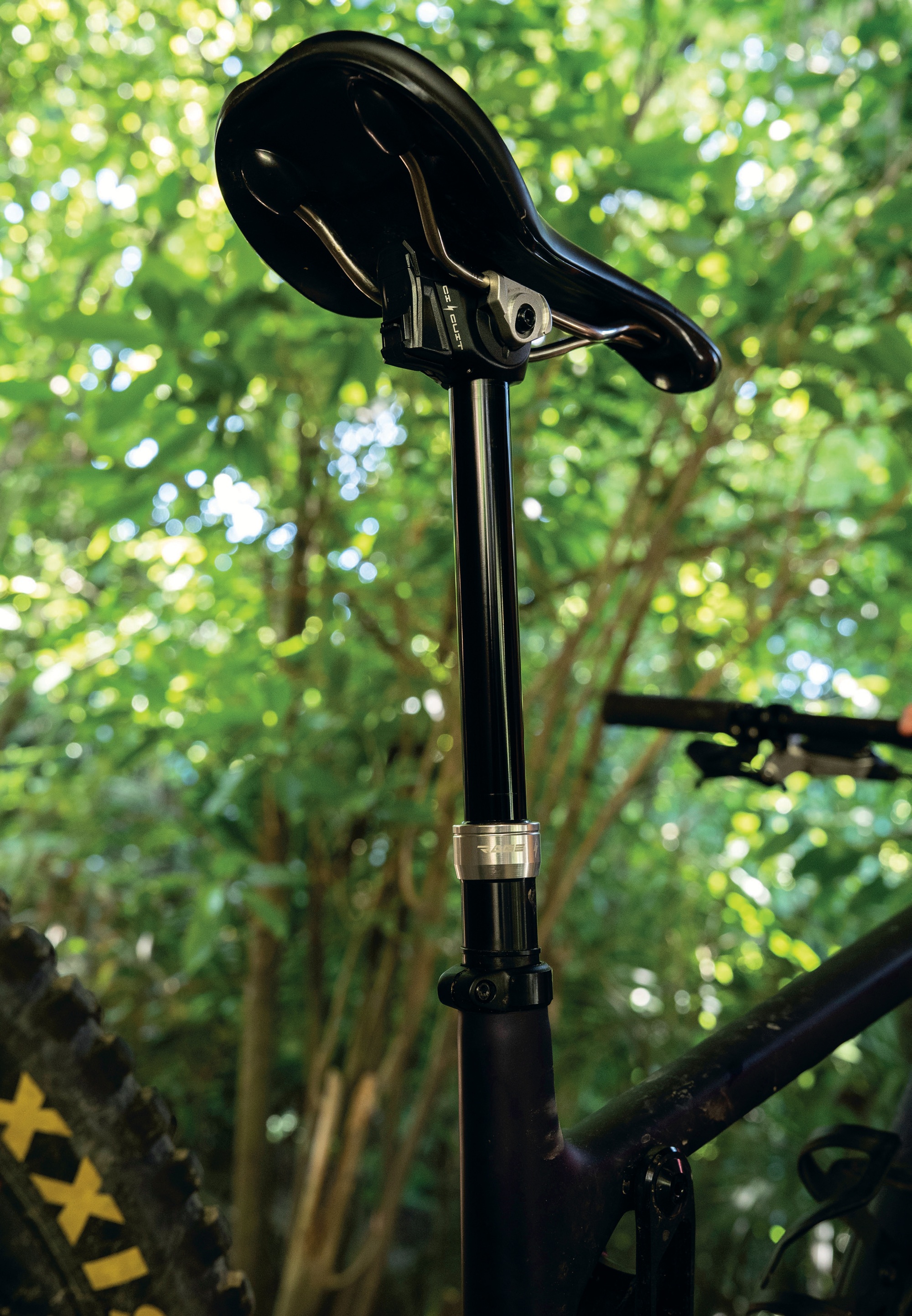
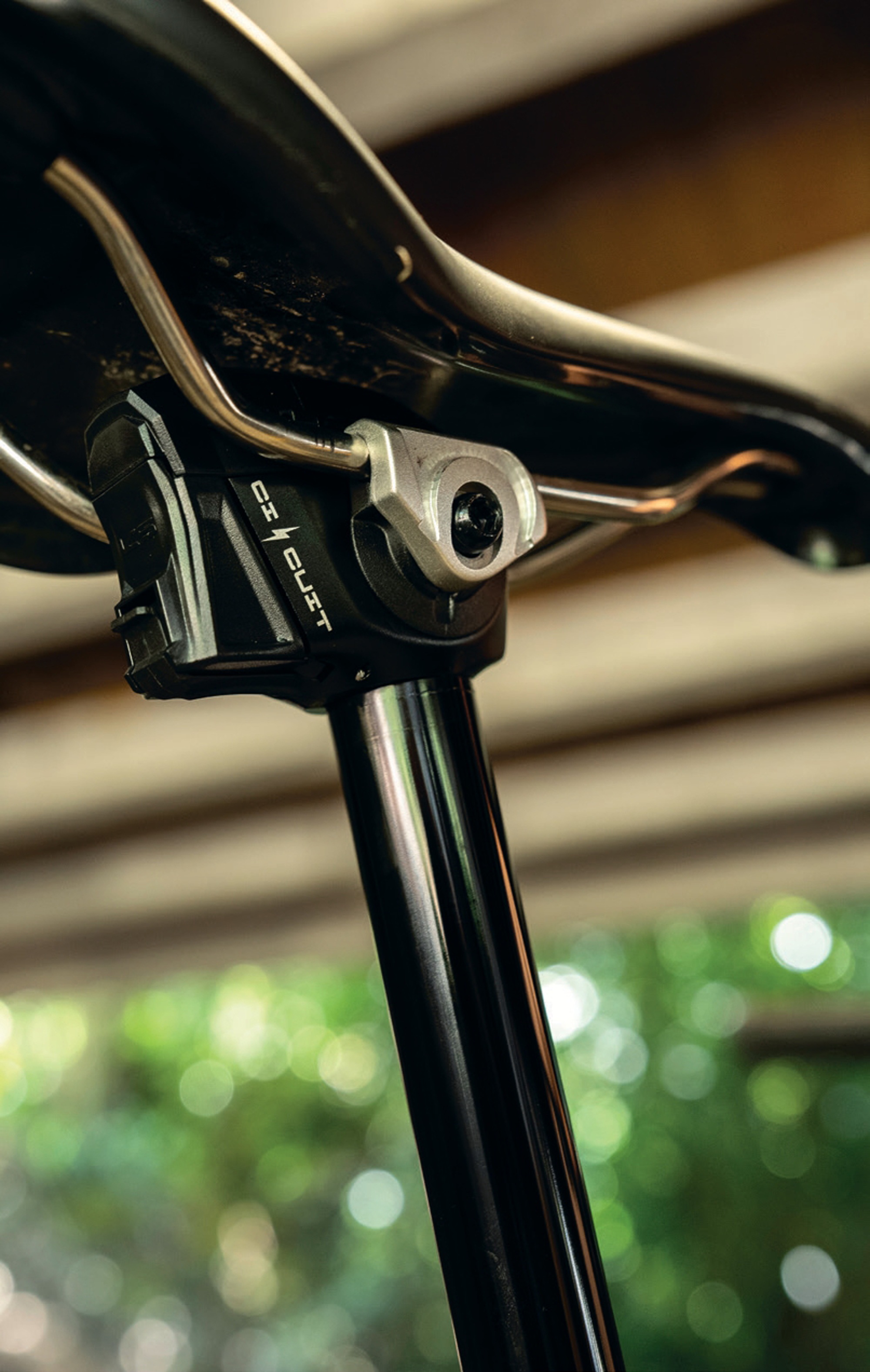
The post is built tough, too. An IP67 rating means it’s dust-tight and properly water- resistant. Precision keyways keep everything stable with virtually no play. This is something I’ve been checking for religiously, and so far, there’s been nothing to report. No slop, no wiggle, just solid performance.
But, there are some downsides. The return speed sits somewhere in the middle of the pack. It’s not sluggish by any means, but it’s not lightning-quick either. You can tune it a bit with air pressure, and I found adding a few extra psi helped. When it’s time to raise the seat for a climb, you hold down the remote and it returns to full extension, but this is where the Reverb AXS has the edge. That post extends much more quickly than the Circuit. I inflated the Circuit to 180 psi, the max recommended, and even then, I’d call the return speed adequate, but not amazing.
On rides with more rolling terrain, where the seat is constantly being adjusted, the difference between the Circuit and the Reverb AXS is noticeable. The Circuit is a little less eager to fully extend. Of course, not everyone wants a super speedy post, and I wouldn’t call the Circuit slow, at all – it’s just not the fastest out there.If you’re coming from a post that rockets back to full extension, you might notice the difference. It gets the job done, just not with any particular flair.
The remote lets the package down a bit. For a post at this price point, the remote feels cheaper than it should. Don’t get me wrong, it’s functional and does what it’s meant to do, but the construction feels a touch flimsy. It’s not that it’s going to fall apart on you, but for the price, you’d expect the remote to feel a bit more premium. The button action is fine, and the ergonomics are decent, but the overall build quality just doesn’t quite match the post itself.
The price of the post is up there but not nearly as expensive as the new RockShox Reverb AXS. Wireless convenience does come at a cost, however. If you’re building up a new bike or already running wireless shifting, the LEV Circuit makes more sense. But if you’re thinking about replacing a perfectly good mechanical dropper, you’ll need to really value that cable-free experience.
One thing worth mentioning is the serviceability. KS has a decent reputation for support, and the post uses their proven hydraulic valve design that sits at the top of the unit. Time will tell how this holds up long term, but the company has a solid track record with their LEV series, so I would back them.
After several months of riding, the LEV Circuit has been rock solid. The Bluetooth connection has been flawless, never dropping signal or acting up. The actuation remains smooth and consistent, and the post hasn’t developed any play or quirks. It just works, which is exactly what you want from a dropper.
KS has delivered an impressive wireless dropper here. The smooth action alone is worth noting, and the battery life means you’re not constantly worrying about charging. Believe me, this can suck and ruin your riding experience. Installation is straightforward, and the performance has been reliable. For riders who value smooth, light actuation and don’t want to deal with cables, this post could be a good option.
If you’re in the market for a wireless dropper and want something that feels effortless to use, the LEV Circuit deserves serious consideration. When you’re out on the trail, pressing that button and getting the saddle to drop away without any resistance, you’ll improve the riding experience.

Bridgedale MTB Socks
Words Lester Perry
Images Thomas Falconer
RRP $2975
Distributor Shimano NZ
Socks are often overlooked when it comes to mountain biking attire, but with our feet firmly planted in stiff riding shoes for hours, perhaps they deserve a little more attention.
Bridgedale, a company from Newtownards, Ireland, has been crafting socks for over a century. Their journey began with socks for the army during World War I. Bridgedale’s focus on creating the best outdoor activity socks ensures that they pay meticulous attention to detail.
Bridgedale’s MTB socks are engineered with advanced cushioning strategically placed in key areas. The asymmetric design utilises cushioning in specific areas for each foot, while the Vibration Damping Footbed employs a unique padding to reduce pedal chatter and trail vibrations. Padded zones around the outside of the foot, ankle, and along the Achilles provide additional warmth and impact protection. Bridgedale has even developed a new Underfoot Toe Seam for this range. By moving the toe seam to the underside of the sock, they’ve added extra padding on top of the toes and increased protection against impacts in the vulnerable area.
Bridgedale’s FusionTECH process sets them apart by blending high-quality yarns and materials with the latest knitting technology. This ensures every sock is comfortable regardless of conditions. Summer-weight models use Coolmax for cooling, while Merino wool provides a soft feel, temperature regulation, warmth and anti-bacterial properties. The underfoot toe seam eliminates the cold spot across the top of the toes, an issue with traditional over- toe sock seaming. This choice of materials, construction techniques, and the availability of two different weights, ensure there is a sock in the range to keep your feet comfortable regardless of the terrain or the conditions.
Bridgedale’s new Off-Road Bike socks offer improved performance through enhanced fit and support. Utilising Lycra Sport, they provide a supportive compression fit. A structured Y-Heel band and elasticated arch ensure a close fit, eliminating movement and friction. This additional support and precise fit enhance foot positioning, stability, and balance, leading to greater bike control.
I absolutely dig a fresh pair of socks. The plush feeling wrapping around your foot is so damn luxurious. This was certainly the case when I slipped on a pair of the Bridgedale Midweight merino socks. Initially, they felt great, providing a tangible feeling of support, especially around the footbed. On the bike, the socks offered ample support and stayed up – slipping down is one of my pet hates! After several rides, including a long four-hour pedal, the socks performed well without bunching. This was achieved via the asymmetric foot-specific design which eliminates friction from cycling shoes and provides better protection than a regular sock. The moisture management wicks any dampness away effectively, keeping feet dry in both warm and cool conditions by controlling heat and sweat.
After several washes, the socks have remained in good shape. Another pet hate of mine is how quickly new socks can get destroyed by the washing machine. It’s super annoying when you drop good money on a pair and they end up out of shape after just one or two washes. Bridgedale’s range feels durable and they completely back their products with a Lifetime Guarantee. This guarantee covers any defects in workmanship or materials, reflecting their 100 years of experience in sock-making. Knowing your sock game is dialled means you can focus on your riding experience. Don’t overlook your riding sock drawer – treat yourself to a good pair that’ll last the distance. The only downside is that these socks are quite spendy – but the quality, durability and guarantee makes them worth it. These socks are incredibly comfortable, far surpassing most others in my wardrobe. They’ve been on high rotation during house duties and on most rides – they’re that bloody good!

SRAM Motive Ultimate Brakes
Words Lester Perry
Images Thomas Falconer
RRP $1280
Distributor Worralls
In February 2024, SRAM dropped their fresh, brutally powerful, top-tier gravity brake; the Maven Ultimate. Although Maven was their second offering with Mineral fluid, the change to a Mineral brake fluid on this new flagship model hinted at a shift across SRAM’s brake offerings, and a move towards bleeding out DOT fluid systems, replacing them entirely with Mineral fluid brakes.
A year later, in March 2025, SRAM unveiled what many had suspected was coming: a simplified lineup of brakes based around a more user-friendly, and in most opinions, better-performing Mineral fluid.
I’ve been running a set of Mavens on one of my bikes for about a year and when I saw the Motive launch, I was keen to get on a set. Realistically, they’re squarely targeted at most of the riding I do and would suit another of my bikes perfectly.
This range revision plans to reduce the SRAM lineup from 27 models down to just ten, in a move to simplify and consolidate. The range is now split into three distinct streams: Maven targeting gravity, Motive targeting XC and Trail, and the DB series targeting power at a reduced price, thanks to fewer features and added weight.
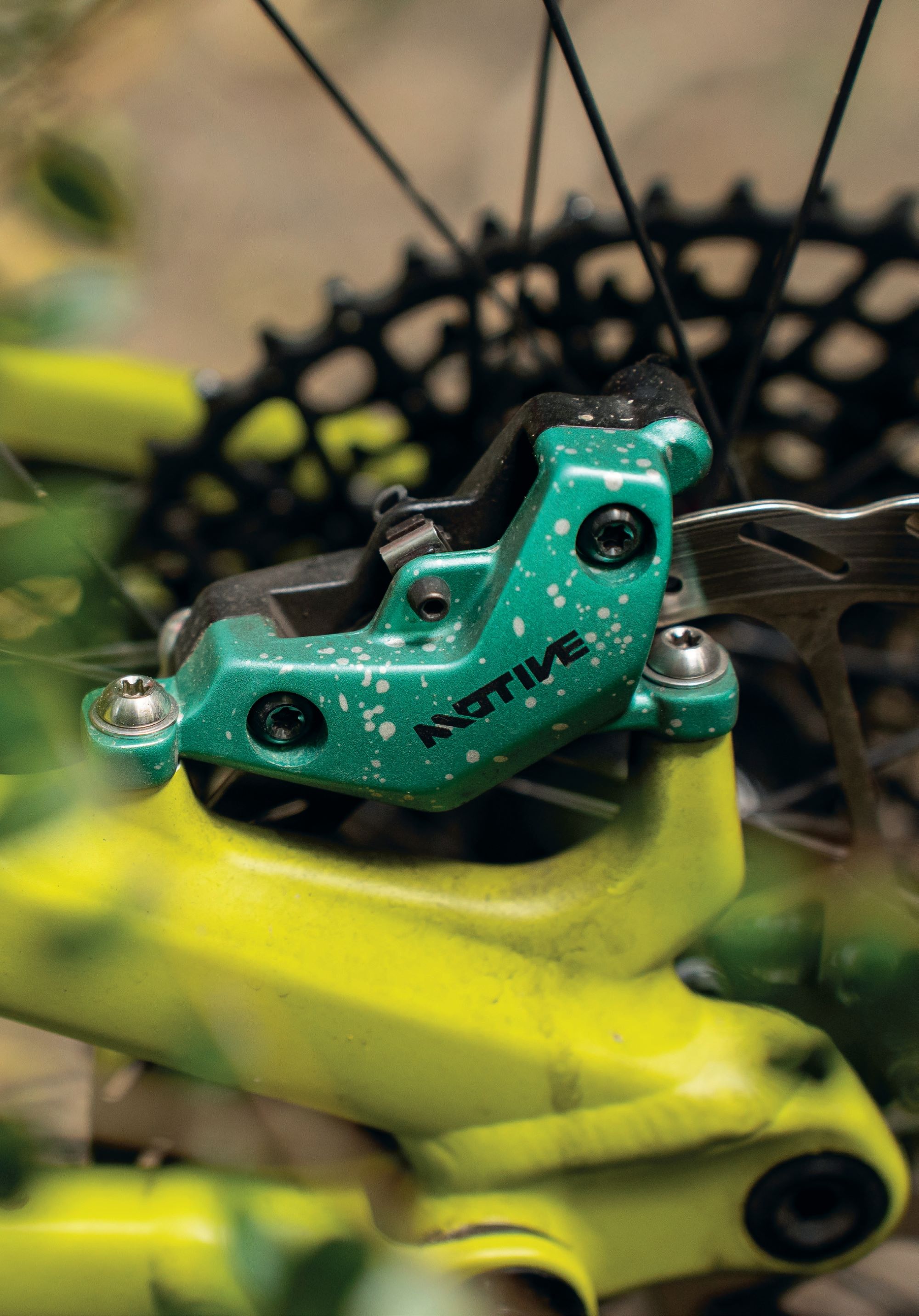
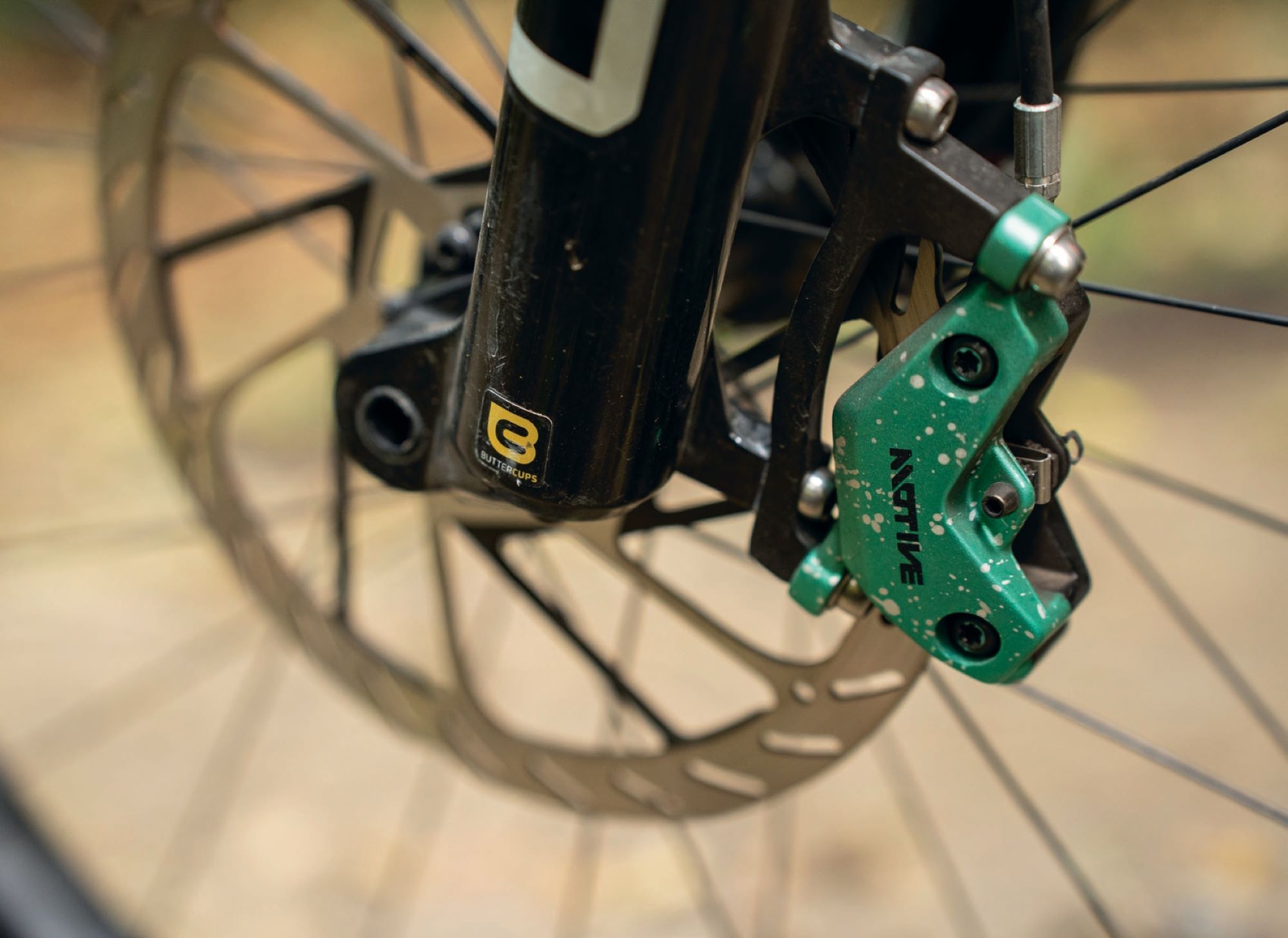
The Motive series replaces two previous brake series from the SRAM range. The Motive brings almost the equivalent power as the now-discontinued Code, at a weight only slightly above the also-discontinued two-piston Level series, but in a Code-esque four-piston package. The Motive calliper is slightly squarer, and more boxy, than the sculpted Code, but houses the same size pistons so there are obvious similarities, although with new fluid comes new seals throughout the system.
The Motive is available in three tiers: Ultimate, Silver, and Bronze, like other SRAM brakes. All share more or less the same performance, with only minor tweaks distinguishing each level. The Ultimate has a crisp anodised finish, a swanky carbon lever with bearing pivot, and premium titanium hardware. Silver level goes to an alloy lever blade, with more basic stainless steel hardware, and less swanky finishing. The Bronze level is a little more no-frills with its bushing lever pivot, basic hardware and less premium finishing. The calliper has a fixed line fitting instead of the swivel banjo of the upper tiers. Differences in weight between the levels are subtle: Ultimate 265g, Silver 273g and Bronze 279g (rear brake, 1800mm hose, ready to ride but sans mounting hardware).
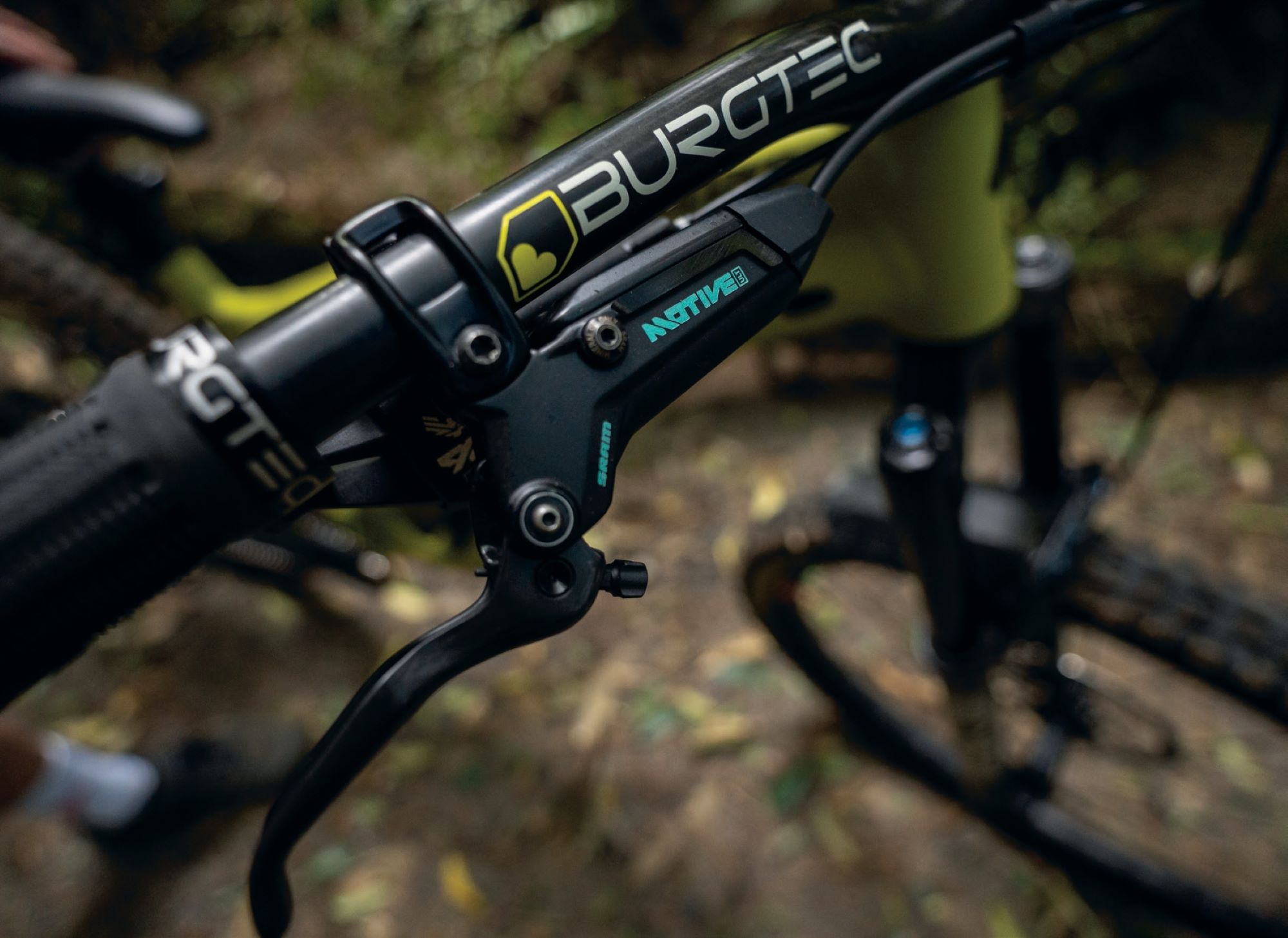
The Motive lever stays in line with the new ‘stealth’ styling, keeping the master cylinder and brake hose almost parallel to the handlebar. Thanks to the DirectLink lever, the feel is lighter than the Maven, right from the start, and has a more ‘normal’ SRAM feel of “what you put in is what you get out”; whereas the Maven’s SwingLink style lever has a cam that effectively multiplies your input power as you pull the lever, giving a different feel more suited to the demands of heavy braking over long periods. There’s no pad adjustment, which keeps things simple and lightweight, although basic reach adjust remains.
Expert Kit
The Expert Kit is a great way to purchase the Ultimate brakes. The kit includes everything you need to set up the brakes and maximise their performance over the long term. A pair of brakes, two pairs of sintered and two pairs of organic brake pads, 2x 160mm and 2x 180mm rotors, as well as all associated mounting hardware and mounts, and a multitool, complete bleed kit and oil. Essentially a one-buy solution to complete a top-tier Motive set up for XC or lighter trail use, that’s customised to the user’s specific needs.
The Ride
In my case, I threw the 180mm rotors on immediately with sintered pads. With it being the end of summer, and fitted to a 140mm travel trail bike, I opted to start with what I deemed the most powerful setup from the get-go and, if required, switch to a smaller rotor or organic pads from there. Needless to say, I haven’t changed anything.
It’s not normal for me to run a 180mm rotor up front unless I’m on a cross-country bike but, not having the option to go larger (at least out of the box), I was stuck with it. I’ve been surprised at how powerful the brakes are, even with the smaller front rotor.
The modulation is excellent, and lever feel is consistent throughout a descent. The ‘what you put in is what you get out’ feeling is certainly there and they feel like you can just squeeze harder and get more bite, however, there have been times I’ve noted I’m pulling quite hard when needing to haul anchor and stop quickly… like when one of your mates’ crashes right in front of you!
These brakes excel in the realms they’ve been designed for; cross country and trail. I wouldn’t think twice about putting these on a full-on XC race machine (in fact mine will likely end up on one) and in cases where weight is still relevant, i.e. on many ‘trail’ bikes, these would be ideal, possibly with a 200mm rotor up front, particularly if you’re heading toward the 90kg mark. For any enduro bike or rider purely focused on descending, where pedalling is just a means to an end, and where raw braking power is paramount, something less weight-focused like a Maven, or a new Shimano XT would be much more suited, particularly when trails get steep.
I think it’s worth noting here that bigger, or in this case, gruntier and more powerful, is not always better. Many people (myself included) are over-braked, choosing the most power possible rather than what’s actually best for them, often blinded by the power and large rotor sizes. The Motives have opened my eyes to some of the subtleties that make for better braking, not just having maximum power, but modulation, consistency and even the changes in using different pad compounds or rotor sizes, which help make it optimal for where, and how, I ride.
Leatt Enduro 3.0 Pant
Words Lester Perry
Images Thomas Falconer
RRP $199
Distributor BikeCorp
Launching in the moto world in 2015, Leatt first began to dabble in MTB gear with a range of helmets. By 2020, they had expanded their line to not only include helmets but pads, neck braces, shoes and apparel as well, offering a complete head-to-toe solution.
Now in its 20th year, and with numerous design awards under its belt, Leatt continues to go from strength to strength. In mid-2025, the brand announced its second quarter revenue was up 61%, its fourth consecutive quarter of growth, bucking the current industry trends in a big way.
They must be doing something right.
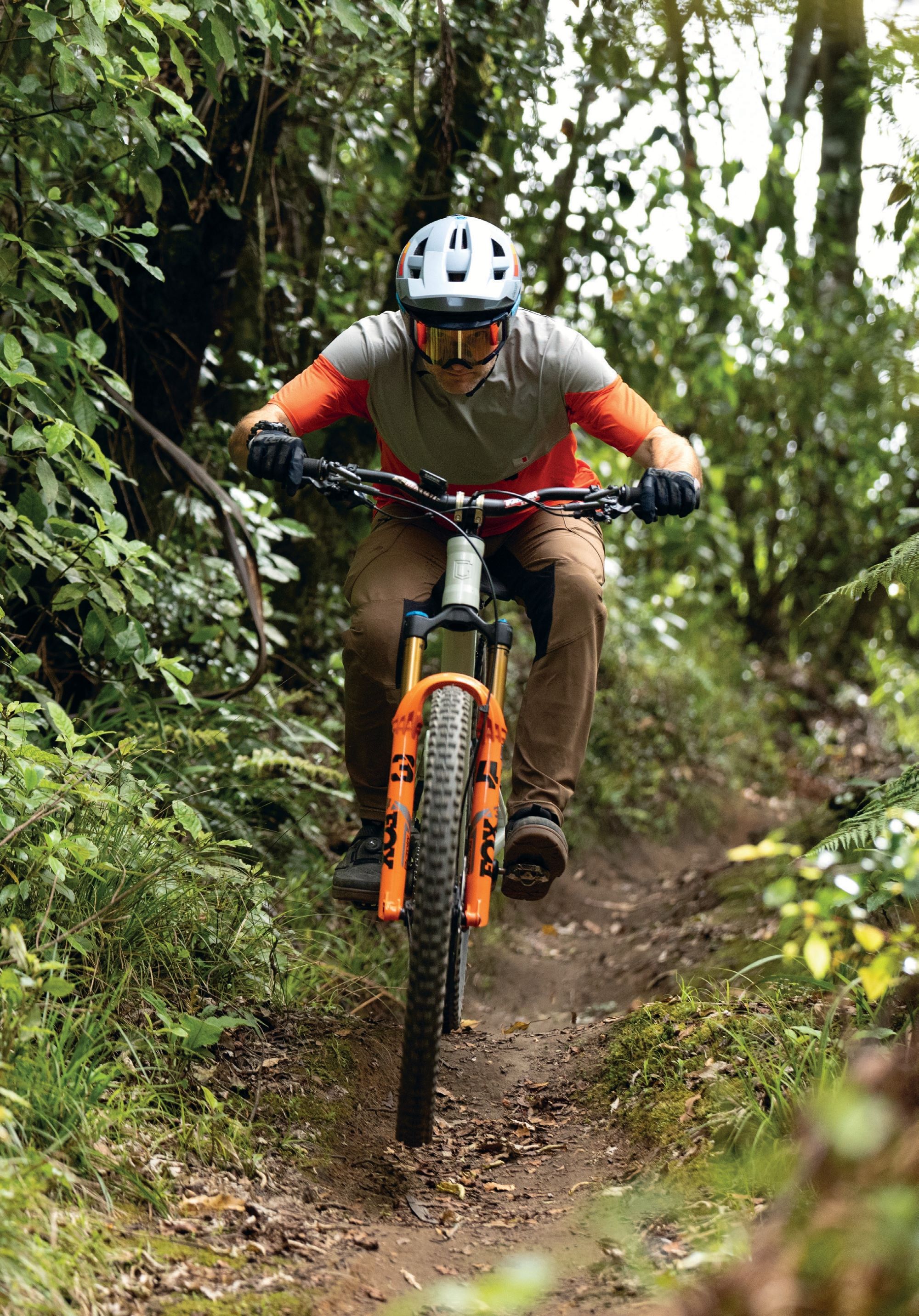
Through early 2025, on rides when I was reaching for long pants, a pair of Leatt Enduro 3.0 have been my preferred option. Particularly through autumn and winter, long pants win out over shorts for me. The increased protection they offer is nice, but it’s the ability to finish a filthy ride and just drop dacks and drive when I get back at the car—plus the minimal clean up required—that makes these a winner for me.
Although the name of these pants has ‘enduro’ in it, they’re far more than just an enduro pant. If there’s any time you’d wear long pants, these would do the trick, with one possible exception, which I’ll get to below.
With its regular, pre-curved fit, the pants are comfy on the bike, and there’s plenty of room for pads underneath without them being overly baggy. Long pants followed a trend of becoming slimmer and slimmer for a moment there but, thankfully, these are a bit more roomy. A Velcro waist adjuster on each side helps get the fit just right, and the medium size is in line with most 32” pants I wear, although if I were any larger, I’d likely need to step up to the large size, as I have the adjusters maxxed out as it is. The leg length is a fraction longer than ideal for me at 176cm tall, sitting partway down my ankle; my preference would be a little higher. Reality is, my legs are probably shorter than average for my height, so I’d imagine they’re optimal for most people, and the length isn’t enough to put me off.
The main fabric is lightweight and breathable, with a soft backing. Key areas are perforated to increase breathability. Around the inside of the thighs and across the seat is a three-layer, waterproof, breathable fabric. Helping keep you somewhat dry from ground water spraying up, while the pants remain breathable overall.
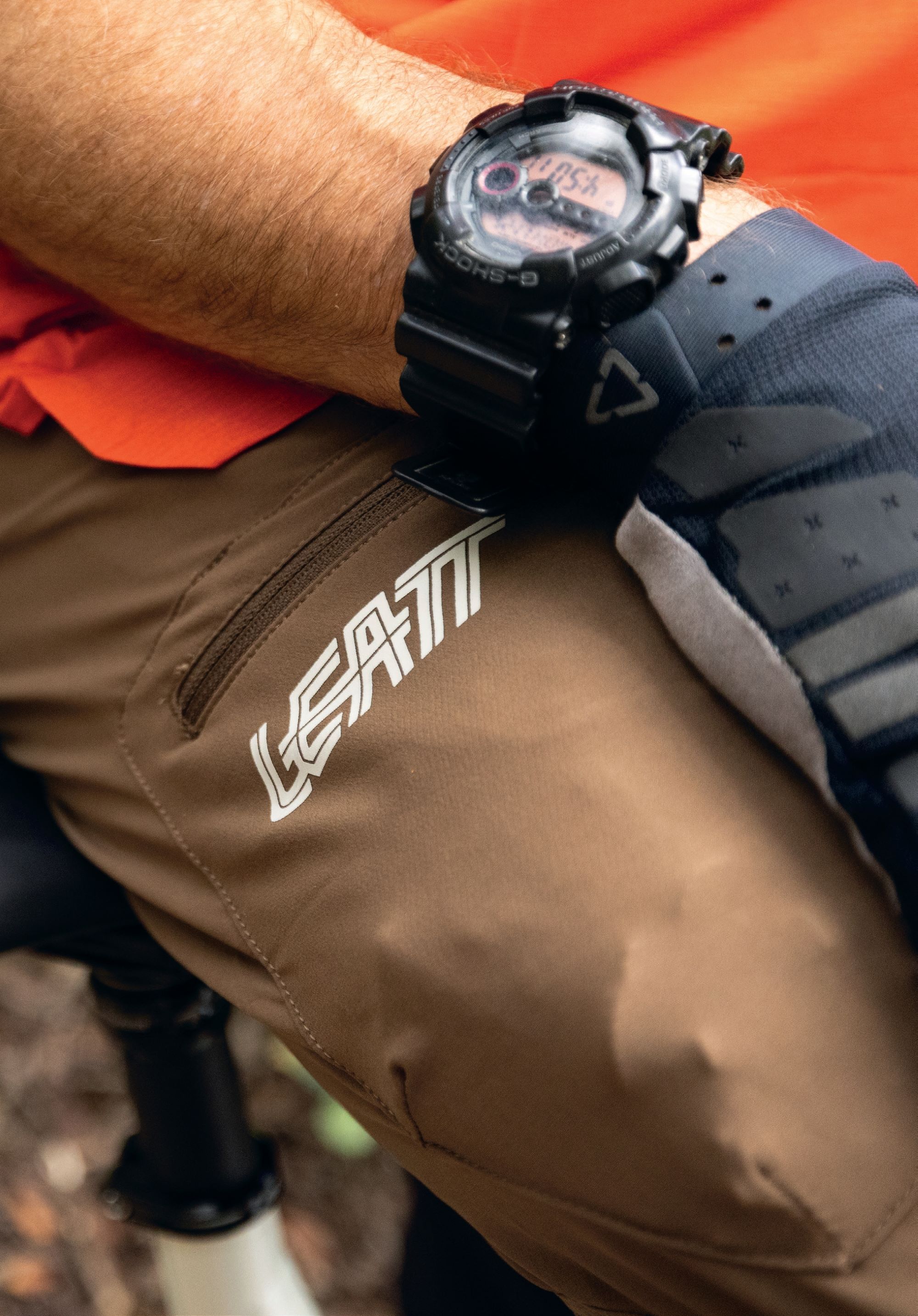
The Enduro 3.0 pant has pockets aplenty, ideal for big days out pedalling or lapping the bike park. Zipped thigh pockets feature on each leg and are large enough for a fair amount of cargo—they’re about the same size as a pack of jelly snakes. Each side also has more traditional, zipped, hip pockets; with an elastic key loop on the left side. The fifth pocket, located on the back of the waistband, is large enough to hold most cell phones—or some more snacks.
Out on the trail, the pants perform well and there’s nothing that stands out as a negative with the fit or function. The cut is perfect while seated and is fine for pedalling for long periods without excessive bunching. The fabric is a tad heavier than super lightweight trail pants, but this makes them harder wearing. The downside is that the overall weight of the pants is slightly higher, in part thanks to the fabric involved in the pockets. It’s not noticeable on the trail, but it’s worth noting these aren’t a super light trail pant, they’re sturdier and should last longer.
I wore these pants while in Christchurch reviewing the Specialized Levo 4, spending a day out pedalling around in what were near monsoon conditions. It was here I found a minor shortcoming of these pants: although the fabric repels water, it only does so to a certain degree. Thanks to the looped backing of the fabric, its overall weight and the pockets, when saturated, the pants retain more water than Leatt’s lighter-weight trail pants. They’re awesome for general use and on wet trails or in light rain, in part thanks to the waterproof seat area, however, when it’s absolutely pouring down, the lighter pants will retain less water.
So, who are these pants ideal for? I’d recommend these for anyone who has a focus on descending, who’s likely to need the extra protection they offer. Shuttle bunnies or eBikers, these will be right up your alley. If you’re into big, backcountry rides, the extra pockets will help you carry more and let you distribute the weight across your body. Just check the weather forecast before you leave home.
RockShox Reverb AXS B1
Words Lester Perry
Images Thomas Falconer
RRP $2975
Distributor Shimano NZ
There’s a fresh, new (and much-welcomed) dropper post in the RockShox range. The latest Reverb B1 broke cover recently, and I’ve been putting in some rides to get familiar with it. Here’s the lowdown after a month or so.
Firstly, somehow, unlike almost everything in life at the moment, the price of this new Reverb is actually less than the previous. Given its comparable simplicity, it’s also likely to save you money in the long run over that model, too. Go figure.
As with the Previous Reverb AXS post, there are no cables or wires involved. The Reverb B1 seamlessly slots into the AXS ecosystem. Simply drop the post into the bike, pair it up to an AXS controller, and you’re good to go. If you’re running an AXS drive train, it’s nice to be able to fine-tune which button on your cockpit activates the post through the SRAM AXS app; there are numerous combinations, although some make more sense than others.
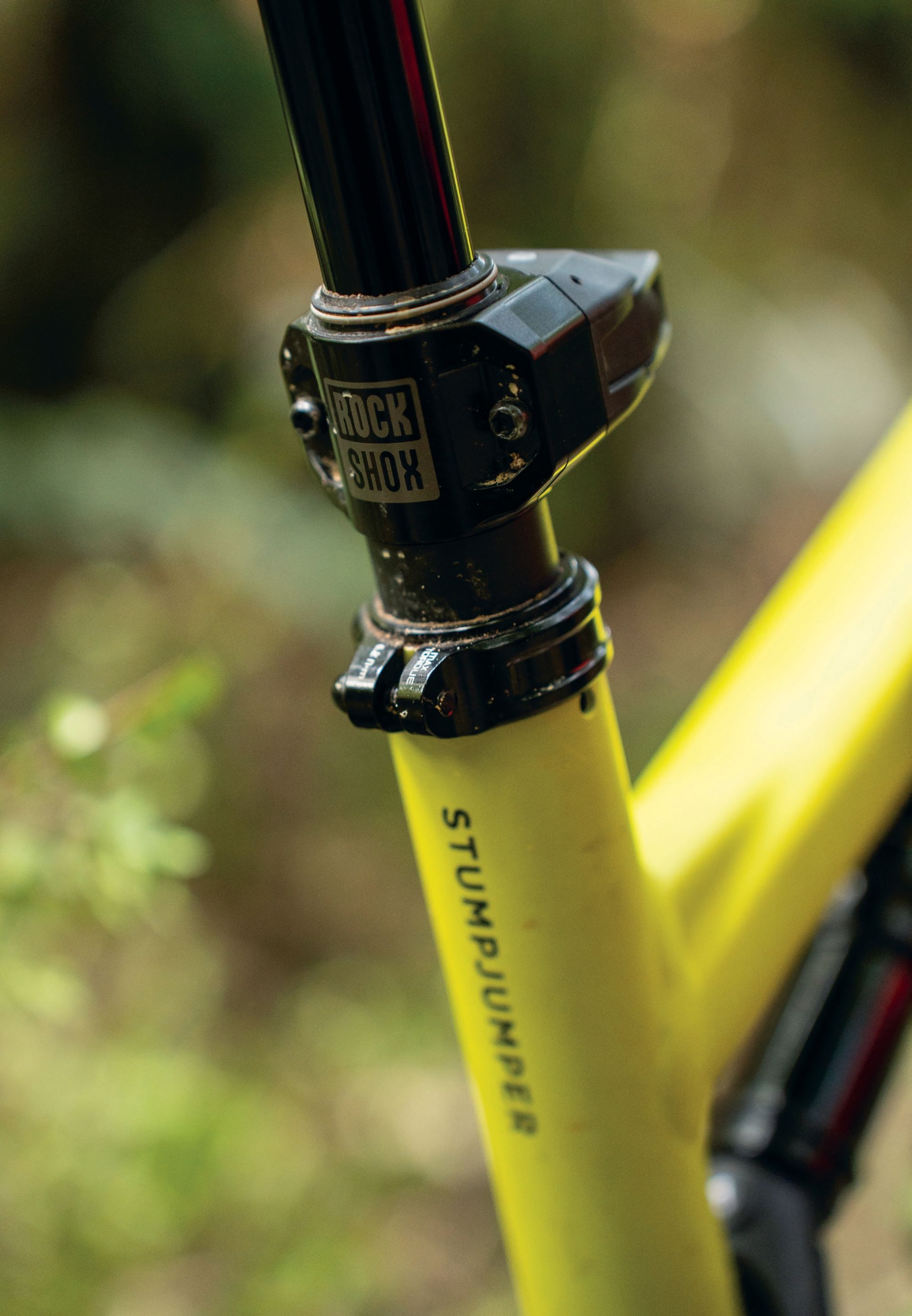
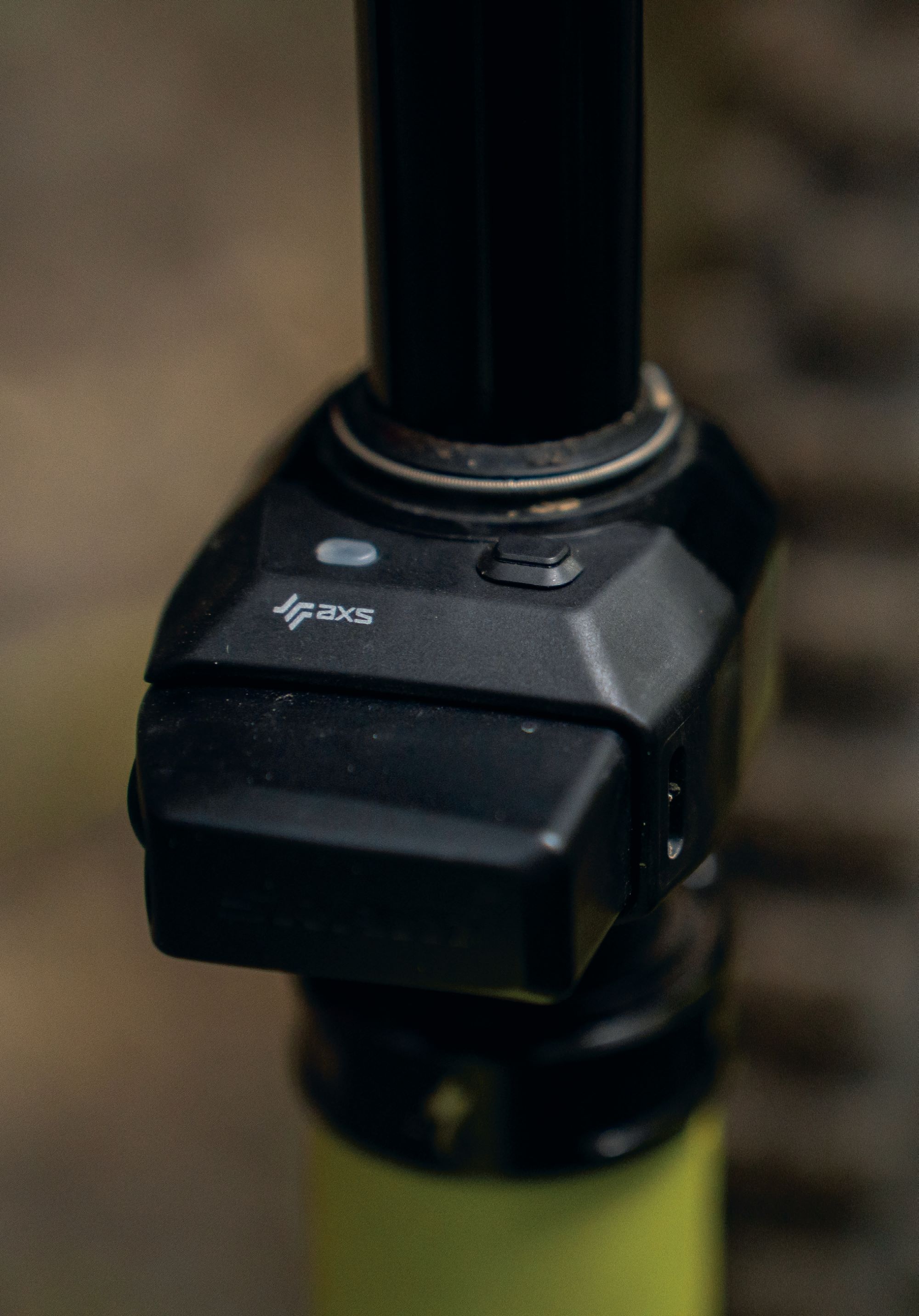
From first glance, it appears the most significant change on the post is the moving of the actuator and battery from the head of the post down to its collar. This change, combined with a redesigned seat clamp, reduces the stack height by a fraction from the previous post. Most importantly, it brings the weight more centrally on the bike. The stack height is still above the market-leading One Up V3 post, although that’s cable-actuated, so not an accurate apples-to-apples comparison. Can’t have it all, I guess. The overall length of the post is shorter than previous Reverbs, though, bringing it closer to the competition so riders can now have more drop on smaller bikes.
There are seven drops available, ranging from 100mm to a gargantuan 250mm, stepping up in 25mm increments. From what I can find, 250mm is the largest in the market by 10mm. Previously, some head scratching, measuring, and diagram drawing (true story) would ensue as I tried to figure out what the longest drop I could fit on my bike would be in relation to my preferred saddle height; thankfully, RockShox has a handy calculator on their website to help determine the best option for any frame.
With the noticeable external changes, it would be easy to miss the other significant change in the post. A new ‘air over air’ design ditches the previous hydraulics in favour of positive and negative air springs. The two air springs balance pressure against each other as the post drops, effectively supporting rider weight on the positive air spring rather than relying on the hydraulics of the past. It’s no secret that RockShox’s previous posts had issues when their air and oil mixed, leaving a flaccid, squishy post in need of an expensive service. Long term, it remains to be seen, but if this system lives up to the hype, the days of unintended squish appear to be over.
The new air-over-air spring enabled a new feature, ActiveRide, which provides a small amount of vertical movement. At full extension, the amount of pressure in the post indicates the amount of travel available when fully extended. At the maximum pressure of 600psi (425psi on the 34.9mm post), it’s rock solid at the top of the stroke; the deeper into its stroke, the more travel or squish is available. It’s not a lot, but it’s there, and it increases if you drop the pressure in the post. Why build what is effectively suspension travel in the post? RockShox theory suggests that at full height, it enables a rider to stay fully weighted on the saddle over rougher terrain, which is particularly beneficial while climbing, as the rider can continue to apply consistent power without needing to disrupt their rhythm by unweighting. When tackling a particularly technical climb with steps or moves where dropping the saddle slightly is advantageous, the travel in the post again allows some damping against the terrain, helping you stay seated for longer. The conspiracist in me thinks that maybe, just maybe, RockShox couldn’t get the post to be rock solid when partially compressed with this new air spring, so they embraced the squish and gave it a name. Whatever the case, it seems to do what they claim, although I’m not so sure there’s a performance advantage on anything other than a hardtail.
The AXS button is now easier to reach while in the saddle, located at the top of the actuator (by the battery). It’s used to sync the post with its controller or as a manual actuator should a controller go offline. The post works with any actuator in the AXS ecosystem, including older paddle-style controllers and the now- common double-button pod controller.
With a claimed 60 hours of use from a full charge, or over 20 weeks for most of us regular folks, the battery will last a long time, but it’s easy to forget about it, too. If you’re running other AXS components, you’ll likely have the same battery elsewhere, so swapping a derailleur battery to a post, or vice versa, could be a saviour. I’ve seen this swap done on more than one race start line when a rider realised their derailleur was nearing flat.
Servicing on previous Reverbs was a total headache, and if an issue resulted in a complete rebuild, it was often cheaper to just replace the post with one other than a Reverb. This simpler design, combined with some forethought from the product team, means the B1 is completely user-serviceable. A simple ‘clean and grease’ 1-year service can be completed in literally minutes and requires only a few standard tools. No seal kits or oil faff required. The 2-year (600-hour) service is a bit more involved and requires some more specialist tools, but is still achievable for a competent home mechanic, thanks in part to SRAM’s in-depth online service manuals and YouTube tutorials.
Riding the new Reverb is not unlike the old version: push the button while you’re sitting on the saddle, and the post drops. Stand up, press the button, and the post shoots back to full extension. I’ve found myself reaching down at times to feel if the ActiveRide is doing anything, and sure enough, it’s going up and down slightly as I ride over bumps, although it’s hard to say if it’s offering any sort of advantage. There’s no rotational slop at all in the post and, so far, no sign of forward and backward movement either.
It’s nice to see RockShox are not resting on their laurels with their previous post, but recognising there were some shortcomings and developing something new in the form of the B1. They should get extra points for a complete revision rather than just minor updates. While it would be nice to see some fine-tuning of the drop available, like many mechanical posts, I guess that leaves something for RockShox to strive for in their next release. Maybe?
Given how simple the post is to install, and its price tag, it’s likely the post could be passed from bike to bike as its owner updates or changes their frame. However, with how new the post is to the market, it’s only fair to mention that no one’s 100% sure of its lifespan.