Bosch’s eBike tech meets Kiwi know-how
Words Liam Friary
Images Cameron Mackenzie
Bikes have changed a lot over recent years, with one of the most significant shifts being the integration of pedal-assist motors.
Of course, along with the excitement and freedom a motor brings, it also introduces a level of technology we – as home mechanics – likely aren’t equipped to handle. Even in the bike industry, the widespread adoption of eBikes has meant brands and wholesalers have needed to move quickly to handle after- sales service and support, and bike mechanics have needed to rapidly upskill to diagnose and repair these new electrical machines.
Bosch has been quick to adapt, launching local support efforts more than six years ago. As Bosch established itself in NZ, it partnered with Marleen Wholesalers to provide service and after-sales support. It hired Kieran Bennett as its Regional Technical Manager, the key technical link between Bosch and the New Zealand market.
Kieran explains that Bosch draws on learnings from its time in the automotive industry and applies them to the bike world, with a fresh outlook on how they should deliver service. “A lot of our processes and things that we do come from years and years of automotive experience – especially on the service side: when it comes to how service should be handled, how quickly replacements should be done, and how warranties should work – that’s carried over from the automotive side of Bosch. We haven’t followed a traditional bike industry model in that aspect because we didn’t come from the bike industry. Bosch has always been very service-first focused across all divisions.
“That’s why we have the likes of myself here, and the team in Australia, because without service a component can be as great as you want and, put out as much power as you like, it can do all this fancy stuff on paper, but if the consumer has a problem with that component and they can’t get a replacement, what good is it to have to wait weeks or even months to get a replacement motor or controller? It’s just not good for them.”
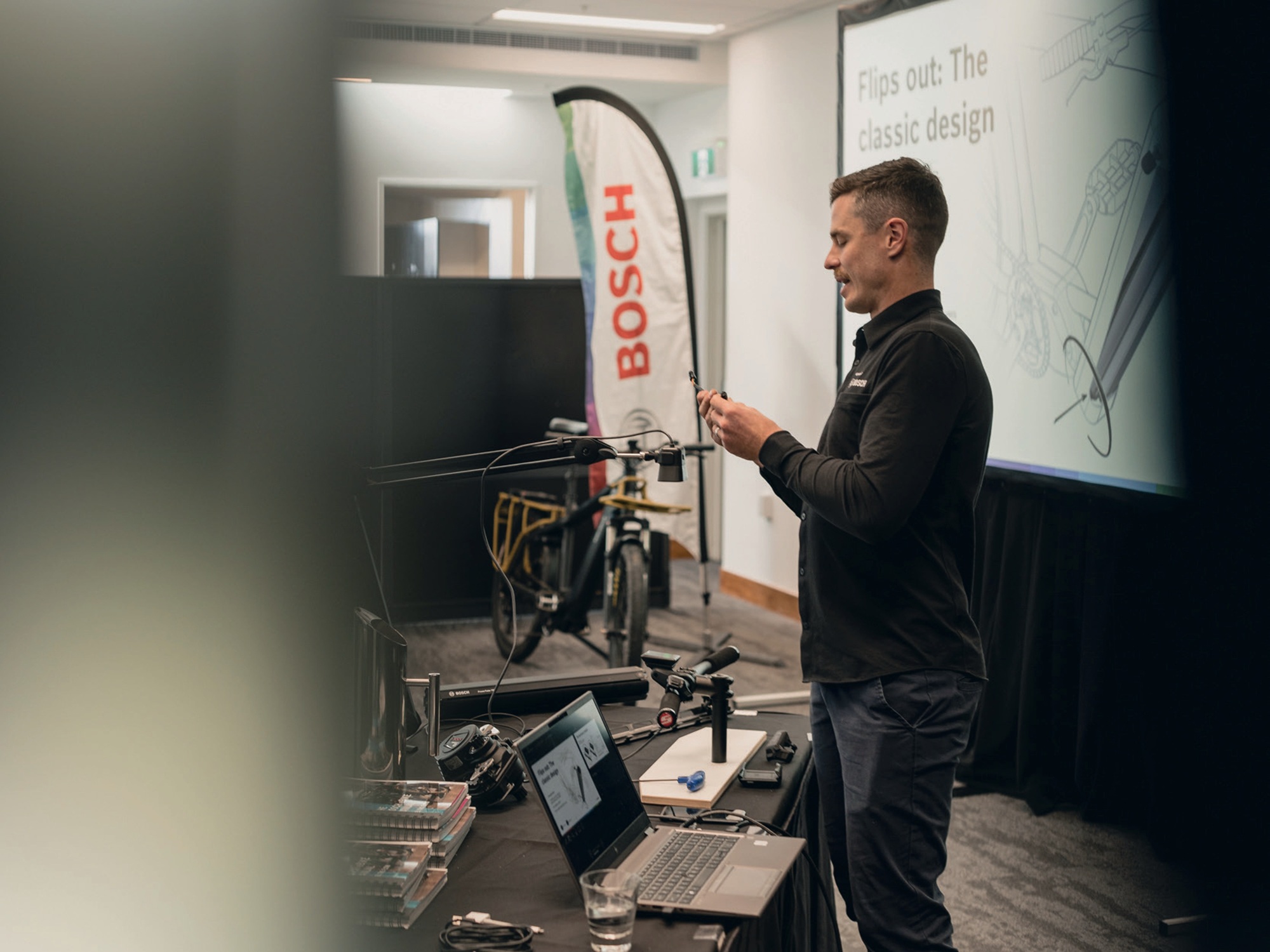
Although he has a wealth of technical knowledge to draw on to answer any questions a retail store or Marleen’s may have, it’s the frontline retail staff who are front and centre when a rider has an issue, so part of Kieran’s role is training shop staff and mechanics nationwide, ensuring they’re up to speed with the latest Bosch tech and systems. Each year, he holds six face-to-face training courses around the country, three in the North Island and three in the South Island, and has trained staff from over 300 New Zealand bike stores. This year alone, over 140 staff have attended the Bosch training in person, and many more are supported through online modules.
“These courses are basically an open invitation to all stores that are dealing with Bosch or maybe want to deal with Bosch in the future. We do product training, including hands-on troubleshooting and that sort of thing, for the dealers. We get them, front and centre, with any new product. Sometimes, we’ll run them through scenarios with problem components to problem- solve and find issues with components. It’s quite a full experience in that aspect. With the number of brands we have in the market now, we deal with just about every store in the country on some level. There aren’t many stores that don’t have at least some sort of Bosch-powered bike in there.”

Training sessions are tailored to the NZ market and bring together the big-picture Bosch brand and history, combined with Kieran’s first-hand experiences as a rider and technical whizz. Kieran covers everything from new features and functions to how components and controllers interact with a rider, and the mechanics of how the systems work together. There’s subtle yet important information where he delves into design choices, like the how and why of the materials chosen specifically for their vibration-damping properties in a drive unit.
Kieran explains that he has a wide range of students turn up to the training; some guys who’ve been through his sessions since their inception over six years ago, bringing their own experiences and insights. There are fresh faces just starting their time in the bike industry who gain so much from the training itself, as well as from the experience of those with years of on-the-job experience.
When a consumer has an issue, be it an error code showing up on their system or something more significant, the structure in place to support the dealer is there to get the customer sorted and back riding ASAP. First and foremost, a bike mechanic will use the Bosch diagnostic tool to identify any errors. If there are no apparent errors at play, they may undertake a process of cross- swapping components to narrow down whether a damaged cable or component is the issue.
“Sometimes it’s as simple as diagnosing it on the diagnostic tool or doing some cross-swapping, say swapping in a battery out of another bike to rule out an issue there, or swapping out a cable or controller. Once they have isolated the error, they will then create a service case with us. That service case then goes into our service queue, which Marleen wholesalers handle. From there, they basically take it on. If it’s something odd or needs escalation for some reason, that’s where I’d come in and provide support from the Bosch side with Marleen’s. And then, essentially, it’s just a turnaround of, hey, it’s this particular issue, maybe this is something we know is a problem. We’ll send a replacement component out, or sometimes it’s the case that a motor will come back, and they can do testing at Marleen Wholesalers on it, so they can identify if it may be a motor issue. They’ll even put it in other test bikes sometimes to see whether that error is still happening; there’s a lot that can go into diagnosing a problem.
“From there, if something needs a replacement, the new part goes back to the store. All this is with the aim to get the customer back on the bike as soon as possible.”
Kieran doesn’t just talk the talk, he can walk the walk too; in fact, you’ll likely have seen him on the very pages of this magazine at some point. An avid mountain biker, ‘KB’ as he’s known, has raced downhill since he was young, competing at a high level locally and around the globe. This experience has given him a unique understanding not only of bikes and their technical aspects, but also of how they ride and the people who ride them. More recently, his focus has shifted from the gravity-focused end of the sport to some more endurance-based marathon MTB and gravel riding. eBikes are now also an integral part of his cycling experience. Days begin with dropping his two boys off at school on an e-cargo bike. After a few hours mahi, he’ll jump on his eMTB for a quick lunchtime lap of his local hill, then he’ll return in the evening with one of his kids in tow; the eBike helping get them to the top of the hill before a descent down to dinner. Kieran is excited to see what the future holds for eBikes, but admits we’re in a great place with them already. “People want more power and lighter bikes, but it’s got to be one or the other, really. More power equals more weight. I think, particularly where a lot of the e-mountain bike market is settling at the moment, it is quite good in the way bikes are getting to a low 20kg range for a full-powered bike. It still makes for a fun ride and has plenty of power. To me, eBikes are fantastic for accessibility. Getting out to stuff that you normally wouldn’t get to, because you can ride further, you can get up more hills or tow the kids. When you’re time poor, you can now go and do that local loop with lots of climbing, far quicker than on a normal bike.
“There are massive positives for eBikes for sure.”
Produced in partnership with Bosch eBike Systems
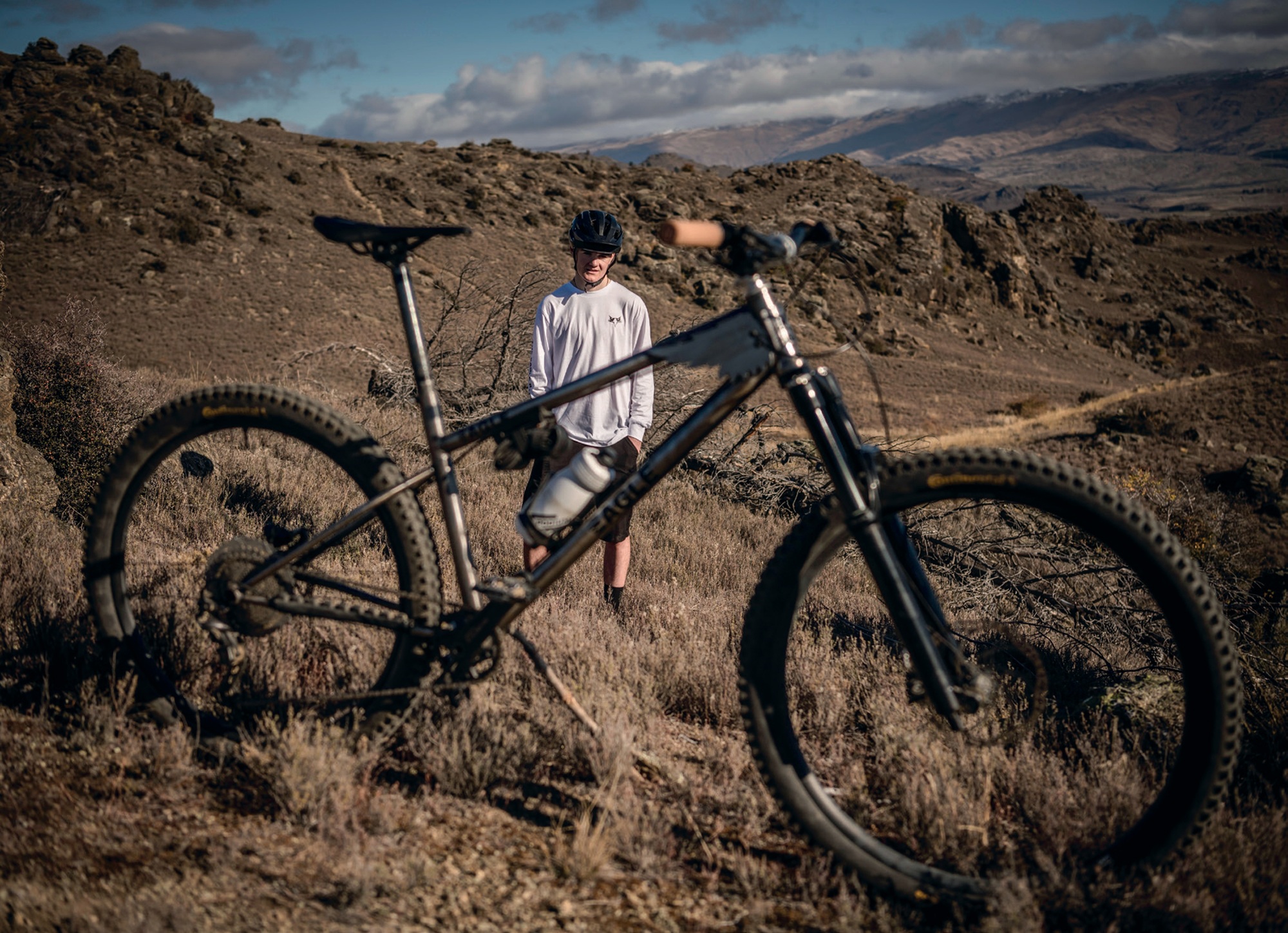
The Eagle: Handmade Hardtail
Words Eddie Adams
Images Simon Williams & Eddie Adams
I started the trail so softly, not wanting to break or damage what had taken me over two years to complete. The bike handled the first rock sections so perfectly that I immediately trusted my work. From then on, I just let her do her thing – and she absolutely ripped.
This was my first experience riding my homemade hand-built hardtail on singletrack and, of course, it was a race. This is a story about how, as a mountain bike- obsessed teen at high school, I made a functioning mountain bike that was different from anything purchasable on the market.
It all started on YouTube, when GMBN released the video of Blake Samson building his own hardtail in his garage during lockdown. This got my brain ticking – could I build my own bike? Man, that would be cool; how hard can it be? The subject selection for the following year of school rolled around and I was moving into year 11 (level 1 NCEA). I had most subjects chosen but needed one more to fill my timetable. This year a new subject was going to be introduced, called PBL (project-based learning). Instantly, it clicked. This would be so much better than any other class at school, and I could use it as an excuse to build my own bike and then get credits for it; it was a win-win-win situation.
I knew straight away that it had to be a mountain bike (because that’s way cooler), a hardtail (for simplicity), and different from anything already out there. Not to make a hard project harder, but because I am one of those people who doesn’t like to do things the same way as everyone else and I don’t see the point in making something that’s already been made. I had zero prior knowledge or experience in designing or building a functioning mountain bike but I had the passion, and an obsession with making it work. It quite literally took over my brain.
The first step was research. Firstly, what did I want my bike to be like and, more than that, how was I going to make it? I compared the geometry of other aggressive hardtails and quickly decided on my final geometry to make the bike unique and ride how I wanted; stable but playful. Now the main problem was: how would I actually build it? I watched every YouTube video on hand-built bikes, read blogs and even had phone calls with frame builders to get their take on how I could tackle it. The more research I did, the harder it seemed, so I found myself going back to GMBN to remind myself it would work. The main thing I took away from this research, was that it was going to be made from 4130 Chromoly steel, TIG welded and I was going to need some sort of a jig (which I didn’t have) to hold things in place while they were welded.
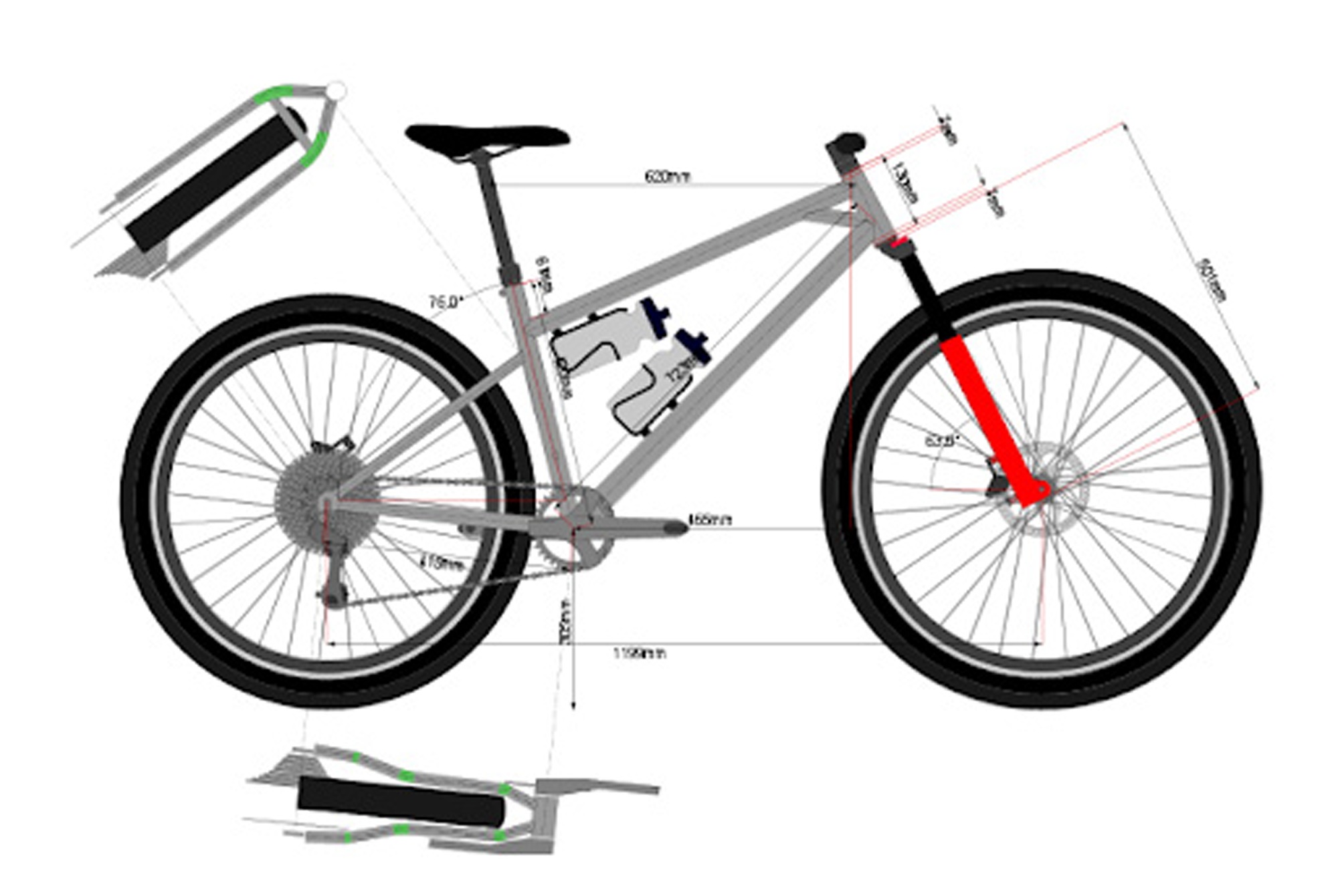
I had decided on my geometry, now I had to see if it would actually work and how it would look. While researching about building the bike, I found out about the BikeCAD programme created by Canadian, Brent Curry, specifically for designing and hand building bikes. After explaining my situation to him, he was super happy to help me out with a subscription to his program. Honestly, this was probably the biggest help for the project; without it, things would have been a whole lot harder – as you’ll find out. With the program, I found it super easy and fun to put in my decided geometry and customise how the frame would look, then figure out if it would work. From here I found that my chain and seat stays were going to need bends and also how much material I was going to need. From this 2D CAD model, I used the dimensions to create a 3D scale model in Fusion 360 which I then went on to 3D print as small-scale models of the frame. BikeCAD also allowed me to get a file of the frame design printed in 1 to 1 scale which came in handy when building.
Early on, I decided that the bike was going to be made from 4130 chromoly steel as it is much easier to deal with than aluminium; cheaper and also widely used in bike manufacturing but reasonably easily attainable. For the main frame tubes, I was able to source from a New Zealand company reasonably easily and cheaply. Note, this was not bike-specific tubing, the company it was from is more focused on roll cages and plane builds, so it’s much thicker and heavier, but this wasn’t something that bothered me as it was keeping my self- funded budget down. There were specific parts I had to order from America, e.g. headtube, BB shell, dropouts and brake mounts. These were not cheap but made the whole process a lot easier for me and they were good quality so it was well worth it.
I mentioned earlier, the biggest challenge to making the build successful was the fact that I didn’t have a frame jig to hold all the tubes in the right place at the right angle to be welded, so the bike wouldn’t turn out wonky and with the wrong geometry. Nothing I could find by research seemed realistic, doable or feasible for me, so I had to figure out my own. I went back to Fusion 360 and designed my own solution, a series of specifically designed 3D printed lugs that would hold the tubes where they needed to be. A few test and trial batches later – paired with some threaded rod and nuts – and I had a functioning ‘single-use’ jig. The jig was made up of two groups, the first was for the front triangle which is laid horizontally with the lugs holding the centre of the different- sized tubes at the same height as well as at the right angles. The second was for the rear triangle where the intact front triangle stood upright at the correct angle so the rear triangle could be precisely attached.
Preparing the tubing was very exciting for me – it was the first physical step in actually building the thing and it was made super easy thanks to BikeCAD and my cousin, Tom McKewon. From BikeCAD, I was able to print out paper templates of the profiles for each intersection in the tubing to get perfect fits along with thousands of very specific and accurate measurements I couldn’t imagine having to calculate on my own. The tricky part of preparation was bending the chain and seat stays to the correct angles, in the right place and on the same plane so that they matched each other perfectly; this took a lot of thought and care to get right. Thanks to our ‘extremely calculated’ swings on the bending bar and Tom’s very accurate “eye-ometer” we ended up with two seat stays and chain stays looking very symmetrical. After a full, long day of measuring, cutting, shaping and double checking we had tubes that looked ready to make a bike!
After months stalled by racing and final exams, we finally found time to weld the frame. I’d originally planned to do the entire build myself, but with no welding experience – and wanting the bike to be both rideable and reliable – I turned to CenEng, a local engineering shop. They stepped in for a day and welded the frame at a discounted rate. This was the moment of truth: would all my prep work pay off? Had I measured and metered the tubes accurately, and would my homemade jig hold up? Thankfully, the results were promising. The tubes slotted together with tight, clean joins and the front triangle came together smoothly in the jig. It held firm for tackwelds before we removed it for full welding. The rear triangle was more complex. The jig, made from plastic, began to melt under the heat. Plastic softens at around 300°C, while steel welds at close to 3000°C, hence it being single-use. The dummy axle, in particular, warped slightly, which made the rear wheel spacing a bit tight. We added bottle bosses and repurposed, drilled-out M5 nuts as cable guides. By the end of the day, we had a frame that actually looked like a frame. After more than a year of planning and building, it was a surreal and satisfying milestone.
Now that most of the frame was together, only a few final pieces remained to be welded on. But once again, summer racing commitments put things on hold. At the time, I was juggling a packed schedule; racing XC across New Zealand and Australia including wins at the U19 National Champs, The Prospector Stage Race, and the Australian National Series. I was also racing on the road, standing on podiums in both countries, and mixing in some enduro, gravel and cyclocross for good measure – often with solid results. These days, I’m still racing nationally and internationally, spending seasons in Europe and the U.S, chasing the long-term goal of going pro. So, between training during the week and racing most weekends, it was tough to find spare time to get back into the shed and finish the frame. However, a few months later I returned to Ashburton to “Mitre Tom,” where we finished the job.
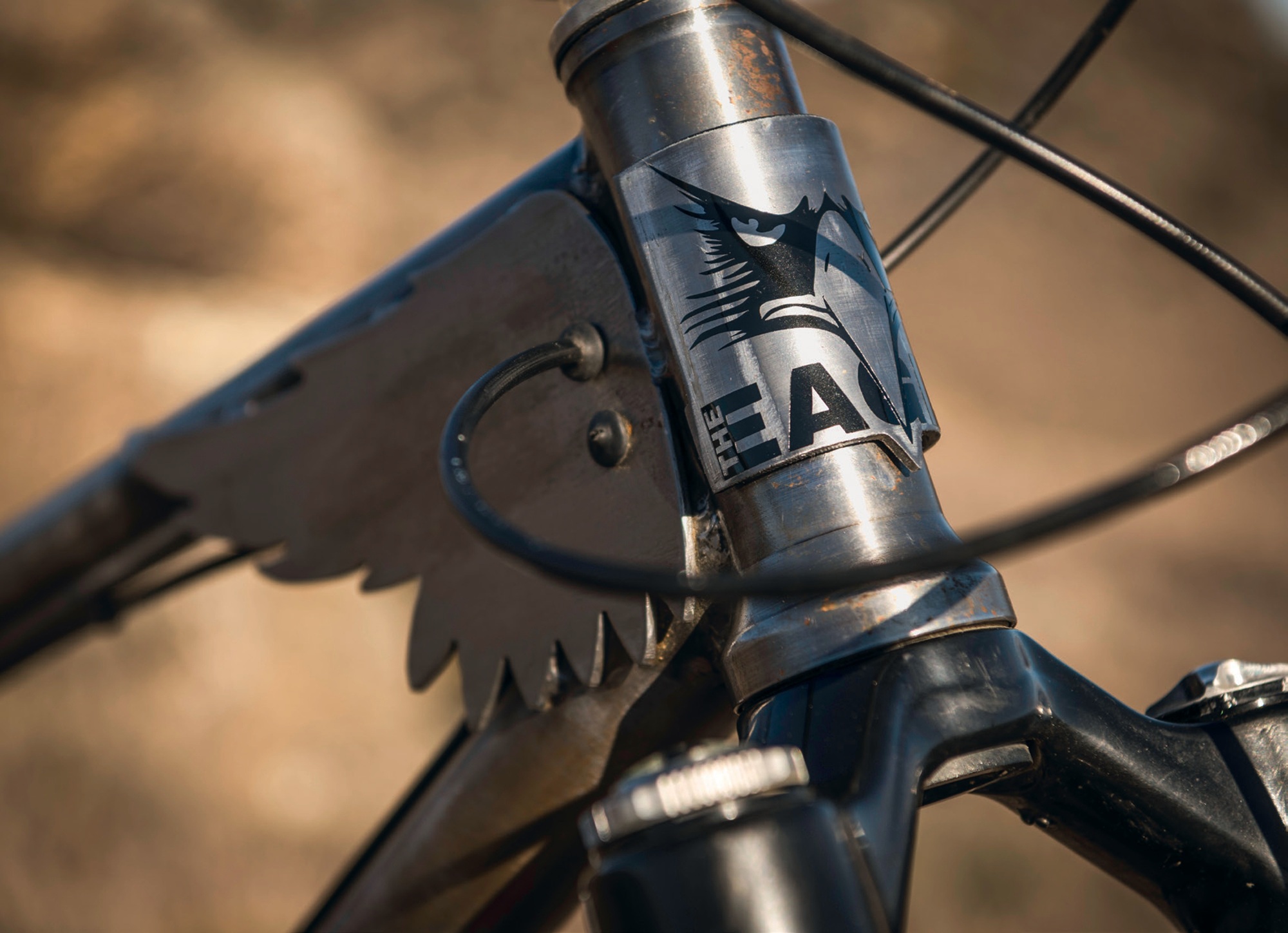
Among the final touches was the most recognisable part of the bike: its wings. From early on, I was told that with such a slack head angle, a gusset brace was strongly recommended. But it wasn’t until the frame had already been welded that the idea came to me to turn it into the wings of The Eagle. I sketched the shape onto a piece of steel donated by a local engineering firm, then spent hours carefully cutting them by hand with an angle grinder and sanding them smooth. Once welded in place, we quickly realised the sharp upper edges were a bit hazardous, perfect for catching or slicing body parts, so we bent the tips down over the top tube for safety and a more finished look.
With all the welding complete, a few key faces had warped slightly and needed precision work before components could be installed. The bottom bracket shell was the main issue – its threads had been badly affected by the heat, and with such specific dimensions, no one nearby had the right tap to clean them up. I wasn’t about to spend several hundred dollars on a new one, so I turned to the ‘frame builders’ Facebook group for advice. After weighing up suggestions, I decided to carefully grind down just the damaged sections, leaving the rest of the threads intact. It was a slow job, but in the end it worked perfectly.
Seeing the frame finally in its full shape, I was fired up to get it finished. I spent more late nights in the garage sanding the entire frame by hand to achieve a clean brushed-metal look. Alongside that, I designed decals and used my school’s vinyl cutter to create paint stencils. Several coats of clear finish followed, to protect the steel as much as possible while preserving its raw, bare-metal aesthetic. To match the frame’s silver tone, I also used drain cleaner to strip the anodising off a few coloured parts, e.g. fork dials, stem, spacers and top cap. After a bit of polishing, they gave the bike an even more unique, custom feel. Throughout the build, I’d been slowly sourcing parts to finish the bike. I had a rough idea of what I wanted, but keeping the budget low was the priority. Most of the components came from what I already had at home, some cheap Marketplace finds, a few AliExpress bargains, and just a handful of new parts. Like every other step of the project, I was super excited and, once the clearcoat had dried, I jumped straight into the build. By then, I had nearly everything I needed, and the assembly went surprisingly smoothly. The only missing piece was a crank set. After two years of hunting for a cheap second-hand option, I gave in and ordered a brand-new set of Shimano Cues cranks for around $60, still unsure if they’d even fit. Fortunately, they went on perfectly, which was a relief, because the very next day I was heading off on a multi-hundred-kilometre bikepacking trip, without a single test ride…
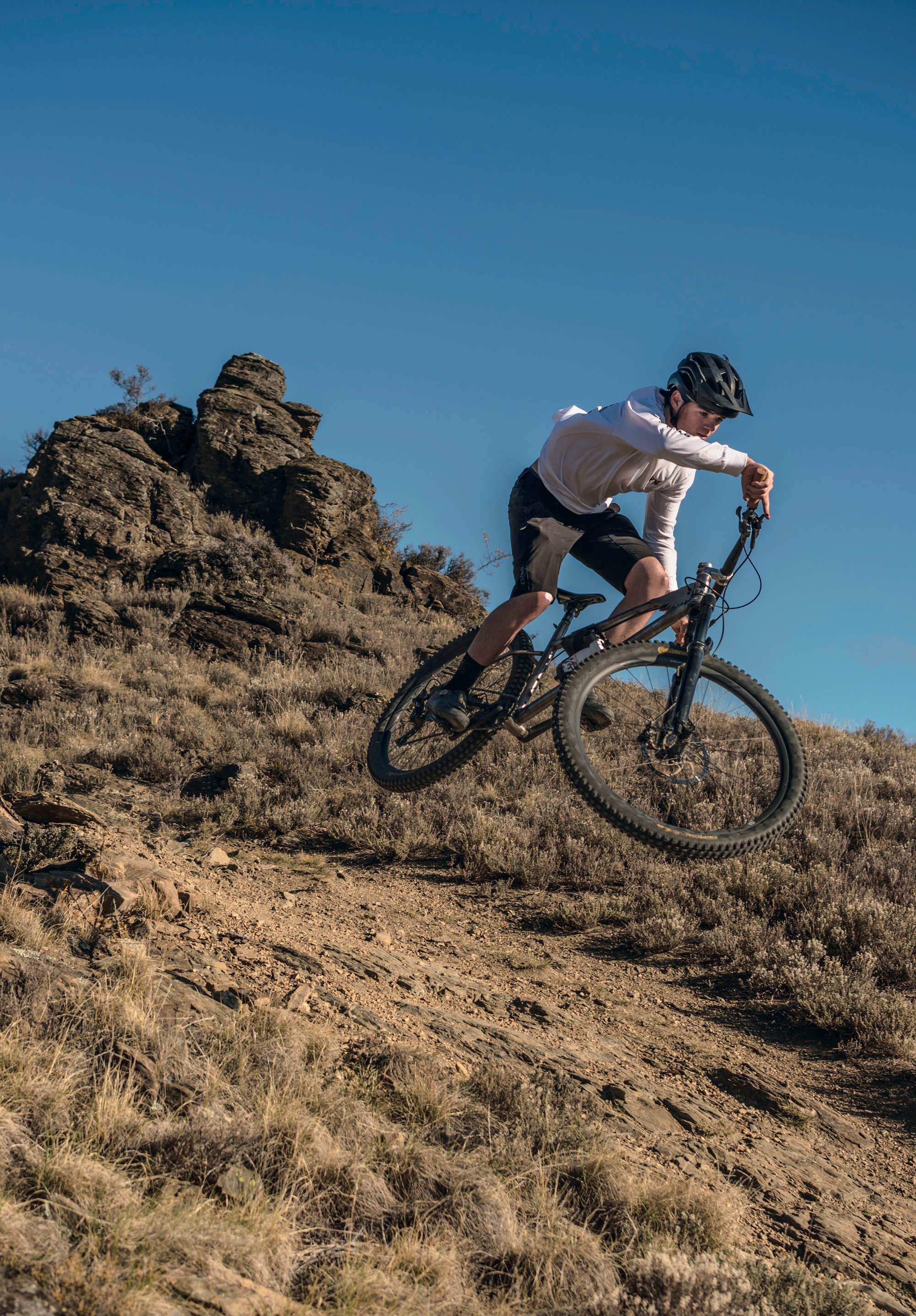
My first ride on The Eagle was nothing more than a lap up and down the driveway. Two years of work had led to that moment, and regardless of how it actually rode, it felt good just to be on it. There wasn’t much time to reflect, though, as I was leaving on a bikepacking trip the next morning. The bike had never done more than 50 metres, and now it was being loaded up with gear and heading into Central Otago’s backcountry for three days. A few people were understandably sceptical about taking a first- time, home-built frame out there without a proper test ride, but I had almost full confidence in my work. Over the trip, we clocked a couple hundred kilometres with some solid ups and downs. Most of the issues that cropped up were due to worn second-hand components, not the frame itself. That said, a couple of my own oversights did make an appearance. The first was the seat clamp. I’d only tightened it enough to hold my body weight because I didn’t want to over- torque it, but that wasn’t enough for a loaded saddle bag, so the seat kept slipping down. Some electrical tape got me through the first day until I found a wrench in Roxburgh. Then came the rain. We camped in a tent on the second night, and in the morning we woke to a lovely headwind and slightly orange frame. Clearly, the clear coat hadn’t completely sealed the steel. Not ideal, but it was just surface rust on chromoly – nothing structural – and I managed to convince myself it gave it more of the homemade look that I’d wanted.
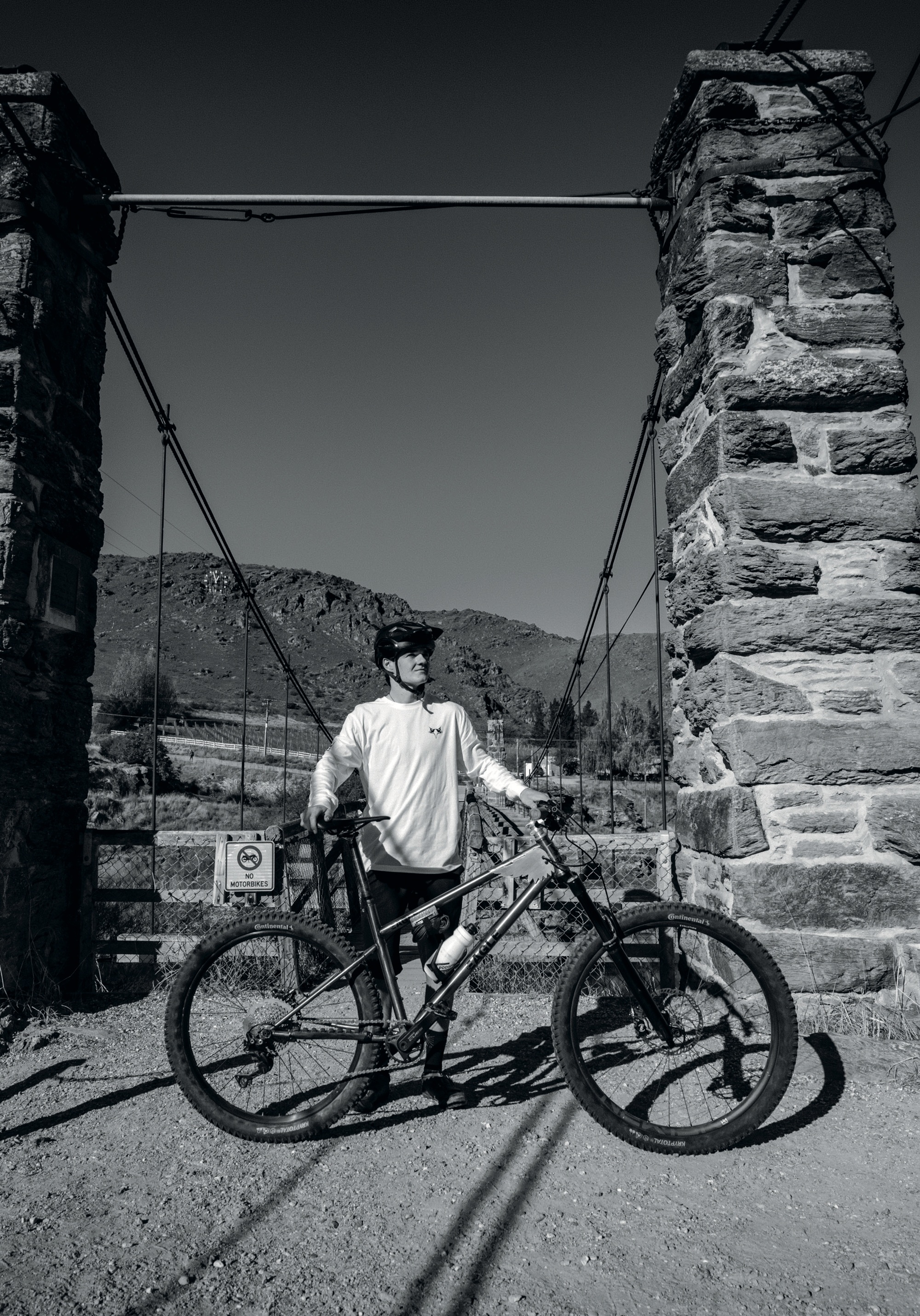
Once I was back home, The Eagle became my go-to ride to school. It wasn’t the most expensive looking bike in the rack – especially in a town like Alexandra with a solid mountain biking scene – but I liked it. It stood out. But that didn’t stop someone from stealing it. I was pretty stressed when I realised it was gone. After everything I’d put into it, the idea that it could just disappear, or get trashed, was hard to take. I put a post up on Facebook with some photos and it didn’t take long to get a lead. Somebody had found it early in the morning outside the supermarket, not far from some damage to the building. It looked like it had been used in an attempted ram raid. Thankfully, they’d taken it straight to the police station and when I got there it wasn’t hard to describe. There aren’t many bikes with steel wings welded to the headtube. The police asked me to check it over for damage and, somehow, it was fine. Not even a bent derailleur. Honestly, I was surprised… but mostly relieved; my bike had survived being used as a battering ram and was stronger than a supermarket!
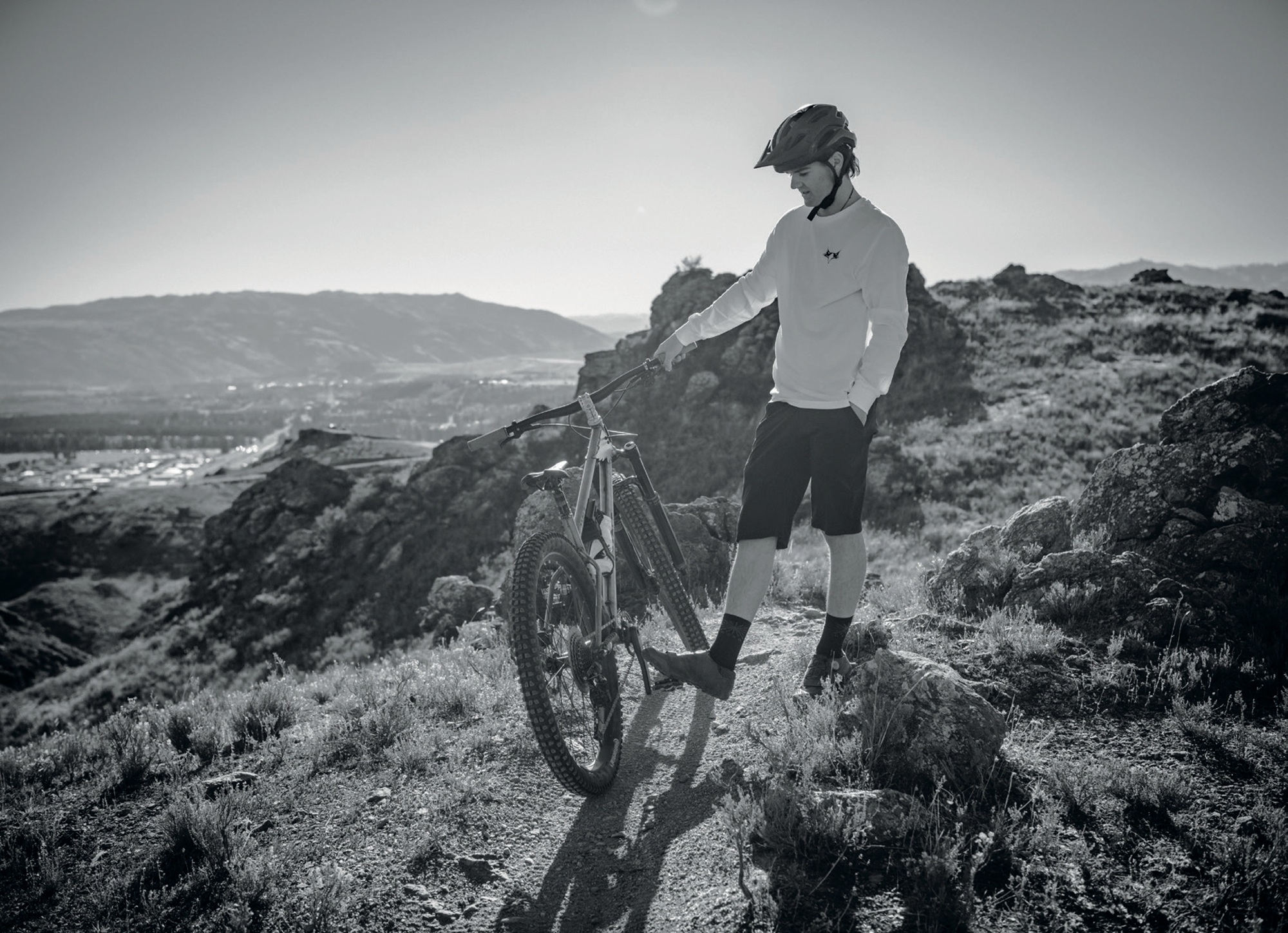
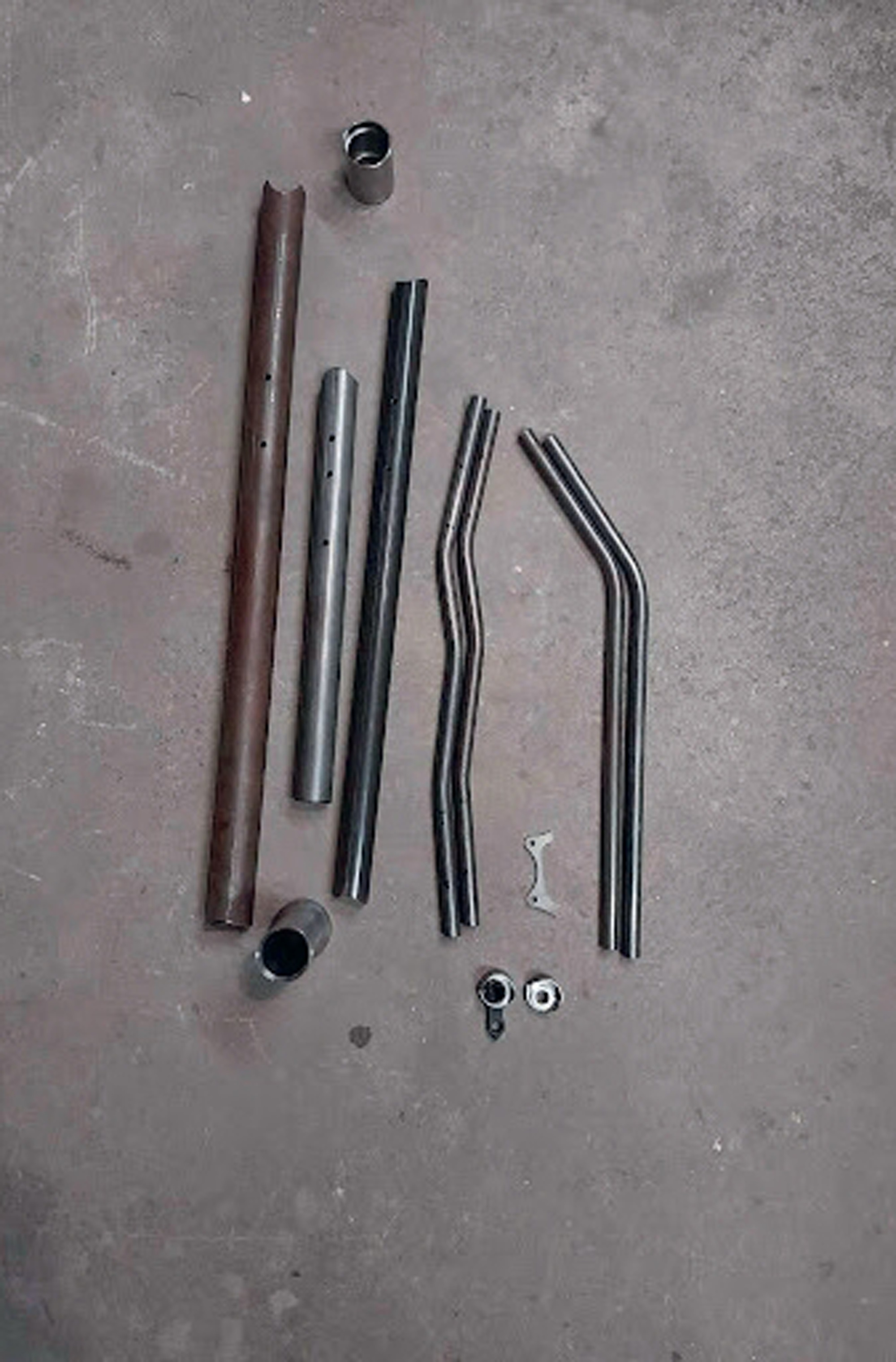
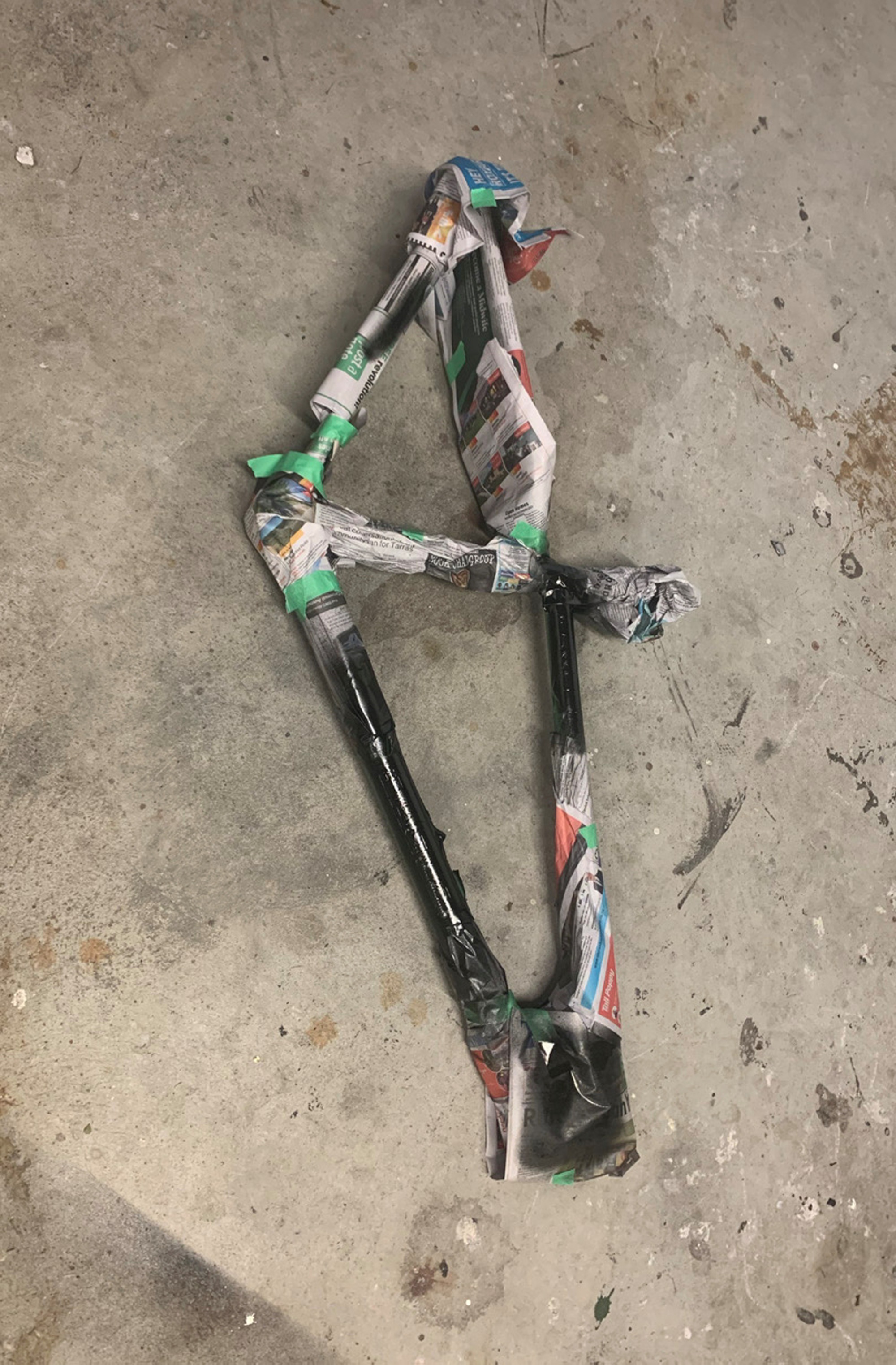
Later that summer, I finally got to race it at our local social enduro series, Local Laps. This had been the goal since the beginning: to race my hand-built hardtail in the local series. Obviously, I hadn’t gotten around to riding it on singletrack yet, so I wasn’t entirely sure how it would go. Part of me was still a bit nervous about the whole thing coming apart under the pressure and vibrations. At the top of the stage, people were curious and excited to finally see it in person after close to three years since starting it. There were plenty of jokes about whether it would make it to the bottom. I was wondering the same. I dropped in cautiously, expecting some sort of creak or flex, but it was silent. Solid. A few corners in, it was clear the frame could handle the rough stuff. I started to push harder, and it held up fine. No surprises, no issues, just a good ride. Whipping round corners, skipping and jumping to a P3 and first place homemade bike!
So how does the bike ride with its quite radical geometry? Well, obviously with the head angle the front wheel feels a really long way in front of you – which can look pretty weird – but it doesn’t feel like it takes away any playfulness from the bike. Paired with the really short rear end and a smaller wheel, the bike feels like it can still whip around corners even when they get tight. At slower speeds it’s not heavy to turn, but just feels a little awkward, and on mellow gentle terrain the geo is completely overkill – which you can feel. However, when the speed gets up the bike is extremely stable – especially when high speed cornering; the steeper the trail gets the more confident the bike gets, and it still feels to be very playful which was the idea behind the rear end. In terms of climbing, it’s definitely not the most efficient or nicest bike to climb (coming off an XC race bike) but the steep seat tube angle tries to keep some weight over the front wheel. I still have plenty of riding to do on it to really test out the geometry but, for now, it’s still one of a kind and not far from exactly what I wanted it to be.
Looking back on the build, there are definitely things I’d do differently – but that’s the nature of first attempts. You learn by doing, and the next time around (yes, there will be a next time) I’ll know exactly what to change. Maybe I’ll tackle a full suspension frame, or go completely overboard with carbon fibre. Only one thing is for sure: it won’t be something standard. What I do know is that I loved the process. For a long time, this bike was all I could think about. The most frustrating part wasn’t any of the technical stuff, it was waiting for the time to actually get on with it. Would I recommend building your own bike? Absolutely – if it’s something that genuinely interests you. Just be warned: it takes so much more time, effort and way more problem-solving than you might expect. You can’t half-commit to a project like this. If you’re not all in, it’s probably not for you. The budget? Like most serious builds, it ended up costing more than I’d hoped, but not wildly so. Could it be done cheaper? Safely, probably not. Spending a bit more, however, could make this an absolute dream. In the end, the total cost for everything came out to about the price of a brand-new Fox 36 fork. Not bad, considering I got this fork with an entire bike out of it.
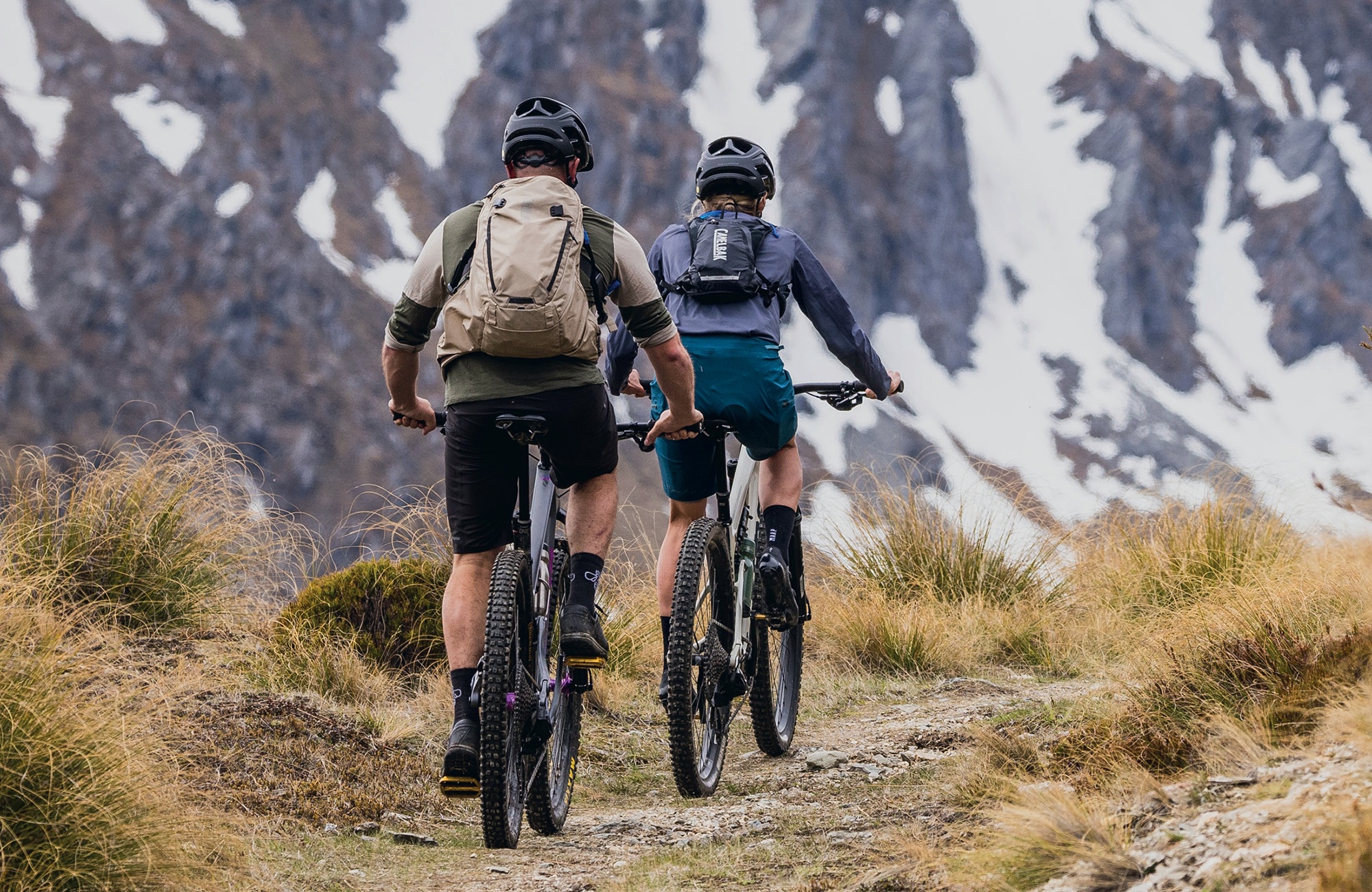
Off-grid Escapism
Words by Liam Friary
Images by Caleb Smith
I live with a deep, near-constant desire to get off grid. I find life’s regular day-in, day-out rhythm becomes mundane at times. I relish the simplicity that comes with spending time buried in the backcountry.
It’s the simplicity of hard riding, adventuring and discovering remote huts. To get there, a unique type of effort is often required – like many things in life, to receive the reward, you first have to put in the mahi. To be honest, that’s probably the most appealing part of it all, for me anyway.
I like that it takes effort, that it’s often hard and requires the right sort of mental approach. Reaching these places usually involves a large amount of travel logistics, but that’s why they’re not ridden a lot, as most humans want to take the path of least resistance. I am one of them too, but I need to constantly fight that narrative.
Our country boasts hundreds of backcountry huts and multiple tracks for both riding and walking. That alone is enticing – so many different places to discover, so many different adventures waiting to unfold. A lot of these areas are infused with rich history, with well-worn pack tracks built by early prospectors, some seeking fortune from the earth’s minerals. Some of those early prospectors knew the value of route marking and a good hut for shelter.
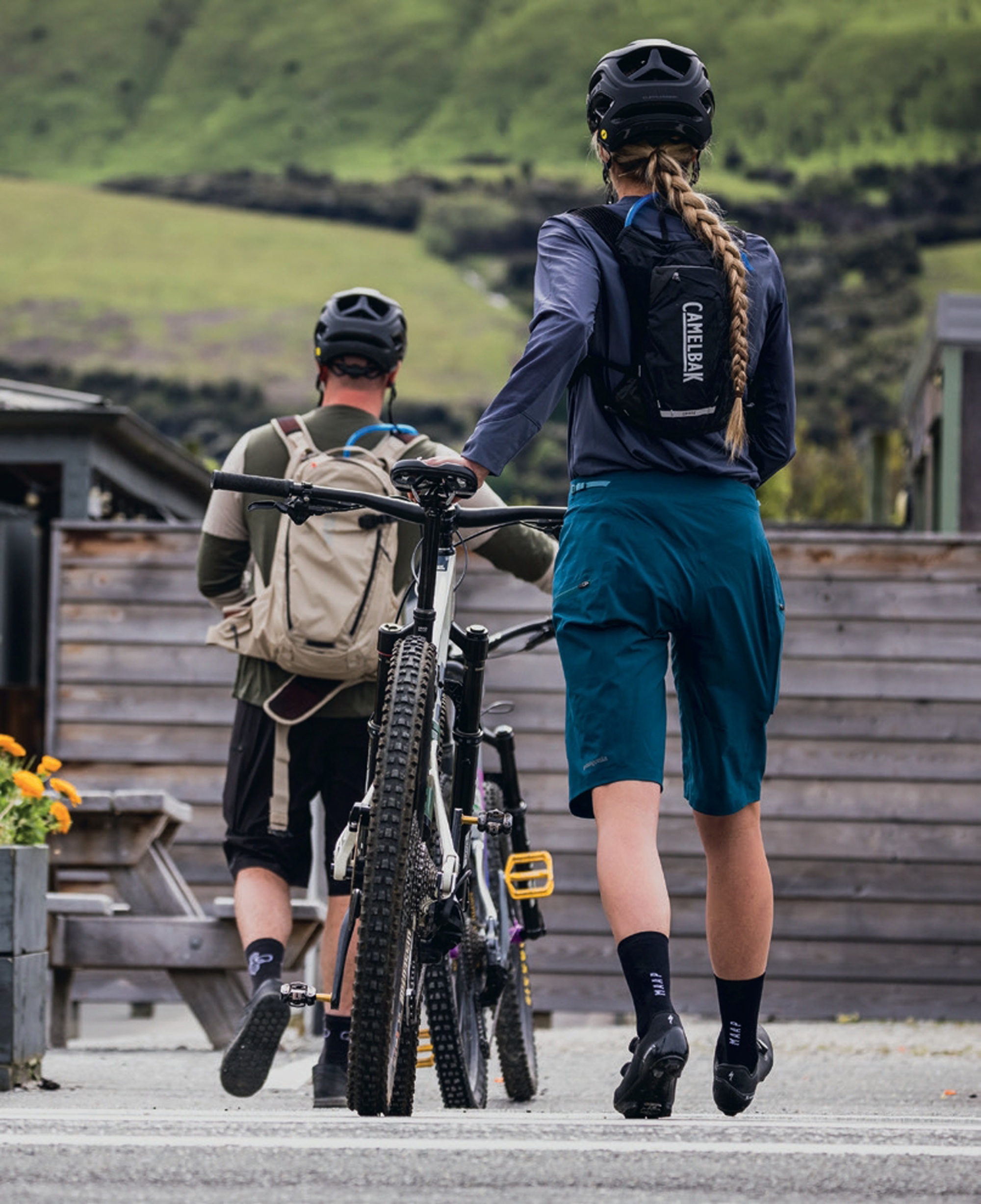
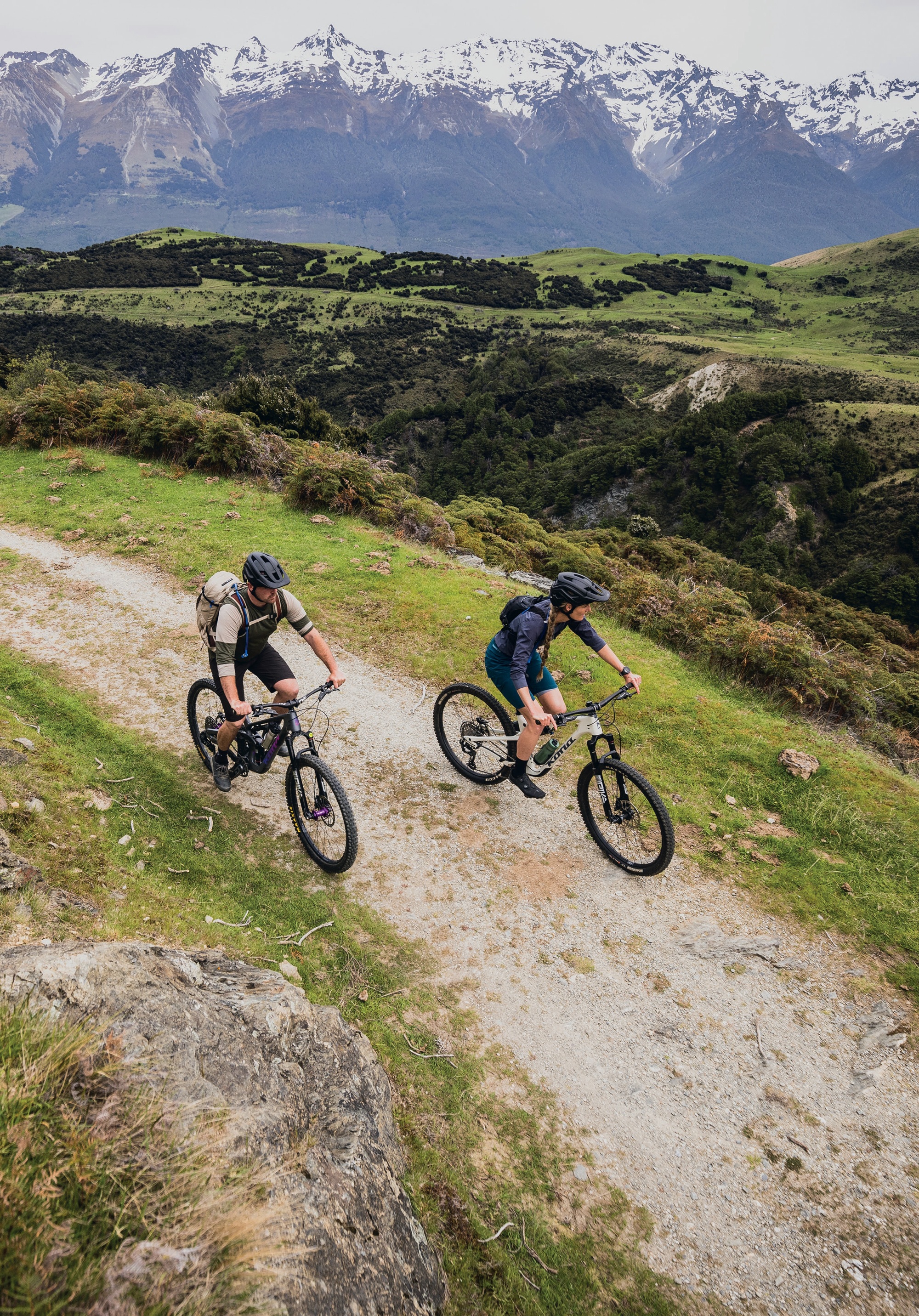
Often, the appeal of these areas is that these tracks are not purpose-built for mountain biking, but we can still use them for recreation. It’s about getting off the beaten track and accessing areas you wouldn’t normally venture into.
An area that’s appealed to me for a long time is the Whakaari Conservation Area near Glenorchy. This region offers backcountry huts and tracks for both riding and walking, all steeped in mining history. The area was the site of scheelite mining from the 1880s onwards. Scheelite, a calcium tungsten mineral, was discovered in a quartz reef in 1884 by William Raines, C. C. Boyes and Simon Wilson. The mineral became highly valuable during both World Wars due to its use in hardening steel for armaments and in lightbulb filaments. George Wilson formed the Wakatipu Scheelite Company in the 1880s, and mining continued through various operators until well after the Korean War, when prices dropped and most miners moved away. The region’s scheelite was particularly valuable as it was molybdenum-rich, making it crucial for the arms industry during wartime periods.
For our latest backcountry escape, we’d ride the Mt Judah Track to Heather Jock Hut, then return the same way. The destination was just as important as the journey. Knowing there would be four walls, a roof and a place to make a brew and eat some grub whilst admiring the view made the challenge ahead feel purposeful. The track follows the old Mt Judah Road, built to service the mines high in the mountains. Along the way, it passes the Glenorchy Scheelite Battery and the State Mine – remnants of an industry that once employed hundreds of miners who worked in lonely conditions at altitudes as high as 2000 metres, above the clouds.
The track winds up steep zigzags around the northern side of Mt Judah. The state took over operations in 1942, during World War II, renaming it the State Mine, though they gave it up after the war. The mine then operated on a tribute basis into the 1970s. By 1942, the mine had produced 862 tons of scheelite concentrate. Those early miners knew the value of a good hut at the end of a long day’s trek in these unforgiving mountains.
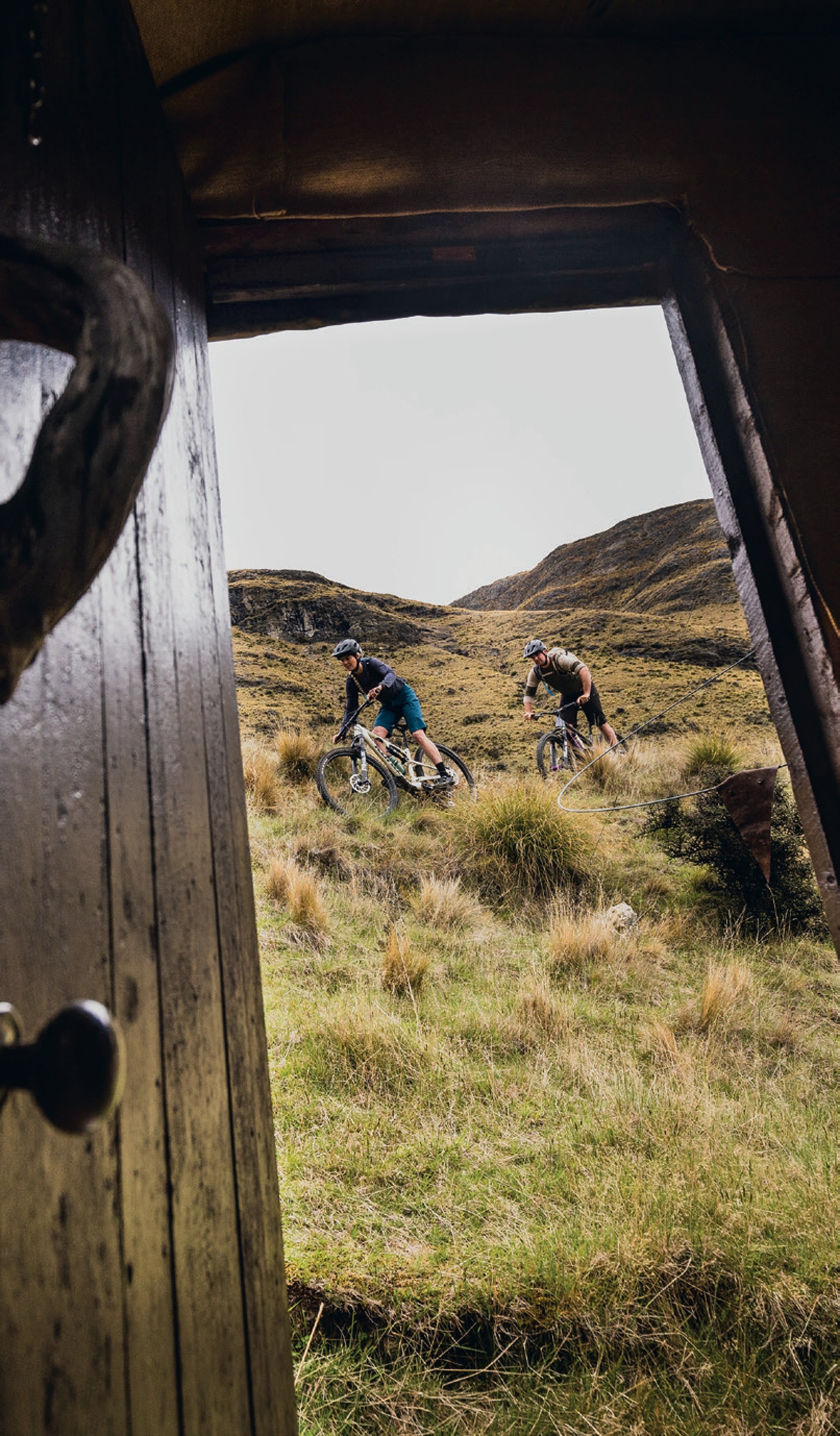
The Heather Jock Track follows the old mining road and features several historic huts from the scheelite mining era. Three restored character huts lie along the route – Bonnie Jean Hut, Jean Hut, and Heather Jock Hut. Jean and Bonnie Jean Huts were known by the scheelite miners as the ‘red huts’ due to their cladding, with Jean Hut’s exterior made using flattened drums. The roof is held down by huge rocks suspended on wires. The building methods and materials used in the restoration are as faithful to the original huts as possible. There’s something special about seeing a place with that much history and imagining all the miners who sought the same shelter over the decades.
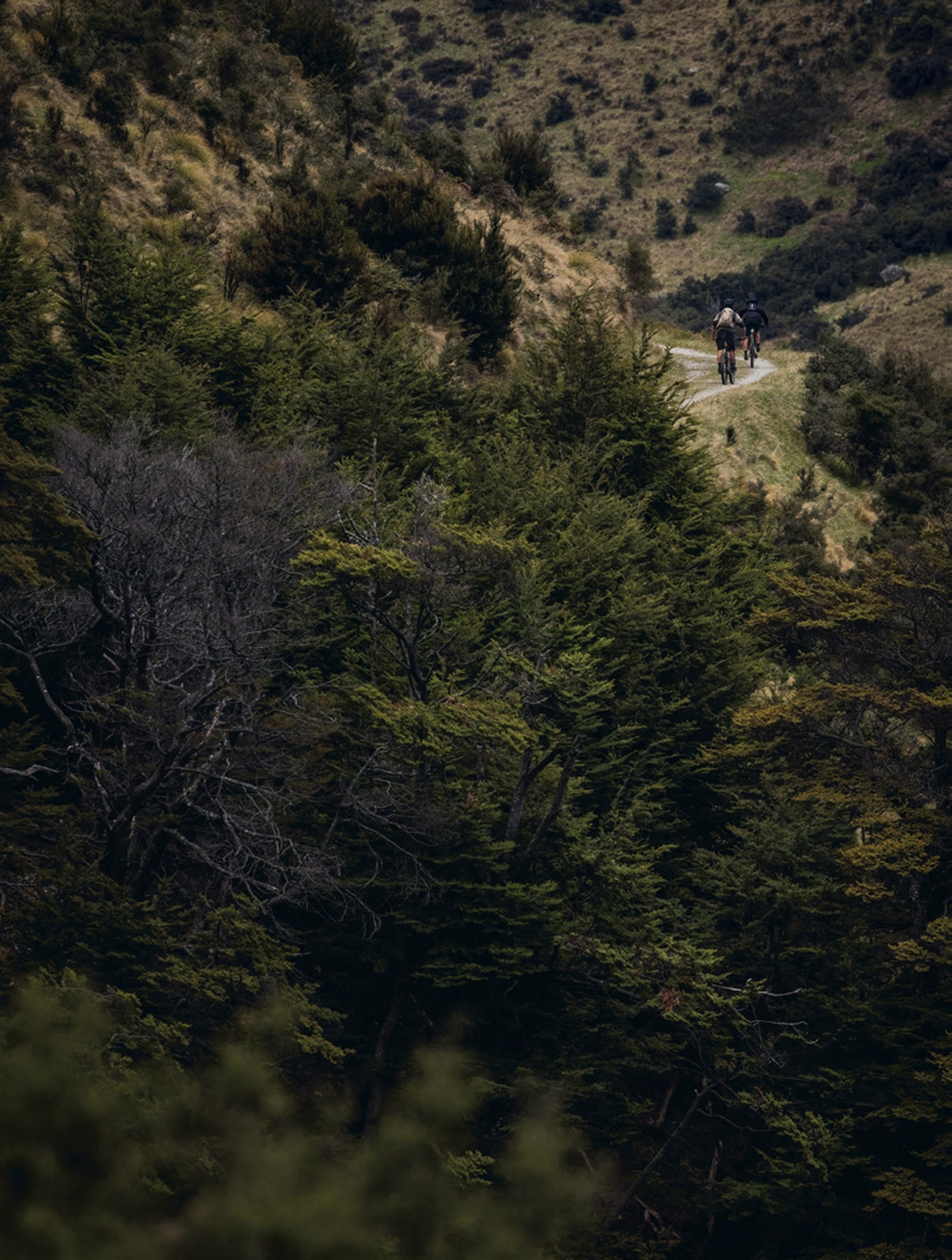
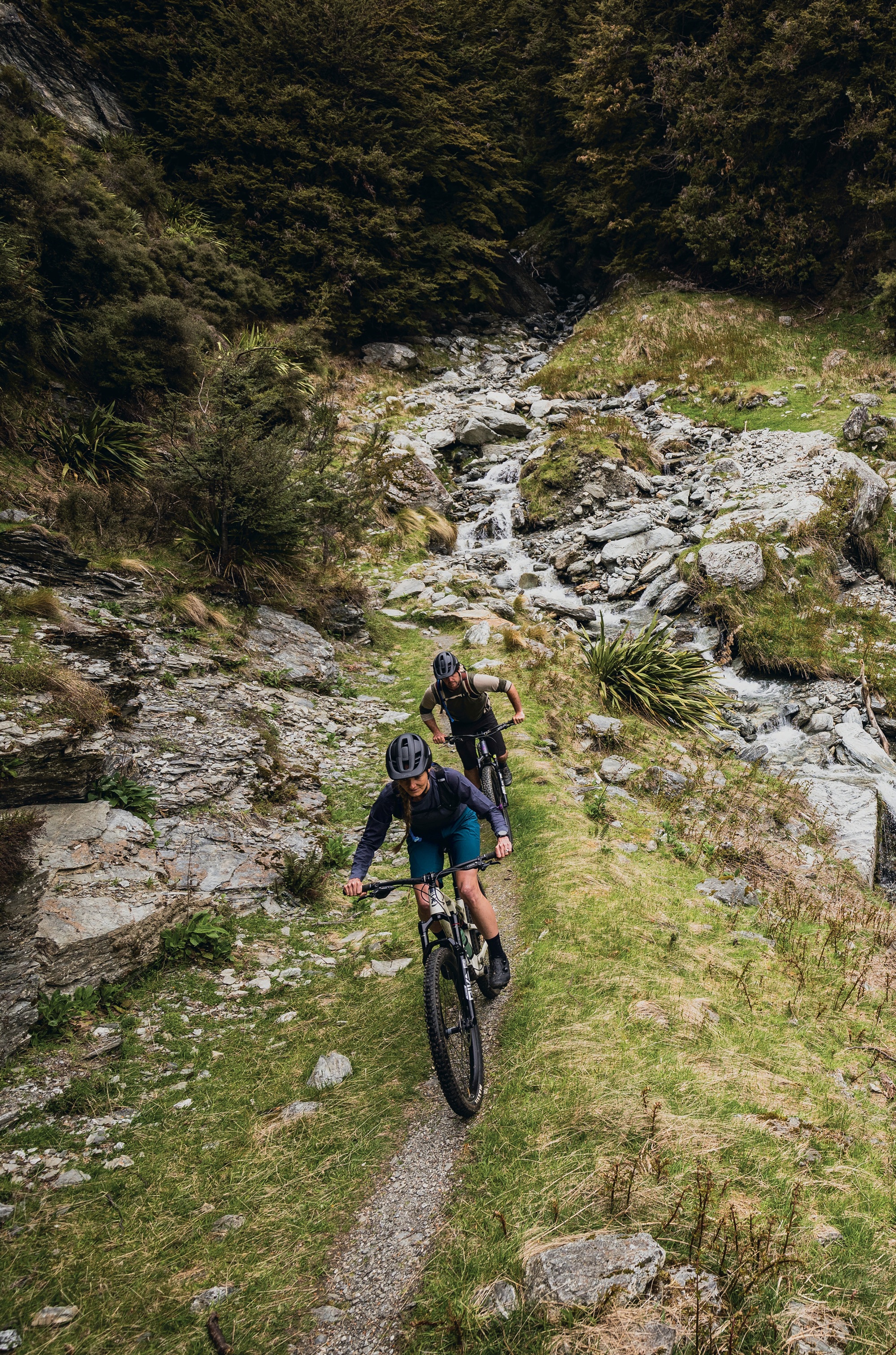
Our main job first thing was packing for the trip ahead. Littered across the ground was gear, jackets, safety devices, food, coffee, AeroPress, cooking gear, reservoirs, headlamps and lights – just in case. We packed everything into our CamelBak backpacks, considering weight and what we’d need once we arrived at the hut.
The mountains lingered in the distance as we drove closer. In every direction, it was rugged and steep with snow-capped mountains. We pulled up to Mrs Woolly’s General Store in Glenorchy and I ordered a brew and scoffed a pie, needing all the fuel I could muster. This would be a solid day out in the mountains.
It wasn’t long before we were on our bikes and climbing the track. Well, when I say ‘climbing’ I mean riding in the smallest gear up a very steep ascent. It was like that pretty much out of the gate. But nothing in these mountains comes easily. And, as I said earlier, a little effort is required for anything worth doing. Especially when there’s a hut with a view as the reward.
After a while scrambling on and off our bikes up the ascent, we reached Jean Hut, the first hut on the ascent. We plonked ourselves on the side of the hut and tucked into some grub. This sustenance was well deserved and needed for the haul ahead. And the view was absolutely gorgeous looking across the Whakatipu to Bold Peak and Mt Bonpland on the other side.
Post snack, we clambered back onto our bikes with the blood now diverted away from our legs to our stomachs. The sustenance was needed for the ongoing climbing effort up to Heather Jock Hut, but it took a while for my body to adapt post-feed. As we ascended, the open tussock landscapes and rocky outcrops turned to tightly benched switchback trail that had me off and walking in parts. I didn’t want to walk in sections, but it was more the fact I would fall off the bloody bike as it was so steep and I was going so slow. There’s no room for ego out here! It wasn’t that long in distance or on the topo map, but it seemed to take ages. However, I needed to park that feeling as it wasn’t doing much for me, other than sapping my energy. I reminded myself to just be in the moment and immerse myself in nature.
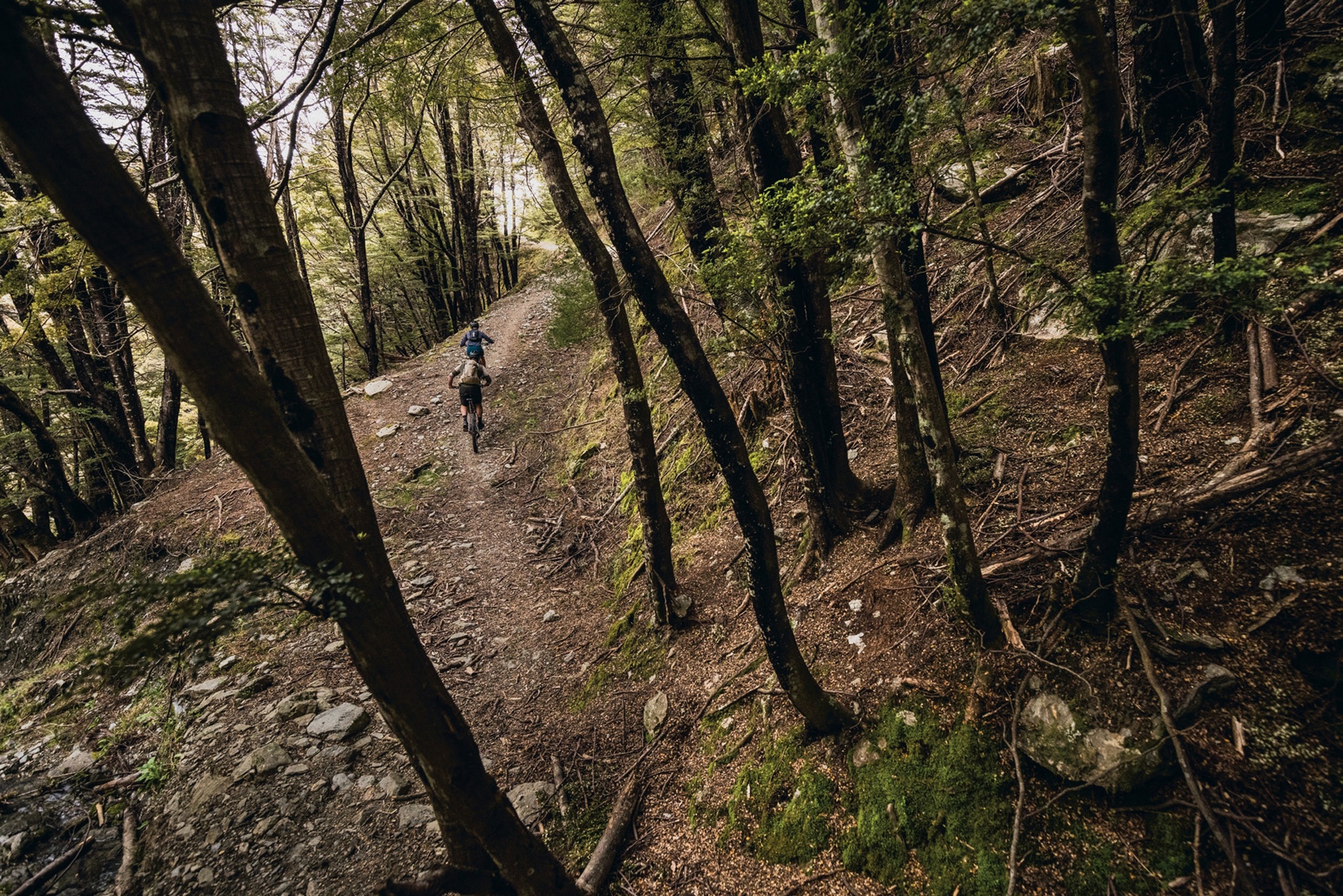
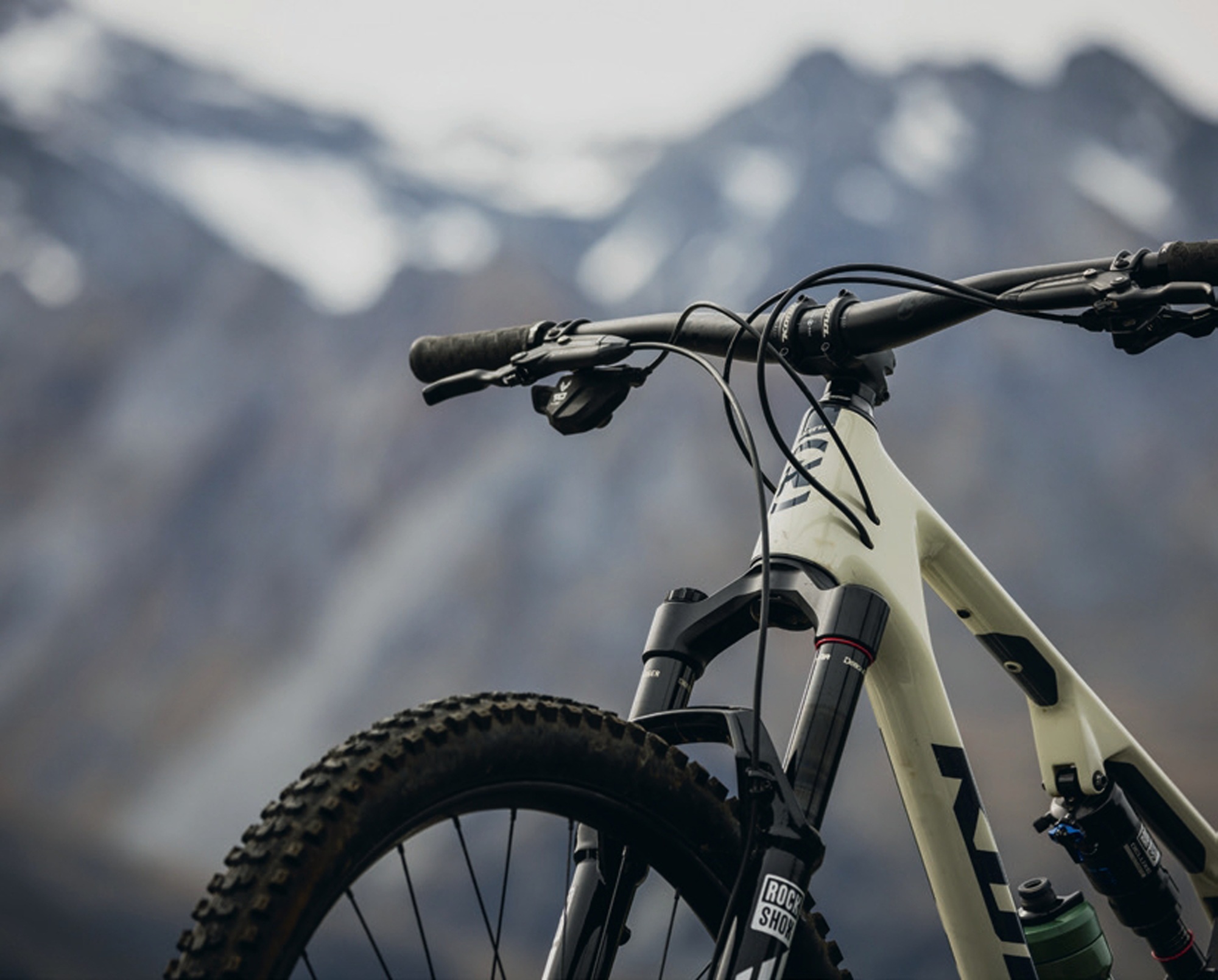
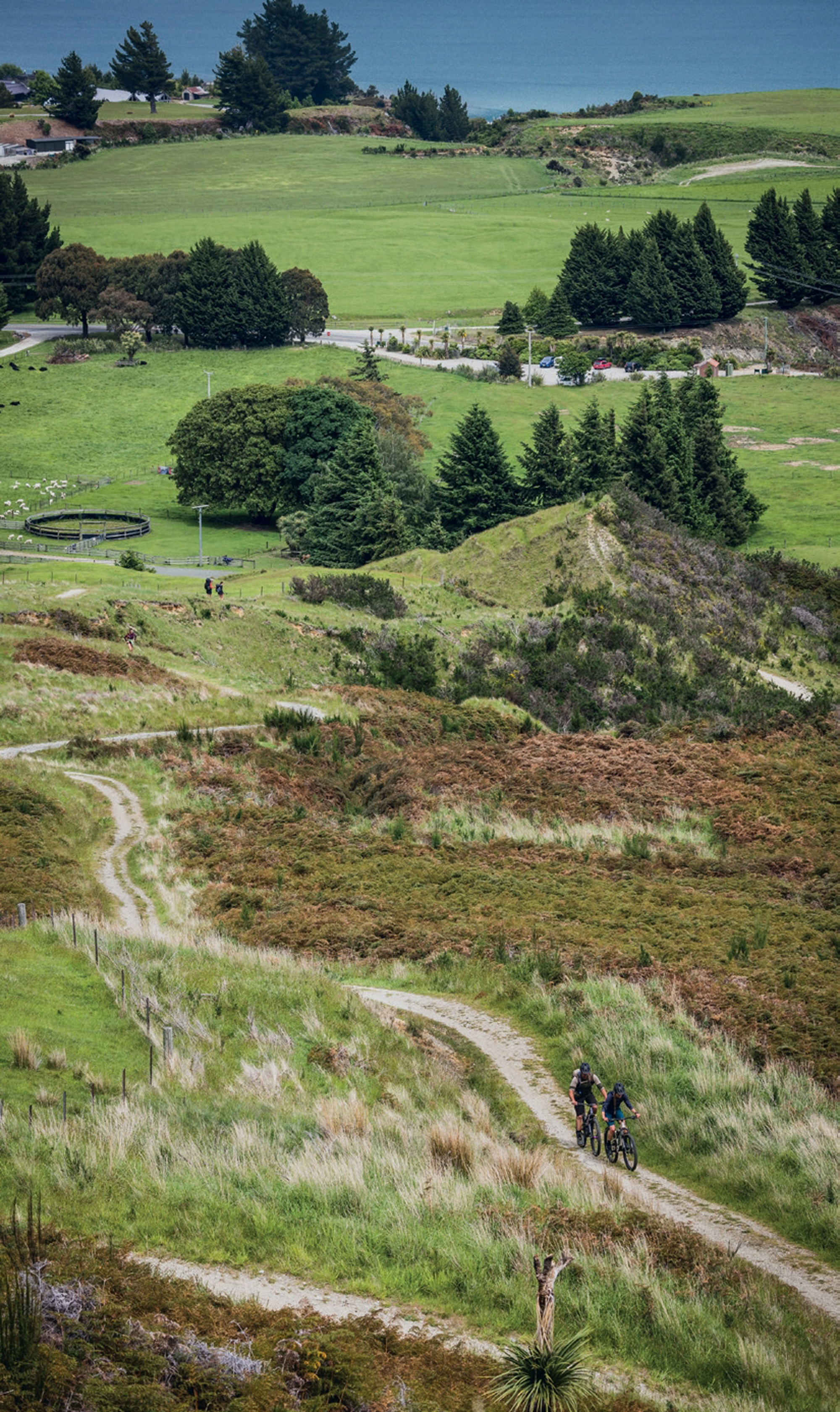
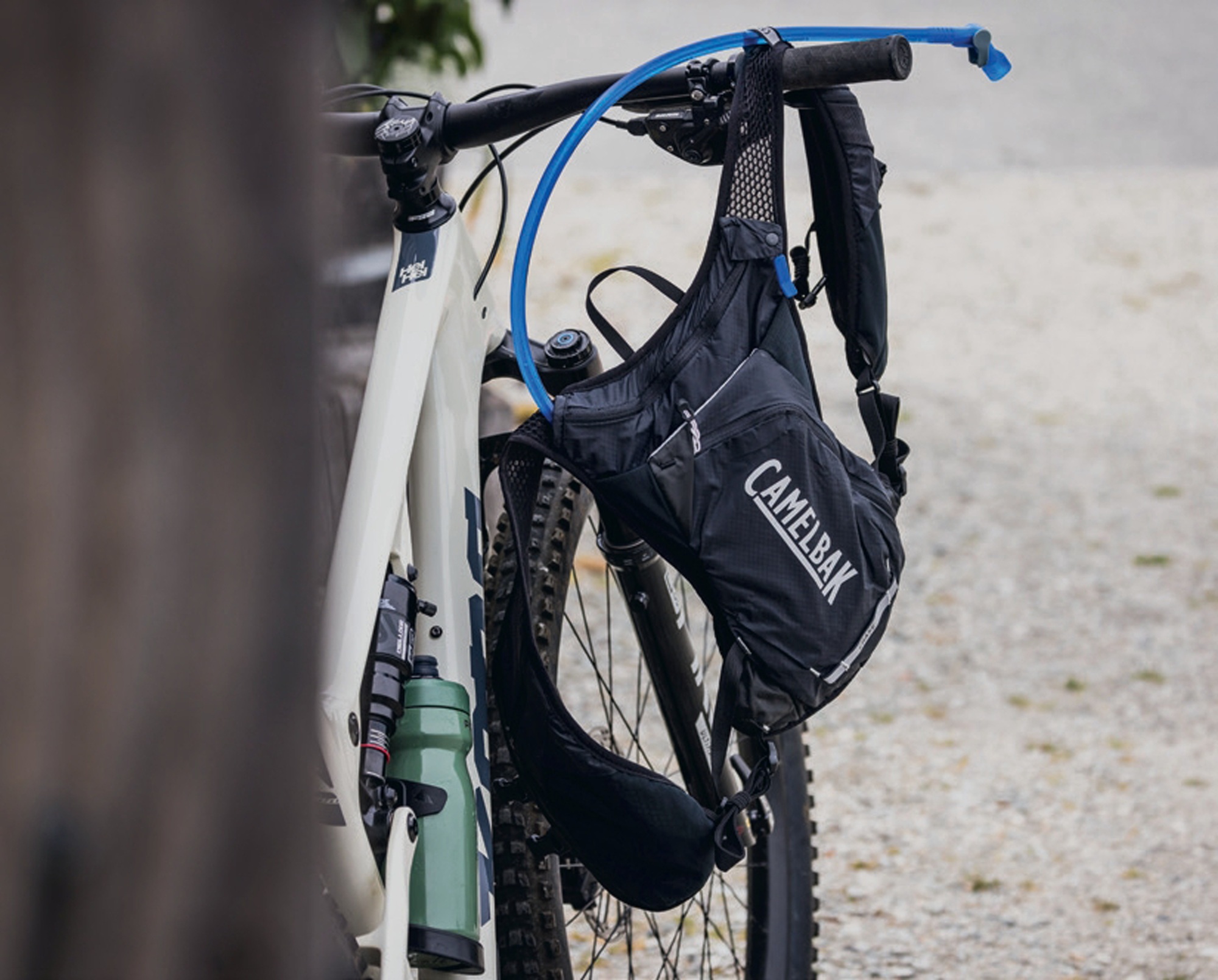
The final few switchbacks were getting tighter and I could sense that we must be close to the hut, but I wasn’t too sure how much further we still had to go. The anticipation was building – soon we’d be dropping our packs, having lunch and brewing a strong coffee. After some mental tough talk about hanging in there, the hut was finally spotted, edged into a small plateau with Mt McIntosh overshadowing the small hut.
And what a splendid hut it was, sitting pretty in the clearing, with mountain peaks towering above. This basic three-bunk hut, free to use on a first-come, first-served basis, was exactly what we’d come for – this moment of arrival, of finding shelter in the wild. The day’s efforts gradually slipped away as we munched our snacks and took in the amazing view.
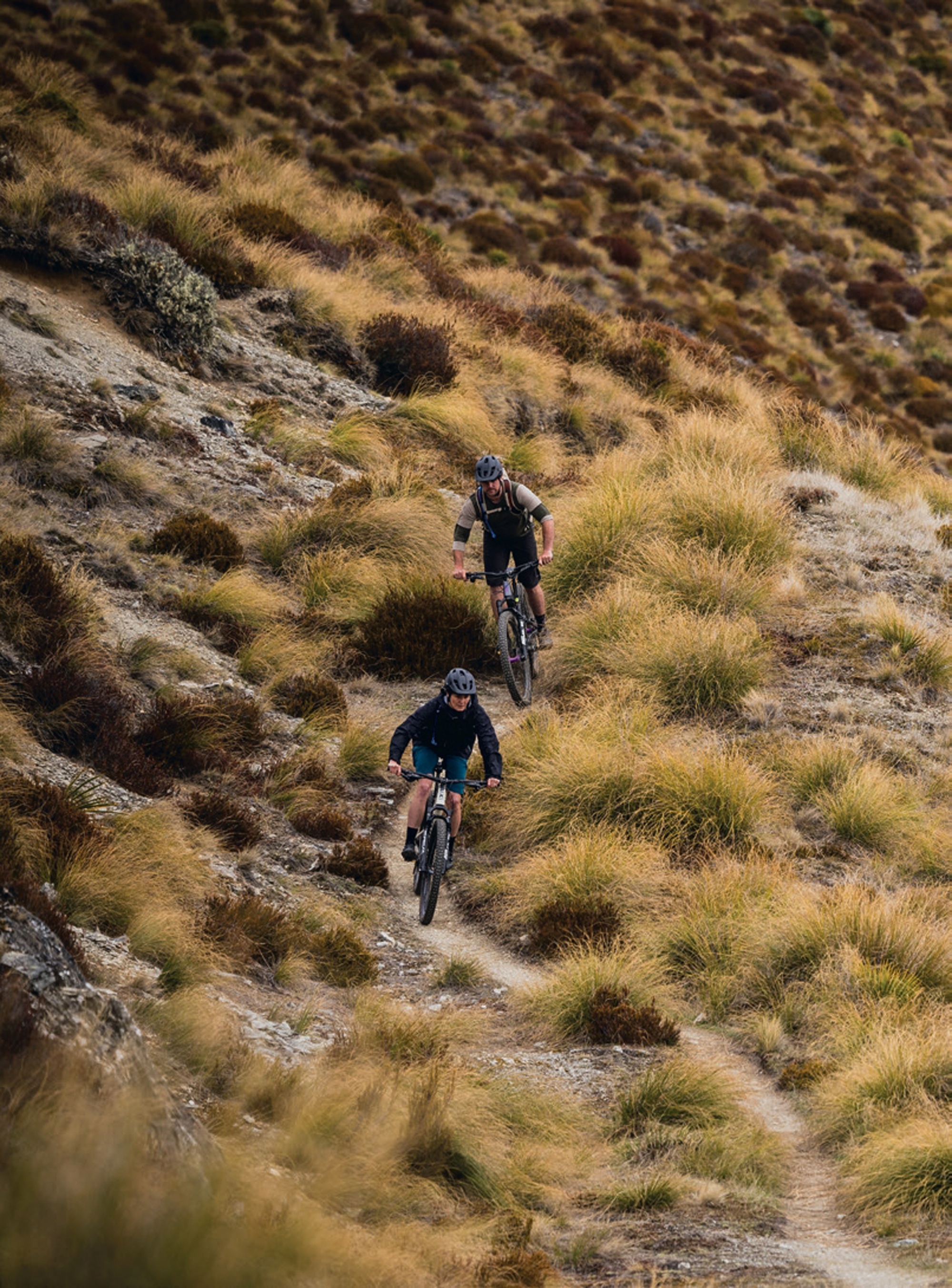
The trail provided us different gradients, a few technical features and landscapes as we rode it in reverse. Going back the other way means some of the spots you missed or flew past stand out. I would have liked a bit more singletrack, but this isn’t always guaranteed when venturing into remote parts that aren’t ridden much. Often, you need to go there to see, as online maps only provide a snippet of the land. I find that it can help shape another mission to the area as you gain knowledge and can craft better routes for another occasion. The moment wasn’t lost on me, however, as just riding out here felt freeing.
We passed Jean Hut again, marvelling at its rustic construction near the stream, weighted with rocks to stop it from blowing away.
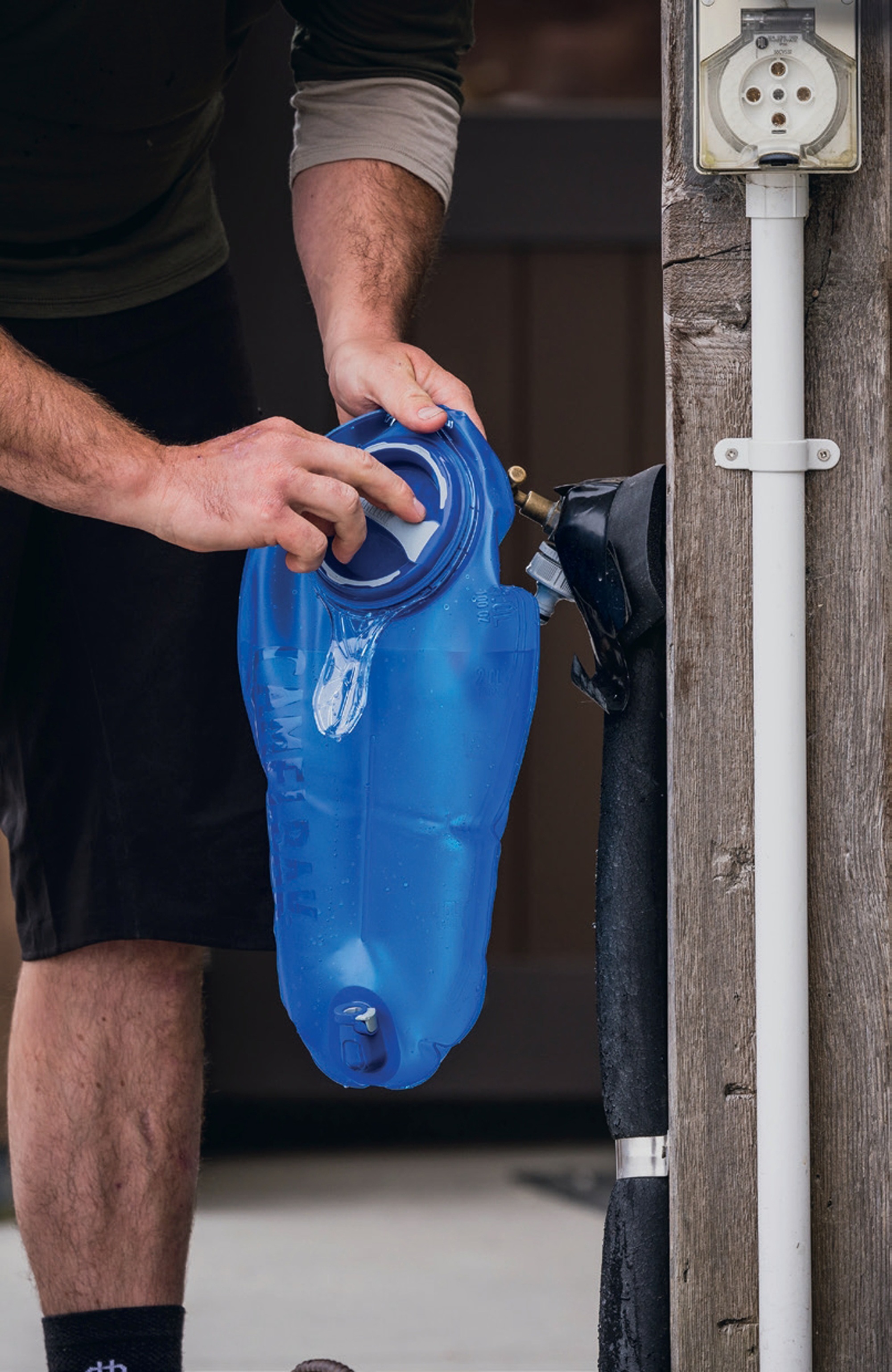
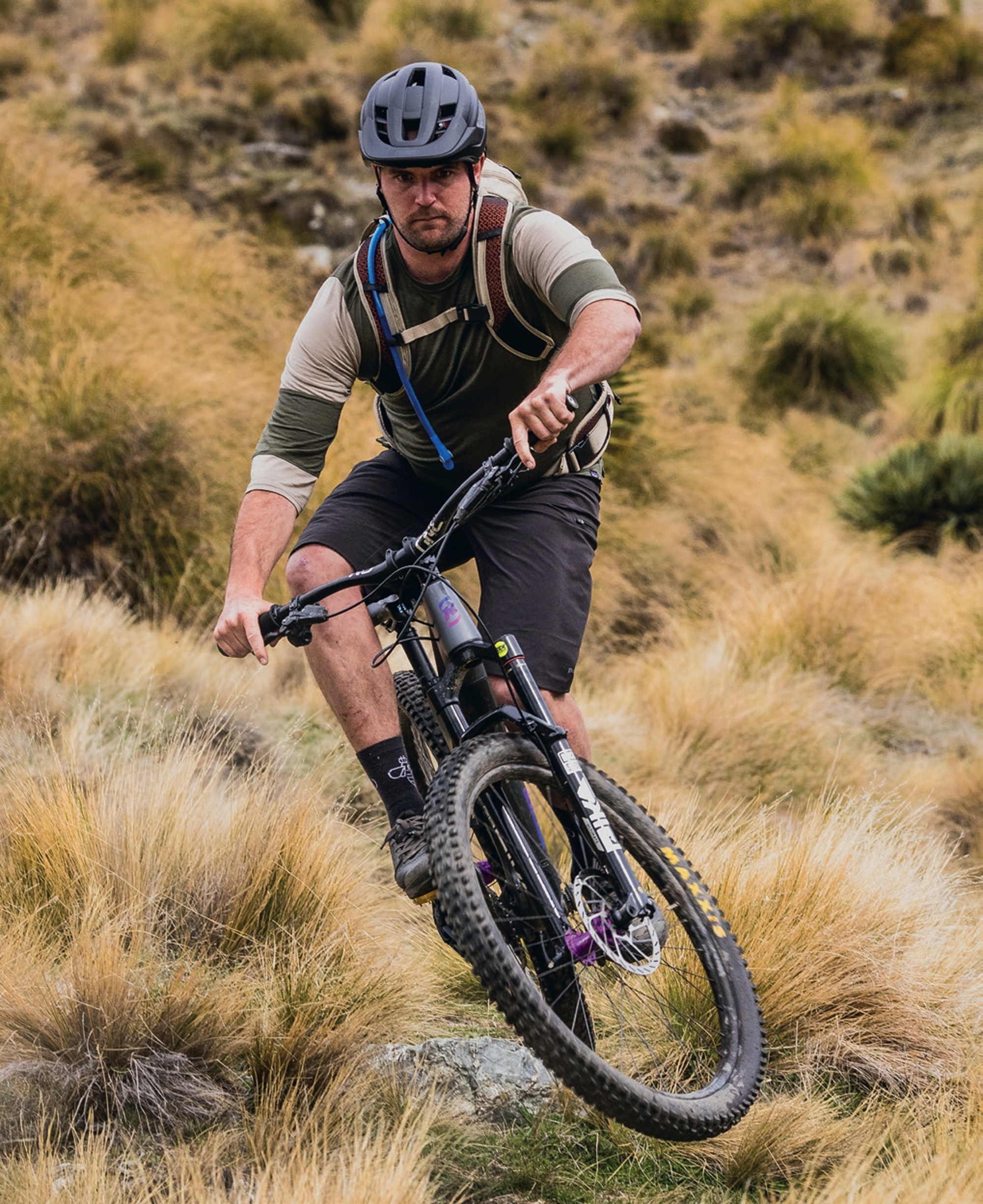
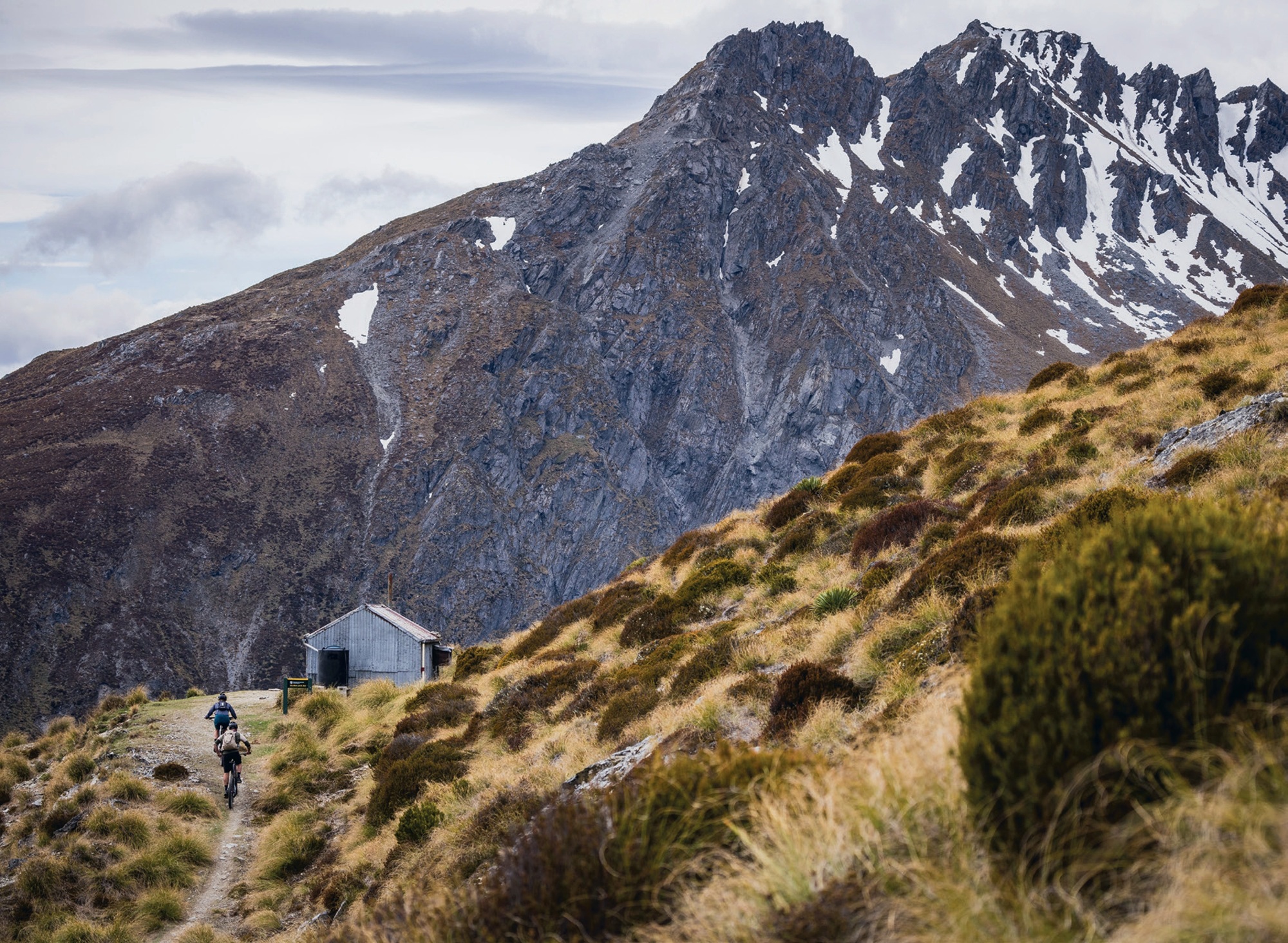
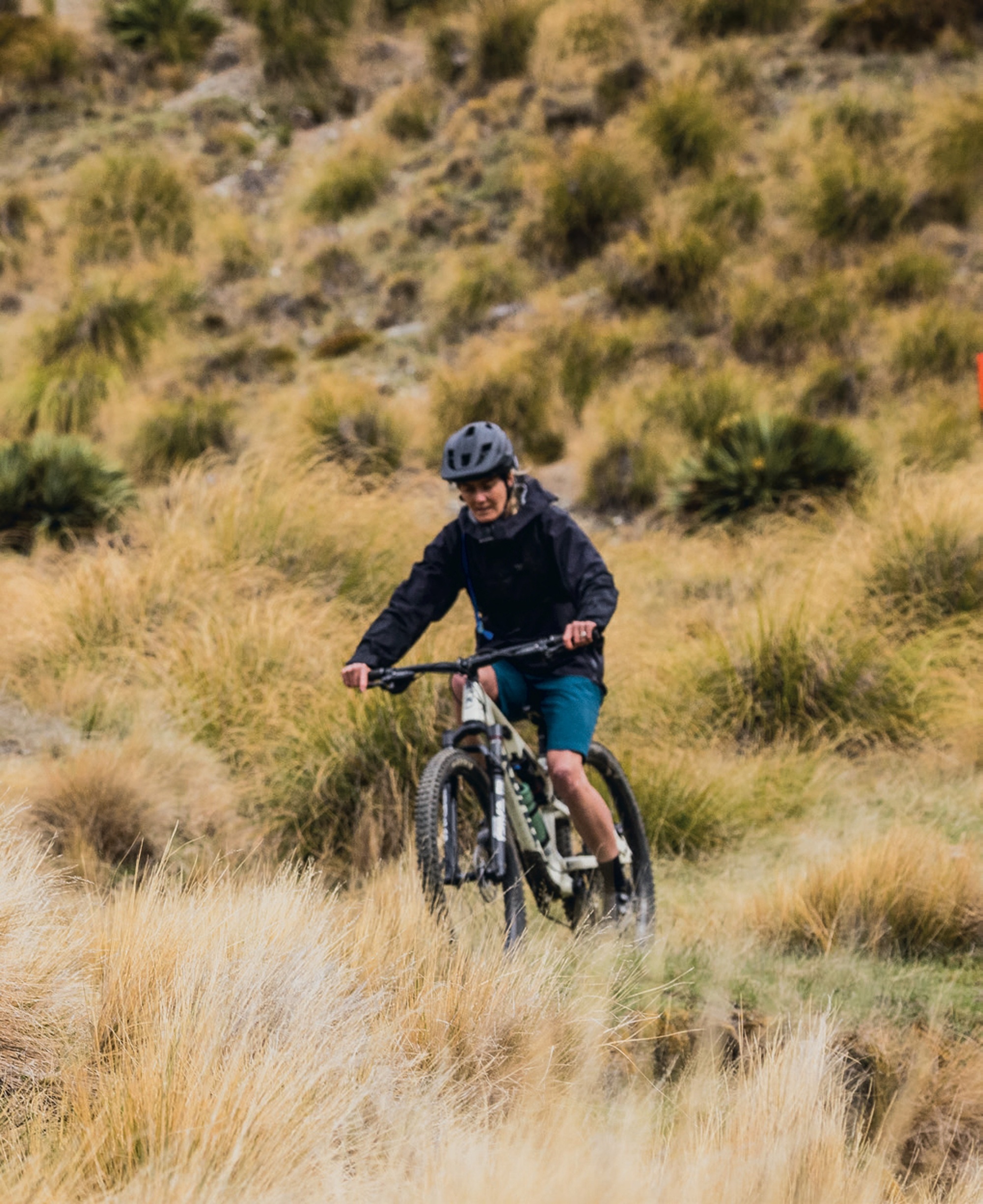
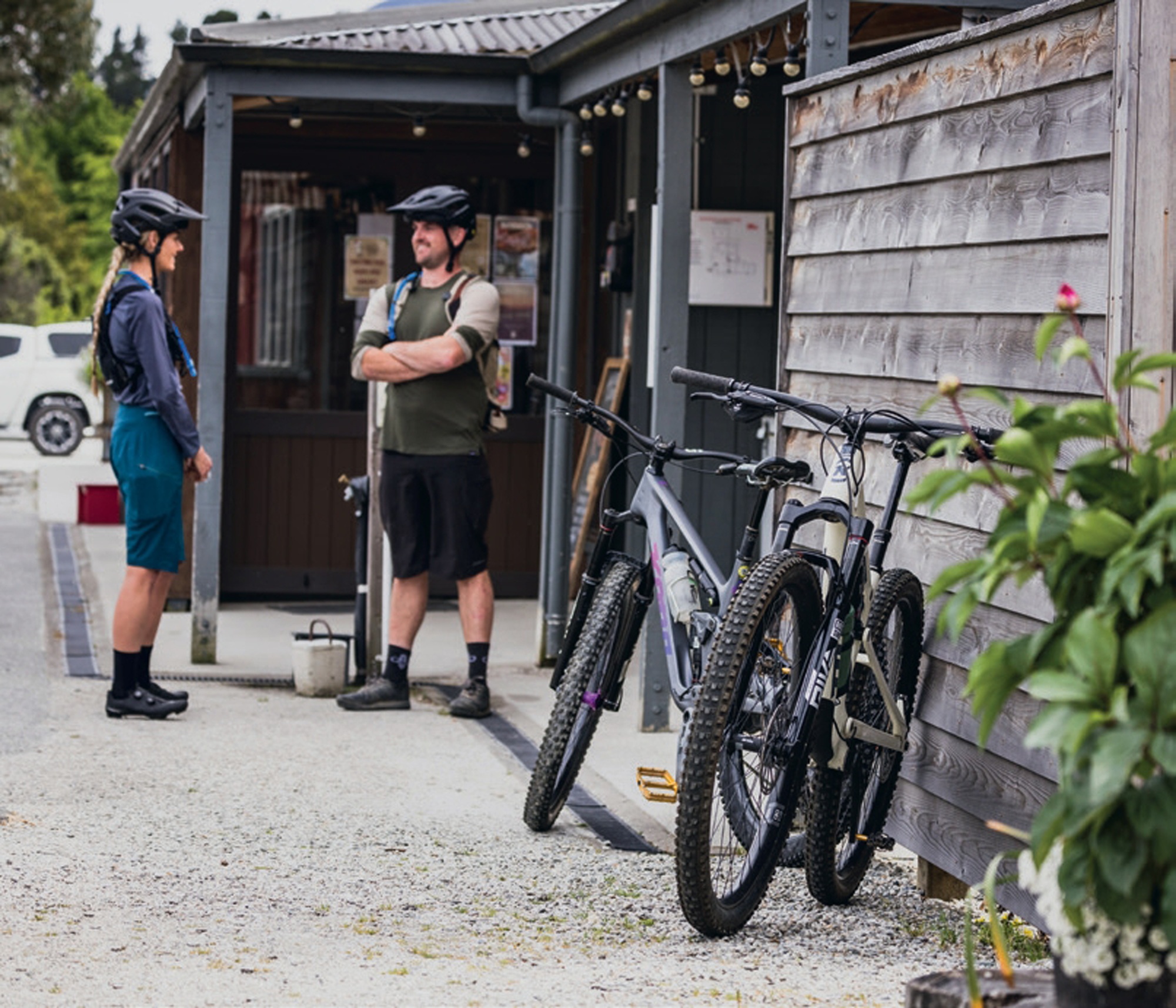
It wasn’t too long before we ducked into the bush, crossed Bonnie Jean Creek, and emerged back into the open tussock country. The vastness and remoteness staggered and intrigued me; endless valleys and mountain peaks flowed as far as the eye could see.
I took a moment to reflect on the journey before we cracked a tin of beer and celebrated our backcountry adventure. Our off-grid sojourn had taught me a lot and showed me that sometimes only a small window of time immersed in nature is all you need. Sometimes all you need is a sense of purpose – exploring a new route and visiting backcountry huts sufficed. It can provide everything you need to get things back into perspective.
There’s something about these routes, put here before our time, that we now trace for recreation. Of course, it’s not a manicured mountain bike park and that’s the point. Bikes are built for numerous ventures and it’s good to use them as a portal to take in different environments. The mining history added another layer to the experience. Riding the same tracks those scheelite miners cut through over a century ago, seeking the same shelter in the mountains. It’s not just about suffering through the wilderness; it’s about finding home in it, even if just for a moment. I can’t wait to pack my bag for the next adventure – wherever that might take me. And whichever hut is waiting at the end.
Produced in partnership with CamelBak
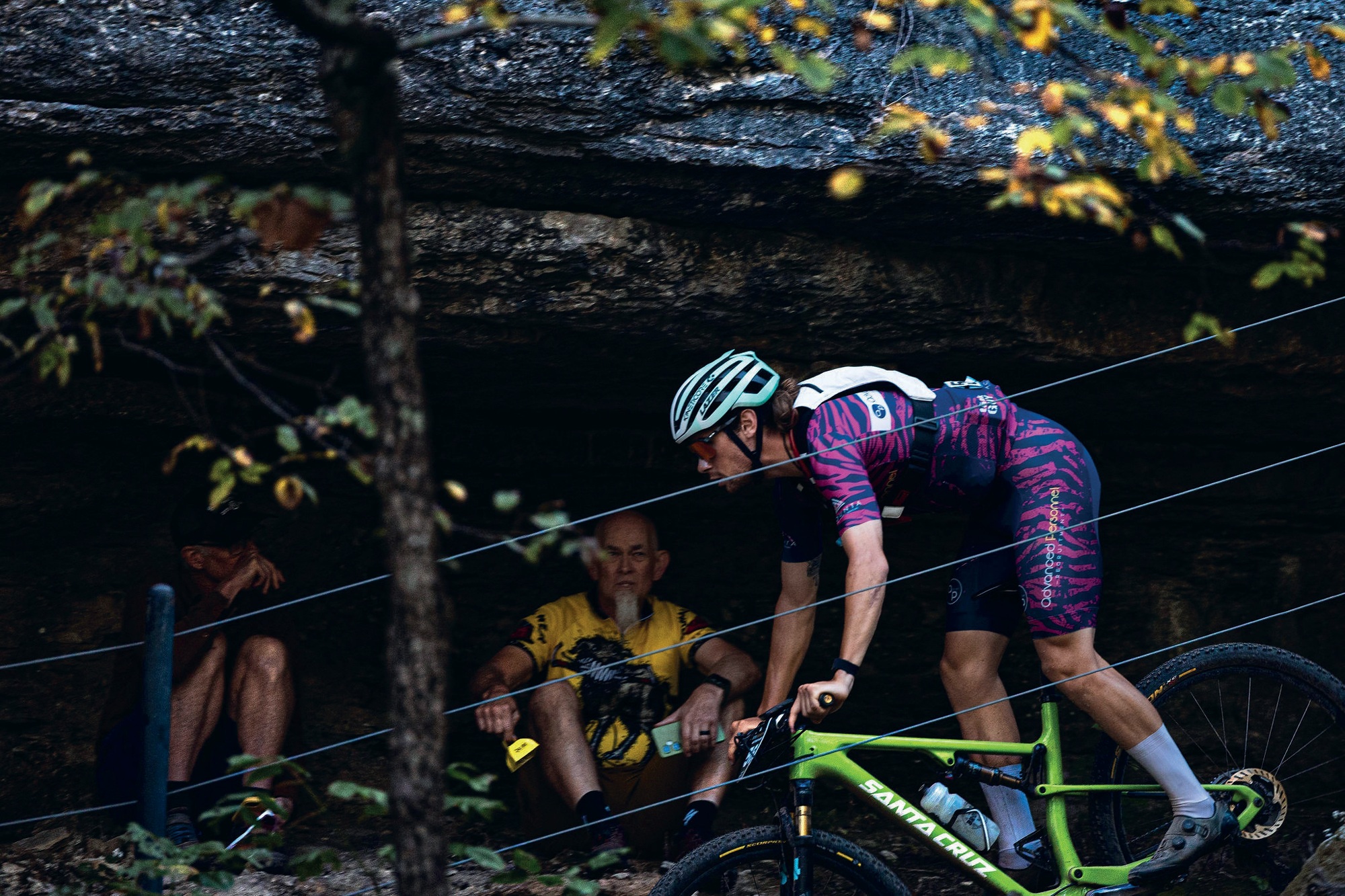
From World Travels to Wild Cards
Words Lester Perry
Images Supplied
What began as a year of hopes and dreams ended in frustration, but along the way, thanks to some early-season prize money, Matthew Wilson made his mark on the North American off-road racing scene.
In early December 2025, I caught up with Auckland-born Matthew Wilson while he was in Wānaka for his first training camp on the build-up to his 2026 season.
Matt hadn’t long returned from a breakout season chasing the North American dream, blending his love for racing mountain bikes with a newfound passion for racing on the gravel. There was even a general classification win at a road tour thrown in to complete the cycling trifecta while in the US.
As with many young mountain bikers, Matt began his journey on bikes as part of a school mountain bike squad, encouraged by friends to come along to the school group rides on Tuesday evenings after quickly deciding the road wasn’t for him. It was summery Tuesday evenings at Whitford Forest, and damp wintery rides by torchlight around Totara Park, which got him hooked.
To begin with, alongside the bike, Matt had been through the Sea Scouts programme, sailing offshore from Bucklands Beach, where he grew up. “I did a bit of competitive sailing through the various regattas we have throughout the year, it was pretty cool. I live near Bucklands Beach, so every Wednesday night we’d be out sailing in the harbour and mostly sailing little Sunburst yachts.”
In 2019, Matt got his first taste of international racing, competing in the World Championships at Mont-Sainte-Anne, Canada.
“That was definitely jumping in the deep end there in terms of international XCO courses. But yeah, I wouldn’t have had it any other way. It’s a pretty iconic course, so it was cool to have that as my first experience. It was definitely a rough go at it. I think I wound up 60-odd out of maybe 70 starters. I actually broke a wheel in one of the rock gardens there. So I had to ride the rim for half a lap, which put me back a bit. But either way, it was definitely a big step up, a big learning curve, and even without the wheel issue, it was going to be a tough day.”
Walking out of the gates of high school for the last time at the end of 2019, Matt set his sights on racing mountain bikes as much as possible. In 2020, Cycling New Zealand selected him to join their ‘MTB Hub’ programme, a development pathway for up-and-comers running alongside the road and track hubs at the time.
“For 2020, the plan was to do a stint in America, do some of the national series XCOs to get some UCI points, and then spend a couple of months in Europe during some HC (Hors Classe: gruelling multi-day UCI level) races and World Cups.
“That was my first year in U23. However, the US stint was in March 2020. Yeah, that date! That was right as COVID kicked off, we had about a week there. We got to do the short track on Friday and then woke up the morning of our first XCO to find it had been cancelled. Then we were on the first flight home from the States the very next day.
“When we landed, it was still a self-isolation programme. Four days into my self-isolation, the whole country went into full lockdown, and the hotel quarantine system came into play. So, we just sneaked in there, we just beat it!”
For the first three years competing in U23, Matt was fourth at the NZ XCO National Championships, unable to crack the elusive top three spot against his main rivals of the time, Josh Burnett, Connor Johnston, Caleb Bottcher, and Cameron Jones. While many of his competitors have moved on to other things, Caleb and Cameron are still in the game and remain rivals to this day.
“In 2022, I was pretty lucky. I got the opportunity to go to the World Cups with the Talley’s team that popped up for two years. It was kind of a first experience coming into the U23 World Cup circuit. I had a rough idea of what I was signing up for after Mont Sainte Anne in 2019, but still, you know, even a couple of years down the line, I didn’t really know what to expect.”
“During 2022, I’m still pretty proud of how I was able to move up the field. The first couple of World Cups, I think I had plate 101 at Albstadt (Germany) and 93 or 94 at Nové Město (Czech Republic). I was moving up into the 40th place. When you’re starting that far back, it’s always a tough go.”
“In Lenzerheide, I remember that was the one where it all suddenly clicked, and I was like, actually, if I have a good summer training back home, I might be able to kind of make a mark here. I think I finished around 27th. I had a slightly cleaner start that day. I kind of felt like I was actually in the race all day, and then if I took out the riders that were last year U23, it put me up to around 12th or 10th or thereabouts. “I remember doing the math there (at Nové Město) and figuring out who the people were who were going to be phasing out, moving out of U23. I remember that race particularly. I kind of realised I could potentially make it there. It was a big motivator when coming home. I worked a little bit less that summer, trained a whole lot more, which then led into the 2023 season.”
From early in 2023, Matt proved to himself that he was heading in the right direction and that his focused training after the previous season was paying off. He secured himself the NZ XCO Champion’s jersey, becoming the first U23 rider to win the title against the elite field for some time. Then it was back to chasing World Cups with the Talley’s team in his final year as a U23 rider.
Firing off his form built over the NZ summer, Matt kicked off his World Cup season with a fifth place at the opening round in Nové Město, his best result yet, and still a highlight to this day.
“I had a great start to the season, it’s a common thing for Kiwi cyclists to do coming off the back of the NZ summer. It’s pretty easy to be in good form early on in the season, and then kind of fizzle out later on. I was still learning how to maintain form while travelling and having a heavy race schedule. It was a big learning curve! I was pretty burnt out and run down by the end of the year, so the performances dropped off.”
Coming into 2024, having returned from Europe after a demanding season, Matt was keen for a fresh start.
“I was going to my first year elite in 2024. Talley’s was no longer going to run, and I wasn’t too sure what I was going to do with myself. I was keen for a change and had a lot of mates already in Cambridge. It’s a great spot for cycling, close to Rotorua for mountain biking, and I was able to pick up work there with Evo Cycles. I’d been working for them on and off over the summers in Auckland until then.”
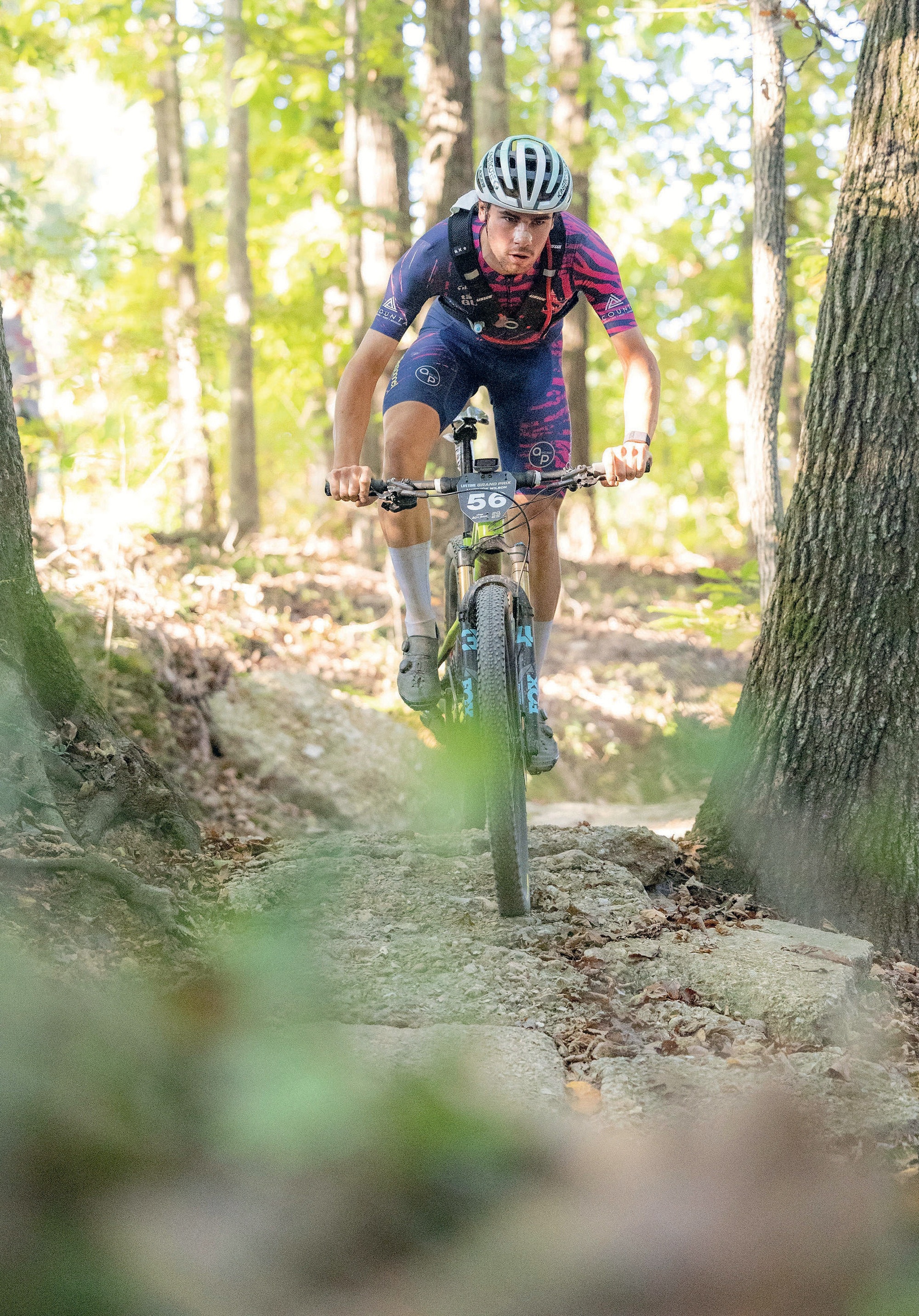
Without the backing to take on a whole World Cup campaign, Matt locked in at home in Cambridge, training hard, and working to save funds for whatever would come next. He, along with some other Kiwis, secured invites to the ‘HERO Abu Dhabi’ event.
“They invited a bunch of riders out to this big, manufactured island that they built an XCO course on, which is pretty much a 5 km long BMX track. That was pretty cool, the ferry trip out there, and it was a pretty wild race, with a lot of prize money on the line. I think Ben Oliver (fellow Kiwi) actually won that one.”
While 2024 was shaping up to be somewhat of a reset for Matt, his good mate, Cameron Jones, had headed stateside to take on some of the MTB and gravel racing that was booming in the USA.
“I was definitely getting a lot of FOMO, watching what Cam was doing, and he was keeping me in the loop about how the whole US scene works. Particularly by the end of the year, I was pretty set on going over there and giving it a nudge after seeing how well he did. “Europe’s a pretty savage pathway into the sport, regardless of how talented you are. You’re always going to get your head kicked in a wee bit. Particularly with the whole 80 per cent rule at World Cups, people start getting pulled off course pretty quickly, so it’s just a grind to get UCI points. If you’re not starting in the top three or four rows, then you’re not going to really make it anywhere. Whereas, in America, it’s largely these more marathon-style races, much longer events. So, in terms of start positioning, it’s less relevant. The longer the race gets, the easier it is, in a way. If you’ve got the legs, you’re going to do well.”
With his bank account just filled enough to get him a return ticket to the USA, Matt took the leap in 2025, heading stateside to see what he could do.
“I didn’t actually have that much of a plan. I had the beginnings of a plan, a flight there, and a flight home in August, and somewhere to stay for the first couple of months. That was about it.
“I started in Portland. There’s a local road team there, POA, that Cam (Jones) had ridden for the year prior. The NZ connection to that is through a guy called Mike from Nelson who’s now moved over there. He used to be heavily involved with the Nelson Cycling Club, and so that’s where that connection came from. There’s also a Kiwi guy who has lived in America for some time now, a guy called Lee, who grew up in Hamilton, and he’s been a big-time road cyclist there. He very kindly offered up his house as accommodation to us Kiwi riders going over there. So that made it far more doable.”
Initially, Matt wasn’t scheduled to ride the Sea Otter Classic, the opening round of the highest- profile off-road series in the US, the Life Time Grand Prix series. He was expected to race the Tour of Redlands for the POA road team, but thanks to Cycling USA’s unwillingness to recognise his previous MTB or Road racing results necessary for an upgrade to a P1/2 elite license, the lower-level license he was stuck on meant he couldn’t ride the Redlands race.
“I was getting real close to the date of Redlands, and I said to the team manager, Hey, it looks like I’m potentially not going to be able to go. I don’t want to be sitting around in Portland doing nothing that week while Sea Otter is on. I’m just gonna have to pull the pin on Redlands, and I’m gonna try and make Sea Otter happen. So, it’s purely because I couldn’t get the right license that I actually ended up at the Sea Otter Classic.
“I only filled out my entry maybe two weeks before it, and then randomly ran into a local Portland rider who was going down and he shared an Airbnb in Monterey, which was ludicrously expensive. I just felt like I had to make Sea Otter happen. As soon as I realised I could do it, and the wild card (entry to Life Time Grand Prix overall series) was on the line, I felt I had to. Yeah, it was worth the investment!”
Matt immediately turned heads at the Sea Otter Gravel Race, attacking the field multiple times, leaving the seasoned riders wondering who this young Kiwi upstart was who thought he could turn up and dictate the race. Matt eventually finished seventh in the race, placing second in the overall wild card points. The hunt for the wild card spot had begun. With just one race remaining, Unbound Gravel, to earn enough points to secure himself a wild card spot and his place in the overall Grand Prix series, it was game on for Matt.
With a decent gap until Unbound, Matt and Cam Jones headed off on a road trip up Levi’s GranFondo, a road race that draws a stacked field thanks to its huge cash prize pool. It’s a 220 km race with over 4000 m of climbing. With the support of the POA team, Matt finished seventh on the day and banked $7,000 USD for his efforts. That prize money was key to Matt riding out the remainder of the season.
“That was the first point I was like, oh actually I might be able to afford to stay here a bit longer.”
From there, the duo road tripped up through Las Vegas to the Whiskey 50 MTB race. Matt won the opening event, the Fat Tire Criterium, and went on to finish fifth in the main event, making his mark against a strong field once again. From Whiskey, he flew back to Portland for the Tour de Bloom in Washington, a road tour he would ride with the POA team. For his efforts, Matt not only won the overall classification but also cleaned up each of the individual classification jerseys. As much as this road trip had been successful from a results point of view, it had boosted his confidence, and the hours spent racing had laid a solid foundation as he headed to Unbound.
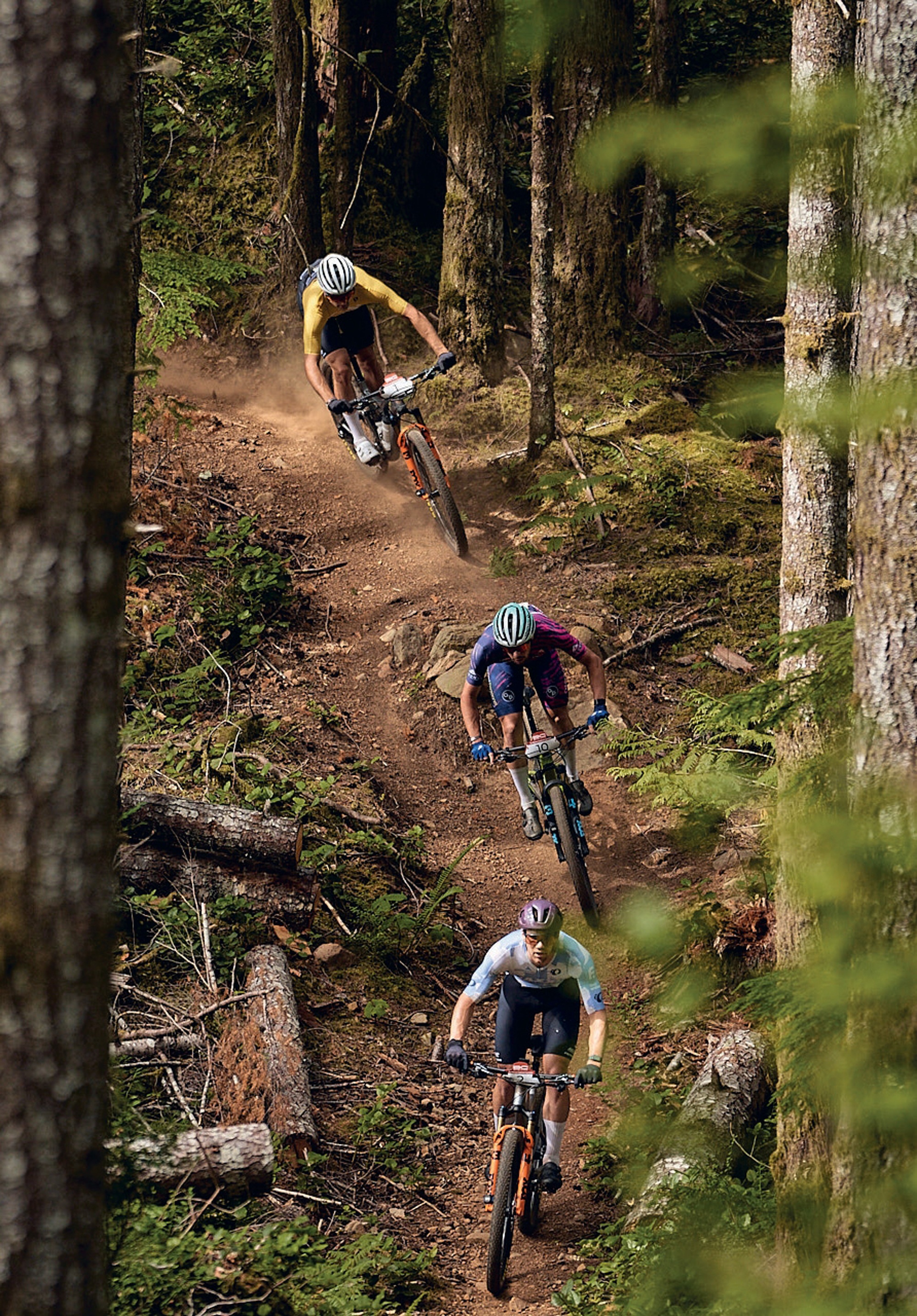
As with any debutant at Unbound, Matt had a tough baptism into the 200-mile (325 km) gravel race in the Flint Hills of Kansas. “I’d say I got a proper unbound experience of it, just being a very long day. It was a big learning curve. I kind of ended up blowing up pretty badly, with I think about 90k to go, and it was just kind of survival mode, a ‘get myself home’ situation. Particularly with wild card points on the line and not knowing where everyone else was out on the road. I wasn’t moving quickly, but I knew I just had to battle on all the way to the line, and it would be what it’d be when I got home.”
Although he got through the event without mechanical issues, it was his fuelling strategy that proved his undoing. Too much carbohydrate in his fluids caused gastric upset, and a lack of plain water on hand added to his woes, since all his liquids had some form of carbs.
We discussed any pivotal moments in the race, and Matt quickly knew where he’d made a mistake.
“Little Egypt (key climb) got me. I was starting to battle a bit there, so I just didn’t quite bother moving up the field as far as I probably should have. The whole bunch just surges for all these key sections. Everyone knows where they are, so the pace really picks up, and I just kind of got swamped at the bottom of that. I remember going up the climb, and it eventually turns to almost double track, so there’s no room to move up. And I was thinking, oh, the pace isn’t actually too bad up here. I thought the climb would be a lot nastier after hearing so much about it. The one time I got a decent look around, people were letting the wheel go, and there were big gaps opening up.
“So, one other guy and I ended up chasing over the top for a good 20 minutes. Chasing real hard. Just chopping off to get back to that main bunch, just kind of panicking. It was just a real big effort to get back in the group, which I really didn’t need to do. So that’s another big thing I learned. “I could have just sat in with the main group behind, but it was more just being in a better position. I learned pretty quickly how important and how much easier it can make your life. It might seem like you’re working too hard at the time, but getting into those key pinch points first always pays off.”
Banking good points from Unbound, regardless of his challenges, Matt headed to the Levensworth Bike Festival up in Washington.
“It’s quite a funky little town. It’s like a small Bavarian town up in the mountains. The whole town is done up in a theme like some old sort of Austrian village.”
The two-day event proved successful for Matt, winning both days and taking the overall. Additionally, it was announced that he and Cam had both secured wild card spots for the remaining Life Time Grand Prix series, so his $6000 prize winnings would now ensure he had the funds to complete the Grand Prix season.
The next Grand Prix event was the Leadville 100, a 100-mile MTB race at high elevation. Knowing that this race wouldn’t suit him particularly well, that he also needed to exit the US for a time to reset his visa, and that he had one ‘drop’ race within the Grand Prix, Matt took the punt to miss Leadville and instead head north to Vancouver Island for the BC Bike Race.
The week-long stage race is known to take in some of the area’s finest singletrack, and with flawless organisation, it makes for a fun week.
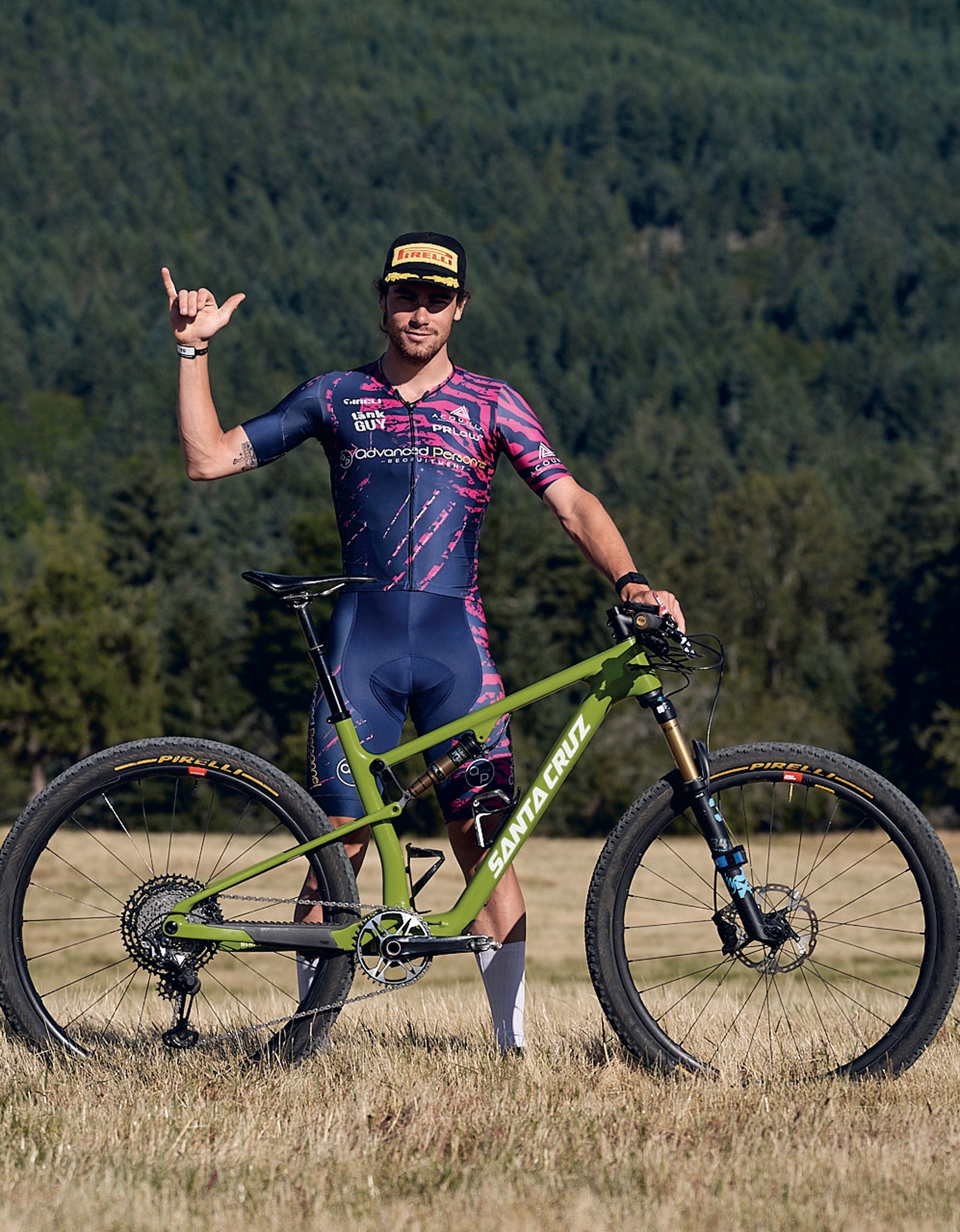
“I made it through in one piece, which was surprising with the kind of terrain we were racing on. I was pretty happy to just make it through in one piece. And again, no flat tyres. Two localish Canadian lads I was chasing all week definitely had me pretty tapped out on the technical side of things there!”
After winning the first stage (aside from the prologue), he then finished second or third across the remaining stages. Matt wound up second overall, sandwiched between 2024 winner Sean Fincham and Andrew L’Esperance in third in some incredibly tight racing.
“All week, it was well less than a minute of gap, hovering around 30 or 40 seconds. Pretty much all week up until the last stage, when I kind of thought, ‘this is my last chance to try and win this thing,’ which is still very doable. And it’s only 30, 40 seconds. It was just me and Sean, absolutely going at each other.
“The course was basically a long climb, a short climb, a quick descent, then a big, long climb that finishes on a bit of techy singletrack, and then just a massive, long downhill from the top of the Cumberland trail network all the way out to the finish. So yeah, I was pretty cross- eyed by the top of that climb to say the least!
“He got into the descent before me. I was just trying to make it down without crashing. There were a couple of pretty janky trails, and he put a pretty good bit of time into me on that long downhill.”
In classic Kiwi dirtbag style, Matt spent the BC Bike Race week living out of a U-Haul van, but after the race was done, he knew there would be some niggly logistics involved in returning the vehicle to central Vancouver. Keen for a big day on the gravel bike, Matt drove the van back to Vancouver, then headed back to Nanaimo via the ferry. His day ended with over eight hours and 200 km on the clock, having ridden home through the mountain bike trail network and some sketchy singletrack, especially on his fully rigid, skinny-tyred gravel bike.
“After that, I cracked into a big training camp. It was nice actually to have a couple months of no racing and to be able to go pretty deep on the training and not worry about being fresh for any racing coming up.
“The first week it was 24 hours, and then it was three 30-hour weeks, with some gym twice a week in there. Particularly by the end of the time up I was a little bit cracked on it (the training). It was basically just wake up, have a big breakfast, then spend the day on the bike, get home, and do a bit of stretching.
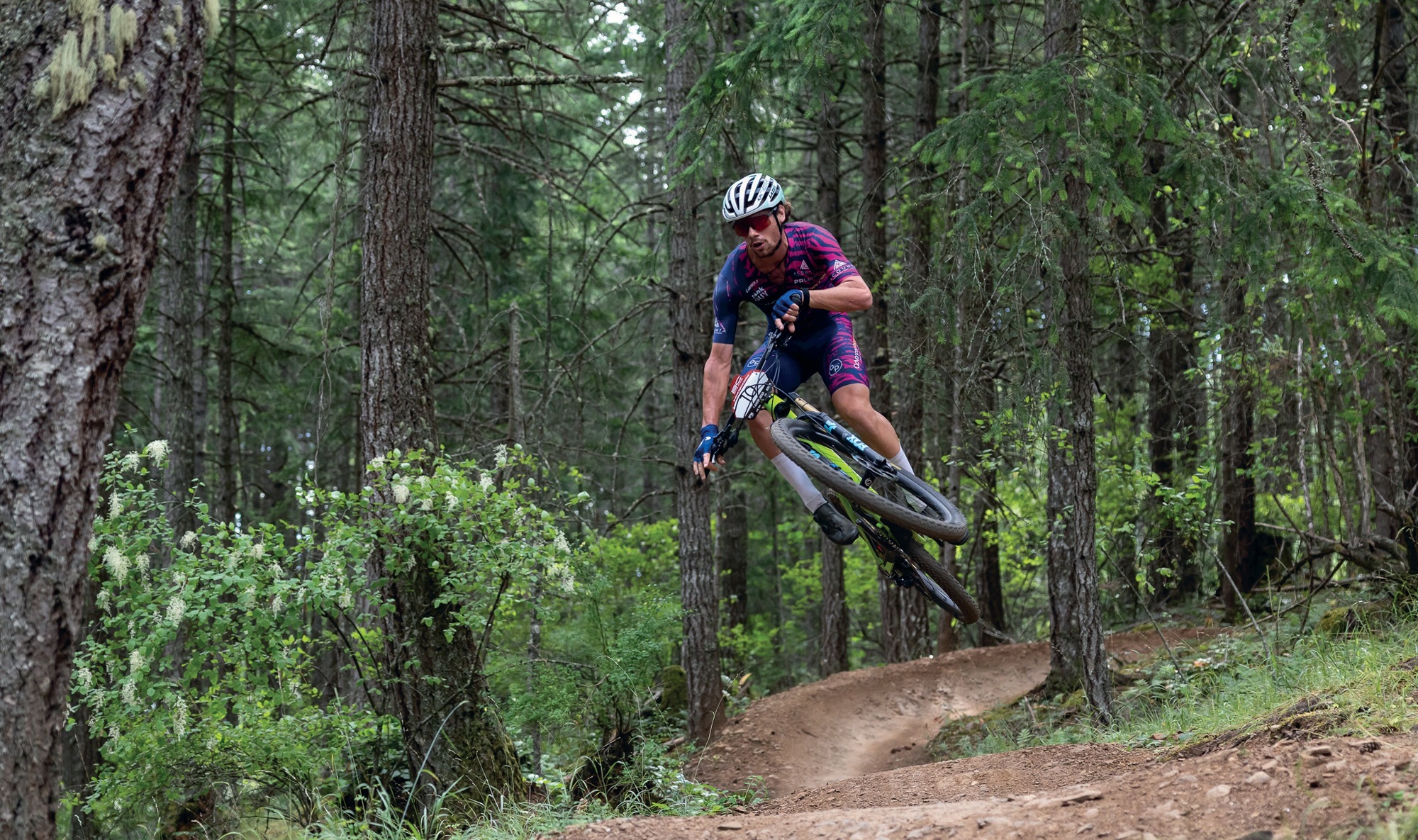
Oh, the tour was on around then, so that was pretty handy. Get home, watch that day’s tour and then go to bed, and that was that.”
Next up was the Life Time Chequamegon race in Wisconsin.
“It’s a bit of a novel event, really. It’s definitely an outlier in the Life Time race being so short. It’s not really a mountain bike race. It’s just all on grassy ski trails, so it’s just rolling grass hills. But they’re really steep, too, so it’s basically just two hours of 30, 30 (second) intervals. You’re just punching up these short, really steep grass climbs, then straight back down. It’s just that the whole way through, really. Some people hate it. I actually quite liked it. It kind of felt like a long, short-track type race. It was like an XCO race in the way it played out. Very dynamic racing, like tight bunch racing. Quite tactical. There are a couple of pinch points in it for sure.
“There are two bits where the track kind of goes to singletrack. And then there’s what’s known as the Fire Tower Hill, which is the main climb of the day. Quite fitting. On our pre-ride, me and Cam went out, and our goal was to try to take the KOM up Fire Tower, which we did. Even though Cam actually came around me over the top of the climb, according to Strava, I got the KOM. Then on race day, we reversed roles. Cam led into Fire Tower, and I was on his wheel, then I was able to just come around him over the top, which didn’t really help the race at all. But again, it’s good fun racing your mate, eating each other up!”
Matt headed from the wilds of Wisconsin to Blackburn, Pennsylvania, where Cam Jones is now based.
“It was pretty cool to get around his (Cam’s) hometown and where he’s been doing all his training this year. I got to check out Virginia Tech University, where he studied for a while and just meet a bunch of the crew over there.”
Next up, he was off to Bentonville for the 100 km Little Sugar MTB race, the penultimate round of the Life Time series. Early in their visit, both Matt and Cam had sliced tyres while out training in the area, learning that if your tyre is locked up while sliding or skidding through a turn, it’s likely the sharp rocks that line the Bentonville trails will slice that bad boy like a knife through butter. The key they discovered was smart braking and never locking up your wheel.
“The start of the race is a neutral rollout along a road, and then you peel off into a short bit of concrete and then like an open grassy climb, which again, for us XC riders, we were a lot less worried about positioning for the start once I saw that it was at the beginning because it was so similar to an XCO. It was basically just two minutes as hard as you can to the singletrack. Matt Beers (Specialized Factory racer) led that one out. Then with Cam, then it was Bradyn Lange, and then me into the singletrack.
“Pretty quickly over the first five, ten minutes into the singletrack, we got quite a gap on the field, so things were looking promising. Then, on a pretty nondescript section of trail, I still don’t actually know what I hit, but I hit something buried in the grass pretty damn hard. Hit both my rims on it, punctured both tyres, and cracked the rear rim right through.”
Being only 15km into the race, and with the aid station at the 50km mark, Matt soldiered on, having plugged his punctures. He was able to limp to the aid and borrow a wheel from Cam’s Scott Bikes support team, who’d been helping Matt out at times over the season. Matt finished the race, comfortable in the knowledge that he’d salvaged some overall Life Time points, while some of his competitors had either pulled out of the race or not turned up at all.
The following weekend, the Grand Prix remained in Bentonville for the grand finale, Big Sugar, a 100-mile gravel race. With storms forecast for race day, organisers announced that there may be a change to the race, but it wasn’t until early race morning, as riders were heading to the start, that they announced the race distance would be halved, so riders would be off the course before the worst of the storm arrived. Such a drastic change threw many of the field into disarray. Not Matt though – he knew the shorter race would play to his strengths.
Being placed outside the top ten overall, and with the leading riders marking each other, Matt knew this was an opportunity to go all in and try to get a race win.
“Being out of the top 10, I kind of had the feeling of just nothing to lose, everything to prove. So, I was pretty damn determined to make sure I was going to be in a break, up the road that day. It took about 12 minutes to do so. I remember looking back and seeing Matt Beers coming across to me and thinking, Sweet, that’s a man you want to be in the break with.
“Riley Amos (Trek Factory XC racer) followed, and then we also had Alex Wild, who kind of just got on, but as we’re kind of launching and trying to establish the break, unfortunately, he kind of got spat out the back, and it was just the three of us. Being shorter at just 50 miles only made the racing faster and more furious. So, things are looking good.
“About an hour and a half in, we lost Riley. He had dropped off, and then Matt Beers and I ended up having a pretty good gap over what was a chase group of about four or five riders that Riley had joined.
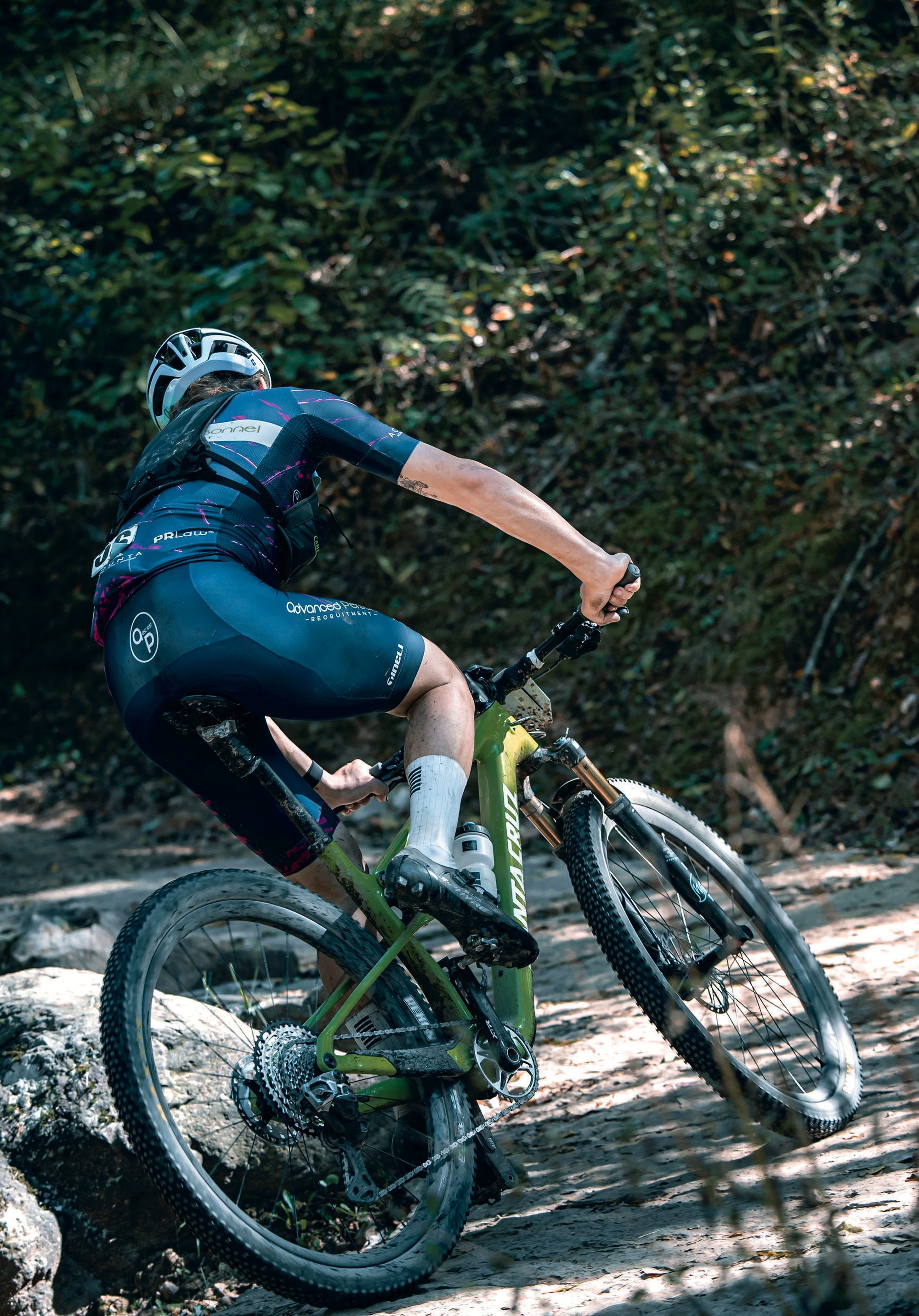
“One tough thing about the Life Time Grand Prix is that you often don’t get told accurate time gaps during a race. We hadn’t had a time gap all day. We could just tell by what we could see. So, I didn’t know how much of a lead we really had at that point. And then, yeah, with about 15km to go, into one of the last somewhat technical sections, a little bit of singletrack, there was a drainage ditch of some sort, and at the bottom, it was just all really chunky gravel had collected. I came in a bit hot and pinched my front tyre, cutting the sidewall on some of that notoriously sharp Bentonville rock. It was a pretty big slash, so it was kind of hard to plug. I didn’t really know what to do, so I just kept on riding on the rim, hoping I could ride hard enough to make it home before the remaining groups.
“Potentially, with the amount of the gap we had, there could have been almost enough time just to take my wheel out, throw a tube in and try that. We had a lot of time. I was riding hard on the rim, but I wasn’t going quickly.”
With just 6km to go, the small chase bunch swallowed up Matt, but it wasn’t until the last couple of kilometres that the main bunch with the overall series contenders caught him. Over the finish, Matt’s series ranking didn’t really change, but his final opportunity for a win in the series was gone. After the event, multiple high-level riders mentioned that Matt was up for the win, strong enough to do it, but bad luck had spoiled his chance.
Returning to NZ, Matt had a bit of a sour taste in his mouth after the tail end of his season had been wrecked by his mechanical issues. Unfortunately for him, his woes weren’t over yet.
Lining up for the Cross Country Marathon Nationals at the Whaka 100 over Labour Weekend, Matt was keen to put his strong end-of-season form to use. There’s no denying that he was a strong contender for the title, but once again, luck wasn’t on his side. His seat post packed in just 45 minutes into the race, with its keyways failing, leaving the saddle free to rotate 180 degrees.
Matt pulled the pin, frustrated that this was how his year would finish out, and although he was gutted, he was comfortable in the knowledge that he had the talent and now the experience to take on some of the best off-road racers in the world.
2026 will look similar to this year for Matt. After missing out on the Life Time Grand Prix series selection for next season, he plans to again battle for a wild card. His set-up next year will be a lot less dirtbag, though, as he’ll have the support of Scott Bikes but will still be travelling and staying with Cam Jones through the bulk of the season. I’m sure the duo will again turn heads and show the field what these cheeky Kiwis can do.
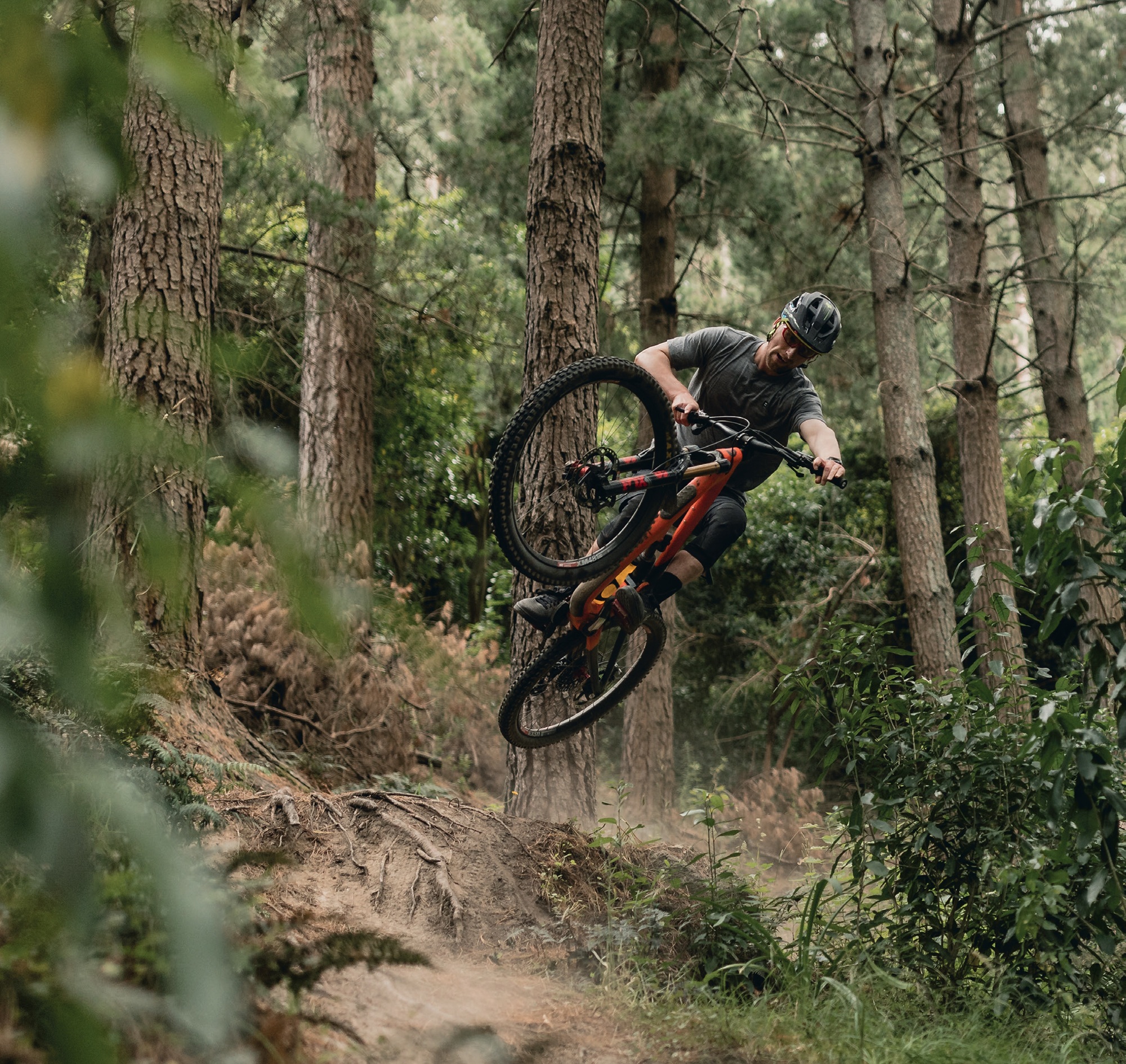
Ōtautahi Christchurch: City to Singletrack
Words Liam Friary
Images Cameron Mackenzie & Supplied
Christchurch is a city that’s moved so far forward in the last decade it’s hard to quantify the progression. Its rebuilding has transformed it into a vibrant and modern metropolis, and the city boasts a sophisticated vibe with an ingrained riding culture.
Great trail networks, bike paths, bike storage, and plenty of cyclists getting about. Head closer to the hills, and you’ll find mountain bikers pedalling or bikes racked onto cars bound for the nearest singletrack. The city offers a heap of riding options, primarily centred around Port Hills, Lyttelton, and Christchurch Adventure Park.
Our small antipodean country offers a plethora of riding zones and the southern locations are plentiful, boasting impressive descending metres; however, most of these riding spots don’t have a large city on their doorstep. This is where Christchurch sets itself apart. While I enjoy getting dirty, I also value quality food, well-brewed coffee, and comfortable accommodation. Perhaps it’s just my middle- agedness creeping in, but finding the perfect blend of outdoor play and city sophistication is quite satisfying. Coupled with major events that a city can attract, such as gigs, sports, or festivals, you’ll be searching for more days of leave.
As we crept close to summer, I spent a few days in the city. It was spring, meaning the weather delivered almost everything, but I still got the chance to get out and ride every day. The ease of getting out and about on the bike from the city centre is something I appreciate. The more I can ride and the less I must use a car to rack my bike, the better, even if there’s some bike path or tarmac to pedal before venturing into the singletrack.
Riding Zones
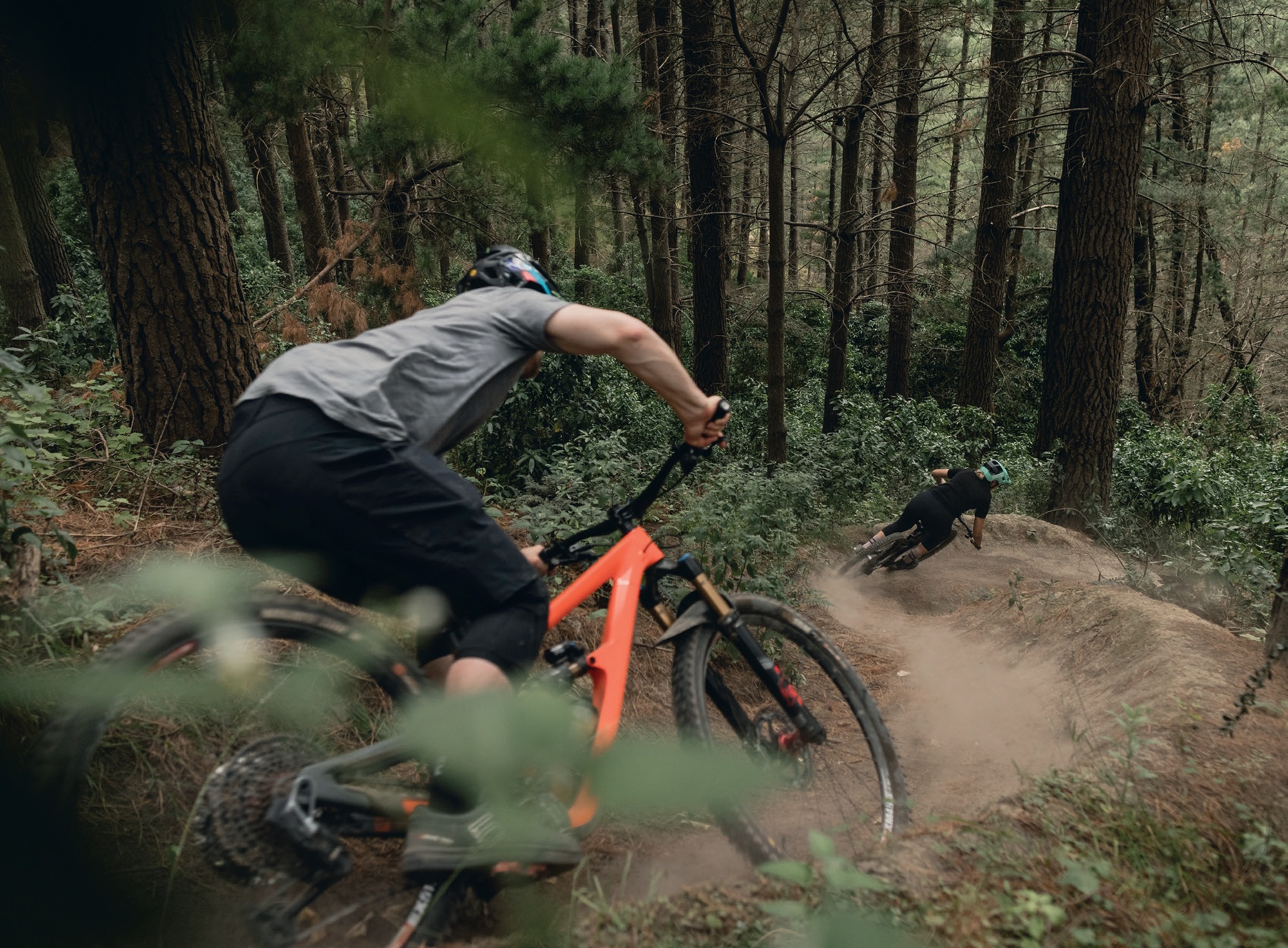
Port Hills delivers the goods right from the city’s edge. I found myself pedalling through suburban streets, and within twenty minutes, I was ascending the Port Hills. I quickly found that the network here is extensive. You could ride a different loop every day for a week and still have trails left to explore.
On the evening of my arrival, I managed to get a few hours’ riding in Lyttelton. The trails there are tight, bush-covered, and some are a little janky, but that’s balanced by the glimpse of the view. You can easily lap a few trails out before either heading over the Port Hills back to the city or descending into Lyttelton. The port-side town certainly offers a unique and cool charm with its old buildings and eclectic characters.
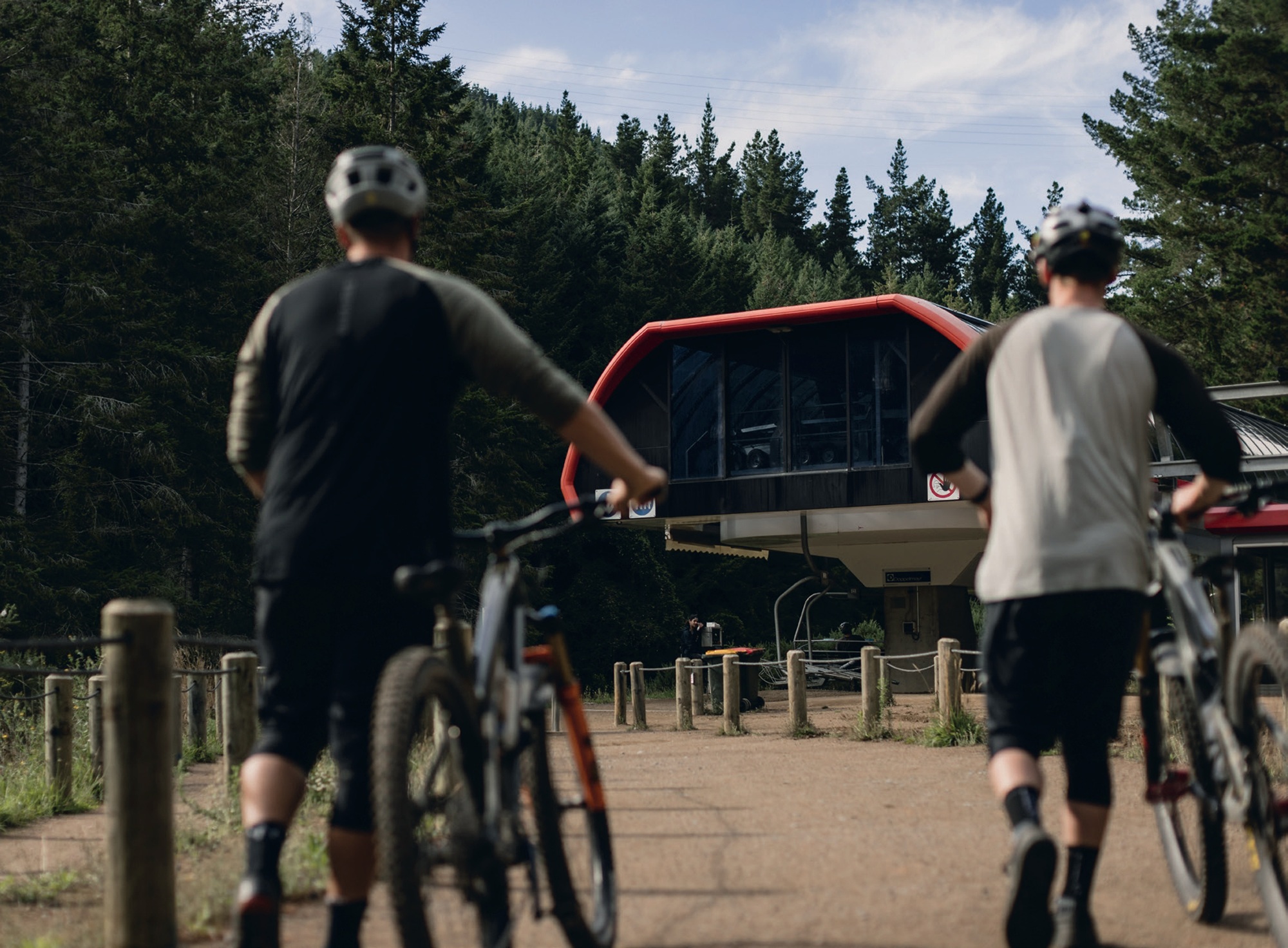
The Christchurch Adventure Park is the drawcard for many, and rightly so. The chairlift access means you can lap out without the uphill grind. The trails cater to every level, from mellow flow up to gnarly tech trails. On the second day of my visit, I lapped out a few flow tracks to get into the rhythm. The uplift meant I could keep my energy focused on the descents. I liked the fact that you can nab several runs in only a few hours. Once I’d had my fill of mellow flow with a bit of tech spice towards the end, I pedalled back to the city for some grub. Again, the proximity of the trails to the city means there’s no need for a vehicle. I thought about the variety within such a compact area. Only about twenty minutes beforehand, I was riding the bike park, and now I was eating some kai right in the heart of the city. For those keen to venture further, Craigieburn is only an hour and a bit up the road. It’s a different beast entirely: high alpine terrain with rocky, technical trails that demand your full attention. On another occasion, I squeezed in a day trip up there, and while it’s a world away from the Port Hills, it’s another option in the arsenal. The fact you can ride groomed bike park berms in the morning and be picking lines through alpine scree by lunchtime speaks volumes about what’s accessible from Christchurch’s doorstep.
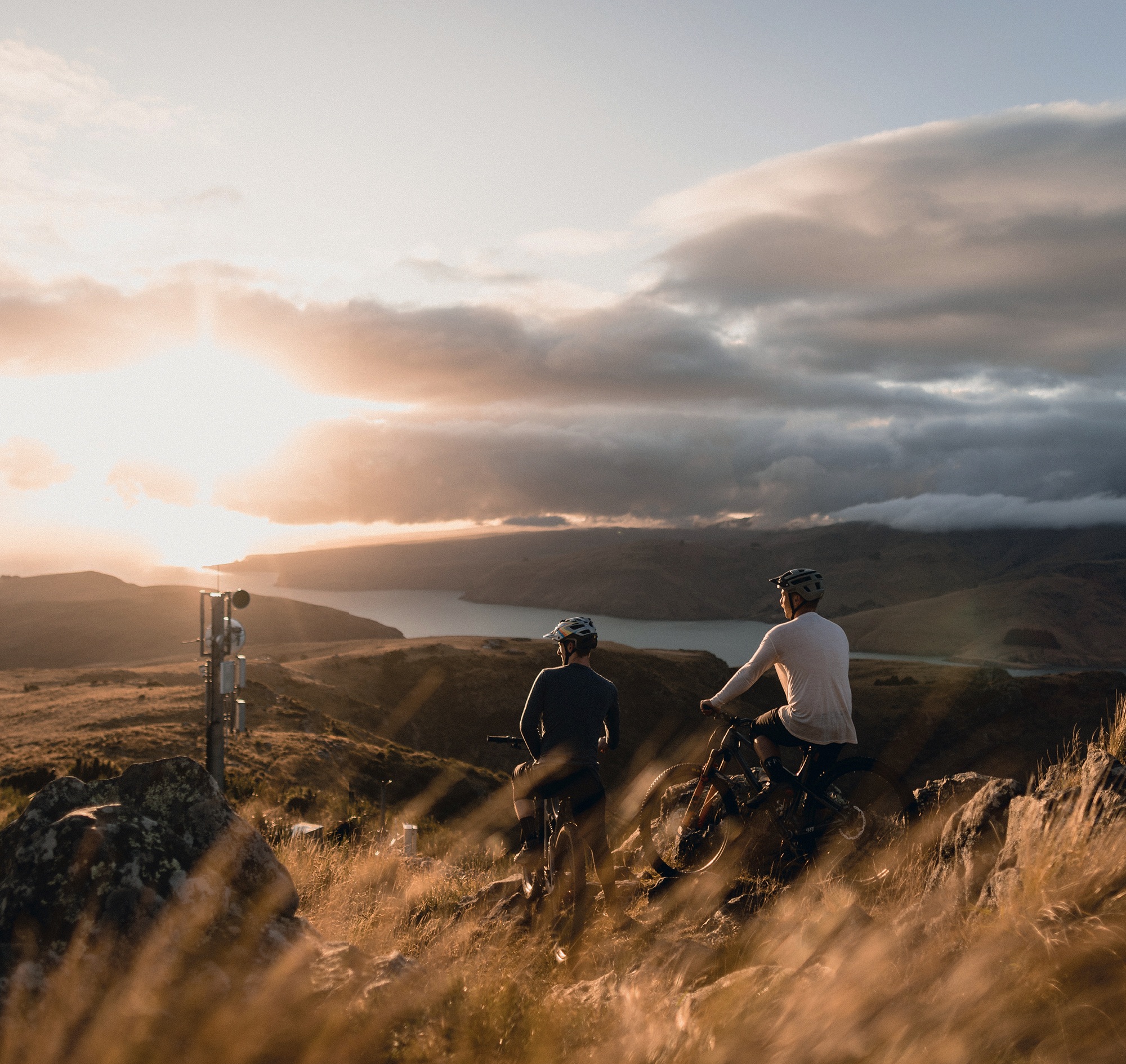
Eating Out
Head anywhere in Christchurch, and you’ll find a heap of cafés and restaurants across a wide range of budgets and cuisines. I did think the city has certainly proved its point post-rebuild with the amount of very good eateries. The level has been upped in recent years.
In most spots, the hospitality was delivered in a relaxed manner, but it was dialled in. The well-curated menus and delicious food were something most joints had on lock. This made dining out on most occasions a great experience. And that’s not to mention the countless snazzy restaurants, hip cafes, and local bars pouring the best craft beers on tap.
Over the course of a couple of days, I sampled some of the fine fare on offer. Being posted up in the city meant I could venture out every morning for a good coffee, and often scrambled eggs, which are my go-to. On the backside of the ride days, I ventured to several good restaurants that each had their own unique culinary offerings, character, and vibe.
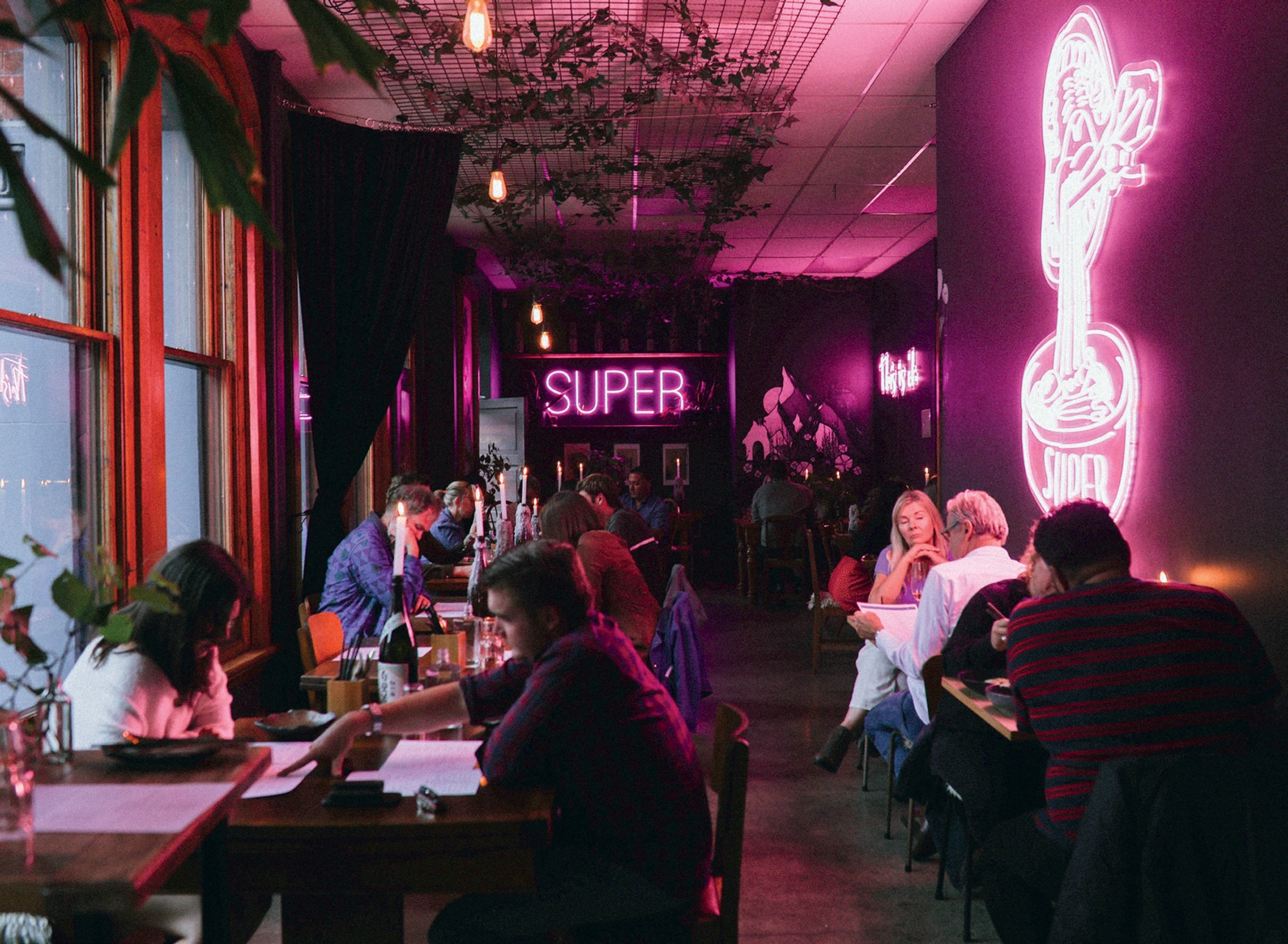
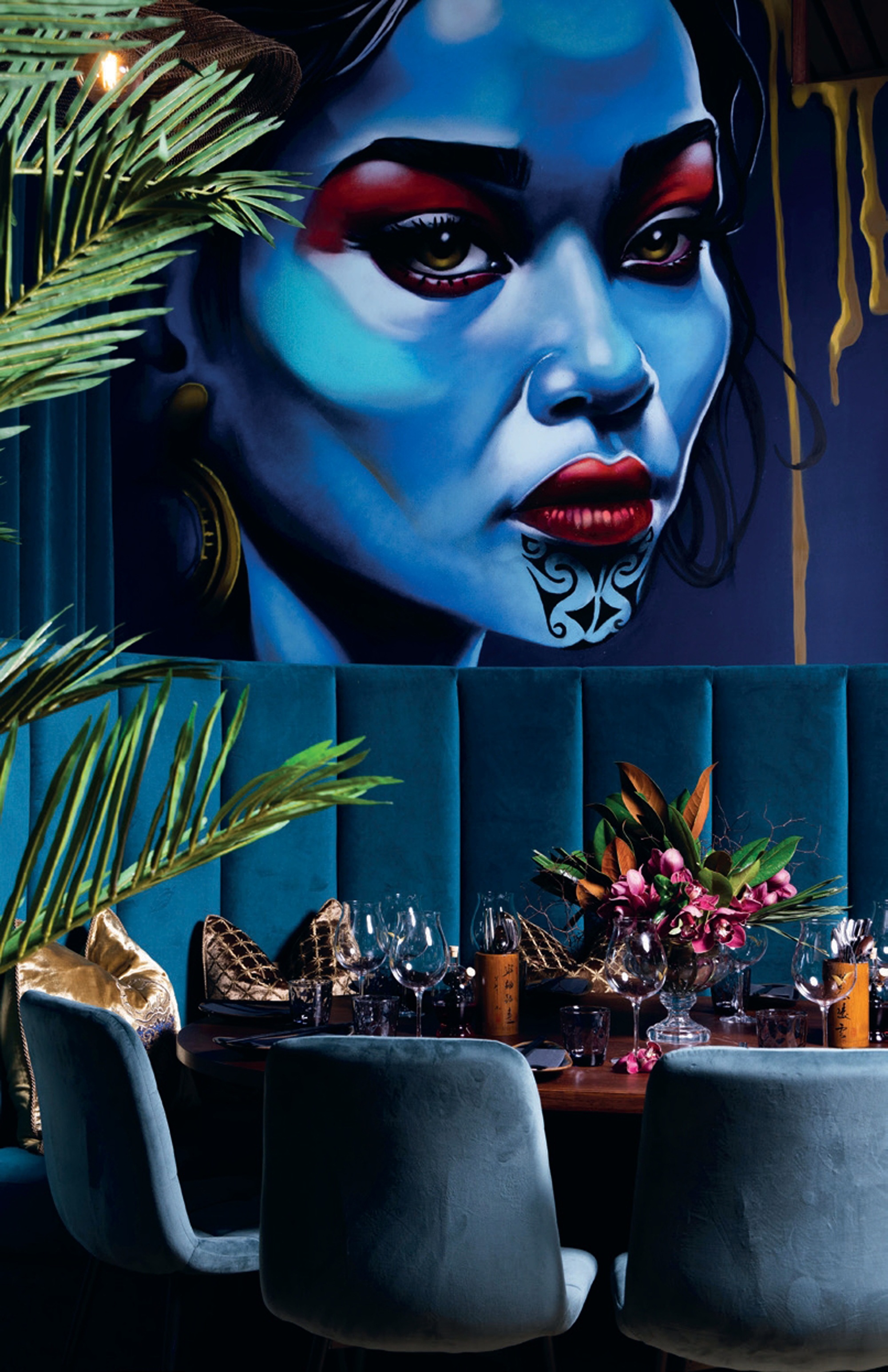
The first night after riding some of Lyttelton’s singletrack, I rolled into SUPER. This joint has a low-key vibe with artwork everywhere, mood lighting, and staff who are relaxed but helpful. Adding to the character, it’s also housed in the oldest standing building in Lyttelton. The blend of Māori and Japanese cuisine is seen throughout the menu, and one of the standout dishes was the paua and pork dumplings. There’s something about that casual, come- as-you-are atmosphere that works perfectly when you’ve just rolled in covered in dust.
On the second day, I was a little pressed for time, so I pulled up at the Riverside Market, grabbed a refreshing light lager from the small but mighty Christchurch Beer Collective and picked up some kai from Black Burger. After laps at the bike park, nothing hits quite like a good burger and lager from one of the local breweries. The craft beer scene deserves a mention, and Christchurch Beer Collective only pours beers from local breweries.
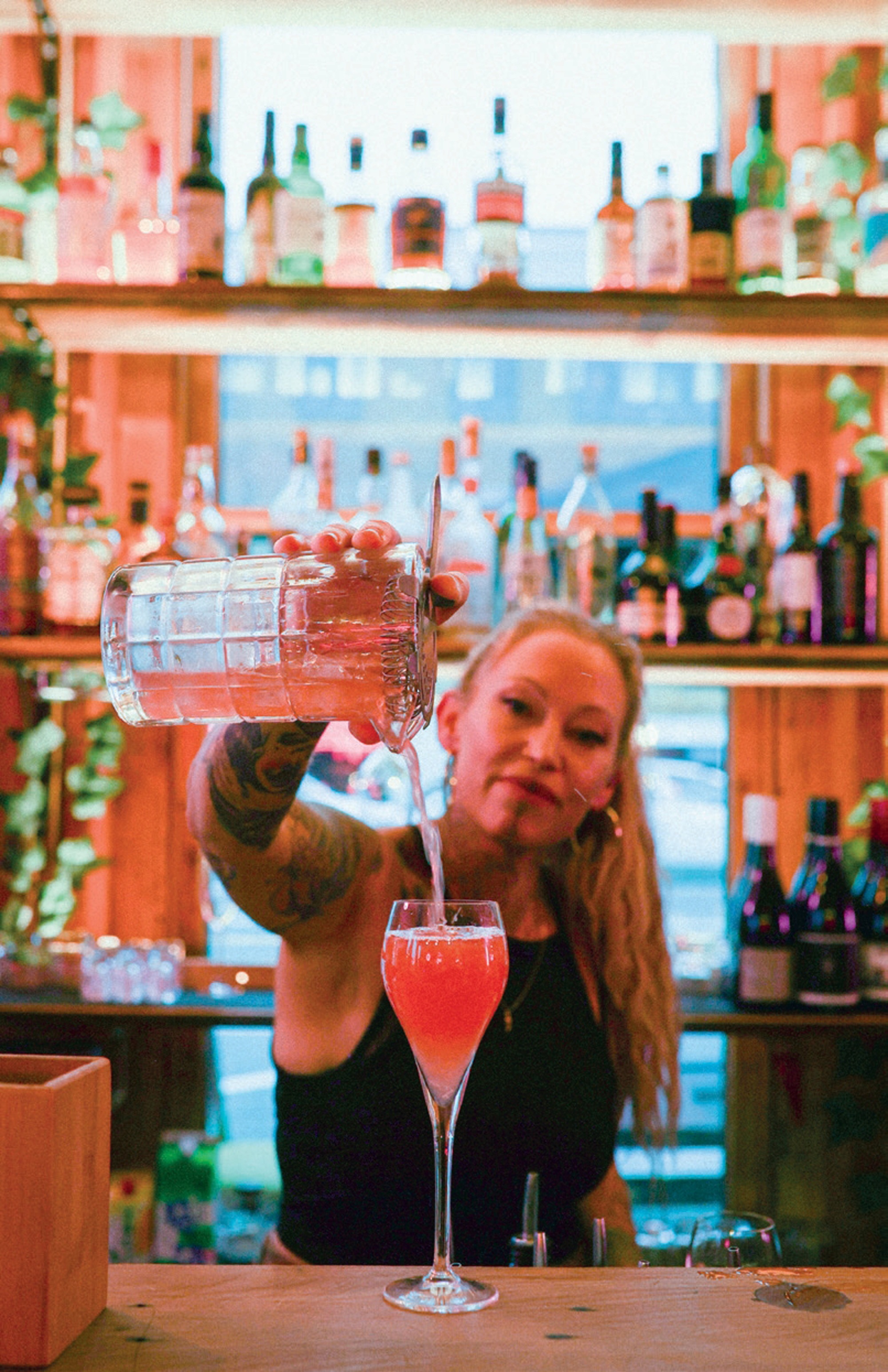
For my last dinner out, I ventured to Manu. The round loungers with a lazy Susan surrounded by plants make for a cool and cosy atmosphere. The cocktail menu is equally compelling and I ordered a Negroni to open the palate before browsing the Asian fusion fare. The dishes were incredible and shared plates are recommended. The Beef Cheek Rendang is simple but delicious and perfectly cooked.
Coupled with the riding zones mentioned above, this makes the transition from getting rowdy on the trails to tucking into good kai second to none. A solid day of riding is made even better by a good eating-out experience.
Other Activities
Whilst in Christchurch, I attended the trots. Yeah, I know this is a mountain bike publication, not a horse racing one. But hear me out for a moment. It was coupled with Infield, which had music artists Savage and Shapeshifter, so it wasn’t all bets, chinos, dresses, and horse racing. Christchurch is going hard to attract some major events and they’ve got them stacked.
The energy there was something else; thousands of people were out enjoying themselves, music pumping, the vibe relaxed but buzzing. It struck me that this is what a city with confidence looks like. They’re not just rebuilding infrastructure; they’re building culture and experiences. Even for someone visiting primarily to ride, having options like this makes the trip far more appealing. Your non-riding partner or mates can get excited about coming along.
One of these major events is Crankworx, which is returning to Christchurch for its second year. It was a success last year with a real vibe from riders, spectators, and industry. It infused the strong riding community that resides here, and that was evident when the final slopestyle event saw the crowd converging on every grass edge. I was there, and the atmosphere was electric; everyone was absolutely frothing.
The real cool thing is seeing so many young riders turn out in their droves either with their family or mates, and it’s always good to see them get stoked on the sport. I mean, if we can all do our bit to keep them in the scene, then the sports are in good hands for the future.
Crankworx has bigger plans for February, and it’s now part of the Crankworx World Tour. If last year is anything to go by, then it’ll be big! Heck, if you want to take the week off following Crankworx, then there’s Electric Avenue the following weekend. I’ll be aiming to do that and spending some of the week riding more locations on the city’s doorstep.
Beyond the big events, there’s plenty to fill rest days or evenings. The He Puna Taimoana hot pools in New Brighton are perfect for soaking tired legs after a big day at the bike park. They look over New Brighton beach, so you have nice views whilst you soak or sauna. The city also has a solid arts scene, with street art tours and an easy way to get around by tram. Coastal paths around New Brighton offer a different perspective if you fancy a cruisy pedal.
What I appreciated most was the options. You’re not locked into just riding. You can build a proper holiday around Christchurch – ride hard for a few days, catch a gig, soak in hot pools, eat exceptionally well, and actually return home feeling like you’ve had a break rather than just smashed yourself into the ground. That balance is rare, and it’s what keeps me coming back.
Eat | Black Burger, Christchurch Beer Collective, Kokomo, Manu, Rambler, Riverside Market, SUPER
Ride | Christchurch Adventure Park, Craigieburn, Lyttelton, Victoria Park, Port Hills
Stay | Drifter
Do | Crankworx Christchurch, Nostalgia Fest, Urban Polo, Around the Bays, Electric Avenue
Produced in partnership with Christchurch NZ
The Breakthrough Season
Words Joe Millington
Images Mikhail Huggins
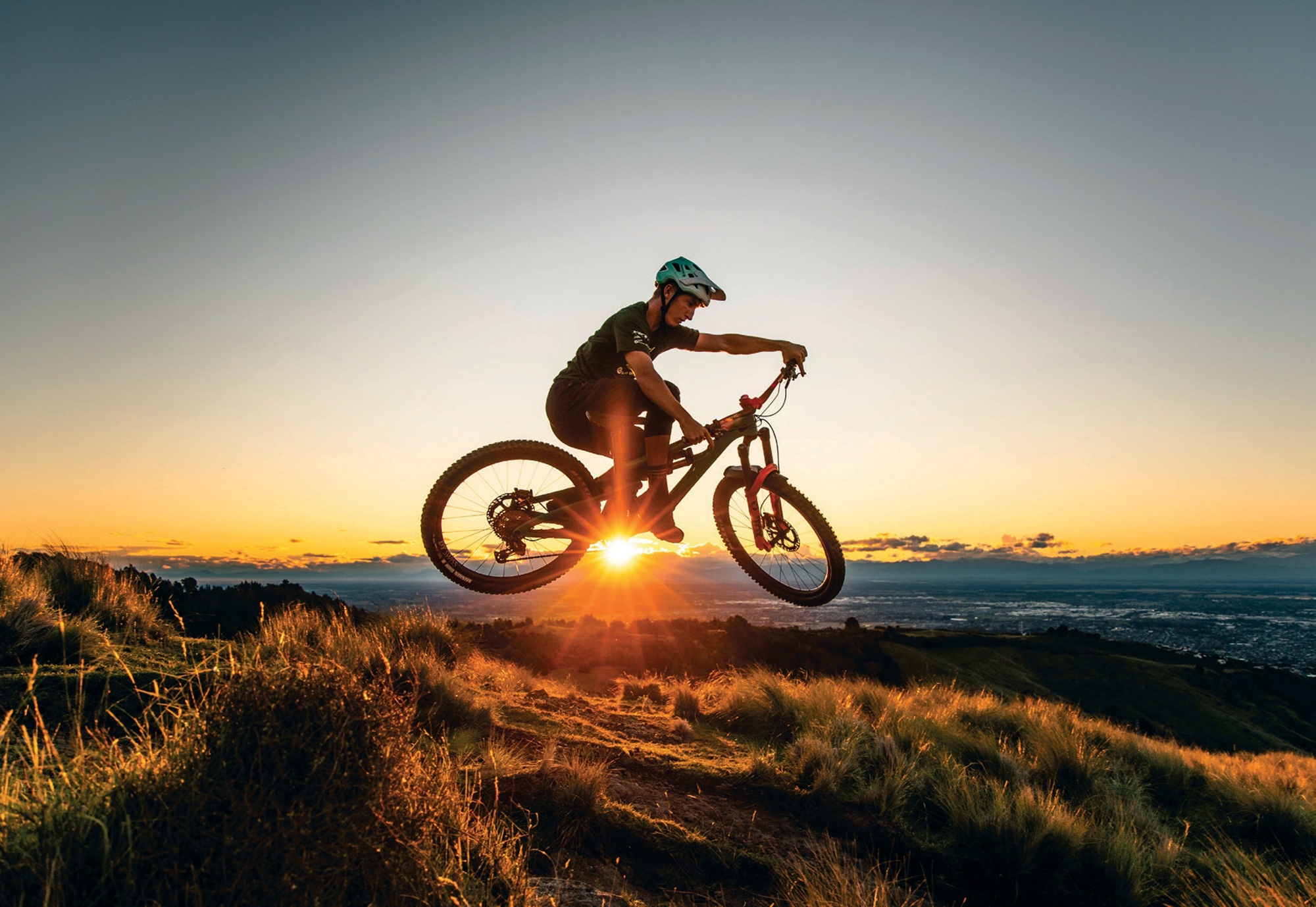
29th April 2025 – It’s a desperately early 5.00 am flight at Auckland International Airport. I’m checking in my two enduro bikes on a Qantas flight to Sydney, then onto Colombo via Sri Lankan Air to compete in the Sri Lankan Open Enduro. For the first three months of the six-month trip, I’m travelling with my father. I’m a 19-year-old privateer racing first-year elite on the EDR World Cup circuit in Europe.
My father has invited himself along, and Mum has stayed at home to keep things running.
I’ve had a good NZ summer, competing in most of the enduro races nationally, the Downhill Nationals and Crankworx Rotorua. My best results were second in the Enduro Nationals at Cable Bay, Nelson, and third in the DH Nationals (racing an enduro bike) in Rotorua. It’s the first time in a while that I’ve been injury-free, and I’m feeling pretty fit.
I’ve been invited to the Sri Lankan Open by Shakti from MTB Sri Lanka. I’m not sure what to expect, but the trip sounds like quite the adventure. We touch down in Colombo late at night. Unfortunately, the bikes have not arrived, but Sri Lankan Airlines are extremely helpful, and the bikes arrive on the next flight the following morning.
All the competitors are staying in a mountain lodge resort in Padukka, and the race is set amongst the rubber plantation on the AYR Estate, the only MTB park in Sri Lanka. It’s excellent to meet riders from many Asian countries, including Nepal, India, Malaysia, Japan, and Indonesia, along with a large and very enthusiastic team from Oman. The level of excitement is infectious; the local riders are thrilled to have a rider from NZ who races on the EDR circuit competing in their home event.
It would be an understatement to say that it’s hot. At the top of each run with your helmet on, it’s hot, but when you remove your goggles at the bottom of each run, the hot air hits you like a hair dryer. You actually get warmer when you stop. The air-conditioned shuttle utes are such a relief.
The trails are in good condition, with each stage having a couple of challenging features. The trail builders have worked very hard; with ground foliage growing up to 12 cm a day, it’s a constant battle to keep the jungle back. After two days of exhausting, hot racing, I come away with a win. RG Ripper from Nepal is second. He had raced in the EDR the year before. We had a good battle and a lot of fun at the after-race party.
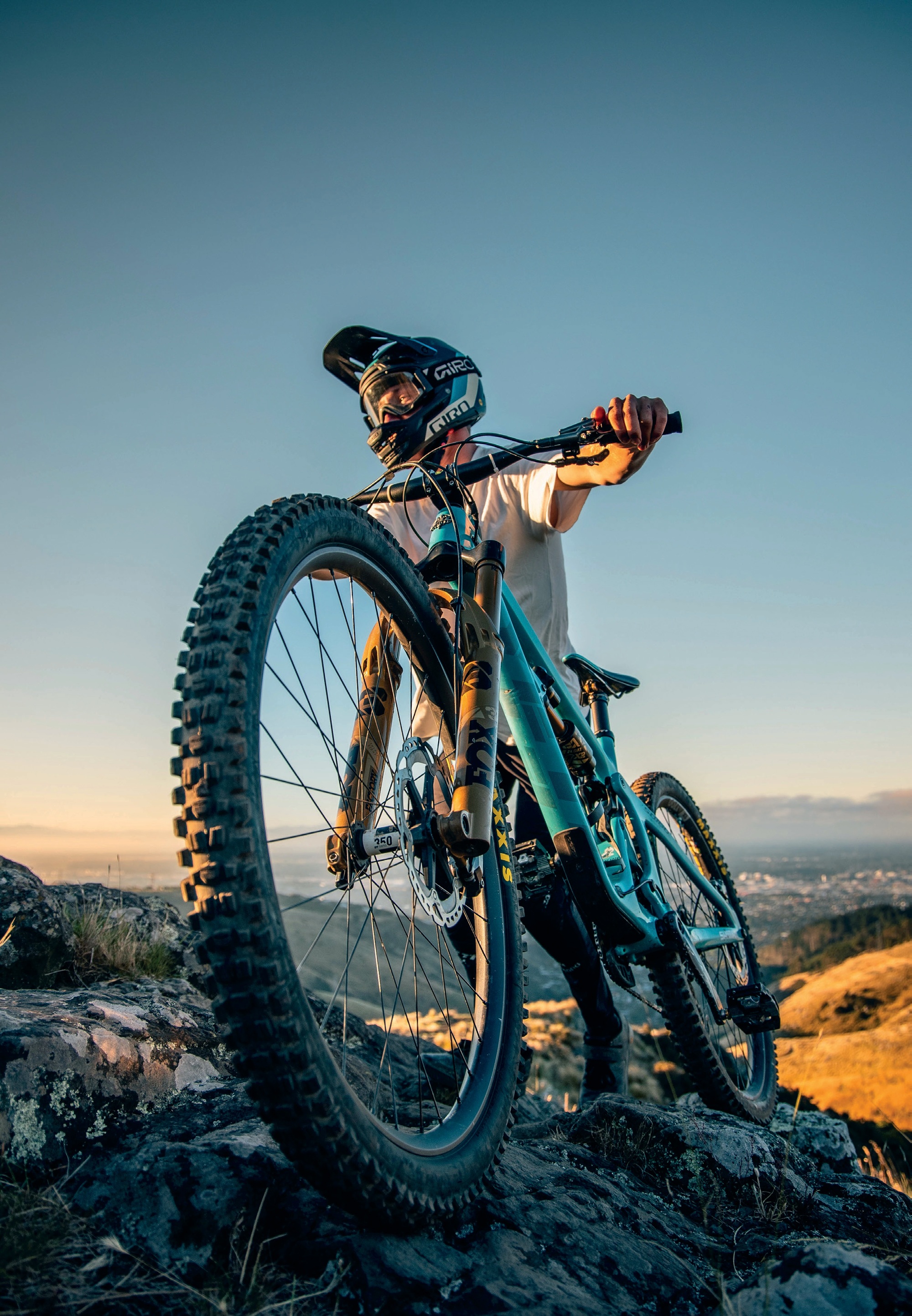
At the end of the race, all the locals come back to the race village, and the children of all ages ride the competitors’ bikes around the park having a great time. I couldn’t imagine this happening in NZ or Europe at the end of a race, and it will be one of the lasting memories of the event for me. Now onto Finale Ligure, Italy, for the first EDR of 2025.
The EDR World Cup is a seven-race Enduro series raced all through Europe and is the pinnacle of the sport, attracting riders from all over the world. Fully funded factory teams through to privateer riders like me operating out of the back of a van. At 19 years old, I’m the youngest rider in the elite field. It’s definitely a journey into the unknown and I’m up against legends of the sport. Names like Richie Rude, Jack Moir, Jesse Melamed, to name a few, as well as top NZ riders like Charlie Murray, Matt Walker and Eddie Masters. I really have no idea how I’ll go. I’m saying top 30 out loud but secretly thinking that top 20 is possible. My race plate is 95, and I want to improve on that.
Finale Ligure is a great place to ride, but a tough place to race. I ride as well as I can and push all the way, finishing 29th and happy with how I’ve gone. I now realise what I’m up against.
I’m up at 4.30 am the morning after the race to catch a 6.30 am Wizz Air flight out of Nice to Krakow, Poland, for the next race in Bielsko Biała the following weekend. What a contrast: the weather is freezing with snow falling on the practice day and a max temperature of 3 °C.
On the race day, the weather improves slightly to about 7 °C, but the surface is sticky mud, and the racing feels really slow. The big, powerful guys are in their element, and after a long, exhausting day, I finish 32nd with the race plate of 45. I’m on the improve and have broken into the top 30 overall. The local favourite, Slawomir Lukasik, has won his first World Cup, which sends the local fans into raptures. One of the highlights of this event is the crowds. Unlike Downhill, Enduro has no crowd fencing; you just have to stay behind the race tape. In some places, the crowds are leaning across the track as you approach through the rock garden at 40 kph, just moving back as you arrive, making the track very hard to see at times. It’s pretty out of control.
We have two weeks before the next race in Loudenvielle, in the French Pyrenees and spend eight days in Bielsko before catching a flight to Barcelona to pick up a campervan for the seven-hour drive to Loudenvielle.
I’m looking forward to the Loudenvielle race. It’s the first high mountain race, which means it’s very steep, and the stages are long. The rider who brakes the least and stays upright generally goes well. Last year, I finished second here in the junior race.
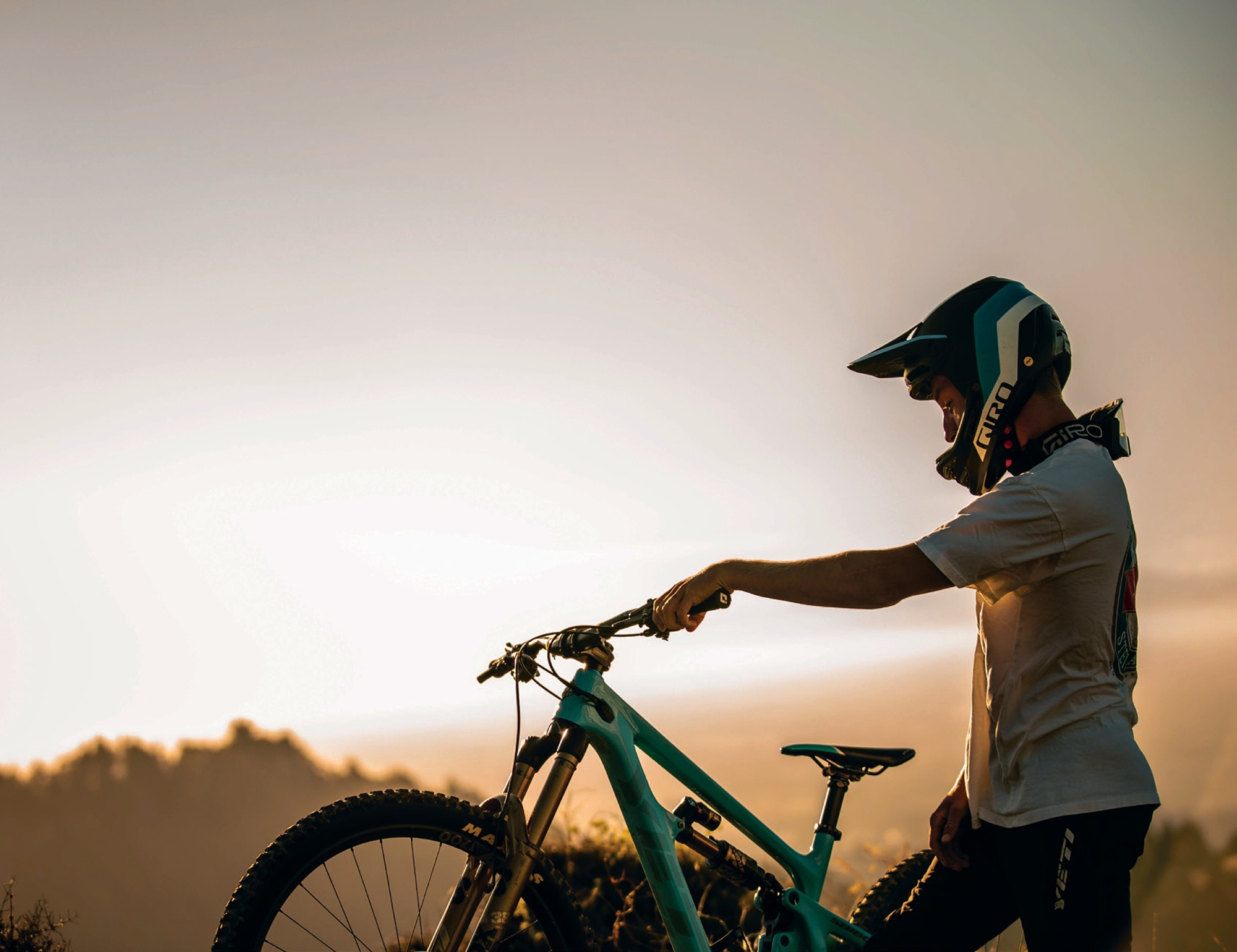
The day dawns sunny and dry, perfect for me. My race seeding is 31st and after the first three stages, I’m placed 17th. On the fourth stage, I really let it rip and feel like I’ve gone well. I check the live timing and – wow – I’ve finished fourth with one stage to go. The last stage goes even better with a third place after holding first for a while. This moves me to 11th overall. I’m over the moon, 11th in the world, not bad.
The next morning, after some celebration, we pack the van and head to Leogang, Austria via two days of riding in Finale. Leogang is in the Austrian Alps, a beautiful place with massive mountains with snow on the peaks. Another race with long, steep stages, and I’m feeling pretty good.
After some horrendous wet weather on the day before the race, the race day is a slight improvement, but still incredibly wet, muddy and slippery. I’m seeded 17th for this race. The top 30 always start later, rolling out after the elite women, and now I’m riding with all the big dogs.
I’m with Matt Walker, a New Zealand legend who won a World Cup two years earlier in Val di Fassa. Matt is a friendly guy and a very experienced racer, it’s a pleasure to spend the day riding with him. Looking around at the start of each stage, I feel like I’m in impressive company at just 19 years. The race itself is similar to Loudenvielle. I ride fast and clean except on the last stage, where I have an off, which drops me down on that stage. After six long stages, I finish in 13th place which is beyond my expectations. It’s a good night.
We now have almost three weeks off before the next race in Val di Fassa in the heart of the Dolomites, Italy, which I think is the most spectacular place on the circuit.
Before this, though, my friends Lachie, Cooper, Marcus and I have some summer sun and beaches to attend to in Split, Croatia. After a week relaxing in Split, we spend five days riding in Morzine, France before making our way through to Val di Fassa, ready for round five of the EDR World Series.
I’m ranked 11th for this race, my highest ranking yet. This is a four-day event, with two days of practice and two days of racing. It’s going to be a big four days.
After completing the first two days of practice, race day dawns sunny and hot. We have three stages on Saturday and four on Sunday. After the first two stages, I’m 18th overall, but the stages so far have been short, so the time difference between the top 30 is just seconds.
The third stage lasts over eight minutes, starting flat, but the last half changes to steep and technical. I start okay and feel I’m carrying really good speed. Carrying speed with the least amount of effort is the key to long stages. As the trail gets steeper, it suits me more and after 7:55 minutes, I finish fourth. This stage has broken the field up, and I move into eighth place by the end of the first day.
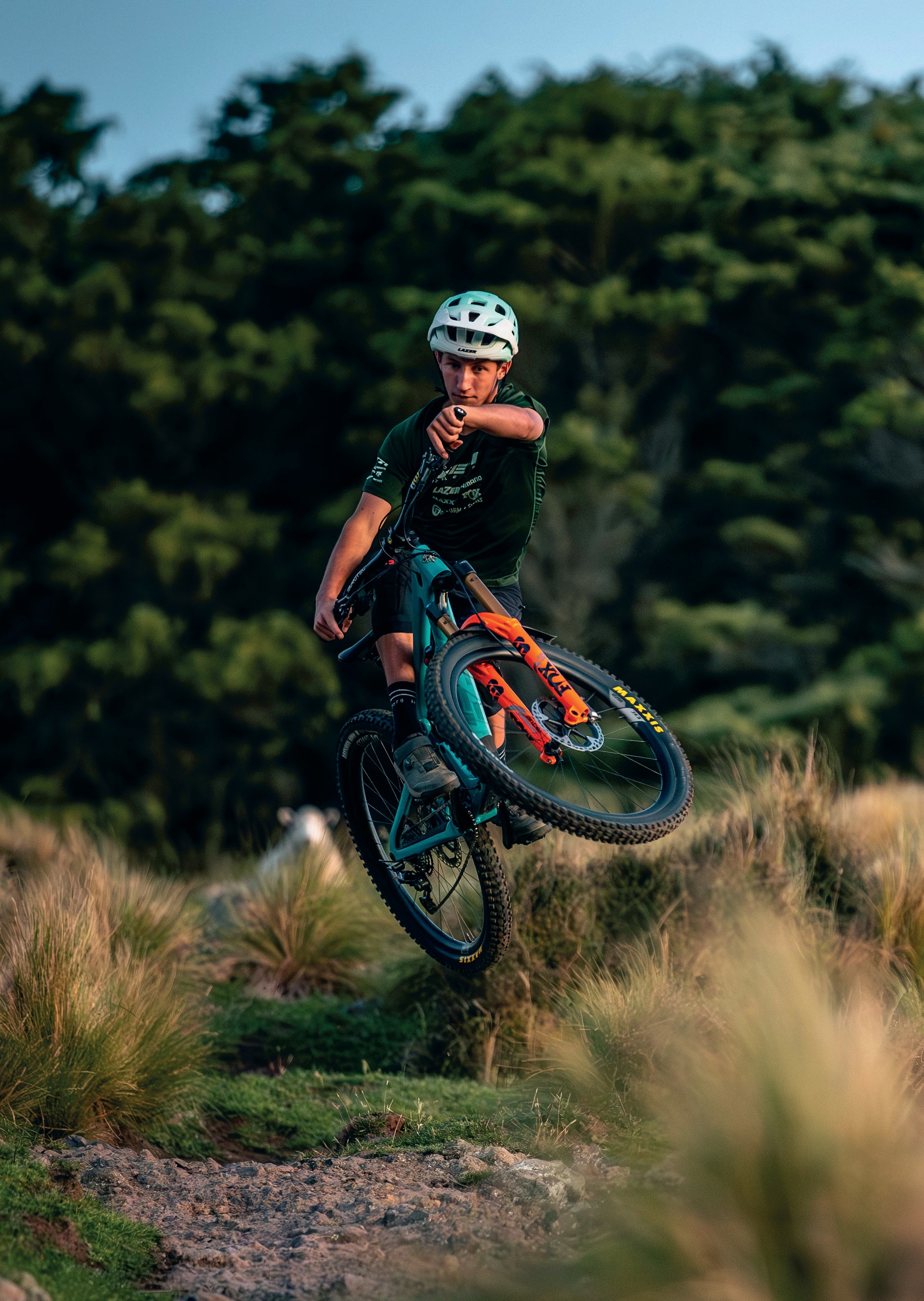
Again, the second day dawns sunny and warm. My goal is to hold my place and try to stay in the top 10. Over the next three stages, I finish ninth, ninth and eighth. A couple of riders have had some bad luck on the sixth stage. Charlie Murray has had a flat tyre, and Tarmo Ryynanen snapped his bike in half. This has moved me up from ninth to seventh. The last stage is short and sharp. I have Charlie half a second behind me, and I know he wants to be the first New Zealander.
I go really hard and just give it my all, crossing the finish line on my absolute limit. I’ve finished sixth on this stage, moving me up to a final position of fifth overall. I’ve just pipped Charlie by under a second.
Eddie Masters interviews me, and Charlie comes over for a chat. He’s disappointed in his earlier flat tyre, but he congratulates me straight away. Enduro is good like that: it’s about the race but also the riders.
It starts to sink in: I’ve just finished fifth in an EDR World Cup at the elite level in my first season. I’m the youngest rider in the field and the first 19-year-old to achieve a top five. My friends Lachie, Marcus and Cooper and the other New Zealand families are happy for me. We have a small and slightly exhausted celebration that night.
There’s still much more action to come in the rest of the season, but as of this moment, I’m very happy.
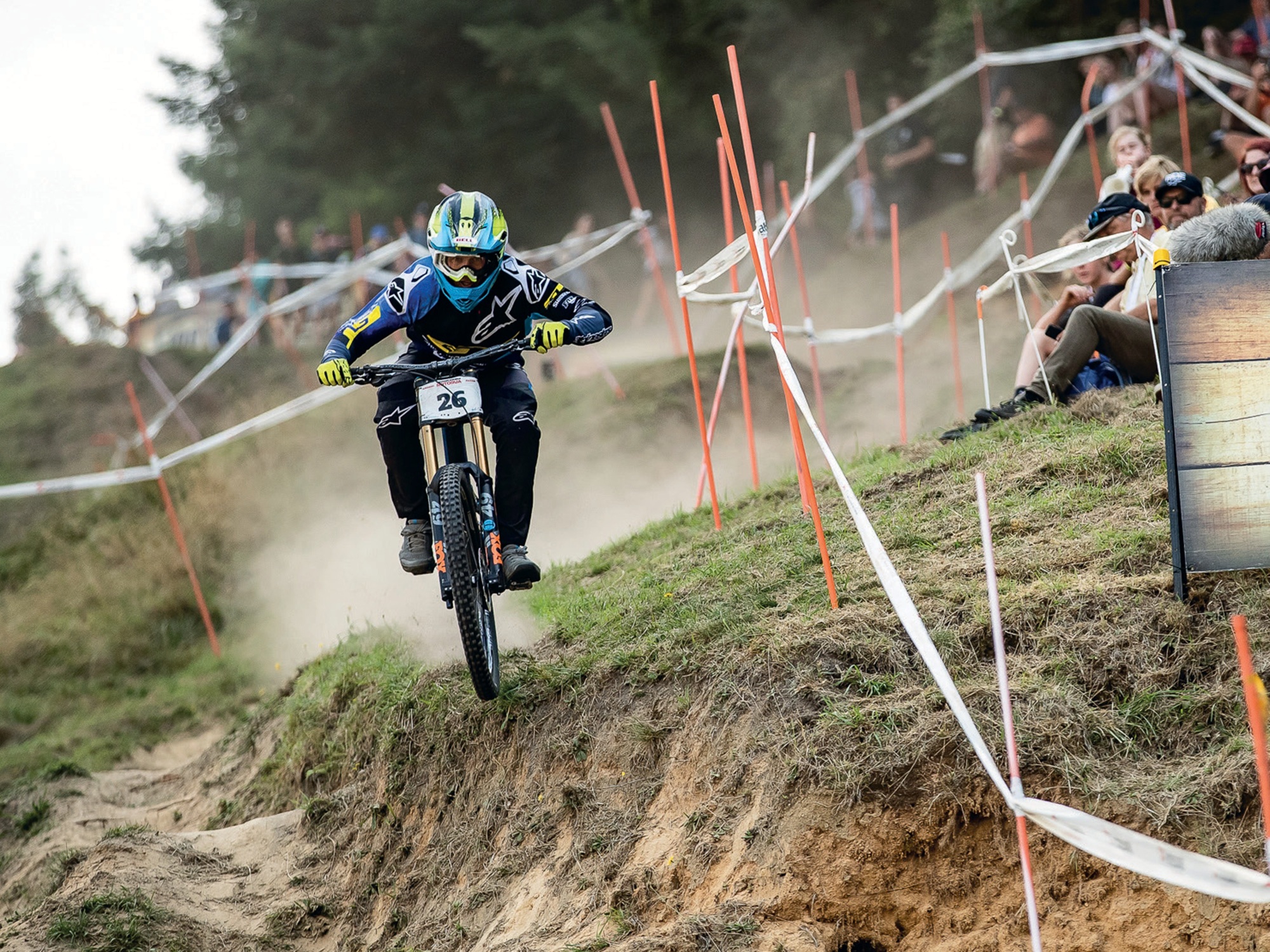
Crankworx in Aotearoa: Origins and Early Vision
Words Liam Friary, Ariki Tibble, Darren Kinnaird & Tuhua Mutu
Images Fraser Britton, Kike Abelleria and Clint Trahan
The southern hemisphere’s summer is now upon us! And that means Crankworx is returning to New Zealand in 2026 with back-to-back festivals. The Crankworx season kicks off at Christchurch Adventure Park from February 19-22, before heading north to legendary Rotorua from March 11-15.
Christchurch is stepping up big time, hosting full World Tour competitions including the Ōtautahi Slopestyle, Redemption Downhill, and Christchurch Pump Track Challenge. Rotorua returns with the Kārearea Downhill, Dual Slalom, Pump Track Challenge, and the Slopestyle in Memory of McGazza, plus a new event called the Skyline Double Down.
Two festivals, in two incredible riding destinations. Whether you’re there for the big air, the rowdy crowds, or just soaking up the gravity vibes, this is shaping up to be something special. Let’s take a look back and see how Crankworx became such a massive part of New Zealand’s mountain biking story. We sat down with the people who helped build it from the ground up to find out.
Taking the leap to the southern hemisphere: What made Rotorua the right choice for Crankworx’s first southern hemisphere stop back in 2014, and what were the biggest challenges in launching that inaugural 2015 festival?
Darren Kinnaird – Managing Director, Crankworx World Tour
When I visited Rotorua in 2014 for a site visit, I immediately fell in love with the place. The people, the culture, the riding; I knew there was something special here and we needed to bring the mountain biking world here. The biggest challenge was probably the time. There was less than nine months to get ready for the first ever Crankworx in the southern hemisphere in a place most of us had never been.
Equal pay from day one: Crankworx Rotorua was groundbreaking in offering equal prize money for men and women from the very first event. What drove that decision, and how did it influence the broader Crankworx World Tour?
Ariki Tibble – ex-Crankworx New Zealand Chief Executive
When we originally made the call to offer equal prize money from the very first Crankworx Rotorua, it never felt to me like a bold or radical decision. It felt obvious. New Zealand has a long history of championing women’s rights, and we grew up in a country where Kate Sheppard and the suffrage movement are part of the national DNA. Tak Mutu, as Event Director at the time, was our champion for the cause for the NZ operations and for him it was a hill he was prepared to die on if that’s what it was going to take!
Mountain biking was and is still relatively young as a professional sport, which meant we didn’t have the heavy machinery or deeply entrenched hierarchies that I imagine other more established codes might have to grapple with. In some ways, that gave us a gift. We had the chance to get it right from the start, before the cement had hardened.
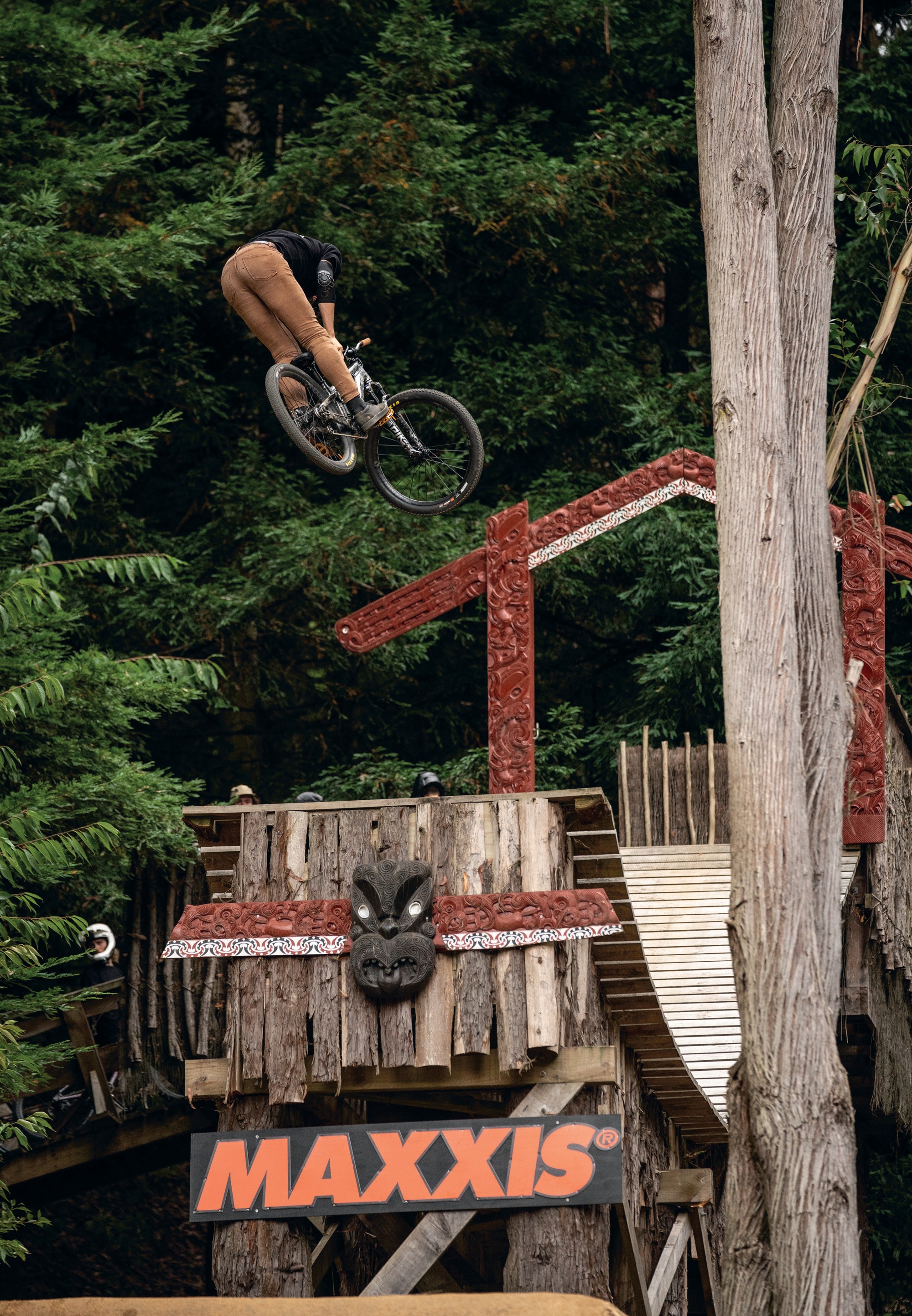
McGazza’s Legacy: Kelly McGarry was instrumental in shaping Rotorua’s slopestyle course before his tragic passing in 2016. How has his spirit continued to influence the event, and what does it mean to keep his memory alive through the competition?
Ariki Tibble
When I first heard Kelly McGarry’s name, I had only just stepped into the mountain biking world. I didn’t yet understand its legends or its language, so discovering Kelly felt a bit like learning we had a sleeping giant hiding in plain sight. He was physically impossible to miss – six foot five, golden hair flowing, a presence that filled the room even when he wasn’t trying to. But what struck me more was how humble he was, the kind of person who didn’t need to announce who he was because everyone around him already knew.
I first met him properly while he and his best mate, Tom Hey, were shaping the early slopestyle course. I remember standing there, stunned by the scale of the jumps they were carving into the Rotorua dirt. I couldn’t fathom that a human being on a bike could do what they were building for.
But it wasn’t until I travelled to Whistler and walked the village streets with him that I understood who he was to others. We couldn’t move more than a few steps without being stopped. Parents wanted photos. Kids wanted autographs. Fans lit up like they’d seen a movie star. It was then that it landed for me what a big deal he was in the scene, even if back home he was treated like any other bloke.
His passing just a couple of years in shook the community deeply. But what’s stayed with me is how present he still feels. It’s like he’s just on the other side of a door – not gone, just in another room. His voice, his energy, his pioneering spirit linger in the atmosphere of the event. Big personalities have a way of staying with you like that.
Most of the athletes competing now never rode alongside him, yet they carry that same spirit he embodied. Kelly was often the first to drop in on a new feature, the first to test something. Today’s riders honour him every time they push past what seems possible. His legacy isn’t a memory. It’s a living current that still runs through Crankworx Rotorua and the World Tour.
Historic firsts: From Nicholi Rogatkin’s first- ever competition 1080 in 2016 to hosting one of the last major international events before the pandemic in March 2020 – which moments stand out as truly defining for Crankworx NZ?
Ariki Tibble
People often assume the defining moments in Crankworx come from the biggest tricks, the landmark podiums or the viral runs. And those things are incredible. But for me, the moments that stay with me the longest are the ones behind the curtain or under the hood. They’re the orchestral moments when a hundred different people, in a hundred different roles, each carrying their own small piece of the puzzle, somehow manage to come together and create something none of us could have achieved alone. That is the magic I fell in love with during my time working in the Crankworx realm.
One standout example is Loïc Bruni’s run on the Taniwha Downhill in 2023. The day of the race felt like the final boss in a 1980s video game.
Light was fading faster than we expected. Technical teams were stretching the limits of what had ever been done in a forest environment. We were relying on innovations like Starlink and a huge amount of force of will to broadcast something many people had told us wasn’t possible.
By the time Loïc was getting ready to drop in, it felt like the event had carried us to the edge of a cliff. Every challenge we had overcome, the logistics, the technical barriers, the timing, the pressure, had funnelled us into that single, delicate window. And, in the dimming light, Loïc delivered an extraordinary run. It was clutch and clinical and brave. But the reason it meant so much to me is because it also represented the collective clutch of the entire team. His moment only existed because of all of the unseen moments that came before it.
Had he not won that day, I think people would have rightly questioned our decision to push through the fading light. We learned from that experience, and we carried those lessons forward. But on that day, everything aligned. It felt like the mountain, the team, and the sport were all breathing in the same rhythm. Those moments are the tip of an enormous iceberg of collective efforts. And the great privilege for me was having a view and a deep appreciation of that iceberg in its entirety.
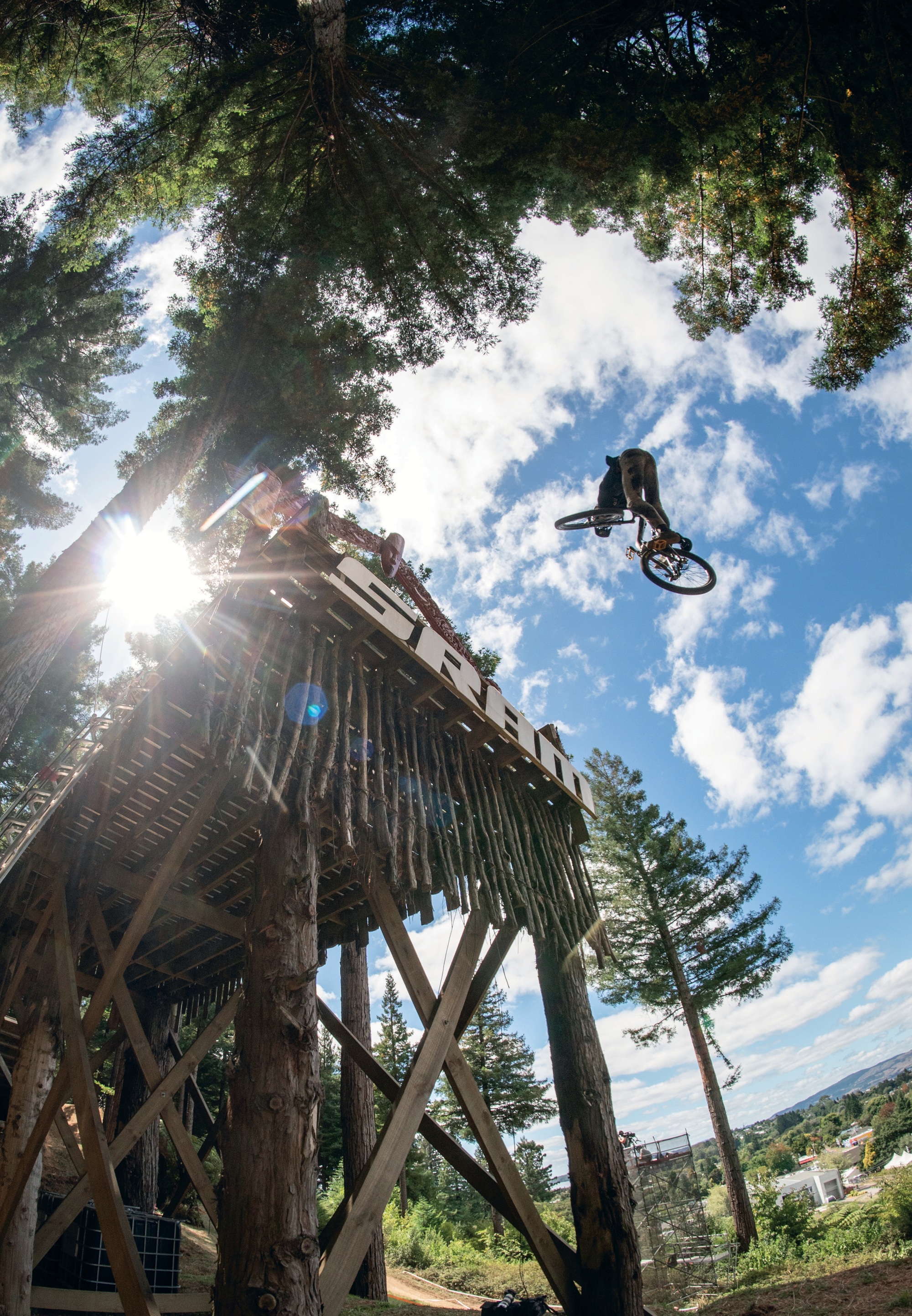
The Soul of Crankworx: You’ve described Rotorua as the “soul” of the World Tour (with Whistler as the “heart”). What is it about the Māori culture, the community embrace, and the Rotorua vibe that creates that special identity?
Ariki Tibble
Whenever I try to explain what makes Rotorua the soul of the World Tour, I always end up coming back to things that aren’t easily measured. It’s not infrastructure, or weather, or even the terrain, although all of those things matter. It’s the way people connect here. And for me, that understanding comes from my Māori side, from growing up surrounded by a way of being that teaches you how to welcome, how to include, how to weave people together so they feel like they belong. On my mother’s side I have Irish and Welsh heritage, which came with its own set of gifts. But the lessons about bringing people together, about creating cohesion and allowing people to show up as their full selves, came from watching my cousins on the marae at hui and tangihanga. Māori hospitality is not transactional. It is relational. It is about walking into a space and feeling seen. Feeling safe. Feeling like someone has anticipated your needs without you having to say a word.
Rotorua amplifies that. It is a cultural hub, a place where that way of being is not confined to ceremonial settings but shows up everywhere. Tourism operators, local businesses, volunteers, event staff, aunties on the street; everyone carries a little piece of that same ethos. Visitors often struggle to articulate it. They say things like “It felt like coming home,” even though they’ve never been here before. They feel the warmth before they can name the source.
That is what makes Rotorua the soul of Crankworx. It’s not just another stop on a tour. It’s a place where the event reaches beyond its own boundaries and becomes part of a larger cultural rhythm. The feeling people get here goes straight past the mind and into the chest. It hits the soul, which is exactly why that word feels right.
No spectators, all heart: November 2021 saw Crankworx Rotorua run in a COVID bubble with no public attendance. What was it like pivoting to that broadcast-only format, and how did the team keep the magic alive?
Ariki Tibble
The 2021 COVID bubble event was one of the most intense experiences our team has ever been through. Crankworx is a massive undertaking in the best of times, but the pandemic forced us into a pressure cooker that was shifting by the hour. By the time we reached the event window, that final 30-day countdown where every day increases your financial exposure, the team was already worn down from constant rule changes, public health updates, legal challenges, and uncertainty from partners. It felt like we were trying to build a plane in the dark while flying it through turbulence in uncharted territory.
The business model of any major event is unusual by comparison to other businesses. For Crankworx you spend 355 days preparing for ten days of operation. Your costs climb steadily and then exponentially as you get closer to opening. The day before the gates open is the moment of maximum financial risk and exposure because you’ve committed to the full spend but you haven’t truly earned a dollar. And here we were, in that two-week exponential window, with the expanding Auckland bubble and escalating COVID alert levels – having to refund ticket holders, cancel the expo, renegotiate positions with core partners, and defend our legal right to continue. Meanwhile, athletes had already travelled and were sitting in quarantine, vendors were already setting up and so many of our hard costs had already been incurred. Every element felt high stakes.
Yet despite the pressure, something remarkable happened: the team held together. People stepped into roles they had never done before. Decisions were made in real time collaboratively under immense strain. We took one step at a time, and at every twist another little magic door seemingly opened which we could walk through. And when the event finally took place, even without spectators, there was still something undeniably special about it. It revealed that Crankworx is more than the parts we think are essential. When some of those parts were stripped away, the heart of the event remained.
The consequences of that year rippled far beyond the festival itself. Not everyone felt like it should have gone ahead. We carried the fatigue, the financial impact and the psychological load for years. In some ways, we’re still carrying them now. But the fact that we delivered it at all is something I’ll never forget. It was a hard moment, but it was also a defining one.
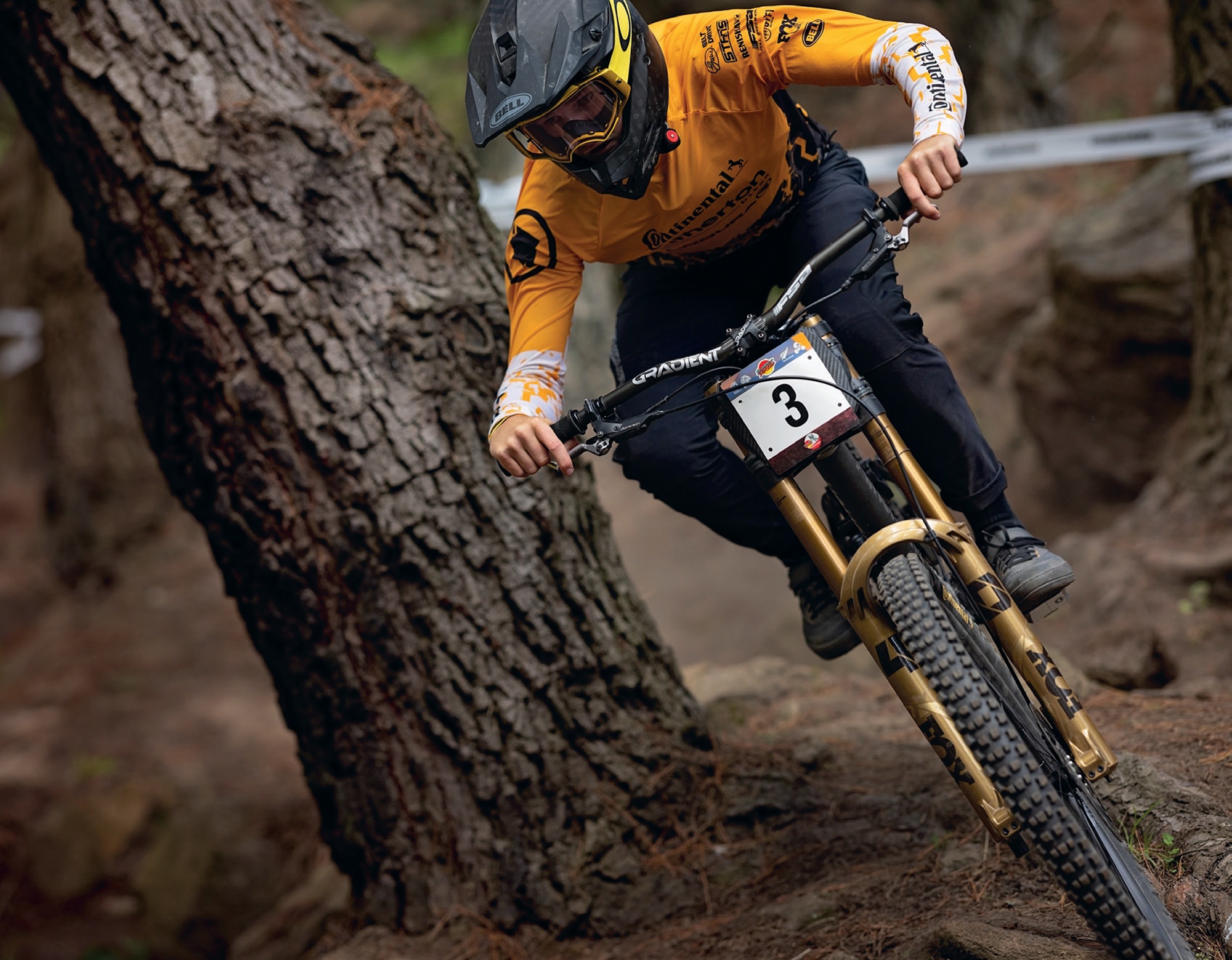
Birth of the Summer Series: The Summer Series launched in late 2021, road-tripping through Alexandra, Queenstown, Cardrona, and Wānaka. What was the vision behind taking Crankworx regional, and how has that evolved into the Christchurch festival we saw in 2025?
Darren Kinnaird
The Crankworx Summer Series was born out of a “COVID pivot” of what can we do without mass gatherings. After we did it in BC, the team in NZ was like, “hey we could do that here too”. With so many great riding destinations in New Zealand and New Zealand being a home for so many great mountain bikers, whether they’re from New Zealand or not, it just felt like a no brainer. Christchurch is just the evolution of that original series and the original reason we came to New Zealand in the first place. World-class riding, people and Kiwi spirit!
Homegrown Champion:
Tuhoto-Ariki Pene NZ’s King of Crankworx in 2023 – a rider who started as a young grom at Rotorua in 2016. What does his journey tell us about the talent pipeline Crankworx has helped create in New Zealand?
Tuhua Mutu – Event Director, Crankworx New Zealand
When we launched Crankworx in NZ 12 years ago, we weren’t just bringing an event – we were bringing the world to our doorstep. The best riders, the best tracks, the broadcast machines, the pressure, the scale, the intensity – all of it arrived in our backyard. From the outset, the goal was clear: to show the world’s best riders why New Zealand should be their summer base, and to showcase our destinations, culture, and quality of life.
But the most powerful outcome was what Crankworx did for our own talent. Suddenly, young Kiwi riders no longer had to imagine what “world-class” looked like. Year after year, they could stand next to it. Feel it. Chase it. Hone their craft against the very best. Crankworx also created the platform for these young riders to be seen, giving raw Kiwi talent regular exposure to global brands and industry attention, and helping turn aspiring groms into emerging professional athletes.
Tuhoto was one of those kids. He didn’t just watch Crankworx – he grew up inside it, discovering what it takes to compete on the world stage as he went. Today, just two years on from Tuhoto’s King of Crankworx 2023 achievement, New Zealand’s gravity mountain biking talent pool has exploded to see the deepest and highest performing ever. Riders like Robin Goomes, Lachie Stevens-McNab, Jess Blewitt, Jenna and Kate Hastings, Erice Van Leuven, Ellie Hulsebosch, Sacha Earnest, Tyler Waite, Oli Clark, Charlie Murray, Joe Millington, and Toby and Rory Meek – not to mention rising stars like Winni Goldsbury – are pushing the pace internationally. And then we still have our seasoned veterans like Sam Blenkinsop, Brook Macdonald, Wyn and Ed Masters who continue to cast long shadows, remaining fiercely competitive across multiple disciplines on the world stage.
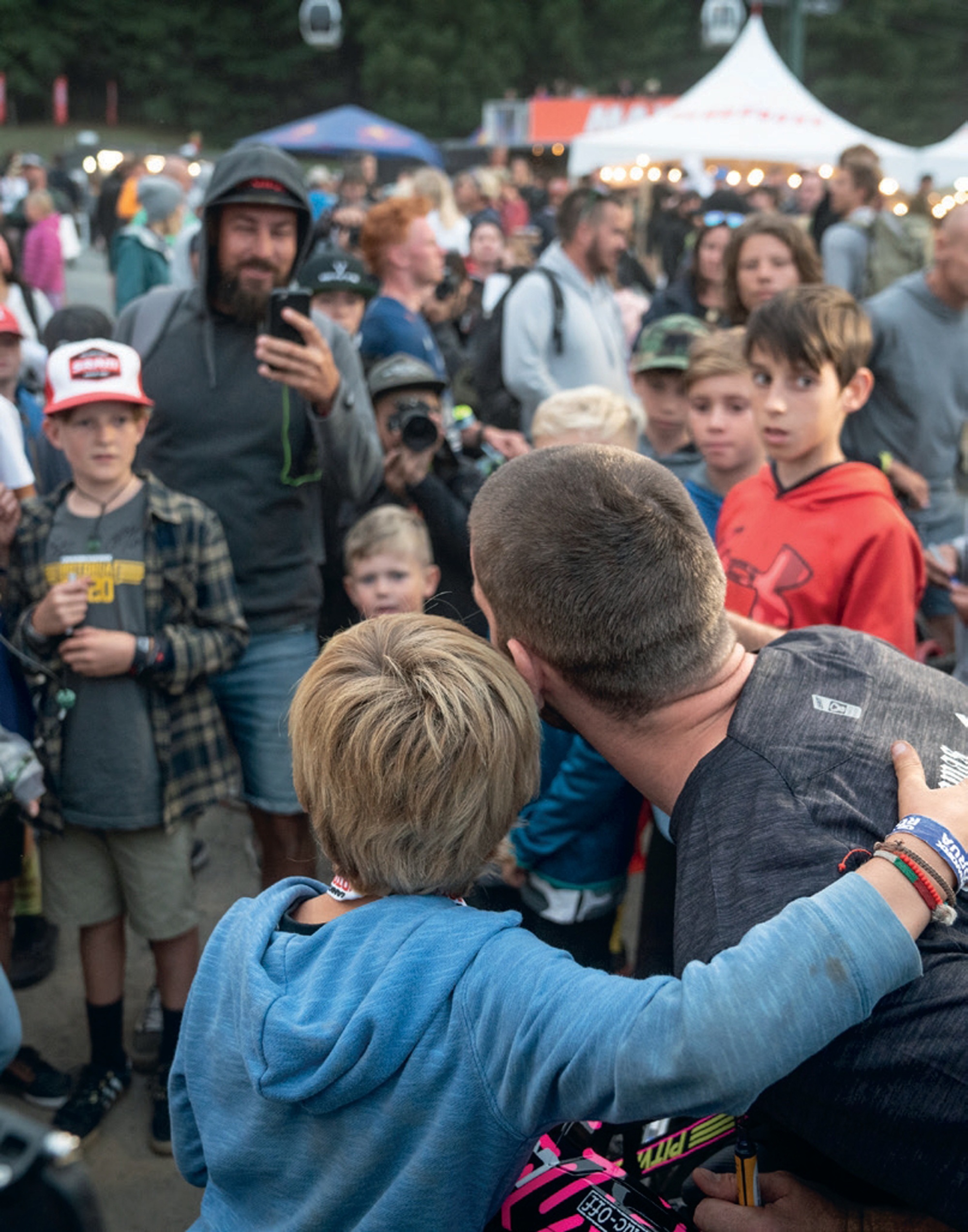
We’re proud to have helped nurture Kiwi talent from the earliest days, supporting many of today’s world-class gravity riders since they were kids. And the momentum hasn’t peaked – it’s compounding. With Crankworx now embedded in both Rotorua and Christchurch, the next generation is growing up with world- class racing in their own backyard every single year. That means more pathways, more visibility, more opportunity, and ultimately more Kiwi riders stepping onto the world stage. If this is what the first 12 years delivered, just imagine what the next decade could hold.
Christchurch’s debut: February 2025 brought Crankworx to the South Island’s largest city with NZ’s first FMBA Gold Slopestyle. What does having both Rotorua and Christchurch on the calendar mean for the future of mountain biking in New Zealand?
Tuhua Mutu
Back when the very first Crankworx event in New Zealand was conceived, part of the vision was to use the platform to tell a wider story of Aotearoa – recognising that every region has its own unique community, whenua, and culture to celebrate. Rotorua set that foundation, bringing together mana whenua, world-class riding, and a deep culture of hospitality that defined what Crankworx in NZ would stand for.
With Christchurch now on the calendar, that original vision expands in the best possible way. A unified national identity emerges – two regions, two communities, each adding their own flavour to remind the world of the quality of life our backyard offers. Rotorua’s geothermal forests, Māori cultural heart, and long MTB history sit alongside Christchurch’s Port Hills and Southern Alps backdrop, its rejuvenated bike-friendly city environment, and its fast-growing South Island scene.
Together, they form gateways to the wider North and South Island riding landscapes – the ideal playground for every outdoor enthusiast whether you ride bikes well or not! Two world- class Crankworx stops signal a new era: a truly national platform for mountain biking, more development opportunities for Kiwi talent, and a future where New Zealand stands even more firmly among the world’s great riding nations.
Where to next?: Looking at 2026 and beyond, what’s your vision for the evolution of Crankworx in New Zealand and its role in the World Tour? Are there new locations, disciplines, or innovations on the horizon?
Darren Kinnaird
New Zealand continues to be one of the best riding destinations in the world which is a key part of the Crankworx ethos. Who knows what the future holds but as long as there is incredible riding to share with the world in New Zealand, we are keen to help tell that story!
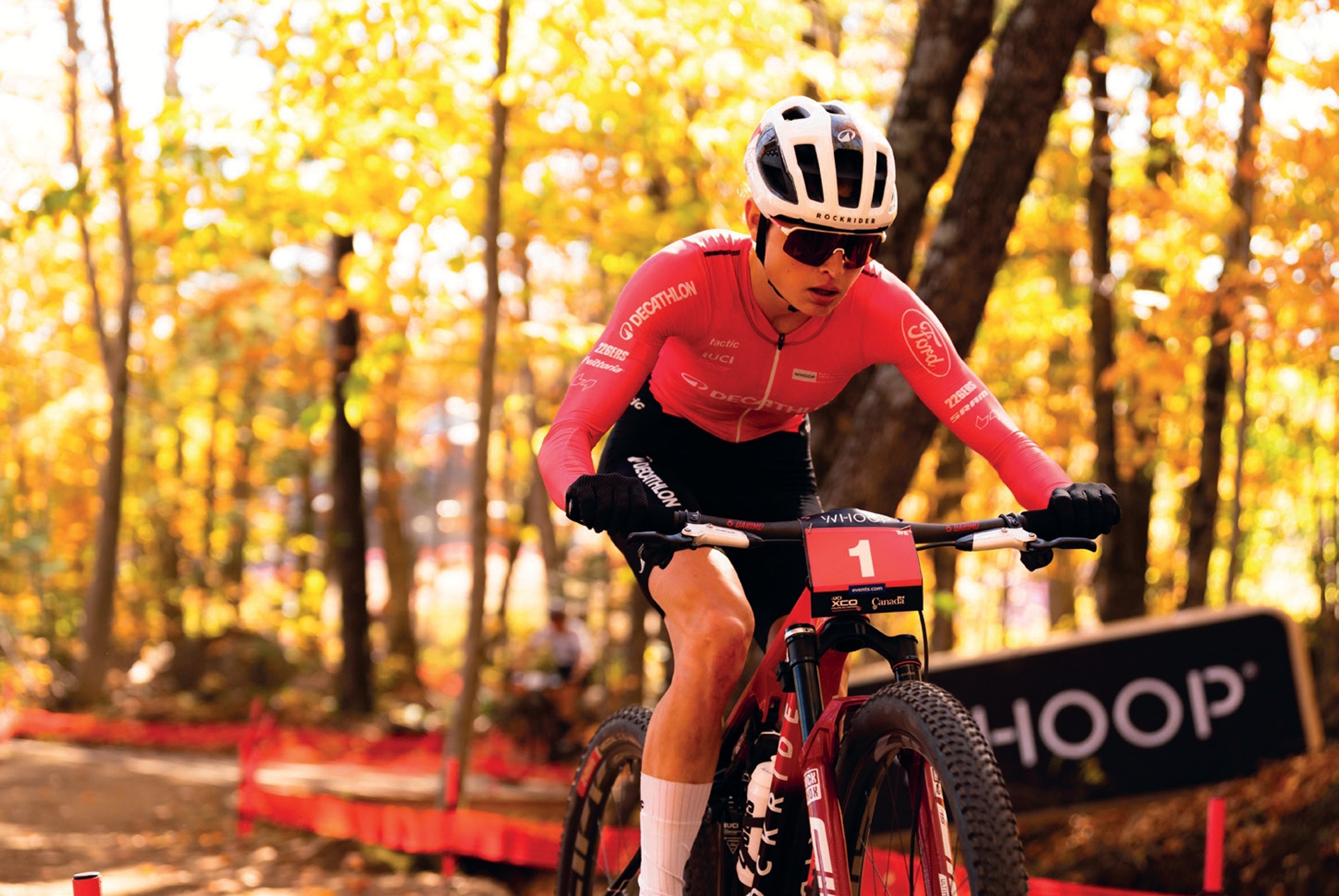
Sammie Maxwell
Words by Lester Perry
Images by Riley McLay
Back in issue #112, we spent time with NZ cross-country phenom, Sammie Maxwell, discovering what makes her tick, her history in the sport, and diving into her stellar 2023 season, which included winning the Under 23 XCO World Championships in Glasgow, Scotland.
Now two seasons on and at home in the elite women’s division, Sammie has wrapped up the 2025 World Cup season on a high. Sammie burst into the 2025 season with a historic win in Araxa, Brazil, becoming the first Kiwi to win a World Cup XCO race. Continuing her season with consistency and resilience, Sammie overcame crashes, mechanicals, and strong competition to take the overall series win, becoming the only Kiwi ever to win a World Cup overall title.
On the way to winning the overall, she finished on all but one of the XCO World Cup podiums across the 10-round series. Sammie won two, finished second at five, and third in two races across the series. Her ‘worst’ result was a sixth place at Lenzerheide two weeks after finishing second at the World Championships in Crans-Montana, Switzerland. As far as consistency and dominance go, Sammie has rewritten the rule book, flinging Kiwi riders into the global spotlight!
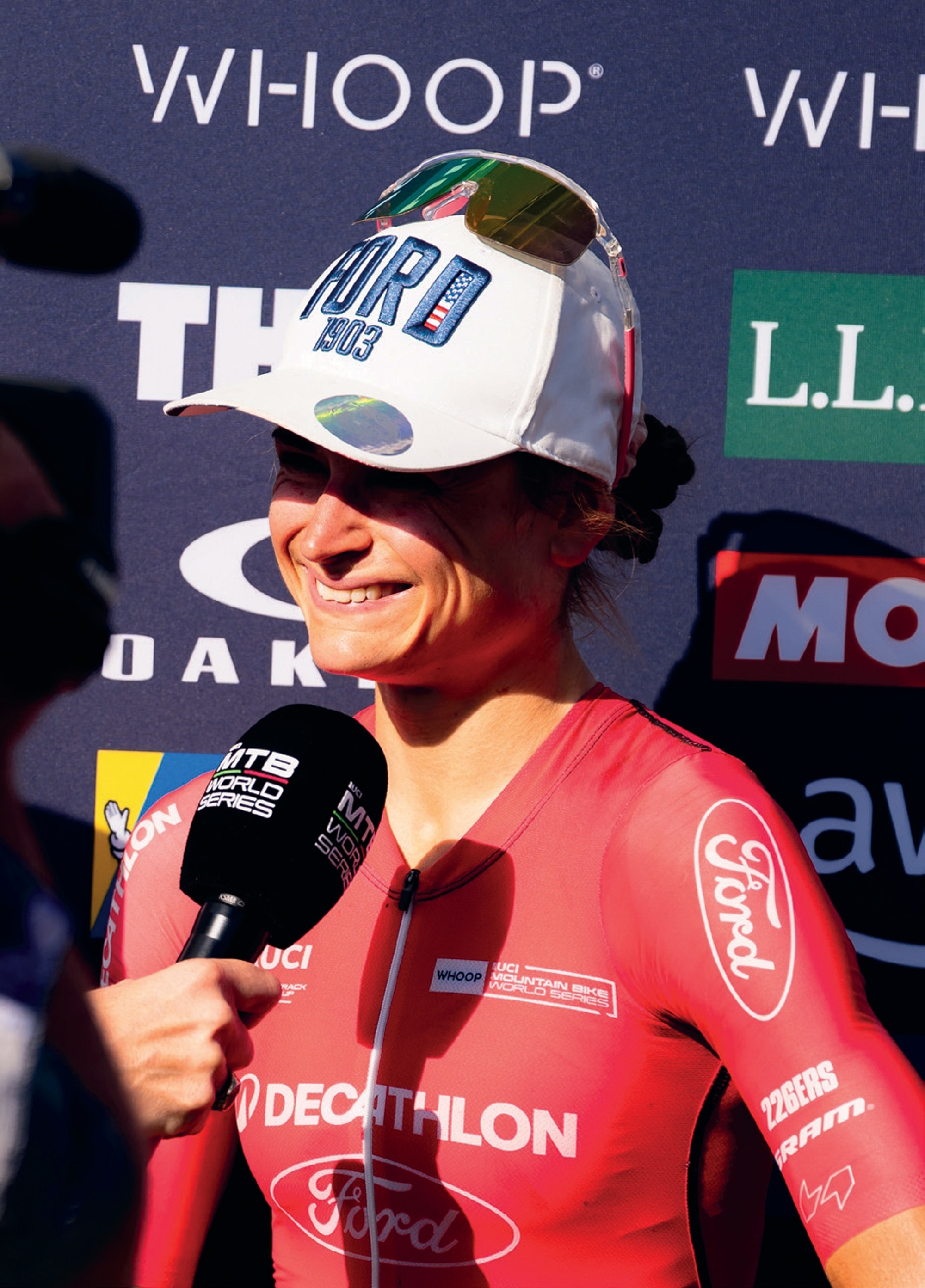
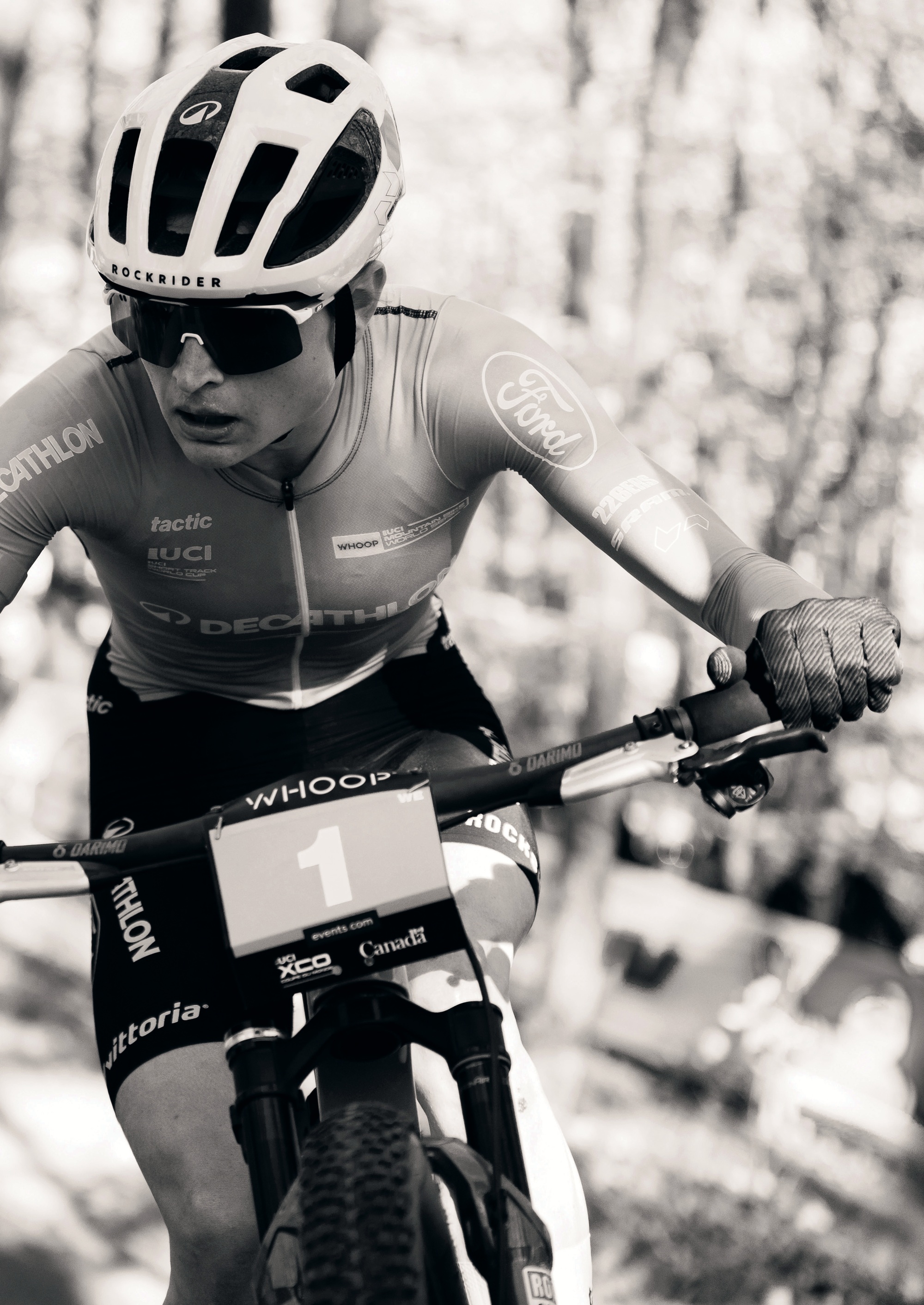
When did it first click that you could actually be competing for wins at the top level?
This year! Even when I was winning U23 races, I was always comparing myself to elite lap times etc., and seeing that there was a long way to go to be at the top. This season has been such a surprise to me. After winning Brazil, it felt very much like I was thrown into the deep end, with all that I had to learn, anticipate, and process. I was put into ‘fast-forward’. I remember, early this year in Feb at one of the Continental races, a man came up and said to me, “I think you’ll win a World Cup this year.” I just laughed and turned to my mate, shaking my head, and said, “Some people just don’t know what racing in Europe is like… there is NO WAY I’m winning a World Cup this year…”
Your victory in Brazil was a milestone for New Zealand mountain biking. How did that day unfold for you? What were you thinking about most as you crossed the line?
I wasn’t thinking anything other than utter disbelief! I didn’t know any milestones had been reached, and I don’t think it was what drove me to win the race. For me, titles or records are a cool bonus for a good result, but, honestly on that day (and every other race day) all I want to do is go out and be able to cross the finish line saying “I gave it everything I had – this result represents all the hard work myself and my support team have put into getting here.” It sounds cliché, but it’s true. For me, it’s just about honouring those around me and wanting to see what I can achieve if I hold nothing back, and about also seeing how hard I can push myself.
Has there been a turning point where you knew you’d done the right things to put you at the front of a World Cup and thought, “I’ve got this figured out now”? Maybe you don’t think you’ve got it figured out?
I am far from having everything figured out! In fact, at the end of the season, I sat down with my coach and manager and wrote a 10-page document (not an exaggeration) on my learnings from this year and aspects I want to improve on. But I think that’s the cool (and honestly hard) thing about sports: the moment you think you have it dialled, someone else who’s been working and pushing in the background will come past and overtake you! You’re only as good as your last race, and I’m someone who is constantly striving to be better. This season was very rewarding and showed me I have what it takes when I am given all the support and resources I currently have and am very grateful for. However, it also showed me the pursuit of being ‘the best’ is never ending and if you expect yourself to one day have the ‘magic key’ to winning, you’ll drive yourself mad!
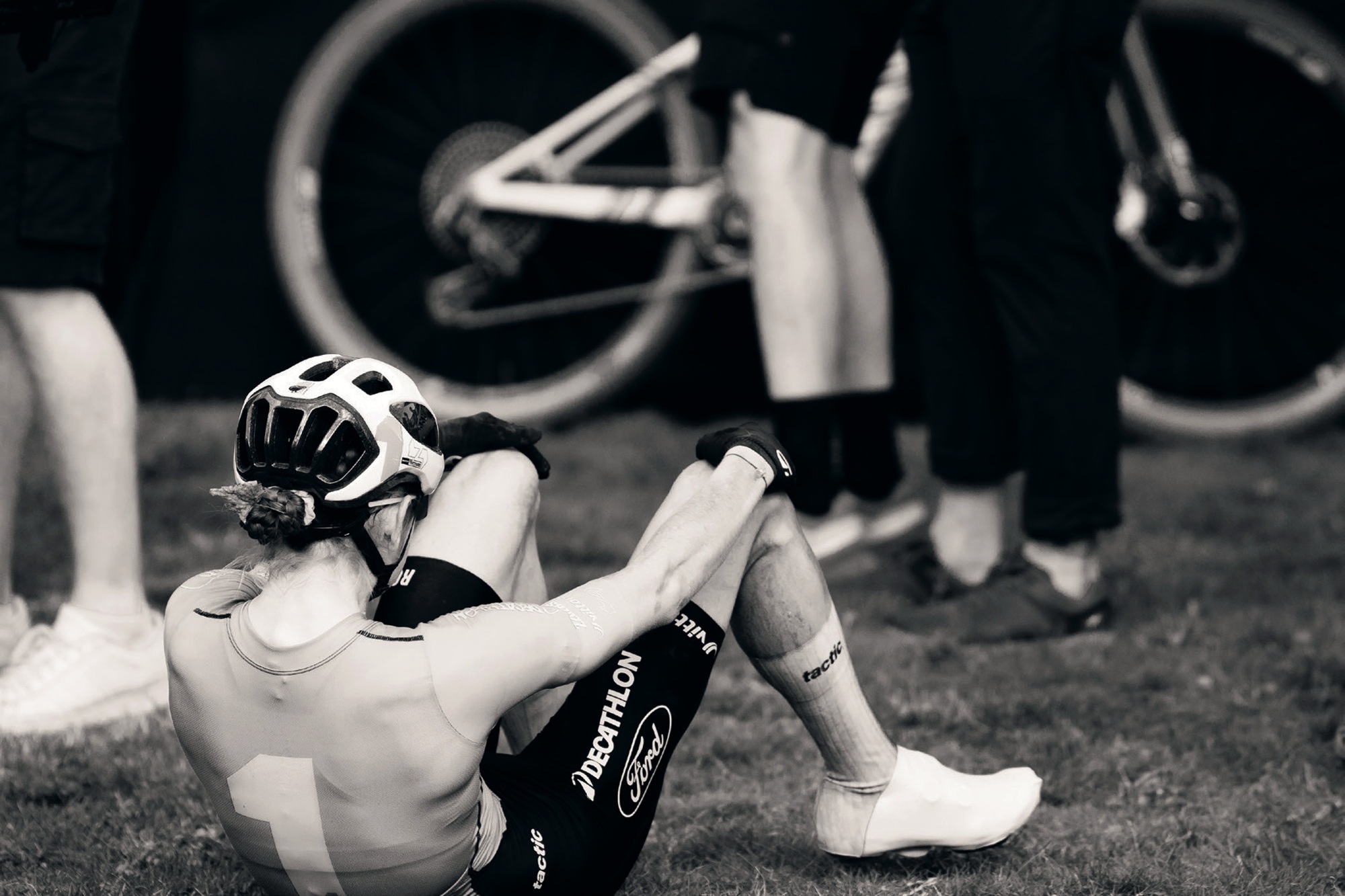
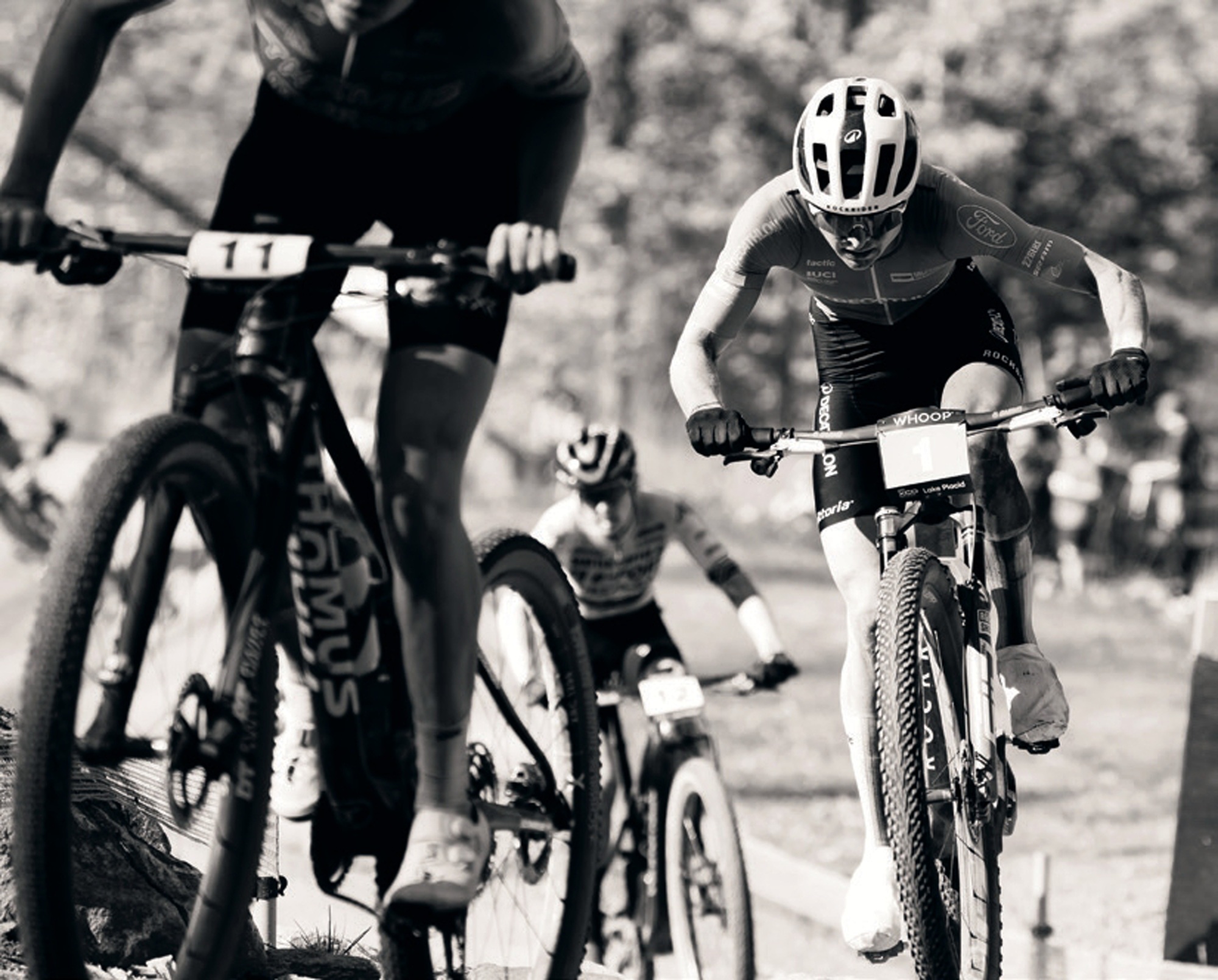
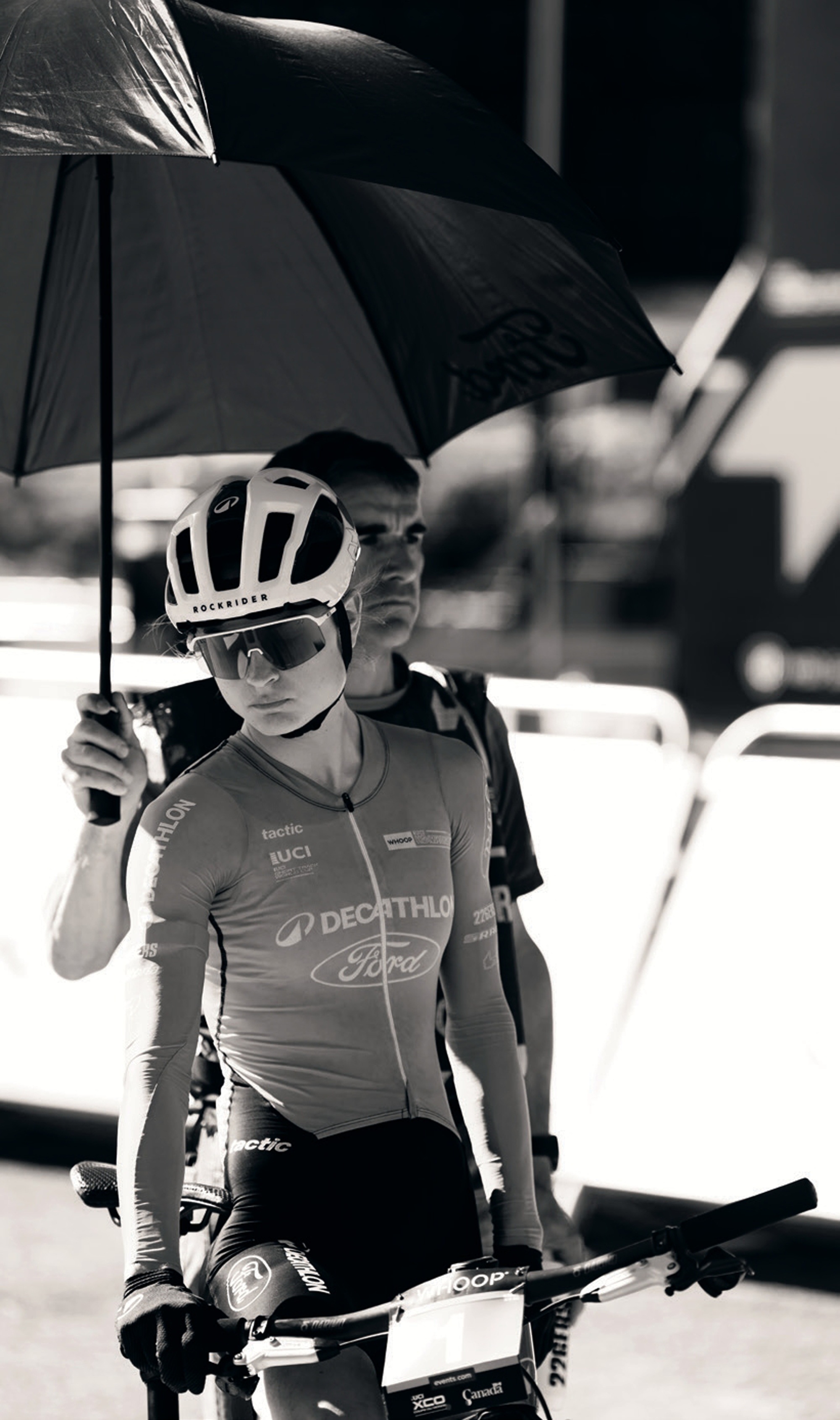
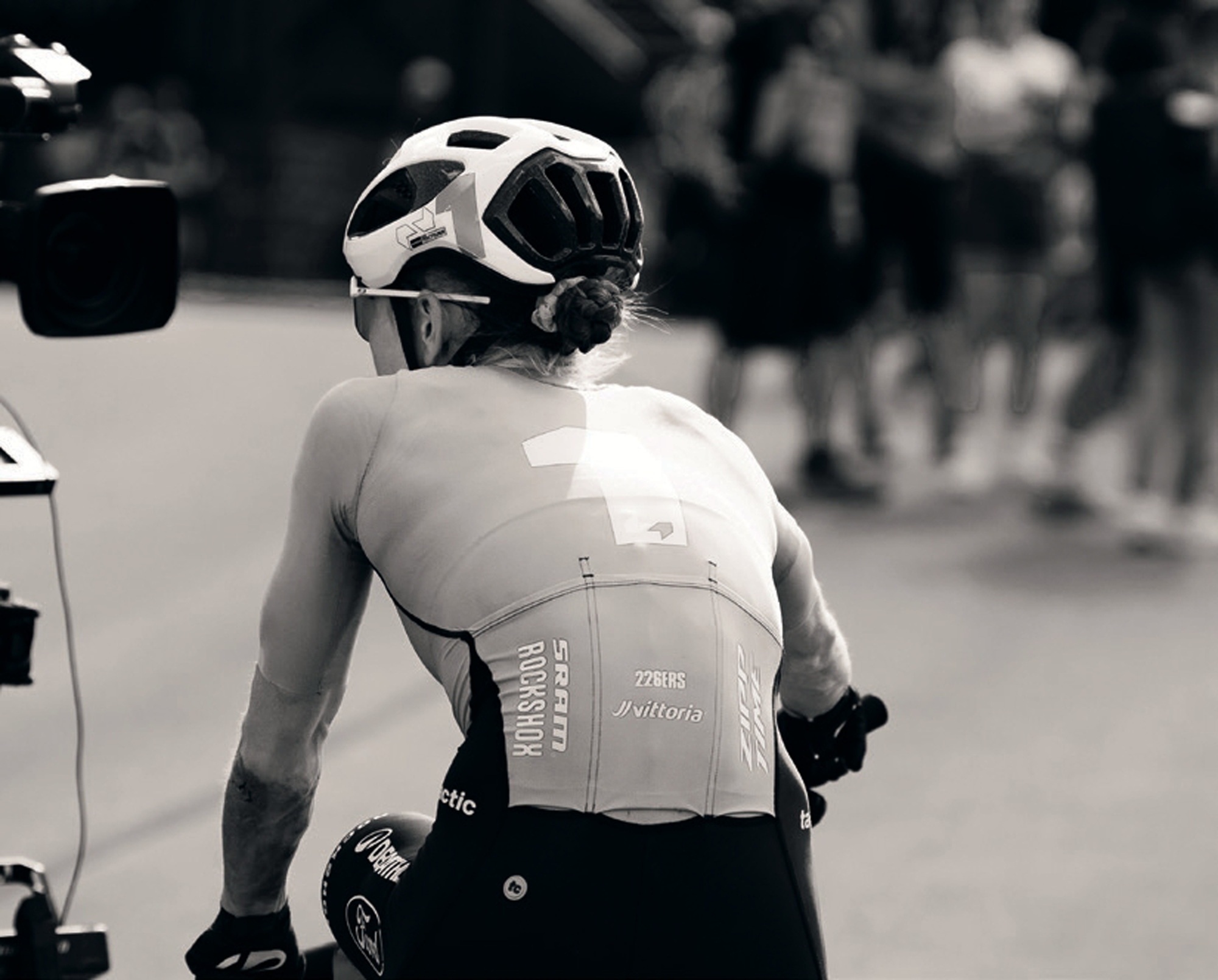
You’ve had to fight back from crashes a few times over the year. What goes through your head when you hit the deck and know that you’re going to have to chase back? What’s the internal dialogue like?
The first thing I think…well, it’s probably something I shouldn’t write down… but after that, it’s just pretty basic thinking. In the middle of a bike race, we’re all working mostly off our ‘primitive’ brains; there is not much ‘reasoning’ or ‘emotion processing’ going on. So, when I crash, my thoughts are actually pretty funny to reflect on. I think in Andorra, my thoughts were things like “Get bike off ground!!”, “Top of hill. Go there”, “Pedal hard”, “Just get to top…” Honestly, things that don’t even make grammatical sense! But the key takeaway is that when racing, I always believe anything can happen, that I can get back to the front, and that all I can do right now is pedal as hard as I can. I try hard not to attach to voices doubting pacing, thinking about the other girls, etc. I just focus on myself, the pain in my legs and trying to get into a zone where nothing else matters.
From what I can find, 2025 looked something like this: 32 races, 15 wins, 13 podiums. That’s a seriously impressive season. When you’re chilling away from the races, do you ever pause and think, “Yeah, I did that”, or does it just seem normal to you?
This is the first time I’ve seen these stats, so I definitely haven’t thought about it! But I have reflected a lot on my season, and I’ve come to the realisation that while the results and wins are nice on race weekends as they give me moments to share with my team, they don’t actually mean as much to me as one would think (and as much as I once thought they would). Reflecting on my season showed me that what I’m most proud of is the way I used my voice to promote issues I really cared about, like mental and physical health, and the role I played in inspiring the next generation of riders to be strong, happy and healthy. Talking to and hearing from the young girls (and all the other fans) are probably the best memories I have from the season, not any moments on the podium or crossing the finish line.
Was there a particular race or moment that best summed up your growth as a rider through 2025?
Andorra was pretty special for me because it was the first race where I felt like the world got to really see my mental resilience. But I also think Lake Placid was pretty cool for me. Partly because of all the young riders that were there that I got to interact with, and also because of the way I ‘bounced back’ from a tough race in Lenzerheide. At the end of the season, I was actually really emotionally and mentally cooked, my eating disorder was wreaking havoc in my brain, and I was in a pretty bad place if I’m being honest. But I caught myself switching back to bad habits and reset my behaviours, stopping myself from ‘digging the hole deeper’. Old Sammie definitely would not have had the same mental perspective and awareness to do so and probably would have cracked hard in those last two rounds!
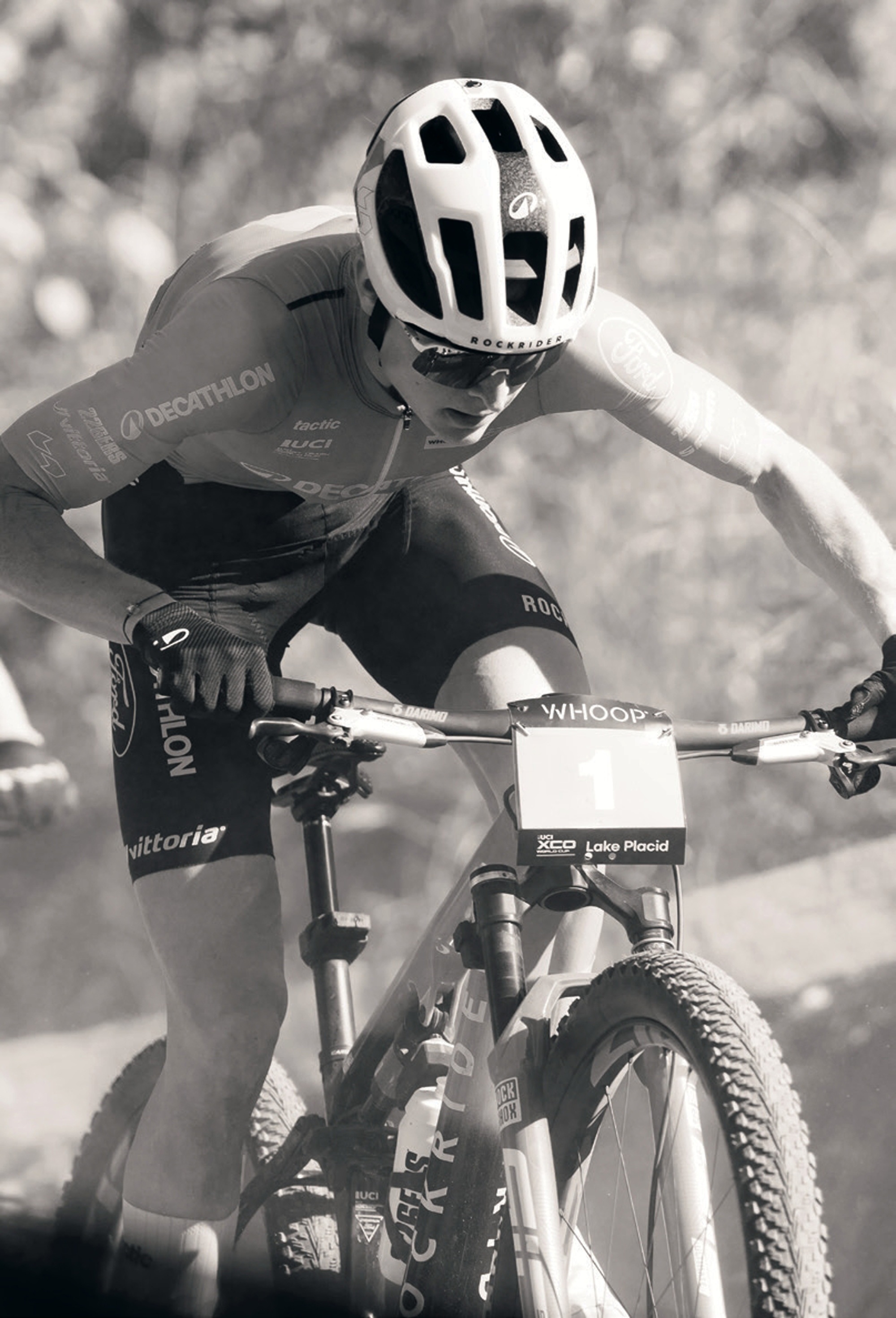
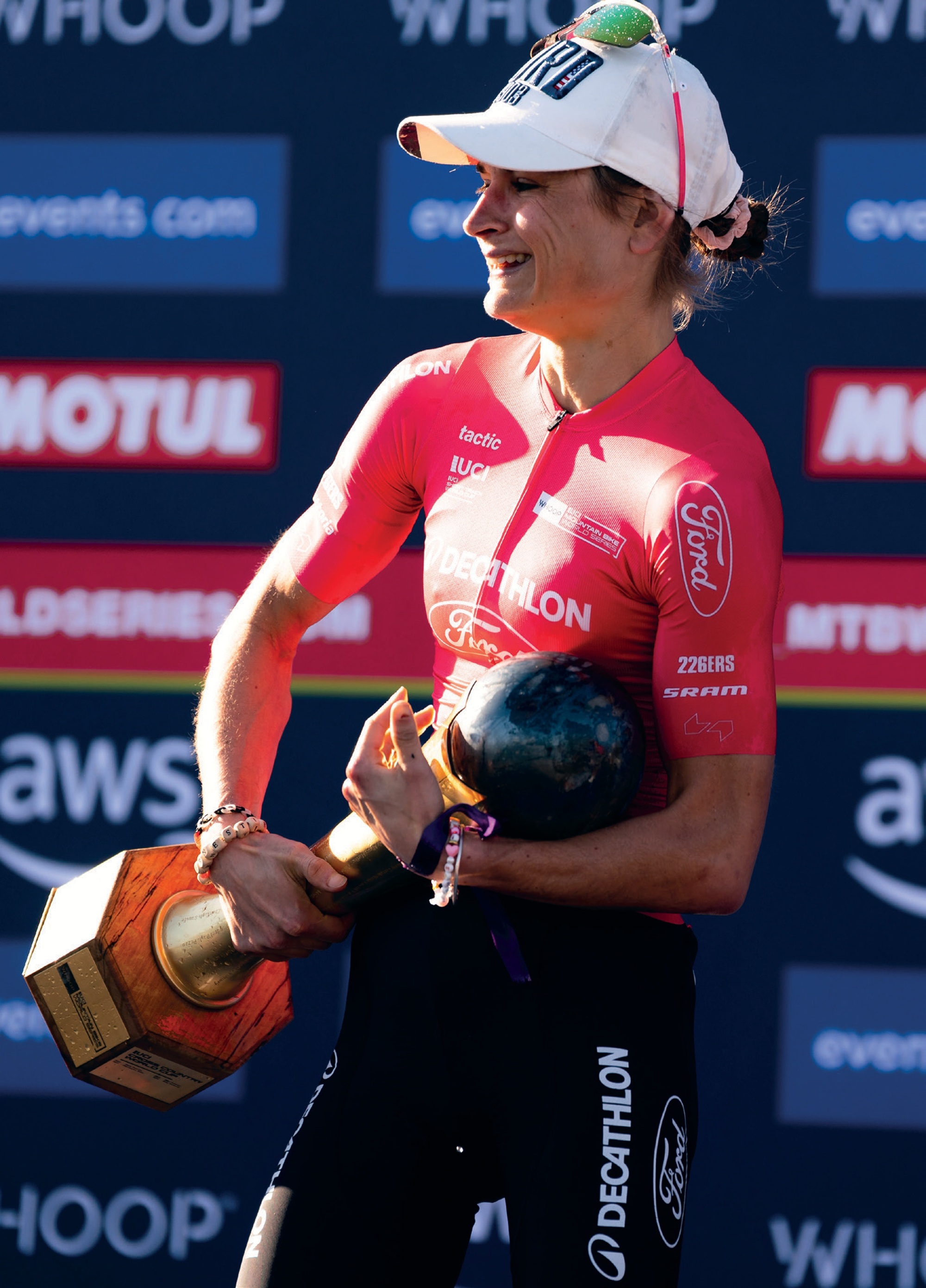
Did you have any behind-the-scenes challenges through the year that people may not know about?
Some included my studies and exams; balancing time with this and racing was a lot. And obviously, there were my eating disorder thoughts, which were a constant battle. It’s something I struggle to explain to people who haven’t experienced it, but some days it felt like I was being followed by a bear or something, and my body was in a constant “fight or flight” response; pretty exhausting, especially during race weeks. But luckily, my coach, team, friends, and psychologists would always help me return to a calm state, or remind me that the struggle wouldn’t be forever, and that I was strong enough to sit with the tough emotions or thoughts until they passed. Surviving a storm is always much easier when you know sunny days are ahead.
The race calendar is long and demanding. How did you manage your energy, mentally and physically, to stay consistent across so many rounds?
Staying focused on just the week ahead of me was pretty helpful. Breaking things down into small, manageable chunks is something we athletes are pretty good at. Also using techniques I had discussed with my psychologist and coach, like meditation, mindfulness, breathing, helped calm me mentally. While physically rest is pretty easy – rest days, naps, good fuelling, massages, etc! Basically, as you can see, a lot of this was me relying on others’ resources to ‘top up the cup’ when I noticed it getting empty, and it’s one of the reasons why I say I couldn’t have done this season as I did without the support of others!
Were there any particular changes that you made after last season that contributed to this year’s successes and the step up from last year?
I focused a lot more on skills – shoutout to Louis from Tuned coaching – and was eating a lot more. For example, I started doubling the amount of carbs I would race with and, during training, increasing my food intake by up to 50% on some days! I also changed the way I did pre-rides of courses and paid special attention to slowing down in my recon laps, to really absorb the details of the course and analyse the best lines for me.
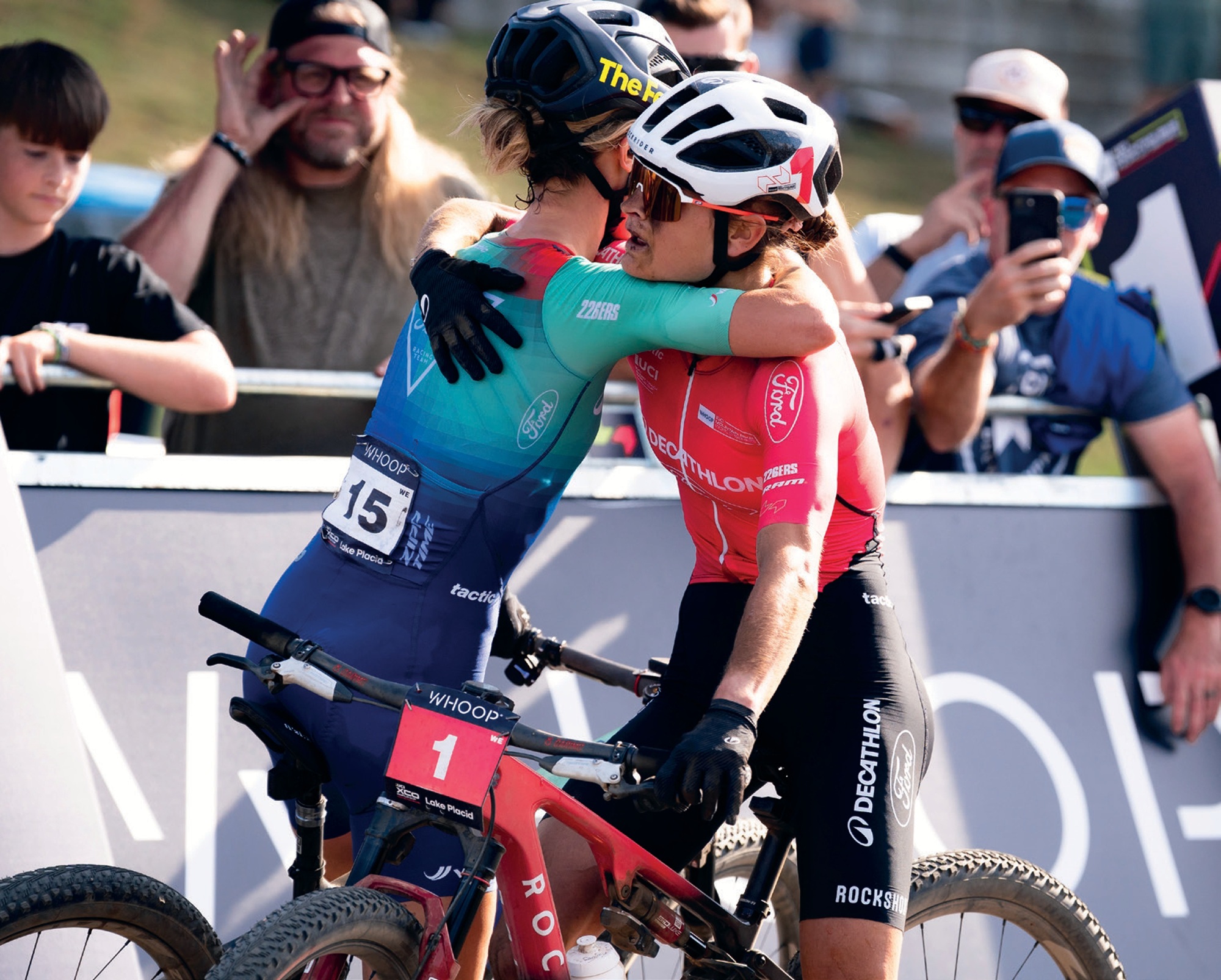
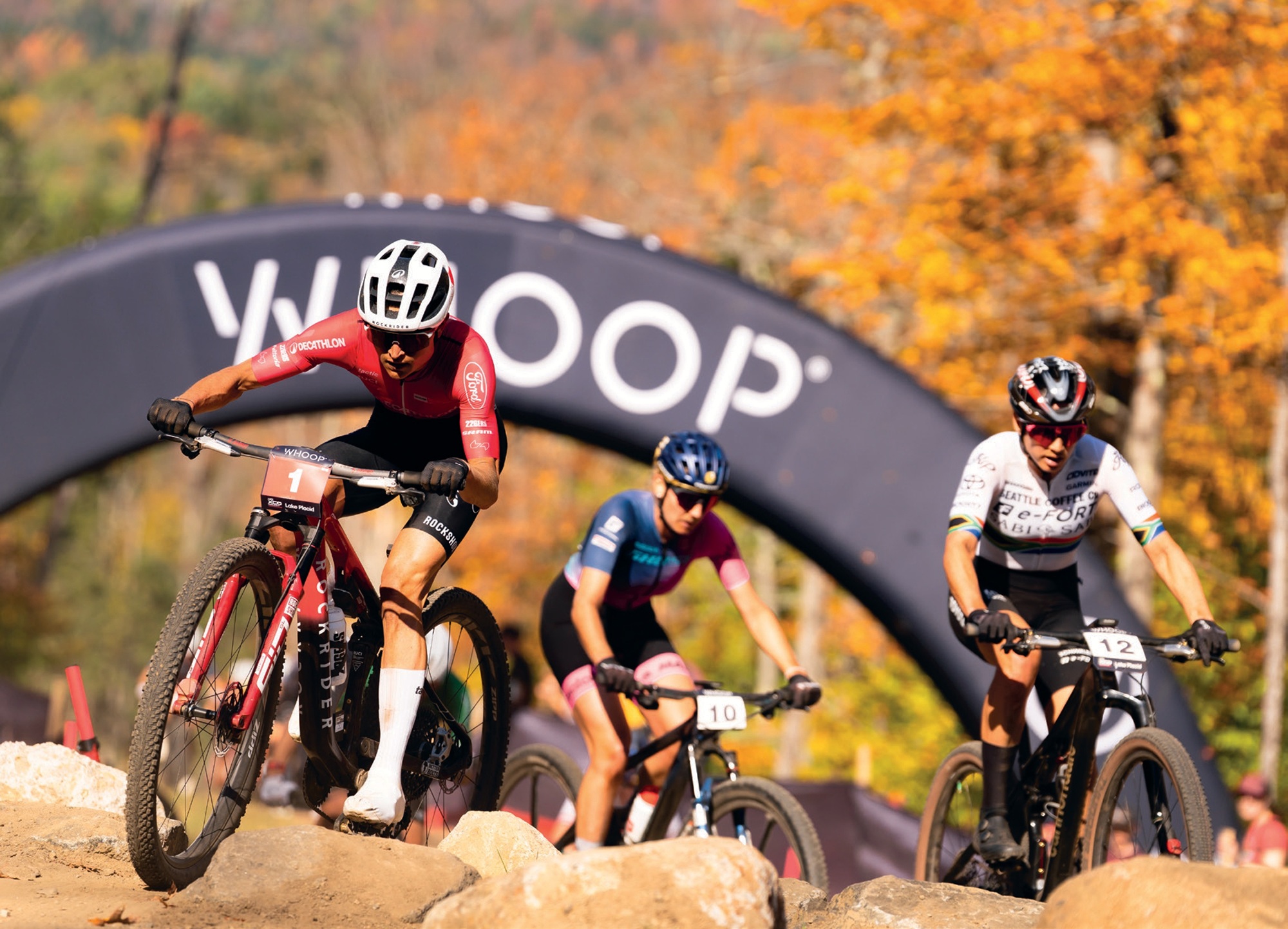
At least in the MTB world, you’re now a household name. Have there been any noticeable changes in life as you’ve been thrust into the limelight?
People recognised me more, and I had a few more followers on Insta! I’ve actually really enjoyed this aspect of success; as I said before, I’m proud of the way I’ve used my increased social presence to promote messages of health and wellbeing. I’d like to think it contributes to making the MTB community a better place for everyone.
Do you have plans to make any changes coming into 2026?
I’m going to be putting more emphasis on therapy for my eating disorder and continue building to be the best athlete I can be for the future.
From a technical or tactical perspective, what do you think separates a ‘good’ XCO rider from a winning one?
I think having confidence in your ability makes such a big difference. If I had a bad start or crashed and found myself fighting for 10th position, etc. I told myself I belonged back at the front of the race. I wouldn’t “settle” into a group further down in the field; instead, I just kept pushing. It also meant I wouldn’t panic, sprint for one or two climbs, then blow myself into the red zone too soon. And obviously, confidence on the downhills is key to riding well. The worst crashes always happen after a moment of self- doubt, hesitation, and a big pull of the brakes!
How do you keep the fire going into 2026 after such a great 2025? Are there particular goals or races you’d like to tick off?
I’m always driven to push more watts, lift bigger weights, etc, so there’s no problem with motivation! I’m someone who just gets so much joy from the process of training that the results I get don’t really change this.
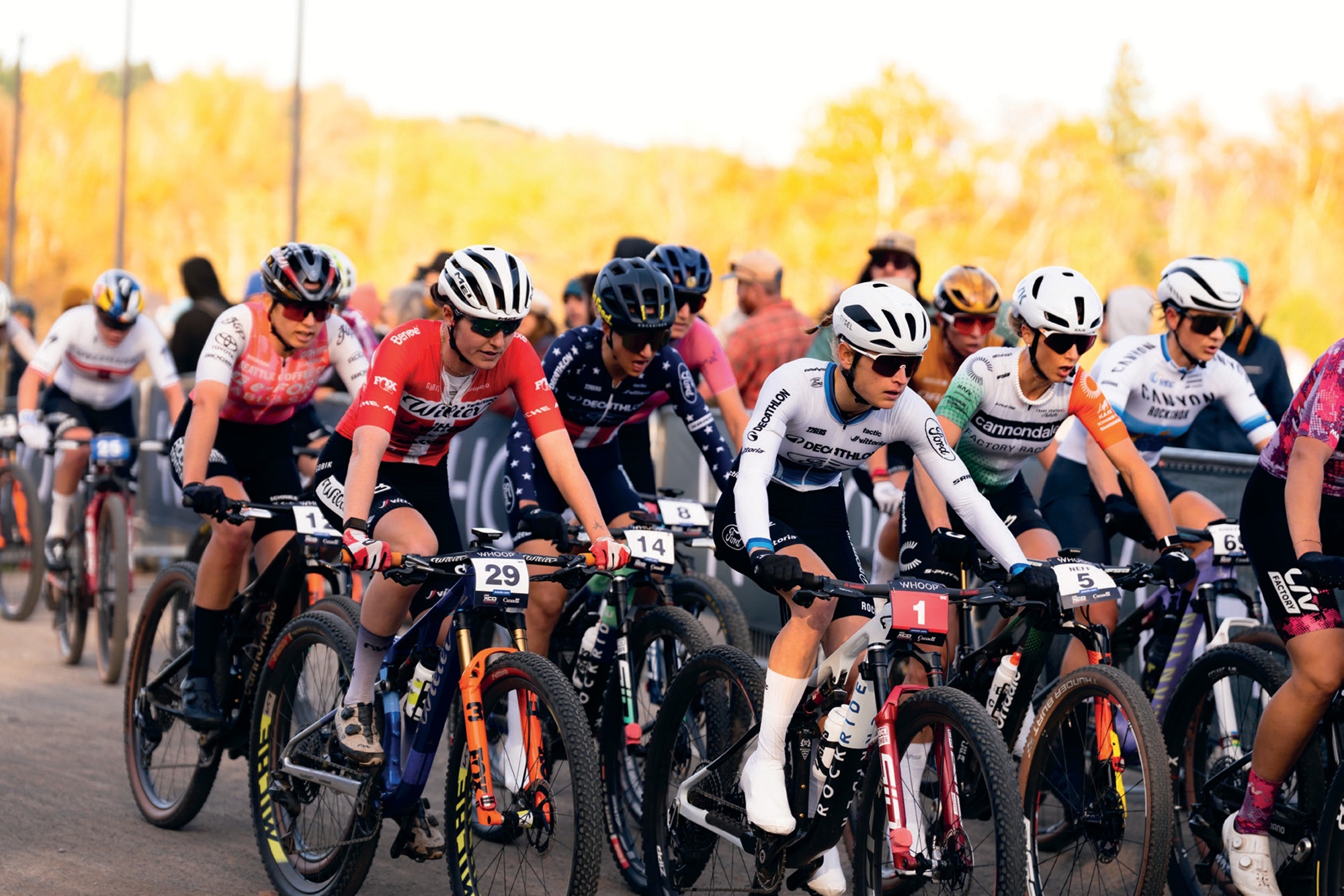
Maybe I’ve missed something, but where did the podium Marmite come from? I hope you’ve shared this delicacy with your teammates. What do they reckon?
I love Marmite. I have it with everything. I tagged Marmite in a post that said I needed some delivered to Europe as a joke, and they responded by sending me some custom jars! I’m glad to report that most of them don’t have the acquired taste (more for me), but a lot of the Brits and Aussies at the World Cups are jealous that I have my secret stash.
Are you doing any work back in the laboratory during the off-season? Any study happening? Are you still working on your French, or have you got that dialled in enough now?
I hope to be doing some in Feb, and I’ve actually enrolled in a Post-Graduate Diploma for Clinical Research next year, which will be the next step I need to work towards a PhD one day. I also love learning French, but I will take a break from that as I do more medical research studies; however, living with the French team is basically just one never-ending French lesson anyway!
Are there any other cycling disciplines that pique your interest and you’d like to give a nudge?
Definitely not cyclocross…I hate winter, the snow, and being cold, so you’ll never catch me sticking around in Europe during winter when I could be flying home to NZ summer. I am interested in road racing, but currently it would only be a way to supplement my MTB performances. I still have too many goals I want to achieve on the knobbly tyres before I start thinking seriously about joining the dark side.
Thanks, Sammie, for your time, and good luck for the ‘26 season. We at NZ Mountain Biker Mag will be cheering you on!