

Story: Setting up a Workshop That Works for you
While it’s not every mountain biker’s favourite pastime, doing some at-home bike maintenance is part and parcel with the sport itself for a number of you. However, not having the right set up can really compromise the enjoyment you get from working on your bike, so this month we’ve put together a few tips on setting up a home workshop. On their own, these tips might not seem that important, but combined they can make a big difference.
Step 1 – Identifying Your Space
Ideally your workshop would be located in a garage or shed, but not everyone has that luxury. If an indoor space is your only option, look for a tiled one if possible, as it’s hard to avoid getting anything on the floor. Ideally, the space should be big enough to be able to turn your bike around, so at least 2m x 2m.
Lighting is key to good workmanship and preserving your eyes. Natural light from a nearby window is optimal; however, it’s best to avoid direct sunlight if possible, or to be able to close the blinds when necessary.
If natural lighting isn’t possible, or when you’re working at night, you want to use fluorescent tubes or coil fluorescent energy lightbulbs. Try to avoid using sharp light because it casts heaps of shadows. Or, barring that, hang a good work/inspection light from the roof, as you want to be able to keep your hands free.
Ventilation is also important as a lot of the best cleaning products – even the ethical ones – are often quite smelly. Even if it doesn’t bother you, remember to consider others in your household – muddy mountain bikers often already have a bad rep in their households and there’s no need to encourage the perception!
You’ll need somewhere to store hazardous substances (such as kerosene/diesel for cleaning a chain). Most people use a container that they need to dump out. One concept that works well is to use an old freestanding laundry tub that can be used to clean parts in, with a catch bucket collecting the waste to be disposed of appropriately.
The bike also needs to have some mechanism to hold it upright. Using a bike stand is optimal if you decide to invest. If not, you need to find a way to hang your bike. One option is to strap your unused bike rack to the wall. See more details in set up section.
Step 2 – Stocking your Workshop
Once you’ve selected your spot, you need to start equipping the area with a number of essential tools and items. Here is a list of what we consider essential:
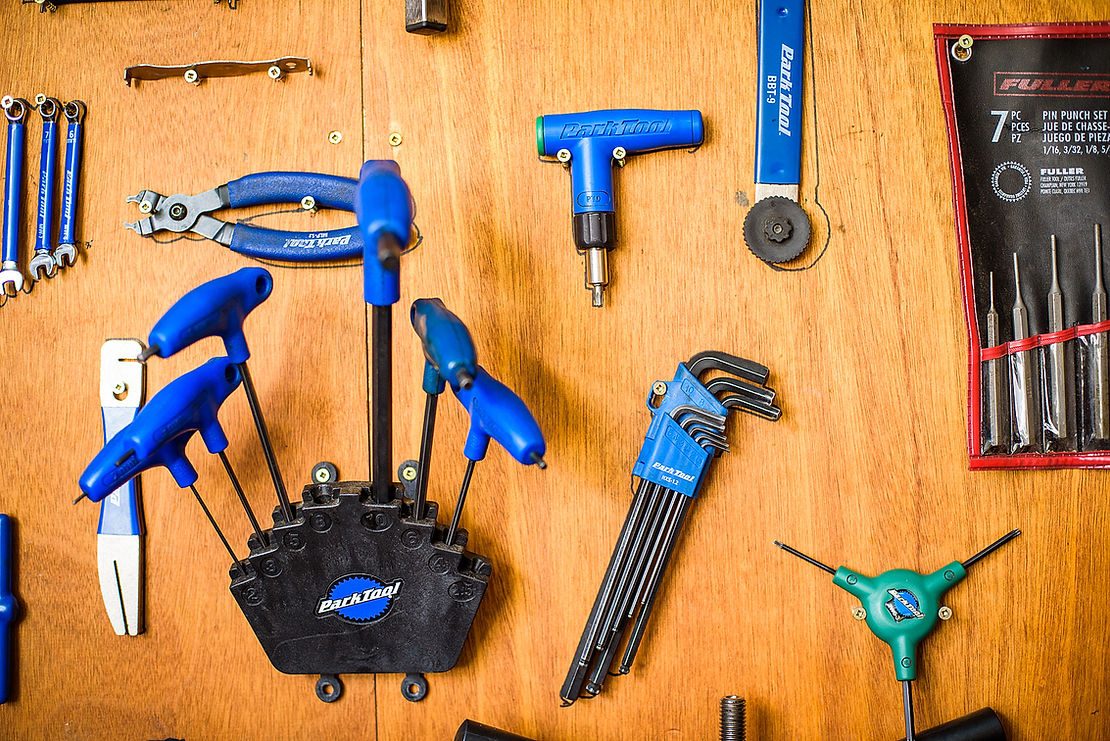
- A good stash of rags – old cotton or flannel clothes are best as they’re not linty anymore.
- Bike stand or bike holding mechanism. If you don’t have a bike stand, it helps if you have a wall that you can mount stuff against.
Essential Tools:
● Good floor/ track pump.
● Small torch to be used as an inspection light.
● Tyre levers.
● Multi tool with all the hex and torx keys your bike needs, plus chain breaker and screwdrivers. (most decent bike specific multi tools will have all these things)
● Bike-specific cable cutting pliers.
● Side cutting and long nose pliers.
● Cassette lock-ring tool.
● Chain whip.
● Mechanic’s pick (a sharpened spoke will work)
● Soft-faced hammer or mallet.
● Phillips and flat screwdrivers.
● Shock pump.
● Utility Knife.
● Spoke nipple wrenches.
● Bike hanging jig: Chains from ceiling/ towbar bike rack mounted to the wall.... there are many make do options.
Great to have if you want to get really well setup:
● Good quality foldaway bike work stand.
● Solid work bench with engineer’s vice mounted to it.
● Air compressor.
● Good fluorescent tube lighting over work area.
● Chain joining link pliers.
Useful products and supplies:
● Zip ties.
● Electrical tape.
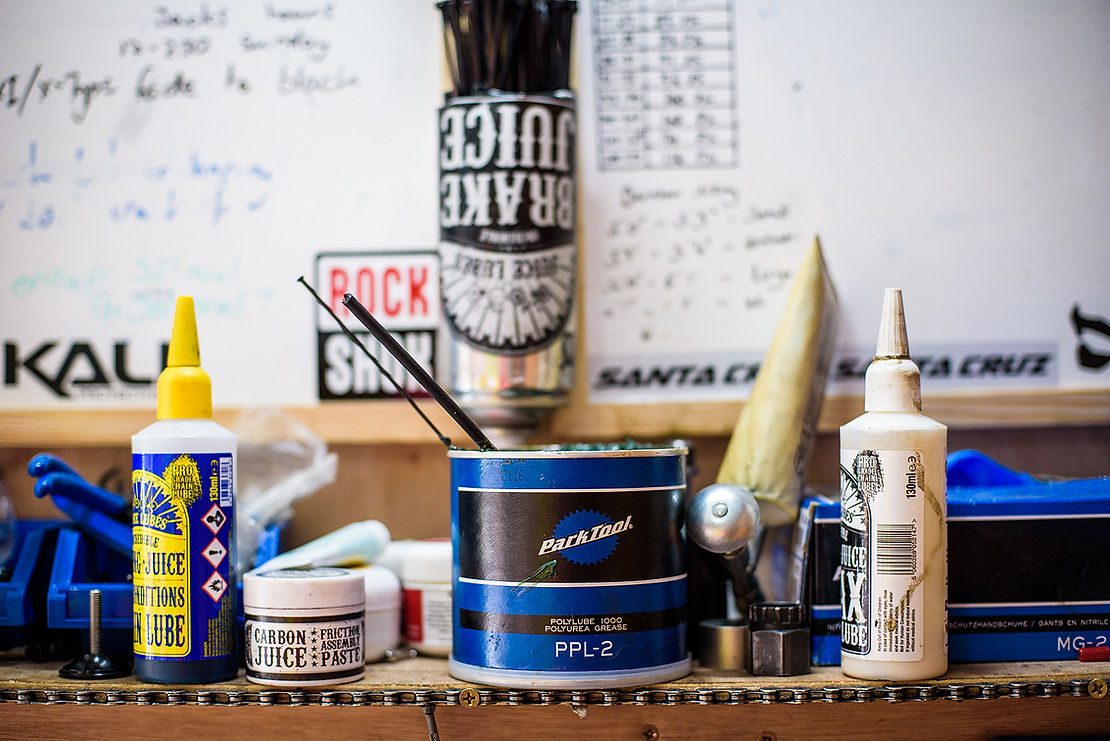
● General purpose bicycle grease.
● Wet and dry chain lubes.
● Spare chain joining links.
● Silicone spray.
● Residue-free brake cleaner spray.
● Water-soluble degreaser.
● Blue Loctite thread locker.
● Carbon grease if you have carbon bike parts.
● Workshop apron.
● Nitrile work gloves.
● Bucket and selection of bike specific cleaning brushes.
Step 3 – Setting it up
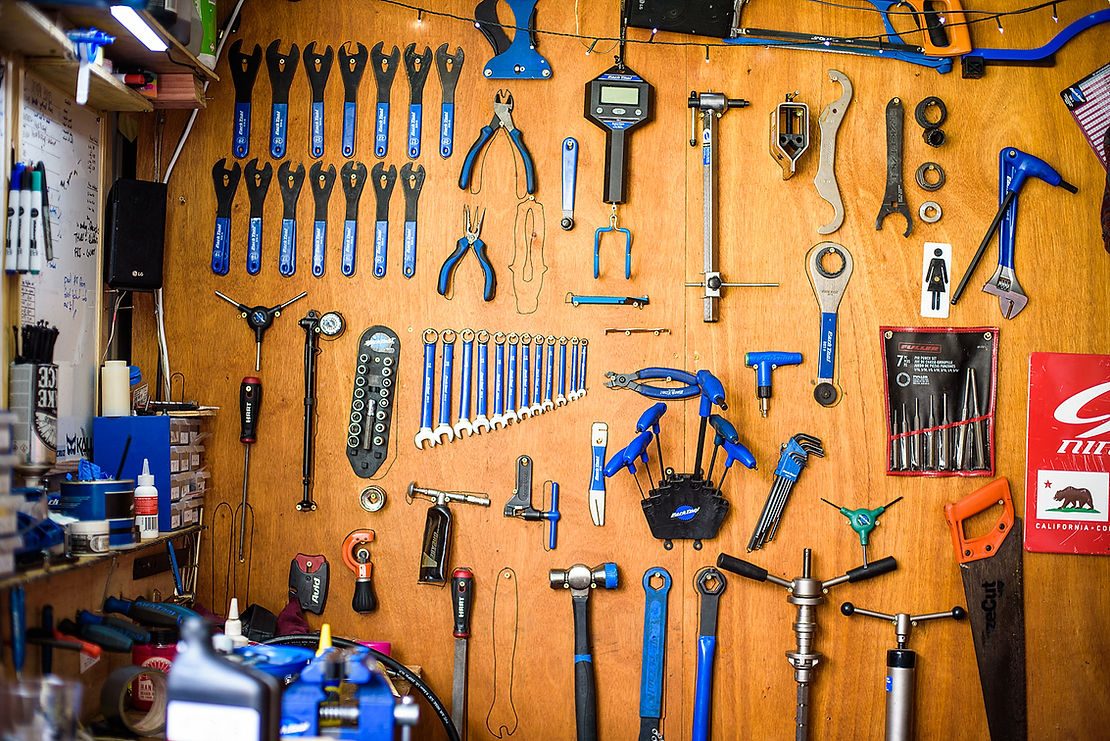
It’s worth stressing the importance of having your bike at work height, ideally somewhere steady that doesn’t swing. This can usually be achieved by using a work stand, which is a luxury, or a wall mounted bracket.
To enjoy the optimal bike set up, all your essential pieces of equipment should be within easy reach and have their own place. You should also have a piece of scrap carpet under the bike and where you’re standing – it’s less slippery and absorbs extra mess.
The most frequently used stuff should be in the easiest to reach positions, so you’ll need some sort of work bench top close to the bike to put things on while working. Use old cabinets if possible to keep stuff put away and use as a bench – an old kitchen cabinet with a bench top is optimal for this.
Words: James Duncan
Images: Digby Shaw
Story: Release the Hounds
With hands shielding the sun from our eyes, we scan the brown, barren emptiness of Hakatere Conservation Park. Several mountain ranges encircle us like we're in the centre of a gigantic crater. A light breeze carries the sound of barking, but the undulating landscape hides the culprit from view.
“Does he usually come back?” Adam asks, between sips from his water bottle.
"Usually," I sigh. We've not even left the car yet, and I've already managed to lose him. I clamber onto the roof and shout his name. In the distance, I can see a black blur chase several birds that soar high above. “Don’t worry, I can see him.”
Adam squints as if he's on safari trying to spot a wild animal across the savanna-like wilderness. “Is he coming back?”
My arms fall to my side. “…doesn’t look like it.”
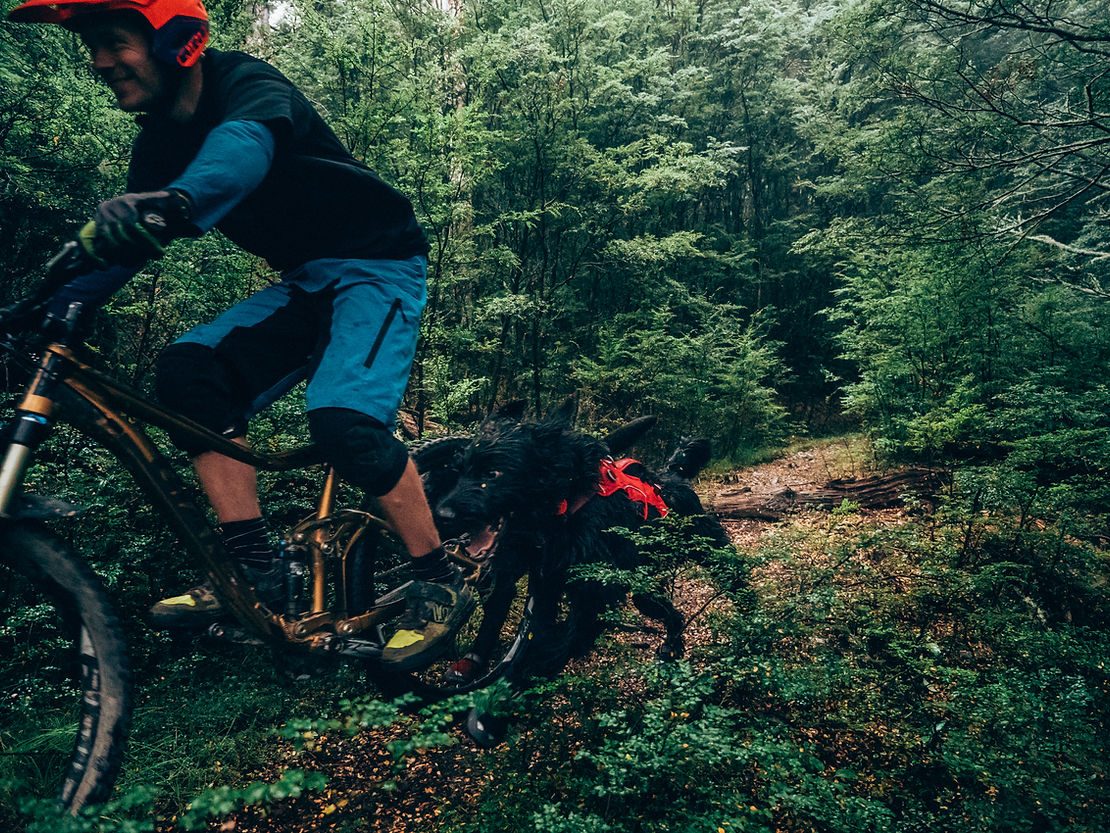
Up until three years ago, I’d never owned or spent much time around dogs. I didn't grow up with one in the family and was generally indifferent to the four-legged, tail wagging species. So when my partner suggested we get a puppy, I was finally swayed by the possibility of having a trail dog. I’d seen plenty of riders out on the tracks with well-mannered, obedient canines at their side, and it seemed an ideal way to combine the chore of dog walking with the joy of mountain biking. Training can’t be that difficult? Sit, stay, sick balls – easy. As I watched my not-so-faithful companion disappear over the Hakatere horizon, it appeared there was still a bit of work to do.
A Bikers Best Friend?
On paper, a trail dog should be your favourite riding partner. They won't cancel when it looks like rain; they'll never struggle through a hangover during a weekend jaunt, and their infectious energy can power you up the worst of climbs. However, something I had failed to consider when observing other trail dogs out on the local tracks was that I was witnessing the finished product. It can take months – even years – of training to get a canine to a point where they are trustworthy and capable enough to be taken out for a few laps.
Before we’d even got our dog Oshy near a bike, we had noticed a few of his quirky traits. Some of which lent themselves to the possibility of trail dog material, others… not so much. His breed is a cross between Border Collie and Huntaway. Which I appreciate doesn’t mean a great deal to non-dog people. Put simply, both varieties are energetic and bred to herd livestock, with Collies being the brains, i.e. able to follow commands, and Huntaways being the muscle, i.e. barks a lot.
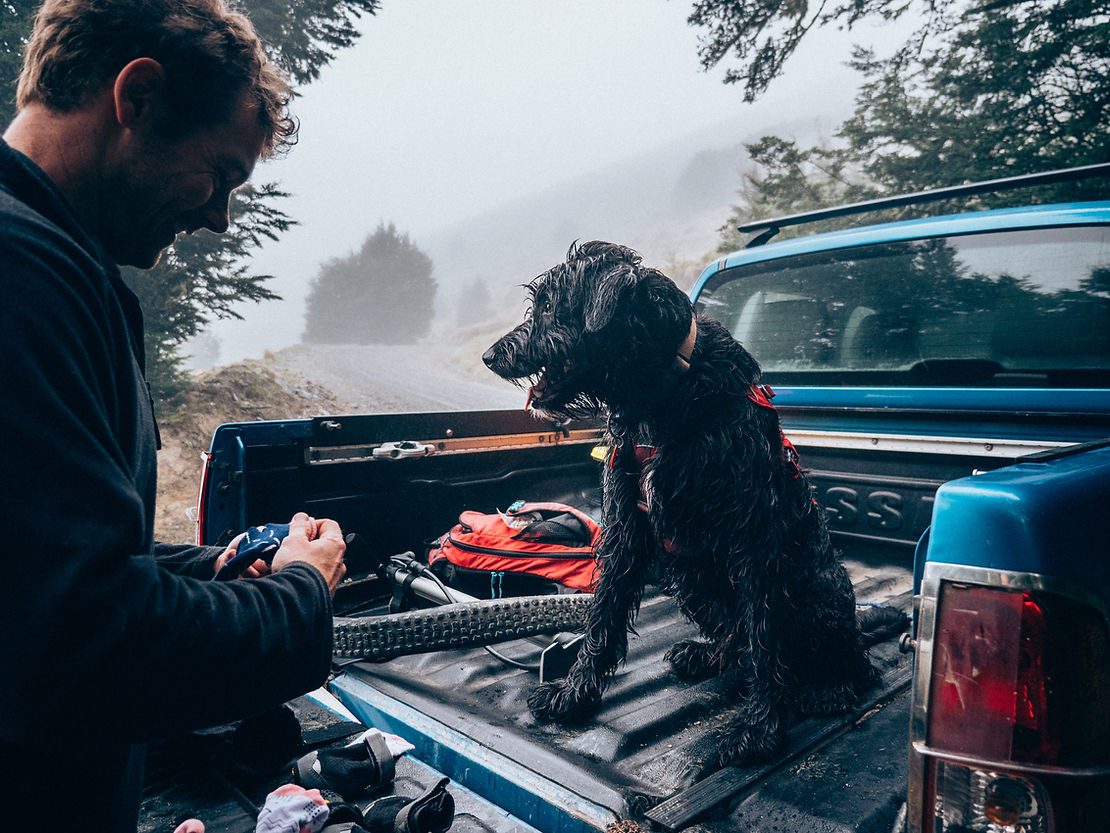
Understanding the breed and body type of your potential trail dog is important as it can dictate how they will cope when joining you for a ride.
“Generally speaking, larger dogs with long legs and long snouts are ideal,” explains Lisa Sturm, a trainer at Sit Happens, Dog Training Christchurch. “But that doesn’t include Greyhounds, as although they may appear light and quick on their paws, they have been bred for short, high-intensity exercise.”
Before we had consulted with Lisa, we’d helplessly watched Oshy chase seagulls for over an hour at the beach, so we knew his stamina was up to it. She recommended working on his control around chasing things first, before taking him out with the bike. Once that was sorted, Lisa suggested starting small and somewhere quiet for the inaugural ride, which is how we came to be in Hakatere Conservation Park.
Take One
Hakatere lies within the depths of Canterbury, and although not famous for mountain biking, it is remote. I’d plotted a course to the tantalisingly named Mystery Lake. The route followed an uneventful 4WD track in and returned via a surprisingly fun section of the famed Te Araroa walking trail.
Before we released the hound, we laid a short trail of dog biscuits for him to seek out and enjoy, helping to focus him before the ride. We made the mistake of leaving him to it while we sorted the bikes out, and once the biscuits were done, he unfortunately moved his attention back to the birds again.
Eventually we regrouped and set off, and it was only a matter of time before another mistake became evident. What I hadn’t fully taken into consideration was the distance. It was upwards of 30 kilometres, and we were out for far longer than planned. Before we'd even made it back to the car, Oshy was starting to stiffen up. He spent the following few days on his bed, staring at me with accusatory eyes.
Once the guilt had subsided, I began pouring over Topo-maps and DOC information, searching for suitable places for a second attempt. Then the obvious occurred to me - Craigieburn. Those that have ridden there will be familiar with the selection of soft, loamy trails and spectacular views it offers. With it being relatively quiet and full of shorter 10 km loops, it was an ideal location.
I was also keen to try some new commands we’d been working on, such as ‘Behind,’ ‘Wait,’ and ‘Let’s Go.' I'd practised them while riding around the front garden, tossing out treats like confetti at a wedding when Oshy got it right.
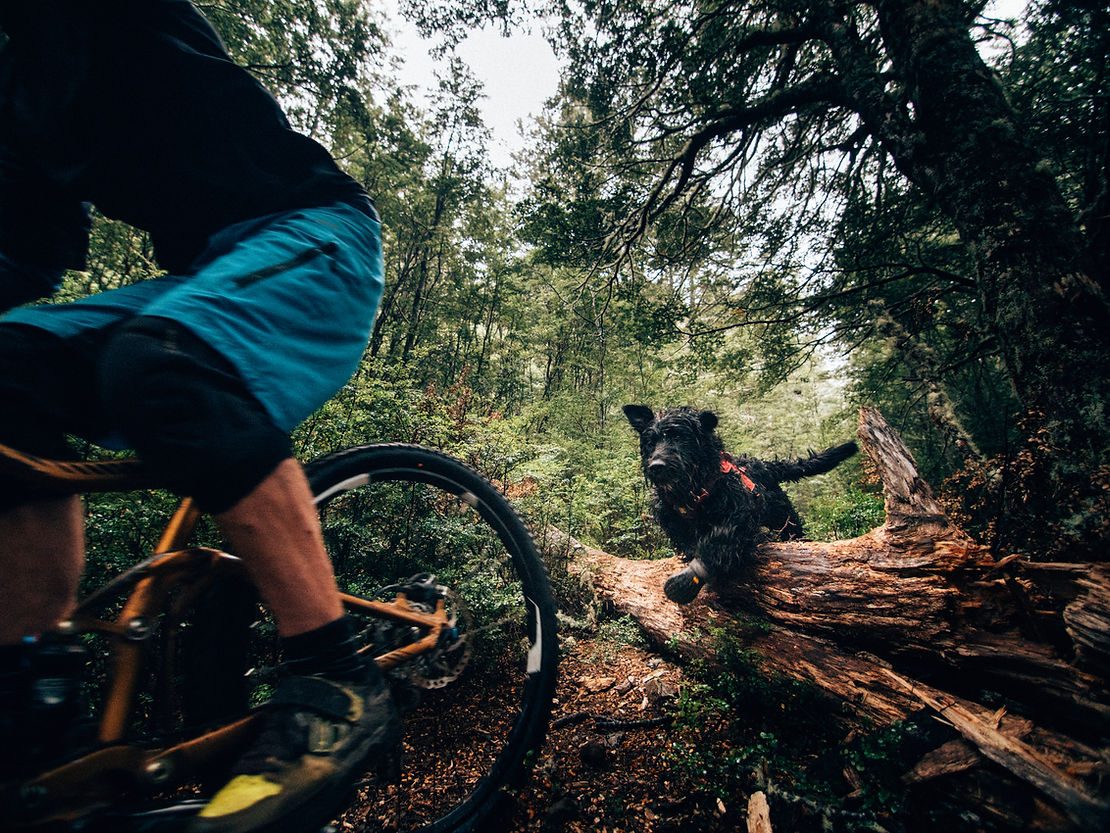
Take Two
On a crisp, bluebird day we slogged our way up the meandering Craigieburn access road to the base of the ski field. Sat at the start of a trail called The Edge, we both took a moment to enjoy the fresh alpine air and scenic views, before embarking – excuse the pun – on the track. This time the distance was right, and the commands worked suspiciously well, with Oshy waiting for the order to start, and staying behind the bike when instructed.
The Craigieburn trails are mostly through native forest, which provides welcoming shade, and we stopped at the many streams that trickle down the mountainsides so Oshy could keep hydrated. An important aspect to be aware of as you're freewheeling down your favourite trail is that dogs can't cruise, and can, therefore, be susceptible to over-heating.
Unfortunately, what I hadn’t taken into consideration was the trail surface. It's called The Edge for a good reason - sections of it traverse over steep scree slopes. As well as being a bit sketchy in places, it didn’t do any favours for Oshy’s paws while he dashed over the jagged shingle. During the drive home I heard a constant licking noise, and on closer inspection, it appeared that he had torn his pad. Another wave of guilt washed over me. There was only one thing for it; it was time to go shopping.
Retail Therapy
“First and foremost, I’d recommended a set of booties,” Rocky suggested, holding up a pair of adorable dog shoes. Oshy and I were in FurtherFaster, an outdoor store in Christchurch, which has a whole section dedicated to arming your canine for adventure. There are collapsible water bowls, dog-specific first aid kits and all-weather dog coats.
As we measured up Oshy for some new boots, Rocky told me about Badger, their three-year-old Labradoodle. The large, shaggy dog bears an uncanny resemblance to Oshy, except instead of barking there is a continuous desire to chase toys.
“These days he’s more of a trail running dog,” Rocky says as we measure up Oshy’s paws, “due to the requirement for dogs to be on leashes when up on the Port Hills.”
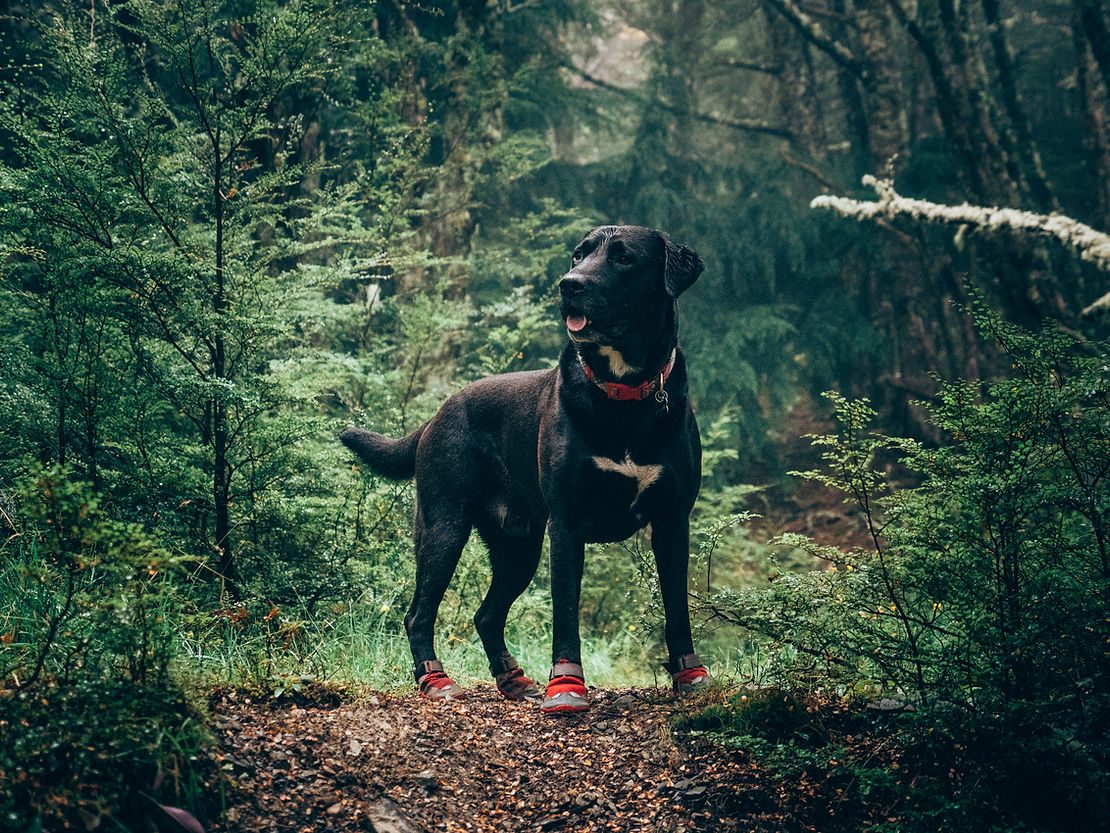
It’s a bad idea to have your dog tethered to your bike as it can lead to all kinds of accidents. If you’re worried about your dog running off, or want to train them to run next to the bike, there are devices available. An example is the ‘Walky Dog Plus’ which safely attaches the dog's leash to the seat post, but bear in mind that it’s only suitable for wider trails.
With the boots fitted, my attention shifted to the selection of dog bags that can turn your pooch into something resembling a pack horse. The contents of my bike rucksack were evolving, and I was now hauling around biodegradable poo bags, a whistle, a leash and about a kilos worth of dog biscuits. Seeing as dogs can carry about 10% of their body weight, the thought of delegating some provisions to Oshy seemed an attractive one – especially as he never chips in for petrol.
At the counter, I asked if Rocky had any final advice. “Start small and somewhere quiet, and take plenty of water.” He then added with a grin, "and make sure you enjoy yourselves.”
Take Three
For the next attempt, I decided to bring some moral support. For anyone who has biked around Victoria Park in Christchurch, or been along to the dig days, they may be familiar with Frank (the Tank). A well-mannered, five-year-old Labrador-Border Collie cross. he can often be spotted taking sneaky hotlines and shortcuts as he races his trail buddies, Todd and Agata, through the steep and twisty downhill trails of the park.
I had hoped that the calm and collected presence of Frank, who has several years of trail running experience under his collar, would have rubbed off on Oshy, but alas. During a drizzly Saturday morning at Craigieburn, the sound of barking could be heard echoing through the mountains.
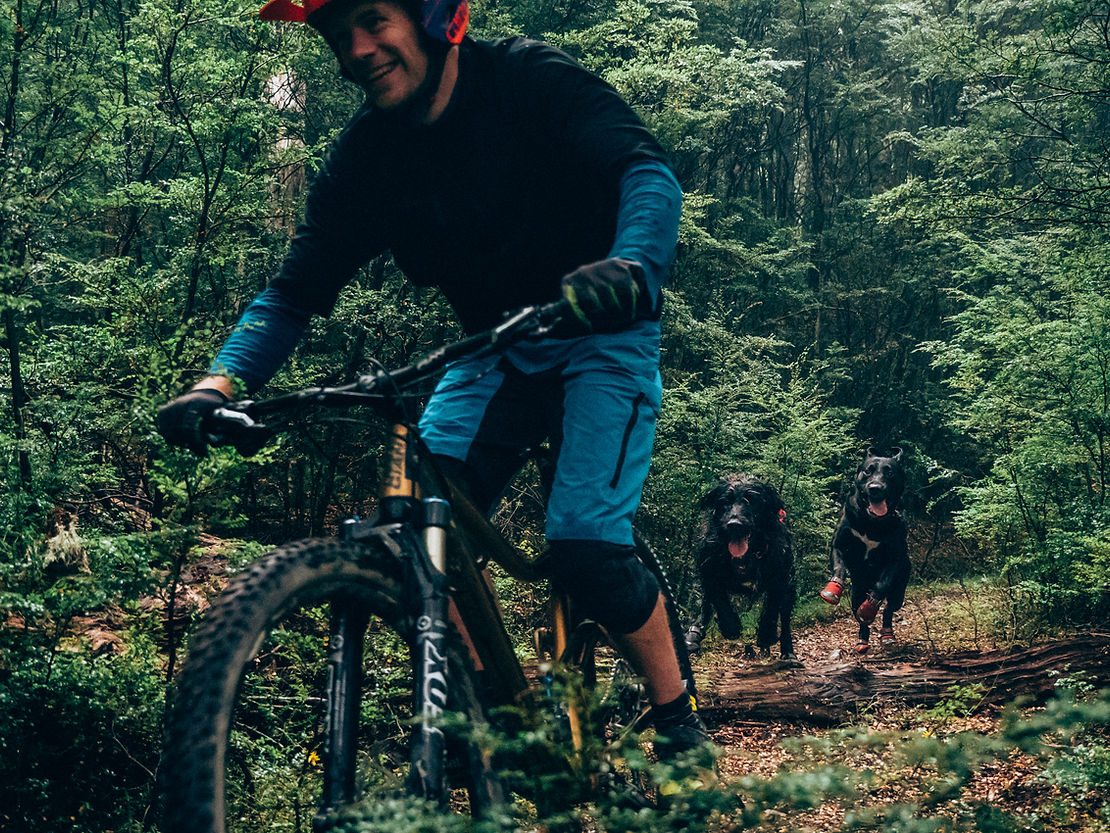
What I hadn’t taken into consideration this time was Oshy’s excitement at another trail dog and new riders. Sadly, he expressed this emotion the only way he knows how – barking. No amount of biscuits, polite requests to cease and desist or ‘time outs' in the car seemed to have an effect. After just two runs we had to call it a day. Something I’ve come to realise with Oshy is that if it's not working then don't force it. Similar to those rides where you have endless mechanicals or repeated crashes, it's best to just draw a line under it.
Through a rain covered windscreen I watched Todd and Agata set off for another lap, with Frank bounding happily – and silently – after them. I rolled my eyes and wondered why I bother. I turned to face Oshy and was greeted with a large pink tongue trying to clean my mud covered face. He then sat back with a huge grin across his chops, giving me the only reason I needed.
Words: Ian Middleton
Images: The Perfect Line
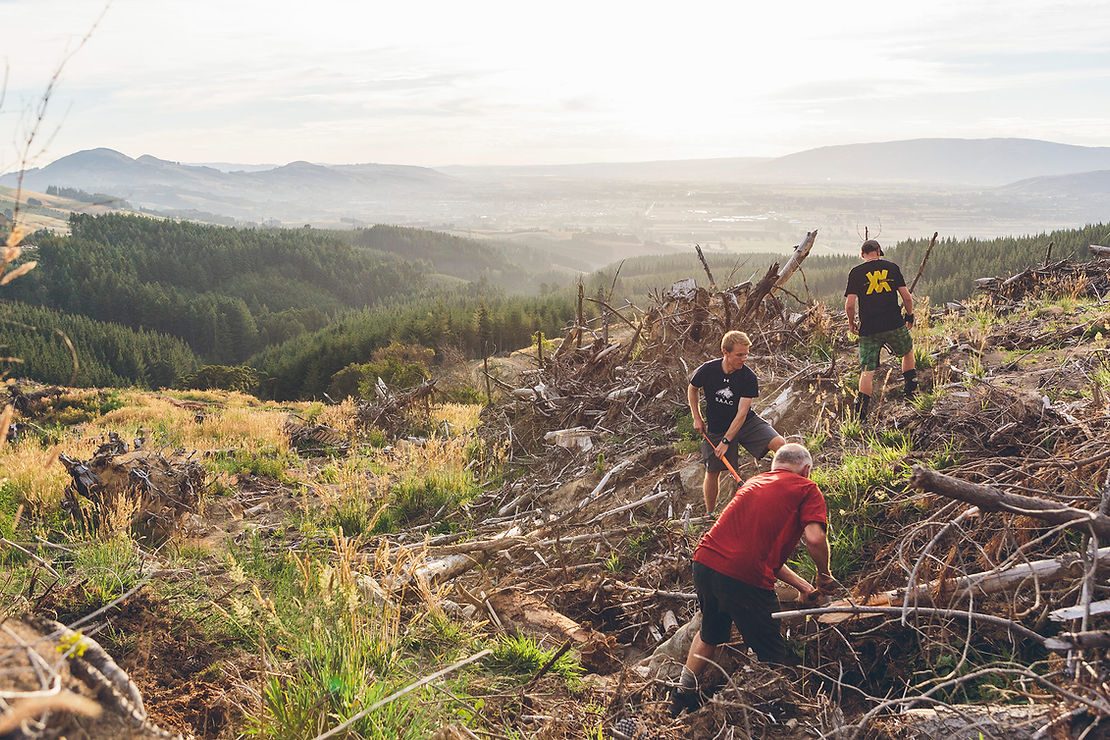
Trail Builder: Magic Mondays
Mondays aren’t known by most as a favourite day of the week – but for the 20-odd Dunedin riders working hard to build and maintain the Whare Flat network of trails, it’s by far their most productive!
“We’ve been digging Monday nights for the past three years,” says Mountainbiking Otago member and committed track builder Gareth Hargreaves, who has been buildings trails in the area for more than a decade. “We started with an uphill track called Fir Trader, then moved onto our newest downhill track Bermageddon, and now we’re starting the rebuild of a local favourite, The Green Mile.”
Blank Canvas
More than 13 years after he built one of the area’s inaugural tracks, Snakes and Ladders, Gareth is the first to admit that his vision and building skills have come a long way, and he’s looking forward to leading the crew on its new challenge.
“The Green Mile was quite a flowy track with some skill-testing sections, which made it quite popular with a wide range of riders,” says Gareth. “Since the area was felled early last year, Dunedin mountain bikers have been looking forward to its reincarnation and so have we!”
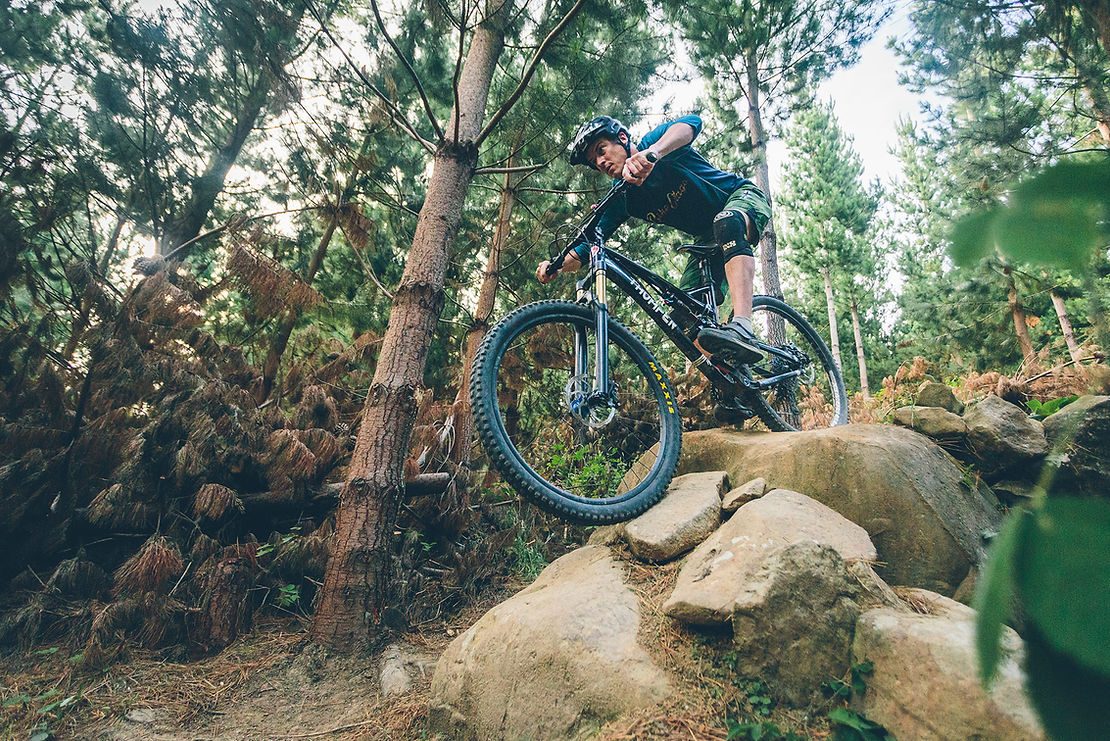
As soon as the crew put down their tools following the last metre of Bermageddon, they were already brainstorming how to rebuild a “bigger and better” version of The Green Mile, with financial support from Trail Fund NZ.
“There’s almost nothing left of the old track, so it’s pretty much a blank canvas, which is both exciting and intimidating,” says Gareth. “Both Fir Trader and Bermegeddon had their routes largely defined by the surrounding bush, so this is quite different.
“At this point we’re busy mapping out the line. We’ve actually found that the biggest challenge of building in a felled area with no existing track is not having direction dictated by the terrain – it’s all up to us.”
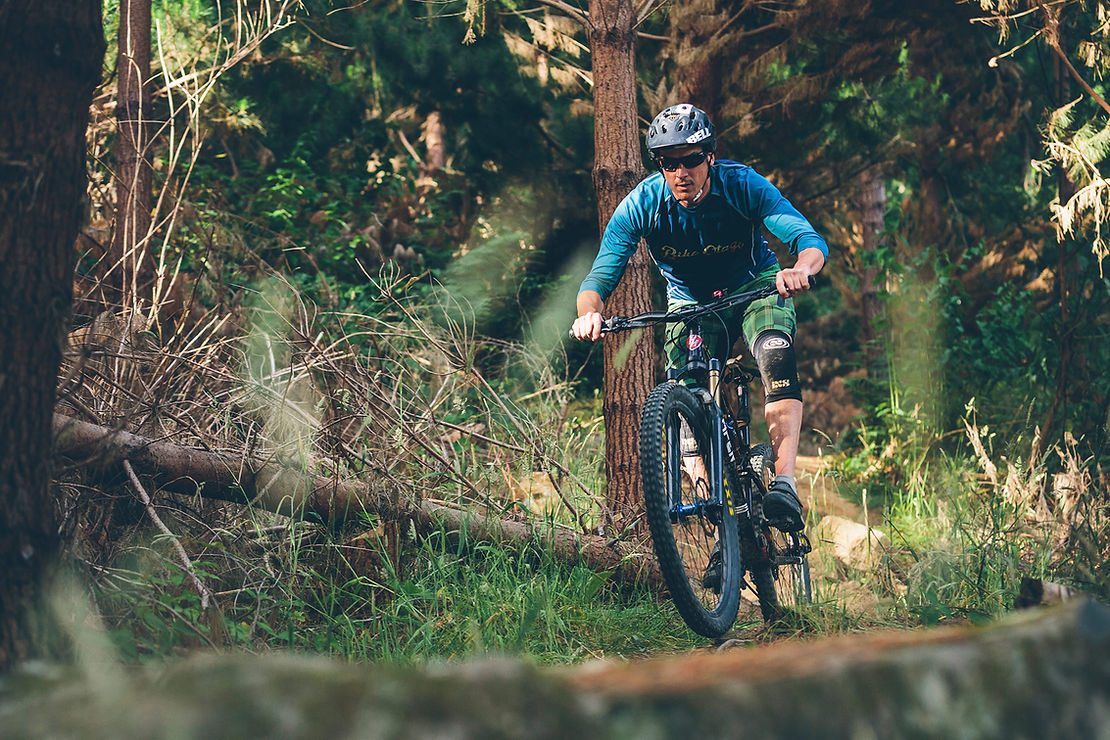
Or almost. When City Forests felled the area, Gareth says they kindly did their best to retain features the club has put a lot of time into – including a big bermed wall ride and some rock sections – which will be incorporated into the trail.
The Green Mile will also be extended from its original length of 850m to approximately 1600m, and the plan is to build a similar style track – flowy with some skill-testing sections.
“That’s the general plan, but it’s amazing how everything comes together throughout the build – everyone brings new ideas to the table and the end result is often much better than if one person had built a track on their own.”
Raving Reviews
Whare Flat has been growing steadily over the past decade and now boasts approximately 15km of tracks. The club’s hand-built uphill track, Fir Trader, was completed in 2015 and is very popular with mountain bikers and runners as an alternative to the steep 4WD track.
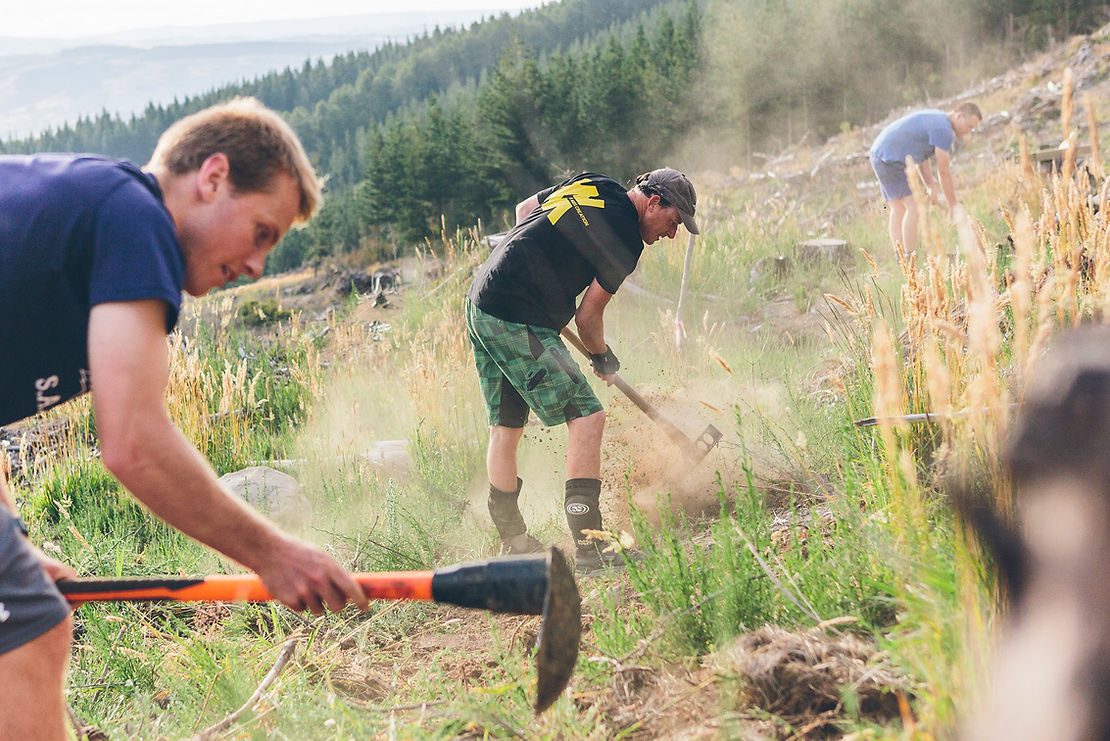
Bermegeddon, a hand-built Grade 4 downhill trail which also received support from Trail Fund, has been open to the public for less than a month but is already a local favourite, with more than 400 Strava runs.
“I’m obviously a bit biased but I think it’s a barrel of monkeys to ride,” says Gareth. “We’ve used the natural environment as much as possible and features include berms, rock rolls and steps, table tops and a few gap jumps that you can roll around if necessary.”
Words: Meagan Robertson
Images: Jemma Wells
Story: Miramar’s Dark Grey Waves
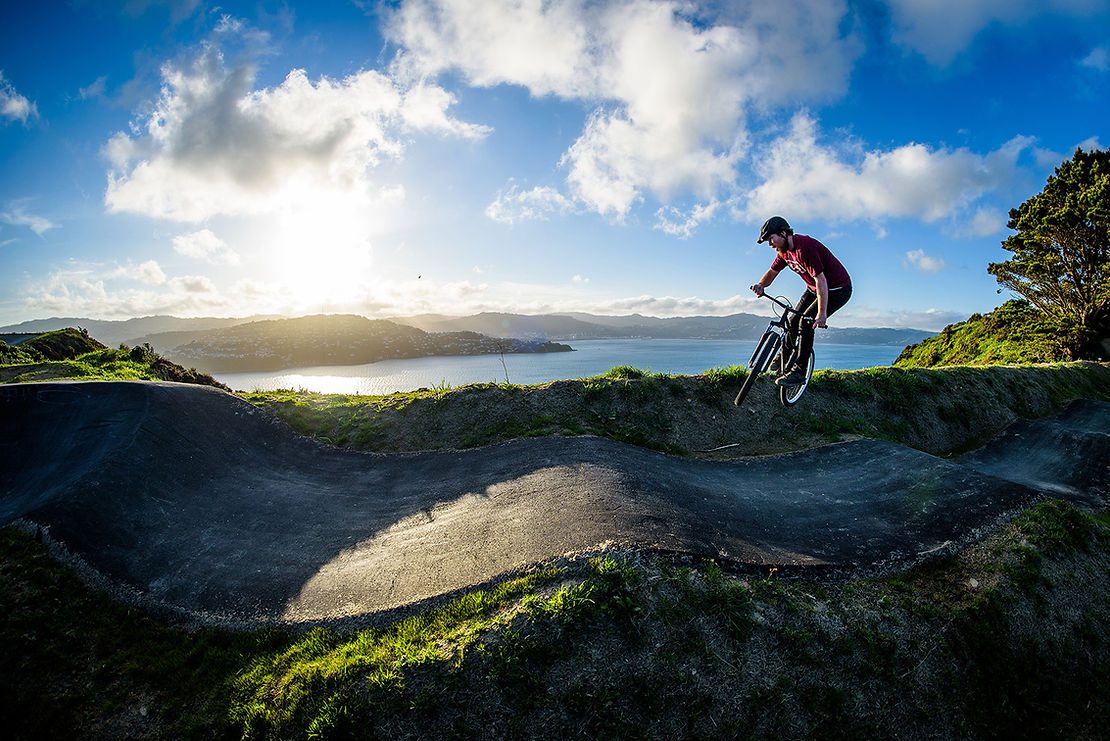
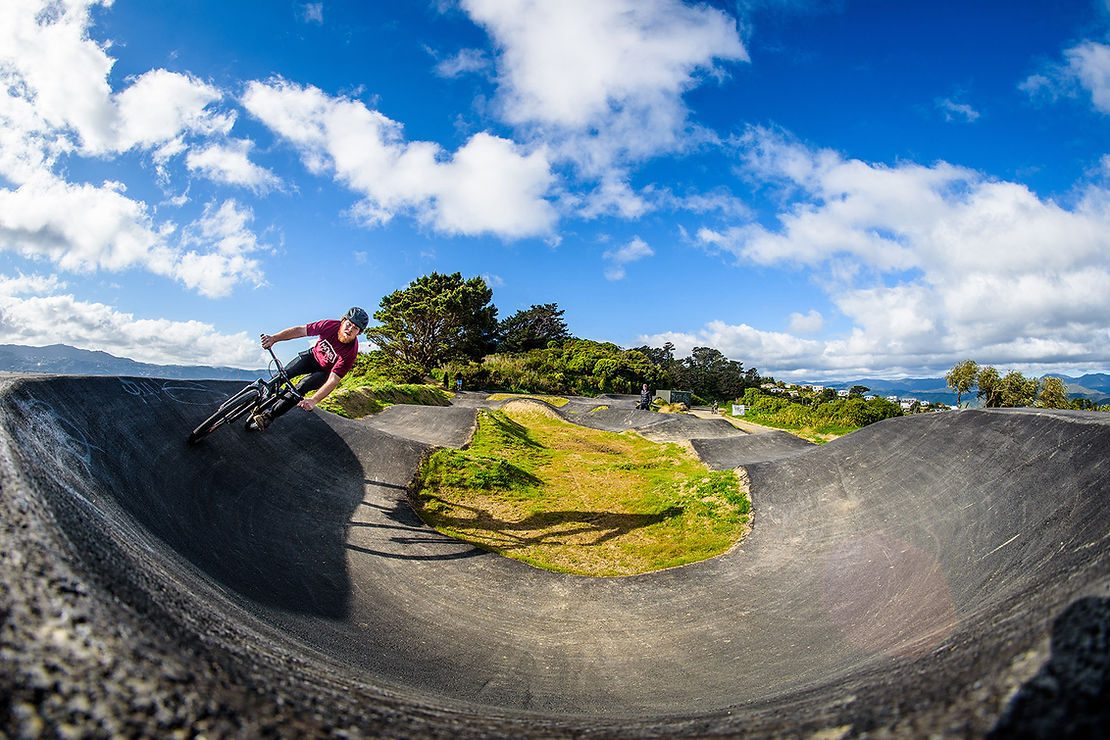
The old pump track in Miramar has had a transformation. No longer mere mounds of dirt, the perfectly crafted waves are now coated with a handsome layer of dark grey asphalt. It’s part of a new wave of sealed tracks popping up around the country, following an overseas trend which has become increasingly popular in recent years.
The Miramar track is an especially nice example. Sitting in a clear space on top of the Miramar peninsula in Wellington, it provides stunning views of Mt Victoria and Haitaitai across the deep blue expanse of Evans Bay. Planes regularly fly through the space on their way into the nearby airport.
Local mountain biker Paul Gray is often found up there at the end of a busy weekend. “It’s usually a Sunday evening type thing after we’ve ridden too much in the weekend, and want somewhere to hang out and have some beers, and try some stupid stuff.” He says the track is “quite progressive” and attracts everyone from little kids to pretty handy riders. “You can sort of do anything around it; you just start linking it up and there’s lots of sneaky lines and jumps and it opens up quite a bit. I’ve seen the same kid up there every time I’ve been going up, and he’s just getting better every time, so it’s pretty good for those young guys.”
Since the pump track was sealed at the end of August, it’s been getting a lot more use, and not just from mountain bikers. Ben Wilde says he's seen a real mix of skateboarders, kids on scooters and families with small children start using the space, as well as the dog walkers who have been going up there regularly for over 30 years. Despite the range of different interests, Ben says there’s been “zero issues” with sharing the space. He says he was “taken aback” by how popular the pump track has been since getting the layer of asphalt. “You can have 20 or 30 people up there, which is great. I think pump tracks are a hugely efficient use of space, and given the response there’s been to it, it would be great to see more of them around the city.” Ben is a co-founder of the Miramar Track Project (MTP), which was set up almost ten years ago when he and a couple of others got sick of the drive across town to Makara Peak to do their digging and riding.
Since then a tidy wee trail network has been put in through Centennial Park, built by volunteers determined to make the best of the 100-odd metres of vert on offer. The trails offer a gentle climb up on a shared-use trail and a couple of mountain bike-priority options back down, such as the long-time fan favourite Jailbreak. The first pump track at the top of the site was built about seven years ago and has been through several revamps since. The most thorough was at the end of April, when the Wellington City Council paid for a contractor to level the site and rebuild the pump track to a higher standard. Ben says the idea for a major overhaul came from Steven Peters, then a council ranger, who made the suggestion about 18 months ago. But a joking comment from Russel Garlick (another MTP co-founder) about how good it would be to have the track sealed put the idea in people’s heads.
Ben said they didn’t have any hope of raising the funds it would need, which was tens of thousands of dollars. “So it was well beyond running a few enduros and selling some sausages.” Luckily, the Wellington City Council were into the idea, and put up the $40,000 needed to get it asphalted - on top of the $16,000 they previously fronted for the April rebuild. They also had hydro seed (spray on grass seed) and other landscaping done in and around the track. Both the April overhaul and August sealing work was done by the New Zealand branch of Velosolutions, a Swiss-based company owned by Claudio Caluori - the man famous for his hilarious commentated preview runs of Downhill World Cup courses. The company have become specialists in sealed pump tracks. The New Zealand owner-partner is Rotorua-based Craig Pattle, who says Velosolutions is nearing 100 such builds worldwide over the last decade - about ten of which he has been involved in personally. He says they had to make a couple of changes to the Miramar track before they laid down the asphalt, as the seal makes it run a bit quicker.
About 80 tonnes of asphalt were required to seal the track. That work was done over a few days by a crew of dedicated volunteers, who took time off their day jobs to get involved in the hot, physical work with only free pizza (courtesy of Burkes cycles) and satisfaction in return. Velosolutions were given free reign with the design of the track, apart from a request for multiple loops to be included. They came back with something that rides well in both directions for people at all skill levels. Craig says getting the design right is a matter of trial and error, and years of pump track building experience. “We’re pretty sure we know what works by building these tracks all around the world.” He says as well as looking better, the main advantage of the asphalt was less maintenance. Dave Halliday was one of the key figures in the publicly-funded project.
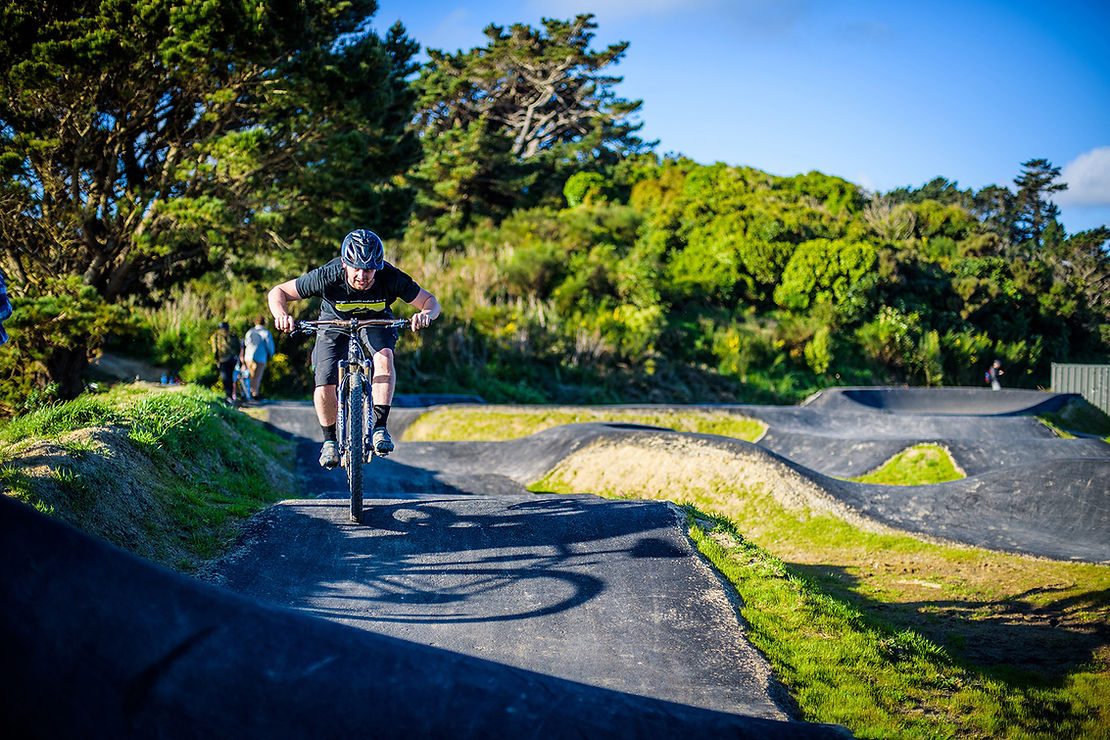
The Wellington City Council project manager for parks and recreation says for the council, paying for the sealing was worthwhile because of those maintenance reductions, which takes pressure off the community, while making the track able to be used by a wider range of users, like skateboarders and scooter riders. “It’s quite apparent now that with a sealed track you get a better product, so that additional investment is worth it I feel.” He says from a council point of view, it’s important the pump tracks can be used by people from a range of age and skill levels. And there could be more asphalt pump tracks in the future, if the council’s budget allows. Dave would like to see a recently upgraded track in Tawa sealed, but there isn’t any money for it at the moment.
For Ben and the other MTP trail builders, the zero-maintenance aspect is massive. “The problem with dirt pump tracks is they deteriorate quite quickly; all the stones come through and they become quite rough. “So you basically have to constantly look after them, and when you’re a volunteer organisation, or even council, that’s not something anyone wants to sign up and do.” He would like to see the concrete area next to the track resealed with a smoother concrete, and some toilets added, but those upgrades are not on the council’s radar at the moment.
A project like this couldn’t happen without strong relationships between the trail builders and the local government. Dave says a very strong working relationship has developed over the years. “Those guys put a lot of effort in, they’re very self-motivated and we assist where we can.” Ben says the council have been very supportive. “They get frustrated with us of course, as a community, when we go and build and ride in places we’re not supposed to. But on the whole, the relationship with the community and Wellington Mountain Bike Club is really strong.” As for the trail network, there’s a feeling it wouldn’t be a good idea to put more track into the small reserve - though maintenance and planting work is ongoing. About 500 native plants a year are put into the hill by the trail building team.
Ben says the MTP is working with the council to look at trails on the western side of Miramar Peninsula. He says it’s been a real plus for the community to have the recreational space, but one of the “big tragedies” is a lack of action over the adjacent Crown land, made up of the empty Mt Crawford prison and about 76 hectares of ex-Defence Force land which was handed over to Land Information New Zealand in March. They plan to turn the vast bulk of it into a public reserve - a promise which has been made since 2011 - but the final decision is dependent on funding availability. Group manager of Crown Property John Hook says work is underway with DOC and the council to see what needs to be done to set up the reserve.
“Subject to the appropriate funding being confirmed, creating the reserve is estimated to take up to four years and the property will not be opened to the public until the work has been completed.”
Despite all that potential being locked away currently, even the small spot they have has become a real feature, Ben says. “It’s been a feature of some peoples’ decision to live out here. I know people that have just decided that Miramar’s okay now.”
Words: Michael Hayward
Images: Digby Shaw
Story: Inside Vittoria
Press Camps are generally held at glamorous places around the world - or at a company’s HQ. So, when I was asked to head to Thailand for the recent launch of Vittoria’s next-generation graphene tyres, I was more than a little surprised. But, as it turns out, this is where rubber is made…
Vittoria Tyres was originally founded in Italy, in 1953, and for almost 40 years the company manufactured all its tyres there. However, in the early ‘90s, the company was financially struggling. That’s when the current owners took over the brand and moved production out to Thailand.
Since then, Vittoria has gone from strength to strength, with the brand now turning out millions of tyres each year. Their cotton tyres and racing tubulars have an abundance of history and have really defined the brand and set it apart from the rest. Lion Tyres is responsible for all of Vittoria’s production. . Back in ‘88 they were acquired by the same group of investors that would eventually come to own Vittoria, led by Rudie Champagne - the boss of Vittoria. Along with Vittoria, Lion Tyres have returned a good profit for Rudie and his co-investors. What’s even more lucrative, is that Lion Tyres only manufacture bicycle tyres and make rubber for a handful of other brands, some of which are Vittoria’s direct competition. This is nothing new in the bike industry, especially when it comes to mass-produced carbon frames and components,but they don’t simply re-badge their own tyres - they create a unique manufacture pattern (rubber, casing and compounds) for each different brand.
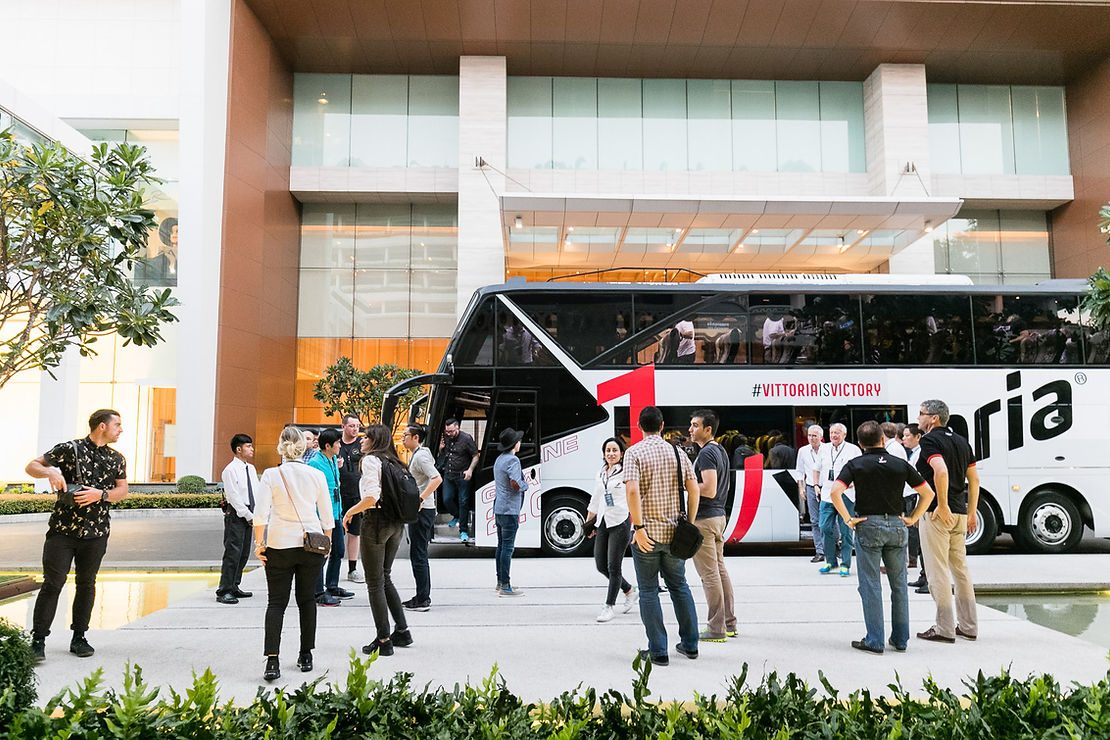
In Thailand, cycling press from around the world gathered in the lobby of a Bangkok hotel. It was early morning and the Italian staff from Vittoria’s head office in Brembate, Italy, were already on their third espresso! We all jumped in a heavily-branded Vittoria double decker bus and headed off to the first factory - Vittoria has several in Thailand and each is focused on one stage of tyre production.
After a few hours traveling (or shuffling) out of the madness of Bangkok’s traffic, we arrived at the first factory in Rayong. The bulk of Lion Tyres’ compounds are manufactured within this facility, which is based here because of the rubber trees growing in the region. Opening its doors in 2017, this is the newest facility in the group, and upon entry the ultra-clean environment was clearly evident. This place creates a ton of rubber, week on week. Although the manufacturing is mostly automated, to ensure a consistent product, there’s still strict quality control: white coats, clipboards, data entry and sample batches are all part of this process. Everything needs to be approved before sending the rubber off to the other facilities.
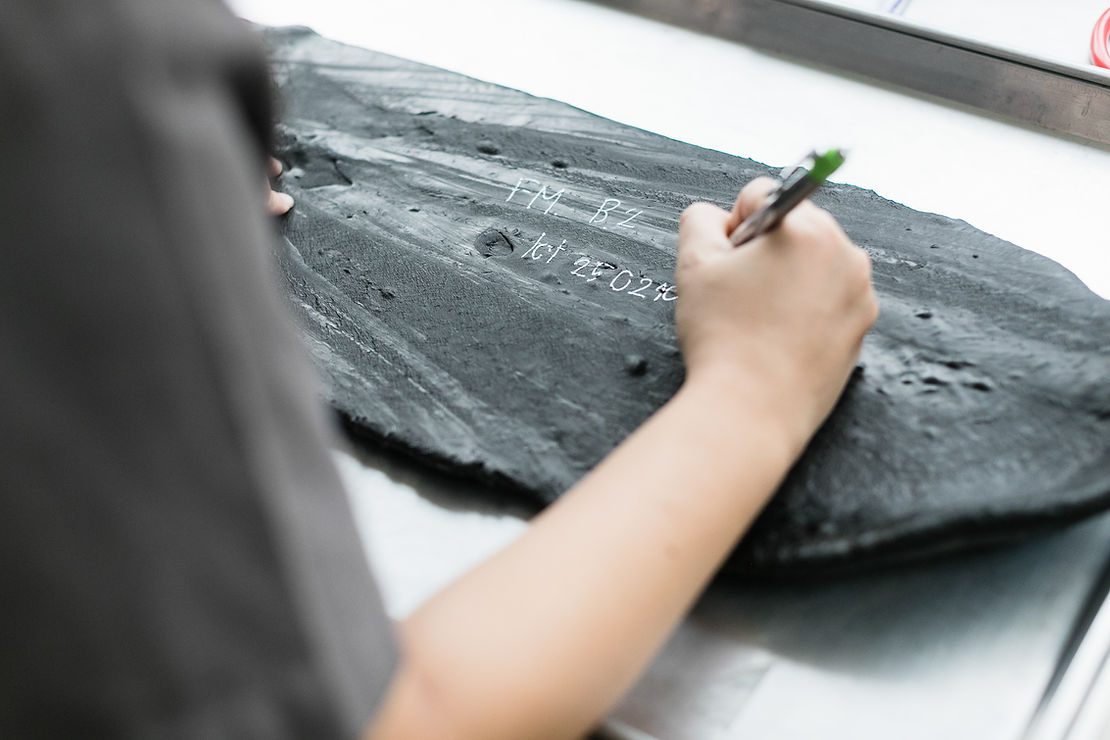
This facility also houses a few small research and development labs which can create small-scale, production-prototype rubber compounds in minutes. This means the Vittoria team in either Italy or Thailand can devise a new compound concept and receive a sample in no time. During my walk-through tour I spotted tyres being inflated on a rim to check over rolling resistance, leakage, puncture-resistance; and air leakage durability being measured consistently. Some of the larger testing equipment is left running for days, and is needed to gain vital data about Vittoria tyres.
Vittoria places a great deal of importance on their labs, however, the company also values real-world feedback. They have riders - from professional through to amateur - to test out their latest rubber. That said, the company ensures the in-house testing is as close to the real world as possible by using, for example, equipment that tests tyres braking in wet conditions. Rigorous testing of compounds means they are able to identify the best new compounds for different conditions.
Our second day saw us huddled in the hotel lobby once again - although this time it was the press needing that third espresso. We jumped onto the bus and headed to another factory, this time to see how the tyre process all comes together. Although this factory is situated closer to Bangkok, we still needed to hustle to our way through the morning traffic. Trust me, NZ doesn’t have anything on Bangkok’s traffic!
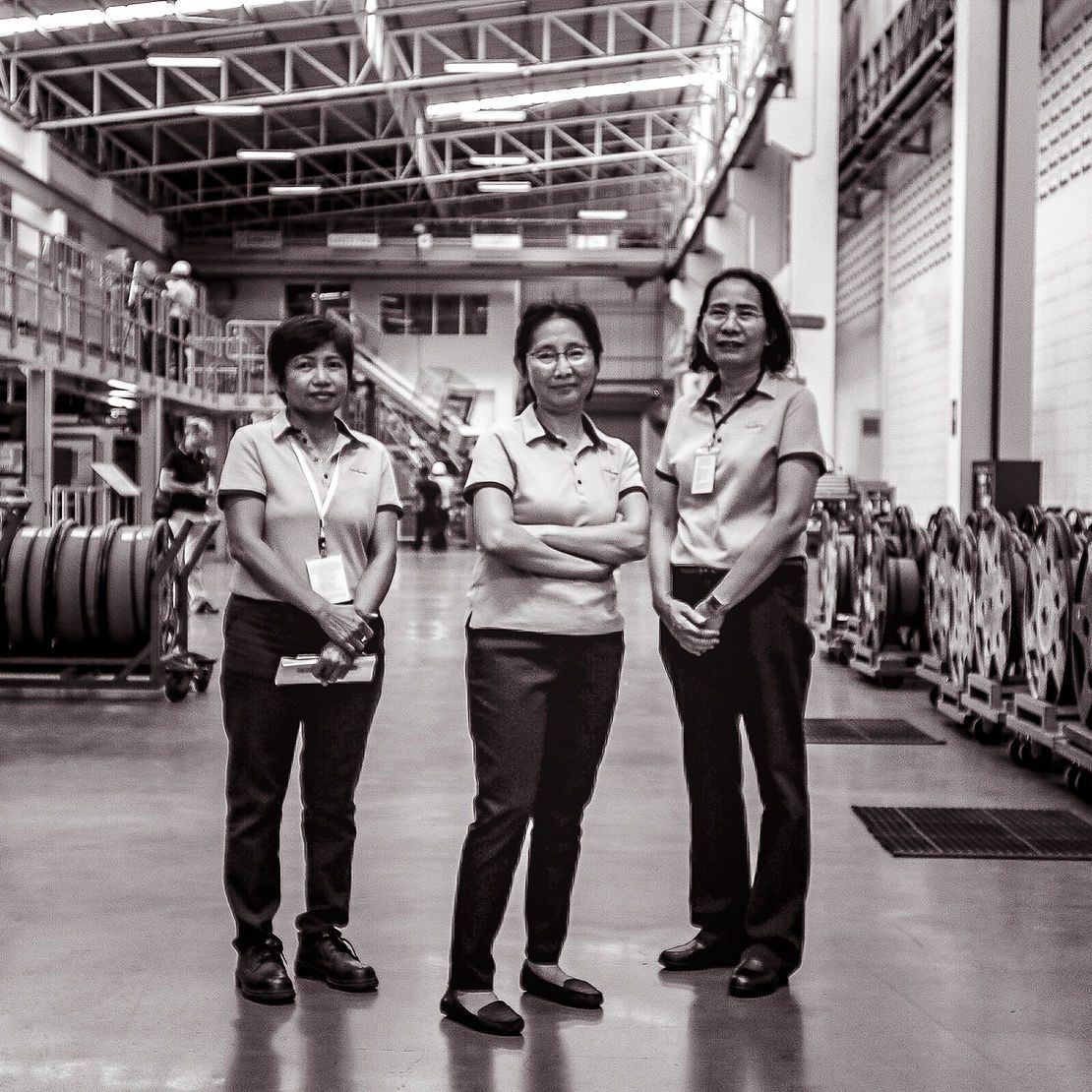
Inside the Bangpoo facility (which is actually two facilities side-by-side) the tyres are put together before being shipped off to riders around the world. We walk into another immaculately clean factory and straight away it’s obvious the staff have good morale. I don’t know if it’s because we’re there, but they all seem happy, chipping away on certain tasks around the factory. It’s clear the leader here is Ms Penparn Kiatamornvong - she’s about five foot nothing and is the Managing Director of Lion Tyres’ factories. She has a lovely nature and greets all the staff with respect. They all seem to know her by name - well, from what I can tell, seeing as I don’t speak Thai - and this is no mean feat seeing as there are over 1500 staff across the facilities in Thailand. But Kiatamornvong has a good, albeit no-mess attitude and you can see why there’s so much respect for her.
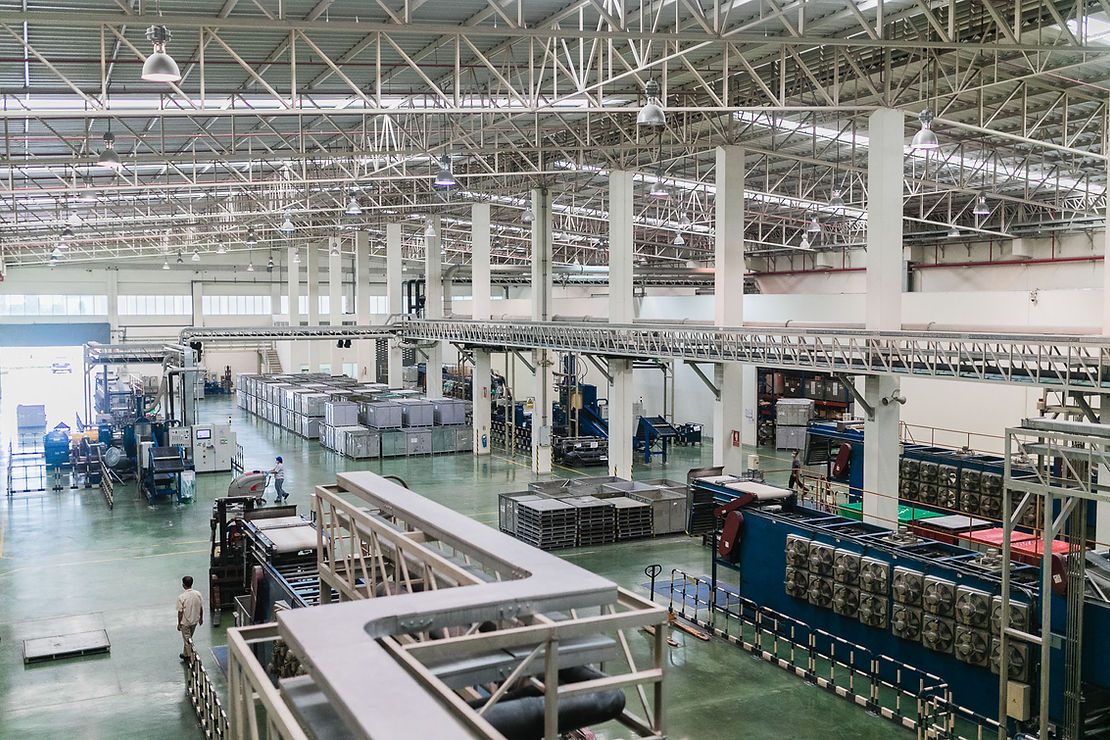
It’s inside this plant that the tyre compounds are merged together - Vittoria is the only large company to use four compounds in a single tyre. The machines here are bloody impressive. A few years back (2015), Lion Tyres commissioned a piece of equipment capable of combining four distinct rubber compounds during the extrusion process. From what I understand, this is the only one of its kind in the world at present. You can see they put a ton of effort into ensuring the tyres meet a certain standard, and the quality control process is evident throughout the whole procedure of merging the compounds. It wasn’t just at this plant - all the places we visited had a strong emphasis on the quality control process.
The other facility in Bangpoo was a real eye-opener, being a very labour intensive environment. I know ‘handmade’ is a rarity in ans age of automated production, and fewer brands are holding onto their heritage as they search for cheaper, quicker and less labour-intensive production options,but inside this facility I witnessed tyres being glued and sewn together by hand. The guy running this production line probably has no idea that one day this tyre might claim a World Tour victory.
For me, this sums up the time, energy and effort Vittoria put into the process. It’s not unlike training, a process that also requires the application of time, energy and effort by the person involved. After all, only then will you reap the rewards. And, with Vittoria’s rich history and reputation, you can expect the rewards to keep on coming.
Words & Images: Liam Friary
Story: Ride Different: A Fresh Take on an old Favourite
For a few years, either side of the turn of the century, Apple used a tagline for what was at the time, the underdog Macintosh computer: ‘Think Different’. It summed up their ethos at that time. Since then, the brand’s success has seen its culture shift significantly but the underlying directive to ‘think different’ has always appealed to me. Why roll with the status quo? Why not try new experiences? Use things for purposes other than what they were intended for? That kind of attitude. It’s a mindset that has seen me in some unusual scenarios: travelling internationally to a road race, but writing mostly about off-road riding; attending press events and riding everything on offer - from fixies to fat bikes to XC to DH rigs. My latest venture was to take a couple of mates to an iconic native forest trail I know well, on a different kind of bike... of the electrically assisted variety. But first, some background...
The People
Te Urewera is the traditional home of the Tūhoe people. The Tūhoe signed a deed settling the tribe’s claims at the Waitangi Tribunal negotiations. Of more importance than the fiscal compensation was the fact that the Tūhoe were returned greater control over governance of Te Urewera. This means that in current times the area is administered by the Te Urewera Board, which is a shared responsibility of Tūhoe and Crown entities. The end result of this, is the existence of the Pua a Tane Conservation Park.
Located between Rotorua and Taupo, with extensive ranges of rugged native bush, the appeal for mountain bikers is obvious. A network of well-established tramping tracks and Department of Conservation (DOC) huts date back to the ‘50s, when the primary human interaction with the forest were hunters employed to eradicate deer and other pests. In more recent times Tūhoe and DOC have been leaders in allowing and encouraging recreational mountain bikers to experience what is on offer in the park, with legal access to the Moerangi and Whirinaki trails.
The Critters
When liaising with DOC and Maori landowners as we prepared to complete this ride, we entered somewhat of a rabbit hole when discussing DOC’s role in caring for the area in which the Whirinaki and Moerangi trails reside. Talk turned to DOC’s goal of protecting the whio - NZ’s endangered native blue duck. Neil Hutton, our contact at DOC, passed on an astute observation about the whio: “A lot of New Zealanders have only ever seen a whio on a $10 note… Whirinaki is one of the best places to see whio in real life”.
Stoats have been identified as the primary cause of the whio’s decline in the Whirinaki. Although scientists of the time warned they would be a threat to native birds, stoats were introduced to New Zealand in 1884 to control rabbits and hares. At this stage, I started doing some research into stoats but Google results quickly had me feeling despondent - they’re amazing. Amazingly good at killing, that is. So to curtail their invasive decimation of the endangered whio population is no mean feat.
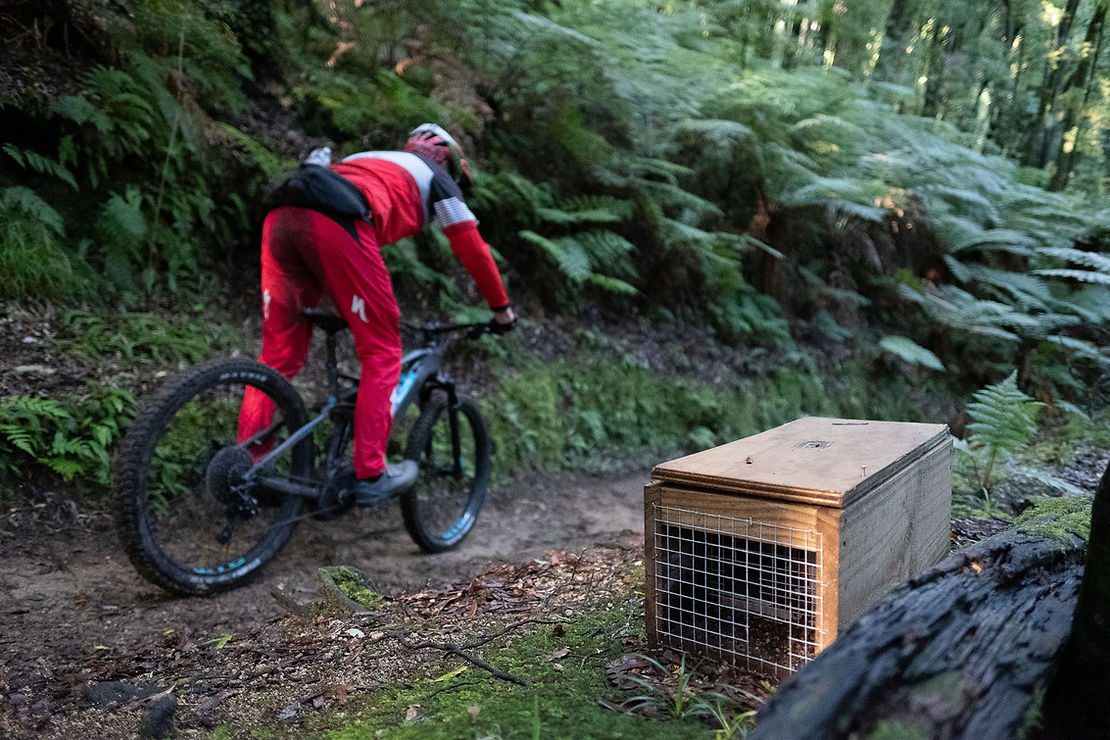
Since 2011, trapping has played a major part in the improvement of the whio’s long-term fate. Part of my quick research turned up DOC’s info about their trap lines in the forest park - over 1,800 on their trapping lines in the security area.
While simply riding through the trails, the traps are in evidence - sometimes right on the main track. We stopped a couple of times to see if there was a captive stoat in any of them and although the few we saw were empty, they’re obviously only a blip on the radar in the scheme of things with about 1,797 others we didn’t see. Once we ‘got our eye in’ though, we’d often note the presence of trap lines, seeing the markers and the subtle paths leading into the dense bush where the workers lay their traps.
The Journey
The stuff that happens before saddling up to start a ride is all part of the experience, especially if you’re doing it with a sense of adventure, trying new things and going to new places with new riding buddies.
Before even entering Te Urewera, most visitors will come from the more populated northern side of the park - in our case, from Rotorua. The only township of note on the route in, is Murupara, a small town which is effectively the main gateway to Lake Waikaremoana and Te Urewera. Murupara was once an industrious place of extensive forestry, which there are still some remnants of. But like many of New Zealand’s small forest towns, Murupara has experienced hard times with the downturn of labour-based forestry operations in recent years - and there’s little other employment for locals. Our visit to the area included a quick stopover - in anticipation of a lunch break in a few hours’ time - to fill our packs with filled rolls and sandwiches at the local bakery. OK, and there may have been some slices of cake in our orders as well. Oh, OK, yes, some of us may have started eating our cakes before even leaving the car park, but we’re not here to judge each other, are we?!
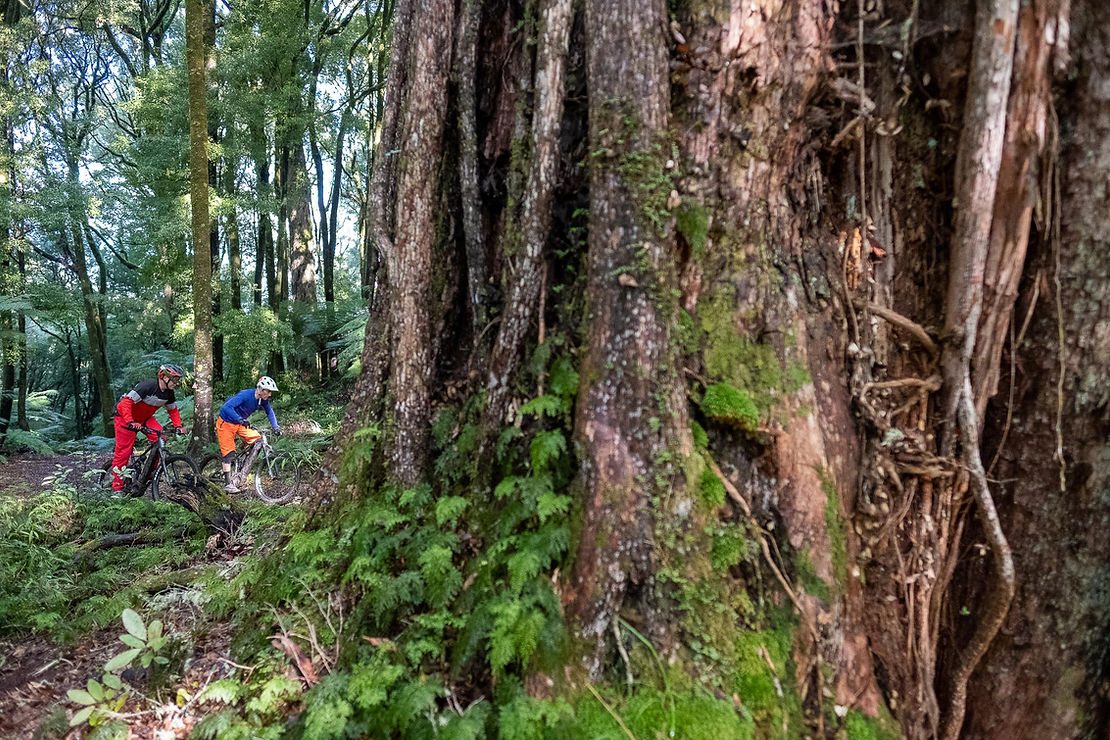
As we were getting the bikes and our gear ready at the trailhead, a large group of trampers arrived. They were a group of disadvantaged youth with ex-army wranglers guiding them through a bush craft exercise. The military leaders obviously had them under their guidance for a while - I’ve never been called ‘sir’ so much in my life, that must be what it’s like to be in the monarchy - though, to be fair, the youngsters also had plenty of comments along the lines of: “Chur, flash bike au”; and the ever-important thing kids want to know: “How much did that cost?”, quickly followed by, “What?! I could buy a car for that much!”
The Ride - Doing it Different
I’ve experienced the Moerangi trail many times, in a variety of ways: on different mountain bikes; doing it as a shuttled loop; riding it as an out-and-back; even bikepacking it on gravel bikes; and doing a heli-drop to the depths of the forest, to do a 30km trail run out.
Every time I’ve been on the Moerangi it has been epic and this time round we found another way to experience it: on e-bikes.
Apart from the nature of the riding itself, one of the notable differences with riding e-bikes is the ability to take more time to stop and look around. Although you can still work hard on an e-bike, you’re arguably fresher than you’d be on a regular bike. That equates to being more inclined to stop and savour the moment, the views and the sounds of the forest. In this case, it was also an opportunity to revisit the Whirinaki mountain bike loop, which is a separate track at one end of the Moerangi trail. I’d only done it once before, many years ago. In recent times, my objective of a day trip to Moerangi was to ride the main trail, either in a shuttled loop or as an out-and-back to as far along the trail as our group wanted to ride.
Riding the Whirinaki loop was great fun and a lot easier than Moerangi. The trail boasts gentler climbs than Moerangi, and there is significantly less elevation so what climbs there are aren’t sustained for long. Mellower gradients lead to less rain-damaged rutting as well, which can be a noticeable feature on the Moerangi, after a series of storms have been through the region.
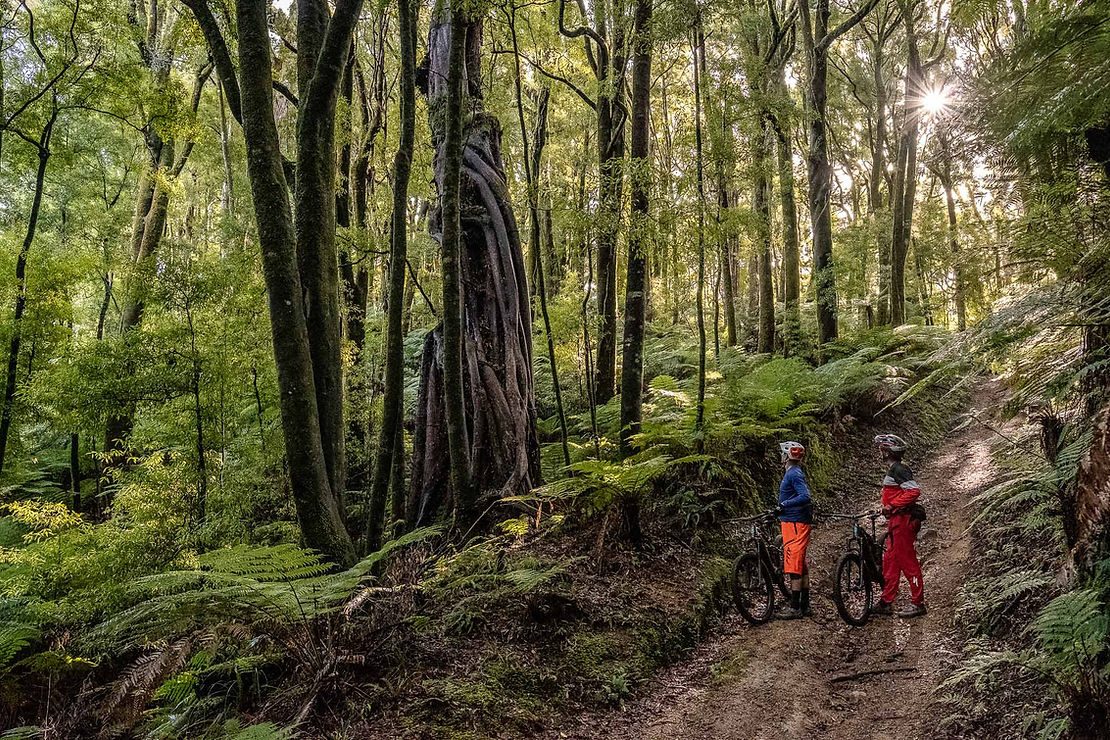
But apart from the riding experience, the visual and auditory rewards are similar. As soon as we left the car park on the Whirinaki loop trail we were amongst towering podocarp trees - rimu, miro, matai, kahikatea and the mighty tōtara. At ground level the density of lush lime-green ferns is profuse. The heavy rains from the day before our ride adding another degree of vibrant freshness to the intensity of the undergrowth.
At times we Kiwis can take this sort of scenery for granted, especially if we have a primary objective based around a bike ride, and are focused on the ribbon of brown dirt in front of us. It’s when you’re with international visitors that you recognise how truly special New Zealand’s backcountry rides are. Or, as in our case, when we’re out for a good time, not a long time. Plenty of stops for photos meant we had ample opportunity to look around and truly savour the visual extravaganza that the central North Island’s native forest offers.
It’s not all peace and quiet though. At times the birdsong is noticeable and, to be honest, sometimes the piercing alarm calls of the Kaka are jarring - in a good way though. Their shrieks serve to remind us this isn’t our place, we’re merely temporary visitors in the grand scheme of things, and it’s a fitting prompt that beautiful native New Zealand fauna are the original inhabitants of this forest.
Although the Moerangi trail is most often ridden in a clockwise direction via shuttle drop off, I’ve often done it as an out-and-back from the River Road end of the trail. This involves a tough climb with about 600m of vertical gain, which is a correspondingly awesome descent on the return trip.
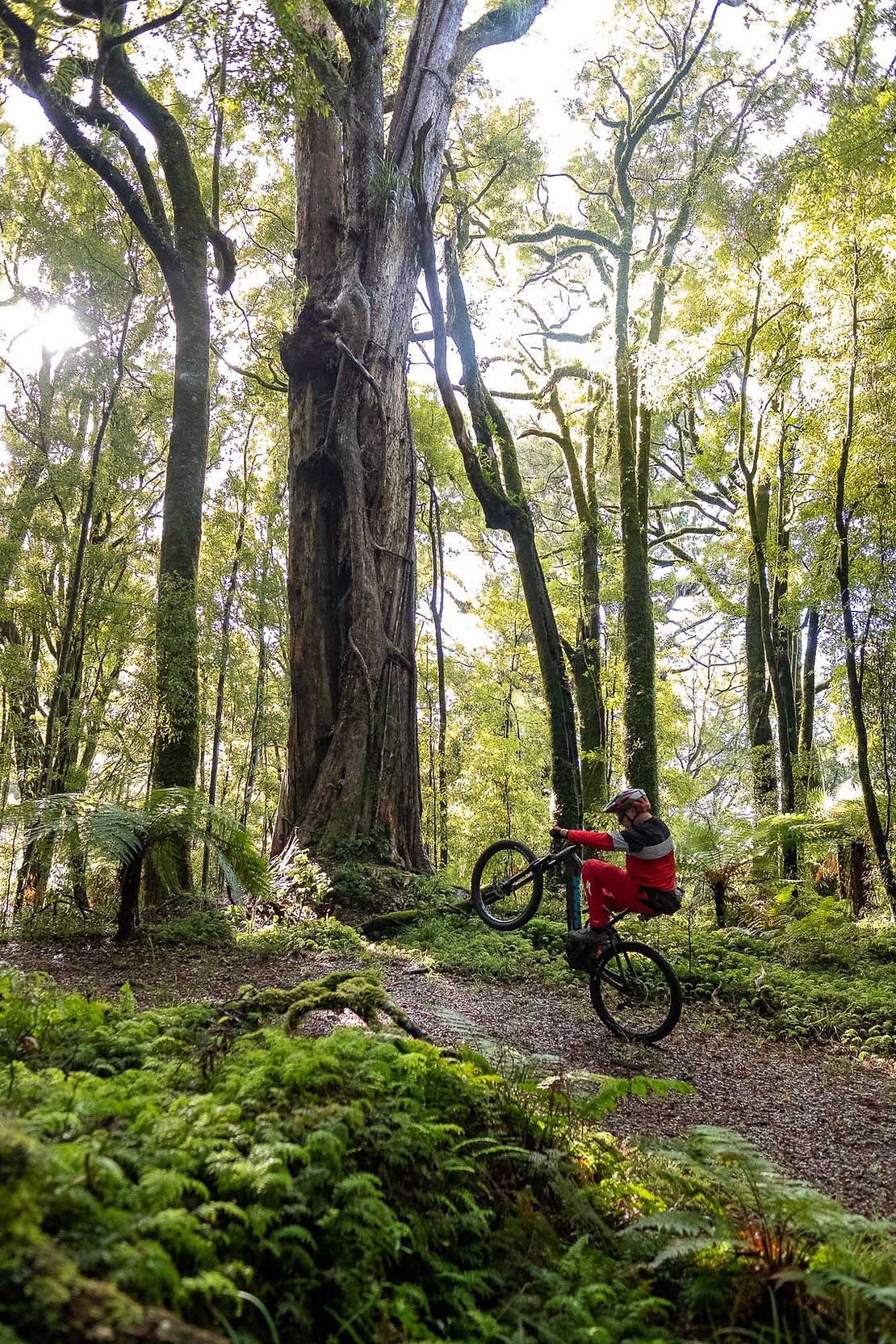
On an e-bike I got to describe the climb as something I never thought I’d say: “It was fun!” We rode every part except one short stretch of soft pumice. I don’t deny I’ve got a real bee in my bonnet with fellow riders who slag off e-bikes without having experienced them. I relish the opportunities they offer both to beginners, or riders with limitations for some reason, and to more experienced, capable riders. In our hands, on this day, we simply enjoyed every single second of riding. Although easily still able to get a solid amount of heavy breathing going on any given climb, the difference from a regular bike was that we were actually riding steep, rutted sections of trail that would quickly have had me walking on my regular bike.
As mentioned previously, I’ve ridden this trail a lot, so am acutely aware of my limitations on any of the technical climbing sections. On the Konas we were still working hard, but in a different way; looking much further ahead on the climbs than usual, because the greater speed meant we’d be coming into whatever was next at a greater pace than on a regular mountain bike. It was also vital to ensure we were in the gearing appropriate to keep a fast cadence throughout whatever we were climbing. Pedal assisted e-bikes simply stop assisting if their cadence/torque sensors sense the rider is only barely turning the cranks over. it’s a weird thing though, the low gearing/high cadence we were utilising effectively on the e-bikes would be completely impractical on a regular bike. On one of those, it’s often desirable to have a slightly tougher gear to crank through over tough obstacles on technical climbs. I’m no physicist (obviously, my wife tells me) but I figure it’s something about torque. All of that is somewhat moot though, because the more you ride an e-bike, the more intuitive it becomes as to what gearing is best for given sections, and how to best utilise the power assist.
The Bikes
I’d be remiss at this point if I didn’t explain a little about the bikes we were on for this adventure ride. Their nature had a significant part in shaping how our ride developed, and the high level of fun-factor we achieved.
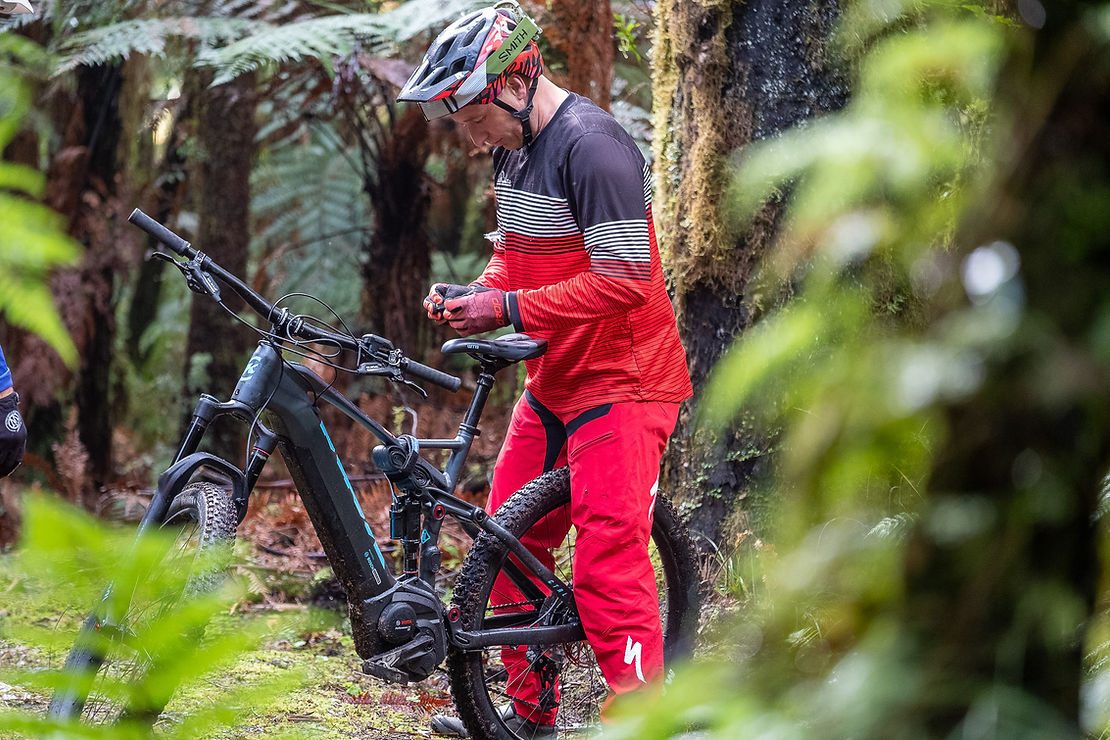
We were on Kona Remote CTRL models - featuring Bosch motors. These slot in amongst the lowest price points for proper, full-suspension electric mountain bikes. I say ‘proper’ to clarify they’re not bicycle shaped objects purporting to be mountain bikes, like many cheap monstrosities for sale on TradeMe.
Sure, at the price of the Konas there are compromises on specs: relatively short travel dropper posts; SRAM Guide brakes instead of Codes, which would be more practical for the speed and weight of an e-bike; and unusual choices for New Zealand conditions, like Maxxis Icon tyres. The Icons are great tyres, for a purpose, but not for those of us who push the boundaries of what is rideable, where traction is king for getting up, down or around any given section of trail. There are plenty of solid performers for critical components though - like RockShox Lyric forks up front and Monarch Plus shocks, with SRAM NX level drivetrain.
Overall, we came away impressed with the bikes. The geometry was on point, the design and construction of the frames was flex free and solid (a particularly important point with heavy and powerful e-bikes). The suspension was tuned appropriately to the rider and bike combo dynamics. To come away with these responses to the capabilities of the Konas, given the remote environs we were riding in, is no small compliment to be dishing out.
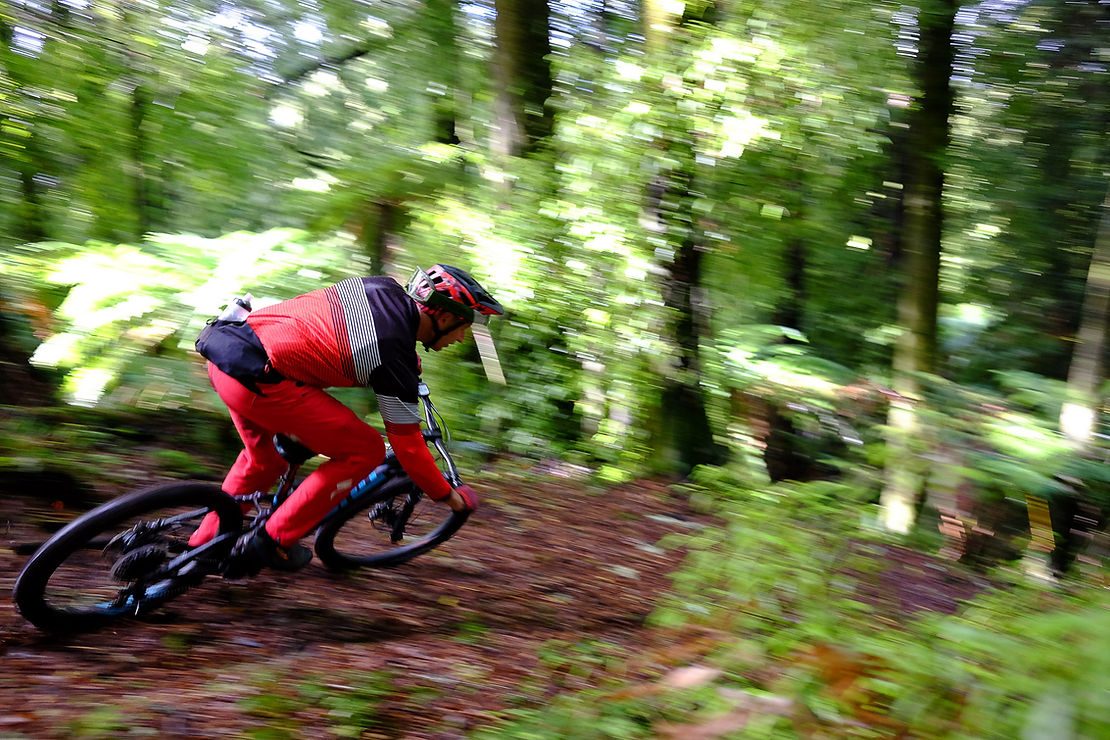
I believe it’s one of those things which is virtually impossible to quantify, but if you did try, it would be along the lines of: “For the lowest-priced, real mountain bike e-bikes available in NZ, we had 90% of the performance possible compared to uber-spendy ebikes upwards of $10k. But, and it’s an important ‘but’, we had 100% of the fun available from what e-bikes bring to rides like this”.
Random Outtakes
Unfortunately, I can tell you from painful experience that it is almost a rite of passage to encounter the native Onaonga plant on Moerangi rides. Although my fellow riders on this trip didn’t get to experience it, I ‘took one for the team’ by taking one step off the trail in the wrong place and getting an instant reminder of what the native stinging nettle Onaonga looks like - and why I should have remembered it from the last time it got its venomous little spikes into me. The skin on my shins is tingling as I write this now - a reminder to pay more attention to look where I’m stepping when I get off the bike to take a photo in the future.
Ah, the serenity. It truly feels like the middle of nowhere most of the time, although we did hear helicopters working occasionally. It’s possible they were tourism operations, hunters or fly fishermen, but it’s more likely - when it’s a busy aircraft flying around for extended periods - they were DOC workers. The recreational users tend to get a drop-off/pick-up and that’s it.
On a previous trip into this area, we spoke with some workmen waiting for their ride into the day’s work site. Their ride was a helicopter. In that instance they were bringing building supplies into the multiple DOC huts in the forest. Those workers also get on the tools to clear the trails which, because of the remoteness and rugged run-off of the terrain, are often subject to weathering from the rain and windfall of storms.
The trails have no views to speak of - not the sweeping vista variety anyway - but the views within the forest are other-worldly, with the verdant greenery of the forest floor and the imposing old-growth native trees putting you in your place.The towering native trees, and the tortuous Giger-like displays of northern rātā gradually strangling their giant host trees, serve as a reminder of how puny we are. (Rata is one of New Zealand’s tallest flowering trees, beginning life as a plant perched on a host tree, high in the forest canopy. Its roots eventually grow down to the forest floor, finally enclosing the host tree and producing a huge tree up to 25 metres high with a trunk up to 2.5 metres in diameter.)
Takeaways
Consider your favourite adventure ride. Can you do it differently? Ride a loop in the opposite direction to usual (if it’s not a one-way trail, obviously); pack a picnic and plan to stop and soak in your surrounds instead of trying to smash out a new Strava PB; take a mate who hasn’t done it before and bask in their enjoyment of it; do it on a different bike if you’re fortunate enough to have a choice. However you do it, there is potential to rediscover and reinvigorate your enjoyment of a trail you know - or at least think you know. As an added bonus, whether you’re South Island based and it’s a major holiday trip, or reside in the North Island and it’s easier to get to - ensure you put the Moerangi and Whirinaki trails on your bucket list. You won’t regret it.
Thanks to Neil Hutton and the team at DOC Whakatane, Earl Rewi and Sharon Nikora of Ngāti Whare and the tangata whenua of Te Urewera.
Check with the Te Urewera DOC office to make sure the trail is open if you’re doing it in winter or when there have been storms in the area – it is prone to slips after heavy rain.
This is a true backcountry ride, so ensure you’re ready for it with suitable gear for trailside bike repairs, and have enough food and water. There is virtually no cell phone coverage to speak of on the trail.
Words and Images: Nick Lambert
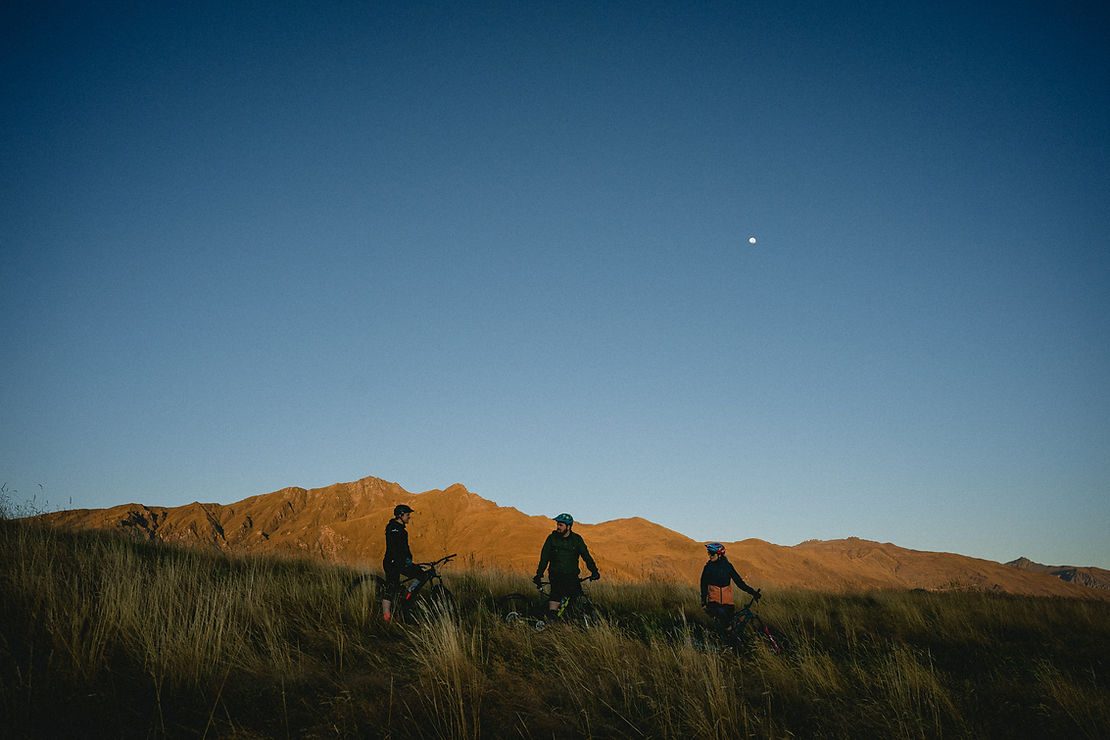
Story: Destination: Wanaka Pt. 2
If you missed part one of our Wanaka story, click here.
One of the things I was most excited for on our trip, was riding Bike Glendhu. While it didn’t make the 4:30am alarm any easier to get up to, within 15 minutes of being out of bed we were all piling into the van, bringing our time at Cardrona to an end. As we made our way down the mountain, I snacked on a Clif Bar and banana, and tried to focus on the fact that soon enough I’d be watching the most incredible sunrise from the peak of Glendhu - and not the fact that the clock had only just ticked 5am and I usually don’t leave the house ‘til at least 8. We were all feeling pretty groggy as we rolled up to Glendhu, but we were stoked that John Wilson, one of the founders of Glendhu and our guide for the morning, had offered to shuttle us to the top of the hill in time for sunrise – saving us a long pedal in the dark. It was here that we met Jessie of Lake Wanaka Tourism, who’d be joining us for the day.
Glendhu is Wanaka’s newest riding destination, opened in January 2020 after a couple of years of development. John McRae, whose family has owned and farmed Glendhu Station for three generations, wanted to create a more sustainable farming experience for his family’s future generations. He partnered with Wanaka local, John Wilson, to build Bike Glendhu on 1000 hectares of the Glendhu Station. The big picture goal was to create a bike park that’s self-sufficient, both in terms of how they generate resources like power, and in the sense of having a positive impact on the land the park is built upon. The base is rad, with an on-site mechanic, bike rentals and a café (more on the café later) all built on the same ethos of preserving the natural landscape, whilst providing an awesome ride experience.
We all piled our bikes onto the shuttle trailer and began the 15 minute drive up to the peak, and I was pretty excited. I’d seen photos of Glendhu and the view from the top looked insane during the day, so I couldn’t even imagine what it would be like at sunrise. I was dazing in and out of reality and a dreamy haze, when all of a sudden the UTV’s wheels started spinning. “I’ve never actually taken the buggy this far up the hill with this many people and the trailer – I was worried about this part!” John said. It was clear the buggy wouldn’t make it up with all of us in it, so before we dug ourselves into a hole we all jumped out, so John could have another go without the weight of five additional passengers. No issues - straight over the rise without a hassle. As we took our seats back, John realised that he still had one lower gear to shift into, so maybe we would’ve made it after all. As we approached the top of Glendhu our surroundings really opened up and whilst it was still pretty dark, little hints of golden-orange began to creep over the edge of the horizon and it was clear we’d picked the right morning to take on Glendhu.
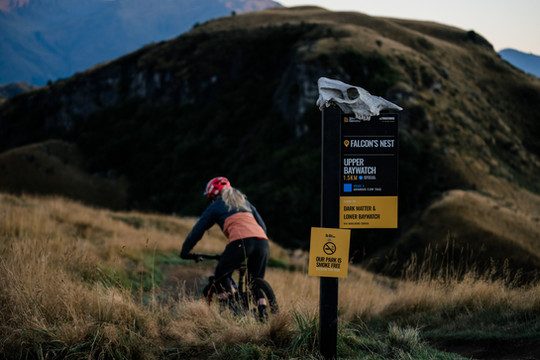
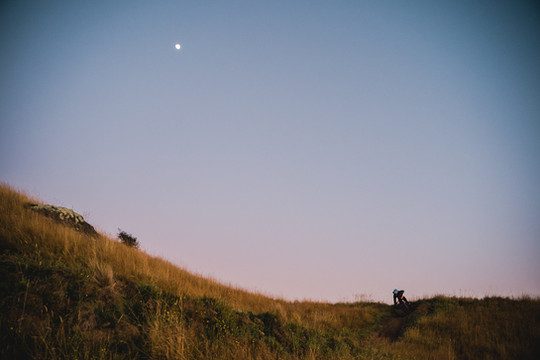
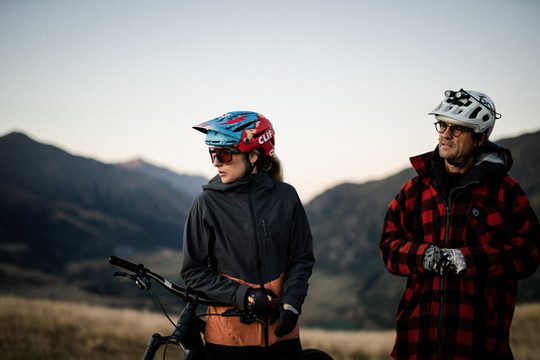
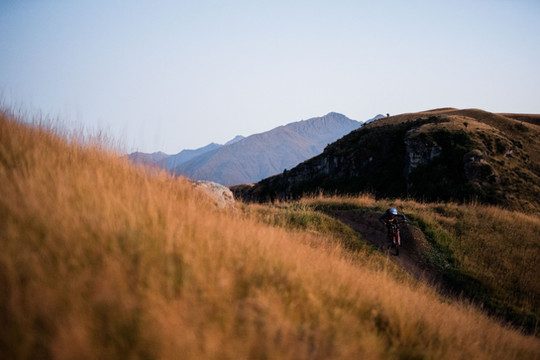
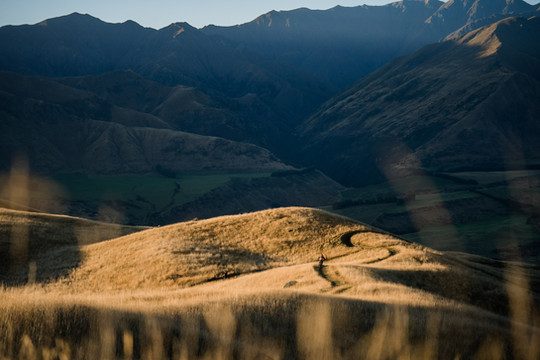
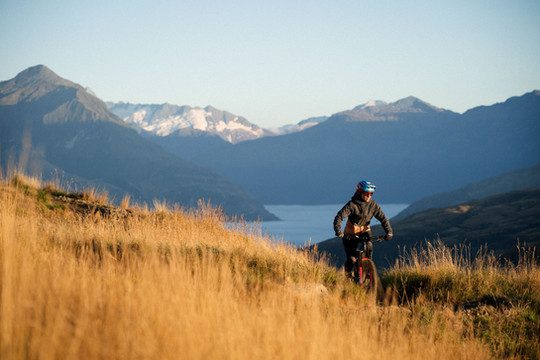


It was still pretty icy as we unloaded our bikes at the top of Glendhu, but it wasn’t long before the sun crested the mountains and the hillside lit up. The South Island is a special place to be in autumn, and it was definitely putting on a show for us today. It warmed up instantly so, before we left John, we de-layered to save us cooking on the hillside. We then dropped into Upper Baywatch, an intermediate trail with plenty of features to hit if you wanna spice things up a little. As we flowed down the hill, we stopped to shoot a little rock garden midway down the trail. As Haimona and Callum set up their shots, Casey, Jessie and I hiked our bikes back up the hill to get a decent run in. As we dropped in, I couldn’t quite get my footing right and as I pumped up the face of a table, and blew my foot completely off the pedal, accidentally ending up seat-bouncing, moto-style. My back wheel went sky high, my other foot was blown off its pedal and I landed in a nose manual. I was dead sure I was about to go over the bars but, some way, somehow, my feet managed to find their rightful spots atop my pedals, right in time to take the corner before the rock garden. I made it out alive, but my rodeo show had blown our formation clean apart, so up we went again. Second time round, I killed it. We continued down the trail to our meeting spot with John, while the rest of the team continued down the hand-cut advanced trails, that are more natural single-track than most of the rest of the trails. I headed back down to base with John to talk about Glendhu and how it came to be. Time’s always tight on these trips, so you usually end up having to squeeze in a quick chat with the people who know the story best, while the rest of the team get to have a little fun. On the bright side, though, I got to sample Velo Café’s coffee- which is nothing short of top quality and was the pick-me-up I needed.
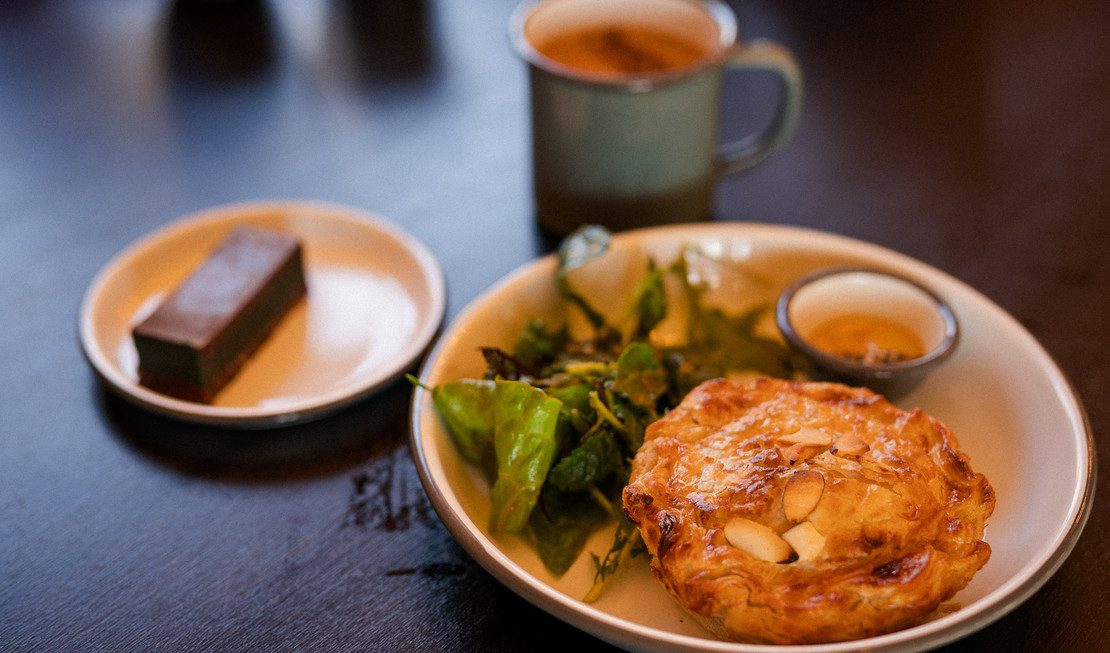
Caffeinated and ready to go, I headed back up to Jack’s Spot – about halfway up the hill - to reconnect with the team and take on Hare Time, Glendhu’s jump line. Casey took the lead and did what she does best: shredded and got super steezy, while the rest of us followed. The rad thing about Hare Time is that it’s entirely made up of tabletops that get bigger and bigger as you make your way down the trail. This means that once things get too big for you, you can roll them without fear of losing too much momentum and slowly ramp up your speed into jumps without having to worry about casing, should you not be going fast enough. The whole line flows so smoothly, and you can basically roll the whole trail brakeless; you ride it once and all you want to do is pedal back up the hill to take another run! Alas, we were all starving – by this point it was about 11:30am and we’d been up since 4:30am and none of us had eaten more than a Clif Bar, so we made the gentle pedal back to Velo Café to sample their food. As we racked our bikes, I was stoked I wasn’t spending this trip behind the camera, because while Jessie, Casey and I sat down to enjoy our meal, our content team had to capture it. They joined us pretty quickly and whilst we were all talking, I was 100% on autopilot, enjoying my food waaay too much to make any worthwhile contributions to our chat. After your ride at Glendhu, you’ve got to try the veggie Thai curry pie – it’s out of this world good and if I remember correctly, it’s what everyone in our group ordered.

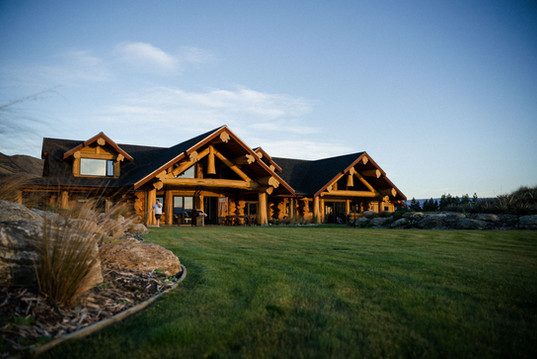
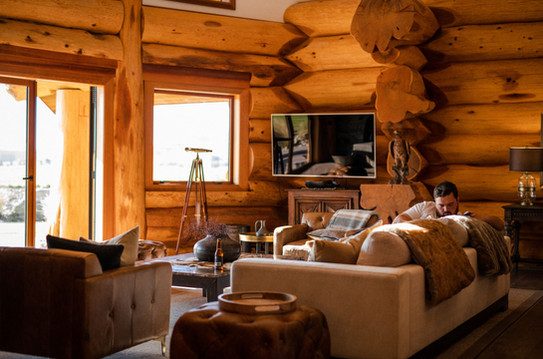
Up to this point in the trip, I’d been mad-hyping-up the “log cabin” we were going to be staying in for the second half of the trip and, after lunch, we had a couple of hours to kill before we could check in. We left Glendhu and pulled up right by the lake to enjoy a midday beer, and I was starting to get a little nervous: “what if the house isn’t all I made it out to be?”. After a quick dip, and talking about how beautiful the South Island is for the hundredth time, we packed into the van once again and made our way about fifteen minutes out from Wanaka, to the log cabin we’d been booked into. We approached the gate, punched in the code and made our way down the drive as the biggest house - let alone log cabin! - I think I’ve ever been to, revealed itself. The River Ridge was built in Canada before being shipped to New Zealand to be re-constructed on the banks of the Clutha River. Some of the logs were easily a metre plus in diameter and, as we made our way inside still in our riding gear, all I could think about was how crazy it was that someone had this built as a holiday house, and how it was way too nice for a bunch of dirty mountain bikers. As we were shown around by our host, she mentioned that she’d come out a few days before our arrival to turn the heated floors on for us so that they’d be warm in time for our arrival. This was our chance to live like the 1% and we were going to make the most of it. We’d gone from an apartment - which was super nice and honestly way better than some of the sketchy hotels I’ve stayed in on these trips - to having two kitchens and our own bathrooms. We all packed in, showered and took our usual afternoon naps, then watched Tea & Biscuits (if you haven’t seen it – check it out) before heading back into town to B.Social for dinner.
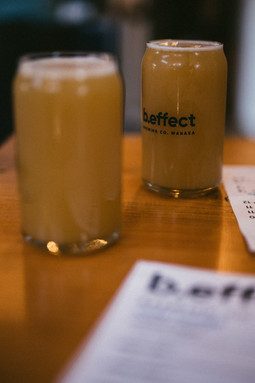
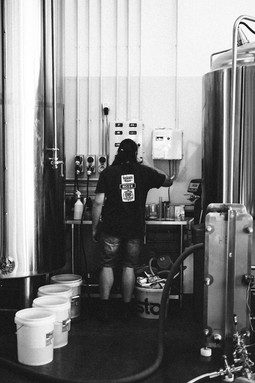
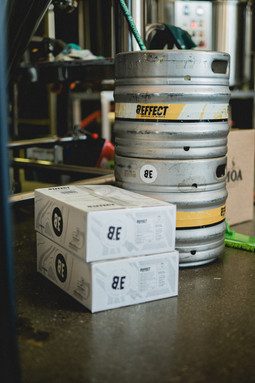
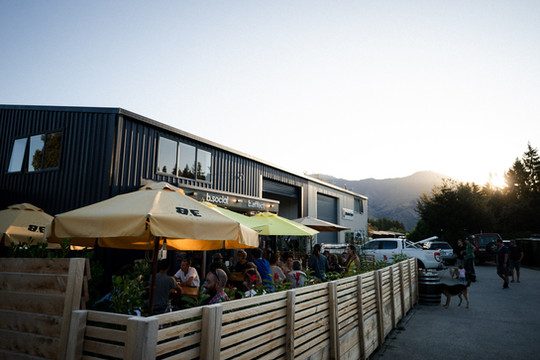
I hadn’t checked out B.Social before, but as a craft beer drinker I was pretty excited to visit. I’ve homebrewed a couple of batches in my time, so I love getting to hang out at breweries and watch the magic happen – which is the case at B.Social, as nothing but glass panels separate the eatery from the B.Effect brewery. Since we’d had a big couple of days, I wasn’t sure I’d manage to stay awake the 15 minute drive home if I had a beer, so I stuck to kombucha with Casey, while Callum and Haimona sampled all that B.Effect had to offer. I flicked through the menu as I tried to decide on what I wanted to eat and, after we realised we all wanted to get everything on the menu, we ordered basically every starter to split between our group. I think bar starters are the best, but breweries always go just that little bit further and I feel like that was exactly the case at B.Social – make the portions a little bigger and they could easily be mains.
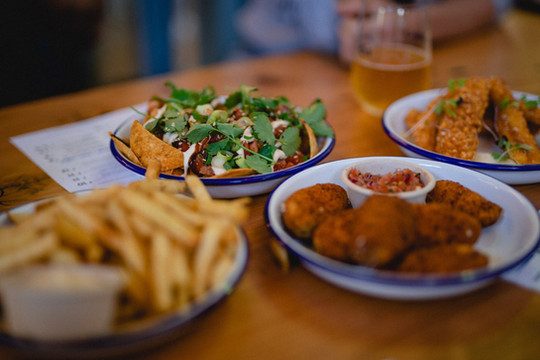
It was only 7pm, but we were all exhausted, so we called it quits after eating and headed back to the house. I finally had the beer I wanted with dinner, and it did exactly what I thought it would – knocked me out. I pretty much headed straight to bed and was stoked to have a bit of a sleep in the next day – a 7am wake up never sounded so good!
Words: Cam Baker
Images: Callum Wood
Story: A Breath of Fresh Air
A biking trip to the Nepali Himalayas, with a race thrown in for good measure? Sounds like an adventure not to be missed! We had three weeks to explore, starting with the Yakru Enduro race – dubbed the highest enduro race in the world – followed by bikepacking part of the Annapurna circuit. It was a trip to explore a new part of the world, experience a completely different culture and do something a bit out of the norm.
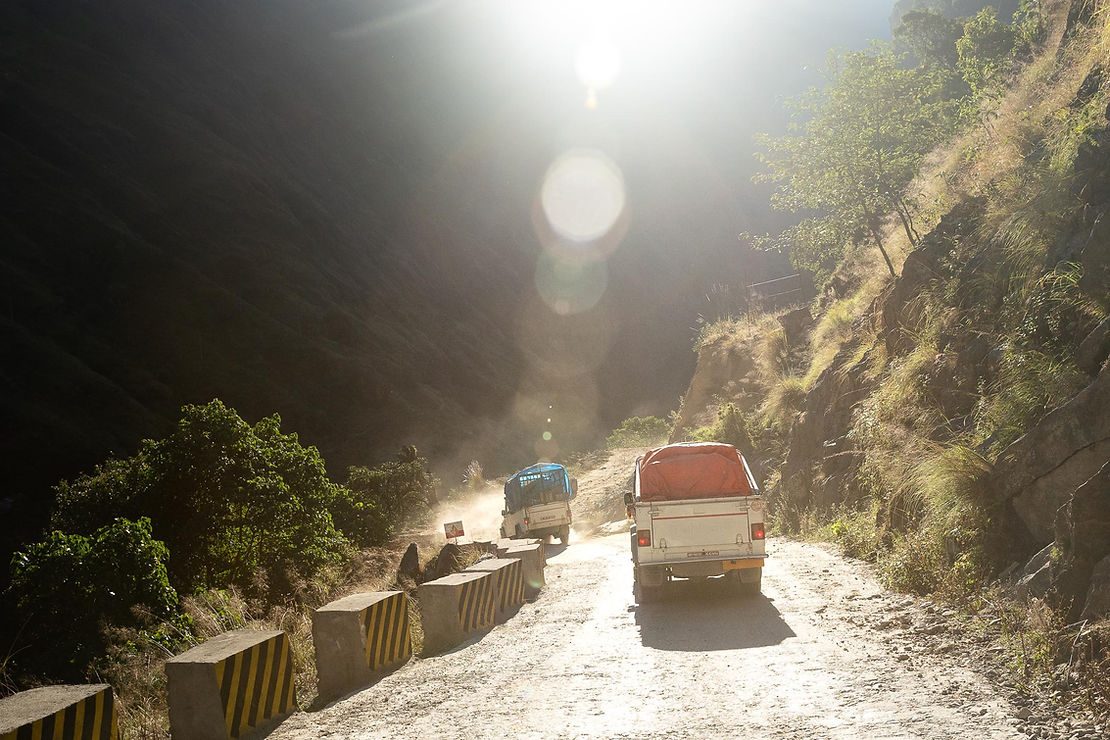
Four-Wheel-Driving Into the Adventure: The road into the Manang region of the Annapurnas was completed in 2011 by the Nepalese army; connecting Manang to the lower valley by 13+plus hours of 4wd action, instead of the traditional seven day hike. The road has encroached on the beauty and isolation of the Marsyandi Gorge so loved by tourists, but no one can deny the benefits motorised transport brings to these mountain communities. Photo: Dane Cronin
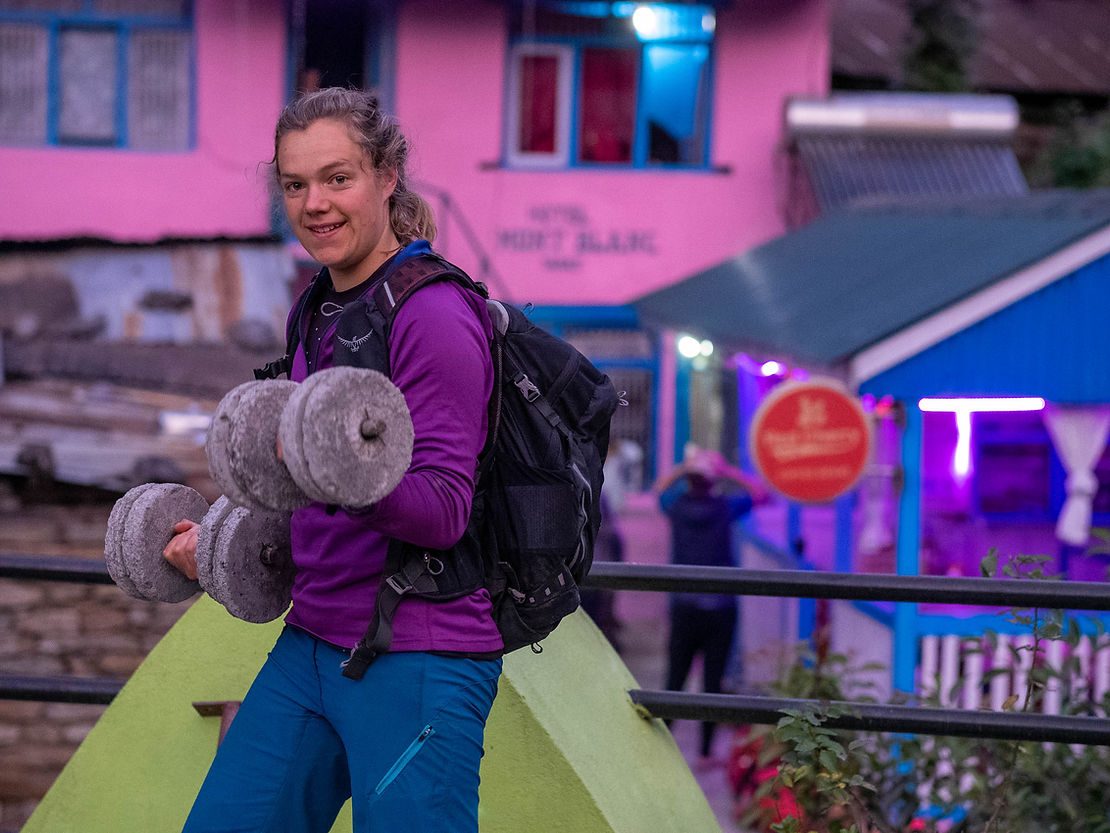
Learning the art of Nepali Time: we quickly established there was little point in expecting to be anywhere at a certain time. We went with the tide, and some of our best cultural immersion was done waiting for the truck to be fixed or a guide to arrive. Here, we tested out the gym set of our young Nepalese host, on the roof of his teahouse. Photo: Ben Gibson
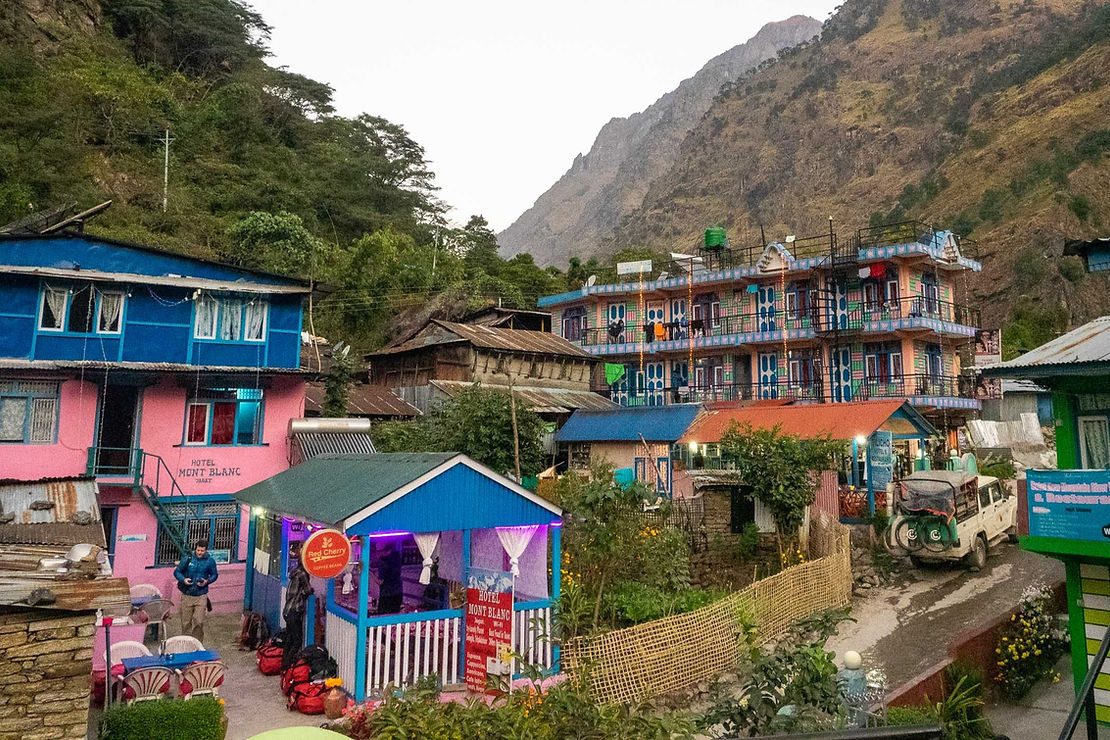
The typical view of a village in the Marsyandi Valley. Most buildings were multistorey, with unusual colour schemes and barely-straight beams. Roof tops often doubled as café terraces, giving 360 panoramic views of the surrounds. Picturesque and cosy, they were a welcome sight at the end of a day’s pedalling. Photo: Ben Gibson.
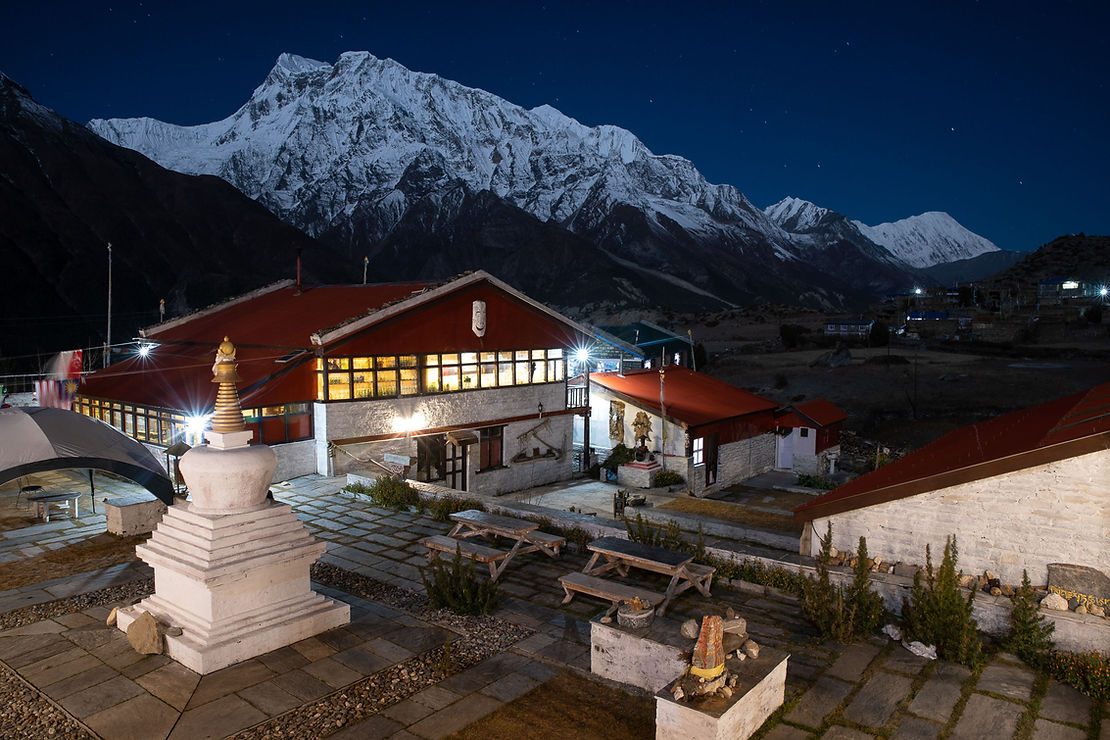
This lodge was home for the duration of the race - and was luxurious by Nepalese standards, with flush toilets and wild card hot showers. Behind the lodge is Annapurna III, towering another 4500m above us. By night, these peaks seemed even more enormous. It was pretty special to be able to relax, unwind and reflect in the evening below these beauties, with a cup of Masala tea or hot lemon in hand. Photo: Dane Cronin
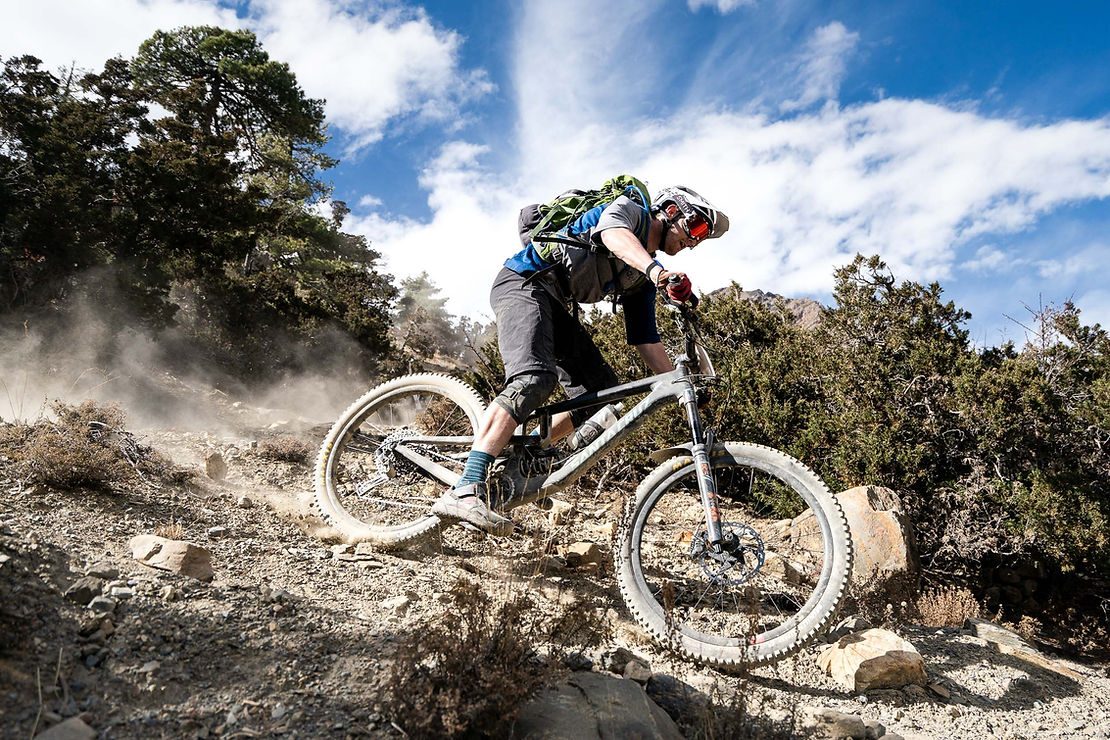
Into the Race Stages: Hiking trails and donkey tracks became nduro stages for the day, borrowing ancient paths of transport through the mountains and valleys. Racing blind in foreign terrain felt very non-racey and was always a balance between grip and speed, as we came to terms with moon-like dry dust. Photo: Dane Cronin
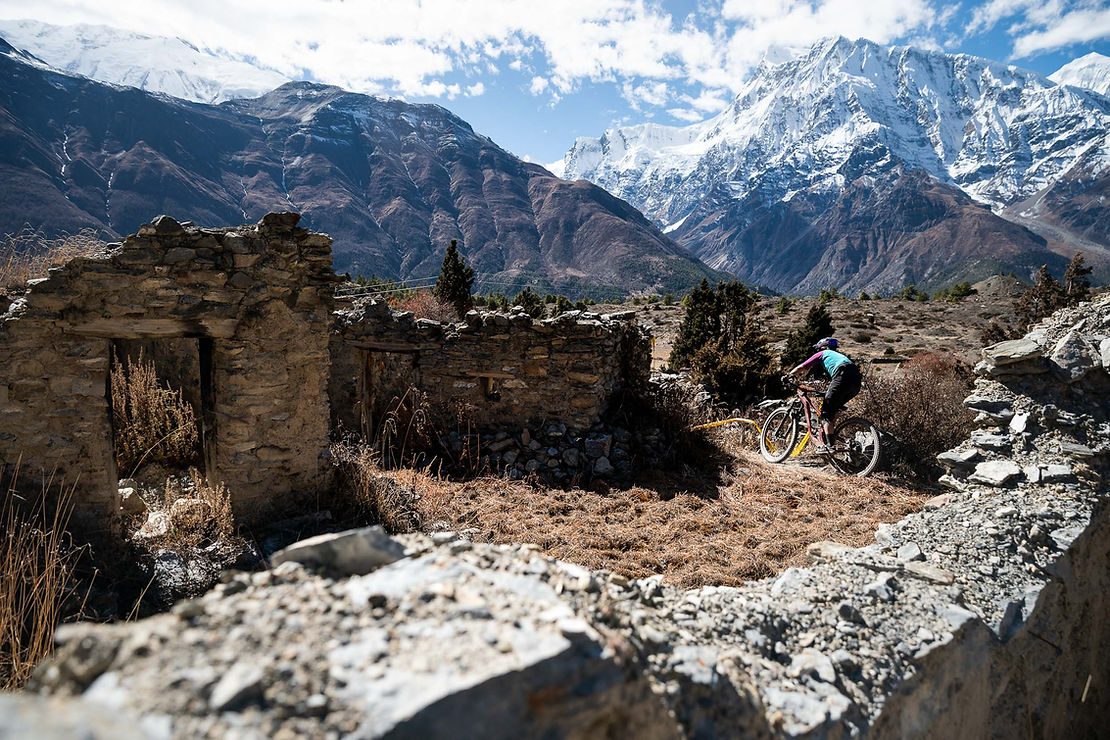
The race stages took us through a cultural slideshow, through ruins, shrines, villages and monasteries. Racing here was a stark contrast to the lives, culture and religion of the Nepalese. I felt very privileged to be able to have the choice to ride my mountain bike through these places and wonder about the thousands of years of change these ruins have seen. Photo: Dane Cronin
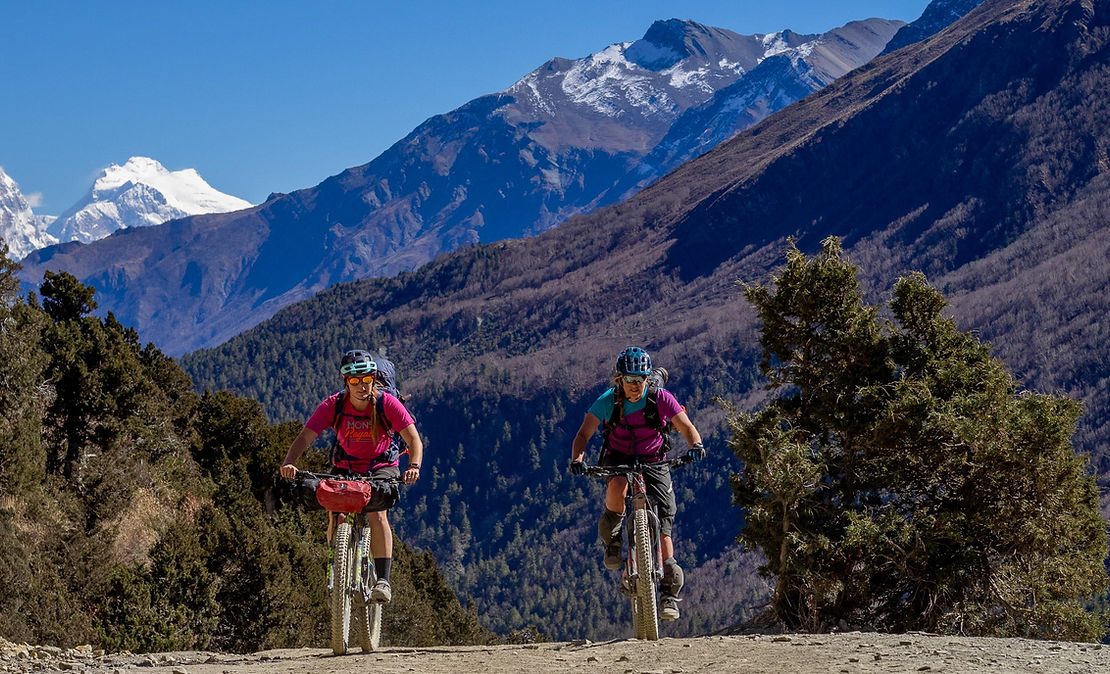
Swapping out timing chips for front rolls, we left our newfound friends from the Yakru race and pedalled up-valley to begin the second part of the trip. We were blessed with sunny days pedalling amongst mountains, and without a race team to support us; we felt much closer to people and the place. We all embraced the change in pace as we enjoyed and appreciated the scenery, with nowhere to be but in the moment. Photo: Ben Gibson
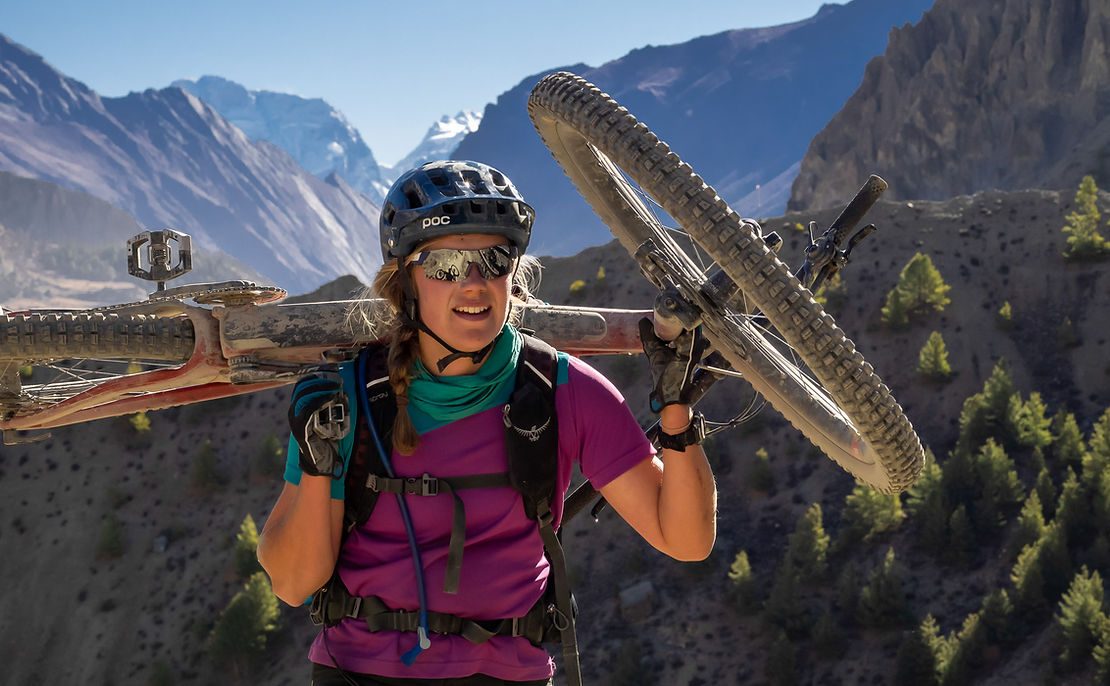
Off, up and Away: This is what most of our hill climbing looked like. None of us had done anything at altitude before and it was a whole new experience and pace working with what our lungs and heart could pull out of the oxygen-thin air. We didn’t mind too much, it was all part of the trip and gave us plenty of opportunity to take in the scenery and surrounds. Photo: Ben Gibson
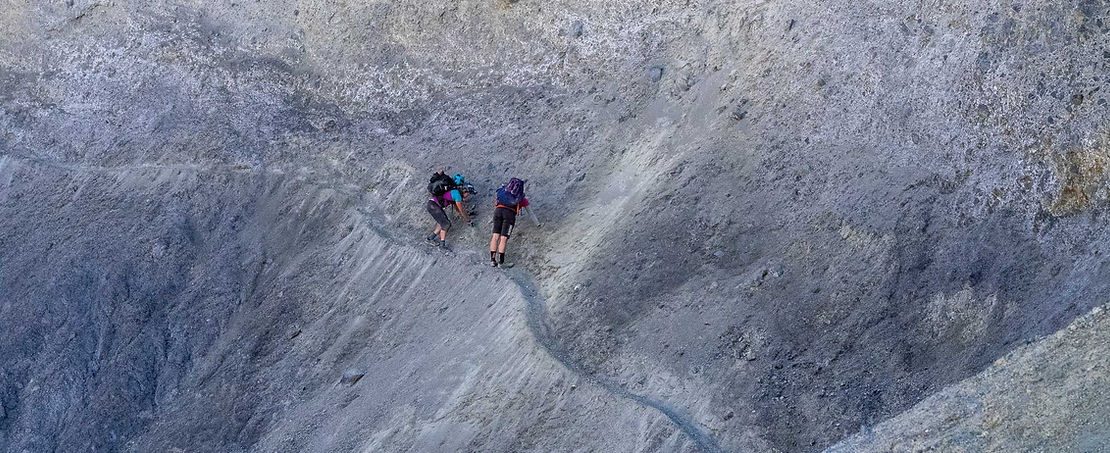
Risk vs Reward: We spotted a side trail on the map, offering an alternative route to the road to our lunch destination. It certainly was an alternative, coming across this landslip with a small path leading across it. Not wanting to turn back and lose the elevation we had already gained, there seemed little other option than to cross it – which was more challenging for some than others. The reward though? A morning of riding glorious single-track through the forest, without another soul in site. Photo: Ben Gibson
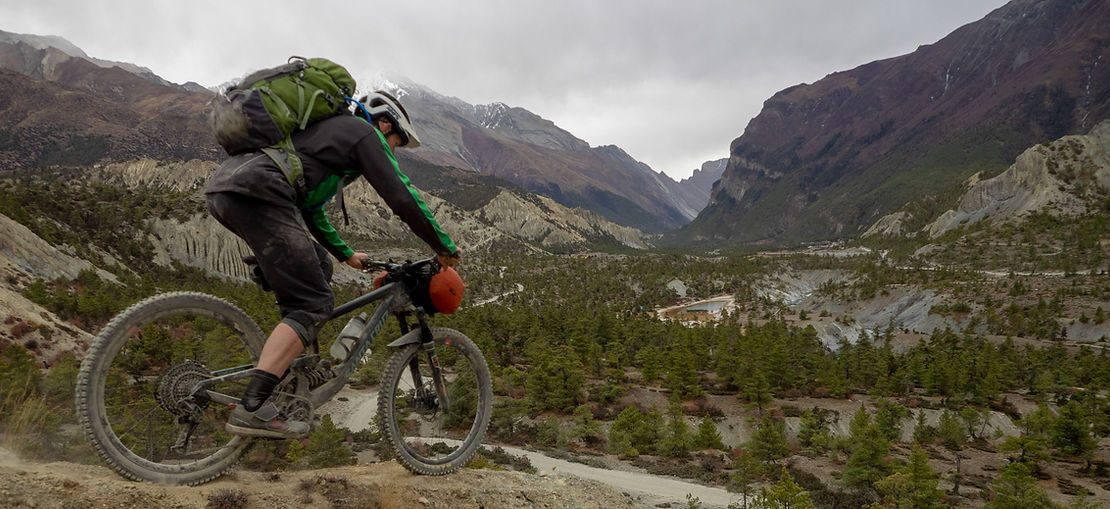
As hoped, we found some really sweet sections of single-track to ride. With the oxygen deprived climbing, the descents were all the more satisfying and had us savouring every turn, even with front rolls and loaded packs. Given more time, there would have been many more side trails and areas to explore with similar potential. Photo: Robin Pieper
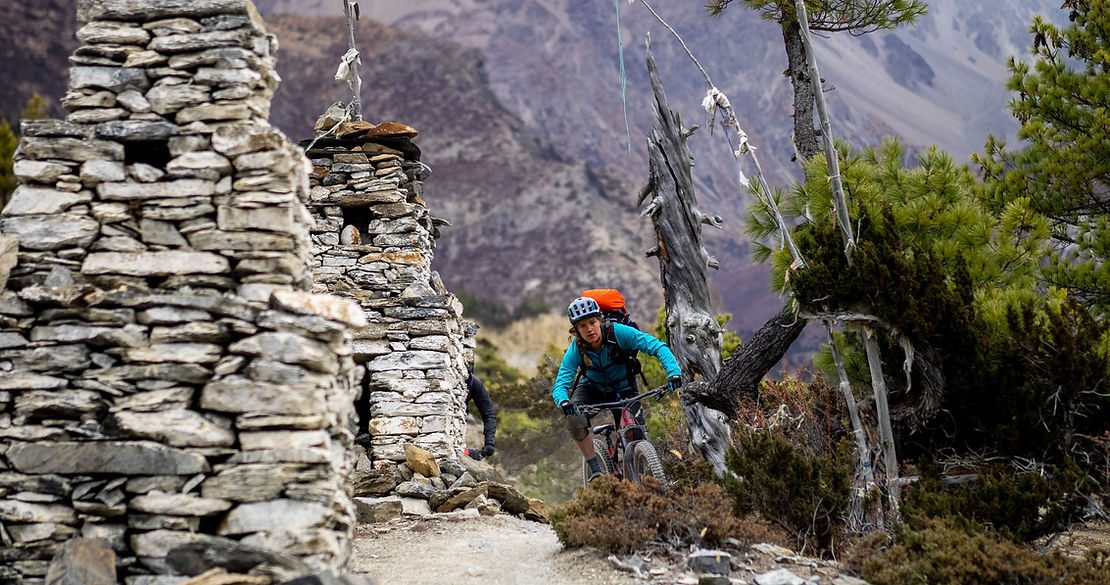
Dodging Shrines on the Trail: There are many of these Buddhist outposts on-trail around Nepal, and it is Buddhist practice to only pass these on the left, so that the shrine is on your right. Doing so gives good karma to the traveller, as passing on the right conversely gives bad karma. Touching the shrine is only allowed with your right ‘clean’ hand, for the same reasons. Photo: Ben Gibson
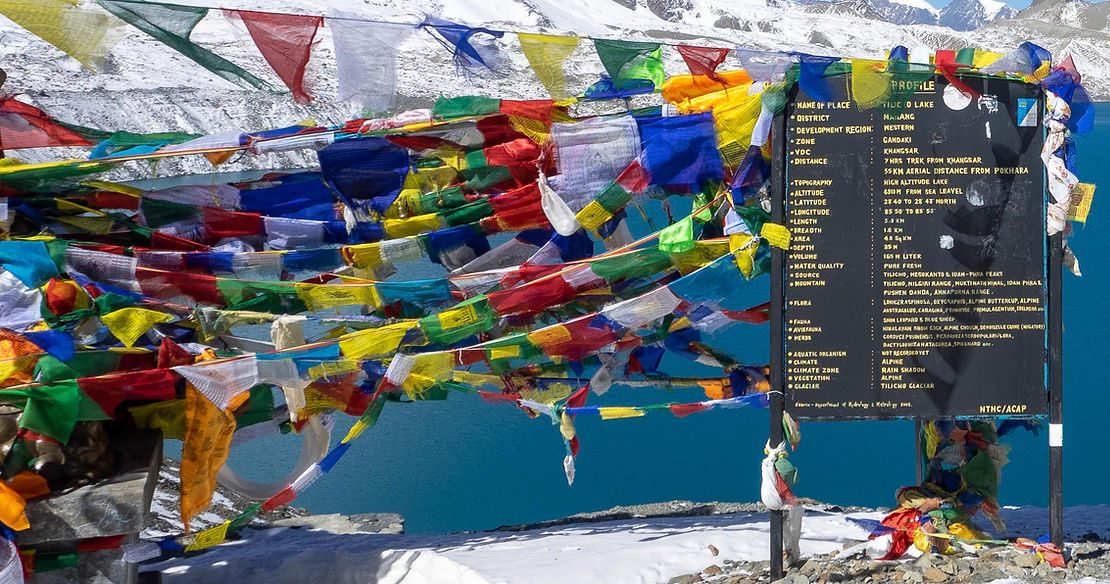
The high point of our trip, Tilicho Lake. Sitting at 5000m it’s claimed as the highest lake in the world (unconfirmed). Either way, it felt like a great achievement and stunning to look around and see snow, rock and ice literally as far as the eye can see. In New Zealand, there is almost always a view of lowlands, but not here. Earlier in the season, it’s possible to pass from here over to Jomson, but not with the lowering temperatures this late in the season. To get to Tilicho we needed an early start to avoid the wind, and even in the late morning a bone-chilling ‘breeze’ had already started. Photo: Ben Gibson
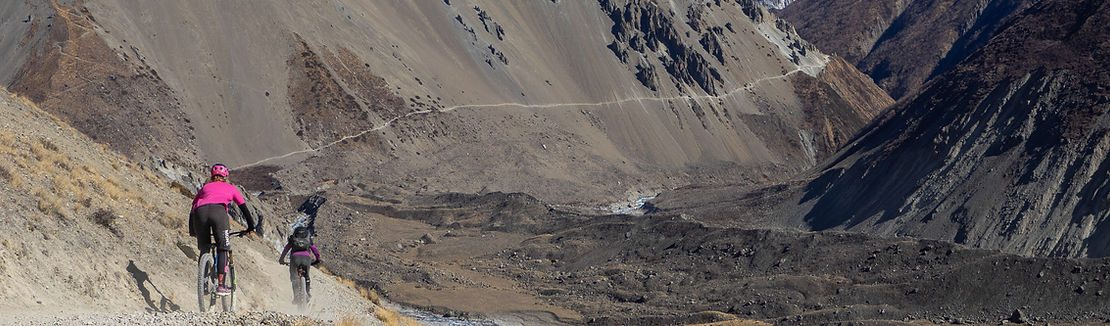
Descending from Tilicho lake, as the trail stretches out in front of us along the scree. We shared the trail with regular donkey trains, locals and tourists alike, and the trail was deceptively steep and slow going. Luckily bikes made the descents much quicker and more fun, although some of the exposure and technical corners were met by either cheers or concerns from other travellers. Photo: Ben Gibson
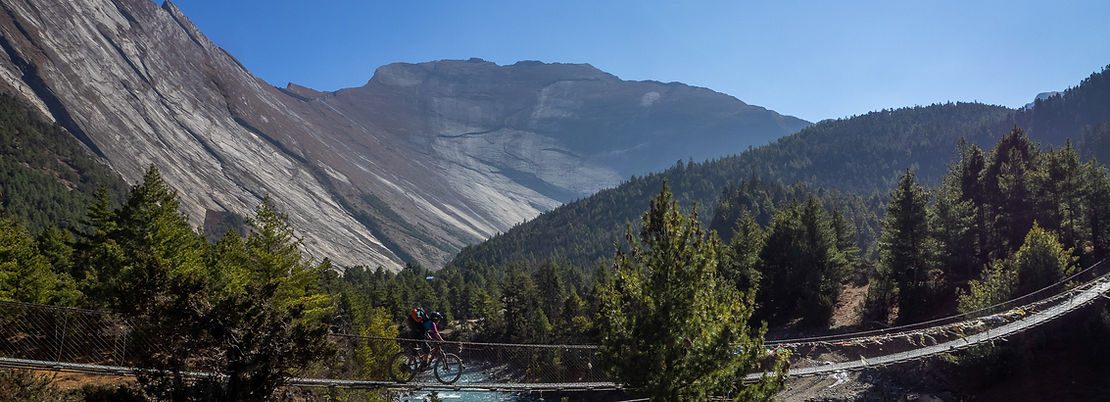
On the way Home: Crossing the Marsyandi River over one of the many single span swing bridges, connecting villages on the true left of the river by foot only to the ‘main road’. In the background, Heaven’s Door rises above us, a single slab of rock, rising 1500 vertical metres from the river. The geological masterpiece serves as a natural barrier (or ‘door’) between the temperate lower gorge of the Marsyandi River, and the montane plateau we are on now. Photo: Ben Gibson
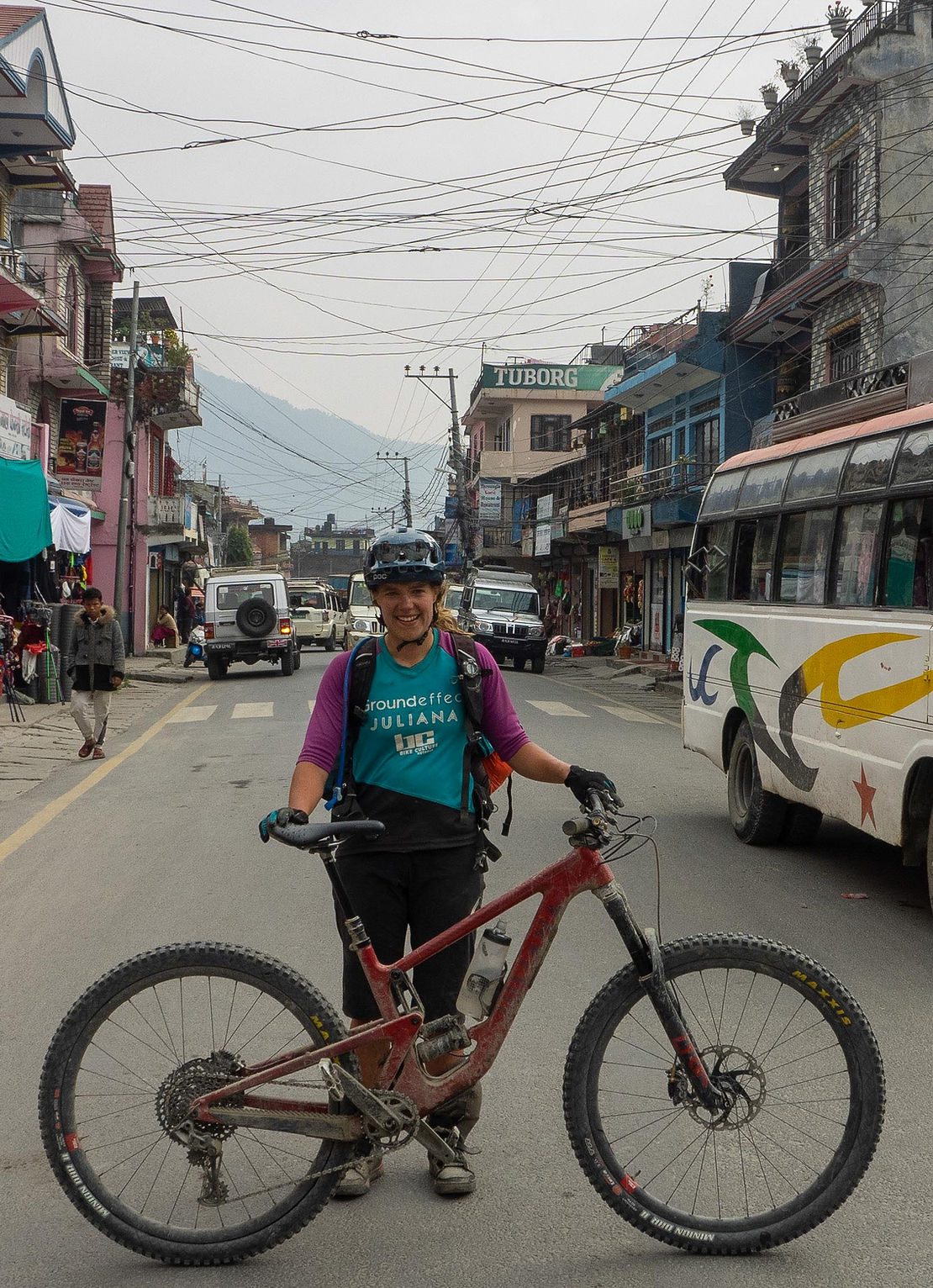
Bitter-sweet feeling arriving back in Besi Sahar, two weeks after we set out, with dusty bikes, empty legs and full hearts. After travelling through small villages among big mountains, it was a shock to the system to have busy streets and air thick with exhaust and oxygen. Photo: Ben Gibson
The last stop of our trip, visiting Boudhanath, a Buddhist Stupa. The largest Stupa in Nepal, it was a popular attraction for monks, worshippers and tourists alike. It really struck home the depth of religion in this country and the impact it has on shaping the culture and country. What an enriching experience to have cycled amongst the tallest peaks of the world and shared the culture and villages of the Nepalese. Photo: Ben Gibson
Words: Robin Pieper
Images: Dane Cronin, Ben Gibson & Robin Pieper
Story: Destination: Wanaka Pt. 1
It’s 6:30am and I’m in the office punching out emails. I’m massively behind, having just arrived back from a week out at Crankworx, and I’m about to be out for another five days. Half an hour passes before my ride to the airport picks me up and we’re out. Ten minutes into the drive and we’ve stopped for diesel, listened to the last eight minutes of an audiobook about the founder of Nike, and now we’re accidentally bullying our way into a queue of Auckland’s finest rush-hour traffic. “The people behind us probably think I’m such an asshole,” she says. “We’re in a truck, it’s expected” I reply.
So far, this experience is a little different to my usual airport Uber - but then again, Casey Brown isn’t your typical Uber driver.
The rest of our run goes smoothly and it’s almost a little unnerving. It’s at about this point in a trip to the airport where I remember what I’ve forgotten, hit unexpected traffic, or start stressing because I can’t remember what I’ve forgotten. This time around though, it’s all smooth sailing – the traffic is flowing and we’re chatting about a shirt Casey designed, as we cruise along the motorway.
I guess I should point out what we’re actually doing! Well, a few months ago, I was invited to visit Wanaka to check out Cardrona, ride the new Bike Glendhu, sample a couple of the local eateries and explore the region. A few setbacks kept bumping the trip back, but eventually we locked in the week after Crankworx - which was perfect, as Casey was in town. We convinced her to re-book her flights home and stay on for an extra week with us, then roped in a videographer, Haimona; and photographer, Callum, to come chase us around.
Back to the present and we’ve hit the airport; I check us in while Casey returns her rental car. Bag drop goes smoothly, we find Haimona, who has flown in from Gisborne, and breeze through security. I always set the goal of grabbing a coffee between passing through security and boarding, but the reality is that I’m usually late, so I have to settle for an average-at-best airline coffee instead. The smooth run continues, though, and before you know it we’re kickin’ it at a coffee shop, browsing Canadian SPCA websites on the hunt for a buddy for Casey’s dog, Snuff, before piling onto the plane and making our way down south.

I love the flight into Queenstown. I lived there for a while after high school and every time I fly in, it feels a little like going home. Descending into the mountains served as a great reminder for what a rad few days I was in for - and what a rad week I’d just had at Crankworx. We touched down, repeated the airport procedure in reverse and were faced with our first challenge: getting two bike boxes, two camera bags, a drone case, three people’s worth of luggage, and said three people into a minivan. A bit of Tetris and we got there, before hitting the road to Wanaka.
We were due to spend our first two nights in an alpine apartment on Cardrona, and had originally planned to cruise up the mountain, dump our luggage, then venture into Wanaka to grab some lunch and some groceries. By the time we hit the access road, though, I was running on fumes and posed the idea of punching straight through to Wanaka. Casey was deep in a nap by this point, so Haimona and I made the call and kept punching. Once we hit Wanaka, we hit Big Fig for the first of two visits over our stay. After a much needed lunch, we did a quick grocery shop, struggled to pack everything into the van, then hooked a U-turn and headed for Cardies.
As you turn off the highway onto the Cardrona access road, you’re met with 14km of unsealed gravel, up the side of a mountain. Our buddies at Toyota definitely didn’t have these kinds of roads in mind when they designed the van we’d rented for the week, so we took it easy and cruised our way up the hill.
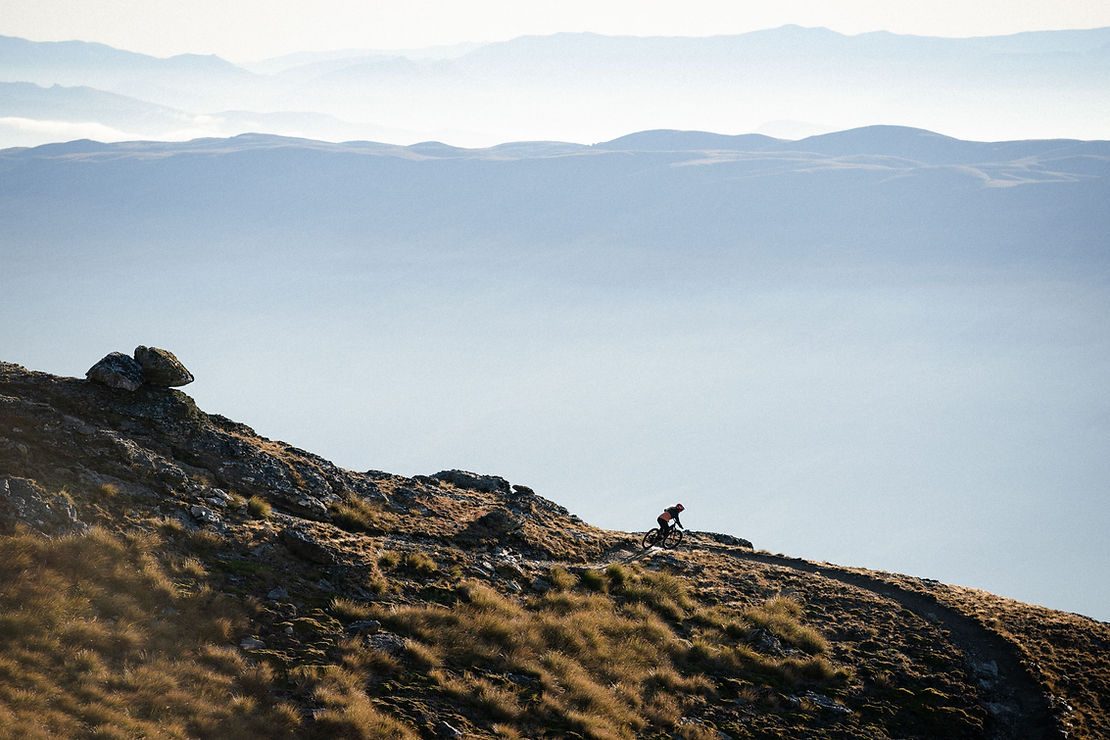
As far as ski fields and, as a result, lift-access bike parks, go Cardrona is pretty unique. Typically, base buildings are found at the base of a ski-field, as the name would suggest. Cardrona’s different though, with the base building located halfway up the slope. What’s rad about this, is that as we pulled into the carpark, we could see riders tearing up the network of trails that run down the mountainside. By this point, it was pretty late in the day – we must have been pushing 3pm - and with all our bikes still packed up and the lifts only running ‘til 4pm, we decided to pack-in, build our bikes, then have a chill afternoon. This was where we ran into our first problem: the 8mm I had packed to do up/remove my pedals wasn’t up for the task of tightening pedals, and quickly stripped. Casey’s multi-tool had everything but an 8mm, so we ventured into the bike park to find one. Trust the media - and an athlete - to come unprepared! After this, we retreated to our alpine apartment for naps while Haimona broke out the drone to get some rad location shots. Upon waking, we went for a walk down to the base building to figure out our dinner plans. Cardrona have a restaurant on-mountain, making the choice easy – and after all the travelling we’d done, I wasn’t too keen on driving back down the mountain to visit the Cardrona Hotel! Whilst making our dinner reservation, we found out that our stay happened to coincide with a stargazing tour, something we had to check out.
Our dinner was nothing short of phenomenal, and our photographer for this trip, Callum Wood, showed up right on time. If you’re visiting Cardies, whether staying the night or just spending a day on the mountain, you’ve gotta check out The Mezz. We had the entire restaurant to ourselves, bar one table that left pretty soon after we arrived, and the food was amazing. As we ate, the excitement started to build – we’d made it to the South and we were excited to explore.
Stuffed full of food, we made our way back to our mountain apartment to hang out for an hour or two before we embarked on our tour. It was super nice to have our own space on the mountain. Staying in hotels isn’t bad by any means, but it was rad to have a kitchen, bathroom and living room to hang out in without the worry of other guests. On these trips, you tend to be in-and-out of places pretty quick, and we always have a ton of gear including bikes, camera equipment, regular clothes and riding gear, so it was rad to not have to lug our stuff across a hotel, as was the case the week before when we were at Crankworx.
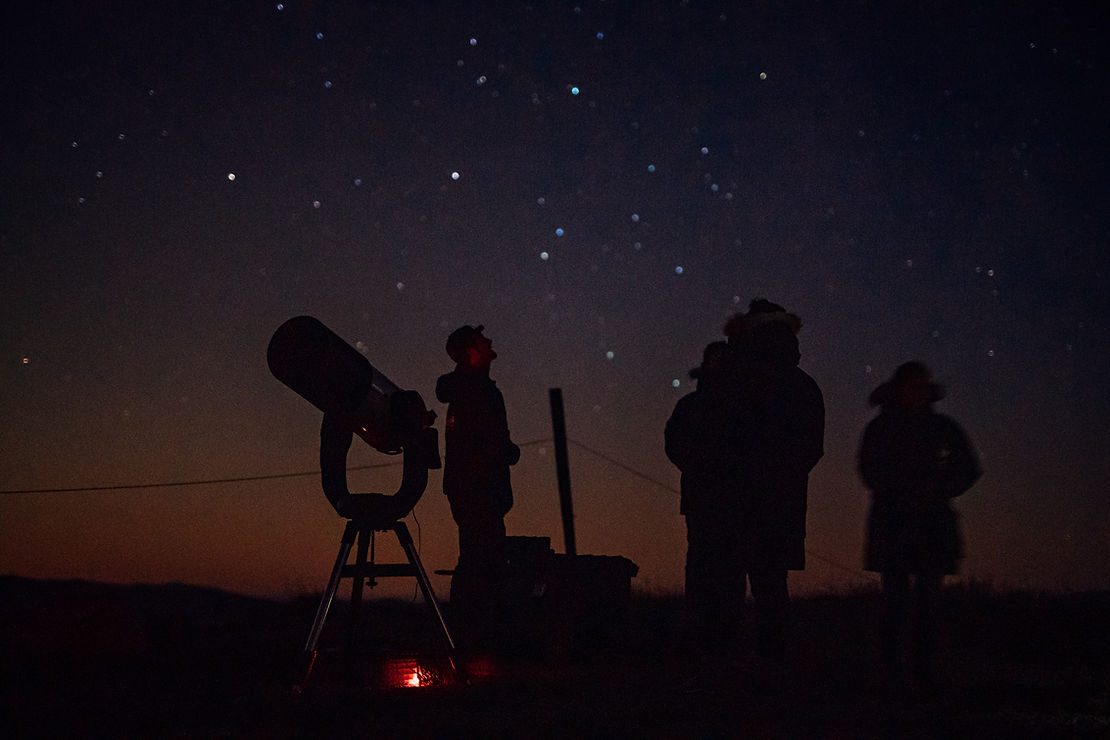
We dug around the apartment and found all the board games Cardrona had graciously supplied, and by the time we started making the final decision of what to play, it was time to wrap up and head out to go stargazing. We met our host, Dan, at the base building and all piled into a van to head across the mountain to our stargazing spot. Earlier on in the day, we’d been told Dan was from Hawaii, so we spent all afternoon and evening trying to figure out if we’d be in for a super low-key Hawaii-style star tour, with plenty of shakas, or a more educational experience. As we unloaded from the van at Captain’s, we dove into the café and got kitted out with some huge winter jackets before heading out to Dan’s telescope, to admire the night sky. The moon was pretty close to full, so whilst the conditions weren’t the best for admiring the Milky Way and the many nebulas in the night sky, we were able to get a good look at the moon. I’ve got to say, if you haven’t looked at the moon through a telescope, you definitely should – it’s unreal to see. Dan showed us stars and constellations throughout the night and, to be honest, it was one of the standout experiences of the trip for me - I think mostly because it’s something I’d never have considered doing. Once we were all frozen solid, we headed back up to Captain’s Café for hot chocolate, before piling into a van and heading back to our apartment, where we all headed for bed.
Good light is always a priority when you’ve got a photographer and videographer in tow, so we rose early the next morning to begin our first day on the bikes. I had a meeting in town, so whilst we all left at the same time, Casey and our content team headed up the hill on their bikes and I headed down it. As I drove down the mountain, I couldn’t help but admire the incredible sunrise, and I can tell you now that I spent the next few hours wishing I was up the mountain.
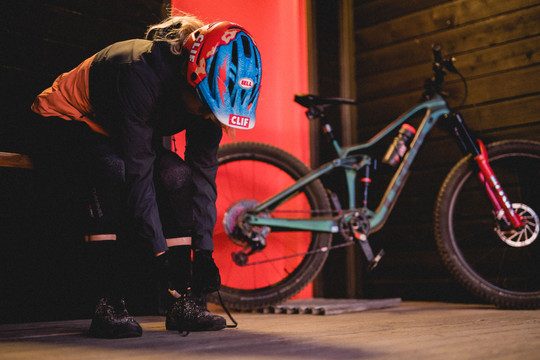
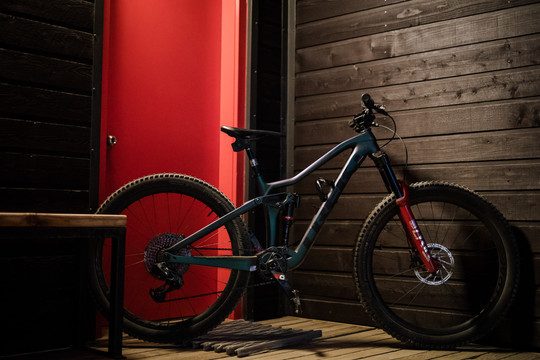
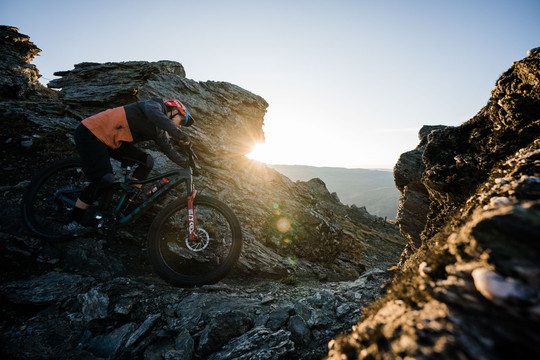
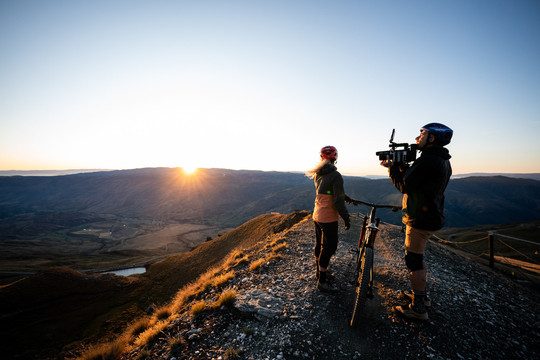
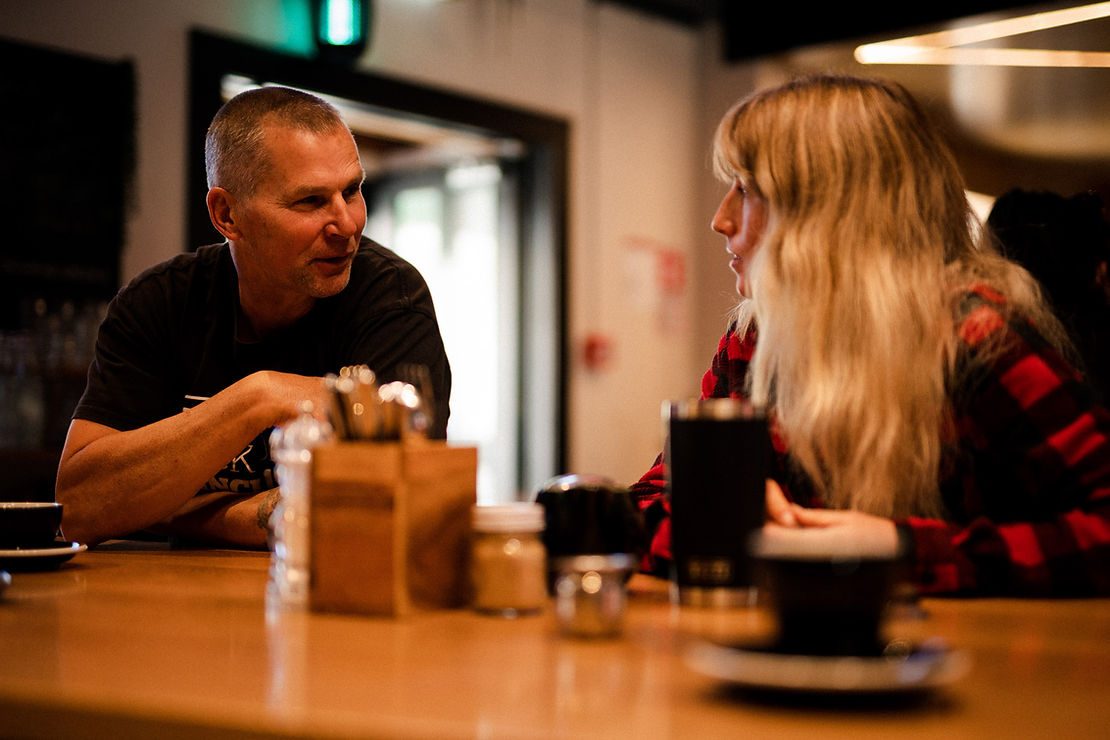
As I turned back onto the Cardrona access road a little while later, I was beyond excited to get some ride time in and drove our rental van as fast as I could (which was still a good nudge under the speed limit) up the mountain. Today’s agenda consisted of exploring Cardrona’s trail network, before tearing down the Peak to Pub trail to finish our day off with dinner at the famous Cardrona Hotel. I hadn’t ridden at Cardrona since their opening season, and I’d heard nothing but good about the park since, so I couldn’t wait to get riding. Because we were visiting on a weekday, we practically had the place to ourselves and didn’t once have to wait for the lift. How good?! Before we took off up the mountain, we caught up with Graham Dunbar, or ‘Spy’ as he’s better known, for a quick coffee. Graham’s been working on the mountain for as long as anyone and knows it like the back of his hand, so he was able to give us all sorts of valuable insight that we otherwise would’ve missed out on. For what it’s worth, the team at Cardrona came through once again and the coffee was next level.
Our first run took us right down the guts of the park, following close-ish to the Whitestar Express – the main lift in the bike park - coming down Grasshopper into Hi Vis, before making our way to the lift via Low Vis. This made for a solid Grade 3 run down the mountain before diving off into the advanced Low Vis trail. We spent the rest of the morning tearing up and down the mountain and, just as we were about to cruise back to our apartment for lunch, I got chatting to Cam, one of the bike coaches up Cardrona, and ended up putting in one last quick lap as the rest of the team headed back. The riding at Cardies is nothing short of rad. I love riding in the woods, don’t get me wrong, but there’s something about riding down the tree-less mountain that’s breathtaking. The views are amazing, and you constantly want to stop on the trail to admire vistas that seemingly go on forever. The best part about the lack of trees, though, is the ability to build almost anything you want. The main natural obstacle on Cardrona is rocks, which are easy enough to work into trails, and the end result is a trail network full of fast, sweeping berms, all the rock rollers, rock drops and rock gardens you could dream of and, for the most part, plenty of tussock to cushion your fall if you come off. I feel like the South Island, particularly the lower South, has a reputation for being gnarly Grade 5 riding, but that couldn’t be further from the truth – and a rider of any level would find plenty to enjoy up the mountain at Cardrona.
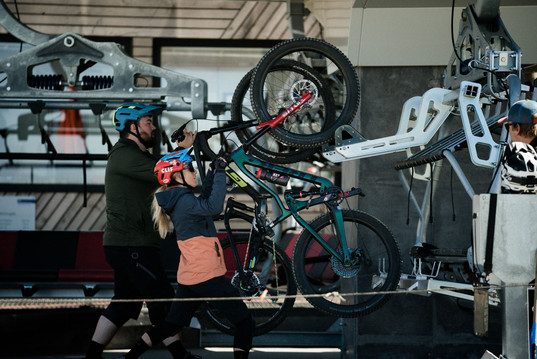
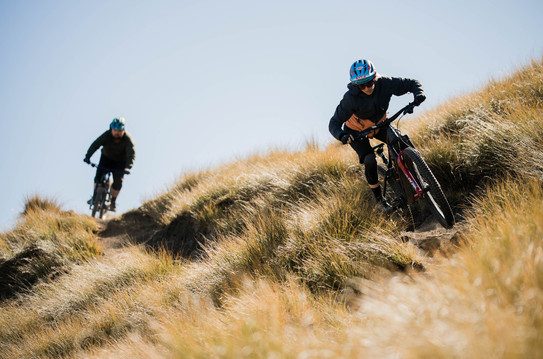
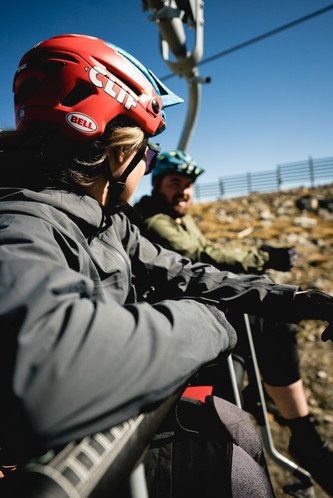
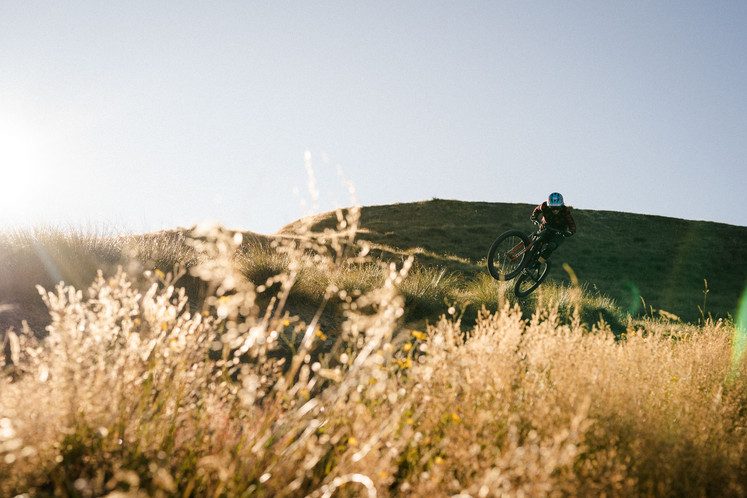


We had a little downtime after lunch – we’d been up since about 5am, after all - so opted to get in a quick afternoon nap (yes, naps became a theme of our trip) before heading up the hill to get a couple more laps in before taking on the Peak to Pub – something we’d been counting down to all day. The Peak to Pub name sort of tells you all you need to know: it’s a ride from the top of Cardrona to the Cardrona Hotel at the bottom of the mountain. We started off at the top of Whitestar Express and headed down Arcadia, to the bottom. From there, we jumped onto Crankshaft, marking the start of the Peak to Pub journey. The journey down Peak to Pub is awesome, and has you tearing through tussock on a trail that lends itself to let-off-the-brakes-and-hang-on riding. Unfortunately though, our fun came to an abrupt end as the lower half of the trail (the part we were all looking forward to most) was shut due to pest control. We considered pushing on anyway, but when we noticed the ‘firearms in use’ warning on the sign, decided better of it. In the end, we took off down the access road and decided to figure out how to fit our three bikes in the back of our van once we’d had dinner and a beer.
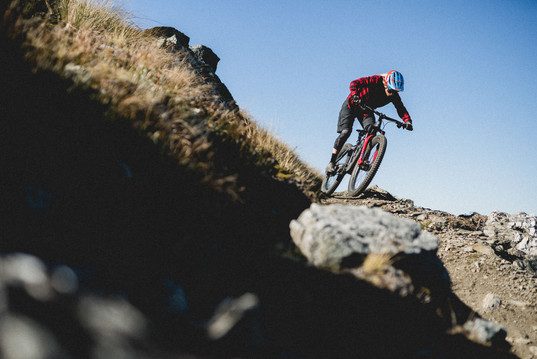
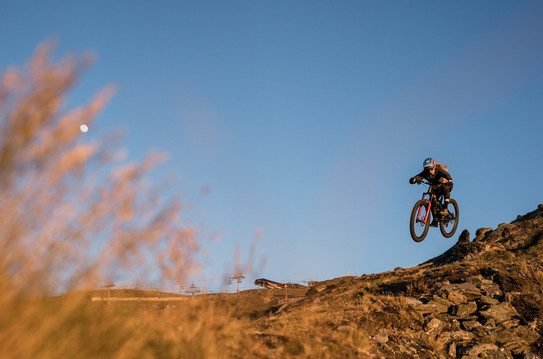
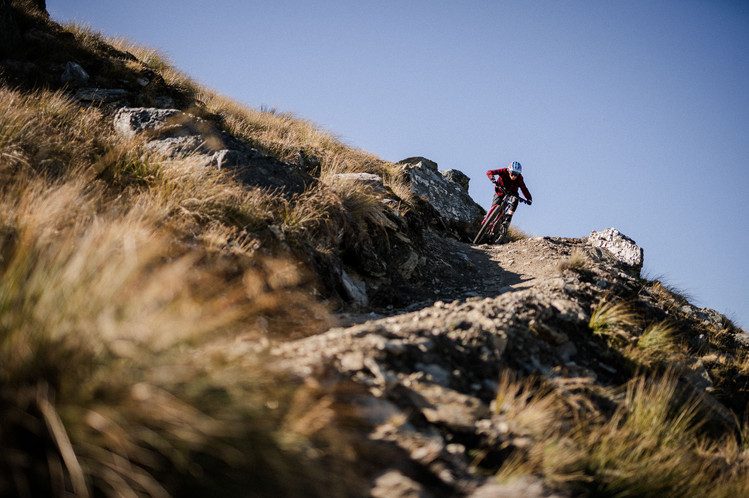


If you’ve been through Cardrona and haven’t stopped off at the Cardrona Hotel for a photo at the very least, I hate to be the one to tell you, but you did your trip down South wrong. The Cardrona Hotel is one of New Zealand’s oldest hotels, and I’d argue the most iconic. Built way back when in 1863, the Cardona Hotel was one of four hotels in Cardrona offering accommodation to gold miners and travellers. The hotel survived through to 1961, before the doors shut after the owner passed away. By 1983, the hotel had been restored, coming back from the brink of being knocked down, and has been taking care of those passing through ever since. We wheeled our bikes through the pub and out back to the garden. Walking into the pub is like taking a step back in time and the vibe was super relaxed, even though the pub was fairly busy. It was a beautiful autumn night, so we opted for a spot outside by the fire and were quickly greeted by a Jack Russell, who spent the rest of the evening hanging around our table in the hopes one of us would drop some food. We later found out he and his parents are regulars. After a meal you wouldn’t complain about from a restaurant - let alone a small country hotel - and a Cardrona Ale or two, we headed back to the car to begin the game of Tetris. We had three bikes, four people and two people’s worth of camera gear to get into a mini-van that was arguably closer in size to a station wagon than it was a van – and, once again, no mutli-tool to take any wheels off. After stuffing gloves, knee pads, jackets and shoes between the bikes, we managed to get them all in and then just had to figure out how to get the people in around them. After some creative manoeuvring, we got everyone in the van and began the slow trundle up the access road. We had a 4:30am wake up call scheduled for the next morning, so once we got up the hill we packed up and hit the sack. Stay tuned for Part 2 coming soon...
Words: Cam Baker
Images: Callum Wood
Story: The Zen and Art of Bikepacking
In retail they say convenience is king. That’s what global retail giant Amazon built its brand around. It bet that if it could make shopping more convenient it would trump almost all other factors. When it comes to bike-packing my mantra is this - comfort is king. I’m fast discovering that you can conquer almost anything and ride for almost any distance if you can just stay comfortable, and so Tour Aotearoa preparation for me has become less focussed on grinding out miles with the goal of building leg strength, but grinding out enough miles to trigger the next factor of discomfort.
Take your average beginner cyclist. They get on a bike having never ridden before, and likely it’s a cheap bike with a nasty seat. Within five minutes they are complaining about a sore bum. That’s typical, and they have triggered the first round of discomfort that they need to conquer before they can move forward. They can either suffer till they get well-formed callouses on their butt-cheeks, or they can buy a pair of padded bike shorts. If you’re interested in long distance bike-packing such as the Tour Aotearoa, you have probably been around bikes long enough that you have accumulated a few items that can help keep the comfort levels high on your normal one to two-hour ride, but what I’m finding surprising is the strange things that start to crop up when you start to go for extended time in the saddle.
That good seat you bought that was comfortable for two hours of mountain biking turns to agony at the three-hour mark. Those SPD shoes that have kept you going for the last eight years force shooting pains in to your feet after the 100km mark. Your hands go numb, your shorts chafe and your helmet feels like an oven.
You can conquer almost anything if you can just stay comfortable, but that is no easy task in this game. Going in to this I had read up about people finding their hands going numb. This sounded a bit strange. After all, I had been mountain-biking for 20 years and surely the rough jarring of mountain bike terrain would be harder on your hands than anything else? We didn’t even have suspension then! But sure enough, my hands started to go numb too during training rides. A switch to the Jones Bar, a set of aero bars, and an extra layer of bar tape over the grips seems to have solved this problem. Next thing to tackle was the chafing. Riding for one day was no trouble at all in the chafe department, but only an hour into a second day and all of a sudden it’s like my lycra is lined with sandpaper. Strange. The aptly name Butt Butter quickly sorted this out, but no sooner has one irritation gone away than another seems to arise. The last two training rides I went out for were a perfect example of this. For some reason at the 40km mark my left foot started to get intense shooting, cramp-like pains. I had to get off the bike, take the shoe off, and wriggle my toes for five minutes before I could continue. Strange. It came on with no warning, and went away just as fast. A few days later out on another ride and as I look down at my speedo tick over from 39.9km to 40.0, all of a sudden the same shooting pains return. I was off the bike in the grass wiggling my toes in the exact same middle of nowhere spot as the time before. Weird. On top of this you have the strange way sleeping in a tent on a one-inch mattress can leaving you feeling as stiff as a plank, and now you’ve got to get dressed and jump on the bike for another eight hours. A little yoga and stretching goes a long way as it turns out!
And this is what has surprised me most about all of this. I am far from being at any sort of extraordinary level of fitness, but I’m surprised at just how many kilometres I can crank out if I can just stay comfortable. When I talk to people and tell them I’m riding the length of the country, they have this kind of astounded look on their face like I am some sort of Olympic athlete or something. Actually maybe the astounded look is because they look at me, sum up my mediocre-at-best physique, the combination of the task and the distinctly average human specimen they see before them. Maybe it’s more of a quizzical ‘has he actually gone a bit mad’, extrapolating out the five minutes of pain they felt last time they sat on a bike seat out over 25 days continuously. But I soon find out that they don’t know what I know. You can conquer anything if you can just stay comfortable.
So right now I’m actually in this kind of sadistic training mode. Literally. Yes, I’m trying to get a little bit of tone, a little bit of definition in the calf muscles, but more than that I’m actively looking to ride long enough, far enough simply to trigger the next round of pain, the next round of discomfort. Because at this stage of the Tour I can do something about it. I can buy Butt Butter, I can fit aero bars, I can tweak and adjust and make minute alterations in the hope of creating the ultimate Zen bike set up upon which all riding is good, all riding is calm, all riding is at peace.
Of course then I might start to notice that my legs are actually really really sore.
Words & Photography: Lance Pilbrow