

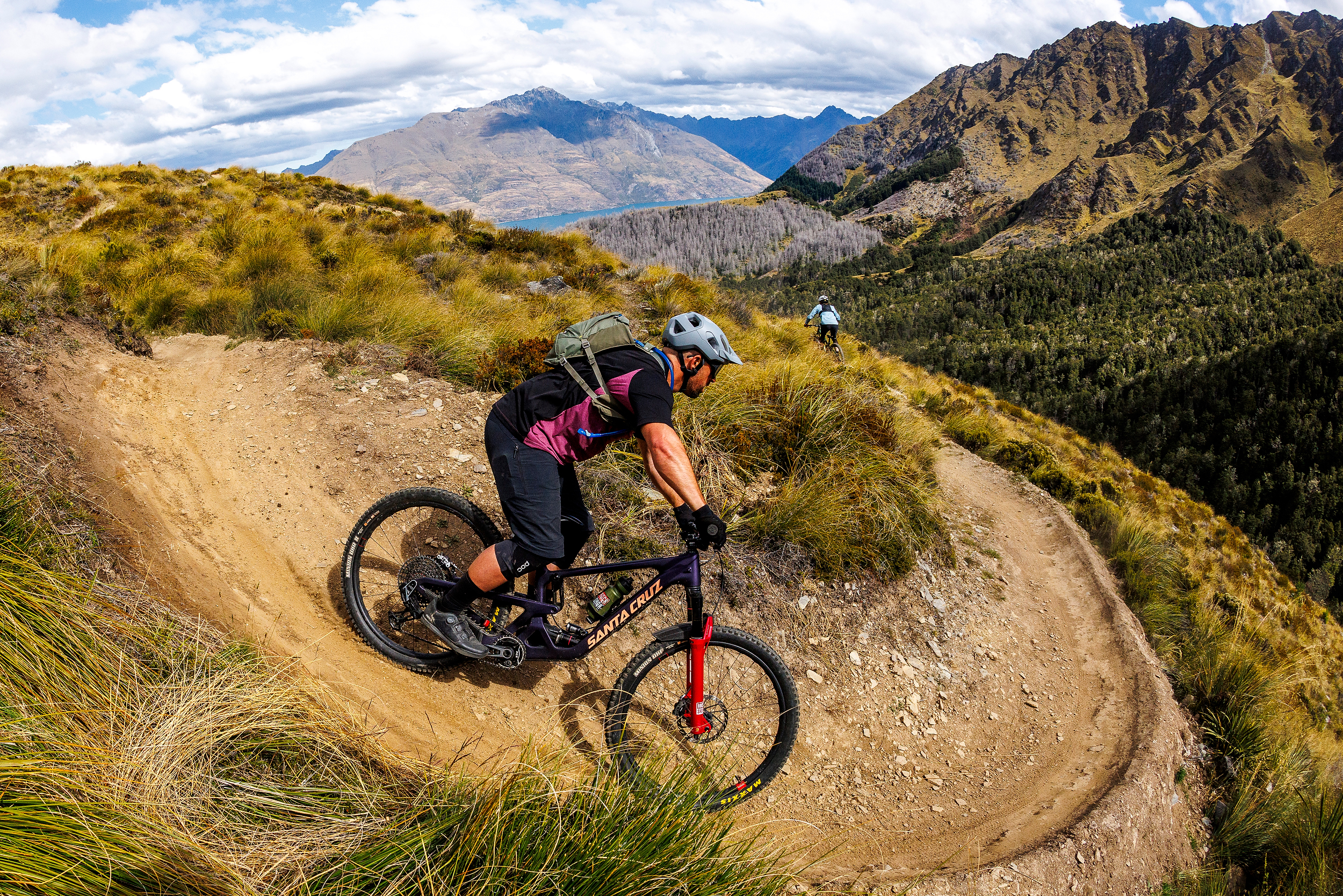
RockShox Zeb
Words: Liam Friary
Images: Sven Martin & Callum Wood
Distributor: Worralls
RRP: $2495
Components, suspension and bikes are always going through a process of constant refinement. Often it can seem a bit like a ploy to get us all to consume more, and that’s a valid perspective. But the thing is, often the refinement stems from the sport’s progression and riders getting faster and hitting harder. This drive is mainly through the competitive elements of the sport, such as downhill and enduro, but there’s still a strong case for the everyday trail rider. There’s also continued progression with trails, bike parks, and terrain, and this often means riders demand more of their bikes, suspension and products.
The newly updated, burly RockShox Zeb falls into the progression category and draws direct inspiration from the RockShox Boxxer. This development stems from the latest advancements in world cup downhill racing, which have driven the suspension updates across the RockShox Zeb Lyrik Vivid and Super Deluxe models. Across this issue, I’ve shared some insights from a press camp I attended in February. Queenstown hosted editors from global mountain bike media outlets who spent a week riding RockShox’s new downhill and trail suspension. I rode a Santa Cruz Hightower equipped with a RockShox Lyrik fork and a FOX Float X Factory shock. We tested our current setups for a few days before switching between them using an a-b-a testing method. This involved cycling back and forth between our old suspension, specifically the previous generation RockShox Lyrik, and the new RockShox Zeb. The launch event included six days of riding followed by another month of ride testing on more familiar local trails.
The centrepiece of the new Zeb update is the new Linear XL air spring, and it’s worth understanding what it does rather than letting it blur into the spec sheet. It’s not a marketing name. It describes a specific engineering approach that changes how the fork feels through its travel, and it’s the main reason the new Zeb rides differently to the old one.
Most air springs are progressive by nature. That’s not a flaw, it’s physics. As you compress an air chamber the pressure rises, which means the further you push into the travel the harder the spring pushes back. The result is a spring curve that ramps up toward the end of the stroke. This gives you bottom-out resistance without needing a separate mechanical bumper, but it also means the fork feels different at twenty percent of travel than it does at eighty percent. Predictable it is not. You get a supple initial response that stiffens noticeably mid-stroke and firms up hard near the end. Riders learn to work with this but they’re always adjusting for it, consciously or not. A linear spring does roughly the same thing throughout its travel. The fork feels the same at twenty percent as it does at sixty. What you set up is what you get.
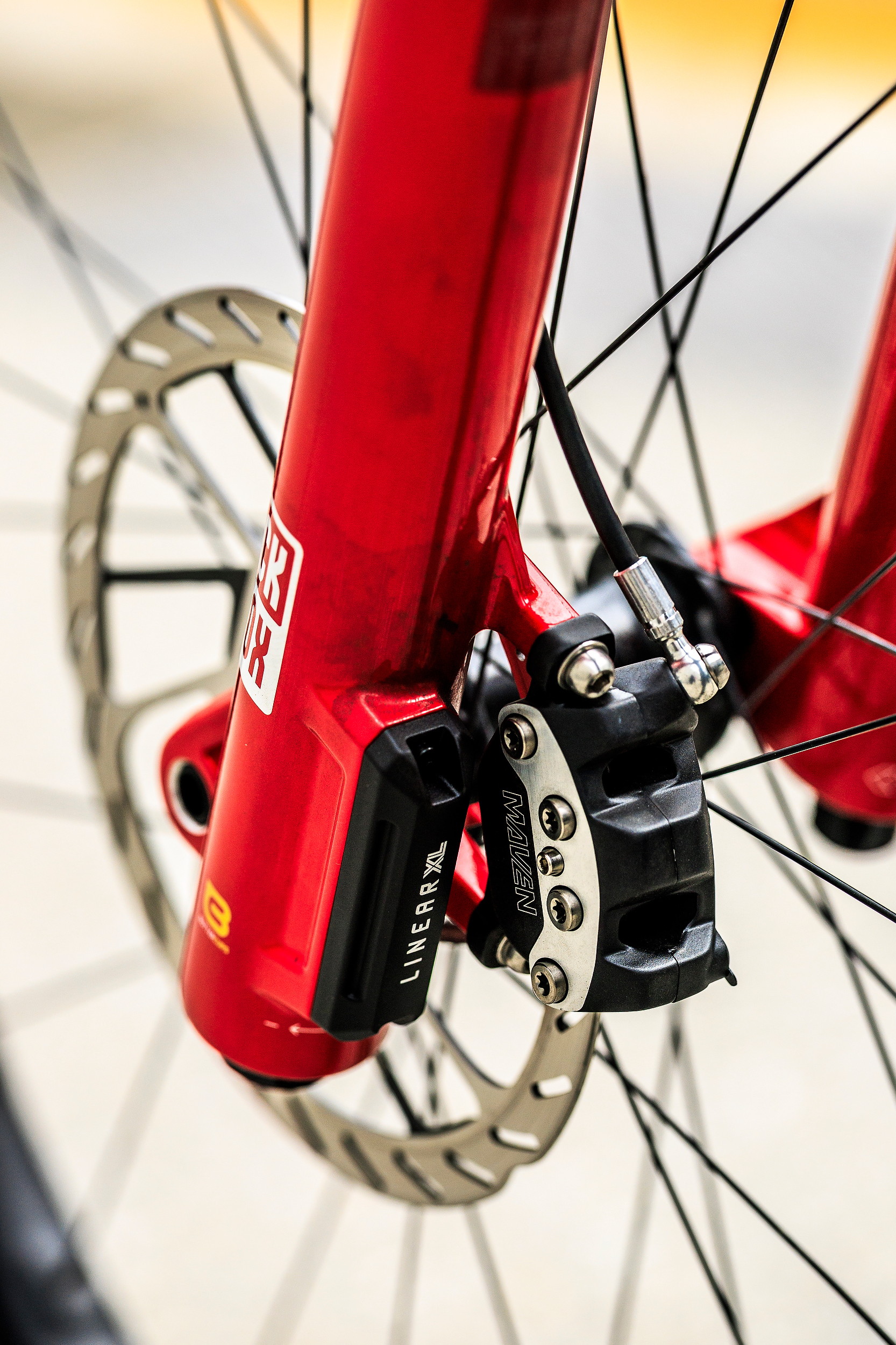
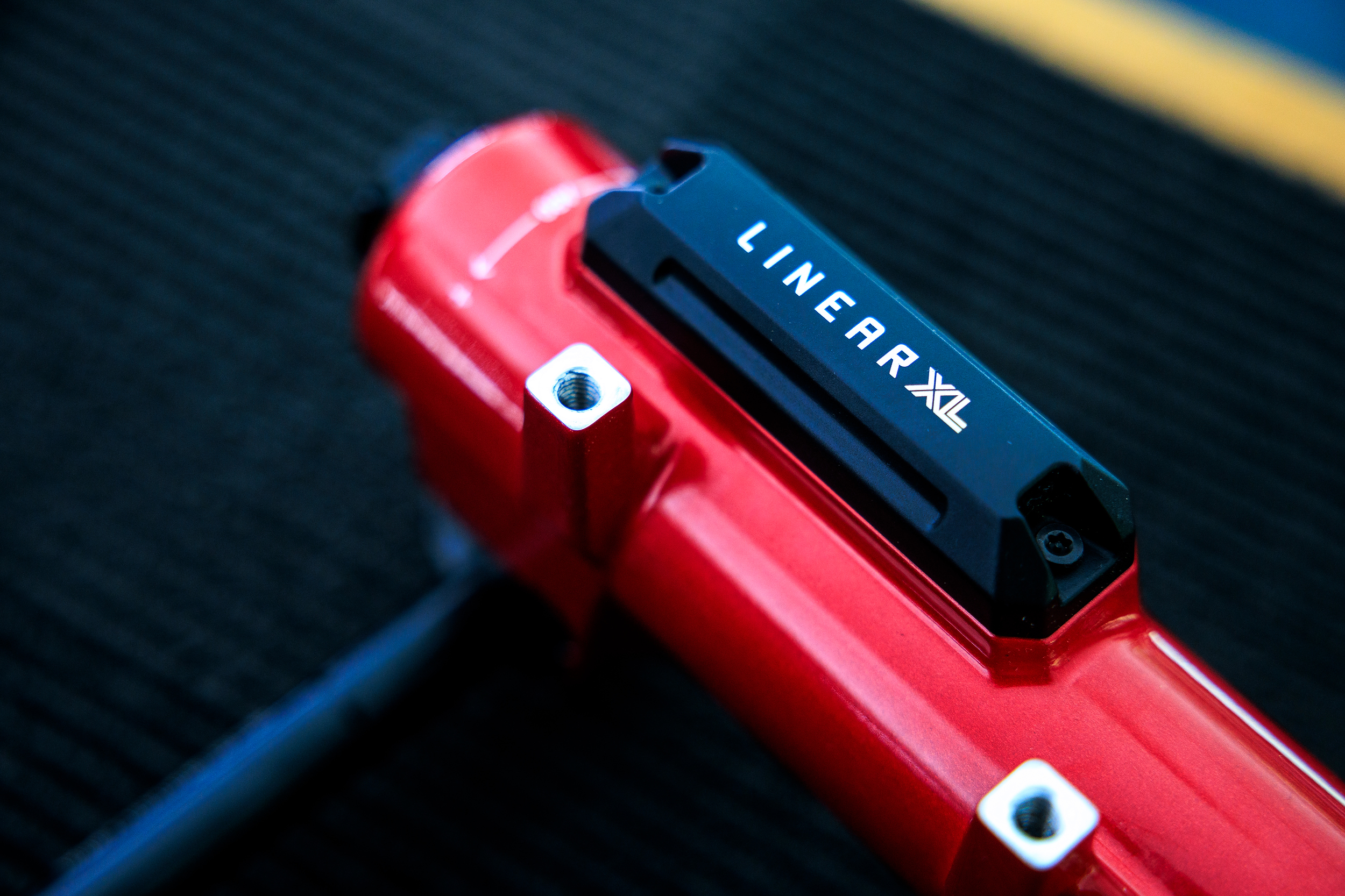
RockShox’s Linear XL system is an attempt to flatten that curve. The approach involves increasing the volume of both the positive and negative air chambers while simultaneously reducing the piston diameter and increasing the inner diameter of the shaft. Taken together these changes mean the fork runs at higher pressure but the rate the pressure increases as you compress through the travel is slower and more consistent. The Air Annex, an additional air chamber mounted on the side of the fork leg, adds further volume to the lower leg, reinforcing the flatter spring curve. The result is a spring that behaves more like a coil: predictable throughout the stroke rather than stiffening in stages.
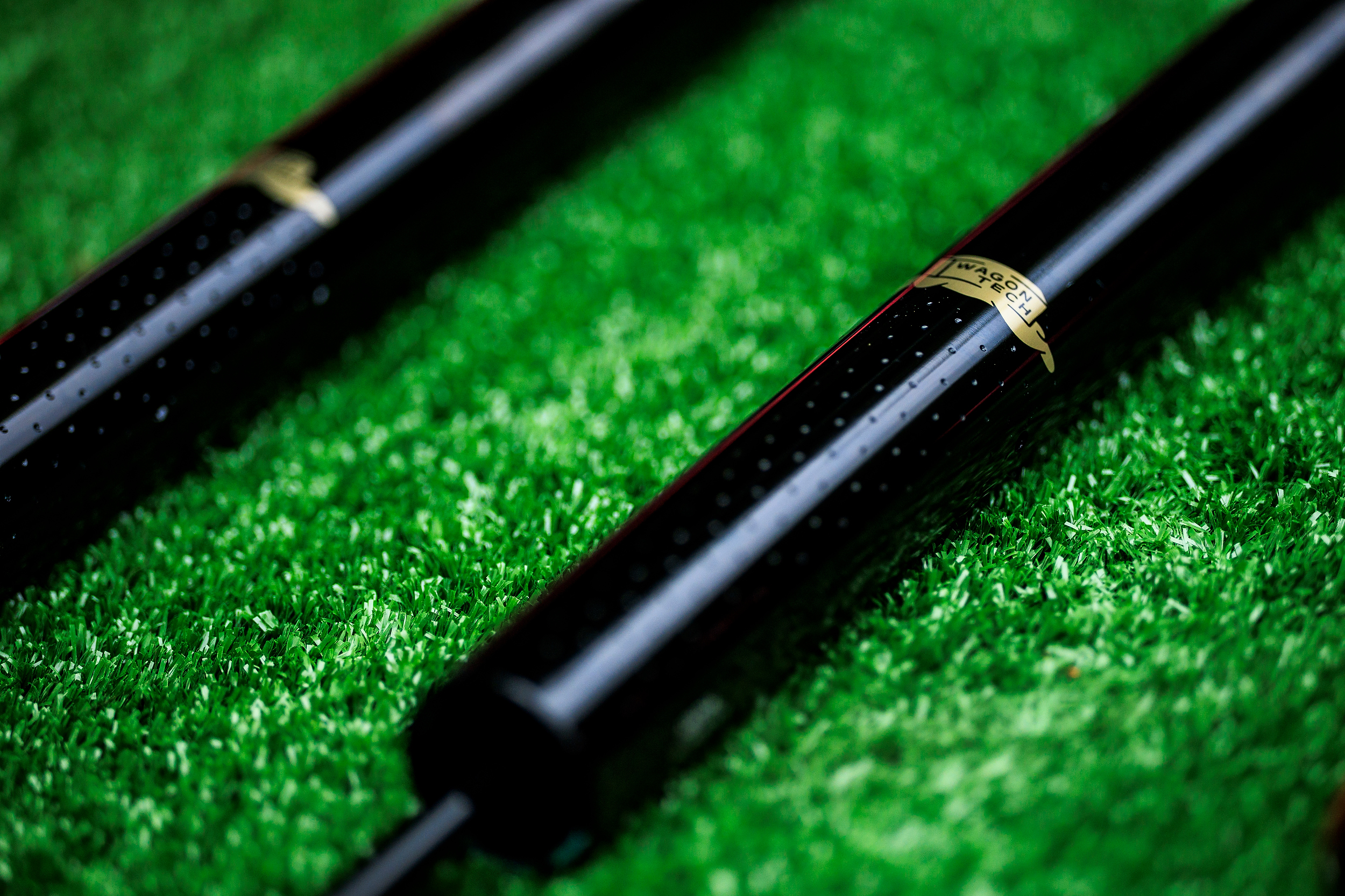
RockShox also refined the fork’s lubrication and small-bump behaviour through two supporting technologies. ButterWagonTech introduces small indentations machined across the lower section of the stanchions, below the dust wipers, which draw oil upward during rebound. On every stroke out, oil is actively redistributed across the bushing contact area rather than relying on gravity alone. Less friction throughout the stroke, more consistent movement, less arm pump on long rough runs. Complementing this are the ButterCups – elastomers mounted on both the spring and damping sides that filter small impacts and high-frequency vibrations, taking the edge off chatter before it reaches your hands. Then there are the breather holes, two small drill holes in each stanchion just below the oil seal. In a big hit the air trapped in the casting has somewhere to go, distributing quickly and evenly rather than creating a pressure spike. Oil circulation improves too, keeping damping consistent under repeated hard impacts. Together these three details are about keeping the fork moving cleanly and, honestly, not letting friction and trapped air compromise the spring curve the Linear XL system is working to deliver.
The Linear XL spring doesn’t work in isolation. Because the spring is more linear, less progressive, the Charger 3.2 damper that pairs with it in the new Zeb is tuned more progressively to compensate. The damper picks up where the spring backs off. This is important to understand because putting a Charger 3.2 into an older fork would feel unusually firm — the damper is calibrated specifically for the flatter spring curve, not for the progressive curve of the previous generation. The system is designed to work as a matched pair. RockShox describe the goal as coil-spring feel without giving up air’s key advantage — tune it with a pump rather than swap a spring.
On trail the difference is in the consistency. With a progressive spring curve, you develop a sense of where the fork is in its travel and you ride accordingly, backing off slightly before the middle of the stroke stiffens, or driving harder knowing the end of travel will support you. With a more linear spring that calibration becomes simpler. The fork is doing roughly the same thing throughout. Put simply, you can stop thinking about where you are in the travel and start thinking about the trail in front of you, which is exactly where your attention should be. During the camp in Queenstown this was most noticeable on repeated laps of the same trails, the fork felt consistent in a way that let you push harder without having to relearn its behaviour each time. Compared to the previous generation Lyrik, the Zeb felt firmer and stiffer but still nimble. It could hit harder when asked to, which is partly a function of the increased travel (150mm Lyrik to 170mm Zeb), but across the stroke it felt plusher , which is the Linear XL story in a single ride impression. The weight increase is noticeable if you’re looking for it, but the performance gain makes it an easy trade. What stood out most was the grip in technical terrain at lower speeds, the kind of riding where a fork that sits high and active in its travel makes the difference between traction and washing out. The steep, chunky terrain of Queenstown tested the support end of that equation. Rotorua tested the suppleness end, root-littered trails where the fork needed to stay planted and small-bump sensitive at the same time. It held up well in both.
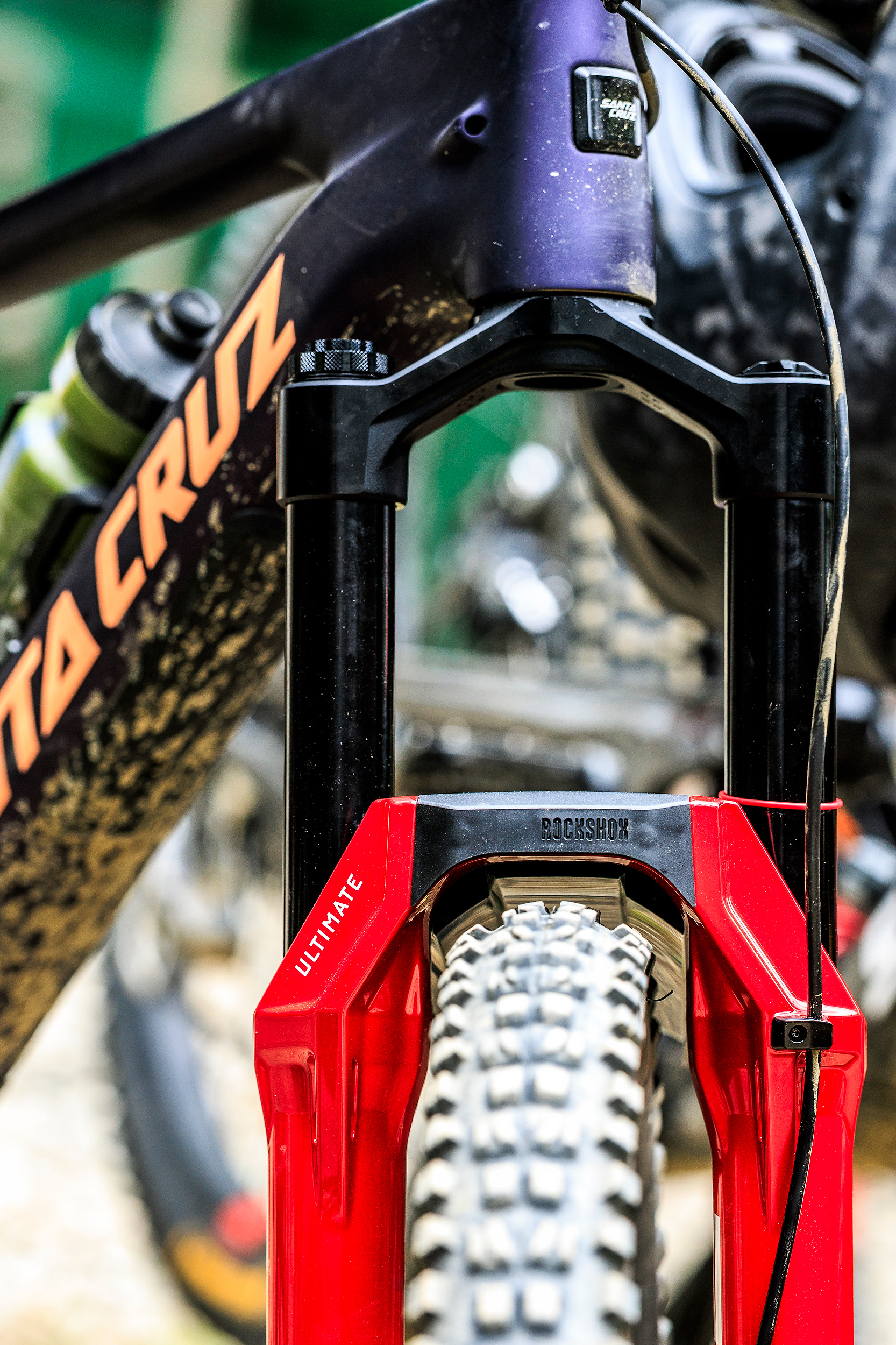
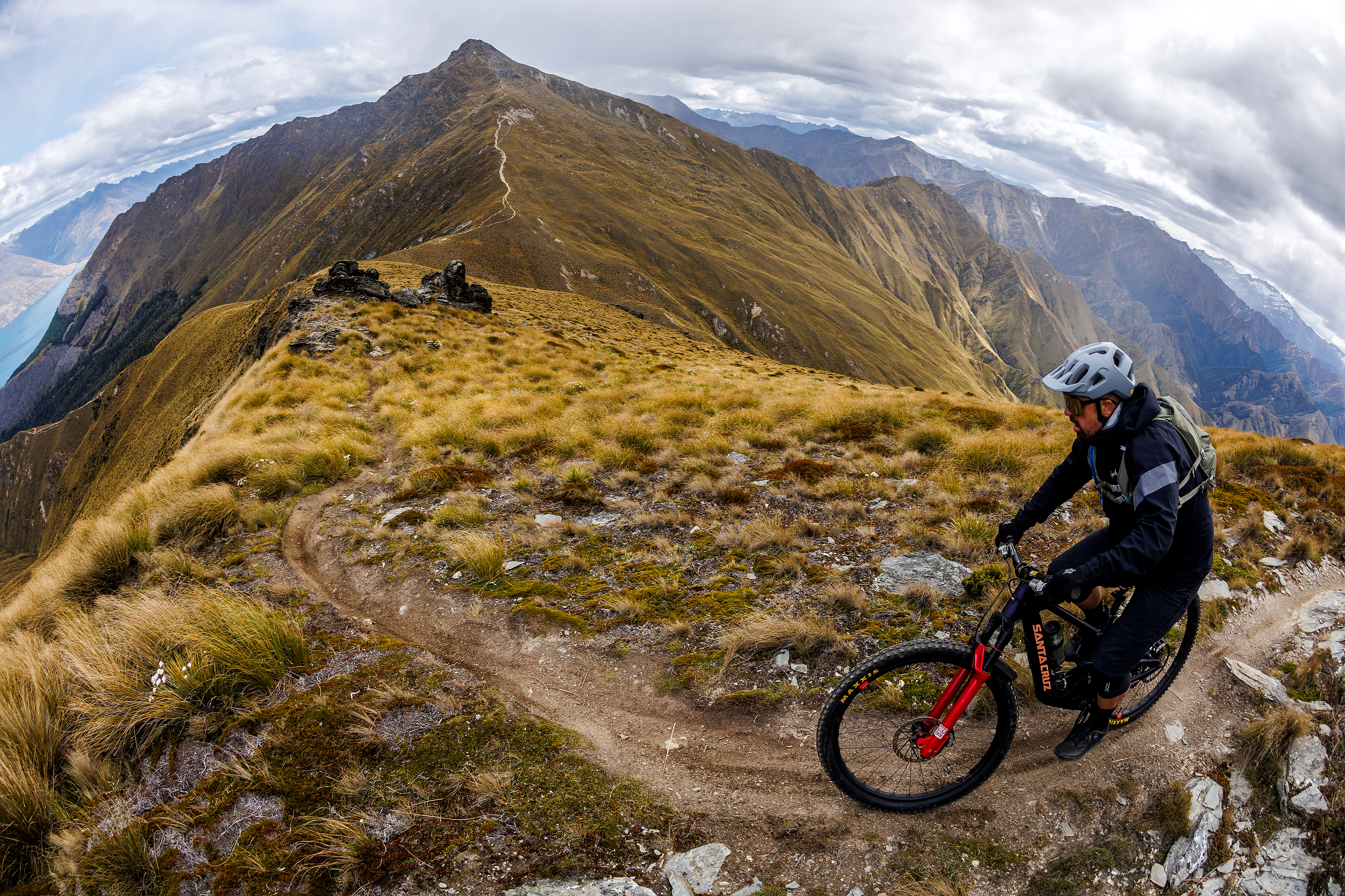
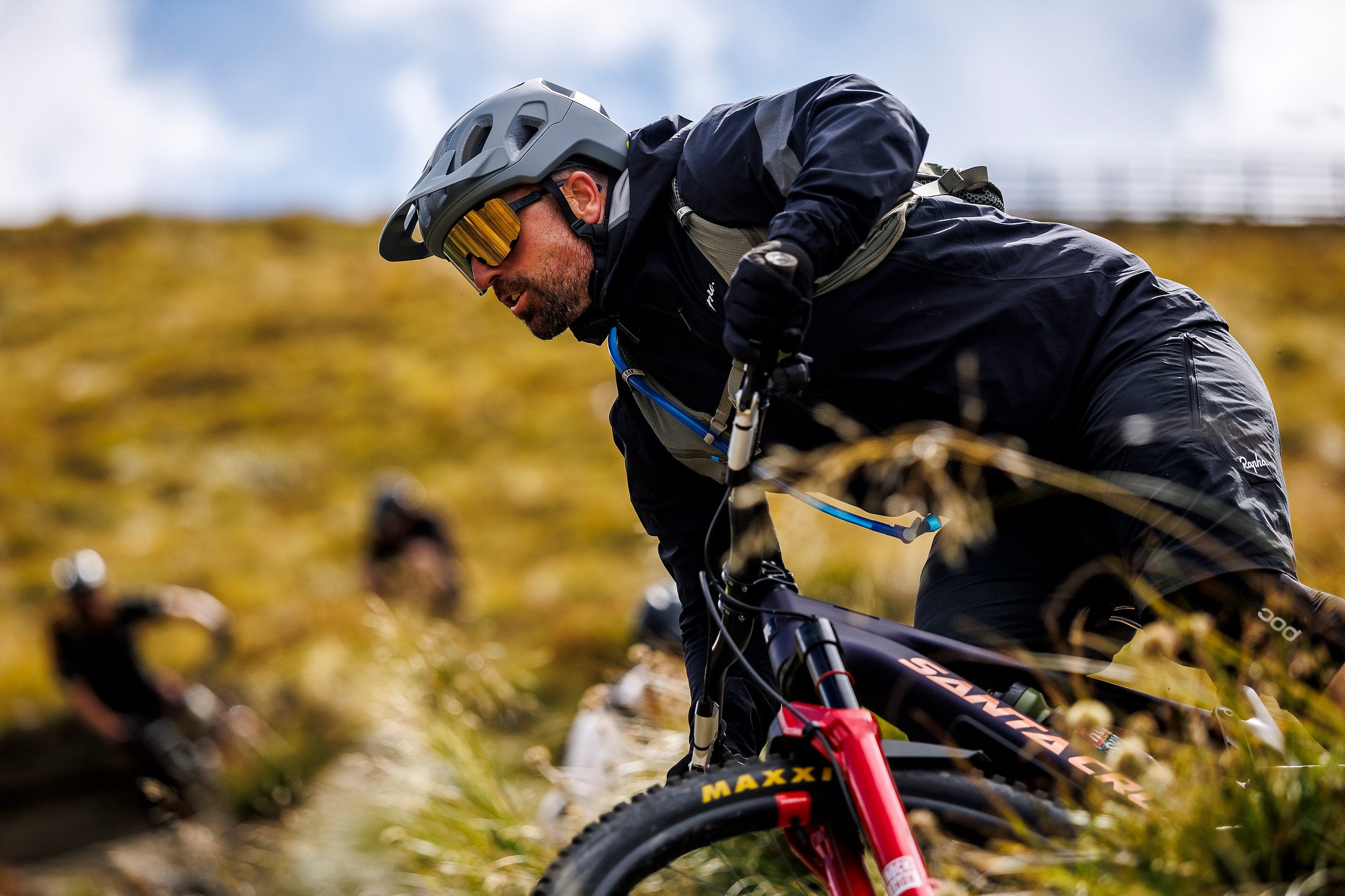
From the outset, the even and therefore more predictable spring curve immediately draws attention. The fork responds sensitively to small bumps and irregularities offering plenty of feedback. This is complemented by a progressive damping tune providing adequate support during hard compressions and fast berms. Even under heavy braking the front remains responsive without diving too deep, and the fork consistently rides pleasantly high in its travel.
The a-b-a testing format at the camp – old fork, new fork, old fork again on the same trails – is exactly the kind of structured comparison that makes this difference legible rather than just ‘felt’. The Zeb with the updated spring felt less variable through its travel. Less time spent managing the fork, more time spent riding the trail. And it performed well during the multiple runs in Queenstown. The solid chassis helped with confidence on steep tech terrain and behaved well in those relentless braking ruts. As for more pedalling on trails, the fork felt predictable and planted when transitioning to flatter or technical climbs. It was slacker than what I was used to but after a few rides it wasn’t a thing, and I liked having more travel on the descents so the payoff was well worth it. That said, I’d like to try the new RockShox Lyrik with similar internals of the Zeb for more all-mountain or pedalling days that I’m more used to.
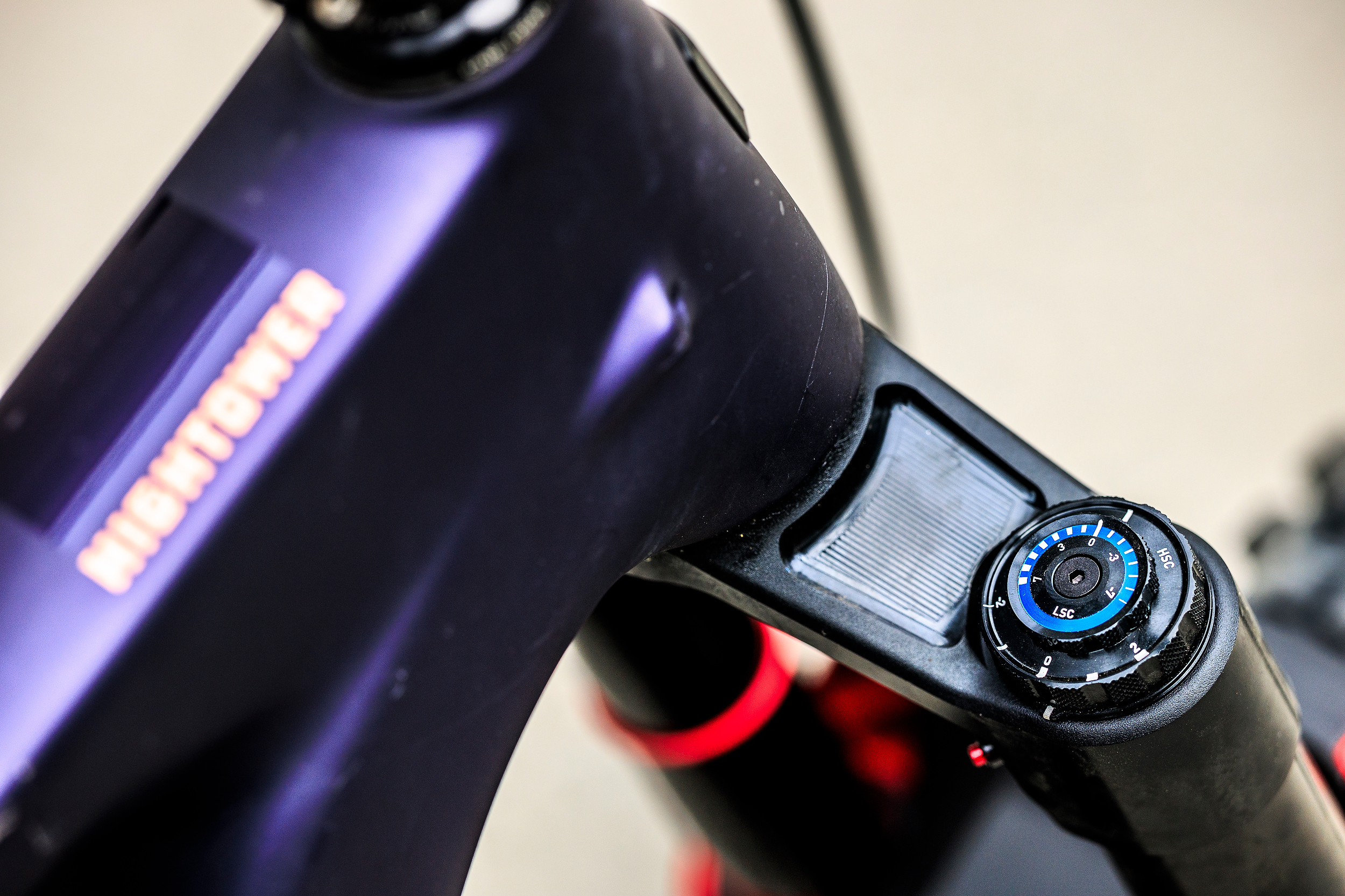
RockShox has refined the setup with clearer, numbered adjuster dials and additional height indicators on the stanchions. One thing worth knowing: Linear XL runs higher setup pressures than the previous generation, so if the numbers on the pump look wrong, that’s why. The smaller piston needs more air to reach the same SAG — get it right and the spring rewards you. As usual, there are SAG markings and a sticker on the fork for quick base setup. It’s remarkable how much the adjuster dials affect the fork’s behaviour. The high-speed compression circuit, in particular, significantly influences the fork’s travel height. With just a few clicks, the setup can be easily adapted to various trails – from rough high-speed tracks to steep downhill sections, flowy bike park runs to loamy fern littered trails of Rotorua.
The new Zeb is a brawler’s dream, perfect for park laps, technical trails, steep shuts, swift descents and anything else thrown its way. It’s a solid companion for an enduro brawler or long-travel eMTB and I think it’d be a great fit. I’m eager to get an eMTB to fit the Zeb onto to see how it responds. It’s a classic evolution with a clear focus on a more linear and predictable spring curve. After my initial testing period, it responds sensitively, behaves predictably and maintains a pleasant travel height. The overhauled Zeb fork levels it up for today’s riders.
For more in-depth reviews on RockShox’s Vivid Air shock, sign up to our email newsletter, visit our website or follow us on Instagram.
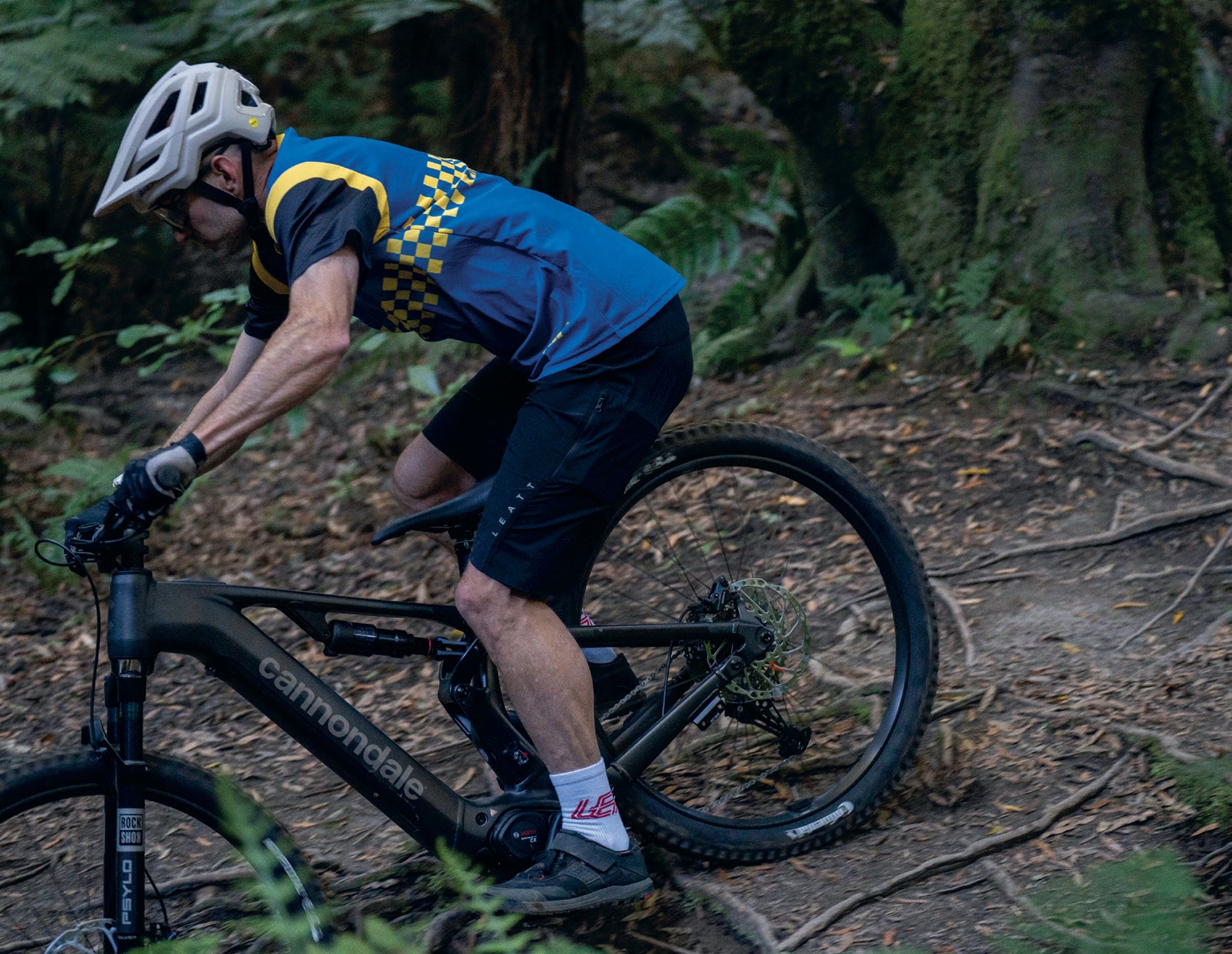
Cannondale Moterra 3
Words Lester Perry
Images Thomas Falconer
RRP $8999
Distributor Worralls
Although I’ve never owned one of their bikes, secretly, I’m a Cannondale fanboy. Cannondale has a deep, storied history as a true innovator in cycling. Particularly in their earlier years, they led the way with computer-aided design (CAD), and their unconventional suspension forks, the Headshock and the Lefty, which we still see today.
From the distinctive Flying ‘V’ frames of the early ‘90s to their short-lived motorbike division, they’ve stood out in a sea of vanilla designs. Let’s not forget NZ’s own Kashi Leuchs flew the NZ flag on a Cannondale during his glory years, across various cross-country World Cup and Olympic seasons.
The Moterra officially launched back in 2016, and although it caused a stir, that was as much due to its unique “only a mother could love” looks as anything else. It’s evolved incrementally over the years, but fortunately, this latest iteration has broken free of the lines inherited from that original beast, and we now find a far less polarising Moterra. The downside is that, from a distance, it looks somewhat like ‘just another eMTB’.
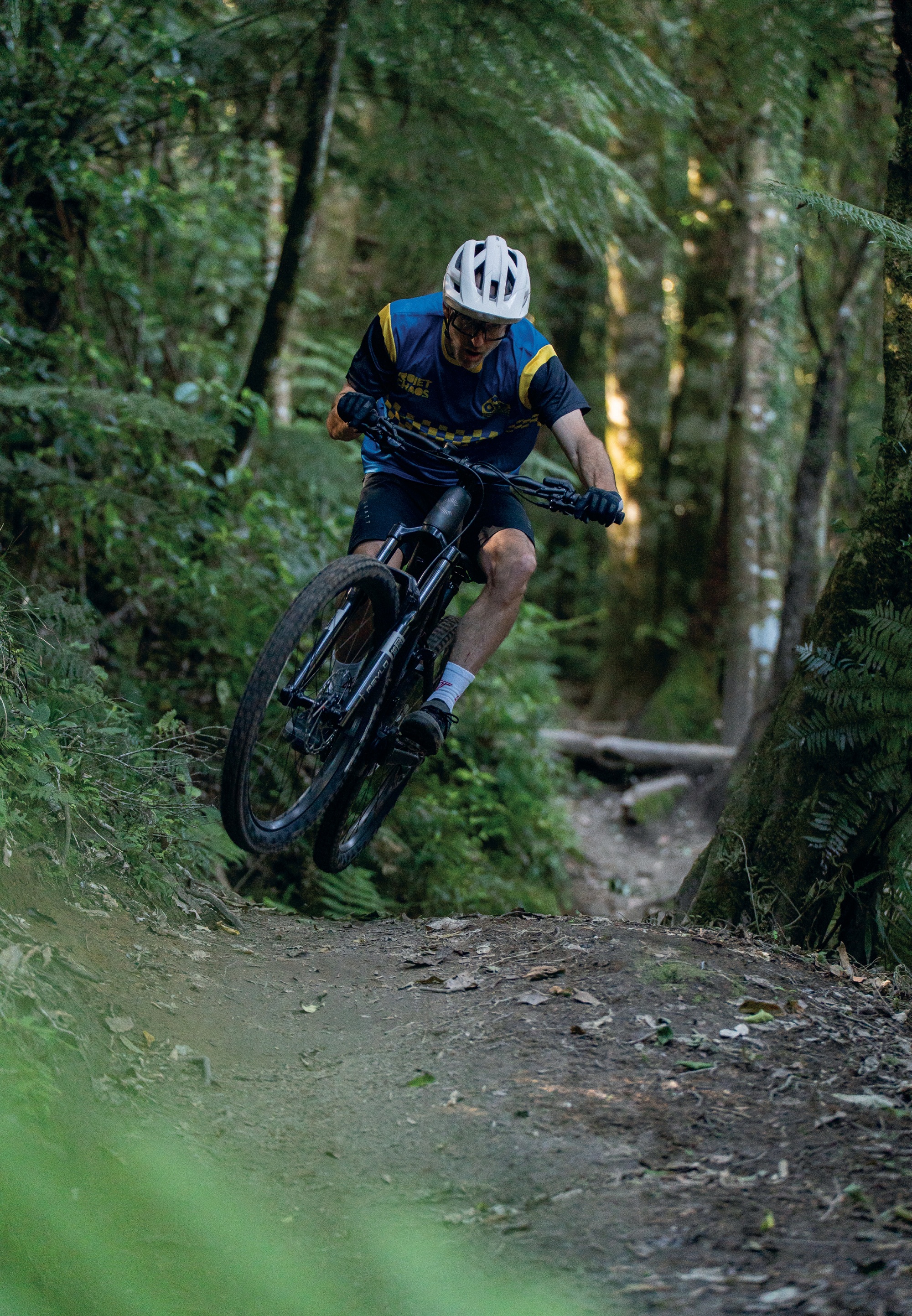
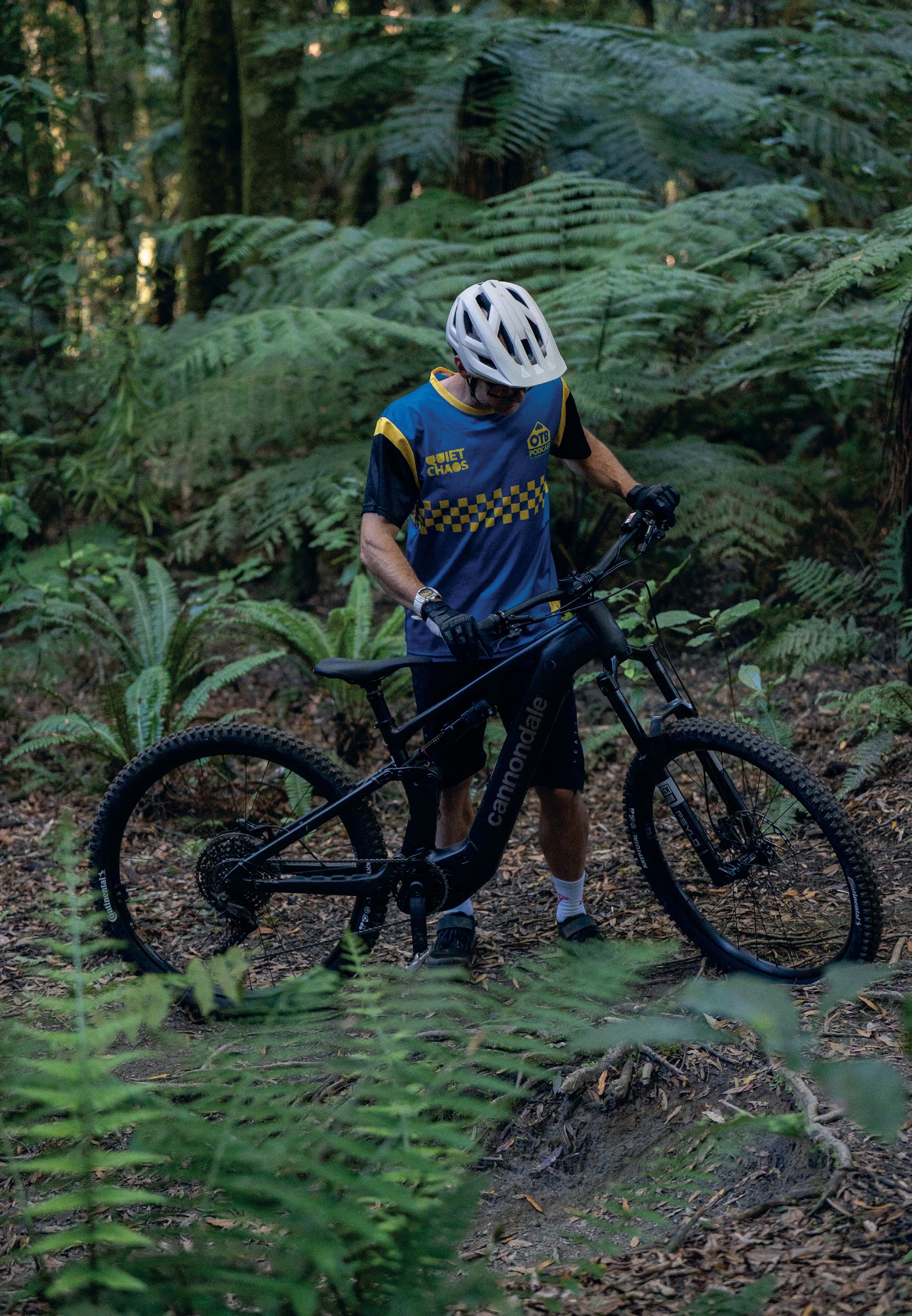
The Moterra 3 is a full 29er-wheeled bike with 150mm travel Horst-link-driven rear suspension and 160mm up front. The frame is entirely crafted from Cannondale’s SmartForm C1 Alloy with tidily finished welds and large tube shapes. There’s a gigantor-sized head tube allowing for cable routing internally through the headset.
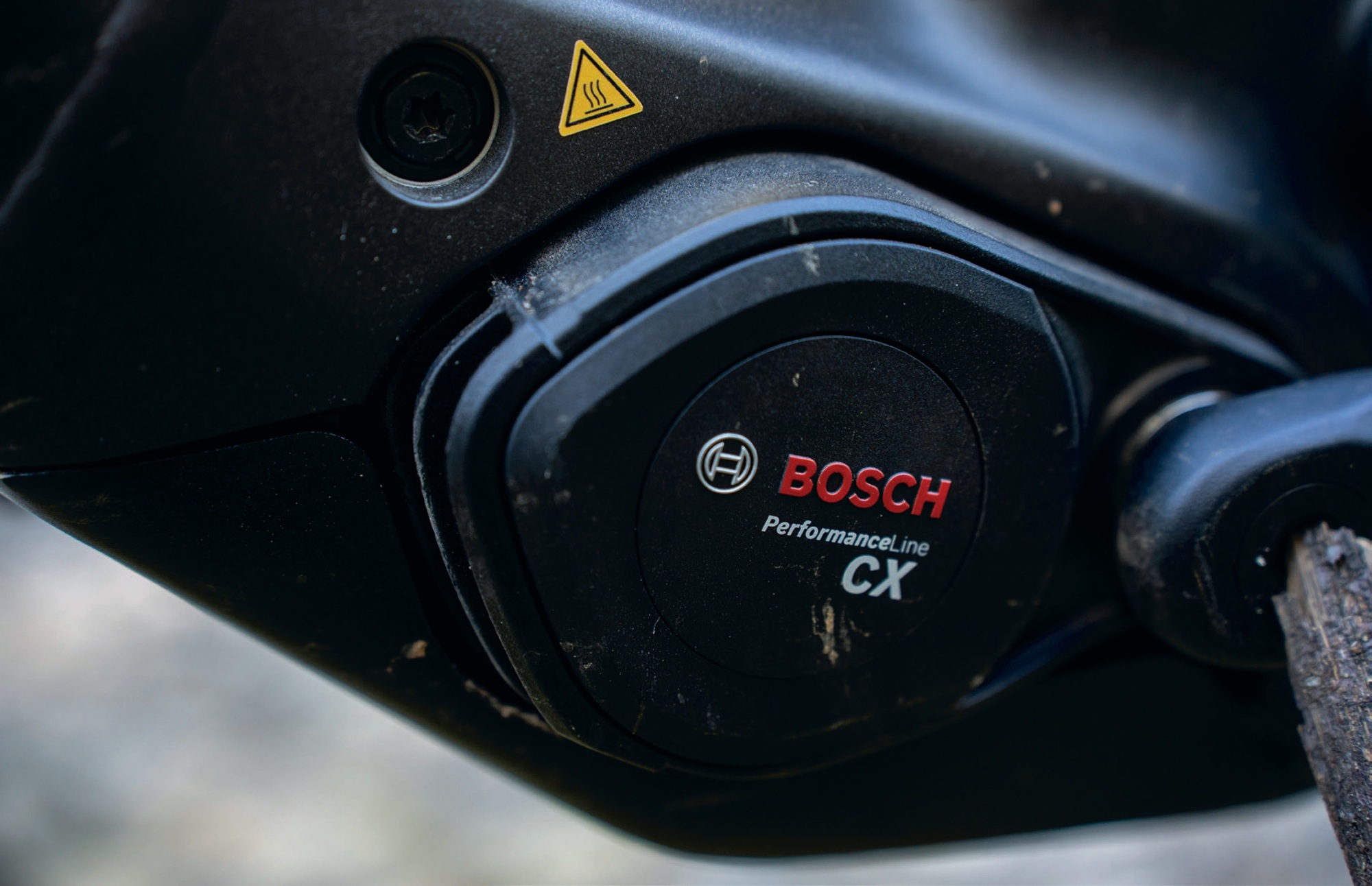
Drive is taken care of by Bosch’s Performance Line CX motor powered by an 800Wh Powertube battery. Bosch’s Purion 200 display controls the whole setup neatly from the left-hand side of the handlebar. There’s a tidy alloy skid plate protecting the motor, and even a removable kickstand mount on the non-drive chainstay – very handy while parked up on the cycle trails.
The battery is easily removable from the bottom side of the downtube. The outer cover is removed with a simple twist of a thumbscrew at the top end, then the battery can be unclipped and removed. It’s a simple task but still requires the use of the battery locking key. Thanks to this ease of battery removal, two-battery (or more) rides are a reality. For those just wanting a bit more range, a 250Wh PowerMore range extender can be added to the main drink bottle mount, for an additional 30% when added to the standard 800Wh battery.
Geometry
Key geometry figures across the Moterra don’t stray far from the norm for this type of bike:
Chainstay length
455mm to accommodate the 29” rear wheel.
Head tube angle
64.8°, perhaps a hair steeper than some similar bikes, but this helps keep handling snappy and the front wheel under you while climbing.
Seat tube angle
72.5° actual and 78.2° effective. The effective seat tube angle is steep enough, although if you run an exceptionally high seat height this will be slacker, so it’s worth sitting on the bike to see where things line up for each individual.
Reach
A 45.9cm reach is a tad shorter than some more “progressive” bikes, but again fine for this level of rig.
Stack
64.1cm. The Moterra stack is on the higher side for sure. That’s not a negative thing, though, as it means handlebars can be set lower towards the headset, with no need to have a stack of spacers or super-high-rise bars to get the cockpit set up correctly. The only downside I can see is that an increased stack generally brings with it a higher front end of the top tube and, consequently, lower standover clearance.
Drive Unit
I was pleasantly surprised at how controlled and consistent the power was. Overall it maintained traction exceptionally well. One of my test loops has a long clay climb, which, even with the slightest bit of moisture, is a challenge to clear. In damp conditions, I managed to all but clear the climb, the eMTB mode tempering the drive at the wheel to maintain a surprising level of traction. Although it still took some finesse, it was significantly easier than some other eMTBs that I’ve tackled the same climb on in equivalent conditions.
Components
Overall, the component selection on the Moterra 3 suits its price point and the riders it’s targeting. No frills here, just solid parts that should have some longevity.
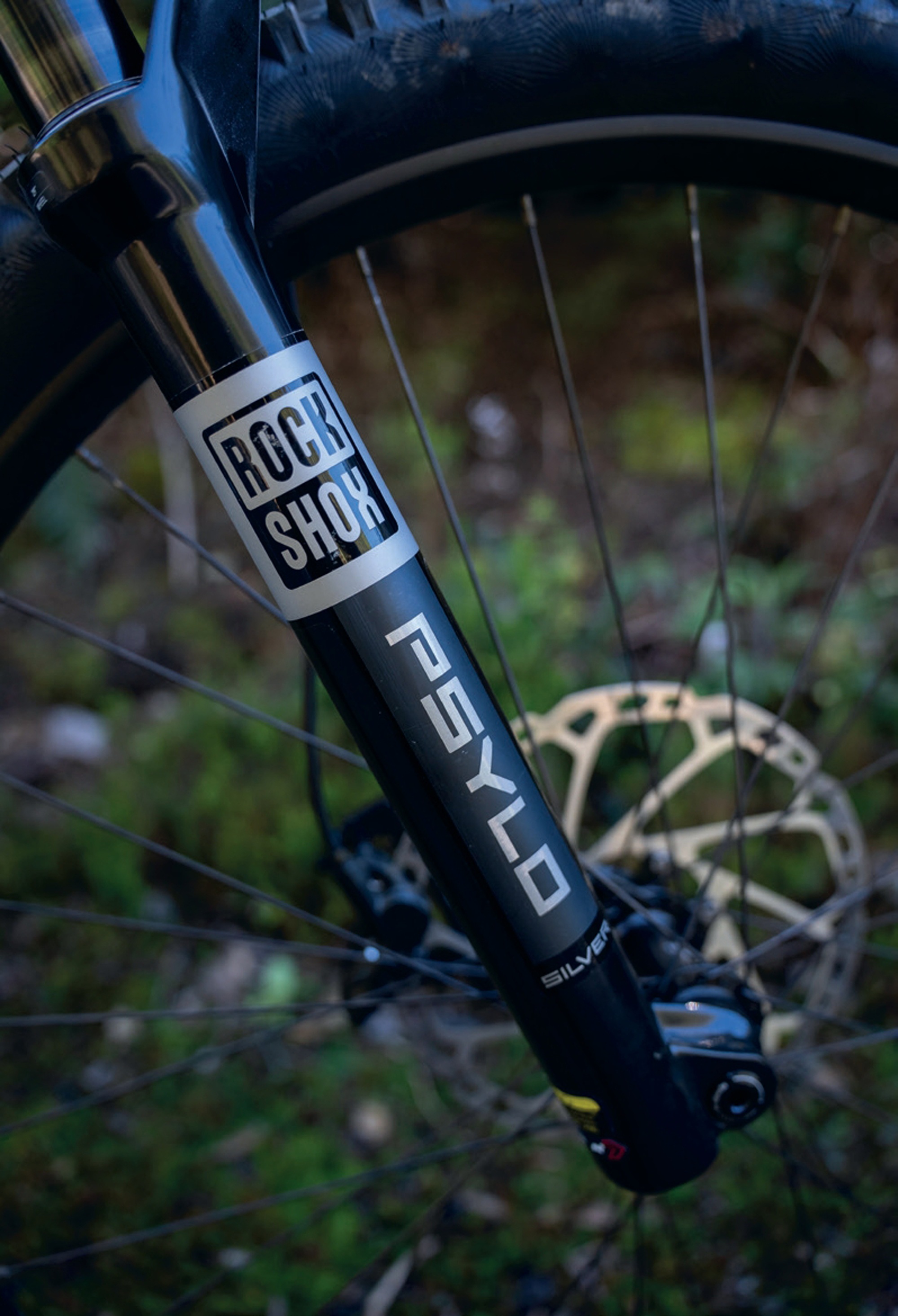
It’s been some years since RockShox ditched the Psylo fork, but it’s back! Anyone who was riding the Psylo back in the early 2000s won’t find much resemblance to this new version other than the name (probably a good thing). The Psylo range supersedes several of the lower- end RockShox forks, including the Revelation, Yari, and 35, with different Psylo models.
The Psylo Silver RC fork on the Moterra has 160mm travel and slides on 35mm stanchions. A revised motion control damper is fitted and features a simple dial for low-speed compression adjustment. RockShox claim the damper is tuned to mimic their higher-level Charger dampers. Although I wasn’t able to quantify RockShox’s claims that it felt similar to a Charger, the overall performance of the fork was better than I expected from this lower-mid-tier offering. It was plenty plush and tracked really well.
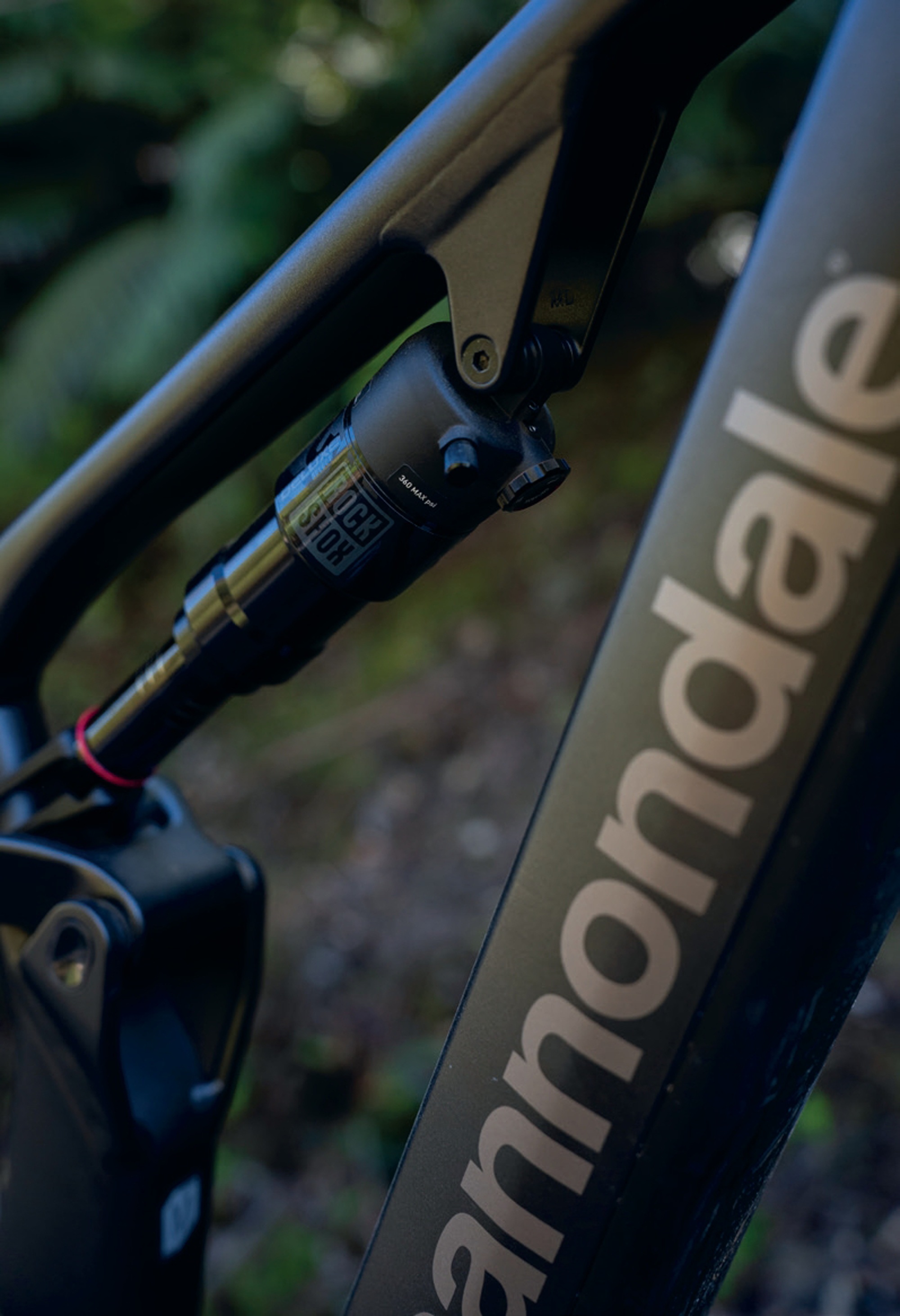
The low-speed compression knob worked fine, although I ran it more or less open at all times, and there’s plenty of rebound damping available. Again, somewhat surprisingly, the fork punched above its weight in the stiffness department; the long 35mm stanchions are obviously helped out by the stiffness of the beefy lower legs. The fork is certainly not as stiff as the larger 38mm-stanchioned Zeb, but I’d wager that it’s not dissimilar to a Lyrik when it comes to stiffness. It’s sure heavier though, around 700g depending on the level of Lyrik it’s compared to! The RockShox Deluxe Select air shock handles damping duties out back. It’s a simple shock with solely a rebound adjuster. RockShox claim the shock performs similarly to many of their higher-end units thanks to shared damper tunes. This unit just gets less adjustment and is heavier than the upper-end ones. The back end is nice and supple. It’s got a plush, linear feel and ramps up quickly at the end of the travel. There were times it would have been nice to have a bit more support to push against, and moments under heavy compression when there was a bit of uneasiness as it prepared to rebound. For most riding, though, this shock is adequate for the bike, and if a buyer wanted some extra performance, an upgraded shock could be a good place to start.
The Shimano MT501 brakes with 203mm rotors front and rear are decent. They’re not the most powerful brakes out there, but they’re cost- effective and offer ample stopping power, considering they’re a base-model brake.
The bike rolls on a WTB i30 wheelset. It’s nothing flashy, but if other WTB wheelsets I’ve used long term are anything to go by, they’re pretty durable. They won’t love being cased onto rocks, but neither do a set of $3000 carbon hoops!
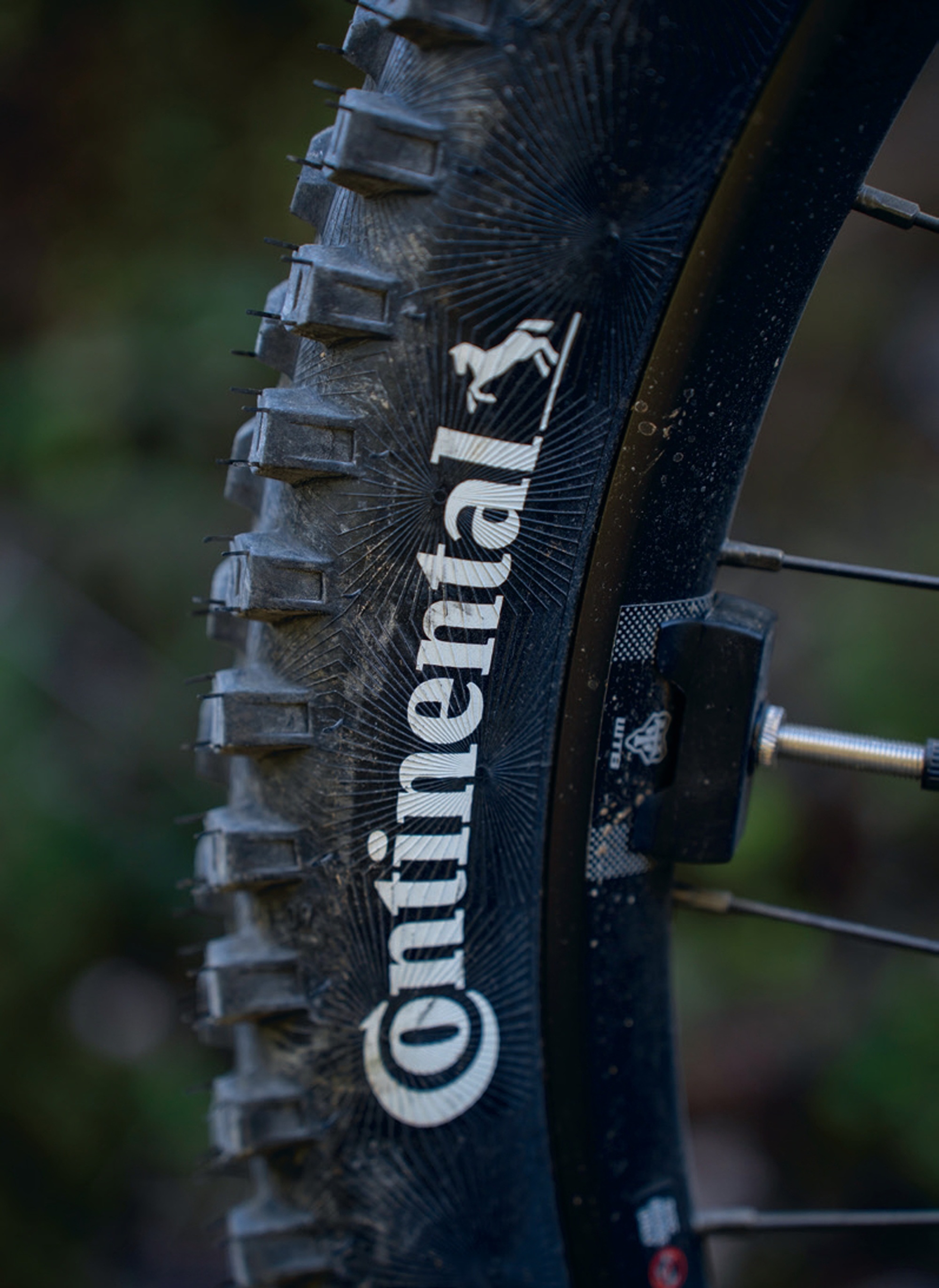
Continental Kryptotal tyres are featured front and rear in a 29” x 2.4” size. The Enduro casing offers protection against punctures and a level of support against being too squirmy underneath while railing turns or g-outs. The soft compound rubber rolls surprisingly well, and from what I’ve heard from friends, wears exceptionally compared to other soft compounds in the market. Traction was awesome across the board, although something with more spaced knobs may be preferred in really soft, wet conditions. The Enduro casings were okay, but I think long term, once these treads were worn, a move to some gravity casing tyres of the same model would offer more support, and even better puncture resistance.
The cranks are a nice short pair of FSA brand 160mm length with a 34t chainring. Nothing to sniff at here, I’m a big fan of 160mm cranks on an eMTB.
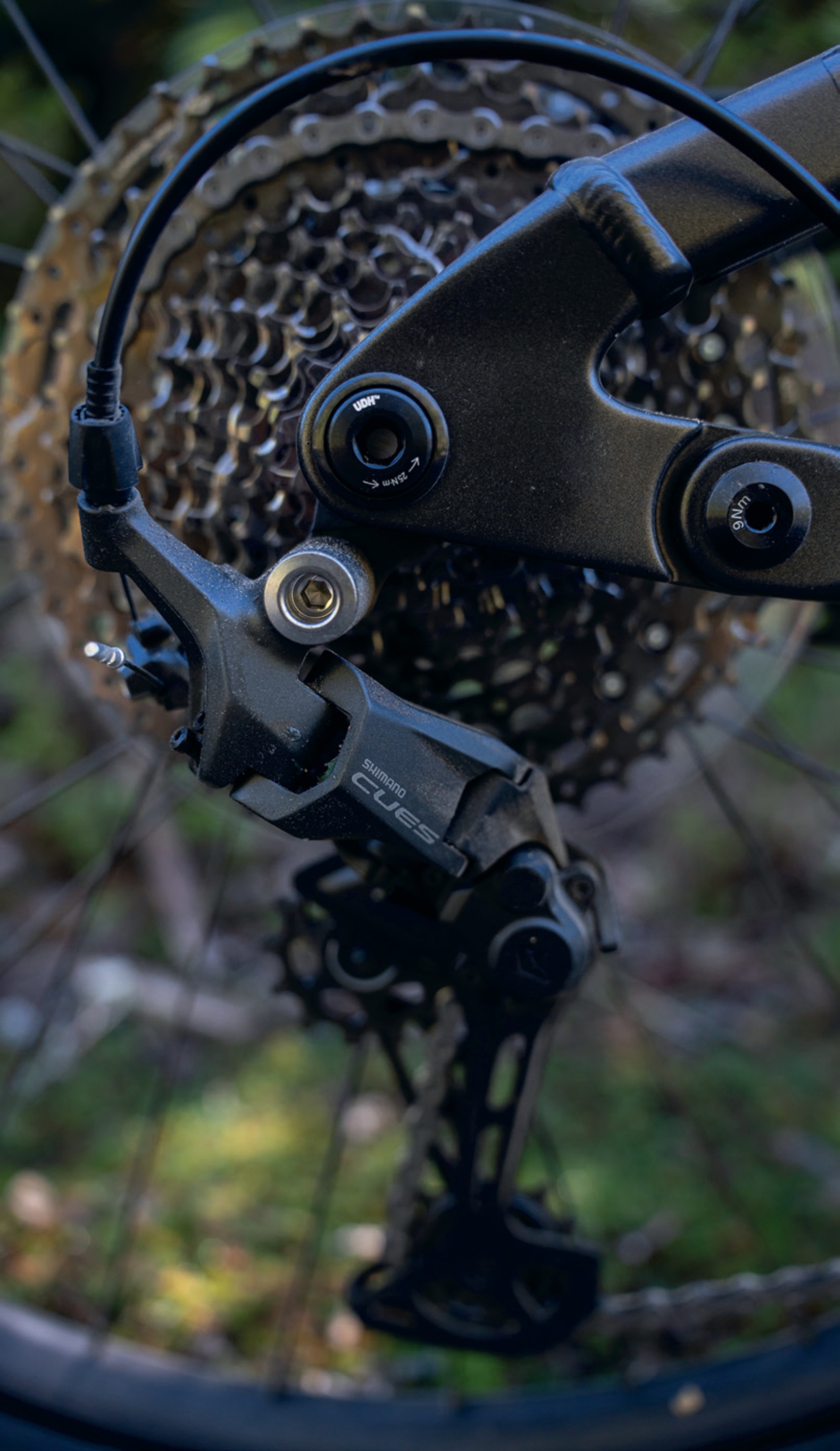
The drivetrain features a mechanical 11-speed Shimano CUES U6000, LinkGlide derailleur and shifter, coupled with an LG500, LinkGlide chain and Shimano CUES LG400, LinkGlide, 11-50 cassette. It’s got an almost yawn-inducing level of personality to it, but it’s been admirable to say the least, and the shift quality over my test period has been great. LinkGlide is claimed to last really well on eBikes. Like the rest of the bike, this drivetrain isn’t light, and again, it’s a place for easy long-term upgrades.
The finishing kit is from Cannondale’s in- house brands, with a WTB saddle. A pretty bog-standard 35mm handlebar and stem help keep you pointed in the right direction, and the dropper post is aptly long at 170mm drop on the medium bike. As usual, a longer after-market drop could be found, but as an original unit goes, this suits the bike well and works a charm.
On the trail
The Moterra 3 is an interesting beast. Its geometry and suspension travel lean it towards hard-charging riding. And charge it can, to a point. For a bike of this ilk, with full 29er wheels and a hefty overall weight, it hooks into turns surprisingly well, though it sometimes needs a conscious effort to weight the front wheel to maintain traction and go right where you want it to. Successive, fast corners, requiring quick changes in direction demand extra body language and strength due to the bike’s heft. As I mentioned earlier in this piece, the Moterra is a mountain goat. I put this down to a combination of the CX motor applying power smoothly and consistently, and the traction of the fresh Kryptotal tyres. A less tempered, higher power would likely break traction a lot easier. On climbs where the front end needs lifting up, and over steps or trail features, the heft of the bike is noticeable, but thankfully, the assistance from the motor helps wheelie the front end up. When hopping the rear wheel up a step, the weight of the bike is noticeable. Thankfully, even when the wheel doesn’t completely clear an obstacle, the motor overrun helps drive it up and over the feature.
With the Moterra’s travel and geometry numbers, this bike is plenty comfy on the downhills. The suspension package performs well most of the time, and even on steep and technical trails, it does the job it should. But when really pushed at speed through chunder, as mentioned previously, better dampers would be welcome. It may be a case of some further tuning with volume spacers or custom valve tunes or even upgraded suspension units to help keep the wheels tracking and bring a sense of calm to the ride when pushing hard.
Overall thoughts
The Moterra 3 (size medium) tips the scales at 27.4kg. With that in mind, I’ve found myself asking, “At what point does the overall weight of an eMTB heavily detract from its overall ride quality?” When ridden just on mellow trails, it’s great and offers no dramas, but where speeds are high and rapid changes of direction are needed, or it’s necessary to unweight over a rough section or even bunny hop, there’s a fair amount of strength required, and much more effort to stay ‘light’ on the bike than those at the lighter end of the eMTB spectrum. The weight requires a decent amount of strength to manhandle, and if you’re heading off-line or get skewed off a jump, getting the bike back in the precise direction you want to go is that bit harder. I’d imagine for inexperienced riders this would be exacerbated if they’re trying to ride progressively.
The recent software upgrade to more power output and torque, although welcome on paper, does leave me wondering if it’s really necessary for most riders (including myself). More power equals more battery drain and shorter runtime from a charged battery. I think there’s a case for smaller, 600Wh batteries on bikes like this, even with motors detuned for less power and torque. This may actually (total speculation) allow for similar range rides, and an overall lower weight of the bike, so more spritely handling. Possibly a net gain? I guess we’ll never know?!
I’d also question whether a bike of this level warrants having cables routed internally through the headset. They look tidy on the shop floor, but to get my stem height correct, as low as I’d prefer, they are in the way and get squashed down by the stem. With cables for mechanical gears, a Bosch remote controller, a seat post, and a rear brake all needing to squeeze in there, there’s a lot that could go wrong, and a lot of possible headaches if a headset bearing needs replacement. “Everything is possible given enough time and money.” A very accurate saying when dealing with internal headset routed cables.
So, who’s the Moterra 3 for then? For someone who’s looking to do a broad mix of mountain biking, commuting and more ‘bike path’ type endeavours, without the urge for too much airtime or aggressive riding, this bike, at this price, is more than ideal.
YETI LTe T4
Words Lester Perry
Images Thomas Falconer
RRP $24,900
Distributor Yeti NZ
The e-EDR World Cup is dead (eMTB Enduro Racing), but the bikes developed by teams trying to win these races sped up the development of eMTBs, and their learnings have helped manufacturers create some of the current crop of top-performing eBikes.
One such bike is the Yeti LTe which was developed alongside the heavy-hitting, diverse riders from the Yeti Factory team, including 2024 e-EDR World Cup overall winner Ryan Gilchrist and 2025 e-EDR World Champion (and multi-time Enduro World Cup winner), Richie Rude. Yeti’s race-winning pedigree runs deep, and their years of experience across all genres of MTB racing mean the brand is exceptionally well qualified to create some of the best bikes in the business.
The Yeti LTe is essentially a heavily updated version of its predecessor, the Yeti 160e – Yeti’s first race-focused eMTB. Geometry and suspension both saw significant updates; however, the biggest news upon launch was the switch from a Shimano drive unit to a fresh, much more capable Bosch CX-R drive unit.
The eMTB market has become something of an arms race recently, with buyers selecting bikes purely on the numbers associated with a given drive unit rather than the combined experience of the drive unit, frame and components. A drive unit alone cannot dictate how much fun or capable a bike will be, but it sure helps to have both the best drive unit and the best frameset.
There’s no denying that Yeti’s bikes target the high-end consumer looking for high performance. Even their most basic build options sit out of reach for most mountain bikers, but for those who either have ample funds or choose to spend what funds they do have on top-performing bikes, Yeti’s range is hard to look past. The LTe retails for $24,900 in New Zealand.
Usually, I’d hesitate to think that any bike priced this high could be exponentially better, or offer a much better ride experience than one that’s $10,000 less. However, I’ve been surprised to find that the performance – and all-out, grin-inducing fun – the LTe offers when ridden hard is, at least in part, worth the step up to its premium price tag.
Drive unit
In July 2025, Bosch launched a significant performance upgrade for the new Performance Line CX drive unit. This upgrade brought existing drive units up to date, more in line with the latest competition, raising max torque to 100Nm and power to a possible 750W (depending on the bike), as well as support multipliers going from 340% to 400% assistance. As part of the performance upgrade, we now find an eMTB+ assistance mode and associated Dynamic Control functionality. We’ll get to those features in a bit. Where fitted with the new Performance Line CX, most 2026 model bikes will ship with standard software, but users can adapt the performance upgrade wirelessly via the Bosch eBike Flow App.
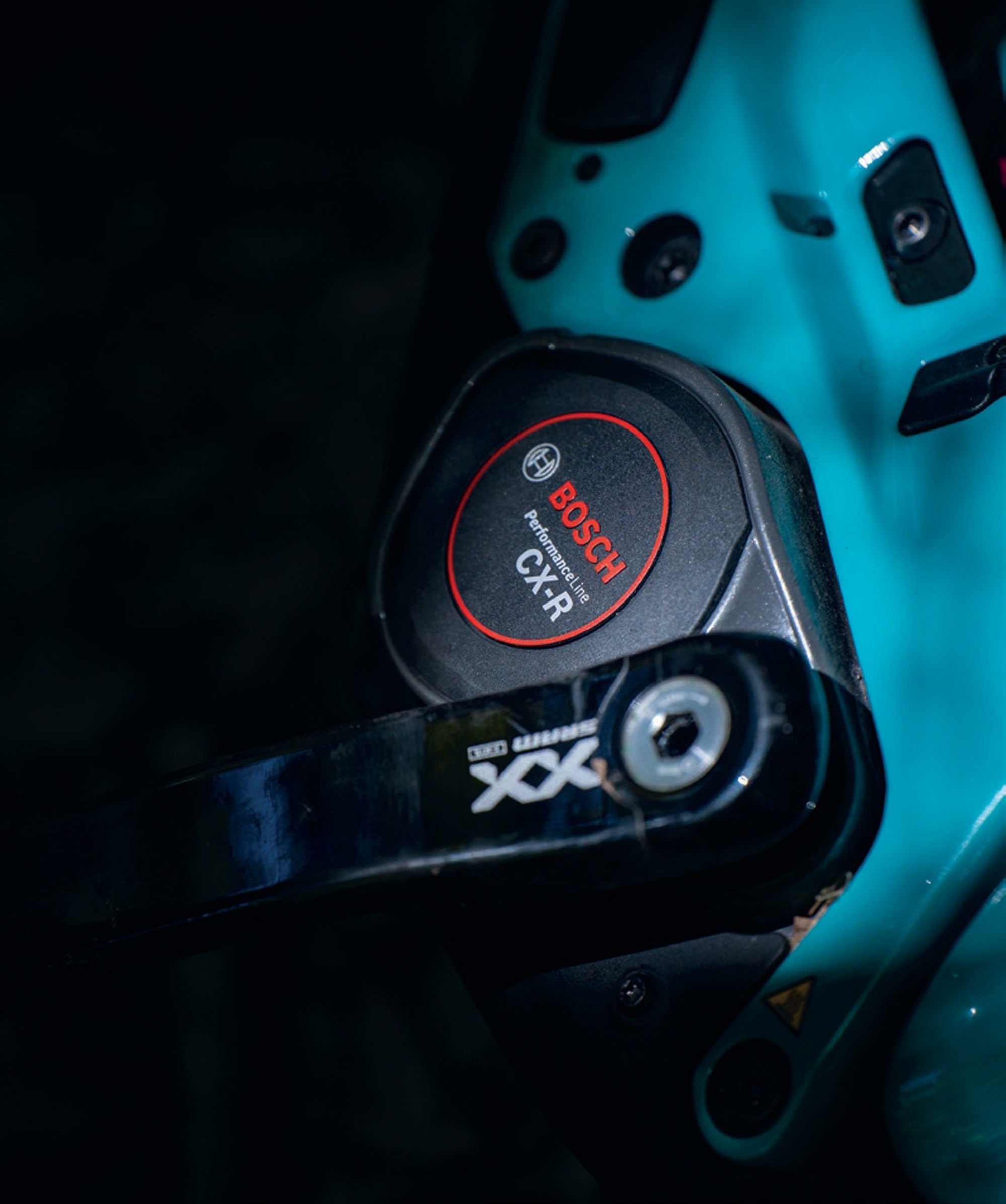
Alongside performance upgrades, Bosch released the all-new CX-R drive unit and Kiox 400C display. The Performance Line CX-R drive unit is designed to win races and slots in as Bosch’s top-tier offering. It’s lighter weight, coming in at 2.7kg, and more powerful, coming stock with 100Nm torque, 750W max power, and 400% rider support.
The weight savings primarily come from the use of a magnesium housing, titanium crank spindle, and ceramic bearings, which are designed to handle the higher torques that come with racing and consistent use of aggressive assist modes.
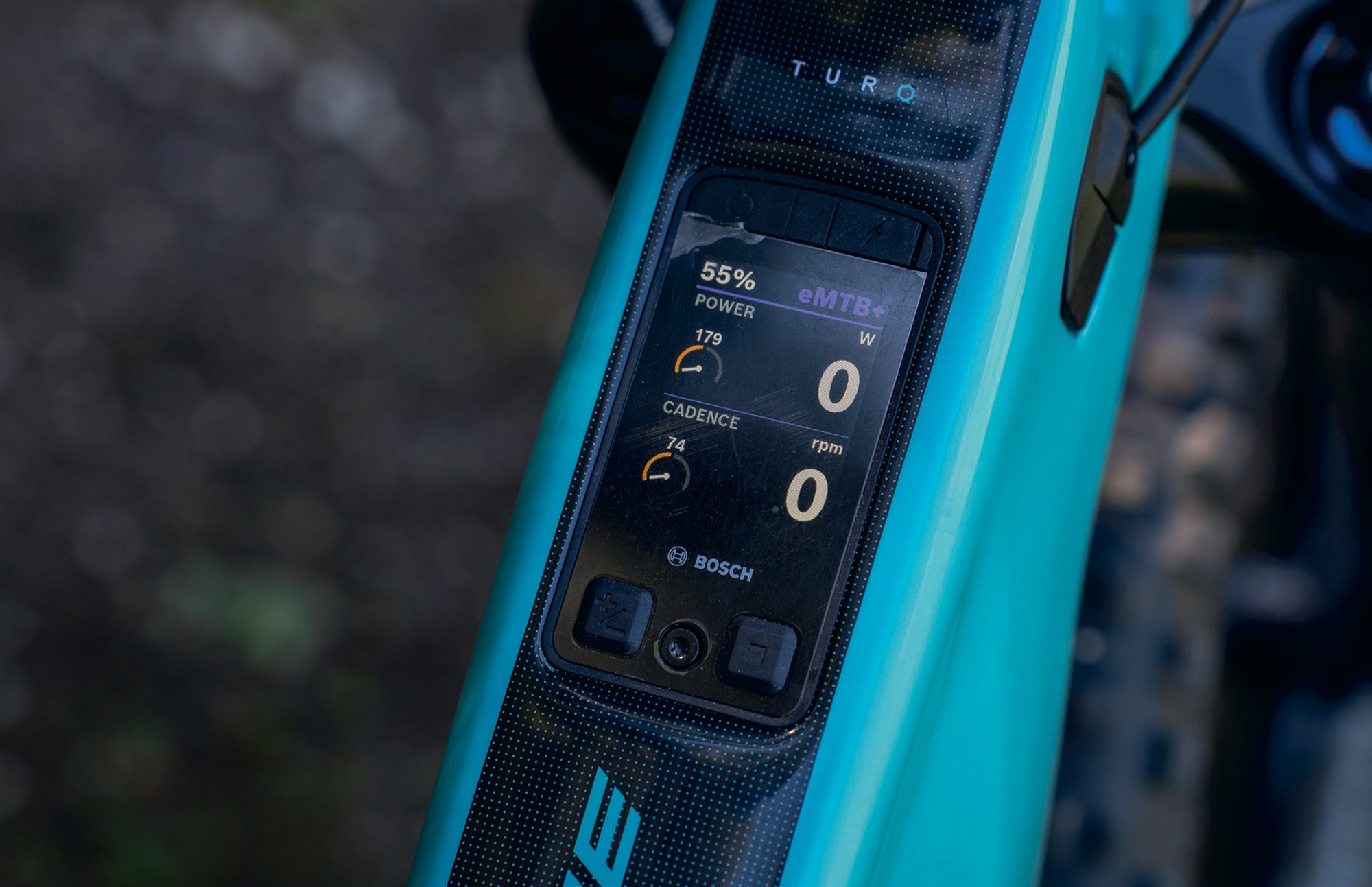
The Kiox 400C display and wireless “mini-remote” were released alongside the CX-R drive unit. With these two gadgets, it feels like Bosch has finally caught up with the competition. The Kiox 400c is a fully integrated display that tucks snugly and almost seamlessly into the bike’s top tube just behind the headset. It’s large, measuring 2 inches diagonally, it’s bright, it’s high resolution, and it’s full colour, almost a mini-iPhone mounted in the bike! Unfortunately, unlike an iPhone, it’s not touchscreen. The mini-remote lets you shuffle between info screens or scroll between assistance levels. It’s ergonomically ideal, sitting where most remotes do, just beside the left handlebar grip, the buttons have a noticeable click to them, and their rubberised finish means even the sweatiest of fingers don’t slip.
If you’ve set up navigation in Bosch’s eBike Flow app and have a destination programmed, the Kiox 400C will display directions as if it’s your phone, even with handy sounds to notify you of upcoming turns.
There’s a host of information that can be displayed while riding, from heart rate (if you’re using a HR strap or other device), rider power, cadence, and even shifting suggestions. Ideal if you’re one to just throw it in top gear and grind around the trails – the unit will suggest shifting to a more optimal gear ratio. What’s displayed on the screen is entirely up to the user and can be configured in the eBike Flow app on your phone. Speaking of phones – there’s even a handy USB-C port at the top of the display for phone or light charging.
I found the Kiox 400C a considerable step up from previous, more basic, Bosch display options. The screen is a great size, and with the bright, easy-to-read display, I found myself taking a quick glance down to see what speed I was doing, or even what power I was pushing, all while navigating technical trail.
There’s a new assistance mode thrown in the mix, too. eMTB+ mode features Dynamic Control, which essentially switches between aggressive and more subdued output, automatically adjusting between the two based on rider inputs such as cadence and torque, as well as internal sensors that measure gradient and detect loss of traction.
Sampling 1000 times a second, the system seamlessly adjusts to terrain, helping maintain traction regardless of conditions or rider inputs. I found this mode to be the most natural and it felt like riding a regular non-assist bike. Although, when I put the power down, I was able to take advantage of the full 400% support and pull up and over whatever was in my path. The eMTB+ mode is not dissimilar to the standard eMTB mode in terms of how it works but it does offer the higher top-end power availability of the Race mode at 400% assistance vs the 340% of eMTB which doesn’t have the Dynamic Control feature.
We’re now presented with four assistance modes: Race, eMTB+, eMTB, and Tour+. As it says on the tin, Race mode is for just that: racing. Only offered in the CX-R drive unit, it provides 400% support (so 4x rider input). It takes some skill to make the most of this level, and it will rinse a battery quick-smart if not used sparingly. I found this level ideal for uphill sections where I knew maximum attack was the only way over or through them. It’s a load of fun but does require some caution, as more than once I nearly got spat off the back as the bike almost looped out.
eMTB mode, as we’ve known it previously, is like having the bike on automatic, offering less support than eMTB+ mode, up to 340% assistance. The Race and two eMTB modes have “extended-boost”. When stopping pedalling, the motor continues to drive for a short time, helping to maintain speed between pedal strokes or over technical crux moves where a pause in pedalling is needed to navigate a feature. Tour+ offers similar assistance to the eMTB mode at up to 340%, but loses the extended boost and prioritises battery conservation over all-out performance.
Users can tune riding modes to their liking in the eBike Flow app, so if you want more or less power or torque, you’ll find your nirvana with some digital fine-tuning.
It’s worth mentioning the Walk Mode. Hold the ‘down’ button on the mini-remote, and the drive unit moves the bike forward, helping push it back uphill. I used this each lap back up Kataore trail in Rotorua while we were shooting photos for this review. Without this function, getting back up the hill each time would have been significantly more difficult!
The whole drive system on the LTe is powered by a Bosch 800Wh battery. There’s also a range extender that gives an additional 250Wh for those big days lapping the hills! It would be nice to have an easy-to-swap main battery. Unfortunately, it’s not a quick trailside task. While I never needed to remove the battery, according to the bike’s manual (which is quite impressive, I should add), it doesn’t seem like something you’d want to do unless it’s really necessary. Sorry, team, no double-battery rides on this one, by the looks of it.
Frame details
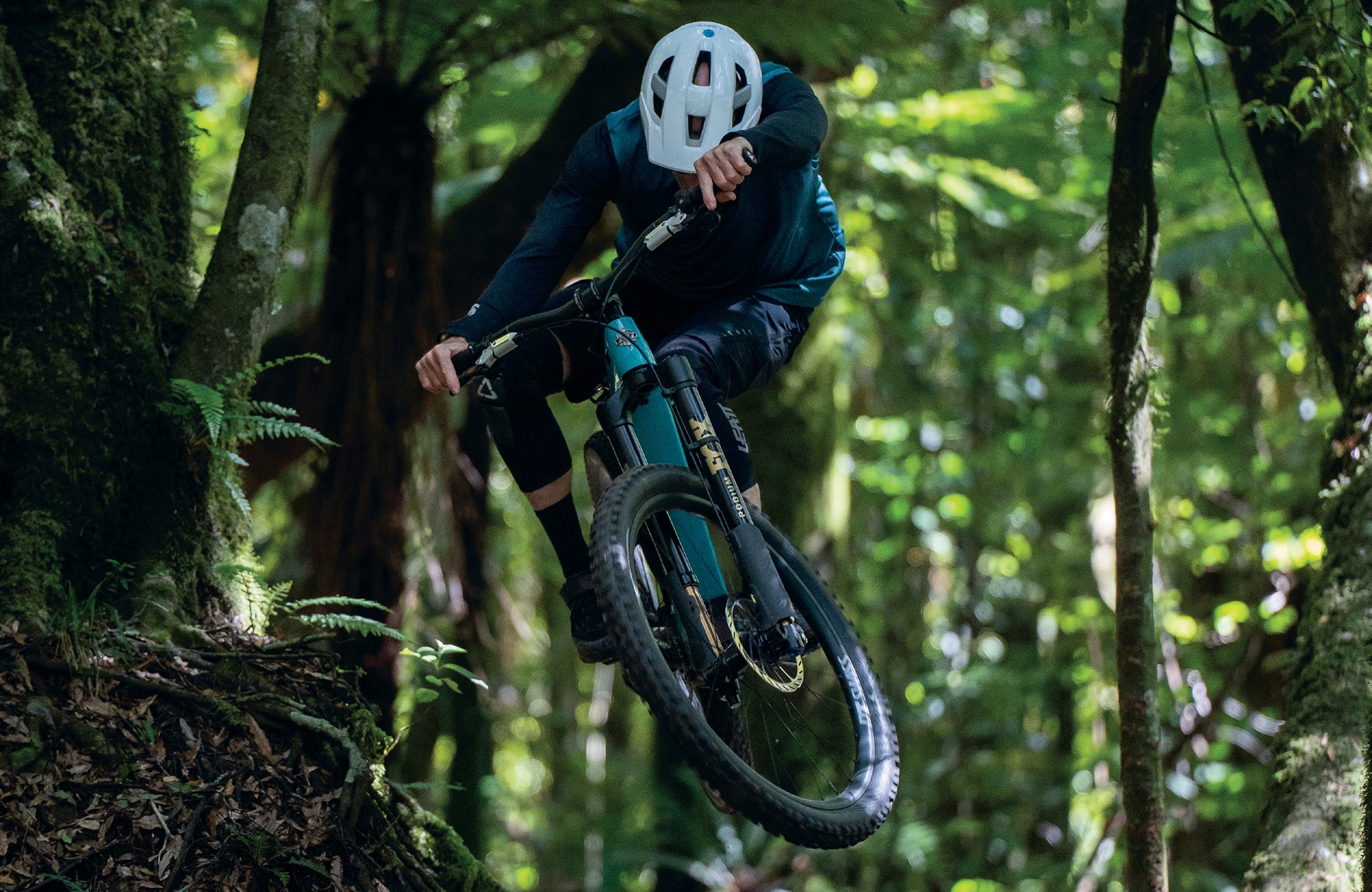
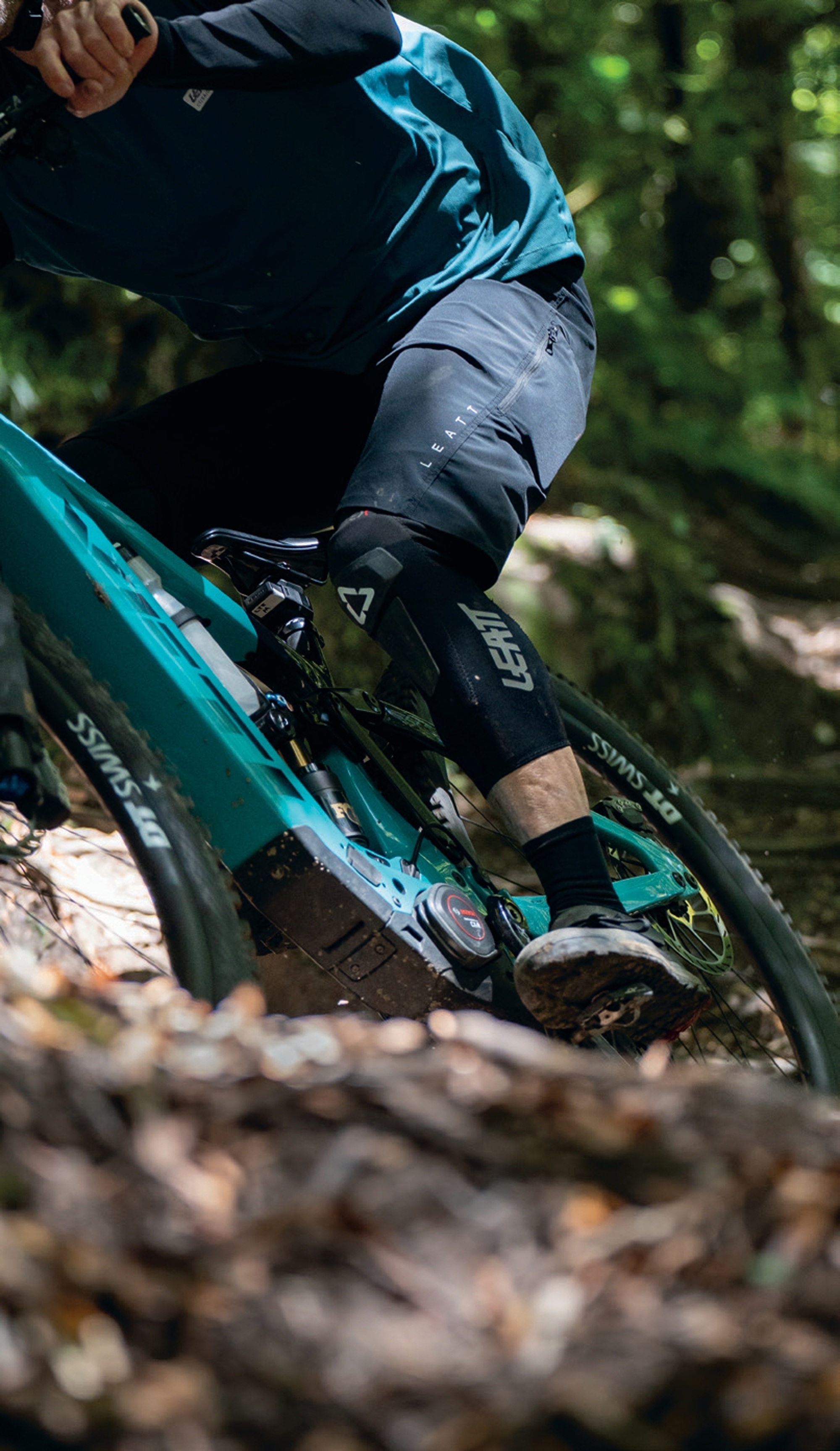
The Yeti LTe is a 160mm (r) / 170mm (f) travel bike bred with an e-EDR focus. It’s crafted from Yeti’s signature TURQ carbon fibre, reinforced with Vectran (similar to Kevlar) to deliver downhill-bike-level strength. The complete chassis (minus suspension linkages) is top- shelf, lightweight carbon fibre. Using carbon not only helps keep the overall weight down but also allows Yeti to tune the ride feel.
The Sixfinity suspension is a unique six-bar design in which all six linkages contribute to controlling the wheel path. It offers higher anti-squat focused around the sag point, keeping a solid and efficient platform for pedalling or pumping. As the bike progresses further into its travel, where pedalling is unlikely, the Switch link drops and anti-squat falls away quickly, offering confidence and stability for downhill-bike-like descending.
As one would expect from a top-tier bike, all the small details are taken care of. Cable routing is tidy (at least externally), and key areas have guards and bumpers to protect the frame and drive unit from rock strikes and debris, or chain slap, all of which helps keep the ride experience nice and quiet and the frame crisp.
I tried to find something on the frame to highlight as a negative, or perhaps not quite right, but all I could come up with is that the ‘loam shelf’ on the lower suspension link behind the motor sits right in the path of mud, slop, and, of course, loam. Most rides, I’d finish with a little pile of debris in this area. No biggie when it’s dry, but I guess long-term over a winter of riding it may negatively affect the lower linkage bearings as they’ll be constantly sprayed with slop from the rear wheel.
On the subject of bearings, by my count there are 16 bearings involved in the Sixfinity linkage, which is not an insignificant number to keep serviced or to replace when necessary. I guess that’s the cost of having all the advantages the Sixfinity brings to the bike: can’t have one without the other.
Adjustable rear suspension leverage rate can be achieved via a swap out of the lower shock mounting chip, allowing for three levels of suspension progressivity tuning: 25%, 30% and 35%. This gives the ability to set it up precisely for where and how it’s to be ridden. I ran this in the stock ‘middle’ 30% progression setting. I found it ideal for my local North Island trails, with shorter, not highly technical climbs and descents featuring a wide variety of features, from drops and g-outs to short chundery steeps and high-speed flow with jumps.
The 30% was plenty supportive and balanced enough to keep the bike playful and poppy, but linear enough to give me the confidence and control for max attack. I didn’t test either of the alternate settings, but for true mountainous descents the lower, 25% setting may be an advantage, offering a more linear suspension rate. The inverse 35% rate should be more relevant for sustained steep, technical climbs and flat riding with its higher progression making the bike ramp up quicker while maintaining the buttery early stroke. These options also open the door to swapping out the air shock for a coil while still maintaining a consistent feel.
The higher torque of an eBike compared to a non-assisted bike means that if the anti-squat is not dialled in, it will be very noticeable, as there won’t be any consistency in how the bike feels under pedalling. Pedalling the LTe was predictable and natural. Regardless of my cadence or how hard I pushed the pedals, the suspension appeared to be unnoticeably active. If I can’t notice something, that’s a green tick from me, as it must be doing an admirable job: just turn the pedals and let the bike do the rest.
Those who want a bit more clearance over the tyre or more ‘flickability’ can switch to a 27.5” rear wheel via flip-chips in the upper seat stays, and thanks to the aforementioned shock mount adjustments, the bike will ride equally as well as it does in the stock, full 29er option.
The overall system weight of the LTe is a fraction over 23kg – pretty light for an eMTB in this e-enduro category. While that Podium fork adds 300+ g over a FOX 38, the weight still feels balanced on the bike, not significantly front-heavy. I’d love to throw a leg over one of the lower-specced LTe bikes with a lighter fork for comparison, to see if a substantially lower price tag really provides a less enjoyable ride experience.
Geometry
The LTe geometry is comfortably balanced. With a 64° head angle, it’s slack enough to be confidently ripped around any terrain and just steep enough to retain a level of playfulness and keep it nimble and quick through turns, even while climbing. A 78° seat tube angle brings the rider forward into a reasonably forward position for comfortable climbing and ensures the front end doesn’t need any overly pronounced effort to keep down while climbing. A 449mm chainstay, 465 reach (medium frame) and an 808mm front centre measurement put the rider in a nice central position within the reasonably long 1257mm wheelbase.
Component highlights
As you’d hope for on a bike with this price tag, the component selection on the LTe is nothing but top-shelf. I’ve picked out a few highlights below:
Fork – FOX Factory Podium 170mm
A new-to-market fork from the boffins at FOX, oh, and it’s upside down! They seem to have solved all the issues that previously stopped upside-down forks from succeeding, and this fork seriously impressed me. Although it’s not the lightest, some 300g+ heavier than an equivalent FOX 38 fork, the weight is well worth the extra performance. The fork changes direction from compression to extension and vice versa with less effort or delay than a regular fork, in part thanks to its lower unsprung weight and constant lubrication from the fork oil sitting atop the main external seals. Buttery is not a word I thought I’d use to describe this fork, but it is just that. The early stroke is phenomenally supple and even deeper into the travel, it’s evident this is very active and smooth, the wheel sticking to the ground, no chattering, jarring or feeling like the fork is overwhelmed, just a precise, controlled feel.
With much larger bushing overlap than a standard fork, which keeps the legs stiff and parallel to each other, there’s less binding as the fork legs compress, helping maintain the smooth action. Even under heavy braking down rough, steep sections of trail, there was not once when I even began to explore the limit of the fork.
There’s ample adjustment on offer on the Podium, with the GRIP X2 damper. You’ll find high and low speed compression and rebound adjustments, as well as the ability to add volume spacers. There’s a tonne of tunability available. On most bikes, I use manufacturer-recommended settings as a baseline, then tweak settings from there. On the LTe, to my surprise, I found that Yeti’s suspension setup calculator gave me ideal settings for everything, right down to tyre pressure, so I didn’t see any need to go outside these.
The only downside to the Podium at this stage, if I’m getting picky, is wheel installation. When the axle is removed, the lower fork legs can rotate, making it more difficult to reinstall the wheel and axle than with a traditional fork. Once again, a small price to pay for the performance this design offers. If, like me, you’re often unloading the bike from a vehicle after taking the wheels off, and in a hurry to get going, lining the dropouts up with the axle and wheel can take a few deep breaths!
SRAM Selections
With a SRAM XX drivetrain and 165mm cranks, you can’t go wrong. Although a 160mm crank would have been better, it’s not available at the XX level. This t-type Transmission is at home on an eMTB, and when combined with SRAM’s Maven Ultimate brakes, it’s the perfect combo for speeding up and slowing down. Dropper post duties are handled by a RockShox Reverb AXS 175mm post on the medium bike, while large and XL bikes use a 200mm post, and the Small frames use a 150mm post. Another great spec, but I still find it hard to accept the bulbous battery and control unit on this post – unsightly at best. Thankfully, it works like a dream!
Tyres – Schwalbe
The best suspension and bike setup can be let down by bad tyre choice or wrong tyre pressures. I found the Schwalbe Magic Mary Trail Pro 2.5 Radial Ultra Soft on the front, coupled with the Schwalbe Albert Gravity Pro 2.5 Radial Soft, to be wise spec choices by the product managers. Having never ridden radial tyres before, I wasn’t sure what to expect. Once inflated to the recommended 29psi rear and 28psi front, much higher than my normal pressures, I discovered why people have been singing about these tyres: supple, fast and grippy all sum up the radials.
With a lighter trail casing and ultra-soft rubber up front, and a heavier Gravity casing and sturdier rubber out back, there was no need for concern on any terrain I put them on. There was enough support and traction to keep the bike well under control, although on rocky, high-speed trails, a Gravity casing up front may be preferred. I didn’t get to test them on a super-wet ride, so I’d be interested to see how they perform in those conditions. Judging by the height of the tyre knobs, I doubt there would have been a need to use anything else.
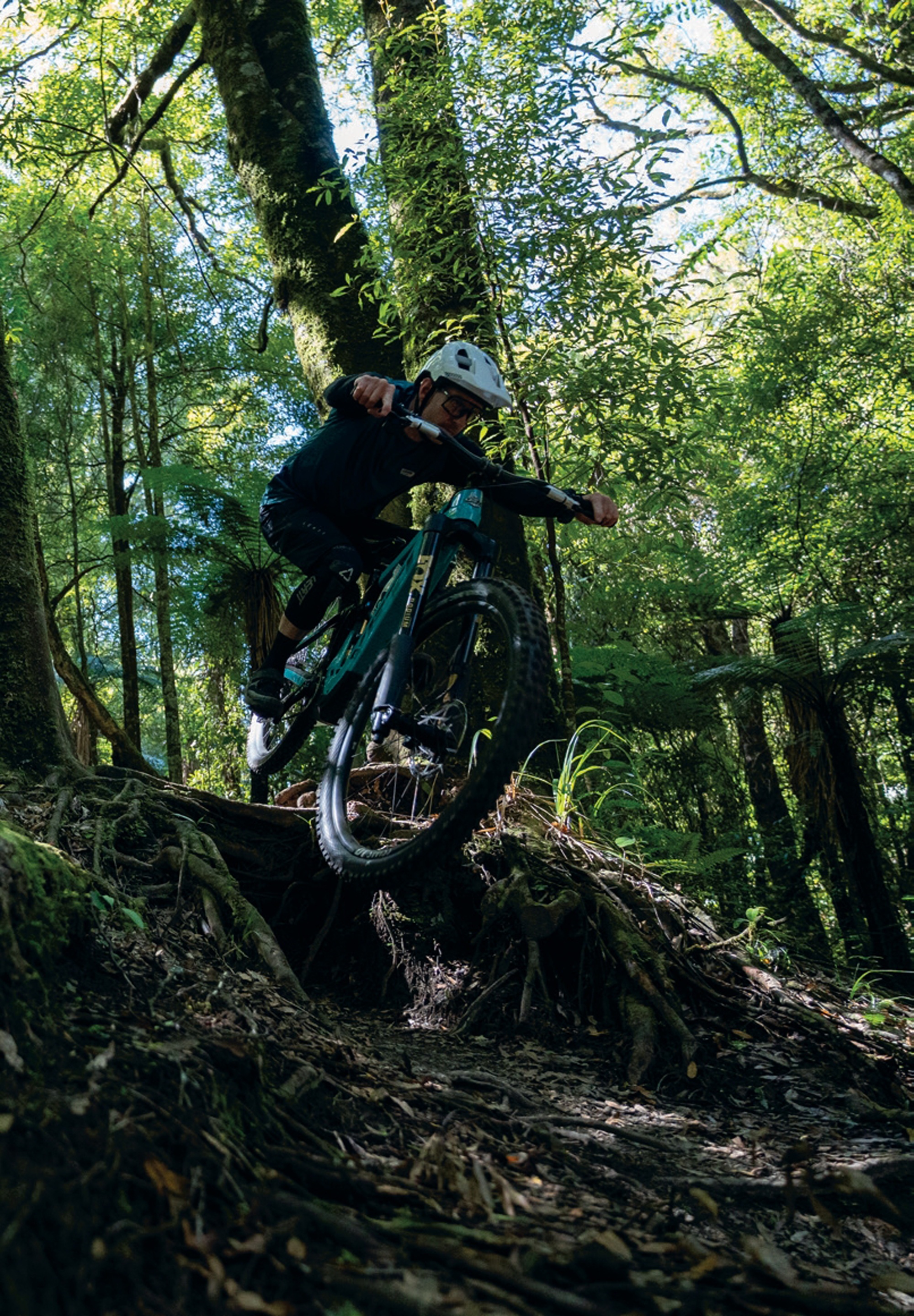
Riding the LTe
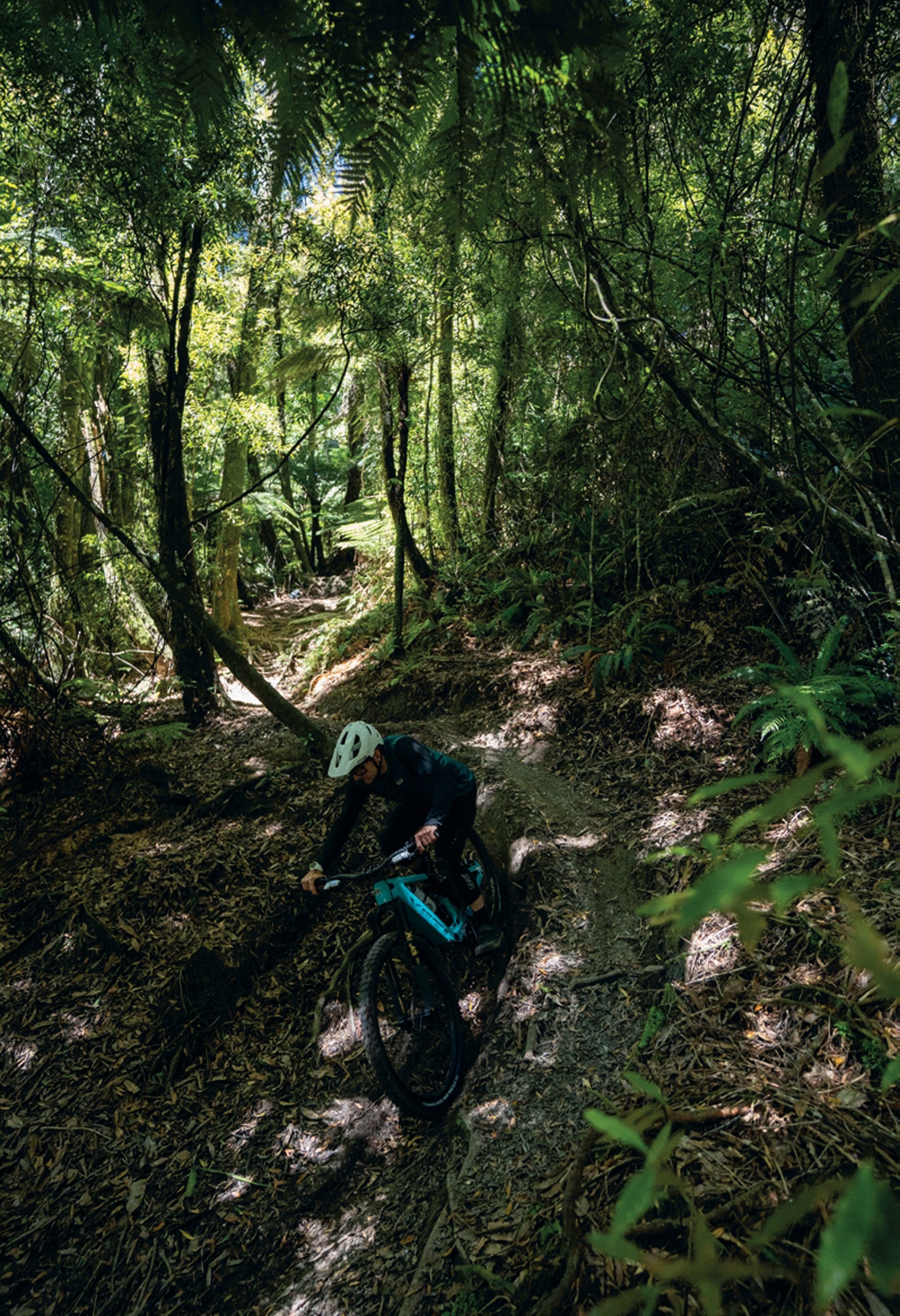
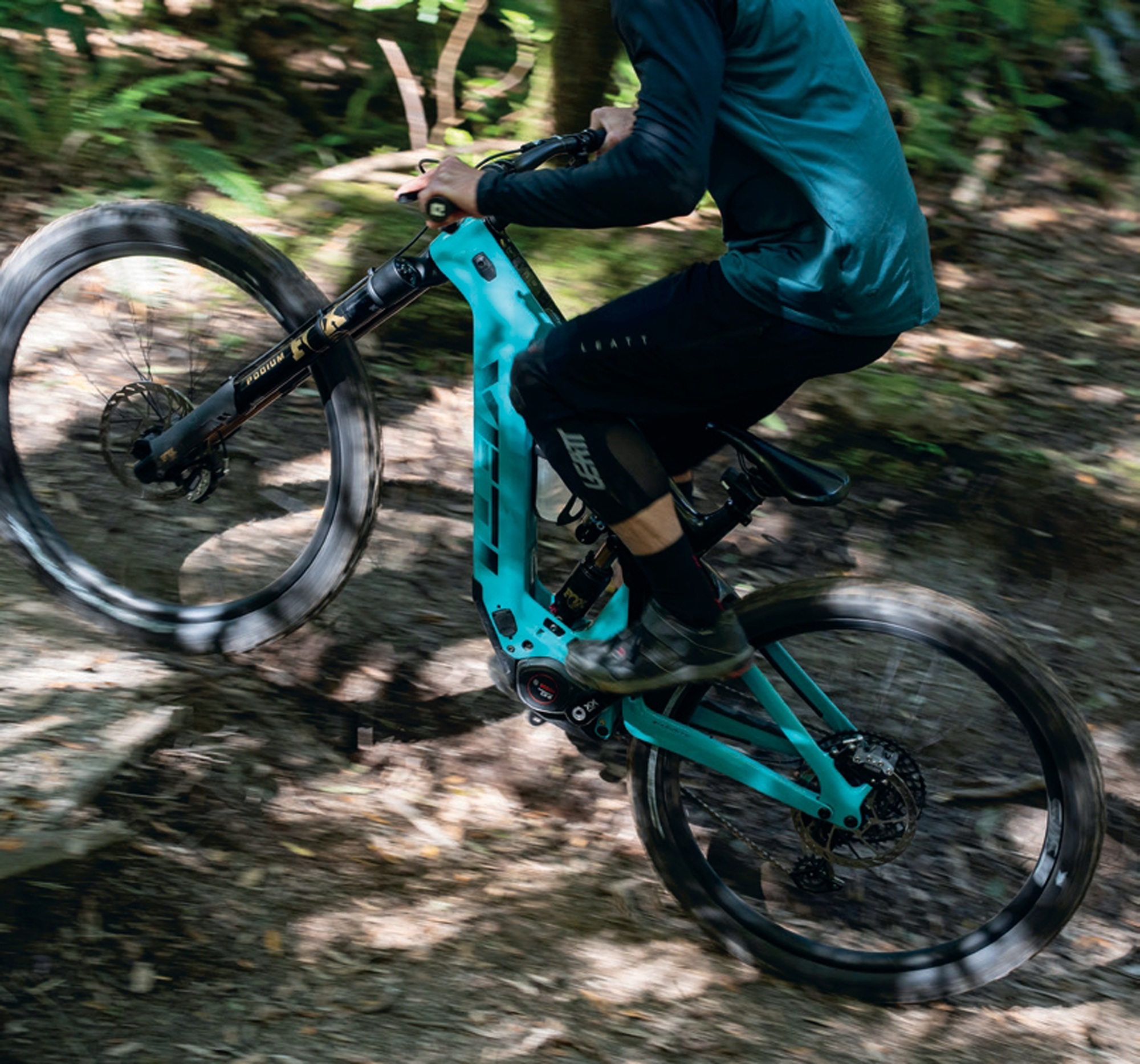
The LTe is the best eBike I’ve ridden, and potentially the best overall bike I’ve ridden, full-stop, end of story. Set up was effortless thanks to Yeti’s suspension setup web app. I found no reason to change anything from their recommended settings after some initial pressure adjustment and dial twiddling. The medium bike was perfect for my 176cm height, and everything felt in the right place, even down to the handlebar width. I’ve reviewed other high-priced carbon eMTBs with similar drive systems, and I couldn’t get the setup to feel great, even with a reasonable amount of setup time and head- scratching, so it was nice to just hop on and go.
The LTe is designed with a downhill focus, and that’s where it really shines, although climbing is also excellent. Manoeuvring up and through technical climbs was on par with other high-end eMTBs I’ve ridden. Nothing really puts it head- and-shoulders above, and in some ways, the excess weight of the fork makes it marginally more challenging to pull up over obstacles. Fortunately, that Bosch CX-R drive unit has enough torque on tap to pull me up anything.
Generally, I blasted around in eMTB+ mode, the Dynamic Control aiding traction when the terrain was loose or slippery. Race mode was reserved for sections of climb that I wasn’t really sure I could get through, releasing all the power of Race mode in the hope it would pull me through. The Race level of assistance was more than I needed most of the time and often required more man-handling, and thought about how best to apply power to the pedals. This bike needs to be ridden hard to get the most out of it and really see where it shines. Descending is where the LTe really comes into its own, largely thanks to that Sixfinity linkage and the top-shelf suspension, but also the brilliant selection of components. For example, sub-par brakes would totally kill the vibe on this bike, regardless of how good the suspension platform is.
When throwing the LTe down a reasonably technical trail, I got the feeling the bike was just asking for more. The only limiting factors to how fast it could go were my skills and my level of self-preservation. The bike could handle much, much more than I was prepared to give it. Some laps through Rotorua’s Tuhoto Ariki and Kataore native bush trails really shone a light on how good the bike is as a whole.
Swooping turns, both bermed and flat, with roots, were no bother. Even with a reasonably long wheelbase, the LTe was easy to change direction in turns and held a line exceptionally well. At slower speeds, the weight of the fork was evident, but once I opened the taps into some of the faster sections of trail strewn with steps, roots, and heavy hits, I forgot that weight altogether.
The LTe’s suspension rewards speed and aggression, and once at a decent cruising speed, the trail seemed magically smoother. Even under heavy compressions, the bike was calm and predictable, and there were no “wow that was close” squirrely moments. I’ve certainly had moments on other eMTBs where the bike squirms underneath me, feeling like a wound spring as it’s nearing the end of its travel, and as it rebounds it’s a bit like releasing a wild dog to chase a rabbit: I’m not sure what to expect, but sure it’s going to end in carnage!
Although there’s a feeling the bike is like a plough smoothing out the trail, it’s still quite spritely. There’s enough support in the suspension, and the overall light weight of the bike means it’s able to be bunny-hopped and unweighted over trail features, and popping off bumps or jumps doesn’t require excess effort.
On the steep, while braking heavily, the LTe maintained a high level of composure. The balanced geometry and buttery suspension ensured the tyres tracked the terrain, keeping as much traction as possible. I felt comfortably centred within the bike, no feelings of the front end diving and that I’d be pitched out the front. Equally, I didn’t feel like I was a passenger needing to push off the back too far while dropping down near-vert faces, just a level of composure I haven’t found on an eMTB before.
Rough off-cambered sections or getting to the highest of high lines into turns were both areas where the bike shone; again, the suspension, tyres and geometry worked together for pinpoint precision. See a line you want to get to? Go there. No questions asked. It took me a couple of rides to really unlock the confidence to go pretty well wherever I wanted on the trail. As I mentioned earlier in this piece, my skills and self-preservation were the limiting factors. Still, the bike gave me confidence to push both of these further than I’d be comfortable with on many other bikes.
To sum up, the Yeti LTe not only meets the mark for a high performer but surpasses it. It’s an all-around exceptionally fun and capable bike to ride, and the fact that it’s an eBike just opens up more possibilities for how many after-work downhill laps could be ridden and how much steeper and sustained the climbs it could go up, versus an ‘acoustic’ bike. Ultimately, I think the LTe rider’s cheesy grin will be just that bit bigger thanks to the pedalling assistance on offer over a non-eBike equivalent.
While I was testing the LTe, I also had a couple of lower-specced, alloy-framed eMTBs in the stable. Jumping between this $25k beauty and a $9k alloy bike, the difference between the two couldn’t be more pronounced. On every level, the more expensive bike was better – maybe not $15,900 better – but the two ride experiences couldn’t be further apart. In isolation, either bike was capable and fun in its own right. But once ridden back-to-back, the differing experiences showed me that between the high-end and let’s call it low-end of the eMTB spectrum, the experiences are so different they almost can’t be compared, a little like a Formula One car vs. a Honda Civic. They both have a frame, motor, and wheels, and both can be super fun to drive, but from a high- performance aspect, when piloted by a driver (rider) who can feel the nuanced differences between the two, there’s a vast chasm between
Produced in partnership with Bosch eBike Systems
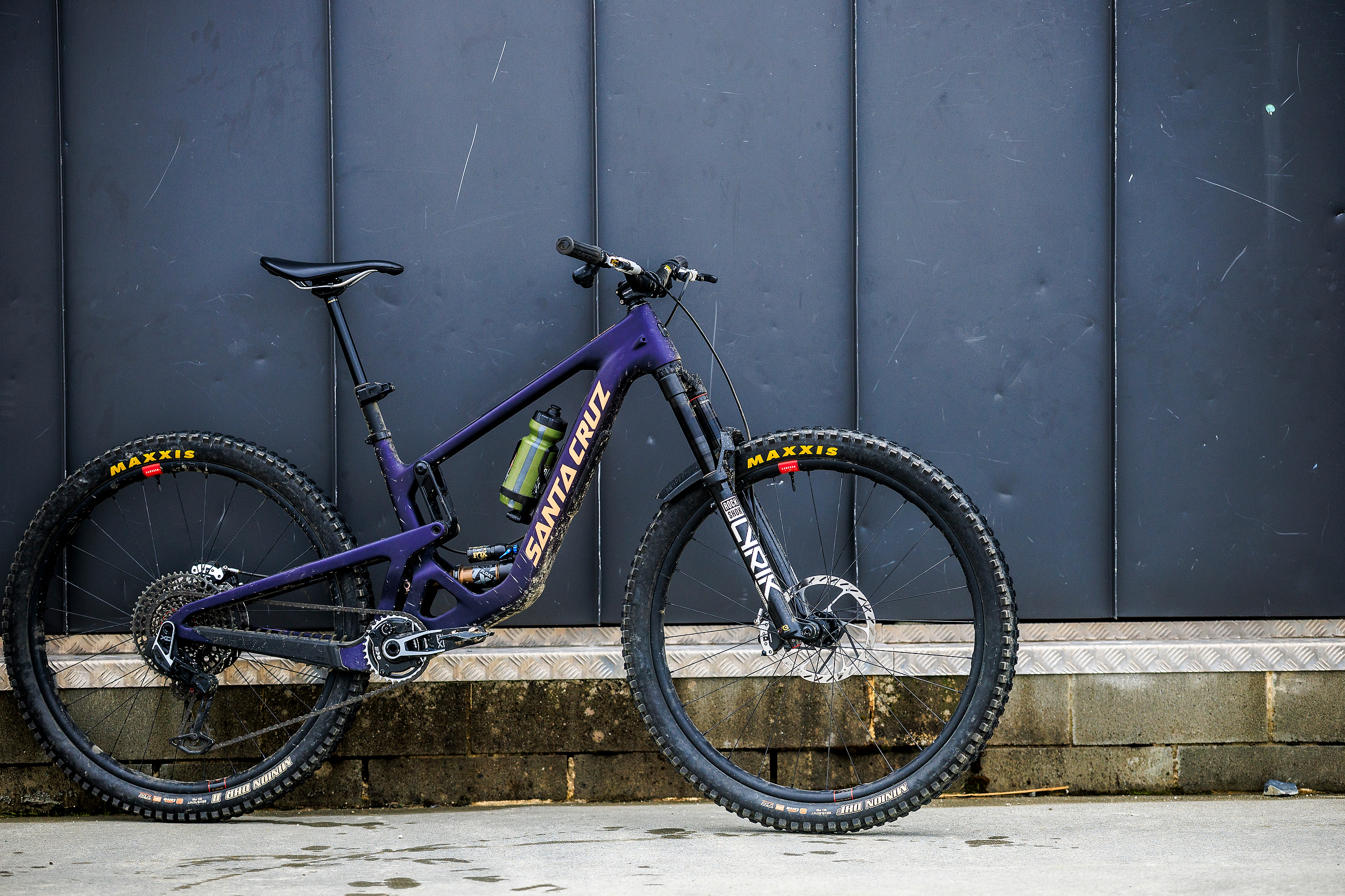
SRAM Maven B1 Brakes
Words Liam Friary
Images Callum Wood & Sven Martin
It wasn’t that long ago that the original Maven launched. Two years on, extensive feedback from World Cup racers, everyday riders, and bike brand partners has shaped the next generation. The result is a brake that feels more intuitive, more controllable, and more confidence-inspiring whilst not replacing the ethos of the original Maven.
The biggest change in the updated Maven is a redesigned SwingLink, the internal cam that controls how power builds as you pull the lever. To appreciate why it matters, it helps to understand what the original Maven was doing in the first place.
The first-generation Maven (A1) used a low starting leverage ratio, designed to minimise deadband. You know that brief dead zone at the top of the stroke before anything happens. The result was a very short, snappy feel – pull the lever and the power is right there. It was all brake, all at once, which some found getting used to. For me, initially it was full on, then I got used to it. But it was either on or off and not much in between. That low starting rate is what created the A1’s distinctive ‘cam-over’ feeling – a magnetic, almost binary engagement. In the field, some riders liked it and others didn’t.
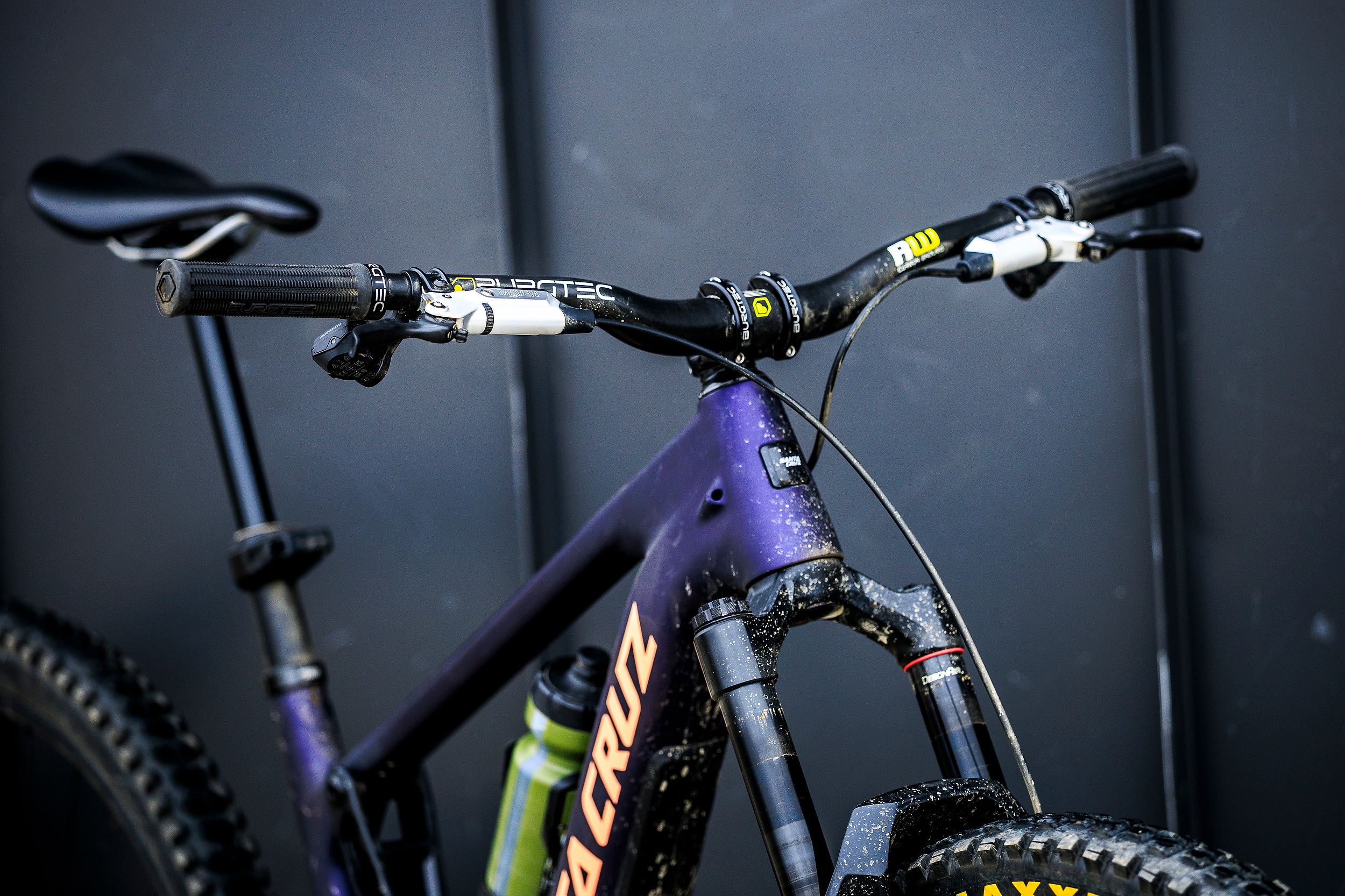
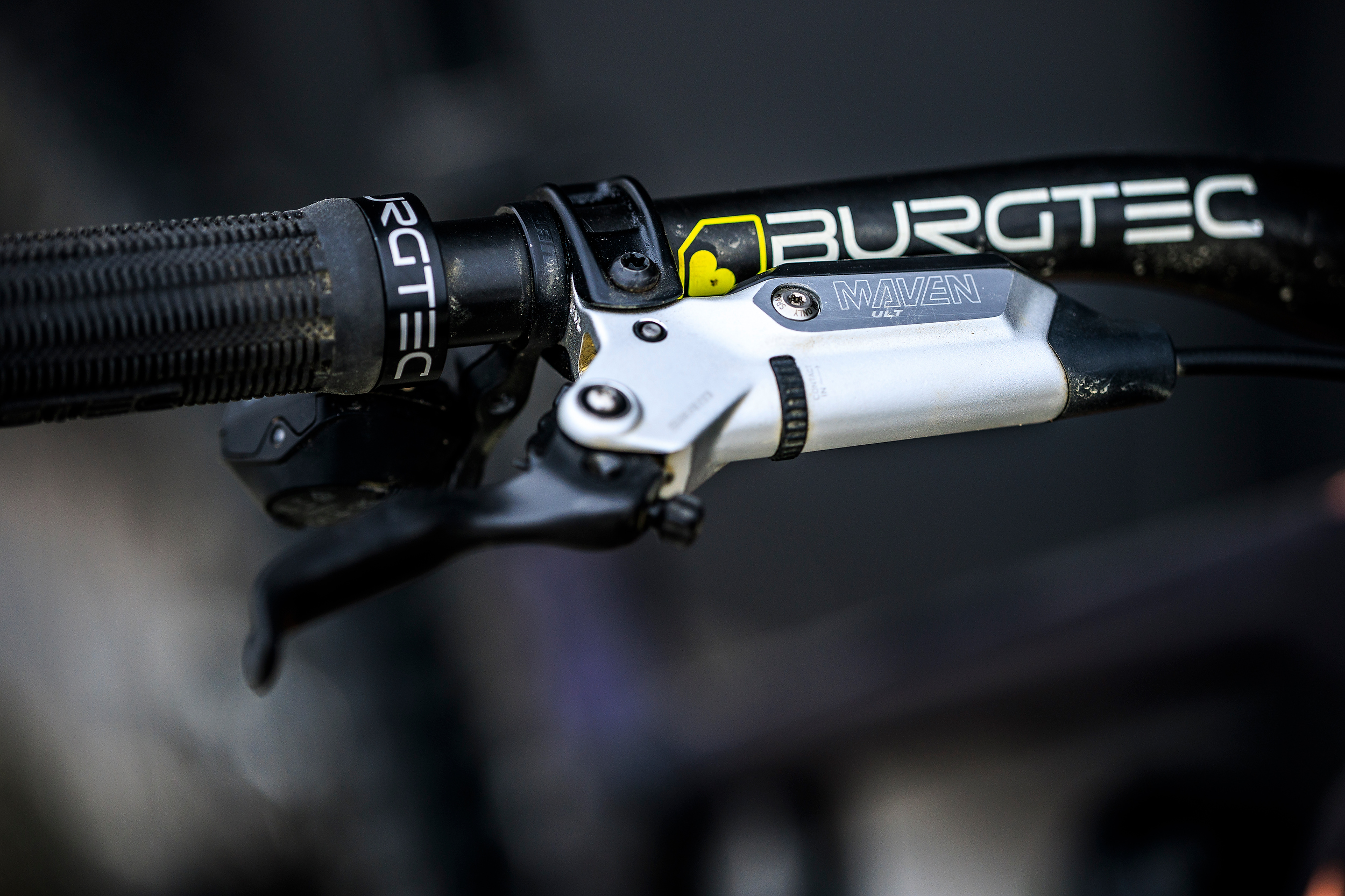
However, Maven Base sits at the opposite end of the spectrum. Rather than a SwingLink cam, it uses a simpler DirectLink lever architecture for a very light, linear feel from the top of the stroke all the way through. There’s a touch more deadband than the A1, but the unhurried, progressive character was widely appreciated when it launched quietly alongside the Maven lineup. Its positive reception was a big part of what motivated SRAM to rethink the SwingLink-equipped models.
The new B1 SwingLink finished in gold to distinguish it from the original red cam, splitting the difference between those two approaches. The initial breakaway force drops from 8 Newtons on the A1 to 4.25 Newtons on the B1, nearly halving the effort needed to get the brake moving. That lighter engagement flows into a smoother, more linear leverage curve through the mid-stroke, where most braking actually happens. Then, at the end of the stroke, the leverage ramps up again to ensure full peak power is still there when you need it. The three goals SRAM set for the project were more control, more predictability, and the same power. The B1 SwingLink delivers all three.
Reworking the SwingLink had a knock-on effect that needed managing. A higher initial leverage ratio means more mechanical advantage at the point of pad contact. Put simply, left unchecked, the B1 would have bitten harder at initial contact than the original Maven, which clearly isn’t the goal. To balance this, SRAM made a deliberate change to the caliper.
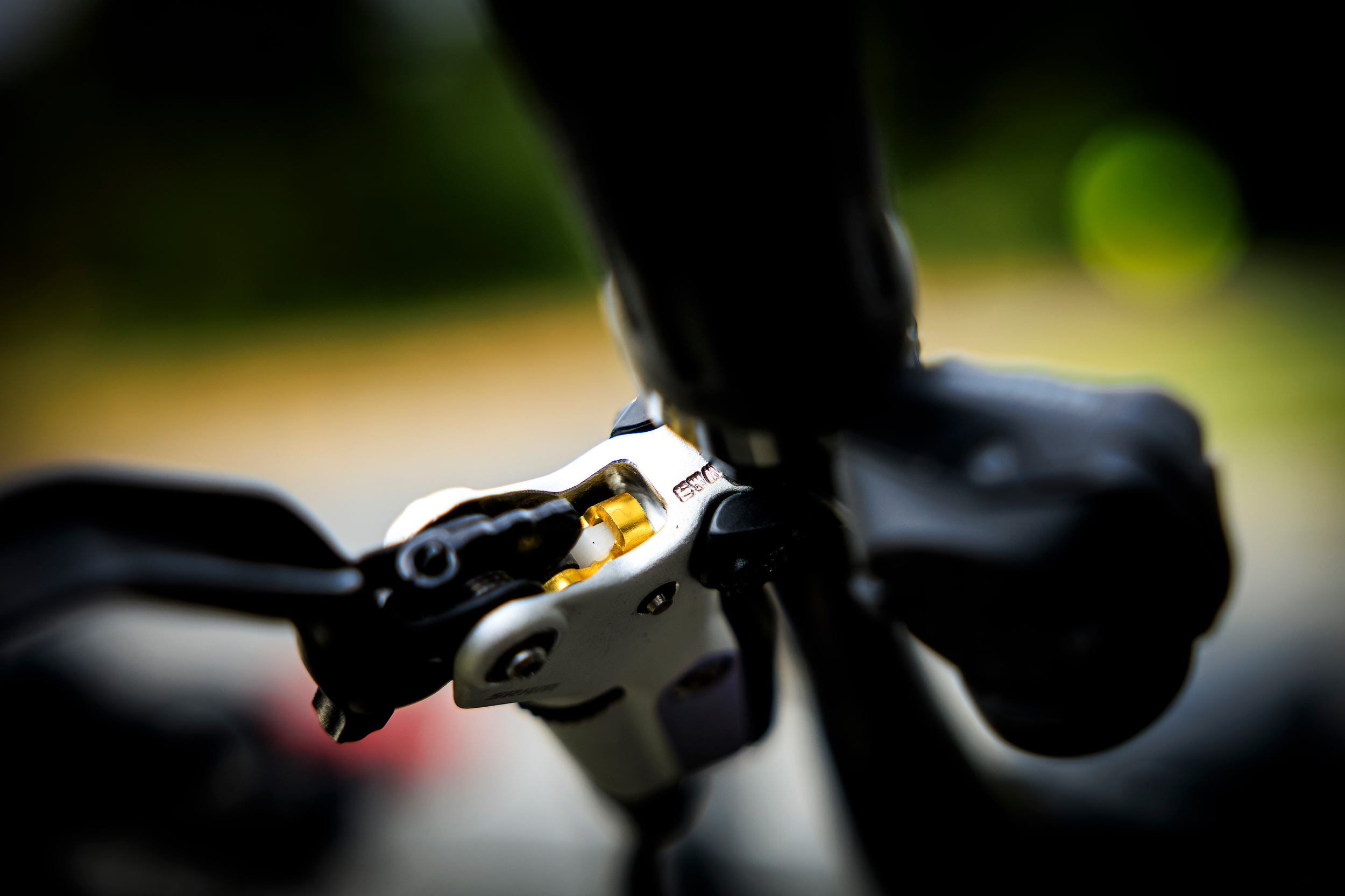
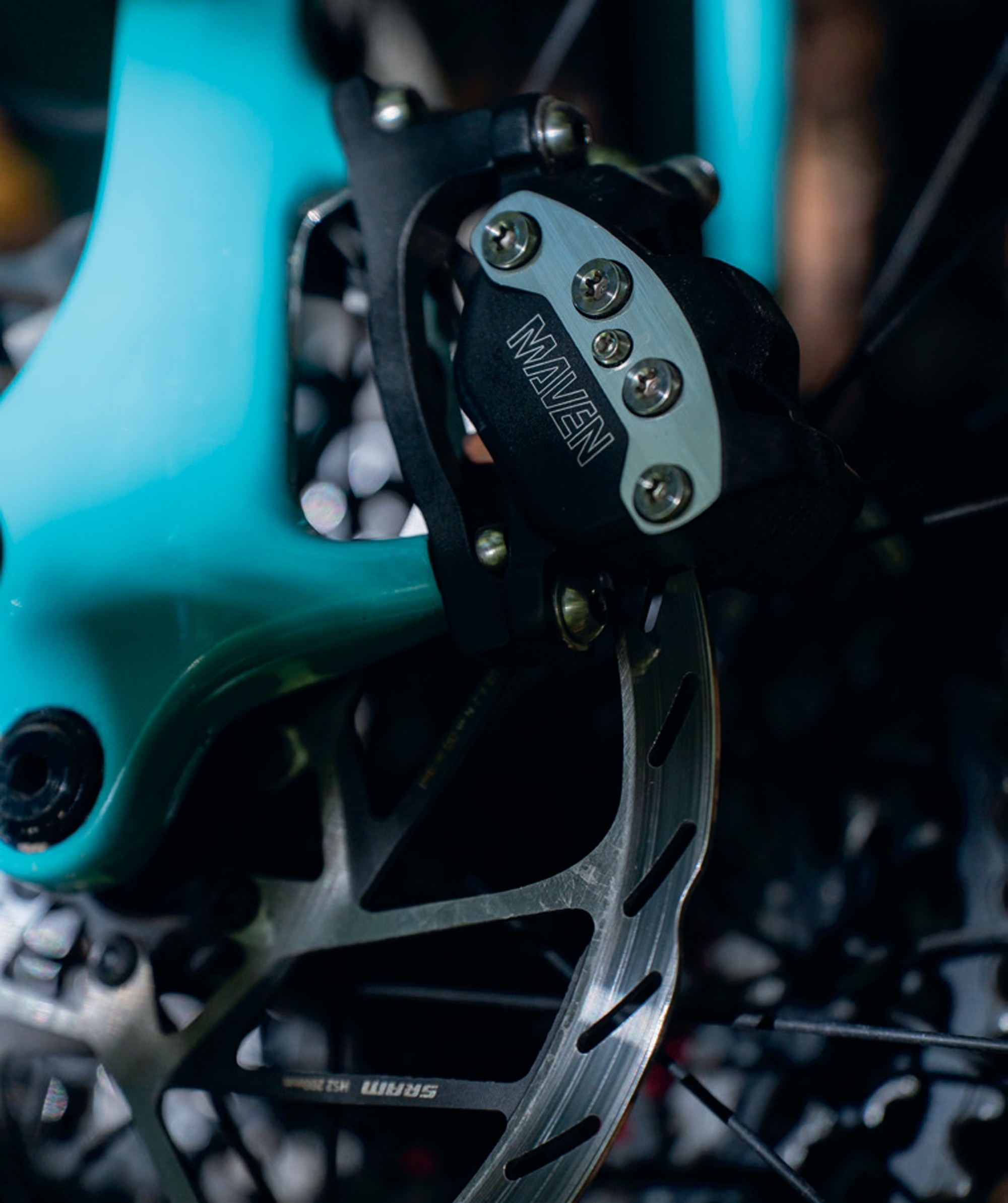
The original Maven A1 caliper used two 18mm pistons and two 19.5mm pistons. The B1 moves to four 18mm pistons, the same layout as Maven Base. The slightly reduced hydraulic ratio at contact offsets the higher mechanical advantage from the new cam, so the overall feel at pad engagement is more controlled and predictable while peak power remains the same. As the SRAM engineers put it, they’re still baking the same cake; they’ve just adjusted the recipe.
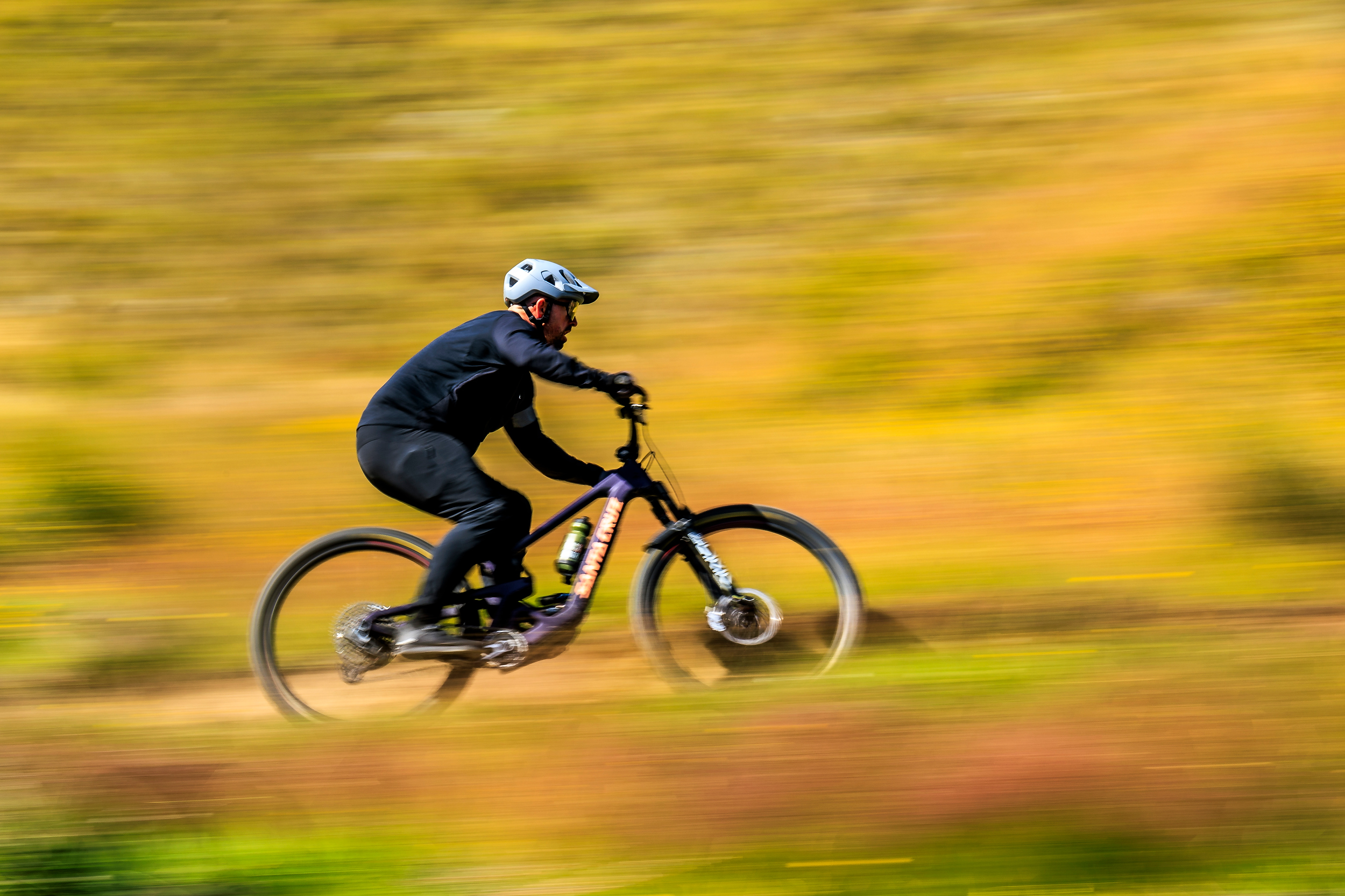
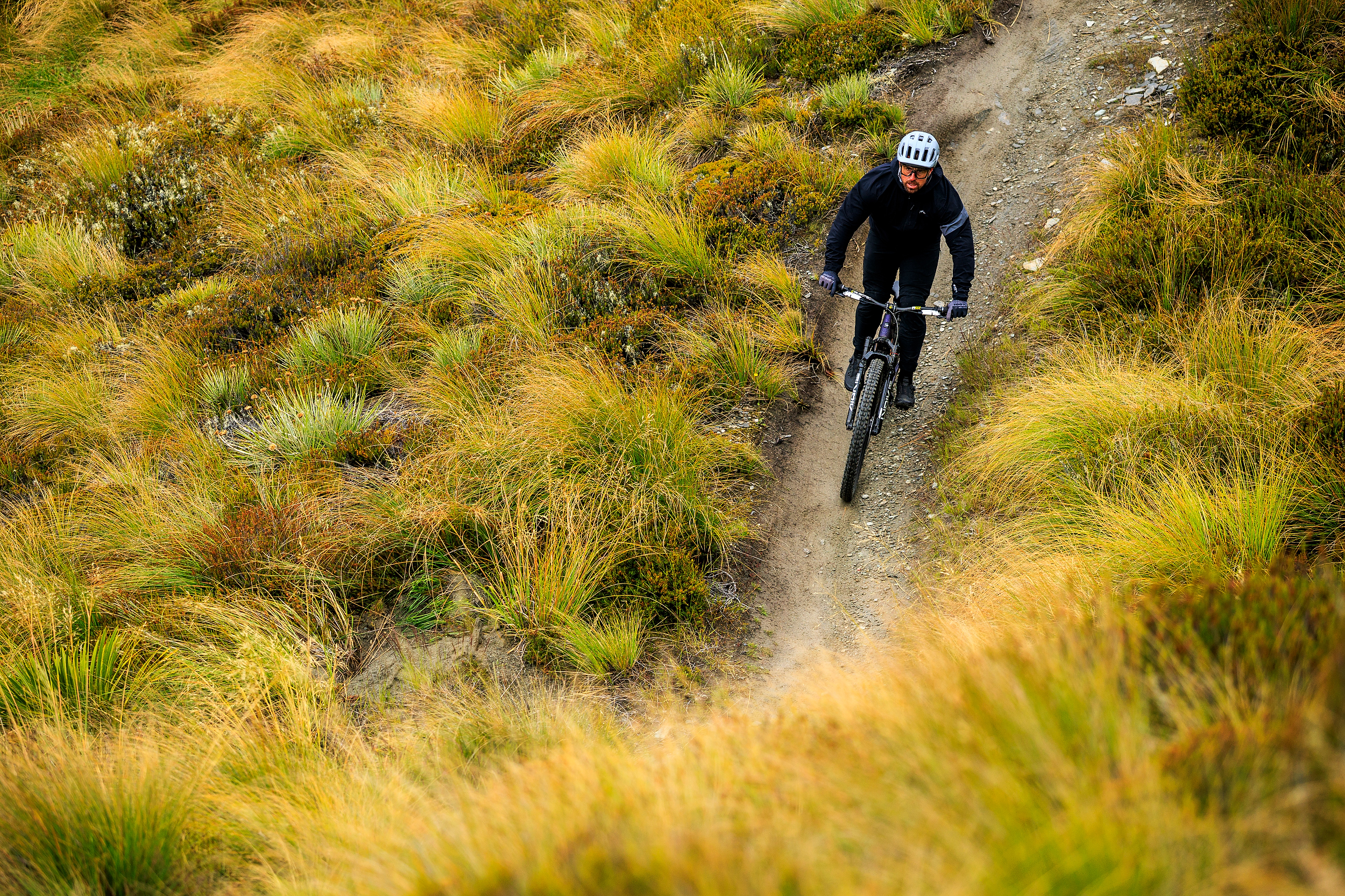
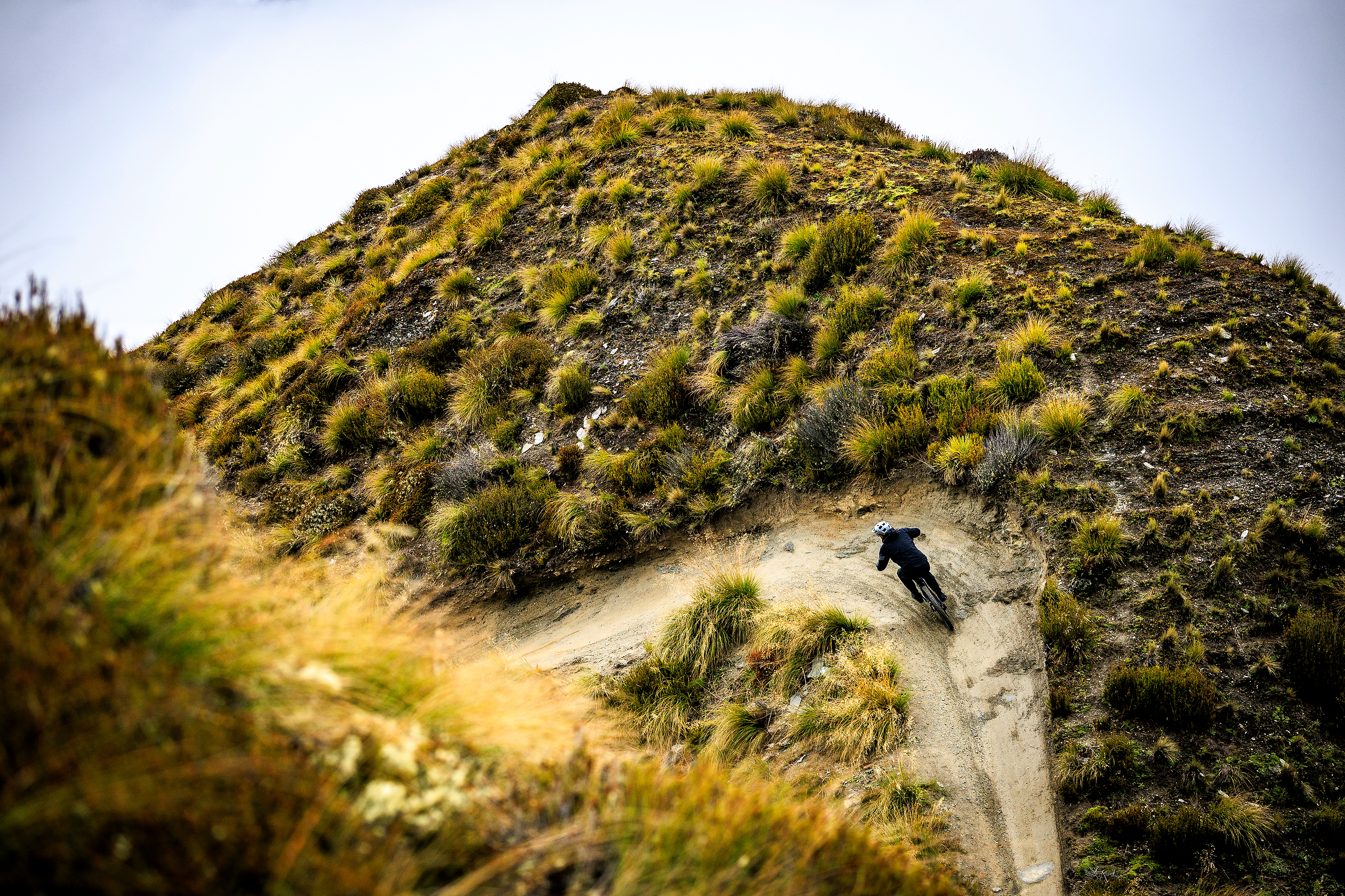
I’ve been running the Maven Ultimate B1 on my Santa Cruz Hightower for just over a week. The lever feel is solid and confident, with a noticeably more graduated build through the stroke compared to the A1. You can feel exactly when the pads make contact with the rotor, and that modulation is consistent every time you pull. Where the original Maven could feel confronting – all-on or all-off, particularly in the first few rides – the B1 builds into its power more smoothly. It’s still a seriously powerful brake but just gives you more time to work with it.
Most of my testing happened during a week of riding in Queenstown, and on longer descents where other brakes have started to fade or lose feel, the Maven kept doing its job with the same character from top to bottom. Heat builds in the oversized caliper, but by design it dissipates slowly and evenly, keeping brake feel consistent throughout. On more technical, slower sections of trail, the improved control and modulation allowed for better precision; I could pick my way through with more accuracy and less guesswork than I’d had on the A1. During testing, I had a slight fall that resulted in a cut palm and a sprained wrist. I still had a few days to go and was thankful for the better control and modulation, especially with my sore hand. Put simply, I had better, precise, and accurate brake control.

Brakes are quite subjective. If you prefer short, snappy engagement of the A1, the B1 is a different animal. But the wider usability window is hard to argue with, and I’d expect riders who struggled with the A1’s abruptness to find the B1 a much more natural fit from the first ride. This was certainly the case for me.
The Ultimate sits at the top of the Maven range and earns its place there. Carbon lever blades replace the forged aluminium of the previous version, giving a familiar tactile feel while performing better in cold conditions. Maven Silver receives a new forged and CNC-machined aluminium blade with a precision weight-saving cutout, while Maven Bronze gets a forged blade as well, a meaningful step up from the previous cast construction. The Ultimate’s caliper features machined edges and titanium hardware. Reach and contact point adjustment are both tool-free, so dialling your setup takes seconds rather than digging out an Allen key.
One of the most considered aspects of the B1 update is that it’s fully backwards compatible with any existing Maven Ultimate, Silver, or Bronze. These are called tuning kits, not upgrade kits. Clearly, making a line in the sand between the two Maven brakes. The A1 (original) is not obsolete and that’s a good thing in this throwaway world!
The new SwingLink and lever blade are available as a tuning kit – no bleed required. All the changes happen on the dry side of the brake. Two T10 Torx bolts remove the lever, a pin punch (the T10 tool included in the kit works for this) pushes out the SwingLink, and the whole assembly swaps cleanly.
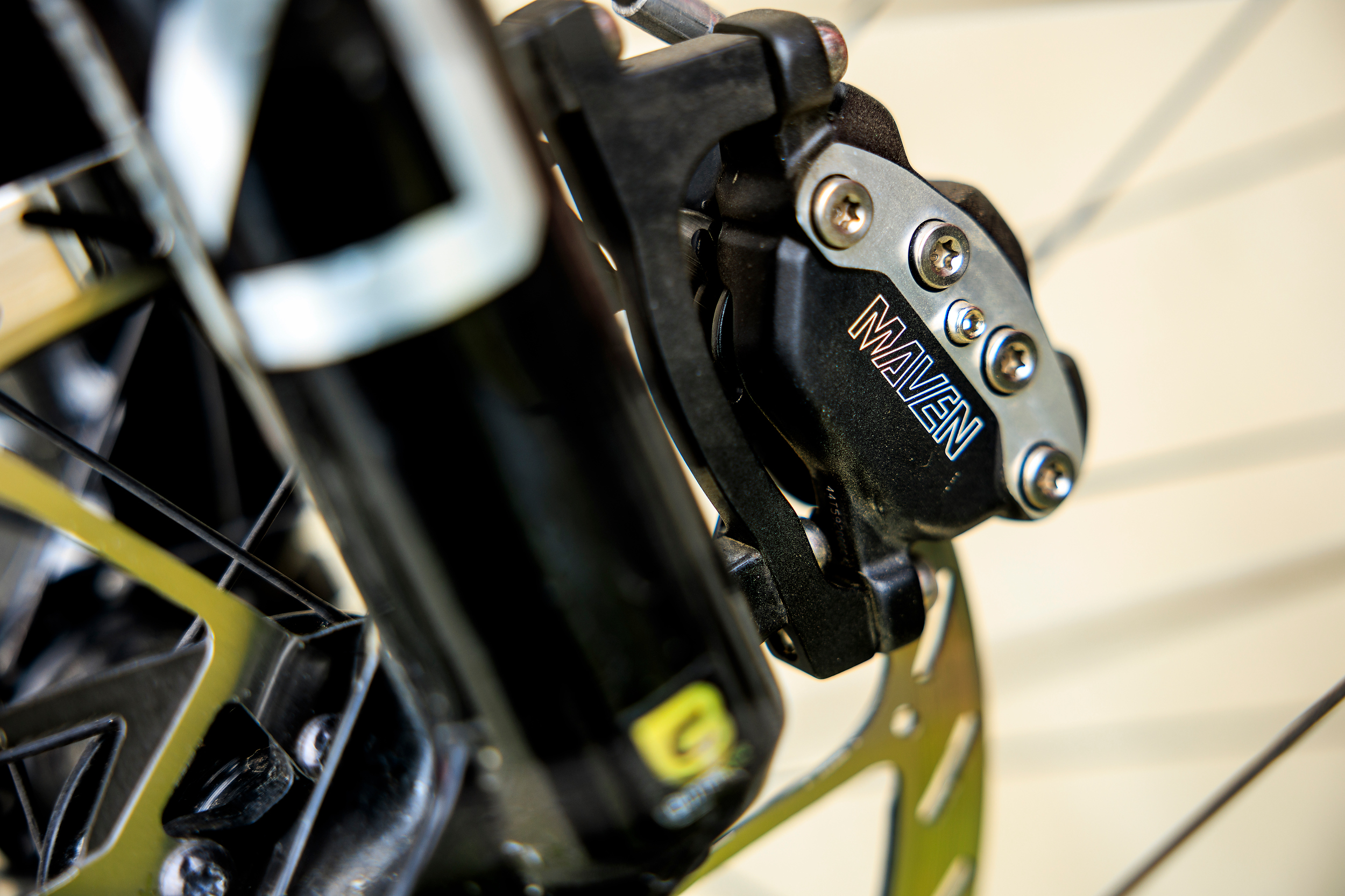
One compatibility note worth keeping in mind: the gold B1 SwingLink (identifiable by two notches on the cam body) should only be paired with B1 calipers, and the original red A1 SwingLink (single notch) with A1 calipers. Mixing them won’t cause a safety issue, but the feel will suffer. Fitting the new gold cam to old parts will result in a brake that’s far too powerful and aggressive, while fitting the old red cam to new parts will leave you with something wooden and flat with little power on offer – because the parts simply weren’t developed to work together.
In addition to those who install the tuning kit on an existing A1 brake, because the A1 caliper retains its larger pistons, fitting the gold B1 SwingLink to an A1 system results in the most powerful Maven configuration possible, lighter lever feel, with a slight boost in peak power at full stroke. Not a bad outcome if you’re after maximum grunt.
In my time on the B1 Mavens, they delivered consistent, well-modulated stopping power without fade on long descents. The original Mavens performed well too, but only once you’d adapted to them. The B1 removes most of that adjustment period. Riding with this much braking power available still means rethinking habits. Braking later into turns, going deeper into steep sections before loading the lever. Every pull feels the same. That consistency builds confidence and means you can really rely on them. After a few weeks, I prefer the more modulated feel of the new Maven. They still have all the power of the original Maven, but it gets delivered in a more refined manner.
KS Rage Circuit Dropper Post
Words Liam Friary
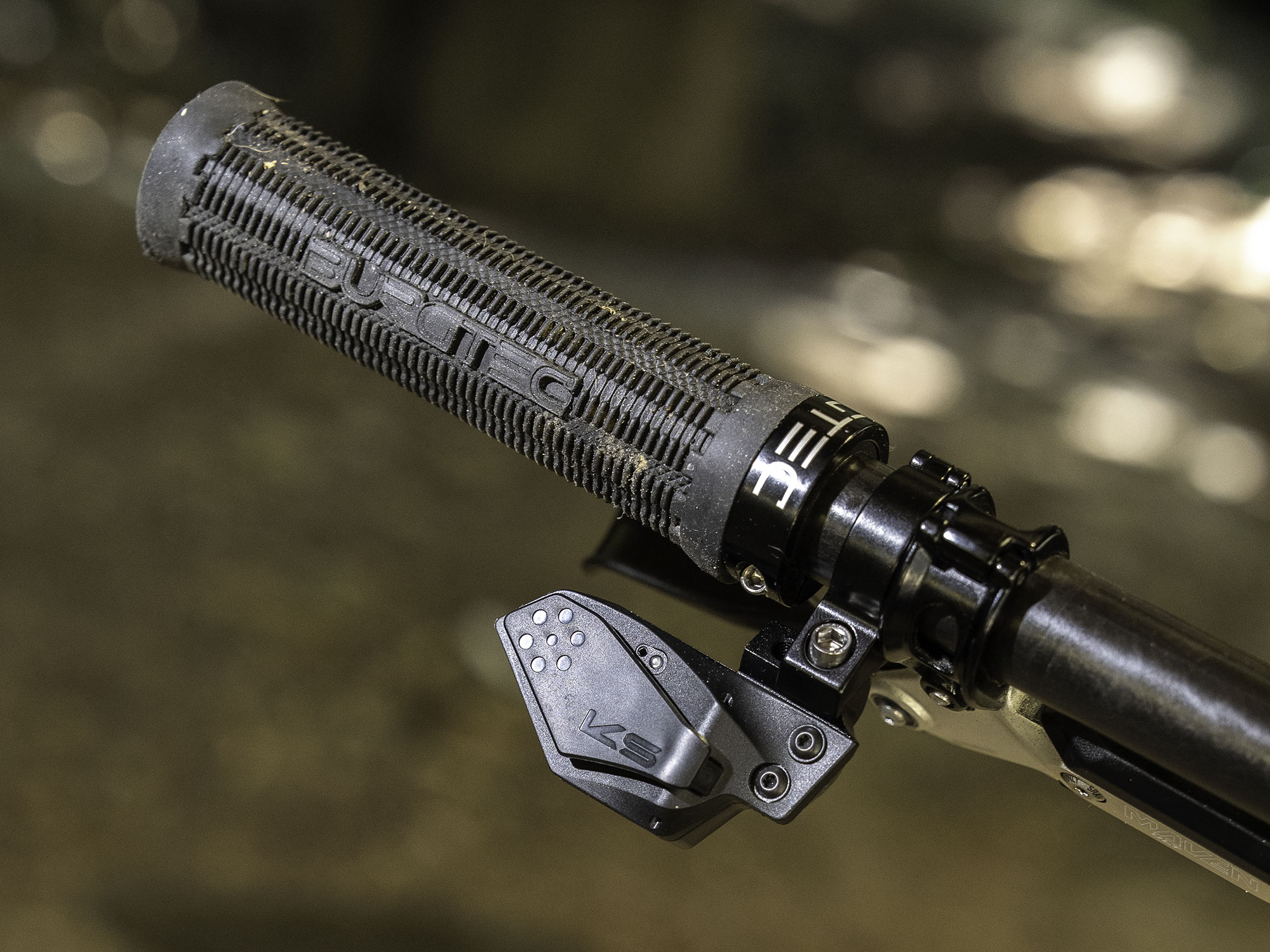
Wireless droppers are in vogue lately, and KS has thrown a great one for a good price point. Let’s start with what makes this thing tick. Much like the brand’s cable-actuated posts, the Rage Circuit has a simpler design and slots in below the LEV Circuit (top-tier) in terms of price. It’s much cheaper than the LEV Circuit, however, still shares what appears to be the same head design, battery, electronics, remote, and overall aesthetics as its more expensive sibling.
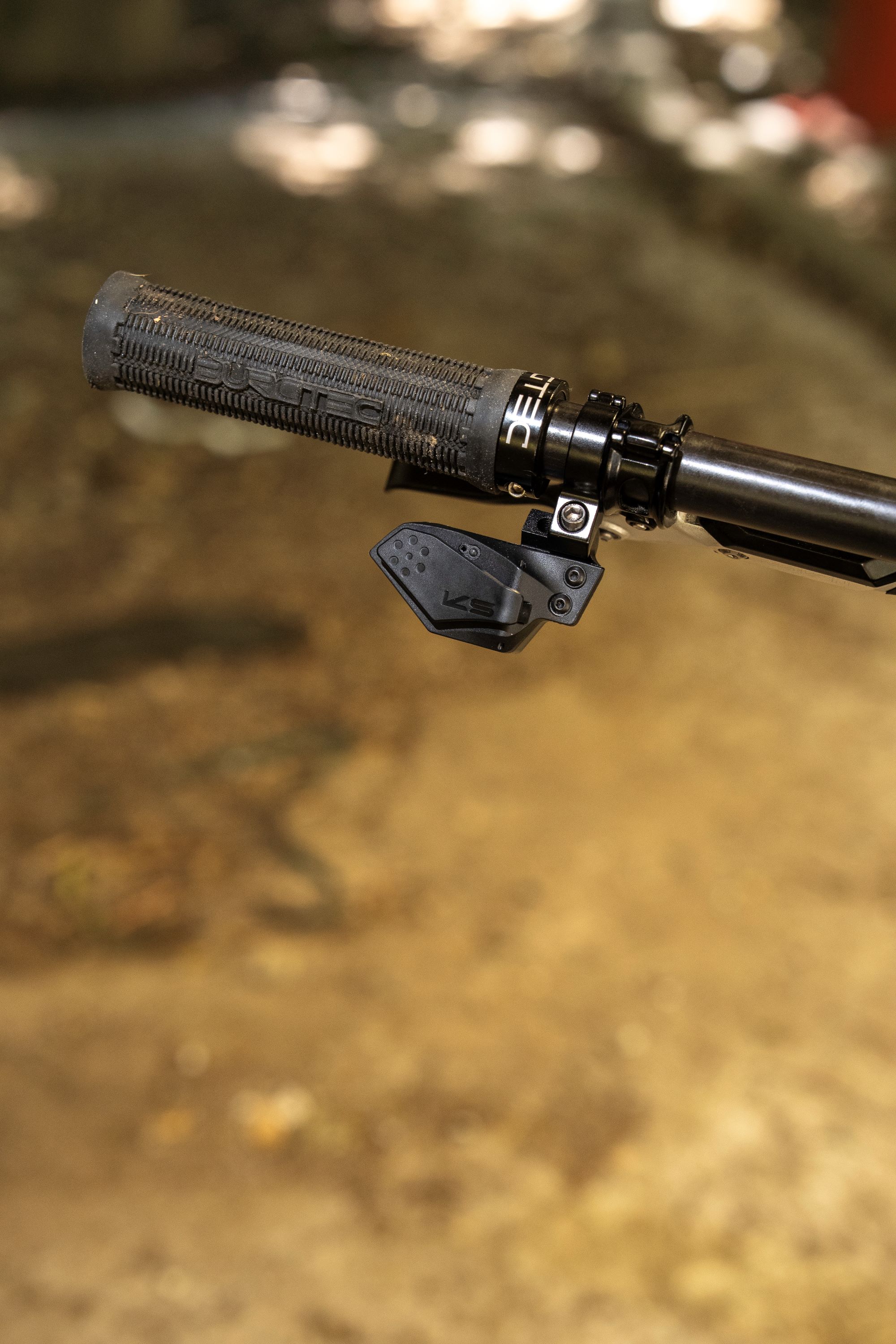
This setup is simple and hassle-free. There are no cables, housing, or internal routing, just the remote and the post. For me, the installation process was a real breeze. Drop the post in, clamp it down, attach the remote, and you’re all set. It took less than five minutes to complete. In contrast, wrestling internal cables through modern frames was a real pain. The entire setup took me about twenty minutes, and most of that time was spent adjusting the saddle height. The remote uses a standard CR2032 battery, which should last eight months or more, with an LED that flips when it’s time for a swap; the light changes from green to red. You can grab a spare battery from any dairy, petrol station, or supermarket if needed. I’ve had that happen a few times, so it’s worth having a spare and double-checking the battery life or having a spare stashed before you roll out. The post has a rechargeable battery that slots in conveniently. Everything you need is included in the box: remote, battery, charger.
The KS Rage Circuit post is available in 30.9mm and 31.6mm versions, with travel options ranging from 120mm to 180mm. KS has thoughtfully considered modern geometry, ensuring that total post lengths should fit most frames without any issues. The Rage Circuit also uses the same wireless remote as its more expensive sibling, which employs KS’s proprietary 2.4GHz wireless communication system. Conveniently, the rechargeable 450mAh battery is stored behind the seat clamp, keeping things tidy. KS estimates that the post will run for up to eight weeks on a single charge under normal use, and it takes approximately 4.5 hours to top up with the included charger.
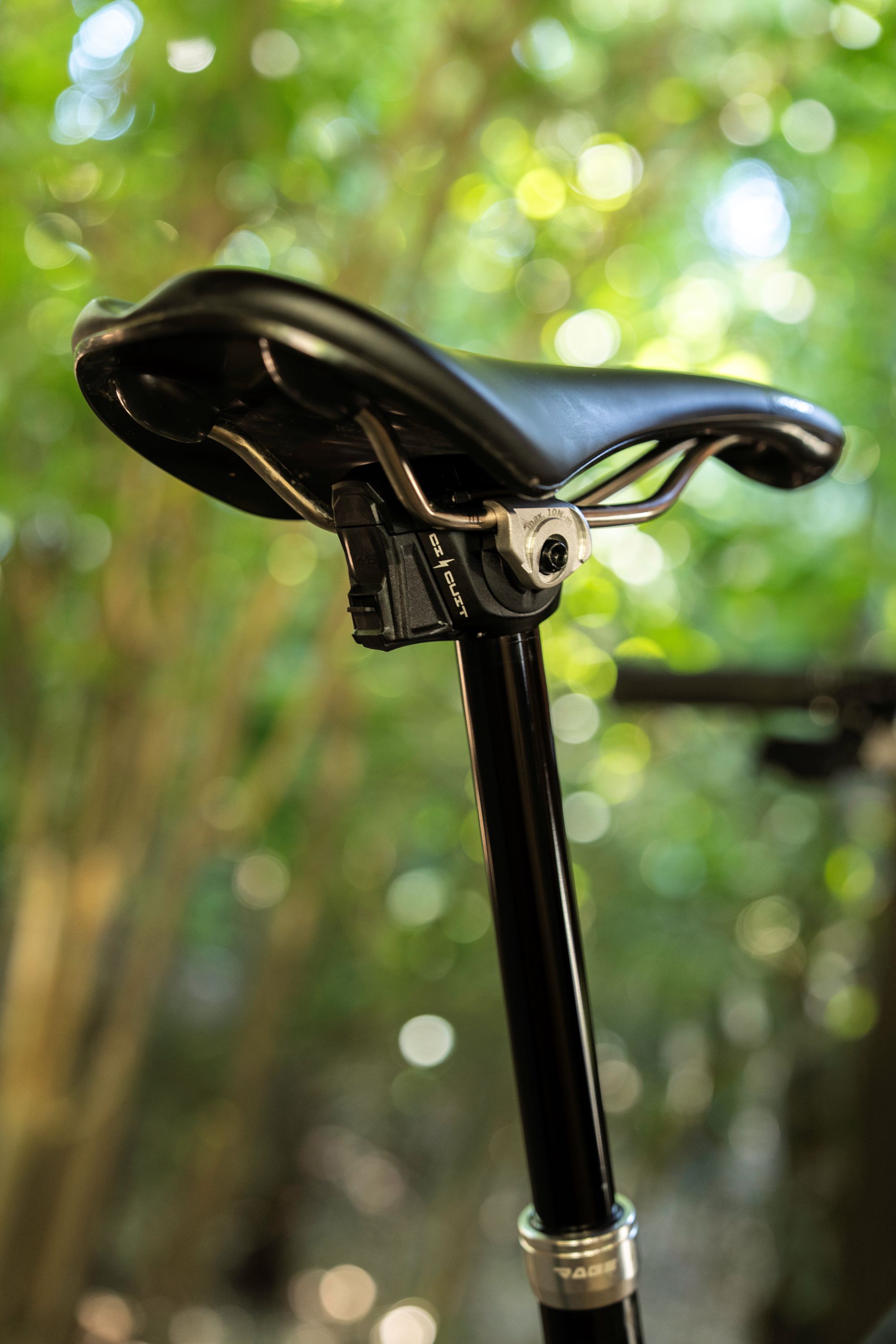
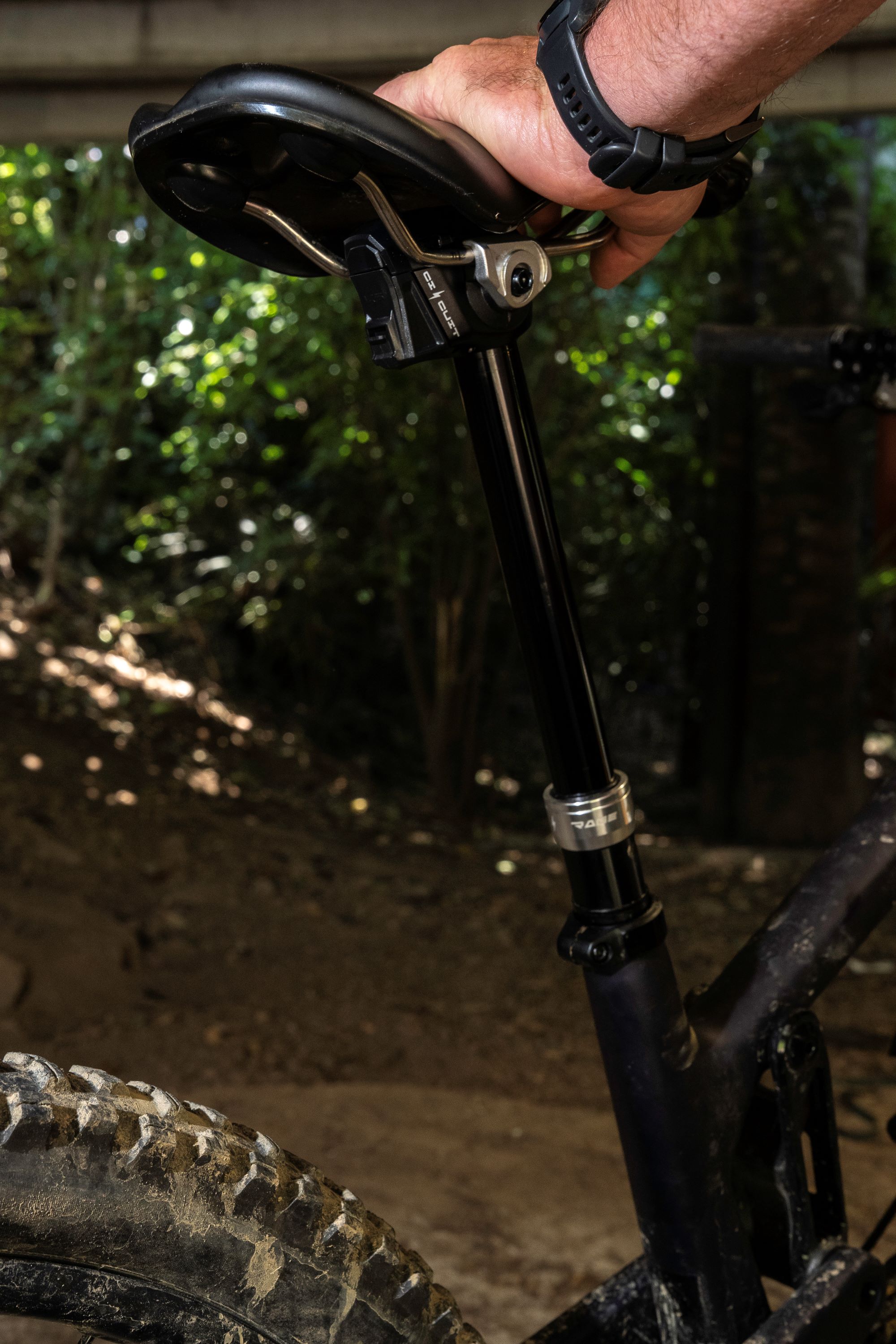
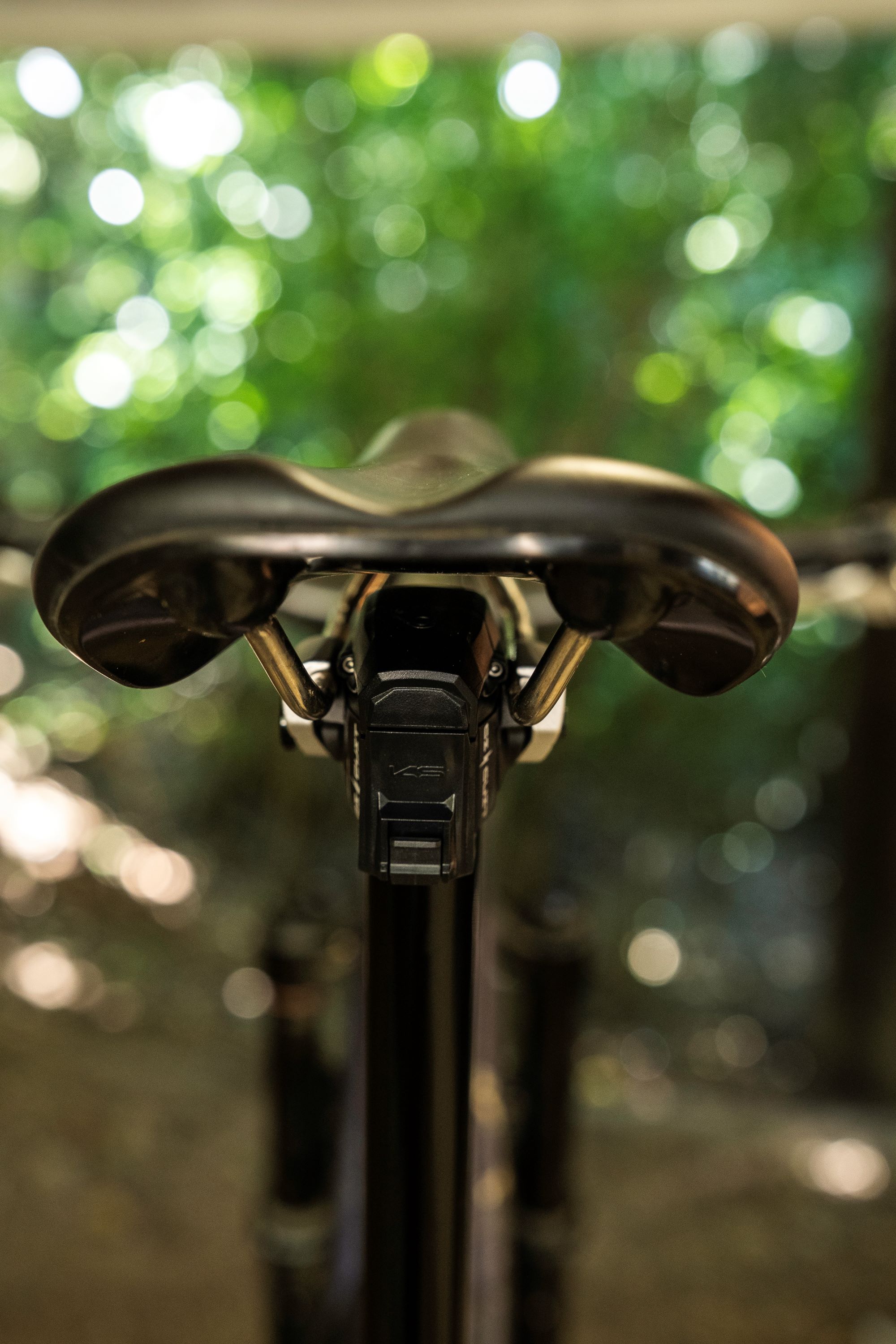
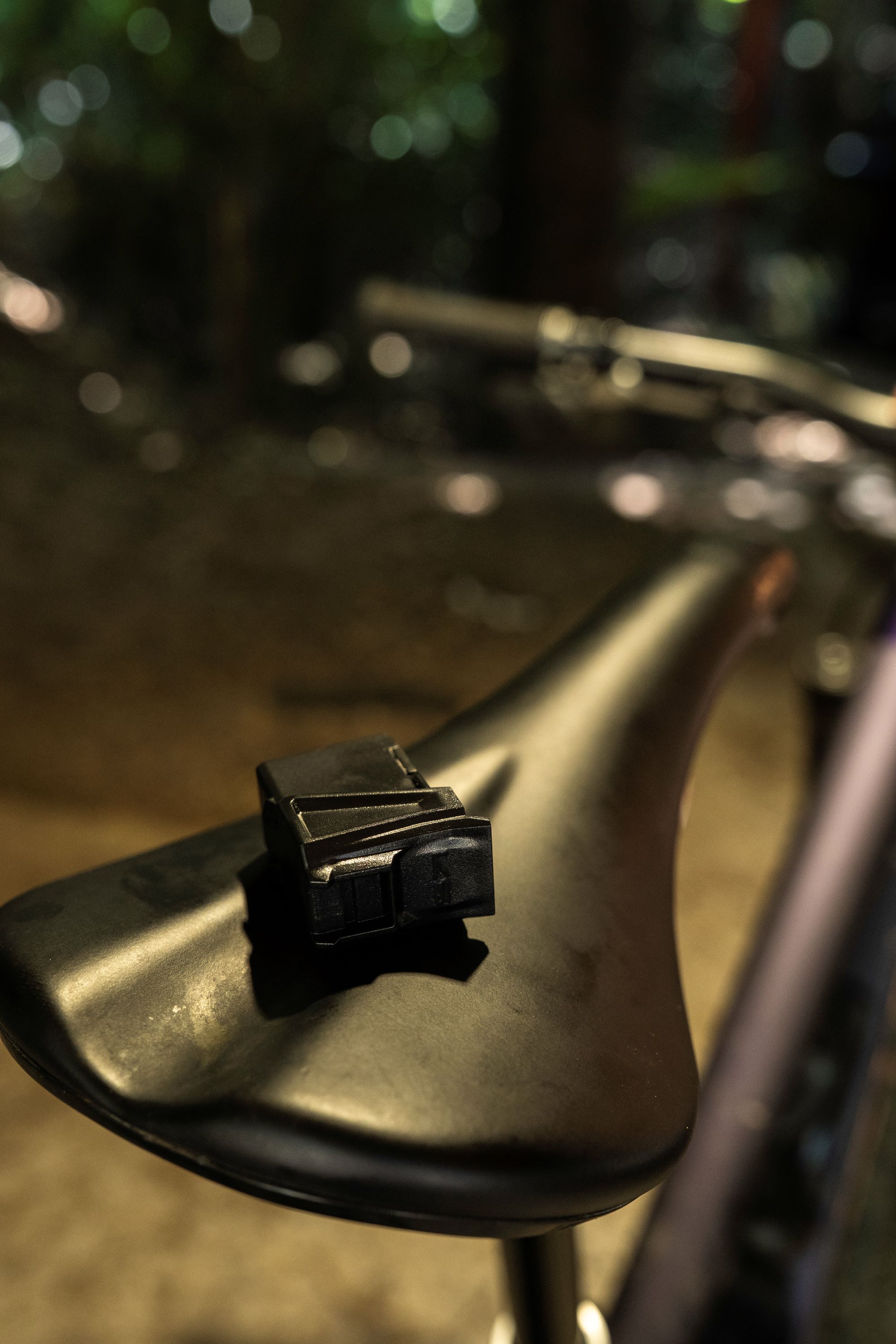
Now, let’s talk about how this post performs on the trail. The actuation is incredibly smooth and light. There’s an almost effortless sensation as the post drops when you press the remote button while weighted on the saddle. It doesn’t resist at all. I’ve been using wireless dropper posts for several years and highly recommend them.
During a recent test bike, I actually forgot about how much more I use the electronic version compared to the mechanical. Put simply, you press the button, and the post drops. It’s that straightforward, and after a few rides, you stop thinking about it entirely. The remote lever itself is large and easy to reach, with a very quick response time. The amount of force required is fairly light, and the post slides smoothly out of the way without much effort. The post is also built tough. An IP67 rating means it’s dust-tight and properly water-resistant.Precision keyways keep everything stable with virtually no play. This is something I’ve been checking for religiously, and so far, there’s been nothing to report. No slop, no wiggle, just solid performance.
The Rage Circuit has some downsides. The return speed is average, neither sluggish nor lightning-quick. When it’s time to raise the seat for a climb, hold down the remote to return it to full extension. The Circuit is a little less eager to fully extend. Of course, not everyone wants a super-speedy post, and I wouldn’t call the Rage Circuit slow at all–it’s just not the fastest out there. If you’re coming from a post that rockets back to full extension, you might notice the difference. But wouldn’t have any issues coming from a cable actuated post. It gets the job done, just not with any particular flair. The remote could be a little better. Don’t get me wrong, it’s functional and does what it’s meant to do, but the construction feels a touch flimsy. It’s not that it’s going to fall apart on you. The button action is fine, and the ergonomics are decent, but the overall build quality lacks a touch.
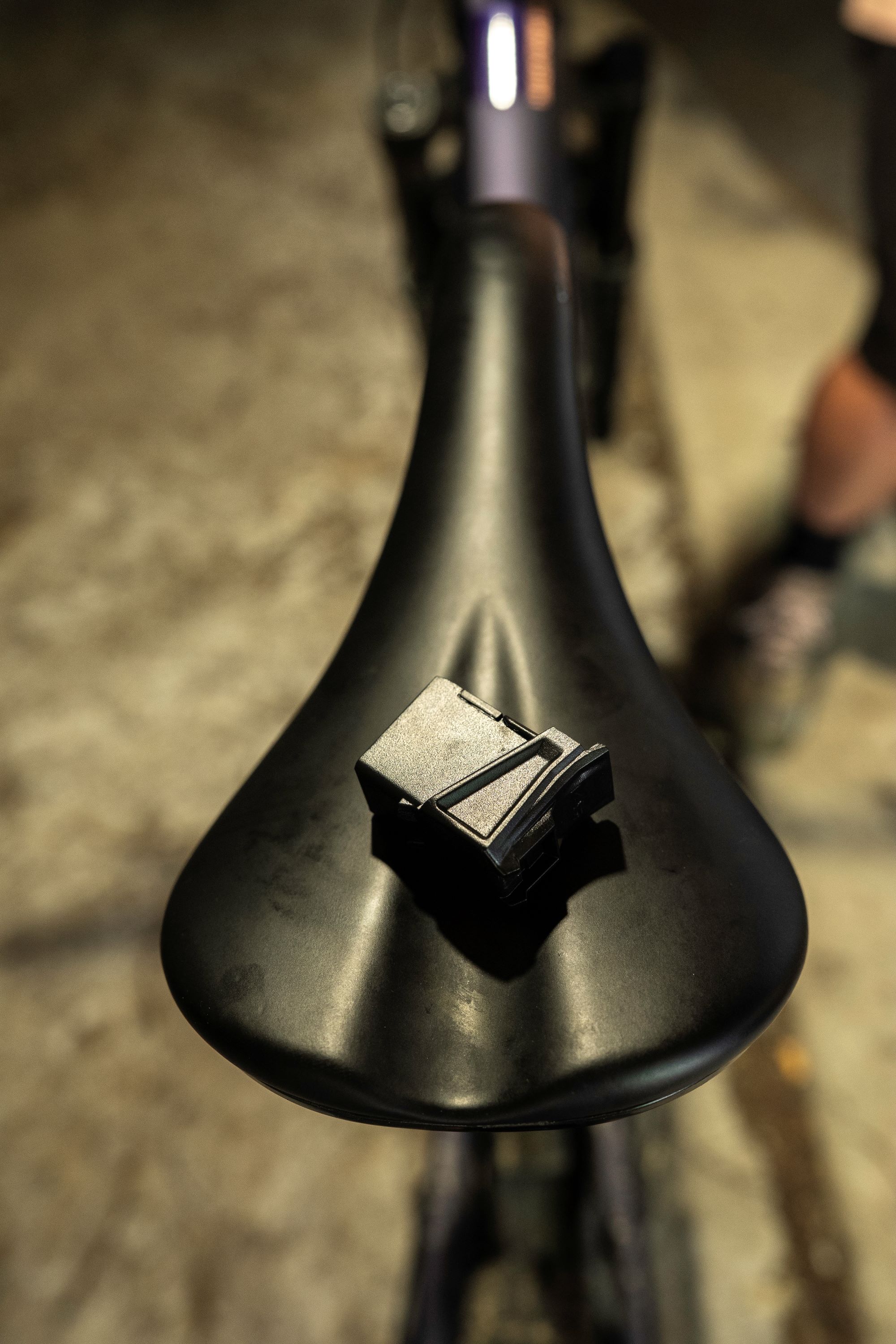
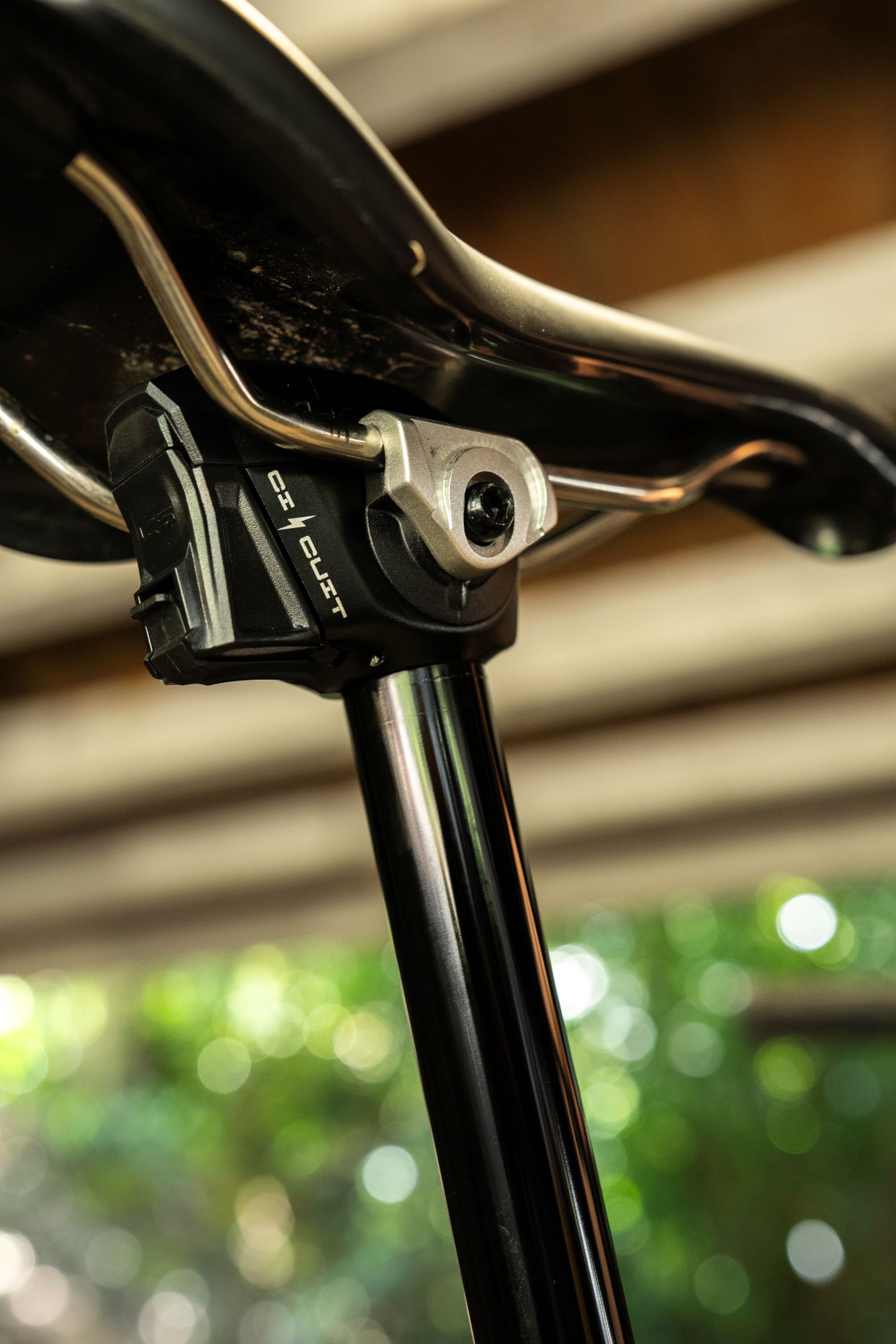
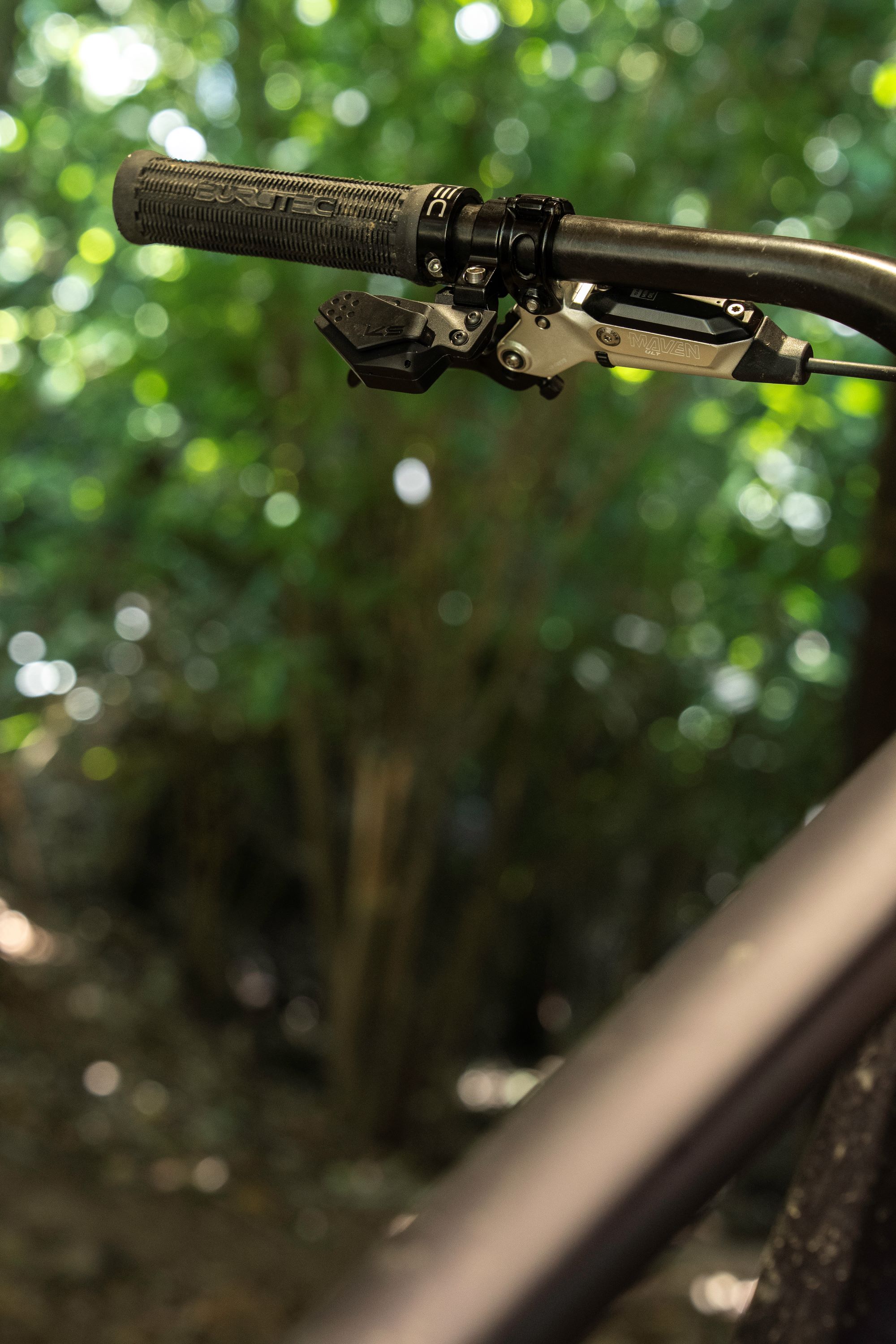
The price is bloody good value for a wireless dropper post and perhaps one of the cheapest out there. In saying that, wireless convenience does come at a cost, however. If you’re building up a new bike or already running wireless shifting, the Rage Circuit makes more sense. But if you’re thinking about replacing a perfectly good mechanical dropper, you’ll need to really value that cable-free experience. One thing worth mentioning is the serviceability. KS has a decent reputation for support. The post uses their proven hydraulic valve design, which sits at the top of the unit. The cartridge is easy to replace should the need arise. While time will tell how long-term this holds up, the company has a solid track record with products, so I would back them.
After several months of riding, the Rage Circuit has been rock solid. The connection between remote and dropper never drops signal or acts up. The actuation remains smooth and consistent, and the post hasn’t developed any play or quirks. It just works, which is exactly what you want from a dropper. KS has delivered an impressive wireless dropper here. The
smooth action alone is worth noting, and the battery life means you’re not constantly worrying about charging. Believe me, this can suck and ruin your riding experience. Installation is straightforward, and the performance has been reliable. For riders who value smooth, light actuation and don’t want to deal with cables, this post could be a good option. If you’re in the market for a wireless dropper and want something that feels effortless to use, the Rage Circuit deserves serious consideration. When you’re out on the trail, pressing that button and getting the saddle to drop away without any resistance, you’ll improve your riding experience.

Shimano XT M8250 Groupset
Words Lester Perry
Images Thomas Falconer
RRP $2975
Distributor Shimano NZ
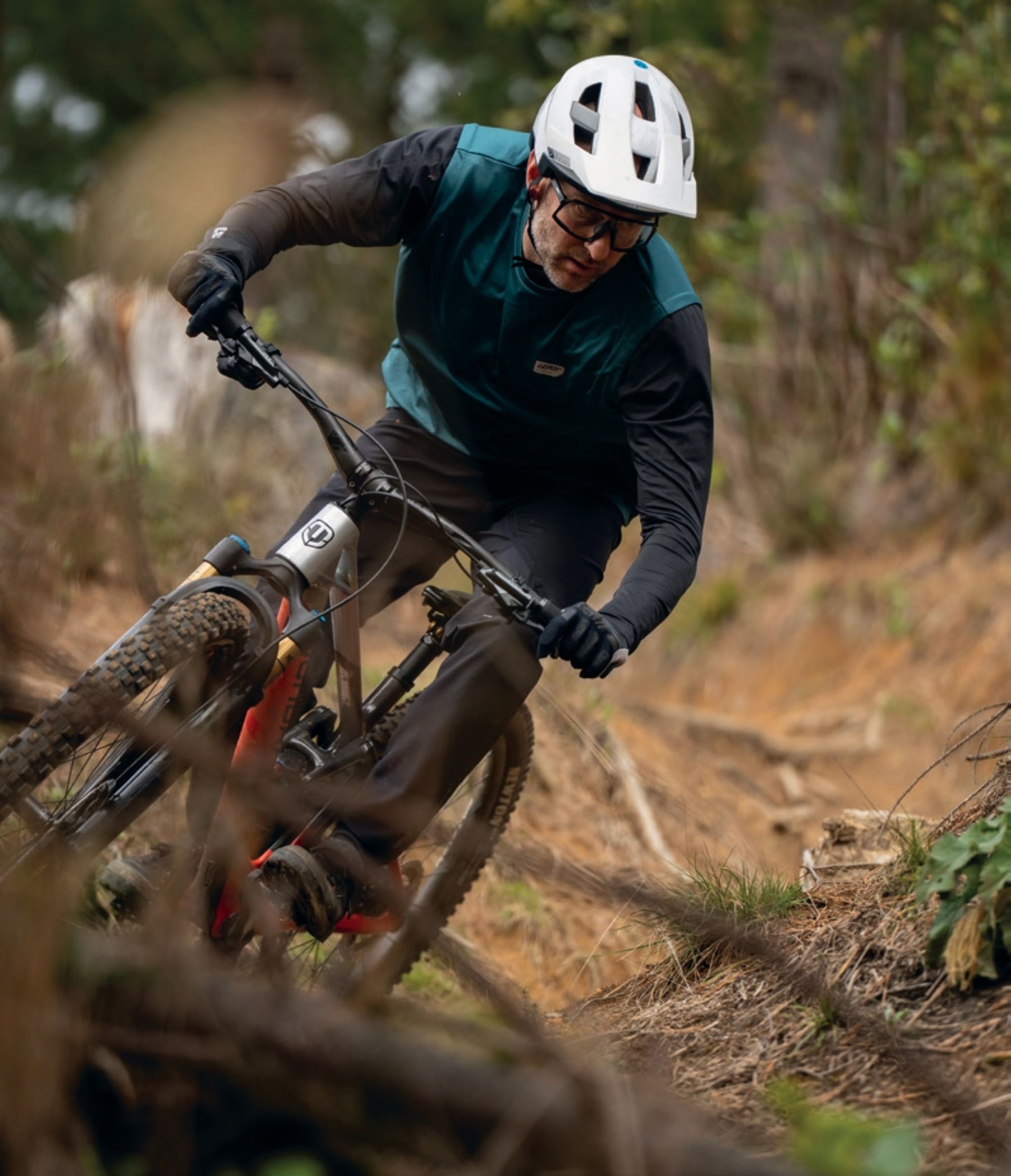
Developed in conjunction with the Yeti factory team, their team of “skunk works” riders, and feedback from riders globally, this new groupset brings Shimano to the fore—particularly in the drivetrain department. Arguably, it’s taken a very long time for this release, but it’s fair to say they’ve launched a highly competitive grouppo that, like its predecessors, is sure to become a “working man’s favourite”.
This isn’t Shimano’s first waltz with an electronic drive train, though. Back in 2016, they launched the original wired version, M8050. It worked OK and was well ahead of its time, but the mess of wires, weight, and a shifter that only a mother could love, meant it wasn’t widely adopted.
While Shimano’s red friends (that’s SRAM if you hadn’t realised) went all-in on proprietary parts, with a drivetrain requiring a complete ecosystem of components in the form of their AXS transmission. Shimano’s new XT Di2 is refreshingly simple. No need for a specific styled frame dropout; no need for a particular chain or cassette. It’s designed to easily upgrade from a mechanical system with minimal faff and far less money than needing to buy into a complete system.
For bikes running existing Shimano 12-speed drivetrains, the jump to XT Di2 is as significant as you want it to be. At its most basic, entry can begin with purchasing a shift kit consisting of a derailleur and shifter, including battery and charger, and a chain quick-link. If a new cassette and chain are required, there are a couple of tweaks to the newly released cassette, but nothing drastically different from the previous XT, and all key components are compatible across previous Shimano 12-speed ranges.

XT M8250 Drivetrain
Derailleur
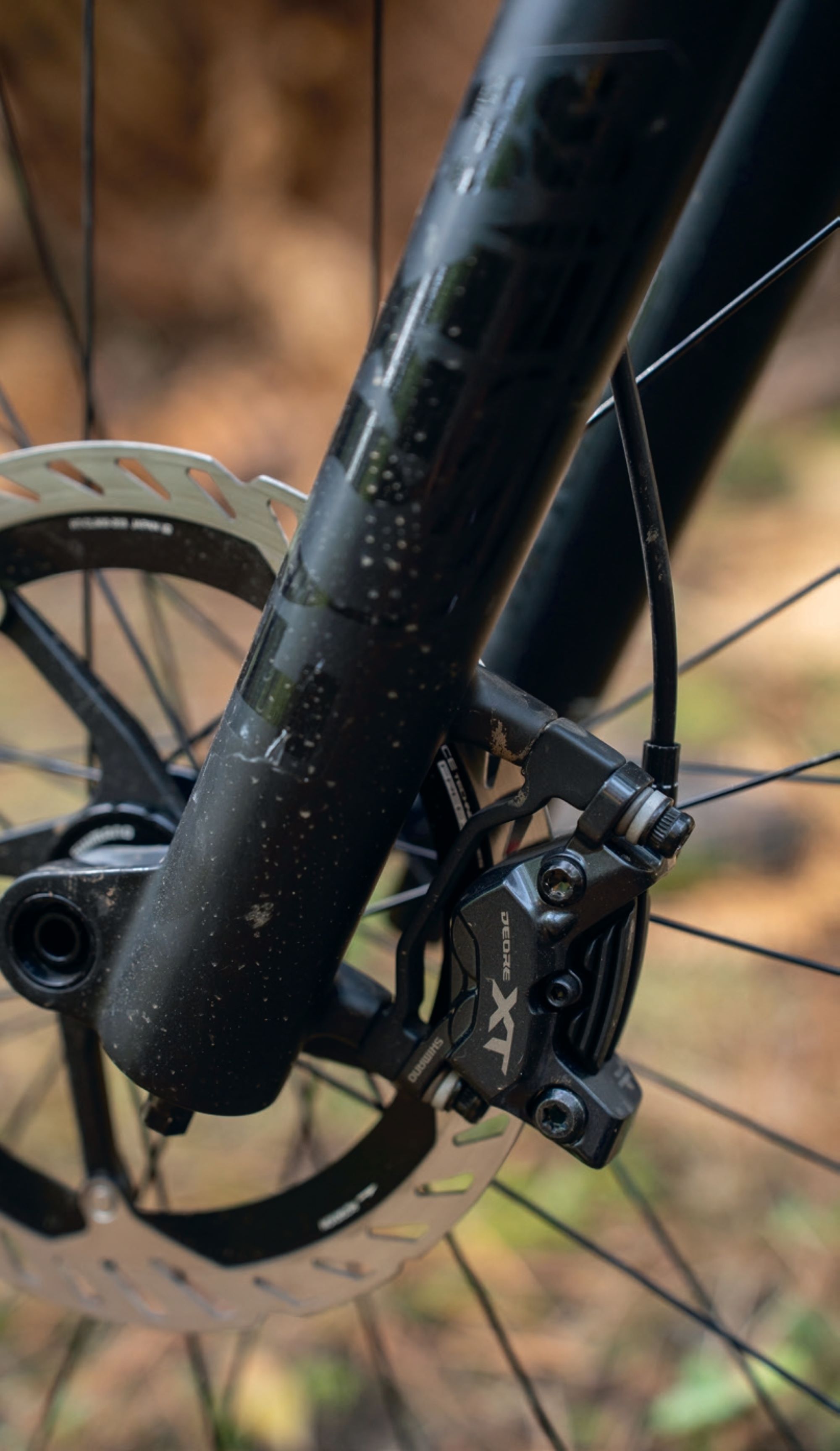
Durability is one of the core elements Shimano strived for in this redesign. While they don’t promote that you stand on it, you can seemingly smash it on a rock and it will be fine. The parallelogram sits closer to the frame than the competition, and the revised chain stabiliser (previously clutch) sits a significant 16mm further inboard than the competition. The overall shape of the derailleur is wedge-like, designed to glance off an obstacle, disengage the servo, allowing it to move with an impact, then snap back into place and reengage once the obstacle passes. Given how easily the XT mechanical derailleur was bent during impact, this complete revision— and its durability—will be welcomed by anyone looking for confidence in their investment. Shimano launched the groupset to dealers at a ride camp in Queenstown in late February 2025; the ideal destination to test the real-world durability of the drivetrain and brakes before it landed in their stores. Queenstown’s rocky trails saw two bike mechanics smash derailleurs into rocks at different times. Knowing the level of impact a derailleur should be able to withstand, and how they’d just well exceeded this, they feared the worst; worried they’d be returning a smashed derailleur to the Shimano team. This wasn’t the case, though, and the units continued their ‘zit-zit’ noises and flawless shifting. The proof was in the pudding.
Because they began with a completely clean slate, rather than working with an existing battery style, the design wizards at Shimano managed to squeeze the derailleur battery into the centre of the parallelogram, keeping it well out of harm’s way. Installation and removal of the battery is unique; a cap on the base of the derailleur slides off, allowing the battery to slide out of the bottom of the derailleur body. The battery cap provides upward tension on the battery contacts and the rubber seal surrounding them. Shimano’s North American development team commented that this provides a water-tight seal around the terminals. However, the rest of the battery is open to whatever elements can make it into the battery cavity. So, while the terminals remain dry and clean, the rest of the battery can be wet and dirty after a mid-winter slop fest. I can’t see any way, unless intentionally, that the battery could be damaged in its home within the derailleur. Even the way that the battery door slides into place means that even with a hard impact, it should stay put; it also helps provide some damping to a direct blow.
The battery itself is a tidy little 310mAh versus the SRAM 300mAh. Shimano claims that during testing, their slightly larger battery, combined with a more efficient system, offers 340km of riding vs 230km of the SRAM, under identical test conditions.
What, no UDH? As much as the UDH derailleur has become commonplace—and for good reason—there are still a considerable number of frames available without one. Although this new derailleur doesn’t require a unique UDH hanger, it benefits from the UDH’s increased stiffness if it’s attached to one.
Two derailleur cage lengths are on offer, depending on which cassette it’s paired with: a 10-51t (long cage) or 9-45t (short cage). The 9-45t offers 10% less range (500%) than the 10-51t (510%) but achieves equivalent ratios with a smaller, 28 vs 32 tooth chainring. This ‘Compact drive’, with its smaller ring combined with the shorter cage derailleur and shorter chain, saves some weight but, more importantly, offers better ground clearance: some 8mm at the chainring, and 23mm at the derailleur—not insignificant, and totally worthy if it’s being threaded through rocky terrain or deep ruts over long rides.
The cassette itself is essentially unchanged, aside from some tweaks to tooth profiles increasing shifting quality a fraction, and the obvious addition of the 9-45t option with a new lockring. Yes, you’ll need a new tool for that. This updated cassette is completely backwards compatible, and fear not, if you’ve committed to a ‘Compact drive’ with its short derailleur cage but want to go back to a more ‘regular’ setup with the larger cassette and chainring, this can be achieved with a simple swap to the ‘long’ derailleur cage, rather than necessitating a completely new derailleur.
Clutches are out, springs are in. Enabling the slimline profile of the front edge of the derailleur is the change of the tensioner mechanism. Gone is the venerable clutch, replaced by a much tidier dual opposing spring stabiliser. With a claimed 72% increase in tension and better chain wrap around the cogs, there’s now better shifting and less ‘skipping’ of gears. Shimano claims this new system is service-free, and its performance won’t degrade over time. If this proves to be the case, then this change in chain stabiliser will be welcomed by anyone who’s dealt with a dicky clutch in the past.
The combination of the new chain stabiliser and a smaller b-tension gap (distance from top jockey wheel to cassette cog) has enabled increased chain wrap, meaning a faster, more positive gear shift, and less of the chain bouncing off the top jockey wheel. The jockey wheels aren’t needlessly overengineered and, with no holes in them, there’s no chance sticks or debris can go through the cog, jamming it up.
In my thinking, the new shifter is a perfect evolution of the XT mechanical shifter (it’s not even worth mentioning the previous M8050 Di2 shifter!). Rather than an entirely new and unfamiliar shifter system, Shimano have taken the familiar fixings, paddle layout and overall styling of mechanical XT- 8100 and brought it into this century with thoughtful refining and class-leading tech.
The shift paddles are in a similar position to previous, although the ‘up’ (harder) shift paddle is slightly more tucked in behind the ‘down’ paddle. Its positioning seemed odd at first, but I quickly forgot about it, never giving it another thought; it just worked as it should. Each independent paddle has a degree of adjustability and, when combined with the overall adjustment of the complete shifter unit, i.e. upward/downward and inside/ outside on the handlebar, there’s a decent level of customisation to suit all preferences.
Another nice carryover from the mechanical is the two-step multi-shift; depress either shifter paddle and there are two clicks as it moves through its travel. That’s two shifts, or hold the shifter on a stop to shift multiple gears.
The shifters light action does take some getting used to, and I initially found I was over-shifting, leaping to gears beyond where I wanted to be. It didn’t take long to become accustomed to the light action, and I found myself shifting gears on a whim. The shift speed is so fast that it’s a case of thinking about a shift, tapping the paddle and almost instantly being in the next gear. Anyone familiar with road Di2 will find the feeling familiar.
On the rider-facing edge of the shifter is a small button for on-the-fly adjustment. This button allows for a level of adjustment within the unit while riding, no need to open the e-Tube app on a phone to fine-tune a shift that’s not quite perfect, or switch into auto-shift mode (when paired to an EP-8 e-bike motor). The button can be further customised in the e-Tube app, where a host of other settings and customisations are available, from shift speed or shift paddle customisation to specific eBike functions.
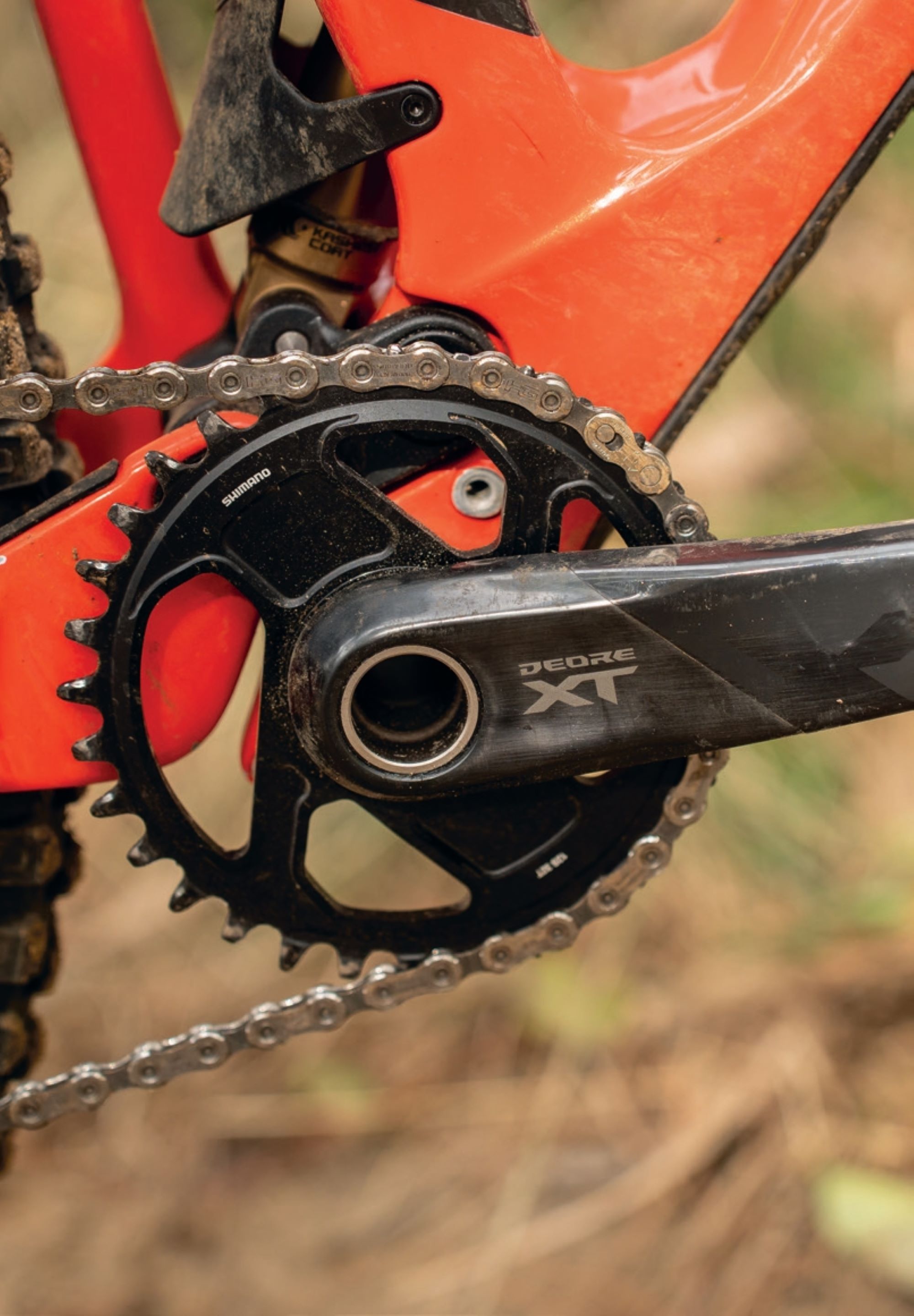
Crankarms remain largely unchanged from previous, aside from tweaked graphics. The refined one-piece chainring is updated and specifically sculpted for impact resistance, particularly when feet are parallel, ensuring it can withstand larger impacts than the previous version. The new chainring has an offset, giving a 55mm chainline for better overall performance and efficiency. The cranks are now available in more sizes, right down to a 160mm length.
When asked about replacement parts for the derailleur, Shimano’s response was an interesting one. SRAM claims a fully rebuildable derailleur, offering replacement parts for a complete T-type derailleur rebuild. Shimano, on the flip side, utilise a standard derailleur hanger, relying on the redundancy of this to help protect a derailleur from significant harm during excessive impact. Shimano’s thinking is that if a derailleur is damaged enough not to function correctly, and a replacement hanger doesn’t solve it, then the mech itself has sustained damage significant enough that even if spare parts were available, it would likely require a full derailleur worth of parts to get it back to 100% shift quality.
Drivetrain on the trail
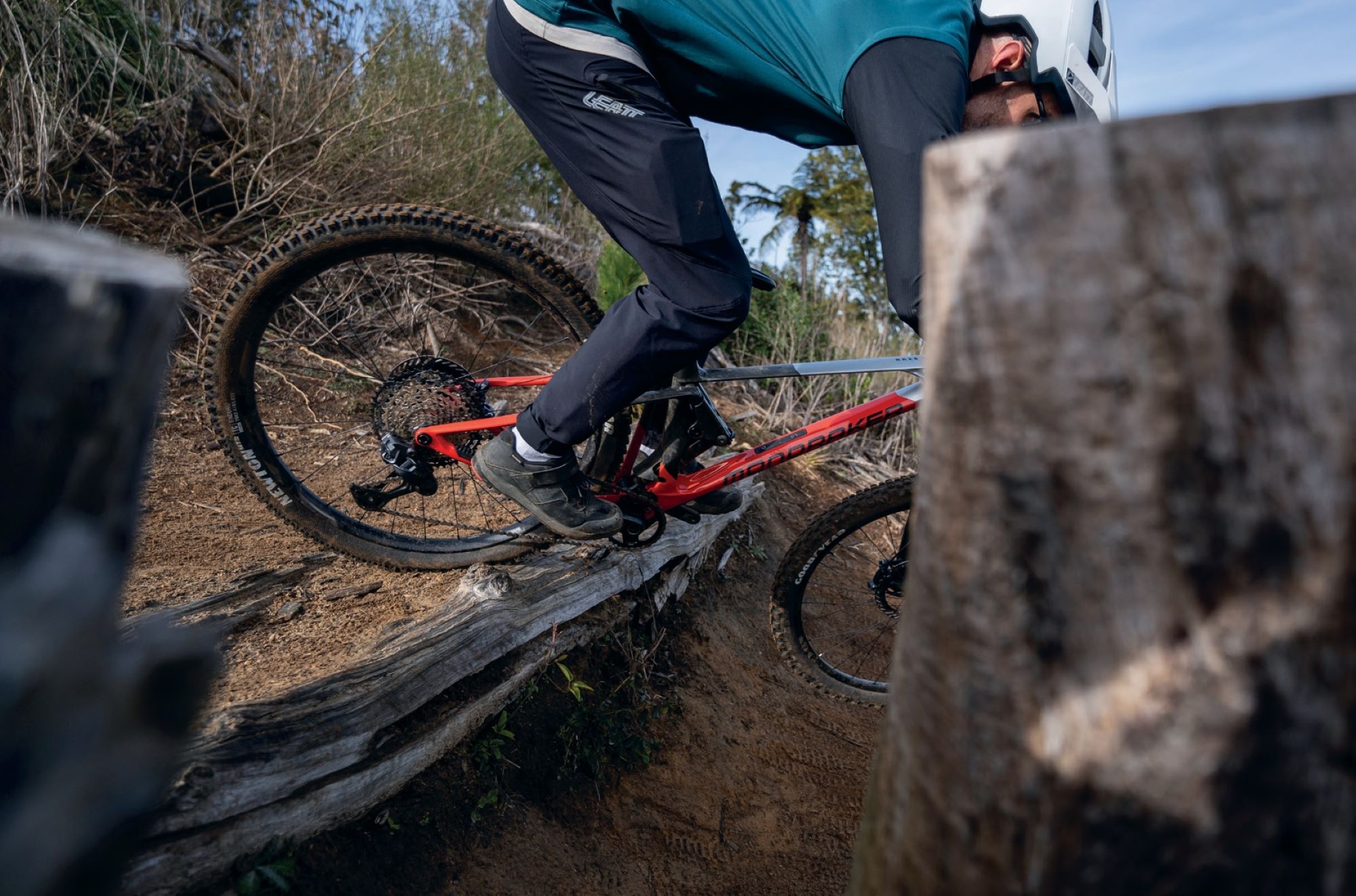
XT M8250 has a familiar feel at the pedals, and outside of the electronic shifting part, everything feels similar to the XT mechanical, and that’s a good thing. First off, as mentioned earlier, the shifter, while familiar in layout, did take a little time to adjust to; the action is just so light.
Shift speed is fantastic and totally noticeable. I find myself shifting more, and whenever I want, rather than having to think early about when I need the gear to be engaged—we’re talking fractions of a second here but it makes a difference. With this XT, it’s just a simple thought of ‘I want to be in this gear’ and quickly shifting to it, nearly instantly. In situations where shift speed is key, on unfamiliar technical trails or rolling terrain with surprise features, where a prompt shift is paramount, the XT Di2 delivers.
The new chain stabiliser does its job well. I’ve had no dropped chains and, although it’s claimed to have much higher (75% more) tension than the clutch of old, it seems much smoother through its motion. One thing I have noticed is a subtle, dull ‘thud’ at times after the bike has been near full compression. Shimano tells me this is the derailleur cage returning to its neutral position and isn’t noticeable on all bikes.
I haven’t tested the impact resistance of the system as yet, but I’ve dragged the derailleur on the side of a few ruts and nothing untoward has happened. It strikes a slim silhouette and, from the reports I’ve heard, lives up to expectations when it comes to rock impacts.
During one ride, I noticed the chain exhibited almost chain-suck-like characteristics and made a strange ticking noise in the easiest two gears. Although the chainrings’ slightly revised tooth profiles decrease chain drops, with a dirty, dry chain it appears the teeth can hold on to the chain a fraction longer than ideal as the chain is rolling off them. It’s a simple fix with a clean and lube, but interesting to note and I’d be keen to do a huge 6+ hour ride in the wet to see how it reacts.
The big question on many people’s lips is this: how does this new XT compare to a SRAM AXS transmission? Shimano’s Hyperglide+ system can shift 1-2 gears under full power with ease, although it doesn’t have as ‘sure’ of a feel and there’s a bit more noise to the shift than SRAM’s Transmission, however, the speed of change on the XT makes up for the extra noise. The slower Transmission shift means that at times, if I’m caught out or late to shift, I’m still between gears while powering up a section. Thankfully, it’s so solid while shifting under power that I can push hard on the pedals without any worries. The Shimano is quite different; in similar scenarios, the XT will be entirely shifted, its gears will already be completely engaged before I have any worries, whereas the Transmission may still be halfway through its shift. Each brand offers a different experience, but neither is better than the other.
While Transmission and XT Di2 have similarities, the reality is that they are fundamentally poles apart. Transmission requires buying into a complete system, where the XT Di2 is supremely cross-compatible, and the barrier to entry is low. The release of XT Di2 has been likened to an iPhone upgrade; sure there’s some new hardware but it’s not a monumental leap forward. In the case of Di2, it could easily be said that this release only brings it in line with SRAM’s standard, non-t-type AXS systems that have been in the market a number of years now. With XT M8250’s crisper shifting under power, better battery life, arguably superior shifter and much greater durability, I think it’s clear XT outperforms the standard AXS. It sits alongside Transmission; there’s enough difference between the two systems not to crown one a winner, but instead they’re offering two quite different experiences and will meet the needs of different riders.
XT M8220 Brakes
As much as the new Di2 has been front and centre of this recent release, the new XT brakes deserve some serious spotlight too. The previous XT brakes were the go-to for many riders, and rightly so; they were durable, powerful and generally low maintenance, if only more consistent with their much-publicised wandering bite point. While it wasn’t a deal breaker for most, the wandering bite point wasn’t something you wanted to be thinking about, or affecting your braking, while in the middle of an enduro race run.
Thankfully, as with the Di2, Shimano have rewritten the script with an almost completely revised brake. Many of the changes not only affect the consistency and performance of the brake itself, but with changes targeting ergonomics, they’re comfier and more intuitive to use.
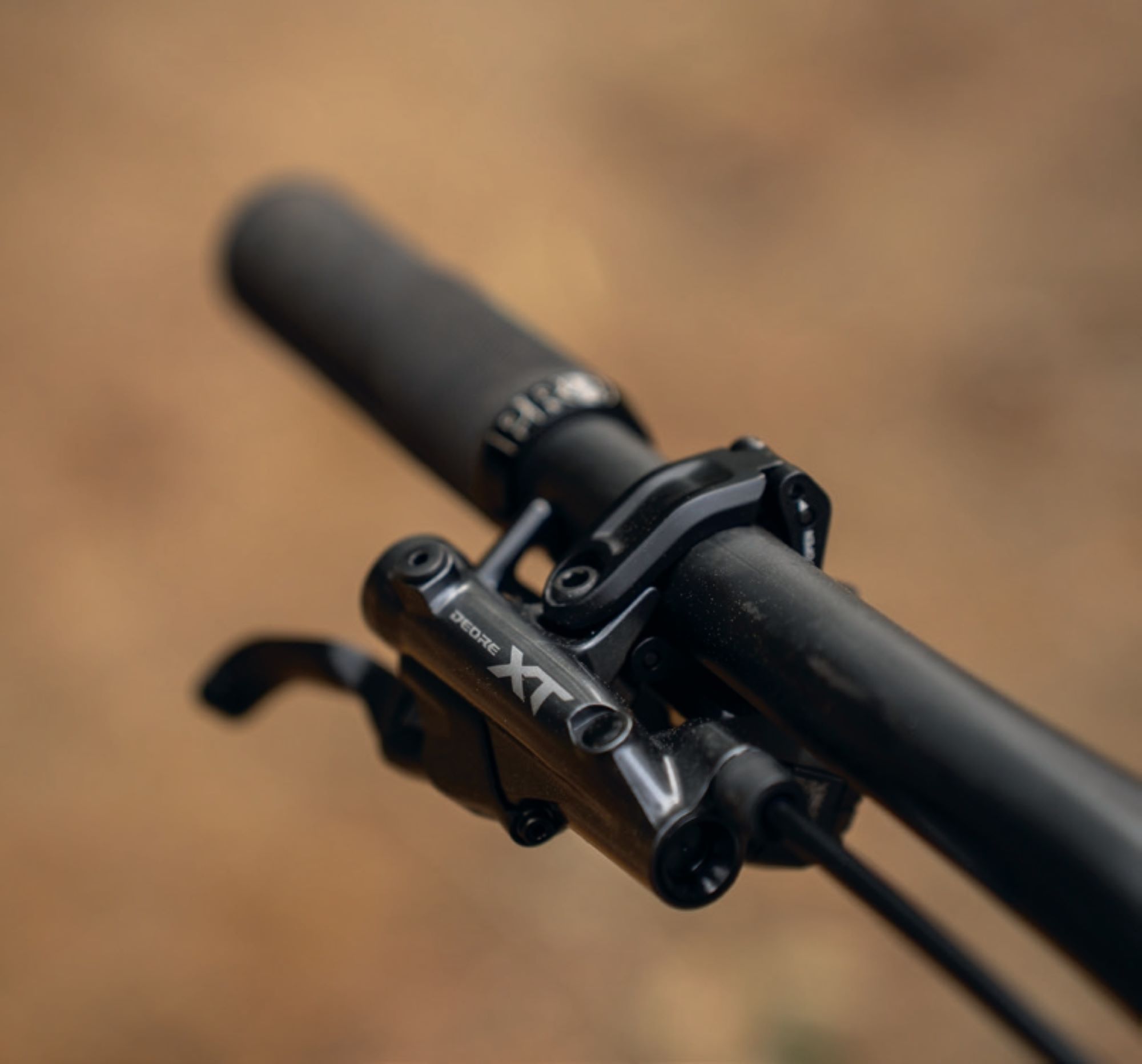
Beginning at the lever, the master cylinder has been squared up, now nearly parallel to the handlebar; the brake line exiting in a straight line, bringing it much closer to the bar. The lever pivot point has also moved toward the bar, 5mm further in than before. This change makes the lever path through its stroke more in line with the natural finger pull direction, tracking through the same path as a forefinger would as it pulls the lever.
The Servowave lever has a reach adjust dial and a ‘free stroke’ adjuster. Servowave has been featuring on the XT brakes, as well as some Shimano road brakes, for some time. Essentially, it amplifies the lever input as it’s pulled. I’m a massive fan of the feel and power it creates. The Free Stroke adjustment is more effective than in the past, but it still doesn’t offer a lot of range.
The entire system is filled with a new low-viscosity mineral oil, and it gets a new gold colour so as not to be confused with the previous red mineral oil, which isn’t compatible with these brakes—nor is this new fluid compatible with older brakes. The new oil is said to be much more stable across a broader range of temperatures and, when combined with new piston seals, should see the end to the wandering bite point curse of the previous brakes.
The calliper is not dissimilar to the previous: a two-piece, machined unit housing a pair of 15mm and 17mm resin pistons, a switch from the ceramic of old. The differing-sized pistons enhance stopping power while retaining exceptional modulation. The new pistons are coupled with previously mentioned new seals, which are said to snap the pistons back into place more rapidly when the brake is released, assisted in part thanks to the low viscosity oil, to put the wandering bite point of old to bed finally.
The brake pads have had a slight tweak in size, helping them fit more snugly into the calliper, which eliminates the pad rattle some units previously had.
Brakes on the trail
I’ll put it out there that the old XT brakes were my favourite brakes for a long time, and if it weren’t for that pesky wandering bite point, for general use, they’d still be on my bike. I’ve been using these new M8220 brakes for a relatively short time, so I can’t speak to their true longevity, but I have gained some insights into how their upgrades differentiate them from the old XT.
First off, they have an amazingly smooth, light action. The new fluid and seals help keep the lever feeling light and consistent. The feel is less on/off than the old versions, and although you can still feel the point the pads hit the rotor, there’s more modulation there than before. This softer feel shifts the lever experience more towards that of a SRAM brake, while retaining enough of the classic Shimano feel to be familiar. So far, I’m super impressed with the consistency of the brakes, and the wandering bite point appears to be gone; every pull feels the same, even down reasonably long descents.
The lever feel is excellent; I can feel the difference in the lever path thanks to the shifted pivot point. In theory, this should make long descents more comfortable, and it is the case, although the difference is hard to quantify. The new brake line routing looks tidy, but it does increase a bit of cable slap. This is easily fixed with a little tape or a zip tie. Shimano should have angled the hoses out a tad more, maybe not to the extreme of the previous, but somewhere in the middle would have been nice. This new angle does make it easier for internal routing of the hoses, but that’s a subject for another article, and not a good one.
My stock pair of brakes came with organic pads installed, which have proved to offer a nice bite, although I’d be keen to try a set of sintered pads in them for a maximum grunt at speed.
The overall power seems fractionally better than the XT’s of old, although power means nothing without control. I feel these new brakes have far better modulation and consistency than before, so overall are a peg up on the previous XT’s across the board.
The release of the M8220 brakes puts the XT back near the top of the list for overall performance, to dollar and weight ratios. Sure, there are lighter brakes around, but they don’t have the raw power of the XT, and there are certainly more powerful brakes out there, but they’re drastically heavier. The XT strikes a sweet spot in the brake market and should continue to be the “working man’s” brake.
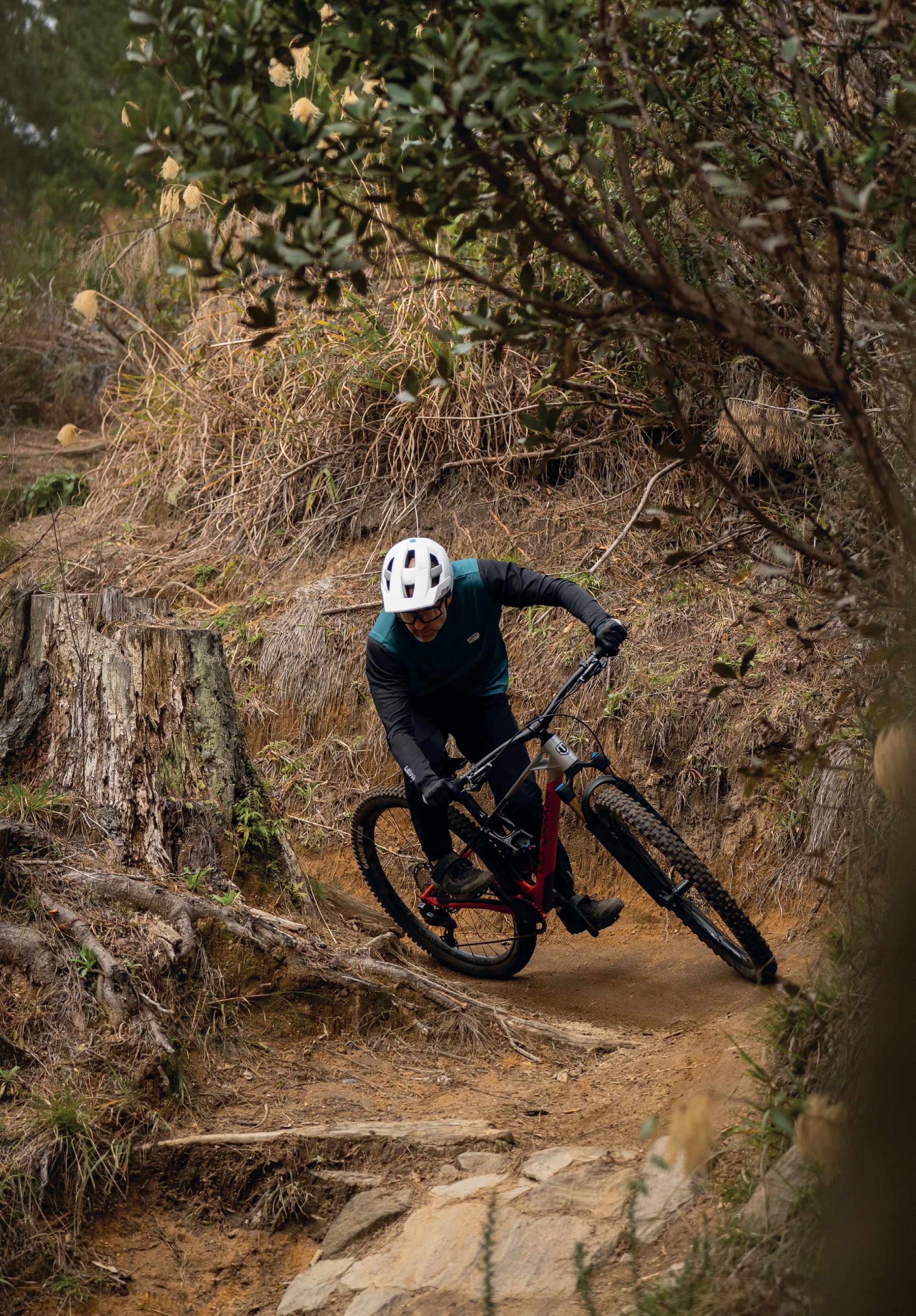

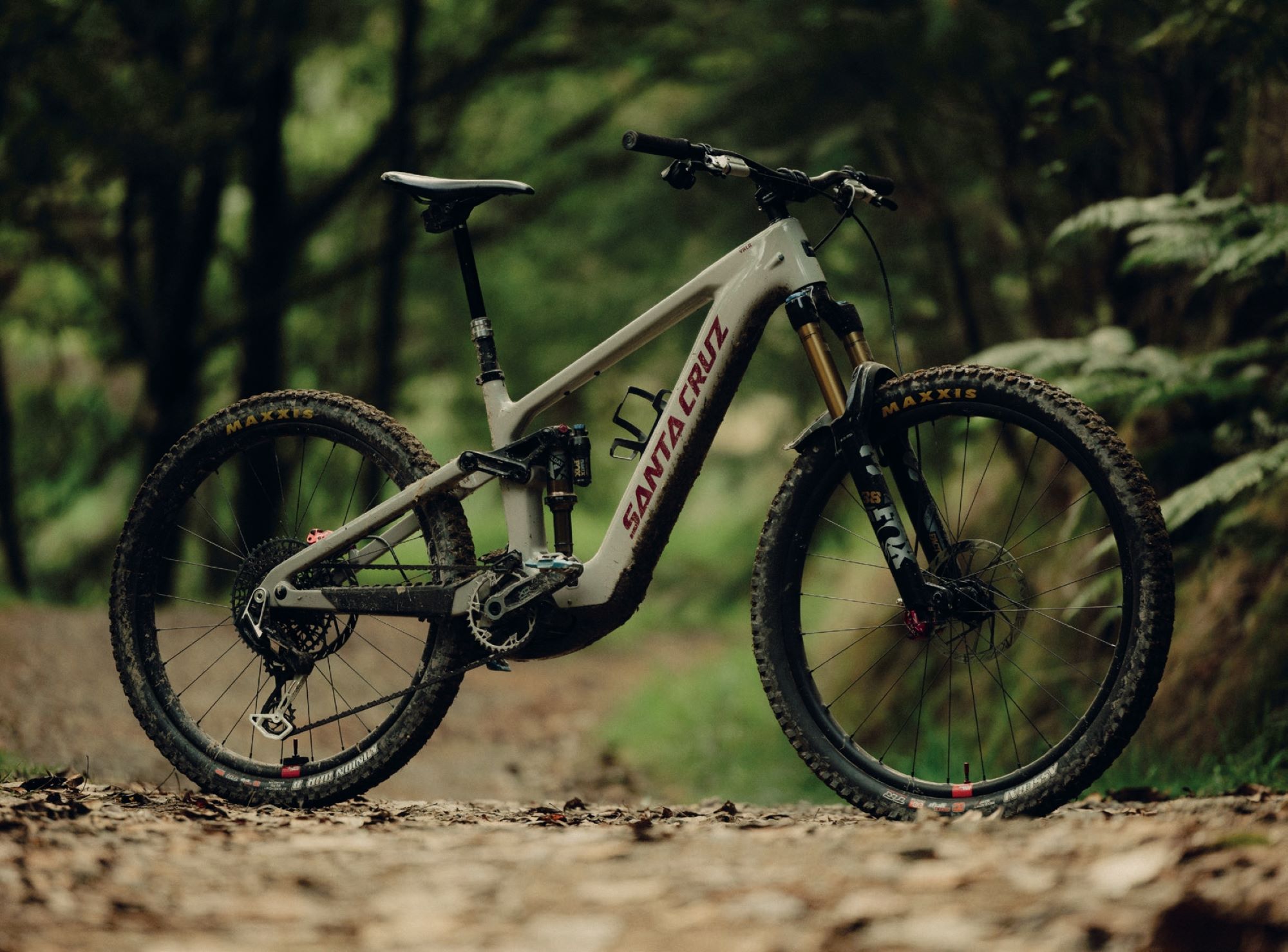
Santa Cruz Vala X0 AXS RSV
Words Liam Friary
Images Henry Jaine
RRP $22,050
Distributor Hyperformance Hardware
The Santa Cruz Vala is all about refined functionality and rugged reliability. The Vala is Santa Cruz’s first venture into four-bar suspension, and their inaugural partnership with Bosch motors. The Vala signifies a step away from the company’s signature VPP. With 150mm of rear travel, 160mm up front, and featuring the cutting-edge Bosch CX Gen 5 motor paired with a 600Wh battery, the Vala weighs in at a claimed 21.8kg for the XL frame.
The Vala’s design philosophy centres around versatility and refinement rather than reinvention. Santa Cruz describes it as ‘made for riders looking for focused performance on the best trails’. The frame utilises mixed wheel sizing with a 27.5″ rear and 29″ front, a 63.9° head angle, and includes high/low and progression flip chips for geometry adjustability—though not quite as extensive as some competitors.
What immediately strikes you about the Vala is how conventional it looks compared to many eMTBs on the market. It has a subtle aesthetic. There’s no funky integrated battery or radical geometry—just clean lines that wouldn’t look out of place on a non-powered trail bike. The Bosch CX Gen 5 motor delivers 100Nm of torque with a peak power output of 750 watts, while the 600Wh battery sits internally within the frame.
The Vala breaks VPP tradition. Whether it’s a trail bike like the Hightower, an enduro bike like the Megatower, or eMTB like the Heckler SL, all are distinctly recognisable as Santa Cruz bikes thanks to their signature twin-link rear suspension. Santa Cruz’s Vala takes a completely new approach to suspension. The classic VPP suspension is replaced with a four-bar Horst-Link design. This change was made because integrating the large Bosch motor into the existing VPP design proved too complex. Transferring the latest suspension optimisations from regular mountain bikes to the Vala was too difficult. Santa Cruz’s engineers opted for a Horst-Link rear suspension design, which gave them more freedom with the frame design and suspension kinematics. This allowed them to achieve the best ride feel possible.
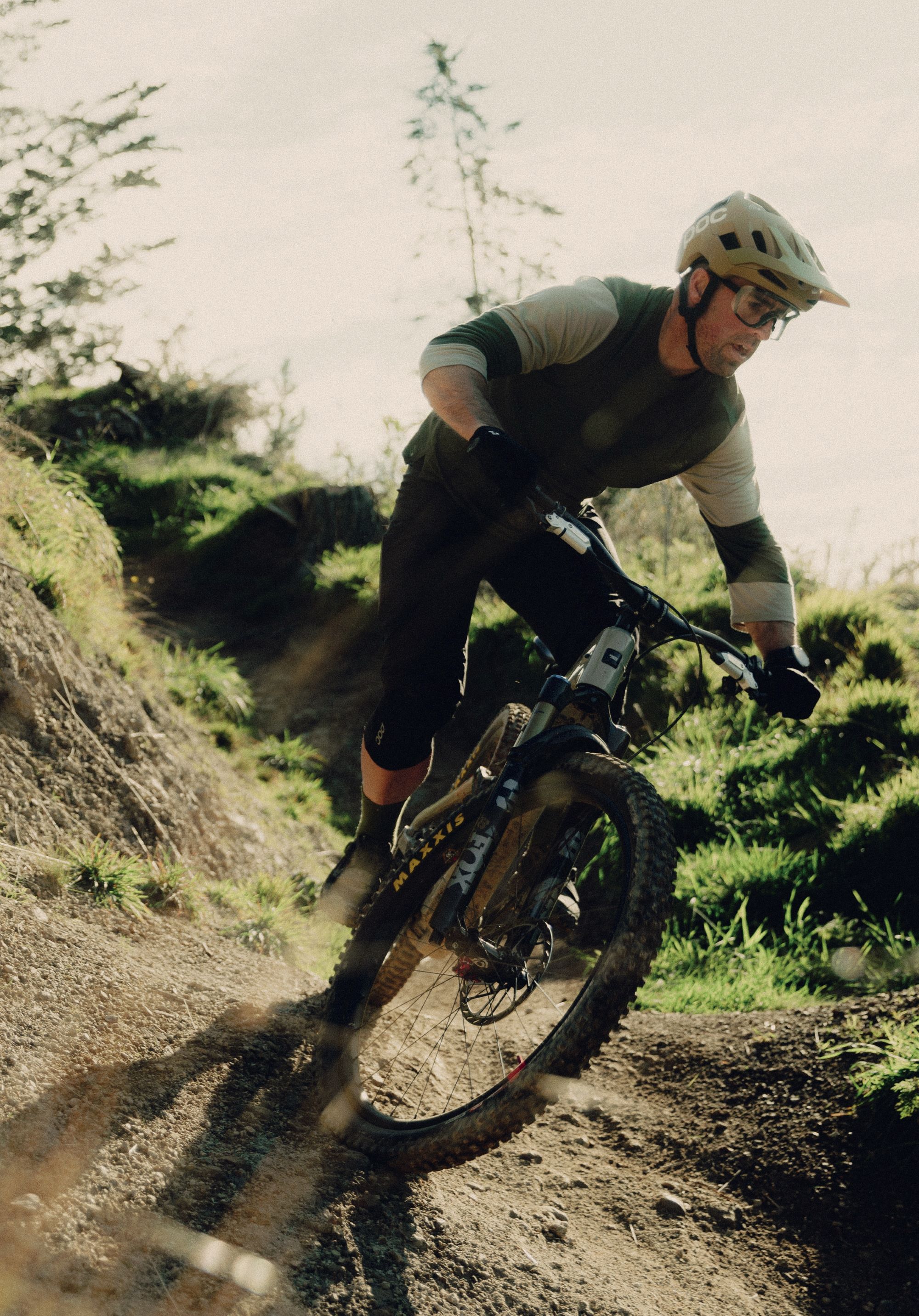
Build & Motor
Component selection varies across the range, but the X0 AXS RSV model I tested came well-equipped. I did have non-stock components on the test bike, but for the most part, it was pretty close to factory specs. The SRAM XO transmission performed flawlessly throughout testing and works well with the extra torque from the eMTB. The Fox suspension—Fox 38 Factory, Grip X2 fork, and Fox Float X Factory shock—felt appropriately tuned for the bike’s intended use. Brake performance was more than adequate for most situations, with the SRAM Mavens delivering well-rounded stopping power.
The Bosch Performance Line CX Gen5 motor delivers its 100Nm of torque with a peak power of 750 watts, paired with the fully enclosed Bosch PowerTube 600wh battery. The battery is stored internally and is not removable, which maintains the clean aesthetics but limits flexibility for longer adventures or easy charging. The controls are refreshingly simple with basic buttons and no unnecessary screen distractions. This simplicity extends throughout the bike, there are no gimmicks or complicated systems, just a well-executed electric mountain bike that focuses on the riding experience. Bosch is also well-supported in New Zealand with a service agent, ensuring local support in case of any issues.
Battery life proved more than adequate for most full-day rides, though your km’s will vary significantly based on terrain, assistance level, body weight and riding style. Range-wise, expect anywhere from three to six hours of ride time depending on conditions and how heavily you lean on the assistance. The motor’s efficiency impressed me, it’s possible to extend range considerably by being judicious with power levels on easier sections.
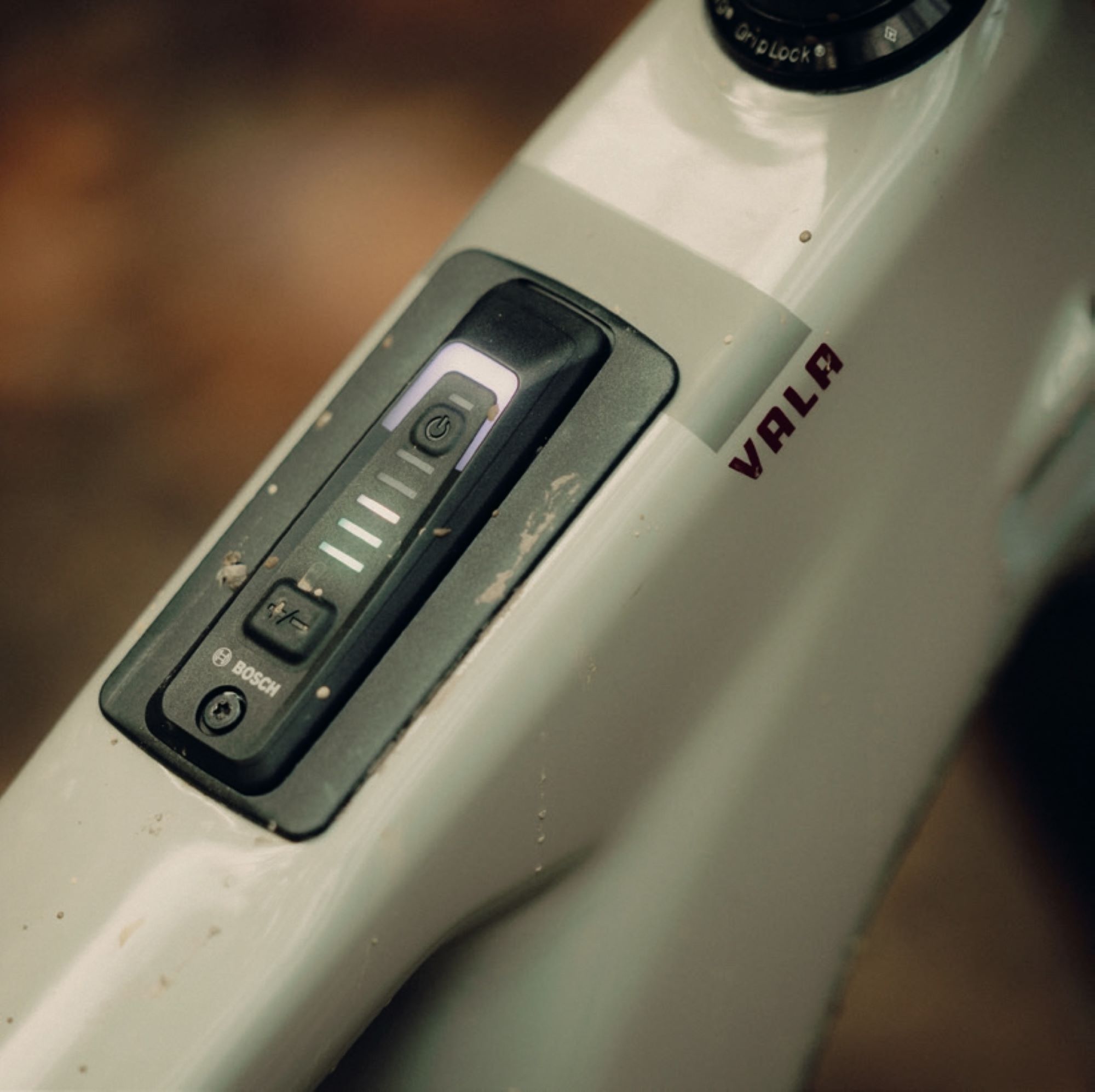
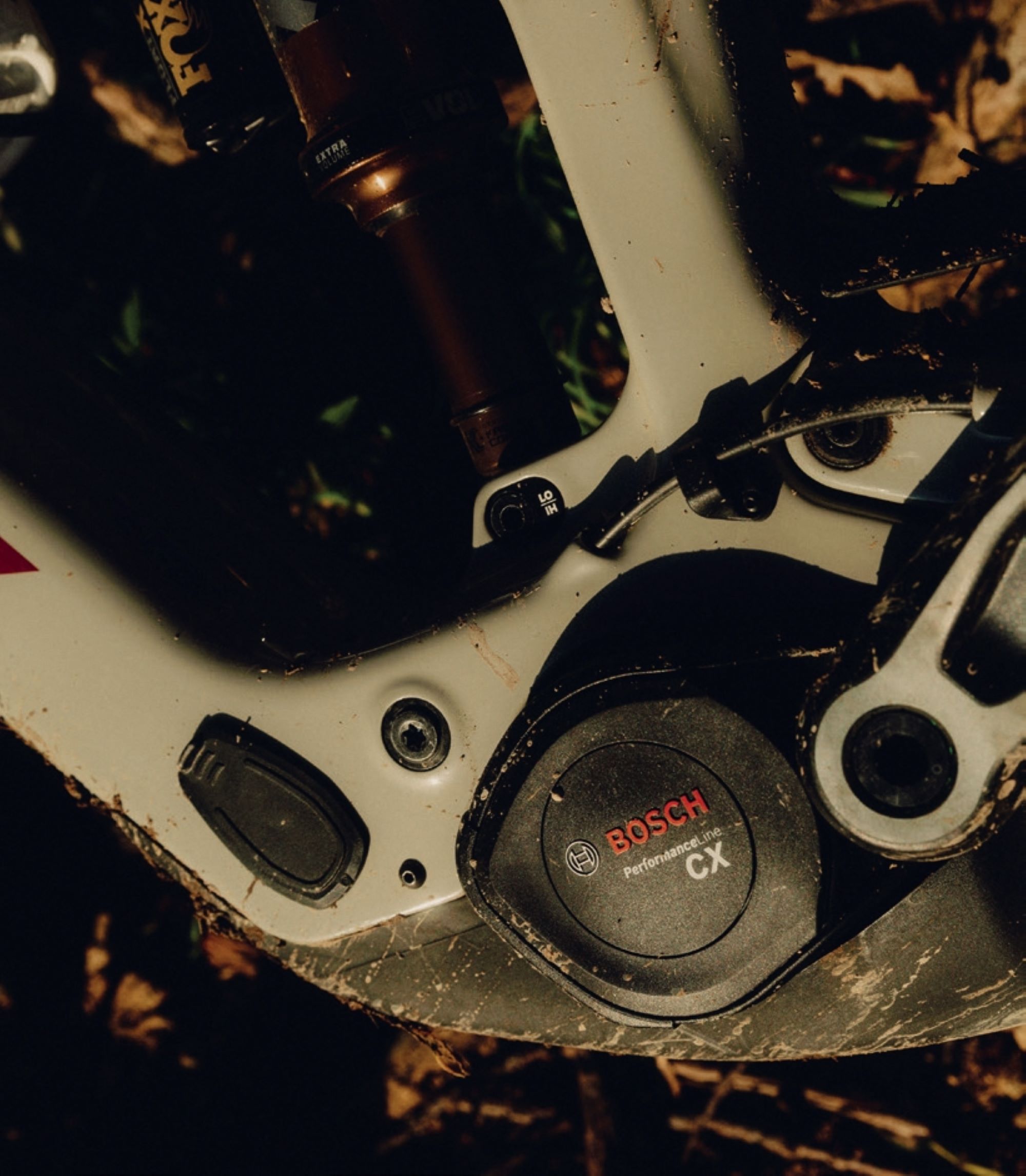
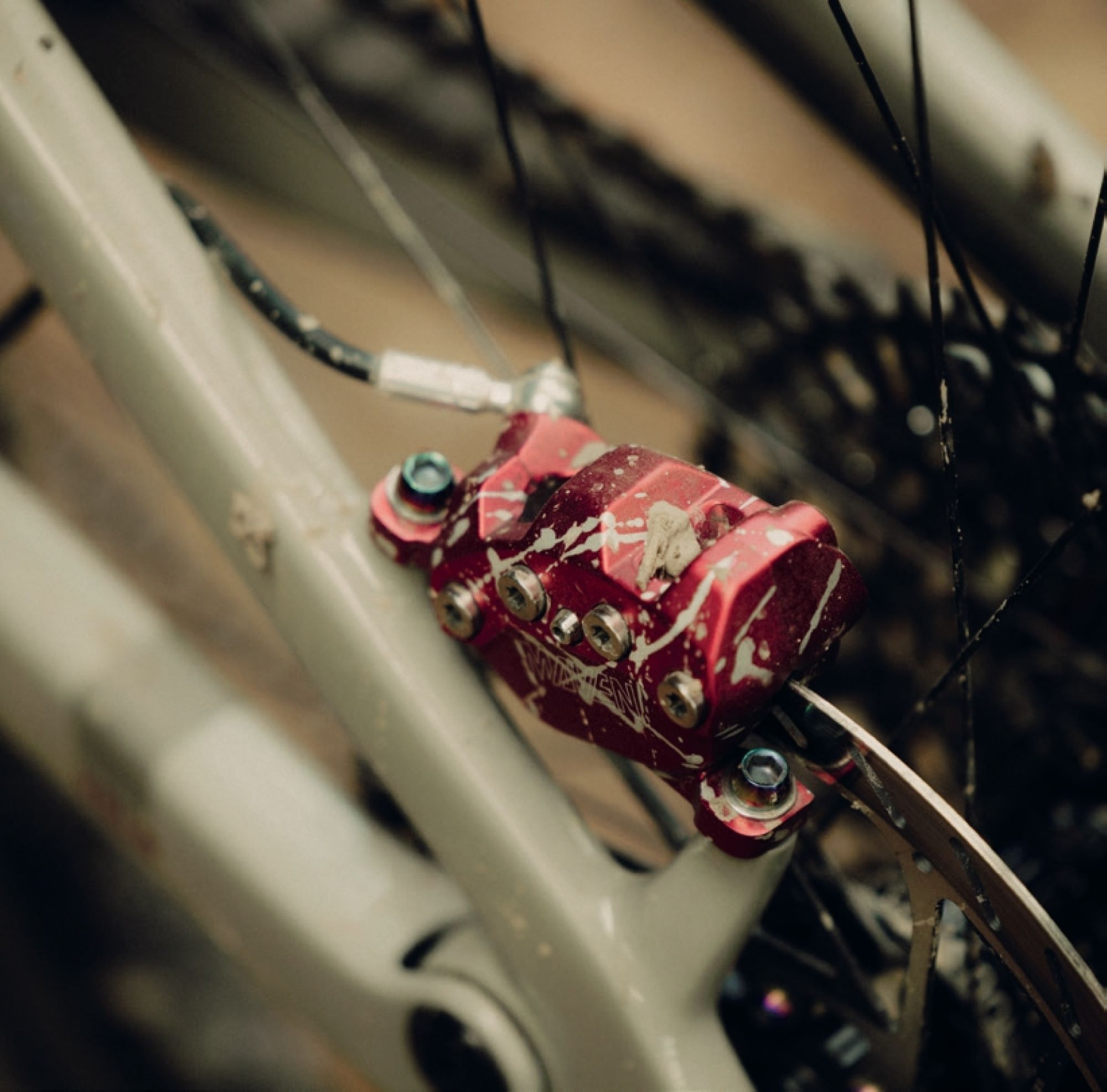
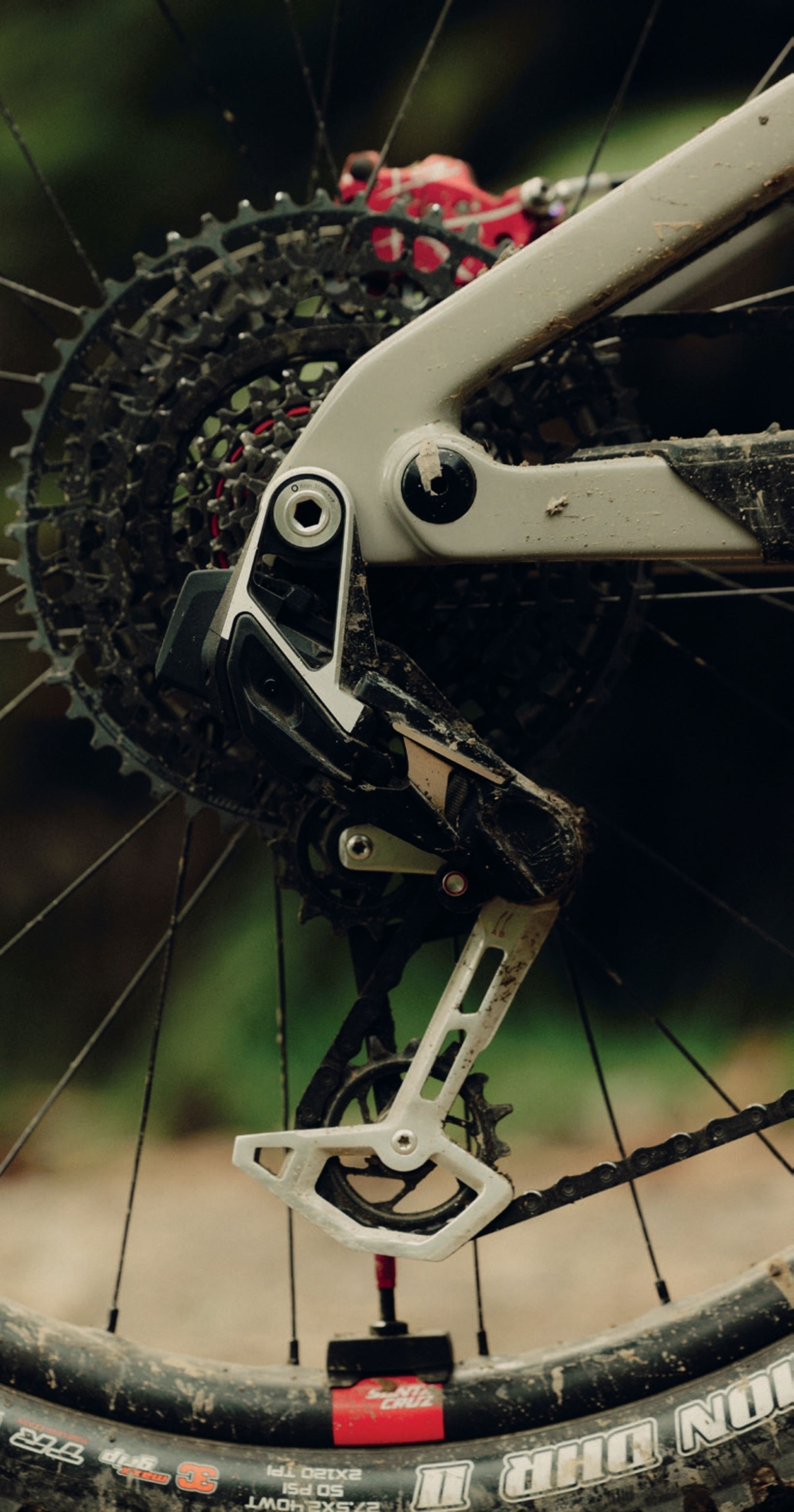
Ride
During my few days of testing at Silvan Forest MTB Park, the Vala proved itself to be well-balanced across a variety of terrain. The bike pedals efficiently despite its 150mm of rear travel, never feeling sluggish on climbs or flat sections. The motor integration feels natural, intuitive – and there’s no jarring power delivery or awkward engagement. Instead, the assistance builds smoothly and predictably.
On technical climbs, the front wheel tracks with good precision, following your steering inputs exactly where you point it. This predictable handling helps build a ton of confidence—you know exactly where the bike is headed. The generous bottom bracket clearance means you’re not worried about crank strikes on rocky step-ups, while the rear suspension stays composed even wide open with minimal pedal bob interfering with your rhythm. In fact, during most of my testing I left the rear shock wide open, and it pedalled fine. The Bosch Performance CX delivers assistance that feels completely natural—it amplifies your pedal input smoothly but puts out grunt when you need to power over challenging sections. Despite running the smaller 27.5″ rear wheel, traction on steep, loose climbs is bloody excellent. The bike simply grips and goes.
Flipping the chip to the low setting changes the climbing game slightly. The seat angle slackens marginally but stays comfortably upright, while the bottom bracket drops 4mm – enough that you’ll need to pick your lines more carefully, but not so much that it feels overly low. The bike becomes more demanding on technical climbs in this setting. The front wheel needs more commitment to keep tracking properly, and overall climbing prowess takes a small hit compared to the high position. It’s a trade-off worth understanding, depending on your terrain.
The Vala’s descending capabilities are very well dialled. The 150/160mm travel package feels well suited to aggressive trail riding without venturing into an enduro overkill rig. The suspension is active and compliant, soaking up repeated hits while maintaining composure through rough sections. During my test period, I rode some of the rougher trails on offer at Silvan, and the Vala kept me upright and composed. Coming from the upper North Island, I don’t always have those sketchier, rocky, loose sections, so I was glad the bike was more than capable of handling these. It feels great descending—much closer to a regular bike feel rather than a heavier eMTB feel.

On corners is where the mullet setup comes into its own in tighter sections—you can throw the bike into turns without getting hung up, thanks to that nimble 27.5″ rear wheel. This was needed during testing on the tighter, steeper and rockier terrain, where the bike’s playful nature really comes to life. The frame feels balanced and sprightly, with the Bosch Performance CX motor delivering power so intuitively. The larger front wheel still rolls over obstacles efficiently while that smaller rear wheel allows for snappy direction changes that would challenge bikes with dual 29″ wheels.
The geometry strikes a modern balance without going to extremes. The 63.9° head angle in the low setting provides sufficient confidence for steeper terrain while remaining lively enough for tighter, more technical trails. The reach figures are contemporary without being excessive, and the effective seat tube angles keep you in an efficient pedalling position. The Vala is plenty capable across varying terrain, yet efficient enough for longer rides. The balanced character means it performs well across a broad spectrum of riding situations.
Perhaps not absolutely excelling in just one aspect of riding but rather taking a trail riding approach. I suppose you could say that the Vala plays things relatively safe. The geo, travel and spec are solid but perhaps not uber innovative. That said, the conservatism might actually be its main strength—it’s a bike that’s difficult to fault. The build quality is typically Santa Cruz: excellent attention to detail, clean cable routing, and solid construction throughout. The frame feels robust without being overbuilt, and the finish quality matches what you’d expect from a premium brand. Plus, I like that it’s engineered simply, as it means better functionality and reliability.
This Vala is bloody good fun! It’s one of the most well-rounded eMTBs I’ve ridden this year. The Vala strikes an impressive balance between capability and playfulness, efficiency and performance. It pedals everywhere well, is a very capable climber, and descends with absolute confidence. The intuition of the Bosch Performance Line CX Gen5 is dialled. The motor does what it’s supposed to and elevates the riding experience. The extra 100Nm update with Bosch Performance Line CX Gen5 rode exceptionally well, especially in eMTB mode, which I used for all testing. This update enhances sustained power, particularly at low cadences and in low gears, improving acceleration and climbing on steep terrain.
While it may not revolutionize the eMTB category, it represents a mature and thoughtful approach to eMTB that prioritizes the riding experience above all else. For riders seeking a premium eMTB that can handle diverse terrain without compromise, the Vala makes a compelling case.
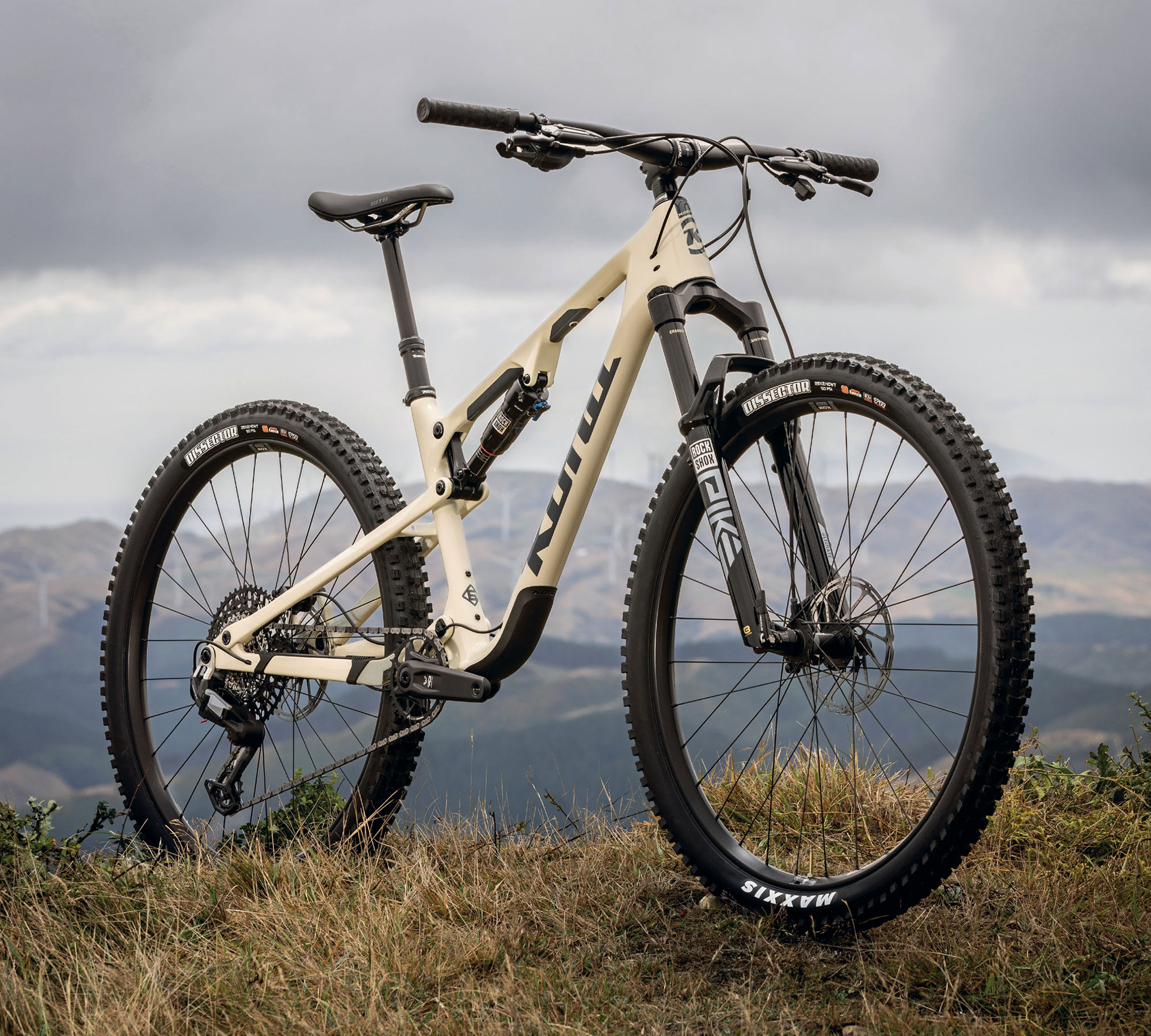
Kona Hei Hei CR
Words Lester Perry
Images Caleb Smith
RRP $10,499
Distributor Solis
Hei Hei. We’re not talking the Christchurch suburb, or the Māori word for Chicken (Heihei), we’re talking the tenth generation of a bike that’s previously been the flagship cross-country offering from the storied US brand, Kona Bikes.
It’s no secret that the brand has been through the ringer in recent years, having been sold off to a Private Equity firm (no doubt cashing in on a post-COVID boom) only for the founders to eventually buy it back to prevent it from completely tanking. They’ve returned to what they do best, delivering solid bikes with a broad use case and grin-inducing ride qualities.
Beginning life as a much-coveted titanium hardtail, for most here in NZ, the bike existed in folklore, purely in the pages of magazines. By the early 2000s, the bike had been overhauled. It became a full suspension, still aimed at the cross-country race crowd and based around a four-bar suspension linkage, offering carbon and alloy versions, and even being one of (maybe the) first brands to mass-produce a bike with flex-stays on their 2016 Hei Hei.
Fast forward to 2020, and Kona changed things up with its ninth generation, scrapping the four- bar linkage in favour of a swinger-link style suspension. The bike had both feet firmly in the cross-country camp. With a geometry revision and 120/120mm travel, the bike was right in line with other progressive XC options, albeit it was toward the longer-travel end of the XC spectrum. I spent a couple of years on the 9th-generation Hei Hei, and although it had some quirks, I thoroughly enjoyed it; in fact, it still hangs in my shed.
For the newly launched 10th edition, Kona pulled one foot from the XC bike camp, crossing the line and putting it into the trail-bike camp, broadening the intended use of the bike. Retaining its 120mm rear travel, the frame features a refined suspension kinematic, with a more consistent rising rate and improved pedalling thanks to higher anti-squat, a result of the main pivot moving considerably higher and further forward than before.
The straight seat tube not only looks nicer than the curved one before, but it also now affords deeper seatpost insertion. The revised rear end now features straighter, more traditional-looking stays, a welcome change from the chunky flex-stays of Gen-9. The front triangle has a couple of minor visual tweaks but is largely in line with the previous, with just a few things straightened out. There’s a notable addition of a UDH hanger, allowing for the use of the full- mount T-type SRAM 90 mechanical groupset.
The swinger link style suspension remains, but has a refined link and hardware. The shock is now simpler to remove, and the swing link itself is much less industrial-looking and more svelte than before. The front triangle has plenty of mounting options for accessories or bottle cages. A total of nine bolt holes, five down the downtube, two on the seat tube and two under the top tube just in front of the front shock mount. With a small frame bag fitted to the front of the triangle, I could drop the bottle cage right down toward the bottom bracket, allowing me to fit a 900ml bottle on the down tube with proper clearance to the bag.
Cabling gets a welcome reroute too—for some reason, the cables on the previous bike popped out of the seat tube, looped up, and went down the seatstays. I’m assuming this was done to engineer the flex-stay. The resulting gear issues due to the extra bends in the cable were a real headache. For Gen-10, the cables are now all tidily routed through fully piped internal routing, making cable swaps a cinch and gear issues are a thing of the past. Unfortunately, this new frame doesn’t allow for an internally routed rear lockout. There is a suggested route for an external routing, but its execution seems like a bit of an afterthought. Thankfully, there’s no cables through the headset faffery going on here.
I’ve had a good few months on a size medium Hei Hei and having ridden it on a good variety of terrain, both in its stock format and with a couple of tweaks, as well as fully loaded with gear through the Kahurangi 600km Bike Packing route, I feel like I’ve got a good handle on this versatile machine.
Whats the Kahurangi 600? Ride from Nelson, over Takaka hill via Rameka Track, through the Heaphy, down the coast, over the Old Ghost Road in the ‘hard’ direction, then through Murchison, across the top of Lake Rotoroa via some gravel roads, a stop at the Tapawera 4-Square and back to Nelson via the Great Taste Trail. Our crew of four split the loop into four big days, tackling it aboard bikes loaded with everything we’d need. Fortunately, we had beds along the way for our three nights, so, although loaded, we didn’t have to carry sleeping mats, bivvies, or tents; just a sleeping bag each did the trick. This trip shone a light on just how versatile the Hei Hei is; it is equally at home on these backcountry trails and gravel roads as it is on technical singletrack.
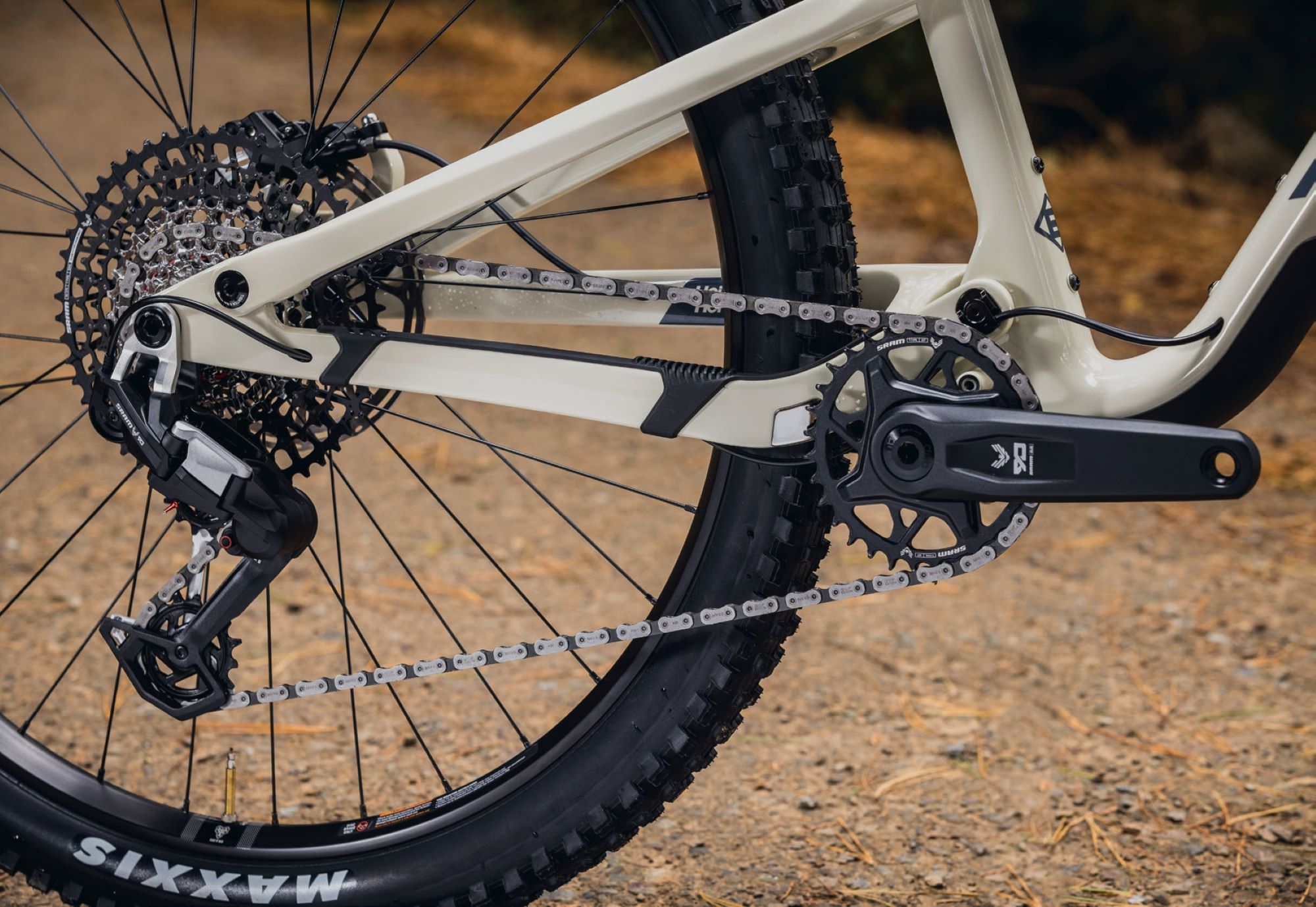
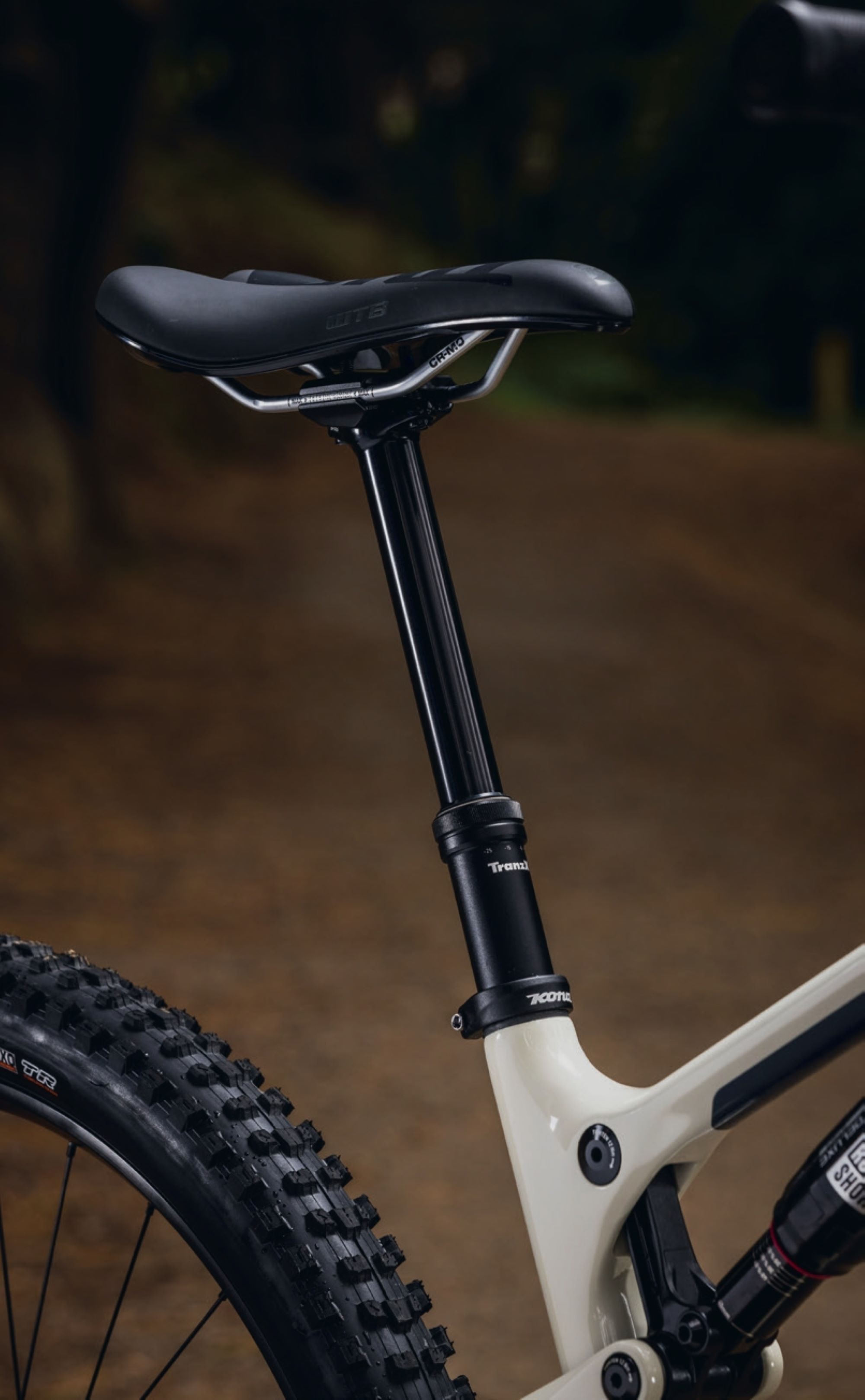
Geometry
Tweaks across the board bring the Hei Hei’s geometry more in line with current trends, getting slacker, longer, but interestingly not lower; I’ll get to that in a bit.
Reach measures in at 449mm, and stack measures 620mm (size medium). These numbers are larger than previous but still reasonably conservative for this category of bike. The higher stack and shorter reach both assist in the bike feeling nimble and playful. All frame sizes get a 435mm chainstay length.
A 66-degree head angle is on par with similar bikes and is steep enough to give a snappy, nimble ride but slack enough that when combined with the 130mm travel of the fork, it’s able to take on the steeps and maintain relative composure through rough stuff. The 76-degree seat tube angle isn’t entirely progressive, but it’s steep enough to put the rider in a decent position for all- around riding. Up front enough for climbing, but slack enough to give a bit more room through the top-tube / cockpit when trucking along the flat.
The Gen-10 Hei Hei bottom bracket sits on the higher side of the average in this trail category, even higher than the Gen-9, with a height of 344mm and a 31mm BB drop (distance below the wheel axles). I can only assume this is due to the bike’s heritage on the technical trails of the Pacific Northwest, where roots and rocks are prevalent.
The high BB provides extra clearance for pedalling and roll-overs, and also enhances the bike’s ability to feel playful. The slightly higher centre of gravity helps a rider change direction quickly, keeping handling and maneuverability snappy and helping to thread the needle through technical features.
The Hei Hei is a prime example of the way the geometry of a bike is all interconnected, and assumptions drawn from simply looking at any one number on a geometry chart can be completely wrong when viewed in isolation. A bike like this needs to be ridden without even looking at a geometry chart, such is the likelihood that a rider could decide it’s not for them before even riding it and entirely miss out on what it’s all about.
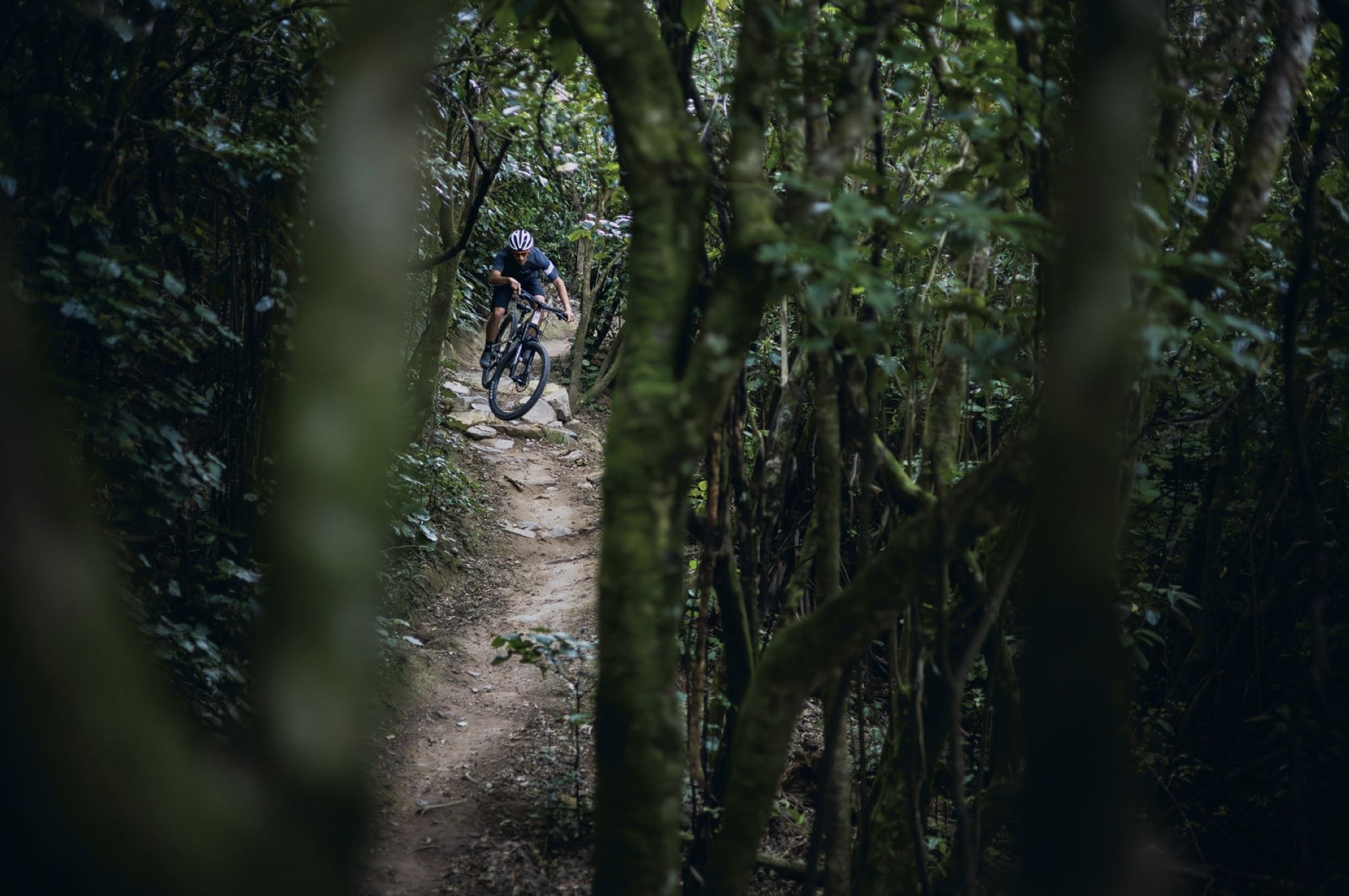
Suspension
The most glaring change in the component package from the Gen-9 is the swap from the lightweight suspension of the 120mm RockShox SID fork and SID Luxe shock to a more trail-friendly, but not significantly heavier, 130mm RockShox Pike Ultimate Charger 3.1 fork and a Deluxe shock. This change really opens up how aggressively the 120mm chassis can be ridden.
Drivetrain
Drivetrain is taken care of by the newly launched SRAM 90 T-type mechanical groupset. An excellent option for a do-it-all bike, and although it lacks the push-button prowess of the AXS wireless system, the shifting is remarkably light and almost as accurate. No complaints here, although after months of electronic shifting recently, I was reminded that more upkeep is needed with a cable-actuated system, especially after several rides in the rain.
The Motive Bronze level brakes are basic with minimal adjustment and no frills, but with 180mm rotors front and rear, there’s ample braking power for this type of bike. The stock organic pads got blitzed pretty quickly, so an upgrade to sintered pads will take performance up a notch. Interestingly, and in line with the shift away from the bike being purely XC-focused, Kona opted for a post-mount 180 mm brake mount, eliminating the option to run 160mm rotors, a great move in my book. However, this change further removes the bike from being aimed at purist XC use.
Wheels
The WTB i30 TSC wheelset is probably not one I’d reach for as an aftermarket option, but as a stock item, it does what it’s supposed to. Sure, it’s not particularly lightweight, it doesn’t have any performance advantage, but it does what it’s supposed to. The rims are decently wide with a 30mm internal width, pairing perfectly with the supplied Maxxis Dissector 2.4” tyres. The Dissector isn’t my favourite tyre, but it is a good balance of traction and rolling speed, although not exceptional in either department. In my mind, anything less aggressive would limit the bike too much, and anything much chunkier would hamper the overall speed and pedalability.
Dropper post
The TranzX Dropper +RAD dropper post has proven itself so far. Although there’s more play in the post than in many others, it hasn’t deteriorated over the test period. Unfortunately, the stock option on a medium has a measly 150mm of drop. With my 720mm seat height, a drop of up to 210mm would be ideal, and thanks to the straight seat tube, it should fit fine. The larger Hei Hei bikes do get longer drops, up to 200mm on the XL.
Cockpit
I’m not usually one to want to swap out brand-new parts, but the cockpit on the Hei Hei, or most of it, just didn’t work for me. Something seems off with the shape of the handlebar, and I couldn’t get comfortable with it. A bit more backsweep may have solved it. The grips are a total letdown; I removed them after a single ride. They’re simply too firm, and although they’re reasonably grippy, they’re not comfortable. The stem? Well, a stem is a stem is a stem, and this is a stem for sure. It stays put and does its job admirably.
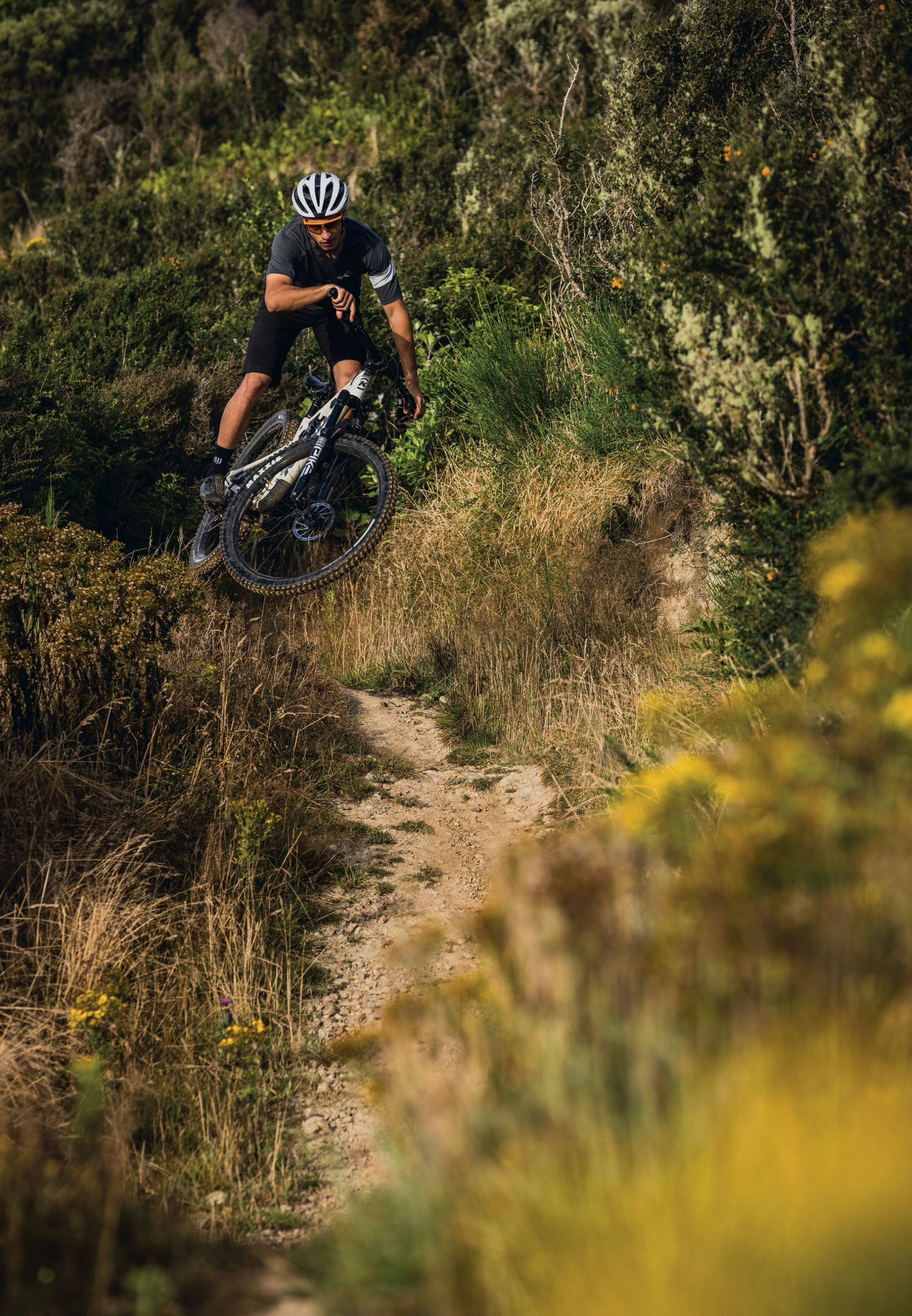
The Ride
I’d like to think I was still an early 20s downhill wanna-be, cutting laps with the boys, jibbing trailside features, and hitting the dirt jumps at the end of a big day riding. Reality is that this isn’t happening nowadays, and my days lapping downhill tracks are pretty much done. Most of my riding is solo, squarely in the ‘trail’ zone, and I’ve hit one set of dirt jumps in the last five years. When I’m heading out for a ride these days, I want a bike that’s light and pedalable enough to cover a decent amount of ground, but stable and capable enough to ride almost anywhere I want.
The Hei Hei isn’t a super light XC whippet, but with a few spec tweaks, I reckon it could pivot to be an all-out race bike, particularly for technical single-track and marathon-type events. In its stock format, though, it’s up to the task, although it leans more towards a super fun trail assassin, a nice, nimble, middle ground between an all-out XC bike and a longer-legged, heavier enduro or trail bike.
Descending on the Hei Hei dished out no surprises. On lower-grade, smoother trails, it flat-out rips, and to my surprise, I scored some Strava PRs on sections on just my first outing on it. When the trail tips down and things get a bit spicy, the Hei Hei is a bit more of a handful but can still handle steeps and drops up to the level of its pilot; just a bit more finesse is required. I found that I really had to keep a lid on my excitement, or I’d rapidly run out of talent and travel.
Thanks to the refined pivot placement, the Hei Hei is now a more efficient pedaler, particularly when out of the saddle with the power down; the suspension really pulls the rear wheel into the ground, propelling you forwards. Seated climbing is decent, thanks to the relatively steep seat tube, which puts a rider in a comfortable position with just enough weight over the front of the bike. On technical trails with steps and crux moves up or over roots, the higher-than-average bottom bracket height comes in clutch. I was able to pedal through sections where, on other bikes, I had to be more mindful of where I was placing my cranks.
The new suspension kinematic feels good, with a progressive-to-linear leverage curve that provides a nice, supple and consistent feel throughout the travel. It feels more lively and bottomless than the previous bike, which was more difficult to get feeling ’just right’ than this tenth generation.
I reached for the lockout on longer, smoother climbs or gravel roads. Once locked out, the bike sits up nicely in its travel, helping to maintain an efficient posture for spinning up lengthy climbs.
Final thoughts
If I had to have just one bike, something along the lines of the Hei Hei would suit most of the riding I do, and probably many of those reading this as well. Trail ripping, marathon racing, after-work blasts and multiday backcountry missions, it’s up for anything.
The Hei Hei is a workhorse of a bike, with no electrics, no headset routed cables, and really no frills. It’s a simple platform that performs across a wide range of terrain. I’d be happy to take the bike on the largest of missions anywhere in the world.
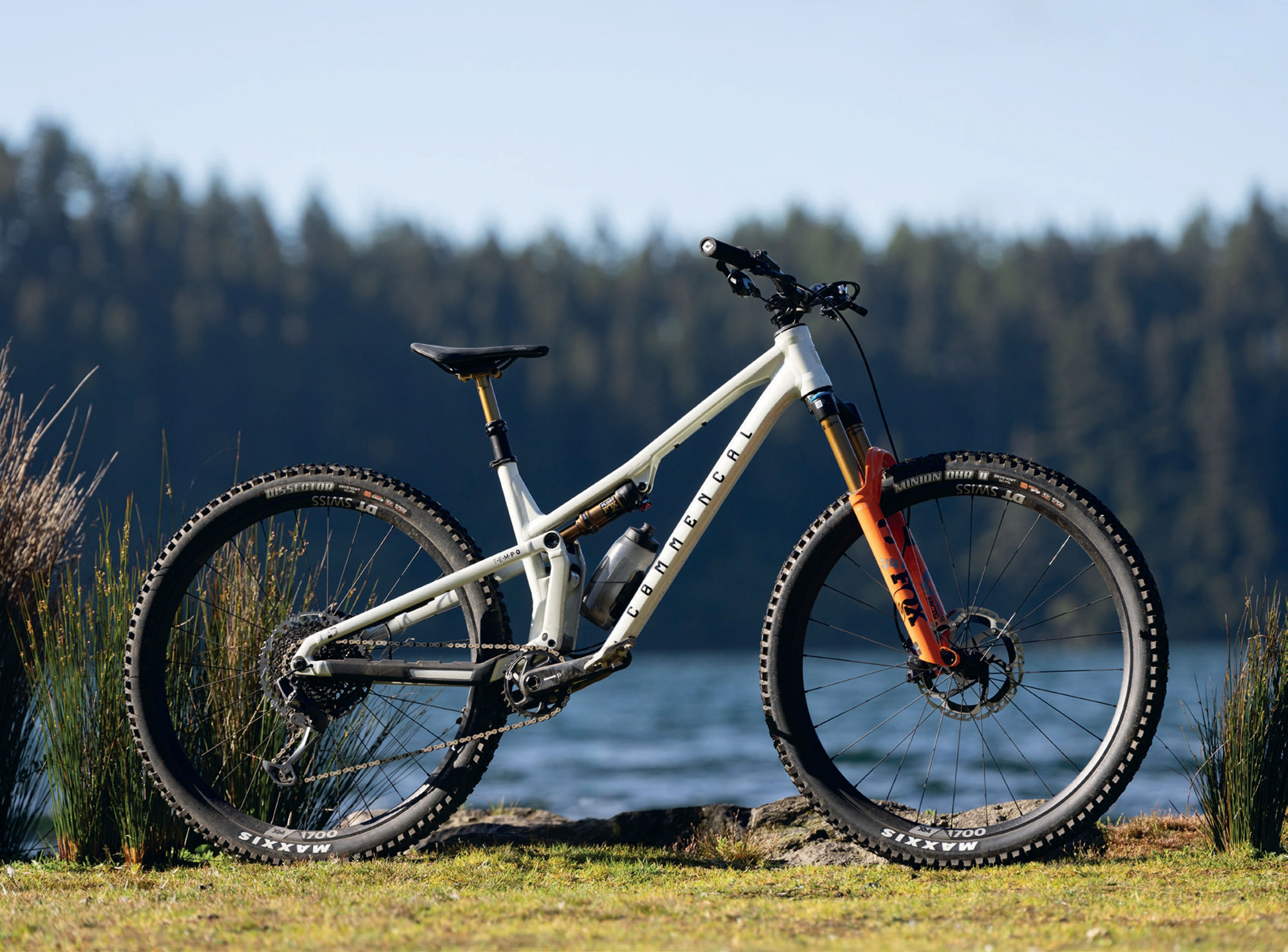
Commencal T.E.M.P.O. Signature
Words Lester Perry
Images Jamie Fox
RRP $9,200
Distributor Commencal NZ
Imagine this: The year is 2020. On a wall in the Commencal design office, there’s a mood board for a bike they’re developing. It’s covered in images torn from magazines and printed by the office laser printer, the products of quick-fingered Google image searches.
Amongst the chaotic collage of images, there’s a jet boat, a compass, a Pyrenean Ibex, a steam-roller with a big red X marked across it, one of those kid’s playground rides with a seat mounted atop a big spring, a metronome with a green tick scrawled over it, and a picture of Eli Tomac mid-whip over a motocross finish jump. Each image highlights a trait of the TEMPO—for example, the snappy handling of a jet boat and the climbing prowess of the Ibex. You get the idea.
Rumours swirled about an upcoming release after a prototype frame was teased online. With a distinctly lightweight XC build and ridden by none other than Pauline Ferrand-Prévot, would the new bike be Commencal’s entry into XC World Cup racing, piloted by PFP herself? Come 20th November 2022, speculation was put to rest as the bike officially broke cover in its final guise, under Hugo Frixtalon, in what is still one of the best bike launch videos I’ve ever seen. A short travel trail bike that would help define the category and embody all the inspiration from that design studio mood board.
Over the last five years or so, there’s been somewhat of an evolution in mountain bike geometry. Before this, if someone was searching for a bike to push their riding—and was into technical, aggressive trails—then a 150-160mm frame was the way to go. This was a necessity, to find the geometry that would be optimal to offer the rider confidence and control when tackling whatever trail lay before them. Nowadays, there’s been a pronounced shift in how designers think about geometry, and we’re finding bikes with travel in the 120-130mm region with geometry that is more suited to how most people want to ride. These bikes sit alongside those with similar travel numbers, but more cross-country-targeted geometry, on bike shop floors—an interesting dichotomy that not so long ago wasn’t the case. Rather than lugging around suspension travel (and associated weight), riders can now choose the geometry they want, coupled with their preferred suspension travel: a ‘Goldilocks porridge’ bike that is focussed on precisely what they want, rather than compromising on geometry or suspension travel.
Enter the Commencal TEMPO: A big bike personality in a small travel package. Designed for pedalling efficiency while retaining the ability to tackle whatever trail is thrown at it. The bike’s metronome graphic points to a key aspect of the bike: pedalling—like a metronome, tapping out a cadence and covering kilometres. Its geometry speaks to its gravity roots.
There’s a lot to like about the Tempo.
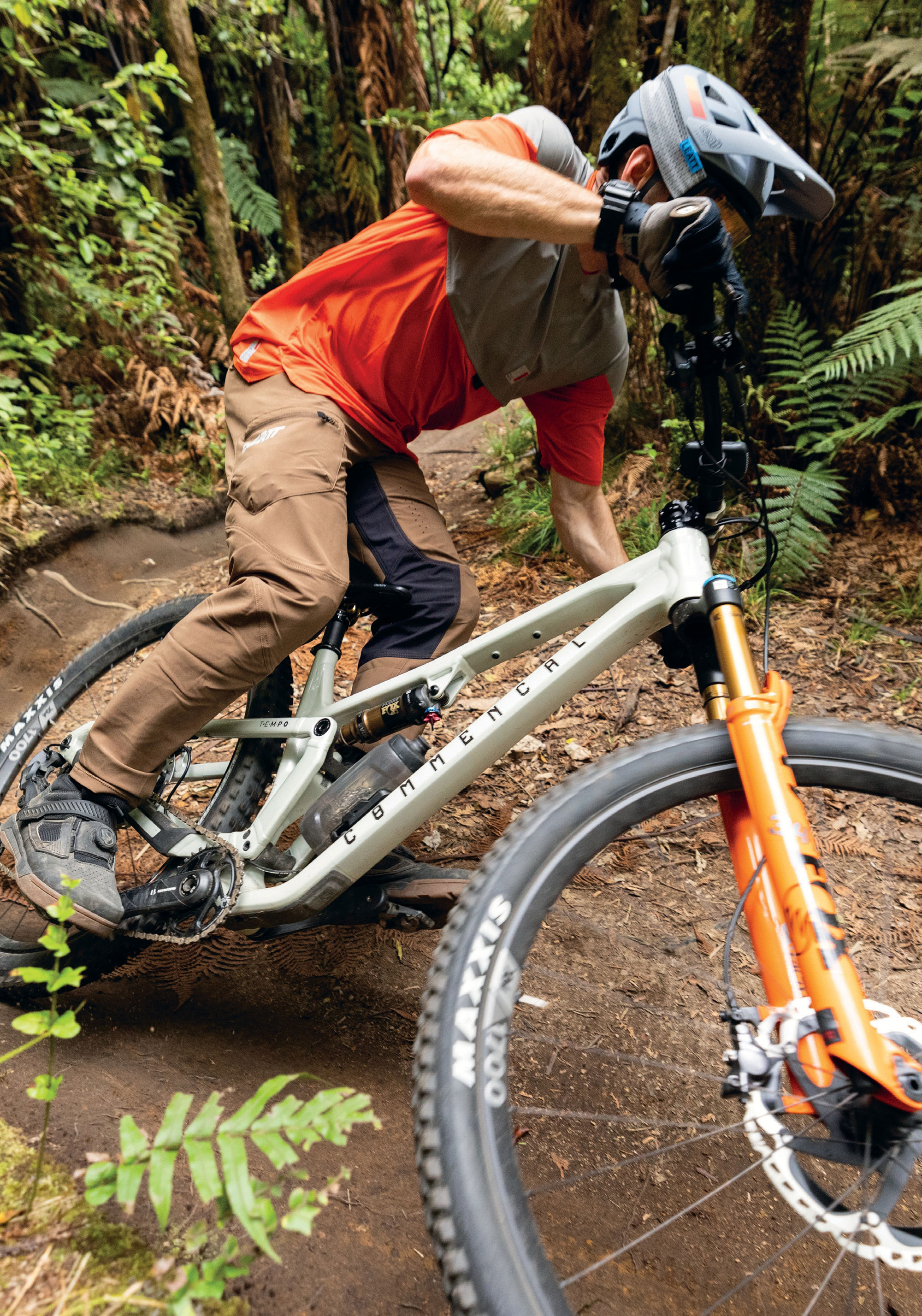
Frameset
The Tempo is based around 125mm of rear travel and a 140mm fork, aiming squarely at the short travel trail bike segment. Offered only in Aluminium, the frame stays true to Commencal’s commitment to avoid using carbon fibre, due to concern about its environmental impact.
The Tempo shares the sleek look of the Meta V5. The frame’s lines flow seamlessly from the headtube down to the rear stays. The low-slung top tube gives ample room for a rider to move around the chassis and helps keep the centre of gravity low.
Designers borrowed the Virtual Contact System (VCS) suspension linkage from the Tempo’s big brother, the Meta V5, which I reviewed in a previous issue. While maintaining the same overall function, the VCS is simplified slightly to suit the Tempo’s smaller suspension package. This virtual pivot design suits the TEMPO to a tee, allowing a reasonably supple start to the stroke, while retaining satisfactory pedalling efficiency.
Linkage pivots are all ‘through axle’ style with an expander cap to help keep them tight. They performed admirably and not once did I need to tighten any pivot point. Bearings are all manufactured by ‘Enduro,’ so I’d expect these to last longer than many OEM options. Three months in, I haven’t had any cause for concern, although most of my riding has been in the dry over summer, so time will tell.
At the end of the chainstay is the now obligatory UDH derailleur hangar, making an upgrade to a T-type drivetrain a no-brainer; a worthy upgrade for sure to get rid of one of those headset-routed cables!
There’s no funky, proprietary stuff happening with the Tempo, we find Boost 148mm spacing in the rear, a 31.6mm seatpost, and a BB92 press-fit bottom bracket—all bog standard, in a good way.
Rubber bumpers across the drive side seatstay, chainstay, and on the lower downtube, help mute unwanted noise and protect the frame from nasty chain chips or debris. Just like the Meta V5, the Tempo is surprisingly quiet on the trail, thanks in part to these bumpers.
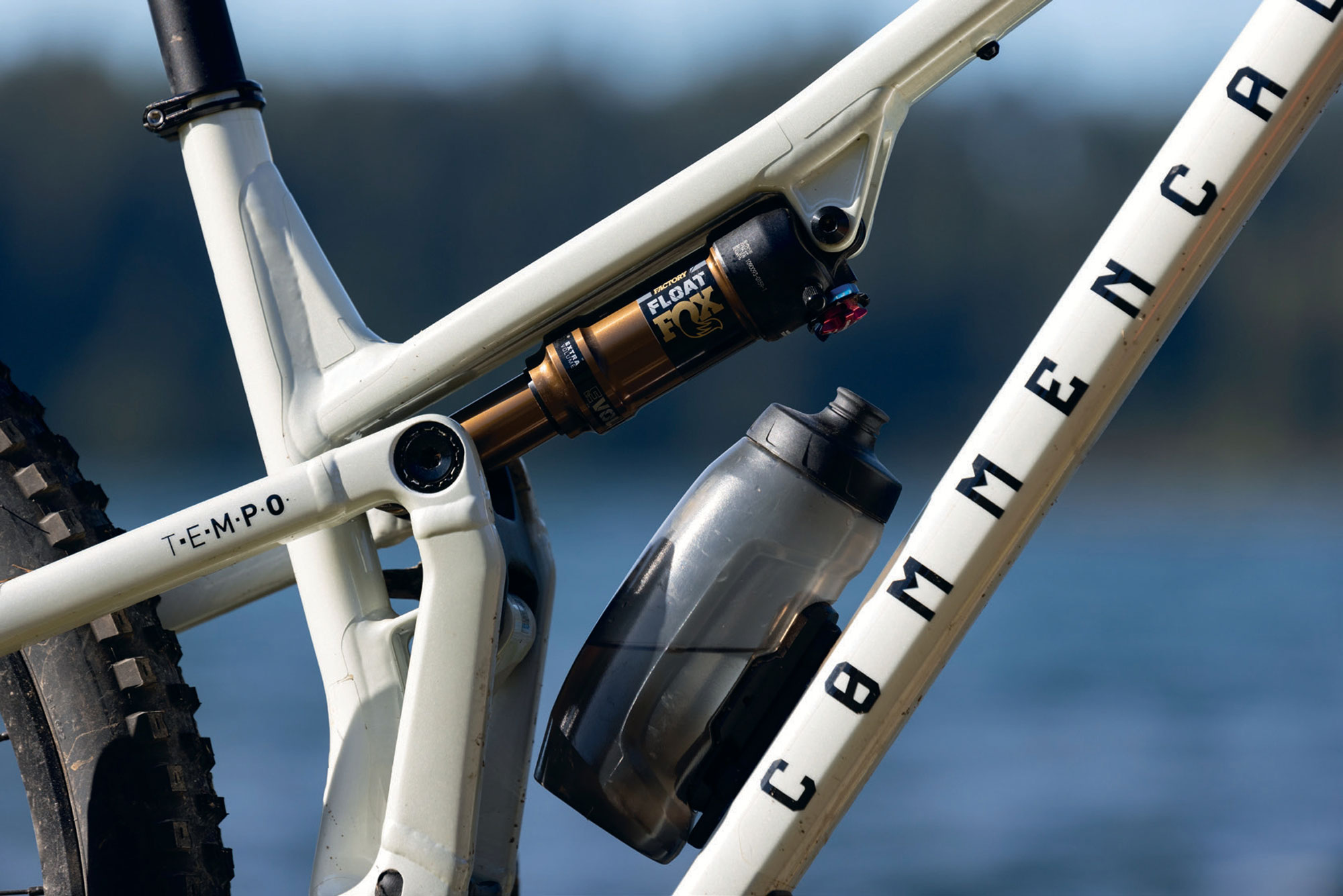
Geometry
The geometry numbers on the Tempo are modern but not extreme, striking a comfy middle ground between an Enduro bike and a cross country bike. The ‘medium’ size I rode has a middle-of-the-road 450mm reach, a category-topping 628.5mm stack, and an almost vanilla 435mm chainstay (440mm on L and XL bikes), while the seat tube angle is “better than most” at 76.6 degrees steep. The head angle is “steeper than some” at 65.5 degrees, but quite normal for a bike in this travel bracket. All that is to say; much like the Meta V5, the Tempo has a very balanced feel, with rider weight feeling like it sits slightly further back than on the Meta V5 (which has a 10mm longer reach in size medium).
Cockpit
A complete Renthal cockpit features a ‘Fatbar Lite’ 31.8-mm handlebar that is 760mm wide and has 30mm of rise. It’s clamped in place by a Renthal Apex 40mm-long stem. This setup has a nice balance of weight, performance and value, and the fact that they specified a 31.8mm clamp bar gets a big tick in my book. Not to mention my favourite grip: the ODI Longneck.
Wheels & Tyres
The party bus rolls on a set of DT Swiss XM 1700 rims on DT 350 hubs. As I’ve mentioned in other reviews, I’m a big fan of DT Swiss wheels—and these never skipped a beat. They’re not the lightest, at over 1800 grams, but given the price point and intended use, at least a rider won’t need to give their wheels a second thought as they are burly enough to handle some heavy hits. Their 30mm internal width pairs perfectly with the specced Maxxis EXO casing tyres. Up the front, the DHR II 29” x 2.4” WT with soft 3C MaxxGrip rubber compound is a savvy choice, offering exceptional grip across most scenarios. It rolls nicely, considering the level of grip and soft compound, and is an asset to the Tempo when trails get spicy. The Dissector 29” x 2.4” WT 3C MaxxTerra on the rear rolls well and has enough grip to keep things under control in most scenarios. It’s not a fantastic tyre, but it does suit general ‘trail bike’ type riding – although, if I were riding more on loose, rocky trails, I’d be reaching for something with a bit more bite.
Brakes
A tried-and-true pair of Shimano XT M8100 two-piston brakes help slow the Tempo down and, although they’ve proved reliable, the product managers missed a trick by not speccing a pair of lower-end—but more powerful—SLX 4-pot brakes. The M8100 brakes are okay on short descents, thanks to the MT905 Ice-Tech Freeza rotors, but they suffer on long descents, and I found myself having to haul on the levers more than I’d like. Simply changing to some 4-piston callipers would make a huge difference.
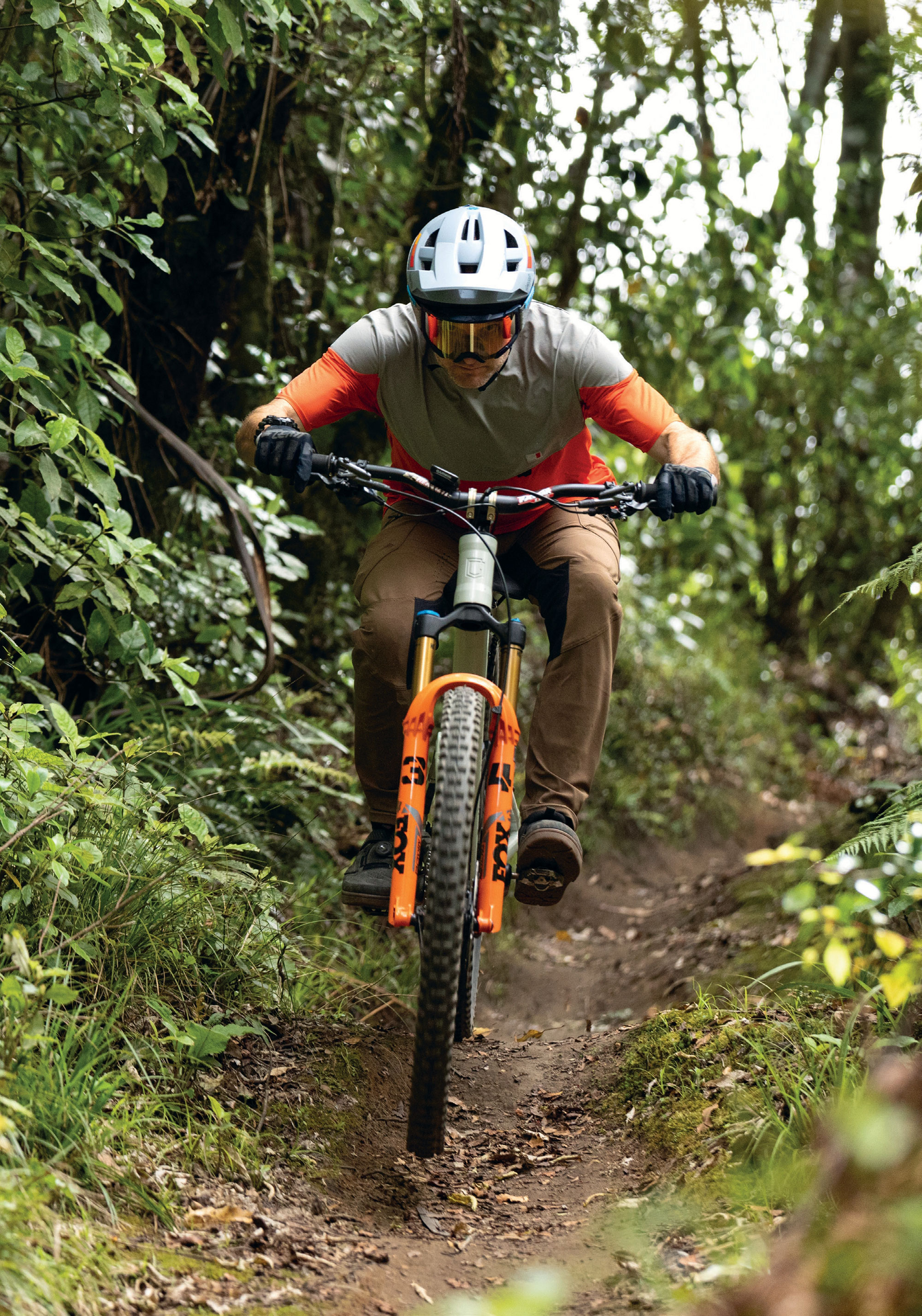
Shock
The Fox Float Factory, in its stock format, suited me perfectly, and no tweaking was required from Commencal’s initial recommendations. There’s a lockout lever in easy reach while riding and I used this a lot while climbing on gravel roads or smooth trails. A dial also offers two additional compression levels when the shock is ‘open’. I played a bit with these but found the bike’s overall feel much nicer in the lowest setting. It certainly pedalled better in the second or third setting than when fully open, but the added compression stunted the feel and was only a bonus on smooth trails where I’d throw the lockout anyway.
Fork
Front suspension is handled by a Fox 34 Factory with 140mm travel. There’s all the adjustment one would want, with low and high-speed rebound and compression dials. Interestingly, the spec sheet listed the fork as having a 51mm offset, something that I thought had gone away almost entirely these days in favour of 44mm versions. I initially thought maybe it was a typo but, sure enough, the bike turned up with the 51mm offset fork. Perhaps smaller travel bikes suit the larger offset? Whatever the case, I never gave it a second thought. Once I was out on the trail, it turned out that a bike still handles fine without the much-hyped 44mm offset. Who would have thought?! (I say this in jest!)
I was stoked on this fork; anything less would hamper the bike’s overall performance, and the 34 took everything I could throw at it. I’m 80kg, so not a lightweight, but I didn’t notice any untoward flex and, regardless of the trail, the fork was controlled and felt well damped. They say something works well if you never have to give it any thought, and this fork was proof of that. I backed off one click of highspeed rebound from recommended and called it good.
Drivetrain
The combination of a SRAM GX Eagle derailleur, shifter, cassette and chain takes care of shifting. While this stuff does the job, it wouldn’t be my first port of call for an upgrade on this bike, given the accessibility, accuracy and reliability of electronic derailleurs these days.
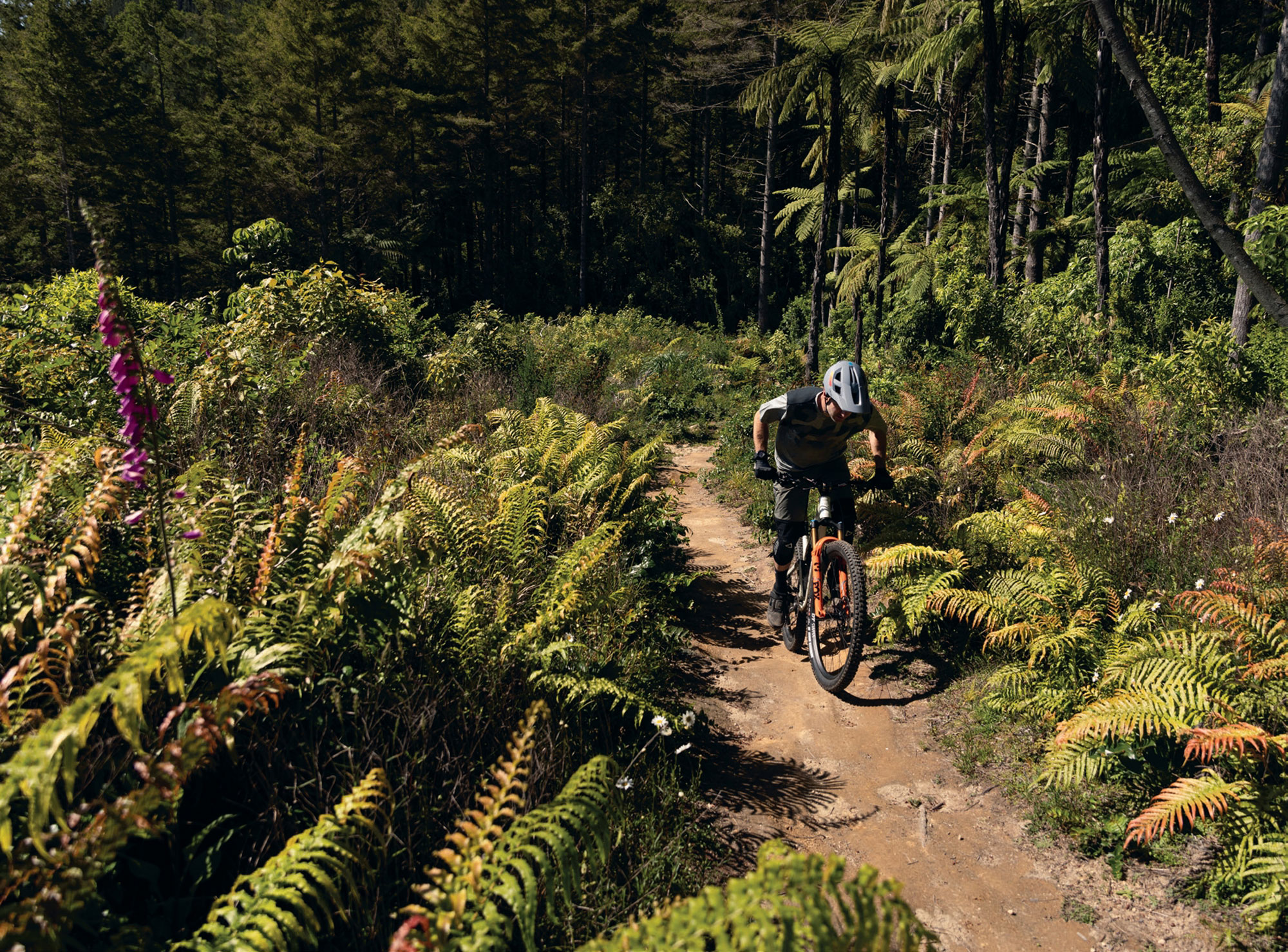
The Ride
From early 2024 until I took possession of the Tempo in October ‘24, I’d been getting about on either a 160-170mm travel Enduro bike or a full-gas XC race bike. So, I was keen to get on board a modern, short-travel trail bike, hoping that it would be more suited to how and where I ride most of the time.
As is the norm for me on many brands, I sit between the medium and large recommendations on the Tempo, so I chose to size down rather than up. With the steep seat tube and short reach (450mm), the bike felt short when seated but put me in a nice central position between the wheels, and the ample stack combined with the 30mm rise bar put my hands up relatively high, giving me a distinct feeling of confidence; helping the bike feel like it would handle more than it’s suspension travel numbers would first suggest.
I’d convey the vibe of the bike as “playful”—akin to a big wheeled BMX in many scenarios. It excels when you’re being creative on the trail and allows for a super dynamic riding style; jumps, manuals, Scandi flicks and nose bonks are all in the Tempo’s remit, but it’s equally at home just cruising around in more of a ‘cross country’ mode.
Seated climbing is excellent. The steep seat tube helped put a good amount of weight on the front tyre, helping retain control when threading the needle between obstacles or up steep switchbacks or steps. Climbing steep pitches out of the saddle, the suspension extends nicely, giving a firm platform to push against and a relatively snappy feel. At over 14kg, and with components designed for longevity rather than light weight, it’s unlikely a rider would be getting any climbing KOMs on the Tempo. Still, at least it gets you to the top of the hill efficiently and without feeling like you’re dragging an anchor.
I commented in my Meta V5 review about how easy it was to change directions and drive through turns, and the Tempo retains this feeling. It straight-up rips turns—flat or bermed. I have fond memories of blasting through successive steep berms at the Whangamata MTB park, surprised by how it transitioned from one to the other. The only drawback of short travel like this is that rough and loose corners take a little more finesse to maintain traction; less travel means less sag and, ultimately, less traction.
Snapping out of turns, and under power while coming from a dead stop, the bike gets up to speed well and there’s no excessive loss of energy to the suspension.
Descending on the Tempo is surprising. It’s not the first small-travel bike to ride like it has more travel, but it would be one of the better ones, leaving nothing on the table. With only 125mm of travel, it can’t offer a big bike ‘buttery’ feel as it sits into its sag, but it does a great job of quieting the chatter on the trail. It doesn’t blow through travel to an uncontrolled or harsh bottom out during larger hits or g-outs.
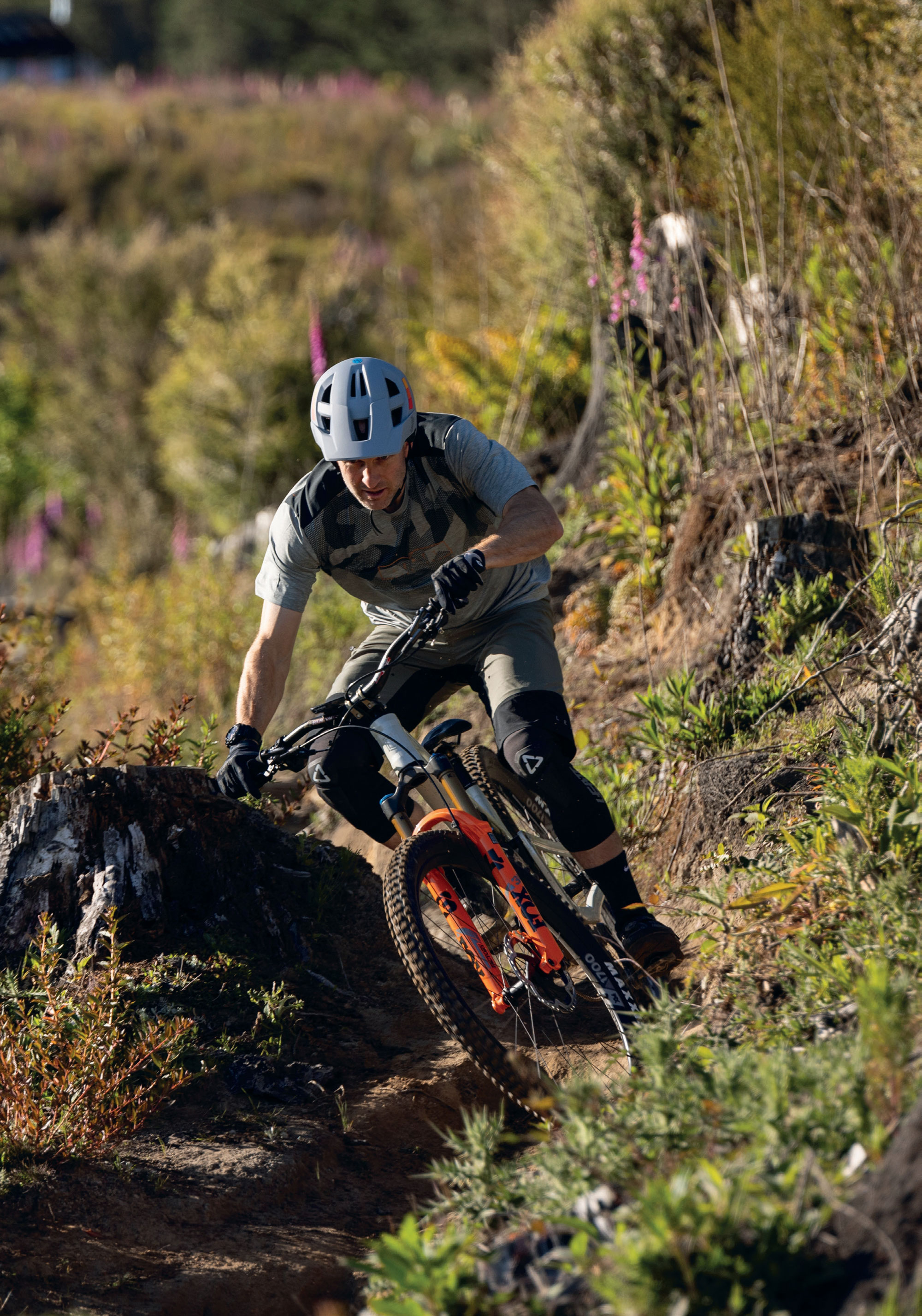
The Tempo is stable at speed, although the nature of its shorter travel means it’s not as planted as the Meta V5 or other similar Enduro bikes, and needs more brains and less brawn to deal with rough terrain. Aboard a bigger bike, one could essentially point and shoot, standing on the pedals and having the bike do all the work—the Tempo isn’t that sort of bike…. it’s true that you can’t have your cake and eat it too.
The 125mm of suspension is enough—until it isn’t. Over my three-month stint with the Tempo, there were a few times I came into a rough section a bit hot and really had to keep my wits about me as I used every millimetre of the travel, then relied on strength, skill and (possibly more so in my case) luck, to keep the ship upright. These situations were few and far between, but it’s worth keeping in mind that there’s not the safety net that a full enduro bike would offer. Although that’s not what anyone riding this bike would be after anyway.
I like a big day in the saddle, under my own steam, and I don’t like to feel like my fun is hampered by my choice of bike – regardless of whether I’m headed up or downhill. Living in the Waikato, the majority of my riding (all within a couple of hours’ drive) is on trails tending more towards the mellow end of the spectrum. Lots of digger-built trails and not so many gnarly, steep, rocky, “heck, I hope I can make this” sort of trails—unless I’m away in Nelson or Queenstown, which is once or twice a year, if I’m lucky. With this in mind, I’ve settled on the fact that a bike like the Tempo is realistically all I need: the ability to cover a decent amount of ground, climb effectively up hills, and be able to bomb back down whatever trail I choose without feeling like I’m being held back by inactive suspension or pucker-inducing handling.
Although I didn’t need to faff with the linkage at all, if I needed to—due to the layout of the VCS linkage and pivots—accessing the bottom shock bolt or pivot bolts can be a bit niggly; needing to remove some pivot bolts to access others. Not impossible, just time-consuming. If something in the back end comes loose while out on the trail, you’ll be holding up your riding buddies for a few minutes while you get it sorted.
The internal headset cable routing is the most polarising feature of the Tempo. Cables for the rear derailleur, dropper post and rear brake all squeeze their way through the headset top cap and down through the top bearing. There’s a bit going on up front. I’m yet to have a review bike long enough to need to replace a headset bearing and, if I had, I’m sure I’d do myself the favour of taking it to a bike shop with a mechanic who has far more patience than I do to complete the procedure. It’s fair to say that simply cracking the headset open, cleaning everything, popping off the bearing seal and re-lubing it once a month or so (depending on riding conditions) would drastically increase its lifespan. Spending 15 minutes doing this periodically is easier than a bearing replacement, which could take upwards of an hour.
Final thoughts
It’s taken some time for manufacturers to get little bikes ‘right’, but it seems they’re finally getting them dialled, bringing a shift in the mountain bike market as people realise a bike with “just” 125mm travel can handle everything they throw at it. Depending on where people ride, they probably don’t need a big travel bike as their daily rig. I’m now one of these people, and I’ve had an absolute blast riding the Tempo over the summer. I still have questions about headset routing and pivot bearing servicing over a longer term and through a winter of riding but, so far, I’m grinning.

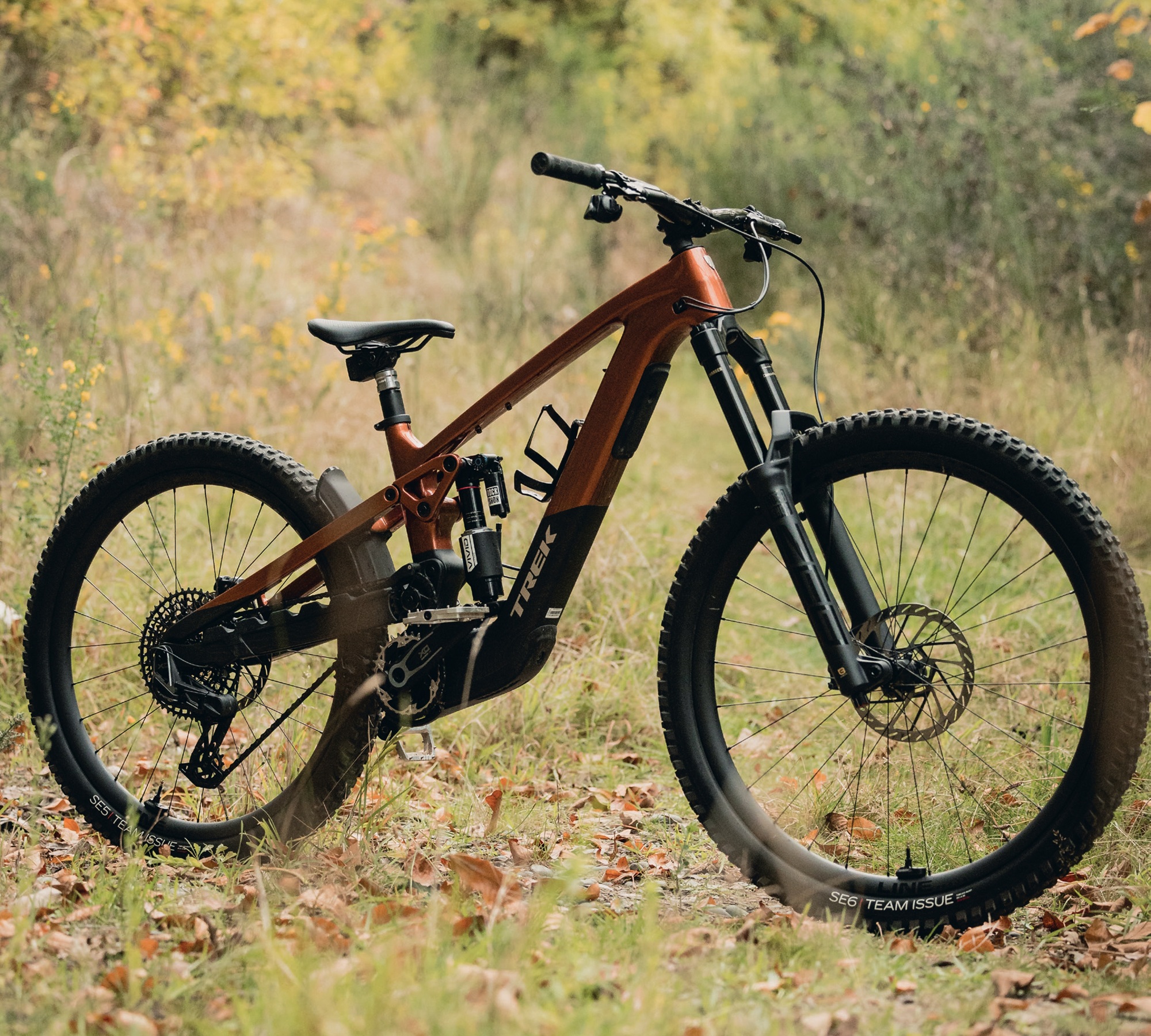
Trek Slash+ 9.9
Words Georgia Petrie
Images Cameron Mackenzie
RRP $19,999
Distributor Trek NZ
It’s fair to say we’ve seen a whole heap of changes within the eMTB landscape over the past few years. The last 18 months in particular have brought about the cementing of the SL (Super Light) category, and an absolute smorgasbord of full-powered options. Gone are the days of an eMTB resembling somewhat of a retro downhill bike with a motor strapped to the bottom. The wide range of battery sizes, motor options and travel means that the whole e-experience can now be more tailored than ever before.
With so much choice on the market, there’s something to be said for Goldilocks’ age-old personal tagline of “just right”. This is exactly what comes to mind when it comes to the increasingly popular SL eMTB category. Increasingly, we’re seeing more and more bikes in this class being specced with bigger batteries paired with lightweight, low-power SL motors, resulting in bigger battery range whilst maintaining a ‘not-too-heavy’ ride experience— in other words “the best of both worlds”.
The Slash+ is essentially an electrified version of Trek’s ever-popular acoustic Slash, with the high-pivot, eye-catching chassis boasting a grunty 170mm of front and rear travel, with a fork that can be up-travelled up to a whopping 190mm. No mistake made—this is a burly bike that’s right at home on the roughest of double- black trails—and, as I came to learn: the rougher and more technical the trail, the more the Slash+ thrives, all without compromising on climbing ability. By incorporating a hearty 580wH battery paired with TQ’s HPR50 motor, the Slash+ strikes a balance, enabling you to “do more”; whether it’s an extra after-work lap, a backcountry ride – or even the difference between going for a post- work spin and staying home, especially as we say goodbye to post-work daylight hours once again!

eBike Features
Although sporting the same 50Nm, 300-watt peak powered TQ-HPR50 motor as its shorter-travel Fuel EXe counterpart, a key point of difference—the defining factor of the Slash+’s place in the eMTB lineup—is it’s chunkier 580Wh battery. This stacks up well against other mid- weight contenders, punching above its weight relative to the likes of other longer-travel ~160mm options, such as Transition’s freshly released Regulator and Mondraker’s Dune, which both sport 400Wh batteries, and paired with Bosch’s grunty 55Nm, 600W peak powered SX motor. With so much choice and such subtle differences between motor and bike manufacturers, whether you’re a weekend warrior tackling technical blues or a park rat aiming to tackle every double black option in one day (and still pedal home afterward), the SL eMTB space really has expanded to cater for a wide range of rider types.
Alongside its big battery, a core outlier of the Slash+, relative to many of its SL competitors, is not only a removeable battery but the ability to swap between TQ’s 360 or 580Wh batteries, or swap in a fresh battery mid-ride. There’s also the option to purchase TQ’s 160Wh range extender, which fits snugly into the bottle cage, weighing 950g. The TQ-HPR50 is discreetly tucked away and pleasantly quiet even under load on full power mode, making the Slash+ one of the stealthiest long-travel eMTB’s I’ve ridden. The motor has three power modes and a ‘walk’ mode, rounded out with TQ’s integrated top- tube display, and two-button handlebar remote. Though the max power assist level and pedal response for each mode can be easily fine-tuned via the Trek Central and TQ apps (though I’d prefer to have one central channel for adjustment), I found the display a little unintuitive at times, and both this and the two apps almost a little tacky and clunky relative to counterparts such as Specialized’s Mission Control App, and Bosch’s eBike Flow app, both of which have undergone significant iterations and deliver a more refined and intuitive user experience. I also found the ‘walk’ button somewhat unwieldy to access and slow to kick-in, which isn’t uncommon across the wide range of eMTB brands I’ve tried and, whilst not a dealbreaker, can be rather frustrating.
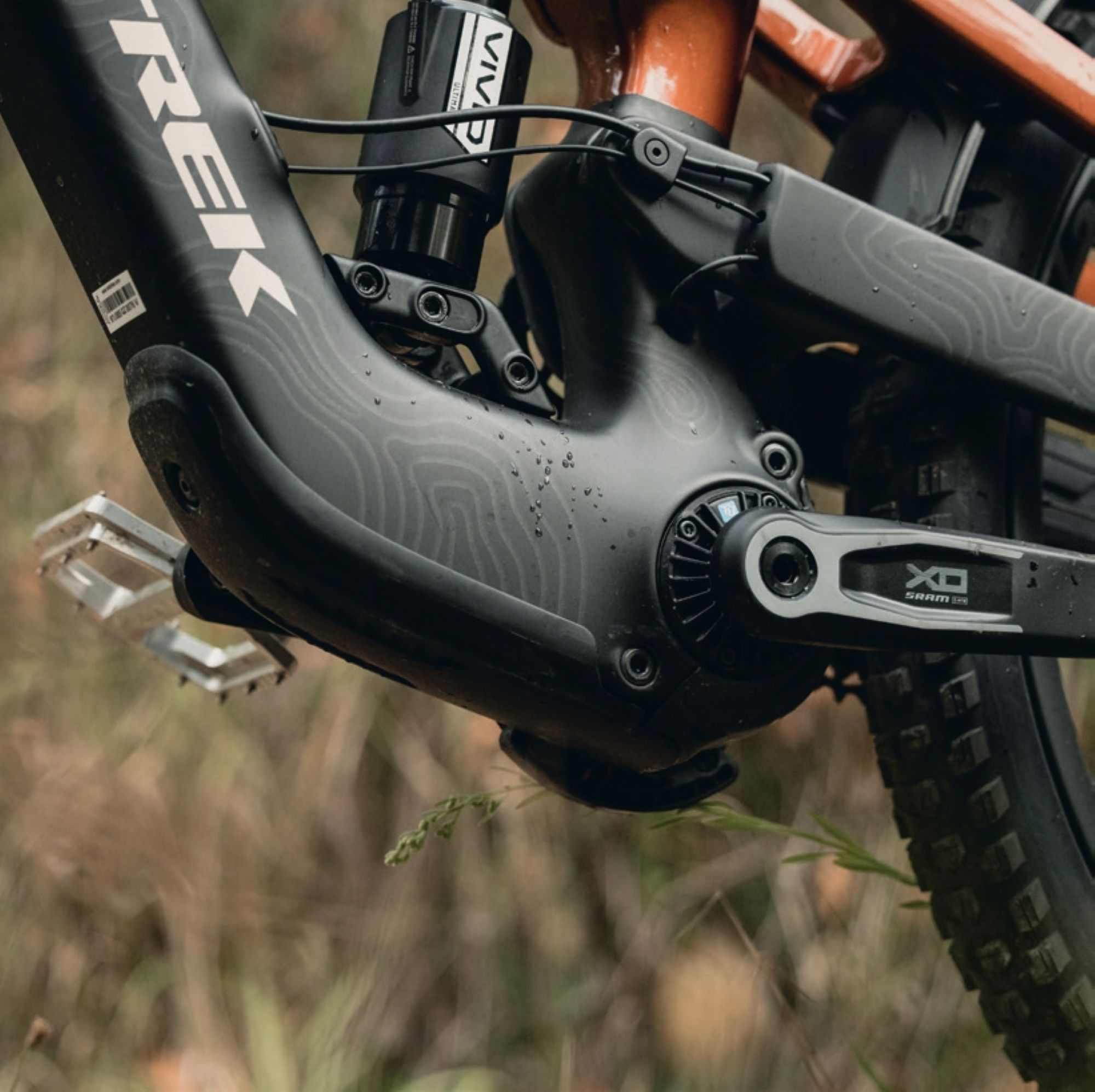
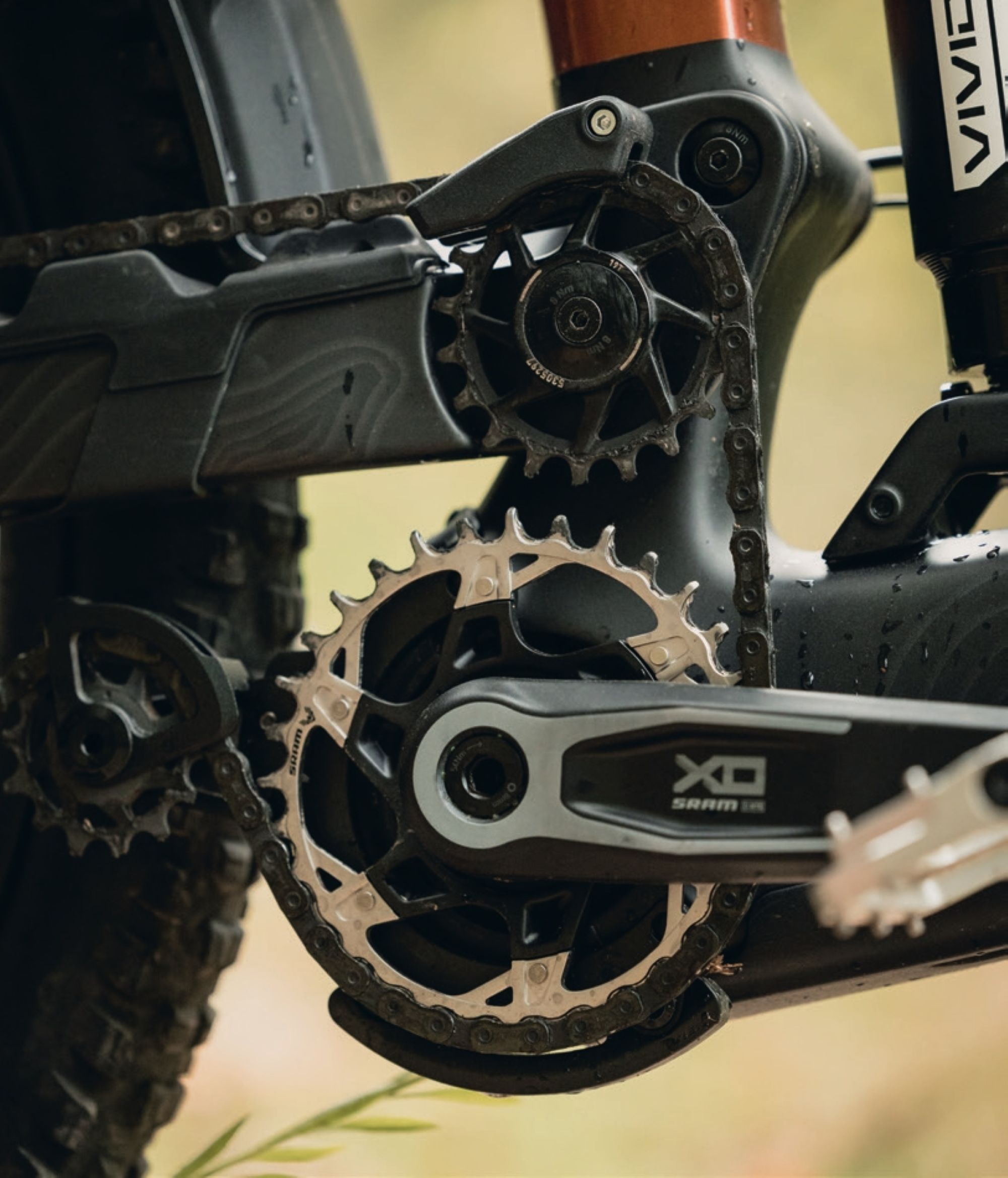
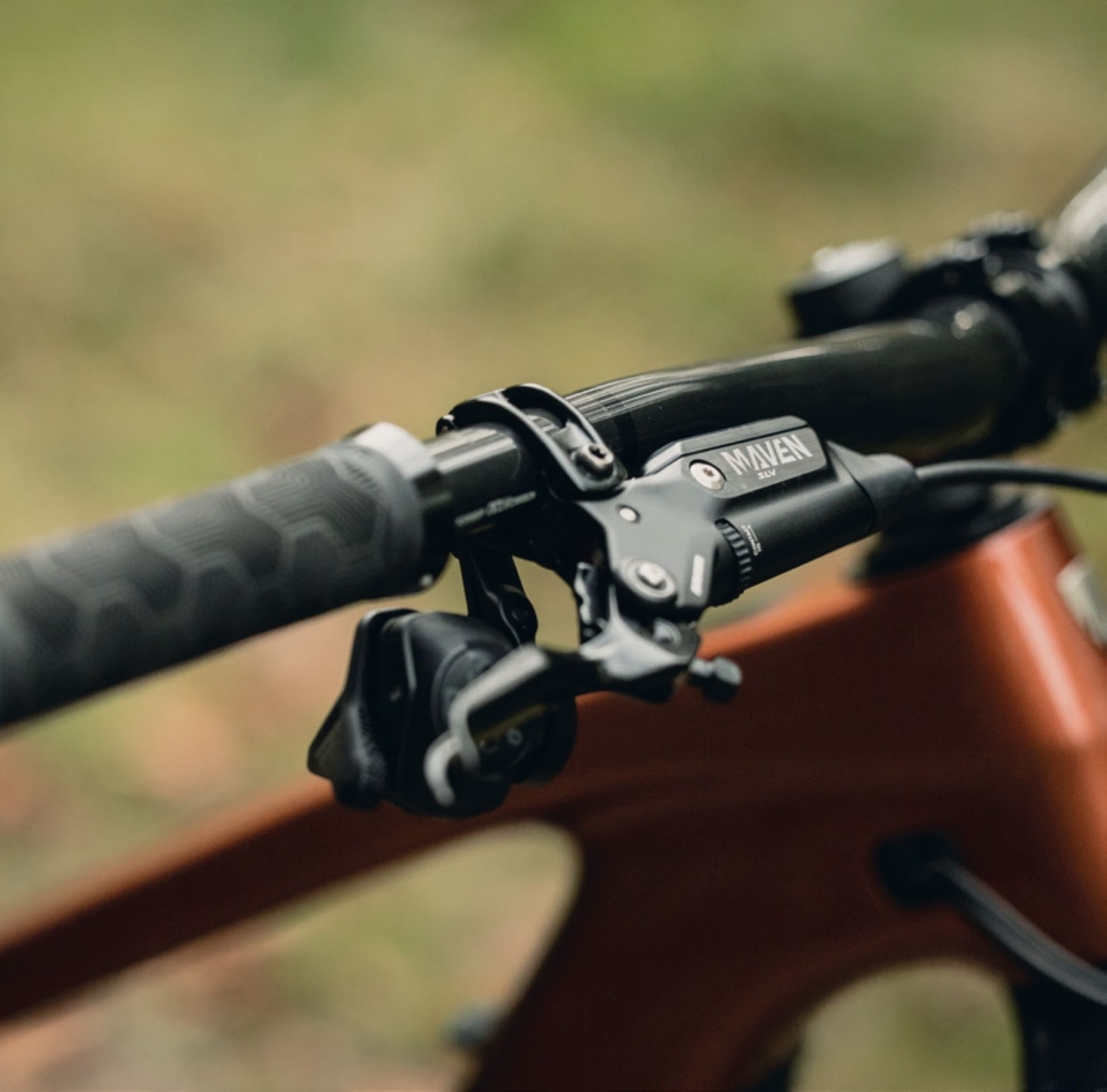
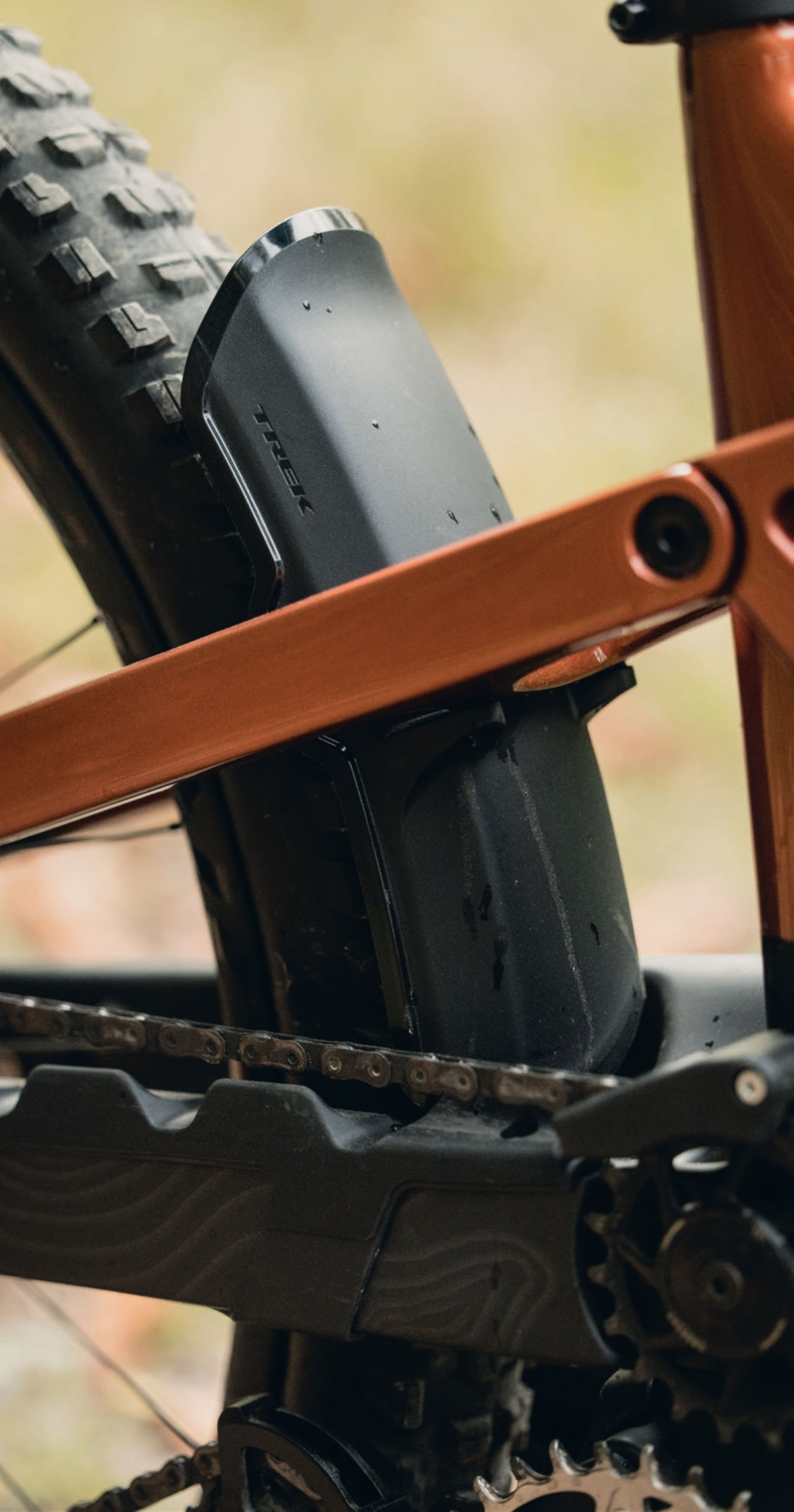
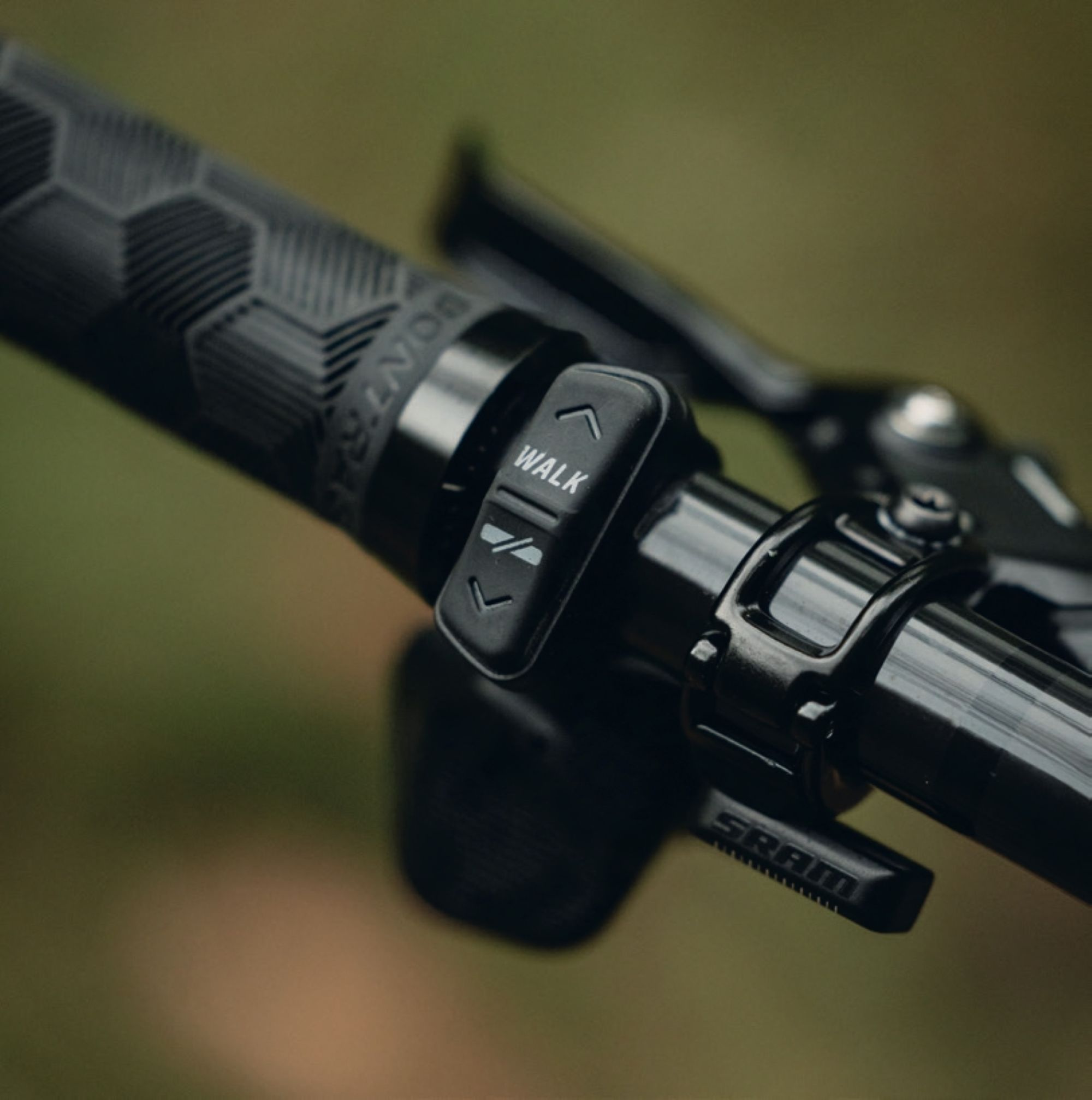
Geometry and Frame Details
Make no mistake, the Slash+ is burly bike. With 170mm of front and rear travel, paired with a 63.4° head angle and 1233mm wheelbase, the Slash+ is made for steep, rough terrain—it’s fair to say that anything less is wasted upon this bike. At 77.5° the seat angle is surprisingly steep for a bike of such travel, making for a comfortable all-day climber that’s planted on steep ascents, with a particularly upright seating position making light work of long stints in the saddle – and making you second guess that you’re basically riding a mini downhill bike uphill.
This concoction of generous geometry has created a bike that descends exceptionally well with minimal compromise on climbing ability—the point of instability more or less doesn’t exist on the Slash+, with the bike instead asking for more if tackling anything below a double black technical or jump trail. Paired with a reach of 479mm, the Slash+ does feel generous relative to other SL offerings, with plenty of room to move around on the bike, whilst the 29” front and 27.5” mullet wheel size setup creates a sense of nimbleness oftentimes lost in eMTB experiences. Overall, the bike was exceptionally well-rounded, and one of the most versatile bikes I’d ridden in a long time. For how capably it descends, it almost seems wrong to climb with such comfort!
When it comes to nitty gritty frame details, the Slash+ has a plethora of thoughtful details. The integrated chainstay protector isn’t here to faff around—this thing is chunky and robust, and it means business when it comes to limiting chain slap, which is often a dinky afterthought on so many stock eMTB’s. On the Slash+, however, it’s a welcome addition—especially given the rough terrain that the bike is best suited to. The rear fender is also a nice touch—so often I’ve ruined frames with small-yet-mighty stones that work their way in between the rear wheel and chainstay, and this does a nice job of helping minimise this as well as keep mud at bay. There’s also a custom, Trek-specific chain guide which mounts directly to the motor housing—given my experience with zero chain drops, I’d say this is a well-executed addition. I found the charging port location a little odd to work with, having been so used to side-mounted ports, and often found myself having to really yank the charging cable hard to remove it once charged, which sometimes resulted in inadvertently smacking it on the underside of the top tube—oops. Having said that, this location makes sense when considering the bottle mounted TQ range extender, which fits snugly in this space when attached.
Ride Performance
For a bike with a 170mm fork up front, the Slash+ is an exceptionally comfortable climber, sitting high in the travel with a balanced centre of gravity. Not once did I find myself fighting to keep the front wheel on the ground, which is impressive considering the bike’s relatively slack head angle. It navigated tight switchbacks with surprising ease despite a long wheelbase—there was many an occasion where I was glad to have a mullet configuration, as it gave an otherwise cumbersome bike the ability to navigate tight, technical ascents. Traction isn’t an issue—in fact, this was one of the most planted bikes I’d climbed on, with a rear wheel that’s never fighting for grip. The Rockshox Vivid Air shock behaved itself well with minimal ‘bob’. Whilst the Rockshox AXS Reverb is a welcome addition on any eMTB—anybody who’s had to complete any mechanical dropper post maintenance on an eMTB will attest to how much of a headache it is—the standover on this bike is low at 77.6mm for our 17.5” sized test bike and, when paired with a 170mm dropper post, it leaves a little more seatpost exposed than desired, especially for longer limbed riders like myself!
As I’ve found with other TQ-HPR50 equipped bikes I’ve had the opportunity to ride, the power delivery is akin to a “pat on the back”—someone giving you a little push of encouragement climbing up the hill. Let’s be real, at 20.8kg, whilst the bike does fall into the SL eMTB category, the Slash+ is on the chunky side relative to the power that the motor can produce. There were numerous times where I found myself wanting more from the motor—I was surprised at the cadence level required to maintain optimal power delivery, particularly on road climbs. On a number of occasions I felt a twinge of surprise when the motor appeared to hit the point of peak power delivery—“is that it?!”, I asked myself, as I kept getting dropped by my fellow SL eMTB riding crew.
This is a great segway into battery chat; I’ve been fortunate enough to have a tasting platter of SL eMTB’s so far, and when the Slash+ showed up in my garage, I had range curiosity! My conclusion was one of uncertainty—whilst it initially seemed great to have the reassurance of a bigger battery, what I often found was that the weight of the bike required me to run the motor on a higher-than- usual mode, and I often found myself drawing battery at such a rate that it cancelled out the supposed gains of increased Wh. My experience with this motor also matched that of the Fuel EXe, in so far as the way the power is delivered seemed to draw battery at a greater rate than other SL counterparts, such as Shimano’s EP8 RS and Specialized’s SL 1.2 motor—this was even more apparent on the Slash+ with the additional bike weight the motor had to carry.
However, I was still able to tackle a solid 2.5hr long loop with 15% remaining and at no point was I unable to make it up any of Christchurch’s steepest Victoria Park fire roads—just don’t expect to be setting any Strava e-QOM’s! It should also be noted that the TQ motor continues to maintain its reputation of being without a doubt the quietest motor I’ve experienced, providing power almost silently. While it doesn’t bother me, I’m well aware that motor noise is a sensitive issue for some eMTB buyers, making this great news for those who prefer not to hear their bike humming as they ride.
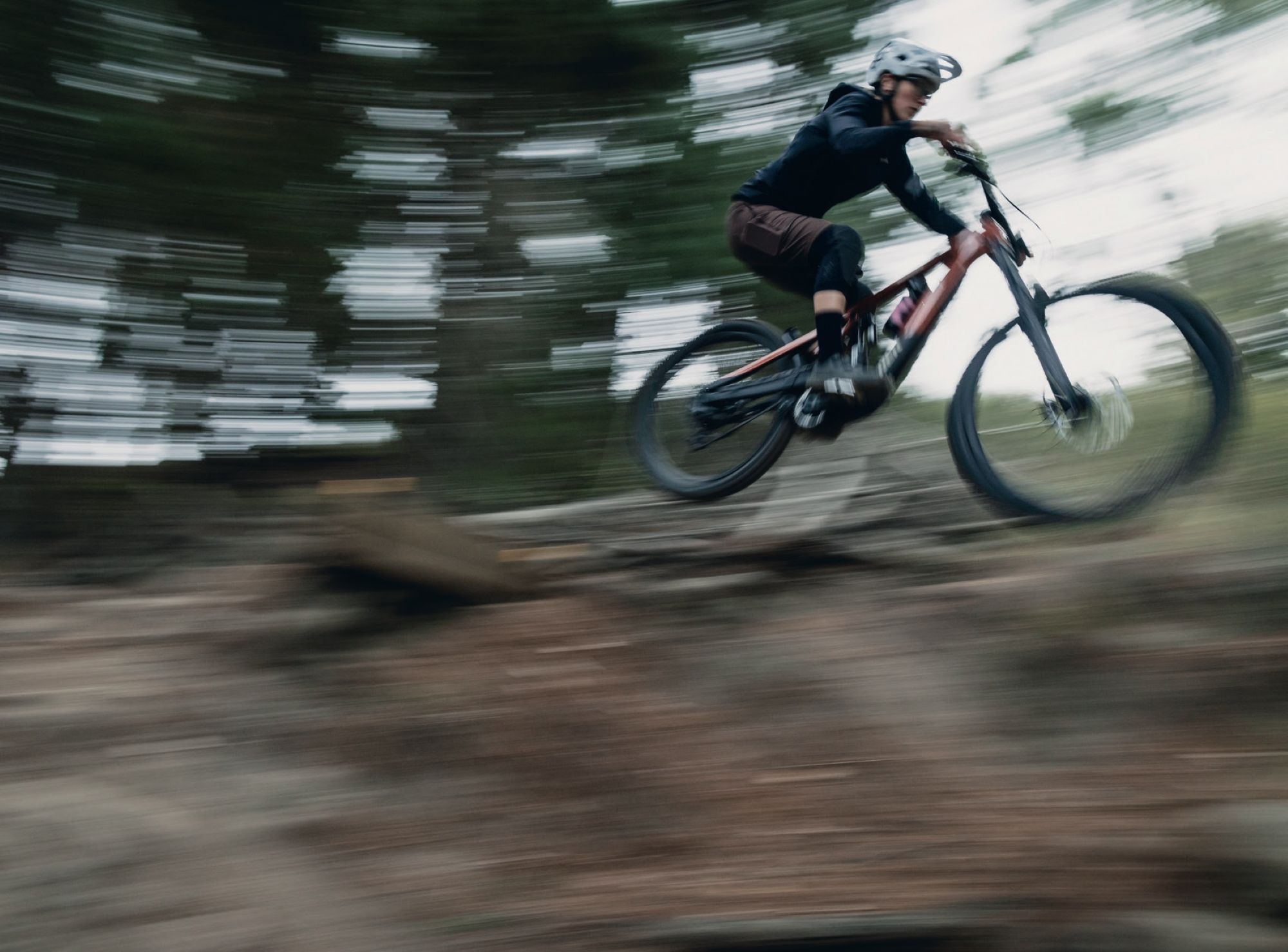
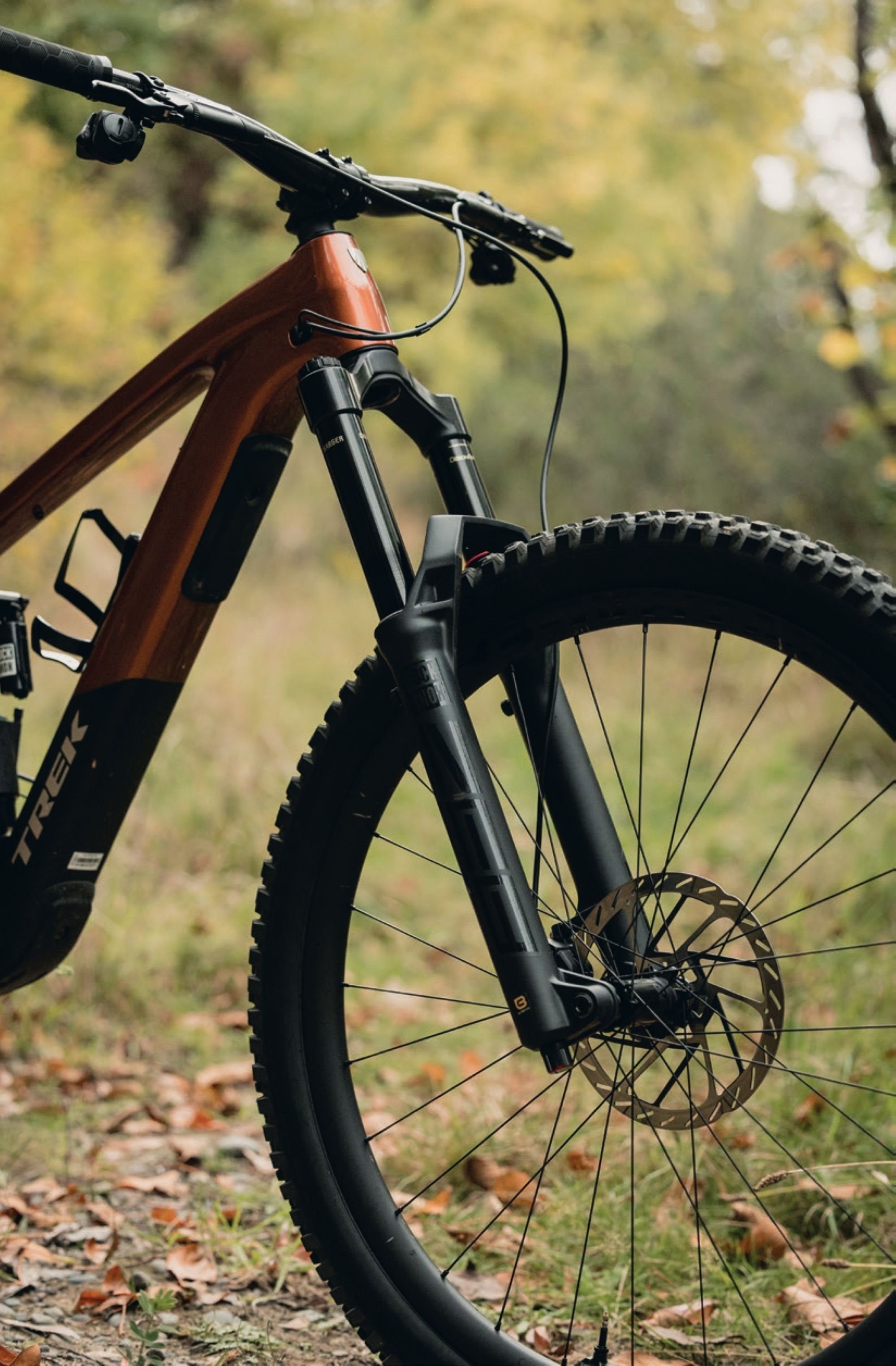
The 9.9 AXS T-Type build is specced with, you guessed it, SRAM’s X0 AXS drivetrain. This performed reliably and with crisp efficiency throughout the duration of my testing, though I did notice that the drivetrain quickly became noisy unless spotlessly cleaned after almost every ride. Whilst Christchurch will provide you with an overwhelmingly dry riding experience and taking a rain jacket “just in case” is uncommon, this does equate to A LOT of dust, which for this bike means constant maintenance to ensure the drivetrain remains smooth under pedal load, and drag-free. I think we easily doubled our chain lube consumption for the duration of testing to try and avoid any ear-twitchingly uncomfortable grinding drivetrain noise. The other interesting characteristic of this particular X0 AXS drivetrain is that it’s powered by the primary battery—the plus side to this is that you don’t need to worry about swapping or monitoring batteries (let’s face it—we’ve all been “that guy” at the trail asking around for spares…) as long as the bike is charged. The flip side to this is that if you happen to find yourself in a sticky situation, or running the battery down to it’s last drop of juice, you’ll lose the ability to shift gears because once that primary battery dies, that’s your drivetrain power source gone.
Descending on the Slash+ is a dream—this has to be one of my favorite eMTB’s I’ve taken down the rocky steeps of Christchurch, and I’ve been fortunate enough to throw a few into the dustbowl! The 170mm RockShox ZEB ultimate was an absolute delight—it took minimal time to setup and performed excellently in the chunkiest of rock gardens, and was incredibly stout without feeling too stiff. This made for a comfortable descending experience that excelled on rough terrain; the more technical the trail, the more the bike ate up whatever was underneath it. The mullet setup gave the bike a touch of nimbleness that balanced out its long wheelbase and slack head angle, creating a far more agile ride than I’d ever have imagined for a 20kg, 170mmm eMTB. Whilst the bike is certainly planted and hugs the ground—and therefore tracks exceptionally well—it was still surprisingly easy to jump and move around underneath me. I was also wow’ed with the performance of the RockShox Vivid Ultimate air shock. I’ve tried a range of different shocks in SL eMTB’s and am usually committed to the coil shock cause on my long travel bikes; however, the suppleness of the Vivid and its small bump sensitivity was so confidence-instilling that it’s got me thinking I may re-explore an air shock on my next bike build. Like the Zeb, the Vivid was a once-and-done setup for me, and it provided supple comfort over big holes without the sinking “Lay-Z-Boy” feeling you can sometimes get from bigger air shocks—it sat high in travel, even through the burliest terrain. The short chainstays are also a welcome addition.
This bike eats double black trails for breakfast, and technical blues are a great complementary snack. Make no mistake—this is a BIG bike, and if not pushed hard enough or ridden on terrain that doesn’t suit it—think flow blue trails—it may tend to feel cumbersome and even stiff at times, particularly due to the suspension being on the less active side. For this reason, it’s definitely best suited to a rider who likes to push a trail bike to its limits. For the terrain I often ride, this platform was ideal; for my first foray into the high-pivot world, I was left wanting more as it created an incredibly stable ride that seemed to make the usual bone-rattling, small bumpy sections feel like I was floating on a magic carpet. When combined with the added weight of a motor and big battery, the bike feels incredibly balanced and, as is so often the case on SL eMTBs, I felt more stable—and, as a result, much quicker—on wide-open, fast, chunky descents than on my acoustic bike. People often think an eMTB is reserved for heavy, cumbersome ride feels, but I believe that with the right platform and weight balance, the ride experience is arguably more comfortable. Trek have done an exceptional job designing a platform that’s so stable and confidence-inspiring yet still maintains some degree of nimbleness and maneuverability.
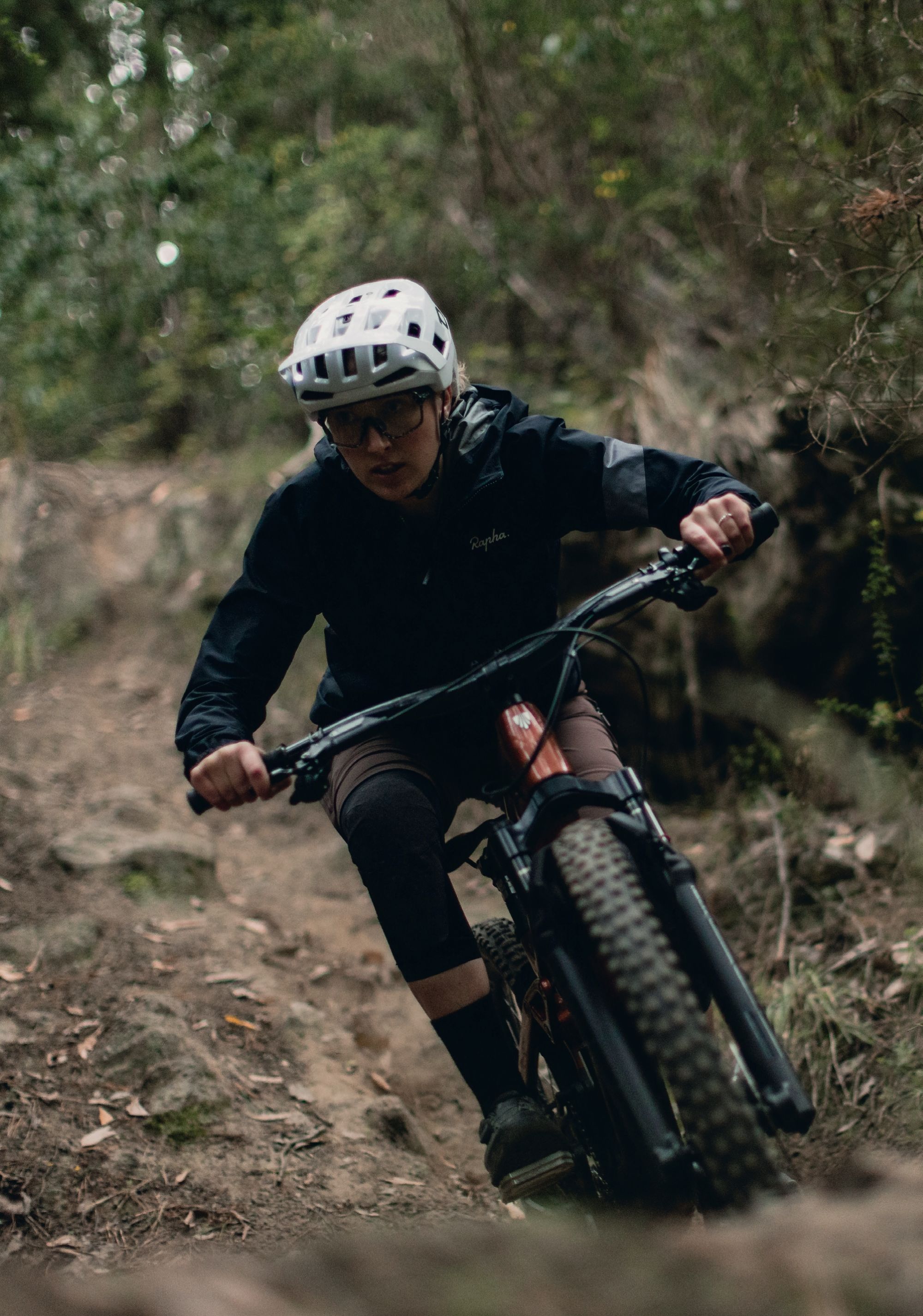
When it comes to contact points, I must admit I was a little skeptical when I noticed the SRAM Maven Silver brakes—a sore point with many stock eMTB builds is underpowered brakes, and constantly battling to control speed is taxing and creates an unnecessarily arduous ride experience, even if they’re great descenders otherwise. I was pleased to discover that this wasn’t a concern with the 4-piston Maven Silvers—when paired with hearty 200mm rotors, I didn’t once feel like the brakes were under-gunned and didn’t suffer from the sore hands I’ve so often had with other SL eMTB’s in the past. This was complemented by the levers being on the larger size with plenty of adjustability—a particularly important factor for smaller hands—and gradual modulation that allowed for increased control, which is well-suited for the steeper terrain that the Slash+ excels on. I was also pleased to report nothing but silence from these brakes, even in dry, dusty summer conditions—a welcome change from SRAM brakes of years gone by!
As was the case with the Fuel EXe, the Bontrager contact points left a little to be desired—the grips were thick, uncomfortable and incredibly slippery when wet, which I unfortunately discovered was compounded by the fact they take a long time to absorb once wet, due to their ribbed nature. Another change I’d be making immediately is the stock Bontrager SE5 Team Issue TLR tyre. Whilst a grunty 2.5” tyre such as this is a logical choice for a bike of this travel and, in theory, should be well suited to the terrain, the compound lacked grip and was a little more skatey on Victoria Park’s loose clay than was comfortable. A few “oh s***!!” moments were had as grip limits were hit a little earlier than preferred. I’m also fine compromising weight and rolling resistance to optimize grip, but this was a little on the slow side with next to no grip gains, and something I’d swap out pretty quickly for a softer compound option. I’m also pleased to say that throughout the Slash+’s tenure in our garage, not a single chain was dropped, and I didn’t experience any significant chain slap, even on the roughest of rock gardens and rooty sections.
Summary
The Slash+ is a heavy-hitting descender that delivers excellent ride performance when pointed down the most burly, technical trails in your backyard. With a bigger range than its younger brother, the Fuel EXe—but without the “chonk” of its bigger brother, the Rail—the Slash+ is Trek’s quietly capable middle child. Equipped with a quiet, subtle motor that’s so stealthily integrated that even the most eagle-eyed eMTB riders will need to look twice to see it, the Slash+ represents a well-rounded eMTB that has your back no matter what it’s pointed down. While you’re not going to lead any eMTB climbing segments on Strava, you will be making gains in your ability to ride more and squeeze in “one last lap”—even when the post-work clock is up against you. I have to agree with Goldilocks, there’s something to be said for things being “just right”, and the Slash+ might just epitomize that saying perfectly.