

Crankworx in Aotearoa: Origins and Early Vision
Words Liam Friary, Ariki Tibble, Darren Kinnaird & Tuhua Mutu
Images Fraser Britton, Kike Abelleria and Clint Trahan
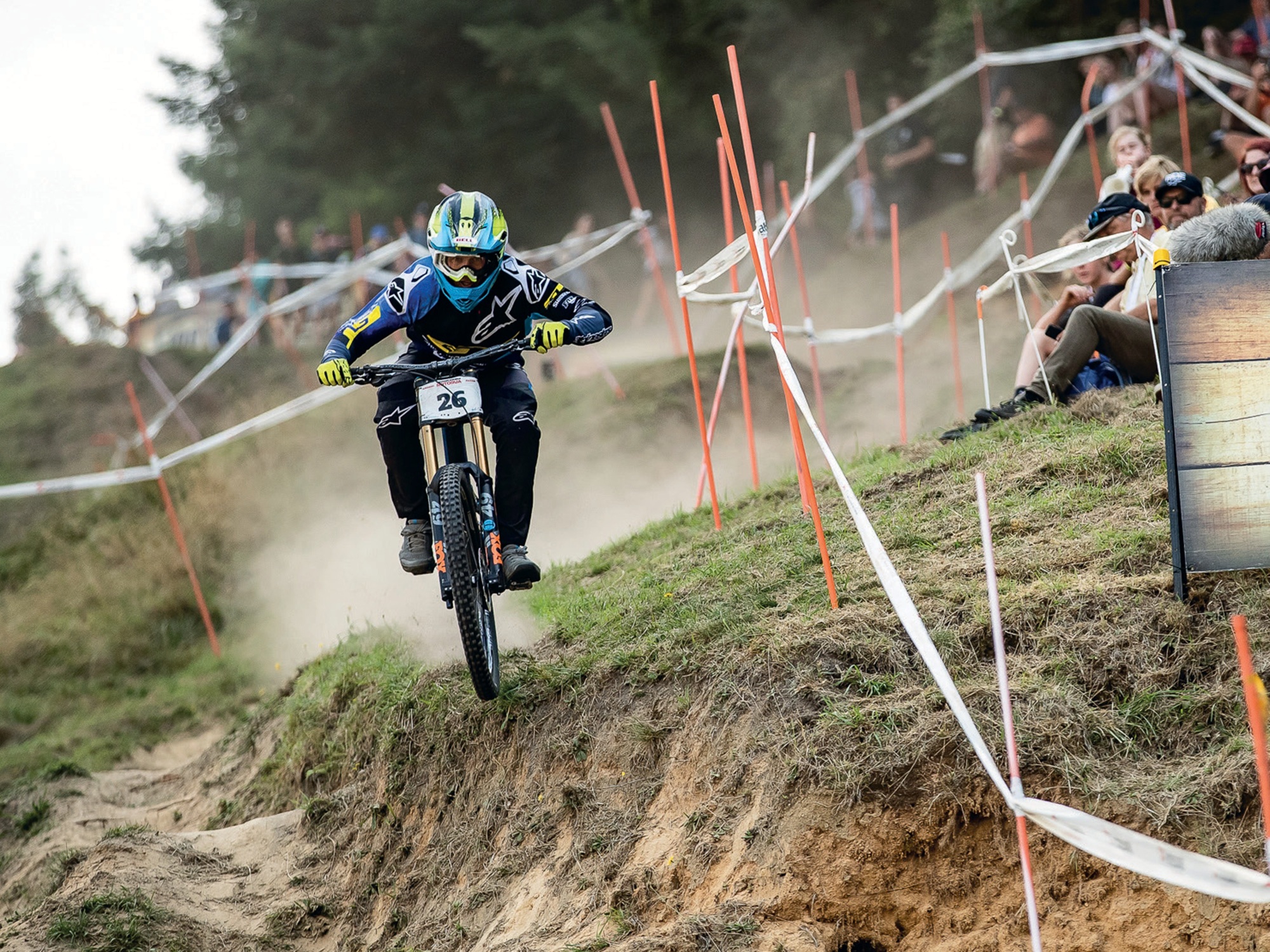
The southern hemisphere’s summer is now upon us! And that means Crankworx is returning to New Zealand in 2026 with back-to-back festivals. The Crankworx season kicks off at Christchurch Adventure Park from February 19-22, before heading north to legendary Rotorua from March 11-15.
Christchurch is stepping up big time, hosting full World Tour competitions including the Ōtautahi Slopestyle, Redemption Downhill, and Christchurch Pump Track Challenge. Rotorua returns with the Kārearea Downhill, Dual Slalom, Pump Track Challenge, and the Slopestyle in Memory of McGazza, plus a new event called the Skyline Double Down.
Two festivals, in two incredible riding destinations. Whether you’re there for the big air, the rowdy crowds, or just soaking up the gravity vibes, this is shaping up to be something special. Let’s take a look back and see how Crankworx became such a massive part of New Zealand’s mountain biking story. We sat down with the people who helped build it from the ground up to find out.
Taking the leap to the southern hemisphere: What made Rotorua the right choice for Crankworx’s first southern hemisphere stop back in 2014, and what were the biggest challenges in launching that inaugural 2015 festival?
Darren Kinnaird – Managing Director, Crankworx World Tour
When I visited Rotorua in 2014 for a site visit, I immediately fell in love with the place. The people, the culture, the riding; I knew there was something special here and we needed to bring the mountain biking world here. The biggest challenge was probably the time. There was less than nine months to get ready for the first ever Crankworx in the southern hemisphere in a place most of us had never been.
Equal pay from day one: Crankworx Rotorua was groundbreaking in offering equal prize money for men and women from the very first event. What drove that decision, and how did it influence the broader Crankworx World Tour?
Ariki Tibble – ex-Crankworx New Zealand Chief Executive
When we originally made the call to offer equal prize money from the very first Crankworx Rotorua, it never felt to me like a bold or radical decision. It felt obvious. New Zealand has a long history of championing women’s rights, and we grew up in a country where Kate Sheppard and the suffrage movement are part of the national DNA. Tak Mutu, as Event Director at the time, was our champion for the cause for the NZ operations and for him it was a hill he was prepared to die on if that’s what it was going to take!
Mountain biking was and is still relatively young as a professional sport, which meant we didn’t have the heavy machinery or deeply entrenched hierarchies that I imagine other more established codes might have to grapple with. In some ways, that gave us a gift. We had the chance to get it right from the start, before the cement had hardened.
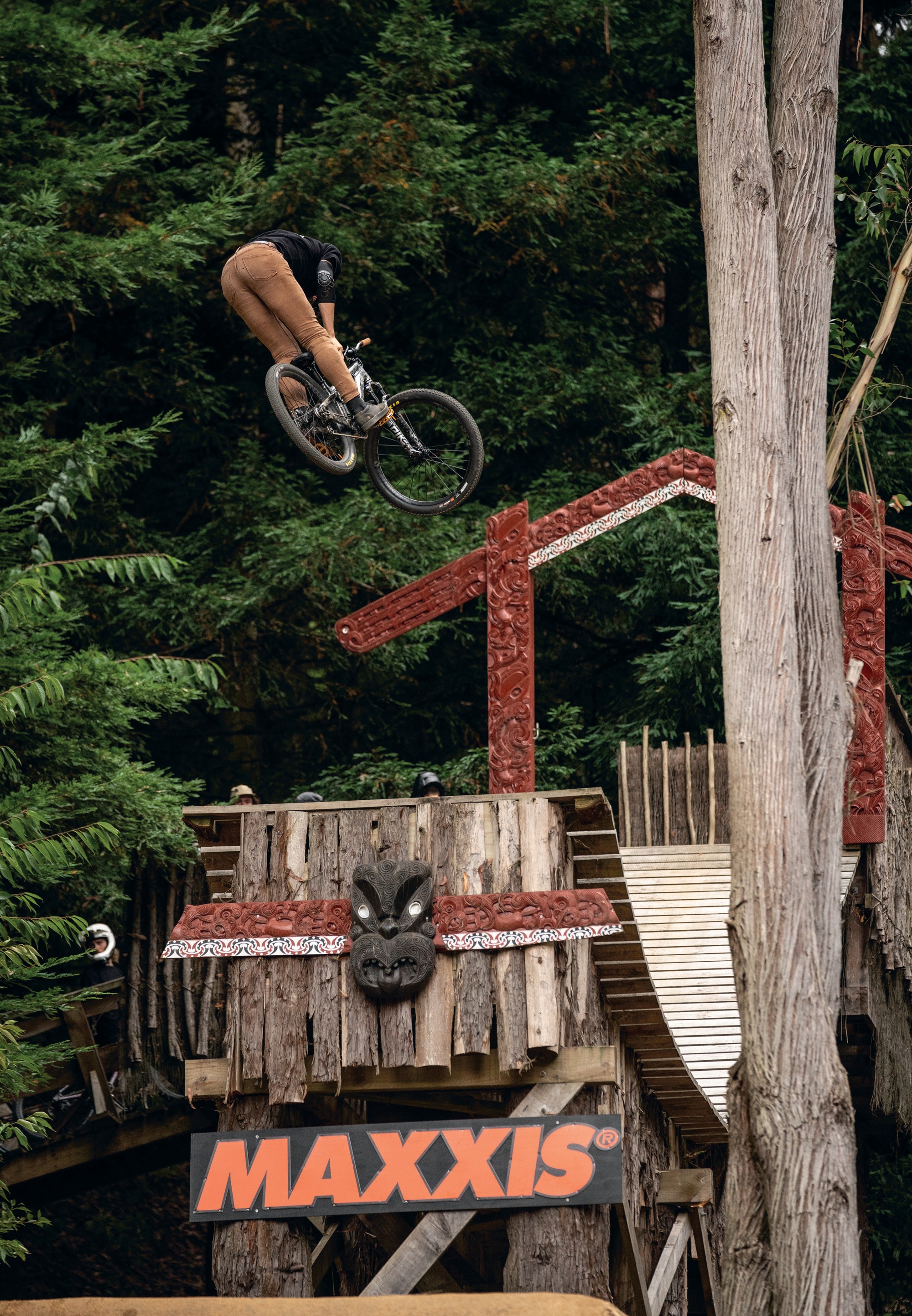
McGazza’s Legacy: Kelly McGarry was instrumental in shaping Rotorua’s slopestyle course before his tragic passing in 2016. How has his spirit continued to influence the event, and what does it mean to keep his memory alive through the competition?
Ariki Tibble
When I first heard Kelly McGarry’s name, I had only just stepped into the mountain biking world. I didn’t yet understand its legends or its language, so discovering Kelly felt a bit like learning we had a sleeping giant hiding in plain sight. He was physically impossible to miss – six foot five, golden hair flowing, a presence that filled the room even when he wasn’t trying to. But what struck me more was how humble he was, the kind of person who didn’t need to announce who he was because everyone around him already knew.
I first met him properly while he and his best mate, Tom Hey, were shaping the early slopestyle course. I remember standing there, stunned by the scale of the jumps they were carving into the Rotorua dirt. I couldn’t fathom that a human being on a bike could do what they were building for.
But it wasn’t until I travelled to Whistler and walked the village streets with him that I understood who he was to others. We couldn’t move more than a few steps without being stopped. Parents wanted photos. Kids wanted autographs. Fans lit up like they’d seen a movie star. It was then that it landed for me what a big deal he was in the scene, even if back home he was treated like any other bloke.
His passing just a couple of years in shook the community deeply. But what’s stayed with me is how present he still feels. It’s like he’s just on the other side of a door – not gone, just in another room. His voice, his energy, his pioneering spirit linger in the atmosphere of the event. Big personalities have a way of staying with you like that.
Most of the athletes competing now never rode alongside him, yet they carry that same spirit he embodied. Kelly was often the first to drop in on a new feature, the first to test something. Today’s riders honour him every time they push past what seems possible. His legacy isn’t a memory. It’s a living current that still runs through Crankworx Rotorua and the World Tour.
Historic firsts: From Nicholi Rogatkin’s first- ever competition 1080 in 2016 to hosting one of the last major international events before the pandemic in March 2020 – which moments stand out as truly defining for Crankworx NZ?
Ariki Tibble
People often assume the defining moments in Crankworx come from the biggest tricks, the landmark podiums or the viral runs. And those things are incredible. But for me, the moments that stay with me the longest are the ones behind the curtain or under the hood. They’re the orchestral moments when a hundred different people, in a hundred different roles, each carrying their own small piece of the puzzle, somehow manage to come together and create something none of us could have achieved alone. That is the magic I fell in love with during my time working in the Crankworx realm.
One standout example is Loïc Bruni’s run on the Taniwha Downhill in 2023. The day of the race felt like the final boss in a 1980s video game.
Light was fading faster than we expected. Technical teams were stretching the limits of what had ever been done in a forest environment. We were relying on innovations like Starlink and a huge amount of force of will to broadcast something many people had told us wasn’t possible.
By the time Loïc was getting ready to drop in, it felt like the event had carried us to the edge of a cliff. Every challenge we had overcome, the logistics, the technical barriers, the timing, the pressure, had funnelled us into that single, delicate window. And, in the dimming light, Loïc delivered an extraordinary run. It was clutch and clinical and brave. But the reason it meant so much to me is because it also represented the collective clutch of the entire team. His moment only existed because of all of the unseen moments that came before it.
Had he not won that day, I think people would have rightly questioned our decision to push through the fading light. We learned from that experience, and we carried those lessons forward. But on that day, everything aligned. It felt like the mountain, the team, and the sport were all breathing in the same rhythm. Those moments are the tip of an enormous iceberg of collective efforts. And the great privilege for me was having a view and a deep appreciation of that iceberg in its entirety.
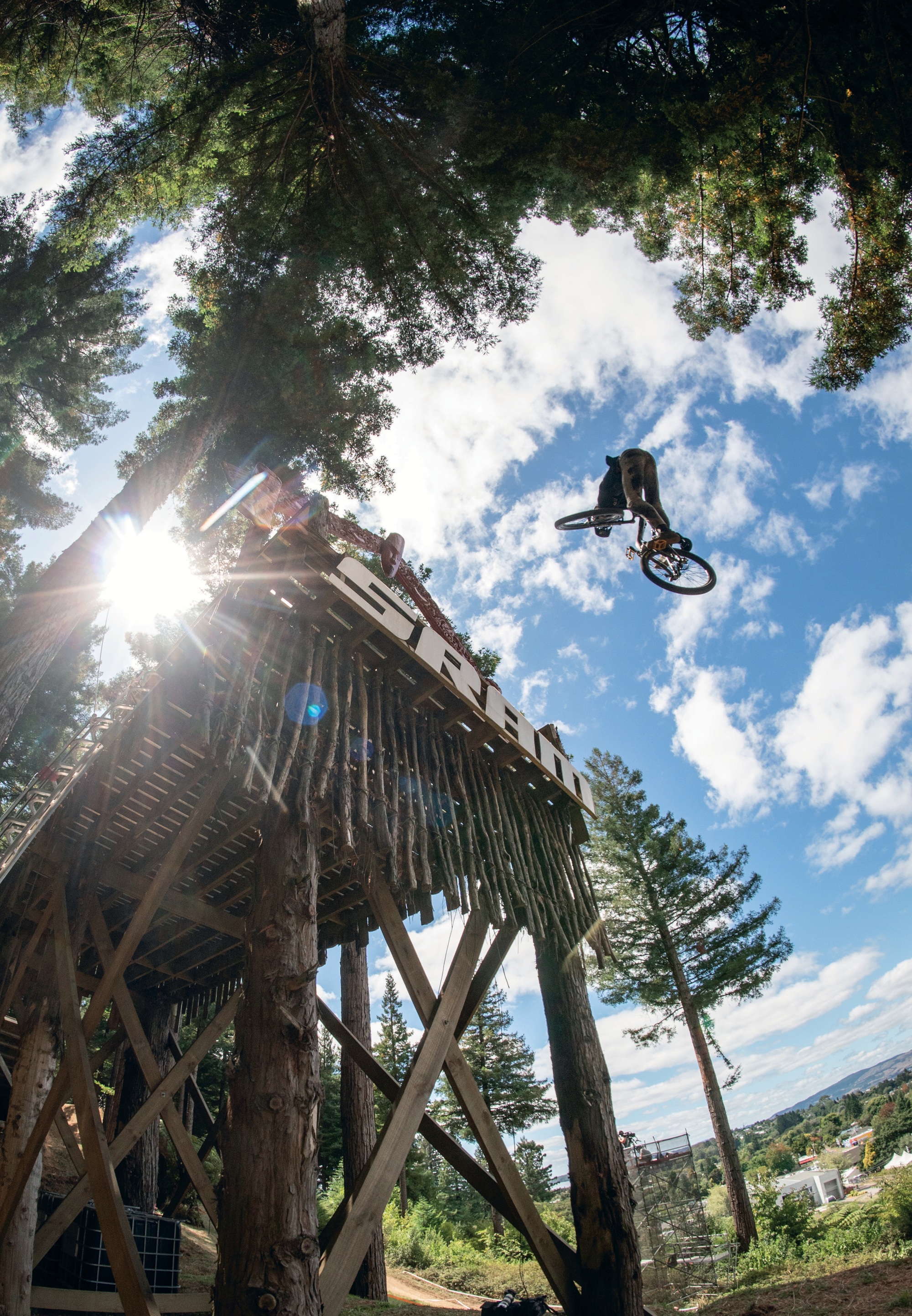
The Soul of Crankworx: You’ve described Rotorua as the “soul” of the World Tour (with Whistler as the “heart”). What is it about the Māori culture, the community embrace, and the Rotorua vibe that creates that special identity?
Ariki Tibble
Whenever I try to explain what makes Rotorua the soul of the World Tour, I always end up coming back to things that aren’t easily measured. It’s not infrastructure, or weather, or even the terrain, although all of those things matter. It’s the way people connect here. And for me, that understanding comes from my Māori side, from growing up surrounded by a way of being that teaches you how to welcome, how to include, how to weave people together so they feel like they belong. On my mother’s side I have Irish and Welsh heritage, which came with its own set of gifts. But the lessons about bringing people together, about creating cohesion and allowing people to show up as their full selves, came from watching my cousins on the marae at hui and tangihanga. Māori hospitality is not transactional. It is relational. It is about walking into a space and feeling seen. Feeling safe. Feeling like someone has anticipated your needs without you having to say a word.
Rotorua amplifies that. It is a cultural hub, a place where that way of being is not confined to ceremonial settings but shows up everywhere. Tourism operators, local businesses, volunteers, event staff, aunties on the street; everyone carries a little piece of that same ethos. Visitors often struggle to articulate it. They say things like “It felt like coming home,” even though they’ve never been here before. They feel the warmth before they can name the source.
That is what makes Rotorua the soul of Crankworx. It’s not just another stop on a tour. It’s a place where the event reaches beyond its own boundaries and becomes part of a larger cultural rhythm. The feeling people get here goes straight past the mind and into the chest. It hits the soul, which is exactly why that word feels right.
No spectators, all heart: November 2021 saw Crankworx Rotorua run in a COVID bubble with no public attendance. What was it like pivoting to that broadcast-only format, and how did the team keep the magic alive?
Ariki Tibble
The 2021 COVID bubble event was one of the most intense experiences our team has ever been through. Crankworx is a massive undertaking in the best of times, but the pandemic forced us into a pressure cooker that was shifting by the hour. By the time we reached the event window, that final 30-day countdown where every day increases your financial exposure, the team was already worn down from constant rule changes, public health updates, legal challenges, and uncertainty from partners. It felt like we were trying to build a plane in the dark while flying it through turbulence in uncharted territory.
The business model of any major event is unusual by comparison to other businesses. For Crankworx you spend 355 days preparing for ten days of operation. Your costs climb steadily and then exponentially as you get closer to opening. The day before the gates open is the moment of maximum financial risk and exposure because you’ve committed to the full spend but you haven’t truly earned a dollar. And here we were, in that two-week exponential window, with the expanding Auckland bubble and escalating COVID alert levels – having to refund ticket holders, cancel the expo, renegotiate positions with core partners, and defend our legal right to continue. Meanwhile, athletes had already travelled and were sitting in quarantine, vendors were already setting up and so many of our hard costs had already been incurred. Every element felt high stakes.
Yet despite the pressure, something remarkable happened: the team held together. People stepped into roles they had never done before. Decisions were made in real time collaboratively under immense strain. We took one step at a time, and at every twist another little magic door seemingly opened which we could walk through. And when the event finally took place, even without spectators, there was still something undeniably special about it. It revealed that Crankworx is more than the parts we think are essential. When some of those parts were stripped away, the heart of the event remained.
The consequences of that year rippled far beyond the festival itself. Not everyone felt like it should have gone ahead. We carried the fatigue, the financial impact and the psychological load for years. In some ways, we’re still carrying them now. But the fact that we delivered it at all is something I’ll never forget. It was a hard moment, but it was also a defining one.
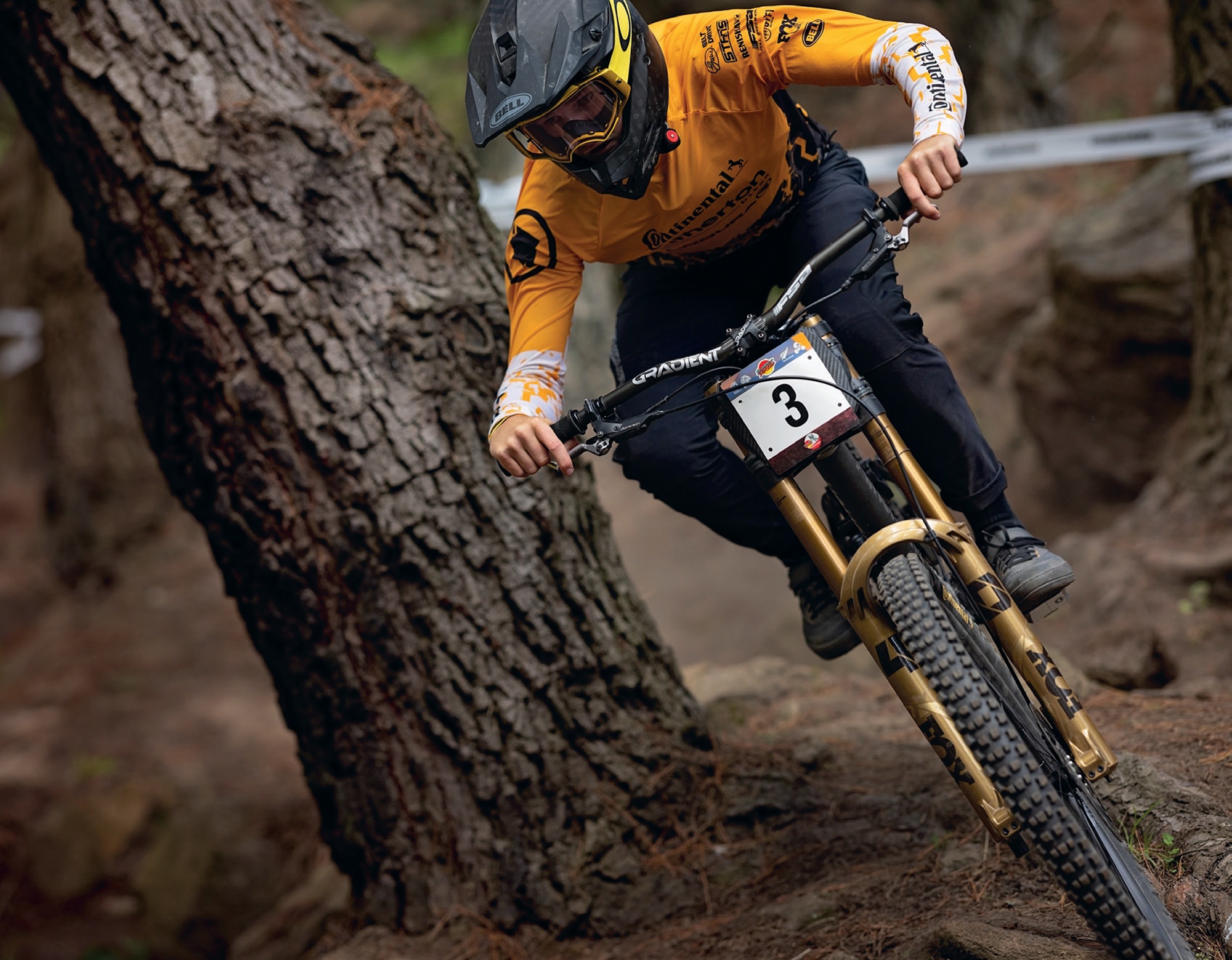
Birth of the Summer Series: The Summer Series launched in late 2021, road-tripping through Alexandra, Queenstown, Cardrona, and Wānaka. What was the vision behind taking Crankworx regional, and how has that evolved into the Christchurch festival we saw in 2025?
Darren Kinnaird
The Crankworx Summer Series was born out of a “COVID pivot” of what can we do without mass gatherings. After we did it in BC, the team in NZ was like, “hey we could do that here too”. With so many great riding destinations in New Zealand and New Zealand being a home for so many great mountain bikers, whether they’re from New Zealand or not, it just felt like a no brainer. Christchurch is just the evolution of that original series and the original reason we came to New Zealand in the first place. World-class riding, people and Kiwi spirit!
Homegrown Champion:
Tuhoto-Ariki Pene NZ’s King of Crankworx in 2023 – a rider who started as a young grom at Rotorua in 2016. What does his journey tell us about the talent pipeline Crankworx has helped create in New Zealand?
Tuhua Mutu – Event Director, Crankworx New Zealand
When we launched Crankworx in NZ 12 years ago, we weren’t just bringing an event – we were bringing the world to our doorstep. The best riders, the best tracks, the broadcast machines, the pressure, the scale, the intensity – all of it arrived in our backyard. From the outset, the goal was clear: to show the world’s best riders why New Zealand should be their summer base, and to showcase our destinations, culture, and quality of life.
But the most powerful outcome was what Crankworx did for our own talent. Suddenly, young Kiwi riders no longer had to imagine what “world-class” looked like. Year after year, they could stand next to it. Feel it. Chase it. Hone their craft against the very best. Crankworx also created the platform for these young riders to be seen, giving raw Kiwi talent regular exposure to global brands and industry attention, and helping turn aspiring groms into emerging professional athletes.
Tuhoto was one of those kids. He didn’t just watch Crankworx – he grew up inside it, discovering what it takes to compete on the world stage as he went. Today, just two years on from Tuhoto’s King of Crankworx 2023 achievement, New Zealand’s gravity mountain biking talent pool has exploded to see the deepest and highest performing ever. Riders like Robin Goomes, Lachie Stevens-McNab, Jess Blewitt, Jenna and Kate Hastings, Erice Van Leuven, Ellie Hulsebosch, Sacha Earnest, Tyler Waite, Oli Clark, Charlie Murray, Joe Millington, and Toby and Rory Meek – not to mention rising stars like Winni Goldsbury – are pushing the pace internationally. And then we still have our seasoned veterans like Sam Blenkinsop, Brook Macdonald, Wyn and Ed Masters who continue to cast long shadows, remaining fiercely competitive across multiple disciplines on the world stage.
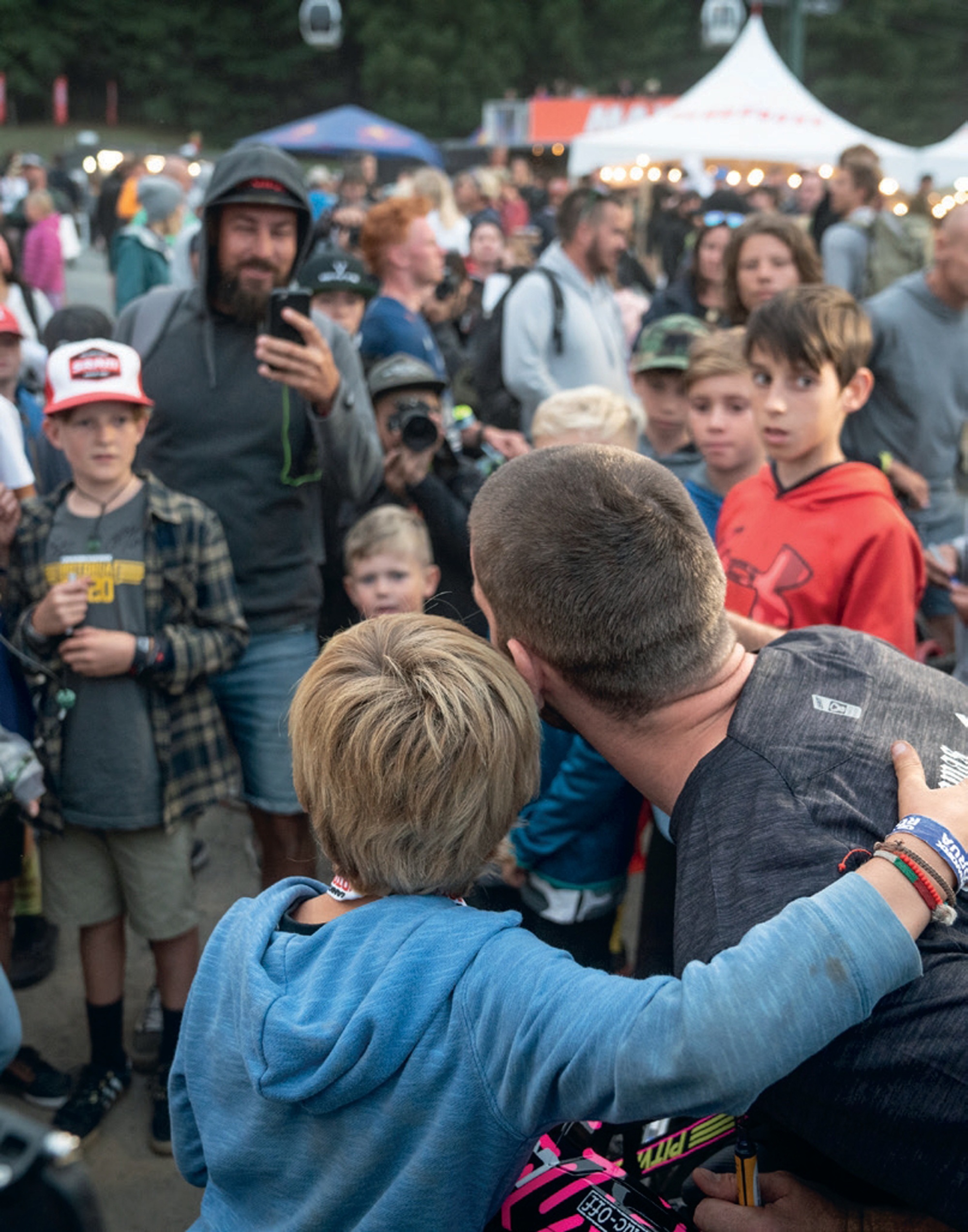
We’re proud to have helped nurture Kiwi talent from the earliest days, supporting many of today’s world-class gravity riders since they were kids. And the momentum hasn’t peaked – it’s compounding. With Crankworx now embedded in both Rotorua and Christchurch, the next generation is growing up with world- class racing in their own backyard every single year. That means more pathways, more visibility, more opportunity, and ultimately more Kiwi riders stepping onto the world stage. If this is what the first 12 years delivered, just imagine what the next decade could hold.
Christchurch’s debut: February 2025 brought Crankworx to the South Island’s largest city with NZ’s first FMBA Gold Slopestyle. What does having both Rotorua and Christchurch on the calendar mean for the future of mountain biking in New Zealand?
Tuhua Mutu
Back when the very first Crankworx event in New Zealand was conceived, part of the vision was to use the platform to tell a wider story of Aotearoa – recognising that every region has its own unique community, whenua, and culture to celebrate. Rotorua set that foundation, bringing together mana whenua, world-class riding, and a deep culture of hospitality that defined what Crankworx in NZ would stand for.
With Christchurch now on the calendar, that original vision expands in the best possible way. A unified national identity emerges – two regions, two communities, each adding their own flavour to remind the world of the quality of life our backyard offers. Rotorua’s geothermal forests, Māori cultural heart, and long MTB history sit alongside Christchurch’s Port Hills and Southern Alps backdrop, its rejuvenated bike-friendly city environment, and its fast-growing South Island scene.
Together, they form gateways to the wider North and South Island riding landscapes – the ideal playground for every outdoor enthusiast whether you ride bikes well or not! Two world- class Crankworx stops signal a new era: a truly national platform for mountain biking, more development opportunities for Kiwi talent, and a future where New Zealand stands even more firmly among the world’s great riding nations.
Where to next?: Looking at 2026 and beyond, what’s your vision for the evolution of Crankworx in New Zealand and its role in the World Tour? Are there new locations, disciplines, or innovations on the horizon?
Darren Kinnaird
New Zealand continues to be one of the best riding destinations in the world which is a key part of the Crankworx ethos. Who knows what the future holds but as long as there is incredible riding to share with the world in New Zealand, we are keen to help tell that story!
Sammie Maxwell
Words by Lester Perry
Images by Riley McLay
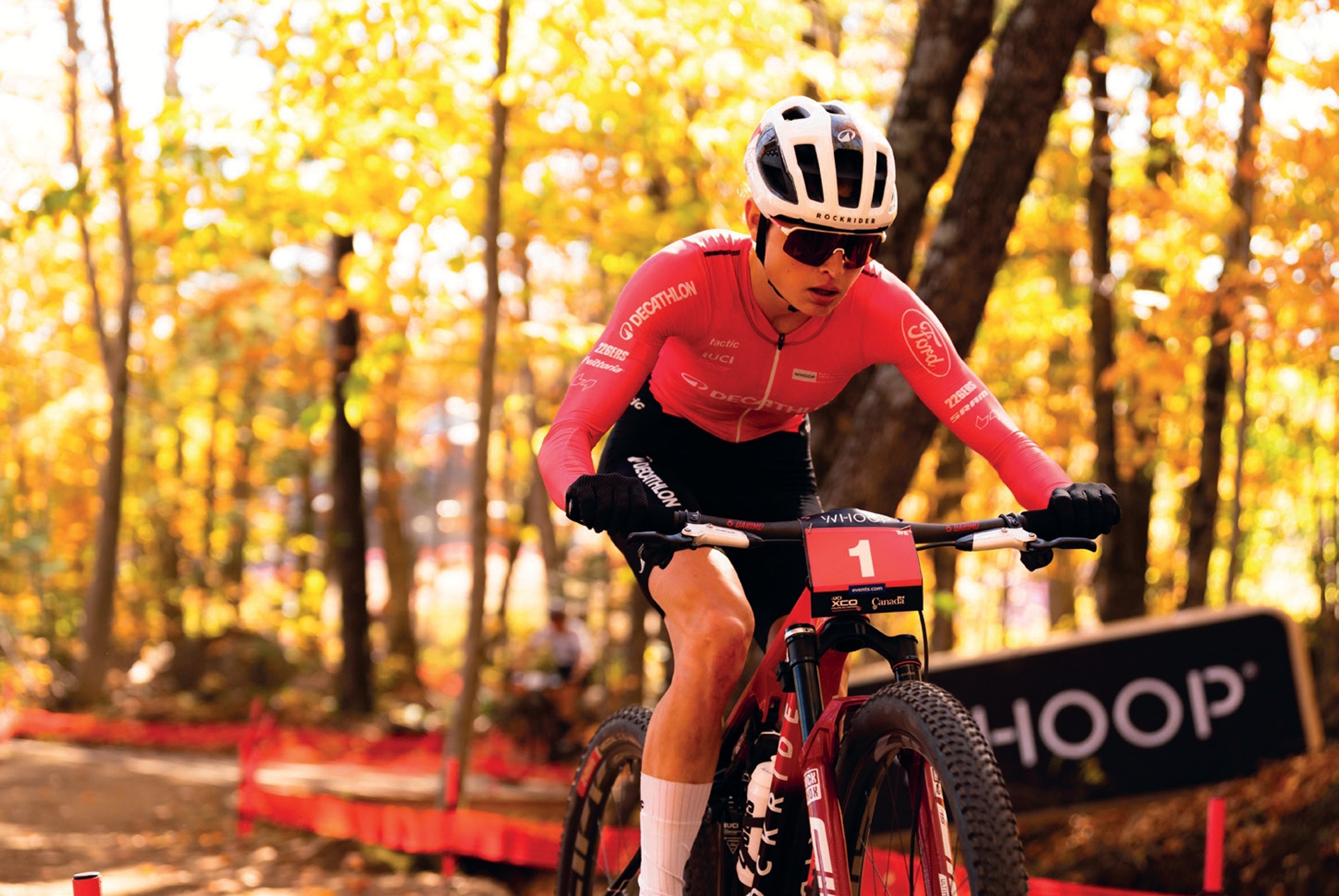
Back in issue #112, we spent time with NZ cross-country phenom, Sammie Maxwell, discovering what makes her tick, her history in the sport, and diving into her stellar 2023 season, which included winning the Under 23 XCO World Championships in Glasgow, Scotland.
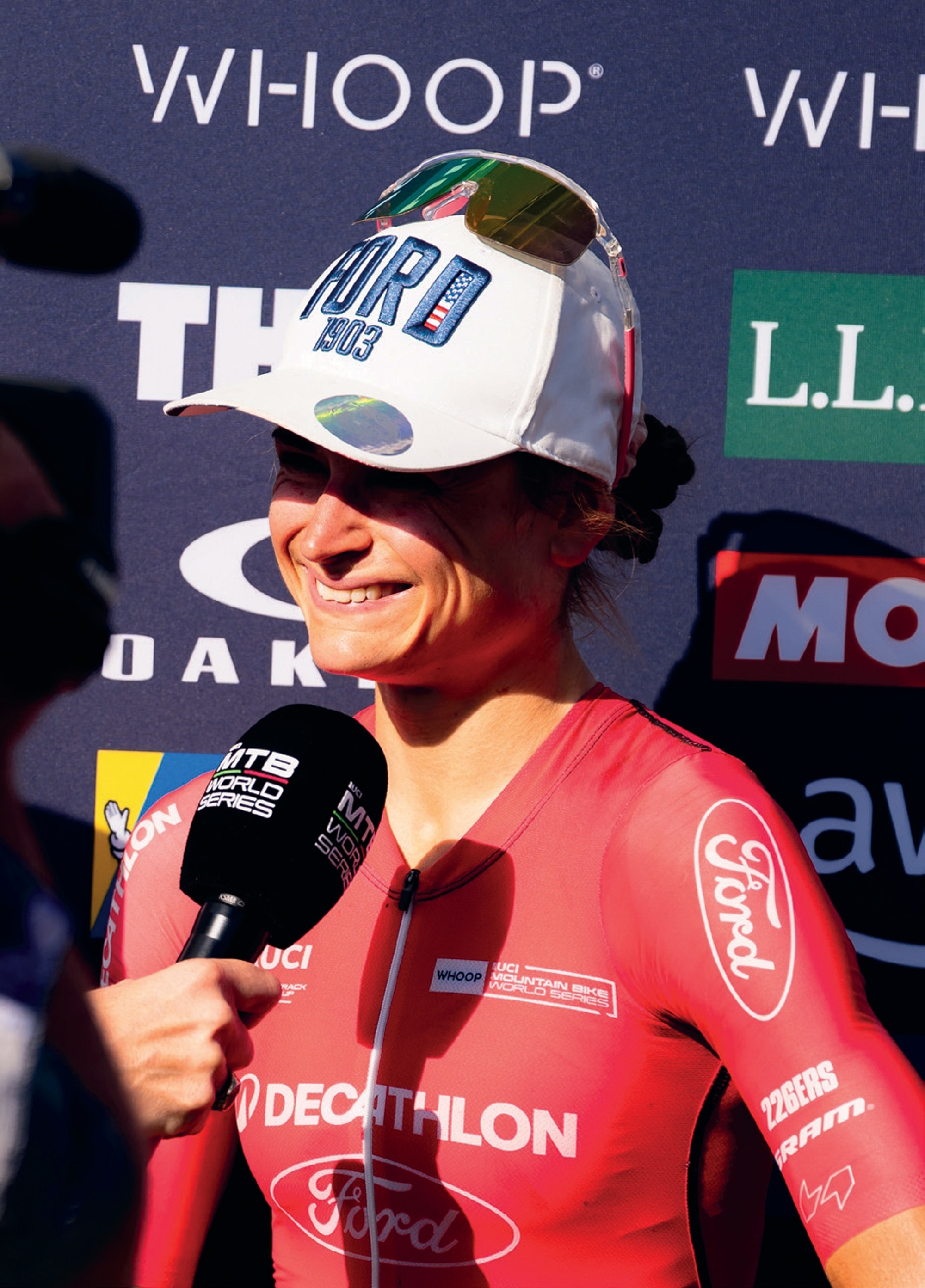
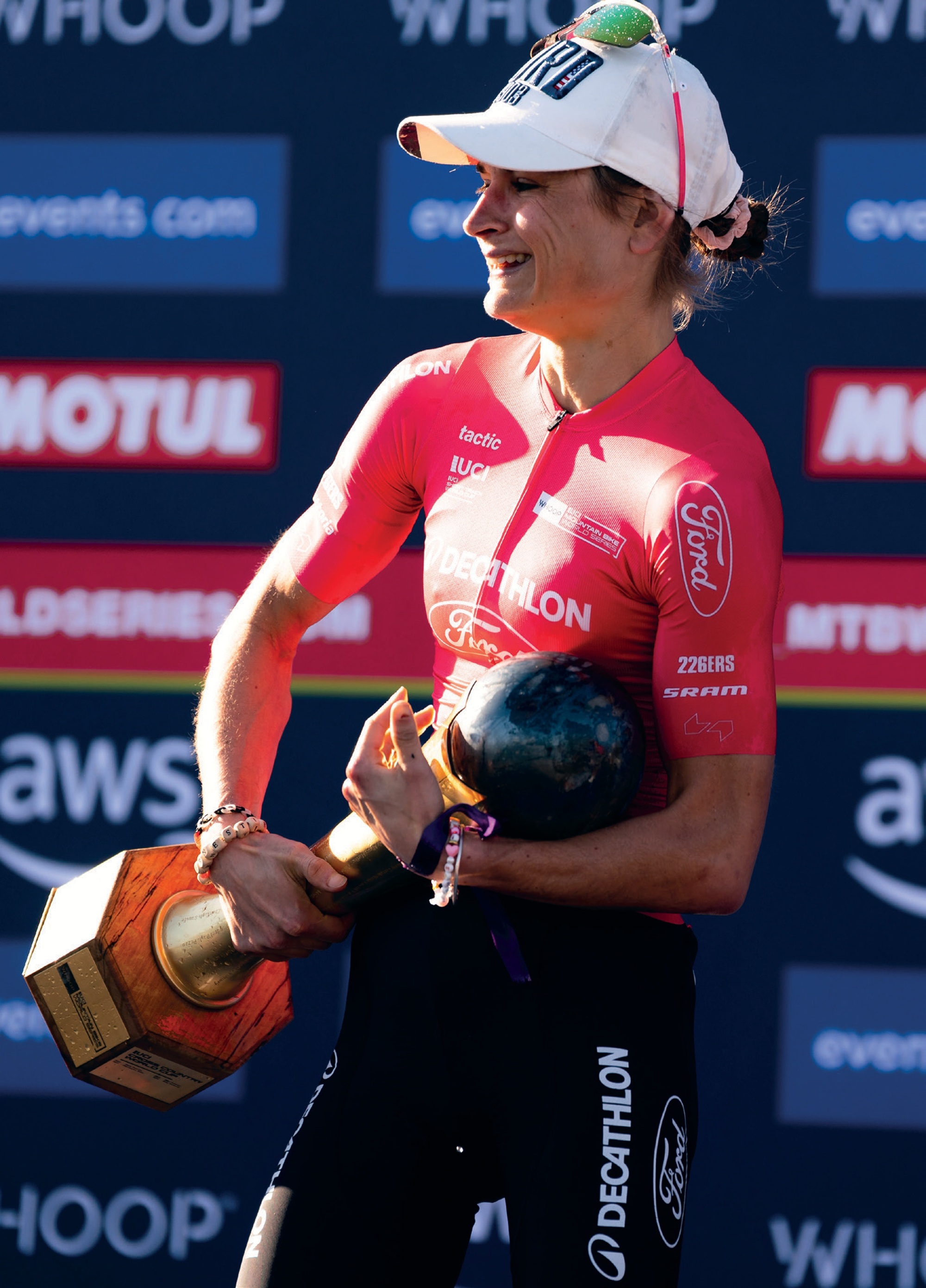
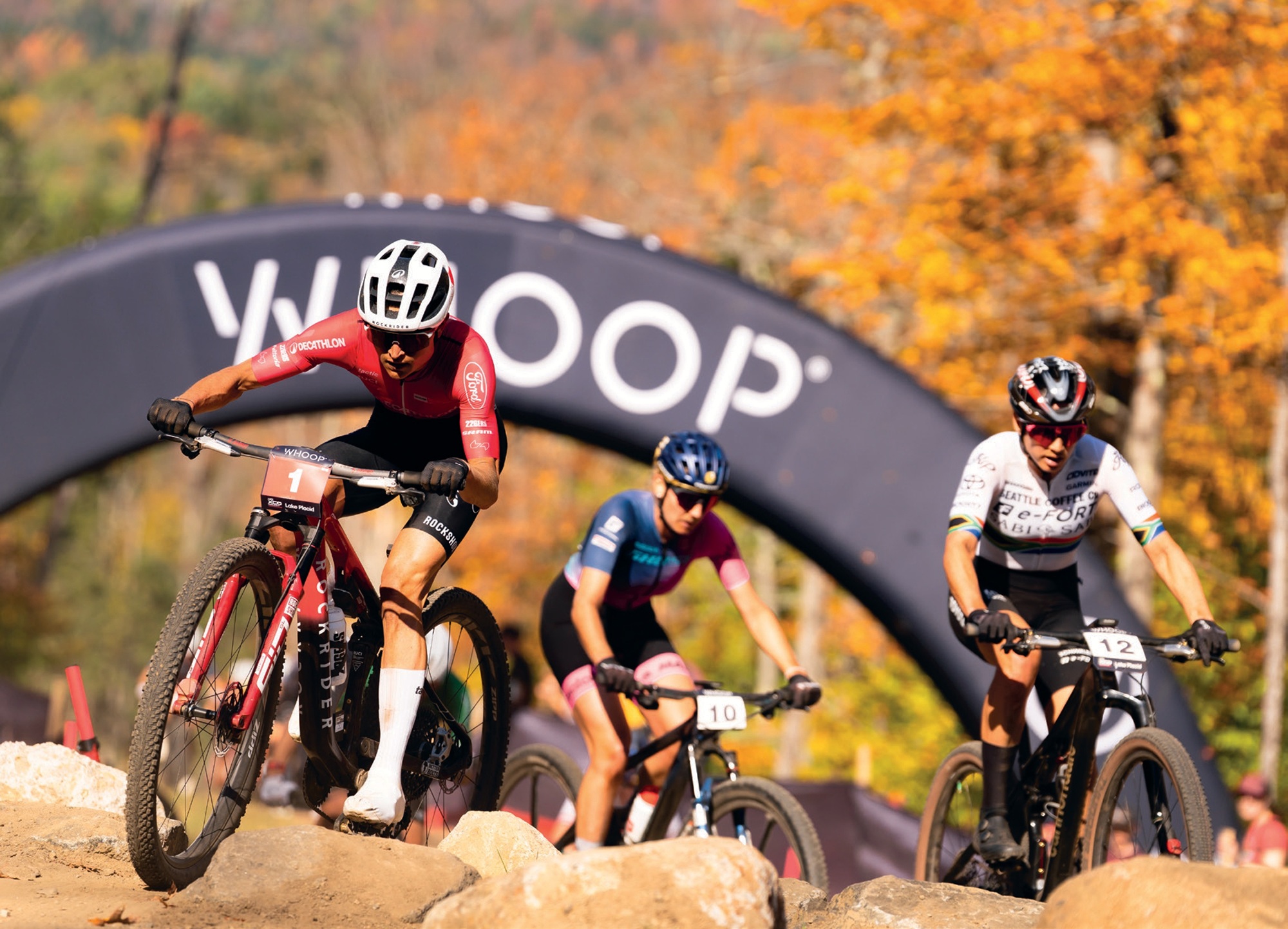
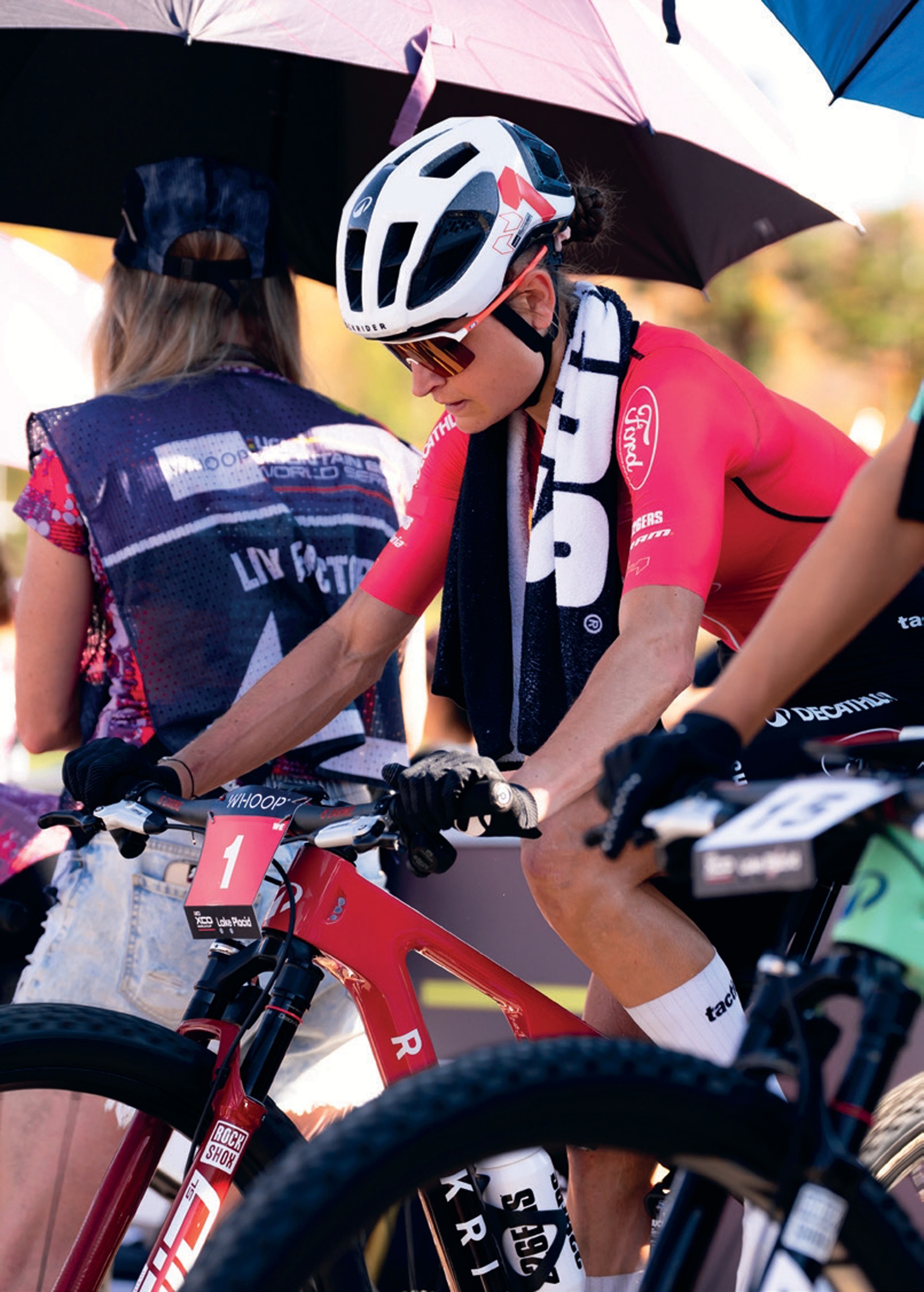
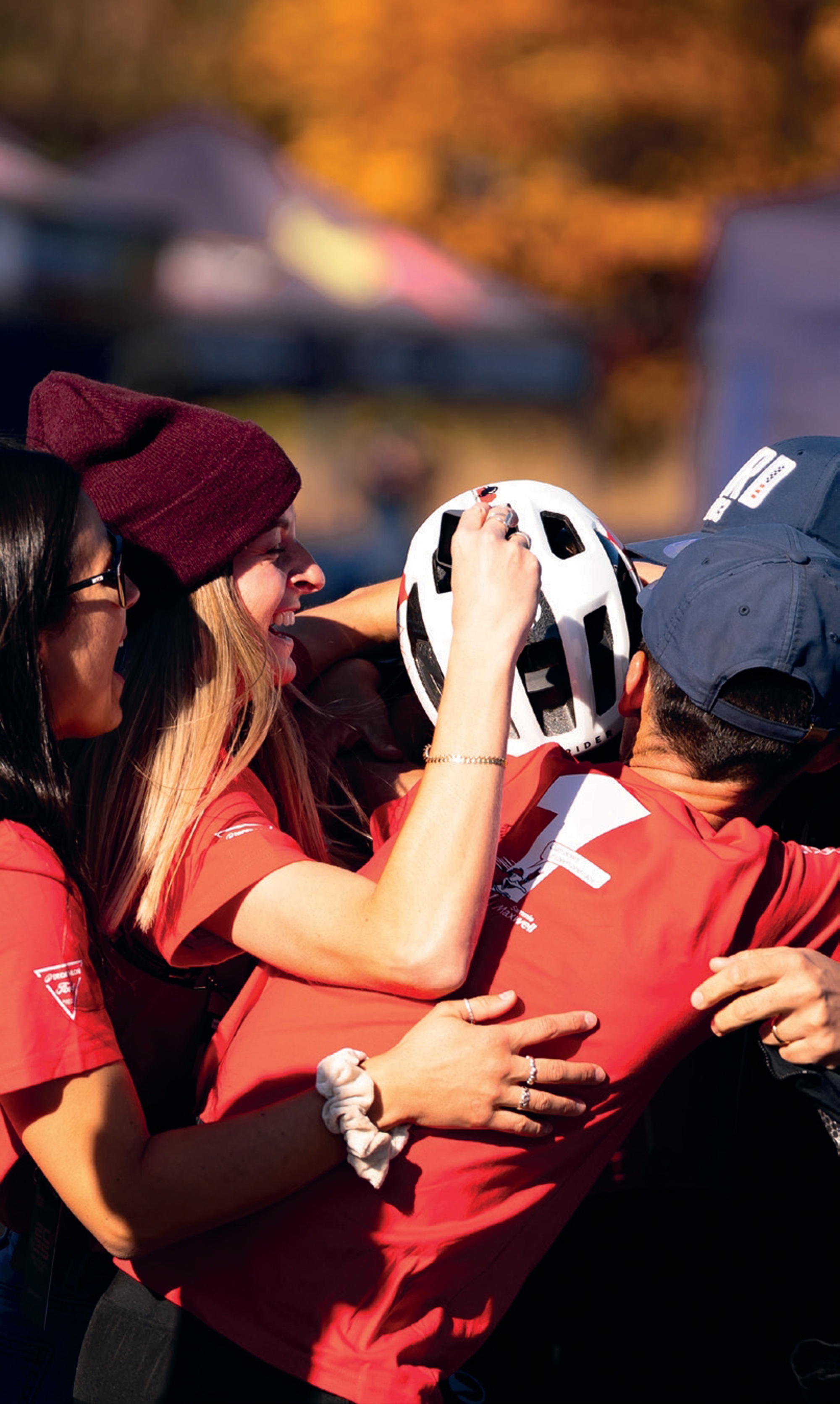
Now two seasons on and at home in the elite women’s division, Sammie has wrapped up the 2025 World Cup season on a high. Sammie burst into the 2025 season with a historic win in Araxa, Brazil, becoming the first Kiwi to win a World Cup XCO race. Continuing her season with consistency and resilience, Sammie overcame crashes, mechanicals, and strong competition to take the overall series win, becoming the only Kiwi ever to win a World Cup overall title.
On the way to winning the overall, she finished on all but one of the XCO World Cup podiums across the 10-round series. Sammie won two, finished second at five, and third in two races across the series. Her ‘worst’ result was a sixth place at Lenzerheide two weeks after finishing second at the World Championships in Crans-Montana, Switzerland. As far as consistency and dominance go, Sammie has rewritten the rule book, flinging Kiwi riders into the global spotlight!
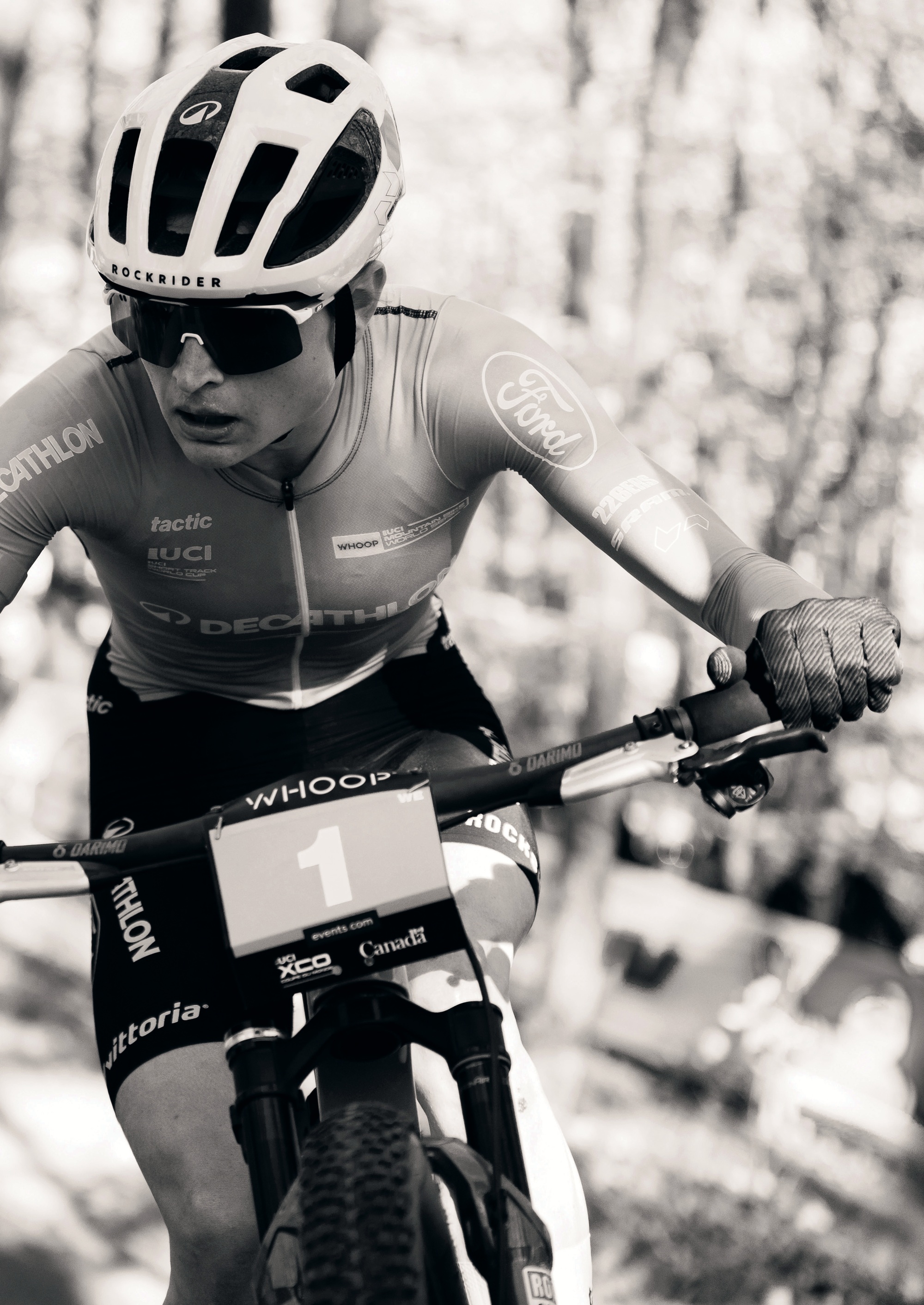
When did it first click that you could actually be competing for wins at the top level?
This year! Even when I was winning U23 races, I was always comparing myself to elite lap times etc., and seeing that there was a long way to go to be at the top. This season has been such a surprise to me. After winning Brazil, it felt very much like I was thrown into the deep end, with all that I had to learn, anticipate, and process. I was put into ‘fast-forward’. I remember, early this year in Feb at one of the Continental races, a man came up and said to me, “I think you’ll win a World Cup this year.” I just laughed and turned to my mate, shaking my head, and said, “Some people just don’t know what racing in Europe is like… there is NO WAY I’m winning a World Cup this year…”
Your victory in Brazil was a milestone for New Zealand mountain biking. How did that day unfold for you? What were you thinking about most as you crossed the line?
I wasn’t thinking anything other than utter disbelief! I didn’t know any milestones had been reached, and I don’t think it was what drove me to win the race. For me, titles or records are a cool bonus for a good result, but, honestly on that day (and every other race day) all I want to do is go out and be able to cross the finish line saying “I gave it everything I had – this result represents all the hard work myself and my support team have put into getting here.” It sounds cliché, but it’s true. For me, it’s just about honouring those around me and wanting to see what I can achieve if I hold nothing back, and about also seeing how hard I can push myself.
Has there been a turning point where you knew you’d done the right things to put you at the front of a World Cup and thought, “I’ve got this figured out now”? Maybe you don’t think you’ve got it figured out?
I am far from having everything figured out! In fact, at the end of the season, I sat down with my coach and manager and wrote a 10-page document (not an exaggeration) on my learnings from this year and aspects I want to improve on. But I think that’s the cool (and honestly hard) thing about sports: the moment you think you have it dialled, someone else who’s been working and pushing in the background will come past and overtake you! You’re only as good as your last race, and I’m someone who is constantly striving to be better. This season was very rewarding and showed me I have what it takes when I am given all the support and resources I currently have and am very grateful for. However, it also showed me the pursuit of being ‘the best’ is never ending and if you expect yourself to one day have the ‘magic key’ to winning, you’ll drive yourself mad!
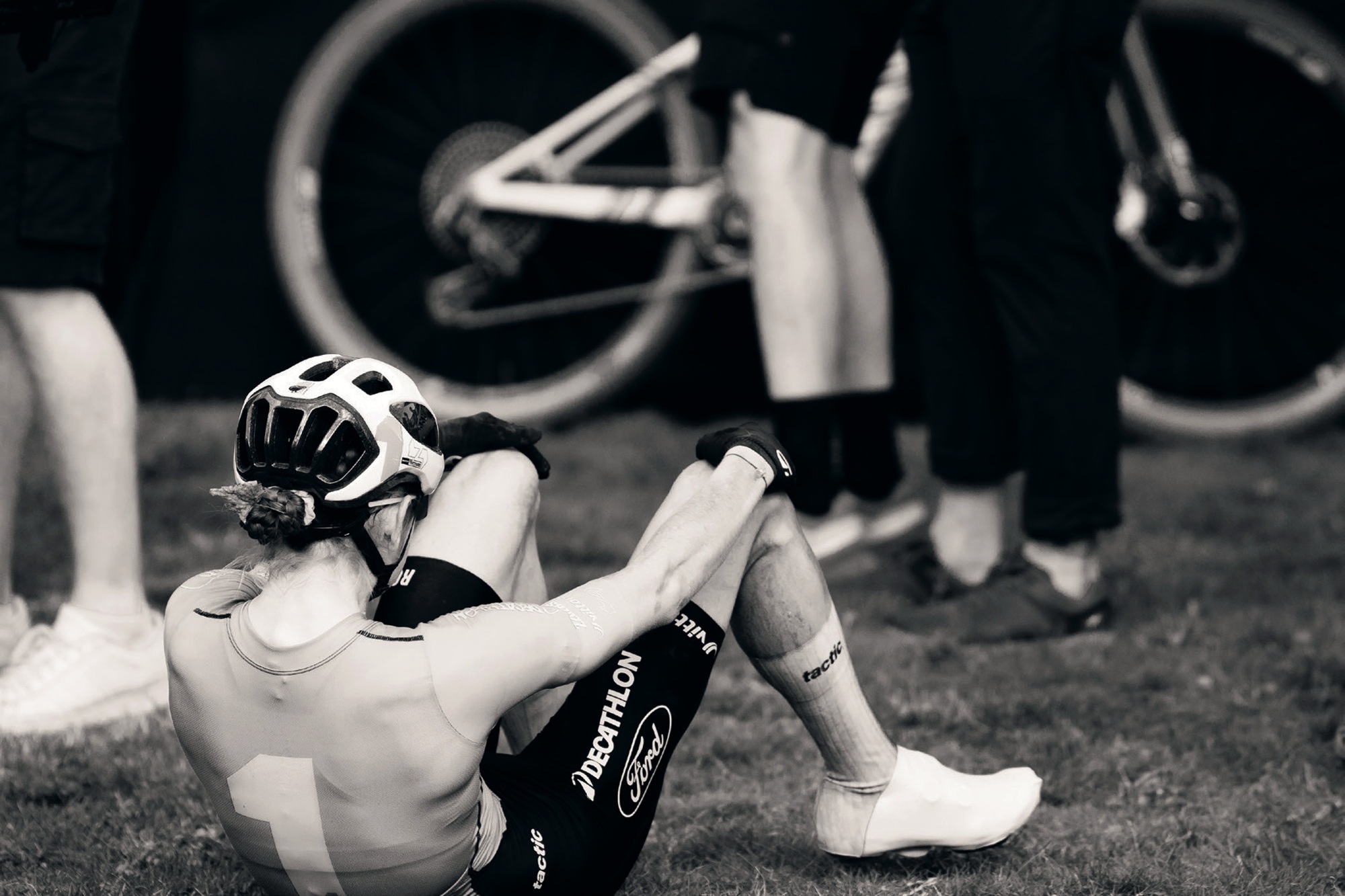
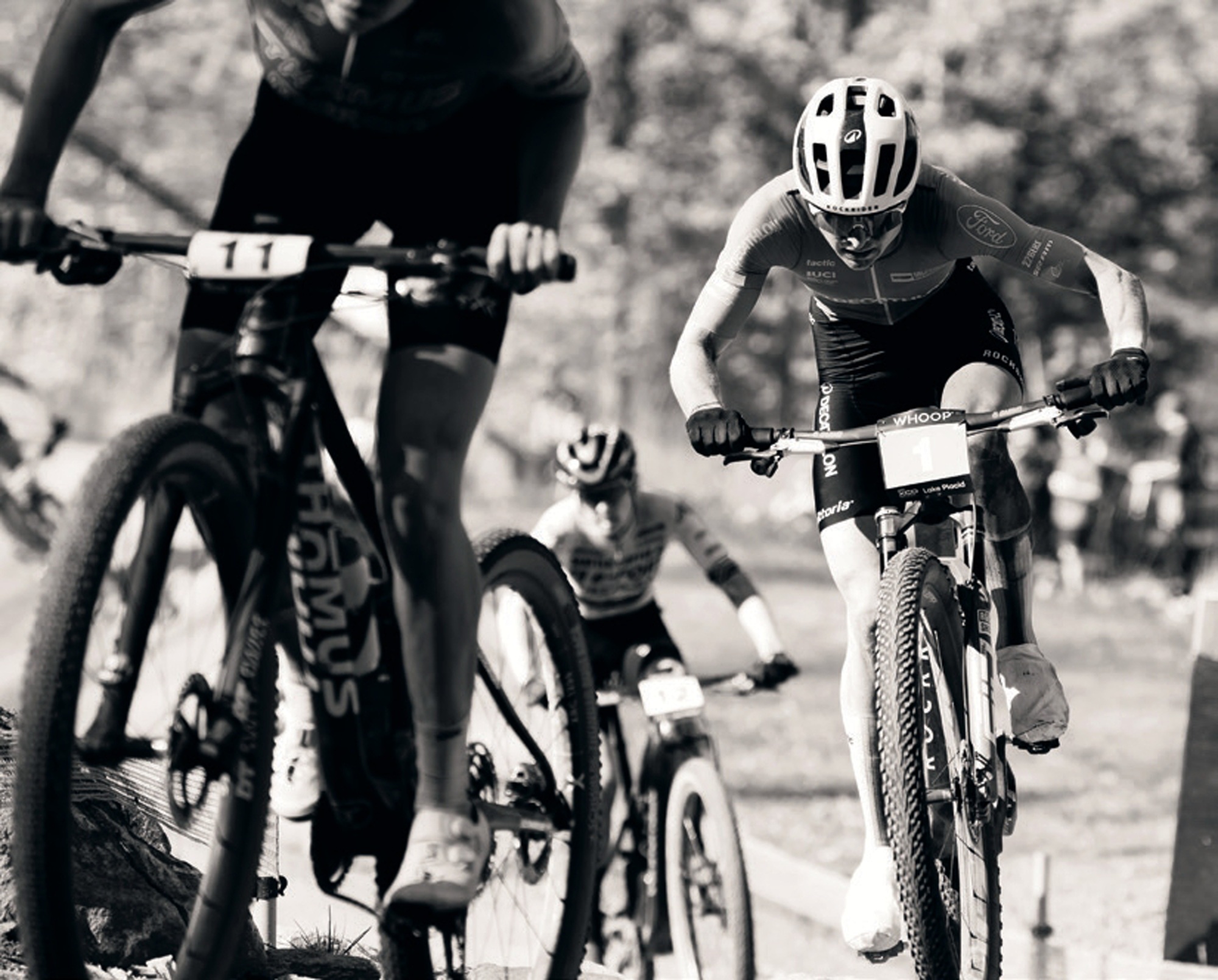
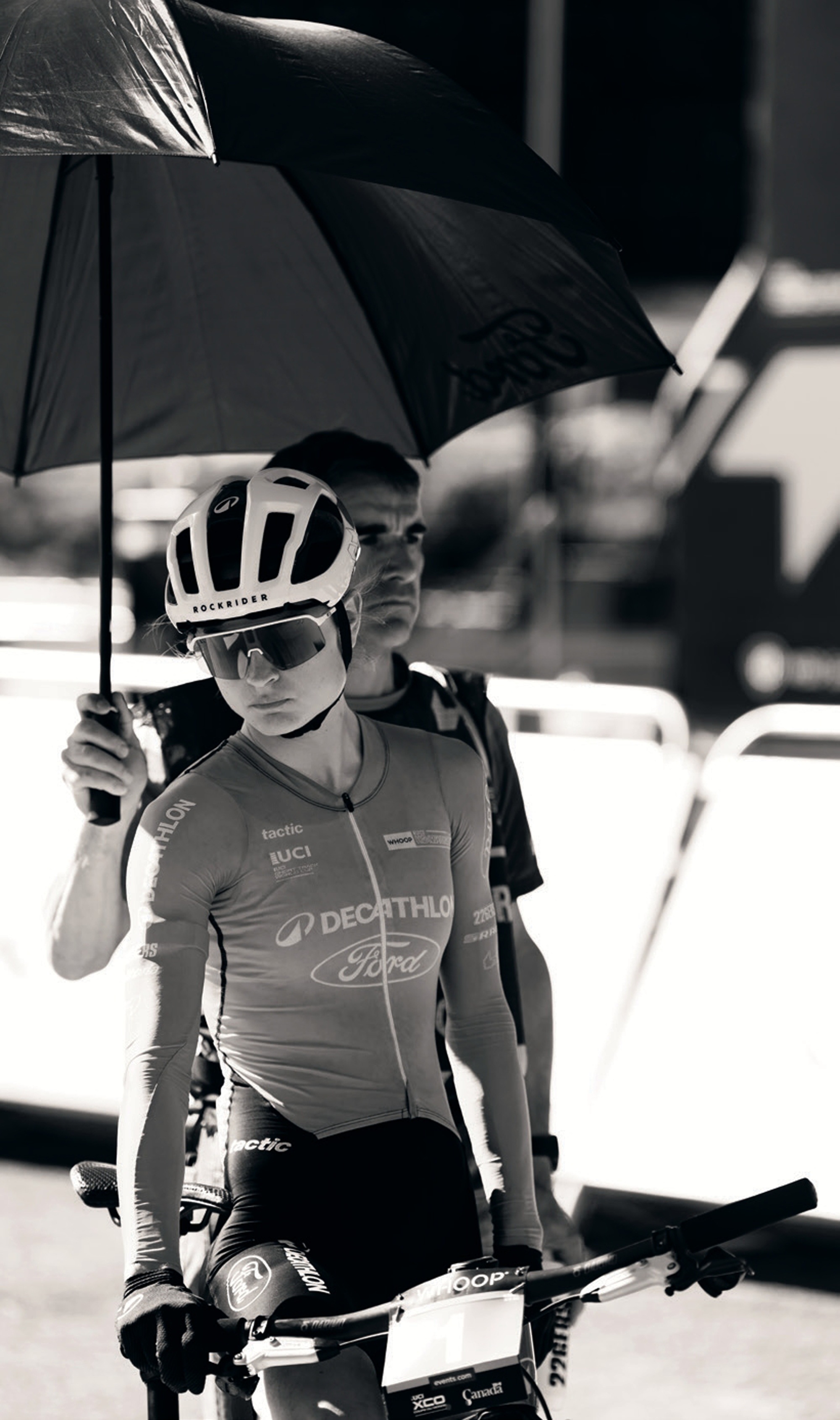
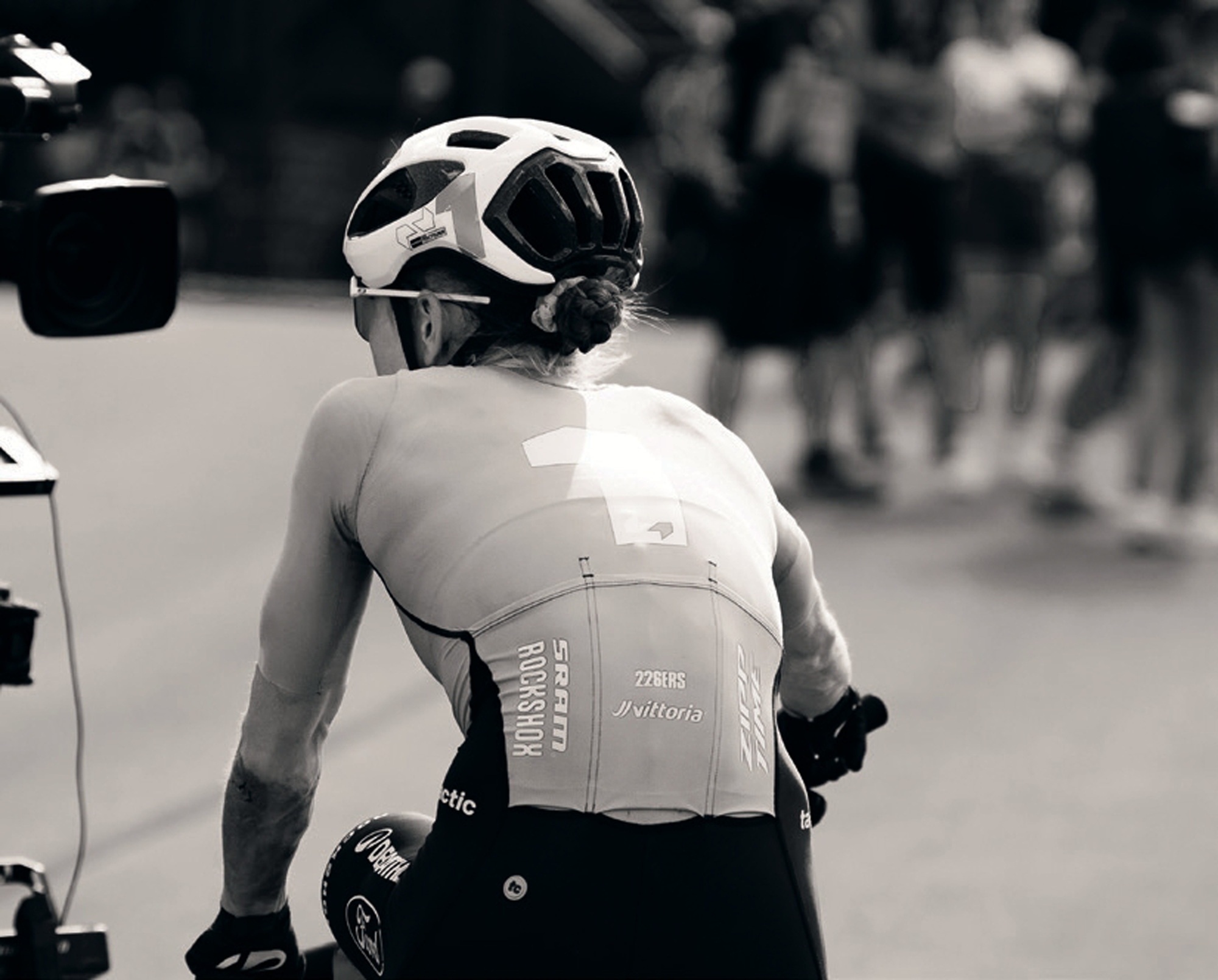
You’ve had to fight back from crashes a few times over the year. What goes through your head when you hit the deck and know that you’re going to have to chase back? What’s the internal dialogue like?
The first thing I think…well, it’s probably something I shouldn’t write down… but after that, it’s just pretty basic thinking. In the middle of a bike race, we’re all working mostly off our ‘primitive’ brains; there is not much ‘reasoning’ or ‘emotion processing’ going on. So, when I crash, my thoughts are actually pretty funny to reflect on. I think in Andorra, my thoughts were things like “Get bike off ground!!”, “Top of hill. Go there”, “Pedal hard”, “Just get to top…” Honestly, things that don’t even make grammatical sense! But the key takeaway is that when racing, I always believe anything can happen, that I can get back to the front, and that all I can do right now is pedal as hard as I can. I try hard not to attach to voices doubting pacing, thinking about the other girls, etc. I just focus on myself, the pain in my legs and trying to get into a zone where nothing else matters.
From what I can find, 2025 looked something like this: 32 races, 15 wins, 13 podiums. That’s a seriously impressive season. When you’re chilling away from the races, do you ever pause and think, “Yeah, I did that”, or does it just seem normal to you?
This is the first time I’ve seen these stats, so I definitely haven’t thought about it! But I have reflected a lot on my season, and I’ve come to the realisation that while the results and wins are nice on race weekends as they give me moments to share with my team, they don’t actually mean as much to me as one would think (and as much as I once thought they would). Reflecting on my season showed me that what I’m most proud of is the way I used my voice to promote issues I really cared about, like mental and physical health, and the role I played in inspiring the next generation of riders to be strong, happy and healthy. Talking to and hearing from the young girls (and all the other fans) are probably the best memories I have from the season, not any moments on the podium or crossing the finish line.
Was there a particular race or moment that best summed up your growth as a rider through 2025?
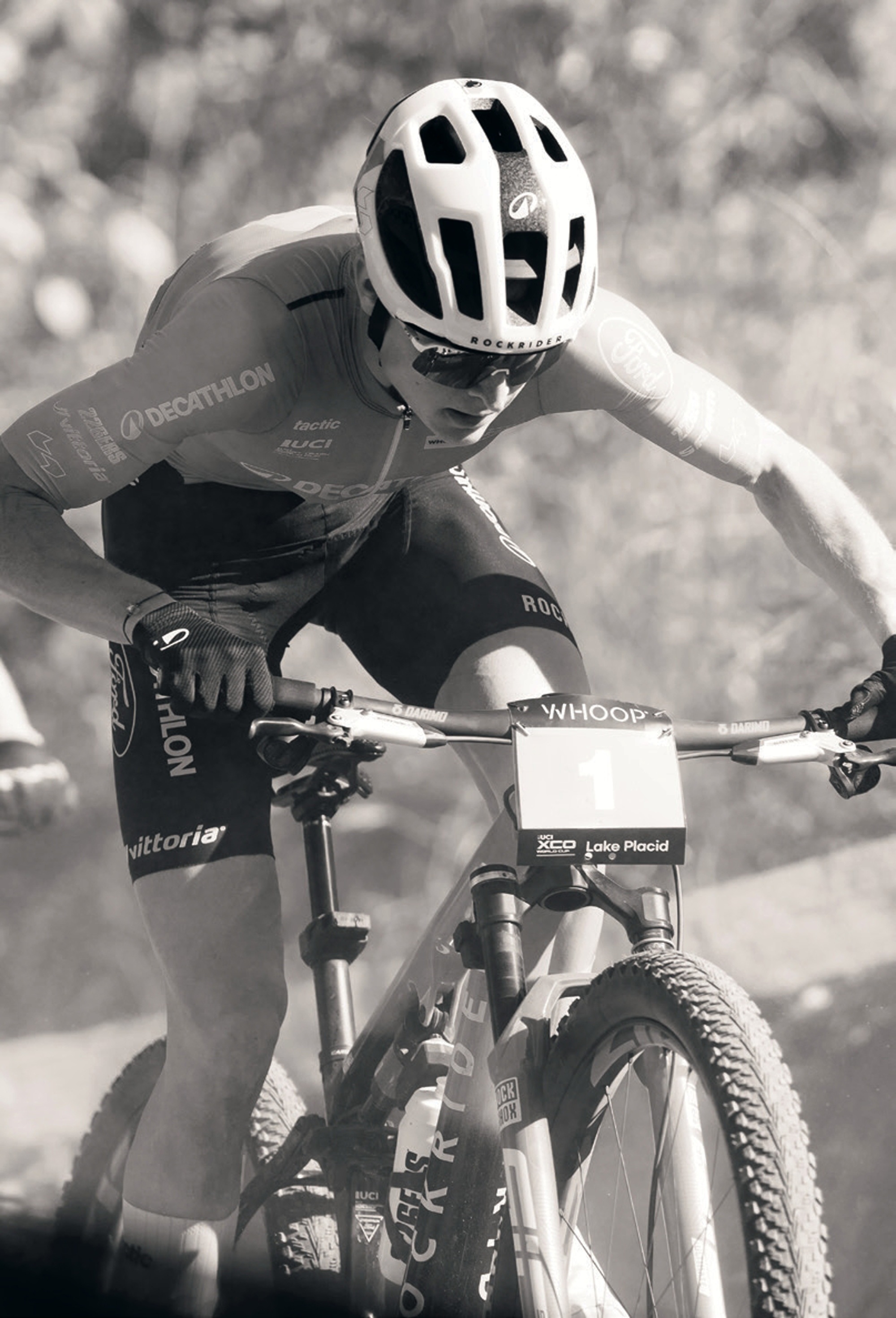
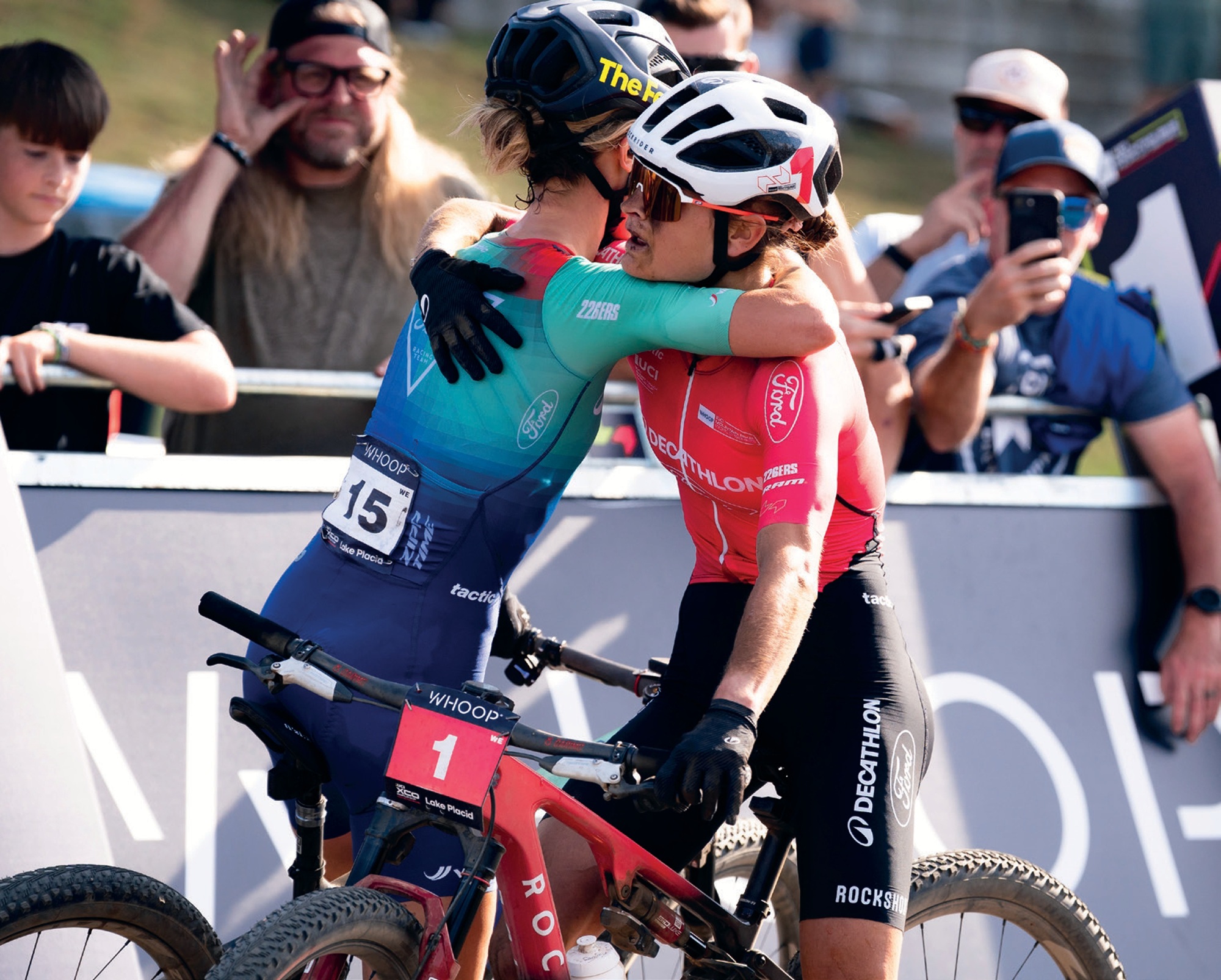
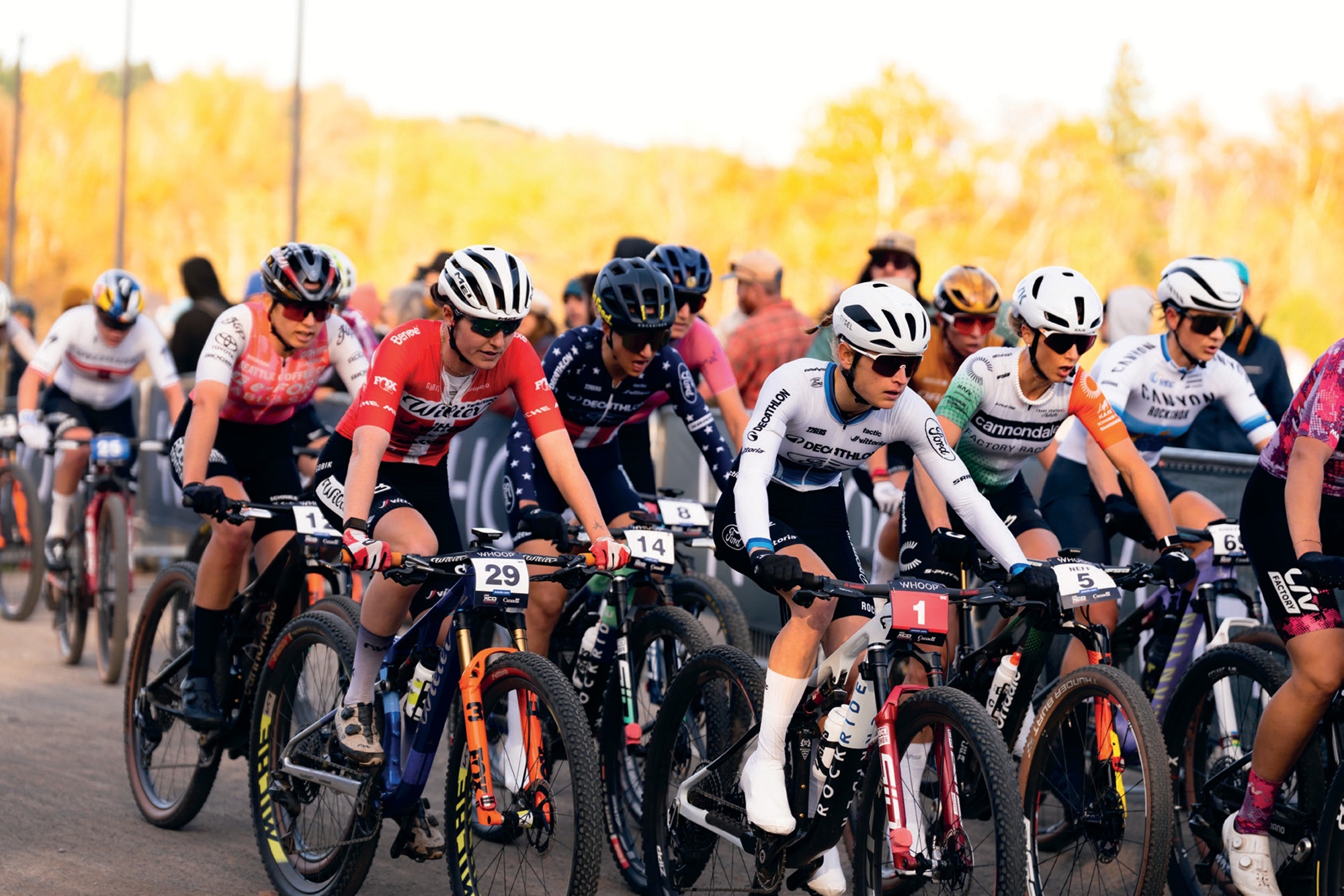
Andorra was pretty special for me because it was the first race where I felt like the world got to really see my mental resilience. But I also think Lake Placid was pretty cool for me. Partly because of all the young riders that were there that I got to interact with, and also because of the way I ‘bounced back’ from a tough race in Lenzerheide. At the end of the season, I was actually really emotionally and mentally cooked, my eating disorder was wreaking havoc in my brain, and I was in a pretty bad place if I’m being honest. But I caught myself switching back to bad habits and reset my behaviours, stopping myself from ‘digging the hole deeper’. Old Sammie definitely would not have had the same mental perspective and awareness to do so and probably would have cracked hard in those last two rounds!
Did you have any behind-the-scenes challenges through the year that people may not know about?
Some included my studies and exams; balancing time with this and racing was a lot. And obviously, there were my eating disorder thoughts, which were a constant battle. It’s something I struggle to explain to people who haven’t experienced it, but some days it felt like I was being followed by a bear or something, and my body was in a constant “fight or flight” response; pretty exhausting, especially during race weeks. But luckily, my coach, team, friends, and psychologists would always help me return to a calm state, or remind me that the struggle wouldn’t be forever, and that I was strong enough to sit with the tough emotions or thoughts until they passed. Surviving a storm is always much easier when you know sunny days are ahead.
The race calendar is long and demanding. How did you manage your energy, mentally and physically, to stay consistent across so many rounds?
Staying focused on just the week ahead of me was pretty helpful. Breaking things down into small, manageable chunks is something we athletes are pretty good at. Also using techniques I had discussed with my psychologist and coach, like meditation, mindfulness, breathing, helped calm me mentally. While physically rest is pretty easy – rest days, naps, good fuelling, massages, etc! Basically, as you can see, a lot of this was me relying on others’ resources to ‘top up the cup’ when I noticed it getting empty, and it’s one of the reasons why I say I couldn’t have done this season as I did without the support of others!
Were there any particular changes that you made after last season that contributed to this year’s successes and the step up from last year?
I focused a lot more on skills – shoutout to Louis from Tuned coaching – and was eating a lot more. For example, I started doubling the amount of carbs I would race with and, during training, increasing my food intake by up to 50% on some days! I also changed the way I did pre-rides of courses and paid special attention to slowing down in my recon laps, to really absorb the details of the course and analyse the best lines for me.
At least in the MTB world, you’re now a household name. Have there been any noticeable changes in life as you’ve been thrust into the limelight?
People recognised me more, and I had a few more followers on Insta! I’ve actually really enjoyed this aspect of success; as I said before, I’m proud of the way I’ve used my increased social presence to promote messages of health and wellbeing. I’d like to think it contributes to making the MTB community a better place for everyone.
Do you have plans to make any changes coming into 2026?
I’m going to be putting more emphasis on therapy for my eating disorder and continue building to be the best athlete I can be for the future.
From a technical or tactical perspective, what do you think separates a ‘good’ XCO rider from a winning one?
I think having confidence in your ability makes such a big difference. If I had a bad start or crashed and found myself fighting for 10th position, etc. I told myself I belonged back at the front of the race. I wouldn’t “settle” into a group further down in the field; instead, I just kept pushing. It also meant I wouldn’t panic, sprint for one or two climbs, then blow myself into the red zone too soon. And obviously, confidence on the downhills is key to riding well. The worst crashes always happen after a moment of self- doubt, hesitation, and a big pull of the brakes!
How do you keep the fire going into 2026 after such a great 2025? Are there particular goals or races you’d like to tick off?
I’m always driven to push more watts, lift bigger weights, etc, so there’s no problem with motivation! I’m someone who just gets so much joy from the process of training that the results I get don’t really change this.
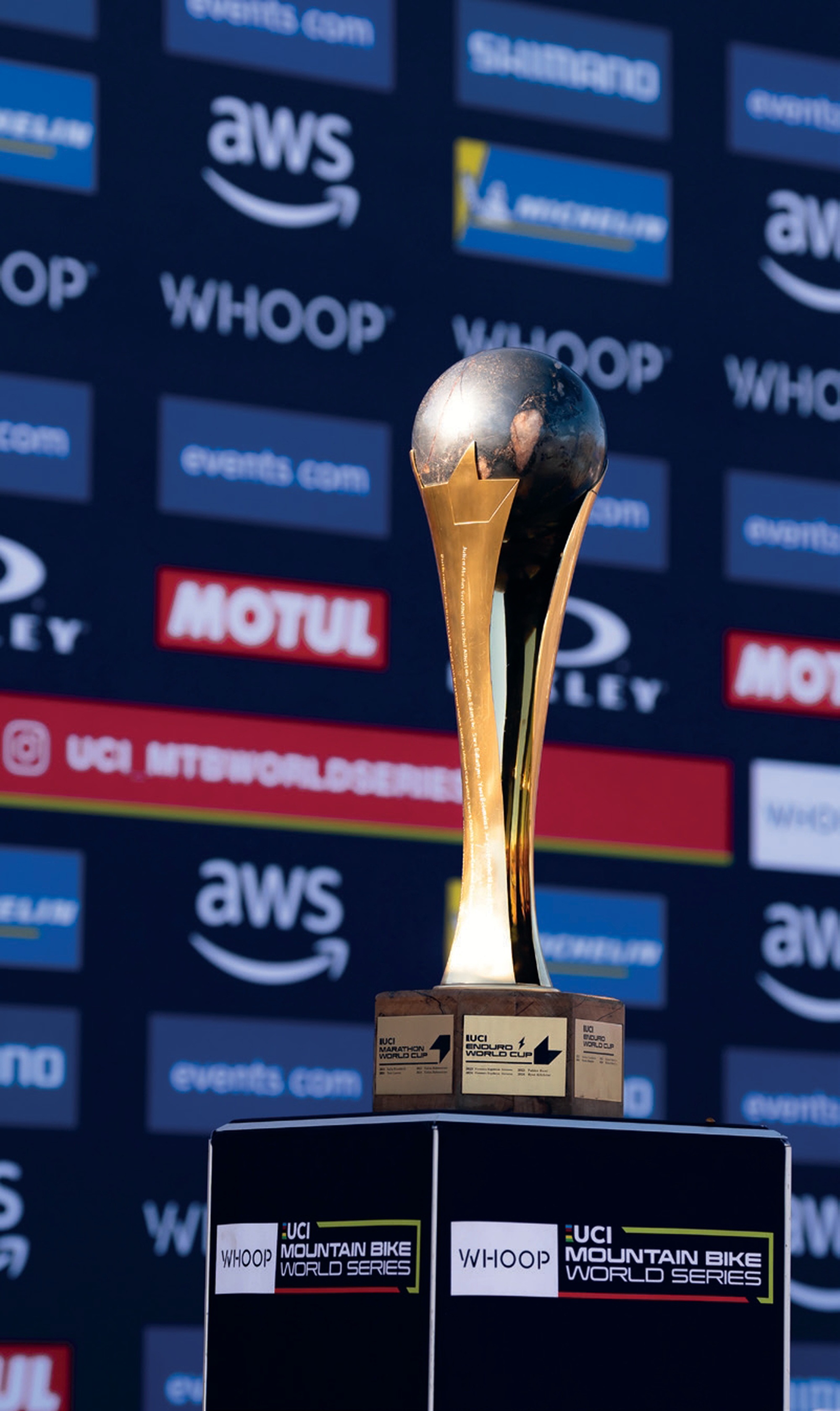
Maybe I’ve missed something, but where did the podium Marmite come from? I hope you’ve shared this delicacy with your teammates. What do they reckon?
I love Marmite. I have it with everything. I tagged Marmite in a post that said I needed some delivered to Europe as a joke, and they responded by sending me some custom jars! I’m glad to report that most of them don’t have the acquired taste (more for me), but a lot of the Brits and Aussies at the World Cups are jealous that I have my secret stash.
Are you doing any work back in the laboratory during the off-season? Any study happening? Are you still working on your French, or have you got that dialled in enough now?
I hope to be doing some in Feb, and I’ve actually enrolled in a Post-Graduate Diploma for Clinical Research next year, which will be the next step I need to work towards a PhD one day. I also love learning French, but I will take a break from that as I do more medical research studies; however, living with the French team is basically just one never-ending French lesson anyway!
Are there any other cycling disciplines that pique your interest and you’d like to give a nudge?
Definitely not cyclocross…I hate winter, the snow, and being cold, so you’ll never catch me sticking around in Europe during winter when I could be flying home to NZ summer. I am interested in road racing, but currently it would only be a way to supplement my MTB performances. I still have too many goals I want to achieve on the knobbly tyres before I start thinking seriously about joining the dark side.
Thanks, Sammie, for your time, and good luck for the ‘26 season. We at NZ Mountain Biker Mag will be cheering you on!
New Trail Guidelines
Words Meagan Robertson
Images Christian Wafer
What if being able to ride a Grade 5 in Rotorua meant being able to ride a Grade 5 in Nelson? And riders who rode Grade 3 Great Rides could confidently ride Grade 3 singletrack around the country? Well, that’s what the Trail Guidelines intend to achieve.
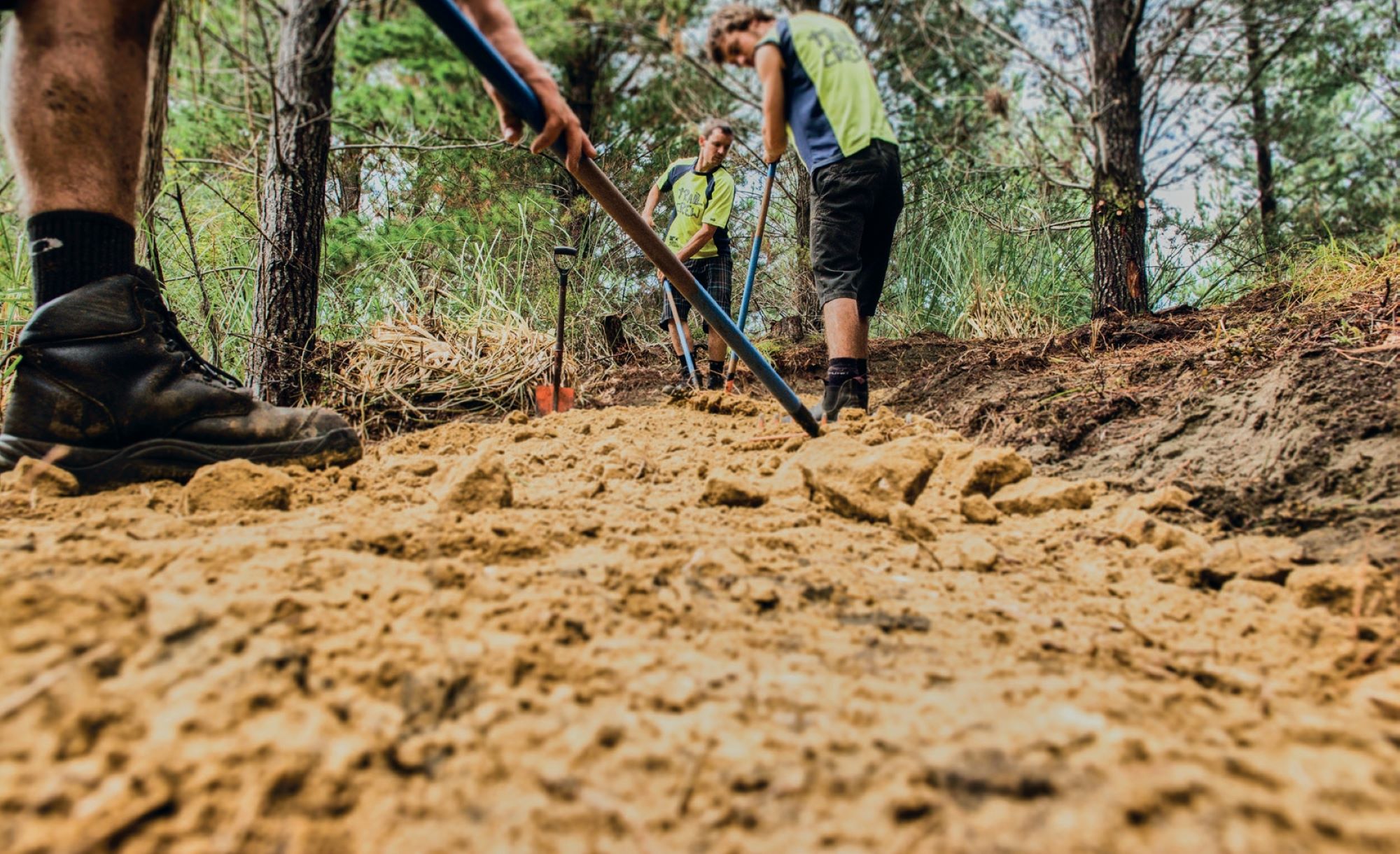
After months of research and review, the newly released New Zealand Mountain Bike Trail Design Guidelines have been released and are being distributed to trail builders nationwide, through Trail Fund. Updated by Recreation Aotearoa in partnership with DOC, Ngā Haerenga New Zealand Cycle Trails, ACC, and Sport NZ, the aim is to provide safer, more consistent, and more inclusive trail experiences to riders across the country by providing clear guidance for everyone involved in their design, construction, and maintenance.
Developed in consultation with trail builders, land managers, and riding groups nationwide, this third iteration of the guidelines includes everything from fine-tuned grading specs to new chapters on signage, auditing, safety, maintenance, adaptive access, and more.
The impossible task of updating the guidelines to the satisfaction of trail builders and mountain bikers across the country was led by Jonathan Kennett—who most will know from the Kennett Brothers long-time contributions to MTB grading and guideline development in Aotearoa.
“It was always going to be a challenge aligning different features into a single grade, because mountain biking is so diverse,” said Jonathan. “But I think where we’ve landed will please 99% of riders. The biggest change in the guidelines has been allowing steeper gradients and more features for downhill tracks, Grade 4 and 5 in particular, without those tracks becoming completely unsustainable. We’ve largely done this by adding new guidance for rollovers and chutes, which can be quite steep, so long as they have a reset section at the bottom.”
Why is the guidance needed?
The update comes in response to a Coroner’s recommendation to align trail safety guidance nationally, as well as mounting ACC injury claims. With over 5,500 injury claims and $22 million in ACC costs last year alone, ACC sees this unified approach as both timely and necessary.
A key step in unifying the approach was having the country’s two largest trail building organisations—DOC and Ngā Haerenga— on board. With DOC confirming it will transition to using the new guidelines, and Ngā Haerenga New Zealand Cycle Trails aligning its own specifications accordingly, the 2025 edition is a true national reference point—streamlining previously fragmented guidance into one accessible framework. “ACC is proud to support the updated guidelines, which are all about helping people enjoy mountain biking safely,” says Kirsten Malpas, ACC Public Health and Injury Prevention.“Consistent signage and trail grading helps riders choose the right trails for their skill level and reduces preventable injuries.”
Trail Fund invests in getting guidance in the right hands
“The Coroner’s recommendation is an admirable and valid request,” says Trail Fund co-president, John Humphrey. “But a monumental task for a trail system largely built by disparate volunteer groups around the country. That’s where Trail Fund comes in—we are the only national organisation liaising with trail builders around the country and we’repleased to be involved with this ongoing initiative.”
One of the key differences in this update is the addition of a Trail Builders’ Handbook, which offers trail crews a concise, field- friendly reference—complete with diagrams, benchmarks, and design dos and don’ts for each of New Zealand’s six MTB trail grades. These handbooks are well suited to be distributed by Trail Fund, which has carried out training for hundreds of volunteer trail builders over the past decade. The organisation is also well placed to encourage clubs to use them, especially those who receive funding from Trail Fund.
“We appreciate that every area and club is different, and trail builders collectively hold a broad range of skills and approaches,” says John. “However, we are confident those involved have done their homework and put forward high-quality guidelines that provide a robust framework for trail building around the country.
“This doesn’t mean the conversation is over. This is the third iteration of these guidelines, and we look forward to working with the trail building community on implementation to support the evolution of mountain biking and trail building.”
Trail Fund NZ will continue acting as a conduit between builders and Recreation Aotearoa, helping to channel on-the- ground feedback to ensure the guidelines stay relevant as the sport evolves.
What’s new?
This third edition builds on the earlier 2018 and 2022 versions. Key changes include:
Updated grading guidance:
Small but significant refinements have been made to gradient ranges, minimum widths, radius, and jump length specifications. These tweaks are intended to better align guidance with the realities of today’s trail construction and riding styles.
New chapters on signage and auditing:
For the first time, the guidelines offer detailed templates for signage and safety warnings, developed with input from the NZ Land Safety Forum. An auditing chapter is designed to help clubs and land managers assess trail conditions and confirm grade accuracy.
Improved safety design:
The safety chapter directly responds to coroner recommendations and ACC data. It introduces practical methods for designing fall-safe trails, assessing hazards, and mitigating risk without compromising rider enjoyment.
Stronger focus on inclusivity:
Building on the Outdoor Accessibility Design Guidelines released earlier this year, the guidelines provide specific direction for adaptive MTB trails, including grade specs and facilities for riders on three- or four-wheeled bikes.
New Trail Builders’ Handbook:
A complementary Trail Builders’ Handbook offers trail crews a concise, field-friendly reference—complete with diagrams, benchmarks, and design dos and don’ts for each of New Zealand’s six MTB trail grades.
What it means in practice
Over the years, trail riders have lamented how a Grade 5 trail in Rotorua differed from a Grade 5 trail in Nelson. Based on the newly published guidelines, here are the differences:
Grade 4 – Advanced
Track width 0.6–1.0m
Surface Mostly stable, but may include loose rocks or variability
Obstacles Up to 200mm high
Berms Up to 40°
Jumps 1–7 m long, 10°–30° ramps; all features must be rollable
Drops Up to 400mm, rollable
Uphill steps Up to 200mm
Concurrent features Up to 3 at a time
Risk Exposure possible; suitable for riders with excellent skills and experience
Grade 5 – Expert
Track width 0.4–0.8m
Surface Widely variable; roots, rocks, ruts common
Obstacles Up to 500mm high
Berms Up to 50°
Jumps 1–12 m; may not be rollable (b-line or bypass required)
Drops Up to 1,000mm
Uphill steps Up to 500mm
Concurrent features Up to 4 at a time
Risk Steeper, narrower, and more technical than Grade 4; higher exposure and consequences
Where to find the Guidelines
The full New Zealand Mountain Bike Trail Design Guidelines and the new Trail Builders’ Handbook are now available online at Recreation Aotearoa, Trail Fund NZ, DOC, and other partner websites. Printed handbooks are being distributed to trail building groups around the country via Trail Fund NZ.
To support understanding and adoption of the new content, Recreation Aotearoa is hosting two free webinars in late August—one for land managers and one for trail groups. Registration links are available online.

Interview: Emma Bateup Highland Trail 550 Winner
Words Liam Friary
Images Lisa Ng, Henry Jaine & Emma Bateup
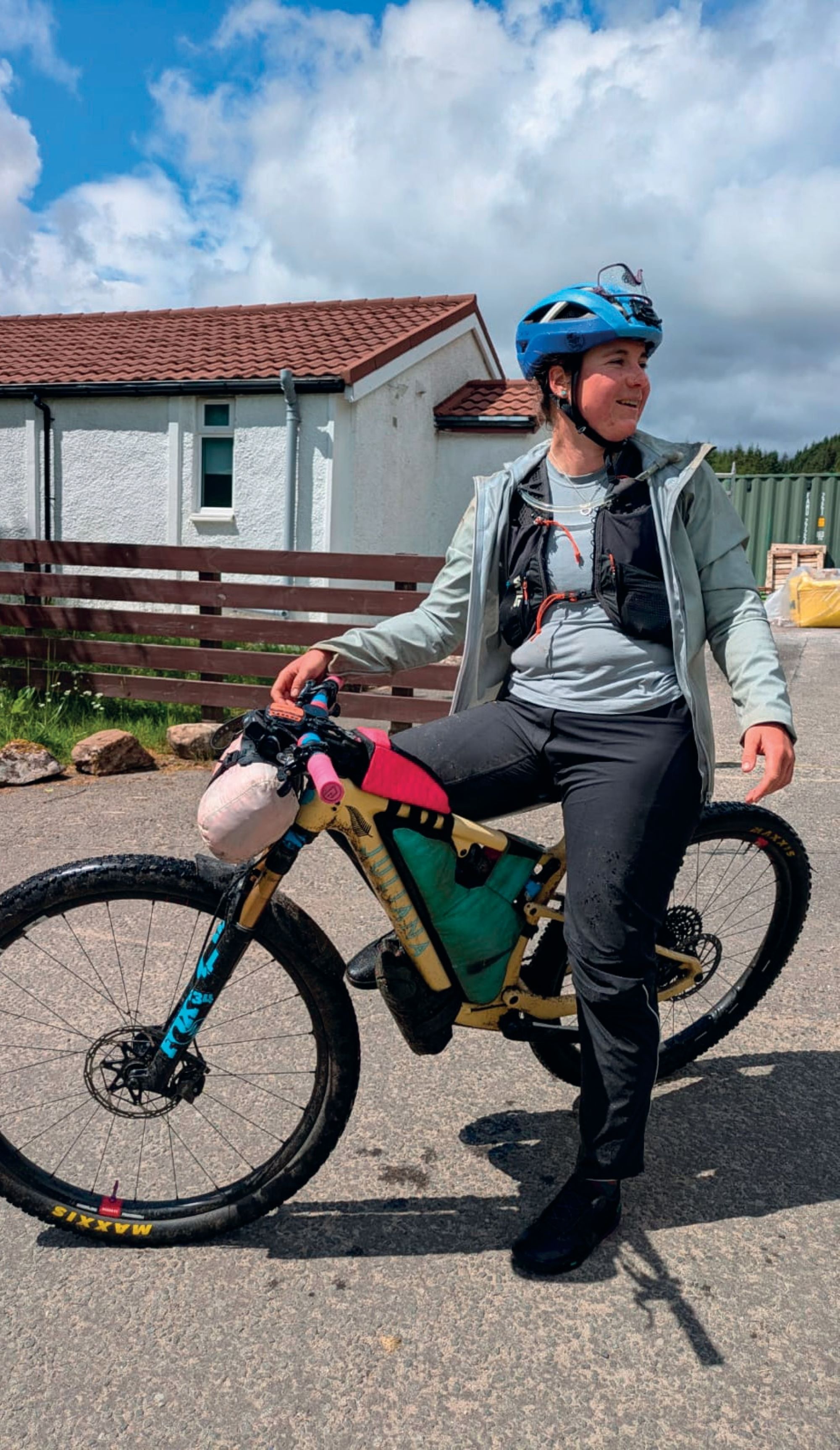
Recently, Emma Bateup made history as the first woman—and seventh overall finisher—of the 2025 Highland Trail 550 in Scotland. She completed the gruelling route in an impressive four days, four hours and 27 minutes.
Mental Game.
Your recent success at the Highland Trail 550 was one for the books! At what point during those four days did you realise you weren’t just competing in the women’s category, but potentially setting an entirely new standard?
“I felt like I was riding well from the start; I was feeling good and around people I knew were fast. It was on the second afternoon that I checked the tracking and saw that I was sitting in third place, which blew my mind. Prior to that I’d mostly been focusing on myself and where the second placed woman was (Kerry MacPhee and I had such a close race until she had to pull out). Unfortunately, then I started overthinking it and made time costing mistakes. But it was very cool to feel like I was part of the whole race. As the sport is getting faster, it’s becoming more common for women to be pushing the pace too and riding into strong overall placings. It’s pretty special to be a part of that.”
Home vs. Scottish Highlands.
Coming from New Zealand’s adventure racing scene to Scotland’s Highland Trail 550, how did your experience with New Zealand’s challenging terrain prepare you for the unique demands of Scottish bikepacking, and what surprised you most about the differences?
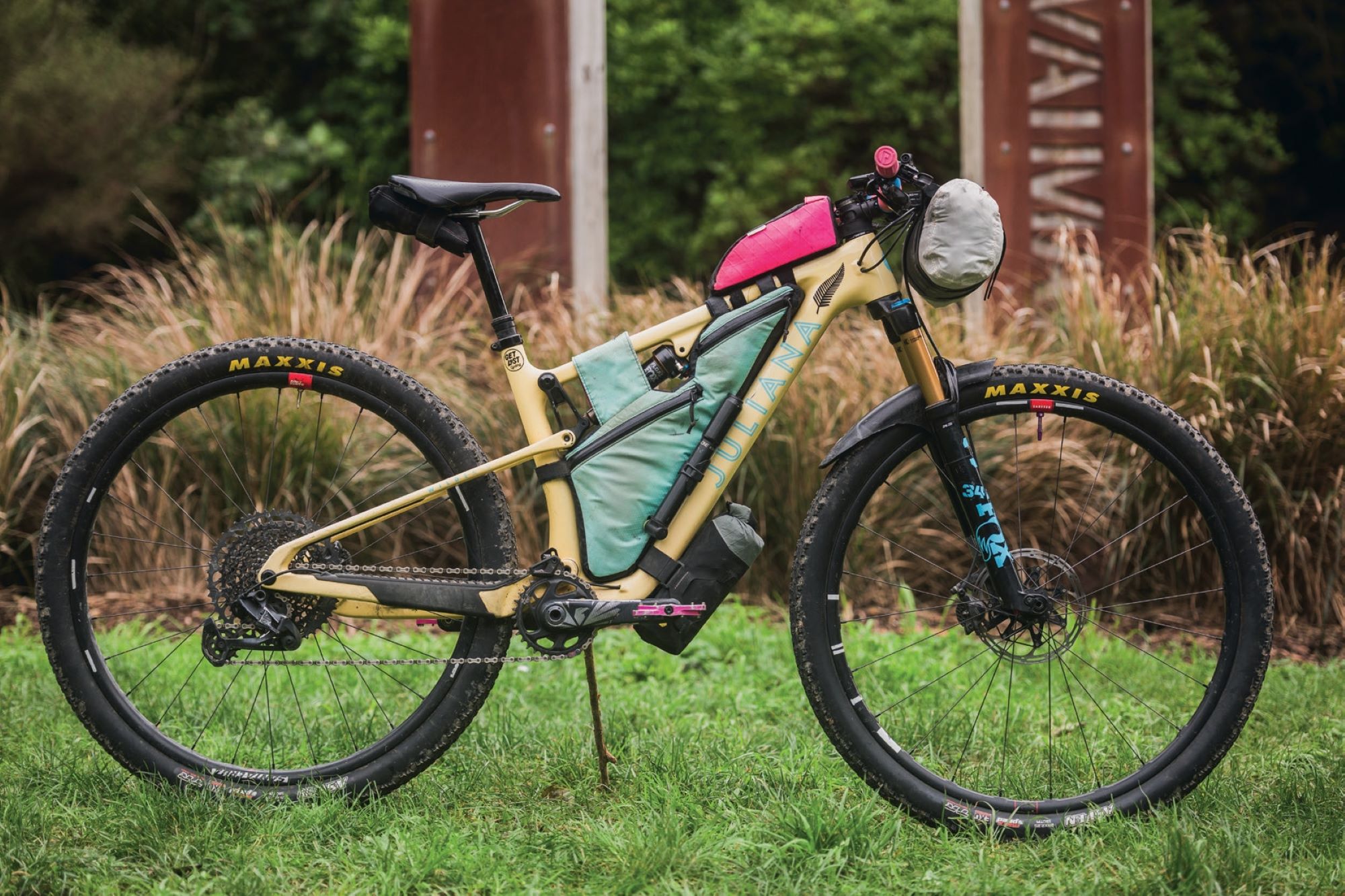
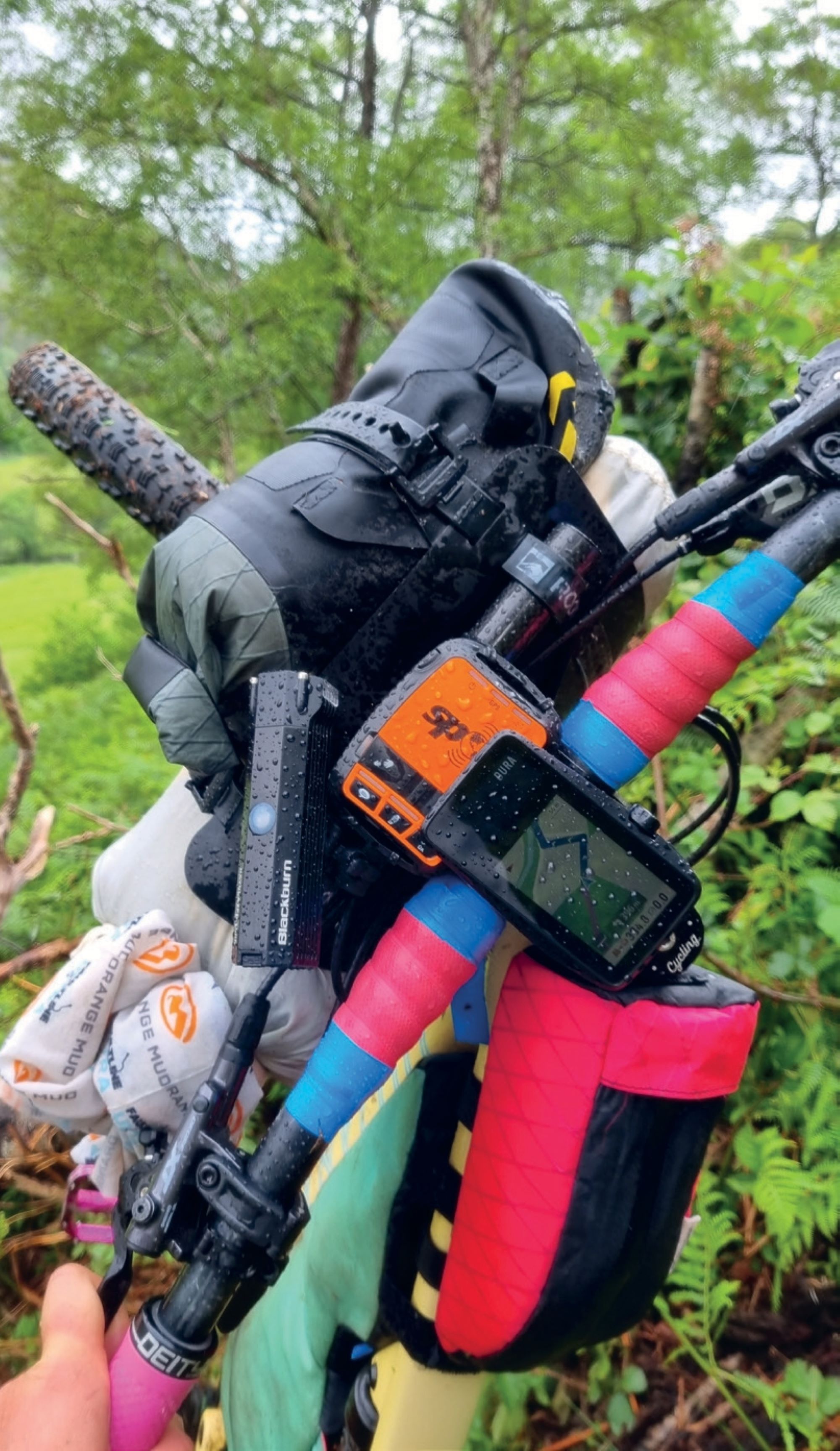
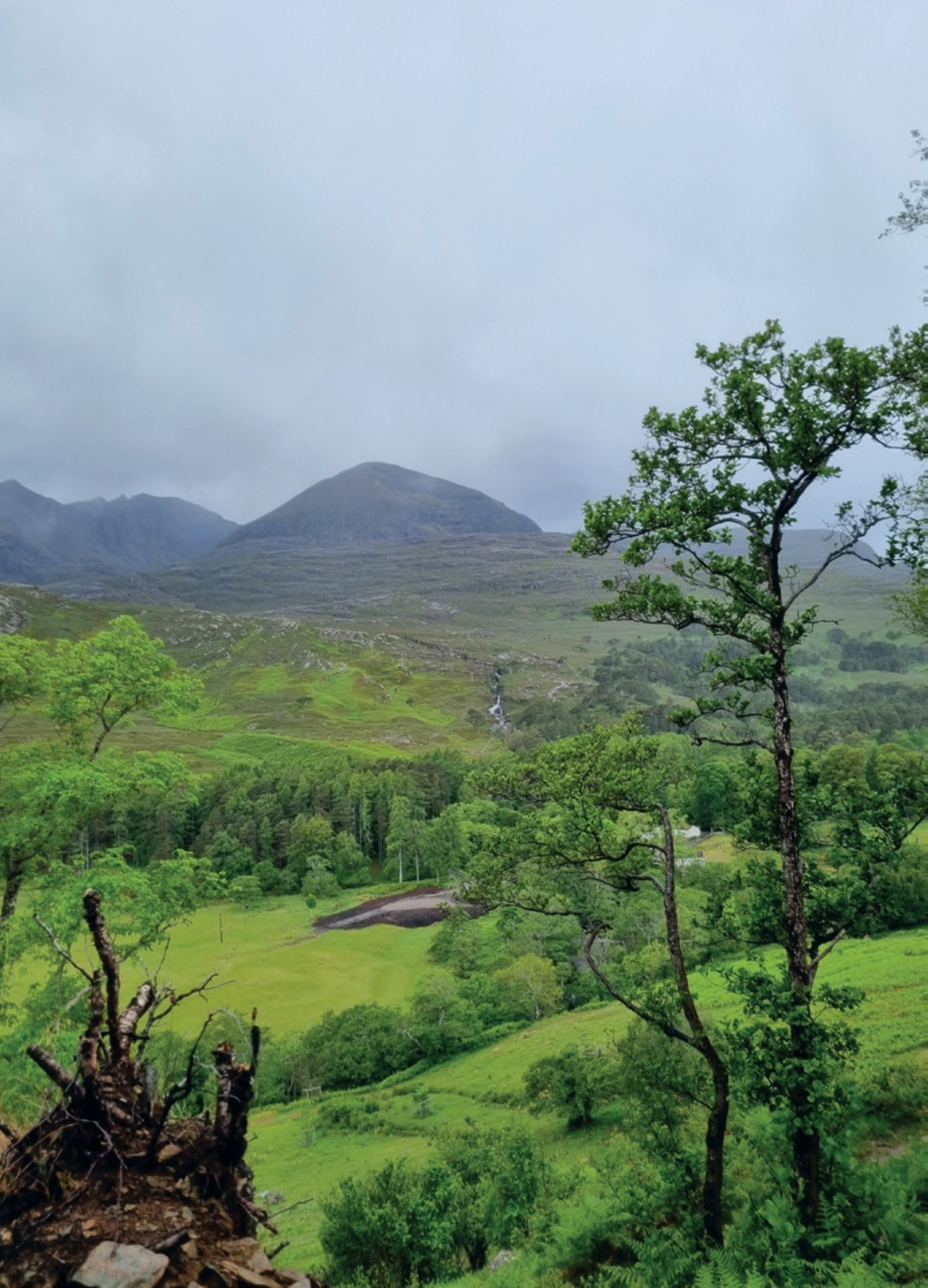
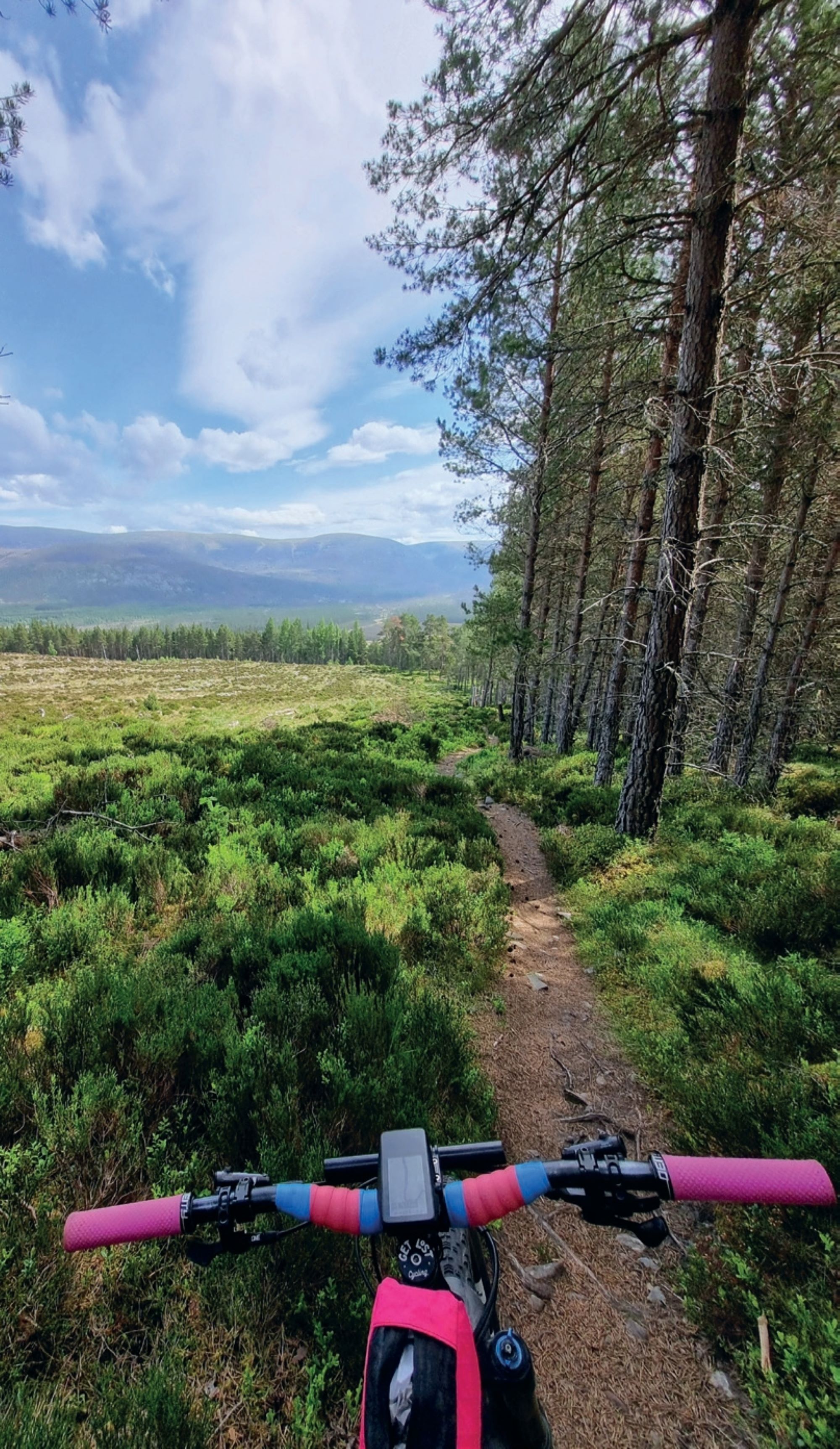
“I knew going into the race that the terrain and weather would be similar to NZ, so it was nice to feel fairly at home straight away. To have experienced plenty of challenging river crossings with bikes proved to be valuable, a big part of which is knowing when to not attempt a crossing. Sometimes it’s better to come up with an alternative plan or wait for other riders to cross together. The weather was a big factor in this year’s race, with one of the worst editions they’ve had. Living in Wellington for the past few years set me up perfectly, the wind and rain was on a par to a stormy day back home (so just four days in a row of it!). Having experienced similar conditions frequently, I was confident in what I’ve learnt about clothing choices and trusted the gear I had. The biggest difference I found was the daylight hours, especially in the northern part of the route. One night never got completely dark, there was still a faint glow behind the clouds. This meant that riding through the night was much easier, and I never quite lined up my few sleeps with darkness; the combination of cold and light skies didn’t result in much sleeping anyway! On a lot of the trails there were drain ditches built across the trail with rocks, all varied in size, some easily hoppable and a few not so much. It took me a while to get confident on them and on a few I misjudged the size, resulting in flat tires.”
Home vs. Scottish Highlands.
Coming from New Zealand’s adventure racing scene to Scotland’s Highland Trail 550, how did your experience with New Zealand’s challenging terrain prepare you for the unique demands of Scottish bikepacking, and what surprised you most about the differences?
“I knew going into the race that the terrain and weather would be similar to NZ, so it was nice to feel fairly at home straight away. To have experienced plenty of challenging river crossings with bikes proved to be valuable, a big part of which is knowing when to not attempt a crossing. Sometimes it’s better to come up with an alternative plan or wait for other riders to cross together. The weather was a big factor in this year’s race, with one of the worst editions they’ve had. Living in Wellington for the past few years set me up perfectly, the wind and rain was on a par to a stormy day back home (so just four days in a row of it!). Having experienced similar conditions frequently, I was confident in what I’ve learnt about clothing choices and trusted the gear I had. The biggest difference I found was the daylight hours, especially in the northern part of the route. One night never got completely dark, there was still a faint glow behind the clouds. This meant that riding through the night was much easier, and I never quite lined up my few sleeps with darkness; the combination of cold and light skies didn’t result in much sleeping anyway! On a lot of the trails there were drain ditches built across the trail with rocks, all varied in size, some easily hoppable and a few not so much. It took me a while to get confident on them and on a few I misjudged the size, resulting in flat tires.”
Solo Sufferfest.
The Highland Trail 550 is notorious for its hike-a-bike sections, unpredictable weather, and river crossings. Can you walk us through your lowest moment during the race and how you mentally reset to keep pushing forward?
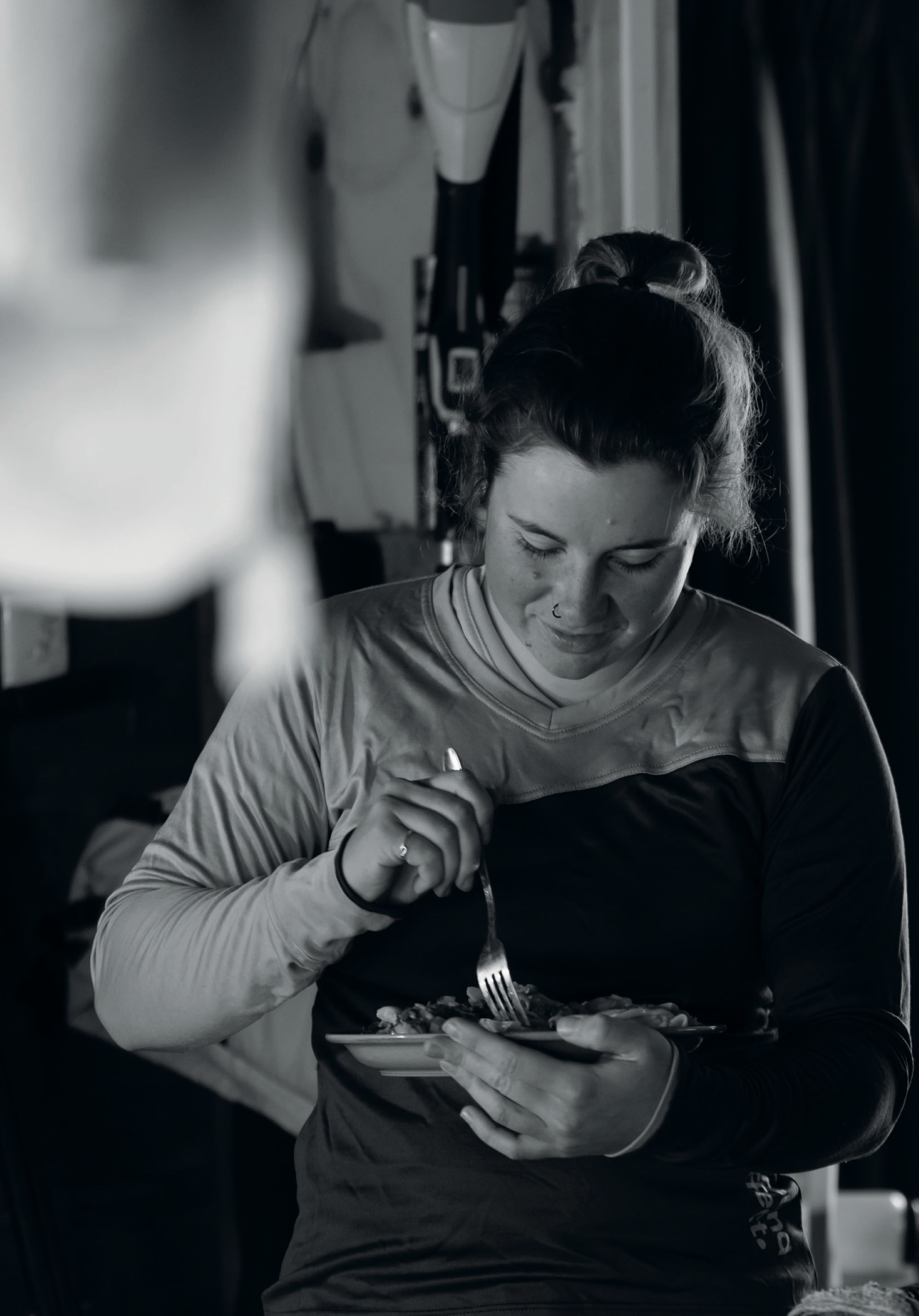
“My lowest point was on the morning of day four; I’d missed two key resupplies the day before due to a tactical error and ended up rationing my food for over half a day. It ran out with a while to go to the next town, and the hunger kicked in. My energy levels got super low and with it, my mental state. There were a lot of tears! But I kept reminding myself that the quickest way to solve it was to get to the next town so that kept me moving forward. The motto was ‘the only way through is through’. Pulling out was never an option; the long trip from NZ is very good motivation to finish a hard race.”

Key Equipment & Statistics.
Given your completion time and the technical demands of the route, how do you balance carrying enough gear to handle emergencies, with maintaining the speed necessary to be competitive? What’s the one piece of equipment that saved your race? Do you have overall stats of race data, food, and travel to/from?
“Finding the balance between being lightweight and prepared/safe is something that’s coming with experience. After a big learning moment during an event earlier this year, a key takeaway was that being lightweight doesn’t necessarily translate to being fast. I’d had to stop and find shelter because I wasn’t carrying enough clothing to keep moving, which lost me far more time than just carrying a bit of extra weight would have. Going into the Highland Trail I knew that sleep wouldn’t be as necessary due to the length of event, so I took more clothing to use while moving instead of sleeping gear. The most important part of my kit was my Ground Effect raincoat—I pretty much lived in it! Even when it wasn’t raining the wind chill was a big factor so using it as a windbreaker kept me cosy.

Adventure Addiction.
You’re described as someone who’s “always plotting and planning the next endeavour”. With Highland Trail 550 conquered, what adventure planning is currently keeping you awake at night?
“The next big adventure on my horizon is the Tour Te Waipounamu early next year. This is the event that kicked it all off for me and it’ll be my third time racing. My brain is already swimming with ideas for gear setup and race strategy; with every event comes a heap of learning, so I’m always excited to put it into practice. There are a few local challenges that will make for a good leadup, along with a few ‘shorter’ races to keep things interesting!”
The Women’s Field.
Your victory puts a spotlight on women in ultra-endurance bikepacking. What do you want to say to women who look at events like Highland Trail 550 and think “that’s impossible for me”?
“The most important thing is just to start. Start with something small and work your way up. No one got anywhere overnight, it takes lots of small steps to get there. Push your boundaries at the pace you feel comfortable with, and with challenge comes experience and confidence. I’m a big believer of jumping into the deep end, which isn’t for everyone, but you’ll find that your limits are so much further than you think.”
Cost-Conscious Components
Words Lester Perry
Images Thomas Falconer
“Take a sad song and make it better” – Hey Jude, the Beatles. If they’d been mountain bikers, they may well have called
the song “take a new thing and make it better”.
It’s only natural that in times of rising living costs and high inflation, the tools we use for our hobby will also increase in cost – and they have! The price of new bikes continues to climb, and the cheapest way to get an improved ride is not necessarily to buy a completely new bike, but perhaps upgrade key parts on what you’re already riding, although, those too are getting more expensive.
Regardless of whether you’re looking to upgrade an aging bike or make some changes to a new but low-spec ride, we’ll take a look at some ways to get better performance by making incremental, meaningful upgrades without blowing a massive wedge of cash in one hit.
Frame
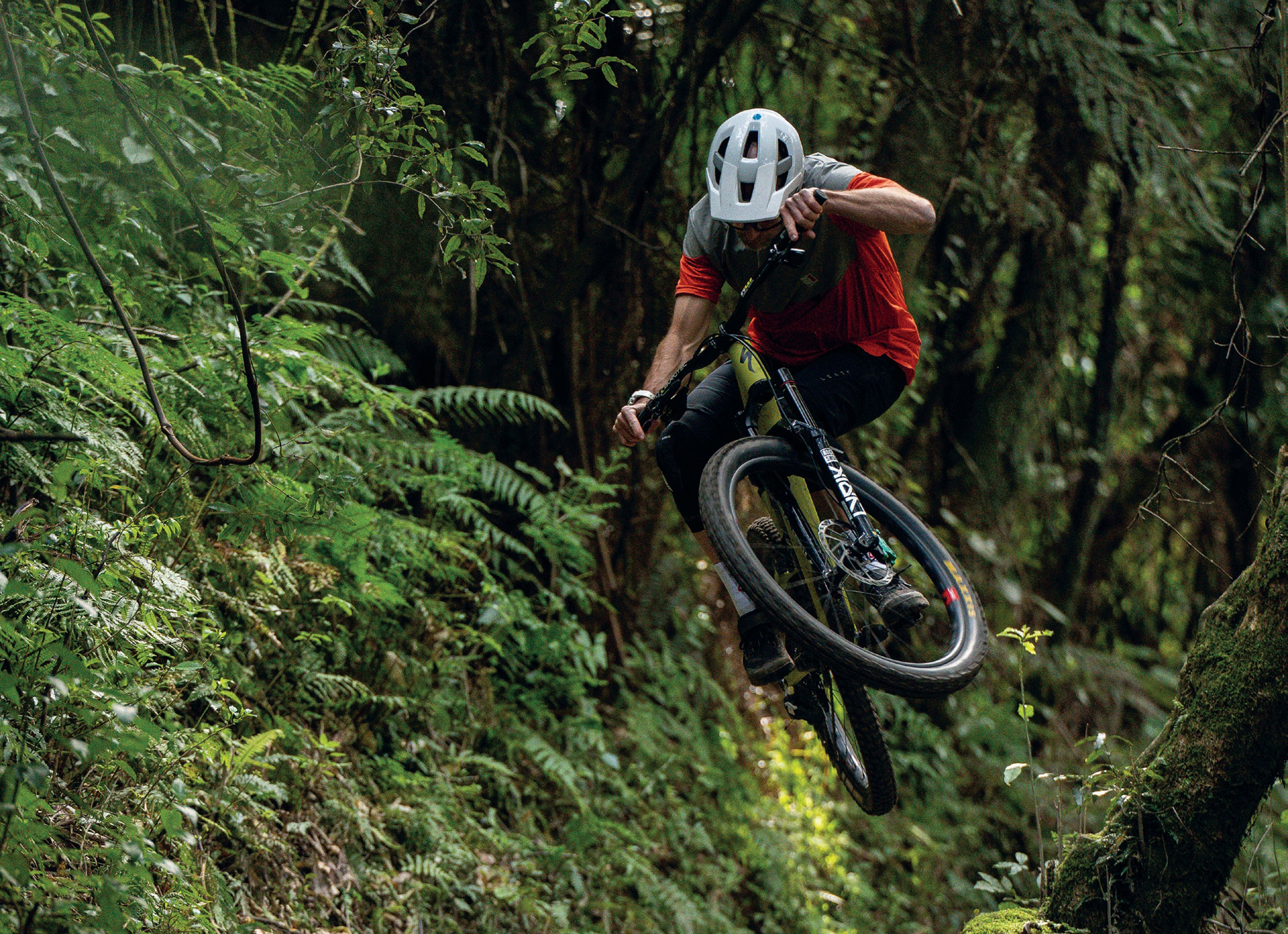
Beginning with the most expensive single part, and heart of the bike, the frame. Unless the bike is a couple of generations old, the most significant change that platform has undergone is likely a change of colour, or at best a minor tweak in geometry. Most brands run on a 3-year development cycle so, unless they’ve recently made a fundamental change to their lineup or a particular model, chances are the bike you’re riding (unless it’s over six years old or slightly unusual) then it’s likely that, with some tweaks, it could be made to ride similarly to that shiny, front-page-of-Pinkbike, rig you’ve been gawking at the price tag of.
Perhaps the frame you’re on is just not up to the task any more, but its components are still OK. If it’s time for a change, an alloy frame could be the ticket to modern geometry and tech without the price tag of an otherwise identical carbon frame. Although the most obvious difference between an alloy and a carbon frame is the price tag, there are other differences too. The weight can’t be overlooked; an alloy frame is generally at least 500g heavier than a carbon equivalent, although often that figure can be closer to 1-1.5kg. Depending on what sort of riding you’re doing, that extra weight may or may not make much of a difference. In other words, the more pedal-focused a ride, the more the weight counts. It’s worth noting that, in general, the alloy frame sits at the lower end of their range, meaning less development and construction tech goes into it. These things keep the price down, but they do impact the weight and ride quality. Frames from brands that’ve adopted an ‘alloy only’ philosophy, like Commencal, differ slightly in that they’ve put more time into tuning the bike’s feel and flex through more advanced tubing, so arguably these offer a better ride quality. These will usually cost more than a basic alloy frame, but still less than a carbon one.
There’s another glaring advantage with an alloy frame. Once the bike has been through its lifecycle and it’s been thrashed beyond recognition, the frame can be recycled, not just turfed on the scrap heap. Carbon frames aren’t recyclable in NZ, or in most of the world. Although factories have made their manufacturing processes as green as possible, the fact remains that broken or old carbon bikes don’t break down, and instead last forever at their final resting place.
Say, for example, you have an older, but still current enough, carbon frame that’s perhaps sustained some damage – for argument’s sake let’s say it has cracked around a shock mount. If the frame is under warranty, it’s worth beginning with that process as soon as possible; however, if not, all is not lost. A good carbon repair specialist, in many cases, can repair a cracked frame to be as good as new, getting you back on your bike, preventing a carbon frame from ending up in the landfill, and saving you some head scratching as to how you’ll afford a new frame. A carbon repair will almost certainly void the warranty of a frame unless it’s approved by the brand, so be sure to explore your options before committing to a repair if the frame is still in a warranty period.
Let’s say you’re happy with your frame, or you’ve saved some money by purchasing a bike with a decent frame that’s got a low spec on it, aiming to upgrade parts over a longer term. Which upgrades are worthwhile adding to your ride experience, rather than just being a change for the sake of it?
Frame Bearings
Even the latest frame from a reputable brand could have dodgy bearings, limiting how supple its suspension is after just a few rides. Rough or sticky bearings drastically affect not only the levels of grip at the tyres, but also the overall bike feel and enjoyment, as more bumps will be transmitted to the rider.
Staying on top of frame pivot axle and bearing health is key to keeping the suspension running optimally. There’s no point working on tuning or servicing a rear shock if the frame bearings aren’t running freely. A good place to start is to remove your shock and cycle the rear end through its travel. If it’s anything other than completely smooth, we’d recommend removing all pivot bolts and axles to inspect them and the bearings. Hopefully, a simple clean and grease of axles and bearings may remedy the issues. Simply use a small pick and carefully lever off the outer bearing seal. Using a degreaser on a brush or from a pressurised can, can help clean existing grease from inside a bearing if it’s not looking fresh. Pack the bearing full with a bike-specific bearing grease before pressing the seal back into place. If you’ve found a seized bearing or popped a seal off to find rust within one, then it’s time for replacement. A clean and regrease can easily be done at home if you have tools, a little know-how, and some time to watch YouTube tutorials. Bearing replacements are best undertaken by a bike mechanic, although if you have the correct bearing press already, then chances are you know what you’re doing already.
Free-running frame bearings are a simple way to help renew a frame and make the bike feel like a million bucks again.
Brakes
Effective brakes are an integral part of a ride experience, and as they can degrade slowly over time, you may not even realise how bad they’ve become. A good set of brakes with consistent power, feel, and modulation will do their job without you even thinking about them. If you have doubts about the effectiveness of your brakes, this is a great place to consider an overhaul or replacement.
New pads and larger, or unworn, rotors should provide better stopping power than you currently have. If fitting either, it’s worth bleeding the brakes at the same time. A brake bleed ensures your braking isn’t hampered by old fluid or air in the brake lines. If a bleed, fresh pads and new rotors aren’t going to be enough to resurrect a pair of brakes to their former glory, and a full service isn’t likely to help them (a good bike mechanic will know), then new brakes could be in order.
Some brakes have a limited lifespan, particularly some models that use DOT fluid, as their seals swell and degrade over time. Although they can be repaired, it’s usually more cost- effective to replace the entire brake. Don’t stress about needing top-of-the-line brakes; Often, the internals of a brake lever and calliper are identical, or close to it, across a range and in most cases, the only difference between the top level of a range and the bottom is a different finish and a small amount of weight – this of course is reflected in the price.
Fork
As with brakes, the differences between various levels of the same model are few. Weight is generally quite close between the levels, but it’s the internals where the most obvious performance differences are.
The simplest way to rejuvenate an existing fork is to give it a service and, depending on how long it has been since its last service, this could be a simple procedure or a complete tear-down. If you’re chasing performance above what the fork was capable of when it was new, a damper upgrade could be just the ticket.
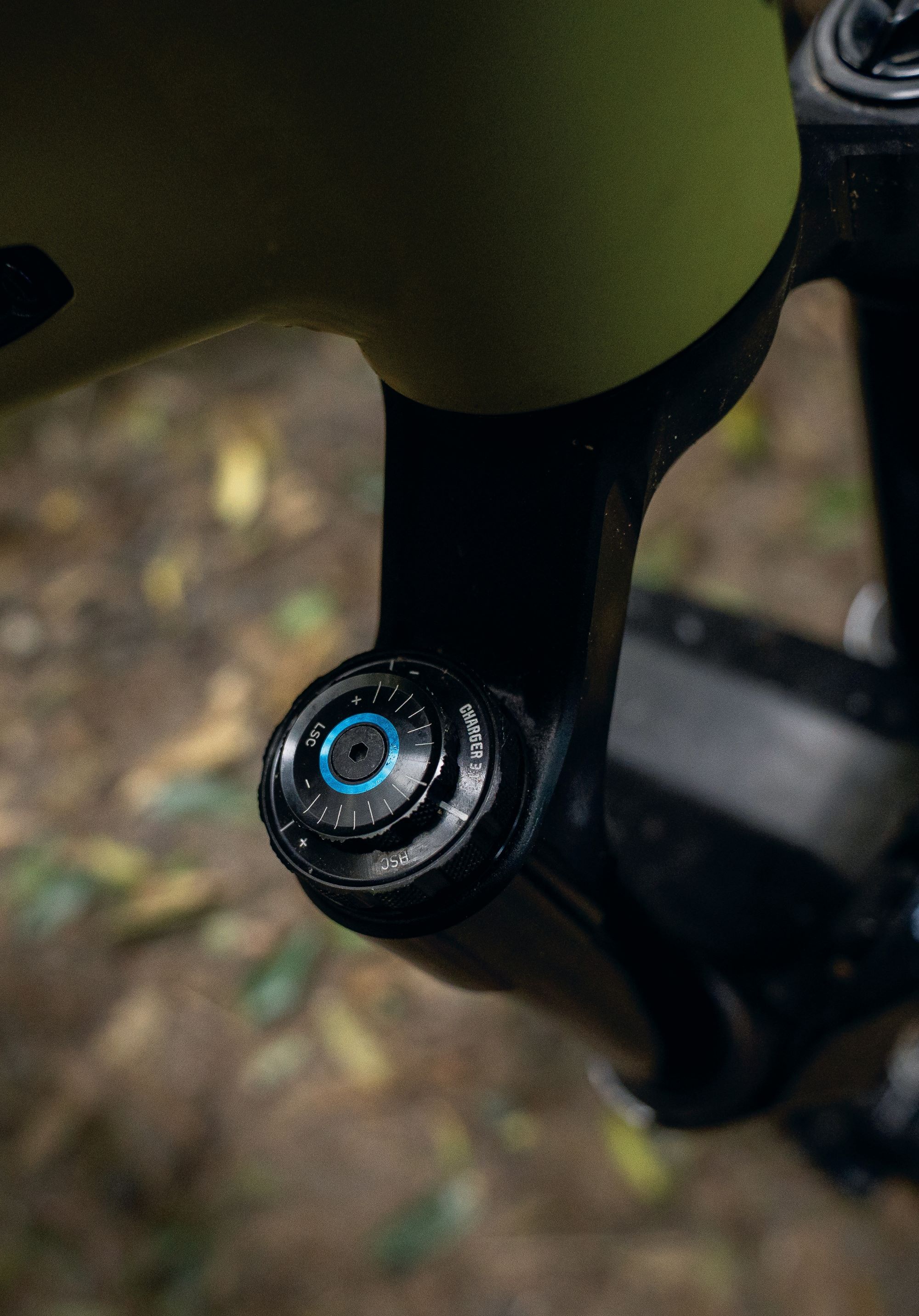
A damper upgrade on a low to mid-range fork is the most significant performance gain available to a fork. In most cases, a low-end chassis can fit the top-end damper from a given model, meaning you could end up with a low-end chassis with high-end internals and performance.
One example where a damper upgrade is better than a replacement fork is on the front of a frame we’ve been using as a review mule. The fork is a couple of years old – a Rock Shox Lyrik Ultimate—and by no means a low-end offering, but technology has moved on from when this model was in the market. During a service, while the fork was in parts, a new Charger 3.1 damper was fitted. The upgrade offers wider, more useful adjustability, better small-bump compliance, and less harshness – what’s not to love? For a fraction of the price of the most recently released model, this fork was upgraded to perform identically to the new model.
Similar upgrades can be made to most brands’ forks. Although there are limitations that dictate the extent of the upgrade and the advantages gained, if your existing fork is in good condition and you’re looking for a better experience, fork upgrades are a great option.
Tyres
For under $200, you could make your bike feel completely different. Fresh tyres enhance all aspects of how a bike rides through by providing increased and more consistent traction. Depending on where you ride, a faster tyre with lower knobs than you currently have could be much quicker and still offer an acceptable level of grip for your local trails. If you’re running some OEM (original) tyres supplied on a new bike, the change to something similar but with better sidewalls and rubber compound could mean a huge step up in handling and confidence, although visually they may not look too different.
If you’re not already running a tubeless setup, this is a worthy investment, although it will likely require a new set of tyres if yours aren’t designed to run without tubes. Tubeless offers better traction, improved puncture resistance and the ability to run lower pressures for better handling and traction.
There’s a lot of subtlety with tyres, and what’s ideal for you depends on how and where you ride, as well as a certain amount of personal preference. New tyres are a great place to look for performance gains. Just be sure to spend some time experimenting with tyre pressures to find what’s optimal for you.
Wheels
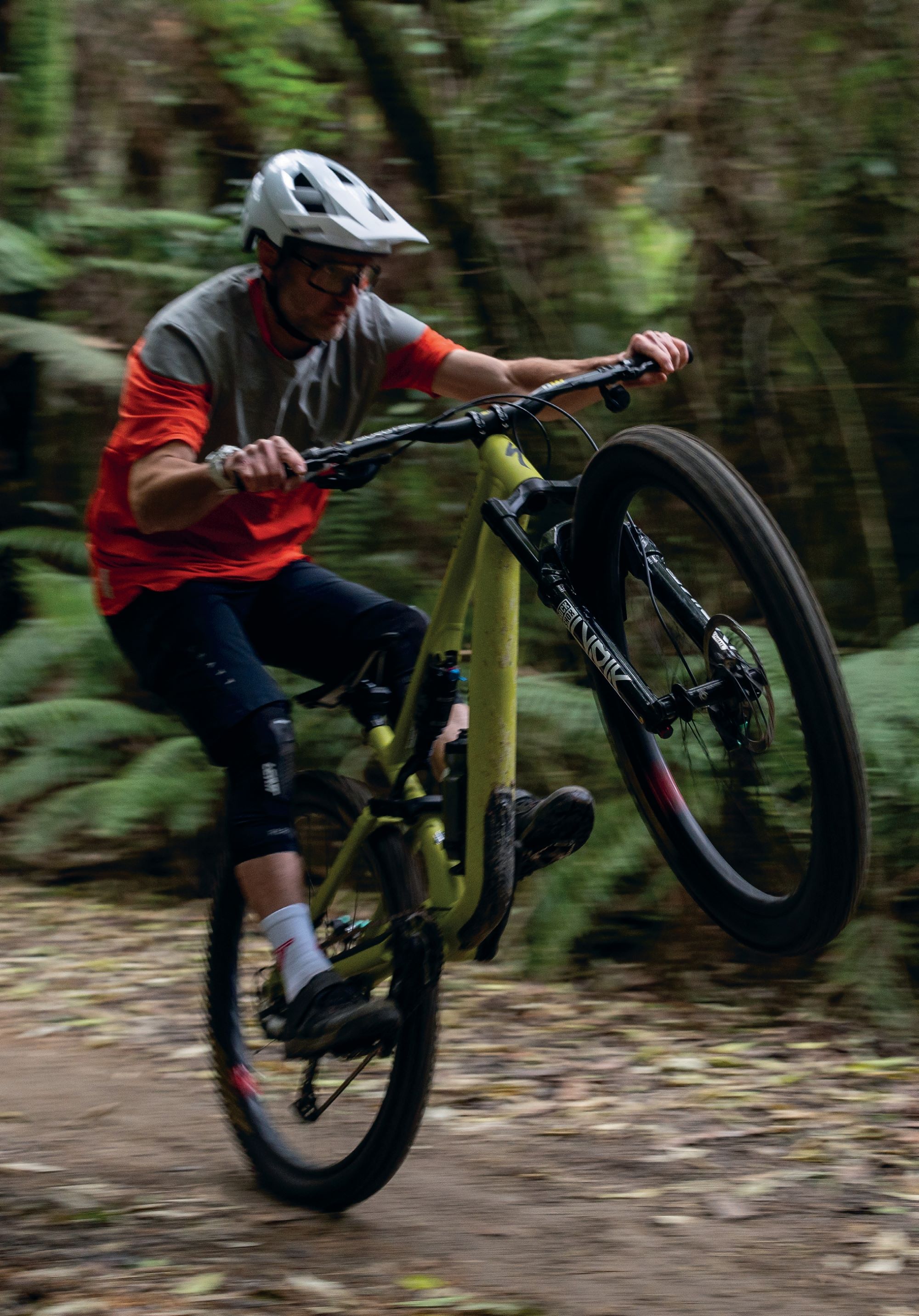
Don’t overlook wheels as a place to get some simple performance advantages. Much like frame bearings, new or freshly serviced wheel bearings make a surprising difference to how a bike rolls and maintains speed. Beyond servicing what you already have, if the wheels are overly heavy or beyond repair, a fresh pair could be in order.
OEM wheelsets are continually improving and, generally, now offer a decent build quality and weight for a price point. If your wheels are reasonable, but rolling on cheap hubs, simply stepping up the bearings to something faster rolling will make a difference. Often to shave dollars, OEM hubs are spec’d with sub-par and short-lived bearings, while the rest of the wheel is pretty reasonable, so replacing them gives great bang for buck.
Depending on the style of riding you do, where you’re riding, and how much budget you have to spend, there are a lot of options available for complete wheel replacements. Lighter weight means a bike will be more nimble, but different rims and builds also have different stiffness characteristics, so there’s a bit to consider. Much of the time, it’s going to come down to a balance of price, weight, and overall quality. Don’t overlook some of the large bike companies’ aftermarket offerings when it comes to an outstanding balance of these three qualities. Particularly Specialized’s Roval or Trek’s Bontrager complete wheel sets, which offer fantastic value and are legitimately good wheels.
Dropper Post
Most bikes come out of a factory with a dropper post that is suited to the middle of the bell curve of what height rider is likely to be riding it. Unfortunately, this can mean you may end up with a post that has either too much or too little drop. Too much, and it’s too high at maximum height when extended. Too little drop and the post won’t drop the saddle as low as would be ideal.
There are multiple dropper heights available, ranging from 80mm to 240mm, so you’ll likely find one that suits you, regardless of your height. However, you may need to try a few options to find the optimal one.
There are limitations, particularly with older frames, as to what length dropper they can handle due to shaped seat tubes or hardware interfering with insertions. With a bit of research and a tape measure, you should be right. It’s not the cheapest upgrade, but the optimal length dropper is an ideal place to spend some money, particularly for those who are battling with what they’re currently running. Particularly if your current dropper needs some love, a new and better optimised unit would be money well spent.
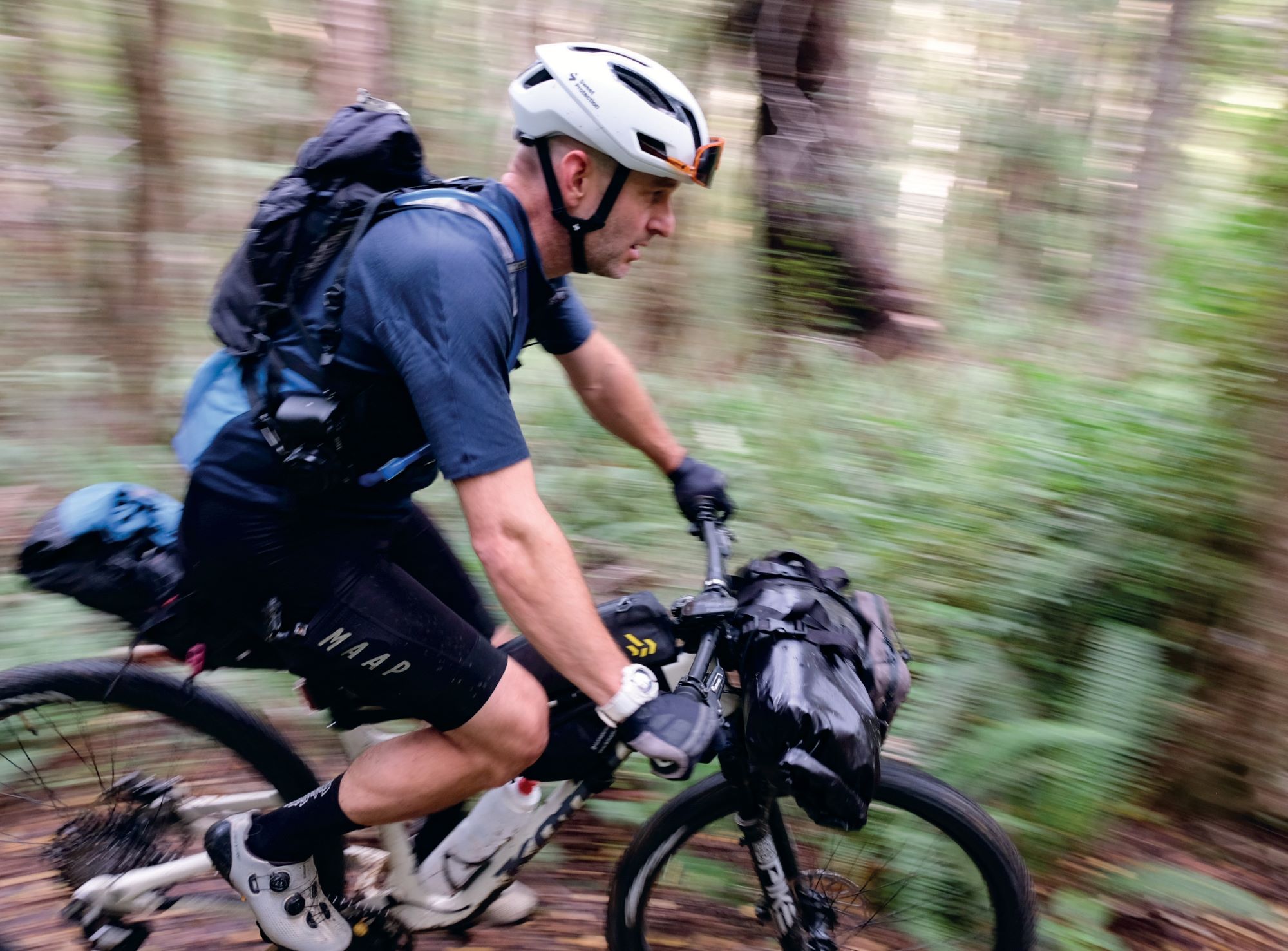
The Kahurangi 600
Words Lester Perry
Images Sam Horgan
The Kahurangi 500 is a bikepacking route on the northwestern side of NZ’s South Island, looping around the Kahurangi National Park and surrounding areas. The K5 is generally ridden from Motueka, covering around 500km. In our case, though, to ease logistics, we started and finished the ride in Nelson, pushing the lap to roughly 610km.
Riders take the K6 as everything from an FKT attempt to a week-long holiday mode cruise thanks to multiple public huts along the route. We had a varied crew, made up of has-beens and never-weres. Ex-downhillers-turned-enduro dads, an Iron Man, and even a winner of the prestigious Melbourne to Warrnambool cycle race. We wanted the best of both worlds: a solid effort without the sleep deprivation or hunger bonks of a single push. Allowing four days gave us the perfect balance of pedalling pain and long stationary stints, eating, and generally chilling, mainly talking about the good old days.
With the Kona Hei Hei in for review, I figured it could be the ideal tool for the task, as Kona had been singing its virtues as a bit of a do- it-all bike with a lean toward the XC and trail end of the spectrum. I threw on some XC tyres, strapped on some bags, and got to work.
Day 1. 168km, 2100m, 8:45hrs.
Departing Nelson just after dawn, we headed out through coastal cycle trails to Motueka for a late breakfast. Eggs on board, and some bike setup tweaks done, we climbed the main road up the Takaka Hill, a roughly 15km 800m vertical effort. Plummeting down the Rameka MTB track was only interrupted by a flat for Sam Horgan, and eventually delivered us to the Takaka supermarket for supplies. With no proper resupply for the next 24 hours, we were forced to make an unorganised and lengthy meander through unfamiliar supermarket aisles. Another few k’s up the road and we made a stop at The Mussell Inn, a roadside pub, for a large dinner and some live music. A pint each and the pub stop was done just as the night set in. Into the night and towards the head of the Heaphy track, and our bed for the night at Brown Hut. A sketchy fire dulled the blow of the autumn temperatures as we slipped into a coma for night one.
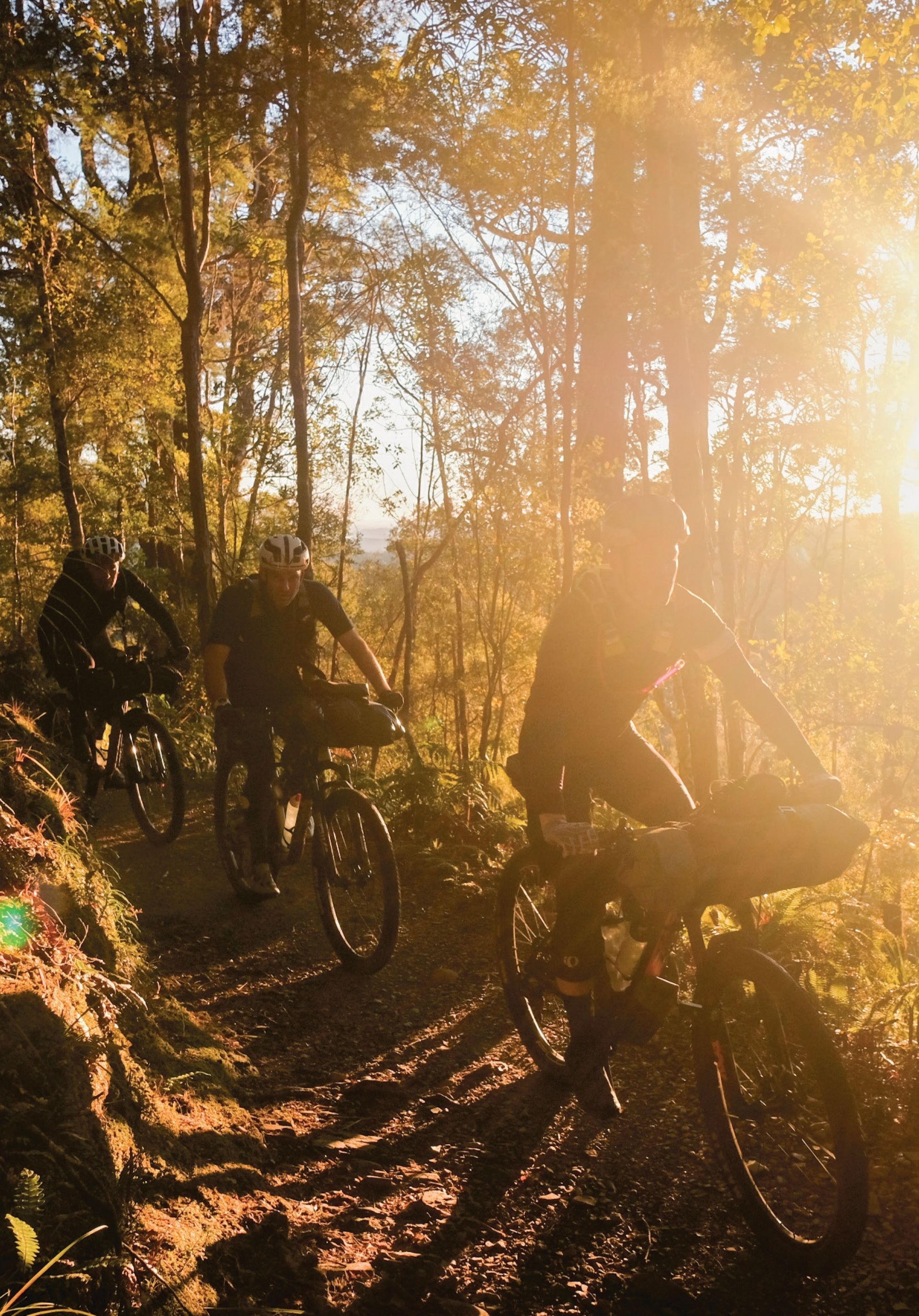
Day 2. 147km 2336m, 9:14hrs.
After a chilly tin of creamed rice and over an hour of faff, we set off into the Heaphy, only to stop metres in, to remove our lights that we’d just fitted as the sun was up, smashing our intention to be on the trail pre-dawn. The Heaphy is an underrated backcountry trail featuring some great sections of fast-flowing trail. Unweighting the bike to dodge sharp rocks was a challenge thanks to the added weight of loaded bike bags. Today was James Rennie’s turn for an issue. As the clock struck noon, James slashed his tyre, dumping all its air and most of its sealant onto the greasy rocks. Tyre plugs were ineffective, so a makeshift tyre boot was fitted, and James completed his fix with multiple wraps of duct tape around the wheel and tyre. Sure, it was unorthodox, but it held for the remainder of the trip!
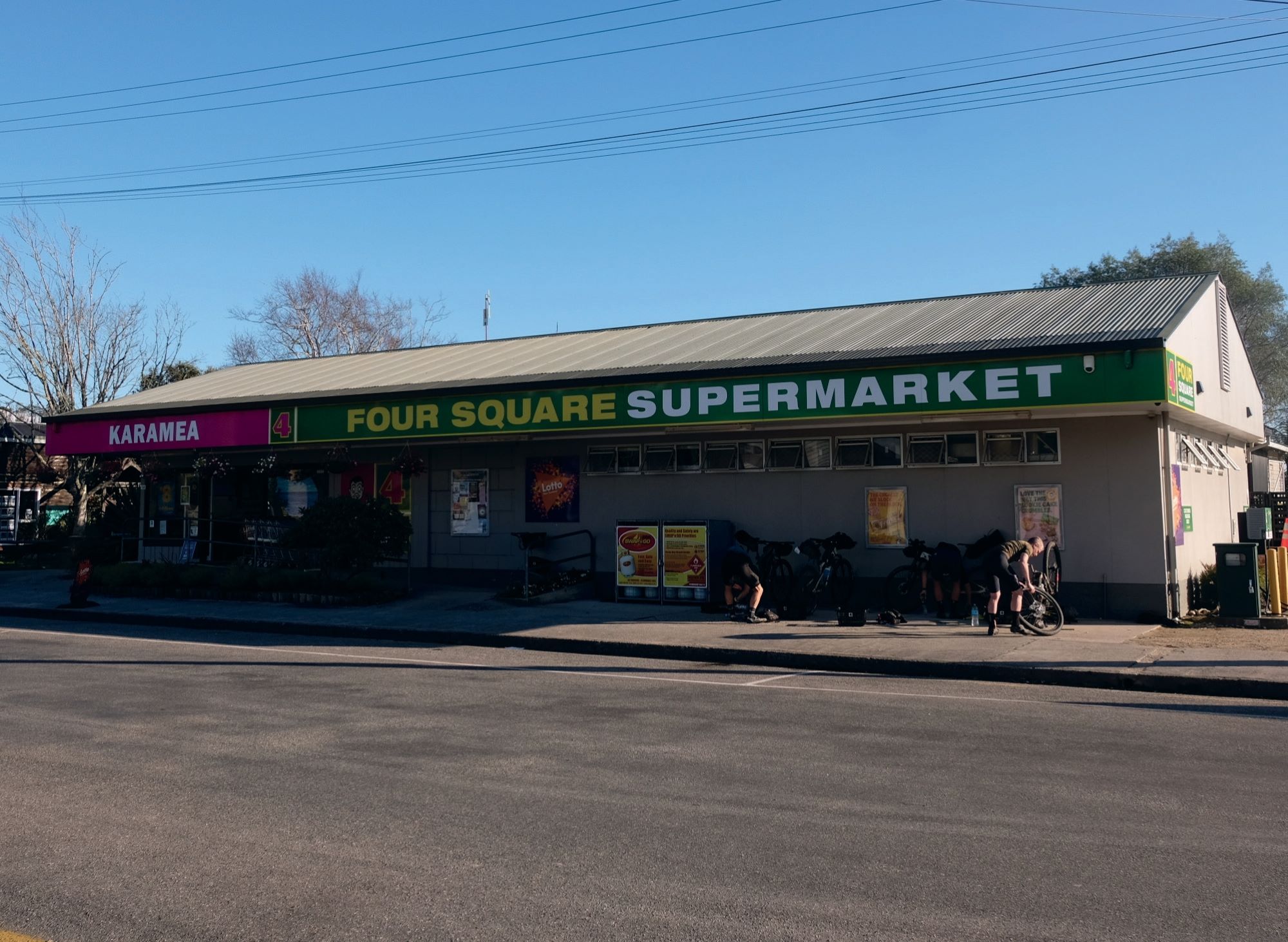
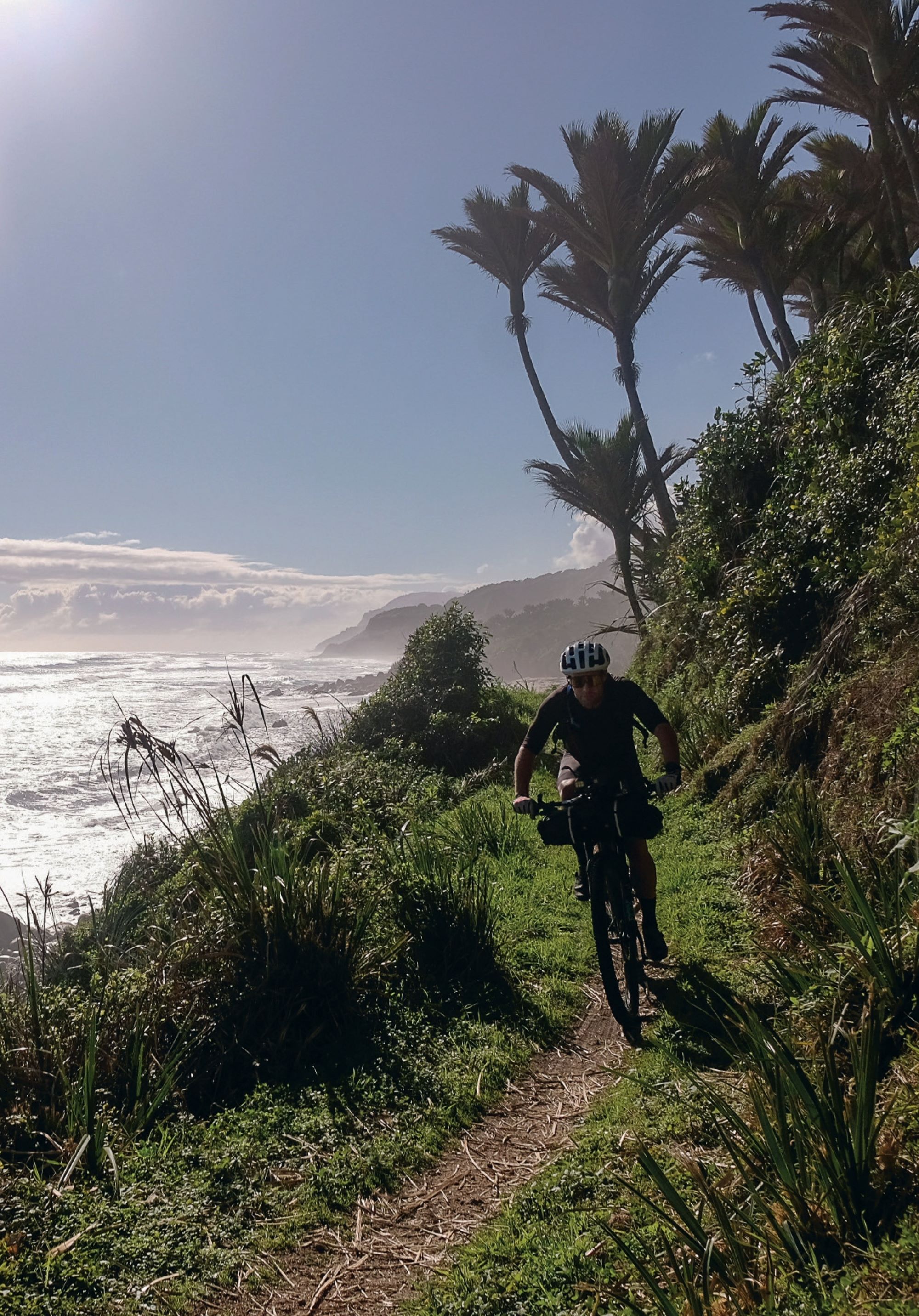
The diversity of terrain through the Heaphy is unreal, from trees hung heavy with moss to stunted alpine growth and, finally, we were spat out on a Nikau palm-lined beach on the West Coast. Riding the road for a solid stretch down the coast, our only solace from the headwind was hiding behind Sam, who by some margin was the tallest and strongest of our group. The sun was slowly starting to dip as we came to our next resupply, the Karamea Four Square.
Now fully loaded with food, speculation was rife as to how many climbs—and how far—it was to our next destination and a lay down. Whatever our guesses were, we were all wrong, especially those of us who ended up riding through to Seddonville, overshooting our destination of Mohikinui, where Sam had ridden ahead to ensure the pub was open and order our dinner. With an extra 10 kilometres under our belt after the Seddonville detour, we arrived at the pub in Mohikinui to meet a somewhat concerned Sam, two beers deep, wondering where we were. All was forgotten after a deep sleep in a campground cabin’s saggy bed.
Day 3. 121.62km, 2656m, 9:16hrs.
After the debacle of day two’s extended morning faff, we rose earlier on day three, riding into the rain at 5:45 am. It’s fair to say we were all somewhat dubious about what was to come, not only with the weather but also how tough this day could be, as we would essentially ride the Old Ghost Road in the reverse of how it’s generally ridden.
Climbing from the get-go, we slogged up technical pinches and meandered through dense bush, the last couple of days riding making themself known as the trail began to get steeper as we climbed away from the river.
Skyline Ridge was an absolute highlight of the day. Even on a bike that wasn’t loaded with gear, this would be a tough climb, but add on all the gear, and it was an absolute beast. Steep, rugged switchbacks made picking a line difficult, and traction was a challenge; my legs could only take so much. I was stoked to make it much further than I expected to before detonating, resorting to walking a couple of sections. Arriving at Ghost Lake Hut for lunch, we marvelled at the view and huriedly downed whatever can of energy drink we’d brought with us, washing down yet another muesli bar. A quick top-up of our water supplies and we were climbing once again. Fortunately, it wasn’t long before we were on the main descent, which would take us all the way down to almost sea level. Partway down this descent, we realised the error of our ways. Built to be climbed, this mellow, non-technical descent seemed unending. The only real obstacles to avoid were groups of people slogging their way up towards the hut for the night.
Not far from the bottom, we came across a keen gent who’d been climbing with one of the groups we’d passed earlier. He was descending back to his car at the trailhead, with a completely snapped seat post. Turns out, loading a massive bag with what appeared to be 20kg’s worth of gear, and hanging it from your saddle is a bad idea. Fortunately, it was all coasting back to his vehicle, not a single pedal stroke needed.
Crossing the 21st, and final, bridge of the day, we were done. As the sun dipped behind the hills and we headed into the final stretch of the day, I discovered I’d punctured in the final metres of the trail. A classic pinch flat with air coming out of the tyre bead and further up the sidewall. Mint. A couple of plugs and it was game on for 30k’s of road into Murchison for another FourSquare resupply, a hot roast meal at the pub and a couple of night-caps before passing out in an ice-box of a campground cabin—although no saggy bed this time!
Day 4. 168.45km, 1696m, 8:06hrs
Breakfast was varied. To each their own, as some would say. A tall can of ‘V’ and Cup of Noodles; a Monster and a chocolate milk with a One Square Meal bar; creamed rice, protein milk and muesli bars; our final morning meant all the nutritional rules were out the window. We ate what we had and didn’t complain. On the road pre-dawn once again, this time to the head of Lake Rotoroa and onto the Porika Road climb. To say this climb is horrid is an understatement: 3.2 km long, gaining 454m and an average of 14% with some seriously steep stretches. My average speed was just 4.5kmph! Sam rode the entirety of it with one small dab, and the rest of us slowly dragged our carcasses to the top with a mix of knee- breakingly slow cadence and calf-destroying walking. The beauty of walking parts, though, was that we had a chance to breathe in the cracker views down the lake. Truth be told, once uploaded to Strava, we discovered we actually made good time to the top, compared to many. We’d eked out any remaining energy we had, so after Red Bull, packs of gummy snakes, yet more muesli bars, and some hearty banter, we descended for literally kilometres… right to the door of the Tapawera Four Square for pies, coffee, and lots of food my cardiologist would frown upon.
Following the Great Taste trail towards Nelson, our patience for mellow bike paths had waned, and we cracked on, swapping turns on the front. Needless to say, Sam’s pulls were the longest. Arriving back in Nelson, it was a tough decision between going directly to the pub for a huge meal or doing the responsible thing and packing our bags ready for the next morning’s flight home. Responsibility won, and dinner waited until we’d done our chores. The meal was spent reliving the previous few days, amazed at how much we packed into them and how epic the Heaphy and Old Ghost Road trails are, and all the better when linked together.
My takeaways from the trip were many, but here are a few: Big solo days in the saddle pushing hard are great, but they’re best shared with mates. Going hard and fast is fun, but it’s just as fun to chill in a camp cabin and sip whiskey while whinging about all the climbing you’d just done. It’s all good until it isn’t; being prepared is key to making big days successful and not needing to walk back to somewhere with a broken seat post. The Heaphy is underrated; it’s a fantastic ride, and although the Old Ghost sure gets more limelight, the Heaphy is equally worthy. Always remember earplugs, an eye mask, and a water filter; forgetting these can make or break a trip into the unknown.
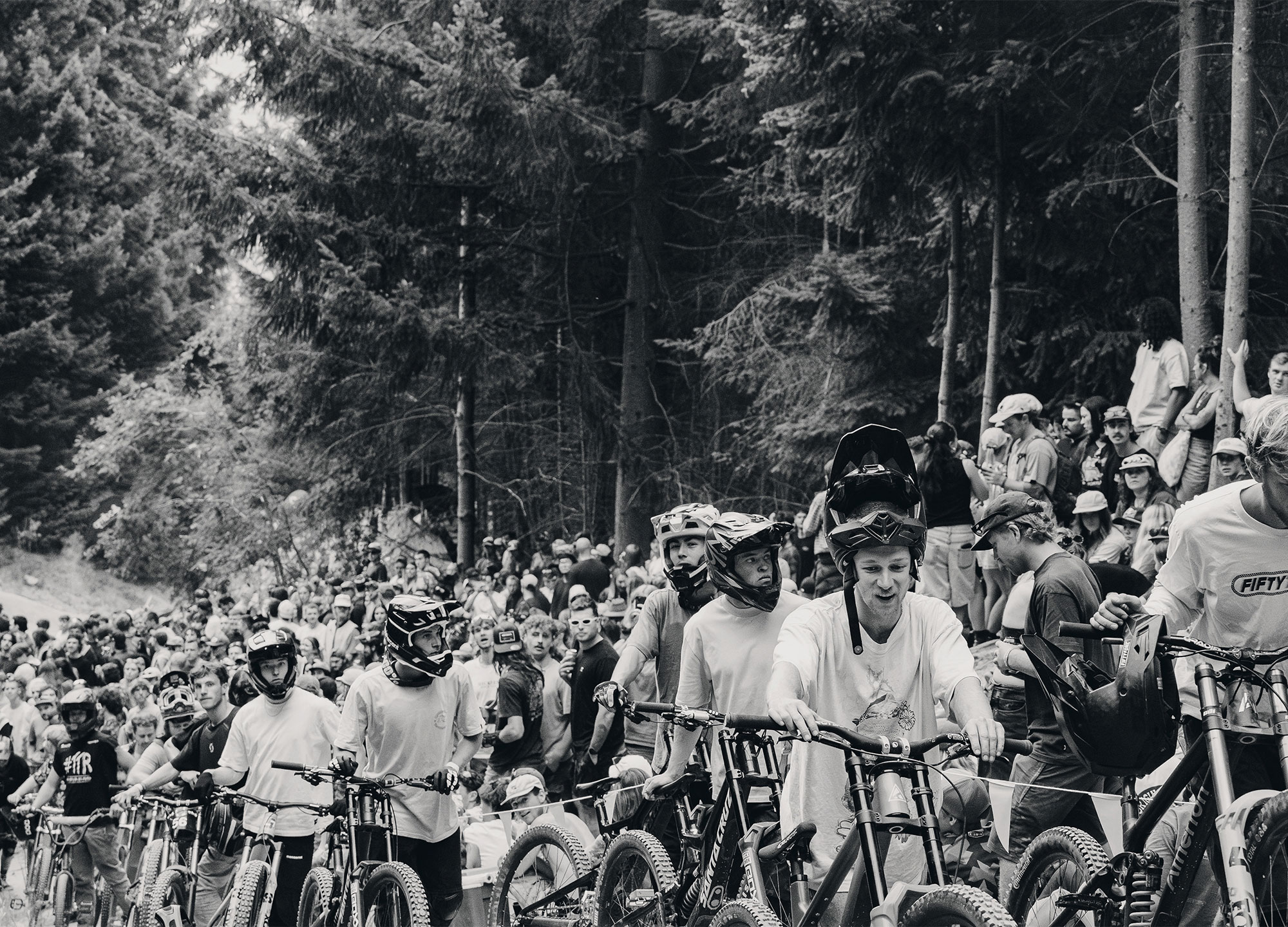
Built on a dream
Words by Riley McLay
Images by Riley McLay & Greig Howell
In the world of big air, nowhere is more iconic than Dream Track. Nestled in the heart of the Wynyard Jump Park, the crown jewel of Queenstown’s ever-growing trail network has drawn riders from around the world to experience the massive airtime it’s become synonymous with.
The ‘world’s largest public jumps’ are instantly recognisable by their meticulously shaped lips and perfectly calculated flow. Featured in countless films, edits, and reels, this line has seen many of the sport’s top riders leave their mark, each bringing a unique style and interpretation to how the jumps can be ridden.
But Dream Track is more than an arena to showcase skill—it’s a meeting place for the Queenstown mountain biking community. An open, inclusive space where riders come to learn, share and progress together. And, like Rome, it wasn’t all built in a day. Dream Track is the product of years of evolution, fine-tuning, and relentless community passion, shaping it into what it is today.
Some people might not know that the line was originally built for a segment in the cult classic film New World Disorder 5, where Dave Watson and Grant Allen ticked off a number of freeride zones during a New Zealand and Australia tour. The line was constructed in 2005, along the remnants of an old access road to a former forestry block. It consisted of four main hits, finishing with a massive road gap step-down that landed in what was the early iteration of the Mini Dream area. This was a time well before resource consents were needed for trail building and definitely before anyone was worried about health and safety. Thankfully, the Queenstown Mountain Bike Club (QMTBC) had a solid relationship with the local Queenstown Lakes District Council (QLDC), which gave construction the green light. The mastermind behind the build was Nathan Greenwood, who did most of the digger work himself. For its time, the build was impressive, even if it was a world away from today’s standards.
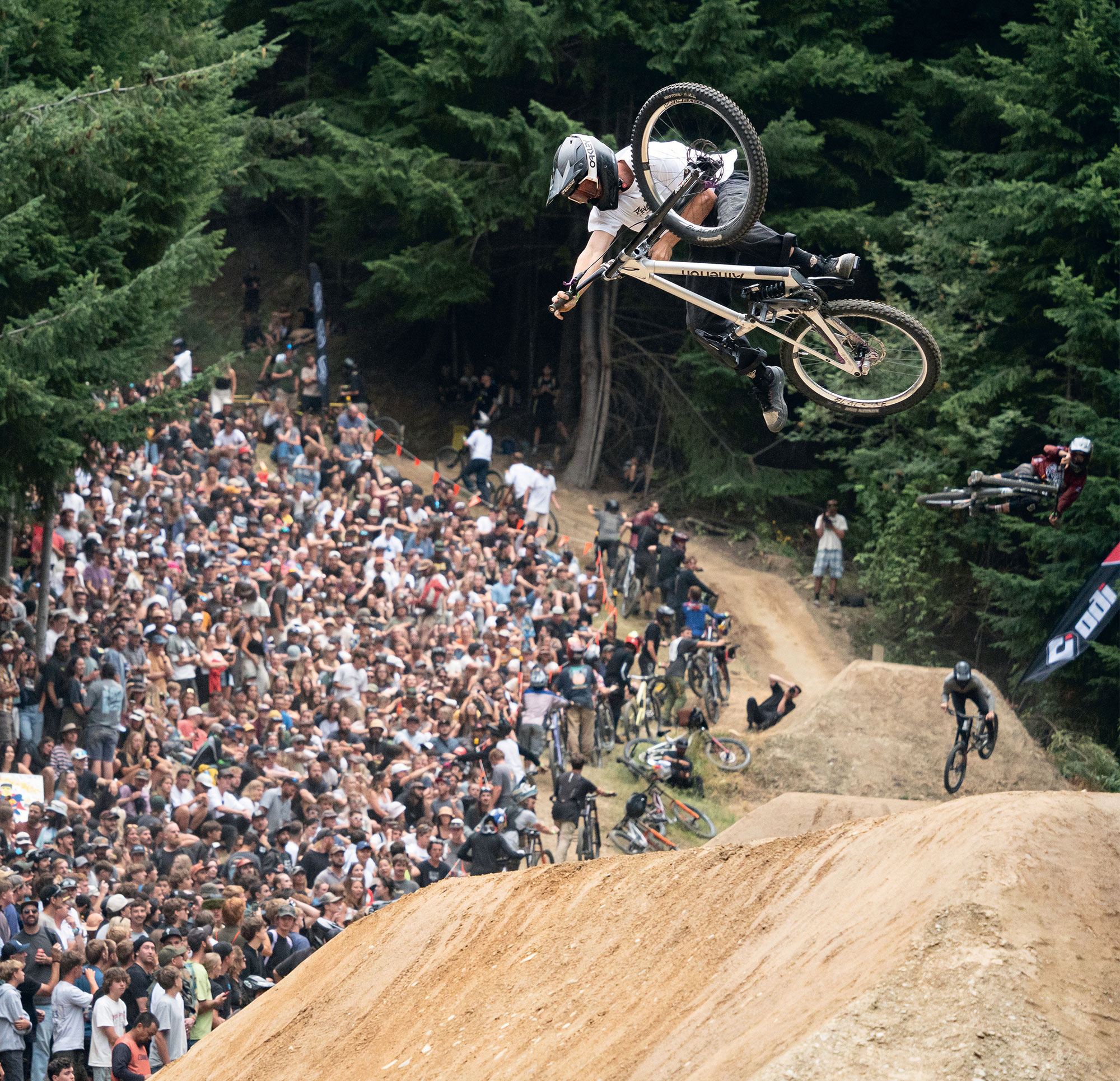
Once the film crew had moved on, only a small group of locals had the skillset to ride the jumps. Keen to keep developing the line, the club struggled to justify funding a track that only around ten people were using. So, most of the changes that followed were small tweaks, made primarily to suit those few regular riders. One of the most notable of those riders being New Zealand Freeride legend, Kelly McGarry, who made the move specifically to Queenstown to ride and train on the jumps. Knowing how much it would mean for the growth of the local scene, a plan was set in motion in 2014 to extend and improve the line. Spearheaded by Emmerson Wilken and Conor Macfarlane, the duo managed to convince QMTBC to allocate a budget for the work. A nine metre left hip into a 10-metre step- up was added, linking back into the four original jumps. This ‘new school’ layout opened the line to a wider range of riders, better suiting the bikes of the time and making it far easier to session.
With the lines growing popularity, they knew they were only scratching the surface of the area’s potential. Inspired by the impact of events like the Fest Series, and the possibility of hosting something of that caliber in Queenstown, they knew they needed to build more jumps and bring the rest up to modern standards. The goal was to build steeper jumps—more like BMX or 26-inch dirt jumps, just scaled up for downhill bikes. The vision was to hit a wall of dirt at high speed and launch to the moon! However, gaining support outside the club was difficult, as the local tourism board had yet to see biking as a worthwhile investment.
In 2016, after extensive consultation with the local scene on how best to utilise the terrain, a revised layout and cost estimate were presented to the QMTBC. A budget of $3,000 was allocated for the build, with most of it going toward diesel for a brand-new digger that was generously donated by local construction company, Veolia, for a two-month window. The rest of the effort and manpower would be entirely volunteered, with a long list of locals lining up to donate their time. The primary goal was to build three new jumps above the existing line, and if any budget remained, work would continue on the lower section of Dream Track. The two-month window to complete the build happened to align with the very first McGazza Festival—an event created to celebrate the life and legacy of Kelly McGarry. As part of the festival, a memorial jam was planned to officially open the newly revamped Dream Track, making the build feel even more meaningful for everyone involved. After over 250 hours of digger time and countless hours of volunteer work, the jumps were nearly finished and just needed the final test before they were good to go. Normally, guinea pig duties would fall to Kelly or Conor. But with Conor out, recovering from an injury, the job landed on Emmerson. Would the ol’ eyedometer prove accurate? The build wasn’t based on any exact science, just past experience. The only way to know for sure was to huck it. To their surprise, the jumps worked perfectly on the first try, and only minor tweaks were needed before the jam.
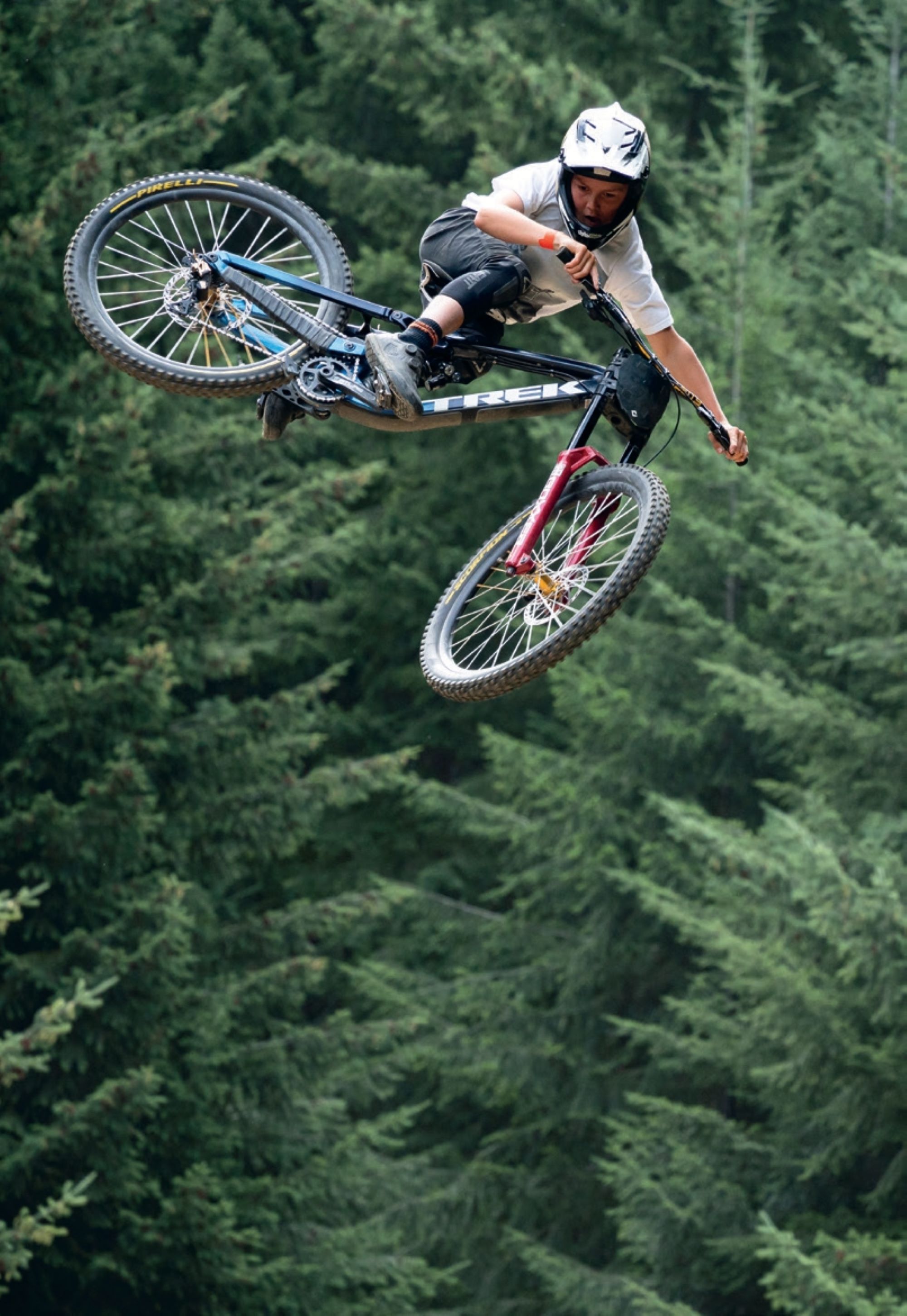
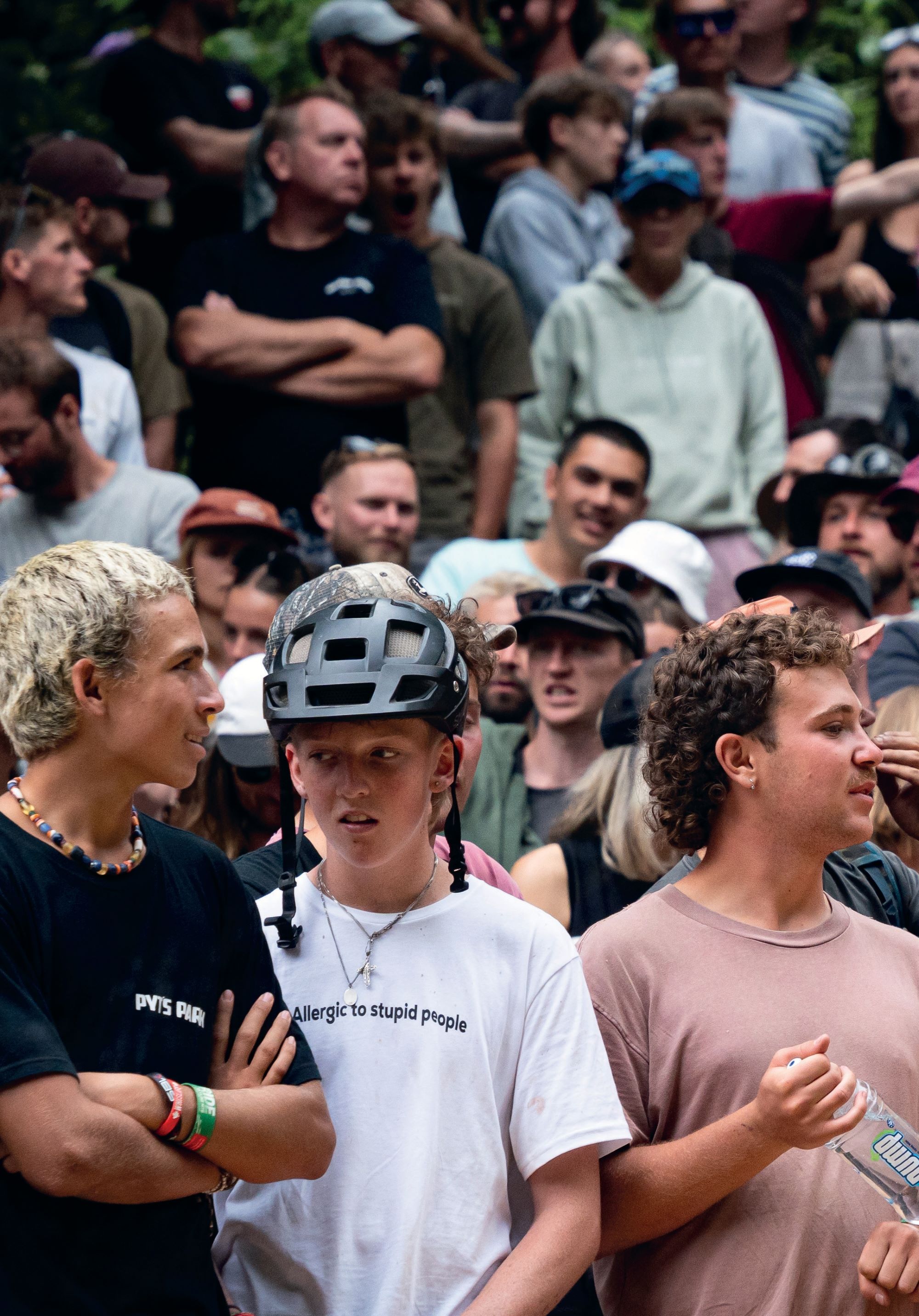
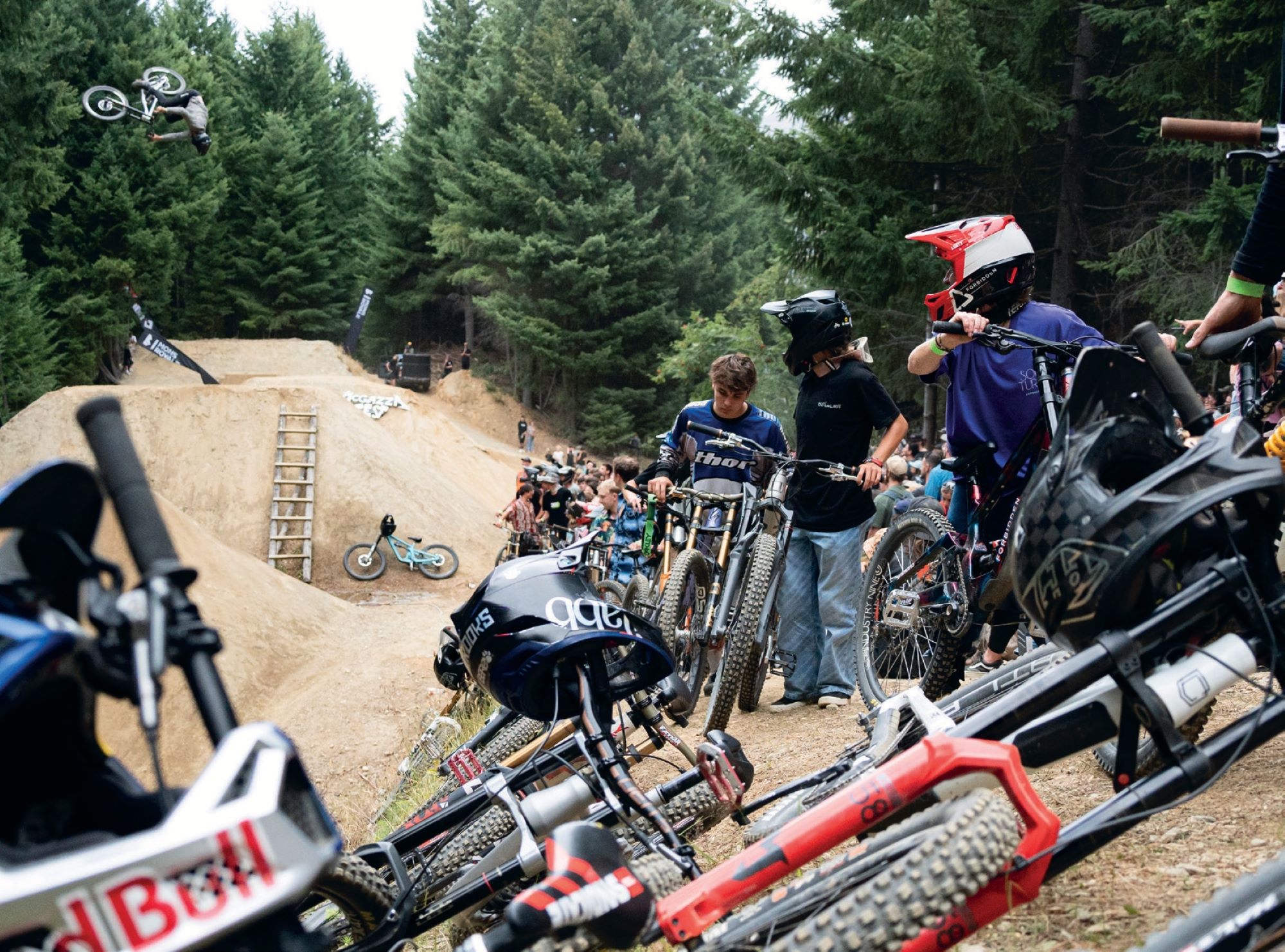
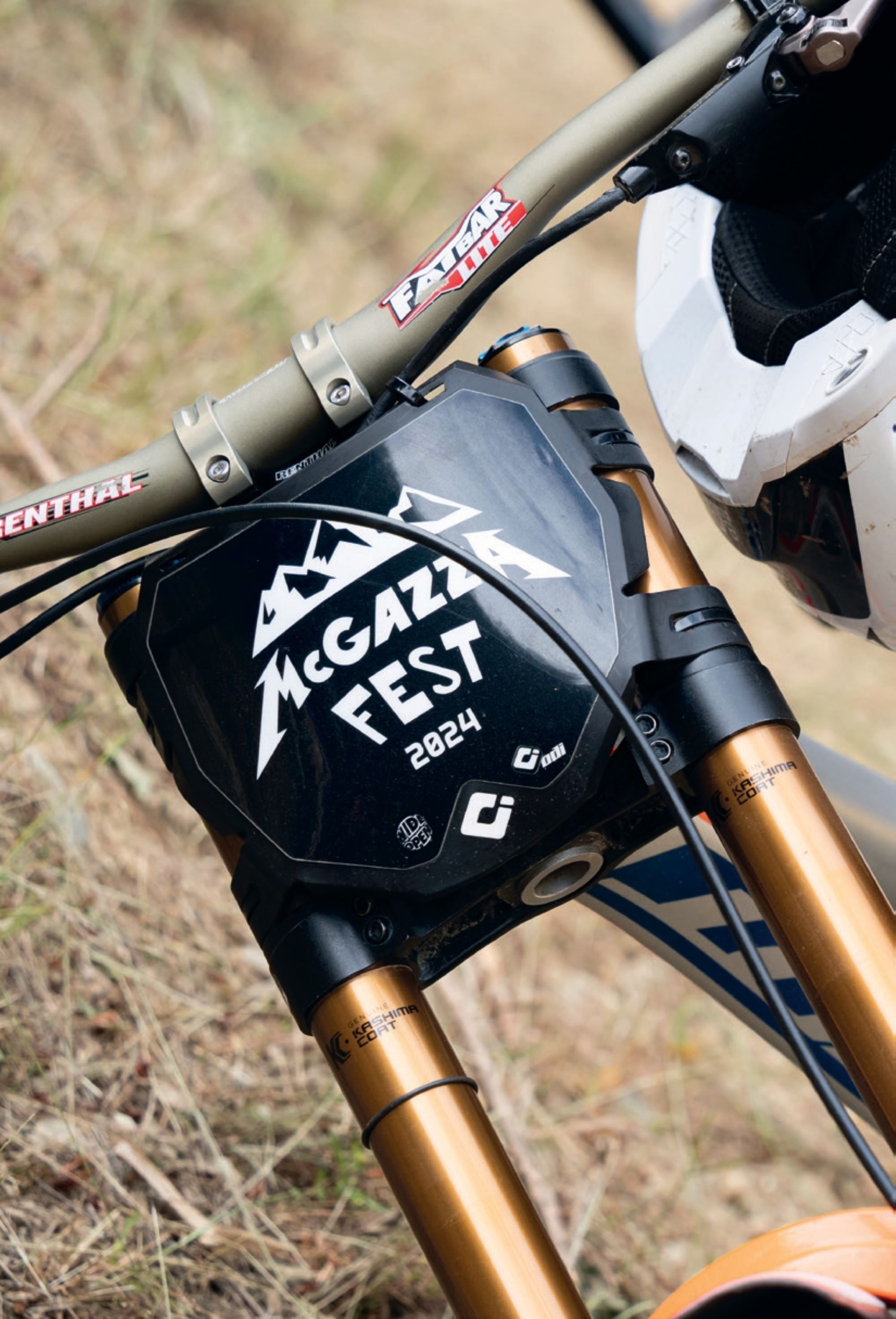
The first iteration of the McGazza Fest Dream Jam was as grassroots as it gets, just a crew of Kelly’s friends sending it huge for the big man. Since then, it’s grown into one of the most anticipated events on the mountain biking calendar – all on the back of no marketing or advertising for the event. One social media post goes out for the date of the event, and word of mouth does the rest. A major drawcard for spectators is not just the chance to watch a mix of star-studded pro riders’ session the jumps, but also the opportunity to see their local mates sending it alongside them. The club uses the event as a fundraiser, with proceeds coming from a sausage sizzle, a raffle, rider entry fees, and merch sales — including the popular McGazza tees. At the 2025 event, over 3,000 people packed the hillside to catch a glimpse of the action. It’s also become competitive to secure a spot in the lineup, with organisers capping the number of riders to 100 on a first-in, first-served basis to help manage congestion on course. This past year’s event introduced an under-19s category to open for the main show, giving talented up-and-coming groms a chance to showcase the future of the sport. Even though these young riders would be too young to know Kelly, and maybe not able to fully grasp what he accomplished, it’s inspiring to see them carrying on the culture that Kelly embodied. This upcoming event will mark 10 years of McGazza Fest, and organisers are planning to go all out for the occasion. There’ll be an even greater focus on Kelly’s memorial and legacy, along with the return of crowd favourites, like the live band — all to make it the best event yet!
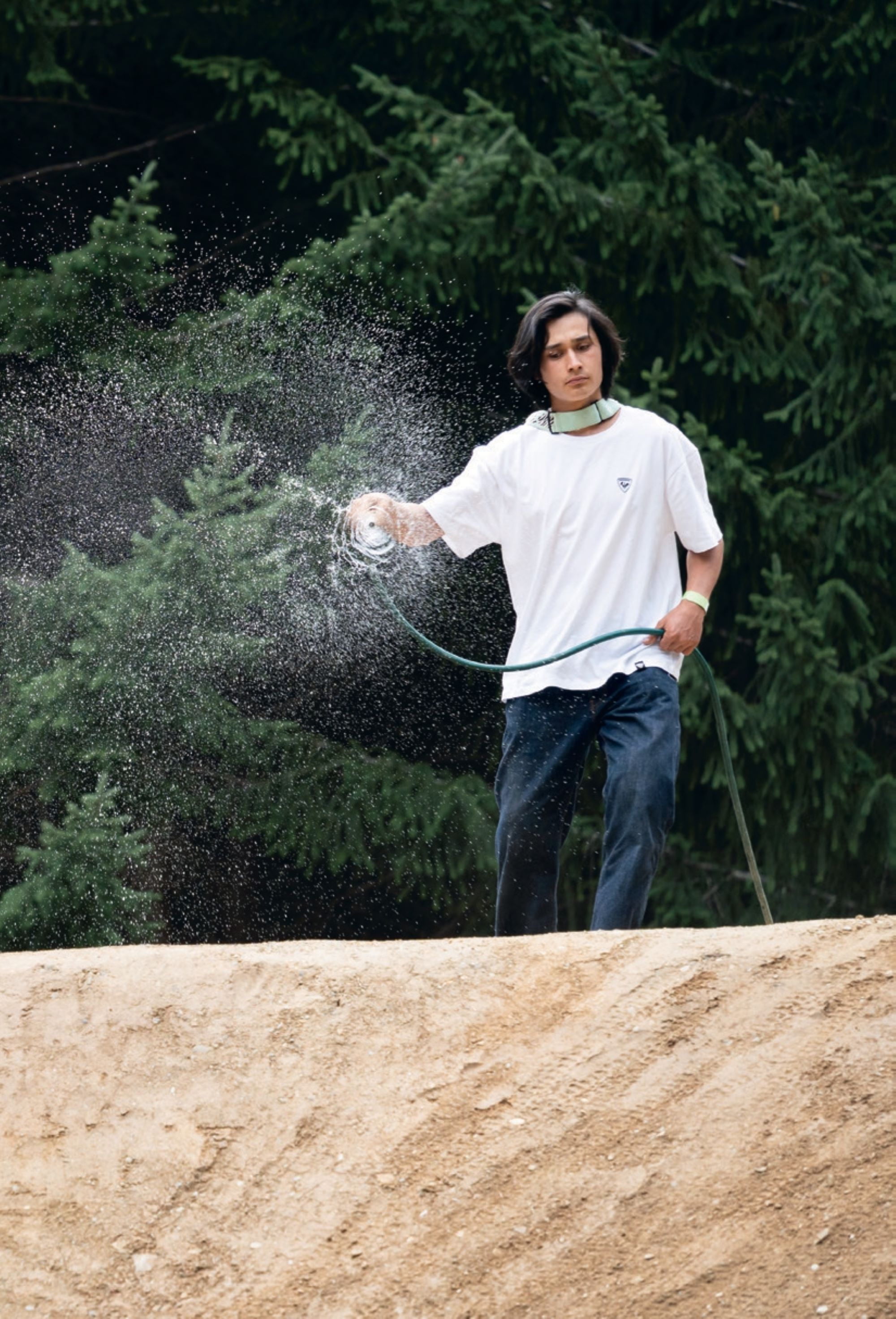
Following the post-COVID boom in mountain biking, the local government has pushed to further develop Queenstown’s riding infrastructure, recognising the economic benefits the sport brings to the region. This includes attracting large-scale events like Natural Selection Bike, which even used Dream Track for its pre-qualifying round, to maintain the marketing momentum and reinforce the global push to position Queenstown as one of the world’s mountain biking meccas. Many come to ride the iconic Dream Track, but the nearby Mini Dream area and wider riding network has also become popular for riders to progress their skills and work up to the larger jumps. The club’s ‘build it and they will come’ mindset has paid off—helping foster a community that’s eager to push their limits, while minimising risk through higher-quality trail options. However, upkeep and maintenance of the Dream Track area still rely heavily on a small crew of dedicated volunteers, who are left to manage the consequences of this increased traffic. As a result, there’s been a strong emphasis on education and signage to encourage riders to use the hill’s irrigation system and water the jumps before riding.
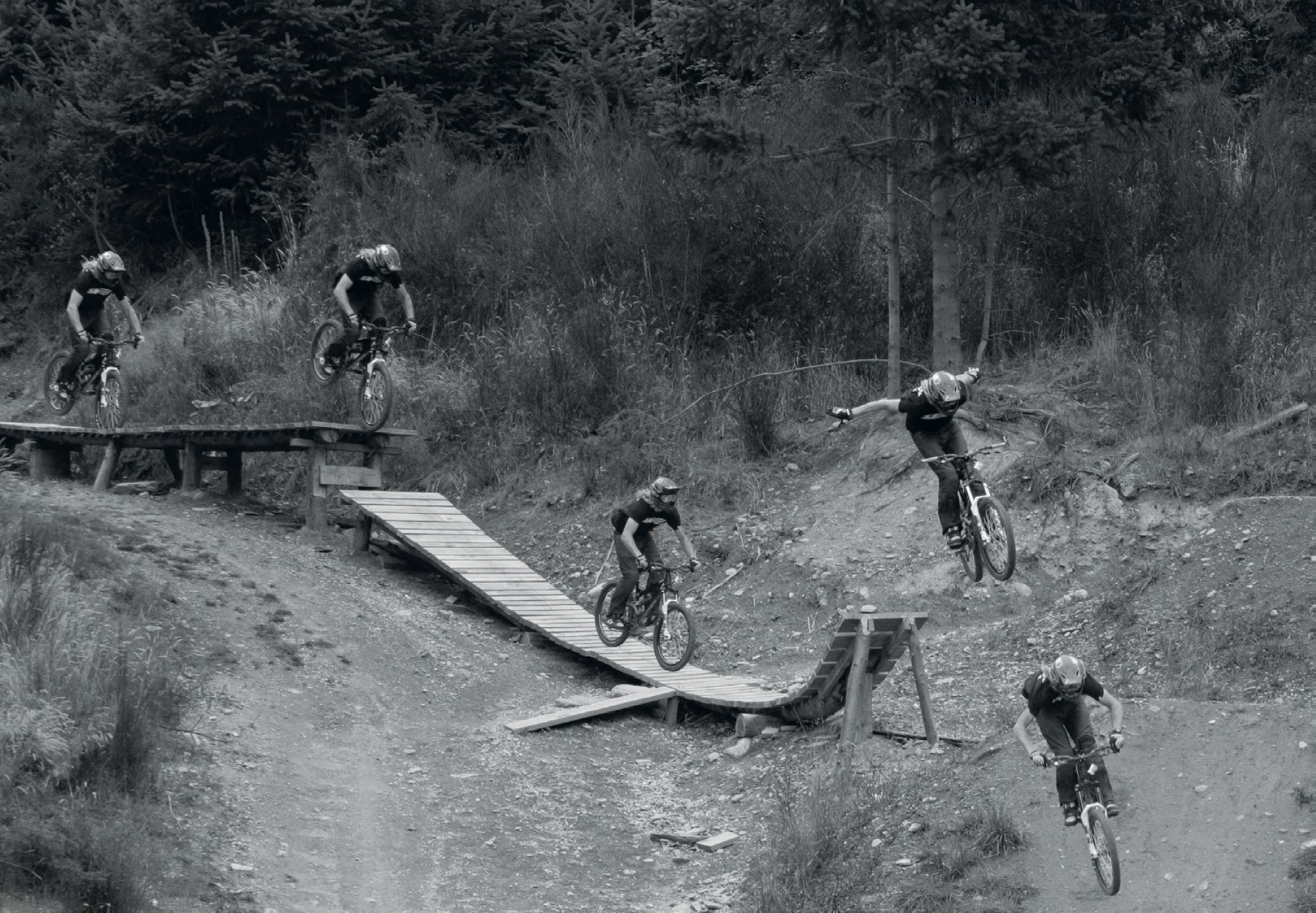
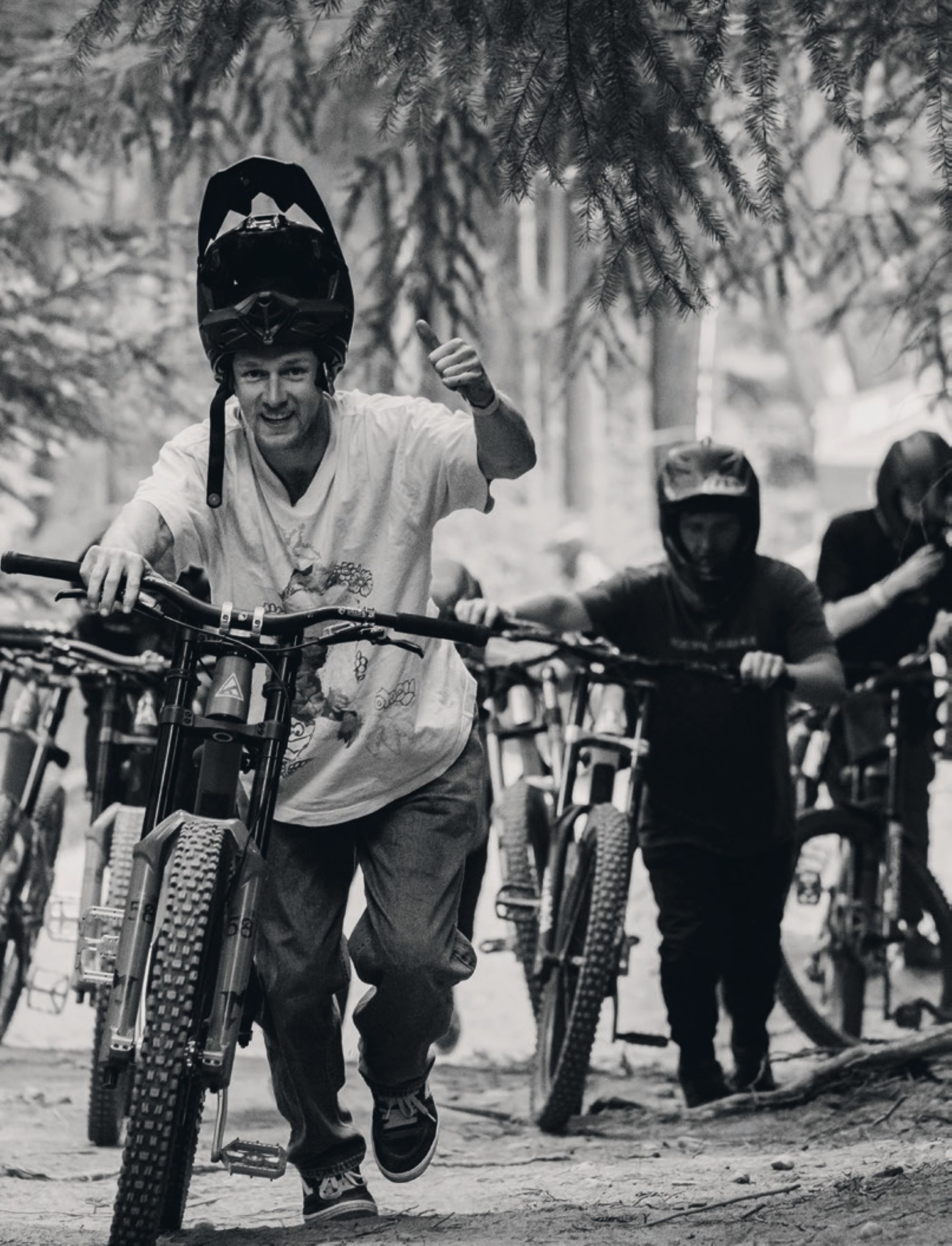
There’s also been a push to riders to not take the jumps for granted and to only ride them when they feel ready. This follows an uptick in emergency callouts across the Queenstown network. With vehicle access to Dream Track and the greater Ben Lomond area difficult at the best of times, injured riders often have to be airlifted out by helicopter. The QMTBC and QLDC are acutely aware that pushing one’s limits can lead to real-world consequences, and have committed to supporting Dream Track while doing their best to ensure it is as safe as possible. Their goal is to ensure the track thrives for generations to come. This includes future-proofing the hillside by chaining off and closing the tracks for winter to preserve the jumps and prevent inexperienced riders from riding them in poor conditions, and planting native trees alongside the jumps to replace the windbreak if the remaining pines from the original forestry block fall or are removed.
The full line currently stands with 14 features, with the biggest sending you 60 feet to the sweet spot. Spanning 570 metres, the line’s average speed is well over 50 km/h taking riders about a minute to ride top to bottom. Those involved are extremely proud of what they’ve achieved with Dream Track and admit the riding still hasn’t gotten stale. That said, there are always plans in the works to build on, with ideas to add a few new features—including a trickable step-down, a full right hip, and a spine—to really round out the line. The goal is to be the icing on the cake to what’s already one of the most complete jump lines out there. Like Rome’s Colosseum, Dream Track stands as both a monument to the riders who came before and to the community building for the future. It’s more than just lips and landings — it’s the heartbeat of Queenstown’s riding scene, proof that when a community dreams big, the world will show up to ride.
All proceeds from this project will be donated to the Queenstown Mountain Bike Club for the maintenance and upkeep of Dream Track for the 2025/2026 season.
From the Naki, to the Vale (and back)
Words Lester Perry
Images Supplied
Taranaki has produced some exceptional mountain biking talent over the last 30 years. From Glenn Sisarich’s dreadlocked persona blowing up corners at downhill races through the 90’s, to Cameron Cole’s 2006 Junior World Championship downhill win in Rotorua; and Wyn and Ed Masters, taking their backyard dirt jumping skills to winning an Enduro World Series race each. Outside of these icons, countless other riders from the area have carved their own way in the race-based side of the sport. On the non-competitive side, Taranaki has produced, or been the base for, numerous dirt jump and freeriding talent, existing in their own bubble out on the West Coast. They’ve quietly gone about their business, digging and riding dirt jumps and freeride trails around the region, largely off the radar of much of the country. Daniel Cleland is one such rider and, although he’s now a key figure in the area’s dirt scene, it was outside the region where he really found his feet and fell in love with the culture behind it.
The 25-year-old has an air of humility about him, but his riding and graft speak for themselves. Dan is quick to point out others in the crew whose efforts have brought the trails or his videos together, not in a self- deprecating way, but he’s not one to put himself first; he always acknowledges those who’ve come before or are still in the game.
“I grew up riding Roto’s; a local jump park here (headed by Scott Bedford aka Beddy B), and then Mangers (Lake Mangamahoe) as well. There’s a track called Hendrix out there, and one of the local dudes, Che, did a huge amount of work on the build of that. As I grew up, I just started riding with him and digging with him a bit more. Hendrix is probably three generations deep now. It’s been through logging, been rebuilt, logged and then rebuilt again. This time around, we’re the ones building it, which is pretty rad.”
Education comes in many forms, and while we’re continually learning from the moment we’re born, the lessons learned in our late teens and early twenties help shape our identity as we find our way in the world. For Dan, education has been a theme for the last few years. His early, formative schooling was in Taranaki but, after deciding to train as a teacher, education took him south to Christchurch. Not only did Dan formally train as a secondary school teacher, he also found community amongst the local dirt jump and freeride scene.
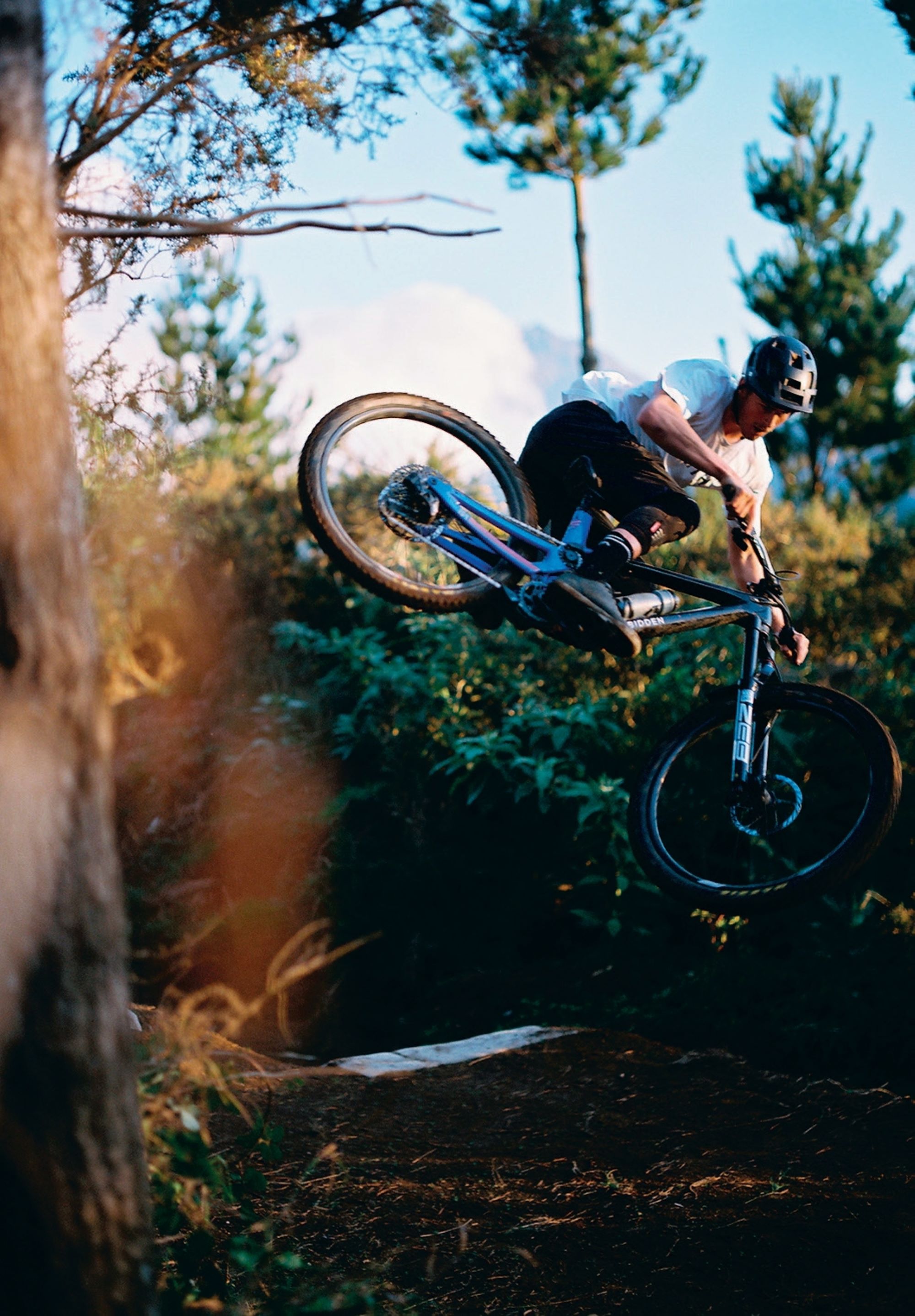
Dan began his time in Christchurch in 2018, where he studied for four years, finishing his final year online through Victoria University of Wellington during the COVID era. He now works as a secondary school teacher at Spotswood College. Most of his time is spent with Outdoor Education and Geography classes, both subjects with parallels to his dirt craft.
Although it was University that had landed him in Grid City, it was a community at the end of Bowenvale Road, right at the foot of Vic Park, where his focus lay between classes. “The Vale” was an integral part of the dirt jump scene in Christchurch for 18 years. The tales from the place are many and really warrant their own feature. Dan not only refined his craft of building trails but thrived on immersing himself in the culture, traditions, and unwritten rules of The Vale, which he would eventually take back home to Taranaki.
“Dan… D-Rock… where do I start… I met Dan when he moved to Christchurch for Uni. Like most years, there was a fresh influx of people moving to the garden city to study and, of course, there are a ton of mountain bikers mixed into that group. He showed up, was keen and motivated to ride jumps, meet new people, and most importantly, he was keen to get on the tools and move some dirt.
D Rock blended in with the Vale crew and became one of the boys super-fast; his quick wit and cheeky banter never went amiss. Dan seemed to be another dude who wanted to learn a few tricks and throw down. That’s not hard to be honest, when you have the likes of Billy Meaclem and Matt Begg to ride with and be influenced by.
He very quickly started to rip tricks on the ol’ trusty Vale step-up; 360s, Backflips, ‘No foot cans’ to name a few tricks this lad does with ease but, personally, I think Dan has one of the best ‘Suicide no handers’ on the planet. Not just NZ, but on the planet, the way he just dumps the front down, leans right off the back and just lets the hands sail behind him is timeless style. With the loss of The Vale and the boys moving on with life, it’s sad I don’t get to see him as much as I did, but I always look forward to hangs and seeing him swing off a bike. Big Up D-Rock, you’re the man.” Andrew Costain, OG Vale builder and rider.
Dan credits the riders behind the infamous Post Office jump spot in Aptos, California, as a key inspiration behind his riding in his early days. Although this focal point drew riders from around the world, it was a tight crew of locals who built and maintained it under a “no dig, no ride” ethos. Riders such as Cam and Tyler McCaul, Greg Watts, Ryan “R-Dog” Howard, Jamie Goldman and friends, were the original locals who kicked it off. Over time, the spot drew riders from around the globe seeking a dry winter escape from their northern hemisphere winters, including Brandon Semenuk, Martin Söderström, Andreu Lacondeguy, and Brett Rheeder, among many others. Although it was on the opposite side of the planet to Post Office, and far removed from most of the world’s riding population, The Vale has many parallels with it: the culture; the no-dig, no-ride philosophy; and being a beacon that attracted global talent to the area when they were down under.
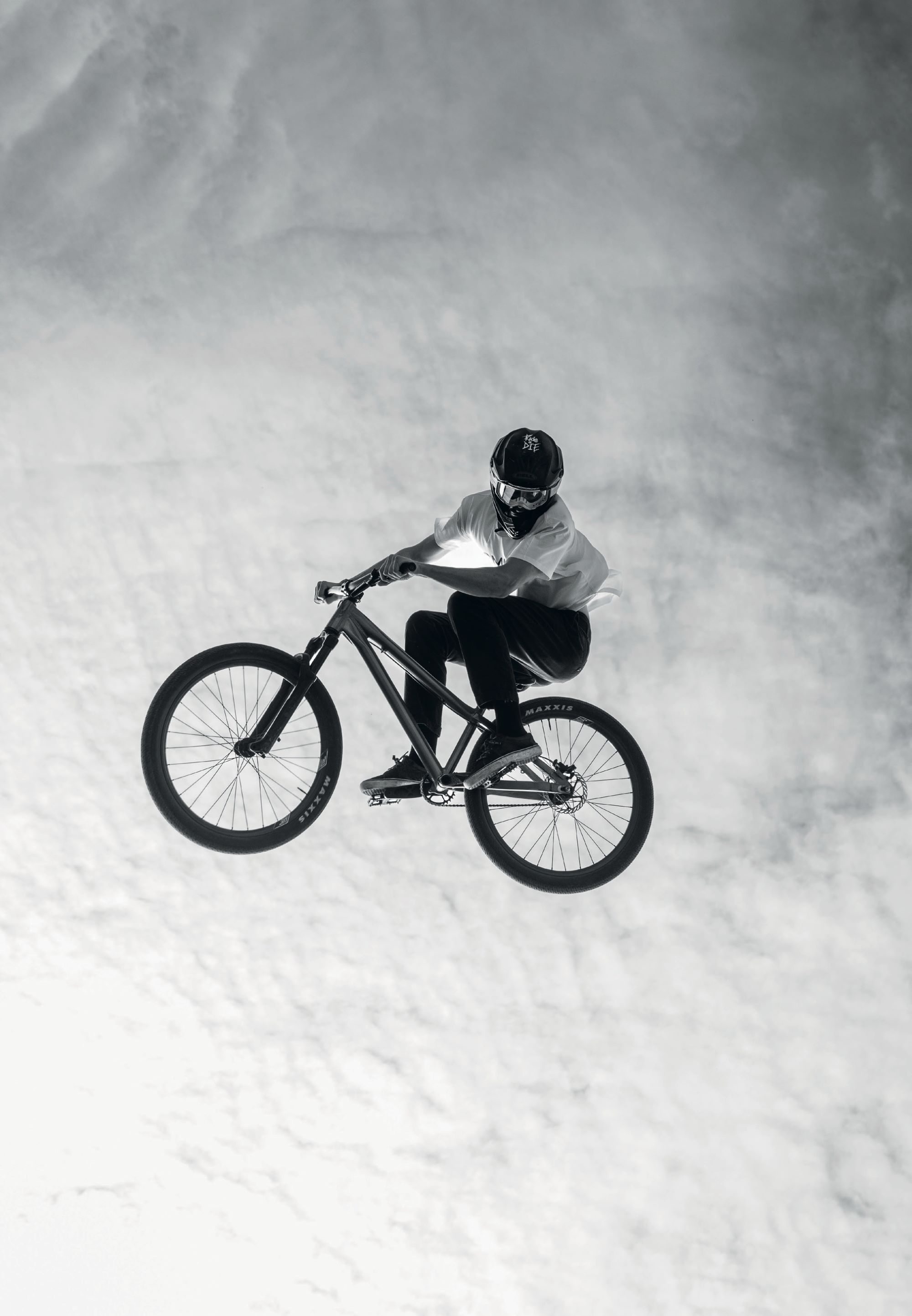
Unfortunately, there was one parallel that neither The Vale nor the Post Office crews wished could be made between the two spots; each was eventually torn down to make way for development. The Post Office trails got bowled in 2015, some 15 years after their inception, while The Vale survived from 2004 to 2022. Although these focal points are physically gone, they both live on in spirit and memories. The communities established in each location continue to evolve in their own unique ways and, even though the original crews have now dispersed and scattered around the globe, the bonds formed at each spot will last a lifetime. The population of Christchurch was a double-edged sword for Dan; he was stoked to have a solid crew to dig and ride with, but there were downsides, and these made him miss the smaller, more laidback hills of home. Many of the crisp lines and manicured berms he’d helped build in Christchurch were rapidly reduced to just lines of powder down the hillsides, blowing out due to heavy traffic, thanks to easy access and the sheer volume of riders in town.
“I can’t quite remember how we first met, but I feel like he just arrived at The Vale one day. He hit it off with everyone pretty quickly. His sarcasm fit right in with our crew’s bad humour, and when we saw he was actually just as stoked to help dig and work on the jumps as much as riding them, we all knew he was a great addition to the trails. Dudes like D-rock are few and far between in the MTB space around here. Most MTB riders just want to ride as much as they can, not caring about the quality of trails they’re riding, whereas Dan’s one of those dudes you’ll only find riding when the conditions are on, and the conditions are usually only on because he’s been the one out digging to get ‘em good. I think Beddy B and Che have played a huge part in shaping Dan into the legend he is, on and off the bike, so big up to those two Taranaki Lords! Definitely miss having him around CHCH, but the stuff he’s got going on up in the Naki looks top notch, can’t wait to come roach it mate!” Billy Meaclem, OG Vale builder and rider.
Sure, riding and digging make up most of the creative equation for Dan, but filming and shooting photos are also part of his creative expression. Teaming up with Josh Birkenhake, the pair has produced a few videos, with the most recent, Homebrew, taking Dan’s effortless style and blending it with Josh’s own unique and gritty, almost skate-inspired, filming style.
The success of these video parts for the duo isn’t about garnering the most likes or views; the success lies purely in the process. Tuning a trail, Dan interpreting its features on the bike, and Josh filming it; if other people like the result, then that’s a bonus.
“You can build stuff here and people respect it a bit more, which is kind of rad…. I kind of realised how lucky we were here when I’d just come back during my summer breaks.”
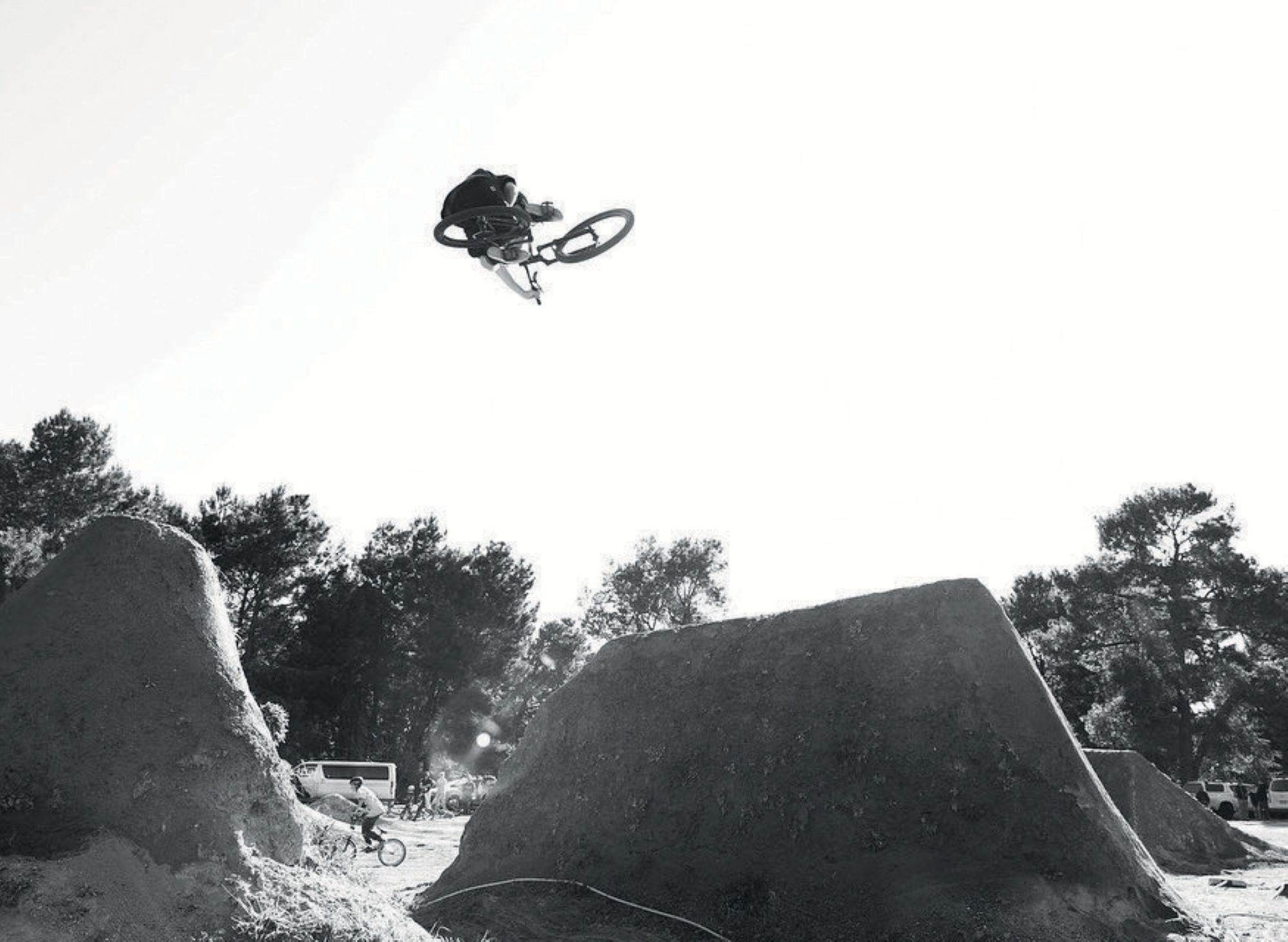
With his time in Christchurch complete, Dan headed back to Taranaki, linking up with his mates Jonty Vink and Che Evans. The small but mighty crew balanced digging and riding. Although focused on dialling in existing trails, perfecting what’s already there, after a period they needed something different, something they’d designed and built themselves and could truly call their own. The Peacock Ridge trail, Mangamahoe, fulfilled that need. Tightly linked turns separated by gaps and rollers – there’s barely a flat or straight section on the trail.
“We don’t want to dig more than we can maintain or keep running sick. So rather than just building heaps of new stuff, we’ll rebuild or tweak features. We’ll constantly be digging, but it’s kind of got to the point now where it’s just refinement rather than full-on going out and building freshies. Sometimes it’s a 100-metre section of trail that links back into the same track. We’ll kind of condense our focus into one area so we don’t have to go to more than one spot to ride, it’s all close together.”
Dan is quick to add his thoughts on the state of trail building in general. While he’s glad there are companies around that can quickly push a trail through with a digger, the speed and ease of these builds, in his eyes, mean that lots of MTB clubs end up with more trail than they can maintain, so overall quality suffers. Particularly, digger-built flow style trails are more of a liability than an asset for clubs relying on volunteers for trail maintenance. It’s evident that Dan’s focus is on ‘quality over quantity’, as he explains below:
“You see a lot of commercial builds happening these days, and it’s sick and it’s super rad for the community. But then it’s such a massive surface area to maintain and, in three months, it’s just flogged and they don’t have any maintenance plans or anything. In Queenstown, they’ve obviously got the money for it, and they (the commercial builders) can come through and redo it every year. But I know you see these smaller communities and clubs getting massive funding for trails, and then come six months’ time, all that funding spent, they’ve got like three rad new trails – and, especially bike park tracks and digger-built stuff, they just get flogged and need lots of work.
It’s almost like the clubs see them as an infinite asset. But it’s like, dude, that asset depreciates fast, you know, you’ve gotta keep investing or have a skilled community that can upkeep those trails.
Whangamata MTB Club do a good job. They’ve got lots of digger-built trails, but have committed to having a full-time builder, and they keep it running super sick. Rather than building something new all the time, it’s sick to see like a club be like, oh no, we’ll chuck that money into actually keeping what we’ve got, good.”
The next chapter is unfolding for Dan; he’s putting down roots, hoping to purchase a plot of land for a tiny home with big jumps in the front yard. Seeing the talent emerging from the scene in New Plymouth, he’s encouraging the region’s younger riders to “respect the sesh”, ensuring they take time to rebuild, repair, and dial in the jump lines, rather than just riding and leaving someone else to look after them.
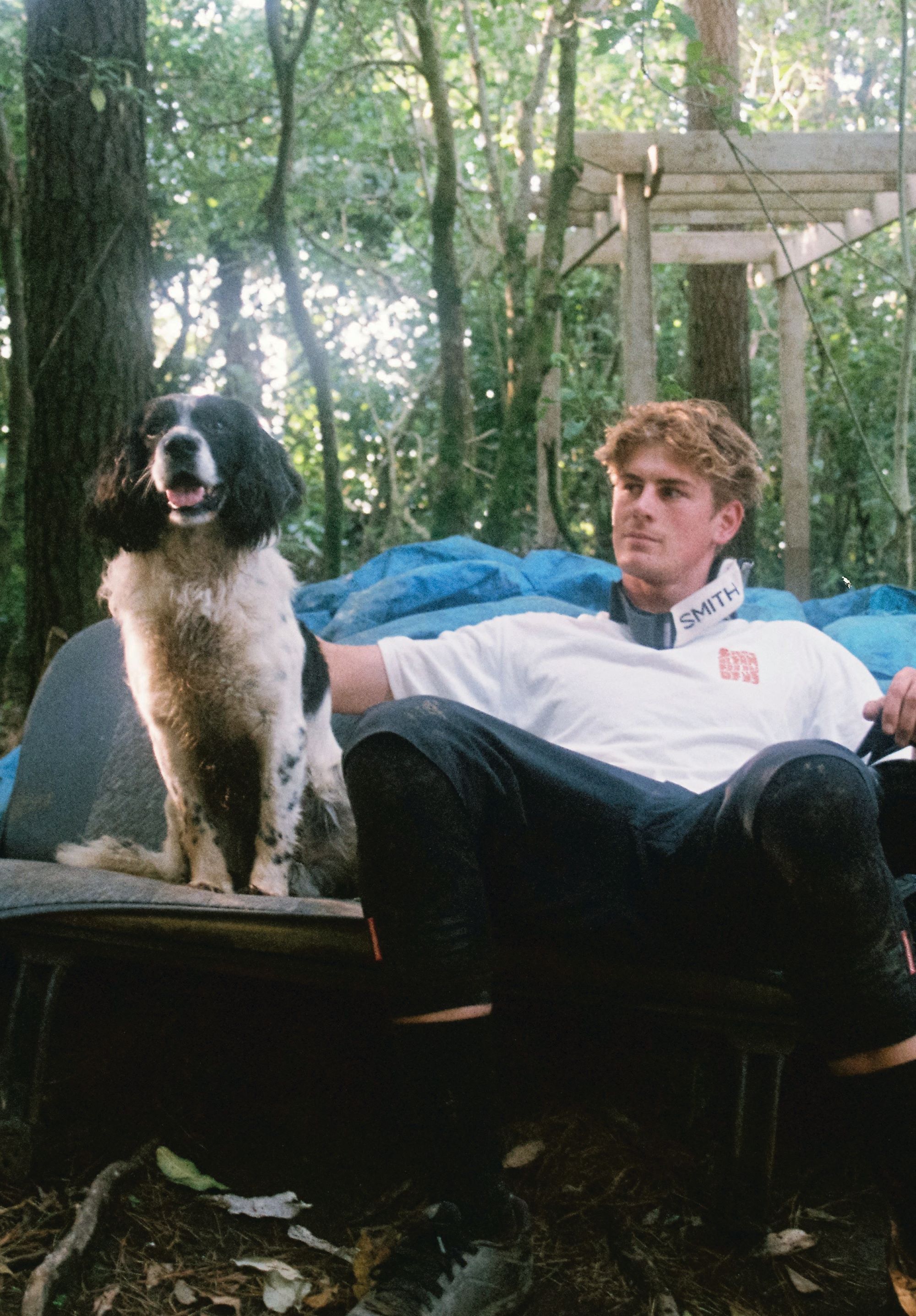
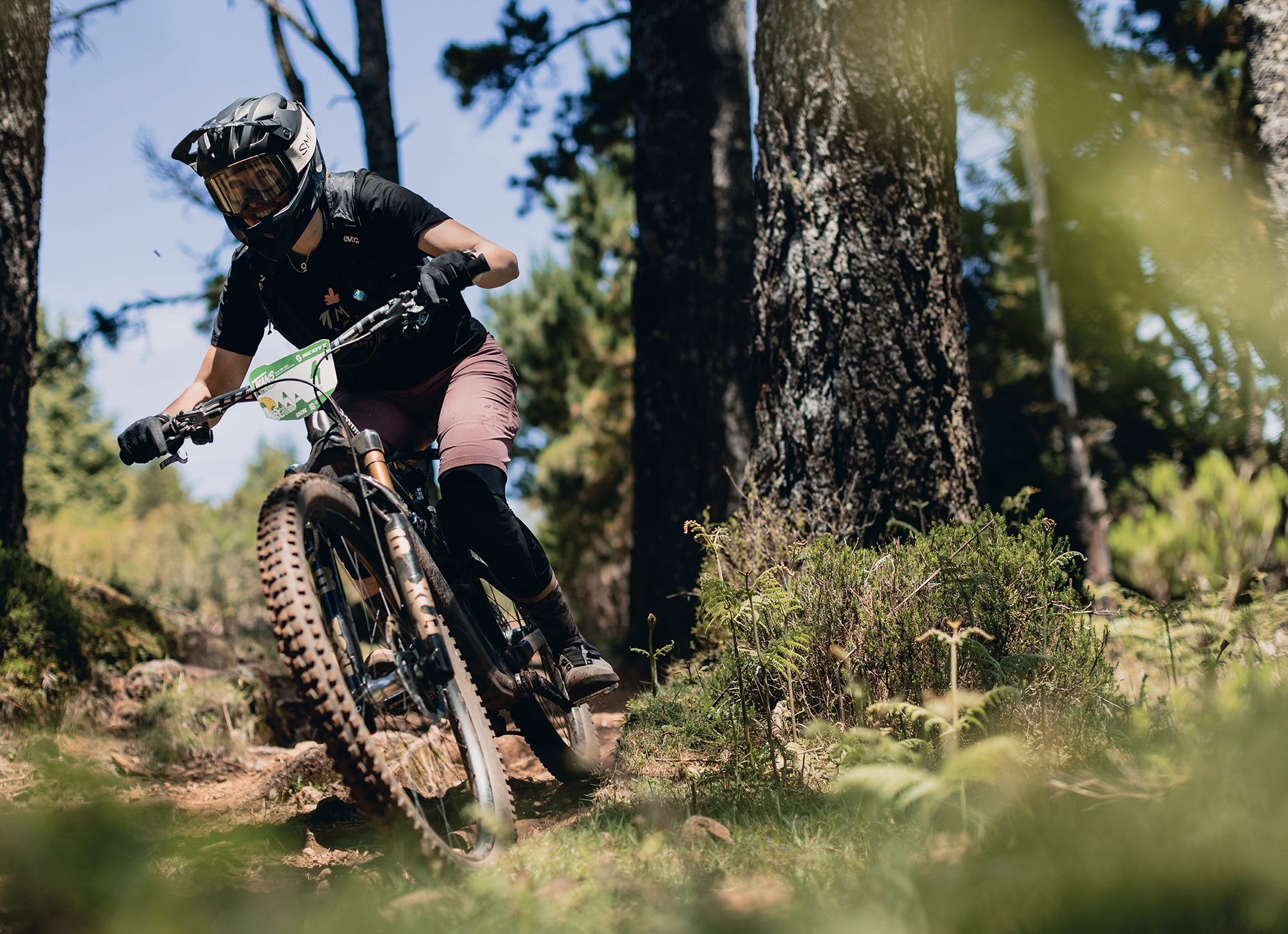
Touring the Island of Eternal Spring
Words by Georgia Petrie
Images by Cameron MacKenzie
When you tell people you’re going to do a bike race in Madeira, the first thing they ask is; “where’s that?”. To which I say; “It’s a random island that’s kinda part of Portugal, but it’s its own thing…”. The follow-up question is often: “What’s it like?” – and to that I can’t find enough descriptive words in the dictionary to articulate just what makes it the island paradise that it is. It’s an all-encompassing place; it draws you in from the moment you approach the airport’s precariously positioned runway, which requires a last-minute 180 degree turn to land, and often rounds out the top 10 “world’s most dangerous airports to land at”.
Once you’re on the ground, Madeira’s namesake “The Island of Eternal Spring” starts to make sense – beautiful, century-old streets are dotted with flora and fauna unique to it’s mild climate, where the concept of “winter” doesn’t exist; strikingly green and rugged terraced hills dating back to the 15th century envelop the island’s capital, Funchal, while the island’s dramatic volcanic peaks create postcard-perfect views in every corner.
Oh, and how could I forget the fact that it’s home to some of the best mountain biking trails in the world? Factor that in, and you’ve got the perfect concoction for a bucket list riding destination.
The seed for racing Trans Madeira was planted when I was lucky enough to visit the island in 2024, to take part in a photoshoot. Other than being familiar with the name, because it had hosted the Enduro World Series rounds in 2017 and 2019—and more so, the Deathgrip Movie—I was going in blind. I knew nothing about its landscape, very little about its proximity (or lack thereof) to anything and certainly not that it would take 45 hours and five flights to get there… of course I said yes! We ended up traversing the entire island, a never-ending, sensory overloading, treasure map courtesy of Freeride Madeira—not only are John and his team the premiere shuttle and touring company on the island, but they also build and maintain Madeira’s 200km+ trail network. I also discovered they were the masterminds behind Trans Madeira, a 6-day, 200km Enduro stage race that circumnavigated the island’s extensive trail network across 35 special stages. After being so impressed at the operation Freeride Madeira had built, I knew that any event run by John and the team would be nothing short of well-oiled, packed to the brim with goodness, and that anything you could possibly think of would “just be sorted”. Bucket list item added!
I am fortunate enough to be able to ride from my doorstep, which helped immensely with squeezing in training rides. However, an important caveat to this is the fact that due to that pesky thing called work—a day job coupled with freelance commitments (one of them being designing this magazine, among other things, in my spare time)—the majority of my rides now barely exceeded one hour in duration (two hours maybe, in summer, if you include the post-ride commute to the pub), and whilst I’d completed Enduro World Series events previously, building my fitness to a level that could survive six days of racing was unfamiliar territory. I spent the summer squeezing in 1000m rides as much as possible, coupled with my usual gym work and the odd sanity run and eBike ride for downhill training. I wanted to challenge myself in a totally different way and if I could finish all six days, I’d be happy!
My weapon of choice was the Specialized Stumpjumper 15. This is a comfortable all-day climber in a light-yet-punchy 145mm package, paired with a beefed up 160mm fork for added stability and a mullet setup for a touch of agility. I stocked up on 6x days worth of kit packed into separate packing cubes, ready for each day—I’m a chronic overthinker when it comes to choosing my OOTD (outfit of the day)—as well as 6x days’ worth of snack kits—NZ Natural Confectionary snakes, Bumper Bars, and PURE nutrition gels and electrolyte packs. While I knew there would be feed zones each day, I wanted to be prepared for any hangry emergencies with food I was familiar with.
On a frosty May morning, we departed Christchurch on what was a simple journey…. until our final Lisbon > Funchal leg. Being unable to land in Madeira meant we flew back to Lisbon, only to get straight back on the plane to attempt the journey again—a total of almost six hours to complete a 1h40 journey, ultimately arriving at our accommodation at 2am. No time for jetlag!
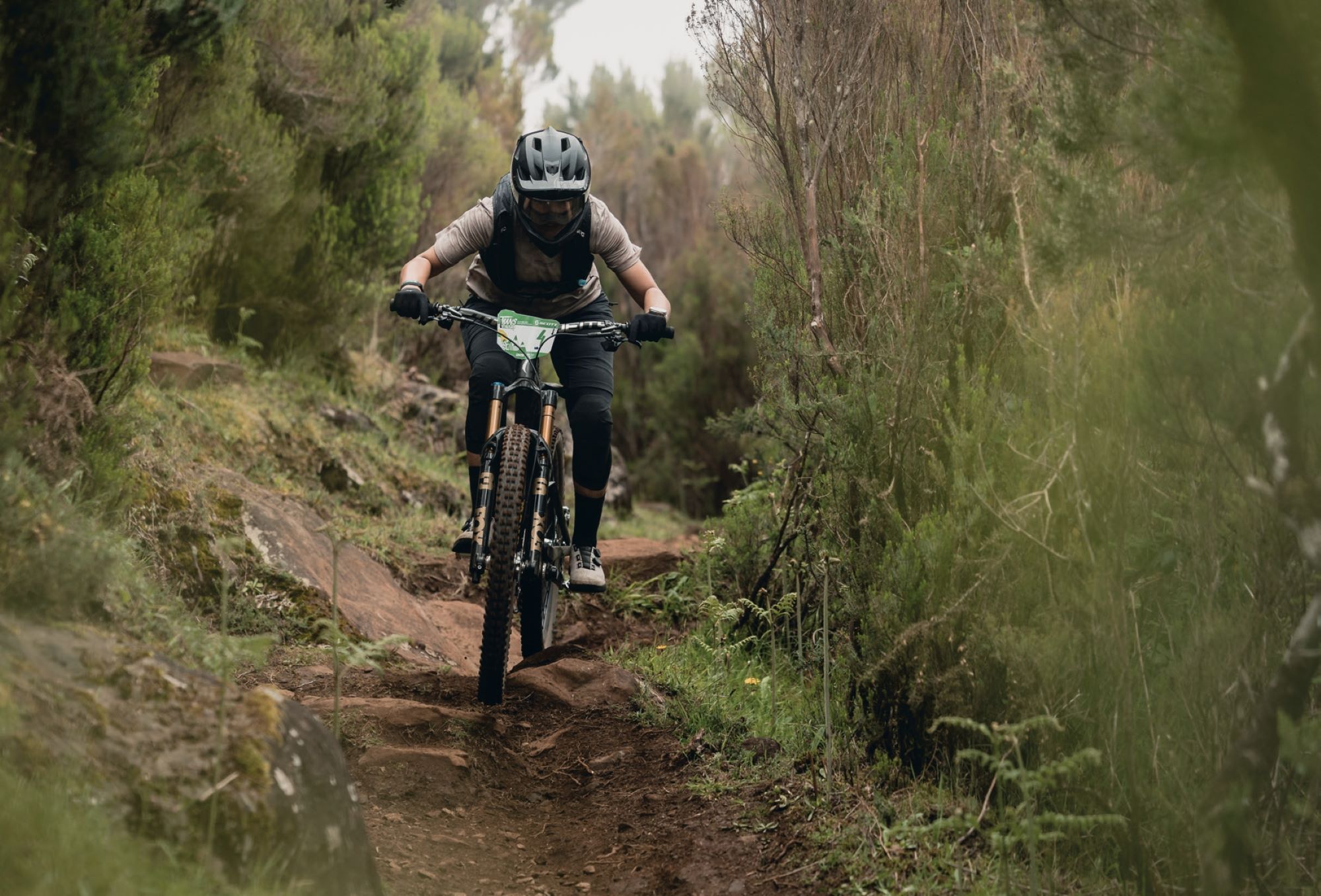
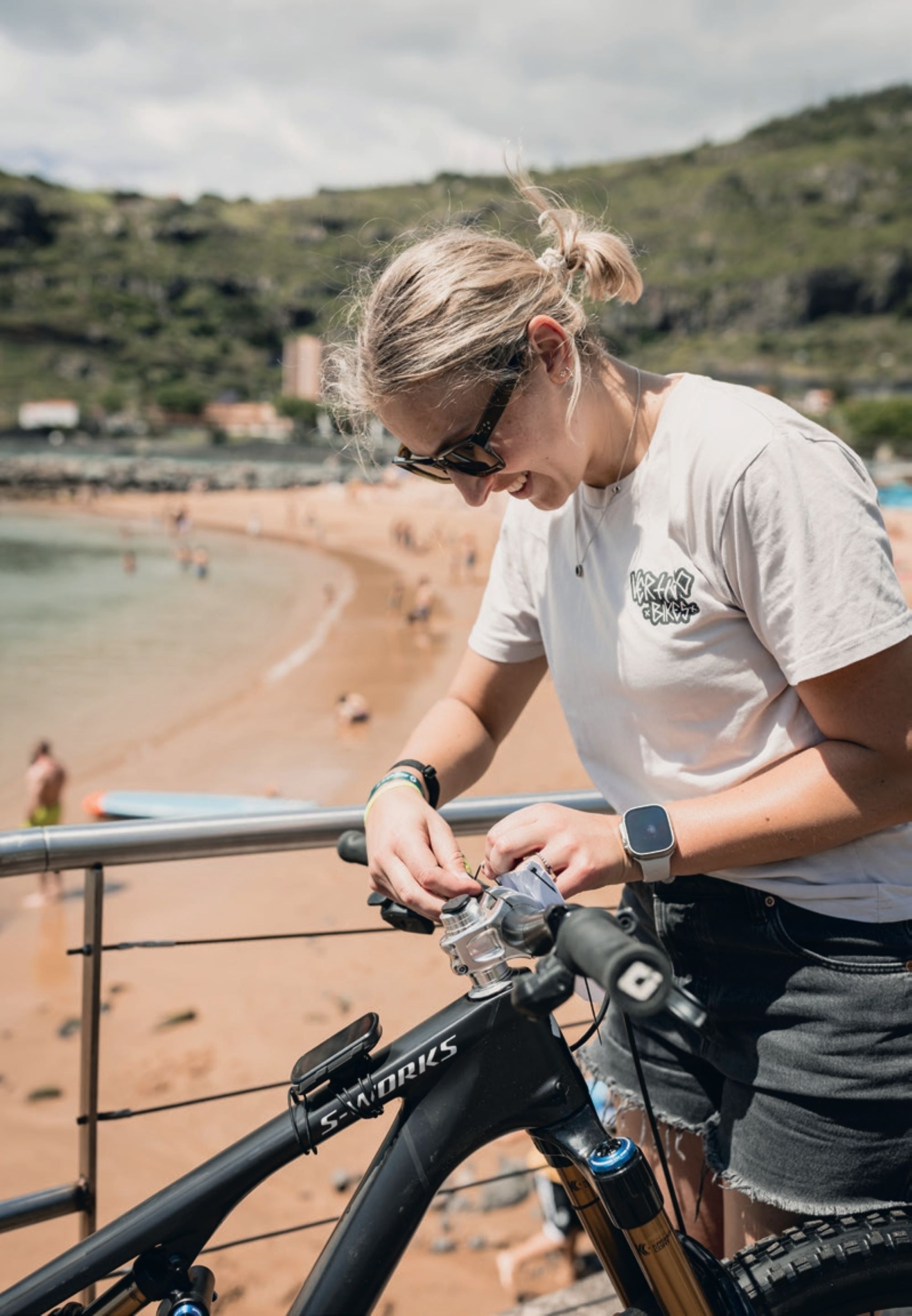
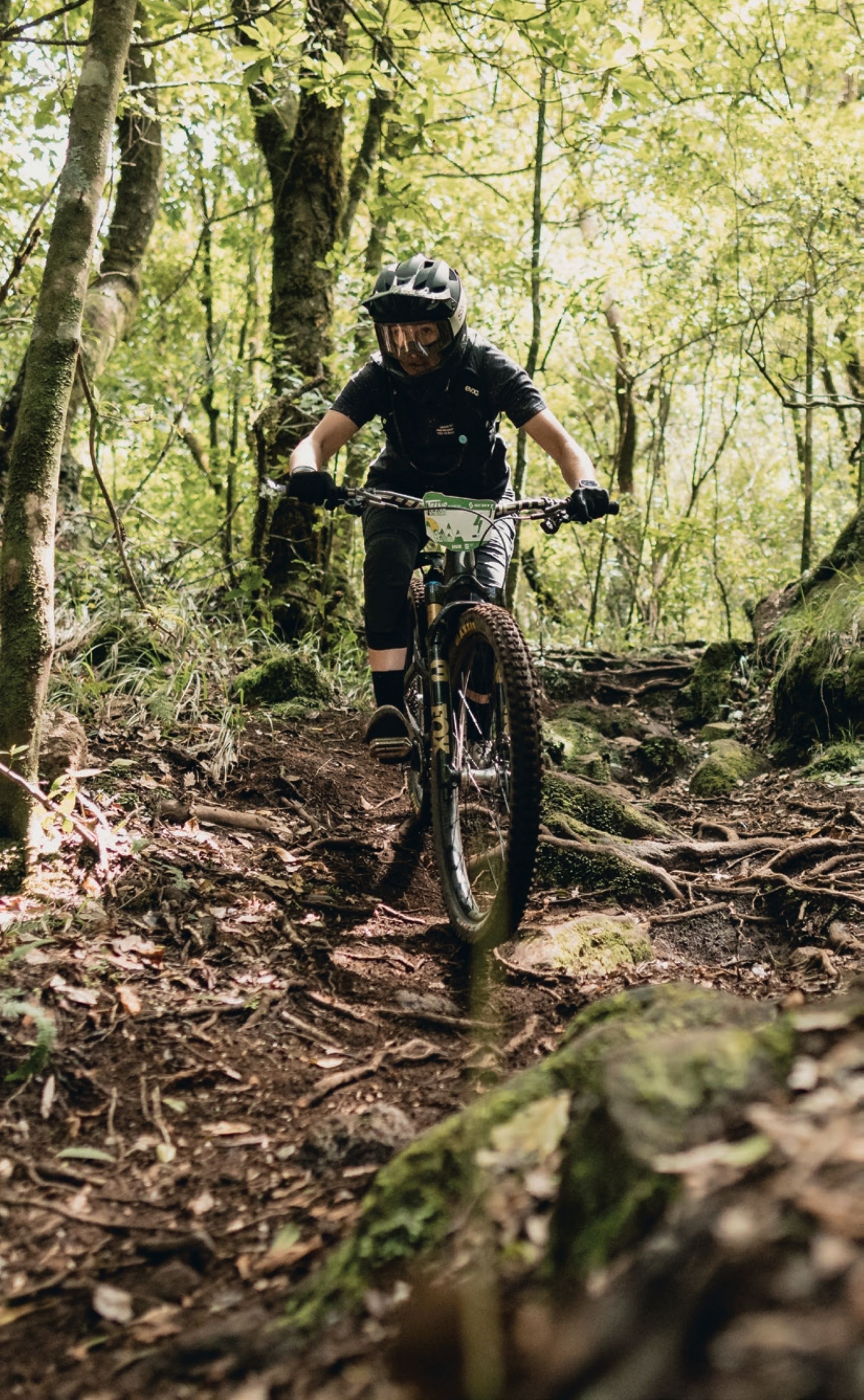
Day 1 – 48 km – 1000m up – 2950m down – 7 special stages
Not being much of a tent girlie under usual circumstances, I decided to splash out on comfortable sleeping gear—a Sea2Summit mat of decent thickness, summer weight sleeping bag and adhesive pillow—all of which were worth their weight (excuse the pun) in gold. Waking up to a beautiful sunrise in Machico, the precarious challenge of attempting to put on full riding kit without dragging 10 tonnes of sand into my tent began. I quickly realised that finding a way to keep 6x days’ worth of riding kit contained within the tent, and avoiding a luggage blowout, was going to be paramount in wasting precious mental energy at the beginning and end of each day—especially as each night was spent in a different location.
Day one took us to the East Side of the island, where we’d be starting the day with Stage 1— Boca Do Risco—a previous nominee for EWS trail of the year, that winds its way down beneath luscious canopies of Jurrasic Park-esque bush until shooting riders out precariously close to the cliff’s edge. When I think of Madeira, this trail is exactly what comes to mind; exceptional hand-built, flowing singletrack that’s the perfect blend of fast and technical, all enveloped by endless mountain-meets-ocean panoramas. After shaking the Stage 1 nerves I’d been long anticipating, and despite my immense preference to do basically anything other than carry a bike on my back up a hill, the endless ribbons of coastline and peaks we were treated to en route to Stage 2 was enough to put a smile on the face of even the most dubious hike-a-biker (me). Stage 2—Into the Mystic—took me straight back to the dustbowl of Christchurch, and was another one of Madeira’s gems that I’d been lucky enough to get a taste of previously. Fast and loose with dust-filled corners and off-camber drifting, staying upright was an uphill battle. The liaison to Stage 4 hit, and every doubt I had about being over prepared with my carefully curated selection of snacks quickly dissipated as I munched down a Bumper Trail Bar. The four bags of Natural Confectionary Co. snakes (if you know, you know) paid for itself instantly—especially the positive reception from my UK and Canadian counterparts!
Stage 4—Natal—down into the feed zone at Porto da Cruz, was full on—basically a rock garden for 5 minutes—and my body was starting to feel the fatigue of needing a substantial refuel. These were longer downhill runs than I was used to and, in hindsight, I had insane jet lag that I was subconsciously suppressing (it’s not real unless you say it is, right?!). The PURE nutrition gel I smashed before dropping in was the real MVP, giving me just enough beans to hang on until the most boujee food zone spread I’d ever seen. I rolled up and uttered something that resembled a “thank f*ck for that” and smashed a Red Bull along with a freshly baked filled roll, a pastel de nata and cup of roast potatoes. No, I’d never seen potatoes at a feed zone before (nor pickles for that matter), but yes, I was absolutely here for it. Reaching Stage 7—Hole in One—the view down into Machico was all-time. A little slick at the top, my tired legs and subsequently lazy riding position caused my foot to blow off my pedal, and I was on the ground before I knew it. Weirdly relieved to get a crash out of the way, I fumbled my way down the final rock gardens of the day and straight into a beach swim, finishing the day in 4th overall.
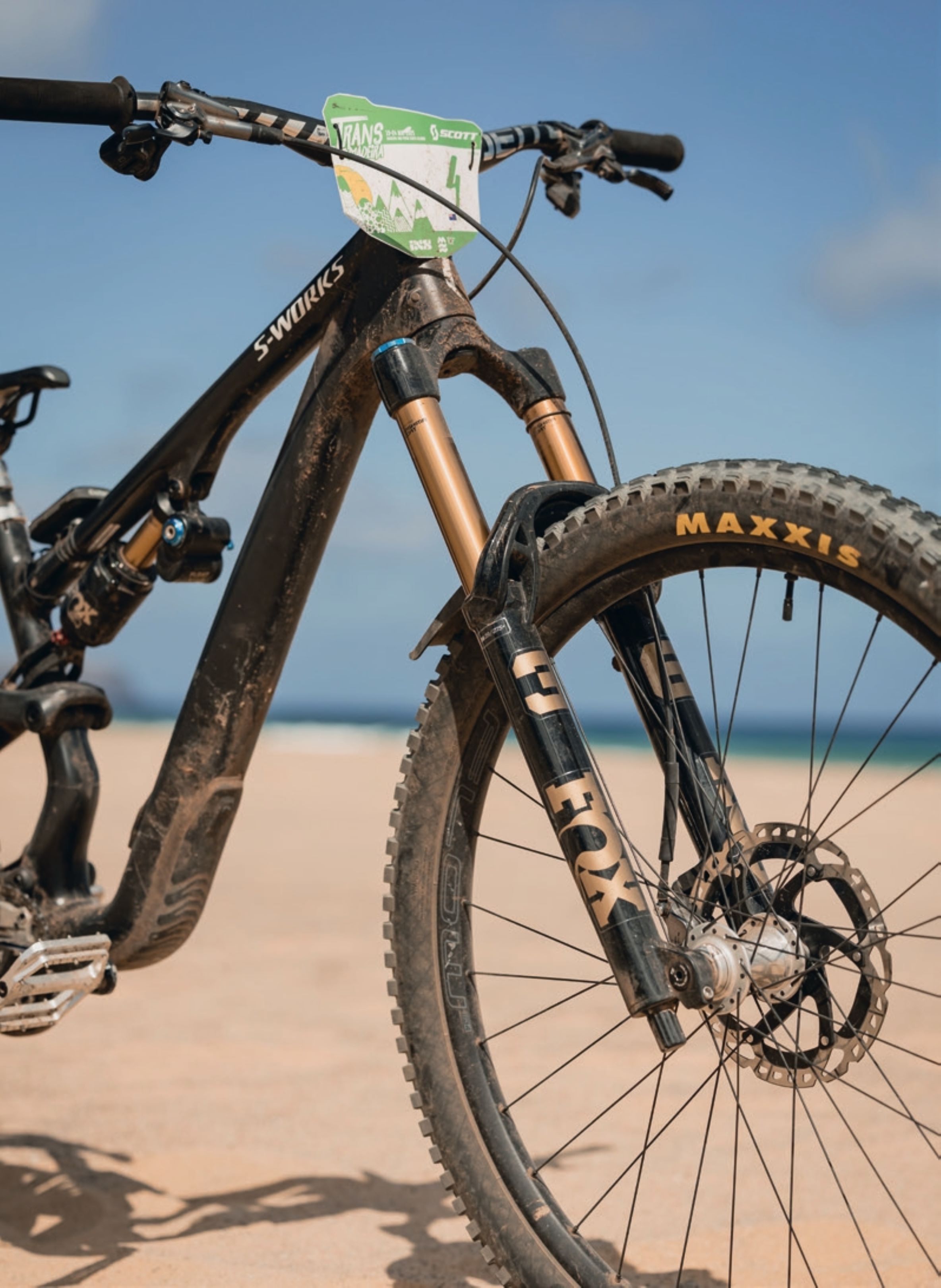
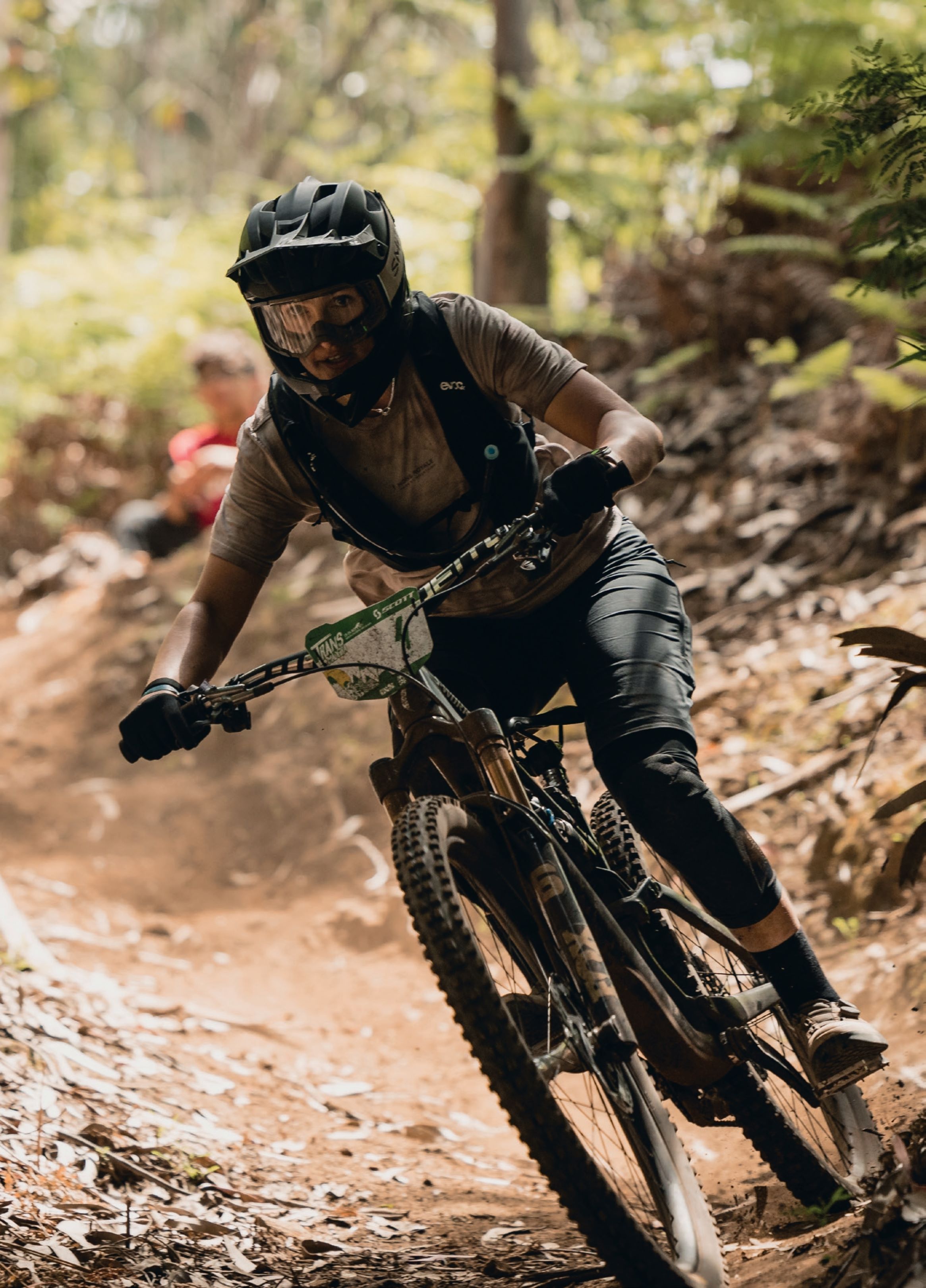
Day 2 – 46 km – 1182m up – 3700m down – 7 special stages
Generous doesn’t quite cut it for the incredible breakfast spread put on by Chefs Robert and Nuno—these guys haven’t missed an edition of the event since 2018, and it’s clear they’ve got mobile catering for 200 people down to a fine art, and that’s no small feat. The beauty of Trans Madeira is that you don’t have to worry about anything—the smallest of details you can think of are all sorted for you, meaning you can focus on your race and truly take in the paradise that surrounds you for the duration of the week. The fact that these guys can move 180 luggage bags from one side of the island to the other, all while managing to feed 200+ humans, are some serious logistical goals—these guys know what they’re doing.
After exchanging some very tired good morning’s and “body’s a bit sore today eh!”, I settled into my routine of porridge with lashings of Nutella and peanut butter paired with a side of scrambled eggs, sprinkled with dribs and drabs of pastel de natas, beautifully baked fresh rolls, cheeses and pastries. Fresh and so well managed—these guys are goals when it comes to logistics. I learnt quickly that I needed to eat as much as possible for breakfast—by the time we’d roll out and hop on the shuttle and reach the start of the day’s stages, a couple of hours would often pass and I was glad to have some sustenance behind me.
We started the day off with Stage 8—the infamous Gamble line—which was a treacherous mix of slick berms, aptly referred to as ‘Madeira Ice’ when wet, and hero dirt. An island favourite, I was a little too cautious and finished the stage wanting more from my riding—though after seeing how many crashes were had, I was pleased to reach the bottom with clean kit! Kept company by my riding buddy Lizzie, who’d made the journey all the way from Pemberton, BC so could share my jetlag woes, I settled into the chunky sealed road climb that was our Stage 9 liaison to Truta’s Trail. A total contrast to Gamble, this stage had it all, including sketchy wet rock gardens—they did warn us this trail does suffer from the impacts of wet weather, and would be changed should there be too much rain. My fatigued arms were holding on for dear life, trying to maintain both speed and grip through chunky rock sections. After catching three riders at various points throughout the stage, and thanking them profusely for precariously allowing me to pass in the most awkward technical sections imaginable, we were relieved—and for some reason oddly confused at just how technical parts of the stage were (perhaps it was the fatigue skewing our perception)—to make it the bottom of the stage.
In contrast, we were treated to absolute loam- filled bliss for stages 10, 11 and 12. As the trails became drier, the day became hotter, and soon we were baking in the sun at the day’s food zone in Porto da Cruz, the infamous Penha d’Águia rock feature perched above us. Stage 14—Santo Antonio—was a personal favourite of mine and suited me well: rocky, fast, technical enough to be challenging and require careful line consideration, but “not too technical to be scary”, and bonus points for no pedally sections. The stage starts in the open, with mind-blowing views of Funchal below.
The ocean seemed like a lifetime away, and hard to believe that ultimately we’d be riding to our new campsite on the shores beneath—I vividly remembered riding this on my last trip to Madeira, and what a privilege it was to have a chance to enjoy it once again. I tried to carry as much speed as possible through the rocky chutes up top before the trail snaked its way into the eucalyptus trees for its second half, Redline, where endless switchbacks meant you could really dial up your pace. I let the bike do the work and focused on enjoying myself. We finished the day off with the aptly known “Madeira massage”—absolutely bombing it down the beautiful, winding streets of Funchal, precariously perched on the hilltop. There’s something particularly magical about riding through town here—whether it was the residents yelling “go girl!” from their driveways, the beautiful ancient buildings or the blooming flora and fauna, it’s a sensory overload. One of the best days on a bike I’ve ever had, and what a treat to finish with a Stage 7 win and a bump up to second place overall.
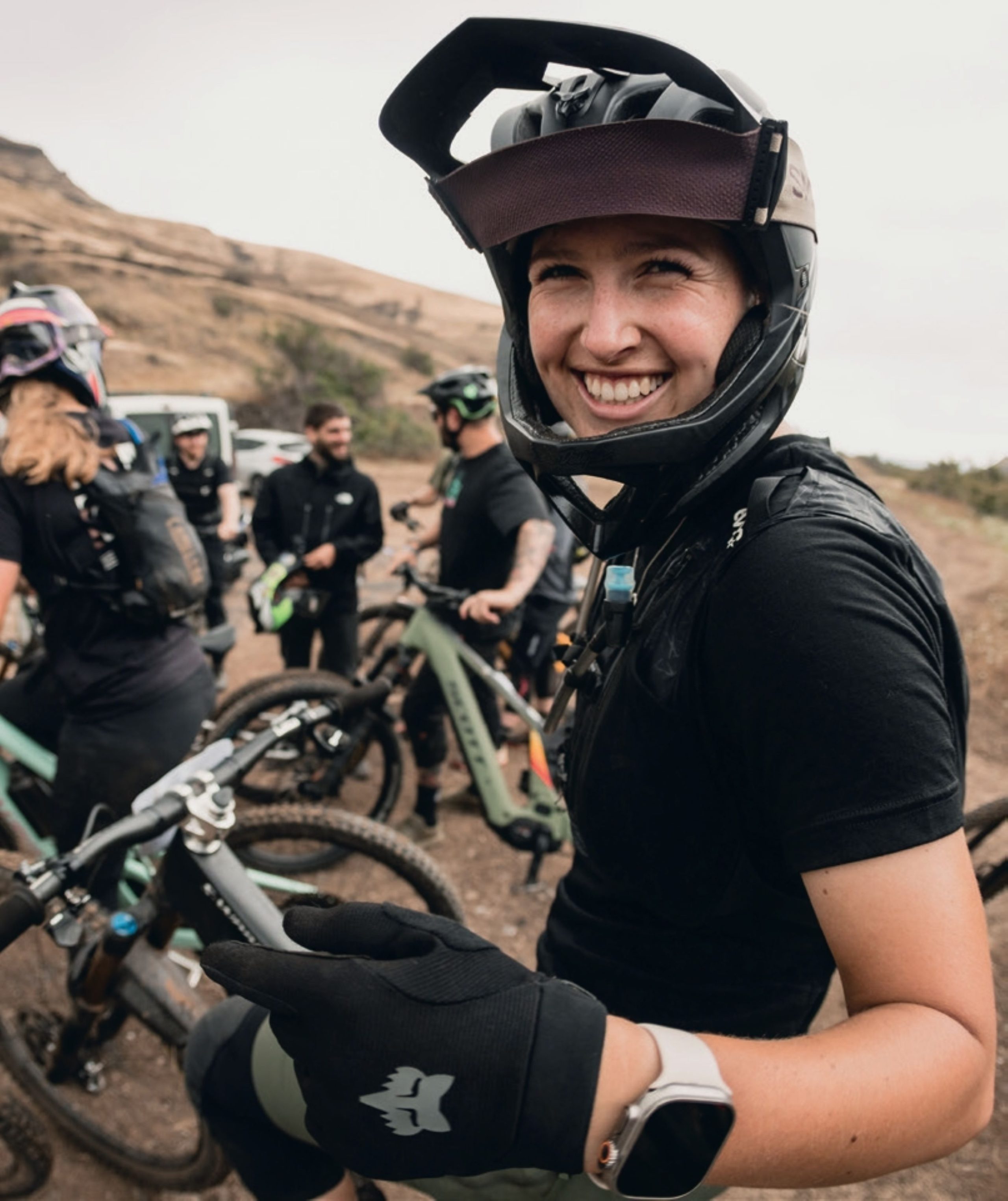
Day 3 – 40 km – 1174m up – 2600m down – 4 special stages
Day three truly encompassed the diverse beauty Madeira has to offer; a true reflection of the postcard that I so often describe to people when they ask me what the island is like. Seemingly endless breathtaking landscapes paired with some of the best technical flow trails I’ve ever ridden, all in the company of humans that can only recharge your social battery—THIS is Trans Madeira manifested. Starting Stage 15 on the alpine trail, Pico Cedro, the now fatigued arms were given a wake-up call with exposed rocky chutes, with infamous “Madeira Ice” thrown in. The final stint of our Stage 15 liaison was a short hike-a-bike which highlighted the severity of the blisters I’d sustained in Day 1’s beautiful Ridgeline liaison. After battling with blisters in many hike- a-bike’s prior, this was a key concern of mine that, despite all my preventative attempts, had come to fruition—nonetheless, after only two days. Thankfully, it was short and sweet, and we were rewarded with stunning alpine vistas with all of the day’s stages situated above 1000m, enveloped by striking volcanic-rock cliff faces and panoramic vistas of the island below.
While you’d expect the downhill stages to be the day’s highlight, the liaisons were simply breathtaking—that’s what makes this race such an all-encompassing experience— everywhere you look, whether its descending or ascending, is simply breathtaking. This truly is an all-encompassing experience—being able to descend down some of the world’s best trails is just the cherry on top. The liaison into Nun’s Valley is nothing short of spectacular/ breathtaking/once in a lifetime. Situated in a now-extinct volcano, this world-renowned corner of Madeira originates from the 16th century and is a bucket list item for riders and non-riders alike—enveloped by mountains layered with century-old terraces, it’s hard to know where to look first. Although steep in spots and timed at the precarious point in the day, right before the feed zone, the endless views, easy yapping and descent down the infamous “nun’s path” made any fatigue I was feeling somewhat forgettable.
So far, I’d managed to get into a routine when it came to feed zones and hydration, yet for some reason—perhaps led by belief that today would be a “shorter day” (I quickly learnt that such statements should be taken with a grain of salt!)—I opted to omit my usual bread roll, instead fuelling solely on lollies, a Red Bull and some nuts. Our historic tour of Madeira continued as we worked our way through the next liaison which followed the infamous Levadas—irrigation channels built in the 16th century to bring large amounts of water from the west and northwest of the island to the drier southeast—again, a surreal experience for anybody, with or without an appetite for riding bikes. All was going well until I was perched precariously on the edge of a Levadas and lost my footing, tumbling down into the green mass below, only to be stopped by the crevasse between my middle and ring fingers getting caught abruptly on a rock.
I’ve always found the comeraderie between women at bike races to be something special, and let’s just say—when you’re riding for eight hours per day for six days straight, you see people at their most vulnerable, and anything goes when you’re delusional and fatigued. We’d joked that everybody has to have their “tears day”, and today was going to be my day—I was tired, I’d ripped a sock, my finger (and ego) hurt from my tumble, I’d forgotten my headlamp for the [kilometre-long] tunnel, and my decision not to have a bread roll at lunch was biting me (excuse the pun) in the ass. I was over it, and looking down at my Garmin to see that we’d surpassed 1000m of climbing still (after expecting ~850m) with no-end in sight was the straw that broke the camels back. Those moments on the bike where the revolutions are turning, but you’re slogging away on a road to nowhere. Oh, and suppressing three days of jetlag might have had something to do with it, too! After a few tears, some profanities and a few “I’m fine—today is just a day” moments with the other ladies, I was relieved to finally see the top of Ginjas, which constituted Stage 18—and what an absolutely magical stage this was. Only accessible via the Levada tunnel traverse through the mountains, the trail is only opened twice a year for the race—what a privilege. “Best trail in the world” was a common sentiment among riders at the bottom, echoed by myself also! Luscious, loamy sweeping berms that’d make anybody feel like a hero, rock gardens you could float over and roots to pop off for days—all nestled within an incredible green canopy. We were met by an ice-cold Coral, smiling faces and a picturesque descent down into Sao Vincente. Bad day WHO?!
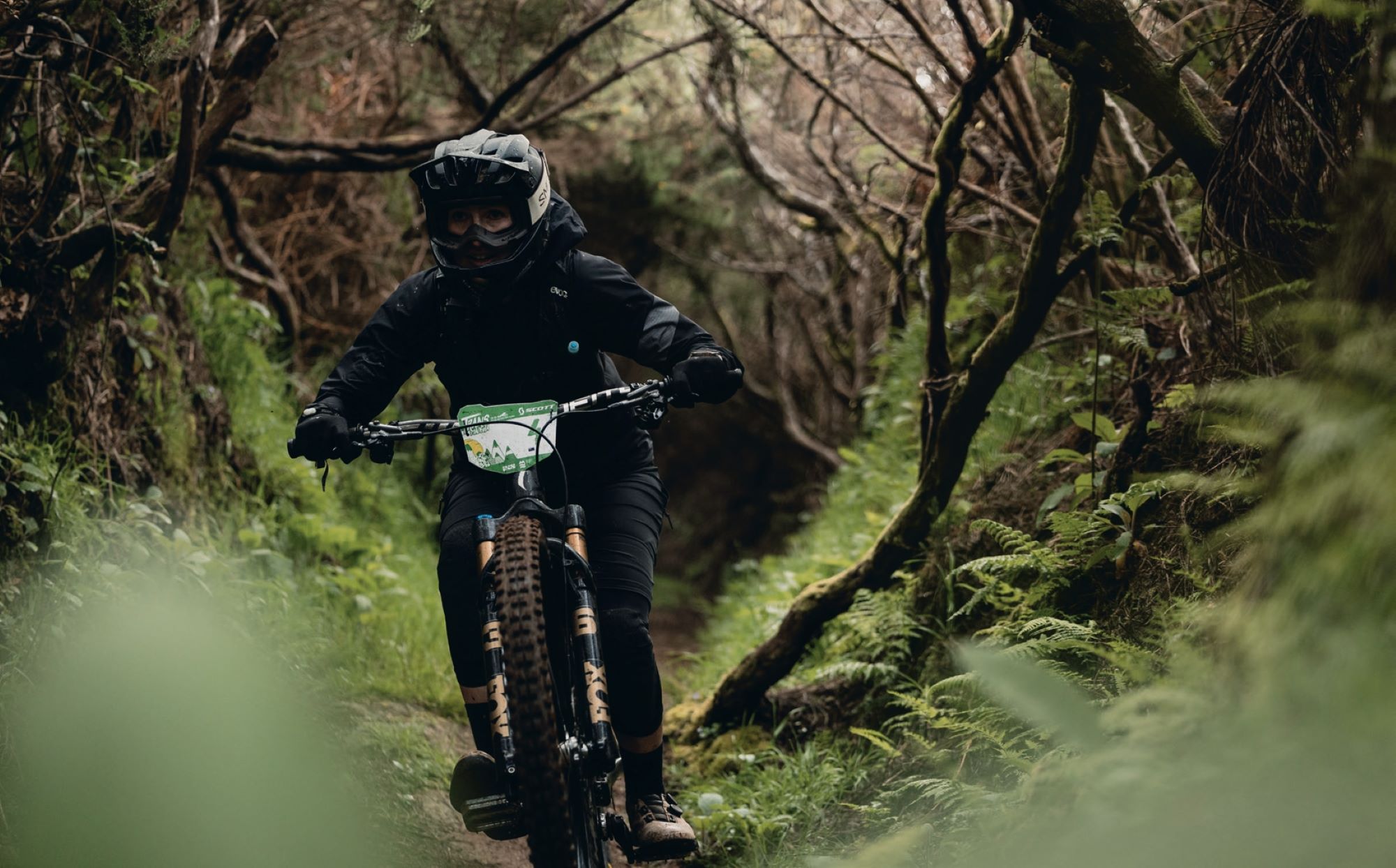
Day 4 – 51 km – 1287m up – 3300m down – 7 special stages
Being awoken by the classic camping sounds of neighbouring tents unzipping, I quickly realised that the footsteps walking past my tent were squelching, which could only mean one thing… wet ground = rain! The camp rumour mill started in the lineup for breakfast—like kids on school camp—“apparently its sunny on the other side of the island” mixed with “I’m going to sh*t my pants if the dirt is wet out west”. After umm’ing and ahh’ing over how to best kit up, a last minute swap from shorts to pants and my Goretex rain jacket stuffed in my frame, we were loaded onto the shuttles in the hope the windscreen wipers would slow down the closer we got to the start of Stage #19.
I feel this is a good opportunity to give a shoutout to the bus drivers of Madeira—it should be noted that Trans Madeira is a mix of pedal- and shuttle-assisted climbing; most days are around ~1200m of spinning pedals, with the remainder being shuttles. While parts of some stages had me whispering a few profanities to myself, the shuttles aren’t for the faint hearted either—a mixture of being precariously perched on the edge of a road that’s a handful of metres in width whilst dodging tourist cars in-between, all whilst winding for endless kilometres—think driving in the tight hilly streets of Wellington…. but on steroids! I looked across to see a fellow competitor hanging on for dear life—any apprehension about the incoming stage be damned, avoiding motion sickness was a challenge in itself!
Dropping into Stage 19—Pargos—we were greeted with a howling wind, drizzle and what felt like a 10+ degree temperature drop with no shelter other than an abandoned cattle shed. Riders set off each day depending on their current overall standing, with two minute intervals in between—you’d be surprised at how many days in a row you manage to be seeded with exactly the same person! You do the math: 140 riders, two minute intervals… if you’re in the front half of the pack, it’s a long wait and, when it’s raining, it’s a cold start with already fatigued muscles.
Fortunately, for the last three days of racing I was seeded with an absolutely epic UK bunch who provided excellent chat, laughs and some reassurance when I felt genuinely concerned I was about to get blown off my bike into a rock garden at the top of a 1500m hill. Many competitors I spoke to had done the event multiple times, with this group having completed three editions, whilst others had done five or six. After completing one edition, I’ll be buying lotto tickets for the rest of my life to have every chance of coming back for more—I’d have to turn off all social media for a month to have any chance of overcoming FOMO should I not be fortunate enough to be part of the chaos again!
Some say, ‘the West Side is the best side’, and I can’t argue with that! Nestled on the faces of Ponta do Pargo and Prazeres, Stages 19-25 were among the best trails I’ve ever ridden—anywhere. Words can’t capture the pure elation of reaching the bottom of each stage, so I’ll borrow the most common sentiment of the day: *that was f**king sick*. I’d been fortunate enough to experience this side of the island previously, but it quickly became clear that I’d only had a small sample, when in reality there was a full smorgasbord of luscious trails. Natural rock gardens kept me on my toes amidst red-dirt singletrack, lined with luscious Madeira greenery that created a strikingly beautiful contrast, so much so that it was easy to forget you were even racing.
Liaisons were hard that day—grassy 4×4 tracks made for slow going on the climbs, and my blisters were such that I found it more comfortable to pedal at a ridiculously slow RPM vs. pushing my bike like the majority of those around me. The sun gods blessed us with their presence in the afternoon, and we were treated to high-speed, loamy goodness with some dustbowls thrown in—four seasons in one day! I found myself in a comfortable spinning rhythm on the final liaison, and sent a quick Snapchat to my wonderful cheerleading friends and family at home, wondering how I was going—I remember none of what I said other than; “it’s really f**cking hard but this is the best thing ever”.
Now, I’m never one to decline a mojito and, upon reaching the sandy shores of our camp in Calheta, I couldn’t say yes quick enough to the offer of a sit down and a cold bevy! After being politely told “GP, you look like you need a sit down”, I handed in my timing chip and parked up on a sun lounger overlooking the shoreline. I wasn’t surprised to see I’d finished the day in 4th—I was riding tidily, safely, but definitely had more raw speed in the tank, especially with the knowledge of a Day 2 stage win in my mind. While I wanted to slot back into 3rd overall, the elation of simply reaching the pointy end of the race was an achievement in itself, and with two days of racing to go, anything can happen—that’s the beauty of multi-day racing!
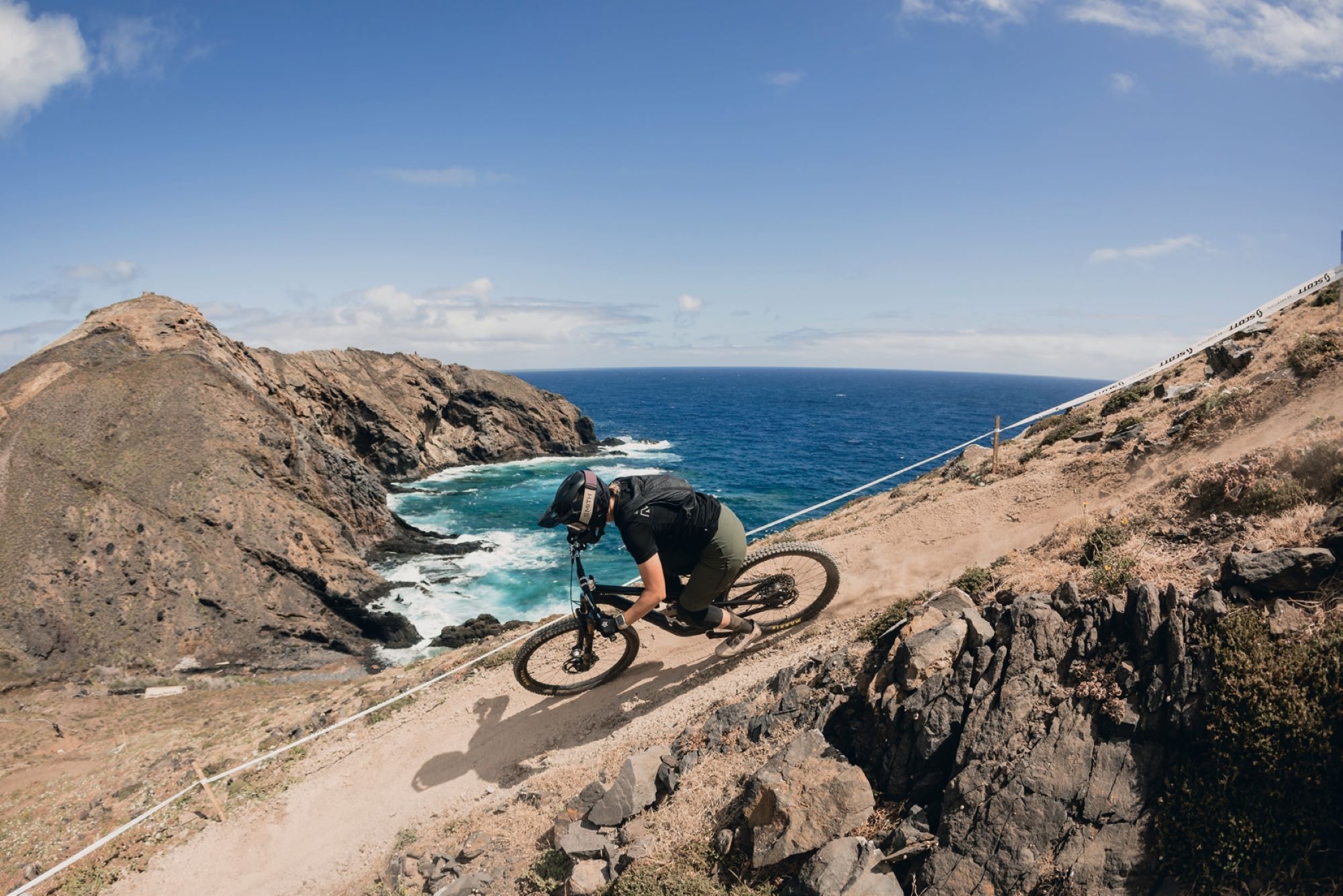
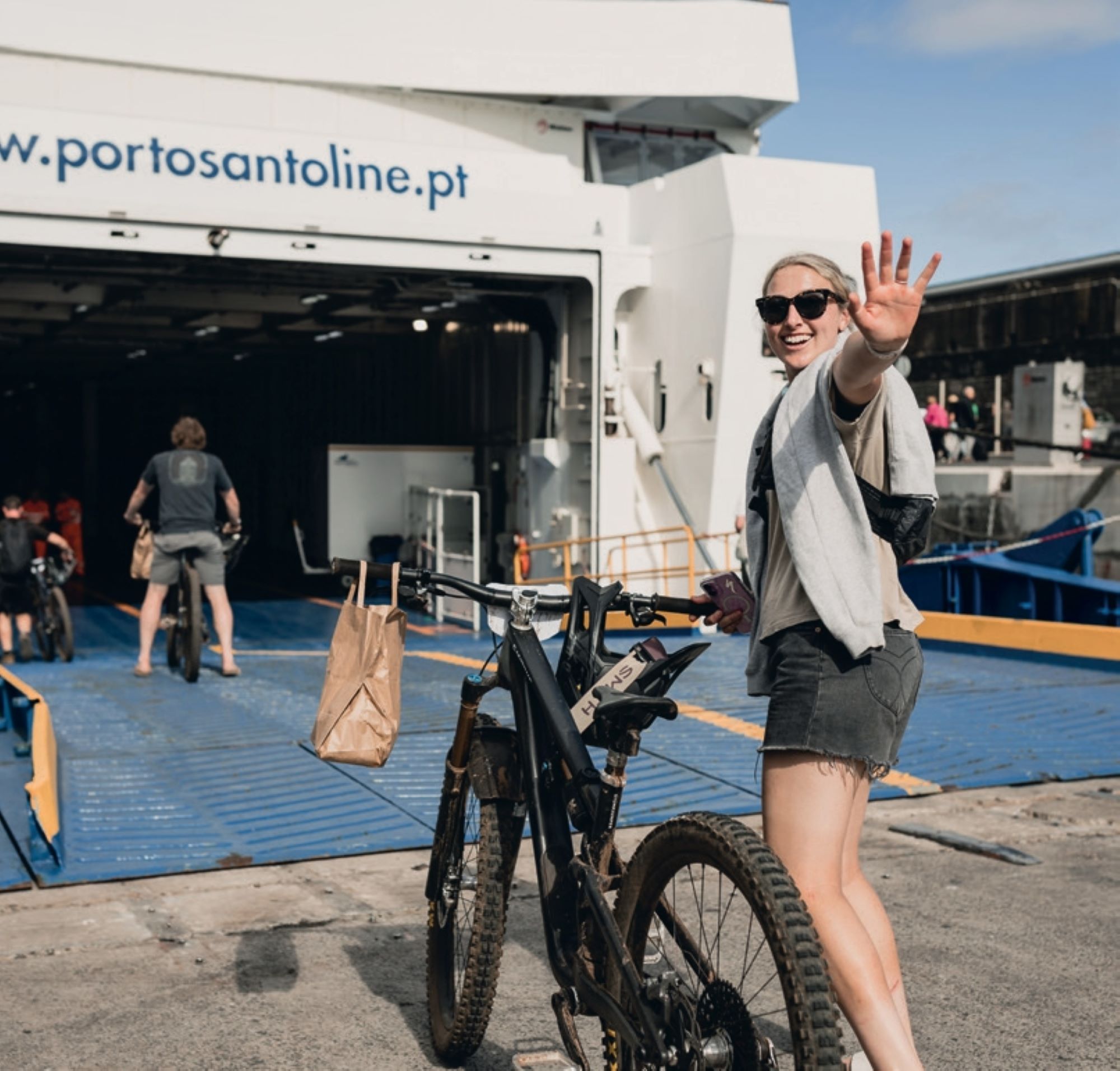
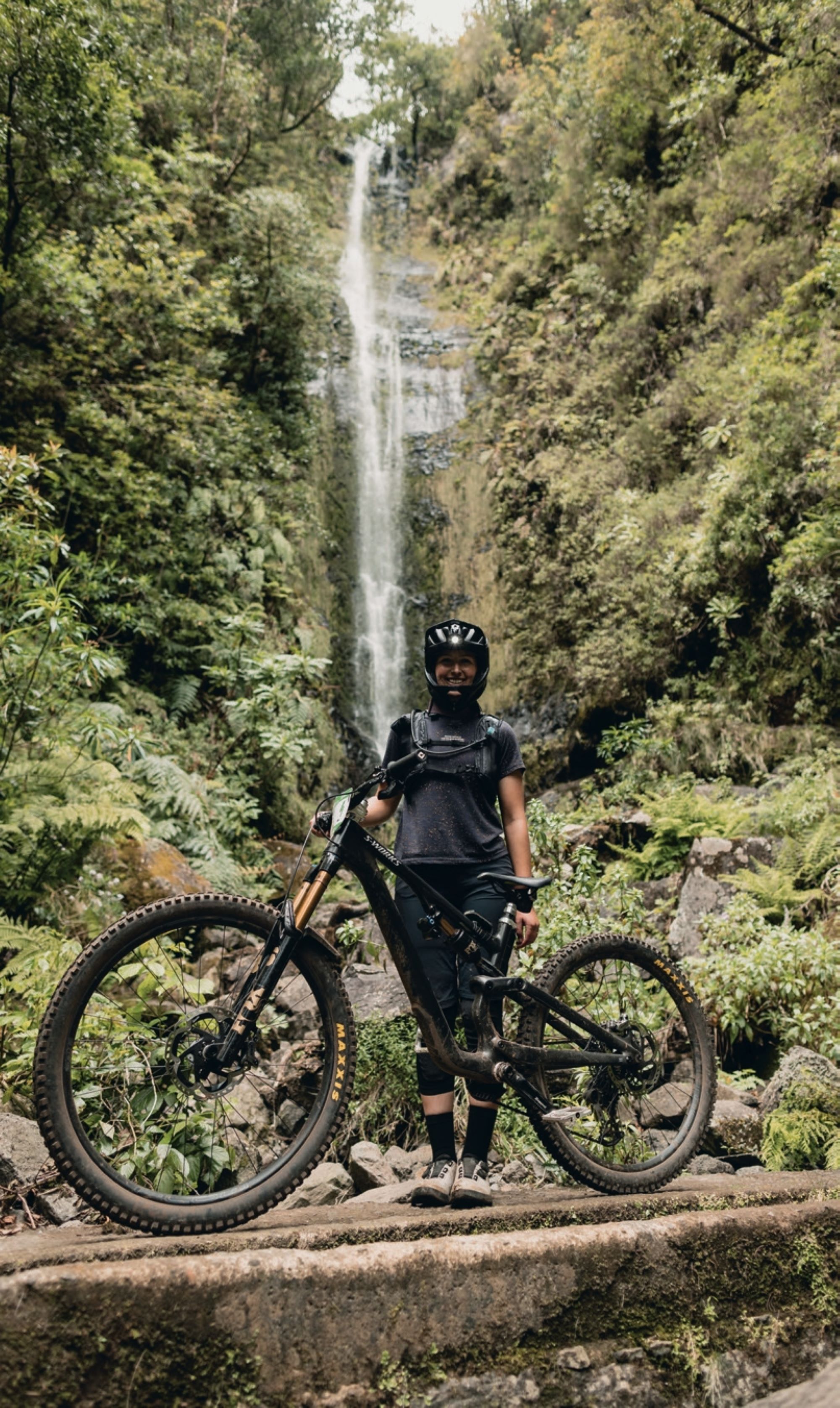
Day 5 – 38 km – 930m up – 2900m down – 6 special stages
Day 5 was a much shorter day, again dominating the west side of the island, with just five stages and no feed zone as we were scheduled to board the ferry to Porto Santo at 7pm. Once loaded onto the party bus again—and when you’re sitting with the Irish crew on the floor of an overcrowded bus, there really is no truer descriptor—the rolling circus made its way to Galhano, where we witnessed the most impressive clifftop three point turn we’d ever seen upon drop-off. Unfortunately, we left the sun down in Calheta, along with the Aperol Spritz and mojitos, and were once again faced with gale force winds, heavy drizzle and hydration mix that my tastebuds could’ve done without after five days of consumption. Stages 26-28 were exposed along the ridge-tops and my fatigued brain was working overtime to keep both wheels on the ground and my eyes on the trail ahead, especially as this was narrower singletrack than the days prior.
By this point in the race, the arm and hand pump was unreal—I had anticipated this being the case as I’m certainly not used to riding a bike for six days straight (I wish!), let alone descending thousands of metres, but I had underestimated just how much it would impact the rest of my riding form. I was compensating for my tired arms but stiffening up the rest of body, which meant I was getting pinballed around and pushed off-line easily when hitting big roots, rocks and holes. I’m a flat pedal rider, and I was getting sloppy with my weight distribution—I was blowing my feet off the pedals left, right and centre. I know when I’m riding slow and when I’m riding fast, and at the end of each stage I felt that I had so much more speed in me, but I also knew that I was at the limits of my fatigued body’s capacity to ride safely, and I was riding with a consistency that had me in 3rd overall, which well exceeded my personal goal of simply finishing the event.
I was being well and truly tested, and my mentality was playing a crucial role in ensuring my mindset was in check. I spent much of the stages talking to myself and focusing on remaining composed, especially through chunky sections, as I knew that any drastic line mishaps could result in a mid-stage lie down. Yes, I was sore, cold, tired and my blisters were hurting; yes, I was a little frustrated at my riding; and yes, I knew I wasn’t riding my best. On the flip side, each stage finish brought us closer to the end of the race. I was surrounded by great people, in a beautiful island paradise, living a bucket-list dream I’d worked so hard to prepare for in the months leading up to that moment.
Any misgivings I’d have about how I’d ridden a stage were gone in the 30 seconds it took for the crew I was riding with to reach the finish line, drowned in a sea of collective excitement and relief that we’d survived! Yes, the physical component of a multi-day event is crucial, but keeping yourself in check mentally is equally important. The highlight of the day was Stage 29—Mamma Mia—where we broke through the cloud, and dirt sliding was replaced with dirt surfing upon being treated to delightful loamy goodness.
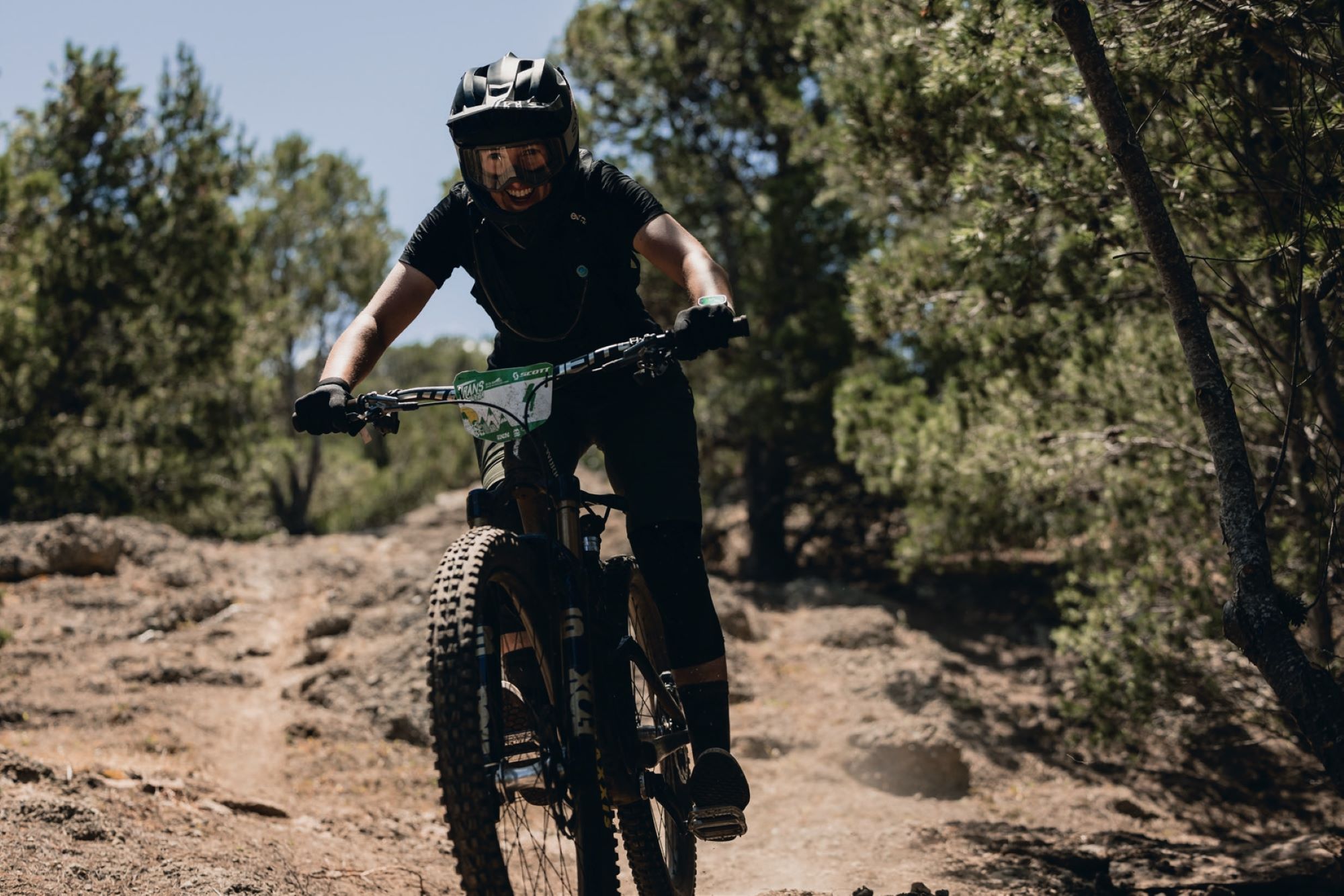
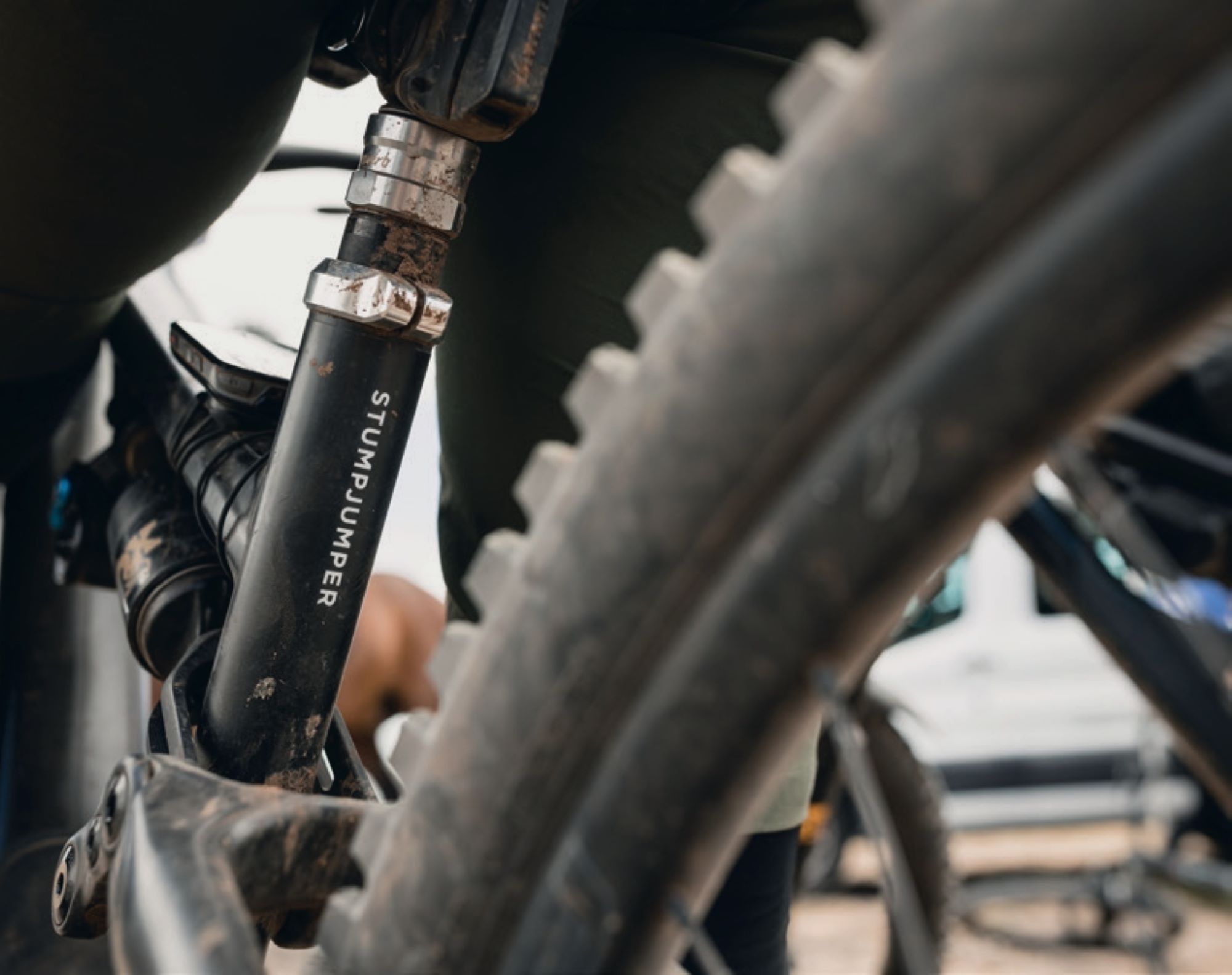
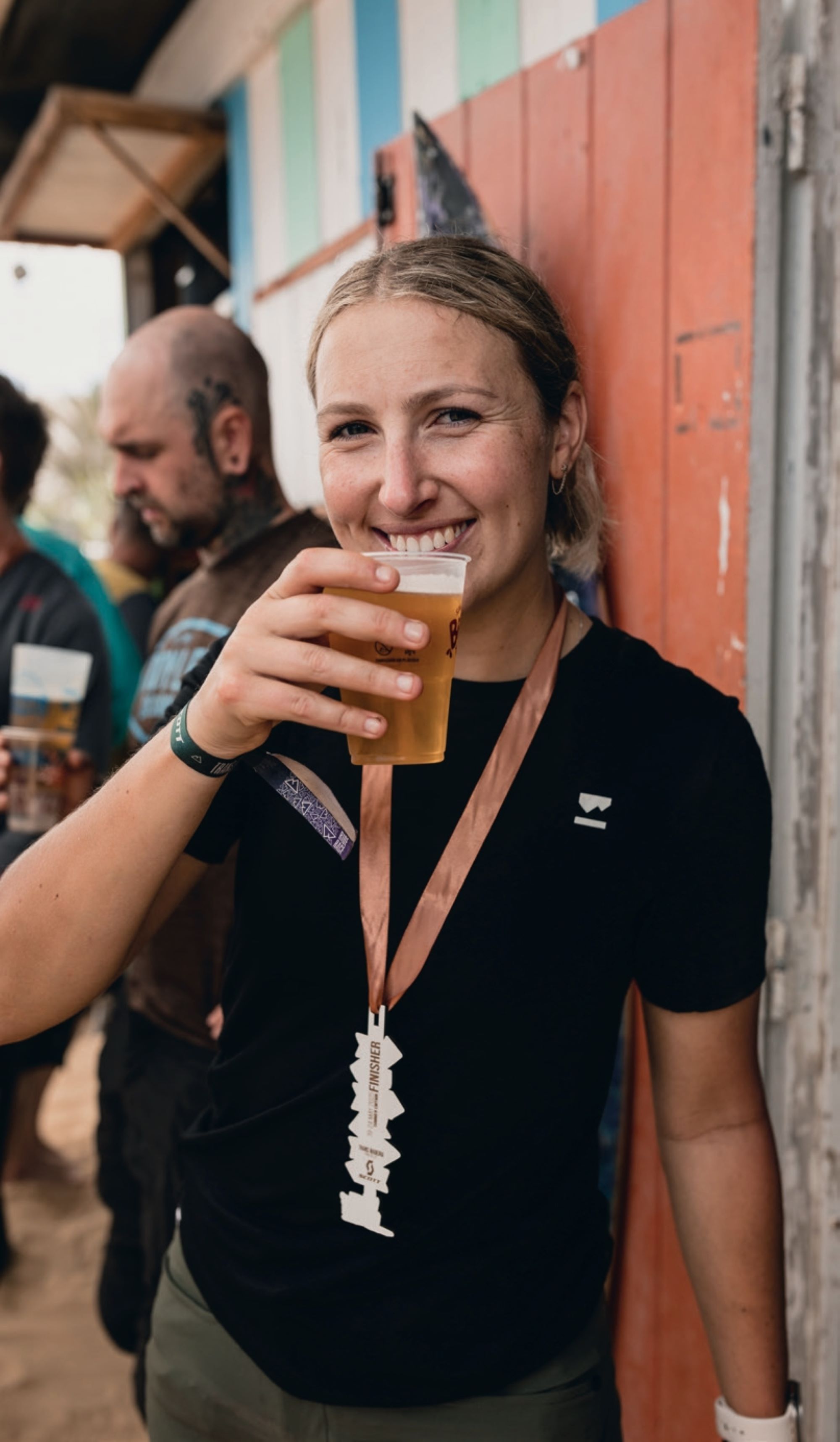
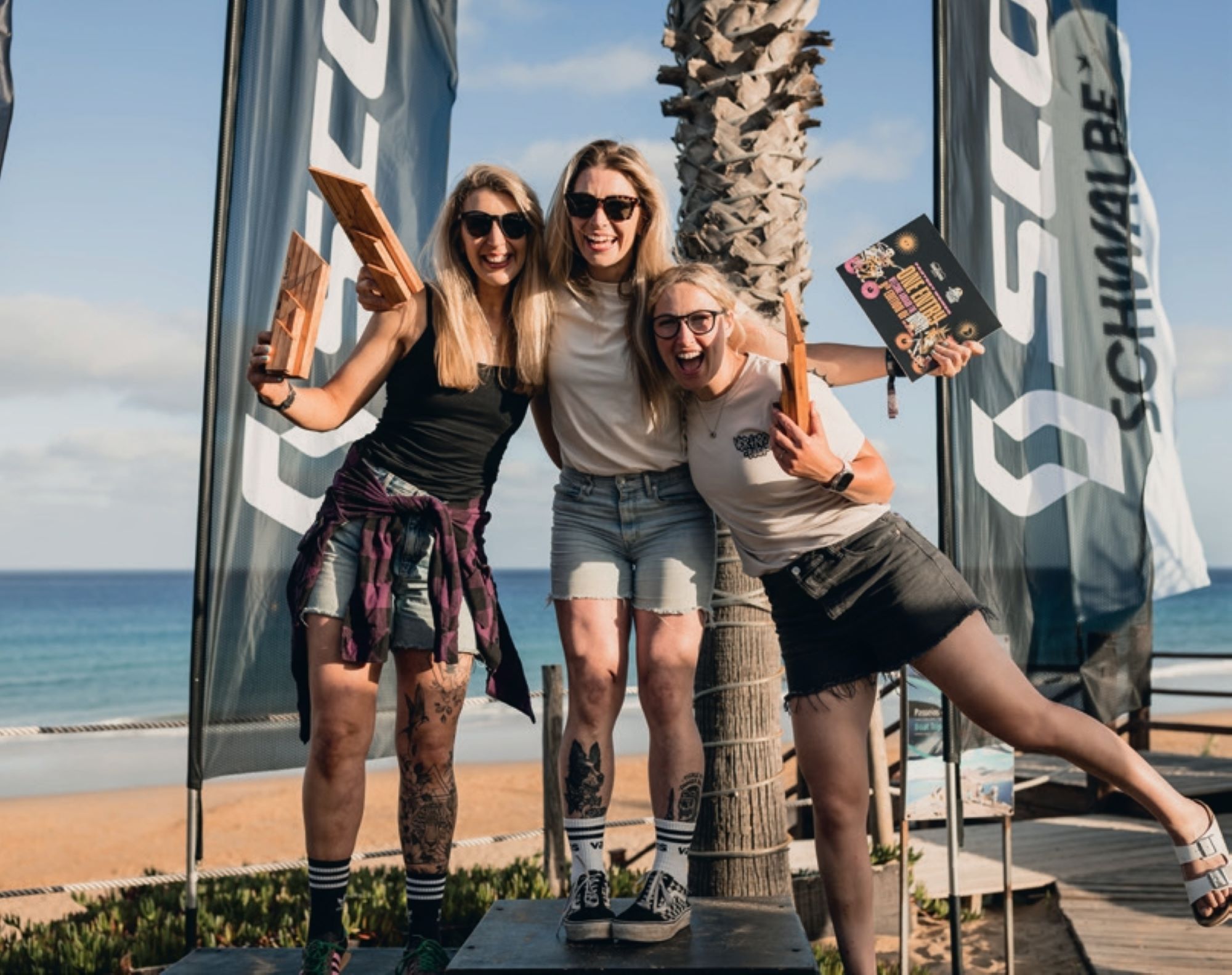
Day 6 – 35 km – 1350m up – 1350m down – 4 special stages
You’d think that after five nights of tent life, I’d be looking forward to sleeping in an actual bed at our hotel on the island of Porto Santo. Whilst this was true, there simply aren’t enough positive phrases in the dictionary to describe how excited I was at the concept of emptying my entire bag onto the floor, as well as having a bathroom to myself, and all the space in the world to battle with getting my knee pads on in the morning. I can’t even begin to describe the relief I felt walking out the hotel room door on day six—my mindset was focused on finishing, and all I was visualising was reaching the bottom of Stage 35.
The blisters on each of my heels were now the size of Ritz crackers, and we were in for a 1350m climb day, most of which would be hike-a-bike. I was lucky enough to ride these stages in a girl’s train with Becci Skelton and Amy Watts, with Becci aptly describing the overarching sensation associated with any hike-a-bike as being “irrational irritation”—a sentiment that couldn’t be more accurate, and characterised my feelings toward the entire day. I’m not sure if it was to our benefit or detriment that we could see the entire hike-a-bike distance from the bottom to the start of Stage 32—we were midway through the pack on our way up, watching the riders wind their way up the hill face, little ants in the distance. I toggled between my bike on back and pushing it up the hill and, funnily enough, neither provided any degree of comfort.
Across all four stages, we were treated to fresh, never-raced trails enveloped by all-consuming rugged coastal vistas, in some cases barren in a way likened to no-man’s land, or Mars (whichever way you’re inclined). After girl party training our way down stages 33 and 34, the relief of reaching the start of Stage 35 after six days of riding was inexplicably good. Honestly—the rest of the day was a blur. I’m not sure if I erased the hike-a- bikes that followed from my mind or if it was the post-race beers on the beach after completely depleting myself of energy and fluids, topped off with copious poncha’s (a Madeiran speciality) that followed, but I was satisfyingly knackered. I ended up finishing 3rd overall in the women’s category— as if completing a bucket list item wasn’t enough of a treat! For the next three days I felt hungover—not from the ponchas, but from finally standing still after six days of nonstop movement.
All in all, this was an absolutely incredible journey from race sign up to the final post stage high- five’s in Porto Santo. If this isn’t on your riding bucket list, make some room and add it now.
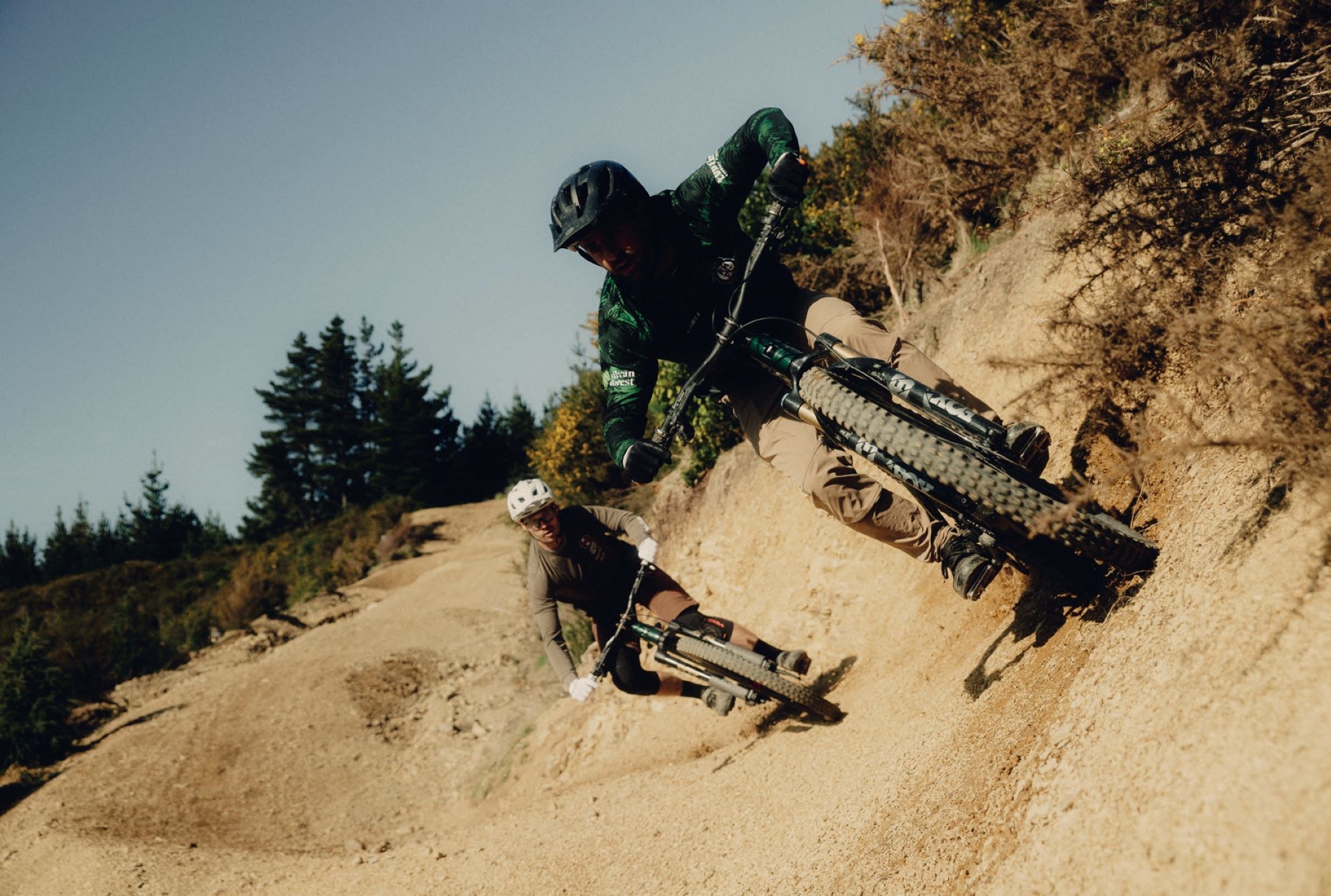
Destination: Silvan
Words Liam Friary
Images Henry Jaine
The history of this land stretches back to the early days, when farmers burned the native bush to clear it for farming, with scrub burning remaining a regular practice until the 1980’s. In the 90’s, the Griffin family purchased the property and after one rotation of radiata pine, began transforming it from a commercial forestry operation into something special for the community.
Trail development began in earnest in 2014 through a partnership with the MTB Trails Trust, with the first stage network completed by 2018. After the final pine harvest in 2019, the Griffin family made the pivotal decision to retire the forest from commercial production and focus entirely on recreational use, amenity and environmental restoration.
Post-harvest, the Silvan Forest team moved into hands-on management, investing in rebuilding and expanding the trail network, with support from local volunteers and sponsors. Their vision extends far beyond just mountain biking—they are intending to create an industry-leading example of native regeneration, seed source enhancement, and strategic placement of exotic species to create a unique and enduring forest and recreation asset for the wider community. Today, Silvan Forest MTB Park boasts over 40 kilometres of single-track trails designed for riders of grades 3 to 6, all of which are accessible year-round and completely free to the public. The forest now features a diverse mix of macrocarpa, blackwood, eucalyptus, and wonderful patches of original old- growth native bush—along with the new plantings and naturally regenerating bush, creating riding surfaces and experiences quite different from anything else in the Nelson Tasman area.

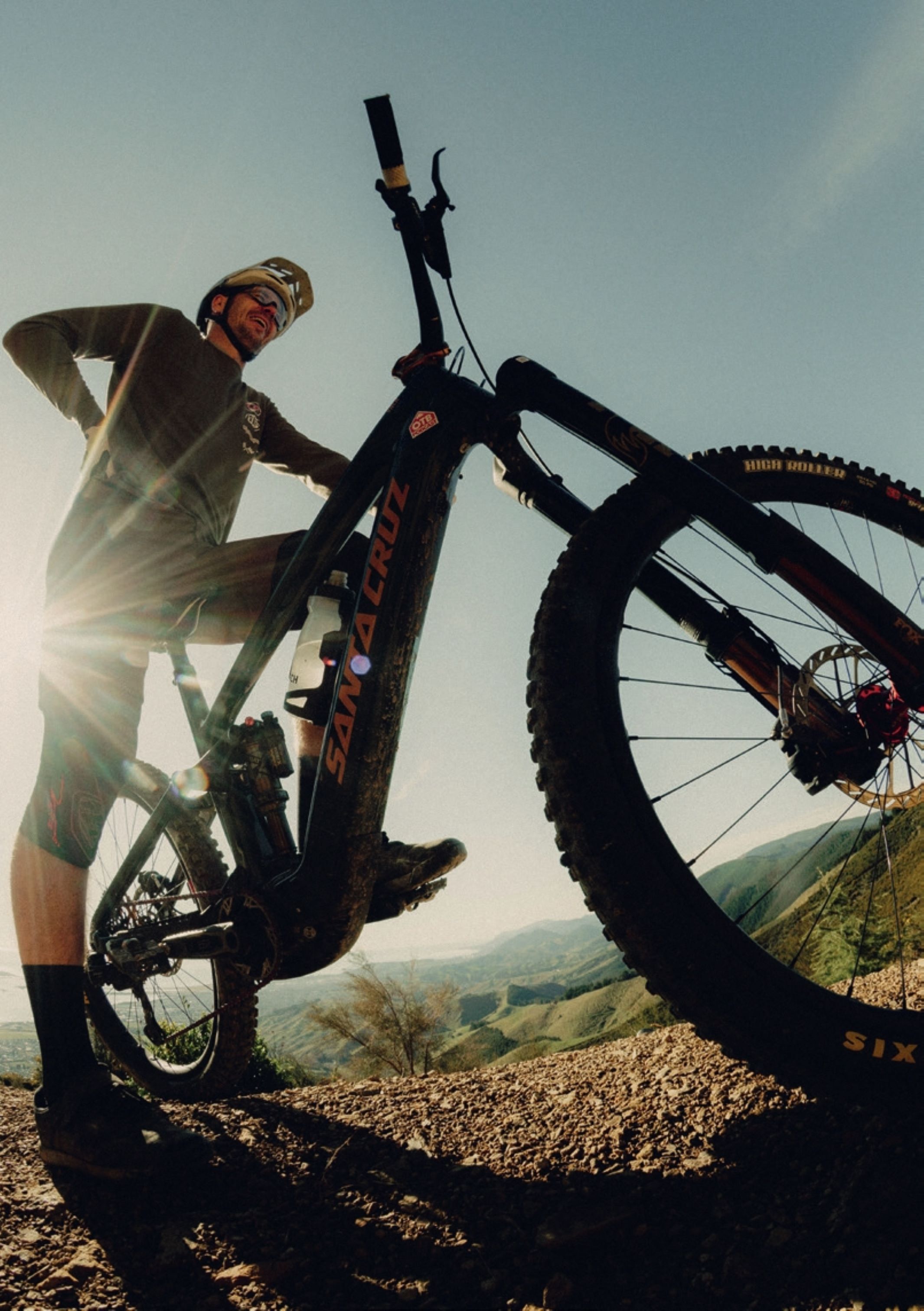
Since those initial trails, significant progress has been made with permanent forest plantings, an expanded trail network featuring several new Grade 5 options that showcase the steeper terrain and original native gullies, creating more seamless linkages between the Silvan and the adjacent Kingsland Forest trail network, and the establishment of new facilities including the ‘Silvan Steps’ amphitheatre as an events venue.
Matt Griffin, alongside his father Rick, has been at the helm of plans to transition the forest and significantly expand the trail network in the coming years. Matt welcomed us down to experience their trails. I was eager to ride this location, which started as a working pine forest and is evolving into a solid destination for biking in Nelson Tasman—aiming to emulate the huge success of other unique local destinations like Cable Bay Adventure Park and the Wairoa Gorge.
I had to dodge floods, and some of the terrible weather patterns the top of the South Island has been battered by, just to get there. This meant our original plans had to be scrapped, and I had to find new dates on the calendar and refresh the weather apps to find a good window. It wasn’t easy in the middle of winter! Luckily, some clear and cold weather was forecasted, so I jumped on the opportunity to make this trip happen. The main crew would consist of Matt Griffin, Kieran Bennett, and myself. Amanda Pearce and Chris Mildon would also join us for one morning, to ride their hand-dug trail, De La Luna—which I’ll expand on later in the piece.


The Riding
The trail network at Silvan Forest showcases remarkable diversity, featuring mixed terrain and carefully crafted trails that cater to all riders’ abilities. The main climbing route—Alpha trail and its various sections—proved efficient and enjoyable thanks to the Santa Cruz Vala I was testing (see the full review in this issue). As the trail winds its way up the hillside, it offers expansive views across Tasman Bay. What sets Silvan apart is its strategic positioning on predominantly north-facing slopes that receive generous sunlight throughout the day. This geographic advantage makes it an exceptional year-round destination, particularly during the shorter winter months when other trails might be shrouded in the shadows and are often damp. The open canopy allows the sun’s rays to dry out the trails creating pleasant riding conditions even in the depths of winter. Even after a week of significant rainfall leading up to our visit, the trails remained in good condition. I particularly welcomed this after a rather wet winter in the North Island.
From the elevated sections, riders can choose their descent based on appetite and ability. The Santa Cruz Vala allowed me to navigate Silvan’s approximately 40 kilometres of singletrack efficiently. The driving trail development philosophy from 2014 has been ‘most of the trails for most of the riders’, so while the core trail network was built around intermediate-grade trails, recent developments have pushed the boundaries to include more challenging options spanning grades 4-6, ensuring progression pathways for advancing riders. The dedicated team at Silvan Forest, led by Matt Griffin and Chris Mildon, alongside the dedicated and unruly volunteer trail builders from the Richmond Hills Trail Carvers, have ambitious plans to add another 30 kilometres of trail within the next five to ten years. Many of these future additions will wind through areas of stunning original native bush, which will add further diversity to the trail network. As the replanted hillsides mature, they will provide a contrast to today’s open, fast- flowing trails, offering riders entirely different perspectives on the same landscape. I believe the diversification of this once-cleared then commercially forested, and now regenerated, piece of land for recreational purposes is a real gem for us and future generations.
Silvan Forest MTB Park delivers a compact yet remarkably diverse riding experience across varied terrain. During our visit, we sampled many of the park’s signature trails, including People’s Choice, Ari Mahoe, Exodus, Goliath, Spittrock, CrankYanker, De La Luna and Jericho, among many others. The trails encountered everything from fast and flowing descents to technical jump lines and tighter, rockier sections. Some trails are gnarly hand-cut from top to bottom, creating that classic, hard, techy riding that is so unique to Nelson. Despite the terrain’s natural steepness, most trails offer a good fall line. You can tell the trails have benefitted from the thoughtful planning of features, corners which ensure speed is maintained and elevation loss is good without being ultra rapid. Nearly all trails maintain those stunning bay views, making even the most challenging sections rewarding. The quality of trail construction and ongoing maintenance reflects the serious dedication that Matt, Chris and the Trail Carvers invest in the park. Several super fun and accessible freestyle sections have also been added over the last 12 months, by Kurt Lancaster and the team from Living Trails, which have ensured even more diversity to the Silvan network, and see scores of kids heading into the park each day after school.
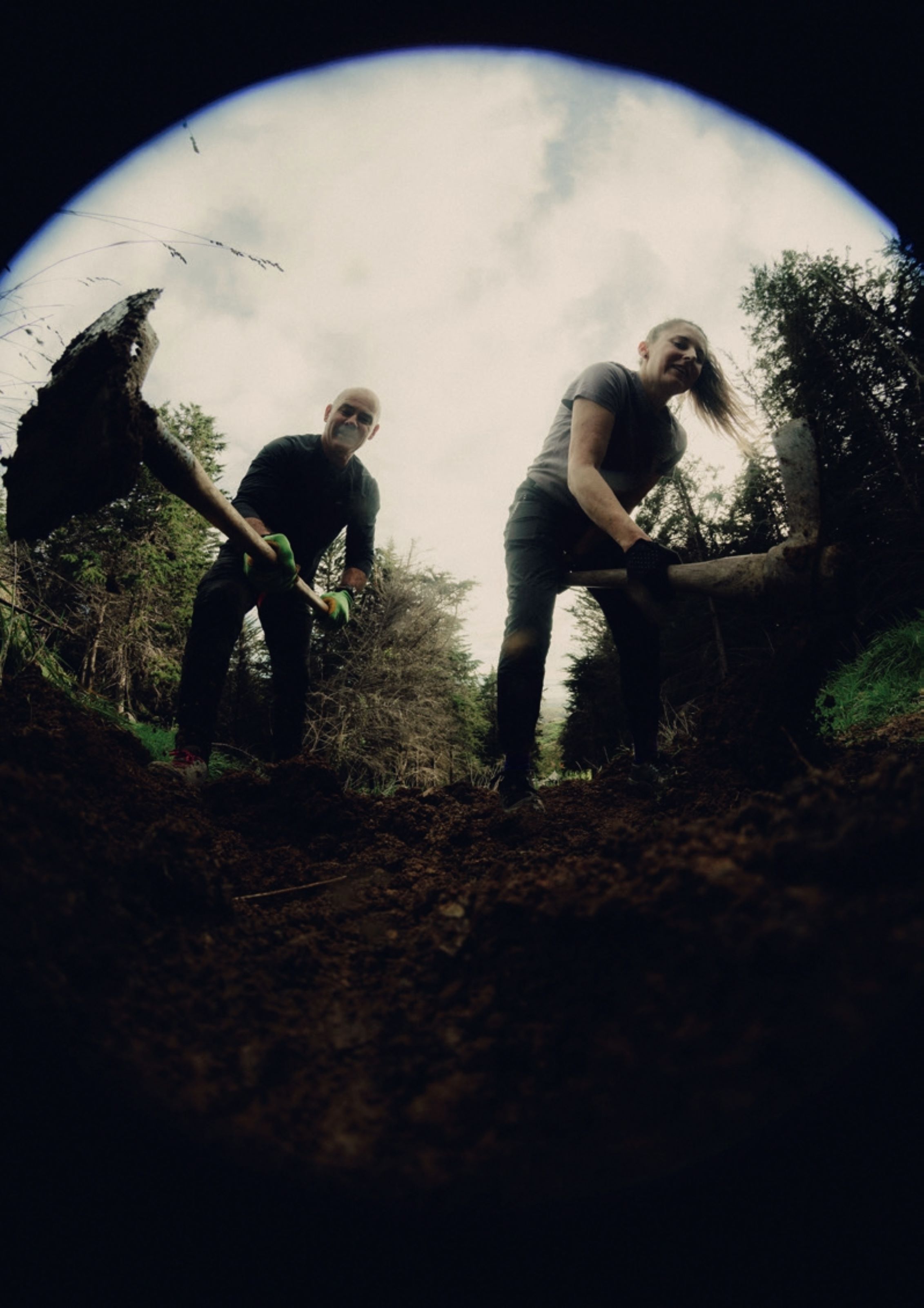
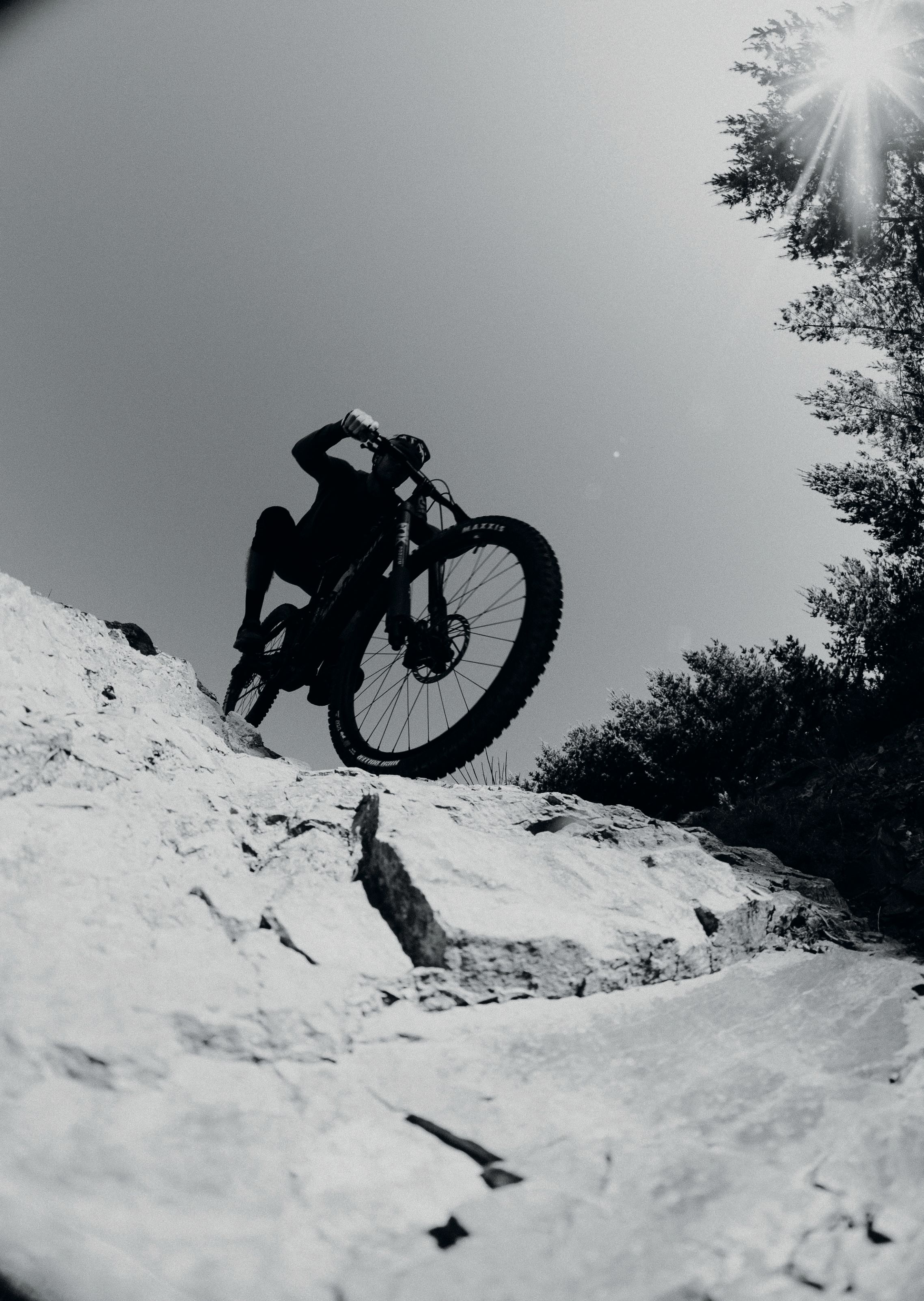
De La Luna trail showcases what can be achieved when passion meets persistence. It first emerged from the Juliana Bicycles NZ trail project during a particularly challenging year for the mountain bike industry—we’ve all heard the stories of the boom-and-bust cycle of the industry during and post pandemic. Instead of getting hung up on those industry issues, the team at Hyperformance Hardware (Juliana Bicycles distributor) decided to put time and effort into building a new trail. This provided an opportunity to channel their energy into something lasting, resulting in the 1100 people- hours of work that went into creating De La Luna.
Leading the charge was Amanda Pearce, Sandra Williams, Mike Stylianou and Chris Mildon (the trail builder and gorse-cutter extraordinaire) who spearheaded this ambitious hand-digging operation. Chris had a strong and loyal core digging team of about eight people around him that were recharged at the end of each dig by baked treats. The trail building crew turned out rain or shine for around 50 weeks, and there were about 80 different people who can proudly say they put some mahi into this trail over the year. The trail demanded new skills and serious physical endurance as the team battled through gorse, clay, and rock across all four seasons, and required a high level of discipline to maintain the grade 4 target. De La Luna is built through some steep, typical Nelson terrain, and while it would have been easier to fall into the dreaded grade increasing fall-line trap, good discipline with maintaining target gradients at every point ensured the right result. The trail’s name, De La Luna, honours Luna, the Griffin family’s black dog, who roamed with us on most of the trails we rode. After one year of hard work and dedication the trail, with a perfect 10-degree gradient, was ready for all to ride.
As soon as you drop into De La Luna, the trail immediately reveals its hand-built character— every corner, camber, and feature carry the essence of handmade craftsmanship over machine precision. The trail’s Grade 4 technical demands become apparent quickly, with exposed sections that require genuine commitment and bike handling skills. There’s something refreshingly honest about the trail. It certainly doesn’t try to flatter your riding—instead, it challenges you to rise to its standards. The hand- cut nature means every one of the 20 turns is slightly different, preventing you from settling into a rhythm and keeping your attention fully engaged with the terrain that lays in front of you.
What makes De La Luna truly special is its diverse character across the 2.1-kilometre descent. The trail opens with those wide, exposed views across Tasman Bay, offering brief moments to appreciate the landscape before diving back into more demanding terrain. As you progress, the trail transitions through tighter, more intimate sections where the hand-built features really shine, before eventually delivering you into some nice native bush sections toward the exit. The trail rewards patience and good bike handling over raw speed.
Perhaps the slump in the bike trade isn’t a bad thing after all, as it could lead to the construction of more trails for everyone. However, a balance between the two would be beneficial. I’m impressed by what a year’s worth of hard graft can achieve. I commend Hyperformance Hardware for making something for the mountain biking community rather than getting bogged down by the state of the bike industry.
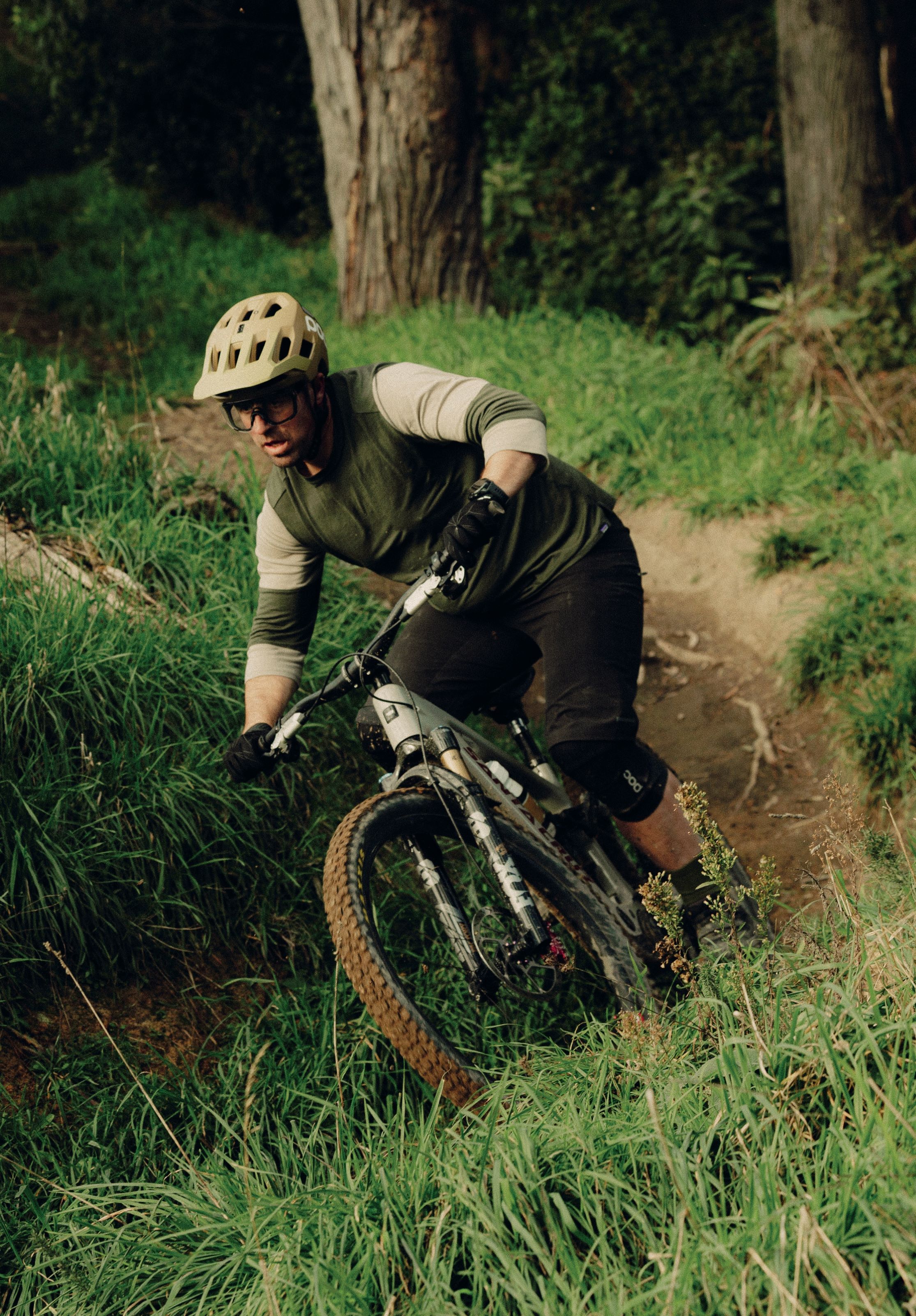
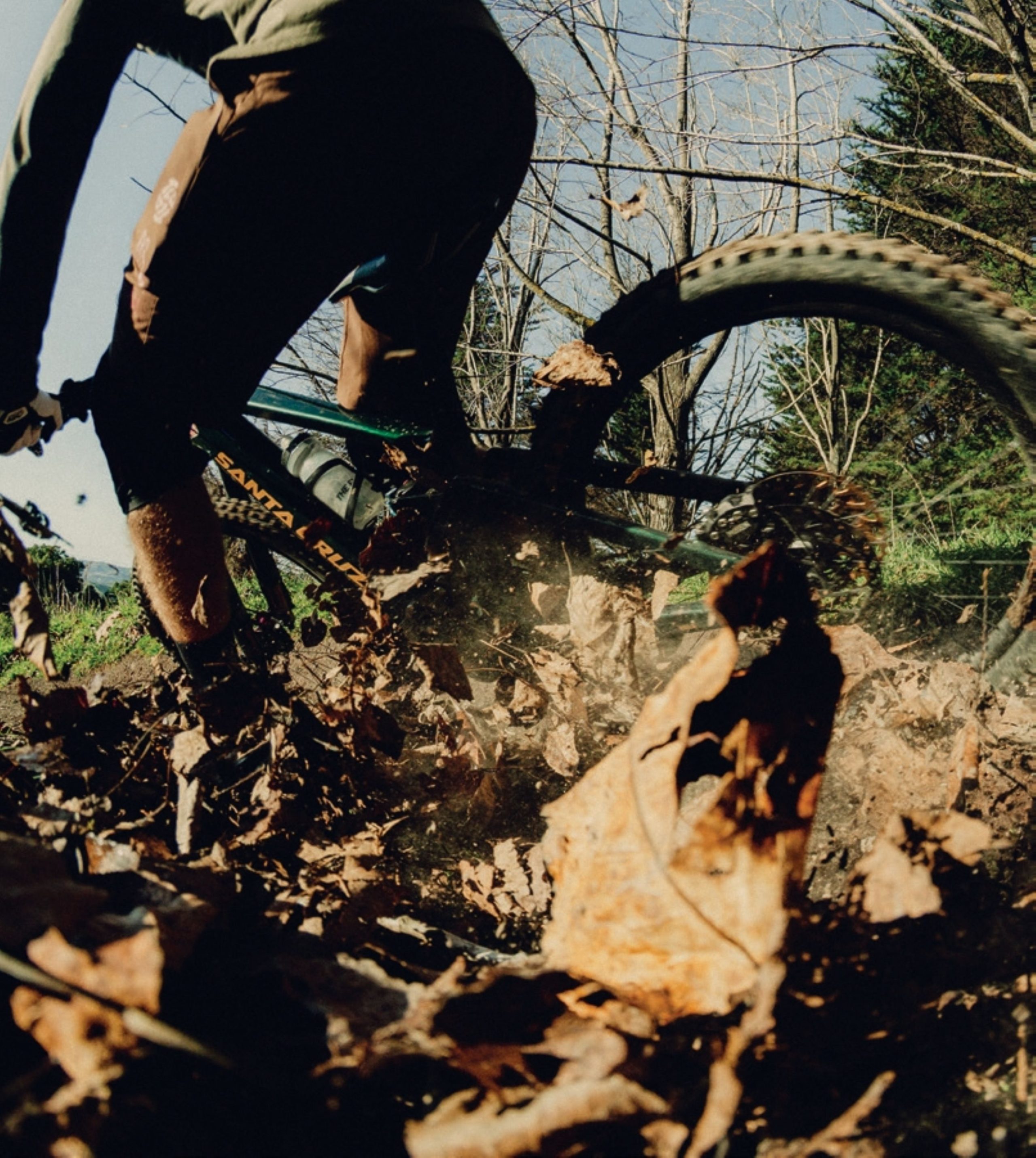
Hospitality
There’s accommodation at Silvan Forest with recently constructed rentals at the bottom of the hill. These two bed/two bath units feature sleek fit-outs and stylish furnishings, making grabbing some grub mid-ride or unwinding after days on the trails easy. While the Nelson Tasman region offers plenty of accommodation options, these deliver something uniquely valuable—you’re literally at the trailhead. I particularly liked that there’s no morning drive to get to the goods, no packing bikes onto cars after a long ride. The well-stocked kitchen allowed us to easily prepare meals and fuel up before heading straight back to the trails, creating that seamless flow between riding, resting, and riding again.
When you factor in the region’s exceptional craft beer scene, Nelson Tasman truly shines. The top of the South Island is home to some of New Zealand’s finest hops, and after experiencing Silvan’s trails, we sampled these legendary ingredients at Eddyline Tap Room, which doubles as a taqueria (Eddyline also are the dearly loved primary fluids sponsor of the Trail Carvers). The place was bustling on Friday night—always a good sign—with a relaxed atmosphere that perfectly complemented their excellent beer and delicious food. Sitting there, post-ride, with a cold beer in hand and food arriving at the table, I realised that it’s not just about the trails—it’s also about the people who surround and support riding culture. Sometimes, the best part of a riding destination isn’t just the trails themselves, but how you connect with the people behind the scenes who make everything seamless for us to enjoy. Nelson Tasman has a very high concentration of trails and a very engaged riding community, which is evident every time I visit here.
What the Griffin family and the local community have created at Silvan Forest goes well beyond just another mountain bike park. They’ve transformed a working pine forest into something genuinely special: a 40-kilometre network of thoughtfully built trails that showcase both the natural beauty of the Nelson Tasman region and the potential of community-driven trail development. The transition from commercial forestry to recreational haven tells a story that’s becoming increasingly relevant as other local (and national) landowners investigate alternate uses for steep terrain close to residential populations. As historic uses become less viable, landowners are choosing a long-term strategy with a community focus, rather than short-term profit.
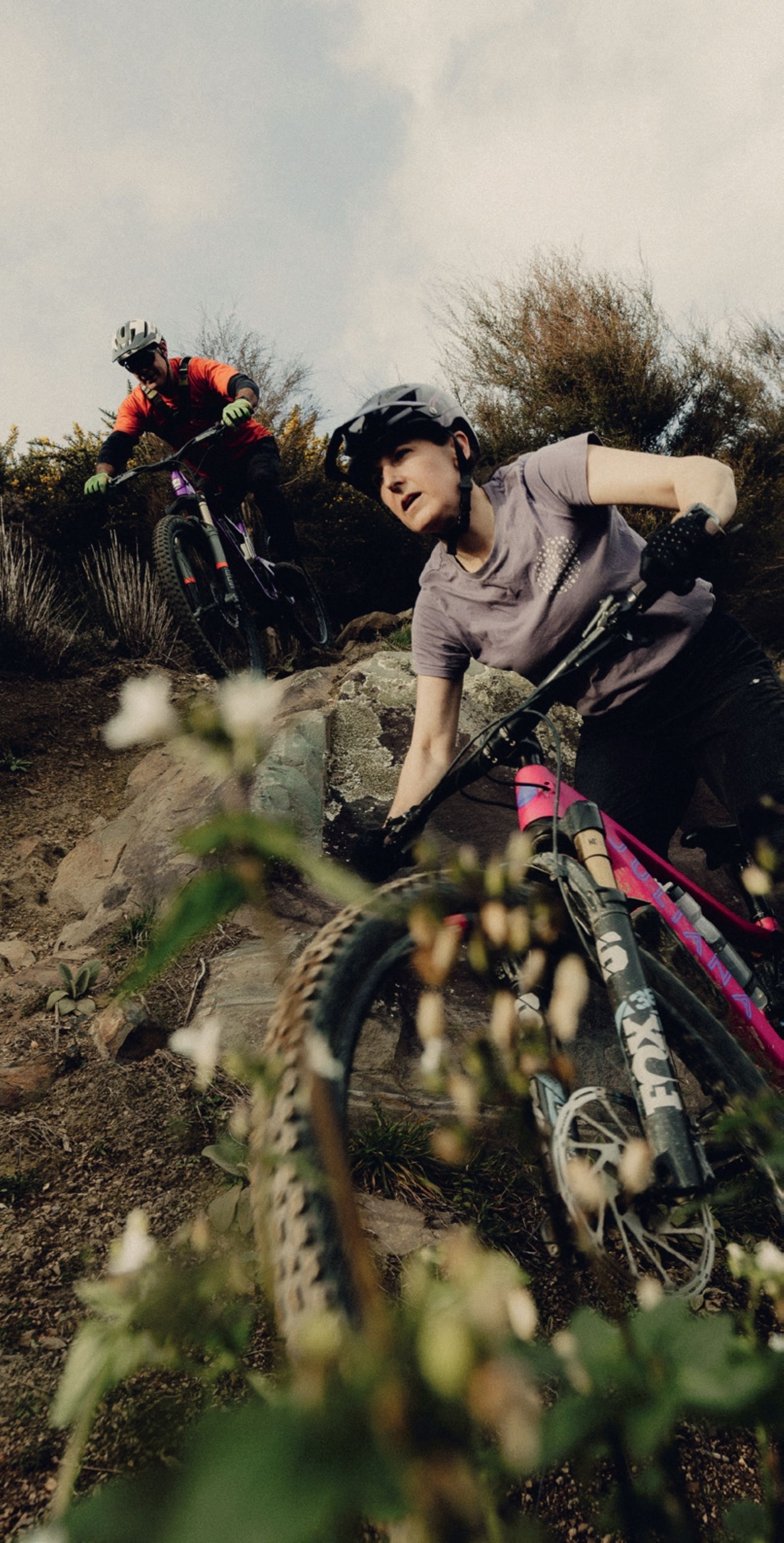

The riding itself delivers on multiple levels. Those north-facing slopes aren’t just a sun trap—they enable pleasant riding all year round, especially during winter riding conditions when other locations could be dark and dank. The trail network’s continuing evolution from intermediate- focused routes to the current mix spanning grades 3-6 means there’s progression available, whether you’re starting out or pushing limits. Silvan Forest MTB Park offers a variety of trails, each with its own unique features and these readily complement the wide range of excellent MTB options in the wider region. Even with only a few days, I was able to experience a wide range of Silvan’s trails and will be venturing back.
Perhaps what impressed me most was how everything connects seamlessly. The trailhead accommodation means you pedal from the front door, the well-maintained trails reflect serious ongoing investment and commitment, and even the local scene—from Eddyline’s craft beer to the broader Nelson Tasman riding community—feels aligned with what Silvan represents. With plans for another 30 kilometres of trail development over the next five years, Silvan Forest is clearly just getting started. The vision of combining native regeneration with world-class mountain biking creates a template that other destinations would do well to follow. Sometimes the best riding experiences aren’t just about the trails themselves, but about finding places where everything from the terrain, the community, and the vision comes together perfectly. Silvan Forest MTB Park delivers exactly that kind of experience.